Health and food audits and analysis programme 2021 - DG Health and Food Safety
←
→
Page content transcription
If your browser does not render page correctly, please read the page content below

DG Health and
  Food Safety

            Health and food
            audits and analysis
            programme 2021

            Health and
            Food Safety
Further information on the Health and Food Safety Directorate-General is available on the internet at:
http://ec.europa.eu/dgs/health_food-safety/index_en.htm

Neither the European Commission nor any person acting on behalf of the Commission is responsible for the use
that might be made of the following information.

Luxembourg: Publications Office of the European Union, 2020

© European Union, 2020

Reuse is authorised provided the source is acknowledged.

The reuse policy of European Commission documents is regulated by Decision 2011/833/EU (OJ L 330, 14.12.2011, p. 39).

For any use or reproduction of photos or other material that is not under the EU copyright, permission must be
sought directly from the copyright holders.

© Photos : https://www.gettyimages.com, Health and Food Safety Directorate-General

Print    ISBN 978-92-76-26118-6          doi:10.2875/10867         EW-BM-21-001-EN-C
PDF      ISBN 978-92-76-26119-3          doi:10.2875/488830        EW-BM-21-001-EN-N
Executive summary
The Directorate-General for Health and Food Safety of the European Commission develops and
implements the Commission’s policies on food safety and public health. Its Directorate for
Health and food audits and analysis (“the Directorate”) dedicates most of its resources to
Commission controls. These monitor the implementation and enforcement of European
Union (EU) legislation in the policy areas of food and feed safety, animal health, animal welfare,
plant health, EU quality standards (the Food domain) and in certain areas of human health
protection (the Health domain).
This document, the Health and food audits and analysis work programme 2021, presents the
Directorate and its controls, priorities for Commission controls in 2021-2025 and the detailed
activities planned for 2021.
Multi-annual plan 2021-2025
The Directorate’s control universe is very broad due to both an extensive body of EU legislation
in the Food and Health domains, and the high number of countries involved. Therefore, the
Directorate has to prioritise and plan carefully to ensure it fulfils its obligation for carrying out
Commission controls whilst ensuring that it covers the various policy areas in proportion to the
risks posed in those areas. The prioritisation also ensures consistency with the European
Commission’s political priorities, and in particular the Farm to Fork Strategy. The multi-annual
plan 2021-2025 results from this process. It establishes the selected priority themes and, for each
of these, the objectives of controls, including the country coverage for the five-year period.
Control activities in 2021
In 2021, the Directorate plans to perform 349 controls. From those, 217 are audits and similar
controls (joint assessments, joint country visits, joint controls and fact-finding studies), and 132
are analyses. Control activities in 2021 cover around two-thirds of the priority themes for the
period 2021-2025.
Controls in the Food domain
Commission controls in the Food domain account for 86% of controls planned in 2021 (301).
These will address a number of priority themes from the multi-annual plan and in particular:
food and feed safety: More than half of the controls in the Food domain (167) will
cover food safety issues, targeted in the light of identified risks. One third of these
controls will take the form of audits and similar controls (66). Controls on feed safety
will also continue because many food crises have had their origin in animal feed;
animal diseases and plant pests with a high impact on or representing a significant
threat to the EU economy and the health of EU citizens and EU environment;
1
sustainability of the agri-food chain with the sustainable use of pesticides and animal
welfare in the context of the Farm to Fork Strategy. Controls on the welfare of laying
hens on-farm will start in 2021;
third country listing and market access as well as third countries’ compliance
with EU requirements for the export of food, feed, animals and plants to the EU;
Member States’ implementation of newly introduced legal requirements. Controls will
notably verify laboratories and testing facilities’ adherence to the applicable standards
for carrying out tests and studies submitted to the European Food Safety Authority;
controls in the United Kingdom (UK) in respect of Northern Ireland and in respect of
Great Britain in the context of Brexit and the operation of the Ireland/Northern Ireland
protocol to the withdrawal agreement between the EU and the UK.
Controls in the Health domain
Controls in the Health domain in 2021 have been estimated at 48. Most of these are demand-
driven and depend upon requests from Member States. These controls will cover a number of
human health areas such as medical devices, active pharmaceutical ingredients for human use,
antimicrobial resistance and eHealth. In addition, the Directorate will initiate controls on human
clinical trials.
The annexes to this document include the priorities for 2021-2025 and the detailed work
programme for 2021.
Other activities planned in 2021
The Directorate will continue working on the other activities under its responsibility. In
particular:
on the sustainable use of pesticides, the evaluation of the Directive will continue in
2021, as well as the work on the European harmonised risk indicators and integrated pest
management. This work will contribute to progress towards the pesticide reduction
targets of the Farm to Fork Strategy;
networking activities with Member States’ competent authorities with respect to the
multi-annual national control plans and the national audit systems will carry on;
on the Better Training for Safer Food (BTSF) programme, the range of training
options and delivery through virtual classes will be further developed;
it will keep developing and operating the European Commission’s rapid alert and
notification system for plant pest EUROPHYT-Outbreaks and analysing plant health
surveys carried out by Member States.
Further details on these activities are provided in section 6 of the document.
2
Table of contents
1.      Introduction......................................................................................................................................... 4
2.      Presentation of the Directorate for Health and food audits and analysis .......................... 4
3.      Audits and controls ........................................................................................................................... 5
     3.1.         Objectives and role ................................................................................................................. 5
     3.2.         Types of controls ..................................................................................................................... 6
        3.2.1.          Audits and similar controls ............................................................................................... 6
        3.2.2.          Analyses ............................................................................................................................... 7
4.      Multi-annual plan 2021-2025 ....................................................................................................... 8
5.      Control activities in 2021 ................................................................................................................ 9
6.      Other activities planned in 2021 ................................................................................................. 11
     6.1.         Sustainable use of pesticides ............................................................................................. 11
     6.2.         EUROPHYT-Outbreaks .......................................................................................................... 11
     6.3.         Plant health surveys ............................................................................................................. 12
     6.4.         Member State networks....................................................................................................... 12
     6.5.         Better Training for Safer Food ........................................................................................... 13
Annex 1– Multi-annual plan 2021-2025 and controls planned in 2021 .................................................... 14
     Human health protection ................................................................................................................... 14
     One Health ............................................................................................................................................ 16
     Animal health ....................................................................................................................................... 17
     Animal Welfare .................................................................................................................................... 19
     Plant Health .......................................................................................................................................... 21
     Food and food safety ......................................................................................................................... 23
     Feed safety and animal by-products.............................................................................................. 26
     Quality standards ................................................................................................................................ 27
     Import and export controls................................................................................................................ 28
     Third countries access to EU market .............................................................................................. 30
     Accession countries.................................................................................................................................. 35
     Agri-food chain ........................................................................................................................................ 36
Annex 2– Audits in Member States planned in 2021 .................................................................................. 39
Annex 3– Controls in candidate countries planned in 2021 ....................................................................... 43
Annex 4– Controls in third countries planned in 2021 ................................................................................ 44

                                                                                3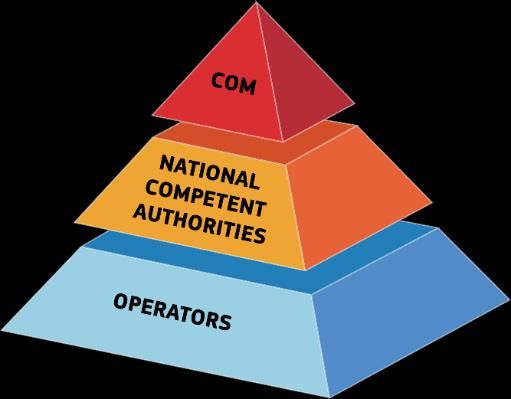
1. Introduction
The Directorate-General for Health and Food Safety of the European Commission is
responsible for monitoring the implementation and enforcement of European Union (EU)
legislation governing food safety and certain areas of human health. To this end, it carries out
controls in Member States and third countries exporting plants, animals and food to the EU.
Every year, it publishes the details of controls planned in the following year, as part of the annual
Health and food audits and analysis work programme.

This programme presents the priorities for Commission controls in 2021-2025 and the detailed
activities planned for 2021.

For the first time, the Commission has adopted an implementing decision (1) establishing a
multi-annual programme of controls for the period 2021-2025 to be carried out in Member
States on areas falling within the scope of the official control regulation (2). The multi-annual
plan set out in this publication incorporates this programme.

2. Presentation of the Directorate for Health and
   food audits and analysis
The Directorate-General for Health and Food Safety develops and implements the
Commission’s policies on food safety and public health. The implementation and enforcement
of EU legislation are essential for citizens to be confident that their interests are protected. The
Directorate-General for Health and Food Safety has a specific Directorate that dedicates most of
its resources to Commission controls.

                                                           The European Commission created the
                                                           Directorate for Health and food audits
                                                           and analysis (“the Directorate”), formerly
                                                           known as the Food and Veterinary
                                                           Office, in 1997. This Directorate is
                                                           located in Ireland.

The Directorate for Health and food audits and analysis,
Grange, County Meath, Ireland

(1) OJ L 354, 26.10.2020, p. 9.
(2) OJ L 95, 7.4.2017, p. 1.

                                                 4
The Directorate performs controls in the areas of food and feed safety, animal health, animal
welfare, plant health, EU quality standards (the Food domain) and in certain areas of human
health protection (the Health domain). It is also responsible for other important activities such as
the development of policy on the sustainable use of pesticides, networking activities with
Member States, and, since more recently, the management of the Better Training for Safer Food
(BTSF) programme.

The Directorate has a team of some 160 professionals originating from most EU Member States
and with a wide range of professional experience.

The Directorate produces reports of its control activities, which are, with few exceptions,
publicly available on the European Commission’s website (3). The Directorate also publishes
overview reports and analyses.

3. Audits and controls

3.1. Objectives and role
                                               In the EU, operators in the agri-food chain (such as
                                               farms, slaughterhouses, food-processing establishments
                                               and importers) have the primary responsibility for
                                               ensuring compliance with EU safety standards. In turn,
                                               Member States’ authorities are responsible for
                                               checking operators’ compliance by means of official
                                               controls (e.g. inspections). Member States also have to
                                               set up a system to assure themselves that they carry out
                                               their official controls effectively and consistently. The
Figure 1: Levels of controls of EU safety      Commission controls verify the effectiveness of
standards in the Food domain                   Member States’ official control systems.

Imported animals and goods have to comply with EU requirements. With some exceptions,
the authorities of third countries exporting goods to the EU are responsible for checking that
operators involved in the export chain comply with specific EU requirements and for certifying
that goods exported meet EU requirements. For animals and animal products, before any export
can take place, third countries must demonstrate their capacity to provide the above guarantees
and the countries are listed in various Commission decisions.

Commission controls play a central role in the decision making process for country listing
and market access of animals and animal products originating in third countries. These
controls also concern third countries exporting food, feed, animals or plants to the EU. The
Directorate targets countries according to risks associated with their exports to the EU, such as

(3) https://ec.europa.eu/food/audits_analysis_en

                                                      5
the volume of exports, non-compliant consignments identified at EU points of entry and risk
associated with the type of products. The controls also cover countries with free trade
agreements with the EU.

A negative outcome of any control in a third country performed by the Directorate may result in
a Commission decision to impose trade-restrictive measures to protect the health of European
citizens, animal and plant health. This also encourages the third country authorities and the
implicated food business operators to take the necessary corrective measures swiftly. Examples
of trade restrictive measures include increased checks at EU borders and, as a last resort,
suspension of imports. The Commission reviews those measures periodically.

In the Health domain, the Directorate’s work aims at protecting citizens across the EU and
addressing emerging challenges. In particular, the programme contributes to the effective
implementation of the regulatory framework in areas of medical devices, active pharmaceutical
ingredients, clinical trials, and eHealth, as well as supporting Member States in the design and
implementation of their national action plans in the area of antimicrobial resistance. Controls in
the Health domain are mostly demand-based and, for this reason, limited information is available
on the countries concerned in 2021. A negative outcome of a control performed by the
Commission may result, for example in the area of medical devices, in change in the scope of
designation of a notified body (third party conformity assessment body) or its de-designation.

3.2. Types of controls
The Directorate carries out a range of controls. Audits and similar controls represent roughly
two-thirds of the control activities while the remaining third concerns analyses.

3.2.1. Audits and similar controls
Traditionally, the Directorate carries out audits and similar controls travelling to the targeted
countries. Due to the COVID-19 restrictions, the Directorate adapted its approach and currently
performs most of these controls remotely, using the latest developments in video-conferencing.
In 2021, depending on the evolution of the COVID-19 pandemic, a significant percentage of
audits and similar controls may have to be carried out remotely.

3.2.1.1. Audits
Audits are the most common form of control, in particular in the Food domain. They are a
valuable tool to verify the effectiveness of the implementation of official controls, including
enforcement, over EU legislation. The Directorate’s audits typically involve a team of two
auditors and frequently a national expert from a Member State. The team devotes one to two
weeks to meetings with national, regional and local authorities as well as operators and border
control posts, as appropriate. The Directorate issues an audit report after each audit, which may
include recommendations to the competent authority to address the non-compliances identified.

The Directorate follows up systematically on the actions taken by Member States in addressing
these recommendations. In addition, when sectoral audits identify serious non-compliances in a

                                                6
Member State or a third country, the Directorate may carry out follow-up audits to verify the
implementation of the agreed corrective actions.
3.2.1.2. Joint assessments
Notified bodies in the medical devices field are conformity assessment bodies responsible for
checking that medical devices meet the relevant legal requirements, resulting in certification and
CE marking. Since 2017, the designation and notification of these notified bodies involve joint
assessment teams, composed of experts from the Commission and national designating
authorities. The Directorate coordinates and participates in these joint assessment teams. Joint
assessments aim to ensure that only appropriately resourced, adequately performing and reliable
notified bodies are designated.
3.2.1.3. Joint country visits
Since 2017, the Directorate carries out, jointly with the European Centre for Disease Prevention
and Control (ECDC), country visits to Member States on antimicrobial resistance in a One
Health perspective. The aim of the visits is supporting Member States in the preparation and
implementation of national action plans on preventing the development of antimicrobial
resistance.
3.2.1.4. Joint controls with the European Free Trade Association Surveillance Authority
In 2019, the Directorate-General for Health and Food Safety and the European Free Trade
Association (EFTA) Surveillance Authority (ESA) signed an administrative arrangement on
cooperation between the two services, which includes the active participation in each other’s
audits. On this basis, the Directorate also carries out joint controls with ESA for the assessment
of compliance of border control posts in EFTA States before their designation. These consist in
analyses (see section 3.2.2) complemented by on-site controls of the facilities, when necessary.
3.2.1.5. Fact-finding studies
Fact-finding studies are controls organised in anticipation of the applicability of legal
requirements, or in areas where the Commission needs to complete its knowledge about the
operation of legislation. The results of these studies provide input into the preparation of
subsequent audits, or into the review or development of legislation.
3.2.2. Analyses
The Directorate carries out analyses, most of which are specifically required by EU legislation.
These concern border control posts assessment before (re-)designation as well as the assessment
of residues monitoring plans from Member States and from third countries already listed or
requesting approval for the export of animals and animal products to the EU. The Directorate
has also elaborated product-specific pre-listing questionnaires for third countries seeking market
access to the EU and it assesses the responses to determine whether the country can satisfy the
EU import requirements for the commodities in question. Other analysis work involves remote
verification of official controls carried out by third country authorities in listed food-producing
7establishments and of the official systems to guarantee EU animal health and food safety
requirements in countries approved to export to the EU but with very low volume of exports.
4. Multi-annual plan 2021-2025
The control universe is an inventory of the policy areas that the Commission has the legal
mandate to check. This control universe is very broad due to both an extensive body of EU
legislation in the domains of Food and Health and the high number of countries involved.
Therefore, the Directorate has to prioritise and plan carefully to ensure it fulfils its obligation for
carrying out Commission controls whilst ensuring that it covers the various policy areas in
proportion to the risks posed in those areas. The prioritisation also ensures consistency with the
European Commission’s political priorities, and in particular the Farm to Fork Strategy.
The multi-annual plan establishes the priorities for the Directorate’s controls in 2021-2025.
In the Food domain, the choice of topics and countries covered by the plan takes into
account legal requirements, food safety and health risks (associated with products, their
origin, production or trade volumes, evidence of non-compliance, and the outcome of
past audit activities) and policy considerations.
In the Health domain, priority themes relate to Commission political priorities, identified
in the Commissioner’s mandate letter or in the pharmaceutical strategy, and/or explicit
legal requirements for controls. Most controls are demand driven.
Annex 1 presents the multi-annual plan 2021-2025. It identifies the priority themes and
objectives for controls, including the country coverage, which will be addressed at different
stages during the five-year period.
The multi-annual plan 2021-2025 is a reference document for the annual selection of controls
during this period, subject to necessary adjustments.
85. Control activities in 2021
The Directorate carries out its controls in accordance with the multi-annual plan. Controls
planned in 2021 amount to 349 in total, which includes 217 audits and similar controls, and 132
analyses (see details in figure 2).
Figure 2 Number of controls planned or estimated in 2021 per type
Joint assessments with national
designating authorities; 26 Joint country visits with ECDC; 4
Fact-finding studies; 16
Analyses; 130
Joint controls with ESA (2 Audits; 170
analyses and 1 audit) ; 3
Controls in 2021 cover all policy domains in the control universe (see figure 3), and address two-
third of the priority themes identified in the multi-annual plan 2021-2025. In the Food domain,
which represents 86% of all controls and most of the audits planned, overall more than half of
the controls focus on food safety (in figure 3, these are labelled “food and food safety” and they
account for 80% of controls on “third countries’ access to EU market”).
Figure 3 Number of controls (all types) per policy domain
Human health 14 26 4
One Health 5 4
Animal health 6
Animal welfare 10
Plant health 7
Food and food safety 34 38
Quality standards 6
Feed safety and animal by-products 12
Import and export controls 14 20 3
Accession countries 2
Third countries' access to EU market 45 72
Agri-food chain 15 12
0 20 40 60 80 100 120
Audits Joint assessments with national designating authorities
Joint country visits with ECDC Fact-finding studies
Analyses Joint controls with ESA (2 analyses and 1 audit)
9Of the 217 audits and similar controls planned in 2021, 169 concern the Food domain. As
shown in figure 4, most of these are planned in the Member States because most food consumed
in the EU is also produced in the EU. Nonetheless, a significant number of audits are planned in
third countries wishing to export or exporting to the EU. In comparison to previous years, the
proportion of controls in Member States has slightly increased due to new controls of
laboratories and testing facilities in order to assess their adherence to the applicable standards for
carrying out tests and studies submitted to the European Food Safety Authority.
Figure 4: Number of audits and similar controls in the Food domain per entity/country status
Candidate countries; 5
Third countries; 45
Testing facilities in
Member States; 12
Member States; 111
The Directorate may review the controls planned in 2021 (as detailed in the Annexes to this
document) if the circumstances require a change of priorities (such as emerging risks or crises,
political priorities) or prevent the performance of a control (such as the absence of a timely reply
to pre-audit questionnaires or security issues).
Annex 1 provides all commission controls planned in 2021 along with their objectives by
policy domain and area. For certain controls, and in particular analyses, countries have
not be identified yet.
Annexes 2 to 4 list the controls planned in 2021 per country. Annex 2 relates to Member
States, Annex 3 relates to candidate countries and Annex 4 to third countries.
106. Other activities planned in 2021
6.1. Sustainable use of pesticides
The aim of the sustainable use of pesticides directive is to reduce the risks and impacts of
pesticides use on human health and the environment. It forms part of the EU legal framework
covering pesticides and their use. By emphasising the use of low risk pesticides and non-chemical
alternatives, it supports the achievement of the targets set out in the Farm to Fork Strategy (4) for
reducing the risks and use of pesticides.
The Directorate is responsible for the development of the policy on the sustainable use of
pesticides. This encompasses a range of activities performed in close cooperation with other
Commission services and authorities in the Member States.
In 2021, the Directorate will notably:
continue the evaluation of the sustainable use of pesticides directive. This will assess the
usefulness of this directive, its objectives and actions as a policy tool and the results it
has produced;
organise and chair two working groups on pertinent issues with Member States’
representatives and three stakeholder events, to provide input into the above evaluation;
oversee an external study of the sustainable use of pesticides to input into the above
evaluation;
proceed with the development of a legal proposal to modify one of the two harmonised
risk indicators. The Directorate will also calculate and communicate on the current
harmonised risk indicators;
support Member States to develop agreed criteria, which could be used to verify
compliance with the principles of integrated pest management at farm level.
6.2. EUROPHYT-Outbreaks
EUROPHYT-Outbreaks is the European rapid alert system for the notification by Member States
of plant pest outbreaks. The Directorate develops and operates this system in close cooperation
with Member States in such a way that it provides an overview of the outbreak situation in the
EU and data analysis supporting Member States and Commission policy making decisions and
targeting of official and Commission controls. In 2021, it will produce a report on the system
and its data.
(4) https://ec.europa.eu/food/farm2fork_en
116.3. Plant health surveys
EU plant health legislation requires Member States to carry out annual surveys for the presence
of certain plant pests presenting a significant threat to the EU economy and the environment,
and to send the results of these surveys to the Commission. The Directorate collects, analyses
and prepares presentations on these survey results for the Standing Committee on Plants,
Animals, Food and Feed. These reports support informed policy decision making at EU level on
these plant pests. In 2021, a number of plant pests will be covered including those of potato that
are subject to the control Directives and others which are subject to emergency decisions
including Xylella fastidiosa, Bursaphelenchus xylophilus and Anoplophora spp.
6.4. Member State networks
The Directorate manages two Member State networks that aim to enhance official control
systems in the Member States and EFTA countries. These concern the multi-annual national
control plans (MANCP) and the national audit systems. Each network regularly meets in plenary
or subgroup meetings chaired by the Directorate, with the objective to:
exchange experiences in implementing the MANCPs and the national audit systems,
discuss better ways to address common problem areas, and
consolidate agreed principles and good practices into reference documents.
In 2021, the networks will contribute to monitoring the implementation of new provisions (5) to
assist the Member States in the preparation of their MANCPs, in filling in the standard model
form for the Member States annual reports, and in the conduct of Member States’ internal
audits (6). In particular, the Directorate, in consultation with the MANCP network, will oversee
the use of the electronic version of the standard model form (Annual Reporting on Official
Controls – AROC), which Member States must use from 2021 onwards for submitting their
annual reports.
(5) Commission Implementing Regulation (EU) 2019/723 of 2 May 2019 laying down rules for the application of
Regulation (EU) 2017/625 of the European Parliament and of the Council as regards the standard model form to
be used in the annual reports submitted by Member States (OJ L 124, 13.5.2019, p.1.) and three Commission
Notices on guidance documents.
(6) Audits under Article 6 of Regulation (EU) 2017/625.
126.5. Better Training for Safer Food
The European Commission launched the “Better Training for Safer Food” (BTSF) programme
in 2006 with the aim of keeping staff involved in official control activities, in both Member
States and third countries, up-to-date with EU law in the areas of food and feed, animal health,
animal welfare and plant health.
The Directorate establishes priorities for training activities and the training programme itself.
External contractors selected through public procurement procedures, deliver the training
activities in the EU and in third countries exporting to the EU.
Since the start of the COVID-19 pandemic, competent authorities have made great use of the
existing e-learning modules and further modules will be added to broaden the range of training
options in 2021 and 2022. The Directorate has adapted the existing programme and new courses
in 2021 will take place in virtual classrooms whilst maintaining the option of reverting to face-to-
face training, should the epidemiological conditions permit.
13Annex 1– Multi-annual plan 2021-2025 and controls planned in 2021
Human health protection
Country
Area Priority theme Objectives 2021-2025 Controls 2021
status/ entity
To coordinate and participate in the joint assessment team, which evaluates,
Designation of Member States 25 joint assessments
together with the designating authority, that the applicant notified body satisfies
notified bodies (estimated)
the necessary requirements to fulfil the tasks for which it has applied for
designation under the applicable Regulation.
In applicant notified bodies based on demand.
To coordinate and participate the joint assessment team which re-evaluates, -
Re-assessment of Member States
together with the designating authority, that the notified body continues to satisfy
notified bodies
Medical devices
the necessary requirements to fulfil the tasks for which it was designated under the
applicable Regulation.
In all notified bodies, 3 years after the notification of designation, starting in
2022
Scope extension Member States To coordinate and participate in the joint assessment team, which evaluates, 1 joint assessment
of notified together with the designating authority, that the notified body satisfies the (estimated)
bodies necessary requirements to extend the range of devices it can certify.
In designated notified bodies, based on demand.
Peer reviews Member States To support exchange of experience and coordination of administrative practice -
between the designating authorities.
In all designated authorities, over a rolling three-year cycle, starting in 2023.
14Country
Area Priority theme Objectives 2021-2025 Controls 2021
status/ entity
National contact Member States To assess compliance of the National contact points for eHealth with the 12 audits (estimated)
eHealth
points for requirements of the eHealth Digital Service Infrastructure (eHDSI) and conclude
eHealth on potential risks to the confidentiality, integrity and availability of health data.
In national contact points for eHealth applying for an audit in 2021.
Clinical trials in Member States To prepare and develop the process to verify whether Member States correctly 2 fact-finding studies ;
Member States supervise compliance with Regulation (EU) No 536/2014 on clinical trials. countries to be
In 2 Member States in 2021 determined
To verify whether Member States correctly supervise compliance with Regulation
(EU) No 536/2014 on clinical trials.
In 4 Member States in 2022 and in 6 Member States per year after that.
Pharmaceuticals for human use
Clinical trials in Third countries To prepare and develop the process to verify whether the regulatory system 1 fact-finding study;
third countries applicable to clinical trials conducted outside the EU ensures that the relevant country to be
requirements are complied with. determined
In one third country in 2021
To verify whether the regulatory system applicable to clinical trials conducted
outside the EU ensures that the relevant requirements are complied with.
In 2 third countries in 2022 and in 3 third countries per year after that.
Active Third countries To verify whether third countries' regulatory framework applicable to active 2 audits and 1 fact-
pharmaceutical pharmaceutical ingredients exported to the EU and the respective control and finding study; countries
ingredients enforcement activities ensure a level of protection of public health equivalent to to be determined
that of the EU.
In 2 - 3 third countries per year: In countries requesting to be listed as
equivalent, in countries already listed (on a regular basis), and/or in the biggest
exporters of active pharmaceutical ingredients.
15One Health
Country
Area Priority theme Objective 2021 Controls 2021
status/ entity
One-Health Member States To assist Member States in further developing and implementing their national 4 joint country visits
country visits strategies and policies against antimicrobial resistance based on a One Health (estimated): Germany,
Antimicrobial resistance
perspective. Country visits are performed jointly with the ECDC, in Member Hungary and up to 2
States requesting a visit. other.
In a maximum of 4 Member States requesting a visit per year
AMR Member States To verify Member States' compliance with the legislation governing the monitoring -
monitoring of antimicrobial resistance in zoonotic and commensal bacteria and by this
(zoonotic and contributing to the full implementation of the 2017 European One Health Action
commensal Plan against antimicrobial resistance.
bacteria) In a representative sample of 11 - 15 Member States in 2022 and 2023
Sustainable use Member States To verify the Member States' compliance with the applicable EU legislation 5 audits: Bulgaria, Italy,
of pesticides governing the sustainable use of pesticides (SUD), and the implementation of Luxembourg, Romania
SUD
official controls thereon. and Slovakia
In 4 - 8 Member States selected based on audit history and risk based criteria
16Animal health
Country
Area Priority theme Objectives 2021-2025 Controls 2021
status/entity
African swine Member States To verify Member States' compliance with the applicable EU legislation 3 audits: Poland,
fever and governing the control of African swine fever and the implementation of official Romania and Slovakia
neighbouring controls thereon.
countries In Member States with difficulties to control the disease.
Active epizootics
To verify the compliance with EU legislation of the third country’s legislation
and the capacity of its control system to prevent the re-entry of African swine
fever in the EU.
In 2-3 countries neighbouring the EU where the disease is present.
Highly Member States To verify Member States' compliance with the applicable EU legislation
pathogenic governing the control of highly pathogenic avian influenza and the
avian influenza implementation of official controls thereon.
In Member States with difficulties to control the disease.
Surveillance, To verify Member States' compliance with the applicable EU legislation
Animal health
requirements
Member States
traceability, … governing animal health and the implementation of official controls thereon.
In all the Member States.
17Country
Area Priority theme Objectives 2021-2025 Controls 2021
status/entity
Tuberculosis, Member States To verify Member States' compliance with the applicable EU legislation -
Brucelosis governing the control of enzootic diseases, with a particular focus on the level of
Enzootic
diseases
implementation and effectiveness of the EU co-financed eradication programme,
and the implementation of official controls thereon.
In 2 - 4 Member States with an approved national control programme and
difficulties to control enzootic diseases.
Rabies Member States To verify Member States' compliance with the applicable EU legislation 3 audits: Bosnia and
and governing the control of rabies, with a particular focus on the level of Herzegovina, Romania
Non-foodborne
neighbouring implementation and effectiveness of the EU co-financed eradication; and Serbia
zoonoses
countries programme, and the implementation of official controls thereon.
In Member States with an EU approved (and co-financed) rabies national
control programme and in 3 countries neighbouring the EU with an EU co-
financed programme in place with sporadic rabies cases detected in Regions
adjacent to the EU border.
Control systems Member States To verify the appropriateness of the controls carried out by the competent -
for veterinary use
Pharmaceuticals
of veterinary authorities in relation to veterinary medicinal products
medicinal
In the Member States, starting in 2023.
products
18Country
Area Priority theme Objectives 2021-2025 Controls 2021
status/entity
Contingency Member States To verify Member States' compliance with the applicable EU legislation -
Preparedness and
plans governing preparedness to cope with multiple outbreaks of epizootic diseases
prevention
and the implementation of official controls thereon
In 6 - 8 Member States, starting in 2022.
Animal Welfare
Policy Country
Priority theme Objectives 2021-2025 Controls 2021
area status/entity
Laying hens Member States To verify Member States' compliance with the applicable EU legislation governing 5 audits: Austria,
the welfare of laying hens during rearing and the implementation of official Germany, Greece, the
On-farm
controls thereon. Netherlands, and
Sweden
All Member States, 8-10 Member States by means of an audit and the other
Member States by means of a questionnaire.
Ruminants and Member States To verify Member States' compliance with the applicable EU legislation governing 5 audits: Cyprus,
Slaughter
poultry the welfare of ruminants and poultry at slaughter and the implementation of official France, Italy, Slovakia
controls thereon. and Spain
In 4 - 5 Member States amongst those not controlled before 2021.
19Policy Country
Priority theme Objectives 2021-2025 Controls 2021
area status/entity
Control posts Member States To verify Member States' compliance with the applicable EU legislation governing
the welfare of unweaned calves during transport and the implementation of official
controls thereon
In 10 - 12 Member States with a view to produce an overview of intra-EU
transport of calves, starting in 2022.
Livestock vessels Member States To verify Member States' compliance with the applicable EU legislation governing
the welfare of laying animals in livestock vessels and the implementation of official
Transport
controls thereon
In all Member States with exit ports for animals (7 Member States concerned),
starting in 2022.
Unfit animals Member States To verify Member States' compliance with the applicable EU legislation governing
the welfare of unfit animals during transport and the implementation of official
controls thereon
In 8 Member States, where the proportion/number of unfit animals is higher
than the EU average, due to the size of dairy farms and piglet producers;
starting in 2022.
20Plant Health
Policy Country
Priority theme Objectives 2021-2025 Controls 2021
area status/entity
Official control Member States To verify Member States' compliance with the applicable EU legislation governing 7 audits:
Outbreaks presenting
measures the control of EU plant pests found on the EU territory and the implementation of Spain, Italy and
a significant risk
official controls thereon France (X. fastidiosa),
6 - 8 controls per year in response to outbreaks of plant pests subject to Italy (ToBRFV), Italy
(Anoplophora sp. and
emergency measures (Xylella fastidiosa, Tomato brown rugose fruit virus
Popillia japonica),
(ToBRFV), pinewood nematode, Anoplophora long-horn beetles) and other Portugal (pine wood
priority pests such as Trioza, the vector of Citrus greening disease. nematode) and
Portugal (Trioza)
Implementation of Member States To verify Member States' compliance with the applicable EU plant health legislation,
plant health
the Plant Health and official controls thereon.
General
controls In Member States not controlled for other plant health related themes in 2021-
2025; starting at the latest in 2024.
Plant Passports Member States To verify Member States' compliance with the applicable EU plant health legislation
Movement of plants
governing the movement of plants, plant products and other objects within the EU
within the EU
and the implementation of official controls thereon
In 15 Member States starting in 2022, with the aim to carry out at least one plant
health audit in each MS in 2021-2025
21Policy Country
Priority theme Objectives 2021-2025 Controls 2021
area status/entity
Contingency Member States To verify Member States' compliance with the applicable EU legislation governing
and prevention
Plans
Preparedness
the drawing up and update of plant health contingency plans.
In 15 Member States starting at the latest in 2024, with the aim to carry out at
least one plant health audit in each Member State in 2021-2025.
22Food and food safety
Policy Country
Priority theme Objectives 2021-2025 Controls 2021
area status/entity
Chemical safety Member States To verify that residues monitoring plans submitted by all Member States comply 27 assessments: all
- Residues with the requirements laid down in the relevant EU legislation. Member States
All Member States' monitoring plans every year.
Member States To verify Member States' compliance with the applicable EU legislation governing 5 audits: Estonia,
residues of veterinary medicinal products, pesticides and contaminants in live Germany, Ireland
animals and food of animal origin. Luxembourg and
In 80% of Member States risk-based selected. Slovakia
Food of animal origin
Safety of Member States To verify Member States' compliance with the applicable EU food safety 6 audits: Bulgaria,
fishery legislation governing the production and placing on the market of fishery products, Croatia, Hungary,
products and the implementation of official controls thereon. Romania, Slovakia and
In the majority of Member States. Spain
Safety of meat Member States To verify Member States' compliance with the applicable EU food safety 7 audits: Cyprus, Czech
of mammals legislation governing the production and placing on the market of meat of Republic, Greece,
and birds and mammals and birds and products thereof, and the implementation of official Ireland, Italy, Poland and
products controls thereon. Spain
thereof In the majority of Member States.
Safety of milk Member States To verify Member States' compliance with the applicable EU food safety 5 audits: Czech Republic,
and products legislation governing the production and placing on the market of milk and Denmark, Finland, the
thereof products thereof, and the implementation of official controls thereon Netherlands and Poland
In the majority of Member States
23Policy Country
Priority theme Objectives 2021-2025 Controls 2021
area status/entity
Production Member States To verify Member States' compliance with the applicable EU safety legislation 3 audits: Croatia,
hygiene of live and EFTA governing the production and placing on the market of live bivalve molluscs and Denmark and Spain
Food of animal origin
bivalve countries the implementation of official controls thereon. 11 analyses
molluscs In 2 Member States or EFTA country every year (questionnaires):
Belgium, Bulgaria,
France, Germany,
Greece, Italy, Ireland,
the Netherlands,
Romania, Slovenia and
Sweden
Salmonella Member States To verify Member States' compliance with the applicable EU legislation governing 1 Audit: Germany
the control of Salmonella, with a particular focus on the level of implementation
Foodborne
zoonoses
and effectiveness of the EU co-financed programme, and the implementation of
official controls thereon.
In 1 Member State per year; Member State with an EU approved (and co-
financed) Salmonella national control programme per year.
Chemical safety Member States To verify, based on Member States' multi-annual national control plans and reports
animal origin
Food of non-
- Contaminants thereon, that official controls on contaminants in food and feed of non-animal
origin comply with the requirements laid down in the relevant applicable EU
legislation.
In all Member States.
24Policy Country
Priority theme Objectives 2021-2025 Controls 2021
area status/entity
Chemical safety Member States To verify Member States' compliance with the applicable EU legislation governing 2 audits: Malta and
the authorisation, marketing and use of plant protection products, pesticide Poland
Food of non-animal origin
- authorisation,
marketing and residues and aspects related to the sustainable use of pesticides, and the
use of implementation of official controls thereon.
pesticides In 10 - 15 Member States selected based on audit history and risk based
criteria.
Microbiological Member States To verify Member States' compliance with the applicable EU food safety 5 audits: Estonia, France,
safety legislation governing the production and placing on the market of food of non- Italy, the Netherlands
animal origin, and the implementation of official controls thereon. and Romania
In the majority of Member States.
Food contact Member States To verify Member States' compliance with the applicable EU legislation on food
Food of animal and non-animal origin
materials contact materials and the implementation of official controls thereon.
In Member States.
Following adoption of a revised legislation on food contact materials and other
Commission initiatives.
Labelling and Member States To verify Member States' compliance with the applicable EU legislation on food
claims information to consumers and health and nutrition claims, and the implementation
of official controls thereon.
In Member States.
Following adoption of a revised legislation on food information to consumers
and after a suitable implementation time.
25Feed safety and animal by-products
Policy Country
Priority theme Objectives 2021-2025 Controls 2021
area status/entity
Animal by- Member States To verify Member States' compliance with the applicable EU legislation 6 audits: Cyprus, Czech Republic,
products and governing the handling, use and/or disposal of animal by-products Finland, Greece, Hungary and
derived (ABP) and derived products (DP) generated in the EU or placed on the Latvia
products EU market and the implementation of official controls thereon.
In all the Member States
Feed safety
General feed Member States To verify Member States' compliance with the applicable EU legislation 6 audits: Austria, Croatia,
hygiene governing feed hygiene (with a particular focus on approval and Germany, Italy, Luxembourg and
registration of establishments, contaminants, traceability and labelling Slovenia
and the implementation of official controls thereon.
In all Member States (the project started in 2020)
Medicated feed Member States To verify Member States' compliance with the new EU requirements -
governing the production of medicated feedingstuffs, applicable from
January 2022 (Regulation (EU) 2019/4).
In all Member States, starting in 2023.
26Quality standards
Policy Country
Priority theme Objectives 2021-2025 Controls 2021
area status/entity
Organic Member States To verify the Member States' compliance with the applicable EU 3 audits: France, Lithuania and
legislation governing the production and labelling of organic produce, and Luxembourg
Food quality standard
the implementation of official controls thereon.
In 15 Member States selected based on audit history and risk-based
criteria.
Geographical Member States To verify the Member States' compliance with the applicable EU 3 audits: Belgium, France and
Indications legislation governing the production and labelling of geographical Hungary
indications, and the implementation of official controls thereon.
In 15 Member States selected based on audit history and risk-based
criteria.
27Import and export controls
Policy Priority Country
Objectives 2021-2025 Controls 2021
area theme status/entity
Border Member States To verify that border control posts proposed for designation by Member States 20 analyses and 1 audit
control posts and EFTA comply with the minimum requirements for border control posts laid down in (estimated)
countries the applicable EU legislation (Article 64 of the OCR) before such posts are 2 joint analyses and 1 joint
Animals and goods entering the EU
designated. To verify that border control posts re-designated in accordance with audit with ESA (estimated)
Article 61(2) of Regulation (EU) 2017/625, designated border control posts and
control points other than border control posts, referred to in Article 53(1)(a) of
Regulation (EU) 2017/625 comply with the applicable minimum requirements.
In all border control posts before designation (demand based).
Official Member States To verify that Member States meet their obligations with regard to conducting 7 audits: Bulgaria, Cyprus,
import official controls on animals and goods entering the EU from third countries, as France, Hungary, the
controls established in particular in Regulation (EU) 2017/625 and related delegated and Netherlands, Spain and one
implementing acts and thus verify that such animals and goods comply with the to be determined
applicable EU general and specific requirements for entry into the EU. There
will be a special focus on new requirements established by Regulation (EU)
2017/625 and related Delegated and Implementing Acts in this area.
All Member States on a 4-year control cycle
28Policy Priority Country
Objectives 2021-2025 Controls 2021
area theme status/entity
Official plant Member States To verify that Member States meet their obligations with regard to conducting 6 audits: Bulgaria, Cyprus,
originating in the EU other objects entering the
Animals and goods Plants, plant products and
health import official plant health controls on plants, plant products and other objects and France, Latvia, Poland and
controls thus verify that such goods comply with the applicable EU plant health another Member State to be
requirements for entry into the EU. There will be a special focus on new determined
requirements established by Regulation (EU) 2017/625 and Regulation
2016/2031 and related Delegated and Implementing Acts in this area, in
particular Regulation 2019/2072.
In 15 - 20 Member States, with the aim to carry out at least one plant health
EU
audit in each Member States in 2021-2025
Official Member States Commission oversight on Member States’ controls on the implementation of
export certification requirements for exports
controls In Member States
29Third countries access to EU market
Policy Country
Priority theme Objectives 2021-2025 Controls 2021
area status/entity
Animal health in Third To verify the compliance with EU legislation of the third country’s Listing requests:
countries /candidate legislation and the capacity of its control system to ensure that 3 audits: Belarus (dairy,
requesting to be countries consignments of live animals, meat and/or animal products exported poultry), Moldova (poultry,
Live animals and food of animal origin
listed /listed to the EU comply with EU animal health requirements or with eggs) and South Africa (horses)
requirements recognised to be at least equivalent, where so established. 3 controls based on
In 2 - 6 third countries per year; third country requesting to be questionnaires
listed for the export of live animals, meat and/or animal products
Listed countries:
In 2 - 4 third countries listed per year amongst those listed for such
3 audits on animal health to
export to the EU, selected based on audit history and the presence
listed third countries: Brazil
of relevant diseases in the exporting country.
(traceability-foot and mouth
disease or avian influenza),
Thailand and United States
(highly pathogenic influenza)
6 analyses (questionnaires):
Albania, Argentina, Canada,
Chile, Israel and Turkey
30Policy Country
Priority theme Objectives 2021-2025 Controls 2021
area status/entity
Chemical safety - Third countries To verify that residue monitoring plans submitted by third countries Up to 45 analyses (assessment
Residues offer guarantees with an effect at least equivalent to that foreseen in of residue monitoring plans)
the relevant EU legislation.
All third countries' residue monitoring plans on a 5-year cycle.
Third countries To verify that third countries meet the requirements for their listing in 7 audits: Argentina, Bosnia and
respect of the provision of guarantees with an effect equivalent to that Herzegovina, China, Costa Rica,
foreseen in the EU legislation governing residues of veterinary India, Moldova and Nicaragua
Food of animal origin
medicinal products, pesticides and contaminants in live animals and
food of animal origin.
In approx. 5 - 8 third countries per year; selected amongst
countries listed based on trade volume or country applicant to be
listed.
Safety of products Third countries To verify the compliance with EU legislation of the third country’s 7 audits: Brazil (poultry),
of mammals and legislation and the capacity of its control system to ensure that Moldova (listing poultry and
birds for human consignments of products of mammal and bird origin for human eggs), New Zealand (meat),
consumption consumption exported to the EU comply with EU food safety Ukraine (dairy), United States
requirements or with requirements recognised to be at least equivalent (bovine meat), Uruguay (bovine
thereto. and ovine meat) and Uruguay
In approx. 9 third countries per year, selected based on audit (horses)
history and risk based criteria.
31You can also read


