Herzkrank, Anticoagulation und Sport: Burkhard Hornig Herzpraxis Warteckhof 4058 Basel
←
→
Page content transcription
If your browser does not render page correctly, please read the page content below
Herzkrank,
                 Anticoagulation
                   und Sport:
                   Get started
                  Burkhard Hornig
                      Herzpraxis Warteckhof
                            4058 Basel
                      hornig@warteckhof.ch

Burkhard Hornig, Herzpraxis Warteckhof, Basel, hornig@warteckhof.ch
Fallbeispiel 1
• 67 jährige, lebenslange Langstreckenläuferin
• 5-7 Stunden Laufsport pro Woche
• Seit 4 Monaten immer wieder anfallsweises
  Herzrasen mit unregelmässigem Puls. Tritt in
  Ruhe und bei Trainingsbeginn auf
• Beim Hausarzt im EKG immer alles gut –
  allerdings in der Situation keine Beschwerden
Abklärung beim Kardiologen
• 7-Tage-Langzeit-EKG auch während Training
• Nachweis von Vorhofflimmern
• 14 Episoden, Dauer max. 11 Minuten, HFmax
  174/min
• Therapie mit Xarelto 20 mg und
  Antiarrhythmikum -> keine Beschwerden
Alle sagen...
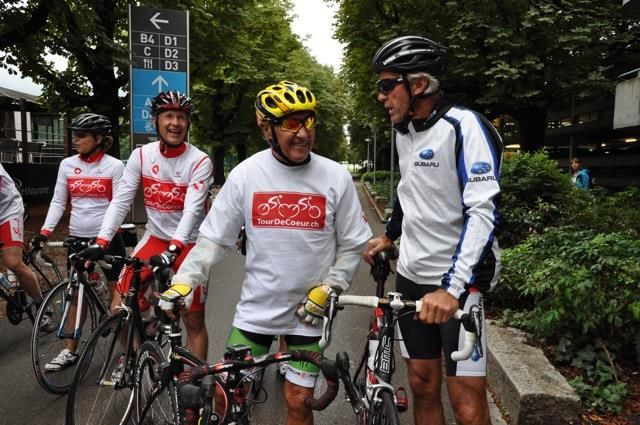
• „Kein Wunder, Du bist halt nicht mehr
  zwanzig, musst endlich aufhören mit der
  ewigen Rennerei...“
• „In Deinem Alter, und jetzt mit den
  Herzrhythmusstörungen und den gefährlichen
  Blutverdünnungsmitteln (Xarelto) darfst Du
  wirklich nicht mehr rennen, das ist viel zu
  gefährlich !“
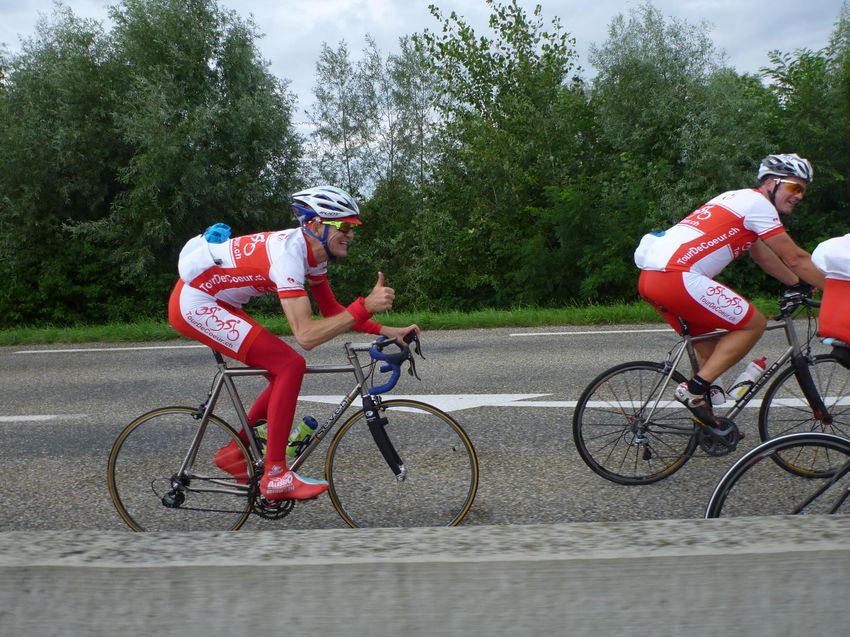
Herr Doktor: darf ich wieder Rennen gehen?

Fallbeispiel 2
• 74 jähriger, lebenslanger Radsportler, Ex-Profi
• 5-7 Stunden Training pro Woche bis OP
• Künstliche Herzklappe plus Bypass-OP vor 3
  Monaten -> Marcumar INR 2.5
• Trainingsverbot vom Reha-Arzt
• Ist stark verunsichert, möchte gerne wieder
  trainieren
• Velofahren = Lebensqualität
 Herr Doktor: darf ich wieder aufs Velo ?
Sport?
...or No Sport?
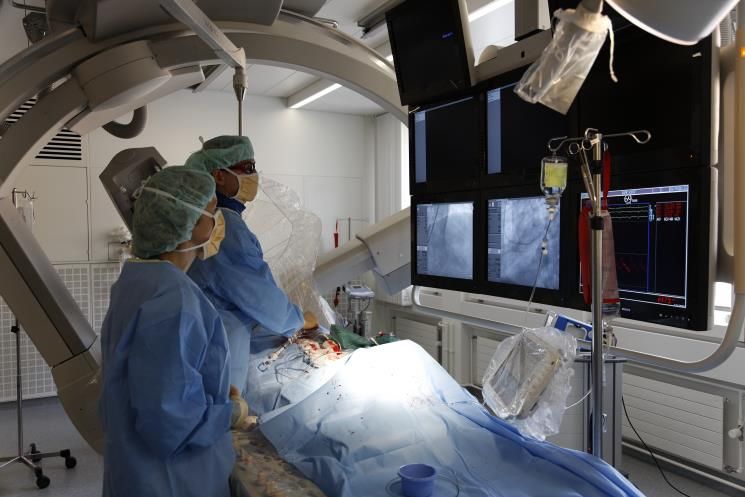
Get started: Agenda
• Was definiert die körperliche Leistungsfähigkeit bei
  jedem Menschen?
• Was sind Wirkungen von Training auf das Herz, die
  Skelettmuskulatur und das Gefässystem?
• Warum Training gerade bei Herzkranken sinnvoll ist
• Welche Sportart?
• Ist Sport sicher bei Herzkranken?
• Was braucht es vor Aufnahme eines
  Trainingprogrammes und im Verlauf um die
  Patientensicherheit zu gewährleisten?
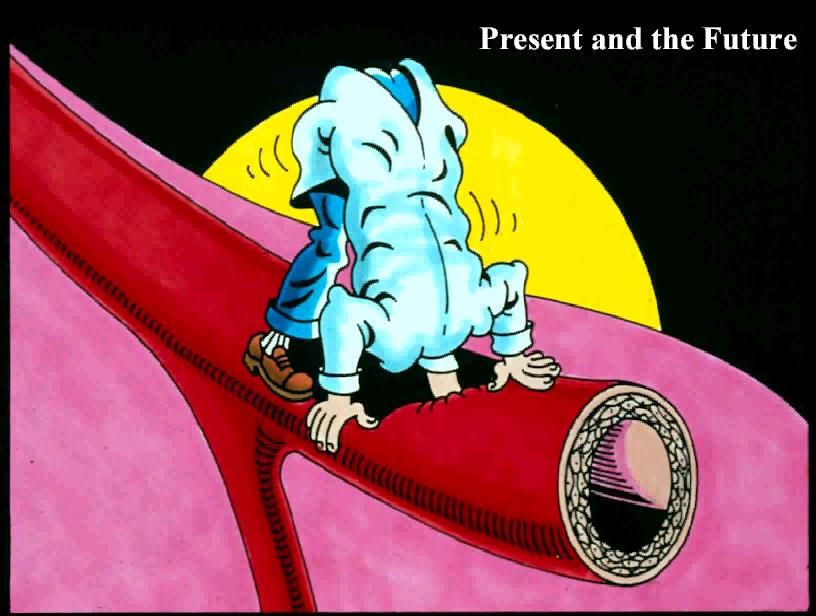
Anticoagulation: Indikationen
• Häufig: Herzkreislauferkrankungen
   Vorhofflimmern
   künstliche Herzklappe
   Lungenembolie
   Venenthrombose
• OP mit passagerer Immobilisation
• Selten: Krankheiten des Gerinnungssystem
   Faktor V Leiden-Mutation
   Phospholipid-AK-Syndrom
Incidenz von Herzkrankheiten in
 Abhängigkeit vom Lebensalter
Was definiert die körperliche Leistungsfähigkeit
   bei jedem Menschen, gesund oder herzkrank?

Regulation der Herzfrequenz     Trainingszustand der Körperperipherie
               Durchblutung
               Kraftentwicklung

                                 +

                                     Vasodilatory function/structure peripheral vasculature
 * In case of normal pulmonary       Function/ultrastructure of skeletal muscle
   function                          Power to weight ratio
Fähigkeit der Arterien zur Weitstellung
Struktur der peripheren Gefässe
• Bluttransport zum Skelettmuskel
• Gefässweitstellung/Zunahme der
Durchblutung bei Training
• Sauerstoffaufnahme und Versorgung
der Muskelzellen mit Sauerstoff
• Kapillaren/MuskelquerschnittsflächeFunktion/Ultrastruktur der Skelettmuskulatur
Aerober (=Sauerstoff-nutzender-)Energiestoffwechsel als „Schlüssel“
zur Verbesserung der Leistungsfähigkeit
• Enges Netzwerk zwischen Kapillaren und
Skelettmuskelzellen, d.h. O2-Versorgung
und O2-Verbrauch
• Muskel: Kraftentwicklung durch aerobe/an-
aerobe Energiegewinnung
(ATP-PC; anaerobic glycolysis; aerobic metabolism)
• Muskelfasern pro Querschnittsfläche
-> Kraftentwicklung
• Mitochondrien als Kraftwerke der Muskeln
• Mitochondrien/Muskelquerschnittsfläche
• Ox. Enzyme/Mitochondria -> Energie/LeistungLeistungsgewicht
Power 400 Watt Power 120 Watt
Gewicht 60 kg Weight 120 kg
Ratio: 6.6 Watt/kg Ratio: 1 Watt/kg
17.11.2013 19Training: attraktives Konzept
insbesonders bei Herzkranken
Überwiegende Wirkung auf den funktionellen Zustand der
Körperperipherie (Skelettmuskel, peripheres Gefässystem, Leistungsgewicht)
+Training verbessert die Belastungsdauer bei Patienten
mit chronischer Herzschwäche
Single-load exercise duration in the control and training groups before and after the
intervention
Beniaminovitz, A. et al. J Am Coll Cardiol 2002;40:1602-1608
17.11.2013 21Fähigkeit der Arterien zur Weitstellung
Struktur der peripheren Gefässe
Wirkungen von Training
• Bluttransport zum Skelettmuskel
• Gefässweitstellung/Zunahme der
Durchblutung bei Training
• Sauerstoffaufnahme und Versorgung
der Muskelzellen mit Sauerstoff
• Kapillaren/MuskelquerschnittsflächeFunktion/Ultrastruktur der Skelettmuskulatur
Wirkungen von Training
• Enges Netzwerk zwischen Kapillaren und
Skelettmuskelzellen, d.h. O2-Versorgung
und O2-Verbrauch
• Muskel: Kraftentwicklung durch aerobe/an-
aerobe Energiegewinnung
(ATP-PC; anaerobic glycolysis; aerobic metabolism)
• Muskelfasern pro Querschnittsfläche
-> Kraftentwicklung
• Mitochondrien als Kraftwerke der Muskeln
• Mitochondrien/Muskelquerschnittsfläche
• Ox. Enzyme/Mitochondria -> Energie/LeistungLeistungsgewicht: Wirkungen von Training Zunahme der Leistung, Abnahme des Gewichts
• Warum hat Training diese Wirkungen bei
  Herzkranken?
• Wie funktioniert das?
Chronische Herzschwäche nach Herzinfarkt
             .
 a) Herz: Pumpfunktion irreversibel reduziert

 b) Skelettmuskel:
 a)                 reversible Veränderungen
     Functional deconditioning   of body periphery
     = impaired function of peripheral vasculature
 • Reduktion der function
     = impaired  Mitochondriengrösse
                          of skeletal muscle
 •    Reduktion der Mitochondrienzahl pro Muskelquerschnittsfläche
 •    Reduktion der Muskelfasern pro Muskelquerschnittsfläche
 c)
 •
       Reduced Power to weight ratio
      Reduktion der oxidativen Enzyme in den Mitochondrien

 • Diese
 d)  Cytokine-activation    (TNF, IL-6)
         Veränderungen korrelieren        mit der Leistungsfähigkeit
 -> cachexia, skeletal muscle catabolism
 -> markers of adverse
                Drexler H outcome
                          et al: Circulation 1992; 85: 1751 - 1759

17.11.2013                                                             26
Training bei chronisch Herzkranken: Wirkung auf die Fitness
und Skelettmuskelabnormalitäten in der Beinmuskulatur
Regelmässiges Training hat keinen Effekt auf die Herzpumpleistung
pro Minute, steigert aber die Maximalleistung bei Patienten mit
chronischer Herzschwäche ... Durch Zunahme der oxidativen
Kapazität der Skelettmuskulatur
Nach 6 Monaten Training (5xpro Woche 30 Min. Ergometer)
• Zunahme der Mitochondriengrösse
• Zunahme der Mitochondrien pro Muskelquerschnittsfläche
• Zunahme der Muskelfasern pro Muskelquerschnittsfläch
• Zunahme der Sauerstoff zur Energiegewinnung nutzenden Enzyme
in den Mitochondrien
Hambrecht R et al.: J am Coll Cardiol 1995, 1239–1249Training verbessert in peripheren Arterien von chronisch
Herzkranken die Fähigkeit zur Gefässweitstellung
…aber nur so lange regelmässig trainiert wird!
Burkhard Hornig, et al.
Circulation Volume 93(2):210-214
Copyright © American Heart Association
January 15, 1996Ist Training vielleicht sogar eine Alternative zur
Behandlung von verengten Adern am Herzen an Stelle
der Reparatur mit Ballon und Stent?
Lieblingsarbeit von KardiologenBallondilatation im Vergleich zu Training als Therapie von
Patienten mit stabiler Angina pectoris und verengten
Herzkranzarterien. Eine randomisierte Studie
Training
PCI
Schlussfolgerung— Im Vergleich zur PCI führt ein 12-monatiges Trainingsprogramm zu einem besseren
Ereignis-freien Überleben und einer verbesserten Leistungsfähigkeit und kostet erst noch weniger, und
zwar weil in der Trainingsgruppe seltener erneute Hospitalisierungen und erneute Behandlungen an den
Herkranzgefässen erforderlich waren
Hambrecht R: Circulation. 2004;109:1371-1378Is „Sport“ = Training sicher bei
herzkranken Patienten?Physical training reduces mortality in patients
with chronic heart failure
Kaplan-Meier survival curves of cardiac death in trained group (broken line)
and untrained control group (solid line) during follow-up
Training
controls
17.11.2013 Belardinelli, R. et al. Circulation 1999;99:1173-1182 32Metaanalysis of published data
Physical training reduces mortality and hospitalisations
Physical training is safe in patients with heart disease
Even reduces mortality and costs due to reduction of Re-Hospitalisations
17.11.2013 33
Piepoli MF: Br Med J 2004;328:189Ist Sport für jeden Herzkranken sicher ? Cave: not for every patient, not in every situation!!!
Was braucht es, um Sport bei Herzkranken
     sicher durchführen zu können?
 Requiring a medical evaluation and a stress test before
 undertaking walking (or equivalent) exercise in broad, healthy
 populations of adults has not been proven to be useful and
 could serve as a barrier to undertaking healthful exercise.

 Individuals who are planning more vigorous physical activity
 than walking (or equivalent) should consider a medical
 screening, particularly if they are in an age and cardiac risk
 factor classification that would indicate a higher risk of
 exercise-related adverse events.

                Circulation. 2013;128:873-934
Faustregel
Nordic walking darf jeder
Alles, was intensiver ist, benötigt Freigabe
durch Arzt nach vorheriger Untersuchung
Es gibt aktuelle Leitlinien zum Thema
Sport bei HerzkrankenExercise Standards for Testing and Training:
A Scientific Statement From the American
Heart Association
Circulation. 2013;128:873-934
Definition of four risk categories from
Class A) apparent healthy humans
Class B) Those at low to moderate Risk for Cardiac Complications During Exercise
Class C) Those at Moderate to High Risk for Cardiac Complications During Exercise
Class D) known severe/unstable heart diseaseWer braucht ein Belastungs-EKG und sollte vom Kar- diologen gesehen werden bevor er/sie mit Sport beginnt?
AHA Scientific Statement
Exercise Standards for Testing and Training
Class A: Apparently Healthy Individuals
1. A-1: Children, adolescents, men
Diese Patienten brauchen ein Belastungs-EKG und sollten
  vom Kardiologen vor Beginn eines Sportprogrammes
     und im Verlauf ca. alle 6 Monate getestet werden

Definition of four risk categories from

Class A) apparent healthy humans
Class B) Those at low to moderate Risk for Cardiac Complications During Exercise
Class C) Those at Moderate to High Risk for Cardiac Complications During Exercise
Class D) known severe/unstable heart disease

 Für diese Patienten Sport/Training nicht empfohlen!
Class B: 1. CAD (MI, coronary artery bypass graft, percutaneous transluminal coronary angioplasty, angina pectoris, abnormal exercise test, and abnormal coronary angiograms); includes patients whose condition is stable and who have the clinical characteristics outlined below 2. Valvular heart disease, excluding severe valvular stenosis or regurgitation, with the clinical characteristics as outlined below 3. Congenital heart disease; risk stratification for patients with congenital heart disease should be guided by the 27th Bethesda Conference recommendations145 4. Cardiomyopathy: ejection fraction ≤30%; includes stable patients with heart failure with clinical characteristics as outlined below but not HCM or recent myocarditis 5. Exercise test abnormalities that do not meet any of the high-risk criteria outlined in Class C (Table 5)
Class C: Those at Moderate to High Risk for
Cardiac Complications During Exercise or
Unable to Self-Regulate Activity or to
Understand Recommended Activity Level

1. CAD with the clinical characteristics
outlined below
2. Valvular heart disease, excluding severe
valvular stenosis or regurgitation with the
clinical characteristics as outlined below
3. Congenital heart disease; risk stratification
for patients with congenital heart disease
should be guided by the 27th Bethesda
Conference recommendations145
4. Cardiomyopathy: ejection fraction ≤30%;
includes stable patients with heart failure with
clinical characteristics as outlined below but
not HCM or recent myocarditis
5. Complex ventricular arrhythmias not well
controlled
Clinical characteristics (any of the following)1.
New York Heart Association class III or IV
2. Exercise test results
3. Exercise capacity
Clinical characteristics (must include all of the
following):1. New York Heart Association class
I or II2. Exercise capacity >6 METs
3. No evidence of heart failure
4. No evidence of myocardial ischemia or
angina at rest or on the exercise test at or
below 6 METs
5. Appropriate rise in systolic blood pressure
during exercise
6. Absence of sustained or nonsustained VT at
rest or with exercise
7. Ability to satisfactorily self-monitor
intensity of activity
Activity guidelines: Activity should be
individualized, with exercise prescription
provided by qualified individuals and approved
by primary healthcare provider
Supervision required: Medical supervision
during initial prescription session is beneficial.

Supervision by appropriate trained nonmedical
personnel for other exercise sessions should
occur until the individual understands how to
monitor his or her activity. Medical personnel
should be trained and certified in Advanced
Training/Sport ist nicht empfohlen für Class D Patienten
              Class D: Unstable Disease With
              Activity Restriction*

              1. Unstable ischemia
              2. Severe and symptomatic valvular
              stenosis or regurgitation
              3. Congenital heart disease; criteria for
              risk that would prohibit exercise
              conditioning in patients with congenital
              heart disease should be guided by the
              27th Bethesda Conference
              recommendations609
              4. Heart failure that is not compensated

              5. Uncontrolled arrhythmias
              6. Other medical conditions that could be
              aggravated by exercise
Survival of the fittest – welcher Sport? 17.11.2013 45
General Guidelines for Endurance
and Resistance Training
Endurance training
Frequency     ≥5 d/wk
Intensity 55%–90% maximum predicted HR*
or
40%–80% O2max or HR reserve
RPE 12–16
Modality Walking, treadmill, cycling, etc
Duration 30–60 min

Resistance training
Frequency       2–3 d/wk
Intensity 50%–80% of 1-RM
or RPE 12–16
1–3 sets of 8–15 repetitions per exercise
Modality Lower extremity: leg extensions, leg
curls, leg press. Upper extremity: bench press,
lateral pulldowns, biceps curl, triceps
extension
Duration 30–45 min
 Circulation. 2013;128:873-934
Ist Sport möglich trotz Therapie mit
         Antikoagulantien?
Ist Sport möglich trotz Therapie mit
Antikoagulantien?
• Grundsätzlich Ja!
Aber:
• Regelmässige INR-Kontrolle und
Dosisanpassung bei Marcoumar obligat
• Kontaktsportarten nicht empfohlen
Boxen/Karate/Ringen/Fussball
• Helm beim Ski-/Velofahren obligatWith two sticks
With two wheels
http://www.ecf.com/news/the-cycling-calculator-valuing-the-health-benefits-of-cycling/
Dancing in heart disease
Heaven... I'm in heaven,
                               And my heart beats so that I can hardly speak.
                                  And I seem to find the happiness I seek,
                              When we're out together dancing cheek to cheek.
                                              -- Irving Berlin

    Belardinelli R et al. Circ Heart Fail 2008;1:107-114

Copyright © American Heart Association
Get started: Agenda • Was definiert die körperliche Leistungsfähigkeit bei jedem Menschen? • Was sind Wirkungen von Training auf das Herz, die Skelettmuskulatur und das Gefässystem? • Warum Training gerade bei Herzkranken sinnvoll ist • Welche Sportart? • Ist Sport sicher bei Herzkranken? • Was braucht es vor Aufnahme eines Trainingprogrammes und im Verlauf um die Patientensicherheit zu gewährleisten?
Merci beaucoup pour votre attention et bonne route!
Physical training improves functions of peripheral arteries
                 in patients with heart disease

Reduction of Angiotensin-II mediated vasoconstriction by reduction
of AT1-receptor-expression and NADPH-Oxidase-Expression
                Adams V: Circulation 2005;111:555-562

Improvement of endothelium-dependent vasodilatation in peripheral
conduit and resistance arteries
                Hornig B et al, Circulation 1996;93:210-214

Increase of capillary density per skeletal muscle cross sectional area
               Drexler H et al: Circulation 1992; 85: 1751 - 1759

17.11.2013                                                          55
Effect of Exercise on Coronary Endothelial Function in
Patients with Coronary Artery Disease
Epicardial conduit artery- Coronary Microcirculation
> -> Myocardial perfusion
-> Plaque rupture
Hambrecht R et al.: N Engl J Med 2000; 342:454-460Percutaneous Coronary Angioplasty Compared With Exercise
Training in Patients With Stable Coronary Artery Disease
Trainingsgruppe
PTCA-Gruppe
Conclusions— Compared with PCI, a 12-month program of regular physical
exercise in selected patients with stable coronary artery disease resulted in superior
event-free survival and exercise capacity at lower costs, notably owing to reduced
rehospitalizations and repeat revascularizations
17.11.2013 Hambrecht R: Circulation. 2004;109:1371-1378 57Physical training improves quality of life in patients with chronic
heart failure
Changes in the Minnesota Living With Heart Failure (MHL) scores for
trained (open circles) and untrained patients (closed circles) at baseline (test 1)
and after 2, 14, and 26 months (tests 2, 3, and 4)
17.11.2013
Belardinelli, R. et al. Circulation 1999;99:1173-1182 58Physical training reduces hospitalisations in patients with
chronic heart failure
Kaplan-Meier curves of survival without hospital readmission for heart failure in trained patients (broken line)
and untrained patients (solid line) during follow-up
Training
Controls
17.11.2013 Belardinelli, R. et al. Circulation 1999;99:1173-1182 59Physical training improves endothelial function in heart failure patients By increasing eNOS gene expression Hornig B et al. Circulation 1996;93:210-214 Sessa et al, Circ Res 1994;74:349-3530
Körperliches Ausdauer-Training (Ergometer) verbessert spezifisch
 die Funktionalität des peripheren Gefäss-Systems bei Herzkranken

   Abnahme der Angiotensin-II vermittelten Vasokonstriktion
   durch Reduktion der AT1-Rezeptor-Expression und Reduktion
   der NADPH-Oxidase-Expression
                 Adams V: Circulation 2005;111:555-562

  Verbesserung der endothelabhängigen Vasodilatation im Bereich
  der peripheren Leitungs- und Widerstandsgefässe
                 Hornig B et al, Circulation 1996;93:210-214

  Zunahme der Kapillardichte pro Muskelfaserquerschnitt

                Drexler H et al: Circulation 1992; 85: 1751 - 1759
  17.11.2013                                                         62
Superior Cardiovascular Effect of Aerobic Interval Training Versus
Moderate Continuous Training in Heart Failure Patients
Wisløff U et al. Circulation 2007;115:3086-3094
Copyright © American Heart AssociationWhy could „Sport“ be attractive for
patients over 40?
• Patients have been physically active until index event
(heart attack, arrhythmia...)
• Sport as integral part of quality of life
• More and more persons > 40 start to discover sport
as a goal after a succesful professional career beside
job and family
• Physical fitness in the elderly may even be decisive
for managing to live in the own apartment/houseSport as a mass phenomenon
Why could „Sport“ be attractive for
       patients over 40?
Is „Sport“ = physical training safe in
patients with heart disease ?Radsport für Herzkranke, um die
Leistungsfähigkeit zu erhalten?
Grundprinzip: Leistungsfähigkeit des Organismus bestimmt durch
a) Pumpfunktion des Herzens (Frequenz/Durchblutung/Kraft)
b) Trainingszustand der Körperperipherie
= Funktion/Struktur des peripheren Gefäss-System
= Funktion des Skelettmuskels
c) Leistungsgewicht
17.11.2013 71Why could „Sport“ be attractive for
patients over 40?
Physical capability defined by
a) Function of the heart
b) Condition of the skeletal muscle and peripheral
vasculatureBackground
Physical capability defined by functional state of:
+Leistungs-Gewicht
Leistung 600 KWatt Leistung 300 KW
Gewicht 600 kg Gewicht 40 000 kg
Leistungsgewicht 1 Kwatt/kg Leistungsgewicht 0.0075 Kwatt/kg
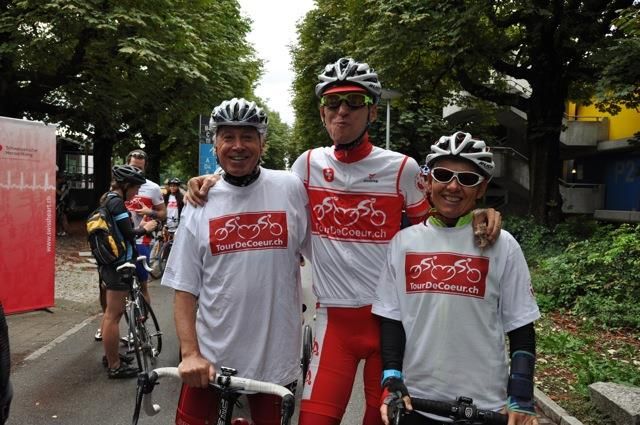
17.11.2013 74Höhepunkt Saison 2011:
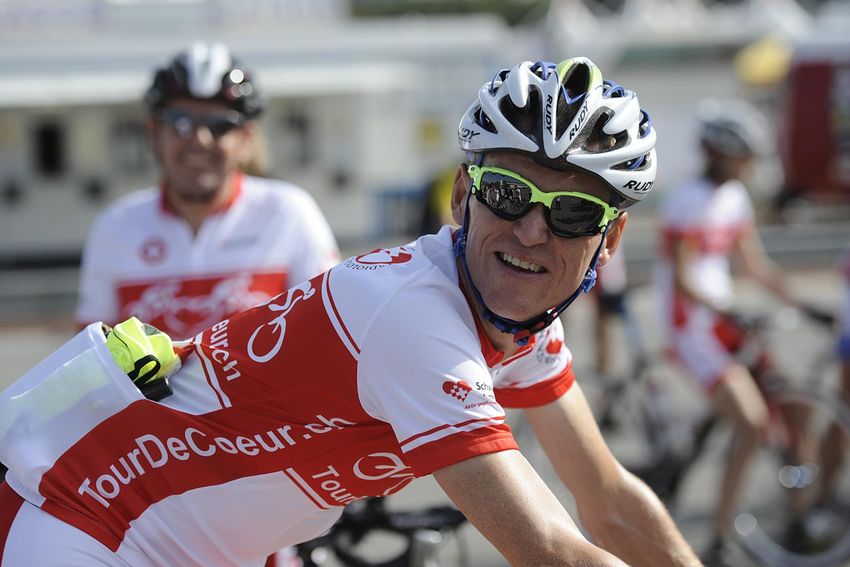
Tour de coeur: Bern-Paris in 6 Etappen
17.11.2013 75Endothelial Dysfunction of Coronary arteries
Independent predictor for cardiovascular events
Schächinger V et al.; Circulation 2000;101:1899Effects of physical training
Major effect on the functional state of body periphery
(skeletal muscle, peripheral vasculature and power/weight ratio)
<Regular Physical Activity and Risk of Atrial Fibrillation A Systematic Review and Meta-analysis Conclusions—Our data do not support a statistically significant association between regular physical activity and increased incidence of atrial fibrillation. Circ Arrhythm Electrophysiol. 2013;6:252-256,
Physical training reduces dyspnoe and improves exercise duration
in patients with chronic heart failure
Perceived dyspnea using the modified Borg scale during submaximal testing in the training group
before and after training
Beniaminovitz, A. et al. J Am Coll Cardiol 2002;40:1602-1608
17.11.2013 79The medical history should include the following: a history of familial CAD or heart failure; presence of valvular heart disease, stable or unstable angina, congenital heart disease, stroke, sudden death, history of pulmonary disease (ie, chronic obstructive pulmonary disease or asthma); presence of symptoms including chest discomfort, dizziness, and shortness of breath (at rest or with activities of daily living) and leg discomfort (claudication) suggesting cardiovascular or pulmonary disease;
Among men 55 years of age undertaking vigorous exercise who have diabetes mellitus or 2 other risk factors for CVD, a medical evaluation is advised. This should include a medical history, a physical examination, and a risk factor profile. For most, an electrocardiographic stress test is recommended.
Regular Physical Activity and Risk of Atrial
Fibrillation
A Systematic Review and Meta-analysis

Conclusions—Our data do not support a
statistically significant association between
regular physical activity and increased
incidence of atrial fibrillation.

Circ Arrhythm Electrophysiol. 2013;6:252-256,
You can also read


