High School Culinary Challenge - Northern Alberta Institute of Technology February 9, 2019
←
→
Page content transcription
If your browser does not render page correctly, please read the page content below
High School
        Culinary Challenge

Northern Alberta Institute of Technology
           February 9, 2019
High School Culinary Challenge
_________________________________________________________

Location:            NAIT Culinary Kitchens
                     South kitchen labs beside the Common Market

Date:                February 9, 2019

Start Time:          6:30 am arrival (group A)
                     11:30 am arrival (group B)

Duration:            7:00 - 11:00 am (group A)
                     12:00 - 4:00 pm (group B)

Purpose of Challenge:
To promote professionalism, team building and the pursuit of culinary excellence.

Overview:
Each three-member team of high school students, using provided recipes, will
prepare six servings of a three-course meal (soup, entrée and dessert) to an
advanced level of the CTS Foods Program. Two portions of each course are to
be plated and presented to judges - one portion is for tasting, one portion is for
presentation. The remaining four portions are reserved. All food is to be
presented on provided plates. Competitors are free to consult reference books of
their choice.

Kitchen stations will be drawn and assigned by competition organizers. Food
items listed as par stock will be made available to all participants and held in a
common area. Judges reserve the quantities. Carefully note the presentation
times for all courses.

All competitors are responsible for the complete cleanup of their work
areas, stoves, sinks, floors and surrounding areas before leaving the
competition site. Points will be deducted for competitors who do not
comply.

                                Competition Menu

                              Carrot Ginger Soup
                   Chicken Cacciatore with Hand Cut Fettuccini
        Chocolate Mousse with Fruit Sauce and Sugar or Chocolate Garnish

                                                                            Page 2 of 13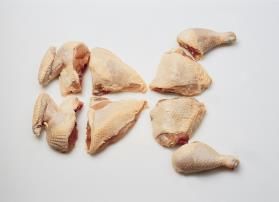
High School Culinary Challenge
_________________________________________________________

PRESENTATION TIMES:

General times are provided and are subject to change to meet competition
logistics.

   Appetizer:                10:00 - 10:05 am           (group A)

                              3:00 - 3:05 pm            (group B)

   Main Course:              10:30 - 10:35 am           (group A)

                              3:30 - 3:35 pm            (group B)

   Dessert:                  11:00 - 11:05 am           (group A)

                              4:00 - 4:05 pm            (group B)

Labs are to be completely cleaned or marks will be deducted.

CLOTHING REQUIREMENTS:
Competitors will be professionally attired in a white chef jacket, checked or black
pants, apron, and hairnet as required. Chef hats will be provided and must be
worn by all competitors. Appropriate kitchen shoes (closed toes, non-skid soles,
and leather-style surface) No athletic or running shoes are allowed.

EQUIPMENT AND MATERIALS:
French knife, paring knife, vegetable peeler, French whip, wooden spoon, food
containers, meat mallet, piping bag, tips, measuring spoons, hand mixer, tool
box, and any other small tools required. NAIT will provide the pots, pans and
bowls. Competitors must bring their own small tools and knife kits.

COOKING TERMINOLOGY:
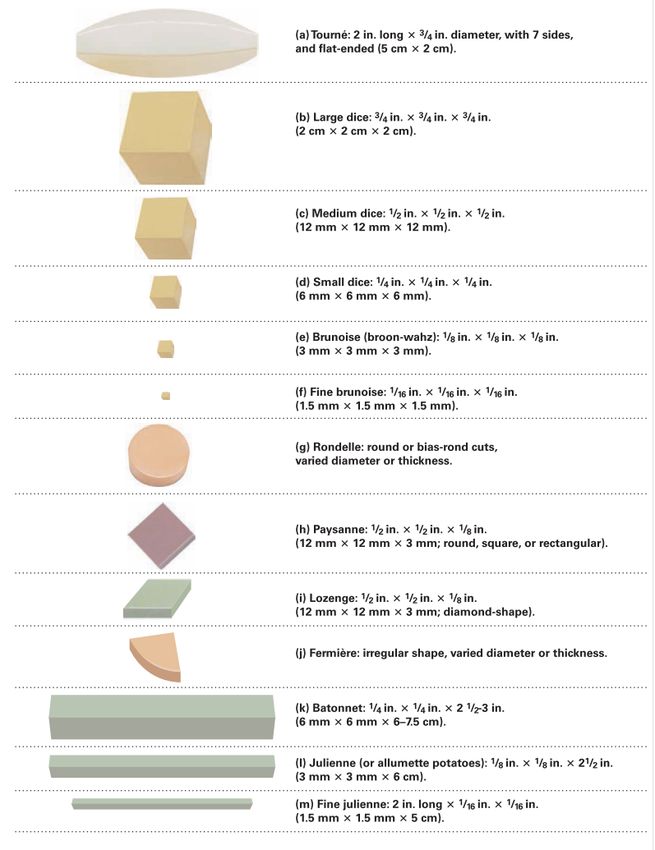
   •   Batonnet – 1/4 inch by 1/4 inch by 3 inches (6mm x 6mm x 76mm)
   •   Small dice – 1/4 inch by 1/4 inch by 1/4 inch (6mm x 6mm x 6mm)
   •   Medium dice – ½ inch by ½ inch by ½ inch (12mm x 12mm x 12mm)
   •   Reduce – to cook down to desired consistency
   •   t – teaspoon – 5 ml
   •   T – tablespoon – 15 ml

                                                                           Page 3 of 13
High School Culinary Challenge
_________________________________________________________
Page 4 of 13High School Culinary Challenge
_________________________________________________________
SAFETY REQUIREMENTS:
• Oven mitts, white terry cloth or t-towel
• Non-slip leather-style shoes
• No rings, watches or personal jewelry
• Loose hair completely restrained
• Competitors are required to observe all safety standards during the
competition.
RELATED CAREER AND TECHNOLOGY STUDY MODULES:
• Module FOD 1020 Baking Basics
• Module FOD 2070 Stocks, Soups and Sauces
• Module FOD 2080 Vegetables Fruits and Grains
• Module FOD 2090 Creative Cold Foods
• Module FOD 2100 Basic Meat Cookery
• Module FOD 2110 Fish
• Module FOD 2150 Food Safety & Sanitation
• Module FOD 3050 Advanced Soups and Sauces
• Module FOD 3060 Food Presentation
• Module FOD 3080 Advanced Meat Cookery
JUDGING CRITERIA:
Includes:
• adherence to safety and sanitation rules as contained in the sanitation
code
• interpretation skills of scope documents and provided recipes
• general cooking skills, work habits, cooking techniques, development of
flavors, degrees of doneness, texture, temperature controls, presentation
skills and effective utilization of food products
• cooperation with others in kitchen, effective team participation
Page 5 of 13High School Culinary Challenge
_________________________________________________________
Par-Stock List
Dry Storage Vegetables Stocks / Sauces Specialty Items
Flour (AP, Pastry, Bread) Carrots Chicken Stock Vanilla extract
Salt and pepper Celery Bay leaf
Sugars (white, brown, icing) Garlic Canned Plum Tomatoes
Tabasco Onions White pepper
Worcestershire sauce Green Peppers Liquid honey
Chocolate (white, dark, milk) Lemon Juice
Canola / Olive oil
Cornstarch
Cheesecloth
String
Dairy Fruits Meat Items Fresh Herbs
Eggs Strawberries Whole Chicken Parsley
Butter Blueberries Thyme
Whipping cream Raspberries Mint
Basil
Frozen
Frozen Raspberries
Page 6 of 13High School Culinary Challenge
_________________________________________________________
MARKING CRITERIA:
Professional attire, hats, aprons, shoes
Personal hygiene, hair restrained
15% Sanitation Cutting board and utensil sanitation
Correct food handling and storage
Cleanup - entire work area and adjacent areas/sinks and
stoves cleaned and sanitized (5-mark penalty if
incomplete)
other____________________________________________
5% Timing All products presented at noted time
5-minute period of grace – any later results in zero
5% Temperature Hot food served hot on heated plates
Cold foods served cold on chilled plates
25% Organization Follows worksheet, follows timetable
Professional use of knives, tools and equipment
Station maintained neat, clean and orderly
Demonstrates safe working practices
Effective food utilization / wastage
Accuracy of knife skills
Correct cooking methods
Team work
other___________________________________________
Portion size / balance
15% Presentation Effective color / contrast
Clean plates, neatness
Technical skills (slicing, dicing, turning etc.)
other__________________________________________
Correct textures of food, consistency of sauces
35% Taste Degree of doneness, not over/undercooked
Balanced taste and seasonings – enhanced natural flavors
Not bland, under/over seasoned
Not excessively salty, sour, sweet or bitter
Not burnt, metallic tasting or aftertaste
Page 7 of 13High School Culinary Challenge
_________________________________________________________
Cutting chicken into quarters and eighths, bone in
• Place the chicken on the cutting board breast up. Split the chicken down
the center of the breast with a heavy knife.
• Spread the chicken open and spread through the bones on one side of the
backbone.
• Cut off the backbone completely and save for stocks.
• Cut through the skin between the leg and the breast.
• Pull the leg back and cut off the entire leg section. Repeat with the other
half. The chicken is now in quarters.
• To cut into eighths, cut the drumstick and thigh apart at the joint.
• Cut the breast and wing quarter into two equal pieces. Another method is
simply to cut off the wing.
• The chicken cut into eighths. Note that the first joint of each wing has been
cut off.
Page 8 of 13High School Culinary Challenge
_________________________________________________________
RECIPES
Students a MUST ADHERE to specified portions and ingredients to ensure consistent
results and equitable judging.
Carrot Ginger Soup
Portion size: 8 fl oz
Butter 90grams
Onions, Small diced 125grams
Carrots 425grams
Ginger, fresh grated 15mls
Flour 70grams
Chicken Stock 1L
Chicken Stock as needed
Salt to taste
White Pepper to taste
Heavy Cream 125mls
1. Heat the butter in a heavy saucepot over moderate heat.
2. Add the onions, celery and ginger. Sweat the vegetables without letting them
brown.
3. Add the flour and stir to make a roux. Cook the roux a few minutes, but do not let
it start to brown.
4. Gradually beat in the stock. Bring to a boil, stirring with a whip as it thickens.
5. Simmer until vegetables are very tender.
6. Skim the soup carefully.
7. Pass the soup through a food mill to purée it, or purée with an immersion blender.
8. For a finer texture, pass the puréed soup through a fine china cap or cheesecloth.
9. Add enough hot stock to bring the soup to the proper consistency.
10. Heat the soup again, but do not let it boil.
11. Season to taste.
12. At service time, add the cream.
Page 9 of 13High School Culinary Challenge
_________________________________________________________
Chicken Cacciatore
Portion Size: 3 Pieces of Chicken (1 leg, 1 thigh and 1 breast portion)
Whole Chickens 2
Flour 250grams
Salt 15ml
Pepper 3.5ml
Canola Oil 125ml
Onion, julienne 300grams
Green Pepper, julienne 300grams
Celery, Batonnet 75grams
Carrot, Bruinoise 75grams
Garlic, chopped fine 15ml
Chicken Stock 125mls
Tomatoes (canned), crushed with juice 1.25L
Tomato Paste 125mls
Bay Leaves 1
Basil, dry 1ml
1. Cut chicken into eighths.
2. Place the flour in a pan and season with salt and pepper.
3. Dredge the chicken in the flour. Shake off excess.
4. Heat the oil in a large sauté pan or skillet. Add the chicken pieces and brown well
on all sides over high heat.
5. Remove the chicken from the pan and place in a brazier.
6. Pour about 75ml of the oil used to brown the chickens into a saucepot. (Discard
the rest of the oil, but keep the sauté pan handy.)
7. Add the onion, green pepper, celery, carrot, and garlic. Sweat until nearly tender.
8. Add the stock, tomatoes, tomato paste, and herbs. Bring to a boil.
9. Add a ladleful of the sauce to the pan in which the chickens were browned.
Deglaze the pan and pour the liquid back into the sauce. Simmer about 5 minutes.
10. Pour the sauce over the chickens. Bring to a boil. Cover the pan and finish
cooking in a 300°F (150°C) oven or over low heat on the stove. Cooking will take
30 to 45 minutes.
11. When the chicken is tender, remove it from the sauce and place in a hotel pan.
12. Degrease the sauce. Reduce the sauce over high heat until thickened to desired
consistency. Adjust seasoning. Pour over the chicken.
Page 10 of 13High School Culinary Challenge
_________________________________________________________
Fresh Pasta
Bread Flour 250grams
Eggs 3
Olive Oil 15ml
Salt Pinch
1. Mound the flour on a work surface. Make a well in the center and add the eggs, oil
and salt.
2. Working from the centre outward, gradually mix the flour into the eggs to make a
dough.
3. When it is firm enough to knead, begin kneading the dough, incorporating more flour.
If the dough is still sticky when all the flour is incorporated, add more flour, a little at
a time. Knead well for at least 15 minutes.
4. Cover the dough and let it rest at least 30 minutes.
5. Cut the dough into 3 to 5 pieces. Set the rollers of a pasta machine at the widest
opening. Pass the pieces of dough through the machine folding them in thirds after
each pass and dusting them lightly with flour to keep them from getting sticky.
Continue passing each piece through the machine until it is smooth.
6. Working with one piece of dough at a time, decrease the width between the rollers
one notch and pass the dough through them again. After each pass, turn the rollers
one-notch narrower, dust the dough with flour, and pass it through again. Continue
until the dough is as thin as desired. The pasta is now ready to cut into desired shapes
and to cook.
Page 11 of 13High School Culinary Challenge
_________________________________________________________
Chocolate Mousse
Bittersweet Chocolate 250grams
Butter 62.5grams
Egg Yolks 90grams
Egg Whites 125 grams
Sugar 40grams
Heavy Whipping Cream 125ml
1. Melt the chocolate over hot water.
2. Remove from the heat and add the butter. Stir until the butter is melted, and
completely mixed in.
3. Add the egg yolks, one at a time. Mix in each yolk completely before adding the
next.
4. Beat the egg whites until they form soft peaks. Add the sugar and beat until the egg
whites form stiff but moist peaks. Do not overbeat.
5. Fold the egg whites into the chocolate.
6. Whip the heavy cream until it forms soft peaks. Fold it into the chocolate mixture.
7. Spoon the mousse into serving dishes, or use a pastry bag fitted with a star tube.
8. Chill the mousse well before serving.
Page 12 of 13High School Culinary Challenge
_________________________________________________________
Raspberry Sauce
Frozen Raspberries 150g
Sugar 75g
Water 85g
Corn Starch 5g
1. Combine the raspberries, sugar, and 60g of the water in a saucepan and bring to a
boil.
2. Meanwhile, make a slurry with the corn starch and the remaining 15g water.
3. Slowly whisk the slurry into the boiling purée. Return the mixture to a boil,
stirring constantly with a whisk until thickened.
4. Strain the sauce through a fine-mesh strainer.
Page 13 of 13You can also read


