How to make good food affordable & widely available - October 5 - 6, 2018 Loyola University Chicago 2160 S. 1st Avenue, Maywood, IL 60153 - Cook ...
←
→
Page content transcription
If your browser does not render page correctly, please read the page content below
October 5 – 6, 2018
    Loyola University Chicago
    2160 S. 1st Avenue, Maywood, IL 60153

How to make good
food affordable
& widely available
Acknowledgements
The 2018 Food Summit: How to Make Good Food Affordable & Widely Available was
organized by the Cook County Department of Public Health (CCDPH), Cook County Health
and Hospitals System, and Loyola University Chicago, Health Sciences Division. We would
like to acknowledge staff who played an integral role in planning this event.

Kiran Joshi, MD, MPH
CCDPH Attending Physician VIII

Gina Massuda Barnett, MPH
CCDPH Deputy Director of Public Health Programs

Dedra Ries, MPH
CCDPH Interim Program Manager, Chronic Disease

Keith Winn, MS                                                                                  Welcome to the 2018 Food Summit
CCDPH Public Health Educator V
                                                                                                Over the next two days, we will discuss how to make good food affordable and widely
April Tolbert, BS                                                                               available, and a new vision for food system transformation from the local food system
CCDPH Caseworker III                                                                            community. We will learn about investments and policy opportunities — including the
                                                                                                Good Food Purchasing Policy (GFPP) recently adopted by Cook County government —
Kimberley Conrad Junius, MFA, CCPH                                                              that advance equitable, healthy, and sustainable local and regional food systems. And we
CCDPH Public Health Educator V                                                                  will work together to identify actions for effective implementation.
Darcine Scales                                                                                  In May 2018, Cook County government adopted the GFPP resolution. This resolution
CCDPH Administrative Assistant I                                                                recognizes the important role that government plays in cultivating our local and
Nancy V. Parolin                                                                                regional food systems. GFPP is a metric-based procurement framework that supports
Assistant Director, Event Planning and Operations                                               institutional food buyers to make informed decisions and measure impact in five value
Loyola University Chicago, Health Sciences Division                                             categories: local economies, environmental sustainability, valued workforce, animal
                                                                                                welfare and nutrition. Eventually, vendors will need to meet certain benchmarks to be
Rus Pascual                                                                                     eligible to supply food to Cook County government sites. Working to meet these
Director of Business Operations and Campus Management                                           standards goes hand-in-hand with making our county a healthier place and ensuring
Loyola University Chicago, Health Sciences Division                                             every resident has the opportunity to thrive.
We would also like to thank: CCDPH Prevention Services and Community Epidemiology               Despite setbacks, we continue to “fight the good fight” and meet challenges to stimulate
Units for staffing the event; Opportunity Knocks and Proviso Partners for Health for            economic development, create quality jobs, improve health and sustain the environment
making the Pre-Summit Urban Farms Tour possible; Food Chain Workers Alliance and the            together. The GFPP brings exciting opportunities to transform our local and regional food
Chicago Food Policy Action Council for guiding the development of the agenda; our               systems to be more equitable, healthy and sustainable.
keynote speakers and panel moderators and members for sharing their stories, expertise
and insight; and facilitators for supporting the discussions.                                   Thank you for attending and bringing your expertise to the 2018 Food Summit. You have
                                                                                                the vision, the knowledge, and experience to help pave the way for GFPP implementation
Thanks to all of our supporters:                                                                and shape the future of our local and regional food systems.
Advocates for Urban Agriculture; Centro de Traba jadores Unidos; Chicago Food Policy
Action Council; Chicago Department of Public Health; Chicago Metropolitan Agency for
                                                                                                                                             Terry Mason, MD
Planning; Cook County Bureau of Economic Development, Department of Planning &
                                                                                                                                             Chief Operating Officer
Development; Cook County Department of Environment and Sustainability; FamilyFarmed;
                                                                                                                                             Cook County Department of Public Health
Food Chain Workers Alliance; Greater Chicago Food Depository; IFF; Illinois Environmental
Council; Illinois Public Health Institute; Illinois Stewardship Alliance; Opportunity Knocks;
Proviso Partners for Health; South Suburban Mayors and Managers Association; University
of Illinois at Chicago, School of Public Health, Center for Healthy Work and the Illinois
Prevention Research Center, supported by the MidAmerica Center for Public Health
Practice; University of Illinois Extension; and USDA.                                                                                        1
AGENDA AT-A-GLANCE

                                                                                                    Friday – October 5, 2018
                                                                                                    Loyola University Chicago
Pre-Summit

URBAN FARMS TOUR
                                                                                                    Center for Translational Research and Education, Auditorium

                                                                    FRIDAY OCT. 5
                                                                                                    2160 S. 1st Avenue, Maywood, IL

                                                                    930 am - 1030 am or             12:00 - 1:00 pm           Check-In
                                                                    11 am - 12 pm

                                                                                                    1:00 pm                   Welcome
                                                                                                                              Dr. Margaret Faut Callahan, CRNA, PhD, FNAP, FAAN
                                                                                                                              Interim Provost and Chief Academic Officer, Loyola University
                                                                                                                              Chicago; Provost, Loyola University Chicago, Health Sciences Division
                                                                                                                              Dr. John Jay Shannon, MD
                                                                                                                              Chief Executive Officer
                                                                                                                              Cook County Health & Hospitals System (CCHHS)

                                                                                                                              KEYNOTE ADDRESSES
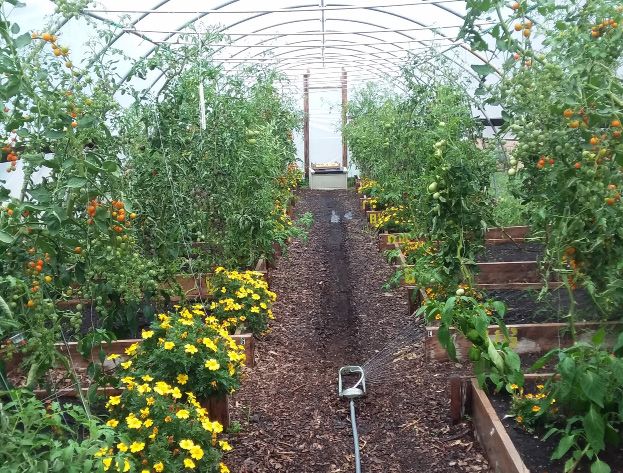
At the Pre-Summit Urban Farms Tour this morning, participants saw first-hand, two local
                                                                                                    1:15 – 1:45 pm            Why We Need to Act Now
urban farms developed on land donated by ReUse Depot at 50 W. Madison Street,
                                                                                                                              Dr. Terry Mason, MD, Chief Operating Officer
Maywood, IL. They heard each farm’s story, and how they support social and business                                           Cook County Department of Public Health
enterprises that are making a difference to local communities and residents.
                                                                                                    1:50 – 2:30 pm            Justice in the Food Chain: The Power of Grassroots Organizing
THE GIVING GARDEN                                                                                                             Suzanne Adely, Esq., Regional Organizer
                                                                                                                              Food Chain Workers Alliance
                   Christopher Epps, Proviso Partners for Health
                   Christopher is an inspiring urban farmer who works at Proviso Partners for
                   Health as a farm manager. Chris has first-hand experience with issues
                   related to food injustices, having lost his mother to diabetes. Now Chris uses   2:30 – 2:45 pm            Break
                   his platform to not only provide quality produce to the Proviso Township but
                                                                                                                              PANEL DISCUSSIONS
                   also educates the community on the importance of having access to healthy
                   foods incorporated into a daily diet.                                            2:45 – 3:45 pm            Local and Regional Food Systems Investments

                                                                                                    3:45 – 4:45 pm            Policies Across Sectors for Equitable, Healthy, and Sustainable Food
                                                                                                                              Systems
THE OK FARM
                   Natalie Woodcock, Opportunity Knocks
                   Natalie has experience in the fields of outdoor leadership, conservation         4:45 - 6:45 pm            Networking Reception & Sharing of “Unconference Ideas”
                   and environmental education, as well as four years of farming experience.
                   She is the creator of the OK Grower’s School, an 8-week agriculture and
                   environmental science program designed for individuals with intellectual and
                   developmental disabilities at Opportunity Knocks. Her interests include
                   food security, nutrition, and comprehensive and sustainable food systems.

                                               2                                                                                                    3
AGENDA AT-A-GLANCE                                                                               UNCONFERENCE IDEAS & TRACK INFO

Saturday – October 6, 2018                                                                       Unconference Ideas
Loyola University Chicago                                                                        This Summit has incorporated the concept of an “unconference,” which is a conference
Stritch School of Medicine (SSOM)                                                                led by the people attending it. To spur discussions and support networking, you will have
2160 S. 1st Ave., Maywood, IL                                                                    an opportunity to share your “unconference idea.” During the Networking Reception, there
                                                                                                 will be a board where you can identify a specific angle of a topic you want to talk about
                                                                                                 with others during lunch on Day 2. Other participants can indicate their interest in joining
8:00 - 9:00 am           Breakfast and Registration                             Lobby
                                                                                                 the discussion. Based on interest levels for each topic identified, staff of the Cook County
                         WELCOME                                                                 Department of Public Health may identify separate space during the lunch hour, as well as
                                                                                                 provide staffing and materials to support the discussions.
9:00 - 9:15 am           Dr. Terry Mason, MD, Chief Operating Officer           Tobin Hall
                         Cook County Department of Public Health
                                                                                                 Tracks
                         Commissioner Jesús “Chuy” García, 7th District                          Improving equity, affordability, accessibility and consumption of high quality, culturally
                         Cook County Board of Commissioners                                      relevant food in all communities is central to advancing Good Food Purchasing practices.
                                                                                                 Choose one of the four tracks below that align with the values of the Good Food
                         GOOD FOOD PURCHASING PROGRAM:                                           Purchasing Program (GFPP) and attend both sessions.
                         POWER OF PROCUREMENT
                                                                                                      •   Track   1:   Building Local Economies
9:15 - 10:15 am          Rodger Cooley, MUPP, Executive Director                Tobin Hall
                         Chicago Food Policy Action Council                                           •   Track   2:   Valued Workforce
                                                                                                      •   Track   3:   Nutrition/Animal Welfare
                         Allison Polke, RDN, LDN, Registered Dietician
                         Chicago Public Schools                                                       •   Track   4:   Environmental Sustainability
10:15 - 10:30 am         Break                                                                   See page 13 for an overview of the Good Food Purchasing Program and its values.
                         BREAKOUT SESSIONS | GFPP Values: Overview & Standards                   During the sessions of your track, you will have an opportunity to learn more about why
10:30 - 11:30 am           Track 1          Track 2            Track 3          Track 4
                                                                                                 this particular value(s) is/are critical, and the overall strategy and standards set by the
                           Session 1        Session 1          Session 1        Session 1        program. You will then participate in a guided visioning exercise that will lend itself to
                           Building Local   Valued             Nutrition/       Environmental    identifying what is possible if the GFPP is effectively implemented.
                           Economies        Workforce          Animal Welfare   Sustainability
                           (SSOM 160)       (SSOM 170)         (SSOM 360)       (SSOM 150)
11:30 - 11:45 am         Break

11:45 - 12:45 pm         Lunch and “Unconference Discussions”                   Atrium

12:45 - 1:00 pm          Break

1:00 - 2:30 pm             Session 2        Session 2          Session 2        Session 2
                           Facilitated      Facilitated        Facilitated      Facilitated
                           Discussion       Discussion         Discussion       Discussion
2:30 - 2:45 pm           Break

2:45 - 3:15 pm           Where do we go from here?                              Tobin Hall

3:15 - 3:30 pm           Closing Remarks & Adjournment                          Tobin Hall
                         Dr. Terry Mason, MD, Chief Operating Officer
                         Cook County Department of Public Health
                                                                                                                                                 5
WELCOME ADDRESSES - DAY 1                                                                               KEYNOTE ADDRESSES - DAY 1

                      Margaret Faut Callahan, CRNA, PhD, FNAP, FAAN                                     Why We Need to Act Now
                      Margaret Faut Callahan is Interim Provost and Chief Academic Officer of           Most of the leading causes of death – like diabetes, heart disease and cancer – are linked to food.
                      Loyola University Chicago and also serves as Provost of the Loyola                Increasingly, research is showing that plant-based food is medicine and can prevent and cure
                      University Chicago Health Sciences Division.                                      such diseases. Yet, most of the food we eat comes from our current industrial food system that
                                                                                                        provides lots of relatively inexpensive, unhealthy foods. To change the way we eat and shift the
                     Dr. Callahan received her Bachelor of Science in Nursing from Loyola and has
                                                                                                        burden of chronic diseases, we must act now and transform our food system to make locally-
                     more than 35 years of experience in health care and higher education.
                                                                                                        sourced, nutritious “good foods” affordable and widely available for everyone.
                     Before coming to the University, she served as interim provost at Marquette
                     University and dean and professor of the University’s College of Nursing.                               Terry Mason, MD
There she led the Marquette University College of Nursing through a successful reaccreditation,                              Dr. Terry Mason is the Chief Operating Officer of the Cook County
expanded the college’s freshmen class size by 77 percent, and implemented the Doctor of Nursing                              Department of Public Health (CCDPH). He was appointed by Cook County
Practice Program.                                                                                                            Board President Toni Preckwinkle in 2013, after serving as the Chief Medical
Before her time at Marquette, Dr. Callahan was at Rush University for many years, where she                                  Officer and Interim Chief Executive Officer for the Cook County Health and
served as chair of adult health nursing, director of the nurse anesthesia program, and professor.                            Hospitals System (CCHHS). Before joining CCDPH and CCHHS, Dr. Mason
Dr. Callahan also holds a Master of Science in Nursing and a Doctor of Philosophy in Nursing                                 served as Commissioner of the Chicago Department of Public Health.
Science from Rush University College of Nursing. Her research on pain management, palliative/                                   Dr. Mason received his BS in Biology from Loyola University and MD from
end-of-life care, and health policy is widely published. Additionally, she is a certified registered    Abraham Lincoln School of Medicine at the University of Illinois at Chicago. He devoted
nurse anesthetist.                                                                                      25 years of his life to private practice as a board-certified urologist. Dr. Mason is a nationally-
She is married to her husband Daniel and they have four children: Thomas, Daniel, Katherine, and        recognized health educator and inspirational speaker who champions holistic approaches to
Ryan. She is a member of the Midwest Nursing Research Society and the Institute of Medicine,            health management. His vision is to transform healthcare delivery through the integration of public
Chicago.                                                                                                health and public medicine to create a population-based strategy to manage chronic disease.

                                                                                                        For more than 20 years, Dr. Mason has been sharing his holistic approach to health on his popular
                                                                                                        call-in radio show “The Doctor in the House” on WVON 1690AM. He was also featured in the
                      John Jay Shannon, MD
                                                                                                        2010 film “Forks over Knives” and received a Telly Award for the video, “Not By Myself,” featuring
                      Dr. John Jay Shannon has served as the Chief Executive Officer of the Cook
                                                                                                        Marylyn Macoo and Billy Davis Jr.
                      County Health & Hospitals System (CCHHS) since June 2014, after serving
                      as the system’s Chief of Clinical Integration. Under Dr. Shannon’s leadership,
                      CCHHS is continuing on a transformative journey, developing an innovative         Justice in the Food Chain: The Power of Grassroots Organizing
                      and integrative approach to the fulfillment of the system’s mission by            Food sovereignty is understood as the right to healthy and culturally-appropriate food produced
                      aligning its role as a provider of care, both in traditional and correctional     through ecologically sound and sustainable methods, and the right for communities to define their
                      settings, a public health authority and a health plan.                            own food and agriculture systems. A growing U.S. food sovereignty movement has expanded and
                                                                                                        strengthened opportunities for everyone with a stake in a just food system to engage in grassroots
In addition to fulfilling the health system’s mission to protect the health of all Cook County          and policy work to transform our food systems as we see fit. The Good Food Purchasing Program
residents, Dr. Shannon is steadfast in his commitment to ensure CCHHS is a good steward of              is an exciting example of a multi-sector, grassroots project that offer the building blocks needed
taxpayer funds. Through significant operational improvements, CCHHS has reduced its reliance            for effective food system reform.
on local taxpayers by more than 75%. Today, local tax dollars represent 3% of CCHHS’ operating
revenues. Dr. Shannon currently serves on the Board of Trustees of the Illinois Hospital Association;                        Suzanne Adely, Esq.
the Board of the Greater Chicago Food Depository; and is a Fellow of the Institute of Medicine of                            Suzanne joined the Food Chain Workers Alliance in 2017. She is a former
Chicago.                                                                                                                     educator with a background in law, community organizing, and international
                                                                                                                             labor and human rights advocacy. For several years she worked with youth
                                                                                                                             and immigrant led organizations on Chicago’s southwest side before
                                                                                                                             pursuing a law degree at the City University of New York. From 2011 to 2014
                                                                                                                             she led the India project of the United Auto Workers Global Organizing
                                                                                                                             Institute and has since collaborated with several community-based and
                                                                                                                             international organizations in New York, the Middle East & North Africa on a
                                                                                                                             spectrum of economic and social justice campaigns.

                                                   6                                                                                                     7
INVESTMENTS PANEL                                                                                     INVESTMENTS PANEL

Local and Regional Food System Investments                                                                     Michéal Newman-Brooks, City of Chicago, Dept of Planning & Development
Investments in local and regional food systems can be a powerful catalyst for transforming                     Michéal serves as the Project Manager of Urban Agriculture for the
communities. Policymakers, practitioners and the financial community recognize the value and                   Sustainable Division of the Department of Planning and Development with
shared benefits of strengthening these systems and are working together to capitalize on                       the City of Chicago. She is also an instructor of Business and Agriculture
opportunities. This panel of experts will highlight the investments their organizations are making             courses offered by City Colleges of Chicago in conjunction with Chicago
to build local and regional food systems that support healthy food access, economic growth, a                  Botanic Gardens Windy City Harvest Programs. Her passion for
productive workforce and equity, and discuss reasons to be optimistic about the future.                        environmental and food justice lends to her 15+ years' experience in non and
                                                                                                               for profit businesses that includes Marketing and Advertising, Project
Moderator                                                                                                      Management, Construction and Escrow, Investments, Finance and
                                                                                                               Accounting, Community Organizing and Engagement, and Agriculture and
                     Vickie Lakes-Battle, IFF                                                                  Horticulture. She also serves as Chief Financial Officer of Canaan Community
                     Vickie is IFF’s first Executive Director for the Chicago Region. She provides             Redevelopment Corporation in the Englewood Community, Executive
                     broad strategic oversight of a full range of services in IFF’s oldest and                 Director of The 5 Loaves Co-Op and Farm, and partners with several local
                     largest market. Vickie joined IFF in 2014 as Director of Lending for                      urban gardens and community organizations in various roles. She sits on
                     Northern Illinois and the Chicago metro area. She brings more than 25 years’              governing boards of Growing Home, LARC (Lead Abatement Resource
                     experience in commercial banking, lending, New Markets Tax Credit                         Centers), and WEROCK for Girls. Michéal earned degrees in Business,
                     investing and executive level management within the Chicago-area                          Agriculture and Horticulture.
                     community and CDFI banks.
                                                                                                               Alan Shannon, United States Department of Agriculture
Panel Members                                                                                                  Alan serves at the public affairs director for USDA Food & Nutrition Service’s
                     Laura Calvert, Advocates for Urban Agriculture                                            Midwest Region. The Food & Nutrition Service administers 15 federal nutrition
                     Laura joined Advocates for Urban Agriculture (AUA) as Executive Director in               programs including the largest, SNAP (formerly the Food Stamp Program
                     2017. She has more than 10 years’ experience in the sustainable agriculture               or Link in Illinois), school meals, WIC, and others. Since 2009, he’s facilitated
                     field, having farmed throughout the country and most recently with the                    GoodGreens, a local food system network, and USDA health care partners,
                     Chicago Botanic Garden’s Windy City Harvest program. There, she worked                    a network of health care-related organizations that view hunger as a health
                     for eight seasons and trained hundreds of youth and adult program                         issue and explore ways to leverage USDA’s programs to address social
                     participants in agricultural practices and managed the business operations                determinants of health.
                     of the program. Laura is also a founding board member of the Illinois
                     Farmers Market Association and appointed member of the Illinois Farmers                   Jim Slama, FamilyFarmed
                     Market Task Force. She graduated from Bradley University with a bachelor’s                Jim founded FamilyFarmed 16 years ago and has built the nonprofit
                     degree in Business Management and holds a certificate in food hub                         organization into one of the most influential advocates for a better food
                     management from the University of Vermont.                                                system. Under Jim’s leadership, FamilyFarmed works across the Good Food
                                                                                                               movement spectrum — from farmers and processors to buyers and sellers
                     Nancy Kreith, MS, University of Illinois Extension                                        to investors to consumers and advocates — to increase the availability
                     Nancy currently works with Illinois Extension in Cook County as a Horticulture            of and access to fresh, nutritious food to make the way we eat healthier,
                     Educator focusing her efforts on south suburban Cook County. Nancy is                     more environmentally sustainable, and more economically dynamic.
                     passionate about exploring the world of plants and their amazing ability to               FamilyFarmed’s work is advanced by programs such as the annual Good
                     enhance social experience, bring economic value and strengthen the                        Food EXPO, launched in 2004; a Farmer Training series that has provided
                     environment. Nancy educates Master Gardeners (MG) in the subject areas                    workshops for nearly 15,000 farmers in 43 states; the business-focused Good
                     of soils, woody ornamental plants, vegetables, insects and landscaping.                   Food Financing & Innovation Conference and Good Food Accelerator, which
                     Together with the help of MG volunteers, thousands of Cook County residents               together have facilitated more than $50 million in financing for early-stage
                     benefit from school and community garden programs, sustainable landscape                  food entrepreneurs; and developing programs such as Good Food Is Good
                     classes and home gardener hotlines.                                                       Medicine and the Organic Grain Promotion Initiative.

                                                 8                                                                                         9
POLICY PANEL                                                                                           POLICY PANEL

Policies Across Sectors for Equitable, Healthy & Sustainable Food Systems                                        Ana Gua jardo, MA, Centro de Traba jadores Unidos: United Workers’ Center
                                                                                                                 Ana, the daughter of parents who migrated from Mexico, is the Executive
Policies at the local, state and federal levels play a key role in advancing equitable, healthy and              Director of Centro de Traba jadores Unidos (CTU). She began her career in
sustainable food systems. Key to this work is cross-sector collaboration, especially around policies             2004 with the Justice for Janitors Campaign led by SEIU Local 3 in
that can support the economic and financial security of low- and moderate-income communities                     Indianapolis. Ana then worked with the Illinois Coalition for Immigrant and
and populations. This panel of experts will discuss policy opportunities and alignment across the                Refugee Rights (ICIRR), where she and five fellows registered over 6,000
health, environment, agriculture, and labor sectors to build local and regional food systems that                southside residents to vote during the 2008 presidential elections. After
promote health, sustainability and food justice.                                                                 leaving ICIRR, she was the Paralegal/Outreach Coordinator for Working
Moderator                                                                                                        Hands Legal Clinic. In 2008, Ana co-founded CTU with southeast side
                                                                                                                 residents and workers and became the organization’s first Executive Director.
                     Sonya Marie Harper, State Representative, 6th District                                      Ana is recognized by others for her extensive experience in community
                     Illinois General Assembly                                                                   organizing. Most recently in 2017, she was selected as one of 30 fellows to
                     Rep. Harper has been a community activist on the South Side since she was                   participate in the University of Chicago Civic Leadership Academy. Ana holds
                     16 years old. Her passions include promoting community, economic                            a BA in Political Science from Chicago State University and an MA in Public
                     development and civic engagement in an effort to create more peaceful                       Policy from the University of Minnesota, Hubert H. Humphrey Institute.
                     and prosperous neighborhoods. A strong advocate for improving food
                     access, she spearheaded legislation to track food deserts and create                        Liz Moran Stelk, Illinois Stewardship Alliance
                     urban agriculture incentive zones across the state. She co-founded the Wood                 Liz is Executive Director of Illinois Stewardship Alliance. Liz is a veteran
                     Street Meet & Greet Community Garden, served as Director of Outreach                        organizer with experience in sustainable agriculture policy and building
                     at Growing Home, Inc. and helped to establish Grow Greater Englewood, a                     powerful organizations. She previously served as a Regional Organizer
                     local non-profit, which advances development projects, economic and                         with the Western Organization of Resource Councils in Montana where she
                     educational opportunities related to food, urban agriculture and healthy                    worked with farmers and ranchers in seven western states on local, state and
                     living. Rep. Harper serves on the following committees: Agriculture, Business               federal food and agricultural policy. She returned to her home state of
                     Incentives for Local Communities, Environment, Appropriations General                       Illinois to raise her two sons with her husband, David. She formerly organized
                     Services, Restorative Justice and Police and First Responders and is                        healthcare workers and led a variety of grassroots and electoral campaigns.
                     Sergeant-at-Arms for the Illinois Legislative Black Caucus.
                                                                                                                 Colleen Smith, Illinois Environmental Council (IEC)
                     Panel Members                                                                               Colleen is currently serving as Legislative Director at IEC. She has
                     Jason Berry, AICP, Village of Lemont                                                        previously served as a Government Affairs associate at Stricklin & Associates
                     Jason has served as the Economic & Community Development Director                           and as Chief of Staff for State Representative Ann Williams, working
                     for the Village of Lemont, IL, since July 2017, where he provides leadership                closely on environmental issues. Prior to those experiences, she worked as
                     for economic development, planning, building, code enforcement, and                         Women’s Outreach Coordinator for Quinn for Illinois, and as Clean Water
                     engineering activities and initiatives. Located 25 miles southwest of                       Advocate for the Sierra Club of Illinois. She is pursuing her Masters of
                     Chicago’s loop, Lemont was described by Chicago Magazine as a “Mecca for                    Environmental Law and Policy from Vermont Law School, and has a BA in
                     Millennials.” Jason looks to promote local assets in all forms to craft vibrant             Environmental Studies from University of Colorado-Boulder, 2012.
                     and connected communities. He is a board member of the Heritage
                                                                                                                 Aimee Ramirez, Greater Chicago Food Depository
                     Corridor Convention and Visitors Bureau. Previously, Jason was Deputy
                                                                                                                 Aimee Ramirez joined the Greater Chicago Food Depository in 2015 and
                     Director of Community Development for the City of Blue Island, IL, where he
                                                                                                                 serves as the food bank’s Manager of Government Relations and Policy.
                     worked from 2009 to 2017. Jason still calls Blue Island home and continues
                                                                                                                 In this role, she maintains contact with elected officials to protect and
                     to serve the City as a member of the Plan Commission.
                                                                                                                 strengthen anti-hunger policy at the local, state and federal levels. Aimee
                                                                                                                 organizes grassroots advocacy within the Food Depository’s network of
                                                                                                                 partner agencies. In addition, she coordinates public-private efforts
                                                                                                                 including the Cook County Food Access Task Force and The Illinois
                                                                                                                 Commission to End Hunger Benefits Access Workgroup. Prior to joining the
                                                                                                                 Food Depository, Aimee worked in the office of Congresswoman Robin Kelly
                                                                                                                 (IL-02) and was also a Special Assistant in the Cook County Bureau of
                                                                                                                 Administration. Aimee is also a member of the Illinois Women’s Institute for
                                                                                                                 Leadership Training Academy Class of 2018.
                                                 10                                                                                         11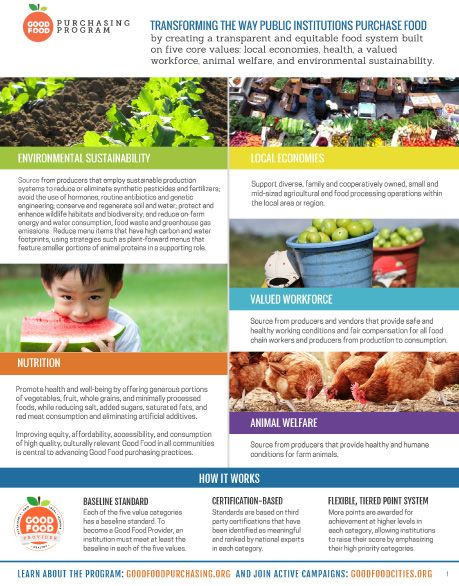
WELCOME & KEYNOTE ADDRESSES - Day 2                                                                     GOOD FOOD PURCHASING PROGRAM OVERVIEW
                       Cook County Commissioner Jesús “Chuy” García, 7th District
                       Commissioner Garcia was elected to the Cook County Board in 2010, and
                       continues to serve the 7th District. He was named floor leader by Board
                       President Toni Preckwinkle and helped enact a progressive reform agenda.
                       His accomplishments in this role include passing an ordinance that prevents
                       Cook County Jail from responding to detainer requests from Immigration
                       and Customs Enforcement (ICE). Detainer requests unjustly hold individuals
                       past their initial release date in order to transfer them to ICE custody. The
                       measure became the first of its kind in the nation and more than 250
localities followed the Commissioner’s lead nationwide. Commissioner Garcia also sponsored an
ordinance creating the Cook County Commission on Social Innovation and serves as its Chairman.
He maintains multiple leadership positions at the Board of Commissioners serving as Chairman of
the Criminal Justice Committee and the Business and Economic Development Committee, as
well as Vice-Chairman of the Health & Hospitals Committee. Commissioner Garcia came to the
United States in 1965. His family settled in Pilsen and later the Little Village neighborhood of
Chicago, where he still resides. He has a Bachelor’s Degree in Political Science and a Master’s in
Urban Planning, both from the University of Illinois-Chicago. Through his broad experience in
legislative and community work, Commissioner Garcia has become an expert in building
coalitions, bridging gaps on policy issues and barriers of race, ethnicity, income and gender.

Good Food Purchasing Policy: Power of Procurement
The Chicago Food Policy Action Council has collaborated with the City of Chicago, Chicago sister
agencies and Cook County to adopt the Good Food Purchasing Program (GFPP) in 2017 and 2018
covering close to $325 million in annual contracts and concessions. Chicago Public Schools (CPS)
is the first school district outside of California to adopt the GFPP. CPS and the Chicago Food Policy
Action Council have worked together to learn the challenges associated with bringing these
guiding principles to the Midwest. Hear about GFPP origins and goals; the benefits of adopting this
guidance; key stakeholders necessary for implementation; and best practices for getting started.

                      Rodger Cooley, MUPP
                      Rodger Cooley, Executive Director of the Chicago Food Policy Action Council,
                      has worked for 18+ years in urban agriculture and sustainable urban food
                      systems developing policy and projects. Rodger previously spent 9 years
                      with Heifer International, supporting the development of urban farming
                      projects in Chicago and the mid-western United States. He has a Master’s
                      degree in Urban Planning and Policy from the University of Illinois at Chicago
                      and Bachelor of Arts from Oberlin College and has served as adjunct faculty
                      at DePaul University and the Illinois Institute of Technology.

                      Allison Polke, RDN, LDN
                      Allison is the Registered Dietitian for the Office of Student Health and
                      Wellness at Chicago Public Schools where she oversees food access
                      programs, supports menu development and enforces wellness and chronic
                      conditions policies. Over the past 3 years, Allison has helped to drive
                      menu innovation using student voice and community feedback. She has
                      assisted in developing a robust Farm to School Program using the Good Food
                      Purchasing Policy to influence food system education in the classroom.
                      Allison graduated from Purdue University and has a background in dietetics,
                      wellness, and chronic condition management.
                                                 12                                                                         13

You can also read


