Essential Science Plus 6 PRIMARY Teacher's Book
←
→
Page content transcription
If your browser does not render page correctly, please read the page content below
Essential
                            Science Plus 6 PRIMARY
                            Teacher’s Book

490187 _ 0001-0011.indd 1                            03/10/13 08:16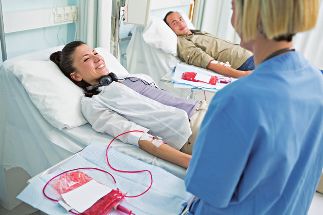
Student's material T
Student's Book T
The Essential Science Plus Student’s Book consists of twelve T
1
Unit 1
Nutrition
core units, which are organized into three terms. Each unit B
REFRESH YOUR MEMORY!
comprises ten pages and follows a regular pattern. 1.1 Blood is a gift of life. Donating blood is extremely
important, because blood transfusions are needed
in many operations. Blood is required in organ
NUTRITION
Foods contain nutrients. The main groups
of nutrients are…
THE DIGESTIVE SYSTEM
Digestion is the process by which…
a. our body eliminates the parts of food
w
S
transplants, after traffic accidents and in the
a. carbohydrates, fats, proteins, saliva we do not need.
treatment of illnesses that require blood
and vitamins. b. the heart pumps blood around our body.
components, such as chemotherapy.
b. carbohydrates, proteins, fats, minerals c. the blood carries nutrients and oxygen
There is no substitute for blood. In Spain, a blood
and vitamins.
a
transfusion is needed every two minutes. To become to parts of our body.
Opener page and Refresh your memory! a blood donor, you must be healthy, 18 years old c. blood, saliva, oils and gastric juices. d. our body breaks down food to absorb
or over, and you must weigh at least 50 kilograms. d. milk, calcium, yoghurt and cheese. nutrients.
Thanks to blood donations, many lives are saved
A mosaic of photographs, accompanied by questions,
every year and many people recover from serious
illnesses.
C
introduces the main theme of the unit. Each Refresh your E
memory! page consists of four question cards with multiple THE RESPIRATORY SYSTEM
Which parts of the body make up the
THE EXCRETORY SYSTEM
What is the function of the kidneys?
choice answers. Students work with a partner to revise
respiratory system? a. To carry blood back to the heart from
a. The nose, mouth, trachea, lungs the rest of the body.
and bronchi. b. To store urine.
concepts from the previous course.
b. The heart, lungs, trachea, arteries c. To filter the blood and reabsorb useful
and bronchi. nutrients.
c. The nose, mouth, trachea, lungs d. To filter the blood and reabsorb urine
and kidneys. and other waste substances.
LOOK, READ AND SAY d. The heart, bladder, trachea, lungs
Why is donating blood so important? and bronchi.
Name three situations where a blood
Essential Science Plus 6 PRIMARY
E sse nt i a l S c i e nc e P l u s
transfusion is needed.
Information and practice pages What are the requirements to become
a blood donor?
Do you know anybody who has needed STuDEnT’S MATERIAl
The theme of each unit is divided into sub-topics covering
a blood transfusion?
Would you like to be a blood donor one day? Essential Science Plus 6 PRIMARY Essential
Essential Science Plus 6
Essential
E sse n tial S cie n ce P l u s
Activity Book
PRIMARY
Science Plus 6 PRIMARY Science Plus 6 PRIMARY
4 WHAT DO YOU REMEMBER? Test your partner. five 5
S tu d e n t’s B ook
six pages. Each topic is presented using short texts, 490165 _ 0004-0013.indd 4 23/05/13 17:51 490165 _ 0004-0013.indd 5
6
23/05/13 17:51
Te a c h e r’ s B ook
P R I MAR Y
Essential
photographs and illustrations. Students practise the concepts
Science Plus 6 PRIMARY
Student's Audio
© Richmond Publishing
Santillana Educación, S. L., 2013
CP: 490213
www.richmondelt.com www.santillana.es
and language through simple activities.
www.richmondelt.com www.santillana.es
Student’s Book Activity Book Student’s Audio cD
Student's Audio
TEAchER’S MATERIAl
Essential
Essential Essential Essential
CP: 490209
Essential Science Plus 6 PRIMARY Teacher’s
Esse n tial Sc ie n c e Plu s
Class Audio CD 2 Science Plus 6 Class Audio CD 1 Teacher’s
Science Plus 6 PRIMARY
PRIMARY
UNIT Book TRACKS Science Plus 6 PRIMARY
Class Audio
The Essential Science Plus Class Audio contains two CDs.
UNIT TRACKS Resource Science Plus 6 PRIMARY
Unit 7
Unit 8
7.1 – 7.8
8.1 – 8.8
They include the recordings of all the texts from the Student’s Book,
as well as two additional listening activities per unit. Class Audio Starter unit
Unit 1
0.1 – 0.2
1.1 – 1.8 Book
Unit 9 9.1 – 9.8 Unit 2 2.1 – 2.8
Unit 10 10.1 – 10.8 Unit 3 3.1 – 3.8
Photocopiable worksheets:
Unit 11 11.1 – 11.8 Unit 4 4.1 – 4.8
Teach er’s Book
Unit 12 12.1 – 12.8 Unit 5 5.1 – 5.8 • Reinforcement
Unit 6 6.1 – 6.8 • Extension
• Culture
• Investigate!
• Assessment
6
6
The Essential Science Plus Student’s Audio
class Audio cD
PR IMAR Y
Unit 1
PR I M A R Y
Nutrition and diet The digestive system
Nutrition Digestion is the process of breaking down food into nutrients that our body can use. It normally
contains the recordings of all the
1.2 1.4
A B
takes 24 to 48 hours to digest food. Digestion begins in the mouth and ends at the anus.
Nutrition is a combination of processes which supply our Teacher’s Book Teacher’s Resource Book
body with the substances and the energy we need to live. The digestive system consists of one long tube, the digestive tube, and the helper glands.
presentation texts in the Student’s Book.
There are four processes involved in nutrition: The stages of digestion are:
Digestion. This involves obtaining nutrients from food Food is digested in the mouth, stomach and small intestine. DIGITAl MATERIAl AlSO AVAIlABlE
for our body to use. Digestion takes place in the Digested food is absorbed into the blood in the small intestine. PRIMARY
Essential Essential 6 PRIMARY
digestive system. i-solutions
Essenti a l Sci ence Plus i - soluti ons
CP: 490397
Essential Essential
Digestive system. Respiratory system. Science Plus 6 PRIMARY Science Plus 6 PRIMARY
Remaining solid food (without excess water) turns into faeces in the large intestine.
Icons in both the Student's Book and the
Science Plus 6 PRIMARY Science Plus 6 PRIMARY
Language Language
Language Companion 6
COMPANION
LANGUAGE
The Language Companion is designed to help CLIL teachers in bilingual
Companion 6
Essential Science Plus i-solutions is a box set
IWB Activities
programmes with vocabulary and structures that the children may not have been
containing four CDs which offer digital components
• Digital Flashcards exposed to or have not had sufficient practice with. This innovative multimedia
• Digital Posters
Respiration. This involves obtaining the oxygen we
Companion 6
for the CLIL Science classroom. tool can be used on an interactive whiteboard or on a computer with print
CD 1 • Web bank CD 2 options available for all worksheets.
Faeces leave the body through the anus.
Essential Science Plus i-solutions has the following The Language Companion has two sections: Science and Art. The Science section
components: covers material from the seven Science syllabus topics, while the Art section deals
© Richmond Publishing © Richmond Publishing with ten typical topics for each level.
CD 1 • Digital Flashcards
Santillana Educación, S. L., 2012 Santillana Educación, S. L., 2012 Each section then offers three main areas to practise: Words, Language and
• Digital Posters Primary CLIL
need to live, and releasing carbon dioxide. Respiration
Communication.
CP: 490423
CP: 490419
• Web bank
C D Essential
CD 2 • Interactive Whiteboard Activities Minimum requirements:
CD 3 • i-book
Essential Intel Pentium III (or equivalent); PowerPC G3 800 MHz
Science Plus 6 PRIMARY
(recommended: >1000 MHz)
Science Plus 6 PRIMARY
takes place in the respiratory system.
256 MB of RAM (recommended: >512 MB)
CD 4 • Teacher’s Resources and Maps
6 Screen resolution: 1024x768 pixels
i-book Teacher’s Resources
Loudspeakers
8x CD-ROM Drive
PR I M A R Y
Minimum requirements and instructions:
See readme.txt file in each CD.
CD 3 CD 4 Operating systems:
digestive tube
Teacher's Book indicate when to use
• Windows 98, NT, 2000, XP, Vista and Windows 7
• Mac OSX v.10.1.x, 10.2.x, 10.3.x or 10.4.x ©2
011 S.L
.
Circulation. This involves transporting nutrients,
Rich n,
ALSO AVAILABLE © Richmond Publishing © Richmond Publishing • Linux (plugin Flash 8.0 or higher) mond
Publishing - Santillana Educ
ació
Santillana Educación, S. L., 2012 Santillana Educación, S. L., 2013
Instructions:
CP: 490408
CP: 490386
PRIMARY
Language Windows
Companion 6 Insert the CD-ROM. The program will launch
automatically. If the program fails to start
oxygen and waste products throughout the body.
automatically, open the file exeWin.exe to run.
Linux
Mouth. It contains teeth
Language Companion Insert the CD-ROM and open the file exeLinux.htm
Interactive resources to run. For full screen press F11.
helper glands
Primary CLIL
cian magenta amarillo negro
for Science and Art Mac
Insert the CD-ROM and open the file exeMac.app to run.
Circulation takes place in the circulatory system.
PuBLISHING
that break down food. www.richmondelt.com www.santillana.es
www.richmondelt.com Primary CLIL
Excretion. This involves eliminating waste produced in
cian magenta amarillo negro
i-solutions Language Companion
the recordings.
Pharynx.
our body. Excretion takes place in the excretory system. Circulatory system. Excretory system. Salivary glands.
Interactive resources for
They produce saliva. Oesophagus. It connects • Digital Flashcards, • Interactive Whiteboard Science and Art
the mouth and the stomach. Posters and Web bank Activities
1.3 Diet
• i-book • Teacher’s Resources
The CD is in MP3 format.
A complete balanced diet means eating the right amount of food from each of the food groups. Stomach. It produces
Liver. It releases bile gastric juices.
You should drink water regularly. into the small intestine.
Small intestine. It is covered
Don't eat too many sweets and animal fats. with tiny, finger-like
projections, called villi and
Pancreas. It releases
produces intestinal juices.
Fats provide energy. Oils and butter. pancreatic juice into
the small intestine.
Large intestine. It forms solid
Proteins are necessary for growth, and to repair our waste called faeces. Anus.
body. Meat, fish, eggs, legumes, seeds and nuts. It is the opening for faeces.
490187_cubierta _ 0001-0001.indd 1
The digestive system.
Essential
Vitamins and minerals are necessary for our body
to function properly. Fruit and vegetables.
Activities
Fibre helps maintain a healthy digestive system.
Vegetables, whole grains and cereals. 1 WORK WITH THE PICTURE. Look at the diagram. Describe to your partner what happens
when you eat an apple, from when you take a bite, to when you go to the toilet.
Science Plus 6 PRIMARY
Student's Audio
Carbohydrates provide energy. Cereals, rice.
2 Copy and complete the sentences and write them in order.
Water is an essential nutrient. It transports
The food pyramid. a. Solid waste forms in the . d. Food is broken down with and
other nutrients and waste around the body.
b. Gastric juices are produced in the . mixed with .
Activities c. Faeces are released through the . e. Nutrients are absorbed in the .
3 WORK WITH THE PICTURE. Look at the food pyramid on page 6. With a partner, name © Richmond Publishing
1 Write one sentence in your notebook about each of the four processes involved in nutrition. the food groups and the foods they include. What foods do you eat regularly? Santillana Educación, S. L., 2013
CP: 490213
6 six
490165 _ 0004-0013.indd 6 23/05/13 17:51 490165 _ 0004-0013.indd 7
seven 7
23/05/13 17:51
D
Practising competences and Show what you know
The Practising competences page is designed to help Essential
Es s en ti al S c ie nc e P l us i -s o l ut i o n s
CP: 490397
Science Plus 6 PRIMARY
students become competent in interdisciplinary skills related 490213_cubierta _ 0002-0002.indd 2 24/01/13 09:38
Essential Science Plus i-solutions is a box set
to the unit theme. Each unit ends with a revision page, Show
containing four CDs which offer digital components
for the CLIL Science classroom.
Essential Science Plus i-solutions has the following
what you know, with activities covering the key concepts. components:
CD 1 • Digital Flashcards
• Digital Posters
• Web bank
CD 2 • Interactive Whiteboard
Unit 1 Activities
1 Nutrition
CD 3 • i-book
Activity Book
1 Unscramble the words and complete the text about nutrition. 1 Label the diagram of the respiratory system. Then, use the same words to complete the text.
Nutrition is a combination of processes which supply
CD 4 • Teacher’s Resources
6
P RI M A R Y
our body with the (sstaubcens)
Minimum requirements and instructions:
and the (rgeney) we need See readme.txt file in each CD.
to live. The four processes involved in nutrition are
The Essential Science Plus Activity Book offers further (esgtiodin)
(riratiespon)
,
,
PRIMARY
6
ALSO AVAILABLE
PRIMARY
practice of the concepts introduced in the Student’s Book.
(ulacirction)
Language
Language Companion 6
COMPANION
LANGUAGE
The Language Companion is designed to help CLIL teachers in bilingual
programmes with vocabulary and structures that the children may not have been
exposed to or have not had sufficient practice with. This innovative multimedia
Companion 6
tool can be used on an interactive whiteboard or on a computer with print
and (retieoxcn) .
options available for all worksheets.
The Language Companion has two sections: Science and Art. The Science section
covers material from the seven Science syllabus topics, while the Art section deals
with ten typical topics for each level.
Each section then offers three main areas to practise: Words, Language and
Communication.
When we inhale, air enters through the nostrils and goes to the . From here, air
Minimum requirements:
Intel Pentium III (or equivalent); PowerPC G3 800 MHz
Each activity is linked to a sub-topic and can be completed
(recommended: >1000 MHz)
2 Read about the digestive system and write T (true) or F (false). Correct the false sentences.
256 MB of RAM (recommended: >512 MB)
Screen resolution: 1024x768 pixels
8x CD-ROM Drive
Loudspeakers
travels down the Operating systems:
•
•
Windows 98, NT, 2000, XP, Vista and Windows 7
Mac OSX v.10.1.x, 10.2.x, 10.3.x or 10.4.x
and the trachea. The divides into two
a. The digestive system breaks down food into nutrients that our body can use.
• Linux (plugin Flash 8.0 or higher)
Instructions:
that take air to the . Language Companion
Windows
Insert the CD-ROM. The program will launch
automatically. If the program fails to start
automatically, open the file exeWin.exe to run.
Linux
b. It normally takes 24 to 48 minutes to digest food. Insert the CD-ROM and open the file exeLinux.htm
in class or given as homework.
Interactive resources
to run. For full screen press F11.
Mac
Insert the CD-ROM and open the file exeMac.app to run.
PuBLISHING
2 Cross out the words that are not related to the respiratoryPrimary
system.CLIL Then, use the remaining words
c. Digestion begins in the stomach. for Science and Art
www.richmondelt.com
to complete the sentences. cian magenta amarillo negro
d. The mouth, stomach and small intestine digest food.
Twelve Investigate! pages are designed to provide practice
oxygen liver obtain digestion exhale
e. Faeces leave the body through the blood.
carbon dioxide saliva breathe in diet expel
of the scientific method. a. When we
our body needs.
, we
www.richmondelt.com
the
www.santillana.es
b. When we , we the
3 Complete with the correct parts of the digestive system. our body produces.
490397_cubierta _ 0001-0001.indd 1
3 Write about how to care for your lungs. Use the words in the green box to help you.
helper glands digestive tube
smoking – playing sports – air pollution – healthy – unhealthy
4 four five 5
ii
490187 _ 0001-0011.indd 2 03/10/13 08:16
Teacher's resources
Teacher's Book Class Audio
The Essential Science Plus Teacher’s The Class Audio includes
lesson plansEssential Essential
CP: 490209
Book offers step-by-step
Class Audio CD 2 Science Plus 6 recordings
Class Audio CD 1 of all the texts
Science Plus 6 PRIMARY
PRIMARY
with full-colour reproductions of the
UNIT TRACKS
Class Audio
The Essential Science Plus Class Audio contains two CDs. from the Student’s Book
UNIT TRACKS
Unit 7 7.1 – 7.8 They include the recordings of all the texts from the Student’s Book,
Class Audio Starter unit 0.1 – 0.2
Student’s Book. Answer keys
Unit 8
Unit 9
8.1 – 8.8
9.1 – 9.8
as well as two additional listening activities per unit.
and two additional listening
Unit 1
Unit 2
1.1 – 1.8
2.1 – 2.8
Unit 10 10.1 – 10.8 Unit 3 3.1 – 3.8
are included in the Teacher’s Book.
Unit 11
Unit 12
11.1 – 11.8
12.1 – 12.8 activities per unit.
Unit 4
Unit 5
4.1 – 4.8
5.1 – 5.8
Unit 6 6.1 – 6.8
Cross-references indicate when to use the The additional listening
Essential Science Plus Activity Book. transcripts are at the back
of the Teacher’s Book.
Plus 6 PRIMARY Teacher’s Essential
E sse nt i a l S c i e nc e P l u s
Book Science Plus 6 PRIMARY
Teacher's Resource Book
7:51
Te a c h e r’ s B ook
Essential
Science Plus 6 PRIMARY
Student's Audio
The Essential Science Plus
© Richmond Publishing
Santillana Educación, S. L., 2013
CP: 490213
Teacher’s Essential
Teacher’s Resource Book
Student’s Audio cD
Resource Science Plus 6 PRIMARY
Book
eacher’s
esource
ook
tocopiable worksheets:
Essential
Science Plus 6 PRIMARY
Photocopiable worksheets:
is a spiral bound book of
photocopiable worksheets
inforcement
tension
• Reinforcement
lture
vestigate!
sessment
• Extension
6 • Culture
• Investigate!
• Assessment
PR I M A R Y
with the following sections:
• Reinforcement
acher’s Resource Book
lSO AVAIlABlE
anguage
ompanion 6
Language
Companion 6
Primary CLIL
• Extension
©2
011
Rich
mond
Publishing - Santillana Educ
ació
n, S.L
.
• Culture
• Investigate!
ary CLIL
marillo negro
nguage Companion
eractive resources for
ence and Art
• Assessment
Answer keys are provided.
490198_cubierta _ 0001-0002.indd 1 24/01/13 10:07
24/01/13 10:08
Digital resources
Essential The i-solutions pack consists of four CDs:
i-solutions Essential Science Plus 6 PRIMARY
E sse nt ia l S ci en ce Pl u s i - sol ut i o n s
CP: 490397
PRIMARY Science Plus 6 PRIMARY CD 4
Teacher’s Resources
CD 1 Digital flashcards, Digital posters and Web bank
There are three sections. The Digital flashcard bank provides over 150
© Richmond Publishing
Santillana Educación, S. L., 2013
CP: 490386
box set
components
the following
Essential images to project onto a whiteboard or to print out. Each image offers
Science Plus 6 PRIMARY
CD 3
i-book the option of listening to the audio and viewing the written word.
© Richmond Publishing
Santillana Educación, S. L., 2013 The Digital posters can be printed when required. The Web bank includes
CP: 490408
ities
490386_cubierta _ 0002-0002.indd 2
Essential
24/01/13 09:38
some of the best, free web links for teaching Science, Geography and
6 Science Plus 6 PRIMARY
IWB Activities
History.
PR I M A R Y
CD 2
© Richmond Publishing
Santillana Educación, S. L., 2013
CD 2 IWB Activities
CP: 490419
490408_cubierta _ 0002-0002.indd 2
Essential
24/01/13 12:29
The Interactive Whiteboard Activities CD contains five interactive activities
Science Plus 6 PRIMARY
CD 1
• Digital Flashcards
• Digital Posters
• Web bank
per unit which can be used to help reinforce the course content in a fun way.
ion
CD 3 i-book
es
© Richmond Publishing
Santillana Educación, S. L., 2013
CP: 490423
490419_cubierta _ 0002-0002.indd 2 24/01/13 09:36
The i-book contains all the core course material in interactive format:
www.santillana.es Student’s Book, Activity Book, Teacher’s Book and Teacher’s Resource
24/01/13 15:31 Book, as well as the Answer keys to all the components.
CD 4 Teacher’s resources
490423_cubierta _ 0002-0002.indd 2 24/01/13 14:44
This CD contains the PDFs of the Teacher’s Resource Book.
iii
490187 _ 0001-0011.indd 3 03/10/13 08:16
Student's Book
Opener page and Refresh your memory! P
1
Unit 1
Nutrition REFRESH YOUR MEMORY!
Number and title of
the unit 1.1 Blood is a gift of life. Donating blood is extremely NUTRITION THE DIGESTIVE SYSTEM
A
in
important, because blood transfusions are needed Foods contain nutrients. The main groups Digestion is the process by which…
in many operations. Blood is required in organ of nutrients are… a. our body eliminates the parts of food
Question cards with
transplants, after traffic accidents and in the
a. carbohydrates, fats, proteins, saliva we do not need.
treatment of illnesses that require blood
s
and vitamins. b. the heart pumps blood around our body.
components, such as chemotherapy.
b. carbohydrates, proteins, fats, minerals
multiple choice
There is no substitute for blood. In Spain, a blood c. the blood carries nutrients and oxygen
and vitamins. to parts of our body.
u
transfusion is needed every two minutes. To become
a blood donor, you must be healthy, 18 years old c. blood, saliva, oils and gastric juices. d. our body breaks down food to absorb
Full-colour or over, and you must weigh at least 50 kilograms.
Thanks to blood donations, many lives are saved
d. milk, calcium, yoghurt and cheese. nutrients.
answers. Students
photographs
every year and many people recover from serious
test a partner’s
illnesses.
designed to capture previous knowledge
the students’ attention in a fun way
and introduce the THE RESPIRATORY SYSTEM
Which parts of the body make up the
respiratory system?
THE EXCRETORY SYSTEM
What is the function of the kidneys?
a. To carry blood back to the heart from
theme of the unit a. The nose, mouth, trachea, lungs
and bronchi.
the rest of the body.
b. To store urine.
b. The heart, lungs, trachea, arteries c. To filter the blood and reabsorb useful
and bronchi. nutrients.
c. The nose, mouth, trachea, lungs d. To filter the blood and reabsorb urine
and kidneys. and other waste substances.
LOOK, READ AND SAY d. The heart, bladder, trachea, lungs
Why is donating blood so important? and bronchi.
Questions to introduce Name three situations where a blood
P
transfusion is needed.
the main theme and
What are the requirements to become
a blood donor?
Do you know anybody who has needed
s
draw on students’
a blood transfusion?
Would you like to be a blood donor one day?
4 five 5 a
previous knowledge
WHAT DO YOU REMEMBER? Test your partner.
490165 _ 0004-0013.indd 4 23/05/13 17:51 490165 _ 0004-0013.indd 5 23/05/13 17:51
s
Information and practice pages S
S
Unit 1
Nutrition and diet The digestive system
1.2 Nutrition A B
1.4 Digestion is the process of breaking down food into nutrients that our body can use. It normally
takes 24 to 48 hours to digest food. Digestion begins in the mouth and ends at the anus.
Texts recorded on
Nutrition is a combination of processes which supply our
body with the substances and the energy we need to live. The digestive system consists of one long tube, the digestive tube, and the helper glands.
There are four processes involved in nutrition: The stages of digestion are:
Food is digested in the mouth, stomach and small intestine.
the Student’s and
Digestion. This involves obtaining nutrients from food
for our body to use. Digestion takes place in the Digested food is absorbed into the blood in the small intestine.
digestive system. Digestive system. Respiratory system. Remaining solid food (without excess water) turns into faeces in the large intestine.
the Class Audios High-quality
Respiration. This involves obtaining the oxygen we Faeces leave the body through the anus.
need to live, and releasing carbon dioxide. Respiration
C D
takes place in the respiratory system.
photographs and
Circulation. This involves transporting nutrients, digestive tube
oxygen and waste products throughout the body. Mouth. It contains teeth
Circulation takes place in the circulatory system. helper glands
that break down food.
Excretion. This involves eliminating waste produced in
our body. Excretion takes place in the excretory system. Circulatory system. Excretory system. Salivary glands.
They produce saliva.
Pharynx.
Oesophagus. It connects
diagrams to illustrate
the contents
1.3 Diet the mouth and the stomach.
A complete balanced diet means eating the right amount of food from each of the food groups. Stomach. It produces
Liver. It releases bile gastric juices.
Key vocabulary
You should drink water regularly. into the small intestine.
Small intestine. It is covered
Don't eat too many sweets and animal fats. with tiny, finger-like
is highlighted
projections, called villi and
Pancreas. It releases
produces intestinal juices.
Fats provide energy. Oils and butter. pancreatic juice into
the small intestine.
Large intestine. It forms solid
in bold Proteins are necessary for growth, and to repair our
body. Meat, fish, eggs, legumes, seeds and nuts.
The digestive system.
waste called faeces. Anus.
It is the opening for faeces.
Vitamins and minerals are necessary for our body
to function properly. Fruit and vegetables.
Activities
Fibre helps maintain a healthy digestive system.
Vegetables, whole grains and cereals. 1 WORK WITH THE PICTURE. Look at the diagram. Describe to your partner what happens
when you eat an apple, from when you take a bite, to when you go to the toilet.
Activities to practise
Carbohydrates provide energy. Cereals, rice.
2 Copy and complete the sentences and write them in order.
Water is an essential nutrient. It transports
The food pyramid. a. Solid waste forms in the . d. Food is broken down with and
other nutrients and waste around the body.
the main concepts
b. Gastric juices are produced in the . mixed with .
Activities c. Faeces are released through the . e. Nutrients are absorbed in the .
and language
3 WORK WITH THE PICTURE. Look at the food pyramid on page 6. With a partner, name
1 Write one sentence in your notebook about each of the four processes involved in nutrition. the food groups and the foods they include. What foods do you eat regularly?
Additional listening 6 six seven 7
activities on the Class 490165 _ 0004-0013.indd 6 23/05/13 17:51 490165 _ 0004-0013.indd 7 23/05/13 17:51
Audio
K
S
iv
490187 _ 0001-0011.indd 4 03/10/13 08:16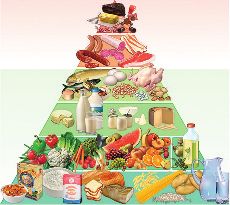
Practising competences and Show what you know
Unit 1
Practising competences Show what you know
LEARNING BASIC FIRST AID PROCEDURES 1 Copy and complete the table.
Activities to practise Do you know how to help when somebody is injured? Here are some simple
first aid procedures to follow in different situations.
nutrients
carbohydrates
function present in
interdisciplinary
bacon...
As a general rule, STAY CALM
h
growth and repair
vitamins and minerals fruit...
skills related to the
burn
whole grains
unit theme
Choking
2 Copy the diagram and complete the parts of the digestive system in order.
TwisTed ankle liver
mouth stomach
3 Copy and complete the sentences about the respiratory system.
Revision of content
e a. Air enters the body through the .
b. Then it goes through the
c. The trachea is divided into two
, the and the .
which take the air towards each . and language from
the unit
Cool the burn under cold, d. Inside each lung, bronchi are divided into which end in .
running water for 10 minutes. e. In the air sacs, enters the blood and leaves the blood.
Then, cover it with a plastic
bag. If the burn is serious, ask Firmly slap the patient on the
4 Look at the diagram. A
an adult for help or call back until the object is expelled.
What system is it?
the emergency number, 112. If the object is not expelled
Copy it and label the parts.
and choking continues, ask Apply ice to the ankle. Keep B
an adult for help or call the ankle immobile. Then, ask
the emergency number, 112. an adult for help or call C
the emergency number, 112. D
MAKE A FIRST AID POSTER 5 SPEAKING. Read and discuss with your partner the mistake in each description.
a. A complete balanced diet means eating the same amount of food from each
Activities
a. With a partner, discuss each situation. Have you ever experienced any of these
situations? Did someone give you first aid? Write a short dialogue for one of the food groups.
Practical tasks to of the situations.
b. In small groups, think about other emergency situations. Find out what to do for
b. The stomach, pancreas and liver are helper glands.
practising specific
c. Bronchioles are moist surfaces in the lungs where gas exchange takes place.
these situations: a deep cut, a wasp sting, head concussion.
stimulate curiosity
d. Arteries carry blood back to the heart from all body tissues.
c. Prepare a first aid poster. Draw some emergency situations. Write what to do
in each case. e. When you cut your finger, red blood cells help close the wound.
and practise the
f. Urine is stored in the urethra until it leaves the body.
competences
12 twelve thirteen 13
scientific method 490165 _ 0004-0013.indd 12 23/05/13 17:51 490165 _ 0004-0013.indd 13 23/05/13 17:51
are flagged
Special sections
Show that you can
Show that you can
1 Compare these two balls and answer the questions. 5 In these two electric circuits, the light bulb is on. Is that correct? Explain your answer.
a b
iron ball aluminium ball
density of iron = 7.9 kg/l density of aluminium = 2.7 kg/l
• The two balls have the same volume, but which ball has less mass?
• In which ball is matter more concentrated? Explain your answer.
2 Look at the photographs. Write physical change or chemical change, and specify the type
of change. Then, circle the reversible changes. 6 What will happen in each situation?
a b c d a b
c
3 Write and draw an example of each of the following energy transformations.
a. chemical energy ➞ kinetic energy
b. chemical energy ➞ thermal energy
c. electrical energy ➞ thermal energy
7 Name one example of each type of machine.
d. light energy ➞ electrical energy
e. mechanical energy ➞ electrical energy a. A simple machine that works with human energy and produces movement.
b. A complex machine that works with human energy and produces movement.
4 Think about the properties of light. What is wrong with these pictures? c. A complex machine that works with fuel and produces movement.
d. A complex machine that works with electricity and produces movement.
a b
8 Copy and complete the sentences.
a. refers to the physical parts of a computer.
b. The is the ‘brain’ of the computer.
c. You use a to access the Internet.
d. A is a small computer without a physical keyboard.
e. Software programs for smartphones and tablets are called .
86 eighty-six eighty-seven 87
490165 _ 0086-0087.indd 86 23/05/13 18:14 490165 _ 0086-0087.indd 87 23/05/13 18:14
At the end of each term, the Show that you can section provides
a double-page with a variety of activity types for assessment and evaluation.
These activities revise the main content as well as the key language.
Key vocabulary
Six pages of key vocabulary, with simple, clear definitions. The key vocabulary is organized by unit.
v
490187 _ 0001-0011.indd 5 03/10/13 08:16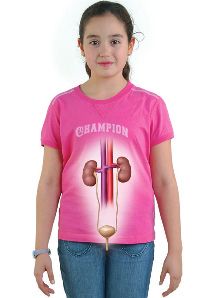
Teacher's Book
The Essential Science Plus Teacher’s Book reproduces all the sections of the Student’s Book in full-colour.
In addition, it contains step-by-step instructions for each lesson. The structure of each lesson is shown in
O
clearly marked sections in the teaching notes:
• Objectives T
• Key language fo
• Presentation
• Activities
• Reinforcement and Extension activities A
la
Each Teacher’s Book unit starts with a double-page programming spread. v
A
th
Unit programming
Q
o
An overview of the content p
objectives, language A visual map providing an in
objectives and assessment List of contents at-a-glance summary of th
criteria for the unit for the unit the unit theme and topics
O
r
e
1 Nutrition Unit outline
Nutrition
Competences
Competence in linguistic
communication A list of the
I
• Describing the digestive process
Nutrition and diet
(SB p. 7: 1. Work with the picture)
• Describing the circulatory system
competences
students are
(SB p. 9: 2. Read and answer the
questions.)
Unit content The digestive system
• Describing the parts of the excretory
Content objectives Contents
system (SB p. 11: 2. Work with the
picture.)
• Understanding written and oral texts
expected to
• To learn about the processes involved in nutrition: the digestive,
respiratory, circulatory and excretory systems
• Nutrition and a balanced diet
• Processes involved in nutrition:
The respiratory system (Class CD, Unit 1)
develop in the
unit, with
• To find out what makes a balanced diet digestion, respiration, circulation
Knowledge and interaction
• To identify the components of blood and their functions and excretion
The circulatory systems with the physical world
• To learn how blood circulation works • Components of blood: plasma,
reference to
platelets and red and white cells • Recognizing the characteristics of the
different systems of the human body
Language objectives • Blood circulation: the pulmonary
and systemic circuits Blood circulation (SB p. 7-11: The digestive system, The
specific activities
• To name organs involved in nutrition: bronchi, digestive tube, respiratory system, The circulatory
kidneys, pancreas, pharynx, trachea, small/large intestine, system, The excretory system)
stomach, urethra... • Studying a food pyramid to learn
• To describe the processes of nutrition: collect, excrete, expel, about a balanced diet The excretory system
inhale, move, obtain, pump, transport... • Using labelled diagrams Competence in ‘learning
to describe the processes to learn’
Assessment criteria involved in nutrition • Recognizing and dealing with
• Correcting factual mistakes simple injuries (SB p. 12: Practising
• Name and describe the processes of digestion, respiration,
in sentences competences)
circulation and excretion
• Using a table to organize Investigate! Practising competences • Finding out about different
• Describe a balanced diet
and learn vocabulary Learning basic first emergency situations (SB p. 12:
• Identify the the components of blood and explain their functions How can you change your
pulse rate? aid procedures Make a first aid poster)
• Describe pulmonary and systemic circulation
• Showing interest in learning • Discovering how to measure pulse
about how nutrition works rate (SB p. 10: Investigate! )
• Appreciating the complexity Show what you know • Evaluating one’s own progress
of the human body Nutrients (SB p. 13: Show what you know)
• Understanding that different The digestive system
systems interact to provide The respiratory system
our body with nutritients The excretory system
References
to the Investigate!,
Values education
• Appreciating that healthy systems need healthy lifestyles
Practising
• Reflecting on the the importance of water for our health
Suggested timing for the unit • Learning how to help an injured person
October November December
4A 4B
competences
490187 _ 0012-0023.indd 12-13 16/08/13 12:35
and Show what
you know sections
A calendar to help References to educational
organize the values which students
school year will acquire in the unit
4
V
a
a
vi
490187 _ 0001-0011.indd 6 03/10/13 08:16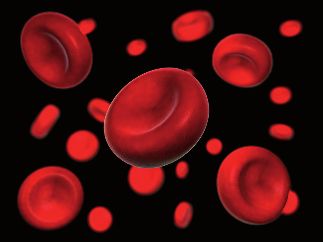
Opening page and Refresh your memory!
1 1
1
UNIT Unit 1 UNIT
Nutrition REFRESH YOUR MEMORY!
Objectives Refresh your memory!
The main content objectives
• To introduce the unit topic Use the revision cards to help Ss
• To learn about blood donations 1.1 Blood is a gift of life. Donating blood is extremely NUTRITION THE DIGESTIVE SYSTEM revise their previous knowledge of
important, because blood transfusions are needed Foods contain nutrients. The main groups Digestion is the process by which…
• To activate previous knowledge the unit topics.
for each lesson
in many operations. Blood is required in organ of nutrients are… a. our body eliminates the parts of food
about the human body transplants, after traffic accidents and in the
a. carbohydrates, fats, proteins, saliva we do not need.
• Revise the four topics with the class
treatment of illnesses that require blood
and vitamins. b. the heart pumps blood around our body. using the suggestions below.
components, such as chemotherapy.
Key language There is no substitute for blood. In Spain, a blood
b. carbohydrates, proteins, fats, minerals c. the blood carries nutrients and oxygen • Ss ask and answer the questions
and vitamins.
• Key vocabulary and structures: transfusion is needed every two minutes. To become to parts of our body. orally in pairs.
a blood donor, you must be healthy, 18 years old c. blood, saliva, oils and gastric juices. d. our body breaks down food to absorb
blood, donation, donor, illness, or over, and you must weigh at least 50 kilograms. d. milk, calcium, yoghurt and cheese. nutrients.
• Check answers as a class.
operation, transfusion, transplant, Thanks to blood donations, many lives are saved
Nutrition
treatment; donate, recover, weigh; every year and many people recover from serious
A summary of the key at least illnesses. • Ask Ss to name the main food
groups and write them on the
board. Ss give some examples for
Presentation
language structures and • Explain that hospitals are always
short of blood for operations.
each food group.
The digestive system
vocabulary Blood donors regularly give a small
amount of their blood. THE RESPIRATORY SYSTEM THE EXCRETORY SYSTEM
• Ss brainstorm the different parts
of the digestive system. Write their
Ask: Do you know anyone who Which parts of the body make up the What is the function of the kidneys? ideas on the board. Then, write all
respiratory system?
gives blood? Who can give blood? a. To carry blood back to the heart from the parts on the board in jumbled
a. The nose, mouth, trachea, lungs the rest of the body.
Who can’t give blood? Where can and bronchi.
order. In pairs, Ss put them in order
b. To store urine.
you give blood? Volunteers share b. The heart, lungs, trachea, arteries
(mouth, oesophagus, stomach,
c. To filter the blood and reabsorb useful
An introduction to the unit
their ideas with the class. and bronchi. nutrients.
small intestine, large intenstine,
• Ss read the text and find the c. The nose, mouth, trachea, lungs d. To filter the blood and reabsorb urine anus). Ask volunteers to describe
and kidneys. the function of each part.
answers. LOOK, READ AND SAY
and other waste substances.
theme
d. The heart, bladder, trachea, lungs
and bronchi.
Look, read and say Why is donating blood so important? The respiratory system
Name three situations where a blood
• Ss look at the photos on page 4 transfusion is needed.
• Write the following words on the
and describe them. What are the requirements to become board: nose, mouth, arteries,
• Ask: Why do you think the people a blood donor? lungs, trachea, bronchi, kidneys,
are lying down? Why do you think Do you know anybody who has needed bladder, and heart. Ask Ss to copy
a blood transfusion?
the tubes have different coloured the words in their notebooks. In
Questions to stimulate
Would you like to be a blood donor one day?
taps? pairs, Ss circle only the words
4 WHAT DO YOU REMEMBER? Test your partner. five 5 that are involved in the process of
1.1
respiration. Volunteers share their
observation skills, activate • Play Track 1.1. Next, volunteers read
the text. Ss ask and answer the
questions on the page. Ask more
490165 _ 0004-0013.indd 4 23/05/13 17:51 490165 _ 0004-0013.indd 5 23/05/13 17:51 ideas.
The excretory system
prior knowledge and to questions to recycle and practise
vocabulary. Reinforcement Reinforcement
• Ask Ss: What system are the
kidneys part of ? How many
kidneys do we have?
introduce the main theme of
How often are blood transfusions • Ss take it in turns to ask and answer questions about the text and • Divide the class into teams. Say true or false statements about the
needed in Spain? What are some the photos. different systems. The teams take it in turns to answer true or false.
positive results of blood donations? If they are correct, they get one point. If they are wrong, the other team
the unit Extension wins the point.
• Ss choose one of the photographs, draw it and then write a short
description about it in their own words.
Extension
Photos (clockwise from top left): • Ss make a flow chart to show the process of blood transfusion, • Ss draw foods from several different food groups, and swap drawings
people giving blood, a postage from advertising for blood donors to the use of blood in operations. with a partner. They label their partner’s foods and write out the nutrients
stamp advertising blood donations, each food contains.
Optional activities for blood samples in test tubes, a bag
of blood ready for use in a hospital,
red blood cells under a microscope
reinforcement and 4 5
extension 490187 _ 0012-0023.indd 14-15 16/08/13 12:35
Information and practice pages
UNIT 1
Nutrition and diet The digestive system
Unit 1 UNIT 1
Full-colour reproductions
Objectives
• To identify the four processes
1.2 Nutrition
Nutrition is a combination of processes which supply our
A B
1.4 Digestion is the process of breaking down food into nutrients that our body can use. It normally
takes 24 to 48 hours to digest food. Digestion begins in the mouth and ends at the anus.
The digestive system consists of one long tube, the digestive tube, and the helper glands.
Objectives
• To identify the parts of the digestive
of the Student’s Book
involved in nutrition
pages
body with the substances and the energy we need to live. system
There are four processes involved in nutrition: The stages of digestion are:
• To learn about nutrition and Food is digested in the mouth, stomach and small intestine. • To find out how the digestive
Digestion. This involves obtaining nutrients from food
a balanced diet for our body to use. Digestion takes place in the Digested food is absorbed into the blood in the small intestine. system breaks down food into
digestive system. Digestive system. Respiratory system. Remaining solid food (without excess water) turns into faeces in the large intestine. nutrients
Key language Respiration. This involves obtaining the oxygen we Faeces leave the body through the anus.
• Vocabulary and structures:
need to live, and releasing carbon dioxide. Respiration
takes place in the respiratory system.
C D Key language
circulation, digestion, excretion, digestive tube
Circulation. This involves transporting nutrients, • Vocabulary and structures: anus,
respiration; circulatory/digestive/ oxygen and waste products throughout the body.
helper glands Mouth. It contains teeth bile, carbon dioxide, digestive
Circulation takes place in the circulatory system. that break down food.
excretory/respiratory system; tube, digestion, faeces, helper/
(balanced) diet, carbohydrates,
fats, fibre, food pyramid, minerals,
Excretion. This involves eliminating waste produced in
our body. Excretion takes place in the excretory system. Circulatory system. Excretory system. Salivary glands.
They produce saliva.
Pharynx.
Oesophagus. It connects
the mouth and the stomach.
salivary glands, small/large
intestine, liver, oesophagus,
Ideas to introduce the
nutrients, nutrition, oxygen, Diet
topic and motivate
1.3 pancreas, pharynx, stomach,
proteins, vitamins, waste products; A complete balanced diet means eating the right amount of food from each of the food groups.
Liver. It releases bile
Stomach. It produces villi; gastric/intestinal/pancreatic
gastric juices.
eliminate, obtain, supply, transport, You should drink water regularly. into the small intestine. (juices); break down, (be)
students. Fun activities
Small intestine. It is covered
take place absorbed), (be) digested, release
Don't eat too many sweets and animal fats. with tiny, finger-like
projections, called villi and
Pancreas. It releases
Presentation Fats provide energy. Oils and butter. pancreatic juice into
produces intestinal juices.
Presentation
which students can relate
the small intestine.
Large intestine. It forms solid
• Write digestion, respiration, waste called faeces. Anus.
• In pairs, Ss brainstorm what they
Proteins are necessary for growth, and to repair our
circulation and excretion in body. Meat, fish, eggs, legumes, seeds and nuts. It is the opening for faeces. know about the digestive system.
a column on the board. In another The digestive system. Write the words on the board.
to their personal
Vitamins and minerals are necessary for our body
column, write air, waste, blood to function properly. Fruit and vegetables.
Activities 1.4
and nutrients. Ss match the
Fibre helps maintain a healthy digestive system.
columns. • Play Track 1.4. Ss listen and read.
experience
Vegetables, whole grains and cereals. 1 WORK WITH THE PICTURE. Look at the diagram. Describe to your partner what happens
when you eat an apple, from when you take a bite, to when you go to the toilet.
• Ss look at the pictures of the Carbohydrates provide energy. Cereals, rice. • Ss look at the diagram. Ask: Where
systems and say as many body 2 Copy and complete the sentences and write them in order. is digested food absorbed into the
Water is an essential nutrient. It transports
parts as they can remember. The food pyramid. a. Solid waste forms in the . d. Food is broken down with and blood? What takes place in the
other nutrients and waste around the body.
b. Gastric juices are produced in the . mixed with .
large intestine? How long does it
1.2
Activities c. Faeces are released through the . e. Nutrients are absorbed in the .
take to digest food?
• Play Track 1.2. Ss listen and read. 3 WORK WITH THE PICTURE. Look at the food pyramid on page 6. With a partner, name
!, • Ss name the organs in pictures A to
D. Ask: What are the main organs
1 Write one sentence in your notebook about each of the four processes involved in nutrition. the food groups and the foods they include. What foods do you eat regularly?
Activities
1. Work with the picture. Audio tracks are clearly
of the digestive system? Which 6 six seven 7 Look at the diagram.
process eliminates waste?
• Explain that foods contain more
than one type of nutrient, for
490165 _ 0004-0013.indd 6 23/05/13 17:51 490165 _ 0004-0013.indd 7 23/05/13 17:51
• Ss look at the diagram. In pairs,
they describe the process of
signposted
digestion, using the example of
example, sausages contain fat,
eating an apple.
but also protein. Think of more
Reinforcement Reinforcement 2. Copy and complete the sentences
examples as a class.
and write them in order.
• Show pictures of different foods. Ss say what food group each food • Ss work in pairs to draw and label a diagram of the digestive system. • In pairs, Ss take it in turns to
Activities
ns
belongs to, and what nutrients it provides our body with. read a sentence and say one of
1. Write one sentence in your Extension the missing words. Ss write the
notebook about each of the four Extension sentences in their notebooks.
processes involved in nutrition. • In pairs, Ss search the Internet to find more information about a healthy • Ss keep a food diary over a week and record the different foods they eat 3. Work with the picture. Look at
• In pairs, Ss write descriptions of and balanced diet. They create a questionnaire on healthy eating, and every day. They work out how much of the different food types they have the food pyramid on page 6.
parts of each process. Ss take it give it to their friends and family members to complete. Ss present their each day (and then over the week).
• Ss choose one of the sections in
in turns to read their descriptions results to the class. • Then, as a class, they draw a bar chart to show which foods the class the pyramid and name the foods.
and guess the process they belong eats. They place the foods on the X axis and the number of Ss Their partner names the nutrients.
to. on the Y axis.
• Ss complete the activity in their
notebooks.
Activity Book, page 4
6 7
490187 _ 0012-0023.indd 16-17 16/08/13 12:36
Vocabulary is grouped Cross-reference to the A wide variety of optional reinforcement
and presented in Activity Book and extension activities
alphabetical order
vii
490187 _ 0001-0011.indd 7 03/10/13 08:16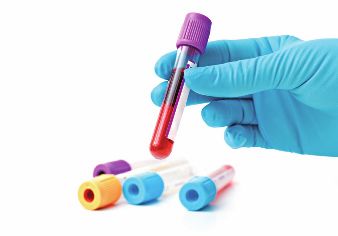
Key competences
         Key competences are a combination of knowledge, skills and attitudes appropriate to different
                                                                                                               1
         contexts and situations. They encourage the development of skills rather than the assimilation
         of theoretical content: individuals become ‘competent’ when they learn how to solve problems
         effectively. Competences develop progressively and are acquired in different learning situations
         and institutions. They are interdisciplinary because they integrate knowledge that originates
         in different academic disciplines. Essential Science Plus 6 focuses on key competences in the unit
         activities. The Practising competences page per unit helps develop skills related to competences.

         Key competences in Science

                 ompetence in
                C                                                              ocial competence
                                                                              S
                linguistic communication                                      and citizenship
                This is the ability to interpret and use language as a tool    This competence refers to the ability to understand and
                for oral and written communication. Verbal                     participate successfully in the society in which we live.
                communication is fostered by the exchange of opinions,         At Primary level, this is developed by promoting group
                the narration of personal experiences and by giving            cooperation, solidarity and satisfaction at successfully
                oral expositions on different topics. Reading and writing      completing given tasks. An understanding of codes
                simple texts also develop this competence.                     of conduct and customs in different environments is
                                                                               essential. This is achieved through the discussion of
                                                                               appropriate and inappropriate behaviour in different
                Mathematical                                                  situations.
                 competence
                This competence is the ability to use numbers, perform         ultural and artistic
                                                                              C
                basic operations, understand symbols and solve
                                                                              competence
                problems in order to interpret the physical world.
                Natural Science includes mathematical interpretations          This competence involves recognising the importance
                and the mathematical expression of natural facts               of artistic creations at various times in history and in
                and phenomena.                                                 different cultures. It includes the appreciation of the
                                                                               visual arts, music and literature. The systematic
                                                                               interpretation of illustrations and photographs helps to
                 nowledge and interaction
                K                                                              develop this competence.
                with the physical world
                This competence develops the ability to interact with          ompetence in ‘learning
                                                                              C
                the physical world and apply the scientific method to
                                                                              to learn’
                explain its phenomena. At Primary level, students are
                encouraged to define and solve problems, design                This competence is acquired by learning how to apply
                and carry out simple experiments, work out solutions,          different techniques aimed at selecting, organizing,
                analyse and describe their results.                            interpreting and memorizing information. The sections
                                                                               Show what you know and Show that you can give
                                                                               students the opportunity to summarize what they have
                 rocessing information and digital
                P                                                              learned.
                competence
                This is the ability to use both traditional and modern          utonomy and personal
                                                                               A
                technologies to obtain, process and transmit
                                                                               initiative
                information found in traditional and digital media.
                Students learn how to use lists, tables and index cards        The study of Science demands autonomy and initiative.
                to classify information. They develop confidence in            From the moment a hypothesis is formulated, until
                and a critical use of Information and Communication            conclusions are reached, students need to plan and
                Technology (ICT).                                              organize their work creatively and with critical sense.

         viii

490187 _ 0001-0011.indd 8                                                                                                             03/10/13 08:16
Contents
Introduction
Student's material....................................................... ii
Teacher's resources................................................... iii
Student's Book............................................................ iv
Teacher's Book............................................................ vi
Key competences....................................................... viii
Teacher's Book contents............................................ ix
Student's Book 6 contents.......................................... x
Lesson plans
Term 1
Unit 1............................................................................ 4
Unit 2........................................................................... 14
Unit 3........................................................................... 24
Unit 4........................................................................... 34
End of Term 1............................................................... 44
Term 2
Unit 5........................................................................... 46
Unit 6........................................................................... 56
Unit 7............................................................................ 66
Unit 8........................................................................... 76
End of Term 2.............................................................. 86
Term 3
Unit 9........................................................................... 88
Unit 10.......................................................................... 98
Unit 11........................................................................... 108
Unit 12.......................................................................... 118
End of Term 3.............................................................. 128
Key vocabulary........................................................... 130
Audio transcripts........................................................ 136
Answer key.................................................................. 142
ix
490187 _ 0001-0011.indd 9 03/10/13 08:16Student's Book 6 Contents
UNIT TOPICS PRACTISING COMPETENCES
1 Nutrition • Nutrition and diet
• The digestive system
• The respiratory system
Learning basic first aid procedures
• The circulatory system
• Blood circulation
• The excretory system
4
2 Sensitivity I • The function of sensitivity
• The skin, the tongue and the nose
• The eyes
Being physically active
• The ears
• The locomotor system
• Movement
14
3 Sensitivity II • The nervous system
• Central and peripheral nervous systems
• Voluntary and reflex movements
Testing your reaction time
• The endocrine system
• The endocrine glands
• Internal coordination
24
4 Reproduction • Sexual characteristics
• The female reproductive system
• The male reproductive system
Differentiating between identical
and fraternal twins
• Fertilization
• Pregnancy
• Birth and lactation
34
END OF TERM
5 Matter • General properties of matter
• Specific properties of matter
• Classification of matter by composition
Separating different types of
mixtures
• Physical states of matter
• Physical changes in matter
• Chemical changes in matter
46
6 Energy • Forms of energy
• Properties of energy
• Renewable energy sources
Understanding and interpreting
scientific information
• Non-renewable energy sources
• Energy consumption and saving
• Light
56
x
490187 _ 0001-0011.indd 10 03/10/13 08:16UNIT TOPICS PRACTISING COMPETENCES
7 Electricity
and magnetism
• Electrical charges
• Electric currents
• Electric circuits
Building an electric circuit to test
conductivity
• Production and distribution of electricity
• Magnets and electromagnets
• Uses of magnets
66
8 Machines
and technology
• Types of machines
• Uses of machines
• Inside a machine
Managing your time with electronic
devices
• Technological advances
• Computers
• The Internet
76
END OF TERM
9 Landscapes
of Europe
• Plains
• Mountains
• Coasts and islands
Researching the climate and
vegetation of a country
• Rivers and lakes
• European climates
• European vegetation
88
10 The population
and organization
of Europe
• The population of Europe
• The European Union
• Institutions of the European Union
Interpreting population pyramids
• Accomplishments of the European Union
• The territorial organization of Spain
• The political organization of Spain
98
11 Spain in
the Modern
Age
• The discovery of America
• Consequences of the conquest
• The Spanish Empire
Creating a data sheet about
a historical source
• Charles I and Philip II
• The decline of the Spanish Empire
• The War of the Spanish Succession
108
12 Spain from
the 18th century
• Bourbon Spain
• The 19th century
• The 20th century
Analysing a historical painting
• Transition and democracy
• Spain’s modern democracy
• Major events in democracy
118
END OF TERM AND KEY VOCABULARY
xi
490187 _ 0001-0011.indd 11 03/10/13 08:16You can also read


