Engineering, Computer Science and Project Management 2020 - The University of Sydney
←
→
Page content transcription
If your browser does not render page correctly, please read the page content below
Contact us
                              Postgraduate guide 2020
sydney.edu.au/engineering
1800 SYD UNI (1800 793 864)
                              Engineering, Computer Science and
+61 2 8627 1444               Project Management
We acknowledge the tradition
of custodianship and law of the

and continue to care for Country.
respects to those who have cared
Country on which the University of
Sydney campuses stand. We pay our
 Forest Stewardship Council (FSC®) is a globally recognised certification overseeing all fibre sourcing
 standards. This provides guarantees for the consumer that products are made of woodchips from well-managed
 forests and other controlled sources with strict environmental, economical and social standards.

Engineering, Computer Science and
Postgraduate guide 2020

                          Project Management

                                                              Join us
                                                              Where will postgraduate study lead you? ....... 2
                                                              A world of opportunity���������������������������������������3
                                                              Our new precinct.................................................4
                                                              Postgraduate coursework options ...................6
                                                              Postgraduate courses – summary.................... 7
                                                              Fast-track your postgraduate studies..............8

                                                              Courses
                                                              Master of Complex Systems............................. 10
                          1800 SYD UNI (1800 793 864)
                          sydney.edu.au/engineering

                                                              Master of Engineering ........................................12
                                                              Master of Professional Engineering................ 14
                                                              Master of Project Leadership.......................... 16
                                                              Master of Project Management....................... 18
                          +61 2 8627 1444

                                                              Master of Project and
  Contact us

                                                              Program Management..................................... 20
                                                              Master of Data Science.................................... 22
                                                              Master of Health Technology Innovation...... 24
                                                              Master of Information Technology................ 26
                                                              Master of Information Technology
                                                              Management....................................................... 28
                                                              Master of Information Technology and
                                                              Master of Information Technology
                                                              Management....................................................... 30
                                                              Graduate Diploma in Computing................... 32
                                                              Master of Transport.......................................... 34

                                                              Research
                                                              Master of Philosophy........................................ 36
                                                              Doctor of Philosophy........................................ 36

                                                              Join us
                                                              How to apply....................................................... 38
                                                              Important dates................................................. 39
Where will postgraduate study lead you?

                            Whether you want to gain new professional qualifications,
                            change your career direction or pursue a personal ambition,
                            the University of Sydney will steer you to places you never imagined.

                                            1st                                                                          World
                                                                             Top 60
                                 in Australia and ranked
                                                                            in the world for
                                                                                                                        standard
                                   4th in the world for                                                             or above in Excellence
                                                                            engineering and
                                 graduate employability1                                                                in Research for
                                                                              technology2
                                                                                                                       Australia ratings3
sydney.edu.au/engineering

                            Our coursework and research            Connected with industry                    Innovative spaces
                            degrees offer far more than
                                                                   Our courses are designed with, and         To support research and teaching
                            knowledge. You’ll join leading
                                                                   taught by, industry professionals          excellence, we are investing in the
                            thinkers to challenge the known
                                                                   in engineering and information             latest technology and exceptional
                            and explore the unknown, in
                                                                   technologies. We partner with              facilities. Our labs, teaching spaces
                            a stimulating environment
                                                                   leaders from business, industry and        and learning hubs are designed to
                            that encourages both learning
                                                                   academia based here in Sydney and          help you get the most out of your
                            and networking.
                                                                   around the globe.                          learning experience.

                            The University’s people drive our
                                                                   Our expertise and facilities are      Our leading facilities include the:
                            greatest feats. We give you access
                                                                   highly sought after, with staff and   −− Sydney Institute for Robotics
                            to leading lecturers, research
                                                                   students regularly invited to provide    and Intelligent Systems, one
                            supervisors, industry networks,
                                                                   professional consulting services for     of the world’s leading robotics
                            and cross-disciplinary centres of
                                                                   business and government agencies.        research institutes, instrumental
                            teaching and research excellence
                            from Australia and around the world.                                            in developing breakthrough
                                                                   International partnerships               technologies in field robotics
                                                                                                            principles and systems
                            World standard education               We are committed to international
                                                                                                         −− Centre for Advanced Structural
The University of Sydney

                                                                   teaching, research and industry
                            Our graduates are among the                                                     Engineering, which houses
                                                                   partnerships. We encourage our
                            world’s most sought-after                                                       one of the largest structural
                                                                   students, researchers and staff
                            employees – we are ranked first in                                              engineering laboratories in
                                                                   to engage in collaboration that
                            Australia and fifth in the world for                                            the southern hemisphere
                                                                   deepens their knowledge and
                            graduate employability.1
                                                                   broadens their global outlook.             −− Visualisation and High
                                                                                                                 Performance Computing
                            Our ranking in the top 60
                                                                   The faculty has developed                     Laboratory (VisLAB), one of
                            universities worldwide for
                                                                   partnerships with top-100                     Australia’s leading facilities
                            engineering and technology reflects
                                                                   international institutions, including         for advanced visualisation
                            our outstanding reputation.2 The
                                                                   a landmark biomedical engineering             and computing.
                            Australian Government ranked all
                                                                   alliance with Shanghai Jiao Tong
                            of our research at world standard
                                                                   University in China.
                            or above in its latest Excellence in
Page 2

                                                                                                             1
                                                                                                               QS Graduate Employability Rankings 2020
                                                                                                        2
                                                                                                          QS World University Rankings by Subject 2019
                            Research for Australia ratings.3                                        3
                                                                                                        Excellence in Research Australia Rankings 2018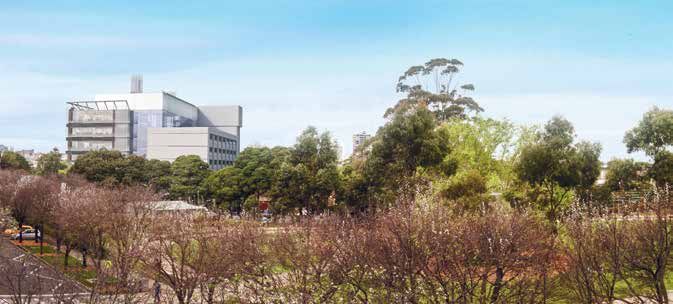
A world of opportunity

We are committed to international teaching, research
and industry partnerships. We encourage our students to
deepen their knowledge and broaden their global outlook.

                                                 1200+
Find your overseas adventure
Student exchange gives you a unique
opportunity to see the world and graduate
with a truly global perspective.                       industry partners
−− sydney.edu.au/student-exchange                       across the globe

                                                                            Postgraduate guide 2020
                                                            170
Globally recognised qualifications
Our accredited courses enable to you
practise as an engineering, IT professional
or project manager in Australia and around            exchange partners
the world.
                                                             worldwide

                                               26,550      global network

                                                                            Engineering, Computer Science and Project Management
                                                                of alumni

                                                                            Page 3
sydney.edu.au/engineering

                            Our new precinct

                            We’re making a        At the University of Sydney we are determined to
                                                  foster a healthy learning environment that keeps
                            multimillion-dollar   students engaged, motivated and inspired. As part of
                            investment in         this, the Faculty of Engineering is undergoing a major
                                                  redevelopment project, transforming our precinct with
                            your future.          contemporary architecture, thoughtfully designed to
                                                  enhance the student experience.
The University of Sydney

                                                  By 2020, you can expect to find yourself working in
                                                  vibrant study spaces, modern teaching facilities and
                                                  advanced laboratories.

                                                  Highlights include:
                                                  −− dynamic activity-based working zones
                                                  −− activated public spaces incorporating
                                                     food outlets and recreation areas
                                                  −− future-focused learning environments
                                                  −− flexibility to adapt to new ways of working
                                                  −− new innovations in design construction.
Page 4
Artist’s impressions of our new precinct
Page 5   Engineering, Computer Science and Project Management   Postgraduate guide 2020

Postgraduate coursework options

                            Graduate certificates and               Master’s degrees                          We offer hundreds of units of
                                                                                                              study across selected faculties,
                            graduate diplomas                       Master’s degrees are ideal if you         including many that you can use
                            Graduate certificates and graduate      need specialised knowledge and            to earn continuing professional
                            diplomas are usually based on           skills, and want to take the next         development (CPD) credit or to
                            master’s degrees and offer a subset     step in your career. You can gain         explore subjects of general interest.
                            of the master’s units. They are         professional qualifications for
                            alternatives worth considering if       your next job, upskill for your           Regardless of which option you
                            you want to try out postgraduate        current role and develop academic         choose, you will receive an official
                            study or increase the breadth of        expertise in your chosen field.           academic transcript at the end of
                            your expertise and knowledge, or if                                               your studies and may be able to
                            you don’t quite meet the admission      Master’s degrees typically require        request credit for a longer course,
                                                                    between one and two years of
sydney.edu.au/engineering

                            criteria for a master’s degree.                                                   such as a master’s degree.
                                                                    full-time study. If you can’t commit
                            Once you’ve finished a graduate         to a full-time master’s degree
                                                                                                              Fast-track your
                            certificate (usually six months         straight away because of family,
                                                                    work or other commitments, we             postgraduate degree
                            of full-time study or 12 months
                            part time), you may then be able        offer the flexibility of part‑time        Related study or professional
                            to progress to the associated           study for domestic students.              work experience may be counted
                            graduate diploma (usually one year                                                as credit towards your degree.
                            full time or two years part time)       Short courses                             This is known as recognition of
                            or ultimately to a master’s degree.                                               prior learning (RPL; also sometimes
                                                                    If you’re not sure about studying a
                            See the progression diagram below                                                 called ‘credit for previous studies’).
                                                                    full degree, or if you’re interested in
                            (but please note that progression
                                                                    professional development, you can
                            requirements can vary).                                                           For more details, see page 8
                                                                    choose to take a single unit of study
                                                                                                              or visit:
                                                                    as a ‘non-award’ course.
                            A graduate certificate or graduate                                                −− sydney.edu.au/study/credit
                            diploma is also an excellent option
                            if you don’t want to commit to a
                            full master’s but would still like to
                            upskill and get a solid grounding in
                            your chosen field.
The University of Sydney

                                                                                                              Master’s degree
                                                                     Graduate diploma                         Gain specialised skills and
                             Graduate certificate                    Complete more units of study             knowledge or professional
                             Complete some of the                    towards a master’s degree                qualifications
                             essential units of study                                                         Usually one or two years of
                                                                     Usually one year of
                             towards a master’s degree                                                        full-time study
                                                                     full-time study
                             Usually six months of
                             full-time study
Page 6
Postgraduate courses – summary
                                                                                  Duration (years)
                                                              CRICOS     Credit     Full    Part           Mode of
 Course name                                                   code      points    time     time           delivery        Page

 Complex Systems

 Graduate Diploma in Complex Systems                          089811G      48        1       2           On-campus          10
                                                                                                         day/evening
 Master of Complex Systems                                    089810G      96        2       4                              10

 Engineering

 Graduate Certificate in Engineering                          063747B      24       0.5       1        On-campus day        12
 Graduate Diploma in Engineering                              061793A      36        1       2                              12
 Master of Engineering                                        077463K      72       1.5     2-3                             12
 Master of Professional Engineering                           077470M      144       3      5-6                             14
 Master of Professional Engineering (Accelerated)             098247M      96        2      3-5                             14

 Project Management

 Graduate Certificate in Project Leadership                    074717F     24       0.5       1          On-campus          16
                                                                                                        day/evening;
 Graduate Diploma in Project Leadership                       074716G      36        1       2
                                                                                                       online; intensive    16

                                                                                                                                  Postgraduate guide 2020
 Master of Project Leadership                                 074715G      48        1       2       On-campus evening;
                                                                                                          intensive         16
 Graduate Certificate in Project Management                   031912C      24       0.5       1          On-campus          18
                                                                                                        day/evening;
 Graduate Diploma in Project Management                        031913B     48        1       2
                                                                                                       online; intensive    18
 Master of Project Management                                 082914A      72       1.5      3           On-campus        18
                                                                                                     day/evening; online;
 Graduate Certificate in Project and Program Management       097699B      24       0.5       1                           20
                                                                                                     block mode; Summer
 Master of Project and Program Management                     097700C      48        1       2        and Winter School 20

 Computer Science

 Graduate Certificate in Data Science                         087980F      24       0.5       1          On-campus          22
                                                                                                         day/evening
 Master of Data Science                                       087981E      48        1       2                              22
 Graduate Diploma in Health Technology Innovation             083977M      60       1.5      3                              24

                                                                                                                                  Engineering, Computer Science and Project Management
 Master of Health Technology Innovation                       083976A      96        2       ≤6                             24
 Graduate Certificate in Information Technology               039122B      24       0.5       1        On-campus day        26
 Graduate Diploma in Information Technology                   039123A      48        1       2                              26
 Master of Information Technology                             082912C      72       1.5                                     26
 Graduate Certificate in Information Technology Management    055187G      24       0.5       1                             28
 Graduate Diploma in Information Technology Management        055185J      48        1       2                              28
 Master of Information Technology Management                  082913B      72       1.5      3                              28
 Master of Information Technology and Master of               083638G      96        2       4       On-campus evening     30
 Information Technology Management
 Graduate Diploma in Computing                                096317G      48        1       2         On-campus day        32

 Transport

 Graduate Certificate in Transport                            099888C      24       0.5       1         On-campus           34
                                                                                                        day/evening;
 Graduate Diploma in Transport                                099889B      48        1       2                              34
                                                                                                          intensive
 Master of Transport                                          099890J      72       1.5      3                              34

 Research

 Master of Philosophy (Engineering)                           061790D      N/A      1-2     3-4           Research          36
 Doctor of Philosophy (Engineering)                           000703B      N/A      3-4     6-8           Research          36
                                                                                                                                  Page 7

Note: Part-time study is available only to domestic students. All courses have a mid-year intake.
For up-to-date course information, please see sydney.edu.au/courses
Fast-track your postgraduate studies

                            Related study or professional work experience may be credited to
                            your degree as recognition of prior learning (RPL). This means you
                            won’t have to repeat similar units and could graduate sooner.

                            Recognition of prior learning (RPL)              How do I apply for RPL?
                            You may be eligible for recognition of prior     You need to apply for RPL when
sydney.edu.au/engineering

                            learning if we assess your previous studies      completing your online course
                            or professional work experience as being         application. We will let you know in
                            directly equivalent to our units of study. In    your offer letter if you have been
                            some cases you may be granted a block of         successful.
                            credit if it is in the same subject area. Some
                            courses have existing RPL arrangements for       For more information about
                            some qualifications.                             course‑specific admission criteria,
                                                                             visit the relevant course website.
                            The diagrams on the next page demonstrate
                            how RPL can be credited towards a Master         For more information, visit
                            of Engineering and a Master of Professional      −− sydney.edu.au/study/credit
                            Engineering. Please note that this is only a
                            guide – all RPL granted is subject to faculty
                            assessment and approval.

                            The admission criteria listed in this guide
                            are based on the University of Sydney’s
                            grading system.

                            For qualifications gained outside Australia
                            (or where grading systems differ), the
                            University determines equivalencies and
The University of Sydney

                            admission criteria based on the country,
                            institution and qualification.
Page 8
Examples of credited prior learning
Master of Professional Engineering (3 years/144 credit points)
One year One year One year
144 credit points
Enter with no credit
–– Bachelor’s degree in a non-engineering discipline* with a 68.5 percent average
24 credit points 120 credit points
Master of Professional Engineering
Enter with up to 24 credit points (0.5 years) if you have one of the following:
(144 credit points)
–– Bachelor of Engineering degree in an unrelated field of engineering, with a 68.5 percent average
–– Bachelor of Science or similar, in a discipline directly related to your intended specialisation, with a
68.5 percent average.
Postgraduate guide 2020
48 credit points 96 credit points
Enter with up to 48 credit points (1 year) if you have a Bachelor of Engineering degree in a related field of
engineering, with a 68.5 percent average (includes honours degrees).
72 credit points 72 credit points
Enter with up to 72 credit points (1.5 years) if you have a specific postgraduate engineering
degree in a related field of engineering, with a 68.5 percent average.
* T
his degree should contain studies equivalent to a minimum of one year in mathematics, physics, chemistry,
biology, geology, computing or statistics, as related to the intended engineering specialisation.
Engineering, Computer Science and Project Management
Master of Engineering (1.5 years/72 credit points)
One year 0.5 year
72 credit points
Enter with no credit with one of the following:
–– Bachelor of Engineering degree in the same field of engineering as your intended specialisation,
with a 65 percent average
–– Bachelor of Engineering degree, and five years of relevant work experience in the same area
Master of Engineering
of specialisation.
(72 credit points)
24 credit points 48 credit points
Enter with up to 24 credit points (0.5 years) if you have one of the following:
–– Bachelor of Engineering degree in the same field of engineering as your intended specialisation, with a
75 percent average
–– University of Sydney Graduate Certificate or Graduate Diploma in Engineering in the same area of
specialisation, with a 65 percent average (graduate diploma holders can receive up to 36 credit points
Page 9
for a completed qualification).Master of Complex Systems
Modern smart cities, infrastructure and ecosystems are susceptible to
abrupt, large-scale and disruptive dynamics. There is growing demand
for professionals who are capable of anticipating, controlling and
managing the unexpected.
Complex systems are composed of large numbers of diverse Course structure
interacting parts, making them susceptible to unexpected,
large-scale and apparently uncontrollable behaviours. This program comprises core
units of study along with electives,
Small changes can generate large, amplified effects. For culminating in a specialisation in
sydney.edu.au/engineering
example, a single malfunction in a local substation can lead to your chosen field.
cascading statewide electricity grid failures, or the emergence
of a new pathogen in a remote village can give rise to a Specialisations
devastating global epidemic.
Leveraging the Centre for Complex
Systems’ research strengths, you
Our graduates gain the expertise to model, analyse and design
have the flexibility to tailor your
resilient strategies for crisis forecasting and management in
learning to your professional
complex technological, socioeconomic and socioecological
interests, with your choice of
systems. You will develop skills in quantitative modelling and
specialisations from:
computational simulation of system dynamics, complementing
your existing skills in engineering, computer science, information −− biosecurity
technology, physics, mathematics, health, biology or business. −− engineering
−− research methods
As the only degree of its kind in the southern hemisphere*,
−− transport.
complex systems is especially important for the Asia-Pacific
region. With booming populations and growing megacities,
You will also undertake an industry-
countries and businesses must work across discipline
based capstone project focused on
boundaries to glean insight and solve complex global challenges.
modelling a complex problem and
*University of Sydney–commissioned research December 2017 delivering a novel solution. Projects
can be directly related to your
area of specialisation or to your
vocational objectives or interests.
The University of Sydney
“I chose this degree as I wanted to pursue
university study in artificial intelligence. It has
allowed me to work on interesting projects using
the skills I’ve developed in computation modelling,
data visualisation and systems dynamics.”
Mike Li
Page 10
Graduate, Master of Complex SystemsAvailable courses Indicative course progression
This program can be taken at the level of Example progression for Master of Complex Systems
a master’s degree or a graduate diploma, with a specialisation in Engineering
as shown below.
Unit code Unit of study Sem cp
Postgraduate guide 2020
Credit Duration Year 1
Course name points (full time)
STAT5002 Core: Introduction to Statistics 1 6
Master of Complex Systems 96 2 years
COMP9001 Core: Introduction to Programming 1 6
Graduate Diploma in 48 1 year
Complex Systems ENVI5801 Core: Social Science of Environment 1 6
CSYS5010 Core: Introduction to Complex Systems 1 6
Depending on the level and type of your prior CSYS5030 Core: Information Theory and 2 6
studies, you may be eligible for recognition of Self-organisation
prior learning (RPL), which could reduce the COMP5048 Core: Visual Analytics 2 6
length of this degree. See page 8 for details.
QBUS5001 Elective: Quantitative Methods 2 6
for Business
Admission criteria PMGT5886 Core: System Dynamics Modelling for PM 2 6
Engineering, Computer Science and Project Management
To apply for the Master of Complex Systems,
Year 2
you need to have a recognised bachelor’s
degree with a minimum credit average (65 CSYS5050 Capstone: Complex Systems Capstone 1 6
Project A
percent) in a quantitative discipline such as
CSYS5020 Core: Interdependent Civil Systems 1 6
engineering, computer science, information
technology, mathematics, statistics, physics, COMP5313 Core: Large Scale Networks 1 6
transport, business or finance, or any honours QBUS6810 Elective: Statistical Learning and 1 6
degree from the University of Sydney. Data Mining
ELEC9103 Elective: Simulations and Numerical 2 6
Alternatively, you need to hold a Graduate Solutions in Engineering
Diploma in Complex Systems from the CSYS5051 Capstone: Complex Systems Capstone 2 6
University of Sydney with a credit average, Project B
or a qualification deemed equivalent by CSYS5040 Core: Criticality in Dynamical Systems 2 6
the University.
COMP5318 Elective: Machine Learning and Data 2 6
Mining
Learn more Sem = semester; cp = credit points
Indicative progression based on a 96 credit point master’s
For more information on the course degree with Semester 1 enrolment
structure, including specialisations and unit
of study descriptions, visit
−− sydney.edu.au/courses
Page 11Master of Engineering
This is a specialised program for qualified engineers seeking to
move into management or a senior technical role. It is designed
to help qualified engineers to strengthen their management
capability and technical expertise. Qualified engineers looking to
specialise or update their skills could also consider this program.
Course structure
This program comprises core units of
sydney.edu.au/engineering
study along with electives to broaden your
knowledge. You will complete a sequence
of specialised units that comprise a major
in your chosen field. This program has a
strong focus on project work to enhance
self‑directed learning.
Majors
The Master of Engineering allows you to build
on your existing undergraduate engineering
degree by developing specialised technical
knowledge in one of 15 engineering majors:
−− automation and manufacturing
systems engineering
−− biomedical engineering
−− chemical and biomolecular engineering
−− civil engineering Available courses
−− electrical engineering This program can be taken at the level of a master’s
−− fluids engineering degree, a graduate diploma or a graduate certificate,
as shown below.
−− geomechanical engineering
The University of Sydney
−− intelligent information engineering
Credit Duration
−− mechanical engineering Course name points (full time)
−− power engineering Master of Engineering 72 1.5 years
−− risk management Graduate Diploma in Engineering 36 1 year
−− software engineering Graduate Certificate in Engineering 24 0.5 years
−− structural engineering
−− sustainability and Depending on the level and type of your prior studies,
environmental engineering you may be eligible for recognition of prior learning
−− telecommunications engineering. (RPL), which could reduce the length of your degree.
See page 8 for details.
Page 12“Engineers are creative people who find
solutions to problems before society
often realises we have them.”
Professor Branka Vucetic
Director, Centre of Excellence in Telecommunications
Admission criteria Indicative course progression
To apply for this master’s degree, you need Example progression for Master of Engineering with a
to have a recognised Bachelor of Engineering major in Power Engineering
Postgraduate guide 2020
degree in the same or a similar field of study
Unit code Unit of study Sem cp
to the major for which you are applying, with
at least a credit average (65 percent). Year 1
ENGG5102 Core: Entrepreneurship for Engineers 1 6
Alternatively, you need to hold a Graduate
Diploma in Engineering from the University of ENGG5202 Core: Sustainable Design, Engineering 1 6
and Management
Sydney, with at least a credit average.
ELEC5204 Specialist: Power Systems Analysis 1 6
and Protection
If you don’t meet these criteria, you may be
considered for admission to the Graduate PMGT5871 Core: Project Process Planning 1 6
and Control
Diploma in Engineering. If you achieve a credit
average in the first semester, you can apply to ENGG5103 Core: Safety Systems and Risk Analysis 2 6
transfer to the Master of Engineering. ELEC5206 Specialist: Sustainable Energy Systems 2 6
Engineering, Computer Science and Project Management
ELEC5212 Specialist: Power System Planning 2 6
Learn more and Markets
ELEC5020 Research: Capstone Project A 2 6
For more information on the course
structure, including majors, visit Year 2
−− sydney.edu.au/courses ELEC5021 Research: Capstone Project B 1 6
ELEC5211 Specialist: Power System Dynamics 1 6
and Control
ELEC5208 Specialist: Intelligent 1 6
Electricity Networks
ELEC5616 Elective: Computer and 1 6
Network Security
Sem = semester; cp = credit points
Indicative progression based on a 72 credit point master’s
degree with Semester 1 enrolment
Page 13Master of Professional Engineering
Acquire a solid foundation for a career in engineering,
a qualification in high demand around the world.
If you would like to change career and Specialisations
become an engineer, obtain accredited
qualifications that will enable you to practise The following available specialisations are
engineering in Australia and overseas, or fully accredited by Engineers Australia, the
move into a different field of engineering, you national engineering accreditation body:
might like to consider this master’s program. −− biomedical engineering
−− chemical and biomolecular engineering
It will give you the professional engineering
−− civil engineering
sydney.edu.au/engineering
practice and research skills that lead to
recognition as an Australian graduate −− electrical engineering
engineer. Your qualifications will also be −− mechanical engineering
recognised internationally through the −− power engineering
Washington Accord of the International
−− structural engineering
Engineering Alliance.
−− telecommunications engineering.
Course structure
The specialisations below are provisionally
This program comprises foundation accredited by Engineers Australia:
units, elective units in the area of your −− aerospace engineering
specialisation and a 12-week practical
−− fluids engineering
industry experience component. You can
also choose from several professional −− geomechanical engineering
electives and complete a capstone project −− intelligent information engineering
in your final year. −− software engineering.
The Master of Professional Engineering
(Accelerated) is also available and can be
completed in two years.
The University of Sydney
“I wanted to build a stronger foundation
in chemical engineering and become a
professional engineer. Choosing the Master
of Professional Engineering is one of the
best decisions I’ve made. I’m now working
as a risk and safety engineer in Sydney.”
Page 14
Michelle Liu
Graduate, Master of Professional EngineeringAvailable courses Indicative course progression
This program can only be taken at the level of Example progression for Master of Professional
a master’s degree. Engineering with a specialisation in Civil Engineering
Unit code Unit of study Sem cp
Credit Duration
Course name points (full time)
Year 1
Master of Professional 144 3 years*
CIVL9802 Core: Statics Jan* 6
Engineering
CIVL9110 Core: Materials 1 6
Master of Professional 96 2 years
Engineering (Accelerated)
CIVL9201 Core: Structural Mechanics 1 6
CIVL9700 Core: Transport Systems 1 6
* For many students, the Master of Professional
Engineering degree can be completed in two years.
GEOL1501 Core: Engineering Geology 1 2 6
CIVL9410 Core: Soil Mechanics 2 6
Depending on the level and type of your prior
Postgraduate guide 2020
studies, you may be eligible for recognition of CIVL9611 Core: Introductory Fluid Mechanics 2 6
prior learning (RPL), which could reduce the CIVL9810 Core: Engineering Construction 2 6
length of this degree. See page 8 for details. and Surveying
Year 2
Admission criteria
ENGG5204 Core: Engineering 1 6
To apply for this degree, you need to have a Professional Practice
recognised bachelor’s degree in engineering, CIVL9205 Core: Concrete Structures 1 1 6
science or applied science, with at least an
CIVL9612 Core: Fluid Mechanics 1 6
honours, honours equivalent or 68.5 percent
CIVL5351 Elective: Geoenvironmental 1 6
average, and sufficient tertiary knowledge Engineering
of mathematics and science‑based units,
ENGG5205 Core: Professional Practice in 2 6
depending on your specialisation. Project Management
Engineering, Computer Science and Project Management
CIVL9206 Core: Steel Structures 1 2 6
Professional accreditation
CIVL9811 Core: Engineering Design 2 6
The Master of Professional Engineering and Construction
and the Master of Professional Engineering CIVL9235 Elective: Structural Analysis 2 6
(Accelerated) are accredited by Engineers
Australia. They include a mandatory 12-week Year 3
internship and capstone project. CIVL5020 Core: Capstone Project A 1 6
ENGG5217 Core: Practical Experience 1 0
Learn more CIVL9903 Core: Civil Engineering Design 1 6
For more information on the course CIVL5452 Elective: Foundation Engineering 1 6
structure, including specialisations and
CIVL6666 Elective: Open Channel Flow and 1 6
unit of study descriptions, visit Hydraulic Structures
−− sydney.edu.au/courses CIVL5021 Core: Capstone Project B 2 6
CIVL6455 Elective: Engineering Behaviour of Soils 2 6
CIVL6264 Elective: Composite Steel-Concrete 2 6
Accredited by: Structures
CIVL6268 Elective: Structural Dynamics 2 6
* Intensive January (Summer) session
Sem = semester; cp = credit points
Page 15
Indicative progression based on a 144 credit point master’s
degree with January/February Intensive enrolmentMaster of Project Leadership
Develop sophisticated, high-level management skills
to lead complex projects on a large scale.
sydney.edu.au/engineering
Designed for senior managers with a Course structure
minimum of five years’ work experience,
this professional degree will develop your This program comprises core project leadership units
decision-making skills to incorporate of study, along with your chosen electives.
open-systems innovation, dynamic social
networks and design thinking. To accommodate your professional commitments, our
flexible study options include block or intensive mode,
Equipped with an in-depth understanding of evening classes and online delivery, or you can choose
projects and their portfolios, you will learn a combination of these.
to apply strategic complex systems thinking
approaches for successful organisational Available courses
leadership and governance.
This program can be taken at the level of a master’s
degree, a graduate diploma or a graduate certificate.
An innovative and challenging program,
this master’s degree takes you beyond
The University of Sydney
conventional concepts of leadership, Credit Duration
Course name points (full time)
management, governance, risk, resilience
and sustainability. You will focus on the Master of Project Leadership 48 1 year
importance of interpersonal skills for Graduate Diploma in Project Leadership 36 1 year
effective leadership, and learn how to apply
Graduate Certificate in Project Leadership 24 0.5 years
the principles of emotional intelligence
to influence and achieve successful
project outcomes. Depending on the level and type of your prior studies,
you may be eligible for recognition of prior learning
(RPL), which could reduce the length of your degree.
See page 8 for details.
Page 16Admission criteria Indicative course progression
To apply for this degree, you need to have Example progression for Master of
a recognised bachelor’s degree in any Project Leadership
discipline, with at least a credit average
Unit code Unit of study Sem cp
(65 percent).
Year 1
Alternatively, you need to hold a Graduate
PMGT5860 Core: Project Leadership Thesis A 1 6
Diploma in Project Leadership from the
University of Sydney, with a credit average. PMGT5875 Core: Project Innovation 1 6
Management
Both options also require at least five years’ PMGT5898 Core: Complex Project Leadership 1 6
work experience in a middle or senior PMGT6871 Elective: Project Planning 1 6
Postgraduate guide 2020
management role. and Governance
PMGT5897 Core: Disaster Project Management July* 6
Learn more PMGT5861 Core: Project Leadership Thesis B 2 6
For more information on the course PMGT5896 Core: Sustainability and 2 6
Intelligence in PM
structure, including unit of study
descriptions, visit PMGT6891 Core: Risk Dynamics and Resilience 2 6
−− sydney.edu.au/courses * Intensive July (Winter) session
Sem = semester; cp = credit points
Indicative progression based on a 48 credit point master’s
degree with Semester 1 enrolment
Engineering, Computer Science and Project Management
“This program looks at projects and leadership
from the most innate levels. You’ll explore
coordination theory, complex adaptive systems,
emotional intelligence and sustainability. Delving
into these concepts at an academic level, you start
to understand the foundations of success for large
and complex projects.”
Christian Porter
Page 17
Graduate, Master of Project Leadership
General Manager, Strategic Bidding, DownerMaster of Project Management
This professional qualification will provide you with a sound
educational platform to confidently launch and develop
your project management career.
This master’s degree will equip you with the To accommodate your professional
fundamental methodologies, modelling and commitments, our flexible study options
analytical techniques for the design and include block or intensive mode, evening
implementation of projects across a wide classes and online delivery, or you can
range of industries, including infrastructure, choose a combination of these.
sydney.edu.au/engineering
mining, the arts, manufacturing, IT, finance,
law and consultancy. Specialisations
The initial stage of the program will develop Available specialisations include:
your critical thinking and analysis skills, which −− global organisational project management
you will then apply in the context of projects. −− risk and control
−− strategic change implementation.
You will also develop core project
management skills in process and planning,
We also offer an embedded research
people and stakeholder management,
pathway for people interested in pursuing
project finance and risk, and effective project
a research degree after completion of the
delivery. Towards the end of the program you
Master of Project Management.
will have the opportunity to specialise in a
particular area of project management.
Available courses
Course structure This program can be taken at the level of a
master’s degree, a graduate diploma or a
This program comprises core project
graduate certificate.
management units of study, industry-linked
learning, and your chosen electives.
Credit Duration
Course name points (full time)
Master of Project 72 1.5 years
The University of Sydney
Management
Graduate Diploma in Project 48 1 year
Management
Graduate Certificate in 24 0.5 years
Project Management
Depending on the level and type of your prior
studies, you may be eligible for recognition of
prior learning (RPL), which could reduce the
length of your degree. See page 8 for details.
Page 18“I was attracted to study project management
because of the rapid growth of projects in the
banking and financial services sector. I’ve
developed skills in high demand, opening doors to
different areas of business development that would
not have been available to me otherwise.”
Swati Vedi
Graduate, Master of Project Management
Admission criteria
To apply for the master’s degree, you need to
have a recognised bachelor’s degree in any
discipline with a credit average (65 percent).
Indicative course progression
Postgraduate guide 2020
Alternatively, you need to hold a Graduate
Diploma in Project Management from the Example progression for Master of Project
University of Sydney, with a credit average. Management with a specialisation in Strategic
Change Implementation
If you hold a bachelor’s degree without Unit code Unit of study Sem cp
a credit average, you may be considered
for admission to the Graduate Diploma Year 1
in Project Management. After achieving a
ENGG5205 Core: Professional Practice in 1 6
credit average in four units of study, you Project Management
may apply to transfer to the Master of ENGG5811 Core: Critical and Systems Thinking 1 6
Project Management.
ENGG5820 Core: Applied Project Management 1 6
Applicants without a bachelor’s degree PMGT6867 Core: Quantitative Methods: 1 6
Project Management
Engineering, Computer Science and Project Management
who have three years’ relevant experience
may apply for the Graduate Certificate in PMGT5871 Core: Project Process Planning 2 6
and Control
Project Management.
PMGT5872 Core: People and Leadership 2 6
Professional accreditation ENGG5812 Capstone: Project Delivery Approaches 2 6
PMGT5876 Elective: Strategic Delivery of Change 2 6
The Master of Project Management is
accredited by the Project Management
Institute’s Global Accreditation Centre (GAC) Year 2
for Project Management Education Programs. PMGT5850 Capstone: Project Management 1 6
Capstone Project
Learn more PMGT5873 Core: Project Economics and Finance 1 6
PMGT5891 Core: Project Risk Management 1 6
For more information on the course
structure, including specialisations and unit PMGT5875 Elective: Project innovation 1 6
Management
of study descriptions, visit
Sem = semester; cp = credit points
−− sydney.edu.au/courses
Indicative progression based on a 72 credit point master’s
Accredited by: degree with Semester 1 enrolment
Page 19sydney.edu.au/engineering
Master of Project and Program Management
Take your project management career further
with advanced skills in strategic planning,
stakeholder management and leadership.
Designed for project managers with a This master’s degree allows you to
minimum of two years’ work experience, draw on your workplace experience
this professional degree will take you as you learn. You’ll work closely with
beyond conventional concepts of a range of industry partners who will
project management and help you to share their knowledge, experience and
excel in your program management opportunities throughout all aspects
career. of the course – from workshops to
assessments – and learn from others
The University of Sydney
You’ll develop your strategic thinking who are facing and solving complex
capabilities and gain the organisational project and program challenges.
skills to manage larger projects and
program portfolios. You’ll also focus You can also choose to undertake
on interpersonal skills for effective an international study tour, working
leadership, and learn how to apply the with students from other leading
principles of emotional intelligence to international universities.
influence and achieve successful project
and program outcomes.
Page 20Course structure Admission criteria
The program comprises critical project and To apply for this master’s degree, you need to have
program management units of study. After two years of relevant work experience and a recognised
completing these units, you will bring your bachelor’s degree in any discipline, with a credit average
workplace projects to your studies. You’ll (65 percent). Alternatively, you need to hold a Graduate
extend your thinking and improve both your Diploma in Project Management or Graduate Certificate
work and your study outcomes by focusing in Project and Program Management from the University
on real-world learning experiences. of Sydney, with a credit average.
To accommodate your professional If you hold a bachelor’s degree with a credit average
commitments, our flexible study options but no work experience, you may be considered for
include block or intensive mode, weekend admission into the Master of Project Management. If you
and evening classes and online delivery, or do not hold a bachelor’s degree but have considerable
you can choose a combination of these. work experience, you may be considered for a graduate
certificate in one of our project management degrees.
We also offer an embedded research
pathway for people interested in pursuing Indicative course progression table
Postgraduate guide 2020
a research degree or who wish to dive into
a deeper analysis of a project or program Example progression for Master of Project and
related topic. Program Management
Unit code Unit of study Sem cp
Available courses
Year 1
This program can be taken at the level of a
PMGT6812 Integrated Project Delivery Approaches 1 6
master’s degree or a graduate certificate.
PMGT6871 Project Planning and Governance 1 6
Credit Duration PMGT6872 Project Leadership and Communications 1 6
Course name points (full time)
PMGT6888 International Project Study Tour 1 6
Master of Project and 48 1 year
Program Management PMGT5879 Strategic Portfolio and Program 2 6
Management
Graduate Certificate 24 0.5 years
Engineering, Computer Science and Project Management
in Project and Program PMGT5896 Sustainability and Intelligence in PM 2 6
Management
PMGT6873 Project Economics and Investment 2 6
PMGT6850 Project and Program Management 2 6
Depending on the level and type of your prior Capstone
studies, you may be eligible for recognition of
Sem = semester; cp = credit points
prior learning (RPL), which could reduce the
Indicative progression based on a 48 credit point master’s
length of your degree. See page 8 for details. degree with Semester 1 enrolment
Learn more
For more information on the course
structure, including unit of study
descriptions, visit
−− sydney.edu.au/courses
Page 21Master of Data Science
Drive business decision making
or research output by drawing
meaningful knowledge from data
with this professional degree.
Data is a vital asset to any Course structure
organisation. It provides valuable
insights into areas such as customer The Master of Data Science program comprises four core
behaviour, market intelligence and units, two elective units and a capstone project in which you
operational performance. Data will apply your skills to a real‑world data science problem.
sydney.edu.au/engineering
scientists build intelligent systems to You can tailor your degree by selecting elective units and a
manage, interpret, understand and project that complement your particular interests, background
derive key knowledge from data. and qualifications.
For those with strong mathematical The Graduate Certificate in Data Science comprises just the
or quantitative backgrounds, this following four core units:
degree will apply your analytical −− COMP5310 Principles −− COMP9120 Database
and technical skills to data science, of Data Science Management Systems
guiding strategic decisions in your −− STAT5002 Introduction −− COMP9007 Algorithms.
area of expertise. You can tailor to Statistics
your learning to your professional
and personal interests. For the master’s program you can select your elective units from
the following data science subjects, or from other disciplines
Leveraging the University’s research relevant to your background and qualifications:
strengths, you will explore the
−− COMP5338 Advanced −− INFO5060 Data Analytics
latest in data mining, machine
Data Models and Business Intelligence
learning and data visualisation,
while developing the skills to −− COMP5328 Advanced −− COMP5329 Deep Learning
communicate data insights Machine Learning −− COMP5046 Natural
effectively to key stakeholders. −− COMP5349 Cloud Language Processing
Computing −− QBUS6840 Predictive
−− COMP5425 Multimedia Analytics.
The University of Sydney
Retrieval
“In my experience, employers have become
far more interested in candidates who possess
industry-specific expertise, complemented by data
science capabilities. The Master of Data Science
bridges that gap in the labour market.”
Nicholas James
Graduate, Master of Data Science
Page 22
Candidate, PhD in machine learning
Hedge fund analystAvailable courses “Data is at the centre of the digital
This program can be taken at the level of a age. It provides valuable insights
master’s degree or a graduate certificate. into areas such as customer
behaviour, market intelligence
Postgraduate guide 2020
Course name
Credit
points
Duration
(full time)
and operation performance. Our
research leverages the University
Master of Data Science 48 1 year
of Sydney’s many strengths to
Graduate Certificate of 24 0.5 years
Data Science explore all facets of data analytics
and machine learning, and best
Depending on the level and type of your prior practices on how to use it.”
studies, you may be eligible for recognition of
prior learning (RPL), which could reduce the Associate Professor Fabio Ramos
Co-director, Centre for Translational Data Science
length of your degree. See page 8 for details.
Admission criteria
Indicative course progression
To apply for this master’s degree, you
Engineering, Computer Science and Project Management
need to have a bachelor’s degree with Example progression for Master of Data Science
honours and at least a credit average in a
Unit code Unit of study Sem cp
quantitative discipline such as computer
science, mathematics, statistics, engineering, Year 1
physics, economics or finance from a
COMP5310 Core: Principles of Data Science 1 6
recognised Australian or overseas university
(or qualifications deemed equivalent by the COMP5318 Core: Machine Learning and Data Mining 1 6
University of Sydney). COMP5349 Elective: Cloud Computing 1 6
COMP5329 Elective: Deep Learning 1 6
If you have studied honours in other areas,
such as health or education, you may be COMP5048 Core: Visual Analytics 2 6
eligible for the Graduate Certificate in Data STAT5003 Core: Computational Statistical Methods 2 6
Science to provide you with the data science
COMP5703 Project: Information Technology 2 12
capability to complement your existing skills Capstone Project
and open a pathway to the master’s program.
Sem = semester; cp = credit points
Indicative progression based on a 48 credit point master’s
Learn more degree with Semester 1 enrolment
For more information on the course
structure, including unit of study
descriptions, visit
Page 23
−− sydney.edu.au/coursesMaster of Health Technology Innovation
If you are a health practitioner, engineer, IT professional or
scientist, this unique program will equip you with the skills to
deliver improved health outcomes for patients through the
innovative use of health technologies.
Healthcare solutions are increasingly dependent on the Available courses
innovative use of modern technologies. The Master of Health
Technology Innovation is an ideal professional degree if you This program can be taken at the
are seeking to expand your career options and take advantage level of a master’s degree or a
of exciting opportunities in this emerging field. graduate diploma.
sydney.edu.au/engineering
Recognising the changing healthcare landscape, this program Credit Duration
Course name points (full time)
will help you to bridge the gap between the technical and
clinical arenas by working alongside engineers, IT specialists Master of Health 96 2 years
Technology
and health professionals on cross-disciplinary projects at the Innovation
University’s flagship Charles Perkins Centre.
Graduate Diploma in 60 1.5 years
Health Technology
The program is taught by leaders in health, engineering and Innovation
technology from across the University and its extensive
network of hospitals and healthcare facilities.
Depending on the level and type
of your prior studies, you may
Course structure be eligible for recognition of
The program comprises core units, foundation units, specialist prior learning (RPL), which could
units and a capstone project. You can choose units that reduce the length of your degree.
complement your particular background and qualifications. See page 8 for details.
To accommodate your professional commitments, our flexible
study options include block or intensive mode, evening classes
and online modules, or you can choose a combination of these.
The University of Sydney
“Solving complex health problems through technology
is a key focus of this course. It provides the opportunity
to work with students from different professional
backgrounds and allows you to expand your
understanding in new areas and build on your current
knowledge. Health technology is an exciting and
growing industry where you can make a difference.”
Page 24
Stephanie Yano
Graduate, Master of Health Technology InnovationAdmission criteria Indicative course progression
To apply for this master’s degree, you need Example progression for Master of Health
to have a recognised bachelor’s degree Technology Innovation
with at least a credit average (65 percent)
Unit code Unit of study Sem cp
from the University of Sydney, or equivalent
Postgraduate guide 2020
qualifications. Year 1
HTIN5001 Core: Nature of Systems 1 6
If you do not meet the admission criteria
for the master’s degree, you might wish to HTIN5004 Core: Integrated Approaches to 1 6
Chronic Disease
consider the graduate diploma as a pathway
to the master’s program. MRTY5132 Foundation: Medical Image Perception 1 6
PUBH5018 Foundation: Introductory Biostatistics 1 6
Learn more HTIN5002 Core: Quality Frameworks for 2 6
Health Innovation
For more information on the course
HTIN5003 Core: Health Technology Evaluation 2 6
structure, including unit of study
descriptions, visit COMP5310 Foundation: Principles of Data Science 2 6
−− sydney.edu.au/courses COMP5318 Specialist: Machine Learning and 2 6
Data Mining
Engineering, Computer Science and Project Management
Year 2
PUBH5010 Specialist: Epidemiology 1 6
Methods and Uses
CLTR5001 Specialist: Trial Design and Methods 1 6
COMP5424 Specialist: Information Technology 1 6
in Biomedicine
HTIN6011 Project: Health Technology Innovation 1 6
Capstone A
MRTY5133 Specialist: Medical Image Optimisation 2 6
BETH5203 Specialist: Ethics and Public Health 2 6
PUBH5224 Specialist: Advanced Epidemiology 2 6
HTIN6012 Project: Health Technology Innovation 2 6
Capstone B
Sem = semester; cp = credit points
Indicative progression based on a 96 credit point master’s
degree with Semester 1 enrolment
Page 25Master of Information Technology
Gain a degree that’s specifically designed for IT professionals who
are looking to update and extend their technical knowledge of
advanced computing subjects or move into a new IT specialisation.
sydney.edu.au/engineering
This internationally recognised degree can Specialisations
help advance your career in diverse fields
including software engineering, health Available specialisations include:
informatics, data management, data analysis −− software engineering
and more. It’s also an excellent retraining −− data management and analytics
opportunity for professionals who want to
−− digital media technology
specialise in a different area of IT.
−− biomedical and health informatics
It offers you the flexibility to tailor your −− networks and distributed systems
studies, with more than 25 specialist IT units −− cybersecurity.
of study as well as units from electrical
engineering and business. Classes are generally held in the evening
The University of Sydney
to accommodate your professional
Course structure commitments.
The program comprises core units, specialist
We also offer a pathway for eligible people
units, optional electives and a capstone
planning to pursue a research degree.
project. You have the option to focus on one
particular area or combine units from related
specialisations.
Page 26Available courses Learn more
This program can be taken at the level of For more information on the course structure,
a master’s degree, a graduate diploma or including specialisations and unit of study
a graduate certificate. descriptions, visit
−− sydney.edu.au/courses
Credit Duration
Course name points (full time)
Indicative course progression
Master of Information Technology 72 1.5 years
Example progression for Master of Information
Graduate Diploma in Information 48 1 year
Technology Technology in Cybersecurity
Graduate Certificate in 24 0.5 years Unit code Unit of study Sem cp
Information Technology
Year 1
Depending on the level and type of your prior INFO5990 Core: Professional Practice in IT 1 6
Postgraduate guide 2020
studies, you may be eligible for recognition of
INFO5301 Specialist: Information 1 6
prior learning (RPL), which could reduce the Security Management
length of your degree. See page 8 for details.
INFO6007 Core: Project Management in IT 1 6
ELEC5616 Specialist: Computer and 1 6
Admission criteria Network Security
To apply for this master’s degree, you need CISS6022 Specialist: Cybersecurity 2 6
to hold a bachelor’s degree in information COMP5617 Specialist: Empirical Security Analysis 2 6
technology, computer science, or computer and Engineering
or software engineering from a recognised COMP5618 Specialist: Applied Cybersecurity 2 6
Australian or overseas university, with at least
COMP5216 Elective: Mobile Computing 2 6
a credit average.
Year 2
If you don’t meet these criteria, you may
COMP5349 Elective: Cloud Computing 1 6
Engineering, Computer Science and Project Management
be eligible for admission to the graduate
INFO5992 Core: Understanding IT Innovations 1 6
diploma or graduate certificate.
COMP5703 Project: Information Technology 1 12
Capstone Project
Sem = semester; cp = credit points
Indicative progression based on a 72 credit point master’s
degree with Semester 1 enrolment
“The knowledge and skills I’ve acquired
have been invaluable for my professional
work. The Master of Information Technology
has been an excellent investment in my
development and will be crucial to realising
my professional and academic goals.”
James Charters
Page 27
Graduate, Master of Information Technology
Lead Software Engineer, RateSetterMaster of Information Technology Management
Make the transition into IT management with this degree, specifically
designed for IT professionals and technically skilled graduates.
This professional degree will prepare you to Course structure
succeed in the management of areas that
use information technology to manage and This program comprises core units, specialist units,
expand business endeavours. It will equip you electives and a capstone project. You can also choose
with an in-depth understanding of key areas a project that relates to your area of employment.
such as data analytics, business intelligence,
IT strategy and IT project management. There are a variety of specialist units to choose
from, including:
sydney.edu.au/engineering
This degree will also help you to −− COMP5206 Information Technologies and Systems
develop the skills to manage the design, −− ISYS5070 Change Management in IT
delivery and operation of business
−− INFO5301 Information Security Management
technologies effectively.
−− INFO6010 Advanced Topics in
It is designed for graduates seeking a career IT Project Management
path into management roles such as IT −− INFO5991 Services Science
project manager, program manager, general Management and Engineering
manager of operations, chief information −− INFO6012 Information Technology
officer or chief technology officer. Strategy and Value
−− ISYS5050 Knowledge Management Systems
−− INFO5060 Data Analytics and Business Intelligence.
Classes are generally held in the evenings to
accommodate your professional commitments.
We also offer a pathway for eligible people planning to
pursue a research degree.
The University of Sydney
“I found the Master of Information Technology
Management appealing because of the core
subjects and the opportunity to undertake a
research project. The classes are well prepared
and the quality of the content is relevant,
not just in Australia, but worldwide.”
Page 28
Giovanna Rojas Sanchez
Graduate, Master of Information Technology ManagementYou can also read


