Absolute Encoder CD_-75 PROFINET/PROFIsafe - TR ...
←
→
Page content transcription
If your browser does not render page correctly, please read the page content below
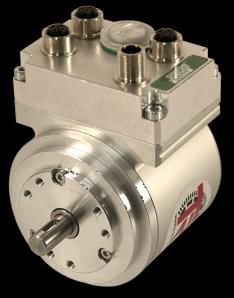
Original manual

       Absolute Encoder CD_-75
       PROFINET/PROFIsafe
                        CDH 75 M

          Explosion Protection Enclosure
        _A**75*
        _A**88*
        _A**100*                               CDH 75 M
        Protection Enclosure                        CDW 75 M
        _CDV115
                                                       CDV 75 M

                 DIN EN 61508:       SIL CL3
                 DIN EN ISO 13849:   PL e
                                                                         04/21/2021

_Safety instructions
_Device-specific specifications
_Installation/Commissioning
                                                                         TR-ECE-BA-GB-0095 v24

_Parameterization
_Cause of faults and remedies

                                                    User Manual
                                                     Interface
Contents
TR-Electronic GmbH
D-78647 Trossingen
Eglishalde 6
Tel.: (0049) 07425/228-0
Fax: (0049) 07425/228-33
E-mail: info@tr-electronic.de
www.tr-electronic.de
Copyright protection
This Manual, including the illustrations contained therein, is subject to copyright
protection. Use of this Manual by third parties in contravention of copyright regulations
is not permitted. Reproduction, translation as well as electronic and photographic
archiving and modification require the written content of the manufacturer. Violations
shall be subject to claims for damages.
Subject to modifications
The right to make any changes in the interest of technical progress is reserved.
Document information
Release date / Rev. date: 04/21/2021
Document / Rev. no.: TR-ECE-BA-GB-0095 v24
File name: TR-ECE-BA-GB-0095-24.docx
Author: MÜJ
Font styles
Italic or bold font styles are used for the title of a document or are used for highlighting.
Courier font displays text, which is visible on the screen and software/software menu
selections.
< > indicates keys on your computer keyboard (such as ).
Brand names
PROFIBUS™, PROFINET™ and PROFIsafe™, as well as the relevant logos, are
registered trademarks of PROFIBUS Nutzerorganisation e.V. (PNO)
SIMATIC is a registered trademark of SIEMENS AG
TR-Electronic GmbH 2012, All Rights Reserved Printed in the Federal Republic of Germany
Page 2 of 56 TR-ECE-BA-GB-0095 v24 04/21/2021Contents
Contents .................................................................................................................. 3
Revision index ........................................................................................................ 6
1 General information ............................................................................................ 7
1.1 Applicability ............................................................................................................................. 7
1.2 References.............................................................................................................................. 8
1.3 Abbreviations and terms used ................................................................................................ 9
1.4 Main features .......................................................................................................................... 11
1.5 Principle of the safety function ................................................................................................ 12
2 Safety instructions .............................................................................................. 13
2.1 Definition of symbols and notes .............................................................................................. 13
2.2 Safety functions of the fail-safe processing unit ..................................................................... 14
2.2.1 Mandatory safety checks / measures ..................................................................... 14
3 Technical Data ..................................................................................................... 15
3.1 Safety ...................................................................................................................................... 15
3.2 Electrical characteristics ......................................................................................................... 15
3.2.1 General ................................................................................................................... 15
3.2.2 Device-specific ........................................................................................................ 16
3.3 Max. possible step deviation (master system / inspection system) ........................................ 17
4 Installation / Preparation for Commissioning ................................................... 18
4.1 Basic rules .............................................................................................................................. 18
4.2 PROFINET IO transfer technology, cable specification ......................................................... 19
4.3 Connection .............................................................................................................................. 20
4.3.1 Series 75 / 115 ........................................................................................................ 20
4.3.2 Series 88 ................................................................................................................. 20
4.3.3 Series 100 ............................................................................................................... 20
4.3.4 Supply voltage ........................................................................................................ 21
4.3.5 PROFINET .............................................................................................................. 22
4.3.6 Incremental interface / SIN/COS interface.............................................................. 23
4.4 PROFIsafe Destination address “F_Dest_Add”...................................................................... 24
4.4.1 Series 75 / 115 ........................................................................................................ 24
4.4.2 Series 88 ................................................................................................................. 24
4.4.3 Series 100 ............................................................................................................... 25
4.5 Incremental interface / SIN/COS interface ............................................................................. 25
4.5.1 Signal characteristics .............................................................................................. 26
4.5.2 Optional HTL-Level, 13…27 VDC ........................................................................... 27
Printed in the Federal Republic of Germany TR-Electronic GmbH 2012, All Rights Reserved
04/21/2021 TR-ECE-BA-GB-0095 v24 Page 3 of 56Contents
5 Commissioning .................................................................................................... 28
5.1 PROFINET IO ......................................................................................................................... 28
5.1.1 Device classes ........................................................................................................ 28
5.1.2 Device description file (XML) .................................................................................. 28
5.1.2.1 MRP protocol support, series 75 / 100 / 115 ............................................. 29
5.1.3 Device identification ................................................................................................ 30
5.1.4 Distribution of IP addresses .................................................................................... 30
5.2 PROFINET IO System boot .................................................................................................... 31
5.3 Bus status display, series 75 / 115 ......................................................................................... 31
5.4 Commissioning using the SIEMENS SIMATIC S7 control ..................................................... 32
5.5 Configuration........................................................................................................................... 33
5.5.1 Safety-oriented data................................................................................................ 33
5.5.1.1 Input data ................................................................................................... 34
5.5.1.1.1 Cams ......................................................................................... 34
5.5.1.1.2 TR-Status .................................................................................. 34
5.5.1.1.3 Speed ........................................................................................ 35
5.5.1.1.4 Multi turn / Single turn ............................................................... 35
5.5.1.1.5 Safe status ................................................................................ 36
5.5.1.2 Output data ................................................................................................ 37
5.5.1.2.1 TR-Control1 ............................................................................... 37
5.5.1.2.2 TR-Control2 ............................................................................... 37
5.5.1.2.3 Preset multi turn / Preset single turn ......................................... 37
5.5.1.2.4 Safe-Control .............................................................................. 38
5.5.2 Not safety-oriented Process data ........................................................................... 39
5.5.2.1 Input data ................................................................................................... 39
5.5.2.1.1 Cams ......................................................................................... 39
5.5.2.1.2 Speed ........................................................................................ 40
5.5.2.1.3 Multi turn / Single turn ............................................................... 40
5.6 Parameterization ..................................................................................................................... 41
5.6.1 F-Parameters (F_Par) ............................................................................................. 41
5.6.1.1 F_Check_iPar ............................................................................................ 41
5.6.1.2 F_SIL ......................................................................................................... 42
5.6.1.3 F_CRC_Length .......................................................................................... 42
5.6.1.4 F_Block_ID ................................................................................................ 42
5.6.1.5 F_Par_Version ........................................................................................... 42
5.6.1.6 F_Source_Add / F_Dest_Add.................................................................... 42
5.6.1.7 F_WD_Time............................................................................................... 42
5.6.1.8 F_iPar_CRC .............................................................................................. 42
5.6.1.9 F_Par_CRC ............................................................................................... 42
5.6.2 iParameters (F_iPar)............................................................................................... 43
5.6.2.1 Integration time Safe ................................................................................. 43
5.6.2.2 Integration time Unsafe ............................................................................. 43
5.6.2.3 Window increments ................................................................................... 43
5.6.2.4 Idleness tolerance Preset .......................................................................... 44
5.6.2.5 Direction..................................................................................................... 44
6 Parameter Definition / CRC Calculation............................................................. 45
6.1 iParameters............................................................................................................................. 45
6.2 F-Parameters .......................................................................................................................... 45
TR-Electronic GmbH 2012, All Rights Reserved Printed in the Federal Republic of Germany
Page 4 of 56 TR-ECE-BA-GB-0095 v24 04/21/20217 Integration of the measuring system into the safety program ........................ 46
7.1 Prerequisites ........................................................................................................................... 46
7.2 Hardware configuration........................................................................................................... 46
7.3 Parameterization ..................................................................................................................... 46
7.4 Generating the safety program ............................................................................................... 47
7.5 Access to the safety-oriented data channel............................................................................ 47
7.5.1 Output of passivated data (substitute values) in case of error ............................... 47
8 Preset Adjustment Function ............................................................................... 48
8.1 Procedure ............................................................................................................................... 48
8.2 Timing Diagram....................................................................................................................... 49
9 Troubleshooting and Diagnosis Options .......................................................... 50
9.1 Optical displays ....................................................................................................................... 50
9.1.1 Device Status, LED1 Bicolor ................................................................................... 50
9.1.2 Bus Status, LED2.................................................................................................... 51
9.1.3 Link Status, PORT1:LED3; PORT2:LED5 .............................................................. 51
9.2 PROFINET IO Diagnostic ....................................................................................................... 52
9.2.1 Diagnostic alarm ..................................................................................................... 52
9.2.2 Diagnostics about Record Data .............................................................................. 52
9.3 Data status .............................................................................................................................. 53
9.4 Return of Submodule Alarm ................................................................................................... 53
9.5 Information & Maintenance ..................................................................................................... 54
9.5.1 I&M0, 0xAFF0 ......................................................................................................... 54
9.6 Behavior of the measuring system outputs ............................................................................ 54
10 Checklist, part 2 of 2.......................................................................................... 55
11 Appendix ............................................................................................................ 56
11.1 TÜV certificate ...................................................................................................................... 56
11.2 PROFINET IO certificates..................................................................................................... 56
11.3 PROFIsafe certificates .......................................................................................................... 56
11.4 EU Declaration of Conformity ............................................................................................... 56
11.5 Drawings ............................................................................................................................... 56
Printed in the Federal Republic of Germany TR-Electronic GmbH 2012, All Rights Reserved
04/21/2021 TR-ECE-BA-GB-0095 v24 Page 5 of 56Revision index
Revision index
Revision Date Index
First release 08/06/12 01
Modification of the service life from 15 years to 20 years 11/06/12 02
● Notes for use in explosive areas
05/07/13 03
● Incremental output: optional with 13-27 V DC
● The specified stranding of the cable for the supply voltage
is no longer required
03/06/14 04
● The specified stranding of the cable for the incremental
interface is provided as recommendation
● New scanning unit: double magnetic
● General modifications of the characteristics 11/17/14 05
● Note: Protective caps for male connectors
● Measuring system - Behavior of the outputs 11/19/14 06
● Supply voltage: modification of the cable diameter 12/22/14 07
● Step deviation between master system and inspection
system 01/19/15 08
● Use in explosive areas: Chapter centralized
● PROFINET/PROFIsafe – Certificate renewed 01/20/15 09
● Working temperature double magnetic version: -40…+65 °C 02/16/15 10
● Fragmentation safety manual / interface
● New model range 88 07/30/15 11
● MRP protocol, as from MAC address 00-03-12-EF-84-28
● Correction of the variable iPar_OK, Chapter 8.1 Preset-
Procedure: Marks only the completion of the preset- 11/05/15 12
execution
● Scanning system, double magnetic: additional information
03/08/16 13
in relation to the electrically permissible speed
● AD_88 Certificates added 04/14/16 14
● TÜV certificate TR-ECE-TI-DGB-0220 is replaced by
common certificate TR-ECE-TI-DGB-0297
● Declaration of conformity TR-ECE-KE-DGB-0278 is 07/18/16 15
replaced by common declaration of conformity
TR-ECE-KE-DGB-0337
● “auto-crossover-function” added 02/28/17 16
● 1024 ppr to factor 5 for incremental interface 10/11/17 17
● CDV115 protection enclosure added 12/04/17 18
● Draw wire box added 05/30/18 19
● Safety-related applicable accuracy edited 12/12/18 20
● Note: “Max. possible step deviation” 02/25/19 21
● Revised: 24V power supply (single fault condition) 06/05/19 22
● EX protection enclosure A**100* added 10/31/19 23
● Note: F_Dest setting is only read at switch-on moment 04/21/21 24
TR-Electronic GmbH 2012, All Rights Reserved Printed in the Federal Republic of Germany
Page 6 of 56 TR-ECE-BA-GB-0095 v24 04/21/20211 General information
The present interface-specific User Manual addresses the following topics:
● Safety instructions
● Device-specific specifications
● Installation/Commissioning
● Parameterization
● Error causes and remedies
As the documentation is arranged in a modular structure, the User Manual is
supplementary to other documentation, such as product data sheets, dimensional
drawings, brochures, the Safety Manual, etc.
The User Manual may be included in the customer’s specific delivery package or it
may be requested separately.
1.1 Applicability
This User Manual applies exclusively to measuring system models according to the
following type designation code with PROFINET IO interface and PROFIsafe profile:
*1 *2 *3 *4 *5 - *6 *6 *6 *6 *6
Position Notation Description
A Explosion protection enclosure (ATEX);
*1
C Absolute Encoder, programmable
*2 D redundant dual scanning unit
V Solid shaft
H Hollow shaft
*3
S Blind-hole shaft
W Rope length transmitter (wire)
75 External diameter 75 mm
88 External diameter 88 mm
*4
100 External diameter 100 mm
115 External diameter 115 mm
*5 M Multi turn
*6 - Consecutive number
* = Wild cards
The products are labeled with affixed nameplates and are components of a system.
This means that, all in all, the following documentations are applicable:
● see chapter “Other applicable documents” in the Safety Manual
Printed in the Federal Republic of Germany TR-Electronic GmbH 2012, All Rights Reserved
04/21/2021 TR-ECE-BA-GB-0095 v24 Page 7 of 56General information
1.2 References
IEC/PAS 62411 Real-time Ethernet PROFINET IO
1.
International Electrotechnical Commission
IEC 61158 Digital data communications for measurement and control
2.
- Fieldbus for use in industrial control systems
IEC 61784 Digital data communications for measurement and control
- Fieldbus for use in industrial control systems
3.
- Profile sets for continuous and discrete manufacturing
relative to fieldbus use in industrial control systems
ISO/IEC 8802-3 Carrier Sense Multiple Access with Collision Detection
4. (CSMA/CD)
Access Method and Physical Layer Specifications
5. IEEE 802.1Q IEEE Standard for Priority Tagging
IEEE 1588-2002 IEEE Standard for a Precision Clock Synchronization
6.
Protocol for Networked Measurement and Control Systems
PROFINET PROFIsafe – Environmental Requirements
7.
Guideline Order-No.: 2.232
PROFIBUS Profile Guidelines Part 1:
8.
Guideline Identification & Maintenance Functions. Order-No.: 3.502
PROFINET Design Guideline
9.
Guideline Order-No.: 8.062
PROFINET Installation Guideline for Cabling and Assembly
10.
Guideline Order-No.: 8.072
PROFINET Installation Guideline for Commissioning
11.
Guideline Order-No.: 8.082
TR-Electronic GmbH 2012, All Rights Reserved Printed in the Federal Republic of Germany
Page 8 of 56 TR-ECE-BA-GB-0095 v24 04/21/20211.3 Abbreviations and terms used
0x Hexadecimal representation
Explosion protection enclosure with ∅ 75 mm and built-in measuring
A**75*
system, all variants
Explosion protection enclosure with ∅ 88 mm and built-in measuring
A**88*
system, all variants
Explosion protection enclosure with ∅ 100 mm and built-in measuring
A**100*
system, all variants
Category:
CAT
Organization of cables, which is used also in connection with Ethernet.
CDH Absolute encoder with redundant dual scanning, hollow shaft design
CDV Absolute encoder with redundant dual scanning, solid shaft design
Series 75 measuring system installed in a 115 "Heavy Duty" protection
CDV115
enclosure
CD_ Absolute encoder with redundant dual scanning, all designs
CRC Cylic Redundancy Check
Diagnostic Coverage
DCavg
Average diagnostic coverage
EU European Union
EMC Electro Magnetic Compatibility
Engineering
Projection and commissioning tool
tool
F Generally stands for the term safety or fail-safe
F-Device Safety device for safety applications
Fault Compromise between the technical safety requirements and the
exclusion theoretical possibility of an error occurring
F-Host Safety control for safety applications
Failure Mode and Effects Analysis, reliability engineering methods, for
FMEA
finding potential weak points
Part of the overall system safety, which depends on the correct
Functional
functioning of safety-related systems for risk reduction. Functional
safety
safety is ensured when each safety function is executed as specified.
GSD Device Master File
GSDML General Station Description Markup Language
I&M Identification & Maintenance
IEC International Electrotechnical Commission
IEEE Institute of Electrical and Electronics Engineers
IO Consumer Status: Thus the Consumer of an IO Data Element
IOCS
signals the condition (good, bad with error location)
IO Provider Status: Thus the Provider of an IO Data Element signals
IOPS
the condition (good, bad with error location)
IP Internet Protocol
IRT Isochronous Real-Time communication
ISO International Standard Organization
Printed in the Federal Republic of Germany TR-Electronic GmbH 2012, All Rights Reserved
04/21/2021 TR-ECE-BA-GB-0095 v24 Page 9 of 56General information
MAC Media Access Control, Ethernet-ID
MTTFd Mean Time To Failure (dangerous)
Mean time until dangerous failure
MRP Media Redundancy Protocol
NRT Non-Real-Time communication
Operator
acknowl- Switching from substitute values to process data
edgment
PAS Publicly Available Specification
In the case of an F-Periphery with outputs, the F-System transmits
substitute values (e.g. 0) to the fail-safe outputs during a passivation
Passivation
instead of the output values provided in the process image by the
safety program.
Average Probability of Failure on Demand
PFDav
Average probability of failure of a safety function with low demand
Probability of Failure per Hour
PFH Operating mode with high requirement rate or continuous demand.
Probability of dangerous failure per hour.
PNO PROFIBUS User Organization (PROFIBUS NutzerOrganisation e.V.)
PROFIBUS Manufacturer independent, open field bus standard
PROFINET is the open Industrial Ethernet Standard of the PROFIBUS
PROFINET
User Organization for the automation.
Recurring check for detection of hidden dangerous failures in a safety-
Proof test
related system.
RT Real-Time communication
Safety Computer System with control function,
SCS
also referred to as F-Host in relation to PROFIsafe
Safety Integrity Level: Four discrete levels (SIL1 to SIL4). The higher
SIL the SIL of a safety-related system, the lower the probability that the
system cannot execute the required safety functions.
Safety Instrumented System: is used to protect a dangerous process
and reduce the risk of an accident. Process instruments are a
SIS constituent of a Safety Instrumented System. This comprises the
essential components of a complete safety-relevant process unit:
Sensor, fail-safe processing unit (control) and actuator
Plug-in slot: can be meant also in the logical sense as addressing of
Slot
modules.
Subslot Adressing of data
SNMP Simple Network Management Protocol
STP Shielded Twisted Pair
Standard
Definition:
measuring-
Safety-related measuring system, without explosion protection
system
TCP Transmission Control Protocol
UDP User Datagram Protocol
VDE Association for Electrical, Electronic & Information Technologies
XML EXtensible Markup Language
TR-Electronic GmbH 2012, All Rights Reserved Printed in the Federal Republic of Germany
Page 10 of 56 TR-ECE-BA-GB-0095 v24 04/21/20211.4 Main features
● PROFINET IO interface with PROFIsafe protocol, for transfer of a safe position
and speed
● Quick process data channel via PROFINET IO, not safety-oriented
● Variant 1 only:
Additional incremental or SIN/COS interface, not safety-oriented
● Two-channel scanning system, for generation of safe measured data through
internal channel comparison
– Variant 1:
Channel 1, master system:
optical Single-Turn scanning via code disk with transmitted light and
magnetic Multi-Turn scanning
Channel 2, inspection system:
magnetic Single- and Multi-Turn scanning
– Variant 2:
Channel 1, master system:
magnetic Single- and Multi-Turn scanning
Channel 2, inspection system:
magnetic Single- and Multi-Turn scanning
● A common drive shaft
The data of the master system are unevaluated in the non-safety-oriented process
data channel with normal PROFINET IO protocol, but are made available with a short
cycle time.
The inspection system serves for the internal safety check. The "safe data" obtained
through two-channel data comparison are packed into the PROFIsafe protocol and
also transmitted to the control via the PROFINET IO.
The incremental interface available in variant 1, or the optionally available SIN/COS
interface, is derived from the master system and is not evaluated in relation to safety.
Printed in the Federal Republic of Germany TR-Electronic GmbH 2012, All Rights Reserved
04/21/2021 TR-ECE-BA-GB-0095 v24 Page 11 of 56General information
1.5 Principle of the safety function
System safety results when:
– Each of the two scanning channels is largely fail-safe thanks to individual
diagnostic measures
– The measuring system internally compares the positions detected by both
channels in two channels, also determines the speed in two channels and
transfers the safe data to the PROFINET IO in the PROFIsafe protocol
– In the event of a failed channel comparison or other errors detected
through internal diagnostic mechanisms, the measuring system switches
the PROFIsafe channel into error state
– The measuring system initialization and execution of the preset adjustment
function are appropriately verified
– The control additionally checks whether the obtained position data lie in the
position window expected by the control. Unexpected position data are e.g.
position jumps, tracking error deviations and incorrect direction of travel
– When errors are detected the control introduces appropriate safety
measures defined by the system manufacturer
– The system manufacturer ensures, through correct mounting of the
measuring system, that the measuring system is always driven by the axis
for measurement and is not overloaded
– The system manufacturer performs a verified test during commissioning
and in the event of any parameter modification
TR-Electronic GmbH 2012, All Rights Reserved Printed in the Federal Republic of Germany
Page 12 of 56 TR-ECE-BA-GB-0095 v24 04/21/20212 Safety instructions
2.1 Definition of symbols and notes
means that death or serious injury will occur if the required
precautions are not met.
means that death or serious injury can occur if the required
precautions are not met.
means that minor injuries can occur if the required
precautions are not met.
means that damage to property can occur if the required
precautions are not met.
indicates important information or features and application
tips for the product used.
Printed in the Federal Republic of Germany TR-Electronic GmbH 2012, All Rights Reserved
04/21/2021 TR-ECE-BA-GB-0095 v24 Page 13 of 56Safety instructions
2.2 Safety functions of the fail-safe processing unit
The F-Host, to which the measuring system is connected, must perform the following
safety checks.
To enable the correct measures to be taken in the case of an error, the following
applies:
If no safe position can be output due to an error detected by the measuring system,
the PROFIsafe data channel is automatically put into fail-safe status. In this status
so-called "passivated data" are output via PROFIsafe. Also see the chapter
"Output of passivated data (substitute values) in case of error" on page 47.
Passivated data from the viewpoint of the measuring system are:
– PROFIsafe data channel: all outputs are set to 0
– PROFIsafe status: error bit 21 Device_Fault is set
– PROFIsafe-CRC: valid
Upon receipt of passivated data, the F-Host must put the system into a safe
state. It is only possible to leave this error state by eliminating the error and
then switching the supply voltage off and on again!
The process data channel addressable via PROFINET IO is not necessarily affected
by this. If the internal diagnosis in the master channel does not detect an error, the
process data are still output. However, these data are not safe for the purposes of a
safety standard.
2.2.1 Mandatory safety checks / measures
Measures for commissioning, changes F-Host error reaction
Application-dependent parameterization and definition of the
necessary iParameters, see chapter "iParameters" on –
page 45.
In the event of parameter changes, check that the measure
STOP
is executed as desired.
Check by F-Host F-Host error reaction
Cyclical consistency check of the current safety-oriented
STOP
data from the safety module in relation to the previous data.
Travel curve calculation and monitoring by means of cyclical
STOP
data from the safety module.
Monitoring of cyclical data from the safety module, and the Receipt of passivated
process data from the non-safety module. data --> STOP
Timeout: Monitoring of the measuring system - response
STOP
time. For checking e.g. cable breakage, power failure etc.
TR-Electronic GmbH 2012, All Rights Reserved Printed in the Federal Republic of Germany
Page 14 of 56 TR-ECE-BA-GB-0095 v24 04/21/20213 Technical Data
3.1 Safety
Time between POWER-UP and safe position output
Startup time .......................................................
7 s with SIMATIC S7, CPU317F-2
Overall system .....................................................
1.46 * 10–9 1/h
PFH, "High demand" operating mode .............
2.30*10-9 1/h
Scanning, double magnetic .................................
1.27 * 10–4
PFDav (T1 = 20 a).................................................
421 a
MTTFd high .........................................................
Scanning, double magnetic .................................
110 a
95 %
* DCavg high ........................................................
Scanning, double magnetic .................................
98.87 %
Time between occurrence of an F-Error and alarm
Internal process safety time .............................
indication
6.5 ms
Overall system .....................................................
Angle between error occurrence and alarm indication
Process safety angle.........................................
Via channel-internal self-diagnosis ......................
± 100 °, in relation to the measuring system shaft,
at 6000 min-1
Through channel comparison ..............................
Parameterizable with iParameter
Window increments
20 years
T1, Proof Test .....................................................
* The assessment occurred in accordance with Note 2 on Table 6 of EN ISO 13849-1
3.2 Electrical characteristics
3.2.1 General
13…27 V DC acc. to IEC 60364-4-41, SELV/PELV
Supply voltage ...................................................
Feed ....................................................................
single feed input, but electrically separated internally
by means of two power supplies
Reverse polarity protection .................................
yes
Short-circuit protection ........................................
yes, by internal 2 A safety fuse
yes, up to 36 V DC
Overvoltage protection ........................................
< 180 mA at 24 V DC
Current consumption without load ..................
Option HTL-Level, 13…27 VDC ..........................
increased current consumption, see page 27
Printed in the Federal Republic of Germany TR-Electronic GmbH 2012, All Rights Reserved
04/21/2021 TR-ECE-BA-GB-0095 v24 Page 15 of 56Technical Data
3.2.2 Device-specific
268 435 456 steps
Total resolution ..................................................
8.192
Number of steps / revolution ............................
32.768
Number of revolutions ......................................
8192 steps, Single-Turn
Functional accuracy ..........................................
Scanning, double magnetic .................................
256 steps, Single-Turn
Safety-related applicable accuracy
Scanning, optical/magnetic .................................
256 steps, Single-Turn
Scanning, double magnetic .................................
128 steps, Single-Turn
2 redundant scanning units with internal triangulation
Safety principle ..................................................
according to IEC 61158, IEC 61784
PROFINET IO interface......................................
PROFIsafe profile ................................................
3.192b according to IEC 61784-3-3
yes, series 75/100/115 ≤ MAC-address 00-03-12-EF-84-28
MRP protocol.......................................................
Integrated switch (2 ports) ...................................
yes, series 75/100/115
Additional functions .............................................
Preset
* Parameter
50 ms…500 ms
- Integration time Safe.........................................
5 ms…500 ms
- Integration time Unsafe.....................................
50…4000 increments
- Size of monitoring window ................................
1…5 increments/Integration time Safe
- Idleness tolerance Preset .................................
- Counting direction .............................................
forward, backward
PROFINET specification .....................................
V2.2
Software stack .....................................................
V3.2.0.1
Conformance class..............................................
Conformance Class B, C
Physical Layer .....................................................
PROFINET 100Base-TX, Fast Ethernet, ISO/IEC 8802-3
Output code .........................................................
Binary
≥ 1 ms (IRT / RT)
Cycle time ............................................................
Transmission rate ................................................
100 Mbit/s
Transmission .......................................................
CAT-5 cable, shielded (STP), ISO/IEC 11801
* Addressing ........................................................
Per Name (name allocation about engineering tool).
Assignment NameMAC during system boot
Real-Time-Classes ..............................................
RT Class 1 Frames (RT), RT Class 2 Frames (RT),
RT Class 3 Frames (IRT)
* TR-specific functions.........................................
Speed output in increments/Integration time Safe
Cable specification see page 22
Incremental interface ........................................
Availability ...........................................................
Scanning system: optical/magnetic
Pulses / revolution ...............................................
1024, 2048, 3072, 4096, 5120 or
4096, 8192, 12288, 16384, 20480, via factory setting
A, /A, B, /B, TTL ..................................................
RS422 (2-wire) according to EIA standard
optional 13…27 V DC, see page 27
A, /A, B, /B, HTL ..................................................
500 KHz
Output frequency, TTL ........................................
Output frequency, HTL ........................................
see page 27
Cable specification see page 22
SIN/COS interface, alternative ..........................
Availability ...........................................................
Scanning system: optical/magnetic
Number of periods ...............................................
4096 / revolution
1 Vss ± 0.2 V at 100 , differential
SIN+, SIN–, COS+, COS– ..................................
Short-circuit proof ................................................
yes
Cycle time
Not safety-oriented ..............................................
0.5 ms, output via non-safety module
Safety-oriented ....................................................
5 ms, output via safety module
4 000 000
Preset write cycles ............................................
* parameterizable via PROFINET IO
TR-Electronic GmbH 2012, All Rights Reserved Printed in the Federal Republic of Germany
Page 16 of 56 TR-ECE-BA-GB-0095 v24 04/21/20213.3 Max. possible step deviation (master system / inspection system)
Figure 1: Dynamic view of the step deviation, counting direction rising (view onto flanging)
Figure 1 serves for the estimate of the possible step deviation. On the base of this
estimate the parameter Window increments can be adjusted, see chapter 5.6.2.3
on page 43.
Function of the straight line S1:
S1 = 30 steps + (0.11 steps per revol. * actual speed [1/min])
Function of the straight line S2:
S2 = -30 steps + (-0.0024 steps per revol. * actual speed [1/min])
The max. possible step deviation results from the difference between S1 and S2
Example: Max. possible step deviation at 3500 1/min
S1 = 30 steps + (0.11 steps per revol. * 3500 1/min) = 415 steps
S2 = -30 steps + (-0.0024 steps per revol. * 3500 1/min) = -38.4 steps
Max. possible step deviation = 415 steps – (-38.4 steps) = 453.4 steps
Printed in the Federal Republic of Germany TR-Electronic GmbH 2012, All Rights Reserved
04/21/2021 TR-ECE-BA-GB-0095 v24 Page 17 of 56Installation / Preparation for Commissioning
4 Installation / Preparation for Commissioning
4.1 Basic rules
Deactivation of the safety function through conducted interference
sources!
All nodes of the safety-relevant communication must be certified
according to IEC 61010 or must have a corresponding EC conformity
declaration.
All PROFIsafe devices used on the bus must have a PROFINET and a
PROFIsafe - certificate.
All safety devices must also have a certificate from a "Notified Body"
(e.g. TÜV, BIA, HSE, INRS, UL, etc.).
The 24 V power supplies used must comply with the requirements of
IEC 60364-4-41 SELV/PELV and be NEC Class 2 compliant for UL
applications.
Only cables and connectors which are provided with a PROFINET
manufacturer's declaration are to be used.
The shielding effect of cables must also be guaranteed after
installation (bending radii/tensile strength!) and after connector
changes. In cases of doubt, use more flexible cables with a higher
current carrying capacity.
Only use M12 connectors for connecting the measuring system, which
guarantee good contact between the cable shield and connector
housing. The cable shield must be connected to the connector housing
over a large area.
A 5-wire cable with a PE-conductor isolated from the N-conductor (so-
called TN network) must be used for the drive/motor cabling. This will
largely prevent equipotential bonding currents and the development of
interference.
A shielded and stranded data cable must be used to ensure high
electromagnetic interference stability of the system. The shielding
should be connected with low resistance to protective ground using
large shield clips at both ends. The shielding should be grounded in
the switch cabinet only if the machine ground is heavily
contaminated with interference towards the switch cabinet ground.
Equipotential bonding measures must be provided for the complete
processing chain of the system.
Power and signal cables must be laid separately. During installation,
observe the applicable national safety and installation regulations for
data and power cables.
Observe the manufacturer's instructions for the installation of
converters and for shielding power cables between frequency
converter and motor.
Ensure adequate dimensioning of the energy supply.
TR-Electronic GmbH 2012, All Rights Reserved Printed in the Federal Republic of Germany
Page 18 of 56 TR-ECE-BA-GB-0095 v24 04/21/2021Upon completion of installation, a visual inspection with report should be carried out.
Wherever possible, the quality of the network should be verified using a suitable bus
analysis tool: no duplicate IP-addresses, no reflections, no telegram repetitions etc.
To ensure safe and fault-free operation, the
- PROFINET Design Guideline, PNO Order no.: 8.062
- PROFINET Assembly Guideline, PNO Order no.: 8.072
- PROFINET Commissioning Guideline, PNO Order no.: 8.082
- PROFIsafe "Environmental Requirements", PNO Order no.: 2.232
- and the referenced Standards and PNO Documents contained in it must be
observed!
In particular the EMC directive in its valid version must be observed!
4.2 PROFINET IO transfer technology, cable specification
The safety-related PROFIsafe communication as well as the PROFINET
communication is transferred about the same network.
PROFINET supports linear, tree or star structures. The bus or linear structure used in
the field buses is thus also available for Ethernet. This is particularly practical for
system wiring, as a combination of line and stubs is possible. Because the measuring
system of the series 75, 100 and 115 already has an integrated switch, the line
topology can be realized in a simple manner. The measuring system of the series 88
supports only one PORT!
Use only cables and connectors which are provided with a PROFINET manufacturer's
declaration. The cable type A/B/C, the mechanical and chemical properties as well as
the type of the PROFINET cable have to be defined according to the automation task.
The cables are designed for bit rates of up to 100 Mbit/s. Because the measuring
system supports the “auto-crossover-function”, it can be used crossover cables as well
as uncrossed cables. The transmission speed is automatically detected by the
measuring system and does not have to be set by means of switches.
Addressing by switches as in the case of the PROFIBUS-DP is also not necessary,
this is done automatically using the addressing options of the PROFINET-Controller,
however the PROFIsafe destination address “F_Dest_Add” must be adjusted, see
page 24.
The cable length including patch cables in case of copper wiring between two
suscribers may amount max. 100 m. This transmission link has been defined as
PROFINET end-to-end link. Within an end-to-end link the number of detachable links
is limited up to six connector pairs (male connector/female connector). If more than six
connector pairs are required, make sure that the attenuation values for the entire link
are observed (channel class-D values).
Series 75 / 100 / 115:
In case of IRT communication the topology is projected in a connection table.
Thereby you must pay attention on a right connection of the ports 1 and 2.
With RT communication this is not the case, it can be cabled freely.
Printed in the Federal Republic of Germany TR-Electronic GmbH 2012, All Rights Reserved
04/21/2021 TR-ECE-BA-GB-0095 v24 Page 19 of 56Installation / Preparation for Commissioning
4.3 Connection
4.3.1 Series 75 / 115
Destruction, damage and malfunction of the measuring system in case of
infiltration of damp!
In case of storage as well as in the operation of the measuring system
unused connecting plugs have to be provided either with a mating
connector or with a protective cap. The IP protection class is to be
selected according to the requirements.
Protective cap with O-ring:
In case of re-close of the protective cap the existence and the correct
seat of the O-ring have to be checked.
Corresponding protective caps see chapter accessories in the Safety
Manual.
Figure 2: Connector assignment
4.3.2 Series 88
The measuring system of the series 88 is supplied with an Ethernet Hybrid Cable
without connecting plug.
4.3.3 Series 100
Danger of explosion!
Open, wire (including potential equalization) and close only using and
observing all instructions in the User Manual!
TR-Electronic GmbH 2012, All Rights Reserved Printed in the Federal Republic of Germany
Page 20 of 56 TR-ECE-BA-GB-0095 v24 04/21/20214.3.4 Supply voltage
Danger of unnoticed damage to the internal electronics, due to
unacceptable overvoltages!
If an overvoltage of >36 V DC is inadvertently applied, the measuring
system must be checked in the factory. The measuring system is
permanently switched off for safety reasons, if the overvoltage is applied
for more than 200 ms.
The measuring system must be shut down immediately
When sending the measuring system to the factory, the reasons and
circumstances relating to the overvoltage must be specified
The power supply used must meet the requirements of SELV/PELV
(IEC 60364-4-41:2005)
Series75 / 115:
X1 Signal Description Pin, M12x1, 4 pole
1 + 24 V DC (13…27 V DC) supply voltage
2 n.c. -
3 0V GND
4 n.c. -
Cable specification: min. 0.34 mm2 (recommended 0.5 mm2) and shielded.
General the cable cross section and the cable length must be well-matched.
Series 88:
Signal Description Cable color
+ 24 V DC (13…27 V DC) supply voltage red
0V GND black
Printed in the Federal Republic of Germany TR-Electronic GmbH 2012, All Rights Reserved
04/21/2021 TR-ECE-BA-GB-0095 v24 Page 21 of 56Installation / Preparation for Commissioning
4.3.5 PROFINET
Series 75 / 115:
X2 Signal Description Socket, M12x1, 4 pol.
1 TxD+, Transmission Data +
2 RxD+, Receive Data +
PORT 2
3 TxD–, Transmission Data –
4 RxD–, Receive Data –
X3 Signal Description Socket, M12x1, 4 pol.
1 TxD+, Transmission Data +
2 RxD+, Receive Data +
PORT 1
3 TxD–, Transmission Data –
4 RxD–, Receive Data –
Series 88:
Signal Cable color Description
TxD+, Transmission Data + green/white
RxD+, Receive Data + white/orange
PORT 1
TxD–, Transmission Data – green
RxD–, Receive Data – orange
TR-Electronic GmbH 2012, All Rights Reserved Printed in the Federal Republic of Germany
Page 22 of 56 TR-ECE-BA-GB-0095 v24 04/21/20214.3.6 Incremental interface / SIN/COS interface
Series 75 / 115:
X4 Signal Description Socket, M12x1, 5 pole
1) 1 Channel B + 5 V differential / 13…27 V DC
1)
2 Channel B – 5 V differential / 13…27 V DC
1)
3 Channel A + 5 V differential / 13…27 V DC
1)
4 Channel A – 5 V differential / 13…27 V DC
5 0 V, GND Data reference potential
Alternative with SIN/COS signals
X4´ Signal Description Socket, M12x1, 5 pole
1 SIN + 1 Vss, differential
2 SIN – 1 Vss, differential
3 COS + 1 Vss, differential
4 COS – 1 Vss, differential
5 0 V, GND Data reference potential
Cable specification: min. 0.25 mm2 and shielded.
To guarantee the signal quality and minimization of possible environmental influences
it is recommended urgently to use a shielded twisted pair cable.
Series 88:
Signal Description Cable color
1)
Channel B + 5 V differential / 13…27 V DC blue
1)
Channel B – 5 V differential / 13…27 V DC yellow
1)
Channel A + 5 V differential / 13…27 V DC white
1)
Channel A – 5 V differential / 13…27 V DC brown
0 V, GND Data reference potential gray
Alternative with SIN/COS signals
Signal Description Cable color
SIN + 1 Vss, differential blue
SIN – 1 Vss, differential yellow
COS + 1 Vss, differential white
COS – 1 Vss, differential brown
0 V, GND Data reference potential gray
1) TTL/HTL – Level variant: see type plate
Printed in the Federal Republic of Germany TR-Electronic GmbH 2012, All Rights Reserved
04/21/2021 TR-ECE-BA-GB-0095 v24 Page 23 of 56Installation / Preparation for Commissioning
4.4 PROFIsafe Destination address “F_Dest_Add”
The PROFIsafe destination address corresponds to the F-parameter F_Dest_Add
and defines an unique source address within a PROFIsafe cluster.
Valid addresses: 1…99, also see chapter “F_Source_Add / F_Dest_Add” on page 42.
4.4.1 Series 75 / 115
Destruction, damage and malfunction of the measuring system in case of
infiltration of foreign substances and damp!
The access to the address switches has to be locked after the settings
with the screw plug. Tighten firmly!
The PROFIsafe destination address
is adjusted by means of two BCD-
switches which are read only at the
starting moment. Subsequent
settings during ongoing operation
will no longer be detected.
4.4.2 Series 88
Requirements
● An IP-address must have been assigned to the measuring system.
● Between client computer and measuring system (server) there must be an active
TCP/IP communication. After POWER ON a TCP socket server is started at IP-
port 60042.
● On the client computer the TCP socket client – software “TR Address Client” must
be available.
Download: www.tr-electronic.de/f/zip/TR-ECE-SW-DGB-0002
● IP-address and MAC-address must be known. The MAC-address can be read
from the nameplate of the measuring system.
● From view of the client computer the connection is executed via a certain port
number. In this connection, the range of the port numbers can be between 49152
and 65535. It must be made sure that a firewall does not block the connection.
Procedure
Start TCP socket client.
Enter the IP-address and MAC-address valid for the device.
Enter desired PROFIsafe destination address F_Dest_Add.
Click Send button.
After successful execution the programmed PROFIsafe destination
address is confirmed.
TR-Electronic GmbH 2012, All Rights Reserved Printed in the Federal Republic of Germany
Page 24 of 56 TR-ECE-BA-GB-0095 v24 04/21/20214.4.3 Series 100
Danger of explosion!
Open, justify and close only using and observing all instructions in the
User Manual!
4.5 Incremental interface / SIN/COS interface
Series 88: optional feature
Series 100: not supported
In addition to the PROFINET IO interface for output of the absolute position, the
measuring system in the standard version also has an incremental interface.
However, this can alternatively also be designed as a SIN/COS interface.
This additional interface is not evaluated in relation to safety and must
not be used for safety-oriented purposes!
The measuring system checks the outputs of this interface for the feed-
in of external voltages. In the event of voltages > 5.7 V, the measuring
system is switched off for safety reasons. In this state the measuring
system behaves as if it were not connected.
The interface is generally used as position feedback for motor control
applications.
Danger of damage to subsequent electronics due to overvoltages caused
by a missing ground reference point!
If the ground reference point is completely missing, e.g. 0 V of the power
supply not connected, voltages equal to the supply voltage can occur at
the outputs of this interface.
It must be guaranteed that a ground reference point is present at all
times,
or corresponding protective measures by the system operator must be
provided for subsequent electronics.
The signal characteristics of the two possible interfaces are shown below.
Printed in the Federal Republic of Germany TR-Electronic GmbH 2012, All Rights Reserved
04/21/2021 TR-ECE-BA-GB-0095 v24 Page 25 of 56Installation / Preparation for Commissioning
4.5.1 Signal characteristics
1: Edge evaluation
2: Measuring system with
4096 pulses/revol.
3: Counter evaluation
1x: 4096 Counter pulses/rev.
2x: 8192 Counter pulses/rev.
4x: 16384 Counter pulses/rev.
Figure 3: Counter evaluation, incremental interface
Measurement of signals
against 0 V
Differential measurement
Figure 4: Level definition, SIN/COS interface
TR-Electronic GmbH 2012, All Rights Reserved Printed in the Federal Republic of Germany
Page 26 of 56 TR-ECE-BA-GB-0095 v24 04/21/20214.5.2 Optional HTL-Level, 13…27 VDC
Optionally, the incremental interface is also available with HTL levels. For technical
reasons, the user has to take the following general conditions into account with this
version: ambient temperature, cable length, cable capacitance, supply voltage, and
output frequency.
In this case, the maximum output frequencies that can be reached via the incremental
interface are a function of the cable capacitance, the supply voltage and the ambient
temperature. Therefore, the use of this interface is reasonable only if the interface
characteristics meet the technical requirements.
From the view of the measuring system, the transmission cable represents a
capacitive load which must be reloaded with each impulse. The load quantity required
varies strongly depending on the cable capacitance. It is this reloading of the cable
capacitances that is responsible for the high power dissipation and heat, which result
in the measuring system.
Assuming a cable length (75 pF/m) of 100 m, with half the limit frequency being
associated with the rated voltage of 24 VDC, the current consumption of the
measuring system is twice as high.
Due to the developing heat, the measuring system may only be operated with approx.
80 % of the working temperature specified.
The following diagram shows the different dependencies with respect to three different
supply voltages.
Fixed variables are
Cable capacitance: 75 pF/m
Ambient temperature: 40 °C and 70 °C
Figure 5: Cable lengths / Limiting frequencies
Other cable parameters, frequencies and ambient temperatures as well as bearing
heat and temperature increase via the shaft and flange, can yield a considerably
poorer result in practice.
Therefore, the fault-free function of the incremental interface with the application-
dependent parameters has to be checked prior to productive operation.
Printed in the Federal Republic of Germany TR-Electronic GmbH 2012, All Rights Reserved
04/21/2021 TR-ECE-BA-GB-0095 v24 Page 27 of 56You can also read


