MINDMAP: establishing an integrated database infrastructure for research in ageing, mental well-being, and the urban environment - BMC Public Health
←
→
Page content transcription
If your browser does not render page correctly, please read the page content below
Beenackers et al. BMC Public Health (2018) 18:158
DOI 10.1186/s12889-018-5031-7

 STUDY PROTOCOL                                                                                                                                   Open Access

MINDMAP: establishing an integrated
database infrastructure for research in
ageing, mental well-being, and the urban
environment
Mariëlle A. Beenackers1*†, Dany Doiron2,3,4†, Isabel Fortier2, J. Mark Noordzij1, Erica Reinhard5, Emilie Courtin5,
Martin Bobak6, Basile Chaix7,8, Giuseppe Costa9,10, Ulrike Dapp11,12, Ana V. Diez Roux13, Martijn Huisman14,
Emily M. Grundy15, Steinar Krokstad16,17, Pekka Martikainen18, Parminder Raina19, Mauricio Avendano7
and Frank J. van Lenthe1,20

  Abstract
  Background: Urbanization and ageing have important implications for public mental health and well-being. Cities
  pose major challenges for older citizens, but also offer opportunities to develop, test, and implement policies, services,
  infrastructure, and interventions that promote mental well-being. The MINDMAP project aims to identify the opportunities
  and challenges posed by urban environmental characteristics for the promotion and management of mental well-being
  and cognitive function of older individuals.
  Methods: MINDMAP aims to achieve its research objectives by bringing together longitudinal studies from 11 countries
  covering over 35 cities linked to databases of area-level environmental exposures and social and urban policy indicators.
  The infrastructure supporting integration of this data will allow multiple MINDMAP investigators to safely and remotely
  co-analyse individual-level and area-level data.
  Individual-level data is derived from baseline and follow-up measurements of ten participating cohort studies and provides
  information on mental well-being outcomes, sociodemographic variables, health behaviour characteristics, social factors,
  measures of frailty, physical function indicators, and chronic conditions, as well as blood derived clinical biochemistry-based
  biomarkers and genetic biomarkers. Area-level information on physical environment characteristics (e.g. green spaces,
  transportation), socioeconomic and sociodemographic characteristics (e.g. neighbourhood income, residential segregation,
  residential density), and social environment characteristics (e.g. social cohesion, criminality) and national and urban social
  policies is derived from publically available sources such as geoportals and administrative databases.
  The linkage, harmonization, and analysis of data from different sources are being carried out using piloted tools to optimize
  the validity of the research results and transparency of the methodology.
  (Continued on next page)

* Correspondence: m.beenackers@erasmusmc.nl
†
 Equal contributors
1
 Department of Public Health, Erasmus MC, University Medical Center
Rotterdam, P.O. Box 2040, 3000, CA, Rotterdam, The Netherlands
Full list of author information is available at the end of the article

                                         © The Author(s). 2018 Open Access This article is distributed under the terms of the Creative Commons Attribution 4.0
                                         International License (http://creativecommons.org/licenses/by/4.0/), which permits unrestricted use, distribution, and
                                         reproduction in any medium, provided you give appropriate credit to the original author(s) and the source, provide a link to
                                         the Creative Commons license, and indicate if changes were made. The Creative Commons Public Domain Dedication waiver
                                         (http://creativecommons.org/publicdomain/zero/1.0/) applies to the data made available in this article, unless otherwise stated.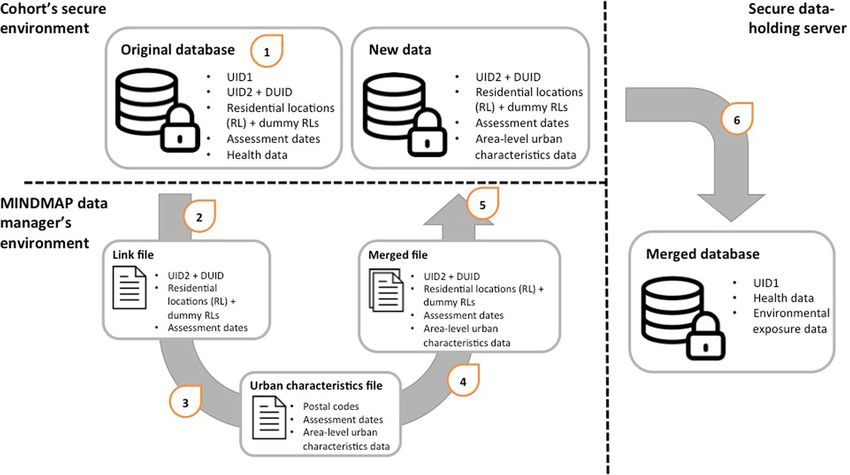
Beenackers et al. BMC Public Health (2018) 18:158                                                                 Page 2 of 10

 (Continued from previous page)
 Discussion: MINDMAP is a novel research collaboration that is combining population-based cohort data with publicly
 available datasets not typically used for ageing and mental well-being research. Integration of various data sources and
 observational units into a single platform will help to explain the differences in ageing-related mental and cognitive
 disorders both within as well as between cities in Europe, the US, Canada, and Russia and to assess the causal pathways
 and interactions between the urban environment and the individual determinants of mental well-being and cognitive
 ageing in older adults.
 Keywords: Ageing, Mental well-being, Urban health, Database, Data integration, Cohort studies

Background                                                        impact of the urban environment on mental well-being.
From 1990 to 2010, the burden of mental ill-health in-            Harmonizing information across international cohort
creased by 38%, an increase mostly attributable to popu-          studies and combining them with data from different
lation ageing [1]. Mental disorders in old age lead to            sources (physical, social and socioeconomic environmen-
impairments in the ability to function socially, decreased        tal characteristics, policy indicators) allows examining
quality of life, and increased risk of health problems and        contextual determinants of variation in mental well-
comorbidities. Poor mental well-being in later life carries       being across different populations and exploring the
significant social and economic impacts on families and           impact of neighbourhood, urban, and national policies
societies, imposing a substantial burden on health and            for the prevention of mental disorders in older people.
social care services [1]. Mental disorders associated with        Furthermore, integrating data increases sample sizes and
ageing, therefore, have become a key priority for public          statistical power necessary to identify high-risk popula-
health policy and prevention.                                     tion subgroups, study relatively rare health conditions,
   Today, over 70% of Europeans and over 80% of North             unravel causal pathways and explore interactions be-
Americans reside in cities [2]. While urbanization is ex-         tween risk factors. Finally, and potentially most rele-
pected to increase in these regions over the coming de-           vant for studies investigating environmental influences
cades, there is limited understanding of the critical             on health, integrating data from different geographical
contribution of the urban environment to mental well-             locations increases the variation in environmental
being in ageing societies. Cities pose major challenges           characteristics and policies that influence mental well-
for older citizens, but also offer opportunities to develop,      being and cognitive function both within as well as
test, and implement policies, services, infrastructure, and       between cities.
interventions that promote mental well-being. The                   The MINDMAP database infrastructure will support
MINDMAP project, building on a novel database infra-              these research objectives by integrating data from
structure, aims to identify the opportunities and chal-           multiple sources and providing investigators with a plat-
lenges posed by urban environmental characteristics for           form to analyse it. The infrastructure will allow multiple
the promotion and management of mental well-being                 MINDMAP investigators to safely and remotely co-
and cognitive function of older individuals.                      analyse data from multiple sources and across different
   Funded from 2016 to 2020 by the Horizon2020                    populations. Integration of different data sources will
programme of the European Commission, MINDMAP                     facilitate analyses exploring the importance of individ-
aims to achieve its research objectives by bringing               ual- and area-level determinants of mental well-being
together ten longitudinal studies from eight European             and cognitive function.
countries, the United States (US), Canada and Russia (in
total over 35 cities of different sizes) linked to databases of
area-level environmental exposures and social and urban           Methods/design
policy indicators. Linking micro- (i.e. individual), meso-        Participating institutions and cohort studies
(i.e. neighbourhood), and macro- (i.e. city or national)          Research centres and longitudinal cohort studies from
level data enables MINDMAP to investigate the causal              across Europe and North America are involved in the
pathways and multi-level interactions between characte-           MINDMAP consortium.
ristics of the urban environment and the behavioural,               Thirteen research teams with a wide range of expert-
social, and biological determinants of mental well-being          ise are contributing to the MINDMAP project (see
and cognitive function in older adults.                           Additional file 1). MINDMAP also brings together ten
   Compared to studies based on a single country or city,         ongoing longitudinal ageing cohort studies from eight
integrating data from cohort studies in multiple cities           European countries, the US, Canada, and Russia
offers many advantages for research exploring the                 (Table 1). The European cohort studies appropriately
Beenackers et al. BMC Public Health (2018) 18:158                                                                                Page 3 of 10

Table 1 Overview of MINDMAP participating cohort studies
Name                                      Type of Number of Country               Main study locations                 Baseline Last follow-up
                                          study   Participants
Canadian Longitudinal Study on Aging      Cohort    50,000     Canada             Victoria, Vancouver, Surrey, Calgary, 2008    Ongoing
(CLSA) [34]                                                                       Winnipeg, Hamilton, Ottawa, Montréal,         (until 2018)
                                                                                  Sherbrooke, Halifax, St. John’s
Health and Living Conditions of the      Cohort     18,973     Netherlands        Eindhoven and surroundings           1991     2016
Population of Eindhoven and Surroundings
(Gezondheid en Levens Omstandigheden
Bevolking Eindhoven en omstreken;
GLOBE) [35]
The Health, Alcohol and Psychosocial      Cohort    36,106     Russia             Novosibirsk                          2002     2015
Factors in Eastern Europe Study                                Poland             Krakow
(HAPIEE) [36]                                                  Lithuania          Kaunas
                                                               Czech Republic     Hradec Kralove, Jihlava, Karvina,
                                                                                  Kromeriz, Liberec, Usti nad Labem
Nord-Trøndelag Health Study               Cohort    125,000    Norway             Nord-Trøndelag county                1984     2008
(HUNT) [37]
Longitudinal Aging Study Amsterdam        Cohort    5132       Netherlands        West (including Amsterdam)           1992     2014
(LASA) [38]                                                                       East (including Zwolle)
                                                                                  South (including Oss)
Longitudinal Urban Cohort Ageing Study    Cohort    3326       Germany            Hamburg                              2000     2017
(LUCAS) [39]
Multi-Ethnic Study of Atherosclerosis –   Cohort    6191       United             Forsyth County (NC), Northern        2000     2012
Neighbourhood (MESA Neighbourhood)                             States of          Manhattan & the Bronx (NY),
[7]                                                            America            Baltimore City & Baltimore
                                                                                  County (MD), St. Paul (MN),
                                                                                  Chicago (IL), Los Angeles
                                                                                  County (CA)
Residential Environment and CORonary      Cohort    7290       France             Paris                                2007     2015
Heart Disease Study (RECORD) [40]
Rotterdam Study (RS) [41]                 Cohort    14,926     Netherlands        Rotterdam (Ommoord)                  1989     Ongoing
                                                                                                                                (until 2020)
Turin Longitudinal Study (TLS) [42]       Registry 2,391,833   Italy              Turin                                1971     2015
                                          based
                                          cohort

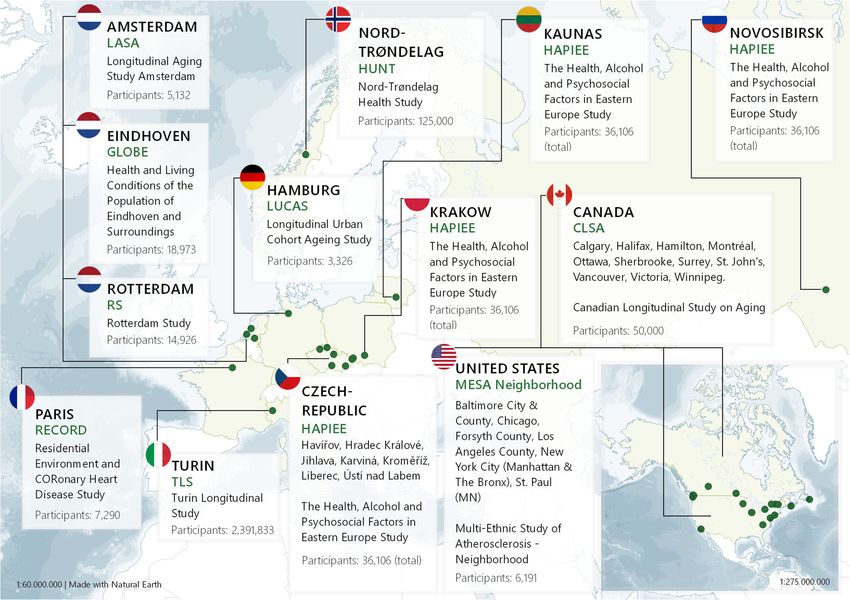
cover urban areas in all regions including North, Cen-                     Individual-level data
tral, Southern, and Eastern Europe (Fig. 1). Several co-                   The MINDMAP consortium makes use of baseline and
hort studies additionally include more rural areas,                        follow-up data collected by 10 participating studies.
which will be useful for comparative purposes.
                                                                           Mental health, mental well-being and cognitive function
                                                                           The main outcomes of interest within the MINDMAP
Variables and data sources
                                                                           project are indicators of mental health, mental well-
MINDMAP is integrating data from numerous sources
                                                                           being, and cognitive function. These indicators are mea-
for different observational units. Individual-level data
                                                                           sured in the cohort studies at multiple times through
collected by longitudinal ageing studies will be combined
                                                                           questionnaires, interviews, and cognitive tests and
with area-level urban characteristics and local and na-
                                                                           include variables covering life satisfaction, quality of life,
tional policy indicators.
                                                                           depression and depressive symptoms, cognitive function-
  Additional file 2 provides a visual representation of the
                                                                           ing, anxiety, and loneliness.
structure of the MINDMAP project, including all work-
packages and their relation to the different data presented
below. A detailed overview of data used in the MINDMAP                     Individual-level determinants, mediators and con-
project is provided in Additional file 3. The selection of                 founders MINDMAP-participating cohort studies have
variables was based on scientific literature and a draft con-              also collected detailed measures of sociodemographic vari-
ceptual model on the influence of environmental factors                    ables, health behaviour characteristics, social factors, as
on mental well-being and cognitive function that is being                  well as measures of frailty and physical function indica-
developed by MINDMAP investigators.                                        tors, and chronic conditions (multi-morbidities). An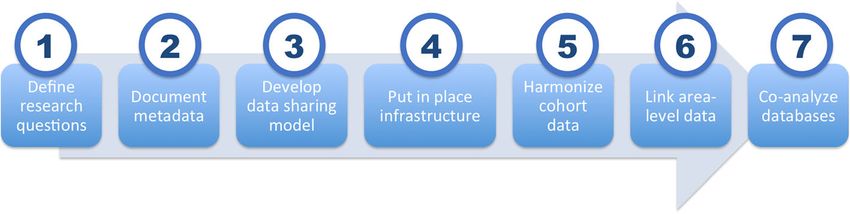
Beenackers et al. BMC Public Health (2018) 18:158                                                                         Page 4 of 10

 Fig. 1 Overview of participating MINDMAP studies and their geographical locations

important feature of the MINDMAP studies is the collec-                  information in the European Union. The European Data
tion of repeated measurement of determinants of mental                   Portal [4] was systematically reviewed for all files con-
well-being and cognitive function in cohort studies of                   taining items relevant to mental well-being or intermedi-
urban residents. Several studies also have information                   ary factors for all countries and cities of the participating
available on blood derived clinical biochemistry-based bio-              European cohort studies. In addition, using the European
markers and genetic biomarkers.                                          Data Portal, relevant national, regional, and local data
                                                                         portals were identified and are systematically searched for
Area-level data                                                          relevant data that is not yet catalogued on the European
Area-level information on physical environment charac-                   Data Portal.
teristics (e.g. green spaces, transportation), socioeconomic                Harmonized high-resolution land use data, road infra-
and sociodemographic characteristics (e.g. neighbourhood                 structure files, and residential address databases of the
income, residential segregation, residential density), and               general population over the study territory were obtained
social environment characteristics (e.g. social cohesion,                for all European MINDMAP cities. For its land use data,
criminality) and national and urban social policies is                   MINDMAP extracted data from the European Urban
derived from publicly available resources.                               Atlas [5]. This data is derived from satellite imagery and
                                                                         consists of 21 distinct categories, which capture a city’s
Physical environmental characteristics Geospatial data                   land use (including public green areas). This data is being
is being collected from existing data portals, and city-                 used to calculate individual ‘greenness’ exposure. In com-
specific contacts across the MINDMAP study sites. In                     bination with the infrastructure information, measures
the European Union, publicly available spatial informa-                  such as nearest road network distance to urban green
tion has drastically improved thanks to INSPIRE [3], a                   spaces are also being calculated. Point data of all residen-
2007 European Directive that establishes a data infra-                   tial addresses is used to determine population density.
structure for the collection and distribution of spatial                 Information on facilities, transportation, and pollution
Beenackers et al. BMC Public Health (2018) 18:158 Page 5 of 10
have been obtained for a subset of cities from local and addition, data has been collected on local mental health
national data portals and are used to derive measures such promotion and prevention policies through interviews
as exposure to pollutants, access to public transport and with experts in MINDMAP cities [18].
availability of facilities.
The CLSA is part of the Canadian Urban Environmental The MINDMAP process
Health Research Consortium (CANUE), a pan-Canadian To support cross-national research on ageing, mental well-
initiative which is gathering and developing measures of being and the urban environment, the MINDMAP consor-
environmental characteristics such as greenness, walkabil- tium adapted harmonization guidelines and software appli-
ity, air pollution, and socioeconomic conditions for every cations developed by Maelstrom Research [19, 20]. These
neighbourhood across Canada [6]. As they become avail- tools have been employed under similar collaborative health
able, environmental characteristics developed within research projects such as BioSHaRE [21], InterConnect
CANUE will be linked to CLSA cohort data. For our US [22], and the Canadian Partnership for Tomorrow Project
cohort study, we will use the area-level geospatial data [23]. Seven consecutives actions are being undertaken to
collected within the MESA neighbourhood study, which establish an integrated database infrastructure allowing ana-
was specifically designed to study environmental influ- lyses of individual- and area-level data for research in age-
ences on health [7]. ing, mental well-being, and the urban environment (Fig. 2).
Define research questions
Socioeconomic, sociodemographic and social environ-
As a first step, MINDMAP consortium investigators
mental characteristics Area level variables on neighbour-
identified a number of research questions addressing the
hood socioeconomic measures (e.g. average income,
variation in mental well-being and disorders in old age,
proportion of rental housing), sociodemographic com-
both within cities as well as between cities and exploring
position (e.g. proportion of older people, residential seg-
how environments and policies at different levels might
regation), and social interaction indicators (e.g. proxies
influence mental well-being in later life. Table 2 shows
of social cohesion, criminality) are also being derived
main research questions to be answered with the inte-
from publicly available sources such as the local and
grated database infrastructure. In addition, more detailed
national statistics agencies and local governments.
domain-specific research questions were defined, to be
explored by each work package (Additional file 2).
National and local policies Data on national and sub-
national policies that range from proximal to more distal Document metadata
influences on the mental well-being of older people in The design of participating studies and the data they col-
an urban environment has been collected within the lect were documented on a web-based platform [24]. This
MINDMAP project to evaluate the effects of public pol- platform includes a search and query interface allowing
icies on mental well-being outcomes. Existing, cross-city MINDMAP investigators to quickly and easily identify
and cross-national databases such as the Social Insur- studies collecting data items required to answer specific
ance Entitlements Dataset (SIED) [8], the Labour Market research questions. Questionnaires, standard operating
Reforms (LABREF) database [9], the Eurostat databases procedures, and data dictionaries were also documented
[10], and the OECD Long Term Care database [11] were within the platform so that heterogeneity of data collec-
the principal sources for social policies such as old age tion instruments could be properly assessed. Area-level
pensions and social care. Urban policy indicators, such urban characteristics as well as local and national policies
as transportation affordability and accessibility indica- of interest are also being documented.
tors, were collected for each MINDMAP city from the
Eurostat Urban Audit database [12] and the OECD Develop data sharing and publication guidelines
Metropolitan Indicators database [13]. Mental health In order to establish basic governing principles for the
policy indicators, such as mental health system govern- consortium, MINDMAP principal investigators drafted
ance, resources and services were collected at the guidelines covering access and usage of cohort study data
national level for European countries from the Eurostat and publication of results. First, each cohort study’s regu-
Health Indicators database and the European Health for lar data access procedures will be respected, including the
All database [14], and for all countries from the WHO submission of access applications and obtainment of all
Mental Health Atlas Country Profiles [15] and from two required approvals from ethical review boards. Second,
OECD data sources [16, 17]. MINDMAP aims to collate only data relevant to answer MINDMAP research ques-
such policy data for the past 30 years, and earlier, when tions is being requested. Third, after receiving all neces-
applicable. When longitudinal data was not available, we sary approvals, these subsets of cohort study data will be
collected the latest available cross-sectional data. In hosted on firewall-protected servers. Participating studiesBeenackers et al. BMC Public Health (2018) 18:158 Page 6 of 10
Fig. 2 Step-by-step process to establish the MINDMAP integrated database infrastructure
were given the option of transferring a subset of their data Harmonize cohort data
to the coordinating centre’s (Erasmus MC) server or in- MINDMAP research teams were assigned specific do-
stalling a local server at their home institution. Fourth, the mains of information to harmonize across all MINDMAP
MINDMAP coordinating team and cohort representatives cohort studies. Assignment of data harmonization work
will review each manuscript proposal. At this point, cohort was based on the expertise of the investigators at partici-
representatives will need to confirm that they agree to the pating institutions. University College London is respon-
use of their data for a given manuscript, and will be able to sible for mental well-being and cognitive outcomes
opt-out if they wish. Lastly, a publication agreement was harmonization, Vrije Universiteit Amsterdam (VU) Uni-
adopted to describe the authorship and acknowledgement versity Medical Centre was assigned social factors and
guidelines relevant to work generated in connection with perceived environment variables harmonization, Erasmus
MINDMAP. Medical Centre, in collaboration with McGill University
Health Centre, is harmonizing socioeconomic variables,
Put in place IT infrastructure multi-morbidities and health behaviours variables.
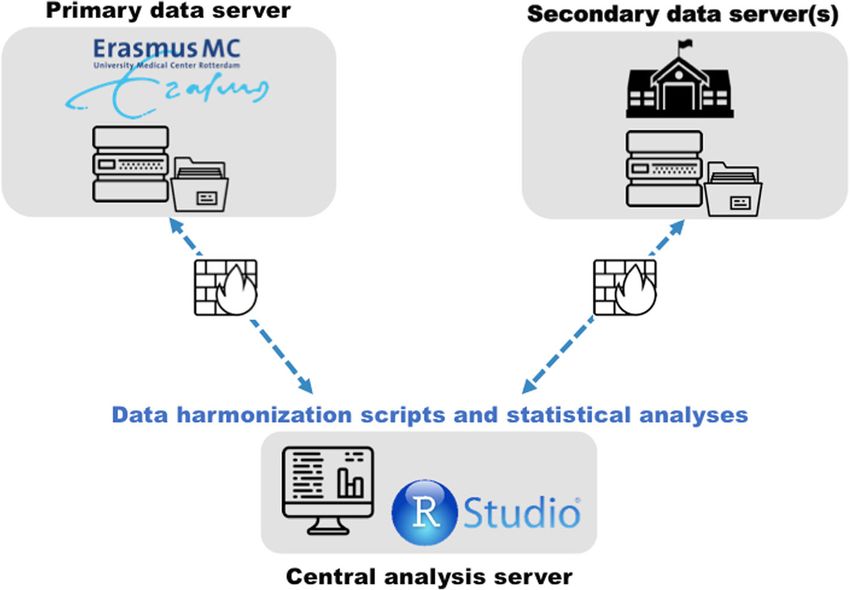
Given potential restrictions related to sharing of individual- Finally, biomarker data is harmonized by McMaster
level data, a distributed database infrastructure was put in University (for details on the domains of information,
place to support data harmonization and cross-study ana- see Additional file 3).
lyses (Fig. 3). As such, a primary data server was installed at Research teams began by reviewing the variables
Erasmus Medical Centre in Rotterdam (the MINDMAP collected by each cohort study and related documenta-
coordinating centre) to host datasets from studies whose tion (e.g. questionnaire(s), standard operating proce-
policies allow the physical transfer of data to a third party. dures, data dictionaries) for their assigned domain, and
Cohort studies with more restrictive data sharing rules were identifying missing information or highlighting unclear
given the option of installing secondary data servers in their variable definitions, codes, or values. Targeted variables
own institution, which would be remotely accessible via for harmonization are then defined (e.g. current cigarette
encrypted connections (using HTTPS). Finally, a central consumption - categorical: yes (coded as 1) or no (coded
analysis server running RStudio [25] was set up and allows as 0); pack-years of smoking - continuous variable) and
authenticated MINDMAP staff and investigators to documented in a central MINDMAP GitHub repository.
securely access firewall-protected data on the primary and The choice and specific definitions of targeted variables
secondary data servers (see step 7 below). is determined by the research questions that they will
help to address and the actual data collected by each co-
Table 2 Main MINDMAP research questions to be answered hort. Once defined, the potential for each cohort to gen-
with the integrated database infrastructure erate target variables is assessed. Next, data harmonizers
1. How do variations across cities in mental well-being and cognitive develop data transformation scripts to generate
outcomes in later life relate to urban environments, and how do they
impact on co-morbidities?
common-format variables in RStudio [25] on the pass-
word protected central analysis server. Decisions made
2. How does the urban environment modify genetics and biomarkers as
a potential mechanism through which features of the urban and harmonization scripts applied for each study-
environment contribute to psychopathology in later life? specific dataset are documented using cohort-specific
3. How do urban environmental characteristics influence mental RMarkdown documents [26] in the publicly-accessible
well-being and cognitive outcomes in later life by shaping lifestyle MINDMAP GitHub repository, thereby making data
behaviours? transformation decisions open and transparent. Lastly,
4. How do psychosocial urban determinants influence mental well-being quality control checks are conducted on harmonized
in later life?
variables by comparing the distribution and counts of
5. How do ‘health-in-all’ and mental health prevention policies impact harmonized datasets to the data originally collected by
the mental well-being of older urban residents?
each study.Beenackers et al. BMC Public Health (2018) 18:158 Page 7 of 10 Fig. 3 MINDMAP database infrastructure Link area-level data privacy, the georeferenced information will be blinded in a Addresses and postal codes of cohort participants will be step-by-step process. Firstly, the cohort data manager will used to link urban environmental characteristics and pol- generate new unique identifiers (UID2) for all individuals icy data (i.e. area-level data) to harmonized cohort data in cohort studies along with dummy (i.e. random) identi- (Fig. 4). Given that the utilization of residential locations fiers (DUID) and residential locations (home address or in research projects compromises study participants’ postal code) for approximately 5% of the total cohort Fig. 4 MINDMAP data linkage process
Beenackers et al. BMC Public Health (2018) 18:158                                                               Page 8 of 10

study’s sample (more if preferred). Second, a Link file        which affect the living arrangements of older people;
containing UID2 and residential locations (RL) as well         pension policies, which influence the financial well-being
DUID and dummy RLs will be sent to the MINDMAP                 of urban older dwellers; mental health promotion pro-
data manager. Third, MINDMAP will prepare a clearly            grammes that target the mental health of older people in
documented Urban characteristics file to be merged with        cities; and environmental policies that affect access to out-
the Link file. Fourth, the Link file and Environmental expo-   door and meeting spaces, lightening and walkability.
sures file will be merged into the Merged file using resi-     MINDMAP will aim to implement policy evaluation stud-
dential locations and dates of assessment. The resulting       ies to examine how some of these policies affecting older
dataset is then sent back to the data manager of the cohort    people living in MINDMAP cities may influence their
study who deletes all addresses. Lastly, the merged data is    mental health, with the aim of identifying transferra-
made available through the data infrastructure (either on      ble lessons.
the primary data server or a secondary data server).
                                                               Discussion
Co-analyse integrated data                                     The MINDMAP project aims to identify the opportunities
Using a web browser and secure internet connection,            and challenges posed by the urban environment for the
authenticated MINDMAP researchers can login to the             promotion of mental well-being and cognitive function in
central analysis server outlined in step four and conduct      later life. MINDMAP aims to achieve its research objec-
on-demand statistical analyses on geographically distrib-      tives by bringing together longitudinal studies from 11
uted firewall-protected databases using the RStudio web        countries covering over 35 cities linked to databases of
interface. While some studies have given permission for        area-level environmental exposures and social and urban
individual-level data to be analysed by MINDMAP investi-       policy indicators. The infrastructure supporting integra-
gators, others have restricted data access to aggregate-       tion of this data will allow multiple MINDMAP investiga-
level information. For all analyses that include cohort        tors to safely and remotely co-analyse individual-level and
studies prohibiting the use of individual-level data, the      area-level data through a single platform.
DataSHIELD approach is used [27, 28]. Under Data-                 The MINDMAP project has several important
SHIELD, analysis requests are sent from the central            strengths. Integrating data from cohort studies in multiple
analysis computer to the harmonized data held on the           cities and across various exposure or policy databases
data servers. Computation is done simultaneously but in        allows examining the role of contextual determinants on
parallel on each data server linked by non-disclosive          variations in mental well-being across different popula-
summary statistics. Individual-level cohort data thereby       tions. It also increases variations across these contextual
stay on their respective data server described in step         determinants and it raises sample sizes and statistical
four above.                                                    power and, because the data is pooled from different
  Unlike experimental data, in our observational design,       regions and jurisdictions, allows exploring the effect of
exposure to environmental and individual risk factors can-     policy on mental well-being. The harmonization approach
not be assumed to be randomly assigned [29, 30]. This is a     and tools that are employed by the project have been
challenge for research on the impact of the urban environ-     methodically developed by Maelstrom Research [19, 20]
ment on health. To minimize risks of bias as much as pos-      and put to use in similar research collaborations [21–23].
sible with the available data, MINDMAP will capitalise on      These tools and approaches have been adapted to accom-
recent advances in causal inference and causal mediation       modate the specific needs of the MINDMAP project and
methods, particularly derived from econometric and             ensure that all aspects of the harmonization project are
policy evaluation [29]. Because of the impossibility to        carried out in a uniform, open, and methodical way to
randomize many of the key environmental determinants           optimize the validity of the research results and transpar-
of mental well-being, quasi-experimental approaches            ency of the methodology. Moreover, the research teams
applied to longitudinal data will provide the basis for the    contributing to the project bring a wide range of experi-
identification of causal effects. These techniques will        ences and expertise that complement each other.
include instrumental variables, regression discontinuity,         The integration of different data sources from different
and difference-in-differences approaches [31], which           countries also present several challenges. Firstly, differ-
exploit naturally occurring changes in the environment,        ent questions and scales have been used within the par-
including policy reforms, to identify their causal effect on   ticipating cohort studies to measure similar underlying
mental well-being. For example, the introduction of the        concepts. For some measures, harmonizing across the
free bus pass in England in 2006, a transportation policy,     cohort studies is relatively straightforward (e.g. simple
has been linked to increased physical activity and reduced     algorithmic transformations or calibrations). However,
obesity [32, 33]. Similar evaluations could be carried for     for measures such as mental well-being outcomes, this
the impact of policy reforms in the domains of housing,        process is more complex, requiring the application of
Beenackers et al. BMC Public Health (2018) 18:158 Page 9 of 10
statistical modelling (e.g. standardization, latent variable atherosclerosis; RECORD: Residential environment and CORonary heart
or multiple imputation) [11]. Further, in many instances disease study; RL: Residential locations; RS: Rotterdam study; SIED: Social
insurance entitlements dataset; TLS: Turin longitudinal study; UID1: Unique
not all variables can be harmonized and constructed for identifier - original; UID2: Unique identifier - new; US: United States (of
all participating studies, because this might compromise America); VU: Vrije Universiteit Amsterdam
the quality of the constructed variables. Secondly, all en-
Acknowledgements
vironmental data needs to be methodically checked for None.
accuracy, completeness (e.g. missing roads), and
geocoding or projection errors (e.g. a road is projected Funding
MINDMAP is funded by the European Commission HORIZON 2020 research
next to the real location of the road) to ensure the valid- and innovation action 667661.
ity of the data. Furthermore, there is often a lack of
historical data due to rapid changes in geographical Availability of data and materials
The datasets generated in the context of the MINDMAP project are not
information system (GIS) techniques and the tendency publicly available due to study participant privacy considerations. However,
to only publish the most recent data by many of the data access can be requested from the individual cohort studies via the
sources publishing geospatial data. Extensive efforts are respective data access procedures in place.
therefore needed to obtain high quality historical Authors’ contributions
measures of environmental exposures. Thirdly, linking MAB and DD coordinate the construction of the MINDMAP integrated database
environmental data to cohort data can lead to privacy infrastructure. Together they drafted and critically reviewed the full manuscript. FJvL
and MA coordinate the MINDMAP project and IF coordinated the development of
concerns when not dealt with properly. To prevent this, the Maelstrom Research tools and guidelines that are used for the harmonisation
we developed a process to link the environmental data and analysis of the data. MAB, JMN, ENR and EC contributed to the area-level data
to cohort data that protects participant privacy by isolat- collection. FJvL, MB, BC, GC, UD, AVDR, MH, EG, SK, PM and PR were involved in the
design of the study and contributed to the data collection of the included cohort
ing residential addresses from privacy sensitive health studies. All authors have critically reviewed the manuscript. All authors read and
data. Finally, integrating data from 10 longitudinal stud- approved the final manuscript.
ies requires extensive coordination. Streamlining this
Ethics approval and consent to participate
process while respecting each study’s guidelines and MINDMAP will do secondary analyses on the data collected within the
regulations necessitates considerable time investments participating cohort studies. All participating cohort studies have originally
and meticulous planning. received consent of the participants and ethical approval from their respected
institutions: LASA received ethical approval by the Medical Ethical Committee
MINDMAP is a novel research collaboration which is of the Vrije Universiteit medisch centrum. HUNT received ethical approval from
combining population-based cohort data with publicly the Regional Committee for Medical Research Ethics, Mid-Norway. In addition,
available datasets not typically used for ageing and mental MINDMAP specific approval was received from the same committee. RECORD
received ethical approval from the Commission Nationale de l’Informatique et
well-being research. Integration of various data sources des Libertés. LUCAS received ethical approval from the Ethik-Kommission der
and observational units into a single platform will facilitate Ärztekammer Hamburg. Additional MINDMAP specific ethical approval has been
multilevel analyses exploring the influence of individual- received from the same committee. Furthermore, MINDMAP specific consent is
requested from the participants in the latest wave of LUCAS. HAPIEE received
and area-level determinants of mental well-being. In the ethical approval from the Joint UCL/UCLH Committees on the Ethics of Human
end, this infrastructure will help to explain the differences Research. Furthermore, all local institutes also provided ethical approval (the
in ageing-related mental and cognitive disorders both Jagiellonian University’s Committee on the Ethics of Clinical Research, the
Kaunas Regional Biomedical Research Ethical Committee, and the Institution
within as well as between cities around the world and Ethical Commission of the Czech Republic – National Institute of Public Health).
assess the causal pathways and interactions between the The Rotterdam study has received ethical approval from the Medical Ethical
urban environment and the individual determinants of Committee of Erasmus MC. The GLOBE study has received a declaration of no
objection from the same committee. CLSA has received ethical approval from
mental well-being and cognitive ageing in older adults. the Hamilton Integrated Research Ethics Board. MESA was approved by the
institutional review boards of all participating institutions (Johns Hopkins
University, Northwestern University, Wake Forest University, University of
Additional files California at Los Angeles, Columbia University, University of Minnesota) as well
as the National Heart, Lung and Blood Institute.
Additional file 1: MINDMAP research teams. (DOCX 26 kb)
Consent for publication
Additional file 2: Structure of the MINDMAP project. (DOCX 219 kb)
Not applicable.
Additional file 3: Overview of data. (DOCX 31 kb)
Competing interests
The authors declare that they have no competing interests.
Abbreviations
CANUE: Canadian urban environmental health research consortium;
CLSA: Canadian longitudinal study on ageing; DUID: Dummy unique Publisher’s Note
identifier; GIS: Geographical information system; GLOB: Health and living Springer Nature remains neutral with regard to jurisdictional claims in
conditions of the population of eindhoven and surroundings (Gezondheid published maps and institutional affiliations.
en levens omstandigheden bevolking eindhoven en omstreken); HAPIEE: The
health, alcohol and psychosocial factors in eastern Europe study; Author details
1
HUNT: Nord-trøndelag health study (Helseundersøkelsen i Nord-Trøndelag); Department of Public Health, Erasmus MC, University Medical Center
LABREF: Labour market reforms; LASA: Longitudinal aging study Amsterdam; Rotterdam, P.O. Box 2040, 3000, CA, Rotterdam, The Netherlands. 2Research
LUCAS: Longitudinal urban cohort ageing study; MESA: Multi-ethnic study of Institute of the McGill University Health Centre, Montreal, Canada. 3SwissBeenackers et al. BMC Public Health (2018) 18:158 Page 10 of 10
Tropical and Public Health Institute, Basel, Switzerland. 4University of Basel, 17. Organisation for Economic Co-operation and Development. Health systems
Basel, Switzerland. 5Department of Global Health and Social Medicine, King’s characteristics survey. 2017 [cited 2017 15 September]. Available from:
College London, London, UK. 6Department of Epidemiology and Public http://qdd.oecd.org/subject.aspx?Subject=hsc.
Health, University College London, London, UK. 7Inserm, UMR_S 1136, Pierre 18. Neumann L, et al. The MINDMAP project: mental well-being in urban
Louis Institute of Epidemiology and Public Health, Paris, France. 8Sorbonne environments: design and first results of a survey on healthcare planning
Universités, UPMC Univ Paris 06, UMR_S 1136, Pierre Louis Institute of policies, strategies and programmes that address mental health promotion
Epidemiology and Public Health, Paris, France. 9Epidemiology Unit, ASL TO3, and mental disorder prevention for older people in Europe. Z Gerontol
Piedmont Region, Grugliasco, Turin, Italy. 10Department of Clinical and Geriatr. 2017;50(7):588–602.
Biological Science, University of Turin, Turin, Italy. 11Geriatrics Centre, 19. Fortier I, et al. Maelstrom research guidelines for rigorous retrospective data
Scientific Department at the University of Hamburg, Hamburg, Germany. harmonization. Int J Epidemiol. 2017;46(1):103–5.
12
Albertinen-Haus, Hamburg, Germany. 13Drexel University Dornsife School of 20. Doiron D, et al. Software application profile: opal and mica: open-source
Public Health, Philadelphia, PA, USA. 14Department of Epidemiology and software solutions for epidemiological data management, harmonization
Biostatistics, EMGO+ Institute for Health and Care Research, VU University and dissemination. Int J Epidemiol. 2017;46(5):1372–8.
Medical Center, Amsterdam, The Netherlands. 15Department of Social Policy, 21. Doiron D, et al. Data harmonization and federated analysis of population-
London School of Economics and Political Science, London, UK. 16HUNT based studies: the BioSHaRE project. Emerg Themes Epidemiol. 2013;10(1):
Research Centre, Department of Public Health and General Practice, Faculty 12.
of Medicine, Norwegian University of Science and Technology (NTNU), 22. InterConnect. InterConnect: global data for diabetes and obesity research.
Levanger, Norway. 17Levanger Hospital, Nord-Trøndelag Hospital Trust, 2017 [cited 2017 15 September]. Available from: http://www.interconnect-
Levanger, Norway. 18Population Research Unit, Department of Social diabetes.eu/.
Research, University of Helsinki, Helsinki, Finland. 19Canadian Longitudinal 23. Borugian MJ, et al. The Canadian Partnership for Tomorrow Project: building
Study on Aging, Department of Health Research Methods, Evidence and a pan-Canadian research platform for disease prevention. Can Med Assoc J.
Impact, McMaster University, Hamilton, Canada. 20Department of Human 2010;182(11):1197–201.
Geography and Spatial Planning, Utrecht University, Utrecht, The 24. Maelstrom Research. MINDMAP - promoting mental well-being and healthy
Netherlands. ageing in cities. 2017 [cited 2017 15 September]; Available from: https://
www.maelstrom-research.org/mica/network/mindmap.
Received: 30 September 2017 Accepted: 4 January 2018 25. RStudio. RStudio – open source and enterprise-ready professional software
for R. 2016 [cited 2017 15 September]. Available from: https://www.rstudio.
com/.
26. RStudio. R Markdown. 2016 [cited 2017 15 September]. Available from:
References http://rmarkdown.rstudio.com/.
1. Whiteford HA, et al. Global burden of disease attributable to mental and 27. Gaye A, et al. DataSHIELD: taking the analysis to the data, not the data to
substance use disorders: findings from the global burden of disease study the analysis. Int J Epidemiol. 2014;43(6):1929–44.
2010. Lancet. 2013;382(9904):1575–86. 28. Wolfson M, et al. DataSHIELD: resolving a conflict in contemporary
2. The World Bank Group. Urban population (% of total). 2017 [cited 2017 15 bioscience–performing a pooled analysis of individual-level data without
September]. Available from: https://data.worldbank.org/indicator/SP.URB. sharing the data. Int J Epidemiol. 2010;39(5):1372–82.
TOTL.IN.ZS. 29. Dunning T. Natural experiments in the social sciences: a design-based
3. Infrastructure for spatial information in Europe. INSPIRE Knowledge Base. approach. Cambridge: Cambridge University Press; 2012.
2017 [cited 2017 15 September]. 30. Glymour MM. Policies as tools for research and translation in social
4. European Data Portal. European Data Portal. 2017 [cited 2017 15 epidemiology. In: Berkman LF, Kawachi I, Glymour MM, editors. Social
September]. Available from: https://www.europeandataportal.eu/. Epidemiology. New York: Oxford University Press; 2014. p. 452–277.
5. European Environment Agency. European urban atlas. 2010. Available from: 31. Angrist JD, Pischke JS. Mostly harmless econometrics: An empiricist's
https://www.eea.europa.eu/data-and-maps/data/copernicus-land- companion. Woodstock: Princeton University Press; 2008.
monitoring-service-urban-atlas. [cited 2018 15 January]. 32. Webb E, et al. Free bus travel and physical activity, gait speed, and adiposity
6. The Canadian Urban Environmental Health Research Consortium. CANUE. in the English longitudinal study of ageing. Am J Public Health. 2016;106(1):
2017 [cited 2017 15 September]; Available from: http://www.canue.ca/. 136–42.
7. Diez Roux AV, et al. The impact of neighborhoods on CV risk. Glob Heart. 33. Webb E, Netuveli G, Millett C. Free bus passes, use of public transport and
2016;11(3):353–63. obesity among older people in England. J Epidemiol Community Health.
2012;66(2):176–80.
8. The Swedish Institute for Social Research. Social insurance entitlements
34. Raina PS, et al. The Canadian longitudinal study on aging (CLSA). Can J
dataset (SIED). 2017 [cited 2017 15 September]. Available from: http://www.
Aging. 2009;28(3):221–9.
spin.su.se/datasets/sied.
35. Kamphuis CB, et al. Life course socioeconomic conditions, adulthood risk
9. Turrini A, et al. A decade of labour market reforms in the EU: insights from
factors and cardiovascular mortality among men and women: a 17-year
the LABREF database. IZA J Labor Policy. 2015;4(1).
follow up of the GLOBE study. Int J Cardiol. 2013;168(3):2207–13.
10. European Commission. Eurostat. 2017 [cited 2017 15 September]. Available
36. Peasey A, et al. Determinants of cardiovascular disease and other non-
from: http://ec.europa.eu/eurostat/data/database.
communicable diseases in central and Eastern Europe: rationale and design
11. Organisation for Economic Co-operation and Development. Long term care
of the HAPIEE study. BMC Public Health. 2006;6:255.
database. 2017 [cited 2017 15 September]; Available from: http://www.oecd.
37. Krokstad S, et al. Cohort profile: the HUNT study, Norway. Int J Epidemiol.
org/els/health-systems/long-term-care.htm.
2013;42(4):968–77.
12. European Commission. Eurostat - Urban Audit. 2015 [cited 2017 15
38. Huisman M, et al. Cohort profile: the longitudinal aging study Amsterdam.
September]. Available from: http://ec.europa.eu/eurostat/web/cities/data/
Int J Epidemiol. 2011;40(4):868–76.
database.
39. Dapp U, et al. The longitudinal urban cohort ageing study (LUCAS): study
13. Organisation for Economic Co-operation and Development. Metropolitan protocol and participation in the first decade. BMC Geriatr. 2012;12:35.
indicators database. 2017 [cited 2017 15 September]. Available from: https:// 40. Chaix B, et al. Cohort profile: residential and non-residential environments,
stats.oecd.org/Index.aspx?DataSetCode=CITIES. individual activity spaces and cardiovascular risk factors and diseases–the
14. World Health Organization. European health for all database (HFA-DB). 2016 RECORD cohort study. Int J Epidemiol. 2012;41(5):1283–92.
[cited 2017 15 September]. Available from: http://data.euro.who.int/hfadb/. 41. Hofman A, et al. The Rotterdam study: 2016 objectives and design update.
15. World Health Organization. Mental Health Atlas 2017 [cited 2017 15 Eur J Epidemiol. 2015;30(8):661–708.
September]. Available from: http://www.who.int/mental_health/evidence/ 42. Marinacci C, et al. The role of individual and contextual socioeconomic
atlasmnh/en/. circumstances on mortality: analysis of time variations in a city of north
16. Organisation for Economic Co-operation and Development. Health statistics. west Italy. J Epidemiol Community Health. 2004;58(3):199–207.
2017 [cited 2017 15 September]; Available from: http://www.oecd.org/
health/health-statistics.htm.You can also read


