Huge turf community effort - NATIONAL ATTENTION fOr - ALSO IN THIS ISSUE: Hort Innovation
←
→
Page content transcription
If your browser does not render page correctly, please read the page content below
OFFICIAL INDUSTRY MAGAZINE • AUTUMN 2018

                                       turfAUSTRALIA INDUSTRY MAGAZINE • AUTUMN 2018

National attention for

huge turf
community effort
                                                                       SA
                                                                     THE VE
                                                                         DAT
                                                                3-5    E
                                                                    JUN
                                                                 201    E
                                                                     8

                                               ALSO IN THIS ISSUE:
                               Heavy vehicle laws - what you need to know
                                  Finding big on-farm efficiencies in Qld
                                        Your guide to NxGen 2018
                                                                                  1
Strategic planning to drive future                                         representatives on crisis management from Duncan Hall.
                                                                              The strategic planning comes after a Turf Australia board meeting
direction on the agenda                                                    in February where it was resolved to assist the development of a
                                                                           safety railing system for handstack harvesters. You can read about
Turf Australia’s direction going forward has been                          what is proposed with that development on Page 4.
                                                                              The next Turf Strategic Industry Advisory Panel meeting, scheduled
a key focus of recent activities and will continue to                      for April in Sydney, should bring more strategic levy-funded projects
be the focus in coming months.                                             into the industry to assist growers with their management of
                                                                           production issues.
   It is exciting the National Market Development Project (TU16002) is        Assisting all of the industry in recent months has been an excellent
now up and running at full capacity with Jenny Zadro already acting        summer of activity with turf sales around much of the country, and
on many of the key project goals with assistance from Rachel Collier.      the very welcome news that drought-parched areas of Queensland
   You can read about the first two months of the project in Jenny’s       have received significant rainfall.
first market development report on page 30 and 31 of this edition of          It must be a great relief to our growers in Townsville to see levels of
the magazine.                                                              the Ross River Dam, which was almost empty, rise to levels of almost
   As part of moving Turf Australia forward, three days of strategic       90 per cent. This should see turf sales in that area begin to turn
planning have been set aside in April (9-11) to clearly identify the       around after an extensive period of severe water restrictions.
issues and needs of our industry’s state bodies and our national              I would encourage growers to read and understand the changes
body.                                                                      coming into place with the National Heavy Vehicle chain of
                                                                           responsibility legislation and National Transport Commission’s load
                                                                           restraint information in this magazine – ignorance is not a reasonable
      The next Turf Strategic Industry Advisory                            defence should any turf grower and/or their trucks be pulled up by
      Panel meeting, scheduled for April in                                road safety officers.
                                                                              Finally, the younger members of our industry should make their
      Sydney, should bring more strategic levy-                            way to Cairns in June (3-5) to make the most of a great program for
      funded projects into the industry to assist                          NxGen 2018.
                                                                              The event is always a great one for both education and networking
      growers with their management of                                     and I look forward to catching up with growers up there.
      production issues.

   Such a strategic planning meeting has been muted for some                                    Ross Boyle, Rosemount Turf
time, and it is pleasing to have the date set to bring together the Turf                        Chairman
Australia staff, board members, state industry development officers,                            Turf Australia
and state association executive to have a ‘meeting of the minds’ for
our industry.
   The planning sessions will be facilitated by John Peacock to
ensure clear goals and measures are set up for Turf Australia to
work towards. The sessions will also include training for the industry

                                                                             Advertising is available in this magazine for the following
     AN OPPORTUNITY TO                                                       economical rates (other packages available):

    AdvertisE DIRECT TO THE INDUSTRY
    ...the new-look Turf Australia magazine                                   Size             Width            Height        Single Issue Rate
                                                                              < 1 Unit        89.5mm           61.5mm         $120 plus GST
    talks directly to the turf industry.
                                                                              2 Unit          89.5mm            127mm         $230 plus GST
    To make a booking, arrange artwork or for advice
                                                                              4 Unit          184mm             127mm         $360 plus GST
    on how to maximise your value from advertising
    in Turf Australia, or to tailor a package specific to                    For more information contact Advertising Coordinator:
    your particular needs.                                                   Rachel Layt T: (02) 4588 5735 E: admin@turfaustralia.com.au

2
turfAUSTRALIA INDUSTRY MAGAZINE • AUTUMN 2018

                                                                 6                                                                                                                                               11
Turf Australia Industry Magazine is produced
by Turf Producers Australia Ltd trading as Turf
Australia.

TURF AUSTRALIA
                                                                                                                                                                                                              SA
Postal: PO Box 92 Richmond NSW 2753                                                                                                                                                                         THE VE
Street: Rooms 1&2, Building S9                                                                                                                                                                         3-5 DATE
                                                                                                                                                                                                          JU
        Western Sydney University                                                                                                                                                                       201 NE
        Hawkesbury Campus                                                                                                                                                                                  8
        Richmond NSW 2753
        T: (02) 4588 5735

NATIONAL MARKET
DEVELOPMENT MANAGER:
Jenny Zadro
        T: (02) 4588 5735

                                                                                                                             24                                                                              22
                                                                                                                                                                                                             34
        E: jenny.zadro@turfaustralia.com.au

Communications &
Managing Editor:
Liz Mecham
        M: 0407 015 059
        E: comms@turfaustralia.com.au                            Turf Australia’s future direction on the agenda.  .  .  .  .  .  .  .  .  .  .  .  .  .  .  .  .  .  .  .  .  .  .  . 2
ADVERTISING & Events Coordinator:
                                                                 Safety railing system development. .  .  .  .  .  .  .  .  .  .  .  .  .  .  .  .  .  .  .  .  .  .  .  .  .  .  .  .  .  .  .  .  . 4
Rachel Layt
        T: (02) 4588 5735                                        Leadership courses on offer for growers.  .  .  .  .  .  .  .  .  .  .  .  .  .  .  .  .  .  .  .  .  .  .  .  .  .  .  .  . 4
        E: admin@turfaustralia.com.au
                                                                 Understanding opportunities at NGIA.  .  .  .  .  .  .  .  .  .  .  .  .  .  .  .  .  .  .  .  .  .  .  .  .  .  .  .  .  .  . 5
Design & Production:
Grant Nelson Design                                              Strategic planning for Turf Australia.  .  .  .  .  .  .  .  .  .  .  .  .  .  .  .  .  .  .  .  .  .  .  .  .  .  .  .  .  .  .  .  . 5
          T: 0419 379 511
          W: grant@grantnelsondesign.com.au                      Load safety – it’s YOUR responsibility .  .  .  .  .  .  .  .  .  .  .  .  .  .  .  .  .  .  .  .  .  .  .  .  .  .  .  .  .  .  . 6
This magazine is provided for informational
purposes only. The reader assumes entire risk as                 NxGen 18 Conference
to the accuracy and for the use of any information
                                                                        Learning in the north .  .  .  .  .  .  .  .  .  .  .  .  .  .  .  .  .  .  .  .  .  .  .  .  .  .  .  .  .  .  .  .  .  .  .  .  .  .  .  . 11
contained within. Feel free to pass this magazine
on to others you feel may benefit from its content.                     Master Class: Business success: More than just growing grass.  .  .  .  .  .  . 12
To subscribe or unsubscribe, please contact Turf
Australia on T: (02) 4588 5735.                                         Program .  .  .  .  .  .  .  .  .  .  .  .  .  .  .  .  .  .  .  .  .  .  .  .  .  .  .  .  .  .  .  .  .  .  .  .  .  .  .  .  .  .  .  .  .  .  .  .  .  .  . 13
                                                                 	Registration .  .  .  .  .  .  .  .  .  .  .  .  .  .  .  .  .  .  .  .  .  .  .  .  .  .  .  .  .  .  .  .  .  .  .  .  .  .  .  .  .  .  .  .  .  .  .  . 14
                                                                 New consumer website and marketing manager .  .  .  .  .  .  .  .  .  .  .  .  .  .  .  .  .  .  .  .  . 15
                                                                 Taking the sting out of nematodes.  .  .  .  .  .  .  .  .  .  .  .  .  .  .  .  .  .  .  .  .  .  .  .  .  .  .  .  .  .  .  .  . 16
                                                                 On-farm gains and growth in Queensland. .  .  .  .  .  .  .  .  .  .  .  .  .  .  .  .  .  .  .  .  .  .  .  .  .  . 18
This magazine is published using funds allocated as
part of the Australian Turf Industry Communications              Hogs and turf growers meet the challenge.  .  .  .  .  .  .  .  .  .  .  .  .  .  .  .  .  .  .  .  .  .  .  .  .  . 22
Project TU16004. The project Australian Turf Industry
Communications Project (TU16004) is a strategic levy             50 years later, StrathAyr turf is still growing strong. .  .  .  .  .  .  .  .  .  .  .  .  .  .  .  .  .  .  . 24
investment under the Hort Innovation Turf Fund. It was
funded by Hort Innovation using the turf R&D levy and            International conference highlights global issues for growers.  .  .  .  .  .  .  .  .  .  . 26
contributions from the Australian Government.
                                                                 Turf Talk
                                                                        Online focus and awards in WA .  .  .  .  .  .  .  .  .  .  .  .  .  .  .  .  .  .  .  .  .  .  .  .  .  .  .  .  .  .  .  . 27
DISCLAIMER: Turf Australia (TA) acknowledges
contributions made by private enterprise through                 	Victoria showcasing green industries.  .  .  .  .  .  .  .  .  .  .  .  .  .  .  .  .  .  .  .  .  .  .  .  .  .  .  . 28
placement of advertisements in this publication.
Acceptance of these contributions does not endorse                      Safety and community projects in NSW. .  .  .  .  .  .  .  .  .  .  .  .  .  .  .  .  .  .  .  .  .  .  .  .  . 28
or imply endorsement by TA of any product or service
advertised by contributors. Any advice provided in                      Putting a value on turf in Queensland.  .  .  .  .  .  .  .  .  .  .  .  .  .  .  .  .  .  .  .  .  .  .  .  .  .  . 29
articles contained in this magazine is intended as a
source of information only. Always read the label before         Market Development
using any of the products mentioned. TA and its officers
do not guarantee that the publication is without flaw                   Hitting the ground running.  .  .  .  .  .  .  .  .  .  .  .  .  .  .  .  .  .  .  .  .  .  .  .  .  .  .  .  .  .  .  .  .  .  .  . 30
of any kind or is wholly appropriate for your practical
purposes and, therefore, disclaim all liability for any error,
loss or any other consequence that may arise from you
relying on the information in this publication. All articles
and other material published in this journal is TA copyright
(unless otherwise stated) and may not be reproduced in
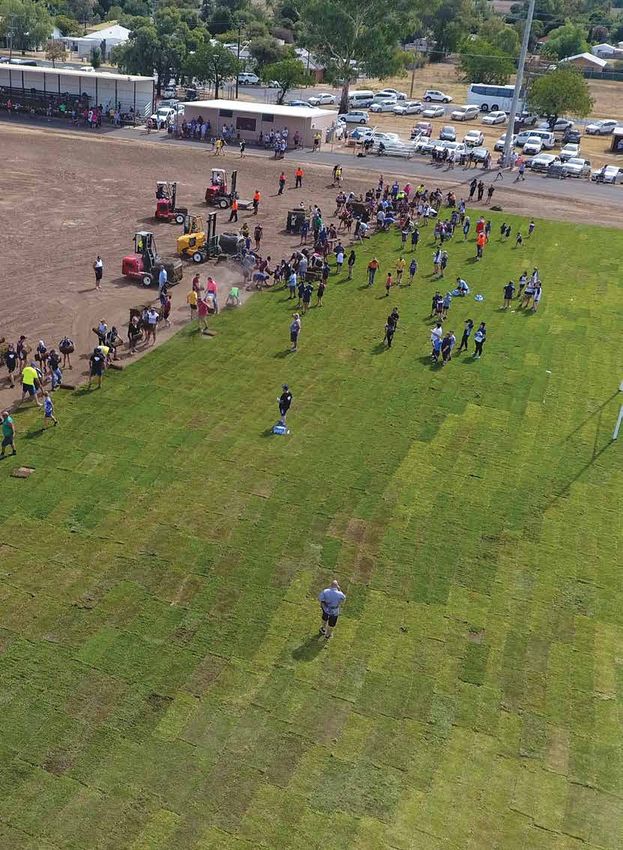
part or full without the written permission of the authors                             Cover photo: The massive community effort seen in Wellington, New South
and publisher.                                                                                   Wales, in February. Read about the project on pages 22 and 23.

                                                                                                                                                                                                                                      3
Safety railing system development
The development of a safety railing system for                                   Turf Australia’s market development manager, Jenny Zadro, said
                                                                              while the new safety regulations will only impact NSW growers,
hand stack harvesters has taken a step forward                                improving safety on turf farms around Australia is behind the pursuit
with Turf Australia funding the next step in the                              of having an approved safety system.
process of having an approved design available                                   “While there has been a prototype of the safety railing system,
                                                                              to ensure any modification meets engineering and legislative
for the industry.                                                             requirements, we are taking the steps of engaging an engineering

T
                                                                              firm to fully analyse the system, its uses, its capacity and how such a
        he development of a nationally-applicable modification to             modification impacts machinery,” Jenny said.
        hand stack harvesters follows on the work of Turf NSW, which             “It will mean that once the process has been completed, we will have
        has spent many months liaising with SafeWork NSW and a                the correct procedure in place to have a safety railing system designed
        legal team to determine the best option for manufacturing a           that will comply with Australian Standards, increase safety and reduce
system after a prototype was developed by a Sydney grower.                    the risk of injury to workers on turf farms across our industry.”
   The railing system was developed in response to safety concerns               The first stage of this assessment process has begun with
around the machinery and new safety legislation coming into effect            EngAnlysis, an engineering firm which specialises in modifications to
on October 1 in New South Wales.                                              machinery, investigating the current prototype.
   Turf Australia’s funding will help in the assessment of the process           Recommendations following the analysis will be available to all
for the development of an approved design.                                    growers.

Challenges and
                                                                                 “An outdoor training opportunity through the Australia Rural
                                                                              Leadership Foundation known as TRAIL will be offered later this
                                                                              year, while a training course to develop skills to lead in boardroom

opportunities for
                                                                              situations will have a date set soon,” Jenny said.
                                                                                 The Training Rural Australians In Leadership (TRAIL) is a cross-
                                                                              sector, challenge-based leadership program set in Canberra and

growers
                                                                              regional New South Wales. The program takes diverse people from
                                                                              different occupations, communities and backgrounds and expands
                                                                              their leadership skills through a challenging eight-day outdoor
                                                                              leadership experience in the
Two different opportunities will be made available                            mountains outside of Canberra.
to growers as part of Turf Australia’s funding                                   The “In the Boardroom,                                                                    TRAIL - f
                                                                              Responsibilities and Practice”
from the Federal Government’s Leadership in                                   course examines the roles
Agricultural Industries Fund.                                                 of the board, directors and             TRAIL - for emerging leaders
                                                                              management, as well as the
   The $50,000 funding was announced in November 2017 and                     composition and structure of
allows the turf industry to send future leaders on courses run by the         the Board. Participants revise why the separation of management and
Australian Institute of Company Directors and the Australian Rural            control contributes to good corporate governance and therefore the
Leadership Foundation.                                                        long-term viability of organisations.
   Turf Australia’s market development manager, Jenny Zadro, said the            “Both of these courses should provide the opportunity to current
decision had been made to split the funding between both organisations        or future leaders in our industry to upskill themselves to be active
to appeal to emerging leaders in the turf industries on a number of levels.   members of our industry.
   “The challenge was to find the best way to invest this $50,000 in             The TRAIL course will be held in August this year. Growers should
our industry to give the most benefit to the largest number of people,”       keep an eye out on Turf Australia communications as to when
                                                                                                                      ABOUT US
she said.                                                                     applications  open.US
                                                                                          ABOUT                       We are a not-for-profit organisation that delivers programs to develo
                                                                                            We are a not-for-profit organisation that delivers programs to develop leaders for rural, regional and remote Australia.
                                                                                                                                                  Graduates of TRAIL join a network over 1000 alumni, who support e
                                                                                            Graduates of TRAIL join a network over 1000 alumni, who support each other in their endeavours to lead, inspire and
                                                                                                                                                  create change.
4                                                                                           create change.

                                                                                            TRAIL is a cross-sector, challenge based program for TRAIL is aleaders.
                                                                                                                                                 emerging    cross-sector,  challenge
                                                                                                                                                                    The program        basedpeople
                                                                                                                                                                                takes diverse program
                                                                                                                                                                                                   fromfor emerging leade
turfAUSTRALIA INDUSTRY MAGAZINE • AUTUMN 2018

Understanding opportunities at NGIA
The Nursery and Garden Industry Australia
conference in Tasmania provided some excellent
opportunities for Turf Australia to learn from other
green industries.

T
         urf Australia market development manager, Jenny Zadro,
         said it also offered the chance to hear from speakers who
         delivered messages that could be adapted to the turf growing
         industry.
   She said the presentation on marketing strategies and current
trends in the nursery industry by Chris Beytes, editor of the American
publication Grower Talks, was particularly engaging.
   “Chris talked about the issues of finding good staff and keeping
them,” Jenny said.
   “The idea of paying staff more is only one aspect of maintaining
them long term.”
   “He also talked about the opportunities partnering with other
seasonal industries to share workers offered to industries, along
with the benefits of offering employees good working conditions,
something which was particularly important considering the hard,
physical work involved.”
   In respect to trends in the market place, Jenny said Chris spoke
about the difference between understanding and catering to different
generations.
   “He highlighted that consumers were not necessarily divided by
generation or age, they are now more likely to focus on ‘tribes’.
   “Regardless of age, there is a growth of groups that have similar
interests and they are becoming the new target market.”
   Another key note speaker at the conference was Matt Evans, The
Gourmet Farmer.
   “Matt is a renowned chef and operates The Fat Pig Farm in
Tasmania where people are given the opportunity to get a hands-on
experience of taking food from the farm to the table and the value of
knowing where your food comes from.
   Jenny said Matt talked about the importance of soil health and how
a plant can take up a lot of nutrients when made available through the
soil.
   “He had some great stories about his career and the valuable
message was, no matter what business you have, it’s about telling the
story,” Jenny said.
   “At every opportunity engage with your customers. People are
keen to know about your business and connect with you. Putting a                                           Top: Matt Evans, The Gourmet Farmer.
face to the business encourages customers, particularly locals.”            Above: Chris Beytes, editor of the American publication Grower Talks.

Strategic planning
                                                                            future direction of the association and industry.
                                                                         • Strategic planning for the Turf Industry National Market
                                                                            Development Project (TU16002): This session will review of the

for Turf Australia
                                                                            needs of each state association and their members within that project.
                                                                         • Workshop and planning for the Turf Industry Crisis
                                                                            Management Awareness Project (TU16003): This will review the
                                                                            current Hort Innovation Turf Fund project which aims to identify
In early April, Turf Australia will conduct strategic                       issues and offer techniques and skills required to prepare for any
                                                                            issues that may arise for the industry.
planning sessions to help drive the direction of the                        “This strategic planning is important
national grower body and the current and future                          to ensure our activities are directed
projects it manages.                                                     in the right way to make sure we are
                                                                         delivering what our growers need,
   These planning sessions will bring together the Turf Australia        what our state associations need,
Board member, Turf Australia staff, and a board member and industry      and what our overall industry needs
development officer from the state turfgrower associations to ensure     both now and in the future to drive
a voice from all areas of the industry are at the table.                 productivity and profitability both
   The three-day planning sessions will cover three key areas:           on-farm and the market place,”
• Strategic Planning for Turf Australia: This session will review the    Turf Australia market development
   operations of the board and staff of Turf Australia and look at the   manager, Jenny Zadro, said.

                                                                                                                                                5
Load safety – it’s YOUR responsibility
                  A
                                                                   ustralia’s turf industry has, until now, been happily loading
                                                                   turf onto trucks and sending it off to customers with the best
                                                                   intentions that the load has been put on a truck safely, with a
                                                                   driver and a truck capable of completing the job.
                                                            But changes to the by the National Heavy Vehicle Regulator (NHVR)
                                                         to the Heavy Vehicle National Law (HVNL) coming into effect in mid-
                                                         2018 will mean growers must know this to be the case.
                                                            The new NHVR Chain of Responsibility (CoR) Laws that will come
                                                         into effect this year will mean turf growers will become part of the
                                                         Chain of Responsibility (CoR) for heavy vehicle loads on Australia’s
                                                         roads (excluding Western Australia and Northern Territory).
                                                            These changes mean heavy vehicle transport rules will now more
                                                         closely align with Work Health and Safety (WH&S) regulations.
                                                            As such, growers may be held responsible if any load they have
                                                         any active part in loading or carrying does not comply with either load
                                                         restraint guidelines or CoR laws .
                                                            The CoR covers everything from overloading and vehicles unfit for
                                                         purpose to driver WH&S practices (such as fatigue and log books)
                                                         and load restraints.
                                                            The national load restraint guidelines were updated by the National
                                                         Transport Commission (NTC) in 2017, and came into operation in
                                                         December.

                                                                   The turf industry is particularly
                                                                   impacted by changes to both the
                                                                   CoR and NTC load restraints as
                                                                   turf growers own and manage
                                                                   almost the entire length of the
                                                                   supply chain.

                                                            The NTC Load Restraint Guide 2018, which has a specific guide
                                                         for loading and transporting turf on page 140 (see image on page 7),
                                                         details how loads carried by heavy vehicles (those over 4.5t) and how
                                                         reasonable measures should be taken to ensure the load is safe.
                                                            The turf industry is particularly impacted by changes to both the
                                                         CoR and NTC load restraints as turf growers own and manage almost
                                                         the entire length of the supply chain.
                                                            However, as Western Australia and the Northern Territory have
Some big changes to way turf can be loaded, and          not signed up to the NHVR, these changes do not impact growers in
the chain of responsibility for the safe transport       those states. Instead, state regulations – which differ between both –
                                                         apply to growers transporting turf in those states.
of loads, mean growers need to get their head               Turf Australia is current pursuing the issue on behalf of growers to get
around the importance of checks and balances             clarity around NHVR’s changes to the HVNL and the NTC loading guides.
on their farms and vehicles or risk significant fines.      “We (Turf Australia) have received legal advice on behalf of growers
                                                         from the firm Holding Redlich to fully understand as an industry
Here, we take a look at the biggest changes, what        how growers can comply with these changes and what the industry
growers need to know, and what Turf Australia is         needs in terms of modifications or industry-specific regulations,” Turf
                                                         Australia Market development manager, Jenny Zadro, said.
doing to assist growers in ensuring they remain             Jenny said growers needed to make themselves aware of the
within the law when transporting turf.                   current guidelines recommending growers wrap, strap and curtain
                                                         their turf loads while this advice was taken.
                                                            “Issues that have been identified are the potential risk to the driver,
                                                         at multiple drops, where this could create increased time/risk on the
                                                         side of the road having to ensure straps and curtains are properly
                                                         managed,” she said.
                                                            “In the event that growers don’t follow the guidelines as set out
                                                         (by the NHVR and the NTC) then they must have their load system
                                                         engineer certified.
                                                            “All growers are required to have documentation in the truck
                                                         confirming their load arrangements as well as be able to confirm that
                                                         drivers and staff have been trained in the load procedures,” Jenny said.
                                                                                                                         Continued...

6
turfAUSTRALIA INDUSTRY MAGAZINE • AUTUMN 2018
LOADS

        TURF
                                                                                                                      LOA D
                                                                                                                      RESTRAINT
        The guidelines below set out how you can
        meet the Performance Standards when
        restraining turf. They are intended to be used
        as a guide only. You can restrain using other

                                                                                                                      GUIDE
        methods. It is recommended that an engineer
        certifies alternative methods.
        Diagrams are indicative only. For more
        information on restraint equipment see

                                                                                                                      2018
        Vehicles and equipment. To work out how
        many lashings to use, see the worked examples
        (in Working out load restraint) and Technical
        advice.
        Layered or rolled turf is generally transported
        on pallets – Figure 340.
                                                              Figure 340 Layered turf, rolled turf

        GENERAL TIPS                                              Figure 341 Rigid container

            Transport turf in rigid containers Figure 341
              or inside rated curtain trucks Figure 342 or
              pantech trucks to prevent load loss.

                                                                Figure 342 Rated curtain truck
TURF

 140

                                                                                                             NHVR, HVNL, CoR, NTC:
                                                                                                             What does this mean
                                                                                                     LOADS

                                                                                                             for turfgrowers?
           Unitise loosely stacked turf to the pallet         Figure 343 Unitised pallet
             with stretch wrap or wide-aperture plastic
             mesh – Figure 343.

                                                                                                             The National Heavy Vehicle Regulator (NHVR) and subsequent
                                                                                                             Heavy Vehicle National Law (HVNL) came into place in 2014
                                                                                                             for vehicles over 4.5 tonnes in all states and territories in
                                                                                                             Australia, except Western Australia and the Northern Territory.
                                                                                                             In ‘mid 2018’ significant changes to the regulations under the
                                                                                                             HVNL law will come into place, aligning road safety and work,
           Apply at least one webbing strap to each          Figure 344 Load tied down
             row of turf over plastic corners to evenly
             distribute tie-down forces across the
                                                                                                             health and safety (WH&S) regulations nationally under the
             pallet – Figure 344.
                                                                                                             Chain of Responsibility (CoR) laws.
        b    Additional lashings may be required
             depending on the weight of each pallet.
                                                                                                             CoR laws will affect everyone that has anything to do with
                                                                                                             truck movements – even directors - and cover all aspects of
                                                                                                             safety – Fatigue & Speed, Mass, Dimension, Load Restraint and
                                                                                                             Maintenance.
        t    Loosely stacked palletised turf transported
             on flat-top vehicles without containment
                                                                Figure 345 Turf dislodging
                                                                                                             CoR laws will be similar to WH&S laws where ignorance
             is not recommended because it can
             dislodge from the vehicle during transport
             – Figure 345.
                                                                                                             is no excuse and systems must be put in place to manage
                                                                                                             responsibilities, or growers and businesses face significant fines.
                                                                                                             New load restraint guidelines released by the National
                                                                                                             Transport Commission (NTC) in December 2017 in the Load
                                                                                                             Restraint Guide 2018 specifically identify ways in which turf
                                                                                                             should be restrained during transport.

                                                                                                             More information is also available at
                                                                                                      TURF

                                                                                                             www.nhvr.gov.au and www.ntc.gov.au
                                                                                                      141

                                                                                                                                                                           7
Load safety – it’s YOUR responsibility (continued)
                                                                               What are reasonable steps?
                                                                               Reasonable steps are the actions people can take
    Who and what is the                                                        to ensure that heavy vehicle drivers do not drive in
    Chain of Responsibility (CoR)?                                             contravention of the Heavy Vehicle National Law
                                                                               (HVNL).
    If you consign, pack, load or receive goods as part
    of your business, you could be held legally liable                        A person in the supply chain can claim a ‘reasonable steps’
    for breaches of the Heavy Vehicle National Law                          defence if they can show they did not know or could not reasonably
    (HVNL). even though you have no direct role in driving or               have been expected to know that a breach had occurred.
    operating a heavy vehicle. In addition, corporate entities,             • In making a ‘reasonable steps’ claim a person also has to prove:
    directors, partners and managers are accountable for                    • they took all reasonable steps to prevent the breach, or
    the actions of people under their control.                              • there were no reasonable steps they could have taken to prevent
                                                                              the breach.
                                                                              For the defence to be successful, ALL reasonable steps must have
   The CoR law recognises that multiple parties may be responsible
                                                                            been taken – not just some.
for offences committed by the drivers and operators of heavy
vehicles. A person may be a party in the supply chain in more than
one way. For example: they may have duties as the employer, the
operator and the consigner of goods.
   Legal liability applies to all parties for their actions or inactions.
                                                                               How can I show I have taken
                                                                               reasonable steps?
                                                                               There are no restrictions on the ways in which a person
    Who are the parties in the supply                                          can demonstrate that they took reasonable steps;
    chain?                                                                     reasonable steps will vary depending on circumstances.

   A person who is a party in the chain of responsibility includes, but        Business practices should include methods to identify, assess,
is not limited to:                                                          control, monitor and review situations that put driver safety at risk.
                                                                            These include:
• corporations, partnerships, unincorporated associations or other
   bodies corporate                                                         Risk identification – What could happen?
• employers and company directors                                           Risk assessment – What is the likelihood it may happen?
• prime contractors of drivers                                              Risk control – What can we do about it, or to prevent it?
• the operator of a vehicle                                                    You should ensure you set up and document a set of business
                                                                            practices and ensure all employees are trained in their use. The
• schedulers of goods or passengers for transport in or on a vehicle,
   and the scheduler of its driver                                          practices should be comprehensive yet flexible enough to allow for
                                                                            changes through regular review, in response to accidents/incidents or
• consignors/consignees/receivers of the goods for transport                at times when things just go wrong.
• loaders/unloaders of goods
• loading managers (the person who supervises loading/unloading,
   or manages the premises where this occurs).
                                                                               Some examples of reasonable steps
                                                                               include:
    When could CoR apply?
                                                                            • conducting regular audits of work schedules and work records
  Some examples include:                                                    • regularly reviewing business activities, processes, policies and
• heavy vehicle driver breaches of fatigue management requirements            written instructions and identifying how best to manage outcomes
  or speed limits                                                             and prevent offences
• heavy vehicle driver breaches of mass, dimension, or loading              • implementing processes to be used after unexpected delays, or
  requirements                                                                times when things just go wrong
• where any instructions, actions or demands to parties in the supply       • planning for driver rest breaks with some consideration for
  chain causes or contributes to an offence under the HVNL. That              unexpected traffic delays when creating trip timetables
  includes anything done, or not done (directly or indirectly) that has     • providing accurate weights of containers and ensuring loads will
  an impact on compliance, for example:                                       not exceed vehicle mass or dimension limits
   - schedulers whose business practices place unrealistic                  • positioning and securing loads to ensure they remain stable for the
      timeframes on drivers which cause them to exceed their work             entire journey
      rest options                                                          • if a breach occurs putting procedures in place to prevent similar
   - loading managers whose business practices, including loading/            breaches or issues from happening again
      unloading times, cause the driver to exceed the speed limit.          • establishing a risk management plan
   In a prosecution, the courts may consider the actions of each party      • conducting training to develop staff awareness of business policies
in the supply chain. This includes what measures those parties have           and procedures and their obligations; such as fatigue management,
in place to prevent breaches of the HVNL occurring. Each party in the         speed compliance, loading and unloading
chain must demonstrate to the Court that they took all reasonable           • ensuring staff are not just aware of their obligations, but are actively
steps to prevent the contravention or show the court that there were          engaged in implementing practices.
no steps they could reasonably be expected to have taken to prevent
the contravention.

8
turfAUSTRALIA INDUSTRY MAGAZINE • AUTUMN 2018

   Roles and responsibilities of parties in
   the supply chain
   Parties in the supply chain under the Heavy Vehicle
   National Law (HVNL) have an obligation to ensure
   breaches of road transport laws do not occur. Duty
   holders need to make sure that their action or inaction
   does not contribute to or encourage breaches of the
   HVNL. If a party’s actions, inactions or demands cause
   or contribute to an offence, they can be held legally
   accountable.
                                                                           transport laws.
                                                                              Loading manager responsibilities include:
                                                                           • working with other off-road parties to make reasonable
   Put simply:                                                                arrangements to manage loading/unloading time slots
                                                                           • ensuring vehicles are loaded/unloaded as quickly and efficiently as
   influence = responsibility = legal liability                               possible
                                                                           • putting systems in place for unexpected jobs – for example where
                                                                              there have been unexpected road delays.
                                                                           Loader responsibilities include ensuring a vehicle’s load:
   Operator/manager/scheduler                                              • does not exceed vehicle mass or dimension limits
   responsibilities                                                        • does not cause the vehicle to exceed mass limits
                                                                           • is placed in a way so it does not become unstable, move or fall off
                                                                             the vehicle.
  As an operator, manager, or scheduler of a business involved in            Unreliable weight information makes it difficult for drivers to comply
road transport, your responsibilities also include ensuring that:          with the law. Packer responsibilities include ensuring:
• rosters and schedules do not require drivers to exceed driving           • documentation about the vehicle’s load is not false or misleading
  hours regulations or speed limits
                                                                           • any goods packed in a freight container do not cause the
• you keep records of your drivers’ activities, including work and rest      container’s gross weight or safety approval rating to be exceeded
  times                                                                      (also see Container Weight Declarations).
• you take all reasonable steps to ensure drivers do not work while
  impaired by fatigue or drive in breach of their work or rest options
• vehicles are regularly maintained, and if speed limiters are fitted
  they are functioning properly                                               Driver/owner-driver responsibilities
• vehicles are not loaded in a way which exceeds mass or dimension
  limits                                                                     As a driver your responsibilities include making sure that you:
• drivers moving freight containers have a valid Container Weight          • comply with relevant fatigue management work and rest laws and
  Declaration                                                                procedures to implement them
• loads are appropriately restrained with appropriate restraint            • make sure you make the most of your rest breaks by sleeping in
  equipment (see the Load Restraint Guide for more information).             dark, quiet and comfortable places
                                                                           • respond to changes in circumstances (such as delays) and report
                                                                             these to your base (if possible) to implement short-term fatigue
                                                                             management measures
   Consignor/consignee responsibilities                                    • ensure your vehicle does not exceed mass or dimension limits
                                                                           • ensure your load is appropriately restrained.
  As consignor or consignee your responsibilities include ensuring that:     Additional responsibilities for owner-drivers include:
• loads do not exceed vehicle mass or dimension limits                     • making sure your drivers are medically fit to drive
• goods carried on your behalf are able to be appropriately secured        • making sure your vehicles are roadworthy and well maintained
• operators carrying freight containers have a valid Container Weight      • keeping full and accurate records as required by law.
  Declaration
• your delivery requirements do not require or encourage drivers to:
  -   exceed the speed limits
  -   exceed regulated driving hours
  -   fail to meet the minimum rest requirements
  -   drive while impaired by fatigue.

   Loading manager/loader/packer
   responsibilities
   Loading managers, loaders and packers must ensure that loading
a fatigue-regulated heavy vehicle will not cause or contribute to the
driver driving while impaired by fatigue or in contravention of road

                                                                                                                                                 9
10
OPEN TO THE NEXT GEN OF TURF PRODUCERS
                                                                                                                                          SA
                                                                                                                                        THE VE
                                                                                                                                            DAT

speaker bios                                                                                                                         3-5
                                                                                                                                      201
                                                                                                                                         JUN
                                                                                                                                            E

                                                                                                                                             E
                                                                                                                                          8

                                                                                                  Cairns Botanical Gardens

   Learning in the north at
   NxGen 2018

                                                                                                                              Harden Park Lawns

Getting turf marketing right, understanding the                                Understanding how herbicide resistance can
                                                                            severely impact your turf growing, and what
art of negotiation, a turf grower’s role in herbicide                       part growers have to play in it will be addressed
resistance, the benefit of education and much more                          by John Neylan, Turfgrass Consulting and
will all be covered at NxGen 2018.                                          Research (right). John’s recent work covers
                                                                            herbicide resistance and control of Poa annua in
The annual event for young growers in the turf                              turf and what growers need to understand when
industry, NxGen, will head north to Cairns and                              it comes to using herbicides on their farms.
                                                                               Being successful in the art of negotiation will be covered by Jill
run from June 3-5, and has a broad program of                               Rigney, The Right Mind, at the Forum. Jill will talk to growers about
activities for young growers to ensure a good mix                           the importance of good negotiation when it comes to providing
of learning and networking.                                                 customer service, being a good boss, and how it goes go a long way
                                                                            to ensuring the success of a turf business.

K
       eynote speakers at this year’s event                                    A half-day reef tour to Green Island will also showcase the Great
       include television gardening personality,                            Barrier Reef and the importance of the industry understanding its
       Trevor Cochrane, The Garden                                          bigger role in the environment, including reducing sediment run-off
       Gurus, (right) who will speak about                                  and efficient water, chemical and nutrient use.
the importance of good marketing and how to                                    Tours will be taken to two Cairns-district farms, Tropical Lawns
enhance ‘brand recognition’ for natural turf. This                          and Harden Park Lawns to see how the farms manage the
will include the role ‘influencers’ can play and the                        unique tropical environment and how that influences turf variety
changing landscape of advertising and consumers.                            choices. Attendees will also be taken on a tour of the Cairns
   Making the most of the release of the Australian Standard for            Botanical Gardens by the turf management team to understand how
using turf as an erosion control method will be discussed by Lynn           management differs in the gardens to other areas.
Davidson, Jimboomba Turf. A key member of the industry who                     The NxGen Forum is a strategic-levy funded project Australian Turf
drove the initial work to have the Standard AS 5181:2017 Use and            Industry NxGen (TU15002) which uses funds from the Hort Innovation
installation of turf as an erosion, nutrient and sediment control           Turf Levy and matched Australian Government funds.
measure developed, Lynn is passionate about growers making the
most of it, and using it to get turf specified on more project sites, and   Full program information is available on page 13 and a registration
sell more turf.                                                             form is on page 14. Online registrations can be found at
   Another passionate grower in the industry, Lachlan Moncrieff,            https://www.turfaustralia.com.au/events/event/nxgen-2018
Paragon Gardens, has recently completed the inaugural Horticultural
Masterclass through the Hort Innovation Leadership Fund, and is now
a keen advocate of growers continuing to educate themselves.

                                                                                                                                              11
master class
I thought I knew my
business and where
it was going, but
now I’ve finished this
course and developed
a clear, black and
white business plan
... one which gives me
confidence in my own
business surviving and
thriving in the future.
Business success: More than just growing grass
Holding a Diploma in Horticultural Business wasn’t everyone else valued that product as much as they did.”
Lachlan believes the Masterclass is one of the best investments
something Lachlan Moncrieff ever envisaged Hort Innovation has made in the horticultural sector, saying the
making much a of a difference to his day-to-day $10,000 Hort Innovation Leadership Fund scholarship he received
operations. But having now graduated from the opened opened his eyes to his own business and the wider
inaugural Masterclass in Horticultural Business horticultural industry.
“It was such a great experience,” he said.
program offered through the University of “To meet growers from other industries, to learn from them, to be
Tasmania, Lachlan now knows he is so much more able to share my knowledge with them and really get that cross-
than ‘just a turf farmer’. sector learning is very important, because there are so many issues,
challenges and learning we can all share in.”
“I learned so much doing the masterclass that I now understand Lachlan is now a firm believer in the value of continued education.
that I am also a business manager, supply chain coordinator, “I was surprised how much I enjoyed this study because it was
marketing manager, human resources manager, workplace health and relevant to something I enjoyed doing (turf growing).
safety officer, and financial manager,” he said. “And after this experience I’ll be chasing my next challenge in that
The Townsville grower who was, until drought breaking rains regard … I can’t impress enough on other growers that if there is
appeared in early March, struggling to see the future of his business, an opportunity to participate in one of these education, business or
Paragon Gardens, is now looking forward with renewed confidence personal development programs, grab hold of it, because while some
thanks to the Hort Innovation-funded program. of it might seem like it doesn’t apply to you, it’s surprising in reality how
The program called for participants to undertake eight subjects much of it actually does, and how much it will help your business.”
of study including horticultural management, people and culture,
supply chain management and logistics, financial management and Lachlan will be speaking at this year’s NxGen forum
law, marketing and communication, global trends, innovation and in Cairns in June.
entrepreneurship, business development and strategy.
“The course covered a very diverse range of subjects, and some More information on the Masterclass in Horticultural Business can
I didn’t think had any relevance to me in my business and the turf be found at https://horticulture.com.au/applications-open-for-
industry, but what I discovered was how much all of these things 2018-masterclass-in-horticultural-business/
contribute to the success of a business as a whole,” Lachlan said.
“I thought I knew my business and where it was going, but now
I’ve finished this course and developed a clear, black and white
business plan which looks nothing like what I would have created 12
months ago, and one which gives me confidence in my own business
surviving and thriving in the future.”
The biggest learning for Lachlan was the marketing module,
something he felt was secondary to having a good product.
Masterclass in Horticultural Business is funded by the Hort Frontiers
“I thought if you produced a good product that was the most Leadership Fund, part of the Hort Frontiers strategic partnership
important thing,” he said. initiative developed by Hort Innovation, with co-investment from
“But I realised that the best growers grew a good product, but then University of Tasmania, Wageningen University, Lincoln University
knew the strengths of that product and marketed it well to ensure New Zealand and contributions from the Australian Government
12OPEN TO THE NEXT GEN OF TURF PRODUCERS
SA
THE VE
DAT
speaker bios
program 3-5
201
JUN
E
E
8
Date/Time Activity Date/Time Activity
Sunday 3rd June Tuesday 5th June
Afternoon/Evening Delegates arrive at hotel 7.30am Breakfast
6.00pm Welcome Dinner 8.30am (1 hour) Bus departs hotel for Tropical Lawns
Monday 4th June 10.00am (30 mins) Morning tea at Tropical Lawns
7.30am Breakfast
10.30am (1 hour) Farm Tour – Tropical Lawns
8.30am Welcome – Jenny Zadro
Bus departs Tropical Lawns for Harden
11.30am (30 mins)
Park Lawns
Lachlan Moncrieff – Paragon Gardens
8.45am (30 mins) The importance of education and surviving 12.00am (1 hour) Farm Tour – Harden Park Lawns
the dry times.
1.00pm (45 mins) Lunch at Harden Park Lawns
Lynn Davidson- Jimboomba Turf
9.15am (30 mins) Making the most of the Australian Standard Bus departs Harden Park Lawns
for erosion control for your business. 1.45pm (30 mins)
- travel to Cairns Botanic Gardens
Trevor Cochrane – Garden Gurus Cairns Botanic Garden Tour
9.45am (30 mins) 2.15 pm (1 hour)
Influencing consumer behaviour and your with “Turf Team”
business brand.
3.15pm (15 mins) Catch up time
10.15am (20 mins) Morning Tea
Bus departs Cairns Botanic Gardens
Jill Rigney – The Right Mind 3.30pm
for airport & hotel
10.35am (1 hour) The art of negotiation for better business
and being a better boss.
4pm Drop departing delegates to airport by 4pm
John Neylan – Turfgrass Consulting
& Research
11.35am (40 mins)
Why do we have herbicide resistant venue: Novotel Cairns Oasis Resort
weeds? We all have a role to play. 122 Lake St, Cairns City QLD. E ARL
YB
12.15pm (15 mins) Leave hotel and walk to Reef Fleet terminal when: Sun 3 - Tues 5 June 2018 MUST IRD
BO O BE
K ED
12.30pm Packed lunch on boat cost: Members early bird : $430 TUE S
DA
BY
Members after 1 May: $460 1 MA Y
Y
12.30pm (4.5 hours) Half Day Green Island Tour Non-members early bird: $460
Members after 1 May: $480
5.00pm Boat returns to dock, walk back to hotel
Robyn and Terry Anderlini, Tropical Lawns.
5.15 - 6.30pm Free Time
Forum Dinner
6.30pm
Novotel Oasis Resort
7.30pm Dinner Speaker
register online: www.turfaustralia.com.au/events/event/nxgen-2018
13OPEN TO THE NEXT GEN OF TURF PRODUCERS
SA
THE VE
DAT
speaker bios
registration
3-5
201
JUN
E
E
8
Sun 3 June – Tues 5 June 2018 • Cairns QLD
(Fly into Cairns airport - allow 10 minutes travel time to Novotel Oasis Resort)
Please complete one form for each delegate (payment can be made on one form)
Registration details:
Title:.................... First Name:....................................................................... Surname:.............................................................................................
Job Title:........................................................................................................... Organisation:.......................................................................................
Ticketing Name/Title (if different from above):.................................................................................................................................................................
Postal Address:
Number/Street:..................................................................................................................................................................................................................
City/Suburb:................................................................. State:....................................... Postcode:..................... Country:........................................
Contact Details:
W Phone:................................................................ Mobile:........................................................... Fax:.........................................................................
Email:.................................................................................................................................................................................................................................
Special Requirements: Access / Dietary Requirements / Other:.....................................................................................................................................
Forum options and costs:
This great-value forum and activity package has been generously sponsored and heavily subsidised
by Hort Innovation using the turf levy along with other turf industry supporters.
Member Cost* Non Member
Forum Options (please circle appropriate costs and total) *A Member is a current financial
member of Turf Australia Cost
Full Registration EARLY BIRD REGISTRATION
$430 $460
& Accommodation Package (must book by Tuesday 1 May)
Includes 2 nights shared accommodation
Sunday 3 and Monday 4 June, 2018 NORMAL REGISTRATION
and all forum sessions, meals & activities. $450 $480
(must book by Tuesday 1 May)
SINGLE ROOM UPGRADE Upgrade to a single room. + $250
TOTAL PAYABLE (all prices include GST)
or register online: www.turfaustralia.com.au/events/event/nxgen-2018
Payment method: Credit card payment:
Total number of delegates to be processed on this payment:
By Cheque:
I hereby endorse Turf Australia Ltd to debit this credit card to the value of: $........................
I’ve enclosed a cheque made
payable to Turf Producers Card Number:
Australia Ltd.
By Credit Card: Card Type : Visa Mastercard
Check this box and complete
Verification No:
credit card payment details (right). Expiry: (last 3 digits on card rear)
Cardholders Name
Send to: (as it appears on card).........................................................................................................
Mail: Turf Australia, PO Box 92,
Richmond NSW 2753
Signature. . .................................................................... .D ate.................................................
Phone: (02) 4588 5753
Fax: (02) 4588 5613
Booking Confirmation: Once your booking and payment is processed, you will be
Email: scan forms and email to: sent a confirmation of your booking via mail or email, and a receipted Tax Invoice for your records.
admin@turfaustralia.com.au
Turf Australia membership is only $550 per annum, includes State Association membership and provides many benefits.
14 To find out more, contact Rachel on 02 4588 5735 or email admin@turfaustralia.com.auturfAUSTRALIA INDUSTRY MAGAZINE • AUTUMN 2018
New consumer website
and marketing manager
The way consumer researching and buying
preferences are changing is altering the way the
Hort Innovation Turf Fund’s marketing budget
is being directed. Liz Mecham spoke to Hort
Innovation about the changes. The website will not only showcase the
T
he new three-year turf marketing plan is now being rolled out key benefits of natural turf, but it will also
and comes with the announcement of a new marketing manager house tools such as a cost calculator,
for the turf portfolio within Hort Innovation.
Olivia Grey (pictured right) is the new marketing manager for turf, measurement tips, varietal descriptions,
and holds the same role with the apples and pears portfolio, and supplier locator, and installation and care
raspberries and blackberries portfolio. information.
Olivia joined Hort Innovation from global health, home and hygiene
consumer goods company RB (Reckitt Benckiser), where she has
spent the last four years in marketing, trade marketing and sales
functions. In her most recent role, she was brand manager for Veet, “As such, we need to provide consumers with a website that
Durex, Clearasil and Steradent. educates them about the benefits of natural turf, and streamlines the
Based at Hort Innovation’s Sydney office, Olivia has a Bachelor of process from research to purchase.”
Commerce (Marketing) and a Bachelor of Law from the University The project Turf Website Development (TU17511) went out to tender
of New South Wales and said she is “enthusiastic about making in January and will “create a web platform for Australian Turf for
people’s lives happier and healthier through the benefits of turf”. delivery of marketing and branding content”.
Olivia’s focus since coming on board as the turf marketing manager The aim of the website is to drive engagement with consumers on
is to execute the new three-year marketing plan, with her immediate the site through easy to navigate content about Turf.
priority the development of the new turf consumer website, following “The website will not only showcase the key benefits of natural turf,
consumer research undertaken by Hort Innovation showing a shift in but it will also house tools such as a cost calculator, measurement
information sourcing. tips, varietal descriptions, supplier locator, and installation and care
information,” Olivia said.
It will also be optimised for search and will be a digital content hub
Consumer research showed that websites to help drive search rankings verse competitor sites.
The new website, which will be maintained and updated by Hort
are the number one source of information Innovation, is expected to launch in April 2018.
and advice for both existing and The three-year plan for marketing turf has been developed with
three ‘strategy pillars’ to drive consumer demand for turf. These
intending buyers of turf. pillars are: Create and provide the tools; demonstrate the value of
turf; and, inspire the Australian dream.
“Consumer research showed that websites are the number one Olivia said once the consumer website had been developed,
source of information and advice for both existing and intending additional elements of the marketing program would be rolled out in
buyers of turf,” Olivia said. coming months.
“However, the research showed that consumers are currently
visiting a multitude of websites, and that there is no single
authoritative source buyers and intending buyers are visiting for all
things turf related.
15Taking the sting out of nematodes
INFESTED (8 weeks) Finding a sustainable management solution to
infestations of the Southern Sting Nematode
through turf species selection is the basis of a
new field experiment being conducted in Western
Australia. Liz Mecham reports.
A
new field experiment testing whether some turf species and
cultivars are more resistant than others to the plant parasite,
Southern Sting Nematode, is underway in Western Australia
(WA).
Typically impacting sandy soils and prevalent in WA, the parasite
has been found in some eastern states, and destroys turf by feeding
on the root system of the turf plant.
The new field experiment is part of a research project being
undertaken by Sports Turf Technology (STT) in Perth, under the
supervision of Dr Graham Stirling and the University of Queensland,
and aims to find out whether some cultivars of turf used on sports
fields are more tolerant or resistant to the sting nematode.
The experiment is testing two cultivars of hybrid couch, two
cultivars of couch, and two cultivars of kikuyu.
“The sting nematode is particularly severe on kikuyu, the dominant
turf species in the Perth region, and is costing a great deal of money
in turf replacement and additional maintenance,” STT’s Peter Ruscoe
said.
NON-INFESTED (8 weeks) “It has proven to be impossible to eradicate once it has been
transferred onto a site, usually in contaminated turf, so we are
It has proven to be impossible to
eradicate once it has been transferred
onto a site, usually in contaminated turf,
so we are investigating a more sustainable
approach to managing the pest.
investigating a more sustainable approach to managing the pest.
“This experiment may provide an opportunity for turf selection to
be one of the strategies for reducing the damage that sting nematode
does to sports field playing surfaces.”
The project background work began in 2015 with STT conducting
a survey of 90 randomly-selected sports fields around Perth –
representing about 20 per cent of the fields in 21 different council
areas – to determine the prevalence of the sting nematode.
The survey found that sting nematode was present in 51 per cent of
the sports fields that were tested.
“This result confirms that it is a widespread problem in Perth,
and also that turf managers need to be diligent to prevent it from
spreading further,” Peter said.
The survey was followed by a two-year study of the population
KEY POINTS: dynamics and depth distribution of Southern Sting Nematode at two
kikuyu sports fields in the Perth region.
• Southern Sting Nematode is a soil-borne parasite The study found that the population increases over the winter
impacting sandy soils period, peaking in October, and declines in hot, dry conditions during
summer.
• Impossible to eradicate, once an infestation occurs, Peter said another important finding was that sting nematode is
management and maintenance is the only option for capable of living at a depth of more than half-a-metre below the surface.
managers The field experiment was established in late 2017 and is planned to
finish mid-2018.
• Field experiment now testing if any turf species or A set of 30 micro-plots (six cultivars x five replicates) is located in
cultivars are more resistant to the nematode damage an infested area, and the layout is repeated in a non-infested area.
The existing turf and root-zone organic matter was removed from
each plot before planting.
16turfAUSTRALIA INDUSTRY MAGAZINE • AUTUMN 2018
DEC 2107 - INFESTED DEC 2107 - NON-INFESTED
The impact of the parasite on turf was clearly visible early in the The turf cultivars will be assessed with measurements of the turf
experiment, Peter said. root system and plant biomass, as well as population density of sting
“Within the first month after planting, it was obvious that sting nematode.
nematode was having a severe impact on the condition of the turf in Results of this field experiment are expected to be available in early
the infested plots,” Peter said. 2019.
Meteor & Oxamax
Meteor Pre-Emergent Herbicide is the result of 5
years research & development to control Winter Grass,
Summer Grass & Crowsfoot Grass in Couch, Kikuyu,
Zoysia, QLD Blue Couch and Buffalo. It can provide 3-4 Pre Emergent Herbicide + Fertiliser
months control. Combination product for Turf Production
New generation pre-emergent herbicide for turf . Australia’s
first metolachlor based herbicide OxaMAX pre-emergent herbicide contains the convenience
Group K herbicide – ideal rotational tool for use in of a maintenance fertiliser (18:10:9) to sustain plant health with
conjunction with conventional Group Oxadiazon, a market leading pre emergent herbicide.
D pre-emergent products
Labour saving, combining two Improves weed control through
Reliable pre-emergent control of treatments in one application effective coverage and soil
certain grassy weeds for up to three contact by the miniprill
Convenient to apply &
months formulation.
eliminates the potential for
Ideal for use in turf production and drift Promotes healthy turf response
propogation situations which increases competition for
Safer to handle and apply due
Quality Australian Made product. weeds.competition for weeds.
to the low active ingredient
concentration
www.nuturf.com.au
1800 631 008
17On-farm gains and growth in Queensland
KEY POINTS:
• Queensland’s Rural Water Use Efficiency Irrigation Futures
project has now completed its final three farm case studies
• All turf farms recorded significant increases in on-farm
efficiencies gained mostly through on farm monitoring
• On-farm recommendations and improvements are
applicable to turf farms around Australia
W
For the last seven years, Turf Queensland has hen Turf Queensland secured funding from the
Queensland Government to undertaken the massive
undertaken the massive Rural Water Use project of documenting on-farm usage of water, fertiliser
Efficiency Irrigation Futures project. The project and energy, together with production information, the
goal was simple – use one farm’s data to help others improve.
developed case studies on turf farms, assessing Now, seven years and six case study farms later, Turf Queensland’s
and improving water, energy and fertiliser use and Jim Vaughan said the project had delivered significant data that would
yields. Last year, case studies on three farms in help turf growers from around Australia improve their farm efficiency
and productivity.
Far North Queensland were finalised. The analysis “It’s been a big undertaking but a very worthwhile one when
highlights how growers everywhere should look you look at the original baseline data compared to the overall
improvements we found on these case study farms,” Jim said.
critically at their operations to gain big on-farm “Many of these changes took time to implement as the capital
efficiencies and economic benefits. Liz Mecham investment needed had to be planned by the business, but positive
reports. changes have occurred as a result of the project data assisting the
growers to make the right decisions.”
Productivity indicators used in the project were:
• Irrigation energy efficiency calculated as kilo-watts-hours per
mega-litre of water pumped (kWh/ML)
• Water use efficiency measured as mega-litres of water used per
hectare (ML/ha)
• Increase in yield calculated as square metres of turf per harvest
(m2/harvest)
• Economic benefit measured as net cost of production per square
metre of turf produced ($/m2)
18You can also read


