HUMANITARIAN RESPONSE PLAN OPT - HUMANITARIAN PROGRAMME CYCLE 2020
←
→
Page content transcription
If your browser does not render page correctly, please read the page content below

HUMANITARIAN    HUMANITARIAN
                PROGRAMME CYCLE

RESPONSE PLAN
                2020
                ISSUED JANUARY 2020

OPT

              py
            Co
           d
         ce
       an
     dv
    A

                                      1
HUMANITARIAN NEEDS OVERVIEW 2020

About                                                                                      Get the latest updates

This document is consolidated by OCHA on behalf of the Humanitarian Country                OCHA coordinates humanitarian action to ensure
                                                                                           crisis-affected people receive the assistance and
Team and partners. It provides a shared understanding of the crisis, including the
                                                                                           protection they need. It works to overcome obstacles
most pressing humanitarian need and the estimated number of people who need
                                                                                           that impede humanitarian assistance from reaching
assistance. It represents a consolidated evidence base and helps inform joint              people affected by crises, and provides leadership in
strategic response planning.                                                               mobilizing assistance and resources on behalf of the
The designations employed and the presentation of material in the report do not            humanitarian system.

imply the expression of any opinion whatsoever on the part of the Secretariat of the       www.ochaopt.org
United Nations concerning the legal status of any country, territory, city or area or of   twitter.com/ochaopt
its authorities, or concerning the delimitation of its frontiers or boundaries.
PHOTO ON COVER
Rimas, 7, plays with her doll, at home in Jabalia on 21
August 2019. © Photo by Ahmed Mashharawi/NRC

                                                                                           Humanitarian Response aims to be the central
                                                                                           website for Information Management tools and
                                                                                           services, enabling information exchange between
                                                                                           clusters and IASC members operating within a
                                                                                           protracted or sudden onset crisis.
                                                                                           www.humanitarianresponse.info/en/operations/
                                                                                           occupied-palestinian-territory

                                                                                           Humanitarian InSight supports decision-makers
                                                                                           by giving them access to key humanitarian data.
                                                                                           It provides the latest verified information on needs
                                                                                           and delivery of the humanitarian response as well as
                                                                                           financial contributions.

                                                                                           www.hum-insight.com

                                                                                           The Financial Tracking Service (FTS) is the primary
                                                                                           provider of continuously updated data on global
                                                                                           humanitarian funding, and is a major contributor to
                                                                                           strategic decision making by highlighting gaps and
                                                                                           priorities, thus contributing to effective, efficient and
                                                                                           principled humanitarian assistance.

                                                                                           fts.org/appeals/2019

02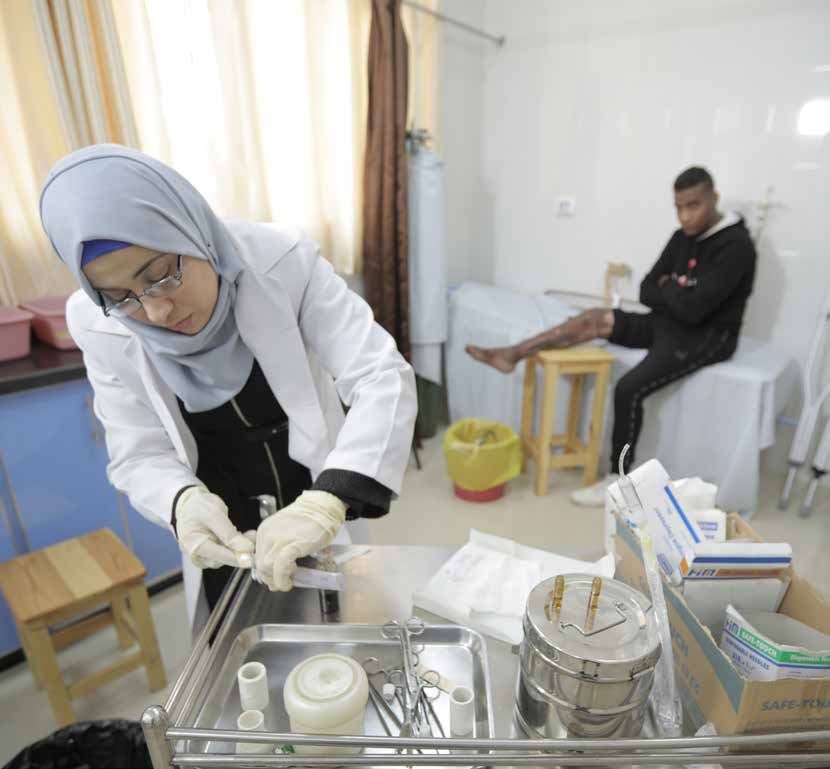
TABLE OF CONTENTS

Table of
Contents

04    Foreword by the Humanitarian Coordinator             36   Part 3: Sectoral Objectives and Responses
06    Response Plan Overview                                    Overview of Sectoral Response
      Response by Strategic Objective, Needs and Planned        Camp Coordination and Camp Management
      Response                                                  Early Recovery
22    HRP Key Figures                                           Education
24    Historic Trends                                           Emergency Telecommunications
      Crisis Context                                            Food Security
      Part 1: Strategic Response Priorities                48   Health
28    Humanitarian Consequences Prioritized for Response   52   Logistics
      Strategic Objectives and Response Approach                Nutrition
      Optional: Use of Multi-Purpose Cash                       Protection
      Operational Capacity and Access                           Shelter / Shelter NFIs
      Part 2: Monitoring and Accountability                     Water, Sanitation & Hygiene
      Monitoring                                                Part 4: Refugee Response Plan
      Accountability to Affected Populations                    Part 5: Annexes
      Indicators and Targets                                    Response Analysis
                                                                Costing Methodology
                                                                Participating Organizations
                                                                Planning Figures by Sector
                                                                Planning Figures by Administrative Level
                                                                What if We Fail to Respond?
                                                                How to Contribute
                                                                Acronyms
                                                                End Notes

                                                                                                            03
HUMANITARIAN NEEDS OVERVIEW 2020

                                       Children in Gaza, June 2018

                                   © Photo by WFP/Wissam Nassar
04
FOREWORD BY THE HUMANITARIAN COORDINATOR

                                            Foreword by the
                                             Humanitarian
                                              Coordinator

For this, the final year of the 2018-            2019, as detailed in the Context of the Crisis   undermining hopes for a the two-state
2020 cycle, humanitarian partners are            section below. Despite this, the humanitarian    solution. Throughout the oPt, humanitarian
appealing for a total of $348 million for the    situation continues to deteriorate, internal     organizations are also facing an increasingly
Humanitarian Response Plan (HRP) in the          Palestinian divisions remain entrenched and      difficult operational context, posing ever
occupied Palestinian territory (oPt). This is    recurrent escalations of violence threaten to    greater challenges to our ability to operate
similar to the $350 million requested in 2019,   ignite a wider conflict. The “Great March of     due to restrictions, political considerations,
but significantly lower than the $550 million    Return” demonstrations continue, adding to       and attacks designed to delegitimize
sought in the 2018 appeal. The decrease          the casualty caseload and to the pressure on     humanitarian action.
does not reflect a reduction in the scope        the already overstretched health system. In      This adverse political and resource climate
of need, but rather an acknowledgement           addition to the continuing high rates of food    will require member states to increase their
of continue underfunding for humanitarian        insecurity, poverty, and unemployment, there     funding rates to enable us to provide basic
operations throughout the oPt: by                are increasing signs of a deterioration in the   services for the most vulnerable and protect
end-November, only approximately 60 per          social fabric in Gaza.                           the rights of Palestinians under occupation.
cent of the sum requested for the 2019 HRP       This includes the thousands of families who      An increase in humanitarian funding must
was secured, which, in real terms, represents    face legal action or eviction due to their       be complemented by support for operational
a reduction in funding. This is despite the      inability to pay rent and other expenses,        space in the face of increasing threats, and
World Bank’s projection that economy in the      as well as reports of widespread drug            by political engagement to address the
oPt “is expected to slip into a recession in     addiction, a rise in suicides and a growing      violations of international law that are at
2020 and 2021,” a fact likely to increase the    “brain drain”, as the young and educated try     the heart of the protection crisis in the oPt.
scope of humanitarian hardship.1                 to leave Gaza. The situation of children is      The 2020 HRP will maintain the centrality of
Some 2.4 million people have been identified     particularly worrying, as demonstrated by        protection at all levels of humanitarian action,
as in need of humanitarian assistance            the rise in child labour and child marriage,     as a shared system-wide responsibility,
and protection in 2020, or one in every          and the 250,000 children suffering from          to enable Palestinians to cope with, and
two Palestinians in the oPt: the full range      severe or moderate mental health disorders.      overcome, the effects of the protracted crisis
of these needs is set out in detail in the       Failure to assist these vulnerable groups will   while more sustainable solutions are sought.
accompanying Humanitarian Needs                  further aggravate negative coping strategies
Overview (HNO). Of these, 1.5 million of the     and undermine resilience.
most vulnerable will be targeted, a slight       While the situation in the West Bank,
increase from 1.4 million in 2019. However,      including East Jerusalem, is less severe,
this means that nearly one million vulnerable    settlement expansion, settler violence,
people, mainly in the Gaza Strip, will not       access restrictions, demolitions and
receive any assistance through the 2020          evictions have increased during 2019,
HRP, even if the HRP is fully funded.            intensifying the coercive environment on
Gaza has registered some improvements in         vulnerable Palestinian communities and

                                                                                                                                               05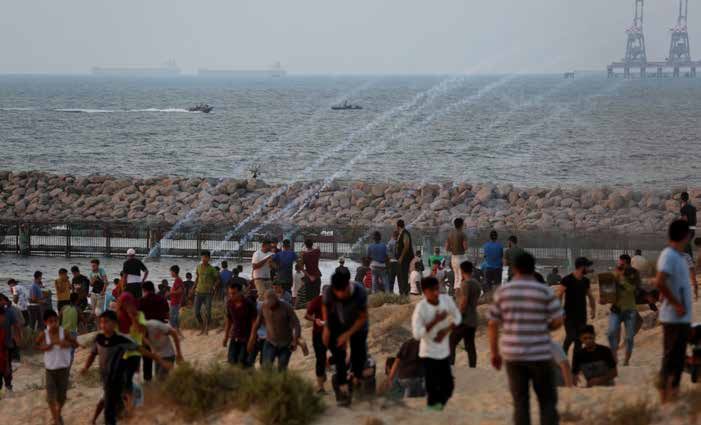
HUMANITARIAN NEEDS OVERVIEW 2020

Response Plan
Overview
PEOPLE IN NEED                     PEOPLE TARGETED              REQUIREMENTS (US$)                           OPERATIONAL PARTNERS

2.4M                               1.5M                         348M                                         83

                 1                                            2                                                           3
   STRATEGIC OBJECTIVE 1: The rights of        STRATEGIC OBJECTIVE 2: The basic needs               STRATEGIC OBJECTIVE 3: The capacity
     Palestinians living under occupation,       of vulnerable Palestinians living under             of vulnerable Palestinians to cope with
  including those living under the blockade     occupation are met through the provision           and overcome protracted crisis, including
     and other restrictions, are protected,      of quality basic services and improved            from environmental threats, is supported,
    respected and promoted in accordance        access to resources, in accordance with            while solutions to violations and other root
     with International Humanitarian Law       the rights of protected persons under IHL.          causes of threats and shocks are pursued.
  (IHL) and International Human Rights Law
 (IHRL), while duty-bearers are increasingly
               held to account.

                                                                            Palestinian demonstration on the beach near the fence, protesting against the naval
                                                                                                          blockade, September 2018. © Photo by Ashraf Amra

06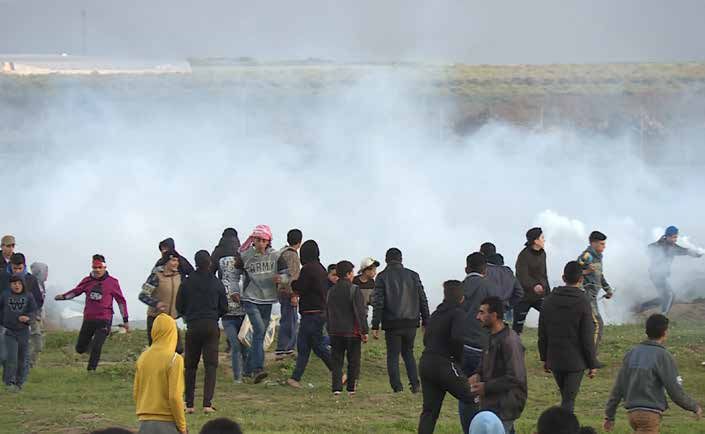
NEEDS AND PLANNED RESPONSE
Needs and Planned Response
¥
PEOPLE IN NEED PEOPLE TARGETED WOMEN
Lebanon
CHILDREN WITH DISABILITY
2.4M 1.5M 49.8% 48.2 5.8%
P
%
Al Qunaytirah
Acre
P
Syria
Overview map
More on pages 22-23 P Tiberias P
Haifa
SUMMARY OF REQUIREMENTS Nazareth
P
BY LOCATION
$85M Jordan River /
Sheikh Hussein P
Irbid
West Bank
Total Jenin
Requirements P
$348M Tulkarm Tubas Ajloun
JORDAN RI VER
P
P
$264M P
Gaza Nablus
Qalqiliya P
P
Salfit
a
Tel Aviv-Yaffo P Balqa
West Bank
S e
P P
Amman
n
West Bank
0.25M
e a
Allenby /
Ramallah People King Hussein
a n
P targeted Jericho
Jerusalem
r r
P
Ashdod
t e
P
P
d i
Madaba
P
M e
P
Bethlehem
S e a
Hebron
D e a d
North Gaza P
Gaza
Gaza Strip
1.3
Middle Area M
Gaza
People targeted
Strip
Khan Yunis Jordan
Rafah Rafah Be'er Sheva
P
Karak
P
Israel
Al ‘Ojah / Nitzana
The designations employed and the presentation of material in the report do not imply the expression of any opinion whatsoever on the part of the Secretariat of the United Nations
concerning the legal status of any country, territory, city or area or of its authorities, or concerning the delimitation of its frontiers or boundaries.
07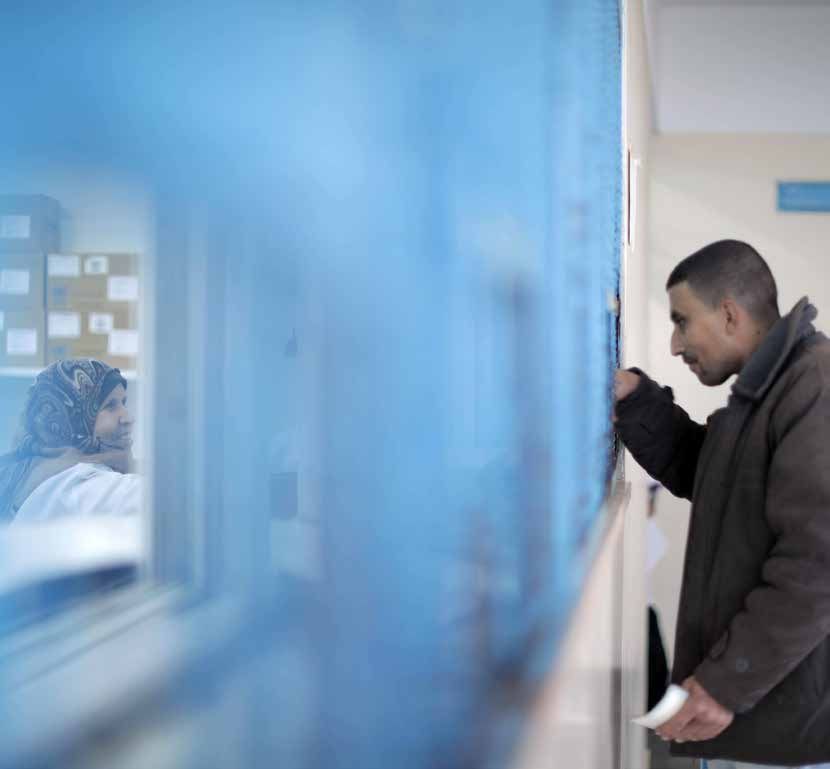
HUMANITARIAN NEEDS OVERVIEW 2020

HRP Key Figures

Humanitarian Response by Targeted Groups                        Humanitarian Response by Age
More on pages 17-18                                             More on pages 24-25

     POPULATION                          PEOPLE     PEOPLE
     GROUP                               IN NEED    TARGETED      AGE                             IN NEED             TARGETED            % TARGETED

     People living under poverty line    1.17 m     640 k
                                                                    Children (0 - 64)                     92 k               80 k                5%
     Small-scale farmers, herders
                                         150 k      67 k
     and fisherfolk in Gaza
     People living with disabilities     140 k      65 k
                                                                Financial Requirements by Sector and Multi-Sector
     Elderly                             92 k       83 k        More on pages 38
     Pregnant and Lactating Women
                                         53 k       26 k
     in Gaza                                                        SECTOR /                                    REQUIREMENTS
                                                                    MULTI-SECTOR RESPONSE                       (US$)
     Bedouin & Herders in Area C         37 k       37 k

     IDPs in Gaza                        8.5 k      8.5 k
                                                                    Coordination and Support
                                                                                                                $9.8 million
                                                                    Services

Humanitarian Response by Gender                                     Education                                   $15.3 million
More on pages 24-25

     GENDER               IN NEED       TARGETED   % TARGETED
                                                                    Food Security                               $214 million
     Boys                 599k          345 k      22%

     Girls                567k          362 k      23%              Health and Nutrition                        $36 million

     Men                  616k          462 k      29%

                                                                    Protection                                  $33.7 million
     Women                638k          420 k      26%

                                                                    Shelter/NFIs                                $10.2 million
Humanitarian Response for Persons with Disability
More on pages 24-25

                                                                    Water, Sanitation and
      GENDER               IN NEED      TARGETED   % TARGETED                                                   $29.1 million
                                                                    Hygiene

     Persons with         140 k         65.2 k     4%
     disabilities                                               *
                                                                  The Protection funding requirement includes all the AoR requirements which form part
                                                                of the Protection Cluster [insert the AoRs were specifically identified for that response]

08
HISTORIC TRENDS
Historic Trends
Humanitarian Response (2013 - 2020) Financial Requirements (2013 - 2020)
In millions of people In millions of US$
People in need
Funding requirements
People targeted
Funding received
YEAR OF PEOPLE PEOPLE REQUIREMENTS FUNDING %
APPEAL IN NEED TARGETED (US$) RECEIVED FUNDED
2013 2.1m 1.8m 400.8m 270.0m 67.4%
2014 2.3m 1.9m 931.1m 506.4m 54.4%
2015 1.9m 1.6m 706.1m 399.5m 56.6%
2016 2.3m 1.6m 570.7m 284.4m 49.8%
2017 2.0m 1.6m 551.9m 258.9m 46.9%
2018 2.5m 1.9m 539.7m 250.3m 46.4%
2019 2.5m 1.4m 350.6m 202.2m 62%
2020 2.4m 1.5m 348m N/A N/A
09HUMANITARIAN NEEDS OVERVIEW 2020
Palestinian demonstration on the beach near the fence, March 2019. © Photo by Emad Badwan
Context of the Crisis
A protracted protection crisis continues in the oPt, driven by Israel’s the Gaza Power Plant, which has more than doubled the average daily
occupation, including the blockade on the Gaza Strip; insufficient availability of electricity, improving the supply of piped and tankered
respect for international law; the internal divide between the desalinated water and water and wastewater treatment. Over 16,000
Palestinian Authority (PA) and Hamas; and recurrent escalations jobs have been created by UNDP, UNRWA and other UN Agencies,
of hostilities between Israeli military forces and Palestinian while the extension of the permitted fishing zone to 15 nautical miles
armed groups. In Gaza, the humanitarian situation remains dire, along the coast in the southern area, and an increase in the exit of
as evidenced by high rates of unemployment, poverty and food Palestinians via the Israeli-controlled Erez, are also positive steps.
insecurity, while sporadic outbreaks of violence are threatening to Despite these developments, the overall situation in Gaza remains
ignite a wider confrontation. In the West Bank, the rate of demolitions fragile. The Great March of Return (GMR) demonstrations continue,
of Palestinian-owned structures and settler violence remain high, and adding to the already high casualty toll and to the long-term health,
many Palestinians, particularly in Area C, East Jerusalem, and Hebron disability and psychosocial caseload. Concerns about Israel’s
city (H2), continue to face the risk of forcible transfer. Across the oPt, excessive use of force during the demonstrations, along with the
some 2.4 million Palestinians will need some form of humanitarian instrumentalization of Palestinian children by Hamas remain.3
assistance in 2020, the majority in Gaza. For the 2020 Humanitarian
Unemployment in Gaza increased from 43 per cent in 2018 to almost
Needs Overview (HNO),
47 per cent in the second quarter of 2019, with youth unemployment
Gaza Strip at 64 per cent.4 Some 46 per cent of the population live below the
The Gaza economy experienced a slight improvement in 2019, US$5.5 poverty line and an estimated 62 per cent of households
growing by 1.8 per cent, following a steep recession of almost seven are severely or moderately food insecure. There is also evidence of
per cent in in 2018.2 Qatar has continued to fund the supply of fuel for increased resorting to negative and harmful coping mechanisms on
the part of vulnerable groups, particularly children, as shown in the
10CONTEXT OF THE CRISIS
rise in the school dropout rate, child labour and child marriage, and compared to 345 structures, displacing 315 people, in the equivalent
about 270,000 children suffering from severe, moderate or mild forms period in 2018.7 Demolition and threat of demolition of homes,
of mental disorders. schools and livelihoods; denial of service infrastructure; access
restrictions on farming and grazing land; poor law enforcement on
West Bank violent settlers; and revocation of residency rights, among others,
Although the humanitarian situation in the West Bank, including East create a coercive environment, which generates pressure on
Jerusalem, is less acute, growth in 2019 “is expected to slow to the Palestinians to leave their communities. The trend in the increase
lowest level over the last five years (1.2 percent), down from 3.1 of settler violence incidents in 2019 vis-a-vis preceding years also
percent in 2018.” 5 Economic development is undermined by Israel’s continued, with 231 incidents carried out by Israeli settlers resulting
direct military occupation, administrative and physical constraint, and in Palestinian casualties (two fatalities and 74 injuries) or in property
by limitations on Palestinian access to land and natural resources damage up to end September 2019, which, as a monthly average,
especially in Area C, which makes over 60 per cent of the West Bank. represents a 12 and 100 per cent increase, compared with 2018 and
Israeli settlement expansion continues, including in East Jerusalem,6 2017 respectively.
imperiling the realization of a viable two-state solution, which is
compounded by more frequent declarations by Israeli political figures
of formally applying Israeli sovereignty over significant parts of the
West Bank.
In East Jerusalem and Area C, a restrictive and discriminatory
planning regime make it virtually impossible for Palestinians to
develop adequate housing and infrastructure: To end-October, the
Israeli authorities demolished or seized 481 Palestinian-owned
structures, displacing 620 people, on the grounds of lack of permits,
11HUMANITARIAN NEEDS OVERVIEW 2020
Multi-Year
Strategy
An estimated 2.4 million people in the oPt are in need of humanitarian drivers of humanitarian need and inform every cluster’s response
assistance. In the final year of the 2018-2020 Humanitarian Response plan. Cluster responses continue to be e guided by the need to ensure
Strategy, humanitarian partners will aim to assist 1.5 million of the that there is full respect for the rights of Palestinians in accordance
most vulnerable Palestinians with a financial requirement of $348 with international law. Protection is mainstreamed throughout
million. Humanitarian assistance addresses need and vulnerability interventions in the HRP through protection-focused or protection-
primarily arising from the policies and practices of the occupation, sensitive programming and advocacy efforts that call for respect for
including the blockade of Gaza. Those targeted for assistance are IHL and IHRL and accountability for violations.
those most in need of protection, access to essential services, and
interventions that will allow them to cope with prolonged occupation Prioritized approach
and repeated shocks. The strategy aims to protect the rights and to Some 1.5 million people will be targeted in 2020, a slight increase
stabilize the situation of the protected population until longer-term from 1.4 million in 2019. Given that donors have limited resources
development and political solutions are found. Humanitarian actors to respond to all HRP interventions, the Humanitarian Country Team
will remain committed to ensuring principled humanitarian action in (HCT) has made efforts to further streamline the 2020 HRP to
the current restrictive operational context. Humanitarian partners will prioritise activities in the plan that will target the maximum number of
continue to urge relevant authorities to uphold their responsibilities vulnerable people that can realistically be accomplished in this highly-
and dedicate resources for humanitarian protection and assistance. constrained context. To this end clusters undertook a revalidation
The 2020 HRP will maintain the centrality of protection at all levels process whereby only projects included in last year’s plan that
of humanitarian action, as a shared system-wide responsibility. The continue to remain necessary to respond to the ongoing and projected
number of people in need of humanitarian assistance in the oPt is needs outlined in the 2020 HNO would be rolled-over into the 2020
not decreasing substantially year by year – only more sustainable plan. Projects included in last year’s plan that remain necessary
development and political solutions will achieve a substantial were considered for this year’s plan. Only where new or deepening
reduction in the humanitarian caseload. There remain, however, needs were identified, have new projects been added. Acceptance
significant challenges to longer-term solutions; for example, of projects in the HRP involves a robust vetting of projects by the
development is hindered by occupation-related constraints in Area clusters, to ensure that only critical humanitarian activities are
C, such as the discriminatory permit and planning regime, and the included, and thus it should be noted that all HRP interventions are
repeated destruction of infrastructure in Gaza. The particular nature considered important and should be funded. As a result, the total
of the crisis in the oPt requires the strict preservation of humanitarian number of people targeted and the total requirements for 2020 have
space within which humanitarian action can take place, finely remained the same as in the previous year. This approach knowingly
balanced against ongoing mutually influencing streams of action in and unwillingly leaves many Palestinians without the humanitarian
the development and political spheres. assistance and protection they critically need, a gap the humanitarian
community stands ready and able to fill should operational conditions
Geographical scope improve and funding increase. However, it is the maximum that
The strategy is focused on areas of the oPt where the effects of humanitarian actors can realistically be expected to achieve in the
the occupation including the blockade take the greatest toll on prevailing environment.
Palestinians, i.e. Gaza, Area C, H2 of Hebron and East Jerusalem.
East Jerusalem and Area C are also areas where the Palestinian Coordination with actors outside the plan
Authority (PA) has least access and authority. In the case of UNRWA, HRP interventions are coordinated with national efforts to avoid
its mandate extends across the whole of the oPt, including in Areas A duplication and encourage complementarity. In addition, there are
and B. other important humanitarian and development actors operating
outside the remit of the HRP, such as the International Committee of
Making protection central to the strategy the Red Cross (ICRC), Palestine Red Crescent Society (PRCS), Gulf
Recognising that the situation in the oPt is effectively a chronic and Islamic charities, NGOs, and the regular programmes of UNRWA.
protection crisis, protection concerns continue to be the primary
12RESPONSE BY
MULTI-YEAR STRATEGIC OBJECTIVES
Response by
Strategic Objective
The goal of humanitarian assistance in the oPt is to protect the third and final year of the 2018-2020 multiyear humanitarian response
rights of Palestinians under occupation, provide access to basic strategy. The strategy and its Strategic Objectives remain valid for
services for those who are acutely vulnerable, and support the ability 2020. During 2020, humanitarian partners will continue to address the
of households to cope with prolonged stresses to prevent a further needs jointly identified by the humanitarian community in the 2020
deterioration in their situation until more sustainable solutions are HNO.
found. The 2020 Humanitarian Response Plan (HRP) will mark the
STRATEGIC PEOPLE IN PEOPLE REQUIREMENTS
# OBJECTIVE NEED TARGETED (US$)
S01 The rights of Palestinians living under occupation, including 1.9 million 366 k 31.8 million
those living under the blockade and other restrictions, are
protected, respected and promoted in accordance with
International Humanitarian Law (IHL) and International
Human Rights Law (IHRL), while duty-bearers are
increasingly held to account.
S02 The basic needs of vulnerable Palestinians living under 1.8 million 975.3 k 86.5 million
occupation are met through the provision of quality basic
services and improved access to resources, in accordance
with the rights of protected persons under IHL.
S04 The capacity of vulnerable Palestinians to cope with 1.7 million 1.4 million 229.7 million
and overcome the protracted crisis, including from
environmental threats, is supported, while solutions to
violations and other root causes of threats and shocks are
pursued.
Total targets by SOs are based on highest number of list of outcome level indicators listed per SO given that some beneficiaries are targeted more than one intervention.
13HUMANITARIAN NEEDS OVERVIEW 2020 Part 2 Strategic Response Priorities Nurse, during treatment to one of the injured in the Great March of Return at the UNRWA clinic in Al-Bureij © Photo by Hussein Jaber 14
STRATEGIC RESPONSE PRIORITIES

Strategic Response
Priorities
Humanitarian consequences prioritized for response

Prioritized Critical Problems related to Protection of Civilians and Displacement

PEOPLE IN NEED                           PEOPLE TARGETED                           TREND (2018-2020)*                         WOMEN                            CHILDREN   WITH DISABILITY

1.9m                                     366k                   9                2018            2019           2020          51.6% 44.8% 5.8%
*In 2018 the Protection cluster refined its targeting methodology resulting in a significant decrease of total people targeted in 2018 compared to 2019 and 2020.

Seventy-nine percent of 2.4 million have been identified as being                                                  including by improving longer-term monitoring of trends and data
affected in some way by the humanitarian consequences related                                                      collection to support advocacy, and by enhancing coordination within
to Protection and forced displacement. The 2020 HNO findings                                                       and amongst the Clusters and with national counterparts, including
identified that violations of IHL and IHRL are at the heart of the oPt                                             government actors. Strengthening legal frameworks to bring them
crisis and are the main driver of the humanitarian needs in oPt.                                                   in line with international treaty obligations is also better addressed
The aim of this strategic objective is to enhance protection by                                                    through a multi-year approach.
promoting and advocating for the respect for IHL and IHRL,                                                         Interventions under this objective will include, for example, monitoring
demanding accountability, and mitigating the impact of violations. All                                             and documentation of IHL and IHRL violations and conflict-related
Palestinians in the oPt are affected by the protection crisis in some                                              violence, particularly aimed at increasing accountability and informing
way, however direct interventions will focus on those identified as                                                advocacy with the purpose of preventing further violations; rights-
especially vulnerable and in need of specific protection measures.                                                 based advocacy with duty bearers, including third states; a protective
Accordingly, protection and humanitarian assistance interventions                                                  presence for communities at risk of settler violence and displacement;
will be focused on populations most affected, particularly those                                                   legal aid services; inclusive multi-sectoral responses to gender-based
residing in Area C, East Jerusalem, and the H2 area of Hebron in the                                               violence (GBV) survivors, including economic empowerment; child
West Bank, and in the Gaza Strip.                                                                                  protection services, including individual case management; mental
While the primary responsibility for respect of IHL lies with Israel                                               health and psychosocial services (MHPSS) for adults and youth;
as the occupying power, this objective also addresses duty-bearers                                                 and explosive remnant of war (ERW) risk mitigation and education
under IHRL which includes Israel, Palestinian authorities, third states                                            responses, documenting and reporting of education-related violations;
and non-state actors. Mainstreaming protection through the work of                                                 and advocacy on the right to health.
all the clusters is also a key component of this objective, ensuring                                               Seventy-five per cent of 2.4 million have been identified as being
that assistance is targeted and delivered to the acutely vulnerable,                                               affected in some way by the humanitarian consequences related
with respect for their safety and dignity.                                                                         to limited access to essential services. The 2020 HNO findings
In 2020, humanitarian partners will invest in strengthening advocacy                                               demonstrated that many Palestinians are highly vulnerable and need
for the rights of Palestinians under IHL and IHRL to be respected,                                                 improved access to basic services, including education, health, WASH

                                                                                                                                                                                            15
HUMANITARIAN NEEDS OVERVIEW 2020
Specific Objectives: Targets and Response
# STRATEGIC OBJECTIVES NUMBER TARGETED TIMEFRAME
SO 1.1 Protection response mechanisms are in place to 366k Jan 2020-Dec 2020
prevent and mitigate the effects of the occupation
and conflict-related violence
SO 1.2 Ensure the availability, accessibility, accept- 131.6k Jan 2020-Dec 2020
ability and quality of essential lifesaving health
services to vulnerable communities in Gaza and
West Bank/EJ, including through health system
strengthening, preparedness and community
resilience building
SO 1.3 Most vulnerable schools are supported in 169.3k Jan 2020-Dec 2020
responding to potential emergencies through
preventive measures, remedial programs and
school-based psychosocial services
SO 1.4 Strengthen health coordination, information and 61.1k Jan 2020-Dec 2020
health protection, with an emphasis on advocacy
for the right to health, to improve the effective-
ness of lifesaving health response for most
vulnerable people
SO 1.5 Displaced populations are provided support that 12.9k Jan 2020-Dec 2020
mitigates immediate harm and ensures adequate
and safe temporary shelter solutions
16STRATEGIC RESPONSE PRIORITIES
Prioritized Critical Problems related to Access to Essential Services
PEOPLE IN NEED PEOPLE TARGETED TREND (2018-2020) WOMEN CHILDREN WITH DISABILITY
1.8m 1m10 2018 2019 2020 49.1% 51.5% 5.8%
and adequate shelter. In Gaza, the blockade, recurrent outbreaks Interventions under this objective will include, for example, provision
of hostilities and the internal Palestinian political divide have of adequate lifesaving maternal and neonatal health care and nutrition
continued to contribute to a serious deterioration in the access of services in Gaza; provision of emergency education supplies to
the population to basic services. In the West Bank, strict movement vulnerable, unserved or underserved students and teachers; and
and access restrictions, coupled with extreme limitations on planning provision of shelter repairs and shelter assistance to people internally
and development, have prevented people living in affected areas, displaced by the 2014 conflict in Gaza and by demolitions in the West
particularly Area C, East Jerusalem and Hebron H2, from accessing Bank.
essential services. Seventy-one per cent of 2.4 million people have been identified as
Where the occupying power and other duty bearers fail to provide been affected in some way by humanitarian consequences related to
for the basic needs of the population in the occupied territory, and erosion of resilience. The 2020 HNO identified the multiple ways in
such failures create vulnerabilities that surpass minimum standards, which the erosion of resilience of Palestinians takes place. As a result
threatening life and dignity, it is incumbent on humanitarian actors of the prolonged nature of the occupation, including the blockade
to provide assistance to meet basic needs. The 2018 HNO findings on Gaza now in its thirteenth year, and three outbreaks of hostilities
demonstrated that many Palestinians are highly vulnerable and in Gaza, the resilience of Palestinians living under occupation is
need improved access to basic services, including education, health, threatened. People vulnerable to rights violations struggle to cope
nutrition, WASH and adequate shelter. with prolonged stresses to their livelihoods. These prolonged stresses
have also left Palestinians less able to cope with sudden shocks,
In 2020 humanitarian partners will utilize interventions that address
such as spikes in conflict in Gaza, demolitions in the West Bank, and
both immediate needs, as well as the underlying drivers of those
natural or environmental hazards, such as winter storms, the longer-
needs. For example, partners in WASH and health will provide
term effects of climate change, and the environmental impacts of
assistance to meet the immediate needs of vulnerable people for
inadequate water and sanitation services and electricity.
clean water, appropriate sanitation and adequate health care and
nutrition. However, they are also able to place greater emphasis on Over the next three years, humanitarian partners will prioritize
programs that work to change negative sanitation and health and programming that addresses these long-term stresses more
nutrition behaviors that increase vulnerability, which take a multi-year effectively.
period to address.
Specific Objectives: Targets and Response
# STRATEGIC CLUSTER OBJECTIVES NUMBER TARGETED TIMEFRAME
SO Ensure equitable, affordable and sustainable access to safe and sufficient 975.3k Jan 2020-Dec 2020
2.1 WASH services with dignity for the unserved, underserved and most vul-
nerable Palestinians living under occupation in Gaza and the West Bank
SO Ensure the availability, accessibility, acceptability and quality of essential 726.6k Jan 2020-Dec 2020
2.2 lifesaving health services to vulnerable communities in Gaza and West
Bank/EJ, including through health system strengthening, preparedness
and community resilience building
SO Increase equitable and safe access to inclusive, quality educational 358.4k Jan 2020-Dec 2020
2.3 services for vulnerable children
SO Vulnerable households exposed to harsh weather and protection concerns 35k Jan 2020-Dec 2020
2.4 are supported to meet basic needs and enhance their coping capacity
17HUMANITARIAN NEEDS OVERVIEW 2020
Prioritized Critical Problems related to Critical Problems relating to resilience and
recovery
PEOPLE IN NEED PEOPLE TARGETED TREND (2018-2020) WOMEN CHILDREN WITH DISABILITY
1.7m 1.4m 11 2018 2019 2020 49.2% 47.9% 5.8%
In 2020 humanitarian partners will be able to promote humanitarian development actors on projects that could address some of the root
projects that improve coping abilities and reduce shocks and causes of vulnerability, for example, desalination projects in Gaza.
environmental hazards. For example, increasing support to Interventions under this objective will thus include, for example,
communities’ livelihoods is expected to improve the general food provision and rehabilitation of productive assets for farmers, herders,
security situation and have a positive impact on their overall nutrition breeders, and fisher folk; provision of winterization assistance to
and health status, while investing in solar energy sources to support vulnerable households at risk of exposure or affected by natural or
humanitarian projects in WASH and health could improve the manmade hazards; developing the capacity of emergency response at
sustainability of the impact of those humanitarian interventions. In primary and secondary healthcare in Gaza; and supporting schools in
parallel, humanitarian actors will continue to leverage opportunities emergency preparedness and contingency-planning exercises.
for enhanced coordination and advocacy with national and
Specific Objectives: Targets and Response
# STRATEGIC CLUSTER OBJECTIVES NUMBER TARGETED TIMEFRAME
SO Increase capacity to respond to natural or manmade hazards in a timely, 22.9k Jan 2020-Dec 2020
3.1 efficient and effective manner
SO Ensure the availability, accessibility, acceptability and quality of essential 131.6k Jan 2020-Dec 2020
3.2 lifesaving health services to vulnerable communities in Gaza and West
Bank/EJ, including through health system strengthening, preparedness
and community resilience building
SO Strengthen WASH preparedness and response capacity to the unserved, 151k Jan 2020-Dec 2020
3.3 underserved and most vulnerable Palestinians living under occupation in
Gaza and the West Bank, to reduce threats and to cope with emergencies
and shocks
SO Most vulnerable schools are supported in responding to emergencies 169.3k Jan 2020-Dec 2020
3.4 through preventive measures, remedial programs and school-based
psychosocial services
SO Livelihoods of vulnerable households are protected, and their resilience, 1.4m Jan 2020-Dec 2020
3.5 food security and productive capacity restored/enhanced
SO Households suffering from limited access to food and to income opportu- Jan 2020-Dec 2020
3.6 nities are able to meet their basic food needs
18RESPONSE
Response
Monitoring
In the final year of the multi-year strategy, the oPt 2020 monitoring Monitoring Report (PMR) and the End-of-Year Report. Aligned with
framework consists of annual strategic objectives and related the prioritization of activities for 2020 HRP, clusters also updated/
outcome indicators to which are linked the cluster objectives and re-validated outcome indicators under cluster objectives and output
related outcome indicators, and the single-year cluster activities and indicators under cluster activities.
output indicators, underpinned by mandatory monitoring by partners
at the project level. Cluster response monitoring frameworks
Each cluster has agreed upon a cluster monitoring framework
Monitoring progress towards the HCT’s three strategic objectives comprised of a small number of cluster activities to which progress
Response monitoring is an integral part of the humanitarian response. towards will be measured through a number of output level indicators
This year, the oPt HCT will continue with the framework designed last set by each cluster. Cluster activities are monitored by the ICCG.
year, with alterations to some indicators. The design of the response Indicators in the projects included as part of each cluster portfolio
monitoring framework ensures that each cluster’s activity addresses in turn contribute to these cluster level outputs. These projects are
at least one of the three country level strategic objectives in order monitored by the individual organizations members of the clusters.
to ensure better coherence between cluster plans and the HCT’s
overarching goals for the strategy. Most cluster activities identify HPC Tools
output level indicators that track contribution to the achievement The indicators under the Strategic Objectives, Cluster Objectives
of one strategic objective or more. Progress towards strategic and Cluster activities continue to be monitored by the ICCG with
objectives will be measured through a small number of outcome level disaggregated data by gender, age and geographical area. The
indicators, designed in consultation with clusters and key agencies, monitored data will be tracked through the Response Planning Module
who will support monitoring under the overall responsibility of the (RPM), which will visualize the data through HPC tools viewer that
HCT. Financial inputs will be monitored by OCHA through the online will be available to the public. HPC tools are the information services
Financial Tracking Service (FTS) platform, to which all partners provided by OCHA which enables the humanitarian community
participating in the HRP are obliged to report. The information derived to manage the structured information around the HPC: needs
from both the funding coverage and the achievements against targets indicators, strategic and cluster plan frameworks, response indicators,
by strategic objective provides a comprehensive analysis on the caseloads, activities and projects, and financial data.
extent to which the humanitarian community in the oPt is meeting the The Projects Module connects projects to the overall strategic
goals set out in the 2020 HRP. In terms of monitoring and reporting, framework, and allows the disaggregation of projects by location,
the achievements against Strategic Objectives are monitored vulnerable geographic areas and by activity type. This has played a
twice a year and published through the HRP Periodic Mid-Year critical role in supporting the development of a well-targeted plan. The
Humanitarian Programme Cycle Timeline
JAN FEB MAR APR MAY JUN JUL AUG SEP OCT NOV DEC
Humanitarian Needs Overview
Humanitarian Response Plan
Periodic Monitoring Report
19HUMANITARIAN NEEDS OVERVIEW 2020
intuitive nature of the HPC suite of modules allows the humanitarian In addition to measuring programme effectiveness, it is a valuable
community to conduct a quick, but thorough, analysis of the projects teaching and self-monitoring tool, allowing organizations to learn
vis-à-vis monitoring and reporting to inform the upper level strategic by developing programmes that respond to all aspects of diversity.
planning process. In 2020, the Humanitarian Gender Group (HGG), co-chaired by UN
Women and OCHA, will continue to strengthen its role throughout
IASC Gender with Age Marker the HPC, by ensuring gender and age mainstreaming in the cluster-
Throughout the HPC, gender mainstreaming remains a priority for specific needs analysis, response planning, implementation and
the oPt humanitarian community. The HCT is committed to delivering monitoring. In cooperation with the HGG, UN Women and OCHA will
a response that is sensitive and appropriate to the distinct needs continue to organize training sessions on GAM as well as GAM clinics
and vulnerabilities of persons of different genders and ages. The targeting different humanitarian actors including cluster members
full scale roll-out of the IASC Gender and Age Marker (GAM) in the and women’s organizations. For 2020, a total of 90 per cent of HRP
2020 planning cycle, replacing the IASC Gender Marker, reaffirms projects were self-evaluated to be given either a 4M or 4T gender
the HCT’s commitment to gender mainstreaming as a means for marker score, indicating a high level commitment by partners to
ensuring the highest quality humanitarian programming in line with contributing significantly to gender equality, including across age
international standards. Moving on to implementation and monitoring groups, through their humanitarian interventions. The scoring was
of humanitarian activities at the beginning of 2020, the oPt HCT will automatically generated by the GAM tool, based on questionnaires
ensure that the humanitarian response is adequately tailored and that partners answered. With the support from cluster gender focal
adapted to address the specific needs of different population groups. points, the humanitarian community will continue to strive for a high
The GAM strengthens the original IASC Gender Marker by including percentage of 4M or 4T GAM scoring during the implementation and
age and, most significantly, by adding a monitoring component. evaluation phases.
CATEGORY NUMBER OF PROJECTS %
1 (M): The project does not intentionally contribute to gender equality. 5 2.6%
2 (M): The project addresses age differences, but does not intentionally contribute to gender 2 1.0%
equality.
3 (M): The project will contribute to gender equality, but without full attention to age groups. 10 5.2%
4 (M): The project will significantly contribute to gender equality, including across age groups. 163 84.9%
4 (T): The project is principally about promoting gender equality, including across age groups. 10 5.2%
N/A: The project does not have any contact with or direct influence on the affected population, 2 1.1%
and the programming actions are not linked.
Grand Total 192 100%
20ACCOUNTABILITY TO AFFECTED POPULATIONS
Accountability
FEEDBACK MECHANISMS
# OF PROJECT WITH SOME FORM OF % OF TOTAL
CWC IN DIFFERENT STAGES PROJECTS
to Affected Generic Email
Project Hotline
64
70
33 %
36 %
Populations Complaint Box
Satisfaction Survey
107
96
56 %
50 %
Others 38 20 %
Community engagement is recognized at the country level as a Community engagement (CE) activities, at the project needs
priority for humanitarian response in the oPt, both in terms of the assessment, project design, implementation and monitoring and
integration of community engagement throughout the programme evaluation phases. Currently, 186 of the 192 projects in the HRP
cycle, particularly at the project level, but also in terms of maintaining has planned communications with affected populations in at least
continuous engagement with communities on a day-to-day basis. one stage of the project cycle. Most of those that did not plan
A wide range of methodologies for community engagement are any engagement with affected populations are projects under
utilized by oPt humanitarian partners to provide communities with coordination cluster. 145 projects have planned at all stages of
information, collect feedback and ensure their participation in the programme cycle. Focus groups and interviews are the most
the decision-making processes. These community engagement common forms of engagement with community. 187 projects have
methodologies include surveys, focus groups, face-to-face interviews also indicated that it plans to consider different population groups
with affected populations, as well as through information product and in these engagements with communities. In addition, 183 of the
outreach. 191 projects have planned for some form of a built-in feedback and
complaints mechanism, with complaint box and satisfaction survey
Structured analysis and discussions at the Inter-Cluster Coordination
being the most popular form of feedback mechanisms. With regard
Group (ICCG) and Humanitarian Country Team (HCT) levels on
to the monitoring phase, the Monitoring Framework for the 2020
cluster achievements on community engagement have been taking
HRP has mandatory CE indicators for all clusters for the first time in
place in 2019, particularly in the Gaza context, with the objective of
order to reflect the level of community engagement that took place
carrying the work forward throughout the 2018-2020 HPC, to further
at the programming cycle. In 2020-2021, there is a plan to design
systematize the inter-cluster approach to community engagement in
and conduct a perceptual survey to collect and analyze views of the
the oPt, including through monitoring of such planned engagements
affected population on the humanitarian aid that has been provided
in the oPt. A Community Engagement Working Group was reactivated
over the past three years across the oPt. In 2019, OCHA oPt has
in Gaza in 2019, which will support the cluster coordinators in
agreed to undergo a desk and field review to reflect PSEA (protection
monitoring the implementation of community engagement throughout
against sexual exploitation and abuse) at the office level vis-a-vis
the 2020 HRP as well as during times of crisis. A similar format is
beneficiaries/ affected communities. The key focus will be put on
planned to be activated in the West Bank to ensure a holistic approach
the possible ways of integration mainstreaming of PSEA into OCHA
for the whole of oPt.
work as well as clarifying which tools, applications and processes
For the 2020 project cycle, the national (Gaza and West Bank) ICCG are put in place. PSEA falls under the umbrella of Accountability
has incorporated structured community engagement components, towards Affected Population (AAP) alongside Communication with
with more detailed questions, in the project development (through Communities and PSEA Network-speared system is expected to be
the project sheets), in order to better analyse the scope of planned operational by the end of 2020.
ENGAGEMENT WITH COMMUNITIES THROUGHOUT THE PROGRAMME CYCLE
# OF PROJECT WITH SOME TYPE OF CWC
% OF TOTAL
FORM OF CWC IN DIFFERENT
STAGES
PROJECTS Focus Information product
Survey Interviews
groups and outreach
Project needs
175 91% 88 125 110 44
assessment
Project design 166 86% 46 126 116 43
Implementation
159 83% 50 97 108 71
(delivering assistance)
Monitoring and evaluation 176 92% 104 123 125 58
21HUMANITARIAN NEEDS OVERVIEW 2020
Part II
2020 Humanitarian Response Plan
and Requirements
SUMMARY OF NEEDS, TARGETS & REQUIREMENTS
CHILDREN
PEOPLE IN NEED PEOPLE TARGETED TREND CHILDREN % WITH DISABILITY
2.4m 1.5m 2018 2019 2020
49.8% 5.8%
Medication dispensing to a Palestinian refugee at UNRWA Al-Rimal clinic © Photo by Hussein Jaber
VILLAGE/CITY, COUNTRY
Gwiass woass ma ned voluptua sea diam gubergren. Sanctus
pfenningguat invidunt iriure da kini mollit justo pariatur et
invidunt. Photo: Organization/Photographer
22INDICATORS AND TARGETS
1.1
Indicators
and targets
Strategic Objective 1
ADDRESSING CRITICAL PROBLEMS RELATED TO PROTECTION OF CIVILIANS AND DISPLACEMENT
# CLUSTER OBJECTIVES INDICATOR IN NEED TARGETED SOURCE FREQUENCY
SO # of people requiring 1.9 million 366 k Protection Twice a year
1.1 protection interventions (GBV, Cluster
Child Protection, MHPSS,
Legal Aid)
SO # of children affected by 30.1 Protection Twice a year
Protection response mechanisms
1.2 conflict related violence Cluster
are in place to prevent and mitigate
benefiting from structured
the effects of the occupation and
psychosocial services and
conflict related violence
child protection interventions
SO # of children affected by 5.3k Protection Twice a year
1.3 conflict related violence Cluster
benefiting from specialized
individual case management
SO # of child protection 498.7k 500 Protection Twice a year
1.4 workers trained on guidelines Cluster
on mental health and
psychosocial support
SO # of vulnerable men and 13.4k Protection Twice a year
1.5 women affected by conflict Cluster
related violence benefiting
from structured psychosocial
services
SO Ensure the availability, accessibility, # patients with access to 87.9k Protection Twice a year
1.6 and links acceptability and quality of MHPSS services Cluster
to SO 2 essential lifesaving health services
to vulnerable communities
SO in Gaza and West Bank/EJ, # of people directly benefitting 25k 25k Protection Twice a year
1.7 and links including through health system from awareness session and Cluster
to SO 2 strengthening, preparedness and mental health promotion
community resilience building activities
SO Strengthen health coordination, # of patients, companions, 104.7k 60.3k Health and Twice a year
1.8 and links information and health protection, and healthcare staff Nutrition
to SO 2 with an emphasis on advocacy for benefitted from advocacy Cluster
the right to health, to improve the messages on access,
effectiveness of lifesaving health monitoring and protection
response for most vulnerable interventions
people
SO Displaced populations are provided # of assisted households 158.8k 16.2k Shelter and Twice a year
1.9 and links support that mitigates immediate living in adequate temporary NFIs Cluster
to SO 2 harm and ensures adequate and shelter
safe temporary shelter solutions
# of households received 540 250 Shelter and Twice a year
timely post-demolition shelter NFIs Cluster
response
SO 1.10 Most vulnerable schools are # of children and education 113k 13.4k Education Twice a year
supported in responding to personnel affected by Cluster
potential emergencies through violations and attacks
preventive measures, remedial on education facilities
programs and school-based supported through education
psychosocial services emergencies interventions
23HUMANITARIAN NEEDS OVERVIEW 2020
Strategic Objective 2
ADDRESSING CRITICAL PROBLEMS RELATED TO ACCESS TO ESSENTIAL SERVICES
# CLUSTER OBJECTIVES INDICATOR IN NEED TARGETED SOURCE FREQUENCY
SO 2.1 Ensure equitable, affordable and sustainable # of vulnerable people with access 1.87m 975.3k WASH Twice a year
access to safe and sufficient WASH services to safe drinking and domestic water Cluster
with dignity for the unserved, underserved services and benefiting from improved
and most vulnerable Palestinians living under access to sanitation and hygiene
occupation in Gaza and the West Bank services
SO 2.2 Vulnerable households exposed to harsh # of assisted families reported 16k Shelter and Twice a year
weather and protection concerns are improvement in living conditions NFIs Cluster
supported to meet basic needs and enhance 158k
# of assisted household living in 19.3k Shelter and Twice a year
their coping capacity
upgraded units in accordance with NFIs Cluster
minimum standards
SO 2.3 Increase equitable and safe access to # of vulnerable students and teachers 391k 358.4k Health and Twice a year
inclusive, quality educational services for with improved access to school Nutrition
vulnerable children Cluster
SO 2.4 Ensure the availability, accessibility, # of women in reproductive age, 117.6k 103.9k Health and Twice a year
acceptability and quality of essential pregnant and lactating women receiving Nutrition
lifesaving health services to vulnerable quality maternal and nutrition services Cluster
communities in Gaza and West Bank/
# of < 5 children receiving targeted 324.1k 92.5k Health and Twice a year
EJ, including through health system
health and nutrition interventions Nutrition
strengthening, preparedness and community
Cluster
resilience building
# of cases received frontline prehospital 158k 131.5k Health and Twice a year
care Nutrition
Cluster
# of cases received appropriate care 98.k 98.k Health and Twice a year
in the emergency department using a Nutrition
standard validated triage tool and vital Cluster
signs monitoring
# of people who have access to L2 PHC 162.6k 127.9k Health and Twice a year
services Nutrition
Cluster
Strategic Objective 3
ADDRESSING CRITICAL PROBLEMS RELATED TO ACCESS TO ESSENTIAL SERVICES
# CLUSTER OBJECTIVES INDICATOR IN NEED TARGETED SOURCE FREQUENCY
SO Increase capacity to respond to natural or # of individuals and IDPs that 600K 22.9 k Shelter and Twice a year
3.1 manmade hazards in a timely, efficient and shelter agencies are able to NFIs Cluster
effective manner support immediately at the onset
of an emergency
SO Ensure the availability, accessibility, # of affected benefitted from 42.9k 17.4k Shelter and Twice a year
3.2 acceptability and quality of essential lifesaving prepositioned supplies NFIs Cluster
health services to vulnerable communities in
Gaza and West Bank/EJ, including through
health system strengthening, preparedness and
community resilience building
SO Strengthen WASH preparedness and response # of people in need with 150.9k 234.8k WASH Twice a year
3.3 capacity to the unserved, underserved and increased WASH capacity during Cluster
most vulnerable Palestinians living under emergencies and shocks
occupation in Gaza and the West Bank, to
reduce threats and to cope with emergencies
and shocks
SO Most vulnerable schools are supported in # of students supported following 280.3k 169.3k Education Twice a year
3.4 responding to emergencies through preventive education-related violations, Cluster
measures, remedial programs and school- escalations in conflict or natural
based psychosocial services disasters
SO Livelihoods of vulnerable households are
3.5 protected, and their resilience, food security
and productive capacity restored/enhanced
SO Households suffering from limited access to
3.6 food and to income opportunities are able to # of people who report improved 1.7m 1.5m Food Security
meet their basic food needs Twice a year
coping strategies Sector
SO FSS activities, including advocacy and
3.7 awareness, are planned and implemented in a
coordinated manner, and partnership with key
national ministries is strengthened
24OPERATIONAL CAPACITY AND ACCESS
Operational Capacity and Access
Humanitarian partners have a well-established operational and
protection presence across the oPt. In 2020, a total of 83 partners – OPERATIONAL PARTNERS TREND (2018-2020)
83m
international and national – have projects included in the HRP.
The HCT involves 26 members engaged in the provision of 2018 2019 2020
humanitarian assistance and protection at the country level. Six
clusters/sectors are active in the oPt, coordinating the activities of in January 2018. The West Bank ICCG will continue to provide a
international and national partners: Protection Cluster, WASH Cluster, geographically-focused platform for clusters/sectors to work together
Health and Nutrition Cluster, Food Security Sector, Education Cluster to jointly deliver an effective and efficient humanitarian response. This
and Shelter and NFI Cluster. Three globally-recognized sub-clusters is done so by reaching a shared understanding of needs, informed
operate under the auspices of the Protection Cluster, including Child by a robust protection and gender and analysis, and agreeing on
Protection, Gender-Based Violence and Mine Action. A number joined-up operational plans to meet those needs.
of working groups, established to meet the specific operational The participation of the National NGOs (NNGOs) through directly
requirements of the oPt, also operate under the leadership of the six implementing projects to the HRP appear to be relatively unchanged
clusters. compared to 2019 (6.6 per cent of the requirements in 2019 vs.
In 2020, a total of 83 partners – international and national – have 5.8 per cent of the requirements in 2020). The NNGO participation
project included in the HRP. OCHA convenes and facilitates the through partnerships with UN agencies or INGO has significantly
work of the Inter-Cluster Coordination Group (ICCG) at national and increased from 51 per cent of requirements in 2019 to 54.2 per cent
sub-national levels in Gaza and West Bank. Deriving from critical of requirements in 2020. In line with the Grand Bargain commitments,
needs that oblige a collective humanitarian response at the local these positive statistics will continue to be pursued for the HRP
level, the oPt national ICCG has developed two inter-cluster platforms projects, to ensure and strengthen the engagement with national
to coordinate humanitarian response at the operational level. These NGOs through partnerships with UN and INGOs.
sub-national platforms sit in the West Bank, of which East Jerusalem NUMBER OF
SECTOR
is a part, and in the Gaza Strip. This national/sub-national structure PARTNERS
promotes the implementation of operational decisions within the Education 23
scope of the HRP and national cluster standards. Food Security 23
Health and Nutrition 26
The establishment of the West Bank ICCG was proposed and
discussed by the oPt ICCG in June 2017; endorsed by the Cluster Protection 34
Lead Agencies in November 2017; and approved by the HC and HCT Shelter and NFIs 12
Water, Sanitation and Hygiene 21
2020 HRP REQUIREMENTS OF UN/
TYPE OF REQUIREMENTS FOR
INGO PROJECTS PARTNERING
ORGANIZATION 2020 HRP
WITH NNGOS
UN $234 million (67%)
$177.6 million (51%)
INGO $93.4 million (27%)
NNGO $20.1 million (6%) N/A
Response Reach by Sector under previous HRP
SECTOR REQUIREMENTS ($) GRAPHIC PEOPLE IN NEED PEOPLE TARGETED PEOPLE REACHED
Education 15 million 0.5 million 0.4 million 0.15 million
Food Security 206 million 1.7 million 1.4 million 1.4 million
Health and Nutrition 31 million 1.2 million 0.8 million 0.7 million
Protection 36 million 2 million 0.4 million 1.7 million
Shelter NFIs 14.3 million 0.3 million 0.08 million 0,005 million
Water, Sanitation and Hygiene 29,1million 1.9 million 1.1 million 0,06 million
25You can also read


