IMBA Europe Summit Schweinfurt (DE) - 22nd April 2016 Giacomo Benelli EUROPARC Federation
←
→
Page content transcription
If your browser does not render page correctly, please read the page content below
IMBA Europe Summit
Schweinfurt (DE)
22nd April 2016

Giacomo Benelli
EUROPARC Federation
•

•

•
Sustainable nature,
  valued by people.
The EUROPARC Federation’s members are organisations
(protected areas authorities, regional and national governmental bodies, NGOs)
from 36 countries, that work for the benefit of our nature.

            Over the years, the
                 Federation has
         supported the creation
           of eight regional and
              national sections.

  Federation offices:
EUROPARC is founded on the principle that the future
protection and conservation of nature is achieved through :

          •   International Co-operation
          •   Personal Contact
          •   Mutual understanding, shared experiences         Nature knows
          •   Knowledge and Innovations                       no boundaries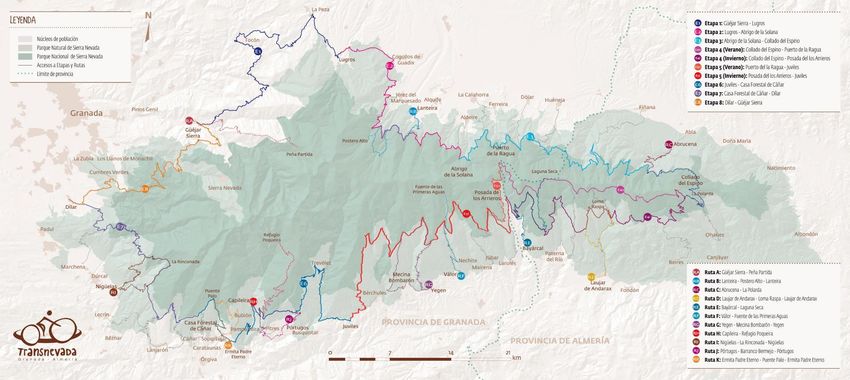
Improves the quality of protected areas management Supports parks in their management strategies and practical skills Involves youths and volunteers Trains individuals Enhances European network of protected areas Influences policy at EU Level Develops programmes and different projects
Every year about 40 young people and Rangers come together          A new programme to engage youngsters over 18 to support the
to learn and contribute to the conservation of protected areas in   work developed by rangers in their local protected areas.
Europe.
Help protected areas which share a common border to
create a sustainable relationship through increased cooperation.
19 Protected areas in 11 countries working together
A practical management tool that enables
          Protected Areas to develop tourism
            sustainably, based in 5 Principles

Principles over-arch the key topics
 and associated actions that are             Principles   Key Topics   Key Actions
    developed in the strategy
“Loving them do death” With over 20 years of implementation,
The report created by the EUROPARC Federation in 1993 the ECST is a continuous process
called for sustainable tourism in Europe’s Protected Areas. for parks and for the Federation.
It has been updated and widely approved,
leading the way of sustainable tourism in Europe.
Principles Key Actions
Currently it is implemented in
144 Charter areas in 17 European countriesSustainable Tourism in European protected areas provides
a meaningful quality experience,
safeguards natural and cultural values,
supports local livelihoods and quality of life
and is economically viable.
Quality Sustainable Tourism will be
good for Parks and good for People1. Giving priority to protection
2. Contributing to sustainable development
3. Engaging all stakeholders
4. Planning sustainable tourism effectively
5. Pursing continuous improvement
Quality Sustainable Tourism will be
good for Parks and good for PeopleA permanent Sustainable Tourism Forum must be established between the protected area authority and all relevant stakeholders, which may include local biking associations
Defining clear strategic objectives
                           concerning nature conservation,
                          economic and social development,
• Natural, historic and
                           improving quality of life of locals
   cultural heritage;           and quality of tourism.
     • Tourism and
        recreation
   • Infrastructures;
 • Current visitors and
     potential future
         markets;
• Impacts of tourism

                                                            Description of
                                                             each action:
                                                          timing, resources,
                                                             partners for
                                                            implementing,
                                                              monitoring
                                                               proposal
Bring measureable economic, social and environmental benefits from well-managed sustainable tourism Strengthen relations with local tourism stakeholders and the wider tourism industry Provide access and membership of an extensive and dynamic European network
•
•
•
•
•
•
The engagement of local businesses is vital to the effective
             development and management of sustainable tourism.

The overall requirements of EUROPARC for Part II are that
recognised tourism businesses should:
• Commit to the vision, mission and principles of the Charter;
• Relate to the local sustainable tourism forum and support the
implementation of the sustainable tourism strategy and action plan;
• Demonstrate compliance with relevant quality and sustainability
criteria or certifications;
• Have their own sustainability management plan for their business that
is agreed with the protected area authority;
• Maintain close relationships with the protected area authority and
other businesses and stakeholders engaged with the Charter.

 Part II is only available to businesses in areas that have been
                 awarded the Charter under Part I.
Tour operators to commit to the Charter vision, mission and
principles and to demonstrate significant adherence
to sustainability criteria in their own operations and
management.
Tour operators working under this framework will agree to
work in partnership with the authority responsible for the
strategy in the protected area and the local tourist-service
providers.
This will involve analysing the compatibility of its products
with the objectives of the area. The visitor flow they attract to
an area must respect and not damage the heritage resources
that the tourists come to see.Montsant Nature Park BTT Trails The "Via de Montsant" is a circular mountain bike route of 95 kms that is the result from the collaboration between the company Costa Dorada Sport Nature and the Montsant Natural Park, which has received the support of the local Municipalities, the Province (Tarragona) and the Regional (Catalunya) Tourism council. The “Via de Montsant” leads to the edge of the great cliffs of Montsant, through ancient paths as the path of the Carthusians, reaching monasteries located in emblematic places full of spirituality. More information: Nature Sport Costa Daurada www.natura-esport.com Parque Natural Sierra de Montsant: http://www.gencat.cat/parcs/serra_montsant http://parcsnaturals.gencat.cat/es/serra-montsant/visiteu-nos/equipaments_i_itineraris/itineraris/sm_itineraris_bicicleta/via_btt/
The Transnevada is a mountain bike circular route in
Sierra Nevada, mainly along the perimeter slopes
delimiting National Park between 1,500 and 2,000
meters, with a total length of nearly 450 kilometers
(divided into 8 stages ranging between 45 and 80
kilometers). Most of the route runs along roads and dirt
tracks. It is a well marked route with several access
roads signposted from the main towns, and 11 routes a
day (between 16 and 36 kilometers) by some of the
most interesting corners.
The Espubike Challenge http://espubike.com/en/
A 146 km route, 4,300 m ascent, 4 sections
Can you follow the complete route? “Face the
challenge” You can start and finish at any point of
the itinerary. There are two possible ways of
following the route: either the free or the official one
–‘Espubike Challenge’–. In the second case,
Espuñaturística – the organisation which manages
the route – gives a jersey with the special Espubike
design to those who have completed it. If you wish
to complete the official route, you should register in
the website and get your passport stamps at each of
the indicated checkpoints. You will obtain your
passport when you start the route at Sierra Espuña
Campsite in El Berro.
BTT center: Comunidad valenciana. Supported by
regional administration. They offer routes and
accommodations. Routes are in protected areas
or use old train tracks (called green tracks).
Zona Zero Pirineos
Private initiative. Offer routes inside protected
areas (Parque natural Sierra y Cañones de
Guara, Parque Nacional de Ordesa y Monte
Perdido)

GeoParque Pyrenees Route
Geo Parque Sobrarbe: Parque geológico de los
Pirineos. Offer routes, geoparks information,
accommodations. Supported by regional and
national administration.

Centro btt Bajo tietar:
Parque Regional sierra de Gredos. Offer routes,
accommodations. Supported by regional and
national administration
http://centrobttbajotietar.es/

Parque Nacional Sierra de Guadarrama.
Offer routes, accommodations. Supported by
regional and national administration
http://www.parquenacionalsierraguadarrama.es/
visita/actividad/bicicleta-de-montana/106-rutas-
btt
EUROPARC-Spain is coordinating a working group on
mountain races in Spanish Natural Parks. In the
working group key members are the Spanish
environmental administrations, the mountain
Federation, the University, environmental experts
consultants and racers. At the time being, it has been
drafted a document on "Best practices for the
development of mountain races in protected areas".

javier.gomezlimon@redeuroparc.org
Mountain Biking in Finnish Protected Areas
                                 IMBA Europe Summit, April 2016
                              Development Manager Veikko Virkkunen
                                     Parks & Wildlife Finland
Veikko Virkkunen
                                   Photo: Matti Möttönen / Metsähallitus
Parks & Wildlife Finland
follows MTB development
Due to the increasing popularity of MTB and rising demand of
designated trails in protected areas, Parks & Wildlife Finland has
revised the policy towards mountain biking in protected areas
Currently P&WF has a generally permissive approach
towards MTB
Identified benefits of MTB are manifold, e.g.:
promotion of physical, mental and social health,
activating new target groups into outdoors (especially
physically inactive young males)
economical benefits to tourism providers
However, we should be prepared and plan for anticipated risks
(degradation, social conflicts) and monitor them actively
33
Photo: MetsähallitusPhoto: Metsähallitus
Mountain biking in Finnish
protected areas – a few
principles and guidelines
“Cycling and mountain biking are allowed by public right of
access, generally also in protected areas. They are usually
practiced using existing trails, routes, and roads…
Mountain biking can cause erosion on hill slopes, fell areas, and
other vulnerable habitats, such as sandy heaths and rocky areas
with light vegetation cover.
Mountain bikers and other path users can generally use the same
routes, though on the busiest routes, mountain biking can be
restricted for security reasons.
If a management plan is drawn up for a protected area, it should
take mountain bikers into account and should involve enthusiasts
and mountain biking clubs in the planning process…”
Source: Principles of Protected Area Management in Finland
(2014), Parks & Wildlife Finland
34Mountain biking offer in Finnish National
Parks
Possibilities for mountain biking in Finland are abundant
due to the everyman’s rights, which enables access on
most natural trails and pathways.
P&WF manages approximately 600 kilometres of
designated cycling trails, most of which are intended for
mountain biking. New trails are under development in
many areas.
Trail characteristics for protected areas: trails of natural
origin, long trail distances, remote locations and
wilderness-like surroundings.
MTB trail offer in national parks (see map) is focused on
northern parks and tourism resorts in their vicinity:
Pallas-Yllästunturi National Park
Urho Kekkonen National Park
Pyhä-Luosto National Park
Syöte National Park (case presented)
Teijo National Park
Veikko VirkkunenSyöte National Park –
Enjoy an active break in the wooded
hills of the north
European Charter for Sustainable Tourism member since 2004, first in Finland
Approx. 40 000 visits per year – we offer silence and peace of nature
Main activities: hiking, mountain biking, cross-country skiing, snowshoe walking
Key components of ECST in Syöte:
1. The Charter Forum
Advisory body for Syöte National Park management, linking stakeholders together
with the park staff. Steering group for park development projects.
Forum has recently emphasized the importance of mountain bike development, due
to customer feedback and increase in business viability
2. The Sustainable Tourism Development Strategy (2011)
Set an aim to develop diverse and demand-based nature tourism products
The strategy will be updated in 2016-2017, strong emphasis in MTB development
Photo: Perttu Luomala / MetsähallitusPhoto: Mika Kankainen
Syöte National Park –
Enjoy an active break in the
wooded hills of the north
Designated MTB trail network of three circular trails,
total 70 kilometres, in and around the Syöte
National Park
Trails developed in 2009-2010
Trail improvements planned for 2016-2017
Approx. 10 % of visits to park made by bike
MTB trails designed with users
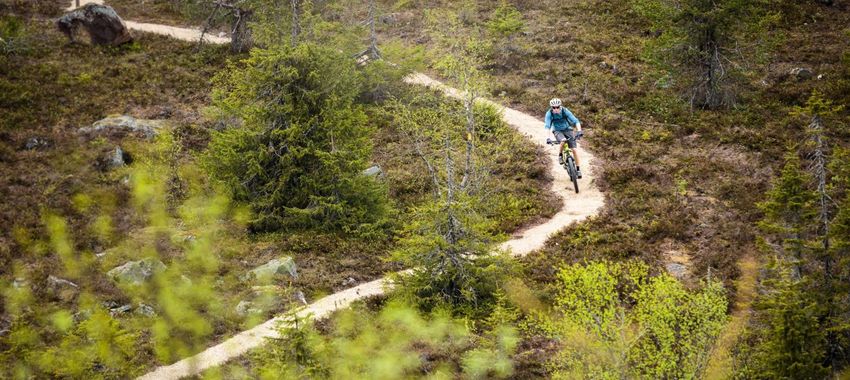
Mostly natural single track (see photo)
User insights utilized in planning
User participation enables outstanding
attention to important details
Winter trails for fatbikes (nearly 50 kilometres)
Commercial services available: bike rental,
maintenance/spares, accommodation, food, etc.
Syöte Bike Hotel Concept
Events: Syöte MTB, Syöte MTB Winter
37 Veikko Virkkunen
Photo: Pekka
Bike Hotel
Tahkola
Concept / Juha KuukasjärviCurrent issues & challenges
Are electric assisted mountain bikes welcome in protected
areas?
P&WF is currently analysing the situation
Risks: potential safety issues due to increasing speed, increased
degradation in slopes due to e-powered pedaling
For now, P&FW regards e-mountain biking as part of the
Everyman’s Rights, allowing use in protected areas
How to increase user participation and volunteering in MTB
development?
Mountain bike enthusiasts, groups & clubs are key target group
for volunteer events and participatory planning in protected areas
Good experiences from trail design, implementation and
maintenance as well as MTB “mystery shopping”
Lastly, P&WF Finland is interested in international co-
operation in mountain biking development!
Photo: Mika KankainenPhoto: Veikko Virkkunen
Park Contacts
Development Manager Veikko Virkkunen
Parks & Wildlife Finland
veikko.virkkunen@metsa.fiIMBA Summit 2016
Mountain biking best practices
Park Livradois-Forez (France)
22th April – GERMANY
Park contact: Caroline Le Roy
c.leroy@parc-livradois-forez.orgPark Livradois-Forez (Auvergne, France)
Sustainable tourism in Livradois-Forez
Context :
Created in 1986
Situated in Auvergne in France
158 member municipalities
Specialist services : economic development, biodiversity, town planning, …
ECST
Part 1 since 2005 (re-evaluation in 2016)
Part 2 since 2011 : 22 companies in 2015 (accomodations, museums, leisure activities)
Part 3 : in progress
Tourism strategy :
« To develop a sustainable tourism with nature and heritage based on meeting »
Goal : « Help tourism stakeholders and travellers towards environmentally responsible »Park Livradois-Forez (Auvergne, France)
Moutain bike « Tour of Livradois-Forez »
« Up and down on two wheels »
Bike Tour :
- 234 km
- 21 sections
- From 2 to 7 days of riding
Partnerships :
- Edition CHAMINA – tour guide
- Links with accomodations and facilities:
- Certifications and quality labels
- Trainings for receptionnists
- Land settlement for bikers
- GPS tracing.Park Livradois-Forez (Auvergne, France)
Ambert-Crêtes du Forez :
promotion of outdoor activities
Partnership convention with mountain biking « centre of Ambert » :
Environment part : developing sustainable events, limiting wastes, promoting
alternative transport (public transports, carpools, …), creating an awaraness
campaign about protected area, toolkit of the Park (in progress).
Social part : welcoming disabled people, special prices for families / students /
unemployed people, promoting local food, …
Economic part : developing a tourism strategy, creating a new website and
flyers, working with travel agencies, organizing loyalty programs for customers
New strategy for the « Crêtes du Forez » :
Outline outdoor offers
Develop mountain biking quality : services, itineraries, …
Awoke reflections about trends of biking : fat bike, electric mountain bike, new
technologies, …
Realize signage for biking practices
Special marketing plan for outdoor leisures and mountain bike.Park Livradois-Forez
ECST part 2 : Gîte des 4 Vents – Aubusson d’Auvergne
= Holiday cottage, campsite, restaurant and biking trainings
Action plan for ECST part 2 (since january 2016) :
Every actions are in progress
- Partnership with social centres
- Welcoming sensory disabled people
- Professional trainings (for managers and seasonal workers); yield management,
biodiversity, …
- Promotion of wildlife in the garden (biodiversity boards)
- Creation of a « discovery backpack » (with OS maps, binoculars, magnifying glass, first
aid kit, books about ornithology or wooded plants, …)
- Develpment of geocaching smartphone app
- Reflections about limited food wastage
- …Park Livradois-Forez
Other actions in Livradois-Forez
• Help for the organization of moutain biking orienteering
• Mix of mobility : tourist train and mountain bike
• Awareness of the legislation in protected areas for bikers
• Impact analysis after biking events/sports competitions
(in particular in Natura 2000 areas)
• Events :
• Supplying ephemeral road markings
• Eco-cups
• Paper bags for wastesPNR Vercors http://bike.vercors.fr/
PNR Pilat http://www.pilat-tourisme.fr/en/my-park-by-bike/circular-mountain-bike-trails-available-for-download.html
Faced with the development of demand for recreation and outdoor sports, the
French Cycling Federation and the French Regional Parks Federation signed a
national agreement on the development of cycling and mountain biking in the
regional nature parks. The French Regional Parks, through this cooperation, will
strengthen the development of cycling practices, responding to the needs of
both practitioners and the challenges of the Parks territories. The national
agreement, valid for a period of 6 years, will be completed by departmental or
local agreements on specific projects. Signed on 24th March 2016.
Parks that contributed to the content of the agreement are:
Parc du Luberon, Parc Scarpe-Escaut, Parc Boucles Seine normande,
Millevaches en Limousin, Caps et marais d’Opale, Volcans d’Auvergne, David Lappartient, President of the French Cycling Federation
and Jean-Louis JOSPEH, President of the Federation of Regional
Parc Massif des Bauges, Parc Perche.
Parks of France, signing the National Convention on cycling and
mountain biking in the French Regional ParksECST Action Plan Action n. 12 23,24,25 April 2016 Difficulty level: Medium / High Total length: 205 km (70% on dirt roads) Transfer of the luggage from the starting point of the trip to the final stage with a van Registration form on: http://www.4cycling.it/transmurgiana-2016.html More info on: http://www.parcoaltamurgia.gov.it/ www.ciclomurgia.com
1) Look for Sustainable destinations within your area
http://www.european-charter.org/home/
2) Establish contact with the local managing authorities
3) Express your interest in being part of the local permanent
Charter Forum
4) Join and be active in the Permanent Forum – contribute
and develop new contacts
5) Propose actions aligned with the strategy (new trails, new
sign posts, events, campaigns, etc)
6) Monitor and assessment
7) Share your expertise with the European network!
FURTHER
INFORMATION

EUROPARC Federation
info@european-charter.org
g.benelli@europarc.org
office@europarc.org
Tel: +49 941 59935980
You can also read


