CONNECT 19 - Irish Motor Neurone Disease
←
→
Page content transcription
If your browser does not render page correctly, please read the page content below

NEWS & RESEARCH

                      CONNECT 19
                                   ISSUE

                             Spring 2018

IN THIS ISSUE...
l   NEWS & RESEARCH
l   LIVING WITH MND
l   FUNDRAISING
l   EDITORS DESK
                                        i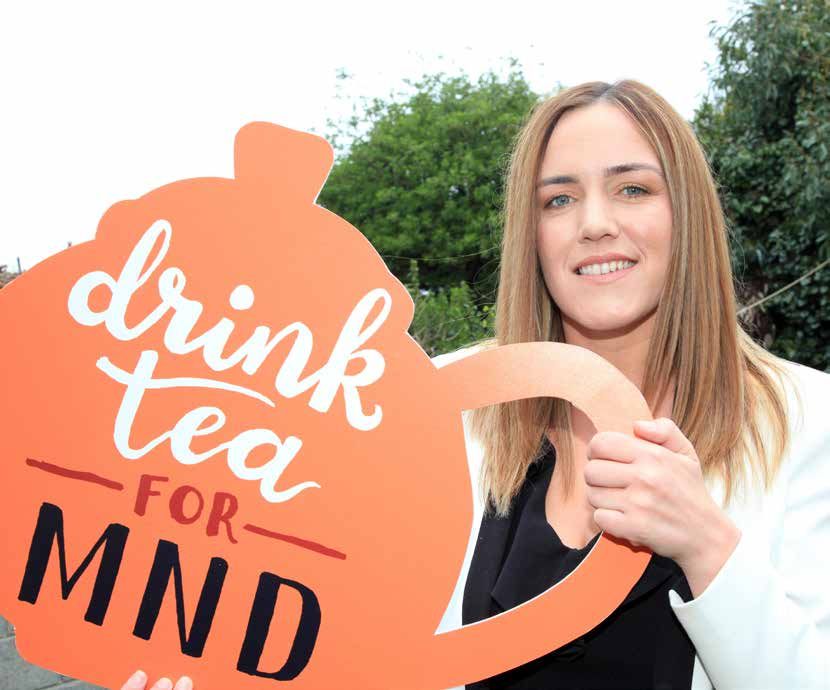
NEWS & RESEARCH

 CONTENTS                                   A NOTE FROM
 2018 CALENDAR OF EVENTS/
 DIARY DATES
                                            OUR CEO
                                            On behalf of the IMNDA, I would like to welcome you to the
 A NOTE FROM OUR CEO
                                            first Edition of the Connect Magazine for 2018 and it is with a
                                            sad heart that I say this will be my last insert as I am leaving
 NEWS & RESEARCH                     03
                                            the IMNDA to take on an entirely new challenge away from
 •	International MND/ALS Symposium
                                            the Community and Voluntary Sector. It has been an absolute
    Boston by Tracy Hutchin
                                            pleasure leading the IMNDA for the last five years and we have
 • Research by Mark Heverin                 achieved many things, I am leaving with our second Strategic
 • IMNDA Strategic Plan                     Plan completed (2017-2020) and in the very capable hands of
 • GDPR Update                              a dedicated IMNDA board and passionate IMNDA staff team. I
 •	How to Claim a VAT Refund on Aids &     would also like to extend my sincere thanks to all those families
    Appliances                              I have met throughout the years it has been an absolute honour
                                            advocating and working on your behalf it has been inspirational
                                            sharing the journey with you all.
 LIVING WITH MND                       11
 • New MND Information Booklet
                                            Back to buisness... it has been a busy start of the year; we
 • ‘Hope’ by Andy McGovern                  launched our 4th Sponsored Silence Campaign which saw many
 • Voice Banking with MND                   of our families taking part. We shared a photo online every day
 • ‘My Speech’, by Patricia Sweeney         throughout the month of February and so far we have raised
                                            over €40k. The Good Friday Run was another huge success with
 • #Voice4MND with Paul Carroll
                                            over 650 participants showing their support. We are also thrilled
 • Roisin Foley’s Story                     to announce that we have been chosen as the Dublin Airport
                                            Authority and Irish Life Charity of the Year. This will see staff from
 FUNDRAISING                           21   both organizations running events for the IMNDA throughout the
 • Drink Tea for MND 2018                   year so it has been a very exciting start to 2018.
 •	The difference we make together,
    thank you                               We have also seen a rise in numbers accessing our services and
    - Mock Wedding                          in 2017 we provided services to 524 compared to 456 in 2016. As
 •	Get Active for your Association in      part of our Strategic Plan and in order to deal with the increase in
    2018!                                   numbers we have created a new post, Information and Support
 • Upcoming Events:                         Officer. We feel this position will complement our services and
    - Walk to D-Feet MND                    provide a great resource to our families. We also launched a new
    - Croke Park Abseils                    and more user friendly information leaflet called: An Introduction
    - FiftyTwo Words                        to Motor Neurone Disease, for those that are newly diagnosed.
    - Walk While You Can
    - VHI Women’s Mini Marathon             On a final note I would to extend my heartfelt
    - Polo in the Park!                     thank you to the IMNDA Board for all
                                            their support, to the IMNDA staff for
 EDITORS DESK                        38     their pure dedication to the IMNDA
 • In Remembrance                           community and to Professor
                                            Hardiman and her team for their
 • Staff Updates
                                            visionary approach to care and
 • Corporate Update                         research.
 • Awareness Video Appeal
 • Legacies                                 Best wishes,
 •	Carers Day in Carrick-on-Shannon

                                            Aisling Farrell, CEO

  ii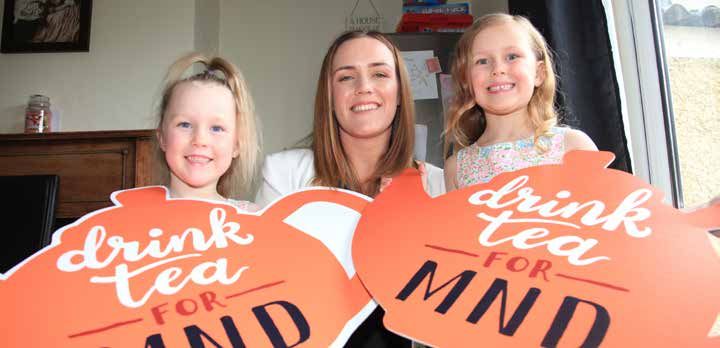
13
NOV 25th November 2017 @ 12pm
Richmond Room, Carmichael House, North Brunswick Street, Dublin 7
13th
DEC ANNUAL GRAND
Wednesday RAFFLE DRAW
13th December & CHRISTMAS COFFEE MORNING
@ 11:30am
Richmond Room, Carmichael House, North Brunswick Street, Dublin 7
DEC Wednesday 13th December @ 11:30am
Registering your
Fundraising Event
Registering your
Fundraising Event
Please register all fundraising events with the IMNDA before they Irish Motor Neurone Disease Association
Please register
take place andallensure
fundraising events
all your with
details the IMNDA before
(name/address they
& event) Irish Motor House,
Coleraine NeuroneColeraine
Disease St,
Association
Dublin 7.
Please
take onregister
are place
theand all fundraising
ensure
lodgement all
slipyour
whenevents
details with the IMNDA
(name/address
lodging proceeds before
& the
into they
event)
bank. Irish MotorHouse,
Coleraine Neurone DiseaseSt,Association
Coleraine Dublin 7
takeon
are place and ensureslip
the lodgement all your
whendetails
lodging(name/address
proceeds into &
theevent)
bank. Freefone:
Coleraine
Charity 1800
8510.403
no.House, 403 Fax:
Coleraine St,01 873 1409
Dublin 7.
To register and receive promo items / lodgement slip etc:
are on the lodgement slip when lodging proceeds into the bank. Email: info@imnda.ie
To register and receive promo items / lodgement slip etc: Freefone: 1800
1800 403 403 Fax: 01
403 403 01 8731409
873 1409
Email:
To register and receive promo Freefone:
fundraising@imnda.ie 1800 403slip
items / lodgement 403etc:
www.facebook.com/irishmnd2011
Email: info@imnda.ie
Email: fundraising@imnda.ie
Thankfundraising@imnda.ie
Email:
Freefone: you
1800for403your
403support and co-operation.
Freefone: 1800 403 403
www.facebook.com/irishmnd2011
www.facebook.com/irishmnd2011
@IMNDA
Thank you for your support and co-operation.
@IMNDA
@IMNDA
IMNDA Bank Account details: Disclaimer
‘Motor Neurone Disease Association’
IMNDA Bank Account details: This newsletter provides information only. The authors have no medical
Disclaimer
AIB, Capel Street, Dublin 1 qualification whatsoever unless otherwise stated. No responsibility for any
‘Motor Neurone Disease Association’ This
Sort Code:
Contributions 93-13-14 Acc No. 07725002 lossnewsletter
to the1 next edition of Connect: whatsoever provides
causedinformation only.
to any person The authors
acting have from
or refraining no medical
action as a
AIB, Capel Street, Dublin qualification whatsoever unless otherwise stated. No responsibility
IBAN: IE32 AIBK 9313 1407 7250 02 result of any material in this publication or any advice
If you would like to submit a story, photo, or something you would like to share then please contact the office. given can befor any
accepted
Sort Code: 93-13-14
BIC/SWIFT: AIBKIE2DAcc No. 07725002 loss whatsoever caused to any person acting or refraining from action as a
by the IMNDA. Medical advice should be obtained on any specific matter.
IBAN: IE32 AIBK 9313 1407 7250 02 result of any material
MEDICAL PATRON Dr. in this publication
Aisling or any
Ryan MB, PhD, advice
FRCPI, given canNeurologist
Consultant be accepted
BIC/SWIFT: AIBKIE2D by the IMNDA. Medical advice should be obtained on any specific matter.
PATRONS: Arthur McGuinness
MEDICAL
DIRECTORS:PATRON
DeclanDr.MacDaid
Aisling Ryan MB, PhD, FRCPI,
(Chairperson), AlisonConsultant
Gray (Hon Neurologist
Treasurer)
PATRONS: Arthur McGuinness
Bernie Conolly, Katie Hallissey, Jonathan Healy, Angela Hogan, Orla Clayton
Unsubscribe from Newsletter MailingDIRECTORS: Declan MacDaid (Chairperson), Alison Gray (Hon Treasurer)
If at any stage, you no longer wish to receive the Connect
Bernie Magazine
Conolly, simply email
Katie Hallissey, pr@imnda.ie
Jonathan or call 01-8730422.
Healy, Angela Hogan, Orla Clayton
We will remove you immediately from the mailing.
1
1
IMNDA Bank Account details: Disclaimer
‘Motor Neurone Disease Association’ This newsletter provides information only. The
AIB, Capel Street authors have no medical qualification whatsoever
Sort Code: 93-13-14 Acc No. 07725002 unless otherwise stated. No responsibility for any
IBAN: IE32 AIBK 9313 1407 7250 02 loss whatsoever caused to any person acting or
BIC/SWIFT: AIBKIE2D refraining from action as a result of any material
in this publication or any advice given can be
accepted by the IMNDA. Medical advice should be
obtained on any specific matter.
MEDICAL PATRON Dr. Aisling Ryan MB, PhD, FRCPI,
Consultant Neurologist
PATRONS: Arthur McGuinness
DIRECTORS: Declan Mac Daid (Chairperson),
Alison Gray (Hon Treasurer)
Bernie Conolly, Katie Hallissey, Jonathan Healy,
Angela Hogan, Orla Clayton, Norman Hughes
1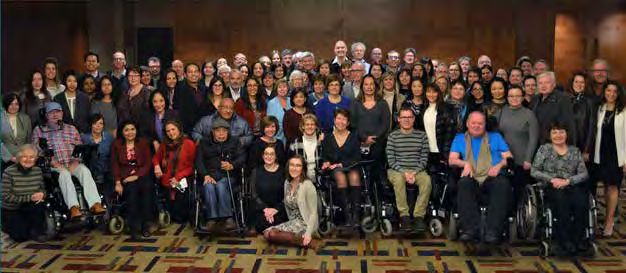
Irish Motor Neurone Disease
Association Events Calendar 2018
    The IMNDA would not be here without the
    wonderful support we receive each year.
                                                                            Seminar September
       DIARY DATES                DO SOMETHING
    82% of our income comes from people like you. •	FridaySPECIAL     INIMNDA’s
                                                           7th September:  2017AGM, Annual
                                                                       Conference and Patient & Carer Respite
    Please check out some of the events & campaigns                    Weekend in the Clayton Whites Hotel Wexford.
                      07
    that will take placethin 2018.
                               CROKE
                                   We PARK
                                       needABSEILS
                                               your help to
                               Hogan Stand, Croke Park Stadium, Dublin
    continue providing
                    OCTcare and     support
                               7th October 2017to families
    affected by Motor Neurone Disease
                      29th          DUBLIN CITY MARATHON
                                  Dublin City - 29th October 2017           Adventure October
                 OCT
    We will be adding         morewww.sseairtricitydublinmarathon.ie
                                   to our calendar
    throughout this year soLIMERICK
                            keep anWOMEN’S
                                       eye on our
                      29
                     th
    website and Facebook Limerick
                                                  MINI MARATHON
                           page. City - 29th October 2017
                                                                  •	Saturday 13th October: Abseil off the roof of
                                                                     Croke Park’s famous Hogan Stand, 100ft from
                 OCT www.limerickminimarathon.ie                     top to bottom!
          25 June
    Awareness
                     th    MEMORIAL SERVICE
                           Capuchin Friary, Church Street, Dublin 7 Sunday 28th October: Run the Dublin City
                                                                  •
                 NOV 25th November 2017 @ 12pm                       Marathon

                        13th
    •	Sunday 3rd June@ 2pm:
                                    ANNUAL GRAND RAFFLE DRAW & CHRISTMAS COFFEE MORNING
                                              VHI Women’s Mini
                                        Richmond Room, Carmichael House, North Brunswick Street, Dublin 7
       Marathon –DEC       run the race       to make
                                        Wednesday     13th a  difference
                                                           December     @ 11:30am
                                                                                 More information on all of the events and
       (on a Sunday for the 1st time!)
                                                                                 campaigns taking place throughout 2018 is
    •	Saturday 9th June: Polo in the Park in The Polo
                                                                                 available from the IMNDA:-
       Club, Phoenix Park, Dublin
    • Saturday 16th June: D2K Cycle
                                                                                 IMNDA
    •	MND National      Registering
                               Awareness    your Day is 21st June
                                                                                 Coleraine House
       - Drink Tea for   Fundraising
                              MND during     Event
                                                 June – tea packs
                                                                                 Coleraine Street
       available from the IMNDA
                                                                                 Dublin     7
    •	Please
       Saturdayregister all fundraising events with the IMNDA before they
                      30th June: “Sunrise Up Croagh                               Irish Motor Neurone Disease Association
       take place and ensure all your details (name/address & event)             Email:
                                                                                  Colerainefundraising@imnda.ie
                                                                                             House, Coleraine St, Dublin 7.
       Patrick”
       are         is an annual
           on the lodgement             fun
                                slip when     walkproceeds
                                           lodging   and climb
                                                             into theto
                                                                      bank.
                                                                                 Phone:
                                                                                  Freefone: 01
                                                                                             1800873   0422
                                                                                                  403 403 Fax: 01 873 1409
       raise
       To       funds
          register       for worthwhile
                   and receive                  charitiesslip
                                 promo items / lodgement     fighting
                                                                etc:
                                                                                 www.imnda.ie
                                                                                  Email: info@imnda.ie
       Neurological Diseases. For more see
       Email: fundraising@imnda.ie Freefone: 1800 403 403
       www.sunriseupcroaghpatrick.com                                                    @imnda
                                                                                         www.facebook.com/irishmnd2011
       Thank you for your support and co-operation.
                                                                                         www.facebook.com/IrishMND2011
                                                                                         @IMNDA

                                                                            CHY 8510
       IMNDA Bank Account details:
    D-Feet July
       ‘Motor Neurone Disease Association’
                                                    Disclaimer

       AIB, Capel Street, Dublin 1                                          Please contact the IMNDA prior to
                                               This newsletter provides information only. The authors have no medical
                                               qualification whatsoever unless otherwise stated. No responsibility for any
    •	Saturday
      Sort          21st July
           Code: 93-13-14      @ 11am
                          Acc No.        : Walkloss
                                   07725002     to D-Feet
                                                    whatsoever MND          embarking on any fundraising activities.
                                                                 caused to any person acting or refraining from action as a
      IBAN: IE32 AIBK 9313 1407 7250 02
       in the stunning
      BIC/SWIFT: AIBKIE2D Phoenix Park, Dublin        (start @              Thank you.
                                               result of any material in this publication or any advice given can be accepted
                                               by the IMNDA. Medical advice should be obtained on any specific matter.
       the Papal Cross) OR organise a walk     MEDICAL in PATRON
                                                           your Dr. Aisling Ryan MB, PhD, FRCPI, Consultant Neurologist
       local area                              PATRONS:    Arthur McGuinness
                                               DIRECTORS: Declan MacDaid (Chairperson), Alison Gray (Hon Treasurer)
    •	Sunday 10th July – 6th August: Walk     BernieWhile
                                                       Conolly,You
                                                                Katie Hallissey, Jonathan Healy, Angela Hogan, Orla Clayton
        Can, a walk the length of Ireland! Join us and
        Fr. Tony Coote from Letterkenny to Dunmanway
                                                                                                                          1
        in aid of IMNDA and MND Research.

2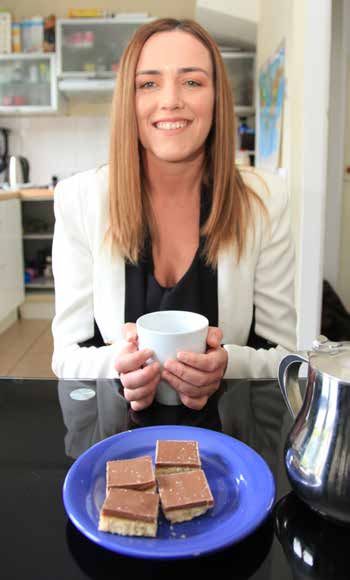
NEWS & RESEARCH

NEWS & RESEARCH
MND/ALS International Symposium 2017
The International Symposium on ALS/MND for 2017                      to be meals for everyday not just special occasions. The
was held in Boston, Massachusetts last December. The                 app was launched in July 2017 and is currently available
Symposium itself ran from 8th-10th December and before               in French. An English version is on the way. It was hoped
this was the Annual Meeting of the International Alliance of         to be available in March 2018 but we’ll keep you up to
ALS/MND Associations and the Allied Professionals Forum.             date on this. ARSLA are planning on a Christmas themed
                                                                     competition for this year.
The annual meeting of the International Alliance was held
on 5th and 6th December. This was a great opportunity to             Partnerships and Collaboration
meet with staff of other MND associations from around the
                                                                     This section was about how some of the MND Associations
world and to hear about the work they do and the services
                                                                     around the world are working together on specific projects
they provide for people with MND. The remit of the other
                                                                     to improve the services available to people with MND. The
associations was very varied as like Ireland some countries
                                                                     MND Associations in Argentina, Chile, Colombia, Brazil,
have only one MND association but other countries (such
                                                                     Peru, Venezuela and Uruguay came together to form
as United States) have number of different associations all
                                                                     the first Latin American organisation of ALS/MND patient
of which have a different focus. After the official business
                                                                     associations which is called UNELA (ALS/MND is referred to
(AGM) of the Alliance and an update on the activities of the
                                                                     as ELA in Spanish speaking countries). Although UNELA is
Alliance in the previous 12 months there were presentations
                                                                     comprised of associations supporting people with MND it
by the member groups. In total there were presentations
                                                                     was inspired by ENCALS (European Network for Cure of ALS)
from 18 groups representing 13 countries. The presentations
                                                                     which comprises of clinical and research groups.
were divided into 3 sections – Programming for PALS and
CALS (People living with ALS/MND and Carers of people with
                                                                     Research and Science
ALS/MND), Partnerships and Collaborations & Research
and Science. Although the main target audience of the                ALS Quest is an online questionnaire designed to look at the
presentations was the organisations themselves some were             risk factors for ALS/MND. It was launched in 2015 but is based
aimed at people living with MND. I’ll give a brief overview of the   on an adaption of an Australian paper based questionnaire
most interesting and relevant presentations in each section.         from 2001 looking at chemical and lifestyle risk factors. The
                                                                     questionnaire will run for a further 10 years and the aim is to
Programming for PALS and CALS                                        have 5,000 people with ALS/MND and 5,000 controls (people
                                                                     that don’t have MND) complete the questionnaire. The survey
Mixiton: The French MND Association (ARSLA) gave details
                                                                     questions include details of: occupational activities, chemical
of an app they have produced called Mixiton. This app is
                                                                     and pesticide exposures, physical activity, smoking, family
a collection of recipes and tips for tasty, attractive looking
                                                                     sizes, medical history, ring finger lengths, personality types
easy to swallow meals/dishes. In France (as in other
                                                                     and life event stressors. The questionnaire takes 60-90
countries) meals are very important moments of sharing
                                                                     minutes to complete and can be done in multiple sessions
and conviviality. Those with swallowing difficulties often shy
                                                                     with answers saved automatically. It is best to be done on a
away from mealtimes and ARSLA wanted to do something
                                                                     desktop computer or laptop as opposed to a mobile phone
to change this. They invited caregivers and those with an
                                                                     or tablet. No personally identifiable data is sought so all
interest in this area to submit a recipe and a photo of an
                                                                     responses are anonymous. The survey and more information
attractive looking and appetising easy to swallow/pureed
                                                                     can be found on www.alsquest.org.
dish. They received 200 submissions which were all put
on a dedicated page of their website. Following a voting
                                                                     Day two of the Alliance Meeting began with details of and
process this was reduced to 30 dishes which had to pass a
                                                                     a workshop on the strategic plan of the Alliance. This was
judging panel which included patients, carers, neurologists,
                                                                     followed by a scientific and research update given by Dr
nutritionists and restaurant professionals. Each dish had to
                                                                     Jonathan Glass, Professor Emory University Department of
be tasty, of suitable texture, appetizing and the price and
                                                                     Neurology & Pathology and Director of Emory ALS Center,
availability of ingredients had to be realistic. These were

                                                                                                                                 3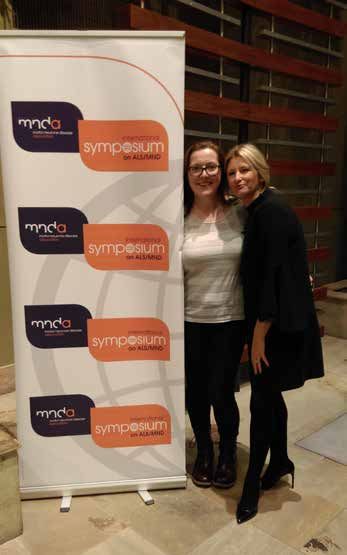
NEWS & RESEARCH

 Atlanta Georgia. Dr Glass ALS/MND and Frontal Temporal          the C9orf72 part of the gene (DNA) and inactivating it.
 Dementia (FTD). Dr Glass was also one of the speakers at        Essentially trying to turn off the bit of DNA which causes
 the ‘Ask the Experts’ session that afternoon so I will try to   Familial MND in Ireland.
 sum up both presentations in plain English!
                                                                 Researchers are also looking at large scale protein studies
 ALS/MND and Frontal Temporal Dementia                           (proteomics) in relation to the overlap between MND and
 (FTD)                                                           FTD. They are now studying the brain from the following
                                                                 criteria: Control (no MND or FTD), MND only, MND & FTD
 Cases of Frontal Temporal Dementia combined with MND
                                                                 and FTD only. It is hoped that this will identify new targets or
 have been identified in medical journals going back
                                                                 proteins at which future research can be aimed.
 to the 1930’s. They weren’t perhaps linked and genetic
 involvement wasn’t known about at the time but looking
 back now knowing what researchers do there is a lot to be
                                                                 Allied Professionals Forum
 learnt from these old articles. The combination of FTD and      Day 3 was aimed at healthcare workers who work with
 MND is more associated with cases of familial MND (where        People with MND but who aren’t neurologists or medical
 there a genetic or family history). Although there are now      doctors. There were 260 attendees and 16 speakers so it
 many MND genes identified, the only one (so far) identified     was a jam packed day. I’ll give a brief overview of the most
 in Ireland is the C9orf72 gene. This gene is also prevalent     relevant and informative presentations.
 in the United States where Dr Glass’s research took place.
 He identified that where there is an unknown family history     Kaye Stephens, Care Information Manager with the MND
 of MND 4% of people have the C9orf72 gene and where             Association of England, Wales and Northern Ireland
 there is a known family history of MND 63% of people have       presented on ‘Developing an Eating and Drinking Guide
 C9orf72 gene. All gene mutations are responsible for 10-        to Improve Quality of Life for People with ALS/MND, their
 12% of cases of MND while C9orf72 is present in 40-50% of       Carers and Families’. A lot of the presentation was about
 families who have MND in USA.                                   the development of the guide, how the information for the
                                                                 guide was researched, engaging with families. The MND
 Research has identified that Dipeptide Repeat Proteins          Association had previously prioritised quality of life as a
 which are made by DNA (C9orf72 gene) are toxic to               theme for care information. In particular the way MND can
 neurons. DNA can be made into RNA which can be made             affect eating and drinking was highlighted as it can lead
 into proteins. The dipeptide proteins can get in the way        to health problems, increasing social isolation as well as
 of transportation of cells and of other substances within       affecting the sense of wellbeing for the whole family. The
 the cells. In pre-clinical (animal) models these dipeptide      goal was to provide a friendly, uplifting ‘cookbook’ for MND
 proteins can go away so this is paving the way for exciting     that would help people manage nutrition, weight loss,
 developments in C9orf72 MND. This year will see a clinical      swallowing physical difficulties, food preparation and eating
 (human) trial on Antisense Oligonucleotide for people with      out. It is very much more than just a cookbook!! It is written
 C9orf72. This means that scientists have a way of isolating     in plain English for families not professionals. It contains

  4
NEWS & RESEARCH

gentle information that can help open up more difficult          is complicated and is also complicated by technology.
conversations. The guide/cookbook is available online from       Genetic counselling is to promote informed choices and
www.mndassociation.org/about-mnd/living-with-mnd/                to increase support for people considering testing (people
eating-and-drinking/. Phase 2 of the project was to compile      with MND and family members). Ashley’s research showed
the recipes into a web app. This part of the project has now     that in Australia 30-40% of cases of familial MND had no
been completed and more information can be found on              identified gene and 3-10% of cases of sporadic MND have
www.mndassociation.org/eatingwithMNDapp/.                        the C9orf72 gene. The gene could be a risk factor and not
                                                                 the cause as other research has shown that you can have
Medical use of cannabis has been making headlines in             the gene but not go on to develop MND. With advances in
Ireland in recent times in relation to a number of conditions    technology and genetic research, genetic testing for families
so I was interested to see a presentation on ‘Cannabis and       may become available in Ireland. If/when this happens it
its Usage in Symptom Management of ALS/MND’. Leslie              will be essential to have experienced genetic counsellors as
Ryan from the Rocky Mountain Chapter (Colorado) of the           a resource for families making decisions on genetic testing.
ALS Association conducted an online survey over a period
of 6 weeks in 2017. She sent the survey to patients with         My highlights centred around food and genetics but if you
ALS chapters throughout the USA and had 484 responses            want more information on any of the above or on any of the
from 43 states. Of the respondents 87% were over the             other presentations from the 3 days you can watch videos of
age of 50 and 80% attend or are linked in with an ALS            each presentation on www.alsmndalliance.org/meetings/
Multidisciplinary Clinic. In answer to the question ‘Do you      alsmndmeetings/past-meetings/2017-meetings/.
use cannabis to manage symptoms of ALS?’ 30% answered
yes and a further 5 % stated that they did use it but had        The 2018 Alliance meetings and Symposium will be held in
stopped. When asked why they weren’t using cannabis the          Glasgow.
majority of respondents stated personal choice or cannabis
is illegal in their state. However, 17% said it was because
they were not offered it or they were not aware of the
benefits. 93% of respondents who use/have used cannabis
believe it is successful in reducing pain, cramping, spasms,
anxiety, insomnia and weight loss. A variety of forms
of cannabis were used by the respondents – including
smoking, edibles, drops, spray and creams. Drops, sprays
and creams were deemed the best to use as it is easiest
to measure the dose and absorption into the body is more
controlled. Of those using cannabis 44% haven’t discussed
this with their healthcare team. This isn’t recommended
as use of cannabis can have a negative effect on the
respiratory system and exacerbate symptoms. It can also
possibly lead to a cognitive decline over time. So while there
seemed to be a lot of positive outcomes from the study
what next? The main points that Leslie will now focus on are
education & information, studies on effects/benefits and
continuing the conversation. More research is needed in this
area but the presentation definitely provided some food for
thought.

Ashley Crook is a Genetic Counsellor working with the
Macquarie University MND Clinic and Research Centre
in Sydney, Australia so this is all from an Australian
perspective. She is a member of the multidisciplinary team
since August 2015. She works closely with the neurologist
and the genetics research team. Genetic counselling is
emerging in the care of people with MND, due to the
increasing discovery of genes associated with a high risk
for developing MND, Frontotemporal Dementia (FTD) or a
combination of both. Decision making about genetic testing

                                                                                                                          5
NEWS & RESEARCH

 Research Updates
 The MND Research Group at Trinity College is led by Prof.     New study to examine meaningful
 Hardiman and has 7 thematic areas of research. These are      overlap between MND and other
 epidemiology, phenotyping (putting patients into subgroups    Neurodegenerative conditions
 based on their symptoms and signs), imaging, brainwave
 signal analysis, new measurement devices, drug                •
                                                                 We know that MND is more than one condition, and
 development and health services.                                that some people with MND have additional features
                                                                 including thinking trouble. We also know that there are
 We have made significant progress in the past year in each      genetic overlaps between MND and other conditions
 of these areas. Our most recent developments are in the         including schizophrenia, Parkinsons Disease and some
 following areas:                                                forms of dementia. Understanding these overlaps will
                                                                 help us to find out more about how MND develops, and
                                                                 will also help us to find new and more effective therapies
 Transcranial Magnetic Stimulation                               that are targeted to specific subgroups of MND.

 •
   In March 2018 we began a new programme in                     BRAIN-MEND is a new study starting this May. It
                                                               •
   Transcranial magnetic stimulation, commonly referred          is funded by the HRB through the European Joint
   to as TMS. This is an elegant, safe, comfortable and non-     Programme in Neurodegeneration. The project,
   invasive technique to activate specific brain areas for       which involves centres in the UK, Holland, Belgium,
   assessment. By applying brief pulses to the brain areas       Italy and Australia, will combine information from
   which generate movement, TMS can provide direct               MND, Parkinsons Disease, Dementia, Schizophrenia
   measurements of how well these cells are connected            and other related conditions, and to try to re-classify
   to each other and control muscle function. Therefore          these conditions using genetics, brain imaging
   TMS can objectively measure how motor neuron activity         and psychological data. This will involve the
   in the brain is changed by MND. TMS can also be               pooling and analysis of data that
   used to identify MND-related changes in cells which           has already been collected in
   regulate motor neurons, which might be driving motor          diverse areas including Genetics,
   neurons to become dysfunctional. Recent TMS studies           Epidemiology, neuroimaging
   have demonstrated a decrease in the function of small         and neurophysiology. This is a
   intermediate regulatory cells in MND, particularly early      collaborative effort between the
   in the disease. This has been suggested to cause motor        Irish MND Research Group under
   neurons in the brain to become overactive, ultimately         Prof. Hardiman and specialist ND
   causing degeneration and motor disability.                    research groups in the UK, France,
                                                                 Netherlands, Italy and Australia.
 •
   This work is being led by Dr.Bahman Nassereloslami
   Senior Research Fellow, and
                                                               Irish MND Group part of new European
 •
   PhD candidate Roisin Mc Mackin , who is funded by           Research Initiative
   the Irish Research Council. Using TMS, Bahman and
                                                               •
                                                                 Project Mine compares DNA profiles between those
   Roisin will investigate how motor neurons, inhibitory
                                                                 with MND and those who are unaffected. This ongoing
   interneurons and other lesser studied cells which control
                                                                 project has identified new genes that contribute to
   motor neurons are affected in the Irish MND population.
                                                                 the risk of developing MND, and is already helping
   The goal of this exciting study is to find more reliable,
                                                                 to guide new treatments. Project Try Me is a new
   direct markers of MND, which could be used for earlier
                                                                 European initiative that aims to reduce the use of
   diagnosis and to monitor the progress of the disease
                                                                 animal experiments by focusing entirely on the human
   when testing the new therapeutic interventions. The
                                                                 condition. By combining our genetic studies from Project
   study will also investigate whether TMS could be used
                                                                 MinE with additional studies including MRI, EEG, blood
   to identify different subtypes of MND, with the aim of
                                                                 samples, and skin analyses we will identify subgroups
   allowing for more personalised predictions of how the
                                                                 of MND that share specific characteristics. This will allow
   disease progresses.
                                                                 us to search for new and more effective drugs for each
                                                                 of these groups by conducting better focused clinical
                                                                 trials for more patients. The idea is to make sure that we

  6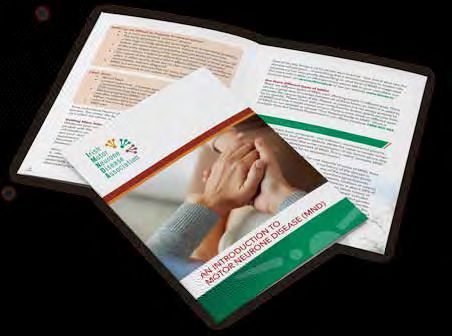
NEWS & RESEARCH

   get the right drug to the right patient, at the right time in      (Non-Invasive Ventilation), and by improving cough and
   the right dose.                                                    secretion management.

•
  Research Motor Neuron is about to commence a
  study to better understand the impact of MND on                  New project for caregivers of people with
  respiratory function. Respiratory function refers to the         MND
  ability to breathe, cough and manage chest secretions
                                                                   •
                                                                     Recruitment will begin shortly on a new project, funded
  and infections should they arise. These abilities become
                                                                     by the ALS Association, which aims to develop and
  problematic in MND, particularly as the disease progresses.
                                                                     evaluate group-based psychological interventions for
                                                                     caregivers of patients with MND, where the objective is
•
  Therapies that improve respiratory function have the
                                                                     to reduce anxiety, low mood, and caregiver burden.
  potential to improve both quality of life and possibly
  survival. However comprehensive measurement of
                                                                   •
                                                                     Thinking and behavioural changes can occur in MND
  chest infection rates, their management and impact
                                                                     and clinically these changes overlap with a dementia
  in MND has not been investigated in detail. Also,
                                                                     affecting the frontal lobes of the brain (Fronto-temporal
  knowledge is incomplete on the impact that weakness
                                                                     Dementia). Cognitive difficulties and behaviour changes
  of the respiratory muscles has on factors such as
                                                                     occur in up to 40-50% patients with MND. Thinking and
  physical activity, sleep, fatigue, work and quality of life.
                                                                     behaviour changes can be difficult for patients, and
  The study will recruit 300 people with MND across six
                                                                     they are also significant predictors of caregiver burden.
  sites in five countries; Ireland (Beaumont Hospital), Italy
                                                                     There is evolving evidence that caregivers’ psychological
  (Turin), Belgium (Leuven), The Netherlands (Utrecht), and
                                                                     status may also influence the mental and physical
  England (Sheffield and London). Those who participate
                                                                     outcome of patients. However, the presence of cognitive/
  will have their respiratory function measured in detail
                                                                     behavioural changes in MND patients is often under-
  every three months over a period of 18 months.
                                                                     recognized by healthcare professionals, and the burden
  Measurements will include cough and sniff strength, and
                                                                     of care associated with these changes is not addressed.
  measurement of the maximum amount of air that the
  individual can take in and out of their lungs, both gently
                                                                     The overall purpose of this study is to evaluate the
                                                                   •
  and forcefully. Chest infection rates and their impact and
                                                                     effectiveness and efficacy of different psychological
  management will be closely monitored. Fatigue, Sleep,
                                                                     interventions with this group; to inform best practice
  Breathlessness and quality of life will also be tracked.
                                                                     regarding the identification and management of caregiver
                                                                     burden in MND; and to create a formal psychological
•
  The study is being led by Physiotherapists (Dr. Deirdre
                                                                     intervention tailored specifically to the needs and wants
  Murray, Dr. Dara Meldrum, Ms Rachel Tattersall) and
                                                                     of MND caregivers. Further information is available in
  will take place over the next 18 months. Ultimately,
                                                                     the MND Multidisciplinary Clinic in Beaumont Hospital
  the knowledge gained in this study will assist the
                                                                     through which recruitment to the study will take place.
  development of drugs that improve respiratory muscle
  strength. These would potentially enhance quality of
                                                                   For further information see:
  life and clinical outcomes, both by delaying the time
                                                                   https://www.tcd.ie/medicine/neurology/ and
  to introduction of supported breathing interventions
                                                                   www.mnd.ie

                                                                                                                          7
NEWS & RESEARCH

 IMNDA Strategic Plan
 At the IMNDA, we dream of a world without Motor Neurone          We know that our work is valued by people living with MND.
 Disease.                                                         Through our research, you told us that you appreciate:

 Until that dream is realised, we have to help those who get      •
                                                                    Our presence and knowing that our team care and react
 that devastating diagnosis.                                        to their needs
                                                                  •
                                                                    Our support, through our dedicated nursing care,
 In everything we do, the Irish Motor Neurone Disease               provision of equipment, information and advocacy
 Association considers the person first.                          •
                                                                    Our empathy and understanding of MND and how it can
                                                                    affect lives
 What do you need? When can we see you? How can we                •
                                                                    The hope, support and encouragement that we bring to
 help?                                                              the lives of people with MND and their families

 Our new three year strategic plan is designed to ensure that     As a result, every member of the IMNDA organisation is
 the organisation will be able to deal with the future needs of   committed to continuing that work;
 people living with MND, and offer all appropriate supports
 in their hour of need.                                           •
                                                                    To be person centred, focus on the person living with
                                                                    MND, their families and carers
 We prepared this Strategic Plan following a structured             To support people with MND, through all our vital
                                                                  •
 review of our work under our previous plan and consultation        services, nursing care, equipment, information and
 process with our Board and staff.                                  support
                                                                    To strengthen our communication at all stages of the
                                                                  •
 Most importantly, we asked the community which benefit             disease
 from our services and supports.                                    To raise awareness and be the place to go to for all
                                                                  •
                                                                    matters relating to MND
 Informed by the results of this process we have three              To be an encouraging presence offering authentic
                                                                  •
 strategic priorities for the next three years. This a              information, reassurance and hope for those living with
 continuance of our work with a deepened emphasis on                MND
 connecting with, and responding to, the needs of people
 living with MND                                                  The levels of support from the State, while welcome, only
                                                                  go some of the way towards funding the service needs of
 There are three key strategies;                                  IMNDA. The vast majority of our fundraising comes from
                                                                  our MND community, without whom we would not be able
   1.	Strategic Priority One                                    to function. You trust us with your donations - and we will
 		 Support People living with MND                                continue to be fully transparent in how that money is spent.

   2. Strategic Priority Two                                      Our intention is to continue to be a well-governed, well
 		 Connect & Communicate about MND                               administered charity that is guided by and meets good
                                                                  governance standards. The purpose is to build our capacity
  3. Strategic Priority Three                                     and resilience to advance
 		Strengthen our Organisational Presence and Capacity           our work in response to the
                                                                  needs of people living with
                                                                  MND, their families and
 Following the consultation process, IMNDA has created a          carers.
 new Information and Support Officer role. This new position
 will act as a point of contact for people living with MND and    We will do this by being a
 their families as they deal with the many challenges arising     source of constant support
 from a diagnosis. This newly appointed staff member will         for people living with
 work closely with our team of specialized MND nurses and         MND, their families and
 services staff, and provide both support and advice by           carers from diagnosis and
 telephone and email.                                             throughout their journey.
                                                                                                             IRISH MOTOR NEURONE DISEASE
                                                                                                                                           ASSOCIATION (IMNDA)

                                                                                                            STRATEGIC PLAN 2017-20

                                                                                                 IMNDA Strategic Plan.indd 1

                                                                                                                                                                 14/11/2017 19:03

  8
NEWS & RESEARCH
General Data Protection Regulation (GDPR) Update
We’re currently improving our Data Protection and Privacy Policy to reflect recent changes to data protection laws and
provide additional clarity regarding how we collect, store and process your information.
Updates in our Privacy Policy and Data Protection Policy (which we encourage you to read)
will come into effect from May 2018. You can find our revised policies on our website
at https://imnda.ie/privacy-policy/
We care about all our clients, families, supporters, fundraisers and volunteers
a great deal and are deeply committed to protecting their privacy
and respecting their data. We hope these updates demonstrate that
commitment and we want to assure you that we will only use your data in
the way you are happy for us to use it.
We want to continue sending you our newsletter and communications but
if at any stage you no longer wish to receive any of our information, then
all you have to do is email Maeve or any of the team at info@imnda.ie or
simply Freephone us in the IMNDA office on 1800403403.
Thanks for being a part of our community. Without your support, we would be lost.
VAT refunds on aids and appliances used by people
with disabilities
If you live in Ireland and you have a disability, you may get a • Live in Ireland
refund of Value-Added Tax (VAT) on certain special aids and • Have a disability
appliances that you need. In some cases people who pay for • Need the aid or appliance to help with daily activities
aids and appliances that are for the exclusive use of a person
with a disability can also claim the VAT refund. People with both The aid or appliance must be owned by the person with
physical and mental disabilities can avail of these refunds. the disability and be for their exclusive use. If the VAT refund
is being sought by someone other than the user of the
This scheme of VAT refunds on aids and appliances can aid or appliance, Revenue may ask for evidence that the
also apply to adaptation and installation work being carried aid is solely owned by the person with the disability and
out to make a home more suitable for an older person or for is for their sole use. In this case, these goods must not be
a person living with a disability. supplied in the course of a business run by the purchaser
of the goods.
Rules Examples of eligible aids and appliances include:
Under the Value-Added Tax (Refund of Tax) (No. 15) Order
1981, you can claim a VAT refund on aids and appliances • Domestic aids, for example, eating and drinking aids
that help you carry out daily activities at home or at work. You • Walk-in baths
may need to produce medical evidence of your disability. • Commode chairs
• Lifting seats and specified chairs
VAT refunds are not allowed on services for people with • Braille books
disabilities or on rented aids and appliances. • Hoists and lifts, including stair lifts
To claim a VAT refund you must: • Communication aids
9NEWS & RESEARCH
Assist Ireland has information on a wide range of aids and You must make your claim within 4 years from the end
appliances for people with disabilities. of the taxable period in which you purchased the aid or
appliance. Taxable periods within each year are:
More information on how to reclaim VAT on aids and
appliances for people with disabilities can be found on • January/February
www.revenue.ie • March/April
• May/June
• July/August
Housing adaptations • September/October
If you are having your home • November/December
improved or adapted to make
it more accessible, you may For example, a claim made in respect of an invoice
be able to claim a refund issued in January 2015 must be made no later than
of VAT paid on the cost of February 2018.
installation and adaptation
work. You may also
qualify for a grant, such as Where to Apply:
the Housing Adaptation Grant For more information or to claim a refund on an aid or
for People with a Disability, appliance contact:
the Mobility Aids Grant Scheme or
the Housing Aid for Older People Central Repayments Office
Scheme. For more information on this please see Office of the Revenue Commissioners
http://www.citizensinformation.ie M: TEK II Building
Armagh Road
Monaghan
Buying and adapting a vehicle Ireland
You can claim remission or repayment
of vehicle registration tax (VRT), Tel: 047 62 100
repayment of VAT on the purchase Homepage: http://www.revenue.ie
of a vehicle and repayment of VAT
on the cost of adapting a vehicle,
up to a maximum amount. You can
find out more on this on citizen’s
information www.citizensinformation.
ie and search for: Tax relief for disabled
drivers and passengers.
How to Apply
To apply for a VAT refund on aids
and appliances, fill in claim form
VAT 61A (pdf) .
You must attach supporting
documentation with your
claim - for example, original
invoices for all the goods in the
claim or, in the case of imported
goods, receipts for VAT paid at
importation. In the case of a hire
purchase agreement, you will need to
supply a copy of the agreement and the
invoice.
10LIVING WITH MND
LIVING WITH MND
New MND Information Booklet
We have recently put together a new information booklet
called ‘An Introduction to Motor Neurone Disease (MND)’.
This new booklet presents information on MND in simple
terms and in a way that is easy to break down and
understand.
Our new leaflet may prove very helpful for newly
diagnosed people or for family members and relations
who want to know more about the disease.
If you wish to receive a copy of this booklet please email
services@imnda.ie or freephone 1800403403 and we
will send you out a copy straight away.
“
“Hope 2018!”
As a person for whom Motor Neurone Disease didn’t prove fatal in the prognostic time; three to five
years, I have been given the opportunity to look at the disease, and at my life, in a new way, I developed
characteristics that have given my life new meaning and hope.
When I was diagnosed with this disease in 1978, I was faced with the prospect of severe disability and a life span of just a
few short years. I had two options - give up or else develop endurance characteristics. Immediately, I focused on learning
as much as possible about MND before serious muscle wasting began. I took charge of my own life. I did this by drawing on
the immense amount of strength that lies within my being. I adapted to new technology and succeeded in writing two books
with voice recognition software.
After a pilgrimage to Lourdes with Casa (caring and sharing Association) in 1990, I found great spiritual strength to accept
the disease and learn what I can from the experience. In short, that spiritual serenity empowered me with a power greater
than myself.
“
I don’t know just how this disease will progress, or how I will
adapt, what my tolerance of dependency will be, what my
comfort zone will be, what help from family and friends, I will
get. But I do know that I am a prisoner of hope!!
You either have it or you don’t.
Andy McGovern,
Cloone, County Leitrim.
11LIVING WITH MND
Voice Banking for MND
In this edition of Connect we wanted to look more Banking speech can be considered as a ‘vocal insurance’. It
closing at the impact of losing one’s voice. Below is an is a way of planning ahead to preserve a part of personality
article written by top Speech and Language Therapist that is captured by a person’s unique speaking voice.
Lesley Doyle. We have also included notes from clients Banking speech involves making recordings for potential
who got involved in voice banking so that you can get use in the future on an electronic communication aid should
a few perspectives on how it works. If you or any of speech become difficult to understand. There are two ways
your friends or family has any questions on this article, to record speech for such a use: message banking (which
please do not hesitate to contact our Services Team on can be used to read out ‘pre-stored phrases’ when selected
freephone 1800403403 or email services@imnda.ie on a device) or voice banking (which can be used to read
out anything typed using a ‘text-to-speech’ function). These
Banking Your Speech by Lesley Doyle, SLT are explained below. If a person completes one or both
of these, it might never be necessary for them to consider
using an electronic communication aid, but if they do, they
will have created the option of incorporating their recorded
phrases into their communication system.
For anyone with MND who chooses to bank their speech,
an SLT can help and a technician from an assistive
technology service can set up a communication system for
you incorporating your recordings.
What is Message Banking?
Message banking involves using a voice recorder to record
yourself saying everyday phrases and sentences in your
own voice while your speech quality is clear enough to be
easily understood.
Our voices are part of our identity so
MND and Communication using your own recordings can be
MND can affect the muscles used for speech, causing them more powerful than using the
to become weak or tight. Some people find that their speech built-in computer-generated
sounds become less clearly pronounced or their voice voice for personally
becomes strained or maybe very quiet. This problem can meaningful phrases.
become worse over time but if speech becomes very difficult
to understand, alternative ways to communicate can be The recorded messages
used alongside or instead of speech. Speech and Language that people choose to
Therapists (SLTs) give advice on communication tools. use on an electronic
Alternative ways to get a message across include writing communication aid are
or pointing to letters on a printed alphabet chart. Many often those that they
people also use an electronic communication aid such as a currently use with people
touch screen tablet or a computer that can be controlled by they have a very close
a mouse, joystick or eye-gaze reader if hand movement is relationship with such as their
difficult. These devices have software with built-in computer- partner, children, parents, siblings
generated voices that speak out words or sentences as and close friends. These are phrases
they are typed on a keypad; this is referred to as a ‘text-to- that reflect the bond that they have with that
speech’ function. It is also possible to save some frequently person and include humorous comments, phrases of
used phrases referred to as ‘pre-stored phrases’ which can appreciation, expressions of love, greetings, nicknames,
make communication faster for these messages because stories or songs for children or maybe phrases for pets. It
they do not need to be re-typed each time. can be hard to think of phrases that you say a lot especially
if you have been using them all of your life so getting your
12LIVING WITH MND
family and friends involved is a great idea and can add at different prices; Modeltalker (US€100) and Cerevoice Me
some fun to the project. (£499) are the most commonly used options.
Voice recorders such as a Zoom H1 Handy Voice banking needs to be done while the clarity of
recorder are recommended for recording your speech is good. If your speech quality has already
more than phone/tablet apps because of changed significantly, it is unlikely that you will be a
the sound quality and compatibility of the suitable candidate for this process because of the amount
recordings with a wide range of electronic of recording time required (several hours) and because
communication aids. A small number of it becomes harder for the software to recognise all of
these Zoom voice recorders are available to the speech sounds needed to build a voice that will be
borrow from the IMNDA or you can purchase intelligible enough to use. As an alternative, you could
one for up to €150. You can carry this voice nominate a relative/friend with a similar accent to record on
recorder around with you so you can make your behalf.
recordings on the spot as phrases that
really capture your personality come up in The resulting likeness of the electronic version of your voice
conversation. You can also make a list of your to your own natural voice can be variable. A synthesised
own ideas and other people’s suggestions voice created using voice banking will never sound exactly
and record your phrases at a time when you like your own speech because it is electronic. It will sound
feel your speech tends to sound best. more robotic and with less intonation than natural speech.
It will also sound ‘choppier’ than the built-in voice on an
The phrases that are recorded are completely individual electronic communication aid but some people are happy
to each person so working from a standard list does not to accept this quality in return for a voice that has elements
generally help but an SLT can help you to think of the type of them rather than a standard synthesised voice with
of phrases that you might like to record. There is no set maybe a UK, US or Australian accent.
number of phrases to record; you might prefer a handful
of very personal messages or choose to record more to To carry out voice banking, you need a computer that can
cover different scenarios. There is no cost involved in using play and record sound, an email account, a reliable Internet
your messages – the only potential cost is if you choose to connection and a microphone headset with a USB (not
purchase your own voice recorder rather than borrowing one. a jack) computer connection and a quiet space without
background noise or echo.
Message banking does not appeal to everyone.
Some people find the idea too upsetting Voice banking will not appeal to everyone. It requires very
and emotional. For some people who clear speech changes so the best candidates are people
have already experienced speech with no speech changes or a very mild problem, the
changes, they do not like how their sooner it is carried out the better. It can be a tiring process
speech sounds now or do not feel and it might feel stressful for people who are unfamiliar
it truly represents them. Message with computer technology. An SLT can provide you with
banking might be right for you if information about the different services that are available
you feel enthusiastic about doing but recording is usually done independently at home so it is
something proactive or if you think important for you or a family member to be used to using a
you are likely to feel very regretful computer and the Internet.
in the future if you did not capture
your personal phrases. Message Banking in Ireland
Message banking is a relatively new option for anyone with
Voice Banking a possible progressive speech difficulty. New technology
Voice banking involves creating a that can be used in the process is emerging but there are
personalised electronic voice that is no standard international guidelines on the best way to
representative of your unique voice. This can be do it. To address this, last year Research Motor Neurone
used instead of the built-in computer-generated voice on supported an SLT research project to gather information
an electronic communication device. The process of voice to inform our Irish service delivery. This research was
banking involves making a high number of recordings of your carried out by me, Lesley Doyle, through my role as SLT
speech (up to 1,600) while reading set lines of a story or text to for the Beaumont Hospital MND service and Dr Caroline
capture different speech sounds. Voice banking is done using Jagoe of the academic SLT department in Trinity College
Internet-based services. There are several services available Dublin. We recruited Irish people with MND, guided them
13LIVING WITH MND
through the message banking process and gathered their For the rest, it’s down to you. Ideally, Modeltalker would like
opinions about message banking and the best ways for you to input in your own voice 1600 sentences dictated by
SLTs to support them in this process. This new information them; they also recommend you to create 20 sentences
has since been put to good use. We presented our of your own to capture family names and places close to
findings at several conferences including the International you. But, Modeltalker can produce a voice from a minimum
Symposium of ALS/MND conference help in the Convention of 400 inputted sentences. It took me just over a week to
Centre in Dublin last December and two SLT conferences; complete the 1600 sentence target in sessions of 1 to 1.5
Congress of the International Association of Logopedics and hours per day.
Phoniatrics in August last year and the Irish Association of
SLT conference in Croke Park in May this year. Caroline was One technical problem I had at the very start was that
also interviewed on the Nicky Byrne radio show to explain Modeltalker was rejecting the sound quality coming from
message banking as part of the promotion for a Trinity the headset. The solution was to plug the headset in to a
College Dublin research event we participated in called different USB port: apparently, they don’t all have the same
Probe. Nicky asked for listeners to text in with phrase ideas capacity! Overall, I didn’t find the process too complex
and recording your laugh was a top suggestion. technically. As with any computer based project, expect a
few obstacles, but call in the younger generation in case of
In August this year, Beaumont Hospital ran the first message problems.
banking training course in Ireland for SLTs who work with people
with MND and other conditions and our research findings from I and my speech therapists are very happy with the quality
people with MND were a key component of the day. of this text to voice product. I cannot comment on its
usefulness as a substitute for natural speech, as I have not
For more information on the process of message been relying on it yet. Nor can I presume to recommend
banking, voice banking and recommended recording it for particular MND patients: that is the job of speech
or communication equipment speak to your hospital SLT, therapists. But maybe my experience may make the
community-based SLT or discuss it at an appointment with Modeltalker option less intimidating for some of you.
an Assistive Technology service. You should seek advice
before making any recordings to ensure this is the right
option for you and that you are using the right equipment.
Lesley Doyle
Senior SLT in Neurology
Beaumont Hospital, Dublin
lesleydoyle@beaumont.ie
That’s what the experts have to say about the process but
here is how some clients found it.
Niall Callan’s Account:
On my first visit to the Beaumont MND workshop last
November, Lesley Doyle explained the different options for
Message and Voice banking. It surprised me that, according
Richard Logue’s Article:
to Lesley, very few MND patients indeed were going for My name is Richard Logue. Unfortunately I was diagnosed
the Voice banking option: this provides you with a text to with Motor Neurons Disease on October 1st 2016.
speech facility in your smartphone, tablet or other appliance
which is recognisably in your voice, and not in that of some
The nature of the disease means it is difficult to predict
American or British accented zombie.
the speed or direction it will take with regards the muscle
wastage. You can be fairly sure it will in time, take away
Anyway, I decided to take up the challenge, using the (U. S.
your ability to walk or have any use of arms. It will target the
based) Modeltalker system. To get the job done, you need
muscles in your throat which will subsequently prevent you
a headset with USB connection (available for under €40, or
from eating which will mean you will be fed through a tube
possibly lying around the house if you are sharing with any
in your stomach called a PEG. Finally with most patients it
Skype enthusiasts); you pay the Modeltalker people $100 at
will take the one thing that we all hold dear. Our ability to
the end, and if you wish to use an Android device, you have
communicate.
to buy the Predictable app at a cost of €149.
14LIVING WITH MND
My form of MND has been very progressive so all of these foresight at an early stage and recommending it to me ,well
things have happened to me. For me the thing I feared the we owe her a massive thanks and will always very grateful.
most was losing my voice. Luckily when I was diagnosed
I was referred to an SLT. (Speech and language therapist) I would advise anyone out there who has the misfortune of
Now at this point I had only a slight limp and was not potentially losing their voice and are apprehensive about
showing any other signs of the MND so I could not figure taking that first step, please do it as you may only have a
out why I would need to see an SLT. It was probably the best certain window of opportunity.
appointment I have ever made.
You won’t regret it. I know I haven’t.
Her name was Sarah Curran and she was amazing. From
the get go she was incredibly proactive in her approach Richard Logue sadly passed away shortly after writing this
to what was coming down the line. We spoke about this piece but his wife wanted to share Richard’s words. May he
new software that was available for people with speech Rest in Peace.
problems called Model Talker. It basically allowed you to
use your own voice on whatever form of communication aid
you were using. For me it was a device called an Eye Gaze.
I think Sarah was probably more excited as I was as she
understood what a difference this could make to the lives
of people who rely on whatever form of communication aid
they may use in the future.
Sarah took me through the initial set up process. This involved
me reciting certain phrases that would appear on the screen
in as much of a monotone voice as I could manage. It sounds
easy but when you start you realise there is a certain skill
needed to sound very boring. Once I had the knack of it I was
able to bring the head phones and mic home with me and
work at my own leisure. The environment where you do your
recordings needs to be as quiet as you can possibly make
it. No background noises as they will be picked up. You have
1600 phrases to record from the likes of the wizard of Oz and
the jungle book. The fact that you have to concentrate so
much I would only do 150 to 200 phrases a day so as not to
get tired and spoil the recordings. Paul Lannon’s Quote:
The thoughts of a synthesised voice are not very appealing
I had everything recorded within a week or so and I got the
so I’m glad I now have my own voice recorded. It was easier
go ahead from Model Talker hq that everything was ok.
than I thought. I just wish I had done it sooner!
Fast forward eight months later and I have this amazing
machine called an EYE GAZE. This is my sole form of
communication now. When I spoke my first words my family
were gobsmacked. They had forgotten how my real voice
sounded as it had been in a steady decline over time. I think
we are at a point where they wished I would shut up a bit.
The only way that will happen is to plug me out. People
wonder how I can swear so much when I never recorded
any swear words. That’s the beauty of the software.
At the end of the day if I did not have my own voice recorded
I would have had to use a computer generated voice. They
were called Peter and Graham. They sounded like two
middle aged English gentleman. I have been told I am the
first person in the county to be using my own voice. Hopefully
others will see how good it actually is. I have been extremely
lucky to have met Sarah and only thanks to her having the
15You can also read


