INDIVIDUALS WITH SARS-COV-2 INFECTION DURING THE FIRST AND SECOND WAVES IN CATALONIA, SPAIN: RETROSPECTIVE OBSERVATIONAL STUDY USING DAILY UPDATED ...
←
→
Page content transcription
If your browser does not render page correctly, please read the page content below
JMIR PUBLIC HEALTH AND SURVEILLANCE                                                                                                   Alves-Cabratosa et al

     Original Paper

     Individuals With SARS-CoV-2 Infection During the First and
     Second Waves in Catalonia, Spain: Retrospective Observational
     Study Using Daily Updated Data

     Lia Alves-Cabratosa1, MD, PhD; Marc Comas-Cufí1, PhD; Jordi Blanch1, PhD; Ruth Martí-Lluch1,2, PhD; Anna
     Ponjoan1,2, PhD; Antoni Castro-Guardiola2,3,4, MD, PhD; Abelardo Hurtado-Ganoza2,3, MD; Ana Pérez-Jaén3, MD;
     Maria Rexach-Fumaña2,3, MD; Delfi Faixedas-Brunsoms5,6, MD; Maria Angels Gispert-Ametller4,7, MD; Anna
     Guell-Cargol7, MD; Maria Rodriguez-Batista7, MD; Ferran Santaularia-Font7, MD; Ramon Orriols2,4,8,9,10, MD, PhD;
     Marc Bonnin-Vilaplana2,4,8,9, MD, PhD; Juan Carlos Calderón López2,4,8,9, MD; Gladis Sabater-Talaverano2,4,8,9, MD;
     Francesc Xavier Queralt Moles11, MD; Sara Rodriguez-Requejo12,13, MD; Esteve Avellana-Revuelta12,13, MD; Elisabet
     Balló4,12, MD, PhD; Ester Fages-Masmiquel12, MD; Josep-Maria Sirvent14, MD, PhD; Carol Lorencio14, MD; Josep
     Miquel Morales-Pedrosa14, MD; Patricia Ortiz-Ballujera14, MD; Rafel Ramos1,2,4,12, MD, PhD
     1
      Vascular Health Research Group of Girona, Institut Universitari per a la Recerca en Atenció Primària Jordi Gol i Gurina, Girona, Spain
     2
      Institut d'Investigació Biomèdica de Girona, Girona, Spain
     3
      Internal Medicine Department, Hospital Universitari de Girona Doctor Josep Trueta, Girona, Spain
     4
      Department of Medical Sciences, University of Girona, Girona, Spain
     5
      Technical Secretariat, Institut Assistència Sanitària, Girona, Spain
     6
      Technical Secretariat, Hospital Universitari de Girona Doctor Josep Trueta, Girona, Spain
     7
      Emergency Department, Hospital Universitari de Girona Doctor Josep Trueta, Girona, Spain
     8
      Pneumology Department, Hospital Universitari de Girona Doctor Josep Trueta, Girona, Spain
     9
      Pneumology Department, Hospital Santa Caterina de Salt, Salt, Spain
     10
          CIBER of Respiratory Diseases, Barcelona, Spain
     11
          Territorial Clinical Laboratory of Girona, Parc Hospitalari Martí i Julià, Salt, Spain
     12
          Atenció Primària, Institut Català de la Salut, Girona, Spain
     13
          Atenció Primària, Institut d’Assistència Sanitària, Girona, Spain
     14
          Intensive Care Department, Hospital Universitari de Girona Doctor Josep Trueta, Girona, Spain

     Corresponding Author:
     Rafel Ramos, MD, PhD
     Vascular Health Research Group of Girona
     Institut Universitari per a la Recerca en Atenció Primària Jordi Gol i Gurina
     Maluquer Salvador, 11
     Girona, 17002
     Spain
     Phone: 34 972487968
     Email: rramos.girona.ics@gencat.cat

     Abstract
     Background: A description of individuals with SARS-CoV-2 infection comparing the first and second waves could help adapt
     health services to manage this highly transmissible infection.
     Objective: We aimed to describe the epidemiology of individuals with suspected SARS-CoV-2 infection, and the characteristics
     of patients with a positive test comparing the first and second waves in Catalonia, Spain.
     Methods: This study had 2 stages. First, we analyzed daily updated data on SARS-CoV-2 infection in individuals from Girona
     (Catalonia). Second, we compared 2 retrospective cohorts of patients with a positive reverse-transcription polymerase chain
     reaction or rapid antigen test for SARS-CoV-2. The severity of patients with a positive test was defined by their admission to

     https://publichealth.jmir.org/2022/1/e30006                                                          JMIR Public Health Surveill 2022 | vol. 8 | iss. 1 | e30006 | p. 1
                                                                                                                               (page number not for citation purposes)
XSL• FO
RenderX
JMIR PUBLIC HEALTH AND SURVEILLANCE Alves-Cabratosa et al
hospital, admission to intermediate respiratory care, admission to the intensive care unit, or death. The first wave was from March
1, 2020, to June 24, 2020, and the second wave was from June 25, 2020, to December 8, 2020.
Results: The numbers of tests and cases were lower in the first wave than in the second wave (26,096 tests and 3140 cases in
the first wave versus 140,332 tests and 11,800 cases in the second wave), but the percentage of positive results was higher in the
first wave than in the second wave (12.0% versus 8.4%). Among individuals with a positive diagnostic test, 818 needed
hospitalization in the first wave and 680 in the second; however, the percentage of hospitalized individuals was higher in the first
wave than in the second wave (26.1% versus 5.8%). The group that was not admitted to hospital included older people and those
with a higher percentage of comorbidities in the first wave, whereas the characteristics of the groups admitted to hospital were
more alike.
Conclusions: Screening systems for SARS-CoV-2 infection were scarce during the first wave, but were more adequate during
the second wave, reflecting the usefulness of surveillance systems to detect a high number of asymptomatic infected individuals
and their contacts, to help control this pandemic. The characteristics of individuals with SARS-CoV-2 infection in the first and
second waves differed substantially; individuals in the first wave were older and had a worse health condition.
(JMIR Public Health Surveill 2022;8(1):e30006) doi: 10.2196/30006
KEYWORDS
epidemiology; SARS-CoV-2; COVID-19; timeline; comparison; pandemic; waves; population characteristics
SARS-CoV-2 infection had to be built from scratch during the
Introduction first wave and refined during the second wave.
Since the first case of pneumonia caused by SARS-CoV-2 in Although much has been learnt about the virus and its
December 2019, the pandemic struck the world with, probably, transmissibility, many gaps in knowledge remain, including the
one of the most challenging outbreaks in the 21st century [1]. comparison of the first wave and the entire second wave, which
Nearly 90 million confirmed cases and nearly 2 million has received limited attention [19,20], and the consideration of
COVID-19–related deaths have occurred on all continents until individuals with various degrees of severity. Inquiry into such
January 11, 2021, as reported by the World Health Organization differences would improve our understanding of the
[2]. effectiveness of the applied measures, and thus, it would help
The first cases in Europe were detected in Italy and spread plan and improve the optimal public health strategies to tackle
throughout the continent before societies realized the severity or at least alleviate the consequences of this infection. The
of the situation [3,4]. Health systems were suddenly burdened evidence suggests that the context plays an important role in
with individuals infected by this highly transmissible new the presentation and spread of this infection [7,21]. Indeed,
disease, to the point of collapse in certain countries [5]. Strict contributing factors and their weights may vary due to climatic
lockdown measures were applied in most countries to decrease conditions, government actions, culture, and behavior of the
the number of cases and ensure adequate care for patients in population, or could differ in patients attended in primary care
critical condition [6]. These measures had a certain settings and in hospitals [7,21]. At the time the study was
effectiveness, and the first COVID-19 wave faded away during conducted, Catalonia was facing the end of the second wave
the summer in Europe [7], only to give way to a second wave and foreseeing the possibility of the initiation of a third wave
shortly after, with the easing of restrictions and presumably the in the subsequent months [22]. A detailed epidemiological
initiation of the school term [8,9], although later reports framework by country was recommended to consider the
questioned this [10-12], as well as the transfer of social life into conditions for deployment of massive testing within the
indoor spaces [13]. The steady second increase of cases in strategies to control this epidemic [22]. Accordingly, this study
Europe was initially evident in Spain from where it spread again, aimed to describe and compare the first and second waves of
although this time at a slower pace, even within the Spanish the SARS-CoV-2 epidemic in Catalonia (Spain). Particularly,
regions [14]. After all, health systems had a short period to we sought to report the daily counts, incidences, and numbers
organize their structure if a second wave hit in the autumn, as of hospitalized patients with this infection, and to compare the
was the case. characteristics of cases in the first and second waves considering
various degrees of severity.
The arrival of the pandemic caught the health systems quite
unaware and unprepared, and uncertainty had a synergic effect Methods
with the lack of knowledge about the new virus, the infection,
and the disease [15-17]. As it spread, at the assistance level, the Overview
optimal actions to be taken were unclear [18]; at the This study was structured in 2 stages. First, in the general
management level, administrations had to adapt primary care population, we examined the number of positive SARS-CoV-2
and hospital health services; and at the informative level, the tests in each wave. Second, within the population with a positive
sources were neither prepared nor connected enough, and did test, we compared the characteristics of 2 retrospective cohorts,
not have methods to obtain reliable and complete data on 1 for each wave. The first wave lasted from March 1, 2020, to
SARS-CoV-2 infection [15,16]. Information systems on
https://publichealth.jmir.org/2022/1/e30006 JMIR Public Health Surveill 2022 | vol. 8 | iss. 1 | e30006 | p. 2
(page number not for citation purposes)
XSL• FO
RenderXJMIR PUBLIC HEALTH AND SURVEILLANCE Alves-Cabratosa et al
June 24, 2020, and the second from June 25, 2020, to December chronic kidney disease, malignant neoplasms, dementia, and
8, 2020. depression), and treatment with acetylsalicylic acid. We also
recorded previous influenza and pneumococcal vaccination,
Analysis of the General Population and calculated the Charlson index for every participant [28].
Enrollment included individuals from the province of Girona The Charlson index is a validated method to classify
(Catalonia, Northern Spain), within the area of influence of comorbidity, weighting the amount and severity of comorbid
Hospital Universitari de Girona Doctor Josep Trueta and Parc diseases in an integrated score that predicts 1-year mortality
Hospitalari Martí i Julià from Salt (Girona). risk [29,30].
For each wave, we counted the number of individuals with Censoring was applied at the time of closing the case. The
corresponding test results and the number of tests per diagnosis. highest degree of severity at censoring was the outcome. It was
On a daily basis, we tallied the number of individuals with a defined by admission to hospital, or lack of it, and department
positive test from the general population, the daily empiric of admission (for admitted participants). Outcomes were
reproduction number at day 7 (ρ7; the empiric reproduction considered by increasing severity as follows: mild infection
number is related to the reproduction number [23]), and the (not admitted to a hospital), admitted to a conventional hospital
incidence rate of positive cases at 14 days. Pseudonymized data (neither in intermediate respiratory care [IRC] nor in the
for these analyses were obtained from the primary care and intensive care unit [ICU]), admitted to IRC (ie, requiring
hospital records. noninvasive ventilation), admitted to the ICU (ie, requiring
invasive ventilation), or death. Allocation of participants to the
Comparison of Cohorts of Individuals With a Positive
hospital departments was determined from pseudonymized
SARS-CoV-2 Test Result
inpatient administrative data, whereas allocation as mild
The cohorts included individuals with a confirmed SARS-CoV-2 infection (not admitted to hospital) was determined from
infection whose episode was closed, hereinafter also referred pseudonymized hospital emergency records and from the
to as cases. Confirmed SARS-CoV-2 infection was defined by primary health records.
a positive test result, either using real-time reverse transcription
polymerase chain reaction (RT-PCR) for SARS-CoV-2 [24] For each wave, we estimated the cumulative incidence of the
(requiring a cycle threshold under 39 as per laboratory standards outcomes (degrees of severity) at 30 days. We also counted the
in the daily routine of the 2 hospitals included in this study) or total and daily numbers of individuals in hospital within cases
using a rapid antigen test [25-27]. The index date was the date (individuals with confirmed SARS-CoV-2 infection). For each
of the positive test result, except where there was a degree of severity (outcome), baseline characteristics described
COVID-19–related registry in the primary care center within 7 cases in the first and second waves using the mean (SD) for
days before the positive test result, in which case the index date continuous variables, and the cumulative number (percentage)
was the date of the visit instead. An episode was followed up for categorical variables; comparison of these characteristics
to 30 days after a positive test result in the primary care records, was carried out using the Student t test for continuous variables
if there was no record of hospital discharge; if there was a and the Fisher exact test for categorical variables. The level of
record, it was considered up until the time of discharge. For significance was set at .05. We also calculated the absolute
cases defined from the primary care records, death was differences of the means (95% CIs) for continuous variables
considered if it occurred up until 30 days after a positive and the odds ratios (ORs) (95% CIs) for categorical variables
diagnostic test; for cases defined from hospital records, death in the second wave with respect to the first. All analyses were
was considered up until the time of discharge. Data records performed using R software (version 4.0.3; R Foundation for
were obtained up to January 8, 2021. Statistical Computing) [31].
For each wave, we characterized the cases (individuals with Results
confirmed SARS-CoV-2 infection) using pseudonymized data
registered in clinical health records from primary care. We Overview
considered the following variables up to the index date: age, Figure 1 provides a general overview of the 2 stages in this
sex, vascular risk factors (smoking, high alcohol consumption, study. On the one hand, it shows the counts of positive tests in
obesity, diabetes mellitus, dyslipidemia, and hypertension), the general population; on the other hand, it shows the number
other comorbidities (atrial fibrillation, heart failure, ischemic of individuals for each outcome among those with a positive
heart disease, peripheral arterial disease, cerebrovascular disease, test.
chronic obstructive pulmonary disease, asthma, sleep apnea,
https://publichealth.jmir.org/2022/1/e30006 JMIR Public Health Surveill 2022 | vol. 8 | iss. 1 | e30006 | p. 3
(page number not for citation purposes)
XSL• FO
RenderXJMIR PUBLIC HEALTH AND SURVEILLANCE Alves-Cabratosa et al
Figure 1. Comparison of the number and percentage of suspected and confirmed cases in the first (from March 1, 2020, to June 24, 2020) and second
(from June 25, 2020, to December 8, 2020) SARS-CoV-2 waves in Girona (Catalonia).
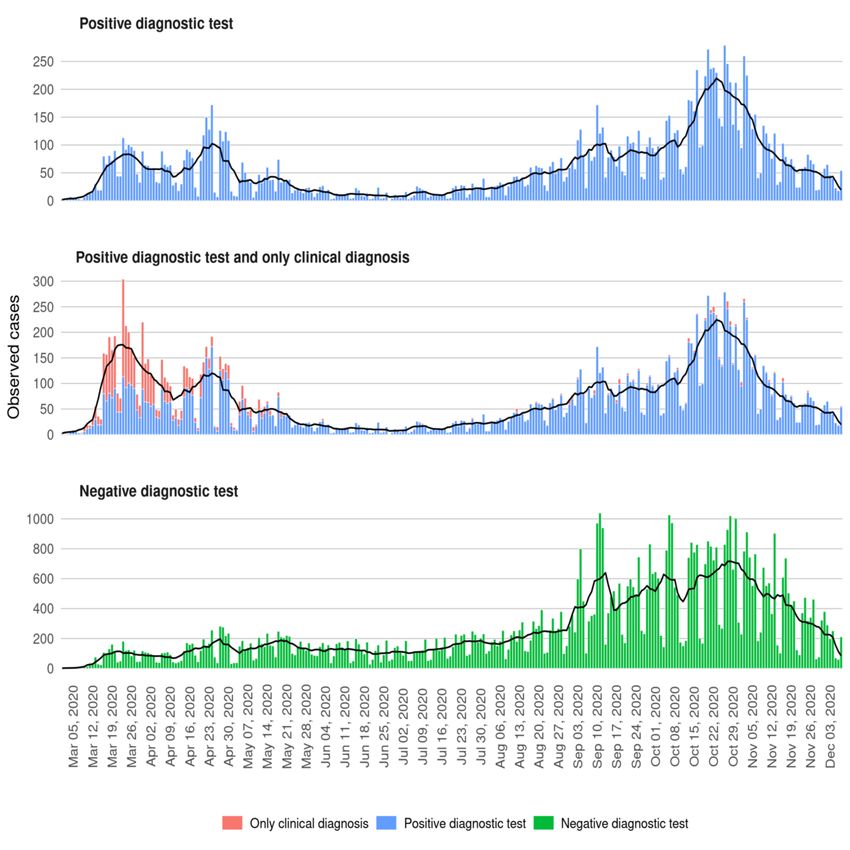
(hospitalized and nonhospitalized) showed an increase of cases
Analysis of the General Population in March (Figure 2). Then, the number of cases decreased until
Total counts showed that the first wave had much lower numbers the beginning of summer (at the end of June), when a slow
of positive cases (over 3000) than the second (nearly 12,000), increasing trend appeared again (Figure 2). The second wave
but had a higher percentage of positive tests with respect to all was longer, and many more positive cases were detected in that
suspected individuals (12.0% in the first wave versus 8.4% in period (nearly 4-fold) (Figure 1). However, when we considered
the second) (Figure 1). The number of tests per case was 8.3 in an additional group of possible cases, that is, individuals with
the first wave (a total of 26,096 tests and 3140 cases) and 11.9 no confirmatory test but with symptoms compatible with
in the second wave (a total of 140,332 tests and 11,800 cases). COVID-19 (indicated as only clinical diagnosis in Figure 2),
Two waves could be clearly distinguished in the timeline of the situation became more even (Figure 2). Figure 2 also shows
COVID-19 cases. The first wave of the overall population that the number of daily negative diagnostic test results was
much higher in the second wave.
https://publichealth.jmir.org/2022/1/e30006 JMIR Public Health Surveill 2022 | vol. 8 | iss. 1 | e30006 | p. 4
(page number not for citation purposes)
XSL• FO
RenderXJMIR PUBLIC HEALTH AND SURVEILLANCE Alves-Cabratosa et al
Figure 2. Daily number of individuals with a positive and/or negative SARS-CoV-2 test in Girona (Catalonia) from March 1, 2020, to December 8,
2020.
SARS-CoV-2 transmission in the community was also and ultimately strict lockdown led to a drop in the ρ7 value;
monitored with the cumulative incidence rate of SARS-CoV-2 when it was under 1, the incidence started to decrease. The
infection at 14 days and with the transmission rate at 7 days, decrease went on as far as the ρ7 value was predominantly under
indicated by the empiric reproduction number (ρ7) (Figure 3). 1. However, at the end of June, the ρ7 reached a value over 1
At the beginning of the first wave, the ρ7 value increased, and remained there, which led to a slow but constant increase
followed by an increase in the incidence rate. Social distancing in the incidence rate and subsequently to the second wave.
https://publichealth.jmir.org/2022/1/e30006 JMIR Public Health Surveill 2022 | vol. 8 | iss. 1 | e30006 | p. 5
(page number not for citation purposes)
XSL• FO
RenderXJMIR PUBLIC HEALTH AND SURVEILLANCE Alves-Cabratosa et al
Figure 3. Daily evolution of the empiric reproduction number (7 days; ρ7) and cumulative incidence rate (14 days; IA14) of positive cases in Girona
(Catalonia), from March 1, 2020, to December 8, 2020.
Hospitalized cases amounted to 818 out of 3140 cases in the
Comparison of Cohorts of Individuals With a Positive first wave and 680 out of 11,800 cases in the second, with
SARS-CoV-2 Test cumulative incidences at 30 days of 26.1% and 5.8%,
Figure 1 shows the cumulative incidence at 30 days for each respectively. During the first wave, 613 patients (a cumulative
outcome within each wave, with respect to all individuals with incidence at 30 days of 74.9%, with respect to all hospitalized)
a positive test result (cases). The first wave contained a lower were in a conventional hospital, 51 (6.2%) were in IRC, 67
percentage of individuals with mild SARS-CoV-2 infection (8.2%) were in the ICU, and 87 (10.6%) passed away. The
(nonhospitalized) and higher percentages of individuals who corresponding figures among hospitalized cases during the
were in a conventional hospital, who were admitted to IRC, second wave were 468 (68.8%), 46 (6.8%), 78 (11.5%), and 88
who were admitted to the ICU, and who passed away (including (12.9%), respectively. The daily number of individuals in
in-hospital and out-of-hospital deaths). hospital showed a much steeper increase during the first wave
than the second, the initiation of which was more progressive
(Figure 4).
Figure 4. Daily number of individuals with a positive SARS-CoV-2 test in hospital over time (from March 1, 2020, to December 8, 2020) in Girona
(Catalonia).
https://publichealth.jmir.org/2022/1/e30006 JMIR Public Health Surveill 2022 | vol. 8 | iss. 1 | e30006 | p. 6
(page number not for citation purposes)
XSL• FO
RenderXJMIR PUBLIC HEALTH AND SURVEILLANCE Alves-Cabratosa et al
Comparison of the baseline characteristics (individuals with a similar in the first and second waves, with few exceptions
positive test [cases]) showed that individuals with mild (Tables 1 and 2). In the second wave, the group admitted to a
SARS-CoV-2 infection (no hospital admission) were almost 10 conventional hospital had a higher percentage of individuals
years older in the first wave (PJMIR PUBLIC HEALTH AND SURVEILLANCE Alves-Cabratosa et al
Table 1. Comparison of the baseline characteristics of individuals with a positive SARS-CoV-2 test from Girona (Catalonia) in the first (March 1,
2020, to June 24, 2020) and second (June 25, 2020, to December 8, 2020) SARS-CoV-2 waves in the no admission and admission but no intermediate
respiratory care or intensive care unit groups.
Variable No admission Admission but no IRCa or ICUb
1st wave 2nd wave P value 1st wave (n=613) 2nd wave P value
(n=2266) (n=11,070) (n=468)
Age, mean (SD) 54.5 (22.3) 45.8 (26.3)JMIR PUBLIC HEALTH AND SURVEILLANCE Alves-Cabratosa et al
Table 2. Comparison of the baseline characteristics of individuals with a positive SARS-CoV-2 test from Girona (Catalonia) in the first (March 1,
2020, to June 24, 2020) and second (June 25, 2020, to December 8, 2020) SARS-CoV-2 waves in the admission to intermediate respiratory care,
admission to the intensive care unit, and deceased groups.
Variable Admission to IRCa Admission to the ICUb Deceased
1st wave 2nd wave P value 1st wave 2nd wave P value 1st wave 2nd wave P value
(n=51) (n=46) (n=67) (n=78) (n=143) (n=138)
Age, mean (SD) 64.6 61.7 (15.4) .35 56.2 61.3 (14.2) .02 81.0 (12.4) 81.7 (11.3) .61
(14.7) (13.1)
Men, n (%) 34 (66.7) 30 (65.2) .99 48 (71.6) 63 (80.8) .24 73 (51.0) 69 (50.0) .90
Smoker, n (%) 5 (10.4) 6 (14.3) .83 6 (10.7) 6 (9.0) .49 17 (13.8) 17 (14.2) .46
Exsmoker, n (%) 8 (16.7) 6 (14.3) .83 10 (17.9) 18 (26.9) .49 13 (10.6) 19 (15.8) .46
Alcohol consumption of 0 (0.0) 0 (0.0) N/Ac 2 (3.0) 3 (3.8) .99 7 (4.9) 6 (4.3) .99
high risk, n (%)
Obesity, n (%) 30 (58.8) 25 (54.3) .15 33 (49.3) 39 (50.0) .79 50 (35.0) 53 (38.4) .50
Diabetes, n (%) 16 (31.4) 7 (15.2) .09 9 (13.4) 25 (32.1) .01 47 (32.9) 51 (37.0) .53
Dyslipidemia, n (%) 17 (33.3) 17 (37.0) .83 22 (32.8) 27 (34.6) .86 55 (38.5) 65 (47.1) .15
Hypertension, n (%) 24 (47.1) 24 (52.2) .69 24 (35.8) 39 (50.0) .09 101 (70.6) 106 (76.8) .28
Atrial fibrillation, n (%) 9 (17.6) 3 (6.5) .13 1 (1.5) 1 (1.3) .99 18 (12.6) 35 (25.4) .009
Heart failure, n (%) 4 (7.8) 2 (4.3) .68 0 (0.0) 1 (1.3) .99 11 (7.7) 17 (12.3) .23
Ischemic heart disease, n 8 (15.7) 4 (8.7) .36 3 (4.5) 8 (10.3) .22 14 (9.8) 21 (15.2) .21
(%)
PADd, n (%) 1 (2.0) 1 (2.2) .99 3 (4.5) 3 (3.8) .99 11 (7.7) 6 (4.3) .32
Cerebrovascular disease, n 2 (3.9) 1 (2.2) .99 2 (3.0) 1 (1.3) .60 11 (7.7) 12 (8.7) .83
(%)
COPDe, n (%) 10 (19.6) 6 (13.0) .42 2 (3.0) 4 (5.1) .69 15 (10.5) 19 (13.8) .47
Asthma, n (%) 3 (5.9) 4 (8.7) .70 2 (3.0) 3 (3.8) .99 4 (2.8) 11 (8.0) .06
Sleep apnea, n (%) 9 (17.6) 3 (6.5) .13 5 (7.5) 6 (7.7) .99 7 (4.9) 7 (5.1) .99
Chronic kidney disease, n 9 (17.6) 7 (15.2) .79 3 (4.5) 6 (7.7) .51 42 (29.4) 46 (33.3) .52
(%)
Malignant neoplasms, n (%) 9 (17.6) 4 (8.7) .24 7 (10.4) 13 (16.7) .34 51 (35.7) 42 (30.4) .38
Dementia, n (%) 2 (3.9) 1 (2.2) .99 0 (0.0) 2 (2.6) .50 46 (32.2) 38 (27.5) .43
Depression, n (%) 7 (13.7) 3 (6.5) .32 4 (6.0) 6 (7.7) .75 22 (15.4) 26 (18.8) .53
Previous flu vaccination, n 19 (37.3) 17 (37.0) .99 14 (20.9) 15 (19.2) .84 84 (58.7) 79 (57.2) .81
(%)
Previous pneumococcus 24 (47.1) 16 (34.8) .30 17 (25.4) 26 (33.3) .36 85 (59.4) 107 (77.5) .001
vaccination, n (%)
ASAf, n (%) 0 (0.0) 4 (8.7) .047 3 (4.5) 7 (9.0) .34 12 (8.4) 24 (17.4) .03
Charlson index, mean (SD) 2.8 (2.4) 1.9 (1.2) .07 1.7 (1.1) 2.7 (2.7) .03 3.1 (2.3) 3.5 (2.7) .23
a
IRC: intermediate respiratory care.
b
ICU: intensive care unit.
c
N/A: not applicable.
d
PAD: peripheral arterial disease.
e
COPD: chronic obstructive pulmonary disease.
f
ASA: acetylsalicylic acid.
https://publichealth.jmir.org/2022/1/e30006 JMIR Public Health Surveill 2022 | vol. 8 | iss. 1 | e30006 | p. 9
(page number not for citation purposes)
XSL• FO
RenderXJMIR PUBLIC HEALTH AND SURVEILLANCE Alves-Cabratosa et al
In hospitals, the situation was also very different during the 2
Discussion waves. The first wave arrived so suddenly that the system
Principal Findings collapsed, and the criteria to allocate and treat patients according
to severity kept changing and were different from the second
We compared the epidemiology and characteristics of wave. During the second wave, the population, especially
individuals with SARS-CoV-2 infection in the first and second vulnerable individuals, knew how to protect themselves, which
waves in Catalonia. The first wave struck more suddenly, and smoothened the increase of cases, and thus, the situation in
although SARS-CoV-2–positive individuals were less numerous, hospitals was tense but the system did not collapse. The criteria
the percentage with respect to all suspected individuals was to allocate and treat patients were more established, and health
higher than in the second wave. Moreover, individuals with a professionals could be more proactive to admit and treat patients
positive diagnostic test were healthier in the second wave, as with milder forms of the disease.
indicated by the lower proportion of individuals who required
hospitalization (26.1% in the first wave versus 5.8% in the Within hospitalized patients, the second wave included a higher
second) and the lower percentage of patients with comorbidities percentage of individuals with certain conditions in the group
among nonhospitalized patients. However, these lower of patients with conventional hospitalization (dyslipidemia,
percentages might also be attributed to the younger age of the hypertension, cerebrovascular disease, or treatment with
population in the second wave, because younger individuals acetylsalicylic acid), those with admission to the ICU (diabetes),
tend to have a better health condition. Once in hospital, the or those who passed away (atrial fibrillation, pneumococcus
differences in age and comorbidities between the first and vaccination, and treatment with acetylsalicylic acid). This could
second waves were much less prominent. be partly explained because of a slightly higher age average.
Finally, the second wave lasted longer than the first, which
During the first wave, no screening for the general population resulted in a fairly similar total number of patients in IRC, those
was performed, simply because there was no time to organize in intensive care, and those who passed away in both waves.
screenings and tests were not available for everyone. In March
and April 2020, RT-PCR tests were performed for patients Strengths and Limitations
admitted to the hospital and for health workers, and up to early We had access to daily updated and reliable data that could be
June, screenings were directed at old people in nursing homes, structured for analysis up to a date that included the second
centers for disabled individuals, supervised flats, and wave. Moreover, we could assess all individuals with a
penitentiaries. These screenings represented one-third of all diagnostic test for SARS-CoV-2 (ie, with a negative or positive
PCR tests carried out during the first wave (ie, PCR tests were result), which allowed a complete description of the situation,
prioritized for the most vulnerable populations). However, if since a high number of positive mild cases could be, as the case
we consider the number of clinically diagnosed cases in the first actually was, due to an increase in the number of tests
wave (individuals who were considered to have COVID-19 performed. However, we acknowledge that in February and
based on signs and symptoms, but in whom no diagnosis test March 2020, clinical diagnosis or the definition of close contacts
was performed), the number of individuals with COVID-19 was determined according to epidemiological criteria from
appears similar. Even conceding that the infection spread was countries that first reported COVID-19 cases (China [34] and
just starting during the period included in the first wave, it is Italy [35]); thus, many patients who must have been positive
likely that a large number of asymptomatic cases were unnoticed were not identified as such, and some close contacts were
in that wave. This idea is supported by previous reports [32] overlooked. Additionally, antigen tests were not available in
and is coherent with our results. Figure 2 and Figure 4 show the first wave and were only available in the second wave. In
that hospitalized cases were more numerous and the number this second wave, the tests were performed in certain situations,
increased more abruptly in the first wave than in the second like screening in schools or in symptomatic individuals, and the
wave (Figure 4), but the number of daily overall cases detected criteria to apply them changed to adapt and avoid too much
with diagnostic tests was much lower in the first wave (Figure pressure on the health systems. We decided to include them in
2). the analysis to be able to account for all individuals who tested
In the second wave, surveillance and health systems were more positive and appraise the performance of the screening.
organized and proactive, especially in areas where the Comparison With Prior Work
transmission rate increased, which allowed a huge amount of
A Letter to the Editor on an analysis from Japan reported higher
screening tests to be carried out. This volume of tests during
pressure on the health system, higher proportion of individuals
the second wave would explain the much higher number of
with comorbidities, and older mean age in the first wave, in line
positive cases (almost 4-fold) than in the first wave. The lower
with our results. However, they could not include data to
percentage of positive cases in the second wave shows the
complete the second wave, and thus, there is a possibility that
efforts and success of the screening systems to find, test, and
future findings differ from their results at the time of publication
isolate contacts when needed. This is another crucial aspect in
[19]. Nevertheless, comparison of results in Japan and the south
the epidemiology comparing the first and second waves in this
of Europe remains of high interest. Indeed, preparedness for the
pandemic (the means to diagnose the infection, the consideration
pandemic differed between countries before [36] and during
of a person as a case, the availability of diagnostic tests, and
the spread of the pandemic. Some countries had some time to
the capacity of the surveillance systems to organize screenings
equip themselves for the second wave, but they could not adapt
and preventive measures at a large scale) [33].
readily enough to it, with subsequent burden on the health
https://publichealth.jmir.org/2022/1/e30006 JMIR Public Health Surveill 2022 | vol. 8 | iss. 1 | e30006 | p. 10
(page number not for citation purposes)
XSL• FO
RenderXJMIR PUBLIC HEALTH AND SURVEILLANCE Alves-Cabratosa et al
system and thus the population [32]. Further analyses that COVID-19; our results in the first wave for nonhospitalized
compare the first and second waves in other countries would individuals and for deceased patients are comparable to the
be very useful to determine expected common characteristics findings in this study [38].
and differences. A couple of previous reports characterized the
first wave in Spain, as in April and August 2020 [37,38]. The
Conclusions
authors of a report from the Working Group for the Surveillance Screening systems for SARS-CoV-2 infection were scarce
and Control of COVID-19 observed a much higher percentage during the first wave, but were more adequate during the second
of hospitalized patients among individuals who tested positive wave, reflecting the usefulness of surveillance systems to detect
in a diagnostic test when compared with our study (45% versus a high number of asymptomatic infected individuals and their
11%), which could be explained by the definition of a case. contacts, to help control this pandemic. Individuals infected by
They considered a person as a case if they had symptoms of SARS-CoV-2 differed substantially during the first and second
severe acute respiratory infection and had travelled to waves in Catalonia. Infected individuals were older and had
COVID-19–affected areas or had epidemiological links with more comorbidities in the first wave, and more of them needed
COVID-19 laboratory-confirmed cases [37]. Finally, an analysis hospitalization. Hospitals collapsed in the first wave, but tension
of the first wave in Catalonia studied data from the primary care was lower in the second wave, which contributed to better care
setting to compare the characteristics of individuals with and for a broader spectrum of the population.
without COVID-19, and deceased and living patients with
Acknowledgments
This work was supported by grants from the European Union ERDF funds (Network for Prevention and Health Promotion in
Primary Care, RedIAPP–CARDIOCAT; RD16/0007/0004) and from the Agency for Management of University and Research
Grants (AGAUR; 2017-SGR 1146). We thank Eric Tornabell for his technical support. We also thank all health care professionals
for their ceaseless work to care for COVID-19 patients in this pandemic.
Conflicts of Interest
None declared.
Multimedia Appendix 1
Absolute differences and odds ratios for the baseline characteristics of individuals with a positive SARS-CoV-2 test result from
Girona (Catalonia) on comparing the second SARS-CoV-2 wave (June 25, 2020, to December 8, 2020) to the first wave (March
1, 2020, to June 24, 2020).
[DOCX File , 22 KB-Multimedia Appendix 1]
References
1. Zorn CK, Pascual JM, Bosch W, Thiel DD, Francis D, Casler JD, et al. Addressing the Challenge of COVID-19: One
Health Care Site's Leadership Response to the Pandemic. Mayo Clin Proc Innov Qual Outcomes 2021 Feb;5(1):151-160
[FREE Full text] [doi: 10.1016/j.mayocpiqo.2020.11.001] [Medline: 33521584]
2. Weekly operational update on COVID-19 - 11 January 2021. World Health Organization. URL: https://www.who.int/
publications/m/item/weekly-operational-update-on-covid-19---11-january-2021 [accessed 2021-12-20]
3. Nacoti M, Ciocca A, Giupponi A, Brambillasca P, Lussana F, Pisano M, et al. At the Epicenter of the Covid-19 Pandemic
and Humanitarian Crises in Italy: Changing Perspectives on Preparation and Mitigation. NEJM Catalyst. URL: https:/
/catalyst.nejm.org/doi/full/10.1056/CAT.20.0080 [accessed 2021-12-20]
4. Fanelli D, Piazza F. Analysis and forecast of COVID-19 spreading in China, Italy and France. Chaos Solitons Fractals 2020
May;134:109761 [FREE Full text] [doi: 10.1016/j.chaos.2020.109761] [Medline: 32308258]
5. Auener S, Kroon D, Wackers E, Dulmen SV, Jeurissen P. COVID-19: A Window of Opportunity for Positive Healthcare
Reforms. Int J Health Policy Manag 2020 Oct 01;9(10):419-422 [FREE Full text] [doi: 10.34172/ijhpm.2020.66] [Medline:
32610730]
6. Iacus S, Santamaria C, Sermi F, Spyratos S, Tarchi D, Vespe M. Human mobility and COVID-19 initial dynamics. Nonlinear
Dyn 2020 Sep 02:1-19 [FREE Full text] [doi: 10.1007/s11071-020-05854-6] [Medline: 32905053]
7. Van Damme W, Dahake R, Delamou A, Ingelbeen B, Wouters E, Vanham G, et al. The COVID-19 pandemic: diverse
contexts; different epidemics-how and why? BMJ Glob Health 2020 Jul;5(7):1 [FREE Full text] [doi:
10.1136/bmjgh-2020-003098] [Medline: 32718950]
8. Anastassopoulou C, Spanakis N, Tsakris A. SARS-CoV-2 transmission, the ambiguous role of children and considerations
for the reopening of schools in the fall. Future Microbiol 2020 Sep;15:1201-1206 [FREE Full text] [doi:
10.2217/fmb-2020-0195] [Medline: 32878481]
9. Otte IKE, Lehfeld A, Buda S, Buchholz U, Haas W. Surveillance of COVID-19 school outbreaks, Germany, March to
August 2020. Euro Surveill 2020;25(38):pii=2001645 [FREE Full text] [doi: 10.2807/1560-7917.es.2020.25.38.2001645]
https://publichealth.jmir.org/2022/1/e30006 JMIR Public Health Surveill 2022 | vol. 8 | iss. 1 | e30006 | p. 11
(page number not for citation purposes)
XSL• FO
RenderXJMIR PUBLIC HEALTH AND SURVEILLANCE Alves-Cabratosa et al
10. Fricchione M, Seo J, Arwady M. Data-Driven Reopening of Urban Public Education Through Chicago?s Tracking of
COVID-19 School Transmission. Journal of Public Health Management and Practice 2021;27(3):229-232. [doi:
10.1097/phh.0000000000001334]
11. Lee B, Hanley J, Nowak S, Bates J, Hébert-Dufresne L. Modeling the impact of school reopening on SARS-CoV-2
transmission using contact structure data from Shanghai. BMC Public Health 2020 Nov 16;20(1):1713 [FREE Full text]
[doi: 10.1186/s12889-020-09799-8] [Medline: 33198707]
12. Garcia-Alamino J, Tobías A. [Incidence of SARS-CoV-2 infection and its impact on the first week of reopening schools
in Catalonia]. Gac Sanit 2021;35(3):302-303 [FREE Full text] [doi: 10.1016/j.gaceta.2020.09.007] [Medline: 33162227]
13. Grech V, Cuschieri S. Withdrawn: COVID-19: A global and continental overview of the second wave and its (relatively)
attenuated case fatality ratio. Early Hum Dev 2020 Oct 03:105211 [FREE Full text] [doi: 10.1016/j.earlhumdev.2020.105211]
[Medline: 33039260]
14. López-Mendoza H, Montañés A, Moliner-Lahoz F. Disparities in the Evolution of the COVID-19 Pandemic between
Spanish Provinces. Int J Environ Res Public Health 2021 May 11;18(10):5085 [FREE Full text] [doi: 10.3390/ijerph18105085]
[Medline: 34064938]
15. Patel U, Malik P, Mehta D, Shah D, Kelkar R, Pinto C, et al. Early epidemiological indicators, outcomes, and interventions
of COVID-19 pandemic: A systematic review. J Glob Health 2020 Dec;10(2):020506 [FREE Full text] [doi:
10.7189/jogh.10.020506] [Medline: 33110589]
16. Atsawarungruangkit A, Yuan J, Kodama T, Cheng M, Mansouri M, Han B, et al. Evolving global and national criteria for
identifying a suspected case of COVID-19. J Int Med Res 2020 Aug;48(8):300060520938943 [FREE Full text] [doi:
10.1177/0300060520938943] [Medline: 32865095]
17. Kinsella CM, Santos PD, Postigo-Hidalgo I, Folgueiras-González A, Passchier TC, Szillat KP, et al. Preparedness needs
research: How fundamental science and international collaboration accelerated the response to COVID-19. PLoS Pathog
2020 Oct;16(10):e1008902 [FREE Full text] [doi: 10.1371/journal.ppat.1008902] [Medline: 33035262]
18. Jan H, Faisal S, Khan A, Khan S, Usman H, Liaqat R, et al. COVID-19: Review of Epidemiology and Potential Treatments
Against 2019 Novel Coronavirus. Discoveries (Craiova) 2020 Apr 26;8(2):e108 [FREE Full text] [doi: 10.15190/d.2020.5]
[Medline: 32377559]
19. Saito S, Asai Y, Matsunaga N, Hayakawa K, Terada M, Ohtsu H, et al. First and second COVID-19 waves in Japan: A
comparison of disease severity and characteristics. J Infect 2021 Apr;82(4):84-123 [FREE Full text] [doi:
10.1016/j.jinf.2020.10.033] [Medline: 33152376]
20. Soriano V, Ganado-Pinilla P, Sanchez-Santos M, Gómez-Gallego F, Barreiro P, de Mendoza C, et al. Main differences
between the first and second waves of COVID-19 in Madrid, Spain. Int J Infect Dis 2021 Apr;105:374-376 [FREE Full
text] [doi: 10.1016/j.ijid.2021.02.115] [Medline: 33684560]
21. Anderson RM, Heesterbeek H, Klinkenberg D, Hollingsworth T. How will country-based mitigation measures influence
the course of the COVID-19 epidemic? The Lancet 2020 Mar;395(10228):931-934 [FREE Full text] [doi:
10.1016/s0140-6736(20)30567-5]
22. Daily Report. Computational Biology and Complex Systems. URL: https://biocomsc.upc.edu/en/covid-19/daily-report
[accessed 2021-12-20]
23. Covid actual. Computational Biology and Complex Systems. URL: https://biocomsc.upc.edu/en/covid-19 [accessed
2021-12-20]
24. Rabaan A, Tirupathi R, Sule A, Aldali J, Mutair AA, Alhumaid S, et al. Viral Dynamics and Real-Time RT-PCR Ct Values
Correlation with Disease Severity in COVID-19. Diagnostics (Basel) 2021 Jun 15;11(6) [FREE Full text] [doi:
10.3390/diagnostics11061091] [Medline: 34203738]
25. Commission Recommendation (EU) 2020/1743 of 18 November 2020 on the use of rapid antigen tests for the diagnosis
of SARS-CoV-2 infection. EUR-Lex. URL: http://data.europa.eu/eli/reco/2020/1743/oj [accessed 2021-12-20]
26. Antigen-detection in the diagnosis of SARS-CoV-2 infection. World Health Organization. URL: https://www.who.int/
publications/i/item/antigen-detection-in-the-diagnosis-of-sars-cov-2infection-using-rapid-immunoassays [accessed
2021-12-20]
27. Abordaje del Paciente con COVID-19 en Atención Primaria. semFYC. URL: https://www.semfyc.es/formacion-y-recursos/
abordaje-del-paciente-con-covid-19-en-atencion-primaria/ [accessed 2021-12-20]
28. Ioannou G, Locke E, Green P, Berry K, O'Hare AM, Shah J, et al. Risk Factors for Hospitalization, Mechanical Ventilation,
or Death Among 10 131 US Veterans With SARS-CoV-2 Infection. JAMA Netw Open 2020 Sep 01;3(9):e2022310 [FREE
Full text] [doi: 10.1001/jamanetworkopen.2020.22310] [Medline: 32965502]
29. D'Hoore W, Bouckaert A, Tilquin C. Practical considerations on the use of the charlson comorbidity index with administrative
data bases. Journal of Clinical Epidemiology 1996 Dec;49(12):1429-1433 [FREE Full text] [doi:
10.1016/s0895-4356(96)00271-5]
30. Charlson M, Pompei P, Ales K, MacKenzie C. A new method of classifying prognostic comorbidity in longitudinal studies:
Development and validation. Journal of Chronic Diseases 1987 Jan;40(5):373-383 [FREE Full text] [doi:
10.1016/0021-9681(87)90171-8]
https://publichealth.jmir.org/2022/1/e30006 JMIR Public Health Surveill 2022 | vol. 8 | iss. 1 | e30006 | p. 12
(page number not for citation purposes)
XSL• FO
RenderXJMIR PUBLIC HEALTH AND SURVEILLANCE Alves-Cabratosa et al
31. R Development Core Team. R: A language and environment for statistical computing. Vienna, Austria: R Foundation for
Statistical Computing; 2008.
32. Meintrup D, Nowak-Machen M, Borgmann S. Nine Months of COVID-19 Pandemic in Europe: A Comparative Time
Series Analysis of Cases and Fatalities in 35 Countries. Int J Environ Res Public Health 2021 Jun 21;18(12):A [FREE Full
text] [doi: 10.3390/ijerph18126680] [Medline: 34205809]
33. Nussbaumer-Streit B, Mayr V, Dobrescu A, Chapman A, Persad E, Klerings I, et al. Quarantine alone or in combination
with other public health measures to control COVID-19: a rapid review. Cochrane Database Syst Rev 2020 Apr
08;4:CD013574 [FREE Full text] [doi: 10.1002/14651858.CD013574] [Medline: 32267544]
34. Wu Z, McGoogan J. Characteristics of and Important Lessons From the Coronavirus Disease 2019 (COVID-19) Outbreak
in China: Summary of a Report of 72 314 Cases From the Chinese Center for Disease Control and Prevention. JAMA 2020
Apr 07;323(13):1239-1242 [FREE Full text] [doi: 10.1001/jama.2020.2648] [Medline: 32091533]
35. Adorni F, Prinelli F, Bianchi F, Giacomelli A, Pagani G, Bernacchia D, et al. Self-Reported Symptoms of SARS-CoV-2
Infection in a Nonhospitalized Population in Italy: Cross-Sectional Study of the EPICOVID19 Web-Based Survey. JMIR
Public Health Surveill 2020 Sep 18;6(3):e21866 [FREE Full text] [doi: 10.2196/21866] [Medline: 32650305]
36. Kandel N, Chungong S, Omaar A, Xing J. Health security capacities in the context of COVID-19 outbreak: an analysis of
International Health Regulations annual report data from 182 countries. The Lancet 2020 Mar;395(10229):1047-1053
[FREE Full text] [doi: 10.1016/s0140-6736(20)30553-5]
37. Working group for the surveillance and control of COVID-19 in Spain. The first wave of the COVID-19 pandemic in Spain:
characterisation of cases and risk factors for severe outcomes, as at 27 April 2020. Euro Surveill 2020;25(50):pii=2001431
[FREE Full text] [doi: 10.2807/1560-7917.es.2020.25.50.2001431]
38. Mayer M, Vidal-Alaball J, Puigdellívol-Sánchez A, Marín Gomez FX, Leis A, Mendioroz Peña J. Clinical Characterization
of Patients With COVID-19 in Primary Care in Catalonia: Retrospective Observational Study. JMIR Public Health Surveill
2021 Feb 08;7(2):e25452 [FREE Full text] [doi: 10.2196/25452] [Medline: 33496668]
Abbreviations
ρ7: empiric reproduction number at day 7
ICU: intensive care unit
IRC: intermediate respiratory care
OR: odds ratio
RT-PCR: reverse-transcription polymerase chain reaction
Edited by T Sanchez; submitted 28.04.21; peer-reviewed by T Koritala, A Hussain; comments to author 23.09.21; accepted 16.11.21;
published 06.01.22
Please cite as:
Alves-Cabratosa L, Comas-Cufí M, Blanch J, Martí-Lluch R, Ponjoan A, Castro-Guardiola A, Hurtado-Ganoza A, Pérez-Jaén A,
Rexach-Fumaña M, Faixedas-Brunsoms D, Gispert-Ametller MA, Guell-Cargol A, Rodriguez-Batista M, Santaularia-Font F, Orriols
R, Bonnin-Vilaplana M, Calderón López JC, Sabater-Talaverano G, Queralt Moles FX, Rodriguez-Requejo S, Avellana-Revuelta E,
Balló E, Fages-Masmiquel E, Sirvent JM, Lorencio C, Morales-Pedrosa JM, Ortiz-Ballujera P, Ramos R
Individuals With SARS-CoV-2 Infection During the First and Second Waves in Catalonia, Spain: Retrospective Observational Study
Using Daily Updated Data
JMIR Public Health Surveill 2022;8(1):e30006
URL: https://publichealth.jmir.org/2022/1/e30006
doi: 10.2196/30006
PMID: 34797774
©Lia Alves-Cabratosa, Marc Comas-Cufí, Jordi Blanch, Ruth Martí-Lluch, Anna Ponjoan, Antoni Castro-Guardiola, Abelardo
Hurtado-Ganoza, Ana Pérez-Jaén, Maria Rexach-Fumaña, Delfi Faixedas-Brunsoms, Maria Angels Gispert-Ametller, Anna
Guell-Cargol, Maria Rodriguez-Batista, Ferran Santaularia-Font, Ramon Orriols, Marc Bonnin-Vilaplana, Juan Carlos Calderón
López, Gladis Sabater-Talaverano, Francesc Xavier Queralt Moles, Sara Rodriguez-Requejo, Esteve Avellana-Revuelta, Elisabet
Balló, Ester Fages-Masmiquel, Josep-Maria Sirvent, Carol Lorencio, Josep Miquel Morales-Pedrosa, Patricia Ortiz-Ballujera,
Rafel Ramos. Originally published in JMIR Public Health and Surveillance (https://publichealth.jmir.org), 06.01.2022. This is
an open-access article distributed under the terms of the Creative Commons Attribution License
(https://creativecommons.org/licenses/by/4.0/), which permits unrestricted use, distribution, and reproduction in any medium,
provided the original work, first published in JMIR Public Health and Surveillance, is properly cited. The complete bibliographic
information, a link to the original publication on https://publichealth.jmir.org, as well as this copyright and license information
must be included.
https://publichealth.jmir.org/2022/1/e30006 JMIR Public Health Surveill 2022 | vol. 8 | iss. 1 | e30006 | p. 13
(page number not for citation purposes)
XSL• FO
RenderXYou can also read


