INFOCUS Safety & Security Aviation industry insights - Airspace protection Cyber resilience Baggage screening - Inflight
←
→
Page content transcription
If your browser does not render page correctly, please read the page content below

INFOCUS
2021

Safety & Security
Aviation industry insights

  Airspace protection • Cyber resilience • Baggage screening
       Pilot training • Video surveillance • Cabin air quality
           Flight data monitoring • Passenger wellbeing

                                            An HMG Aerospace publication

Welcome to INFOCUS Safety & Security 2021

    I
       t is hard to imagine how the world could have thrown more at             physical distancing measures have all been rolled out at speed in
       the aviation industry over the past year. Aviation has been hit          response to the COVID-19 crisis.
       hard by the global pandemic with safety and security having to              It’s important to remind ourselves, however, that while the global
    adapt and evolve at pace in order to meet new challenges that               pandemic has thrown up a whole new set of safety and security challenges
    threaten to disrupt the industry. Photos of grounded aircraft might         for aviation, terrorist strikes, geopolitical posturing, cyberattacks,
    remain etched in our memory, but behind the scenes, airports,               mechanical faults, disruptive passengers, data breaches and airspace
    airlines and the rotorcraft community have remained open and                protection remain at large and continue to threaten to disrupt the
    operational with staff and passenger safety and wellbeing at the            industry. However, if the last year or couple of years has taught us
    forefront as stakeholders have worked hard to cater for passenger           anything, it is that aviation has proven itself to be a resilient, flexible and
    and cargo traffic and to keep critical supply chains functioning.           vigilant industry.
    Across the aviation sector, stakeholders have had to adapt their               The appetite for air travel certainly hasn’t waned. There is huge pent-up
    services and products to mitigate the risk of disease transmission,         demand signalling that air travel will return to 2019 levels in the coming
    while meeting the constantly evolving security needs of air travel.         years. And as we find out in this issue, aviation’s safety and security sector
    Antimicrobial technology, contactless kiosks and payment systems,           continues to adapt at pace to ensure that passenger confidence is restored
    cleaning robots, sanitising booths, COVID testing facilities and            and that aviation’s recovery is as strong, safe and secure as possible.

      Contents                                                                  20 Air Partner
      4 In brief                                                                Building safer skies through investments in training
      Short stories and insights on safety and security                         22 Teledyne Controls
      across the airport, rotorcraft and airline sectors                        Addressing potential issues with cabin air quality
      10 Argus                                                                  24 Spidertracks
      Securing airborne modems from cyberattacks                                Making flight data monitoring accessible to all
      12 Rapiscan Systems                                                       26 Avion Group
      Future proofing baggage screening requirements                            The post-pandemic role of quality upset training
      14 Rapiscan Systems                                                       30 Galgus
      Dr Richard Piggin reports on airport cyber resilience                     How MAC randomisation disrupts Wi-Fi connectivity
      17 carbonbased aviation                                                   32 Dallmeier
      Understanding human-centred flying expertise                              Improving airport security through camera technology

EDITORIAL                              MANAGEMENT
Editor / Chloë Greenbank               Publisher / Mark Howells
chloe@hmgaerospace.com                 Director / Becky Howells
                                       publishing@hmgaerospace.com                                 HMG Aerospace Ltd, Cody Technology Park, First Floor Building A8,
                                       Articles and information contained in this                  Suite 1038, Ively Road, Farnborough, Hampshire, GU14 0LX,
ADVERTISING SALES                                                                                  United Kingdom Tel: +44 1252 545993
                                       publication are the copyright of HMG Aerospace
Sales Manager / Toby Walton            Ltd and may not be reproduced in any form                   www.hmgaerospace.com
toby@hmgaerospace.com                  without the written permission of the publisher.            © HMG Aerospace Ltd, 2021
INFOCUS SAFETY & SECURITY

In brief
A round up of short stories and insights covering safety & security
across the fixed wing, rotorcraft and airport sectors

Lithium batteries algorithm enhances                                                              Increased demand
cargo and baggage screening                                                                       for security
                                                                                                  screening solutions
As the primary power                                                                             With airports starting to scale up
source for personal and                                                                          operations following the global
portable electronic devices,                                                                     pandemic, Redline has noted an
consumer demand for                                                                              increased demand for its security
lithium batteries is growing                                                                     solutions, including its X-ray threat
exponentially. However,                                                                          image recognition training (TIRT)
these batteries are                                                                              system, as well as its digital Security
classified as dangerous                                                                          Management System (SeMS). Phil
goods posing a significant                                                                       Forster Managing Director at Teesside
safety threat during flight                                                                      International Airport, which has
because of their potential                                                                       partnered with Redline to deploy its
to ignite. Since January                                                                         SeMS, commented: “Digital SeMS is a
2006, a total of 310                                                                             welcome enhancement that will help us
incidents of smoke, heat,                                                                        to manage and improve our security
fire or explosion involving                                                                      performance.” And with safety and
lithium batteries in air cargo or hold                                                           security standards at the top of
baggage have been recorded. In response to      “Harnessing the power of deep learning is        aviation’s agenda, Air partner, which
this concern, Smiths Detection has launched     crucial in further developing object             owns Redline, has also launched its
a lithium batteries algorithm for its dual-     recognition algorithms. This new technology      newly branded National Safety &
view air cargo and checked-baggage              has been developed by working with our           Security Academy (NSSA) in Doncaster.
screening system – the HI-SCAN 10080            customers to capture thousands of X-ray          NSSA’s new name reflects the fact that
EDX-2is. The algorithm provides automatic       images to then be analysed by the new            the academy now also provides Baines
detection of lithium batteries in all freight   algorithm so it can learn to detect lithium      Simmons safety training in addition to
and baggage screened for explosives by the      batteries based on shape,” said Richard          Redline’s security courses.
HI-SCAN EDX-2is, thus reducing the burden       Thompson, Smiths Detection’s Global              To find out more, turn to page 20.
on image analysts with low false alarm rates.   Director Aviation.

Strengthening commitment to FBO safety
                                                Cementing its position as a leader in         offered free to all Paragon Aviation’s FBOs
                                                advancing safety within the fixed-base        throughout 2021. Describing safety as “far
                                                operator (FBO) industry, the Paragon          more than a buzzword for a Paragon
                                                Aviation Group has committed to funding       member FBO,” Megan Barnes, President of
                                                a safety programme for all 100 FBOs in its    Paragon Aviation Group, added that the
                                                global network. The Online Safety Officer     “Paragon Network’s emphasis on safety is
                                                (OSO) Programme provides industry-            an investment in our members’ success, and
                                                leading safety communication, training        the consistent, safe handling of customers
                                                and regulatory compliance through their       and their assets when visiting a Paragon
                                                monthly safety meetings and is being          FBO location.”

4
SHORT STORIES AND INSIGHTS

Changi Airport Group
upgrades security                                                                                Time out with...
system project
                                                                                                 Thomas Romig, ACI World Vice President
                                                                                                 Safety, Security & Operations, on how
                                                                                                 safety and security remains a top priority
                                                                                                 for airports despite the pandemic.

                                                 How has the global pandemic impacted            increased number of global cyberattacks
                                                 safety and security operations for the          that we have seen throughout the
                                                 global airport community?                       pandemic, has more recently pushed the
                                                 Throughout the pandemic, the safety and         topic up on airports risk registers.
                                                 security of the aviation system has remained    Due to this, airports have taken numerous
Genetec, a leading technology provider of        a top priority for airport operators. Due to    actions to ensure cyber resilience of their IT
unified security, public safety, operations      the lower levels of aircraft and passenger      systems and infrastructure and avoid the
and business intelligence solutions has been     traffic, as well as the restrictions            potential disruptions that would occur from
tasked with enhancing and upgrading              implemented by health authorities, airports     a cyberattack.
Singapore’s Changi Airport Group’s security      have had to continuously adapt their
system. The three-year project, which was        operational practices and training processes    How does ACI’s Airport Health
announced in early 2021 is expected to be        to ensure that new requirements are             Accreditation demonstrate that an
complete by the end of 2023. It will see         reflected in operations and airport staff are   airport is prioritising health and safety
Genetec Security Center, a unified security      adequately trained and demonstrate              in a measurable manner?
platform that blends IP security systems         competence in the applicable procedures.        The ACI Airport Health Accreditation
within a single intuitive interface,                Even with the lower levels of operations,    provides a recognition of the application of
underpinning the airport’s security              and in some cases staff furloughs or            recommended health measures by airport
operations, with a specific focus on the video   adapted shift plans, airports have              operators. It is based on the International
surveillance system across its terminals.        implemented measures to manage human            Civil Aviation Organization (ICAO) Health
                                                 performance risks while returning to            recommendations, that have been
                                                 operations. These include measures such         developed by the World Health
                                                 as increased training, communication            Organization (WHO), State Regulators and
                                                 campaigns, shift start briefings and            industry, and integrates the European
                                                 adapted rostering.                              Union Aviation Safety Agency (EASA)/
                                                                                                 European Centre for Disease Prevention
                                                 With demand for contactless services on         and Control (ECDC) Aviation Health Safety
                                                 the rise, how have cyber risks evolved to       protocols.
                                                 threaten the security of airports?                The programme helps airports to verify
                                                 The digitalisation of airport systems,          that they have applied these
                                                 initiated before the pandemic, had already      recommendations appropriately and is
                                                 moved cyber security up on the priority list    therefore providing a safe environment for
                                                 for airports. In conjunction with this, the     the traveling public and airport staff.

                                                                                                                                                  5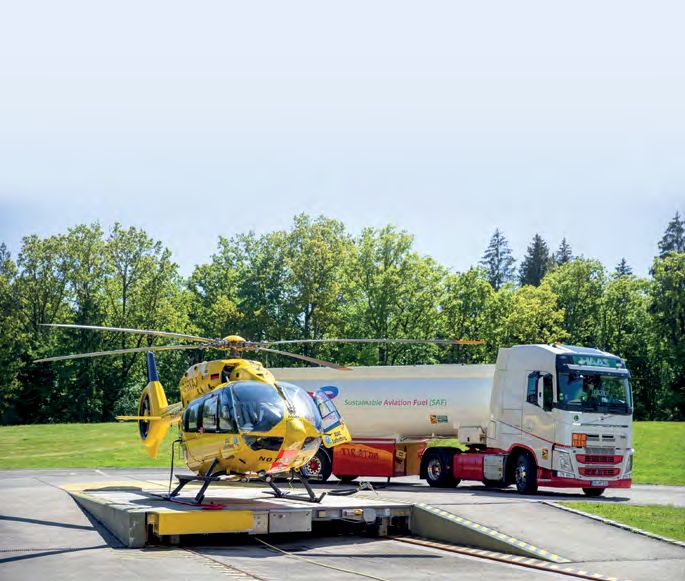
INFOCUS SAFETY & SECURITY

    The risk of bird strike                           Reliable ATC communications integral
    While the risk of bird strike is not new to       to airspace safety
    either fixed-wing aircraft or rotorcraft, the     While the chaos of COVID has turned the          (Aerocivil) has selected CERTIUM VCX from
    reduction in flying activity in some areas        industry on its head and led to an increased     Rohde & Schwarz to be installed at 36
    has led to an increase in the number of birds     focus on hygiene and wellbeing within the        airports. All systems are expected to be
    in certain locations where helicopters            airport and the aircraft, it’s all too easy to   delivered by the end of 2021 and consist of
    regularly operate. Both the European              forget the effect the global pandemic has had    compact IP-based voice communications
    Aviation Safety Agency (EASA) and the             on air traffic control and the technology that   system (VCS) equipment and certified
    Federal Aviation Administration (FAA) have        supports this sector. To help improve air        training, management and maintenance
    observed an increased reporting of bird           traffic management (ATM) in Colombia, the        software. “We have a long-lasting, successful
    strike occurrences on helicopters, elevating      Civil Aviation Authority of Colombia             relationship with our Colombian
    the risk of serious or fatal injuries to                                                           administration,” said Mauricio Samudio,
    occupants as well as substantial damage to                                                         General Manager, Rohde & Schwarz
    rotorcraft. To address this concern, EASA                                                          Colombia S.A.S, commenting on the
    has published an updated safety                                                                    partnership. “This allows us to support
    information bulletin to address bird strike                                                        Aerocivil’s digitalisation roadmap with
    risk mitigation in rotorcraft operations. The                                                      solutions that allow them to continue safe
    bulletin recommends: a robust Safety                                                               operations and reliably meet future
    Management System whereby bird species                                                             challenges. Covering the area from the
    living on or near an airfield are identified                                                       Colombian Caribbean all the way to the
    and their behavioural habits monitored;                                                            Amazon rainforest, this contract is a
    rotorcraft flight manual’s should also be                                                          milestone for air traffic control in the
    revised to include a section dedicated to                                                          region,” he added
    “Operations in areas with high bird
    concentration”; pre-flight planning should
    take into account regional or seasonal
    migratory patterns, as well as feeding and         Marking a milestone for helicopter fuelling
    roosting habits and aircrew should plan            June 2021 marked a milestone for the            used cooking oil. Commenting on how
    flights at the highest level practicable and at    helicopter community when an Airbus             ADAC Luftrettung wants to be a pioneer in
    a minimum of 2,500 feet; transits over areas       H145 rescue helicopter, operated by             reducing CO2 in emergency medical
    of wetlands and inland water areas such as         ADAC Luftrettung, flew with sustainable         services with cleaner, greener fuel, Frédéric
    lakes and ponds should be avoided and              aviation fuel (SAF) for the first time.         Bruder, Managing Director, said,
    coastlines should not be crossed at 90             Supplied by TotalEnergies, the fuel used        “Importantly, SAF is an officially approved
    degrees. However, where helicopters are            for the first rescue helicopter flight (which   fuel, which means that flight and patient
    obliged to operate in areas of bird                was refuelled in Munich) was made from          safety remain at the highest level.”
    concentration, crew are advised to use taxi
    and/ or landing lights in a continuous mode
    during sunny conditions and at night. They
    should also utilise personal protective
    equipment consisting of a helmet and visor
    and if operating at low level, pilots should
    reduce airspeed when practical.

6
SHORT STORIES AND INSIGHTS

                                              Time out with...
                                              Peter Möller, Chairman of the European Helicopter Association (EHA), shares the views
                                              of EHA members, offshore operators and OEMs on how the global pandemic has
                                              affected safety and security for the rotorcraft sector.

                                              oil prices there has been a reduction in the     How will the rise of electric vertical take-
                                              amount of flying hours by the energy             off and landing vehicles (eVTOLs) and
                                              companies and therefore a correction across      unmanned aerial vehicles (UAVs) impact
                                              the offshore fleet in the amount of assets       safety and security for the rotorcraft
                                              flying. There has also been consolidation of     market going forward?
                                              some of the larger helicopter operators          Working together with the European Union
                                              resulting in fewer flights.                      Aviation Safety Agency (EASA) on numerous
                                                 As we come out of the pandemic, there         activities as well as working groups, we are
Do you think it’s fair to say the             appears to be a slight rebound in flying hours   confident that future regulations and
rotorcraft industry has continued to          for oil and gas, but not uniformly across the    technology will allow the safe and secure
grow despite the pandemic?                    global sector. Therefore, the oil and gas        simultaneous operation of eVTOLs and
While we wouldn’t say the rotorcraft          segment of the industry has not seen growth,     manned and unmanned aerial vehicles in
sector has grown during the pandemic, it      and anecdotally will more than likely see a      the same airspace. As well as technological
has on average held its position compared     return to pre-pandemic flying rates by 2024.     means this will also be achieved through
to the pre-pandemic situation and is very     However, the renewable energy sector, i.e.       the development of new regulatory
much diversified. Some sectors like the       windfarms, is anticipating relatively robust     requirements, including Unmanned airspace
Helicopter Emergency Management               growth over the next five years.                 or U-space.
Services (HEMS) sector have remained
quite stable regarding mission numbers        As a result of COVID-19, how are                 How is EHA committed to creating a safe
and in some cases have even seen an           helicopter manufacturers looking to              and efficient operating environment that
increase in numbers.                          adapt their aircraft to ensure safe              is economically viable for the rotorcraft
   Other sectors, like training               operations for a post-pandemic                   community?
organisations, have had to close their        landscape?                                       EHA fully supports the Green Deal initiative
activities for some months but are now        During the pandemic manufacturers                of the EU. Recently our members Airbus
slowly starting to pick up again.             provided support and information to their        Helicopters and SAFRAN presented the first
Meanwhile, in some areas, such as the         operators and authorities on how to better       HEMS helicopter flying with a blend of
construction industry, aerial work            and more safely conduct operations in a          sustainable aviation fuel (SAF). We
operators might have experienced an           pandemic scenario. Generally speaking,           appreciate these exciting developments and
increase in business but may be afraid of a   however, they design, build, improve their       look forward to further new technologies.
future decline due to a reduction of          products (they have developed different          However, similar to other industry sectors,
budgets for new infrastructure.               means of protection between the cockpit          we need to make sure that the transition to
   From an offshore perspective the           and the cabin) and support their customers       a green sky will be supported with
industry has continued to support vital       and operators with the aim to ensure safe        measures and within an acceptable timeline
offshore work during the pandemic, both       operations regardless of the pandemic or         to allow the VTOL industry to go through
with renewable energy and oil and gas.        post-pandemic scenario. This is a continuous     this transition in a way that’s economically
Due to the pandemic and heavily reduced       and normal process for them.                     viable, as well as safely and securely.

                                                                                                                                              7
INFOCUS SAFETY & SECURITY

    Airspace protection                                                                             Seating designed
    Unmanned aerial systems (UAS) were            to protect the future of drones and               to perform and
    already booming long before the
    pandemic. However, COVID-19 has
                                                  autonomous flying vehicles. The system
                                                  will protect communications from                  protect
    certainly spurred on the evolution of         potentially devastating cyberattacks
    drone delivery services. According to         while increasing overall confidence in
    ANGOKA, a Belfast cybersecurity start-up,     drone technology. Dr. Saba Al-Rubaye,
    drones are poised to become ubiquitous        Senior Lecturer in Autonomous and
    devices, with companies such as Wing and      Connected Systems and Project Lead at
    Amazon already exploring this market.         Cranfield University, explains: “We’re
    However, for drones to truly take-off there   very pleased to be working on this
    needs to be a way of ensuring that the        exciting project to protect communication
    communication crucial to controlling and      systems for controlling drones in flight
    flying drones is protected. Securing drone    and ensure they are able to safely
    communication ensures that national           complete their missions, while also
    infrastructure, such as airports and          protecting the environments around                While there are many contactless
    mobile towers, are also protected.            them. There is huge scope for drones and          solutions rolling out to make the
    ANGOKA has partnered with Cranfield           unmanned aerial vehicles to transform air         passenger journey as touch-free and
    university and Connected Places Catapult      transport activities and services – this          hygienic as possible, there is one area
    to develop the Unmanned Aircraft              project will help to harness that potential       of flying where contact cannot be
    Systems Authentication System (UASAS)         in a safe and secure way.”                        avoided – aircraft seating. MGR
                                                                                                    Foamtex is one of several new
                                                                                                    partners using antimicrobial
                                                                                                    technology in its materials for aircraft
                                                                                                    seats, upholstery and interiors to
                                                                                                    make the cabin as safe as possible.
                                                                                                    The upholstery manufacturer, which
                                                                                                    specialises in premium cabin seating,
                                                                                                    has partnered with Addmaster
                                                                                                    Holdings (a subsidiary of Polygiene)
                                                                                                    for the use of its antimicrobial

Flight safety support service                                                                       technology. Laboratory testing using
                                                                                                    MGR SafeWall and real aircraft cabin

revolutionises flight data monitoring                                                               products has demonstrated efficacy of
                                                                                                    96.8% against SARS-CoV-2. “The
Having launched its Flight Safety Support         statistical models and machine learning.          aircraft and airline industries are
Service in June 2021 as a new offering to its     All data is aligned and tailored to each          actively working to adapt to the new
advanced web-based flight data monitoring         customer’s defined safety operating               normal when flying will be frequent
platform, L3Harris Technologies’ Flight Data      procedures. As the launch customer for            again. MGR Foamtex is one of several
Connect will provide expert analysis and          L3Harris’ new service, Norwegian start-up         new partners supplying antimicrobial
investigation capability enabling airlines to     airline, Flyr AS, is excited to be working with   materials for aircraft seats, upholstery
focus on safe operations. Rob Holliday,           L3Harris. Noting how it “can now safely and       and interiors to make the cabin as safe
former Head of Operational Safety at the          effectively coordinate the Flight Data            as possible. This is an area where we
International Air Transport Association           Monitoring for its fleet,” Tom-Arild Bogstad,     anticipate an increased demand for
(IATA), will lead the analysis provided to        Director Safety & Compliance at Flyr AS,          this kind of functionality going
airlines. The data the new service will           added that “L3Harris’ expert analysis and         forward,” says Ulrika Björk, CEO of
analyse will provide fast, accurate mapping       investigation capability will enable Flyr to      Polygiene.
of flights in graphical and 3D formats, with      release pilots from the office and drive our
specific actionable insights generated by         safety operations.”

8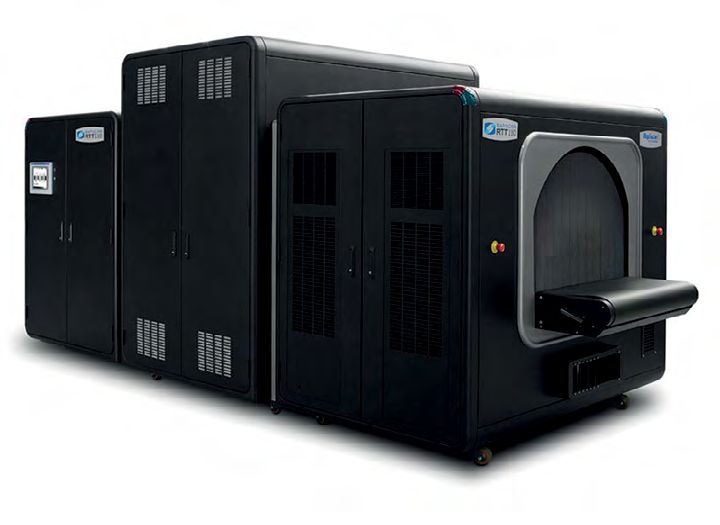
SHORT STORIES AND INSIGHTS

                                                 Time out with...
                                                 Martin Maurino, Technical Officer, Global Aviation Safety, ICAO, on the primary
                                                 challenges in safety planning for the aviation community.

                                                 safety risks through the assistance of regional   should use the roadmap to develop specific
                                                 aviation safety groups as well as regional        SEIs to support the strategy presented in
                                                 coordination. Consistent with the United          their national and regional aviation safety
                                                 Nations’ 2030 Agenda for Sustainable              plans respectively. The use of the global
                                                 Development, the vision of the GASP is to         aviation safety roadmap as the basis for
                                                 achieve and maintain the aspirational safety      regional and national safety planning
                                                 goal of zero fatalities in commercial             enhances coordination, thus reducing
                                                 operations by 2030 and beyond. The GASP           inconsistencies and duplication of effort.
What is the purpose of ICAO’s Global             includes the global aviation safety roadmap,
Aviation Safety Plan?                            which serves as an action plan to assist the      What are the primary challenges and
The Global Aviation Safety Plan (GASP,           aviation community in achieving its goals         priorities in safety planning for the
Doc 10004) sets forth ICAO’s safety              through a structured, common frame of             aviation community following the global
strategy, which supports the prioritisation      reference for all relevant stakeholders.          pandemic?
and continuous improvement of aviation                                                             The COVID-19 pandemic has highlighted
safety. Its purpose is to continuously           What are the key principles of the global         the need for safety plans to consider the
reduce fatalities, and the risk of fatalities,   aviation safety roadmap?                          different impacts of disruption events on
by guiding the development of a                  Two key elements need to be included in           aviation. A disruption event is a rare yet
harmonised safety strategy and the               aviation safety planning:                         very significant event at a global, regional
implementation of regional and national          1. A strategy – What is to be achieved by a      or national level, which adversely impacts
aviation safety plans.                               plan. This includes the analysis of           aviation. Disruption events affect operators,
                                                     challenges, the definition of goals and       aerodromes, air navigation service
How does the 2020-2022 edition differ                targets, and how to measure the               providers, safety and security agencies and
to the previous edition?                             achievement of these goals and targets        other industries dependent on aviation.
The 2020-2022 edition of the GASP                2. An action plan – How the goals and targets    Disruption events, such as the COVID-19
maintains some key elements from its                 defined in the strategy will be achieved.     pandemic, are not typically aviation-centric
previous edition, such as goals for States to    The GASP document contains the global             but have significant impacts to aviation
improve their effective safety oversight         safety strategy. The global aviation safety       operations. During these past 18 months,
capabilities and to progress in the              roadmap serves as an action plan to assist the    we have seen the need for States to develop
implementation of State safety                   aviation community in developing aviation         resiliency measures to respond effectively to
programmes (SSPs). Main changes in the           safety plans, in line with the GASP goals,        disruption events. These include
plan include new goals and targets for           through a structured, common frame of             communication and coordination plans
States, regions and industry, as well as         reference for all relevant stakeholders. The      with various stakeholders at the national,
tools to measure States’ safety oversight        global aviation safety roadmap outlines           regional and international levels. To the
capabilities. This edition also recognises       specific safety enhancement initiatives (SEIs)    extent practicable, States should share and
the importance of safety risk analyses at        associated with the GASP goals and targets.       communicate hazards that may develop
national and regional levels. It incorporates    Each SEI includes a set of actions that           into disruption events.
guidelines and a structure by which States,      stakeholders may use to develop and                  The GASP will be updated to provide
groups of States, or entities within a region    implement specific action plans. States and       high-level guidance to assist States with
identify hazards and mitigate operational        regions, in collaboration with industry,          responding to these events.

                                                                                                                                                   9
BRITISH AIRWAYS
INFOCUS   SAFETY & SECURITY

One step ahead: Securing airborne
modems from cyber attacks
Constant connectivity while in the air has become the norm for                                         entertained, or take advantage of other
passengers, however airborne modems as a standard component                                            internet functionality.
                                                                                                    • Having compromised the modem, attackers
of IFC present a new threat for airlines and their passengers. Argus                                   can gain access to other onboard
experts report on this easy entry point for attackers and how to                                       components, such as Crew Terminals or the
mitigate this risk.                                                                                    Cabinet Management System. This can
                                                                                                       invite disruption of key cabin functionality:
For airline passengers, the ability to           misappropriating passenger information.               lighting, the PA system, cooling and
browse the internet, stream content, and text    For example:                                          heating, and so on.
while in the sky just as you would on the        • Compromised modems can provide                  These are just a few ways in which a
ground is no longer just possible; it is            attackers with access to a passenger's          compromised airborne modem can
expected. And for airlines, as for other            private information, exposing the               significantly diminish the customer
industries, an excellent customer experience        passenger to a myriad of problems in the        experience, as well as the reputation of both
is key to customer retention and ongoing            future. Simultaneously, the airline is liable   airlines and manufacturers.
customer value.                                     to GDPR fines and legal action.
   However, by making airborne modems a          • A Denial-of-Service attack can disrupt          EASY ENTRY POINT FOR ATTACKERS
standard component of In-Flight Connectivity        internet connectivity, disappointing            Aircraft modems are an easy entry point for
(IFC) systems, airlines have also introduced a      passengers who expect to utilise in-flight      attackers, with significant weaknesses that
new avenue for disrupting operations and            internet service to conduct business, be        leave modems largely unprotected. [1][2]

10
ARGUS
The ARGUS IFEC advantage
MULTIPLE INDEPENDENT CUSTOMIZED TO TESTED AND IN PRODUCTION
PROTECTION LAYERS YOUR NEEDS IN THE AUTOMOTIVE INDUSTRY
THREAT AGNOSTIC EASY TO DEPLOY
over-the-air software updates. So even if the ground Security Operations Center (SOC) as
problem of patch management is resolved, soon as possible, so that SOC personnel can
the ability to rapidly deliver the patch to the act quickly to address security incidents.
end-device remains problematic. Filtering events to include only cyber-related
incidents can also save bandwidth and money.
A MULTI-FACETED APPROACH TO Analyse for cyber anomalies. Once
PROTECTING AIRBORNE MODEMS security logs are tunneled to the ground SOC,
New regulations require the aviation industry they can be analysed to find cyber anomalies,
Aircraft modems to address these issues: “manufacturers and like any other IT system. Smart rules engines
operators seeking certification of new can detect anomalies and suspicious events,
are an easy entry aircraft systems and networks, or facilitating effective mitigation by the
point for attackers, modifications to existing ones, will be manufacturer or operator.
required to address threats that can lead
with significant to unauthorised access and disruption of END-TO-END AIRBORNE MODEM
weaknesses that electronic aircraft system interfaces or PROTECTION
information. The European Aviation Safety For the aviation industry, IFC systems are a
leave modems Agency (EASA) is proposing the new key component of the customer experience.
largely unprotected amendments to address the growing And the customer experience drives market
presence of connectivity within modern share and competitive advantage.
aircraft network designs.” [3][4] But airborne modems provide a viable
Argus has determined that this can be entry point to aircraft, exposing airlines to
accomplished most effectively with a multi- significant risk. In the Argus lab, we have
faceted approach: identified a wide range of modem
Some of these weaknesses can be attributed Extend the secure boot. The ability to vulnerabilities and developed powerful
to the use of Commercial Off-the-Shelf detect and prevent unauthorised code from solutions for mitigating these risks. Our
(COTS) hardware and software components, running on the modem is critical. Some modem on-board modem hardening suite and secure
especially with regard to patch management manufacturers implement a secure boot, which log collector agent, plus our off-board fleet
and the aviation industry's long production detects tampering with boot loaders, key protection system, provide end-to-end
and update cycles. operating system files, and unauthorised option modem protection to effectively minimise the
For example, when vulnerabilities are ROMs by validating their digital signatures. But vulnerabilities that cyber attackers can
discovered in a COTS component, the a more effective solution is to extend the secure exploit. At Argus, we are committed to
component manufacturer must issue a patch boot to the entire runtime system and to equipping aviation with the tools needed to
and propagate it up the supply chain. The validate each executed file and script, allowing maximize technology, while minimising risk.
modem manufacturer is therefore dependent only vetted code to be executed during the
on the component manufacturer for the patch modem operation. Links to sources quoted in article
and is unable to issue a patch on its own. Limit user access. Restrict access to
[1] https://ioactive.com/a-wake-up-call-for-satcom-security/
Additionally, given lengthy production cycles sensitive system resources by managing the [2] https://ioactive.com/wp-content/uploads/2018/08/us-18-
and evolving threats, design choices that Mandatory Access Control (MAC) in a Santamarta-Last-Call-For-Satcom-Security-wp.pdf
were originally considered secure may supervised manner, allowing only privileged [3] https://www.aviationtoday.com/2019/03/01/easa-
proposes-new-aircraft-cyber-security-certification-
become security risks by the time a product is users to access them. amendments/
released. And unlike the IT industry, aviation Collect and continuously analyse system [4] https://www.easa.europa.eu/sites/default/files/dfu/
does not commonly utilise rapid, remote security logs. It is vital to tunnel logs to a NPA%202019-01.pdf
11BRITISH AIRWAYS
INFOCUS SAFETY & SECURITY
The 920CT scanner allows passengers to
leave liquids and technology, such as
laptops, in their carry-on luggage during
the baggage screening process.
It’s all in
the bag
Baggage screening solutions are integral to aviation safety and Inspection and Resolution (OSIR) for the
operator, reducing the need to open and
security. Rapiscan Systems reveals how it has worked with Avalon
manually search bags for contraband. The
Airport in Australia and Oslo Airport in Norway, to adapt its technology complex software is fully upgradeable,
and future-proof both airports’ baggage screening requirements. effectively future-proofing the 920CT for
evolving requirements.
R
ising to meet a challenge is what during the baggage screening process. The EFFICIENT BAGGAGE SCREENING
business is all about. Complex 920CT has been installed at Avalon Airport, In addition, it has been engineered to
challenges are beneficial to any Melbourne, where CEO Justin Giddings said integrate seamlessly with Rapiscan’s Tray
company, providing learning opportunities of the system, “This means that going Return System (TRS) solution to create a
and a means to demonstrate expertise through security is a smoother exercise with more efficient checkpoint experience for
and innovation. less contact.” passengers and staff. The employment of
Rapiscan Systems is in the business of The 920CT is equipped with advanced Rapiscan’s 920CT with the integrated TRS,
meeting such challenges, particularly in software and detection algorithms. It can Metor 6S High Sensitivity Metal Detector and
regards to security and efficiency. The register threats quickly and make decisions Itemiser 4DX Explosive Trace Detection
920CT scanner is no exception, allowing based on what it sees. The 3D volumetric systems has boosted Avalon Airport’s
passengers to leave liquids and technology, imaging is superior to 2D systems as it capabilities, enabling it to operate as a truly
such as laptops, in their carry-on luggage allows for a higher degree of On-Screen international airport.
12RAPISCAN SYSTEMS
RTT110 EDS System was adopted by the
forward-thinking team at Oslo Airport.
Rapiscan designed a unique water-cooling
solution that would allow the RTT to align
with the airport’s eco-approach to
operations.
“Achievement of this detection standard sizeable undertaking at an early stage of
demonstrates our commitment to pursuing experience installing the RTT in the field.
the highest regulatory approval standards to Steve Revell, Senior Director of Aviation CT
meet the needs of our customers,” says Mal at Rapiscan, reflected that the project was a
Maginnis, President of Rapiscan Systems. key step for the RTT. “The first major airport
“We look forward to bringing this innovative in Western Europe to take on the RTT was
screening solution to more customers around Oslo Airport. It’s a prestigious and forward-
the world.” thinking airport, and the operators were not
afraid to take pioneering risks.”
SUSTAINABLE SECURITY SCREENING In response to Oslo Airport’s commitment
Rapiscan Systems applied a similar approach to environmentally responsible construction,
to navigating unique challenges when Rapiscan designed a unique water-cooling
installing the RTT110 EDS System in solution that would allow the RTT to align Oslo Airport not only required a bespoke
partnership with Oslo Airport. The first with Oslo’s eco-approach to operations. approach in terms of product design but also
challenge was the creation of a propriety process implementation – recurrent Level 4
water-cooling system that worked in BESPOKE SOLUTION image analysis.
conjunction with the airport’s green Rapiscan worked with its suppliers to develop As baggage travels through an airport, it is
initiatives, and the second, to provide an a solution that met the airport’s requirement subjected to multiple levels of security
additional level of security screening that to use reclaimed snow, which is melted down screening, both by human operators and
operated in parallel to the existing baggage and pumped around the airport. A redesign computer algorithms. Oslo Airport required
screening process. to integrate this unique water-cooling an extra level added to the normal ‘flow’ of
The Oslo Airport project commenced concept into the RTT system created a final screening. “If a Level 3 operator rejects a bag,
during a formative time in the RTT’s history. product that is considerably more robust than it goes into a Level 4 area within the BHS
“We had a machine that was very much in its earlier iterations. Rapiscan is currently the (Baggage Handling System) of the airport,”
infancy, that still had its fair share of teething only company that can provide the RTT as an explains Craig Chitty. “It shows up on a
problems,” explains Craig Chitty, Head of externally water-cooled or internally cooled screen. It is a concept of operations that we
International Aviation Programmes. It was a air-conditioned system. don’t employ in any other airport even now. It
is still very unique to Oslo.”
The aviation industry thrives on
partnerships, on service providers working to
To this day, we are the only company that meet challenging requirements through
can provide the RTT as an externally innovation and cooperation. Taking a
technology that was, at the time, still in its
water-cooled system, or an internally infancy and working to adapt this technology
cooled air-conditioned system. to a stringent set of requirements is a clear
example of Rapiscan’s dedication to working
Steve Revell Senior Director with its partners – a commitment the
of Aviation CT at Rapiscan company makes to every project.
More from Rapiscan Systems overleaf.
13INFOCUS SAFETY & SECURITY
Protecting against a cyberattack
Rapiscan Systems’ Cybersecurity Lead, Dr Richard Piggin, that one hour of disruption in a large airport
reports on airport cyber resilience and managing supply could cost more than €1 million at peak
operating times (ACI, 2019). In the UK, 75%
chain risk for the airport sector. of large organisations identified and
reported a cybersecurity incident in the last
12 months (DCMS, 2020). The ACI 2020
A
COVID-19 pandemic report indicated that
irport safety and security have Operational Technology (OT) operates 61.5% of airports had experienced targeted
converged, with cybersecurity critical airport functions. attacks.
becoming an increasing and enduring Cybersecurity is the responsibility of the The airports’ trade association Airports
focus. The introduction of the European entire organisation, and effective Council International (ACI), highlighted
Network and Information Systems (NIS) cybersecurity relies upon the leadership and potential impacts to airports from a
Directive underlines the necessity for airports support of the airport’s management team. cybersecurity incident in the Cybersecurity for
to actively manage cybersecurity risk. Airport Executives guidance (ACI, 2019):
Cyber resilience involves more than THREATS TO AIRPORTS AND IMPACT
security, according to the World Economic ON OPERATIONS • Operational disruption – This may include
Forum. It requires focus on protecting critical Cyberattacks or compromises can disrupt passenger-facing systems such as flight
functions, not just assets (WEF, 2020). airport operations and interfere with information displays; airline check-in
What’s more, it is not merely an IT issue; systems (ACI-RASC, 2019). It is estimated facilities; departure-control systems; and
14RAPISCAN SYSTEMS
The US National Security Agency (NSA) and The Directive creates four high-level
the Cybersecurity & Infrastructure Security objectives:
Agency (CISA) recently published an alert • Appropriate organisational structures,
recommending critical infrastructure policies, and processes to understand,
organisations take immediate actions to assess and manage risks.
secure their operational technology assets • Proportionate security measures to protect
(NSA and CISA, 2020). essential services and systems.
The NSA and CISA alert provided details of • Capabilities to ensure defences remain
recently observed cyber threat activities and effective and detect cybersecurity events.
their impact upon operational technology: • Capabilities to minimise the impacts of a
cybersecurity incident on the delivery of
RECENTLY OBSERVED TACTICS, essential services, including the restoration
TECHNIQUES, AND PROCEDURES of services.
It is estimated that • A highly targeted bespoke email (spear The UK National Cyber Security Centre
phishing) to launch malware on a victim’s (NCSC) has produced comprehensive
one hour of computer and obtain initial access to the guidance for NIS Directive implementation
disruption in a large organisation’s information technology and self-assessment (NCSC, 2020).
network, before transitioning to OT
airport could cost systems. MANAGING CYBERSECURITY RISK
more than ¤1 million • Deployment of commodity ransomware Cybersecurity needs to be addressed from
to encrypt data for impact on both IT and inception, progressing through every stage of
at peak operating OT networks. system design, development and operation
times (ACI, 2019). • Connecting to remotely accessible systems until the system is retired. Airports should
without user account or password consider suppliers that have a similar
authentication. commitment to cybersecurity.
• Using common network protocols to According to ACI (ACI, 2019), supply chain
communicate with devices and download risk assessment practices should include the
modified programs. following activities:
• Use vendor engineering software • Supply chain risk management processes.
security systems, and baggage systems or and program downloads. • Suppliers and third-party partners
operational control systems. • Modifying device/system programs and identification and risk assessment.
• Economic impact – Financial information configurations. • Ensure procurement measures meet
theft or fraudulent transactions are cybersecurity programme objectives.
common cybersecurity crimes. FedEx’s IMPACTS • Suppliers and third parties are routinely
European TNT operations were disrupted • A loss of availability of the system. assessed and evaluated.
by NotPetya, estimated losses and recovery • Partial loss of view for human equipment
expenditure were expected to exceed $500 operators who are unable to view
million (Piggin, 2018). performance displays or interact with a
• Reputational damage – Loss of proprietary system.
information can often have an impact on an • Loss of productivity and revenue.
airport’s business reputation and stakeholder • Adversary manipulation of control and
trust. The loss of a USB memory stick, disruption.
containing over 1,000 unencrypted sensitive
files, by a Heathrow airport employee in CRITICAL INFRASTRUCTURE & EU
2017 was widely reported in the press. NETWORK AND INFORMATION SYSTEMS
• Legal consequences – Data protection and (NIS) DIRECTIVE This article was contributed by Dr Richard
privacy laws require management of the The NIS Directive has concentrated airport Piggin EngD CEng MIET MBCS, Rapiscan’s
security of all personal data and the executives’ attention on cybersecurity and Cybersecurity Lead. Rapiscan Systems is a
leading provider of security inspection
retention of security information. resilience, with a potential maximum
solutions, with more than 100,000 products
Compromising this data can have legal €20 million penalty for operators of installed in more than 170 countries.
consequences. essential services.
15human-centered flying expertise™
Airmanship - Six Airmanship Traits™
Flight Discipline
Decision Making
Pilot Monitoring
Commander Safety-II
Human Factors
Resilience Engineering
carbonbased aviation provides holistic, customizable, scalable and effective
solutions to its clients via programs consisting of fully interactive
workshops and presentations as well as integrative processes
consultancy, where operations, training and safety departments can be
streamlined to benefit from the latest tools and methods.
We enhance the human performance and its interface
with highly complex systems in the aviation industry
www.carbonbasedaviation.comCARBONBASED AVIATION
Human-centered
flying expertise
Complexity in socio-technical systems, such as aviation, has Although there is a resurgence of classic
CFIT accidents, there is a noticeable rise of
increased in the last few decades. Have the human factors, WEIRD events (Prof. Patrick Hudson’s
training and safety processes kept pace with the changes? acronym for Wildly Erratic Incident Resulting
C
in Disaster). They do not follow a linear
lassic causation models such as linear. Other accidents and serious events progression and have a non-deterministic
Reason’s “Swiss Cheese” can be indicate that adding complex technology to a nature. As the industry continues to improve,
inadequate in portraying the heavy population of pilots that has been suffering a these events will constitute the bulk of
interaction and complexity of today’s air continuous deterioration of skills and accident causation.
transport system. airmanship, is a bad mix. Until future To meet these challenges, pilots may need
The accident report of a Boeing 737 loss of autonomous flying machines become an to adapt or invent procedures when needed,
control in-flight event in Amsterdam (2009) accepted reality, the human element in the by an ad hoc trial and error to solve new and
suggests a tight coupling between technology cockpit remains the safety cushion, because of unforeseen circumstances such as the Sioux
and the human element. Socio-technical its huge potential to solve complex situations City DC-10 (1989) and the A300 in Baghdad
systems are inherently complex and non- that have never been experienced before. (2003), or the A330 fuel contamination event
17BRITISH AIRWAYS
INFOCUS SAFETY & SECURITY
The three ages
of safety
Accident causation has evolved
concurrently with the events that
shaped the industry and their
corresponding literature. From
simple linear (Heinrich’s
Dominoes) to complex linear
(Reason’s Swiss Cheese) and
Perrow’s (Normal Accidents
Theory) to today’s Functional
Resonance (Hollnagel) in tightly
coupled systems.
in Hong Kong (2010). A robust set of KSA
(knowledge, skills and attitudes) needs to be There is no sound Airmanship
developed and transferred to the current and
the next generations of airline pilots.
without strong Flight Discipline
foundations.
BRIDGING THE EXPERTISE GAP
The high reliability of technical systems in the Leonardo Herman, carbonbased aviation,
aviation industry has groomed a generation of Founder and Advisor
pilots that may have never experienced a
serious event throughout their flying careers or,
most importantly, had the chance to learn from
their own experiences or from others. We have CAN AIRMANSHIP BE TAUGHT? culture based on uncompromised flight
become victims of our own success and today, “There is no sound Airmanship without discipline towards sound airmanship and high
when a master warning is activated, surprise strong Flight Discipline foundations,” says resilience capabilities.
and a pronounced startle effect takes place. Leonardo Herman, carbonbased aviation’s
Since “fate was the hunter” (see Ernest K. Founder and Advisor. Flight Discipline is the LOOKING INSIDE AND AHEAD
Gann for more), the seasoning of a novice foundation that supports the success of a Another cornerstone of a pilot’s skill set is
crew member took place under the auspices Training for Airmanship program. Decision Making. Normative models have
of an experienced Captain. Together, this By incorporating specific academic been widely implemented in the last 25 years,
robust crew composition walked through the instruction, the Six Airmanship Traits™ entail but naturalistic researchers (Orasanu, Klein)
failures and situations that led to a natural specific behavioral markers designed to enable showed that aviation is one of the safe-critical
and safe transfer of expertise and the operators, trainers and pilots to develop domains that utilizes naturalistic methods
development of airmanship. important skills that support a professional with high degrees of success.
18CARBONBASED AVIATION
*(after Hale, Hovden 1998 and Hollnagel 2014.)
Naturalistic Decision Making capitalizes on
subconscious processes and rely heavily on
pattern recognition and mental simulation.
A common saying is to go “back
When there is a match, a naturalistic decision to basics”, but are today’s “basics”
is usually the output. In a complex world,
information is usually partial and incomplete
comparable to the past? There is
and normative decision-making should be a need to train for higher levels of
used to support a naturalistic process. Models
and methods should reflect this, by catering
airmanship that goes beyond the
for a wide range of experiences and expertise, absolute minimum compliance
leading to safer and more efficient decisions.
required by the regulators.
EXTENDED, TAILORED TRAINING
Walter Schwyzer, carbonbased aviation,
PROGRAMS
Founder and Director
Traditionally, training regulations reflected
the most common and critical maneuvers
that technology presented, such as the classic
V1 cut. Despite the opportunities that more monitoring end up as part of “crew resource basics”, but are today’s “basics” comparable to
flexible training programs such as AQP and, management” training. the past? There is a need to train for higher
more recently, EBT present, regulatory Minimum regulatory training is usually levels of airmanship that goes beyond the
training remains an absolute minimum an insufficient to meet the higher levels of absolute minimum compliance required by
operator needs to do, and the soft skills adaptability required for complex systems the regulators.” describes Walter Schwyzer,
required in decision making and effective failures. “A common saying is to go “back to carbonbased aviation’s Founder and Director.
19The National
Safety & Security
Building safer skies Academy is
endorsed by ICAO as
an Aviation Security
Through its recently formed safety and security division, find out
Training Centre.
how Air Partner is investing in the future of aviation safety and
security training to make our skies safer.
A
s operations begin to restart in the consultancy and software solutions, in Safety & Security Academy is endorsed by
aviation industry, businesses with addition to training. ICAO as an Aviation Security Training Centre
critical training needs are (ASTC).
considering how they can address skill fade INTRODUCING THE NATIONAL SAFETY &
and ensure ongoing compliance. SECURITY ACADEMY AVIATION SAFETY TRAINING – WHERE IS
Throughout the pandemic, Baines The disruption arising from the COVID-19 THE DEMAND?
Simmons, experts in aviation safety, and pandemic has led to a new safety and security With a full portfolio of virtual training
Redline Assured Security, an internationally landscape, presenting new risks and being offered during the pandemic, over the
acclaimed consultancy, have been challenges from all sectors of the industry. To past year, Baines Simmons has seen interest
supporting the industry, with a range of respond to the ever-changing needs of the for courses including European Aviation
training (offered in-person, online and industry, and in recognition of the combined Safety Agency (EASA) Part-145 –
delivered onsite for clients), in addition capability as a division, Air Partner is proud Understanding Requirements for
to a comprehensive portfolio of security to have launched the National Safety & Maintenance, remaining consistently
e-learning. Security Academy, in Doncaster, South popular, attended by engineers, technicians,
The two companies work closely together Yorkshire. It offers an extensive portfolio of management and compliance staff alike.
to make up Air Partner’s Safety & Security training courses, across all aspects of safety Practical Skills for Investigators has also
division, offering an extensive range of and security. Formally known as the National been in demand, along with EASA Part-21
products and services, spanning quality Security Training Centre (NSTC), run by courses. These courses will all be available
assurance, compliance management, Redline Assured Security, The National at the National Safety & Security Academy.
20AIR PARTNER
Vital signs: The Recognition of Firearms
and Explosives (RFX) Instructors course
has been extremely popular.
virtual, in person in the National Safety &
Security Academy, at London-based hubs or
delivered exclusively within a client’s company.
The Air Partner Safety & Security division
have worked with the world’s largest aviation
organisations to develop and power up their
management systems utilising a suite of
diagnostic, advisory and training services
AVIATION SECURITY TRAINING – facilities for a range of courses from X-ray that are recognised as world leading. As a
SUPPORTING THE INDUSTRY’S screener training to quality assurance training. division, they remain on hand to support
REQUIREMENTS Each learning area provides access to the most clients as operations begin to resume.
Over the last year Redline has seen consistent advanced equipment, encompassing all
demand for security training. The most aspects of an airport’s security function from Find out more
popular courses are frequently requested to be check-in through to departure.
For aviation safety courses
delivered in person and include: Aviation
hello@bainessimons.com
Security Manager – Initial and Recurrent; OFFERING FLEXIBILITY AND CHOICE www.bainessimmons.com
Recognition of Firearms and Explosives As lockdown restrictions are eased, Baines
Instructors; and Cargo Security. To support the Simmons and Redline are committed to For aviation security courses
learning experience, the National Safety & delivering training courses offered to suit a sales@trustredline.com
Security Academy provides state-of-the-art customer’s requirements – whether that is
www.trustredline.com
21A breath of fresh air
If cabin air quality is Interestingly though, there is no automatic MONITORING CABIN AIR QUALITY
compromised, it can have equipment installed on board most aircraft Teledyne ACES™ (Aircraft Cabin Environment
today to accurately monitor and measure the Sensor) is the first FAA-certified solution to
serious repercussions for
air quality in both the cabin and the flight address this problem. The project started after
operators and their passengers. deck. When an air quality incident occurs, hearing from multiple airlines about
Teledyne Controls reveals how understanding what really happened is challenges related to cabin air quality and the
ACES has evolved to monitor largely based on human perceptions. For lack of means to comprehensively monitor it.
example, the incidents reported are classified The solution, which was specifically designed
and address potential air quality
by odour type, such as oil smell, electric for the aviation market, leverages extensive air
issues and ensure a better, smell, burned smell, etc. which leaves room quality expertise within Teledyne
safer flying experience. for subjectivity and often results in the Technologies Incorporated, combined with
A
inability for the operator to identify the root Teledyne Controls’ core expertise in data
lthough cabin air quality on cause for the event. Moreover, events that did acquisition, wireless transfer, and analysis.
commercial aircraft is normally very not exceed an established health standard to ACES evolved quickly from concept to
good, smoke, odour and fume events be considered harmful, but had strong smell certification in just over two years and is now
do happen. When they do, the cost for the or smoke associated with them, may be FAA certified on the 737 with A320
operator can be high, including medical reported, whereas events involving certification expected by the end of Q2 2021.
expenses, potential legal fees, cancelled hazardous, but invisible or odorless The system has been installed on a major US
flights, maintenance time, insurance contaminants, such as carbon monoxide or Airline and is performing extremely well in a
premiums and brand damage. ozone, may occur and remain undetected. variety of on-aircraft and off-aircraft tests.
22You can also read


