Information Privacy and Security Training 2018 - Authored by: Office of HIPAA Administration - Gwinnett Medical Center
←
→
Page content transcription
If your browser does not render page correctly, please read the page content below

Information Privacy
and Security Training 2018
            Authored by:
   Office of HIPAA Administration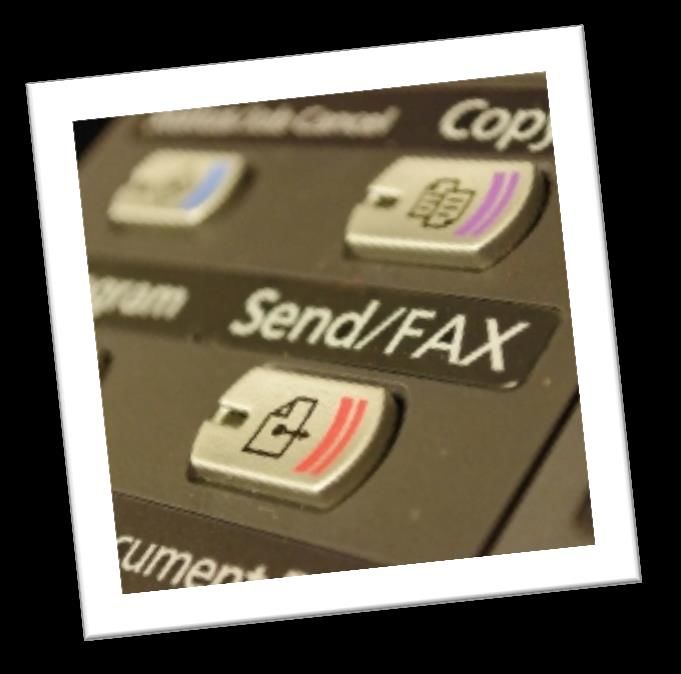
Objectives After you finish this Computer-Based Learning (CBL) module, you should be able to: Define privacy practices and Protected Health Information (PHI). Explain the basic concepts of information security. Explain your security responsibilities and the part you play in protecting sensitive information and assets belonging to GHS.
Topics Covered in this CBL What needs to be protected? What is Protected Health Information? What is Information Security? What are the consequences of Privacy or Security failures? What are the types of Security failure? How can we safeguard patient information from accidental or malicious use or disclosure?
What is HIPAA? HIPAA stands for the Health Insurance Portability and Accountability Act, a US law designed to provide privacy standards to protect patients' medical records and other health information provided to health plans, doctors, hospitals and other health care providers. This law provides for both the privacy protection and security of electronic medical records.
Basic HIPAA Rights for the Patient Every patient has basic HIPAA rights. These are communicated to our patients in the Notice of Privacy Practices posted in our registration areas and on our website, and as a copy offered to the patient at the time of registration.
Protected Health Information
Protected Health Information (PHI) is health or medical
information linked to a specific individual’s:
Identity – demographic and financial data, or
Medical condition and treatment – clinical data.
PHI is individually identifiable information created,
maintained or received by a:
Healthcare provider,
Health plan, or
Healthcare clearinghouse.
PHI relates to the past, present or future:
Physical or mental health condition of individual, or
Payment for the provision of health care to an individual.
Examples of Protected Health Information Name Medical record number Address Diagnosis Age Medical history Social Security Number Medications Phone number Observations of health Email address And more…. Full Face Pictures
What Needs to be Protected?
Protected Health Information (PHI) is protected under
the Privacy Rule and is defined as all “individually
identifiable health information” whether electronic,
paper or oral.
Electronic PHI (ePHI) is PHI stored on or transmitted by
computer, mobile device or network, including:
• USB drives
• Cell phones
• iPads
• CDs
• Smart phones
• Computer files
• Clinical equipment
Privacy and PHI
Minimum Necessary
“Minimum Necessary Information” means the only
information the receiving party has a legitimate clinical
and/or business need to know.
Be sure you disclose, fax, copy, and print only the
minimum necessary patient information for the
purpose.
The GHS Minimum Necessary policy states that
associates are not allowed to access their own, a
relative’s, a friend’s, or anyone else’s medical record if
they are not involved in the individual’s medical care.
Privacy and PHI
Transmission of PHI
When emailing, copying, printing, faxing, or scanning:
Do not leave copies unattended on shared equipment.
Always email from a GHS email address, for example:
“…@gwnnettmedicalcenter.org”.
”…@gwinnettmedicalgroup.com”.
Verify the destination information to be sure you are
sending the information to the correct location.
If your email is being emailed to an email address other
than @gwinnettmedicalcenter.org then you need to put
[secure] in the subject line to encrypt your email.
For example: Subject: [secure] Stuff About PatientPrivacy and PHI
Transmission of PHI
When faxing, use the GHS-
approved fax cover sheet
with confidential health
information and warning.
You can find the approved
fax cover sheet at
GMCConnect/Quick
Links/Forms/Click on the
letter “F” in the upper
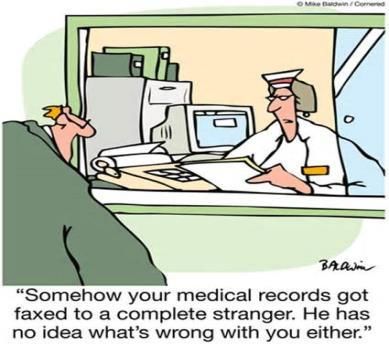
center of the screen.Privacy and PHI Cost of Misdirected Faxing Two misdirected faxes cost a hospital $387,200 in a HIPAA settlement. 1. One fax went to patient’s employer in error. 2. Another fax went to unintended recipient.
Privacy and PHI
Communication
To protect a patient’s privacy:
If the patient’s friends or family are in the room, do
not discuss PHI without the patient’s permission;
ask.
Avoid using patients’ names in public hallways and
elevators.
Know who the patient has designated as his or her
personal representative before discussing PHI.
Especially remember to protect highly sensitive
PHI: HIV, STDs, and Mental conditions.Privacy and PHI
GHS Is Committed to Privacy
Let our patients know that GHS values and
protects their privacy.
Tell patients when you are taking privacy
precautions.
For example: say, “To protect your privacy, I am…”
“Speaking in a low voice.”
“Asking visitors to step out of
your room.”
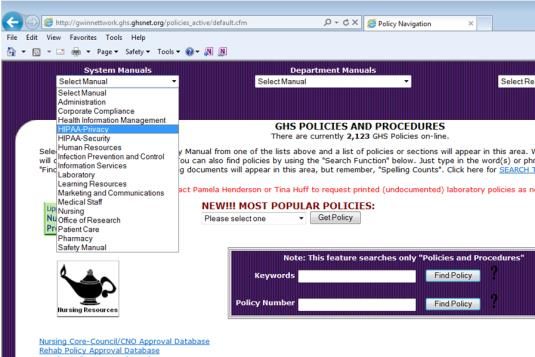
“Pulling the privacy curtain.”Privacy and PHI Privacy Policies You can access the privacy policies covered in this CBL on GMCConnect by clicking on “Policies” and then selecting the “HIPAA Privacy” System Manual.
Privacy and PHI
Other Important Reminders
Disposal of printed material
The only proper method of disposing of paperwork
containing sensitive patient information is to shred it.
Patient medical records
Never leave a medical record out and open.
Never leave a medical record unattended in a patient’s
room.
If a medical record is not in use or is going to be
unattended, place it face down or in its appropriate
storage location.
“No Information” patients
Never confirm or acknowledge a “no information”
patient is at a GHS facility; for example, say “I have no
information on a patient of that name.”What is Information Security?
Information Security is the process of ensuring
the confidentiality, integrity, and availability of
information through appropriate safeguards.
Confidentiality:
Prevents unauthorized access or release of PHI.
Prevents abuse of access, such as identity theft, gossip.
Integrity:
Prevents unauthorized deletion or changes to PHI.
Availability:
Prevents service disruption due to malicious activities,
accidental actions, or natural disasters.What is Information Security?
Regulations and Standards
GHS Information Security policies and procedures
are based on the following regulations and
standards:
Health Insurance Portability and Accountability Act
(HIPAA)
National Institute of Standards and Technology (NIST)
standards
Health Information Technology for Economic and
Clinical Health (HITECH) Act
Payment Card Industry (PCI) standards
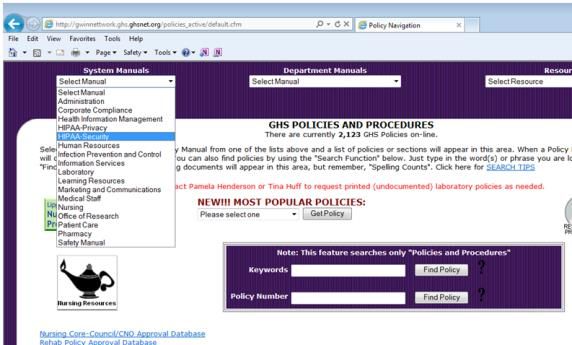
Joint Commission (JC) accreditationWhat is Information Security? Information Security Policies You can access the Information Security policies covered in this CBL on GMCConnect by clicking on “Policies” and then selecting the “HIPAA Security” System Manual.
Information Security Mascot KIP is the GMC mascot for the HIPAA Privacy and Security Training and Awareness program. KIP is short for “Keep Information Protected”. You can email KIP at: KIP@gwinnettmedicalcenter.org
Types of Security Failure
There are two types of security failure:
1. Intentional attack, and…
2. Workforce member carelessness.
1. Intentional Attack
Malicious software (viruses)
Stolen passwords
Impostors calling or e-mailing to steal information
(phishing)
Theft (laptop, smart phone)
Abuse of privilege (employee/VIP clinical data)
Social engineering (talking someone into giving access
that is not authorized)Types of Security Failure, continued 2. Workforce Member Carelessness Giving a patient/family documents from another patient’s records. Sharing passwords Not signing off of computer systems Downloading and launching unauthorized software Improper use of e-mail and web surfing Not questioning or reporting suspicious or improper behavior Negligence
Consequences of Security Failure Security failure can result in: Disruption of patient care. Increased cost to the organization. Legal liability and lawsuits. Negative publicity. Identity theft (monetary loss). Disciplinary action. Loss of public confidence.
Protection Against Security Failures You can protect against security failure by: Creating “strong” passwords. Using e-mail and the internet appropriately. Securing desktops and portable devices. Disclosing only the “minimum necessary” PHI. Reporting breaches.
Protecting Against Security Failures
Create Strong Passwords
Do choose strong passwords. A strong password:
Is at least 8 characters long, and …
Contains a combination of capital letters, lower case letters,
numbers, and special characters.
Don’t share your passwords.
You are responsible for the actions of others when they use
your computer or user and password credentials.
Don’t store passwords in your office or where they are
accessible to others.
Don’t use the “remember password” feature on
computer systems.
Do change your password if you suspect a breach, and
report it to the CRC at x23333.Protecting Against Security Failures
Appropriate Use of E-mail, Internet
When you use GHS information technology
and computer systems, your activities are not
private.
GHS monitors activity that occurs on its
network, including:
Access to patient information
Internet use,
Corporate e-mail,
Web-based e-mail (Yahoo, Hotmail, Gmail), and
Instant messaging.Protecting Against Security Failures
Appropriate Use of E-mail, Internet
GHS monitors computer use to ensure that:
Sensitive information is sent out correctly.
No harassing or pornographic communications
are taking place.
Associates are using time and resources
appropriately.
Associates are not viewing inappropriate
websites.
If you misuse GHS computer equipment or
internet access, you are subject to disciplinary
action.Protecting Against Security Failures
Appropriate Use of E-mail
Do not open e-mails from someone that you do
not know.
Do not forward work e-mails to a non-GHS e-mail
account.
Do not send e-mails that contain:
Profanity, obscenities or derogatory remarks.
Pornographic material.
Threats and hate literature.
Chain letters inside or outside the organization.
Sexual, ethnic, racial, or other workplace harassment.Protecting Against Security Failures
Appropriate Use of E-mail
Be aware of risks, including spam and phishing e-
mails.
Spam is unsolicited bulk e-mail, including:
Commercial solicitations, advertisements, chain letters, pyramid
schemes, and fraudulent offers.
Do not reply to or forward spam messages.
Phishing e-mails pretend to be from trusted names, such
as Citibank, PayPal, Amazon, even co-workers, but give you
directions to malicious sites.
Never click on a link in a suspicious e-mail.
A reputable company will never ask you to send your password
through e-mail.
Forward spam and phishing e-mails to
KIP@gwinnettmedicalcenter.org.Protecting Against Security Failures
Appropriate Use of the Internet
You may not visit inappropriate Internet sites
or engage in inappropriate communications.
Examples of sites or communications that are
inappropriate include:
Pornographic
Culturally offensive
Racist or hate-related
Related to gambling
Related to computer hacking
TerroristicProtecting Against Security Failures
E-mail, Internet and Viruses
Computer viruses are dangerous programs that:
Run on a computer without the knowledge or permission of
the user, and …
Are meant to damage your computer or to gain access to
your information.
Viruses can:
Spread onto computer discs and across a network.
Corrupt data files.
Format or erase your hard drive.
Delete files.
Install software that will allow a hacker access to your
system.
Send sensitive information to unauthorized parties.Protecting Against Security Failures
Secure Desktops and Mobile Devices
Log off and exit computer programs when
leaving a work station.
Ensure that your computer screen is turned so
that passersby cannot read information on the
screen.
Use an encrypted USB drive if you must store
or transport data.
Do so only if there is a business purpose.
Contact the CRC at x23333 to obtain an encrypted
USB drive.Protecting Against Security Failures
Secure Desktops and Mobile Devices
Notebook computers and mobile devices:
Never leave them unattended.
Lock them up!
Never leave them visible in your car.
Store as little sensitive information on them as
possible.
If your notebook computer or mobile device is lost
or stolen, report it to the CRC x23333 and Public
Safety department immediately.Protecting Against Security Failures
Social Engineering
Be aware of social engineering, which is the
process of tricking or manipulating someone
into giving access to sensitive information.
Examples include:
Tailgating: One or more person(s) follow(s) an
authorized person through a secured door or other
entrance.
Shoulder surfing: Direct observation techniques,
such as looking over someone’s shoulder to get
information.Protecting Against Security Failures
Social Engineering
Impersonation: A person pretends to be someone they
are not in order to gain information.
For example, you receive a phone call from someone
claiming to be a PC tech or GHS associate requesting such
information as:
o Passwords,
o User name, or
o Other sensitive information.Protecting Against Security Failures
Media Disposal
You must dispose of media (disks, paper, etc.)
containing sensitive information so that the
information cannot be accessed by any unauthorized
person.
Proper media disposal methods include:
Paper records: place in shred bins.
CDs, film, discs, and other media:
Lawrenceville: Take to Information Services Operations.
Duluth: Take to media disposal bin by the loading dock.
Hard disc drives: Contact the CRC at x23333.
Just erasing data does not actually remove it!Protecting Against Security Failures
Social Networking
Get approval from your manager before accessing
social networks using GHS devices or systems.
Do not use information gained as a result of your
position with GHS to contact or communicate with:
Patients,
Clients, or
Third-party business associates.
Do not post any GHS-related information on social
media like FaceBook, Twitter, LinkedIn, SnapChat etc.
Do not share information related to:
Our corporation,
Patients, or
Clients.Protecting Against Security Failures
Social Networking
Represent GHS in a professional manner at all
times.
If you post anything from a GHS e-mail address:
Include a disclaimer stating that the opinions you’ve
expressed are strictly your own and not necessarily
those of GHS.
Exception: The posting is in the course of business
duties and has been approved by the GHS Marketing
and Communications department.Privacy and Security Breaches
“Breach” means the unauthorized acquisition,
access, use, or disclosure of PHI.
Someone sees information they’re not allowed to
see.
Breach fines and penalties can be brought
against an individual, not just GHS.
In some cases, a breach must be reported to:
The patient,
The media,
The Office for Civil Rights/Department of Health
and Human Services.Breaches
Civil Monetary Penalties Law
Breach fines and penalties can
range into the millions of dollars.
The government may seek civil
monetary penalties for a wide
variety of fraudulent and abusive
conduct in addition to:
Exclusion from the Medicare and
Medicaid program,
Criminal conviction, and
Jail time.Breaches
Report Incidents or Breaches
If you believe an Information Security incident
or a breach has occurred:
Let your manager know.
Report incidents or breaches of sensitive GHS
information to:
www.gwinnettmedicalcenter.ethicspoint.com or,
Call the Corporate Compliance Hotline: 888-696-9881.Breaches Report Incidents or Breaches When you report an incident or breach, the Office of HIPAA Administration will: Investigate, Perform risk analysis/mitigation of harm, Notify patient, if necessary, and Notify regulatory agency, if necessary.
Breaches
Report Incidents or Breaches
GHS takes disciplinary actions in response to confirmed
information breaches.
If you fail to report a known or suspected breach, or if you report
a breach for malicious reasons, you might receive a disciplinary
action.
Office of HIPAA Compliance investigates all suspected Privacy
and Information Security breaches.
Disciplinary action may result in termination of employment.
All confirmed allegations of breach are subject to risk
assessment and disclosure to the U.S. government Health and
Human Services Department.
GHS can take no retaliatory action against any workforce
member who in good faith makes a report, complaint or inquiry.Congratulations!
You have completed this CBL module.
Continue on to complete the Information
Privacy and Security Acknowledgment.
Questions? Contact HIPAA Administration:
Compliance Manager/Information Privacy and
Security: 678-312-4243
Privacy and Security Coordinator: 678-312-3793
Compliance Hotline: 1-888-696-9881You can also read


