Insights from WA Services Working with Aboriginal/LGBTIQ+ people - Organisations Summary Report 2021
←
→
Page content transcription
If your browser does not render page correctly, please read the page content below
Insights from WA Services
Working with
Aboriginal/LGBTIQ+ people
Organisations Summary Report
2021
Acknowledgement of Country
This study was designed, developed and implemented on Whadjuk Noongar
Country. We acknowledge and respect our continuing association with the
Noongar people, the traditional custodians of the land upon which our Western
Australian campuses stand. ECU is committed to reconciliation and recognises
and respects the significance of Aboriginal and Torres Strait Islander peoples’
communities, cultures and histories.

Preferred Citation:
Hill, B., Uink, B., Dodd, J., Bonson, D., Eades, A. & S. Bennett (2021).
Breaking the Silence: Insights from WA Services Working with Aboriginal/
LGBTIQ+ People, Organisations Summary Report 2021. Kurongkurl Katitjin,
Edith Cowan University. Perth. WA.
Contents

Acknowledgement of Country.................................................................Opposite
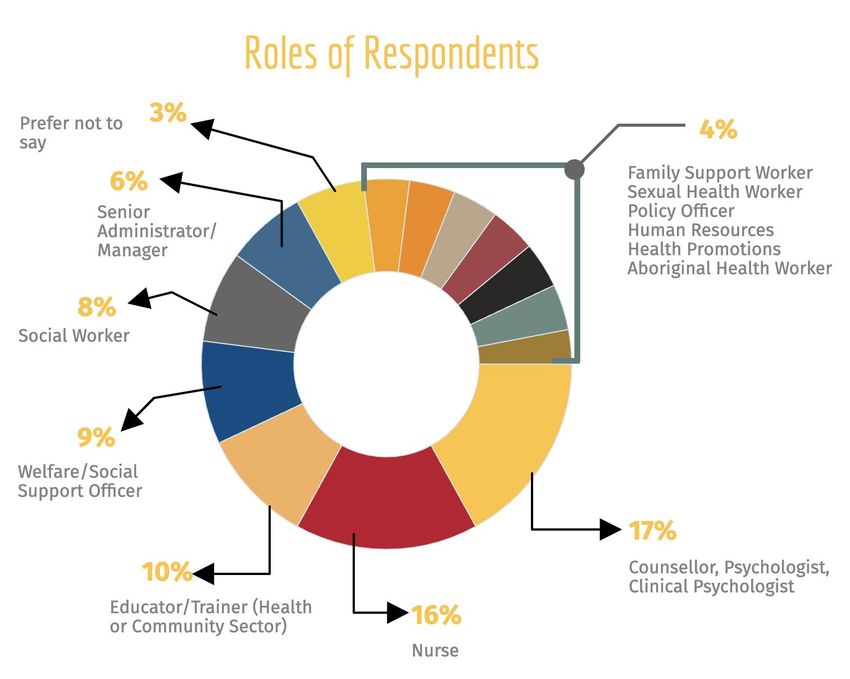
Preferred Citation....................................................................................Opposite
Glossary.............................................................................................................. 3
Breaking the Silence Research Team Profile...................................................... 5
Executive Summary............................................................................................ 8
   The Report....................................................................................................... 8
   The Study........................................................................................................ 8
Key Findings........................................................................................................ 9
Introduction and Background............................................................................ 10
What we did for the study – Methodology......................................................... 11
Ethical Considerations....................................................................................... 11
Organisational Research Activities and Results................................................ 12
   Inclusion criteria for organisational research activities.................................. 13
Focus group and interview results..................................................................... 14
   Organisational Survey................................................................................... 15
Survey Results.................................................................................................. 16
   Occupational roles of survey participants...................................................... 19
   Which terms best describe your service?...................................................... 20
   Key Research Findings.................................................................................. 21
The work-place environment............................................................................. 21
   Signs, Symbols and Flags............................................................................. 21
Organisational Policies...................................................................................... 25
   Survey findings on Organisational policies.................................................... 26
How organisations support workers to respond to the needs of
Aboriginal and/or Torres Strait Islander LGBTIQ+ people................................. 27
   Levels of organisation support reported by survey participants..................... 30
What works in supporting Aboriginal and Torres Strait Islander people
who identify as LGBTIQ+?................................................................................ 31
Survey findings on what works responding to the needs of Aboriginal
and/or Torres Strait Islander LGBTIQ+ people.................................................. 32

Breaking the Silence: Insights from WA Services Working with
Aboriginal/LGBTIQ+ People, Organisations Summary Report 2021                                                     Page 1
Key barriers to providing services for Aboriginal and/or Torres Strait
Islander people who identify as LGBTIQ+......................................................... 34
The importance of Identity................................................................................. 39
Support, educational and information needs of workers................................... 41
Cultural safety for Aboriginal and/or Torres Strait Islander people and
safety for those who identify as LGBTIQ+......................................................... 44
Comfort and confidence in responding to the needs of Aboriginal and
Torres Strait Islander people who identify as LBTIQ+....................................... 46
Perfect ways of responding to needs of Aboriginal and Torres Strait
Islander clients who identify as LGBTIQ+......................................................... 48
Research Partner Feedback on Organisational Survey and
Focus Group Results......................................................................................... 50
   Making Organisational Changes in the immediate and longer term.............. 50
Confidence of workers in responding to the needs of
Aboriginal and/or Torres Strait Islander LGBTIQ+ clients.................................. 53
What do research partners identify is needed to respond to the needs
of Aboriginal and/or Torres Strait Islander clients?............................................ 55
   Organisational and Community results and their interrelationship................ 57
Elders Yarning Group........................................................................................ 59
Conclusion......................................................................................................... 62
Recommendations............................................................................................ 64
   Government Policy and Funding................................................................... 64
   Organisational Policy..................................................................................... 65
   Discrimination and Microaggression.............................................................. 66
   Community..................................................................................................... 66
   Education, Training and Information.............................................................. 67
   Organisational Service Models...................................................................... 68
   Professional Development for Organisations................................................ 69
   Signs, Symbols and Visibility......................................................................... 70
   Social media and dating apps........................................................................ 70
   Further Research........................................................................................... 71
References........................................................................................................ 72
Acknowledgements........................................................................................... 74

                                                     Breaking the Silence: Insights from WA Services Working with
Page 2                                           Aboriginal/LGBTIQ+ People, Organisations Summary Report 2021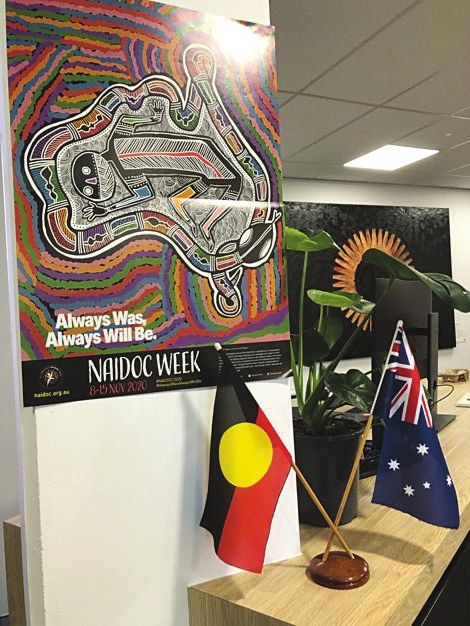
Glossary
The use of current and appropriate terminology for this study has been the
result of wide-ranging consultation. The terminology that is used by different
interest groups is evolving and the research team have strived to be as inclusive
as possible. The research team have been guided by LGBTIQ+ peak body
literature and specifically the Glossary compiled by Black Rainbow (https://
www.blackrainbow.org.au/). We acknowledge that people may identify under an
individual description such as “gay” while others may use multiple descriptors.
The research team uses the descriptor of LGBTIQ+ as a short-hand way of
capturing the diverse ways that Aboriginal and Torres Strait Islander people may
identify their sexual and gender identity/ies within multiple contexts. The intent
of this usage is to encourage an expansion rather than limiting of identity/ies for
sexually and gender diverse Aboriginal and/or Torres Strait Islander people living
in Western Australia.

 Terminology          Explanation
 LGBTIQ               This is an acronym for Lesbian, Gay, Bisexual, Transgender,
                      Intersex, and Queer.
 LGBTIQ+              This is an acronym for Lesbian, Gay, Bisexual, Transgender,
                      Intersex, Queer the + symbol represents self-identifying
                      members of the community who are not included in the
                      LGBTIQ+ acronym.
 Lesbian              This term is used to describe women who experience sexual,
                      romantic, and emotional attraction to other women.

                      *Some women may also refer to themselves as Gay and
                      when doing so the same definition below applies, but in a
                      female context.
 Gay                  This term is used to describe men who experience sexual,
                      romantic, and emotional attraction to other men.

                      *As above, women who are Lesbian may also use the term
                      Gay to describe themselves.
 Bisexual             Bisexuality is an umbrella term for people who experience
                      sexual, romantic, and emotional attraction to people of two or
                      more genders. The term ‘pansexual’ is also used to describe
                      forms of attraction that are not limited to binary male or female
                      identities.

Breaking the Silence: Insights from WA Services Working with
Aboriginal/LGBTIQ+ People, Organisations Summary Report 2021                     Page 3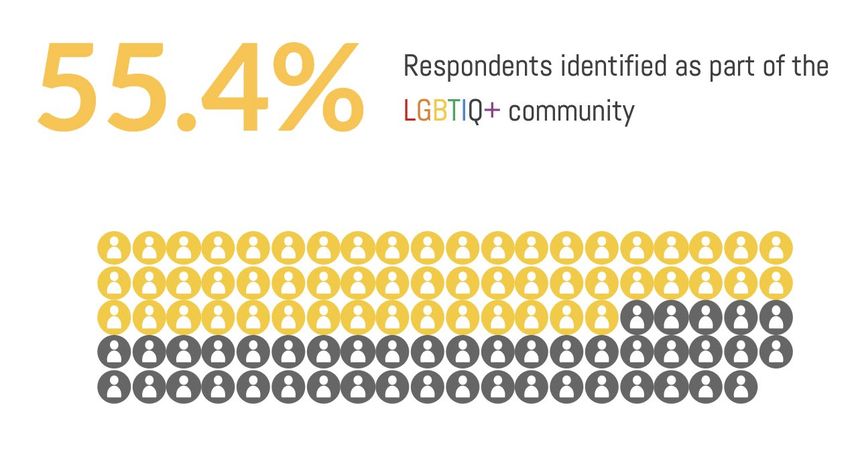
Terminology   Explanation
Transgender   Transgender is an umbrella term that describes people that do
              not identify with the genders they are assigned at birth. This
              includes transgender men and women, gender fluid (flexible
              identification), and a range of other gender diverse identities.
              Sistergirl and Brotherboy can also be used by Aboriginal and
              Torres Strait Islander Transgender people. See below.

Sistergirl    Sistergirl is considered a culturally, as well as a socially,
              accepted term to describe Aboriginal and Torres Strait
              Islander Transgender people who identify as female.
Brotherboy    Brotherboy is considered a culturally, as well as a socially,
              accepted term to describe Aboriginal and Torres Strait
              Islander Transgender people who identify as male.
Intersex      Intersex people are those who are biologically gender variant.
              Intersex Human Rights Australia defines Intersex people as
              those who are born with physical sex characteristics that do
              not fit medical and social norms for female or male bodies.

Queer         Queer is sometimes used as an umbrella term for the
              Lesbian, Gay, Bisexual, and Transgender communities. Queer
              is also used to describe gender and sexual variance where
              other identifications (gay, lesbian, bisexual) are deemed
              too limited. For example, people may identify their gender
              as ‘genderqueer’ or ‘non-binary’ as they do not primarily or
              permanently identify as male or female.

Questioning   This is used to describe a person who is not completely sure
              of their sexual or gender identity as fixed and may still be
              trying to define this for themselves.

                                  Breaking the Silence: Insights from WA Services Working with
Page 4                        Aboriginal/LGBTIQ+ People, Organisations Summary Report 2021
Breaking the Silence Research Team Profile

               Professor Braden Hill is a Noongar (Wardandi) man from the south-
               west of Western Australia and the Pro-Vice-Chancellor (Equity
               and Indigenous) and Head of Kurongkurl Katitjin, Edith Cowan
               University’s (ECU) Centre for Indigenous Australian Education and
               Research.
               He has significant experience in Aboriginal education, as well as
               leading a range of equity initiatives including Sage Athena SWAN,
               Respect Now Always, Reconciliation Action Plan and Disabilities and
               Access Inclusion Plan within the tertiary sector. His current portfolio
               responsibilities include leading ECU’s commitment to Australian
               Aboriginal and Torres Strait Islander advancement, Equity and
               Diversity initiatives and working across the University to provide an
               environment that welcomes, and facilitates the success of, students
               and staff from a range of diverse backgrounds.
               Professor Hill’s research interests include Indigenous education,
               identity politics, queer identities in education and transformative
               learning. He is also chief investigator on a project exploring the
               lived experiences of Indigenous LGBTQI people to better inform
               community health organisations in their working with queer-
               identifying Aboriginal and Torres Strait Islander people.

               Dr Bep Uink (Master of Applied Psychology (Clinical), PhD) is a
               Noongar woman from Perth, WA. She works at Kulbardi Aboriginal
               Centre, Murdoch University as a researcher. Her research focuses
               on understanding how socially determined disadvantage impacts the
               social emotional wellbeing of young people, both Indigenous and
               non-Indigenous, and how social systems such as higher education
               can support young peoples’ wellbeing.
               Her work spans investigations into adolescent emotion regulation,
               the barriers and enablers of Indigenous student success in higher
               education, gendered barriers to higher education, and Aboriginal and
               Torres Strait Islander LGBTQA+ youth mental health.

Breaking the Silence: Insights from WA Services Working with
Aboriginal/LGBTIQ+ People, Organisations Summary Report 2021                   Page 5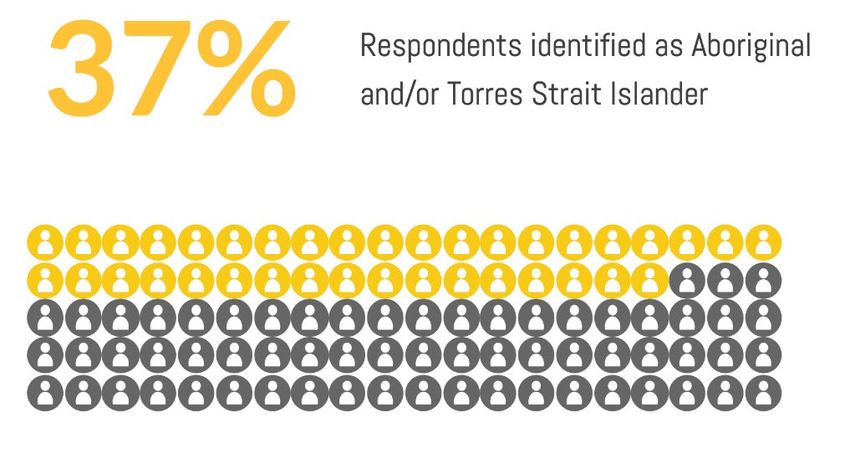
Dameyon Bonson is of the Mangyari (NT) and Maubiag
         peoples of the Torres Strait. He is a gay male and is
         recognised as Indigenous suicide prevention subject
         matter expert, specifically in Indigenous LGBTIQ+ suicide
         prevention. Dameyon has extensive experience working
         in and with remote Indigenous communities in suicide
         prevention and in 2013 founded Black Rainbow, Australia’s
         first and only national Indigenous LGBTIQ+ suicide
         prevention charity organisation. He holds a post graduate
         qualification in Suicide Prevention studies and is currently
         undertaking a Master of Suicidology. Dameyon developed
         and delivers the country’s first Indigenous LGBTIQ+ cultural
         competency program for suicide prevention, health and
         social services. His work has been the catalyst for three
         Indigenous LGBTIQ+ suicide prevention and wellbeing
         research studies underway in Australia. Dameyon currently
         leads a co-design project with Indigenous LGBTIQ+ young
         people of the NT, with aims to create safer homes and
         communities. He is an independent practitioner and lives and
         works in his hometown of Darwin in the Northern Territory
         (NT).

         Dr Eades is a Noongar woman from WA and a descendant
         of a Wiilman father and Minang mother. Dr Eades’ research
         interests relate to the role of psychosocial factors in
         chronic disease and building resilience in Aboriginal and
         Torres Strait Islander health. She has a particular interest
         in women’s issues and children in out of home care. Dr
         Eades has a background in Nursing and her PhD study was
         understanding how individual, family and societal influences
         impact on Indigenous women’s health.

                 Breaking the Silence: Insights from WA Services Working with
Page 6       Aboriginal/LGBTIQ+ People, Organisations Summary Report 2021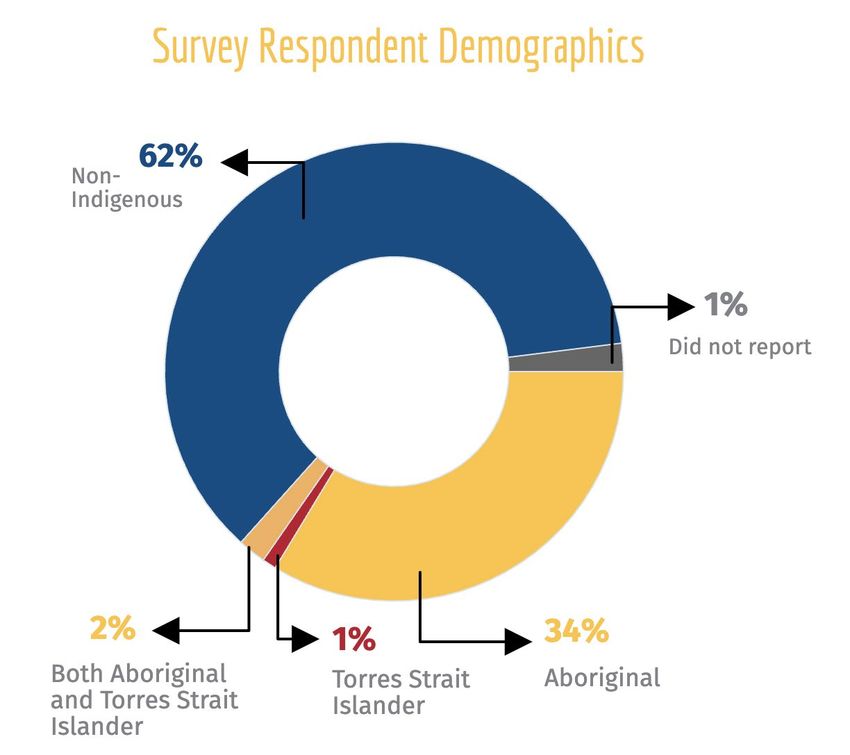
Sian Bennett is a Gamilaroi woman currently engaged as a Lecturer
              at Kurongkurl Katitjin, Edith Cowan University’s (ECU) Centre for
              Indigenous Australian Education and Research. She has worked as
              an educator for many years, principally in access programs in higher
              education, including the award-winning K-Track Indigenous Enabling
              Program, and the Ngoolark Special Project unit (both at Murdoch
              University). She has extensive experience providing academic and
              pastoral support for undergraduate Aboriginal and Equity students.
              She has been responsible for writing, developing, implementing, and
              coordinating a campus wide enabling program in addition to school-
              based support units. Her current duties include teaching Aboriginal
              and Torres Strait Islander cultural content into undergraduate units
              at ECU’s School of Education. Ms Bennett’s research interests
              include Aboriginal higher education, Scholarship of teaching and
              learning (SoTL), equity and diversity in higher education, innovative
              pedagogy, and identity politics.

              Dr Jenny Dodd is a non-Indigenous woman who has lived in Perth
              WA for 35 years. She is a researcher who works at Kurongkurl
              Katitjin, ECU. Her research over 20 years has focussed on maternal
              and child health, social and emotional well-being of parents, fathers
              and young people, including Aboriginal people and people from
              culturally, linguistically and ethnically diverse backgrounds. In recent
              years she has worked with senior Aboriginal researchers on various
              research and evaluation projects associated with Aboriginal and
              Torres Strait Islander health, maternal health, child health, education,
              social and emotional well-being.

Breaking the Silence: Insights from WA Services Working with
Aboriginal/LGBTIQ+ People, Organisations Summary Report 2021                   Page 7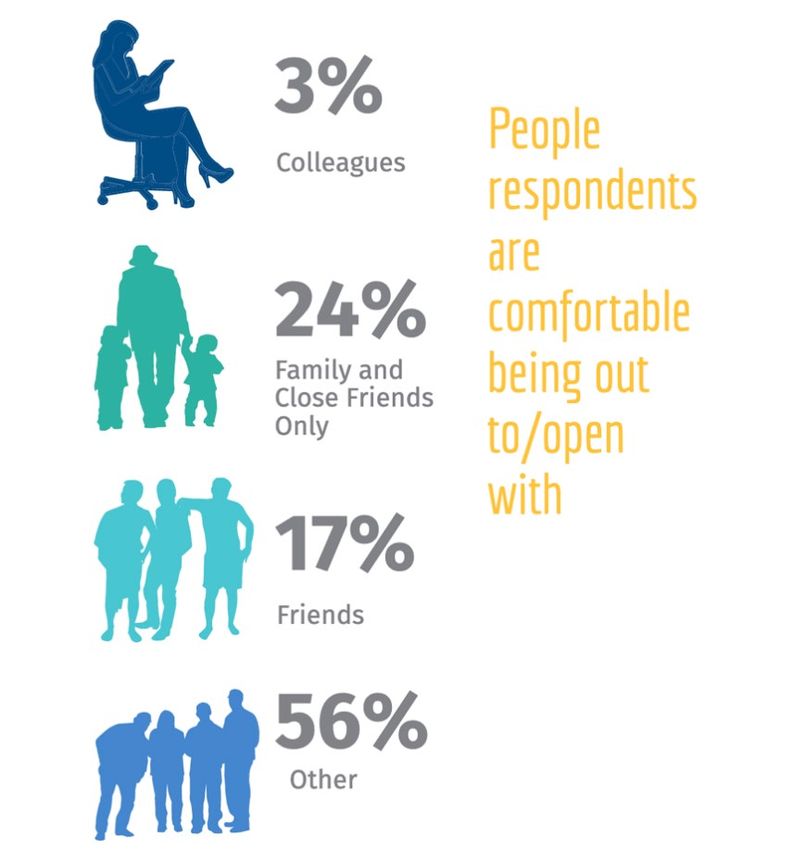
Executive Summary

The Report

The ‘Breaking the Silence’ research project is one of the first to focus on
the unique experiences of Aboriginal and/or Torres Strait Islander LGBTIQ+
people living in Western Australia. The report presents the first phase of a two-
part research project that explores how a range of health, social support and
education organisations respond to the needs of Aboriginal and/or Torres Strait
Islander people, living in Western Australia and identifying as LGBTIQ+.

This report presents the findings of focus groups, interviews and surveys with
staff employed within a range of organisations that work closely with Aboriginal
and/or LGBTIQ+ individuals. The discussion explores the extent to which diverse
health, social and emotional wellbeing, education and community services meet
the needs of participants, how staff working in these organisations are supported
and what else is needed to provide effective and responsive services for
Aboriginal and/or Torres Strait Islander clients who also identify as LGBTIQ+.

Please see the ’Breaking the Silence: Insights into the Lived Experiences of WA
Aboriginal/LGBTIQ+ People, Community Summary Report’ on findings from a
survey distributed to Aboriginal and/or Torres Strait Islander LGBTIQ+ in the
community of Western Australia.

The Study

The study is understood to be the first of its kind in Western Australia to focus
specifically on the experiences of Aboriginal and/or Torres Strait Islander people
who also identify as LGBTIQ+. It is also one of the first to be developed and led
by Aboriginal researchers who also identify as LGBTIQ+.

                                      Breaking the Silence: Insights from WA Services Working with
Page 8                            Aboriginal/LGBTIQ+ People, Organisations Summary Report 2021
Key Findings
• Visible signs, symbols and Aboriginal and Torres Strait Islander and
Pride (Rainbow) flags were identified as important first steps in ensuring
inclusive professional spaces for Aboriginal/LGBTIQ+ clients.
• Education and staff development opportunities for organisational
leadership and boards of directors was viewed as critical in creating
important organisational cultural change towards more inclusive practices,
policy and spaces.
• Staff development opportunities across service levels, reinforced by
relevant policy and practice guidelines, was ad hoc or intermittent and
more sustained approaches to inclusion is required to address:
o Uncertainties about appropriate terminology for Aboriginal/LGBTIQ
people
o Mandatory training on LGBTIQ+ training for all staff at all levels of
organisations
o Overreliance on Aboriginal LGBTIQ staff to address Aboriginal/
LGBTIQ matters.
• Rainbow Tick accreditation was understood to be a valuable starting
point for organisations to become more LGBTIQ+ inclusive. However, it
was noted that this may not adequately meet service needs of Aboriginal/
LGBTIQ+ people.
• Proactive and inclusive data collection was understood as being a key
enabler to a ‘person-centred’ approach to care, that is, collecting optional
client data if they identify as part of the LGBTIQ+ community.
• Mainstream LGBTIQ+ community and advocacy organisations need to
forge partnerships and collaborate with Aboriginal specific health and
social support organisations.
• Both Aboriginal and non-Aboriginal-specific services felt well supported by
their organisations to respond to the needs of Aboriginal LGBTIQ+ clients.
• Significant concerns were raised about a lack of clarity about safe
external referral pathways, particularly for Trans people.
• Aboriginal Elders and senior leaders were perceived as being critical to
shaping a culture of inclusion or exclusion in communities in relation to
Queer-identifying Aboriginal people.
• The employment of Aboriginal/LGBTIQ+ staff was considered vital in
enabling an organisation’s visible and proactive approach to being an
inclusive organisation.
Breaking the Silence: Insights from WA Services Working with
Aboriginal/LGBTIQ+ People, Organisations Summary Report 2021 Page 9Introduction and Background
The ‘Breaking the Silence’ research project is one of the first to focus on the
unique experiences of Aboriginal and/or Torres Strait Islander LGBTIQ+ people
living in Western Australia. Research focusing on the intersection of Indigeneity
and gender/sexual diversity is severely lacking in Australia. Previously, major
research pertaining to LGBTIQ+ Australians rarely focused on Aboriginal and
Torres Strait Islander same sex attracted or gender variant individuals (Bonson,
2017; Dudgeon, et. al., 2017; Growing Up Queer, 2014; Whitton, et. al, 2015; Hill,
et. al., 2021).
This report presents the key findings of focus groups, interviews and a state-
wide survey as completed by organisational staff providing a range of health,
social support and education services across the state of Western Australia.
These research activities formed the first phase of a two-part study (a summary
report on the findings from a survey during the second phase of the study, that
was distributed to Aboriginal and Torres Strait Islander people who identify
as LGBTIQ+ in the WA community is also separately available ‘Breaking the
Silence: Insights into the Lived Experiences of WA Aboriginal/LGBTIQ+ People,
Community Summary Report).
This organisational report presents important information about how
organisations provide health and social support services to Aboriginal and
Torres Strait Islander people who identify as LGBTIQ+, including the extent to
which diverse health, social and emotional wellbeing, education and community
services meet the needs of participants.
Breaking the Silence: Insights from WA Services Working with
Page 10 Aboriginal/LGBTIQ+ People, Organisations Summary Report 2021What we did for the study – Methodology The ‘Breaking the Silence’ Aboriginal and LGBTIQ+ led research team, has used a strengths-based, participant focussed, mixed-methods methodological approach. This has included the development and facilitation of community forums, participatory workshops and collaborative research partnerships with senior community members who also identify as LGBTIQ+. Research directions and approaches have been directly informed through research partnerships with professionals and workers from diverse roles and levels of key health and social support organisations including Aboriginal Community Controlled Health Organisations in Western Australia. This research approach has enabled organisational staff to safely articulate their experiences about providing services to Aboriginal and Torres Strait Islander people who identify as LGBTIQ+. Ethical Considerations The research was initially approved by the Murdoch University Human Research Ethics Committee (MUHREC) and subsequently by the Edith Cowan University equivalent (ECUHREC). All participants were informed that they could withdraw at any time without consequence to themselves or their families, and that they were entirely free to refuse to answer any or all questions during any of the research activities. Throughout the project, the researchers ensured that participants’ stories and experiences were collected with respect and sensitivity. The researchers were guided by the NHMRC National Statement on Ethical Conduct in Research involving Humans (2007) and the NHMRC Values and Ethics: Guidelines for Ethical Conduct in Aboriginal and Torres Strait Islander Health Research (2003). The researchers also sought the guidance of Noongar Elders and Senior people and followed protocols required by cultural groups. The research participants had access to an Aboriginal specific counselling service that was a partner of the research study who agreed to act as a culturally appropriate counselling service, where participants and researchers could be referred if needed. The research team were also able to refer participants to an alternative counselling service if needed. Breaking the Silence: Insights from WA Services Working with Aboriginal/LGBTIQ+ People, Organisations Summary Report 2021 Page 11
Organisational Research Activities and Results

Organisational research participants included all staff aged from 18-80 from
across diverse roles and different levels of the organisations. Due to the ethical
conditions advised by the MUHREC the research team were directed to start
research activities with organisational staff in the first instance, although this
was not the preference of the research team whose aim was to be informed by
community by using a strengths-based approach toward Aboriginal and Torres
Strait Islander LGBTIQ+ people in the community (see findings from subsequent
community research activity in ‘Breaking the Silence: Insights into the Lived
Experiences of WA Aboriginal/LGBTIQ+ People).

Recruitment of organisational participants for focus groups and interviews
began with our initial three organisational research partners (two of these were
Aboriginal Community Controlled Health Organisations). Additional participants
were invited through existing Aboriginal and Torres Strait Islander professional
and organisational networks as well as referrals and guidance from Noongar
Elders and senior Aboriginal professional and community people on our Advisory
Group. Survey participants were invited through the existing professional
networks of Kulbardi Aboriginal Centre, Advisory Group and research team and
research partner email and social media networks.

                                     Breaking the Silence: Insights from WA Services Working with
Page 12                          Aboriginal/LGBTIQ+ People, Organisations Summary Report 2021
Inclusion criteria for organisational research activities Participants for all research activities were required to be over the age of 18 and working for an organisation in Western Australia that currently provided services, programs or interventions for Aboriginal and/or Torres Strait Islander peoples (or were likely to). The category of LGBTIQ+ was not specified to ensure that all organisations that provided services to Aboriginal and Torres Strait Islander peoples were included (whether they identified as providing services for LGBTIQ+ people or not). Focus group, interview and survey data collection tools broadly asked basic questions about how organisations currently respond to the needs of Aboriginal and Torres Strait Islander people who identify as LGBTIQ+. These included the level of Aboriginal and/or Torres Strait Islander and LGBTIQ+ client engagement with organisations as well as any referrals to external services. Survey tools used Likert scale questions and were designed to collect descriptive statistical data as well as individualised qualitative commentary. Survey tools collected quantitative results to capture the characteristics and activities of organisations that enabled or detracted from service provision to Aboriginal and Torres Strait Islander LGBTIQ+ people (Jason & Glenwick, 2016). The questions required participants to reflect on the policy environments of organisations, attitudes of staff and their own individual information and educational needs. Participants were also asked questions about various forms of discrimination including racism, homophobia and cultural safety of organisations. Breaking the Silence: Insights from WA Services Working with Aboriginal/LGBTIQ+ People, Organisations Summary Report 2021 Page 13
Focus group and interview results

Focus groups

Four health and social support services and three educational student support
centres (combined as one group) participated in the focus groups (n = 5 focus
groups, n=49 participants). Three of these focus groups were among Aboriginal-
specific services (n=32 participants), with the remaining two groups from
non-Aboriginal specific services. While not individually identifying focus group
organisations (for confidentiality reasons) the spread of health issues responded
to included: social and emotional well-being, mental health, alcohol and other
substance use, sexual health, chronic health, accommodation and refuge
services, medical services, student education and support services.

Interviews

Five participants drawn from the community (n = 2), health sector (n = 2),
and an LGBTIQ+ advocacy service (n = 1) completed one-on-one interviews
with a member of the research team. Two of these research interviews had
two participants with a total of 5 research interview participants in all. These
interviews served as supplementary data collection to the focus groups and
provided an opportunity for workers to discuss sensitive or confidential issues.

Focus Group and Interview Participants

All participants were over the age of 18. The majority were working for
organisations in the Perth metropolitan area. One interview participant was
working in the North-West of WA. Participants were not asked to identify
as Aboriginal and/or Torres Strait Islander or LGBTIQ+. Nonetheless, most
participants from Aboriginal-specific services identified as Aboriginal people. At
least a third of participants from the education support service focus group self-
identified as Aboriginal people, while a non-Aboriginal health service focus group
only had one Aboriginal person present. Several participants across the focus
groups and interviews identified as LGBTIQ+ or non-binary.

Focus group and interview participants were drawn from all levels of the
organisations and included: CEO’s, Aboriginal Health Workers, Student Support
Workers, Case Workers, Clinical Counsellors, Youth Educators, Family Support
Workers, Alcohol and Drug Workers, Managers of Clinical Governance, Resource
Officers, and Reception Staff.

                                      Breaking the Silence: Insights from WA Services Working with
Page 14                           Aboriginal/LGBTIQ+ People, Organisations Summary Report 2021
The presentation of the analysis and findings from these research activities were subsequently presented to organisational participants (n=21) for their feedback, suggestions and guidance for future research directions. All focus group and research interviews were conducted or supervised by Aboriginal researchers some of whom also identified as LGBTIQ+. Qualitative in-depth interviews utilising an appropriate culturally sensitive research method informed by “Research Yarning” (Bessarab & Ng’Andu, 2010) was used to explore the more sensitive aspects of this research topic with organisational staff. The research team have ensured rigour when using qualitative research methods by adopting transparent processes, recording and auditing the process, inviting guidance and analysis from those outside the immediate research team, checking authenticity and representation of data with our participants and research partners and through ongoing research team reflection on potential for bias (Ackermann, et. al., 2006; Cho & Trent, 2006; Davies & Dodd, 2002; Smith & Noble, 2014; Thompson & Pascal, 2012). Organisational Survey The initial findings that emerged from these focus groups and interviews (along with the guidance and advice of a community forum, research partners and our advisory group) informed the development of an organisational e-survey (Survey Monkey). Through existing professional networks of Kulbardi Aboriginal Centre based at Murdoch University, our organisational partners and research team networks, the organisational survey questionnaire was distributed through email and social media platforms. An invitation and link to the survey was also distributed through health, mental health, Aboriginal health and community and LGBTIQ+ advocacy email networks. Breaking the Silence: Insights from WA Services Working with Aboriginal/LGBTIQ+ People, Organisations Summary Report 2021 Page 15
Survey Results

The survey response resulted in 206 completed and valid surveys, with the average
age of organisational respondents being 37 years. Over a third of all respondents
were Aboriginal and/or Torres Strait Islander people (Figure 1a; Figure 1b).

Figure 1a: Aboriginal and Torres Strait Islander Respondents

Figure 1b: Services Survey Respondents

                                    Breaking the Silence: Insights from WA Services Working with
Page 16                         Aboriginal/LGBTIQ+ People, Organisations Summary Report 2021
Respondents’ Gender Identity
Respondents used gender and sexual orientation terms, for example, “hetero
female,” other terms used included:
• Male
• Female
• Transgender
• Agender
• Fluid
• Non-binary.
Over half of all respondents considered themselves a part of the LGBTIQ+
community (Fig 2a) and of those 44.6% were ‘out’ or ‘open’ about their identity,
as shown in Fig 2b. Participants were also asked a follow up question about how
comfortable they felt about being open about their sexual or gender identity/ies
(Fig 2c).
Figure 2a: Being ‘out’ or ‘open’ about LGBTIQ+ identities
Breaking the Silence: Insights from WA Services Working with
Aboriginal/LGBTIQ+ People, Organisations Summary Report 2021 Page 17Figure 2b: Being ‘out’ or ‘open’ about LGBTIQ+ identities
Figure 2c: Comfortable about being ‘out’ or open to
Breaking the Silence: Insights from WA Services Working with
Page 18 Aboriginal/LGBTIQ+ People, Organisations Summary Report 2021The results show that while 24 per cent of participants were ‘out’ to family only, 17 per cent chose friends and only 3 per cent chose work colleagues. Over half of participants chose ‘other’ as people they were ‘out’ to and then wrote comments such as ‘everyone’ or ‘everyone except family’ or ‘everyone except work colleagues.’ Occupational roles of survey participants The occupational roles of survey participants included: education and family support workers, mental health workers, Aboriginal health workers (8 per cent), sexual health workers, policy officers, human resource workers and social workers, as shown in Figure 3 below. This shows that the survey was distributed to and completed by a diversity of workers across all levels of organisations. Figure 3: Roles of Services Survey Respondents Breaking the Silence: Insights from WA Services Working with Aboriginal/LGBTIQ+ People, Organisations Summary Report 2021 Page 19
Which terms best describe your service?

The survey asked participants to identify the types of organisational that they
worked for with 188 participants responding to this question.

Twenty per cent of organisational services were Aboriginal specific services.
Services were diverse encompassing health, emotional well-being, sexual health,
clinical, education, family support, advocacy, housing, social and community
support, as shown in Figure 4. Seven per cent of those services that responded
were from LGBTIQ+ Advocacy services.

Figure 4: Key functions of services in respondent group

Organisation Type/Function/Service                                          Proportion of
                                                                            Respondents
Non-Aboriginal Mental Health Service                                                      10%
Sexual Health                                                                             10%
LGBTIQ+ Support/Advocacy                                                                    7%
Community Health Service                                                                    9%
Welfare and Social Support                                                                  6%
Tertiary Education                                                                          5%
Community Education                                                                         5%
Aboriginal Health Service                                                                   5%
Public Hospital                                                                             4%
Aboriginal Alcohol and Drug                                                                 4%
Aboriginal Mental Health Service                                                            3%
Aboriginal Family Support                                                                   3%
Non-Aboriginal Alcohol and Drug Service                                                     3%
Non-Aboriginal Family Support                                                               3%
Aboriginal Program in non-Aboriginal Service                                                2%
GP                                                                                        0.5%
Private Hospital                                                                          0.5%
Nil Response                                                                                6%
Other                                                                                     14%
                                                      Total                              100%

                                      Breaking the Silence: Insights from WA Services Working with
Page 20                           Aboriginal/LGBTIQ+ People, Organisations Summary Report 2021
Key Research Findings
The key findings from the range of research activities undertaken, including
surveys, focus group and interviews with organisational participants are grouped
under similar themes where appropriate. Where there are unique findings
that have resulted from a specific research activity (such as research partner
engagement with findings) these will be identified separately.
The work-place environment
Signs, Symbols and Flags
Focus group participants, interviewees and survey respondents
were asked questions about how their organisation presented
as a ‘safe’ or ‘welcoming’ space for Aboriginal and Torres Strait
Islander people who identified as LGBTIQ+. This included
whether Pride and/or Aboriginal and/or Torres Strait Islander
flags, posters or other symbols were displayed, the provision
of all gender facilities and the existence of work-place policies
around cultural safety and LGBTIQ+ issues. While visibility for
being a LGBTIQ+ inclusive and safe space was viewed by the
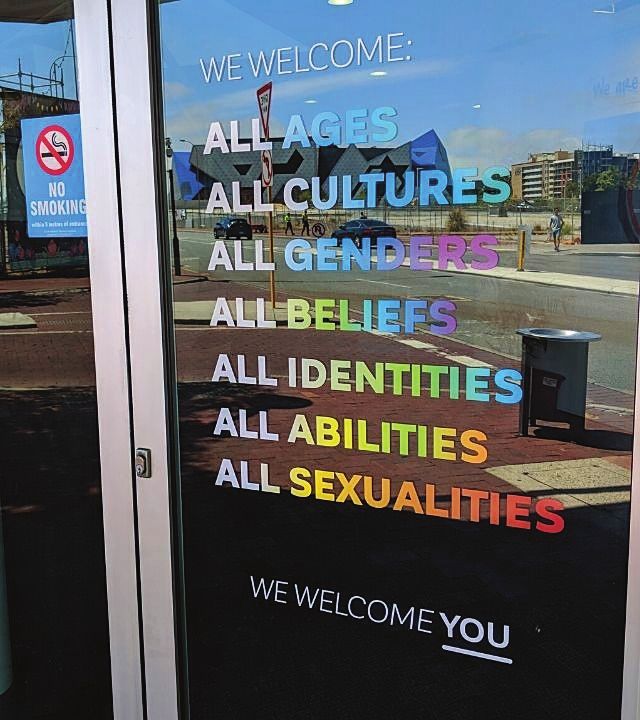
Sexual Health Quarters Perth majority of organisational participants as very important, this
Main Entrance
was not exclusively so. For example, a participant who worked
for a sexual health organisation emphasised the importance for
a service that responded to LGBTIQ+ sex workers as needing
to be very discreet and not publicly visible as a support for
LGBTIQ+ sex workers.
Participants from the Aboriginal specific organisations or
services that participated in focus groups (n=32), supported
the statement that signs, information and symbols indicating
an “Aboriginal safe space” was more prominent in their
organisation than LGBTIQ+ symbols, flags or informational
resources. The need for the organisational space to also have
clear visual signals, signs and symbols such as the Aboriginal
flag, paintings and other indicators that the service was a
Entrance at Kurongkurl Katitjin, ECU
safe space for Aboriginal and Torres Strait Islanders was also
emphasised by all focus group and interview organisational
participants as being most important.
Breaking the Silence: Insights from WA Services Working with
Aboriginal/LGBTIQ+ People, Organisations Summary Report 2021 Page 21“ Currently don’t have a Rainbow (Pride) flag but think it’s a good idea.
Even if they don’t want to openly identify at least
then they know it’s a safe space. ”
CEO, Aboriginal Health and Family Support Service,
Perth Metro
“ While [X health and social support service] values are welcoming, non-
judgmental and inclusive, it is not obvious that they are LGBTIQ+ friendly,
we need to take that extra step to show it is an inclusive service. ”
Aboriginal Health Worker, Aboriginal specific health
and social support service, Perth Metro
For some of the Aboriginal managed services it was acknowledged that while in
theory the display of a Pride or Rainbow flag was a relatively simple thing to do,
it would need to be negotiated with Elders and Board Members who might hold
more conservative views.
“ If they’re coming to this space, this physical space, I think it’s fantastic
that they walk in and see those signs and see the painting and see the flag
[Aboriginal] and walk past the apology and they’ll come up to the upstairs
training room and there’ll be a rainbow flag on the table and if I’m using a
PowerPoint, there’s flags and there’s rainbows. So, there may be a young
person in the room that does not identify to others as LGBTIQ, and they
may be the quietest person in the room but they already know, before I’ve
spoken, that they’re welcome. ”
Non-Aboriginal, LGBTIQ+ youth worker,
main-stream health service, Perth Metro
Breaking the Silence: Insights from WA Services Working with
Page 22 Aboriginal/LGBTIQ+ People, Organisations Summary Report 2021Other focus group participants of an Aboriginal-specific health and social support service were of the view that the ‘greater good’ was more important than individual views of board members who may be resistant to these for cultural or religious reasons. Participants (n=14) in one focus group were initially sceptical about the importance of being visibly “LGBTIQ+ friendly,” however, toward the end of the discussion a majority of the participants acknowledged that as an organisation they needed to be more overtly visible as an LGBTIQ+ friendly space. The survey results presented in Figure 5, show that while just under half of respondents (n=158) identified that their organisation displayed the Pride flag, over three quarters or 76% of respondents stated that their organisation displayed the Aboriginal flag as well as Aboriginal artwork and signs. Figure 5: Workplace environments, flags, facilities, information & policies Breaking the Silence: Insights from WA Services Working with Aboriginal/LGBTIQ+ People, Organisations Summary Report 2021 Page 23
The results from the organisational survey were analysed to identify if there
were any differences between Aboriginal and non-Aboriginal specific services in
the ways they presented as welcoming and inclusive, as shown in Fig 5a. The
results show there are some differences, while non-Aboriginal services are more
likely to display Pride flags, Aboriginal specific services are most likely to display
Aboriginal flags. Aboriginal services are also more likely to have cultural safety
policies in place (86%) compared to 72% for non-Aboriginal services.

Figure 5a: Differences by service type in workplace environments,
flags, facilities, information & policies

It was agreed by the majority of participants across the organisational focus
groups (n=49) that information brochures about LGBTIQ+ health, mental health
and social issues and concerns should be available and visible, particularly in
reception areas.

University based Aboriginal support centre participants and participants from
Aboriginal organisations were more likely to emphasise that being ‘seen’ as an
Aboriginal friendly space was more important than being seen to be LGBTIQ+
inclusive (n=32).

                                       Breaking the Silence: Insights from WA Services Working with
Page 24                            Aboriginal/LGBTIQ+ People, Organisations Summary Report 2021
Organisational staff from the focus groups identified that visible signs and
symbols such as Pride flags, Aboriginal and Torres Strait Islander flags, signs and
artwork while very important, should be viewed as a first ‘step’ only (n=49). The
majority of participants stated these needed to be followed up with respectful and
‘safe’ service delivery that were informed by appropriate policies.
Organisational Policies
Focus group and survey participants were asked similar questions by the
research team about the kinds of policies that were implemented in their
workplace and the extent to which they agreed, staff employed by the
organisation, took the policies seriously and followed them closely. The workplace
policies workers were asked about included cultural safety, non-discrimination
and anti-bullying policies and guidelines.
• There was widespread acknowledgement amongst participants that
more embeddedness of policies and education was needed. All
organisations could see some potential and opportunity for doing
this (n=49).
• Participants from 3 organisations (and interviews) reflected on the
complexities of working toward this respectfully with Elders (n=36)
A majority of participants from four out of the five focus groups (n=42) reported
that organisational policies responding to LGBTIQ+ issues were ad-hoc and/
or intermittent and not necessarily adhered to consistently by all staff. It was
acknowledged (particularly by Aboriginal workers) that those policies that referred
either to issues concerning Aboriginal people, or people who identified LGBTIQ+,
tended to be overly reliant either on Aboriginal workers and/or those (some of
whom were Aboriginal) who identified as LGBTIQ+.
A strong theme that flowed from this was the enormous reliance on and an
identified need for specific Aboriginal and/or Torres Strait Islander LGBTIQ+
workers.
Breaking the Silence: Insights from WA Services Working with
Aboriginal/LGBTIQ+ People, Organisations Summary Report 2021 Page 25Survey findings on Organisational policies
Survey findings in response to questions about the presence of anti-bullying
or discrimination policies show that over 90% of organisations had at least one
of these policies. Of the 182 survey respondents who answered a Likert scale
question about organisational policies and the extent to which these supported
workers, a majority felt “somewhat supported” “mostly supported” or “very
supported” (3.6/5) by organisational policies. There was no statistical difference
in the response to this question between Aboriginal specific and non-Aboriginal
specific services, as shown in Figure 6 below.
Figure 6: Extent workers agree on take-up of work-place policies
Breaking the Silence: Insights from WA Services Working with
Page 26 Aboriginal/LGBTIQ+ People, Organisations Summary Report 2021How organisations support workers to respond
to the needs of Aboriginal and/or Torres Strait
Islander LGBTIQ+ people
Focus group and survey participants were asked how the organisations that
they worked for supported them in responding to the needs of Aboriginal and/or
Torres Strait Islander people who identify as LGBTIQ+. This included questions
about policies, information and education supports.
Four out of the five participating focus groups (n=43) raised concerns about
existing policies around LGBTIQ+ issues being intermittent and ad-hoc, stating
an increased need for these to be embedded into every service delivery
response.
There were commonly reported key areas of concern including:
• Lack of mandatory requirements for all staff to undertake
professional development in LGBTIQ+ issues (Aboriginal specific
organisations in particular).
• Uncertainty about correct language and terminology to be used to
reflect the diversity within the ‘catch all’ category of LGBTIQ+ (non-
Aboriginal participants were also concerned about lack of knowledge
about how terminology might be different when addressing
Aboriginal and/or Torres Strait Islander LGBTIQ+ people).
• Knowledge about safe service referral pathways (for Aboriginal
clients generally and Aboriginal LGBTIQ+ people specifically).
Focus group participants from Aboriginal specific services (n=32) highlighted
that while professional development training about LGBTIQ+ issues was
sometimes available this was not mandatory or ongoing.
Breaking the Silence: Insights from WA Services Working with
Aboriginal/LGBTIQ+ People, Organisations Summary Report 2021 Page 27Two of the organisational focus groups (n= 18) that were Aboriginal-specific
services raised concerns about how to work respectfully with Boards and
Elders in attaining greater recognition and responsiveness to service provision
for Aboriginal and Torres Strait Islander LGBTIQ+ people. It was widely
acknowledged that support for initiating a consultative process required support
from CEOs and needed to be led ‘from the top.’
“ There’s a tendency to rely on Indigenous individuals who are staff
members to drive and develop service responses. This may not work if that
person does not identify themselves as LGBTIQ. ”
Aboriginal health professional.
Aboriginal specific health and support service, Perth Metro
Aboriginal specific organisations were more likely to describe their organisations
as needing to do more work in the provision of appropriate services to Aboriginal
and/or Torres Strait Islander people who identified as LGBTIQ+. They were also
more likely to describe needing to negotiate with their Boards before important
changes to current responses could be made.
This view contrasted with a non-Aboriginal specific health service (n=8) that
had well established policies and service models for responding to the needs of
clients who identified as LGBTIQ+ and that was led by their CEO.
Focus group participants from Aboriginal specific services (n=32) were also
more likely to mention the “Rainbow Tick” accreditation program, but to also
articulate that complying with the requirements of this program was some way
off. Participants discussed the need to reflect on and discuss their existing
organisational culture and the need to unpick the complex intersections of cultural
and LGBTIQ+ identity/ies. Several participants expressed doubts about whether
the “Rainbow Tick” accreditation program was appropriate for the needs of
Aboriginal and/or Torres Strait Islander LGBTIQ+ clients.
Breaking the Silence: Insights from WA Services Working with
Page 28 Aboriginal/LGBTIQ+ People, Organisations Summary Report 2021Other participants from Aboriginal specific services referred to the existing
potential for building on current organisational policies and procedures. This
included designing services to reflect the current ‘client-led’ approach of their
organisation thus ensuring that the needs of Aboriginal and/or Torres Strait
Islander clients who were also LGBTIQ+ were responded to effectively. One
Aboriginal specific organisation currently collected data on Aboriginal and
LGBTIQ+ clients and provided this as an example of where work could begin in
the development of appropriate services for this group.
“ There is some tension for individual gay workers who feel they may be
perceived as “driving a gay agenda” – they need to have team support – it’s
not effective if there is just one individual advocate. ”
Aboriginal health professional,
Aboriginal specific health service, Perth Metro
Participants from all the focus groups also emphasised the importance of using
Aboriginal and/or Torres Strait Islander LGBTIQ+ ‘peer’ workers wherever
possible.
This view was qualified with concerns about the danger in making these workers
solely responsible for responding to Aboriginal and/or Torres Strait Islander
clients who identified as LGBTIQ+.
“ So just from our hiring policies, we get a spread across the LGBTIQ – we
get a spread across the rainbow. “Hard-coded” into our practice we have to
hire LGBTIQ people. ”
CEO, non-Aboriginal Health Service, Perth Metro
Breaking the Silence: Insights from WA Services Working with
Aboriginal/LGBTIQ+ People, Organisations Summary Report 2021 Page 29Levels of organisation support reported by survey participants
Survey participants were asked about their experiences of feeling supported
by their organisations in responding to the needs of Aboriginal and/or Torres
Strait Islander people who also identified as LGBTIQ+. Figure 7 below shows
that the majority of participants (n=182) felt either ‘somewhat,’ ‘mostly,’ or ‘very
supported.’
The findings also show there were no significant differences in this finding
between Aboriginal and non-Aboriginal specific services.
Figure 7. How supported workers feel within their organisations
Breaking the Silence: Insights from WA Services Working with
Page 30 Aboriginal/LGBTIQ+ People, Organisations Summary Report 2021What works in supporting Aboriginal and Torres
Strait Islander people who identify as LGBTIQ+?
Focus group and survey participants were asked similar questions about how to
effectively work in the support of Aboriginal and/or Torres Strait Islander people
who identified as LGBTIQ+.
Focus group participants from across the organisations (n=49) commonly
identified the following as important considerations about ‘what works’ in
supporting the needs of Aboriginal and/or Torres Strait Islander clients, including:
• Appropriate language and terminology
• Knowing what to say when – being able to address the diversity
within the category of LGBTIQ+
• Non-Indigenous workers frequently raised concerns about using the
right language (for Aboriginal and Torres Strait Islander and LGBTIQ+
clients)
• That relationships were crucial; the client knowing who was LGBTIQ+
in an organisation was highlighted as important particularly by
Aboriginal workers
• The need to be open minded, trustworthy and confidential
There were three key education and information needs identified by workers from
across the organisational focus groups and interviews (n=52).
• Recognition across organisations that workers need to know about
safe referral pathways and that these services need to exist in the
first place.
• Concern that the right language is used with clients, and;
• Knowing when to respond to clients themselves and when to refer
on.
Breaking the Silence: Insights from WA Services Working with
Aboriginal/LGBTIQ+ People, Organisations Summary Report 2021 Page 31The majority of focus group and interview participants (n=49) were concerned
about inadvertently putting up barriers if staff were unaware and uninformed
about LGBTIQ+ issues.
Education and information resources that provided information and knowledge
about how culture and LGBTIQ+ issues intersected were also identified as being
essential for organisations, clients and their families (particularly for older family
members and Elders). Participants from Aboriginal specific services were the
most likely to raise this as an issue (n=32).
Survey findings on what works responding to the
needs of Aboriginal and/or Torres Strait Islander
LGBTIQ+ people
Survey respondents identified the following support, education and information
needs. There are differences in how these were prioritised by Aboriginal-specific
services compared with non-Aboriginal specific services. A high proportion (over
80 percent) from both Aboriginal-specific and non-Aboriginal specific services
identified that knowing about referral pathways and support were very important.
Participants from non-Aboriginal specific services were more likely to identify
the need for Education and information resources (68% compared to 59%),
participants from Aboriginal specific services were more likely to identify the need
for policies and protocols (62% compared to 55%).
Fig 8. The information and support that is useful for responding
effectively to Aboriginal LGBTIQ+ individuals.
Non-
Response Aboriginal Aboriginal
Specific Services Services
Knowing about referral pathways and 81% 83%
supports
Education and information sources 59% 68%
Organisational policies and protocols 62% 55%
Appropriate service models 46% 56%
Greater empathy and understanding 57% 52%
Breaking the Silence: Insights from WA Services Working with
Page 32 Aboriginal/LGBTIQ+ People, Organisations Summary Report 2021Figure 9 presents the findings from a survey question that asked participants to
rank the importance of having anti-discrimination policies; and staff being self-
aware about how their culture shaped their responses to Aboriginal and/or Torres
Strait Islander LGBTIQ+ people. It shows that organisational survey participants
(n=158) from both Aboriginal specific and non-Aboriginal specific services
identified the importance of:
• Strict no discrimination policies
• Staff reflecting on how their own culture shapes their views,
responses and attitudes when responding to the needs of clients,
• Staff knowing about the different generational needs of clients,
and Staff being knowledgeable about the issues that may confront
Aboriginal and/or Torres Strait Islander clients.
Participants from
Figure 9 Service non-Aboriginal
Delivery: What is importantspecific organisations were more likely to
Figure 9 Service Delivery: What is important
identify that being
Importance aware of their culture and how this shapes their responses to
Questions
Aboriginal
Importance and/or Torres Strait Islander clients who also identified as LGBTIQ+
Questions
(1 =not important at all and never needed; 5 = very important and always needed)
was(19important.
Figure Service
=not Delivery: What
important at allis and
important
never needed; 5 = very important and always needed)
Figure 9 Service Delivery: What is important
ImportanceHow important are the following factors for the well-being of Aboriginal
Questions
ImportanceHow Questions
important areQueer
the people
following who may use
factors yourwell-being
for the service? of Aboriginal
(1 =not important at all andQueer people
never who may
needed; 5 = use your
very service?and always needed)
important
Figure
(1 =not 9. Service
important delivery: What is important 4.6
Having a strict 'noat all and never needed;
discrimination/bullying' policy 5 = very important and always needed) 4.8
Figure 9 Service Delivery: What is important 4.6 4.8
Having a strict 'no discrimination/bullying' policy 4.8
How important
Staff reflecting of how theirare the shapes
culture following viewsfactors
& for the well-being of Aboriginal 4.1 4.8
Importance
How important Questions
are the following factors for the well-being of Aboriginal 4.6
responsesQueer
Staff reflecting of how their culture shapes views & people who may use your service? 4.1 4.5
(1 =not responses Queer people who may use your service? 4.6
Staff beingimportant
aware at alltheir
of how and never
cultureneeded;
shapes5 = very important and always needed) 4.14.5
4.6 4.6
HavingStaff
a strict 'no aware
being ofresponses
discrimination/bullying'
how their culture policy
shapes 4.1 4.84.5
4.64.8
Having a strict 'no discrimination/bullying' policy factors for the well-being of Aboriginal 4.6
How responses
important are the following 3.4 4.8
4.5
Staff reflecting of how their culture shapes Queer Universal
people
views who &toilets
may use your service? 3.9 4.8
4.13.8
3.4 4.6
Staff reflecting of how responses
their culture shapes viewstoilets
Universal & 4.1
3.94.5
Having aresponses
strict 'no discrimination/bullying' policy
4.6 3.83.94.6
Displaying pamphlets fortheir
Aboriginal
4.8 4.5
Staff being aware of how cultureQueer
shapes people 4.8 4.1 44.1
3.9 4.6
Staff being
Displaying aware responses
Staffpamphlets
reflecting of
of how
how their
for their culture
culture
Aboriginal shapesshapes
Queer views &
people 4.1
4.6 4.14 4.5
Displays of rainbow responses
flags of posters that reflect 4.5 4.6
3.84.1
responses 3.84.5
LGBTIQ
Staff being aware of community
how their culturetoilets
Universal shapes 4.1 3.4 3.8
Displays of rainbow flags of posters that reflect 4.6 3.93.8
responses 3.4 3.8 3.8
4.5
LGBTIQ community
Staff knowledge Universal
of how needstoilets
may differ 3.93.8 4.3
3.4 3.8 4.5
generationally Universal toilets 3.9 3.9
Displaying pamphlets for Aboriginal
Staff knowledge of howQueer needspeople
may differ 3.8 4 4.34.4
3.94.1 4.5
Displaying pamphlets
Staff knowledge for Aboriginal
generationally
issues
Displaying pamphlets forfacing
Queer people
Aborigional
Aboriginal Queer people Queer 3.9
4
4 4.4
4.3
4.1 4.1 4.5
Displays of rainbow flags people of posters that reflect 3.8 4.5
Staff knowledge issues facing Aborigional Queer 3.8 4.3
Displays of rainbowLGBTIQ
Displays community
offlags
rainbow offlags
posters thatthat
of posters reflect
reflect 3.8
3.8 3.8 4.5
people
LGBTIQ community 3.8 3.8 4.5
LGBTIQ community 3.8
Staff knowledge of howofneeds
Staff knowledge how needsmaymay differ
differ 4.3 4.3
4.5 4.5
Staff knowledge generationally
of how needs may differ
generationally 4.4 4.3
4.4
4.5
generationally
Staff knowledge issues facing Aborigional Queer 0 0.5 1 1.5 2 2.5 4.33 3.5 44.4 4.5 5
Staff knowledge issues facing Aborigional Queer
people
4.5 4.3
0 0.5 1 1.5 2 2.5 3 3.5 4 4.34.5
4.5
Staff knowledge issues people
facing Aborigional Queer 4.5 5
4.5
4.5
people 4.5
0 0.5 1 1.5 2 2.5 3 3.5 4 4.5 5
N = 156-158 0 0.5 1 1.5 2 2.5 3 3.5 4 4.5 5
N = 156-158 0 0.5 1 1.5 2 2.5 3 3.5 4 4.5 5
N = 156-158
Breaking the Silence: Insights from WA Services Working with
Aboriginal/LGBTIQ+
N = 156-158 People, Organisations Summary Report 2021 Page 33
N = 156-158You can also read


