INVESTOR PRESENTATION - AUGUST 2020 - Squarespace
←
→
Page content transcription
If your browser does not render page correctly, please read the page content below

C A N O O

INVESTOR PRESENTATION
AUGUST 2020             1
C A N O O

DISCLAIMERS
This presentation is provided for informational purposes only and has been prepared to assist interested parties in making their own evaluation with respect to a potential business combination (the “proposed business combination”) between Canoo Holdings Ltd.
(“Canoo”) and Hennessy Capital Acquisition Corp. IV (“Hennessy Capital” or “HCAC”) and related transactions and for no other purpose. No representations or warranties, express or implied are given in, or in respect of, this presentation. To the fullest extent
permitted by law in no circumstances will Canoo, Hennessy Capital or any of their respective subsidiaries, stockholders, affiliates, representatives, partners, directors, officers, employees, advisers or agents be responsible or liable for any direct, indirect or
consequential loss or loss of profit arising from the use of this presentation, its contents, its omissions, reliance on the information contained within it, or on opinions communicated in relation thereto or otherwise arising in connection therewith. Industry and market
data used in this presentation have been obtained from third-party industry publications and sources as well as from research reports prepared for other purposes. Neither Canoo nor Hennessy Capital has independently verified the data obtained from these sources
and cannot assure you of the data’s accuracy or completeness. This data is subject to change. In addition, this presentation does not purport to be all-inclusive or to contain all of the information that may be required to make a full analysis of Canoo or the proposed
business combination. Viewers of this presentation should each make their own evaluation of Canoo and of the relevance and adequacy of the information and should make such other investigations as they deem necessary.

Forward Looking Statements
This presentation includes “forward-looking statements” within the meaning of the “safe harbor” provisions of the United States Private Securities Litigation Reform Act of 1995. Forward-looking statements may be identified by the use of words such as “estimate,”
“plan,” “project,” “forecast,” “intend,” “will,” “expect,” “anticipate,” “believe,” “seek,” “target” or other similar expressions that predict or indicate future events or trends or that are not statements of historical matters. These forward-looking statements include, but are
not limited to, statements regarding estimates and forecasts of financial and performance metrics, projections of market opportunity and market share, expectations and timing related to commercial product launches, potential benefits of the transaction and the
potential success of Canoo's go-to-market strategy, and expectations related to the terms and timing of the transaction. These statements are based on various assumptions, whether or not identified in this presentation, and on the current expectations of Canoo’s
and HCAC’s management and are not predictions of actual performance. These forward-looking statements are provided for illustrative purposes only and are not intended to serve as, and must not be relied on by any investor as, a guarantee, an assurance, a
prediction or a definitive statement of fact or probability. Actual events and circumstances are difficult or impossible to predict and will differ from assumptions. Many actual events and circumstances are beyond the control of Canoo and HCAC. These forward-looking
statements are subject to a number of risks and uncertainties, including changes in domestic and foreign business, market, financial, political and legal conditions; the inability of the parties to successfully or timely consummate the proposed business combination,
including the risk that any required regulatory approvals are not obtained, are delayed or are subject to unanticipated conditions that could adversely affect the combined company or the expected benefits of the proposed business combination or that the approval of
the stockholders of HCAC or Canoo is not obtained; failure to realize the anticipated benefits of the proposed business combination; risks relating to the uncertainty of the projected financial information with respect to Canoo; risks related to the rollout of Canoo’s
business and the timing of expected business milestones and commercial launch; risks related to future market adoption of Canoo's offerings; risks related to Canoo's go-to-market strategy and subscription business model; the effects of competition on Canoo’s
future business; the amount of redemption requests made by HCAC’s public stockholders; the ability of HCAC or the combined company to issue equity or equity-linked securities in connection with the proposed business combination or in the future, and those
factors discussed in HCAC’s final prospectus filed on March 4, 2019, Annual Report on Form 10-K for the fiscal year ended December 31, 2019 and Quarterly Reports on Form 10-Q for the quarters ended March 31, 2020 and June 30, 2020, in each case, under the
heading “Risk Factors,” and other documents of HCAC filed, or to be filed, with the Securities and Exchange Commission (“SEC”). If any of these risks materialize or our assumptions prove incorrect, actual results could differ materially from the results implied by
these forward-looking statements. There may be additional risks that neither HCAC nor Canoo presently know or that HCAC and Canoo currently believe are immaterial that could also cause actual results to differ from those contained in the forward-looking
statements. In addition, forward-looking statements reflect HCAC’s and Canoo’s expectations, plans or forecasts of future events and views as of the date of this presentation. HCAC and Canoo anticipate that subsequent events and developments will cause
HCAC’s and Canoo’s assessments to change. However, while HCAC and Canoo may elect to update these forward-looking statements at some point in the future, HCAC and Canoo specifically disclaim any obligation to do so. These forward-looking statements
should not be relied upon as representing HCAC’s and Canoo’s assessments as of any date subsequent to the date of this presentation. Accordingly, undue reliance should not be placed upon the forward-looking statements.

Use of Projections and Description of Key Partnerships
This presentation contains projected financial information with respect to Canoo, namely revenue, gross profit, operating capital expenditures, EBITDA and EBIT for 2020-2026. Such projected financial information constitutes forward-looking information, and is for
illustrative purposes only and should not be relied upon as necessarily being indicative of future results. The assumptions and estimates underlying such projected financial information are inherently uncertain and are subject to a wide variety of significant business,
economic, competitive and other risks and uncertainties that could cause actual results to differ materially from those contained in the prospective financial information. See “Forward-Looking Statements” above. Actual results may differ materially from the results
contemplated by the projected financial information contained in this presentation, and the inclusion of such information in this presentation should not be regarded as a representation by any person that the results reflected in such projections will be achieved.
Neither the independent auditors of HCAC nor the independent registered public accounting firm of Canoo, audited, reviewed, compiled, or performed any procedures with respect to the projections for the purpose of their inclusion in this presentation, and
accordingly, neither of them expressed an opinion or provided any other form of assurance with respect thereto for the purpose of this presentation.
This presentation contains descriptions of certain key business partnerships of Canoo, including with Hyundai Motor Group and the contract manufacturer. These descriptions are based on the Canoo management team’s discussions with such counterparties and the
latest available information and estimates as of the date of this presentation. In each case, such descriptions are subject to negotiation and execution of definitive agreements with such counterparties which have not been completed as of the date of this
presentation and, as a result, such descriptions of key business partnerships of Canoo, remain subject to change.

                                                                                                                                                                                                                                                                                   2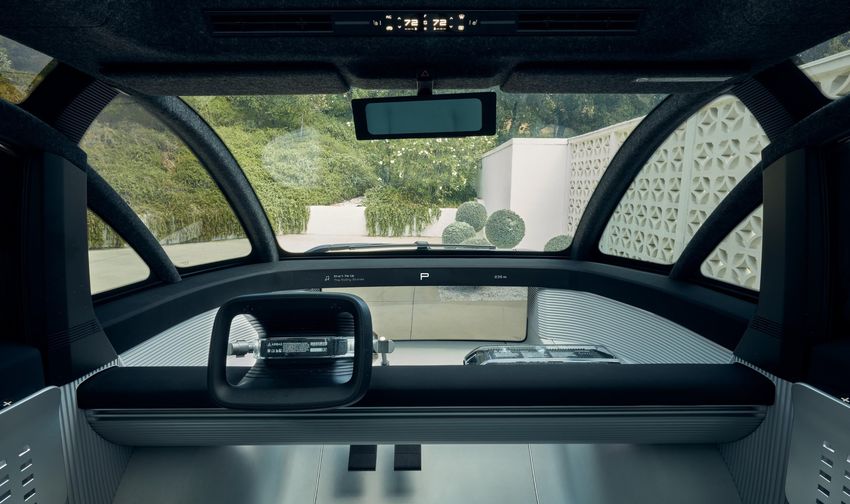
C A N O O

DISCLAIMERS (CONT.)
Financial Information; Non-GAAP Financial Measures
The financial information and data contained in this presentation is unaudited and does not conform to Regulation S-X. Accordingly, such information and data may not be included in, may be adjusted in or may be presented differently in, any proxy statement,
registration statement, or prospectus to be filed by HCAC with the SEC. Some of the financial information and data contained in this presentation, such as EBITDA and EBITDA margin, have not been prepared in accordance with United States generally accepted
accounting principles (“GAAP”). EBITDA is defined as net earnings (loss) before interest expense, income tax expense (benefit), depreciation and amortization. HCAC and Canoo believe these non-GAAP measures of financial results provide useful information to
management and investors regarding certain financial and business trends relating to Canoo’s financial condition and results of operations. HCAC and Canoo believe that the use of these non-GAAP financial measures provides an additional tool for investors to use
in evaluating projected operating results and trends in and in comparing Canoo’s financial measures with other similar companies, many of which present similar non-GAAP financial measures to investors. Management does not consider these non-GAAP measures
in isolation or as an alternative to financial measures determined in accordance with GAAP. The principal limitation of these non-GAAP financial measures is that they exclude significant expenses and income that are required by GAAP to be recorded in Canoo’s
financial statements. In addition, they are subject to inherent limitations as they reflect the exercise of judgments by management about which expense and income are excluded or included in determining these non-GAAP financial measures. In order to compensate
for these limitations, management presents non-GAAP financial measures in connection with GAAP results. Canoo is not providing a reconciliation of our projected EBITDA for full years 2020-2026 to the most directly comparable measure prepared in accordance
with GAAP because Canoo is unable to provide this reconciliation without unreasonable effort due to the uncertainty and inherent difficulty of predicting the occurrence, the financial impact, and the periods in which the adjustments may be recognized. For the same
reasons, Canoo is unable to address the probable significance of the unavailable information, which could be material to future results. You should review Canoo’s audited financial statements, which will be included in the Registration Statement (as defined below)
relating to the proposed business combination (as described further below). In addition, all Canoo historical financial information included herein is preliminary and subject to change pending finalization of the 2019 audit of Canoo in accordance with PCAOB auditing
standards.
Additional Information About the Proposed Business Combination and Where To Find It
The proposed business combination will be submitted to stockholders of HCAC for their consideration. HCAC intends to file a registration statement on Form S-4 (the “Registration Statement”) with the SEC which will include preliminary and definitive proxy
statements to be distributed to HCAC’s stockholders in connection with HCAC’s solicitation for proxies for the vote by HCAC’s shareholders in connection with the proposed business combination and other matters as described in the Registration Statement, as well
as the prospectus relating to the offer of the securities to be issued to Canoo’s shareholders in connection with the completion of the proposed business combination. After the Registration Statement has been filed and declared effective, HCAC will mail a definitive
proxy statement and other relevant documents to its stockholders as of the record date established for voting on the proposed business combination. HCAC's stockholders and other interested persons are advised to read, once available, the preliminary
proxy statement / prospectus and any amendments thereto and, once available, the definitive proxy statement / prospectus, in connection with HCAC's solicitation of proxies for its special meeting of stockholders to be held to approve, among
other things, the proposed business combination, because these documents will contain important information about HCAC, Canoo and the proposed business combination. Stockholders may also obtain a copy of the preliminary or definitive proxy
statement, once available, as well as other documents filed with the SEC regarding the proposed business combination and other documents filed with the SEC by HCAC, without charge, at the SEC's website located at www.sec.gov or by directing a request to
Nicholas A. Petruska, Executive Vice President, Chief Financial Officer, 3485 North Pines Way, Suite 110, Wilson, Wyoming 83014 or by telephone at (307) 734-4849.

INVESTMENT IN ANY SECURITIES DESCRIBED HEREIN HAS NOT BEEN APPROVED OR DISAPPROVED BY THE SEC OR ANY OTHER REGULATORY AUTHORITY NOR HAS ANY AUTHORITY PASSED UPON OR ENDORSED THE MERITS OF THE
OFFERING OR THE ACCURACY OR ADEQUACY OF THE INFORMATION CONTAINED HEREIN. ANY REPRESENTATION TO THE CONTRARY IS A CRIMINAL OFFENSE.

Participants in the Solicitation
HCAC, Canoo and certain of their respective directors, executive officers and other members of management and employees may, under SEC rules, be deemed to be participants in the solicitations of proxies from HCAC’s stockholders in connection with the
proposed business combination. Information regarding the persons who may, under SEC rules, be deemed participants in the solicitation of HCAC’s stockholders in connection with the proposed business combination will be set forth in HCAC’s proxy statement /
prospectus when it is filed with the SEC. You can find more information about HCAC’s directors and executive officers in HCAC’s final prospectus dated February 28, 2019 and filed with the SEC on March 4, 2019. Additional information regarding the participants in
the proxy solicitation and a description of their direct and indirect interests will be included in HCAC’s proxy statement / prospectus when it becomes available. Stockholders, potential investors and other interested persons should read the proxy statement /
prospectus carefully when it becomes available before making any voting or investment decisions. You may obtain free copies of these documents from the sources indicated above.

No Offer or Solicitation
This presentation does not constitute an offer to sell or the solicitation of an offer to buy any securities, or a solicitation of any vote or approval, nor shall there be any sale of securities in any jurisdiction in which such offer, solicitation or sale would be unlawful prior to
registration or qualification under the securities laws of any such jurisdiction.

Trademarks
This presentation contains trademarks, service marks, trade names and copyrights of Canoo, HCAC and other companies, which are the property of their respective owners.
                                                                                                                                                                                                                                                                                        3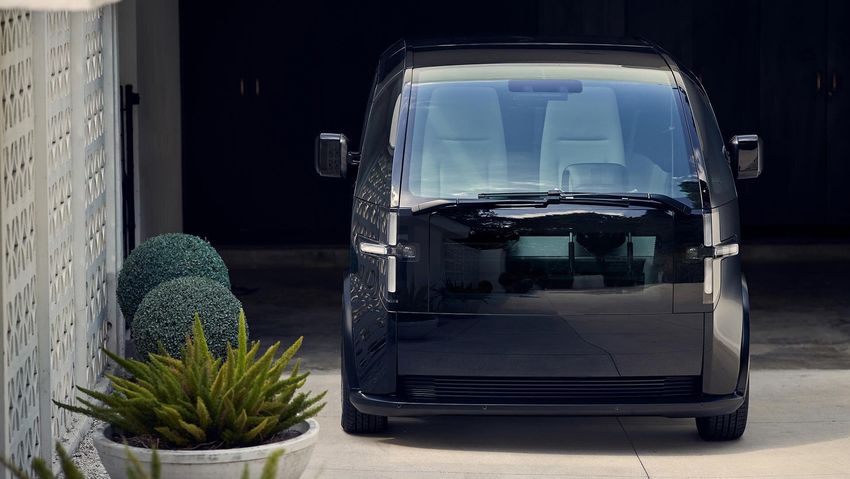
C A N O O

            4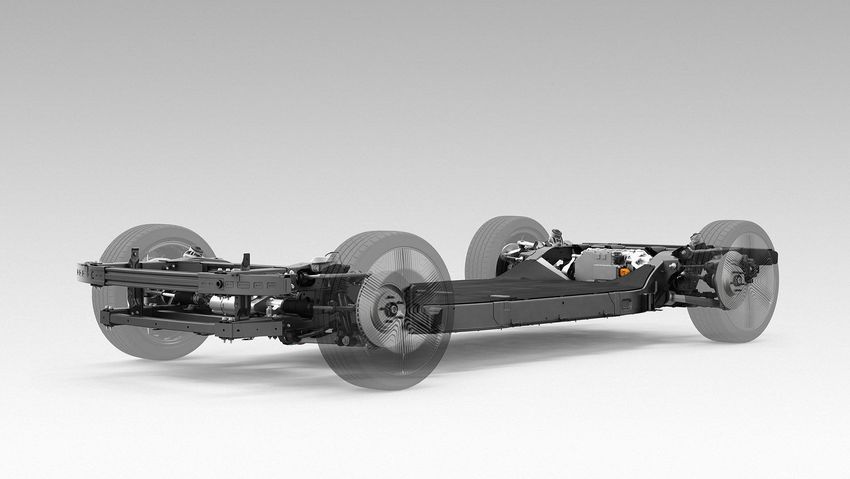
C A N O O

            5
C A N O O

            6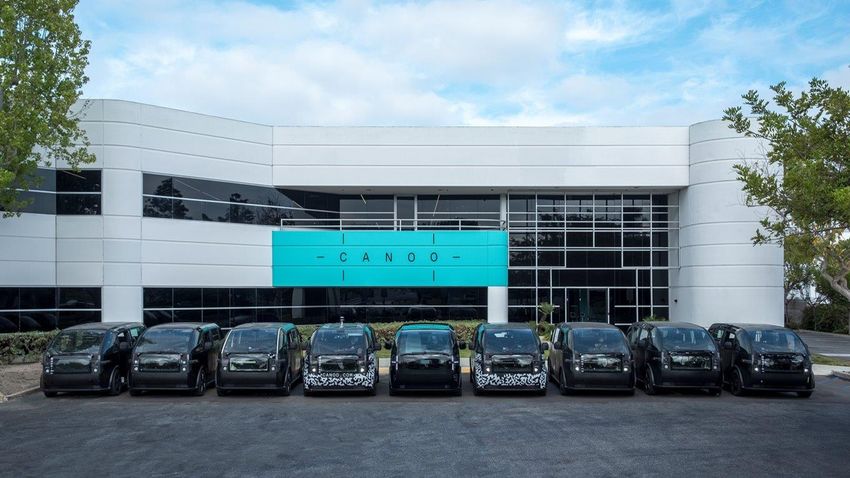
C A N O O

                          7
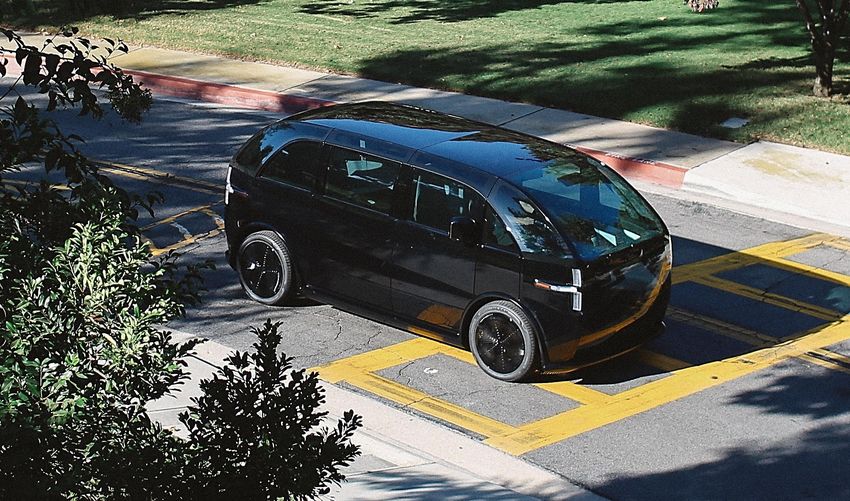
Note: Directional Image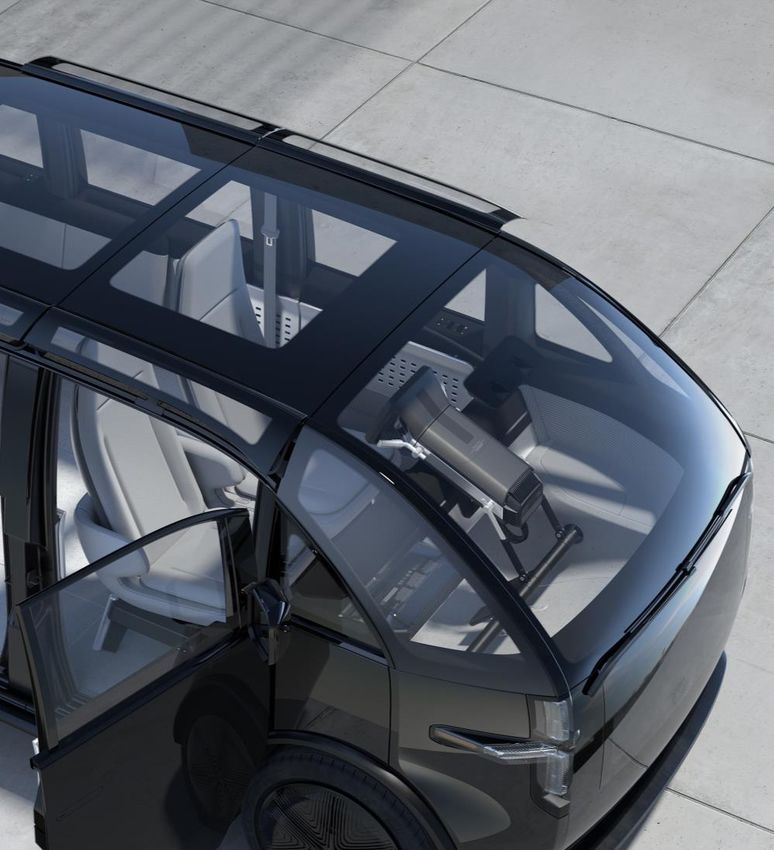
C A N O O
PROPOSED TRANSACTION SUMMARY
T R A N S A C T I O N O V E RV I E W
Hennessy Capital Acquisition Corp. IV announced a business combination with Canoo Holdings Ltd., a technology-driven company
developing unique electric mobility solutions to transform urban transportation
The transaction, inclusive of the over $300 million PIPE financing, is expected to fully fund the equity financing requirements for the
Canoo B2C Lifestyle Vehicle (LV) to start of production
Pro forma enterprise value of ~$1.84 billion, implying a 0.79x EV / 2025E revenue multiple
Existing Canoo shareholders will own ~71.5% of the pro forma equity1
The transaction is expected to close in Q4 2020
C A P I TA L S T R U C T U R E
The transaction will be funded by HCAC cash held in trust account, HCAC common stock and proceeds from the PIPE financing
Transaction expected to result in ~$607 million of cash proceeds to Canoo to fund its commercial development and growth plans
8
1. Prior to planned participation in the PIPE. See slide 52 for key assumptions and information.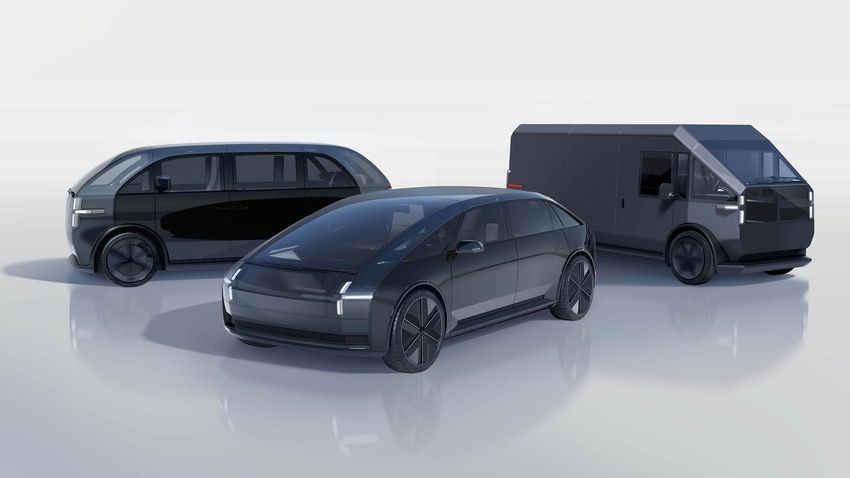
C A N O O

HENNESSY CAPITAL – A CATALYST FOR GROWTH
Strong alignment with Hennessy Capital’s objectives for value creation and growth

                                                                                               IMMENSE OPPORTUNITY & GROWTH
            190                                                   (Canoo Projected Financials, $m)
      High Potential
     Targets Identified
                                                                                             70%                                127%
                                                                                            CAGR                                CAGR
                                                                                                        $4,127
                                                                                                                                           $964
             29
        Meaningful
         Reviews
        Completed

                                                                                 $1,430

                                                                                                                         $188
             17
        Initial Offers
                                                                           2024E Revenue             2026E Revenue   2024E EBITDA      2026E EBITDA

                          Specifically, HCAC performed 15 meaningful reviews of EV and advanced mobility companies, building
                               conviction around the future of the sector and Canoo’s growth opportunity in the landscape

                                                                                                                                                      9
C A N O O

WHAT CANOO HAS ACHIEVED IN TWO YEARS

            RAPID DEVELOPMENT     Only 19 months to design, engineer and manufacture Beta vehicle – a process that typically takes 3 to 5 years

              EFFICIENT CAPITAL   $250 million investment to reach Beta vs. market standard typically measured in billions of dollars
                   DEPLOYMENT
PROPRIETARY TECHNOLOGY            Develops and owns proprietary technology, and therefore not dependent on external licensing
              PLATFORM

            IMMEDIATE REVENUES    Phased, de-risked go to market strategy resulting in immediate revenues

                   ASSET-LIGHT    Asset-light business model with a leading contract manufacturing partner
                MANUFACTURING
                                  Strong relationships with global leaders, including Hyundai, validate commercial progress, versatile
             MARKET VALIDATION    applications for both consumer and B2B; positive consumer engagement

 PURPOSE-BUILT FINANCIAL          Subscription business model with potential to deliver highly attractive returns on equity enabled and
                 PROFILE          enhanced by Canoo’s technology platform and purpose-built Lifestyle Vehicle

              EXCEPTIONAL TEAM    Highly experienced team with deep automotive and technology background

                                                                                                                                          10
C A N O O
SUMMARY HIGHLIGHTS
1 PROPRIETARY, MODULAR SKATEBOARD
2 MULTI-FACETED GROWTH STRATEGY
3 UNIQUE SUBSCRIPTION MODEL
4 DE-RISKED MANUFACTURING STRATEGY
5 ATTRACTIVE ENTRY VALUATION
11C A N O O
CANOO’S WORLD-CLASS MANAGEMENT TEAM
Established record of success designing, engineering and launching vehicles and technology products at scale
Alexi Charbonneau
Ulrich Kranz / In Charge* In Charge of Skateboard and Body
Former BMW executive
30+ years in BMW and MINI
Creator and Head of BMW i Division Christoph Kuttner
In Charge of Vehicle Trim
Sohel Merchant
In Charge of Vehicle Architecture
Richard Kim / In Charge of Design & Brand
Bill Strickland
Lead Exterior Designer of i3 production vehicle, i3 and In Charge of Vehicle Programs
i8 concepts, and i8 Spyder concept at BMW
Design Manager of VW Audi Group
Faculty, Art Center College of Design Phillip Weicker
In Charge of Propulsion and
Electronics
Meera Pisharody
In Charge of HR
Paul Balciunas / In Charge of
Finance & Corporate Development *
10+ years of electric vehicle financing Andrew Wolstan
Previously member of Deutsche Bank’s In Charge of Legal
Global Automotive Investment Banking
Group
Alex Marcinkowski *
In Charge of Corporate Strategy
12
* Denotes presentation speakerC A N O O
COMPANY OVERVIEW
13C A N O O
CANOO AT A GLANCE – DISRUPTIVE EV COMPANY
Company Overview Proprietary EV Skateboard Technology
Offers modular, purpose-built EVs to solve the future of mobility
Developed the flattest and lowest profile skateboard in the industry
that enables a variety of vehicle configurations
Dual-pronged B2C / B2B strategy targets large markets that are primed
for explosive growth
Wide Range of Applicability
Partnership with to co-develop a future electric car platform
Reached Beta in only 19 months
Headquartered in Los Angeles, CA
Launched in 2018
$250 million ~250+ Level 2.5
Investment to Beta Miles per Charge Autonomous Capability Experienced Engineers and Management
Highly-experienced leadership from the auto and tech industry
Over $450 million 90K Sq. Ft. ~300
Capital Raised to Date1 R&D Center Employees
14
1. The amount raised does not include primary proceeds from HCAC cash held in trust and PIPE capital.C A N O O
19 MONTHS TO BETA 13 DRIVING PROTOTYPES 32 BETA PROPERTIES 50+ CRASH TESTS COMPLETED
15C A N O O
CANOO’S COMPETITIVE MOATS
DEMONSTRATED VIABILITY
1 Already designed, manufactured and tested a fleet of Beta vehicles,
conducted over 50 crash tests and attracted blue chip customers
DESIGNED FOR LOWEST COST IN INDUSTRY
2 Proprietary, robust skateboard architecture simplifies the BOM and
manufacturing processes, translating to lower costs to our customers
OUR PLATFORM IS HIGHLY MODULAR
3 Allows for rapid, efficient development of new product offerings
WE HAVE OPTIMIZED FOR SPACE EFFICIENCY
4 Market leading interior space relative to vehicle footprint with the
industry’s first true steer-by-wire platform coming to market
MANUFACTURABILITY IS BUILT INTO OUR DESIGNS
5 Purpose built for efficient manufacturing and superior economic returns
16C A N O O
THREE PHASES OF REVENUE STREAMS
Canoo has a multi-phased approach to generate revenue and grow operations
Engineering Services B2C B2B
Timing Today 2022 2023
Description Electric vehicle concept design and engineering No commitment subscription program that Canoo delivery vehicle and
services for auto OEMs and other Strategics includes a vehicle and other services bundled Canoo skateboard licensing (upside opportunity)1
into a single monthly payment
$1,191
($m) ($m) CAGR: ($m)
147% $700
CAGR:
$450 100%
Revenue CAGR:
39%
$120 $175
$79
2021E 2025E 2022E 2025E 2023E 2025E
17
1. Skateboard licensing opportunity not currently reflected in the financial model or projections and represents an upside opportunity for these figures.C A N O O
CANOO’S FOUNDATION:
THE SKATEBOARD
18C A N O O
CANOO SKATEBOARD TECHNOLOGY
Canoo has developed and produced a unique independently drivable rolling chassis
The first true steer-by-wire platform coming to market
Composite leaf spring suspension
Majority of crash test incorporated into skateboard design
Battery modules incorporated directly into skateboard structure
In-house designed ECUs and battery management system (BMS)
Flattest and lowest profile skateboard in the industry enables minimized footprint, maximized interior
volume and highly modular configurations, while cutting development costs
19C A N O O
FASTER, SMARTER, BETTER
Enables new vehicle development in as little as 18 to 24 months at a lower cost vs. competitors by leveraging
modular core skateboard technology
20C A N O O
COLLABORATION WITH GLOBAL LEADING OEM
Partnership with Hyundai represents compelling customer traction – illustrating Canoo's technological leadership
and reinforcing commercial confidence in its offerings
Hyundai Motor Group & Canoo to
Co-Develop All-Electric Platform for
Future Electric Vehicles
The companies will jointly develop an all-electric platform based on
Canoo’s fully scalable, proprietary skateboard design for upcoming
Hyundai and Kia EVs and PBVs
Hyundai Motor Group expects the new platform using Canoo’s
skateboard architecture to allow for a simplified and standardized
development process, lowering vehicle price
“We were highly impressed by the speed and efficiency in which
Canoo developed their innovative EV architecture, making them the
perfect engineering partner for us as we transition to become a
frontrunner in the future mobility industry”
- Albert Biermann, Head of R&D at Hyundai Motor Group
21C A N O O
CANOO VEHICLE OFFERINGS
B2C Lifestyle Vehicle (LV) B2B Delivery Vehicle (DV) B2C Sport Vehicle (SV)
Vehicle
300+ mile range
250+ mile range
200+ mile range 4 or 5 passenger seat capacity
Estimated Charge time of 20% to up to 80% in 28 minutes
Total cargo volume ranging from 6.2 to 11 m3 Smaller footprint than Tesla Model 3 with
Specifications 125 mph top speed
~2,600 kg vehicle weight capacity for as much as twice the interior space
7 passenger seat capacity
Developed specifically for subscription model
Target Launch Q2 2022 2023 2025
Flat skateboard design allows for maximum
volume efficiency relative to competitor
2nd consumer vehicle introduced via
Available exclusively through subscription vehicles
subscription to complement LV in lineup
Description program that bundles vehicle and key services Powertrain, battery, electrical and thermal
Targets different demographic than LV to
Targeting young professionals systems are direct carryovers from Lifestyle
capture more conventional vehicle audience
Vehicle, ensuring reduced cost and time to
market
All based on same proprietary Canoo skateboard platform 22
Note: Vehicle specifications are prospective, reflecting current engineering and design direction. Final production vehicle specifications are subject to change.C A N O O
SIGNIFICANT OPPORTUNITY EXISTS
Canoo’s dual-pronged B2C / B2B strategy targets large markets that are primed for explosive growth
B2C LIFESTYLE & SPORT VEHICLES B2B DELIVERY VEHICLE
U.S. EV SALES FORECAST1 L A S T- M I L E D E L I V E RY S E R V I C E S M A R K E T S I Z E 2
(vehicles) ($bn)
824,050 $51.0
686,450 $39.9 $45.1
507,710 $31.3 $35.3
328,118 382,920
2018 2019E 2020E 2021E 2022E 2018 2019 2020E 2021E 2022E
Canoo is targeting
Canoo’s B2B Delivery Vehicle
California for the initial
targets the last mile delivery
rollout of its B2C Lifestyle
market, which is supported by the
Vehicle due to the state’s
$1 trillion North American
outsized market share and
Lifestyle Vehicle Sport Vehicle e-commerce market
targeted customer base
CALIFORNIA EV FORECAST1 NORTH AMERICAN E-COMMERCE MARKET SIZE3
(vehicles) ($bn)
$943.6 $1,053.1
$726.8 $826.9
350,000 $636.7
290,000
175,000 220,000
153,442
2018 2019E 2020E 2021E 2022E 2018 2019 2020E 2021E 2022E
1. Source: EVAdoption.
2. Source: TechNavio. 23
3. Source: eMarketer.C A N O O
CANOO LIFESTYLE VEHICLE
24C A N O O
THE POST-SUV EVOLUTION
Consumers want space for passengers and cargo
CANOO
FUTURE OF SPACE
USABILITY
SUV
2000s – PRESENT
MINIVAN
1980s – ’90s
STATION WAGON
1960s – ’70s
TIME
25C A N O O
INTERIOR
A loft on wheels with
everything you need and
nothing you don’t
26C A N O O
THE OPTION TO MAKE IT YOUR OWN
Canoo members will get the chance to “wrap” their vehicle in custom skins to personalize the experience and keep
every vehicle looking and feeling fresh
Exterior Wraps1 BYOD
Numerous custom skins available to make your Canoo unique Bring your own device so you can keep using all the
apps you love
Pegboards
Customize the Canoo sidewall with various options
One color / one trim greatly simplifies fleet management and reduces supply chain and manufacturing costs
and complexity
Customization for each subscriber can enhance the customer experience, increase average time on lease,
and decrease churn / increase fleet utilization
Uniquely customizable exterior and interior makes vehicle feel purpose-built for each subscriber and feel
“new” irrespective of actual vehicle age
27
1. Wrapping available for extra feeC A N O O
LIFESTYLE VEHICLE OVERVIEW
Flat design of the Canoo skateboard enables the highest volume utilization across all classes of competitor vehicles
T O TA L PA S S E N G E R
LENGTH2 WHEELBASE3
VOLUME1
188
160 5,161 3,000
5,036 2,965
4,694
4,270 4,421
2,850 2,875
Length: 4,421mm 112
Canoo Passenger Volume: 188.1 cu. ft. 94 97
2,629
Length: 5,161mm Volkswagen Tesla Tesla Honda Canoo Volkswagen Canoo Tesla Tesla Honda Volkswagen Canoo Tesla Tesla Honda
Honda Odyssey Passenger Volume: 160.1 cu. ft. E-Golf Model 3 Model X Odyssey E-Golf Model 3 Model X Odyssey E-Golf Model 3 Model X Odyssey
C U B I C F E E T O F PA S S E N G E R V O L U M E P E R F O O T O F L E N G T H
Tesla Model 3 Length: 4,694mm Canoo 13
Passenger Volume: 96.9 cu. ft.
Honda Odyssey 9
Tesla Model X 7
Volkswagen E-Golf 7
Length: 4,270mm
Volkswagen e-Golf Passenger Volume: 93.5 cu. ft.
Tesla Model 3 6
Source: Publicly available specification sheets.
1. SAE J1100 PV1 + PV2 + PV3; ft3
2. SAE J1100 L103; millimeters 28
3. SAE J1100 L101; millimetersC A N O O Level 2.5 autonomy for SOP in 2022
Steer-by-wire
FULLY AUTONOMOUS COMPATIBLE Brake-by-wire
Software integration module
LiDAR ready
Upgradable AI control module
Uniquely integrateable with 3rd
party next-gen autonomy
7 Cameras
5 Radars
12 Ultrasonic sensors
29C A N O O
LIFESTYLE DEVELOPMENT PROGRAM TIMING
Canoo’s rapid commercialization progress speaks to the quality and experience of its leadership team
First Vehicle
First Gamma Available for
Prototype Ready Consumers Use
AUGUST 2020
Q2 2022
(estimated)
Manufacturing Gamma Program
Serial Start of
Facility Retrofit Sign-Off
Production
Commences
Gamma Kick-Off
30C A N O O
CANOO B2B DELIVERY VEHICLE
Large cargo utility space – with a very small footprint
31
Note: Directional ImageC A N O O
DELIVERY VEHICLE OVERVIEW
Attractive configurations built on base skateboard targeted to address growing last-mile delivery market
T O TA L C A R G O
LENGTH2 WHEELBASE3
VOLUME1
11
10
5,809 3,494
8 8
5,531 3,259 3,300
5,267
5,028 2,850
Mercedes SS WORK Ford Transit Canoo Canoo Mercedes Ford Transit SS WORK Canoo Mercedes Ford Transit SS WORK
Sprinter Box L L2H2 L3H3 L3H3 Sprinter L2H2 Box L L3H3 Sprinter L2H2 Box L
L1H1 L1H1 L1H1
CUBIC METERS OF CARGO VOLUME PER METER OF LENGTH
1890 2000 2150 Canoo L3H3 2.0
Ford Transit L2H2 1.8
Mercedes Sprinter
1.5
L1H1
4359 4830 5028 SS WORK Box L 1.4
L1H1 L2H2 L3H3
Note: Directional images.
Source: Publicly available specification sheets.
1. SAE J1100 PV1 + PV2 + PV3; M3
2. SAE J1100 L103; millimeters 32
3. SAE J1100 L101; millimetersC A N O O
DELIVERY VEHICLE DEVELOPMENT STRATEGY
ESTIMATED 18 MONTHS FROM PROJECT START TO DELIVERY
Q1 2021 Project Start with Estimated Serial Production by Q4 2022 and Revenue by Q1 2023
Aggressive timing plan enabled by:
1. Canoo being an established company
2. Employing a simple but forward-thinking top hat design
3. Utilization of significant portions of carry-over technology
DEVELOPMENT STRATEGY
Direct carryover content from core skateboard technology
‒ Includes powertrain, battery, electrical architecture, thermal system
‒ Only minor modification and repackaging required
Chassis, crash structure strategy and body design will be modified to facilitate dimensional,
performance and cost requirements
‒ Utilize experience from LV platform to accelerate commercialization timeline
Top hat design utilizes simple and modern aesthetic to simplify engineering and manufacturing
‒ Reduced cost and time to market
33
Note: Directional images.C A N O O
CANOO SPORT VEHICLE
34
Note: Directional ImageC A N O O
SPORT VEHICLE OVERVIEW
Smaller and shorter than Tesla Model 3, but with capacity for far greater interior space, enabled by Canoo’s
proprietary skateboard
Expected to be available to customers in 2025
Utilizes same core skateboard platform as the Lifestyle and
Delivery Vehicles, reducing cost to develop and launch
Applies proprietary technology to a traditional, sedan-like
vehicle, enabling Canoo to penetrate a new, separate
market segment
35
Note: Directional images.C A N O O
CONTRACT ENGINEERING
36C A N O O
CONTRACT ENGINEERING & LICENSING OPPORTUNITIES
Contract engineering partnerships validate Canoo’s technology and generate revenue that reduces the
Company’s overall execution risk
SELECT CUSTOMER TYPES ACTIVITY OVERVIEW
$120 million of projected revenue in 2021E
Technology Passenger
Companies Vehicle OEMs Pipeline of 7 projects
Potential projects:
‒ Design
Autonomous ‒ New Vehicle Contract Engineering
Delivery ‒ Skateboard Licensing1
Vehicle Technology
Vehicle OEMs
Suppliers ‒ Vehicle Sales
SELECT PROJECTS
Hyundai – New Vehicle Contract Engineering AI / VR Start-up – Design
Validated skateboard technologies over 12 months with multiple Canoo recognized as vehicle platform for AR integration with
onsite visits potential for significant vehicle orders for partner
European Auto OEM – Delivery Vehicle Contract Engineering Tech Strategic – Contract Engineering & Vehicle Sales
Last-mile electric vehicle delivery solutions to win Player in smart car and autonomous vehicle that has identified
contracts with logistics players Canoo as a base platform to integrate systems
37
1. Skateboard licensing opportunity not currently reflected in the financial model or projections and represents an upside opportunity.C A N O O
SUBSCRIPTION
38C A N O O
N OT A C AR SWAPPIN G MOD EL
…Which requires high penetration rates and complex logistics
O R A R I D E S H A R I N G C O M PA N Y
…Which have challenging unit economics
CANOO IS A SUBSCRIPTION
One monthly payment, no commitment
Lease - + = Subscription
Time commitment Time commitment Routine maintenance at no extra cost Simplest way to have a single
Down payment No down payment We handle the DMV for you vehicle all to yourself for as
Customer pays maintenance Access and assistance with insurance long as you want (minimum
No insurance Charging access at your fingertips term of 1 month)
39C A N O O
GROWING DEMAND FOR SUBSCRIPTION MODELS
Macro trends driving accelerated auto subscription demand
GROWTH IN “TRANSPORTATION -AS-A-SERVICE” (TaaS) IS DRIVING DEMAND FOR NEW MOBILITY SOLUTIONS 1
(tn)
Individual ownership miles TaaS miles 7
6
SOP 5
4
3
2
1
0
2017 2018 2019 2020E 2021E 2022E 2023E 2024E 2025E 2026E 2027E 2028E 2029E 2030E
CRITICAL SUCCESS FACTORS FOR SUBSCRIPTION SERVICES
CHARACTERISTIC BENEFIT
Vehicle is electric Less maintenance, greater longevity
No legacy dealer network Barrier to entry
Manufacturing to demand Significantly reduces overcapacity risk
Vehicle manufactured for subscription Cost conscious BOM, durable components
Vehicle comes in single variant Easy to repair, smaller part bin, cheaper
Subscription is direct-to-consumer No dealers translates to additional margins
Valuable consumer data collection Data monetization opportunities
Provider has no vehicles in market More attractive depreciation schedule
No competing service has all the critical elements for a successful subscription model
40
1. Rethink, WSJ. Representative sample of largest developed global metropolitan areas.C A N O O
SUBSCRIPTION MODEL
We believe subscription-based models are essential for success today and into the future
BENEFITS OF A SUBSCRIPTION MODEL SUBSCRIPTION VS. LEASING
1. No upfront payment or breakage fees upon
contract termination vs. sizeable down
payment and lease costly opt-out fees
No Up-Front Pay Month to 2. Minimum term of 1 month vs. fixed term of 2 to
Payment or Month
3 years
Breakage Fee
3. No dealers and direct-to-consumer vs. picking
up car at dealer network
4. Digital first experience (managed via Canoo
No Dealerships Access to Maintenance app) vs. complex paperwork and physical
Insurance Within Included process
Canoo App 5. Includes benefits within monthly payment
price vs. a payment that only gets you a
vehicle
6. Canoo keeps vehicle for entire lifecycle vs.
Registration Public sending to re-sale auction after lease ends
Included Charging
Included
41C A N O O
HOW IT WORKS
Subscription is a direct-to-consumer, no commitment and transparent alternative to leasing / buying a vehicle
Apply
01 For Subscription
Download the Canoo app and apply to be a member
Receive
02 Your Canoo
Once approved, go and pick up your Canoo at a nearby location in your city
Drive
03 As If It’s Yours
Use the vehicle as if you owned or leased the vehicle (minimum term of 1 month)
Enjoy
04 The Subscription
Experience the peace of mind and flexibility of one monthly payment for all your
vehicle needs: insurance, charging, registration and routine maint. all included
Return
05 When Ready
Drop off your Canoo at the closest location
42C A N O O
CANOO DELIVERS OUTSIZED VALUE AT COST EQUIVALENCE
Subscription model pricing versus a traditional lease
TRADITIONAL LEASE CONSUMER SUBSCRIPTION
$$$ $$$
Consumers Pay
~40% More Than
$ Lease Price
Lease Down Maintenance Registration Charging All-In Lease 1 Monthly Fee
Payment Payment Costs
No Down Payment
Requires Sizeable Down Payment
No Term or Commitment
Multi-Year Commitment No Dealers
Fragmented Vendor Landscape No DMV or Registration
No Out-of-Pocket Maintenance
Difficult to Manage
Unified Experience Through App
Note: Bar charts represent illustrative costs. 43
1. All-in costs include lease down payments, registration / renewal fees, maintenance / repair costs, charging and title / delivery fees.C A N O O
SUBSCRIPTION GO-TO-MARKET PARTNERSHIPS
Utilizing partnerships to focus on core PA R T N E R S H I P C AT E G O R I E S
competencies and reduce execution risk:
Maintenance Fleet
Facilitates the city-by-city launch and operations of Canoo And Repair Operations
subscription model
Focused on 13 key U.S. metropolitan areas, starting in
Government Charging
Southern California
Enables Canoo to be asset / infrastructure light
Leverages lessons and experience of larger companies
and auto subscription experts
Keeps a larger portion of Canoo’s costs as variable Financing Insurance
expenses, providing greater financial flexibility
Provides greater clarity in cost projections
Platform Payment
Support Processing
Optimizes customer experience for subscribers
44C A N O O
SUBSCRIPTION VS. SALE
A subscription model can generate an estimated ~4x margin on each vehicle compared to a direct sale
ONE-TIME VEHICLE SALE SUBSCRIPTION MODEL1
100 225
ONE-TIME SALE VEHICLE LIFETIME
REVENUE REVENUE
80
VEHICLE COST 145
VEHICLE LIFETIME
COST
20
DIRECT SALE
MARGIN
80
SUBSCRIPTION
MARGIN
Note: All figures indexed to 100. 45
1. Analysis is representative and does not necessarily reflect Canoo’s specific subscription economics.C A N O O
ILLUSTRATIVE SUBSCRIPTION UNIT ECONOMICS
Subscription generates consistent cash flow and strong ROE over vehicle life – model is less dependent on
new vehicle sales, creating a considerably more profitable & resilient model when compared with other OEMs
12-YEAR CONTINUOUS CUSTOMER CASH FLOW1 T O TA L V E H I C L E P R O F I T 1
($ 000s) Year 1 Year 2 Year 3 Year 4 Year 5 Year 6 Year 7 Year 8 Year 9 Year 10 Year 11 Year 12 ($ 000s)
$11 Total Lifetime
$90
Revenue
$7 $7 $7 $7 $7 $7 $7 $7 $7 $7 $7 Revenue
Total Lifetime Vehicle
($57)
Costs
Costs
($2) ($2) ($2) ($2) ($1) ($1)
($6) ($6) ($6) ($5) ($5)
Total Lifetime Profit /
First year cost includes BOM, contract $33
manufacturing fee, delivery fee and
Vehicle
($20)
allocation of tooling costs
$6 $6 $6 $6 $6 $6
Net Cash Flow
$2 $2 $2 $2 $2
Total Lifetime Margin 37%
Upon repaying vehicle loan, subscription model yields
significant returns on equity
($9) Subscription model generates highly
attractive ROE2 and projected to
Analysis does not include further upside value opportunity upon end of 12-year subscription period
deliver a premium trading multiple
1. Analysis is representative and does not necessarily reflect Canoo’s specific subscription economics. 46
2. Illustrative Gross ROE of 147% and 12-year IRR of 28%.C A N O O
MANUFACTURING
47C A N O O
MANUFACTURING RELATIONSHIP
Canoo has an asset-light model through a strategic relationship with a world-class contract manufacturer,
which has allowed Canoo to reach Beta faster and with less capital deployed vs. EV competitors
B E N E F I T S O F C O N T R A C T M A N U FA C T U R I N G
STANDARD EV
MANUFACTURING PROCESS CANOO MANUFACTURING
Reduces cash and capital requirements
Plugs into up-and-running world-class manufacturing systems
Ability to quickly scale volumes up or down based on demand
Leverages existing manufacturing know-how and process
Reduces overcapacity and production risk
S T R AT E G I C R E L AT I O N S H I P : C A N O O V E H I C L E S D E S I G N E D F O R M A N U FA C T U R A B I L I T Y AT H I G H E S T Q U A L I T Y L E V E L S
World-Class Contract
Fee per vehicle
Manufacturer
IP, design and engineering of the vehicle Initial purchase of required tooling
$ Assembly of skateboard, cabin and complete vehicle
Initial tooling investment required for manufacturing Expenses for labor and overhead costs needed to
manufacture the vehicle
Vehicle distribution
Resource planning for plant labor and materials
Support manufacturing engineering and operations
Fully assembled vehicle Procurement of required parts and materials on
contracting model
48C A N O O
MANUFACTURING PLAN
Vehicle production will be outsourced, reducing complexity and required CapEx and allowing Canoo to focus on
core competencies and benefit from a leading contract manufacturer’s expertise
PRODUCTION FACILITY STRATEGY EFFICIENT PRODUCTION PROCESS
Body shop and full assembly
Capacity: 100K units / year
Attributes No paint shop needed
SOP 2022 UPPER BODY E-COAT
Flexible production volumes AND CLOSURES
(BODY SHOP)
1. No painting – skateboard, upper body and closures are E-coated INTERIOR / CHASSIS END OF
EXTERIOR ALIGNMENT LINE TEST
while exterior is constructed of colored thermoplastic ASSEMBLY (FINISHING)
2. Separate build of skateboard and cabin bodies in parallel;
body shop to consist of skateboard, cabin and closures lines
SKATEBOARD E-COAT SKATEBOARD
BODY ASSEMBLY
3. Skateboard assembled from chassis and powertrain, including (BODY SHOP)
Process
electrical wiring for the battery
Canoo deliberately and thoughtfully engineered skateboard and top hat
4. General assembly line will marry skateboard structure to upper
body top hat and install wiring, electronics, carpet, trim, IP, seats, for efficient manufacturing at high volumes at the highest quality levels
exterior and other components
Proprietary parallel process cuts manufacturing time significantly and
5. Final full vehicle testing before completion eliminates costly or problematic processes such as painting
Contract manufacturer would launch the production of Canoo’s vehicles in their assembly facility
49C A N O O
FINANCIALS & TRANSACTION
OVERVIEW
50C A N O O
SUMMARY FINANCIAL PROJECTIONS
Model conservatively assumes rollout in 13 cities – significant upside in expansion both domestically and
internationally
($m, except vehicle units) 2021E 2022E 2023E 2024E 2025E 2026E
Volumes
Lifestyle Consumer - 10,000 25,000 50,000 50,000 50,000
Delivery B2B Vehicle - - 5,000 10,000 20,000 50,000
Sport Consumer - - - - 25,000 50,000
Total Volume - 10,000 30,000 60,000 95,000 150,000
Cumulative Fleet Volume for Sub scription 1 - 10,000 35,000 85,000 160,000 260,000
Revenue
Subscription - $79 $265 $630 $1,191 $1,927
Engineering & B2B $120 $250 $575 $800 $1,150 $2,200
Total Revenue $120 $329 $840 $1,430 $2,341 $4,127
% growth 258% 174% 156% 70% 64% 76%
Gross Profit
2
Subscription - $30 $108 $256 $468 $730
% margin NM 38% 41% 41% 39% 38%
Engineering & B2B $25 $95 $89 $172 $239 $449
% margin 21% 38% 15% 22% 21% 20%
2
Total Gross Profit $25 $125 $197 $429 $707 $1,178
% margin 21% 38% 23% 30% 30% 29%
2
EBITDA ($349) ($245) ($69) $188 $522 $964
% margin NM NM NM 13% 22% 23%
EBIT ($372) ($287) ($118) $127 $461 $903
% margin NM NM NM 9% 20% 22%
3
Operating Capital Expenditures $128 $175 $56 $91 $16 $16
% of revenue 107% 53% 7% 6% 1% 0%
Note: Canoo estimates NOLs to fully offset taxable income through 2026E.
1. Includes Lifestyle and Sport Consumer vehicles. 51
2. Includes vehicle depreciation in COGS.
3. Excludes vehicle fleet capital expenditures.C A N O O
TRANSACTION OVERVIEW
The transaction is expected to fully fund the equity financing requirements of the Canoo LV and the PIPE will
be anchored by existing Canoo shareholders
E S T I M AT E D S O U R C E S A N D U S E S P R O F O R M A VA L U AT I O N
Sources ($m) ($m, except per share amounts)
HCAC Trust Equity1 $309 PF Shares Outstanding 4 244.8
2
PIPE 323 Share Price $10.00
Stock Consideration to Existing Canoo Shareholders 1,750 PF Equity Value $2,448
Total Sources $2,382
Uses ($m) Plus: Debt5 $0
Less: Cash 3 (607)
Stock Consideration to Existing Canoo Shareholders $1,750
Estimated Fees & Expenses 25 PF Enterprise Value $1,841
Cash to Canoo Balance Sheet3 607
Total Uses $2,382
P R O F O R M A C A P I TA L I Z AT I O N I L L U S T R AT I V E P R O F O R M A O W N E R S H I P 1 , 2 , 4
(m) Public
Shareholders,
Pro Forma Ownership Shares % Ownership 15.3%
Public Shareholders 1 37.5 15.3% PIPE Investors,
2 13.2%
PIPE Investors 32.3 13.2%
Existing Canoo Shareholders 175.0 71.5%
Existing Canoo
PF Shares Outstanding 244.8 100.0% Shareholders,
71.5%
1. Assumes no redemptions from HCAC’s existing public shareholders and includes HCAC founders.
2. Includes participation in the PIPE by Canoo and HCAC related parties.
3. Excludes any existing cash balance held by Canoo and proceeds from the most recent convertible note financing of $155 million in 2020, which was converted pre-signing and is included in the $1.75 billion stock consideration to the existing Canoo shareholders.
4. Assumes new shares are issued at a price of $10.00. Excludes the impact of 24.4 million out-of-the-money HCAC warrants (strike price of $11.50 or 15% out-of-the-money) which is reflective of the cancellation of certain of the sponsor warrants. Excludes 52
potential earnout shares to the existing Canoo shareholders of three tranches of five million shares each earned at share price targets of $18.00, $25.00 and $30.00.
5. Excludes Canoo forgivable PPP loan.C A N O O
ATTRACTIVE TRANSACTION PRICING
METHODOLOGY
($m)
Apply a range of 2.00x – 4.00x 1-year forward multiples, a
$9,364
discount to public comparables, to Canoo’s 2025E revenue
The resulting future enterprise value is discounted back by 4
years to arrive at an implied enterprise value
The transaction value implies a 74% discount to the midpoint of 74% Discount
the implied future enterprise value and 46% discount to the
midpoint of the discounted enterprise value
$4,516
$4,682
46% Discount
ASSUMPTIONS
Forward year multiples: 2.00x – 4.00x $1,841
$2,258
2025E revenue: $2,341 million
Discount rate: 20%
Implied Future EV Implied Discounted Transaction Value
EV
53
Note: Figures in bar charts represent enterprise value.C A N O O
SUM-OF-THE-PARTS VALUATION
Canoo has a unique business model that shares aspects of both a subscription and high-growth EV companies
HIGH-GROWTH SUBSCRIPTION BUSINESS MODEL S O T P F O R WA R D M U LT I P L E A N A LY S I S
Current 2-Yr. Fwd. 2025E 2-Yr Fwd. Implied 2023E
EV / Revenue: 7.65x ($m) Revenue Med. Multiple Firm Value
Subscription Revenue1 $1,191 5.75x $6,848
Engineering & B2B Vehicle Revenue $1,150 2.75x $3,163
Total $2,341 4.28x $10,011
Median 2-Yr. Fwd.
Discount Rate to 2020E Present Value 15% 20% 25%
EV / Revenue: 5.79x
Indicative Enterprise Value $6,582 $5,793 $5,125
Post-money Enterprise Value – PIPE Entry $1,841 $1,841 $1,841
Implied Upside Potential 258% 215% 178%
HIGH-GROWTH EV OEM MODEL SOTP METHODOLOGY
Current 2-Yr. Fwd. Incorporates Netflix as a proxy for high-growth subscription and Tesla as a
EV / Revenue: 7.52x
proxy for high-growth EV to valuation framework
Applies 5-year median 2-year forward multiples to Canoo’s 2025E
Median 2-Yr. Fwd.
EV / Revenue: 2.79x Subscription1 and Engineering / B2B vehicle revenue
Discounted back by 3 years to arrive at indicative enterprise value
MEMO: MEDIAN GROSS MARGINS2
Netflix: 39.6% Tesla: 22.6%
Canoo Subscription: 39.3% Canoo Engineering & B2B: 20.8%
Source: FactSet as of August 14, 2020. 54
1. Includes Lifestyle and Sport Vehicle subscription revenues.
2. Represents median 2-year forward gross margin over the last 5 years for Netflix and Tesla and median over the next 5 years for Canoo.C A N O O
THANK YOU
55
Note: Directional ImageC A N O O
SUPPLEMENTAL MATERIALS
56C A N O O
STRATEGIC INVESTMENT HIGHLIGHTS
Proprietary, Canoo’s proprietary electric vehicle skateboard design effectively enables multiple EV configurations and provides for high degree of
design optionality across commercial and consumer applications
1 Modular Skateboard licensing to automotive OEMs, EV startups and technology companies remains a viable, high margin revenue source
Skateboard lending upside to the current financial model1
Canoo’s development of its EV skateboard platform minimizes engineering investments and development costs and opens multiple
revenue opportunities by catering to a broad spectrum of consumer and commercial customers
Multi-Faceted
2 Growth
Canoo capitalizes on dual-pronged go to market strategy (B2C + B2B) that significantly increases TAM / provides substantial growth
opportunities, resulting in Engineering Services, Consumer Subscription and B2B segments projected to grow at projected CAGRs of
39%, 147% and 100%, respectively, through 20252
Shifts in demographics and consumer preferences are supportive of new forms of transportation and business models
Unique
The traditional experience of buying or leasing a car is burdensome to consumers and ripe for disruption
3 Subscription
Canoo’s B2C subscription model delivers highly attractive return on equity and elongates the revenue generation horizon of a single
Model vehicle to ~12 years with potential to achieve a higher margin
Canoo has reduced the risk of its manufacturing strategy by working with a Tier 1 automotive contract manufacturer
De-Risked
Not owning and operating its own manufacturing facilities allows Canoo to reduce CapEx to focus on technology investments,
4 Manufacturing accelerate its ability to scale and provide greater visibility into margins
Strategy Ability to manufacture to demand and quickly scale volumes up or down, which reduces overcapacity and production risk
Upon completion of the business combination, Canoo will be a unique publicly traded EV asset differentiated by its numerous avenues
Attractive to revenue generation and is expected to be the only EV player to integrate true steer-by-wire technology
5 Entry Long asset life and utilization, optimized direct costs and visible fleet dynamics translate to steady and recurring cash flows
Valuation Canoo is much less dependent on new vehicle sales through its unique subscription model, which is projected to generate superior
margins vs. direct sales, consistent cash flows and attractive ROE, and is estimated to deliver a premium trading multiple
1. Skateboard licensing opportunity not currently reflected in the financial model or projections and represents an upside opportunity for these figures.
57
2. Projected CAGRs for Engineering Services, Consumer Subscription & B2B are 2021E-2025E, 2022E-2025E and 2023E-2025E, respectively.C A N O O
CANOO SKATEBOARD DETAILS
Proprietary, highly differentiated skateboard architecture is the core of all Canoo product offerings
CANOO COMPETITORS
Composite leaf spring suspension creates a completely flat Traditional suspension intrudes into the passenger compartment,
Suspension Suspension
skateboard maximizing interior passenger space and modularity inefficiently utilizing interior space
Steer-by-wire eliminates need for mechanical steering column,
Mechanical steering column creates engineering constraints and
Steering enabling full benefit of autonomous driving and maximizes interior Steering
reduces flexibility for design
space while minimizing overall vehicle footprint
Battery pack fastened directly to skateboard structure, reducing Separate battery enclosure increases weight and requires additional
Battery Pack Battery Pack
weight and increasing usable space space to accommodate
Majority of crash test incorporated into skateboard design,
Little crash test validation embedded in skateboard, requiring
Crash Testing significantly reducing testing time and expense of future individual Crash Testing
significant model-by-model testing
models
Fully functional rolling chassis; powertrain and connectivity features
Architecture Architecture Not a true rolling chassis, connectivity hardware not included
embedded; crash tested; multiple battery, motor and load capabilities
High-integrity power distribution enables autonomy; small number of Architecture does not provide redundancies for higher autonomy
Power
Power Systems high-performance ECUs and zone based wiring harness for levels; single-function ECUs add cost and reduces efficiency; heavy
Systems
maximum efficiency and costly wiring harness
58C A N O O
A TRUE MODULAR PLATFORM GARNERING INTEREST
Versatility of Canoo's skateboard allows for a wide range of potential products and use cases at minimal
additional expense
ONE SKATEBOARD
MULTIPLE CABINS
59C A N O O
HYUNDAI PRESS RELEASE
Los Angeles / Seoul, Feb 11/12, 2020 – Hyundai Motor Group and Canoo
announced today that Hyundai has engaged Canoo to jointly develop an
electric vehicle (EV) platform based on Canoo’s proprietary skateboard
design for upcoming Hyundai and Kia models.
As part of the collaboration, Canoo will provide engineering services to help
develop a fully scalable, all-electric platform to meet Hyundai and Kia
specifications. Hyundai Motor Group expects the platform to help facilitate
its commitment to delivering cost competitive electrified vehicles — ranging
from small-sized EVs to Purpose Built Vehicles (PBV) — that meet diverse
customer needs.
[Canoo] offers a skateboard platform which houses the most critical
components of the vehicle with a strong emphasis on functional integration,
meaning all components fulfill as many functions as possible. This feat of
engineering reduces the skateboard size, weight and total number of parts,
which ultimately provides more interior cabin space and a more cost-
effective EV offering. In addition, the Canoo skateboard is a self-contained
unit that can be paired with any cabin design.
Hyundai Motor Group expects an adaptable all-electric platform using Canoo’s scalable skateboard architecture to allow for a simplified and standardized
development process for Hyundai and Kia electrified vehicles, which is expected to help reduce cost that can be passed along to consumers. Hyundai Motor Group
also expects to reduce complexity of its EV assembly line, allowing for rapid response to changing market demands and customer preferences.
With this collaboration, Hyundai Motor Group doubles down on its recent commitment to invest $87 billion USD over the next five years to foster future growth. As
part of this drive, Hyundai plans to invest $52 billion USD in future technologies through 2025, while Kia will invest $25 billion USD in electrification and future
mobility technologies, aiming for eco-friendly vehicles to comprise 25% of its total sales by 2025.
60
Source: Hyundai website.C A N O O
CANOO’S COMPARABLES
EV Players
Pure-play EV competitors
CapEx heavy business model vs. Canoo’s asset-light
operation
AutoTech
Enabling next-gen technology in automotive sector
Technology-driven differentiation
Mobility Platform
Alternative to traditional car ownership
Digital-first access to consumers
Consumer Subscription
Disrupting longstanding business models
Recurring revenue streams
Recent AutoTech SPACs
High-growth AutoTech players
Valuations driven by long-term projections
61C A N O O
OPERATING BENCHMARKING
CY2021E CY2024E
EV Players AutoTech Mobility Platform Consumer Subscription Recent SPACs
1
Gross Profit Margin YoY Revenue Growth
Overall Median 32.8%
Median: 41.4% Median: 17.2% Median: 44.8% Median: 19.7% Median: 105.2%
220.0%
128.1%
64.4% 105.2% 66.2%
63.7% 66.0%
41.4% 46.5% 48.5% 41.1% 41.3% 33.3%
32.3% 29.2% 21.8% 17.7% 8.9%
14.0% 18.1% 16.3% 14.7% 12.6% 7.6% 8.0%
2025E
1 2 3 4 5 6 7 8 9 10 11 12 13 14 15 16 17 18 19 20 21 22 23 24 25 26 27 28 29 30
Overall Median 42.2%
Median: 14.7% Median: 51.2% Median: 54.3% Median: 45.0% Median: 28.8%
75.3% 69.2% 75.7% 67.3%
66.2% 60.2% 57.8%
54.3% 54.3%
42.2% 34.3% 45.5% 44.5% 40.4%
30.2% 35.2%
24.4% 19.9% 25.8% 22.3%
13.4% 21.5% 14.7% 18.6%
NA
2025E
1 2 3 4 5 6 7 8 9 10 11 12 13 14 15 16 17 18 19 20 21 22 23 24 25 26 27 28 29 30
Overall Median 14.9%
EBITDA Margin
Median: 11.0% Median: 21.4% Median: (4.5%) Median: 13.0% Median: 18.9%
56.6%
42.2% 43.1%
22.3% 27.1% 31.3% 28.8% 21.8%
16.3% 11.0% 14.0% 15.8% 20.8% 20.2% 18.9%
5.4% 5.9% 2.2% 0.2% 6.6% 10.4%
2025E (7.3%) (1.8%)
(11.2%) (14.4%)
1 2 3 4 5 6 7 8 9 10 11 12 13 14 15 16 17 18 19 20 21 22 23 24 25 26 27 28 29 30
Source: FactSet and CapIQ. Market data as of August 14, 2020.
Note: All metrics reflect CY2021E unless otherwise noted - Hyliion, Lordstown, Nikola, Fisker and Velodyne reflect CY2024E.
62
1. Mobileye represents CY2018E based on pre-announcement unaffected trading price as of March 10, 2017.You can also read


