NEF's Contribution towards the Economic Reconstruction and Recovery Plan - Wednesday, 3 March 2021 09h00 -13h00 Ms Philisiwe Mthethwa, CEO - DTI
←
→
Page content transcription
If your browser does not render page correctly, please read the page content below
Briefing to Portfolio Committee
         on Trade and Industry

NEF’s Contribution towards the
Economic Reconstruction and
       Recovery Plan

                     Wednesday, 3 March 2021
                                09h00 -13h00
                 Ms Philisiwe Mthethwa, CEO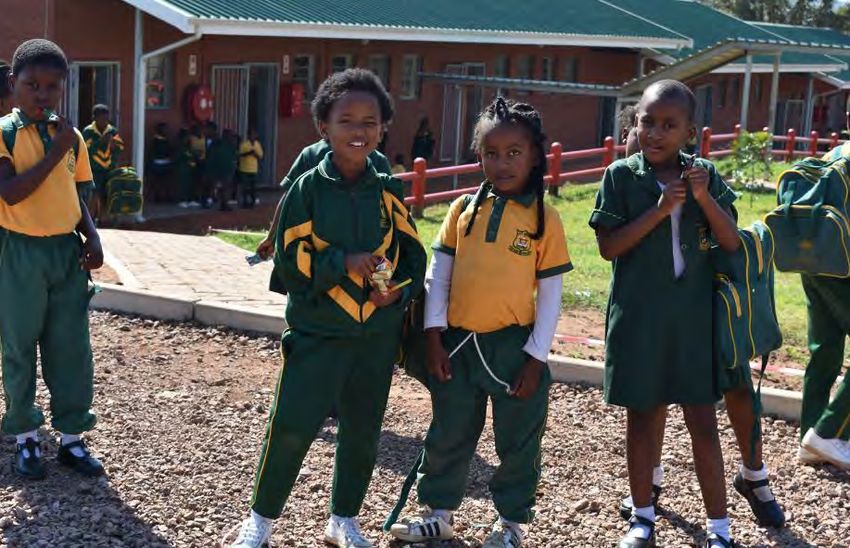
NEF Mandate…
                         Established by the
National Empowerment FundAct No. 105 of 1998, the NEF is a
           driver and a thought-leader in promotingand
facilitating black economic participation through the provision of
     financial and non-financial support to black-owned and
           managed businesses, as well as bypromoting
                a culture of savings and investment
                        among black people.

        The NEF is an agency of the dtic and is the onlyDFI
                  exclusively mandated to grow
                             B-BBEE

                  NEF funds across all sectors ofthe
                       economy from R250 000
                          up to R75 million

                                                       2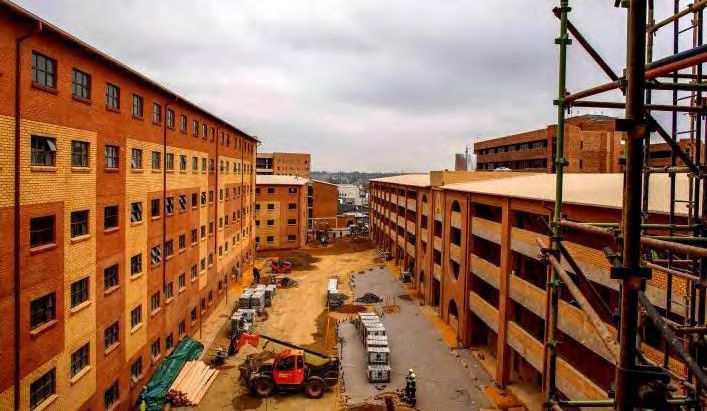
The NEF’s strategic outcome-oriented goals
1.   To provide finance to business ventures established and managed
     by black people.
2.   Invest in black empowered businesses that have high employment
     creating opportunities
3.   Support the participation of black women and youth in the
     economy
4.   Maximise support for township and rural economies.
5.   Facilitate investment across all provinces in South Africa
6.   Encourage and promote savings, investment and meaningful
     economic participation by black people
7.   Advance black economic empowerment through commercially
     sustainable enterprises
8.   Establish the NEF as a financially sustainable DFI in South Africa.

                                                      3
The strategic planning framework…
                                            Broad Based Black Economic Empowerment
                                                   The Codes of Good Practice

              Objectives - Industrial   NEF Sectors
               Policy Action Plan
                                                                                        GovernmentPriorities:
                                        Tourism; Construction & Materials; Agri-
 Objectives

                                        processing; Transport; ICT & Media; Mining
                                                                                        1)   Acceleration of economic growth and transformation,
  NEF Act:

                                        Services; Franchising, Property: Energy;
                     the dtic

                                                                                             creating decent work and sustainable livelihoods;
                                        Services; Creative Industries; 4th Industrial
                                                                                        2)   Infrastructure development to achieve social and
                                        Revolution; Financial Services; Food &
                                                                                             economic goals and rural development;
                                        Beverages; Engineering; Manufacturing;
                                                                                        3)   Skills and human resource development;
                                        Automobile; Printing; Retail; Clothing &
                                                                                        4)   Build a developmental state and improve public service.
                                        Textiles etc

                                           NEF Sectors in line with national industrialobjectives

                                                                              4
NEF Strategic Priorities

▪   Achievements and enhancement of the
    empowerment dividend and development
    effectiveness.
▪   Financial sustainability.
▪   Implementation of PPPs for co-funding
    inclusive growth.

                                            s

                           5
Life to date performance milestones as at 31 Dec 2020
           Output                                                  Achievements
1   Approvals               •   Approved 1 120 transactions worth more than R10.98 billion across the country.

2   Disbursement            •   Over R7.34 billion has been disbursed to these companies since inception.
3   Integrity               •   Secured clean external audit opinions for 17 years running.
                            •   Since inception, the number of job opportunities supported is 103 081 of which 69 322 were
4   Supporting jobs
                                new.
                            •   24 strategic and industrial projects worth R13.2 billion, with the potential to support over
5   Industrialisation           52 000 jobs. 75% of the transactions are at an advanced development stage.
                            •   Since inception 3 600 job opportunities have been created.
                            •   In a transaction worth over R1 billion the NEF Asonge Share Scheme made available more
    A culture of savings&
6                               than 12 million MTN shares to over 87 000 investors comprising black individuals and groups.
    investment
                                49% of investors were women.
                            •   Reached approximately 2 925 505 people in villages and townships through 552
7   Investor education          community seminars on how to save and invest, personal financial discipline, shares,
                                dividends, bonds, the property and money markets.
    Entrepreneurship        •   Business skills training provided over 4 459 potential entrepreneurs who attended 475
8
    training / incubation       seminars from 2012 to date.
                            •   Approximately 72% of the number (76% by value) of approved transactionsemanated from
9   National footprint
                                the regional offices and Pre-Investment Unit.
10 Collections              •   Over R3.7 billion has been repaid by investees.
                                                              6
Annual Collections over 10 years (R’m)
 600
                                                           520
                                                                            488            490
 500
                                                  440                427           414
 400
                              351
                                          307
 300

                     194
 200       175

 100

  -
           2011     2012      2013        2014    2015    2016       2017   2018   2019   2020

                                            R'm Annual Collections

▪Since inception over R3.7bn has been paid by investees, with more than 90% collected over the past 8 years
 because of:
       ➢Effective portfolio management,
       ➢Culture of loan payments entrenched.                            7

                                                                       7
Unlocking Third-Party Funds
    In partnership with other stakeholders, the NEF leveraged a
    total of R782m third party funding during FY 2018-2019
                      uMnotho   iMbewu    RCDF       SPF          Total
Total value of
                       R952m     R61m      R18m         R135m       R1166bn
funded projects
NEF funding            R304m     R34m      R8m          R37m         R383m
Third party funding    R647m     R27m      R10m         R98m         R782m
% funding leveraged
                        68%       44%        55%        73%           67%

  • Average leverage of 60% across the Funds, with higher leverage in
    uMnotho and SPF (also driven by limited available capital for the NEF),
  • NEF is a catalyst for unlocking economic value.

            Life to date the NEF has leveraged third-party
            funding amounting to R8.8 billion.

                                                    8
Growing BEE through partnerships
▪   The NEF has been growing, and will continue to make an effort to grow, BEE
    by partnering with various stakeholders to leverage on funding opportunities
    to fund NEF investees. The stakeholders include, but not limited to,
    Enterprise Development (ED) funders.
▪   The NEF continuously look to foster strategic partnerships that unlock third
    party capital that can be deployed applicants/investees along with the
    organisation’s own unencumbered capital.
▪   To date the NEF has leveraged third party funding amounting to R8.8 billion
    (made of both the ED funds and funds from commercial lenders/other DFIs).
▪   The NEF is currently in partnership with various stakeholders, which are from
    both private and public sectors, for the purpose of crowding in capital.

                                                        9
A partner trusted by many
                                 Launch         Total Funds
 No.           Partner                                                           Primary Objective of Fund
                                  Date           Received
 1     Daimler Chrysler SA       Sept 2011     R4 800 431.26    To empower two former employees of Chrysler to start their own
                                                                business.
 2     Dept. of Economic Dev.    Aug 2020      R40 302 775.00   Co-funding black entrepreneurs in the Western Cape.
       (WC)
 3     Bakwena Ba Mogopa         Nov 2012      R5 000 000.00    Co-funding black SMME’s in the North West.
 4     Evraz Highveld            Dec 2012      R2 000 000.00    Co-funding black SMME's participating in the steel and Vanadium
                                                                value chain in Mpumalanga.
 5     Transalloy                Dec 2012       R250 000.00     NEF to provide funding on a 60:40 ratio to black suppliers
                                                                participating in the ED Gas supply chain in Emalahleni.
 6     Intersurgical              Dec 2012      R400 000.00     Co-funding black entrepreneurs in the value chain.
 7     ED Gas                     Dec 2012      R350 000.00     Co-funding black entrepreneurs in the ED Gas value chain.
 8     BPSA                       Feb 2017     R53 000 000.00   Support black entrepreneurs to acquire filling stations.
 9     Bakgatla Ba Kgafela       March 2013    R5 000 000.00    Provide financial and non-financial support for SMME’s and
                                                                entrepreneurs in the community.
 10    Dept. of Rural Dev. &     March 2016   R583 222 424.57   Support farms workers to become land owners.
       Land Reform
 11    Department of Sports      Sept 2016     R75 000 000.00   Unlocking business opportunities in the arts & heritage sectors.
       Arts & Culture
 12    Dept. of Tourism          March 2017   R120 000 000.00   Tourism Transformation Fund (TTF).
 13    Nissan South Africa       March 2016    R5 305 900.00    Allocate business vehicles to black entrepreneurs.
 14    Transnet Port Terminals   April 2019    R15 000 000.00   Empower SME’s operating within the Transnet value chain..
 15    Bakubung                  Dec 2019      R3 000 000.00    Empower SME's in local host communities in line with the
                                                                Enterprise and Supplier Development obligations.
 16    City of Ekurhuleni        Dec 2019      R33 000 000.00   Invest in SME's conducting business within the City of Ekurhuleni.
       Municipality
                         Total                R945 631 530.83
                                                                          10
NEF Investment Funds
Strategic Rural and Women
uMnotho iMbewu Projects Community Empowerment
Fund Development Fund
Provides capital for • Supports start-up Funds the Supports the Supports
expansion of businesses Development of development and growth businesses
Objectives
businesses, thebuying • Provides capital for projects through of a rural economy in rural that are more
of shares in white- the expansion of stages of projects communities, which is than 50%
owned businesses or small enterprises achieved by the owned and
funding new ventures mobilisation of structures managed by
such as cooperatives black women
• Acquisitions • Franchise financing • Venture Capital • New Ventures The product
• New Ventures • Procurement/ funding structures • BusinessAcquisition offerings
Products
• Expansion Contract • Development of • Expansion cut across all
• Capital Markets • Entrepreneurship Black Industrialist products provided
• Liquidity and funding funding in by the different
Warehousing strategic sectors Funds
Funding ranges from Funding range from Funding range of up to Funding ranges from Funding from
R2 million to R75 R250 000 to R15 million R75 million R1 million to R50 million R250 000 to R75
Range
million million
11Non-Financial Support
Pre-investment
As the first-point-of-contact the unit provides product advisory
services, manages the online business-plan solution, manages
the administration of applications, incubation and entrepreneurial
training.
Socio Economic Development
Empower black people in existing NEF transactions and other
broad based groups through various interventions such as
promotion of saving and investments, social facilitation, investor
education, corporate governance training and market access for
the acceleration of meaningful participation.
Post-investment support
Monitor investments, provide ongoing portfolio management,
manage mentorship support and collections as well as legal
compliance.
Turnarounds, Workouts and Restructuring
Rehabilitate distressed transactions and reduce impairments
Through a combination of measures including balance sheet
restructuring, equity and /or working capital injection, operational
restructuring, introduction of a strategic equity partner and / or
turnaround specialist and business rescue.
12NEF’s Performance
and Investment Criteria…
“The Empowerment Dividend”
The assessment of impact is not driven only by financial returns but by
measurement in terms of “The Empowerment Dividend” made up asfollows:
• Broad Based Black EconomicEmpowerment
• Ownership, management control, employment equity etc.
• Black Women Empowerment
• Job Creation
• Growth Sectors
• Geographic Spread
• Investment Return
13Sectors Funded by the NEF
Government
Examples of NEF Investment Breakthroughs
SectorFocus
Black Create new manufacturing and industrial capacity alongside local and international partners. To date the NEF has invested about
1 industrialists R900m in developing projects (with a total of 24 projects currently under development) with a total of 5 operational businesses that
have created over 3600 jobs and leveraged over R4 billion of third party funding.
A dedicated fund that has supported entrepreneurship, procurement & franchise funding, as well as business planning, incubation,
2 Support SMEs training and mentorship support. To date, NEF disbursed over R1.6 billion into the support of 454 small and medium enterprises.
Township & A dedicated fund that supports businesses in rural areas and townships. The businesses are in various sectors including property
3 Rural (shopping malls), petroleum sector (petrol stations) and tourism. To date the NEF disbursed over R2.1 billionin support of entities in
Economy rural and township economies.
To date the NEF has approved over R372 million in the property sector. These investments are expected to contribute in job creation,
infrastructure development, addressing the lack of student accommodation and supporting government’s economic stimulus and recovery
4 Property plan. In the past year alone, the NEF approved approximately R150 million in this sector, leveraging close to R600 million in third-party
funding.
Construction is the NEF’s largest funded sector, with investments in excess ofR785 million, which comprises 14.41% of the total invested
5 Construction
portfolio. NEF investmenthas supported 6205 jobs, and 29% has benefitted black-women entrepreneurs.
The NEF continues to invest in community-owned hotels and lodges to drive the growth of the tourism sector. This includes
investments in tourist attraction projects like the Graskop Gorge Lift, a flagship project that will drive tourism development in the
6 Tourism Panorama Tourist Route in Mpumalanga, and is the first of its kind in Africa. To date the NEF has disbursed over R251 million into
this sector and continues to identify opportunities in partnership with the Department ofTourism.
Affordable & In partnership with various industry stakeholders, supported the construction of several social housing, student accommodation
7 Social and related projects. To date, NEF invested over R272 million in this sector.
Housing
Student In partnership with private developers, to date the NEF has invested over R143 million in the student accommodation sub-sector.
8
Accommodation
Agro- Supported beneficiation investments across the agricultural value chain such as processing of castor oil, fruit juices,
9 processing condiments etc. To date, NEF invested over R316 million in this sector.
10 Energy 14 40% of which are owned and managed by black women.
Invested over R885 million in service stations countrywide,Geographic Split Life to Date
GDP % Contribution by Province
WC EC FS
NW 12% 7% 2% Limpopo 7,4
NC 4% Mpumalanga 7,5
MP 2% 34,3
Gauteng
5%
North West 6,4
LP KwaZulu-Natal 16,0
6% Free State 5,0
GP
Northern Cape 2,1
KN 47%
Eastern Cape 7,7
15%
Western Cape 13,6
0,0 5,0 10,0 15,0 20,0 25,0 30,0 35,0 40,0
2018 2017
• The NEF has supported Black Businesses throughout the length and breadth of the country.
• As a development financier the NEF has prioritised the provinces with the smallest GDP
contribution to spread the empowerment dividend countrywide more effectively.
15Qualifications Statistics
No Qualification Number
1 Chartered Accountants 15
2 Master’s degree 17
3 Engineers (additional 3 holds Master’s 4
degree)
4 Honours degree 22
5 Bachelors degree 39 Head Count – Core vs Support
6 LLB degrees (8 are admitted attorneys) 9
No. Percentage
7 Advanced Diploma 1
Core 106 66%
8 Diplomas 20
Support 54 34%
9 Certificates 30
Total 160 100%
10 Abet 3
Total 160
Average age of NEF employees is 39 years –
maturing organisation
• 60% of the employee complement isfemale
• 41% of MANCO is female
162020/21 Allocations by the dtic to the NEF
R160m Women
Empowerment Fund
R200m NEF COVID- 19
Black Business Fund
R150m Economic Distress
Fund
R510m Total
17Economic Recovery Action Plan
1. Overview and core actions (page 18)
2. Priority interventions contained in the Reconstruction and Recovery Plan
a. Mass public employment interventions (page 19) NEF approach:
a. Brief summary / profile
b. Aggressive infrastructure investment (page 30)
of two or three
c. Employment orientated strategic localization, reindustrialization transactions, sectoral
and export promotion (page 43) performance & funding.
c. Energy Security & Green Economy (page 47) b. Plan/s (transactions
and/or pipeline for
d. Support for tourism recovery and growth (page 50)
financial year/ MTEF) &
e. Strengthening food security (page 55) Budget for the MTEF
f. Supporting black youth in business (page 60) period.
g. Gender equality and economic inclusion (page 65) c. What is the strategy &
expected impact in
terms of growth, jobs &
economic inclusion?
3. Co-ordination with other dtic entities (page 70)
18Mass Public Employment
Interventions
19President declares a National State of Disaster
We have decided to take urgent and drastic measures to
manage the disease, protect the people of our
country and reduce the impact of the virus on
our society and on our economy.
We have now declared a national state of disaster in terms of
the Disaster Management Act. This will enable us to have an
integrated and co-ordinated disaster management
mechanism that will focus on preventing and
reducing the outbreak of this virus.
We will also be able to set up emergency, rapid and effective
response systems to mitigate the severity of its impact.
His Excellency President Cyril Ramaphosa,
President of the Republic of South Africa, 15 March 2020
20Overview of NEF’s Covid-19 Relief and Economic Recovery
Interventions
Programme Description Amount
To provide concessionary funding to black businesses to manufacture and supply
COVID-19
healthcare products and essential foods, in fighting the COVID-19 pandemic.
Black R200
Business million
Total employment created as a direct consequence of the Fund = 1 466 jobs.
Fund
Economic To provide relief in the form of capital to financially distressed businesses as a R150
Distress Fund result of the pandemic. million
COVID-19
NEF’s grant of loan repayment holidays and zero interests to existing investees R50
relief
during the Covid-19 pandemic. million
measures
R400
TOTAL Total jobs sustained through NEF COVID-19 initiatives amount to 50 836.
million
In addition to the R400 million Covid-19 Relief packages, the NEF will:
o Approve R160 million for the Women Empowerment Fund from the dtic
Total funding of approximately R560 million will be made available to black-owned-and managed businesses.
21Overview of NEF Mass Employment Creation
R200 million from the dtic for NEF COVID-19 Black
1 Business Fund (manufacturing of essential products).
Portfolio Risk Analysis and R50 million set aside by NEF
2 as COVID-19 relief measure for investees (loan and interest
repayment holiday).
3 R150 million from the dtic for NEF Economic Distress
Fund.
4 R160 million from the dtic for NEF Women Empowerment
Fund.
22NEF COVID-19 Black Industrialist Business Fund Milestones
Received a R200 million endowment from the dtic for concessionary
funding of black businesses to manufacture and supply healthcare products
and essential foods, in fighting the COVID-19 pandemic.
Over R207 million approved for 33 transactions comprising R166
million from the dtic’s endowment and R41.2 million from the NEF’s balance
sheet.
The Fund received a total of 395 applications valued at more than R2.1
billion for equipment and working capital.
Shortened turnaround times to ensure disbursement within 2 weeks of
approval.
Declined applications comprised objectives not related to COVID-19, lack of Integrity
requisite track-record with healthcare products, focus on distribution instead Governance
of manufacturing and incomplete documents. &
Patriotism
23NEF COVID-19 Black Business Fund – Priority Products
• DIPOSABLE PLASTIC • PROTECTIVE GOGGLES • DISPENSERS (WATER, • STERILE AND UNSTERILE • MAIZE MEAL • FISH AND CANNED FOOD
GLOVES AND FACE MASKS AND PROTECTIVE HOODS / SANITISERS AND SOAP)
FACE SHIELDS
• MILK • FLOUR
• PCR TEST KITS FOR • PROTECTIVE RESPIRATORS • MARGARINE AND BREAD
CORONAVIRUS • PLASTIC MOULDING AND
BOTTLING / PACKING SPREAD
• YEAST
• FRUITS: ORANGES,
NAARTJIES, LEMONS (VIT. C)
• DISINFECTANTS AND • TOILET PAPER • CHICKEN
• HAND SANITISERS AND
ALCOHOL-BASED WIPES
SOAPS
• SAMP
• EGGS
• MEDICAL PROTECTIVE • DETERGENTS / CLEANING • STEEL BEDS FOR • BABY FOOD
CLOTHING AND OVERSHOES PRODUCTS HOSPITALS AND CLINICS
• BEANS
• VEGETABLES: YELLOW
VEGGIES, POTATOES /
SWEET POTATOES,
CABBAGES, SPINACH,
• HOSPITAL LINEN AND • DISPOSABLE APRONS AND • MATTRESSES AND / OR MOROGO, TOMATOES, • WATER
CLOTHING CUPS SPONGE BEETROOT AND CORN • COOKING OIL
24NEF Economic Distress Fund
a lifeline for black businesses affected by the pandemic
▪ the dtic entrusted NEF with R150m to support black-owned businesses under financial
distress as a result of the COVID-19 pandemic, for recovery, to sustain existing jobs and
improve productive capacity.
▪ NEF to provide loan and equity funding of between R250 000 and R10 million with a
maximum interest rate of 2.5%.
▪ Applicants must prove that the business is financially distressed by demonstrating the
following:
o The business is unlikely to pay all its debts as they become due and payable for the
upcoming six months,
o The business is unable to fund its operating activities within the immediate ensuing
six months,
o With the support provided, the company must prove that it has a fair chance of
recovery and job retention,
o The business must have been in existence for at least 3 years at application date
with proper historical financial records demonstrating a track-record of honouring
debt obligations, except during the period since the COVID-19 pandemic began, and
o The business must have at least 10 employees.
25Examples of NEF employment
creating investments
26Logistics
▪ South Africa is home to the farthest-reaching and highest-quality transport network on the African continent, which is
good news for aspiring transport entrepreneurs.
▪ For decades the country’s extensive road, air, rail and sea links have underpinned economic and social development
not only in the domestic market but through the region as a whole.
▪ As with all sectors of the economy, however, transportation and logistics remain largely untransformed.
▪ The NEF has invested R385 million in the sector, which comprises 3,27% of the invested portfolio. NEF investment has
supported 3101 jobs.
The liquidation of Greyhound
▪ 14% has benefitted black women entrepreneurs. opens opportunities for
growth of black businesses
Below is a sample of the logistics businesses funded by the NEF: in the sector
Name of Total Project NEF Black Women
Investee Location Cost Commitment Nature of Business Jobs Created Ownership
APM Gauteng 79 050 000 45 000 000 Passenger Transport 179 6%
AB 350 Eastern Cape 23 668 000 12 268 000 Passenger Transport 501 23%
Desert Oil Western Cape 50 000 000 37 390 122 Wholesale Fuel Retailer 31 0%
Gibela Rail Gauteng 300 000 000 90 000 000 Train Manufacturing 31 121 60%
Bapo North West 176 571 000 65 928 000 Passenger Transport 174 30%
Transport
629 289 000 250 586 122 32 006
27APM Busses
▪ APM provides intercity passenger
transport services.
▪ APM started its operations with four
rented/leased buses before obtaining NEF
funding.
▪ APM received R50.5 million expansion
finance from the NEF.
▪ The company has sales offices in
Pretoria, Johannesburg and
Durban.
▪ APM has 32 operating licenses for all the
routes envisaged in the business plan.
▪ Black ownership is 100% and
includes black women and youth.
▪ Through this investment, 30 jobs were
retained and 33 new jobs were created.
▪ Localisation: All NEF-funded
buses were assembled South
Africa.
▪ Local content of body value is 31%,
chassis is 19%. Average of 25%.
28Nkomazi Cotton Development
▪ Nkomazi Cotton Development – The project was progressed to financial close in the
FY2020.
▪ The project is aimed at the development and operation of a cotton lint manufacturing plant
to be located in Mpumalanga
▪ The project requires R300 million at financial close
▪ The NEF has committed R50 million to the project.
▪ The Project will be applying for Agro-processing Support Scheme incentive (dtic)
targeting incentive assistance of R20 million.
▪ Capital raising currently underway for the balance of ca. R230 million with progress
being managed with AgriSA, IDC and Cane Growers’ Association.
▪ Upstream analysis showed the upside potential of increasing employment to 16 500.
Currently employment in the small holder farms ranges between 3 500 – 5 000 depending
on how much of the land is committed to cotton production in any given year.
29Aggressive Infrastructure
Investments
30Industrialisation Focus and Objectives
Creation of new manufacturing and industrial capacity
Creation of new jobs as opposed to replacement capital finance
Investment of new fixed capital in the South African economy in an
equitable manner
Creation of an inclusive economy by increasing industrial investment
participation of black businesses
Increase RSA export earning potential and reduce import dependence
Increase co-investment and linkage with foreign directinvestment
31NEF Approach to Industrialisation
Objective
▪ A unit of the NEF established with the mandate to increase the participation of black people in
early-stage projects
▪ Aligned to national government’s socio-economic development policies (IPAP and NDP)
▪ Seeks competitive investment opportunities in the South African economy for the inclusion of
black people through participation in investment opportunities at the outset of project development in
contrast to the equity or financial closestage(s).
Investment Criteria
▪ SPF funds projects with mature technologies at commercialization stage.
▪ Projects with superior economic merit and industrial impact have been previously funded
at pre-commercialisation (piloting) stage.
▪ SPF will participate in the development process until technology is operational commercial.
Current Portfolio Highlights
▪ 24 Strategic Projects at different development stages (Feasibility, Financial Close, Pilot and
Commercial Operation
▪ 52 000 Jobs estimated to be created
▪ 3 600 jobs already supported
▪ Leveraged more than R4 billion in 3rd party funding
32SPF Project Development Stages
What What What Value
Project Commitment&
could it should will it Execution Roll-out Extracti
Investment Decision
be? it be? be? on
Bankable Construction
Scoping Pre-Feasibility Capital Investment
Feasibility and Operations
Study Study (PFS) Raising Exit
Study (BFS) Commissioning
PROJECT VALUE
Financial Close (FC)
SPF TARGETED PROJECTS SPACE
CONFIDENCE & TIME
a. Early stage B-BBEE equity rights a. Post-funding support
b. Higher B-BBEE equity warehoused b. Asset Management & BEE
c. Early Empowerment Dividend beneficiaries
structuring c. Project Finance disbursement
33NEF Industrial Sector Focus
NEF Industrial Investment Sectors
INFORMATION &
RENEWABLE MINERAL AGRI- RETAIL &
COMMUNICATION INFRASTRUCTURE TOURISM
ENERGY BENEFICIATION PROCESSING MANUFACTURING
TECHNOLOGY
Biofuels
Biomass
Biogas Specialised
Telecoms
Solar Mineral Chemicals Buildings & Bulk Textiles Real Estate
Broadcasting
Wind Beneficiation Agriculture Services Consumables Infrastructure
Hydro
Recyclables
34Black Industrialists supported (2010-2020)
Sector 2010 2011 2012 2013 2014 2015 2016 2017 2018 2019 2020 Total
Services 51,380,001 80,395,000 43,128,504 202,169,144 156,400,000 147,032,750 127,696,658 183,335,688 37,390,827 19,270,600 68,397,697 1,116,596,869
Energy 23,960,000 38,132,000 128,582,000 118,986,380 46,405,000 183,621,223 65,760,464 62,721,215 122,402,000 57,790,000 38,610,000 886,970,282
Construction and Materials 250,000 57,350,501 110,075,998 91,923,406 45,638,730 73,053,019 146,404,752 67,745,000 79,700,000 49,000,000 - 721,141,406
Manufacturing 4,619,871 15,595,000 81,875,965 91,150,000 50,411,057 96,634,200 96,285,500 47,210,000 77,966,983 22,992,336 36,711,000 621,451,911
Retail 1,200,000 54,833,500 79,060,500 98,315,245 - 10,242,610 63,901,610 36,333,488 74,671,870 70,945,000 88,740,000 578,243,823
Property 50,000,000 700,000 6,600,000 - 86,255,323 57,880,986 - 81,964,394 141,398,310 49,299,193 474,098,206
Agro Processing 44,500,687 46,241,030 125,471,759 45,889,952 - 10,100,000 126,700,000 18,100,000 - - 34,011,850 451,015,278
Media 170,010,000 31,900,000 50,000,000 76,244,000 - 5,000,000 84,276,944 - 8,500,000 13,568,500 - 439,499,444
Engineering 133,520,049 9,300,000 143,000,000 17,420,000 - 35,650,585 47,480,000 7,950,000 - 29,902,410 - 424,223,044
Transportation 30,000,000 51,945,563 5,000,000 9,375,210 95,945,000 15,960,032 73,293,750 75,429,408 5,820,000 - 47,411,750 410,180,713
Tourism and Entertainment 96,705,358 - 9,666,960 56,299,158 - - 33,400,000 9,831,832 - 38,316,487 128,016,560 372,236,355
Mining Industry 10,000,000 50,000,000 33,500,000 8,500,000 2,100,000 87,568,169 35,309,000 2,000,000 13,000,000 15,000,000 35,446,033 292,423,202
Food and Beverage 53,403,632 11,211,300 38,048,200 21,154,234 - 46,208,650 30,898,610 16,678,750 10,907,000 5,725,000 2,000,000 236,235,376
Chemicals & Pharmaceuticals 17,200,011 53,500,000 - - 45,220,000 - - - 8,520,000 1,250,000 125,690,011
ICT 50,001,000 - - 7,215,130 - - 39,820,000 4,500,000 480,000 5,000,000 14,875,000 121,891,130
Maritime 71,380,000 9,800,000 - - - - - - - - - 81,180,000
Distributors, Dispatchers and Processors 30,800,000 - - 7,580,000 17,736,000 3,535,000 5,000,000 - 64,651,000
Financial Services 25,002,510 12,000,000 1,000,000 - - - 8,050,000 - 3,485,000 15,000,000 64,537,510
Motor Industry 2,672,734 2,186,080 - 1,200,000 - 27,487,473 - 350,000 - 15,950,000 49,846,287
Arts and Culture 10,000,000 - - - - - - - 14,499,563 23,940,662 48,440,225
Textiles 8,500,000 - - 17,200,030 - - - 5,000,000 30,700,030
Printing and Publishing Services 22,308,195 7,526,484 - - - - - - - - - 29,834,679
Wholesale 12,788,000 10,000,000 - - 22,788,000
Equipment Rental and Leasing 20,000,000 - - - - - - - - - - 20,000,000
Education 15,000,000 2,240,000 1,500,000 - - 18,740,000
Total 783,238,793 569,105,633 915,795,966 891,541,859 398,099,787 842,546,561 1,096,375,777 572,649,381 528,188,074 500,413,206 604,659,745 7,702,614,781
Provincial Split 2010 2011 2012 2013 2014 2015 2016 2017 2018 2019 2020 Total
GP 364,663,661 304,949,256 271,920,229 390,276,234 107,305,000 274,642,240 553,015,906 191,626,670 325,169,204 301,738,976 279,684,954 3,364,992,330
KN 219,309,574 26,726,484 314,634,698 120,567,941 4,700,000 60,049,250 131,289,030 151,965,838 55,190,870 37,031,765 29,112,253 1,150,577,703
WC 142,715,520 41,350,000 82,816,978 65,447,210 174,913,000 60,346,232 90,256,000 33,709,408 17,050,000 36,600,055 39,011,000 784,215,403
EC 49,500,038 114,017,563 70,150,000 110,540,100 44,138,730 156,722,323 31,631,500 24,290,000 40,295,000 6,140,000 39,930,000 687,355,254
LP - 53,664,000 74,263,000 43,762,374 - 102,689,750 64,323,610 12,260,000 19,100,000 50,000,000 67,694,856 487,757,590
MP 3,500,000 17,448,330 53,121,358 36,638,000 14,445,000 64,201,565 105,890,000 20,451,000 41,548,000 45,602,410 62,927,110 465,772,773
NW 3,550,000 3,000,000 28,278,000 10,000,000 - 94,205,201 71,038,506 111,380,715 17,970,000 1,700,000 56,631,949 397,754,371
FS - - 4,750,000 99,945,000 10,000,000 29,690,000 21,443,752 11,965,750 8,330,000 6,600,000 20,000,000 212,724,502
NC - 7,950,000 15,861,703 14,365,000 42,598,057 - 27,487,473 15,000,000 3,535,000 15,000,000 9,667,623 151,464,856
Total 783,238,793 569,105,633 915,795,966 891,541,859
35
398,099,787 842,546,561 1,096,375,777 572,649,381 528,188,074 500,413,206 604,659,745 7,702,614,781Affordable & Social Housing
Notable shifts impacting affordable and social housing in South Africa:
• Migration to urban centres continues to gain momentum. Gauteng remains the
primary destination for economic migration
• South African household sizes are decreasing. This is reflective of cultural and
economic changes to people’s lifestyles
• Urban backyard backrooms continue to be a prominent feature in urban
centres. This is largely due to inadequate affordable housing in locations close
to employment centres
• The number of households in formal dwellings increased materially since
2001.
• However, the housing backlog remains a significant challenge to the South
African housing sector
36Student accommodation
▪ There were 1 036 984 students registered to study at South Africa’s 26 universities
during the 2018/2019 academic year and enough student accommodation for just
over 115 000 students , barely meeting 11% of the demand . Less than 10% of 1st
year university students can be accommodated.
▪ Technical and Vocational Education and Training (TVET) colleges had over 687 955
college students during the same academic period, with only 10 120 beds.
Colleges can provide accommodation for only 1.4% of students
▪ Increase in accommodation costs - poorer students will increasingly find
themselves in tough competition with those who can afford to pay for the cost of
accommodation.
▪ Limited land for development at Universities. Universities simply do not have
sufficient space to build additional student residences
▪ Accreditation: NSFAS only works with off-campus student housing providers
that have been accredited by universities or colleges. Accreditation takes
between 3-6 months.
▪ By 2030, to meet the enrolment targets set out in the Post School Education and
Training policy and the National Development Plan, an extra 400 000 beds
would be needed.
37NEF’s contribution to Affordable & Social
Housing and Student Accommodation
Total NEF Number of Black
Name of Project Commitment Beds/Unit Jobs Wome
Investee Cost (R’m) s n Type
(R’m)
MapChief 52 33 308 128 50,40% Student
Trading accommodation
Makwarela 233 50 1062 490 0% Student
accommodation
Tshellaine 50 35 264 255 35% Student
accommodation
Devland
391 48 1168 1151 25,10% Social housing
Gardens
Ordicode 49 26 106 366 100% Student
accommodation
YG 120 32 312 321 0% Social housing
Properties
Totals 895 224 3220 2711 35%
38Joy House Academy- The doors of learning are open
NEF Invested R15 million in Joyhouse Academy
Joy House, situated in the Maphaya area in Jozini (Kwa-Zulu Natal), is one of the newest schools in the area
with 26 staff members and it caters for 341 learners ranging from Grades R to 6. The NEF invested R2
million BFS funding into the project in 2015 and a further R13 million for Phase I construction in 2017. The
construction of Phase I is complete and the school has been in use since 2018. The school is managed
through an NPC that is owned by Ms. Nyawo, a Black South African woman from the Jozini area. The total
funding required for the completion of Phase II is R13 million.
39BusaMed – transforming healthcare in SA
Busamed’s vision is to be a consolidator of the fragmented health care market. This has been kick-started with
the commercialisation of 4 hospital licenses for 630 hospital beds, spread over three provinces, namely Western
Cape, Gauteng and the Free State. The aim is to develop centres of excellence, which will provide world-class
services. The first hospital (a cardiologic centre) commenced operations & admitted its first in May 2015. The
second hospital was launched in Johannesburg’s Modderfontein in November 2016, while the third was
launched in Harrismith at the same time. The Bloemfontein hospital began operation in 2018.
PIC invested circa R700 million in BusaMed
40Building the economy, brick by brick
Construction of 312
social housing
apartments in Kempton
Park, Ekurhuleni, known
as Kempton Village.
Its scale and magnitude,
developmental essence
and the entrepreneurial
spirit that birthed it,
define the courage and
vision of the NEF and its
co-funders.
41MapChief - Student Accommodation
MapChief was established in 2015 and is a 100% black owned and 50%
black-woman owned Business that was founded by Mr Thabo Mongoato
and Ms Ephy Motlhamme. MapChief Trading . The funding of R52million
was approved by the NEF and GPF for the construction of a 77-unit student
property in Pretoria West. Property comprise two 5-level blocks that will be
built on a site area of 2039 sqm. The Property will be a single block with 5
stories and 44 basement parking. One unit measures 56 square metres
(mention rooms & ablution) and will accommodate 4 students at a monthly
rental cost of R 3600 per student in the first year.
Location Gauteng, Pretoria West
Project Stage In construction
NEF Investment to date R33 million
Total Project Size R52 million
Jobs 128 jobs
42Employment-Orientated Strategic
Localization and re-industrialization
43Gemilatex - Healthcare Sector Manufacturing Project
The project aimed to address the widespread extent of the AIDS epidemic
which underscored the urgent need for the local production, procurement
and utilisation of condoms. The promoting company is a 85% Black owned
and 51% Women Owned (WEF) business. At completion, the investment will
lead to the creation of 289 sustainable jobs in a peri-urban location (East
London IDZ).
Location National
Project Development Stage FC and Capital Raising
R50 million (partially
NEF Investment to date
disbursed)
Total Project Size R134.5 million
Jobs 289
44Izintso (PTY) LTD – Dialyser Manafucturer R50m
The NEF has entered into a joint venture with JaLo Enterprise to
conduct a Bankable Feasibility Study (BFS) into the establishment of a
hollow fibre dialyser manufacturing factory in South Africa. A dialyser is
a medical device that is used for the treatment of kidney disorder.
The market is dominated by international companies and the
establishment of this factory is envisaged to replace imports and some
of the products will also be marketed internationally. Kidney dialysis is
one of the most expensive treatments and the cost has stagnated wider
access by patients.
It is estimated that the project will create over 75 jobs at full capacity
and more than 200 during construction.
45Kenako Medical Case Study
❖ Kenako intends to develop the sole manufacturing plant of normal and safety syringes in the SADC
region.
❖ The plant will initially produce a total of 250 million syringes and 200 million hypodermic needles per
annum.
❖ The NEF commenced with a R7.2 million feasibility study funding in 2013 and gave a hands-on approach
in assisting the Black Industrialist in bringing the project to bankability.
❖ In March 2015 the NEF made a further commitment of R67.8 million towards the construction of the plant
bringing the NEF’s total investment to R75 million.
Salient Details
Location Coega IDZ, Eastern Cape
Project Development Stage Financial Close
NEF Investment to date R75 million
NEF Equity 70%
Projected Financial Close Requirement R200 million
PIC equity and debt PIC wanted to provide Financial Close funding
shortfall of R200 million
Jobs 108
46
46Energy Security & Green Economy
47NEF Investments in the Fuel Sector
• Within the NEF’s franchise portfolio, service stations rank as the most vibrant and successful both
commercially and in terms of the repayment trends to the NEF.
• Relationships have been created with the various petroleum companies in line with the NEF SME Strategy
that seeks to leverage the technical expertise provided by the oil companies for the benefit of black and
women-owned enterprises.
Success attributes:
❖ Hands-on approach by the
owner
❖ Location is very critical
R885 million 110 fuel stations 3 473 jobs ❖ Branding – new and
revamped sites
❖ Continuous marketing with
stakeholders
48 ❖ High volume-based
forecourt
❖ New developments in the
31% successful exits 44% women-owned R100 million
area
guaranteed
❖ Non-financial support
❖ NEF personnel continuous
monitoring & advice
48Salamax Renewable Fuels Project
The use of biofuels as an energy source presents the potential for numerous
environmental, employment, energy security and efficiency benefits to South Africa. A
key challenge is establishing a viable biofuels industry able to produce biofuels at a low
cost.
The entity will be the first to produce bioethanol from low cost, non-food based, second
generation biomass from enzyme technology. It’s aim is to produce bioethanol from
biomass such as grass and leaves. They developed a novel dual-enzyme
(MODAZYMETM) as a catalyst for sugar extraction from cellulose in grass or leaves,
where the extracted sugar is then chemically broken down to produce ethanol.
Location North West
Project Development Stage BFS
NEF Investment to date R10 million
Projected Financial Close Requirement R161 million
Jobs 6 direct;160 indirect
49Tourism Recovery & Growth
50Supporting Tourism
➢ In June 2018 the Department of Tourism singed an MOU with the NEF to establish the
Tourism Transformation Fund (TTF).
➢ NDT will transfer R120 million to the NEF over a 3-year period to transform the
tourism sector.
➢ The NEF has funded various lodges and hotels within the tourism industry throughout the
country:
▪ Total approved is over R372 million.
▪ Secured R52 million in 3rd-party funding from the Department of Tourism.
▪ Over 950 jobs supported as a result of investments made in the sector.
➢ The impact of these transactions have influenced social and infrastructure development in the
respective communities:
▪ Road Infrastructure 51
▪ Housing
▪ Retail and Shopping Centers
➢ The transactions have been structured such that the local communities become
shareholders in the funded facilities.
51Donga la Boutique - Hospitality
President Ramaphosa Visits NEF Investee
His Excellency President Cyril Ramaphosa making a brief stopover at Donga
La, an NEF-funded hotel in Newcastle recently. Donga la Boutique is a new
mid-market 15-room hotel with conferencing and wedding facilities and a
restaurant, located in Ladysmith. The boutique hotel boasts a 4-star grading
while charging 3-star rates. The hotel has exclusive accommodation units, a
presidential and honeymoon suites with ensuite bathrooms. The town is an
ideal setting for a boutique hotel with a restaurant and wedding venue. The
NEF has invested R1.5million in the business.
Pictures taken before
the advent of the
COVID-19 pandemic
52Graskop Gorge – Tourism
The Graskop Gorge Lift Company is the latest and most innovative
tourism development in South Africa. This jewel of Mpumalanga’s
Panorama Route is located in the breath-taking Afromontane forest
and may be accessed via a viewing elevator that travels 51-metres
down into the Gorge. The centre also offers a restaurant perched on
the edge of the gorge, an art gallery, African fashion, curios, crafts and
much more.
The journey begins as the visitor drops off the grassy cliff top plateau in
a custom- designed 26-passenger outdoor elevator. It travels down the
cliff face into the cool mountain forest below. The forest trail is a
sensory delight and environmental splendour, full of natural sounds,
texture and unforgettable sights. Water drips down rock faces, moss
grows in abundance, the river dances across boulders and the waterfall
cascades. A rich, earthy aroma lingers, and little flowers vie for attention
next to towering trees as exotic birds glide gracefully in their pristine
habitat 53
53Jozini Tiger Lodge – Rural Community
The community are shareholders this 4-Star hotel
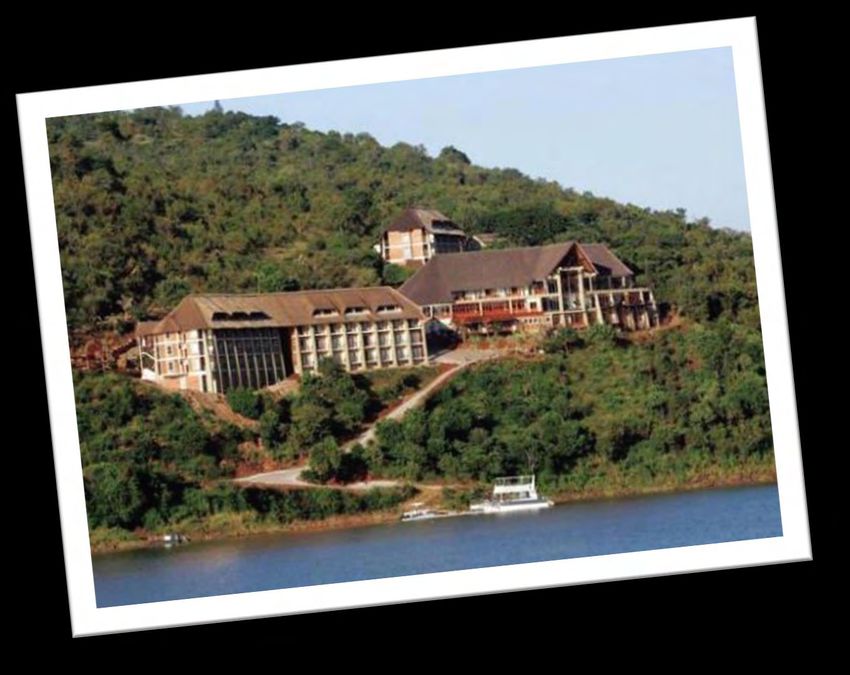
▪ This is a R50 million project
▪ In 2010 the NEF invested R28,3m for
construction and 16.7% community equity
▪ The Trust represents 22 000 beneficiaries in
the Jozini area (Northern Kwa-Zulu Natal)
▪ Overlooks the third largest lake in South
Africa
▪ The hotel has 70 upmarket rooms
▪ Employs 90 members of the community
▪ Accommodates 144 guests
▪ Near Eswatini & Mozambique
54Strengthening Food Security
55Golden Dice
Golden Dice Foods is a milling company which manufactures and packages grain
commodities for wholesalers and the consumer market. The business has been in
existence for 25 years and specialises in the milling and manufacturing of maize
and mabele products as well as the packaging and distribution of dry agricultural
products such as beans, popcorn, sugar and fowl feed. It offers products under two
brands, namely Selcro and Golden Dice. Some of our key clients include Makro,
CBW Group, OK Foods, Spar, ICC and Elite Group. The business was bought as a
going concern and has built significant brand equity over the years,
The outbreak of the COVID-19 pandemic has sparked widespread fears whether
there will be sufficient food supplies at affordable prices for the country over the
lockdown period. To address this anxiety, one of the businesses that has benefited
from the NEF COVID-19 Black Business Fund is Golden Dice Foods, which has R6
million for the purchase of additional machinery, repairs to existing machinery and
working capital.
Amount Funded R6 million
Jobs Supported 35 jobs
Products Dry Foods (Beans and Grain)
56Imphuphu Mills
Imphuphu Mills is a 100% black owned milling company which produces and supplies
maize meal to communities around Weenan, Dundee and Ladysmith, in KZN. The
company was established in 2009 and has 20% ownership by black women.
Imphuphu Mills operates in the second phase of the maize industry as a micro milling
plant in the largely untransformed sector and food chain. The company sources raw
materials from local farmers in KZN in the Okhahlamba Local Municipality and from
brokers that source from the SAFEX (South African Futures Exchange), a division of
the Johannesburg Stock Exchange (JSE). The company supplies their own brand of
maize meal. In the wake of the devastating impact of the COVID-19 national disaster,
the NEF COVID Fund has approved funding to the value of R1.52 million.
Amount Funded R1.5 million
Jobs Supported 2356 jobs
Product Dry Foods (maize meal)
57Nyamane Foods
The project intends to develop a tomato processing plant to produce tomato paste
integrated with a tomato growing facility to provide feedstock for the plant. The
facility would be the first of its kind in South Africa with a capacity to grow 3000
hectares of land and produce ca. 7500 tons of tomato paste per annum. The
facility will be strategically established in the Lepelle Nkumpi municipality in
Limpopo to cater for local and export markets.
Location Lepelle Nkumpi, Limpopo
Project Development Stage Bankable Feasibility Study
NEF Investment to date R7.3 million
NEF Equity 49%
Projected Financial Close Requirement R250 million (ca. USD16,6mil)
Jobs 110 Direct, 600 Indirect
58Imbaza Mussels
▪ Funded for R9m,
▪ A black mussel farm, based in Saldana Bay, Western Cape. This was an
initiative of the dti , the Community Public Private Partnership Programme.
The initiative was piloted and once successful, the NEF funded the
commercialisation of the project,
▪ There are currently 20 rafts built and over 80 tonnes of mussels being
produced on a monthly basis,
▪ Employees are a majority shareholder in the company
▪ The Department of Agriculture and Fisheries has provided grant funding to the
company,
▪ Good market – an off-take agreement with a shareholder who has a mussel
processing facility,
▪ Committed employees due to shareholding incentives.
Challenges
▪ The production of mussels will outstrip the intake by the processing plant.
Business needs to invest in a processing plant.
59Supporting Black Youth in Business
60Empowering the Black Youth (2010-2020)
Amount • Young Entrepreneurs
Youth Sector Focus Active Deals Jobs Impact have increasingly
Approved
found expression
Arts & Culture 21,398,500 3 1570 through the funding of
Services 61,145,553 7 535 the National
Energy 88,843,000 13 448 Empowerment Fund.
Construction 7,300,000 2 258 • Creative industries
Mining 13,000,000 1 93 have proven to be a
Property 78,369,002 4 83 great factor for
unlocking broad-based
Retail 12,622,000 5 81 impact with the number
Food & Beverages 13,792,529 6 68 of jobs created per
funds invested proving
Manufacturing 35,101,240 5 64
to be a great catalytic
Agro Processing 15,750,000 2 47 factor for the NEF.
Transportation 16,136,718 3 30
• The Youth Owned
Tourism & Entertainment 4,051,859 2 17 Business portfolio has
Distribution 5,000,000 1 6 proven to be as
Engineering 6,500,000 1 1 diverse as it is
sustainable with
Total 379,010,401 55 3301 investments across
numerous industries.
614IR Case Study: Rikatec (Pty) Ltd
Information Management
The NEF wants to actively drive the participation of black companies in the 4th
Industrial Revolution.
Rikatec (Pty) Ltd focuses on information management systems for vehicles. The company
uses big data and machine learning to detect vehicle breakdowns, predictive maintenance,
vehicle wear and tear, vehicle resale value, driver profiling and driver ratings
▪ Rikatec is 60 ,63% black youth-owned and youth-managed
▪ R15m approved and R10m disbursed. NEF owns 10% of Rikatec.
▪ Rikatec has created 10 jobs with 37 more expected in the next year
▪ Proof of concept will unlock agreements with SA Taxi, Constantia Insurance, fleet
management and other insurance companies.
Location Gauteng
Approved Amount R10 000 000
Deal Stage Expansion
Ownership 100% Black, 63% Youth
Owned
Jobs Impact 10 Jobs
624IR Case Study: Quickloc8 (Pty) Ltd
Mobile Application Systems
Quickloc8 (Pty) Ltd is a 100% black owned entity that was
established in 2015 by Mr Mbavhalelo Mabogo. The
entrepreneur identified a void in the market for a smartphone
tracking platform for vehicle tracking, monitoring and
telematics for the lower end of the market. Current tracking
technology available in South Africa is mostly too expensive
and not within reach of smaller businesses. The applicant has
positioned itself to offer high end tracking capabilities at a
considerably lower cost to users. The product offering is
tracking devices with complete mobile capabilities for both
individuals and businesses. The entrepreneur approached the
NEF for R2.5 million, for funding of business assets, stock
and working capital. 2 permanent jobs maintained and 21
new jobs created.
Location Cape Town, Western Cape
Deal Stage Start-up
NEF Approved Amount R2.5m
Ownership 100% Black Male-owned
Number of jobs 10 new jobs
63Creative Industries & Media
▪ In 2015, global revenue from cultural and creative industries accounted for 3% of the world’s Gross Domestic
Product (GDP), or a total of $2 250bn. It alsocreated a total of 29.5 million jobs worldwide, or 1% of the
world’s actively employed population.
▪ South Africa is aligned with this trend where in 2014, according to some early mapping of the sector, the
country’s creative economy contributed over R90.5bn to the national economy and contributed 2.9% of the
GDP, exceeding, for instance, the contribution of agriculture to GDP (2.2%). In 2014, the industry accounted
for 2.9% of employment in South Africa, equating to 443 000jobs.
▪ R390 million creating over 2300 jobs since inception to date.
Below is a sample of the creative industries & media funded by the NEF:
Black
Total Project NEF Nature of Jobs
Name of Investee Location Women
Cost Commitment Business Created
Ownership
Long Walk to Freedom KZN 296 097 916 50 000 000 Movie 799 0%
Power 98.7 Gauteng 132 736 522 75 121 416 Media 107 0%
Production
SkyRink Studios Gauteng 240 442 291 40 000 000 Studios 114 0%
Sew Winter into my skin Western Cape 12 500 000 3 500 000 Movie 37 50%
Animation
Diprente Gauteng 8 412 000 7 612 000 Studios 140 0%
690 188 729 176 233 416 1197
64Gender Equality &
Economic Inclusion
65Women Empowerment Fund (WEF)
▪ The purpose of the Women Empowerment Fund, established in the financial
year 2014/15 is to accelerate the women economic empowerment through
the provision of funding to businesses owned by black women.
▪ Finance will be provided from R250 000 to R75 million across the whole of
the NEF existing product suite described above.
▪ Minimum of 51% black woman ownership is the main criteria. Black women
have to be operationally involved at managerial and board levels. Other
empowerment dividend pillars have to be considered.
▪ WEF as an important KPA, across all four NEF Funds, approval,
commitment and disbursement targets were exceeded in the current
FY2019/20.
66Funding Black Women
NEF funds across all sectors of the economy. Construction is one of the
key sectors that have benefited black women entrepreneurs in the NEF
portfolio. Sector Amount Approved % Deals Jobs Impact
Agro Processing 11 414 000 1% 2 4007
Arts & Culture 10 741 336 1% 4 1 905
Construction 244 644 592 14% 27 1 748
Education 2 240 000 0% 1 34
Energy 368 678 195 21% 51 1 739
Engineering 39 380 072 2% 8 210
Financial Services 10 500 000 1% 8 60
Food & Agro Processing 4 750 000 0% 4 21
Food & Beverage 93 777 295 5% 24 655
General Building Construction 12 513 426 1% 3 65
Healthcare 35 800 000 2% 4 106
Horticulture 7 400 000 0% 1 30
ICT 1 860 000 0% 2 13
Infrastructure 35 200 000 2% 3 57
Manufacturing 291 361 336 17% 22 1 013
Mining 10 605 335 1% 2 80
Plant hire 10 000 000 1% 1 61
Property 70 019 002 4% 4 533
Retail 67 241 528 4% 10 129
Services 175 574 491 10% 37 3 046
Textile 13 600 000 1% 4 656
Tourism & Entertainment 88 683 941 5% 13 574
Transport and Logistics 105 424 568 6% 17 628
Wholesale 10 100 000 1% 1 21
Total 1 721 509 117 253 17 391
67L&R Building and Civils - WEF in Construction
• L&R Building and Civils Construction (Pty) Ltd (“L&R”) is a
construction company that has been operating since 2003.
• The business is 100% black woman owned and specialises
in social housing.
• Product and Service offering:
• General Building;
• Concrete Supplies; and
• L&R is expanding its services into civil engineering
• The NEF approved a R15 million working capital facility.
• Key Highlights of L&R:
• Past projects to the value of R322 million since
inception;
• Confirmed order book to the value of R201,4million; and
• Created and maintained 165 jobs where 134 are
temporary and 31 are permanent;
• Through assistance with the NEF funding has potential
of creating 10 new jobs.
• The business’ head office is based in Meyerton, Gauteng
and satellite offices in the Eastern Cape and other site
operations.
68Rise Uniforms –
Clothing Manufacturer R10 million
The universal protective mask policy which requires
citizens to wear face masks when in public has increased
the nationwide demand for protective masks. In response
to this market need the NEF has funded Rise Uniforms to
the value of R10 million through the COVID-19 Fund to
purchase machinery and raw material that will help the
company to produce 55 000 masks a day.
Based in Cape Town, Rise Uniforms is a 100% black
woman-owned and managed business that specialises in
clothing manufacturing for a wide range of items such as
corporate uniforms and school wear.
The business currently has 43 employees and 20 new
jobs will be created with the protective face masks line.
Rise Uniform has previously received funding from the
NEF for clothing-manufacturing.
69Co-ordination with other dtic entities
70Co-funding Opportunities with the dticAgencies
CAPITAL REQUIRED
NEF Projects Financial
Expected to Close Dtic Grant
Require co- Funding Debt Equity NEF Involvement
Possibility Equity Debt REGION Industry
funding in Required (millions) (millions) (millions)
(millions) (millions) (millions)
current year (millions)
Manufacturing
Gemilatex R135 R81 R54 R37 R31 R4 R62 EC (Medical Devices)
Manufacturing
JaLo Renal R250 R150 R100 R50 R50 R25 R125 KZN (MedicalDevices)
Manufacturing
Mendirail R300 R180 R120 R15 R50 R63 R173 GP (Transport)
Manufacturing
LebomboCotton R306 R183 R122 R50 R20 R77 R159 MP (Agro-processing)
Manufacturing
Kenako Medical R260 R156 R104 R75 R50 R17 R119 KZN (Medical Devices)
Manufacturing
Nyamane Foods R350 R210 R140 R50 R50 R65 R185 LP (MedicalDevices)
Manufacturing
Okukubayo R47 R28 R19 R15 R21 - R11 GP (Food)
Total R1648 R989 R659 R292 R272 R251 R833
71THANK
YOU
72You can also read


