Irish European Baccalaureate students - NCGE General Guidelines for applying to study in Ireland - Euroguidance Ireland
←
→
Page content transcription
If your browser does not render page correctly, please read the page content below

NCGE General Guidelines for
            Irish European Baccalaureate students
                   applying to study in Ireland

Information contained in this presentation is a guide only. It is intended to provide general information and is subject to annual revision.
2
THIS PRESENTATION CONTAINS THE FOLLOWING INFORMATION

NCGE Guidance in the European Schools                        The ‘CAO’                                                         20
and Guidance support                            4
                                                             Information for EU/EFTA Applicants                                21
Why study in Ireland?                           6
                                                             English Language Requirements                                     22
Accommodation in Ireland                        7
                                                             Minimum Entry                                                     23
Registration Costs                              8
                                                             Specific Subject Requirements                                     24
Qualification Levels in Ireland and Europe      9
                                                             European Baccalaureate Points Equivalence Table 25
National Framework of Qualifications (NFQ)     10

Further information on qualifications          11            Applying for Medicine                                             27

Higher Education (HE) and Further Education                  Disability Access Route to Education                              28
and Training (FET)                             12            More on Further Education and Training (FET)                      29
Higher Education Universities, Institutes of
                                                             Post-Leaving Courses and Apprenticeships                          30
Technology and private colleges                13
                                                             Website links                                                     33
How to research courses                        18
                                                                                                                           TO LIN
Qualifax and Careers Portal                    19

                                                                                                                   CLICK

                                                                                                                                K
                                                                                                  Acmhainní do Euroguidance
                                                                                                  Euroguidance Resources

   PREVIOUS                                    BACK TO INDEX BACK TO INDEX                                           NEXT
3
PLEASE NOTE

                   Students who wish to apply for courses in Ireland
                   must refer to individual Higher Education Institution
                   websites or contact college Admissions Offices for

       IMPORTANT   details of:

                   • Distinct recognised subjects
                   • Specific subject requirements
                   • Points requirements
                   Note that changes may occur in education systems, or in
                   trends in grades awarded.

                                                                      Acmhainní do Euroguidance
                                                                      Euroguidance Resources

 PREVIOUS                BACK TO INDEX BACK TO INDEX                                     NEXT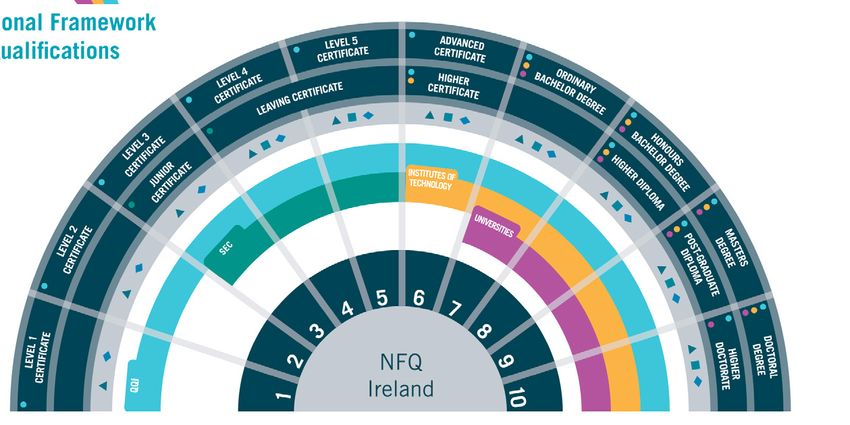
4
GUIDANCE IN THE EUROPEAN SCHOOLS

Children of Irish parents who are enrolled in The European Schools are
entitled to access appropriate guidance.

This Guidance service is funded by the Department of Education and Skills
(DES) and coordinated by NCGE/Euroguidance Ireland.

It is delivered by qualified guidance counsellors as recognised by the DES.

More information and resources are available through the Euroguidance
Ireland website - www.euroguidance.ie

                                                                                                       TO LIN

                                                                                               CLICK

                                                                                                            K
                                                                              Acmhainní do Euroguidance
                                                                              Euroguidance Resources

   PREVIOUS                                     BACK TO INDEX BACK TO INDEX                      NEXT
5
GUIDANCE SUPPORT

This guidance support is intended to supplement, but not replace, the guidance support already available
to Irish students in the European Schools.

It targets the specific needs of students who may be considering an application to Irish third-level
institutions and who have questions regarding:

              GENERAL ENTRY                 PARTICULAR COURSE                  APPLICATION
              REQUIREMENTS                    REQUIREMENTS                     PROCEDURES

                                                                                               Acmhainní do Euroguidance
                                                                                               Euroguidance Resources

   PREVIOUS                                      BACK TO INDEX BACK TO INDEX                                      NEXT
6
WHY STUDY IN IRELAND ?

         LIVE            CHOOSE                              CONNECT                      LINK
    in an English      from over 5000              with career opportunities in       with many
  speaking, friendly    internationally             leading global companies           different
 country with one of      recognised              located in Ireland, including    nationalities in
 the best education      qualifications        Google, Facebook, Dell, Intel and    Ireland in an
   systems in the                              700+ American companies such          intercultural
        world                                   as PharmaChem and American            community
                                                        Chambers Ireland

                                                                                   Acmhainní do Euroguidance
                                                                                   Euroguidance Resources

  PREVIOUS                                BACK TO INDEX BACK TO INDEX                                 NEXT
7
ACCOMMODATION IN IRELAND

There is no central accommodation office in Ireland
for students who are looking for a place to stay.
• Most Irish colleges have their own college
  accommodation offices which deal with
  vacancies in their region
• Most of the universities and larger colleges have
  accommodation on campus
• Most universities and colleges reserve places for
  students coming from abroad                                      See each university or college website and
                                                                   websites for the region where the university or
• Most universities and colleges give priority to first
                                                                   college is situated. Also check out the Irish
  year students
                                                                   Universities Association website.
• The cost of accommodation and living costs                       www.iua.ie/international/accommodation/
  varies from region to region                                                                                              TO LIN

                                                                                                                    CLICK

                                                                                                                                 K
                                                                                                   Acmhainní do Euroguidance
                                                                                                   Euroguidance Resources

   PREVIOUS                                        BACK TO INDEX BACK TO INDEX                                        NEXT
8
REGISTRATION COSTS FOR COLLEGES AND UNIVERSITIES

There are no university fees in Ireland for Irish and EU students but there
is a registration cost. Most Higher Education Institutions (HEIs) will require
students to pay an annual Student Contribution Fee. The maximum amount
set by the Irish Government for all public HEIs is currently €3,000 (2020)

• Post Leaving Certificate (PLC) /Further Education and Training (FET)
  colleges charge a minimum of €200 and some courses cost more

• Apprenticeship registration fees can vary from €1,000 to€3,000, but            Education
  apprentices are also paid a small weekly wage while training

• Students are advised to check each university/college website for its
   own details on registration costs
• For student grants in Ireland, see www.susi.ie for further information

• Non-EU students must pay international fees
                                                                                                          TO LIN

                                                                                                  CLICK

                                                                                                               K
                                                                                 Acmhainní do Euroguidance
                                                                                 Euroguidance Resources

   PREVIOUS                                      BACK TO INDEX BACK TO INDEX                        NEXT
9
QUALIFICATION LEVELS IN IRELAND AND EUROPE

The Irish National Framework of Qualifications (NFQ) is validated by
Quality Qualifications Ireland (QQI). All of the qualifications offered
by state-supported colleges in Ireland are situated on this framework
(including Certificates, Diplomas, Degrees) from Levels 1 to 10.
See: www.nfq-qqi.com/

Other colleges:
Private colleges make awards, some of which are validated by foreign
universities and some of which are validated by QQI.
The European Qualifications Framework (EQF) links the qualifications
of different European countries together. The main role of the EQF is
to make qualifications more understandable and as interchangeable
as possible across different countries and systems.
See: https://nfq.qqi.ie/qualifications-frameworks.html                                                    TO LIN

                                                                                                  CLICK

                                                                                                               K
                                                                                 Acmhainní do Euroguidance
                                                                                 Euroguidance Resources

   PREVIOUS                                        BACK TO INDEX BACK TO INDEX                      NEXT
10
NATIONAL FRAMEWORK OF QUALIFICATIONS (NFQ)

The Irish NFQ has ten levels. It
incorporates awards made for
all kinds of learning, from initial
learning to doctorate, wherever
the learning is gained.

The NFQ is the Irish system,
EFQ is the European
Qualifications Framework,
below is the official QQI NFQ
Diagram.

Source: https://nfq.qqi.ie/index.html                                                          TO LIN

                                                                                       CLICK

                                                                                                    K
                                                                      Acmhainní do Euroguidance
                                                                      Euroguidance Resources

   PREVIOUS                             BACK TO INDEX BACK TO INDEX                      NEXT
11
FURTHER INFORMATION ON QUALIFICATIONS
Level 10 Doctoral degrees vary in length
The Irish Leaving Certificate is Level 10
3 TO 4 YEARS
from 3 to 4 years’ duration
situated at NFQ Levels 4 and 5
and the European Baccalaureate Level 9 Masters degrees or Postgraduate
qualifications are at NFQ Level 5. Level 9
diplomas are generally of 1 or 2 years’ duration
1 OR 2 YEARS
The majority of European
Level 8 has Honours Bachelors degrees only
Baccalaureate students apply to Level 8 which are generally of 4 years’ duration
4 YEARS
Higher Education for courses at NFQ
Levels 7 or 8. Level 7 or Ordinary degrees are generally of
Level 7 3 years’ duration
Students may complete a Post 3 YEARS
Leaving Certificate course (PLC)
Level 6 or Higher/Advanced certificates are
at NFQ Levels 5 or 6 in Further Level 6 generally of 2 years’ duration
Education, which can provide 2 YEARS
alternative progression to a Higher
Level 5 Certificates are generally of 1 or 2
Education course at NFQ Level 7 or 8 Level 5
1 OR 2 YEARS
years’ duration
Acmhainní do Euroguidance
Euroguidance Resources
PREVIOUS BACK TO INDEX BACK TO INDEX NEXT12
HIGHER EDUCATION (HE) AND FURTHER EDUCATION AND TRAINING (FET)
In Ireland, after students finish their Leaving Certificate course at post-primary school level, they can move
on to either Higher Education (HE) or Further Education and Training (FET). Some students choose to do a
course in FET as a stepping stone to HE or as an end in itself.
NFQ Levels 5-6 NFQ Levels 6-10
Further Education and Higher Education (HE)
Training (FET) Universities
Further Education Institutes of Technology
Colleges/Institutes Colleges of Education
Private Colleges Private Colleges
Note: in Ireland, the words university, college and institute are often interchangeable at Higher Education
level and the words college and institute are often used at FET level
Acmhainní do Euroguidance
Euroguidance Resources
PREVIOUS BACK TO INDEX BACK TO INDEX NEXT13
HIGHER EDUCATION INSTITUTES IN IRELAND (AS LISTED IN THE CAO HANDBOOK)
These Irish Universities/Colleges offer a range of courses from NFQ Levels 6-10
• University College Cork (UCC) NUI • National University of Ireland,
Galway (NUIG) NUI
• Dublin City University (DCU)
• University of Limerick (UL)
• Royal College of Surgeons in
Ireland NUI • National University of Ireland,
Maynooth (MU) NUI
• Trinity College (University of
Dublin) • Technological University Dublin
(TU)*
• University College Dublin (UCD)
NUI
Those universities / colleges with NUI beside them are constituent or recognised universities / colleges of the National U
of Ireland. Some of the universities have Colleges of Education incorporated within them.
*Dublin Institute of Technology, Institute of Technology Blanchardstown and Tallaght Institute of Technology merged to TO LIN
CLICK
K
form the Technological University (TU) Dublin on 1st January 2019.
Acmhainní do Euroguidance
Euroguidance Resources
PREVIOUS BACK TO INDEX BACK TO INDEX NEXT14
INSTITUTES OF TECHNOLOGY
These institutes usually offer a range of courses from Levels 6-10
• Athlone Institute of Technology • Limerick Institute of
Technology
• Institute of Technology, Carlow
• Institute of Technology, Sligo
• Cork Institute of Technology
• Institute of Technology, Tralee
• Dundalk Institute of
Technology • Waterford Institute of
Technology
• Galway-Mayo Institute of
Technology • https://iadt.ie/
• Letterkenny Institute of
Technology
*Dublin Institute of Technology, Institute of Technology Blanchardstown and Tallaght Institute of Technology merged to TO LIN
CLICK
K
form the Technological University (TU) Dublin on 1st January 2019.
Acmhainní do Euroguidance
Euroguidance Resources
PREVIOUS BACK TO INDEX BACK TO INDEX NEXT15
OTHER HIGHER EDUCATION COLLEGES
These colleges offer a range of courses from NFQ Levels 6-10
The colleges below are also recognised by the National University of Ireland. Some require direct application
to the college, others through the Central Admissions Office (CAO).
• Shannon College of Hotel • Burren College of Art- Coláiste
Management Ealáine na Bóine
www.shannoncollege.com www.burrencollege.ie
• National College of Art and Design, • Mary Immaculate College of
Dublin Education
www.ncad.ie www.mic.ul.ie
• Institute of Public Administration • Marino Institute of Education
www.ipa.ie www.mie.ie
• St. Angela’s College, Sligo
TO LIN
www.stangelas.nuigalway.ie
CLICK
K
Acmhainní do Euroguidance
Euroguidance Resources
PREVIOUS BACK TO INDEX BACK TO INDEX NEXT16
PLEASE NOTE:
Students who wish to apply for courses in Ireland
must refer to individual Higher Education Institution
T
IM PORTAN websites or contact college Admissions Offices for
details of:
• Distinct recognised subjects
• Specific subject requirements
• Points requirements
Note that changes may occur in education systems, or in
trends in grades awarded.
TO LIN
CLICK
K
Acmhainní do Euroguidance
Euroguidance Resources
PREVIOUS BACK TO INDEX BACK TO INDEX NEXT17
PRIVATE COLLEGES
These colleges on the Qualifax link below are samples of private
independent colleges based in Ireland.
Applications to some private colleges may be made through the CAO and
others may require direct applications to the college. They need to be
contacted individually about course entry requirements.
N.B. Students should check the level of these courses on the NFQ and
through the CAO if applicable.
Qualifax – ‘Other Options’ section
TO LIN
CLICK
K
Acmhainní do Euroguidance
Euroguidance Resources
PREVIOUS BACK TO INDEX BACK TO INDEX NEXT18
HOW TO RESEARCH COURSES
Some suggestions:
• Read prospectuses: They contain • Visit colleges – attend Open Days
information about the institution and the or or virtual open days, visit the
available courses, including advice on colleges independently for other events
how to apply and the benefits of accepting such as sports events or educational talks. See -
a place. You can download them from https://euroguidance.ie/resource/preparing-open-day
college websites, request them from the • Go on work experience to companies or institutions
colleges or access them all here (include to learn about them and ask questions about career
link to spreadsheet) progression
• Talk to people: • Follow college websites and read their news bulletins
– Professional Guidance Counsellors of current and forthcoming events and achievements
(if available)
• Read up on any changes that colleges have made
– Adults who have studied in Ireland
in response to the Covid 19 pandemic on each
– Current students face to face if possible
institution’s home page. TO LIN
or online
CLICK
K
Acmhainní do Euroguidance
Euroguidance Resources
PREVIOUS BACK TO INDEX BACK TO INDEX NEXT19
RECOMMENDED WEBSITES
Online Research:
The two most recommended websites in Ireland are Qualifax and CareersPortal
Qualifax is Ireland’s national database providing
CareersPortal provides Europass- Students can
information on a wide range of courses in higher
information on an now also explore the
and further education and training. Qualifax
extensive range of new Europass resource,
provides information on entry requirements,
courses and careers. which will contain
the duration of courses, course content,
www.careersportal.ie country specific
opportunities for Erasmus+ placements and
further study and career opportunities. information about
Ireland in due course.
www.qualifax.ie (course search)
https://europa.eu/
Both of these websites offer online interest assessments to assist students to europass/en
TO LIN
find their personal strengths and interests.
CLICK
K
Acmhainní do Euroguidance
Euroguidance Resources
PREVIOUS BACK TO INDEX BACK TO INDEX NEXT20
HOW TO APPLY FOR COURSES IN IRISH COLLEGES
The Central Applications Office (CAO)
History of the CAO: How it works:
The Central Applications Office The Central Applications Office is
www.cao.ie was established by the Irish the centralised system for
universities in 1976 and is owned and applications to almost all the
controlled by the universities and other universities and colleges in Ireland.
Higher Education Institutions (HEIs). Other specialised colleges such as Hotel and Catering, Art
and Music colleges and some private colleges require direct
Purpose of the CAO: application for entry to their courses.
The purpose of the CAO is to process
These colleges provide application details on their own websites.
centrally the applications for entry to
undergraduate courses in HEIs in the Useful Links:
Republic of Ireland, to issue offers www.cao.ie/handbook.php
to applicants only when instructed by
www.cao.ie/index.php?page=downloads
HEIs, and to record acceptances. TO LIN
www.cao.ie/index.php?page=demo
CLICK
K
Acmhainní do Euroguidance
Euroguidance Resources
PREVIOUS BACK TO INDEX BACK TO INDEX NEXT21
INFORMATION FOR EU/EFTA APPLICANTS
The CAO website provides guidelines for students from EU/EFTA
countries*
www2.cao.ie/downloads/documents/Guidelines-EU-EFTA.pdf
It also explains exemptions from certain criteria (e.g. exemption
from Irish)
www.cao.ie/index.php?page=exemptions&bb=studentresources
Further information on the criteria for Children of Emigrants and
the criteria for qualifying for EU status are available on the Irish
Universities Association (IUA) website:
www.iua.ie/international/applying-to-an-irish-university/
TO LIN
CLICK
K
*See pages 83 and 84 in particular
Acmhainní do Euroguidance
Euroguidance Resources
PREVIOUS BACK TO INDEX BACK TO INDEX NEXT22
ENGLISH LANGUAGE REQUIREMENTS
English Language Competence:
Students must have a Grade 6 or above in 1st language or in 1st
or 2nd foreign language in the European Baccalaureate or an
equivalent English Language competence.
There may be higher levels for matriculation and/or particular
programmes in individual institutions in a recognised English
language test.
Applicants need to contact the institution directly if English is not
their first language.
See: www2.cao.ie/downloads/documents/Guidelines-EU-EFTA.pdf
TO LIN
CLICK
K
Acmhainní do Euroguidance
Euroguidance Resources
PREVIOUS BACK TO INDEX BACK TO INDEX NEXT23
MINIMUM ENTRY REQUIREMENTS Information correct as of 29/03/2019
The pass mark for European Baccalaureate entry is 360.
The minimum eligibility criteria are below. Proof of English proficiency is
required in all cases. The minimum standard may be higher in individual
HEIs and/or for individual courses. There may also be specific subject
requirements for courses.
Check with the university or college admissions office.
Level Irish Matric Type European Baccalaureate requirements
2 H5 required Overall 60%
Level 8
3 H5 required Overall 60%
Level 7/6 Overall 50%
See: www2.cao.ie/downloads/documents/Guidelines-EU-EFTA.pdf
For the Irish grading system see:
TO LIN
www2.cao.ie/downloads/documents/NewCommonPointsScale2017.pdf
CLICK
K
Acmhainní do Euroguidance
Euroguidance Resources
PREVIOUS BACK TO INDEX BACK TO INDEX NEXT24
SPECIFIC SUBJECT REQUIREMENTS Information correct as of 29/03/2019
To compare the Table 1: Subject Grade Comparisons:
subject requirements Languages
LC 2 period >3 period Maths
in terms of Irish >3 period
Leaving Certificate H1 A/9 B/8 A/9 in 5 period
as specified on the H2 B/8 C/7 B/8 in 5 period
HEI’s website, use the H3 B/8 C/7 B/8 in 5 period NB - the table above
H4 C/7 D/6 C/7 in 5 period is NOT used for points
following table:
H5 C/7 D/6 C/7 in 5 period conversion, only for entry
H6 D/6 E/5 C/7 (3 period) / D/6 (5 period) requirement equivalence.
H7 E/5 E/5 D/6 (3 period) / D/5 (5 period) For points conversion see
O1 C/7 D/6 C/7 in 5 period next slide.
O2 D/6 E/5 C/7 (3 period) / D/6 (5 period)
Source: www2.cao.ie/
O3 E/5 E/5 D/6 (3 period) / E/5 (5 period)
downloads/documents/
O4 D/6 E/5 E/5 D/6 (3 period) / E/5 (5 period)
Guidelines-EU-EFTA.pdf
O5 D/6 E/5 E/5 D/6 (3 period) / E/5 (5 period)
O6 D/6 E/5 E/5 D/6 (3 period) / E/5 (5 period) TO LIN
CLICK
K
Acmhainní do Euroguidance
Euroguidance Resources
PREVIOUS BACK TO INDEX BACK TO INDEX NEXT25
EUROPEAN BACCALAUREATE POINTS EQUIVALENCE TABLE Information correct as of 29/03/2019
Indicative equivalence with Irish Table 2: Points
Conversion Table
Leaving Certificate points
Overall
IPS
As a guideline it is anticipated that the Mark
equivalence will be as follows based on 100 600
the overall percentage as calculated on 96 586
93 570
Note: This scoring has been based on
the Baccalaureate, provided sufficient alignment with percentages attaining
90 531
distinct recognised subjects are passed: scores in the EB compared with scores
85 488
attained by the same percent in the Irish
80 450
Leaving Certificate, while retaining the
75 416
minimum of 60% = 360 points. Both the
70 393
minimum and alignment with statistics may
65 374
change for future years.
60 360
Each university/college has its own requirements and these may change.
Students should contact the colleges directly for their course subject and grade requirements.
TO LIN
Source: www2.cao.ie/downloads/documents/Guidelines-EU-EFTA.pdf
CLICK
K
Acmhainní do Euroguidance
Euroguidance Resources
PREVIOUS BACK TO INDEX BACK TO INDEX NEXT26
BONUS POINTS FOR MATHEMATICS Information correct as of 29/03/2019
Colleges apply a common system where the European Baccalaureate final result
(the average of the subject results) is transferred to the points equivalence table as
documented in the EU-EFTA Guidelines document in the CAO website
See: www2.cao.ie/downloads/documents/Guidelines-EU-EFTA.pdf
Additional ‘bonus’ points can be awarded in some circumstances.
For the Irish Leaving For the European For Trinity College Dublin only
Certificate: Baccalaureate: Trinity College Dublin awards a different bonus
25 bonus points are 25 bonus points are points system for mathematics than other colleges.
For more information go to: https://www.tcd.ie/
awarded for grades H6 awarded for grades
study/apply/admission-requirements/undergraduate/
and above at Higher 6 or above in Period
Level Mathematics 5 Mathematics or Students must contact Trinity College directly
to confirm that they are presenting with distinct
Advanced Mathematics
recognised subjects and meet specific
TO LIN
subject requirements.
CLICK
K
Acmhainní do Euroguidance
Euroguidance Resources
PREVIOUS BACK TO INDEX BACK TO INDEX NEXT27
APPLYING FOR MEDICINE
There are TWO parts to this procedure:
1 2
Undergraduate applicants to In addition to the CAO application, candidates must also apply
Medicine (EU applicants) apply directly to ACER to complete the HPAT – Ireland test.
through the CAO website: HPAT stands for Health Professions Admission Test. It is a
http://www2.cao.ie/ test developed by ACER and used to help select students for
downloads/documents/2020/ medicine and some other health science courses at university.
UGMedEntry2020.pdf *
The HPAT – Ireland 2020 Information Booklet is available for
download here: www.hpat-ireland.acer.edu.au
ACER produces the only official HPAT – Ireland preparation
materials: five publications in the form of e-books. There are other
private companies which offer preparation courses for this test.
TO LIN
* Note: 2021 details not yet available.
CLICK
K
Link will be updated shortly- message on CAO website ‘Undergraduate entry to medicine in 2021 (Available soon).
Acmhainní do Euroguidance
Euroguidance Resources
PREVIOUS BACK TO INDEX BACK TO INDEX NEXT28
DISABILITY ACCESS ROUTE TO EDUCATION (DARE)
The Disability Access Route to Education (DARE) is for school leavers with
a disability under the age of 23, who have been educationally impacted as a
result of that disability. Applicants to DARE can present with an Irish Leaving
Certificate, A- Levels and other EU qualifications.
• It offers reduced points for course places to students
• It provides mentoring and support on campus
• To be eligible for DARE, you must meet both the evidence of disability criteria
and educational impact criteria. Full details and information which you should
use to help you apply for the scheme are available at www.accesscollege.ie
• Further details are on the CAO website at www.cao.ie/index.php?page=dare
• Most colleges not in the DARE Scheme have other Access schemes – check websites
• Contact details of HEI access officers can be found here:
http://www.cao.ie/index.php?page=hei&type=access TO LIN
CLICK
K
Acmhainní do Euroguidance
Euroguidance Resources
PREVIOUS BACK TO INDEX BACK TO INDEX NEXT29
MORE ON FURTHER EDUCATION AND TRAINING
Further Education and Training is known as FET in Ireland and VET (Vocational
Education and Training) in Europe.
It offers a wide variety of life-long education options to anyone over 16. FET
includes apprenticeships, traineeships, Post Leaving Cert (PLC) courses,
community and adult education as well as core literacy and numeracy services.
FET courses and programmes are provided through the Education and Training
Board network throughout the country as well as through other local providers
including online courses.
See: www.fetchcourses.ie/courses/about
Post Leaving Cert (PLC) courses and apprenticeships are summarised in the following slides. TO LIN
CLICK
K
Acmhainní do Euroguidance
Euroguidance Resources
PREVIOUS BACK TO INDEX BACK TO INDEX NEXT30
POST LEAVING CERTIFICATE (PLC) COURSES
• Post Leaving Certificate courses (PLCs) are full-time and last for one to two years.
They offer a mixture of practical work, academic work and work experience. They
are designed as a step towards higher education and /or skilled employment and,
as such, they are closely linked to industry and its needs.
• PLC courses adopt an integrated approach, focusing on technical knowledge,
core skills and work experience. Courses are delivered in a wide range of
subjects, such as business studies, childcare, community care, computing and
technology, e-commerce, horticulture, multimedia production, sport and leisure
and tourism. The courses generally led to major awards at NFQ Levels 5 and
6. A number of FET courses have established links with CAO courses in Higher
Education Institutions.
Information on PLC FET courses can be found on:
TO LIN
CLICK
K
Acmhainní do Euroguidance
Euroguidance Resources
PREVIOUS BACK TO INDEX BACK TO INDEX NEXT31
APPRENTICESHIPS
Information on Apprenticeships is available on www.apprenticeship.ie
To begin an apprenticeship, an applicant must be employed by an approved employer.
To be eligible, the applicant must be at least 16 years of age and have a minimum
of grade D in any five subjects in the Junior Certificate or equivalent. However, higher
educational qualifications and other requirements may be sought by employers.
Apprenticeships are: • Minimum 50% on-the-job learning
• Industry-led by consortia of industry and • Flexible delivery – online, blended, off-the-job
education partners learning in increments/blocks
• Lead to an award at NFQ Levels 5 to 10 on the • Apprentices are employed under a formal
National Framework of Qualifications (NFQ) contract of apprenticeship
• Between 2-4 years in duration • A training allowance is paid to the apprentice
List of Apprenticeships available in Ireland are listed in the PDF below
http://www.apprenticeship.ie/en/news/Pages/List%20of%20Apprenticeships%20in%20 TO LIN
CLICK
K
Ireland%20-%20Generation%20Apprenticeship.pdf
Acmhainní do Euroguidance
Euroguidance Resources
PREVIOUS BACK TO INDEX BACK TO INDEX NEXT32
FINANCIAL COSTS FOR APPRENTICESHIPS
• There is a student contribution for apprenticeships in Higher
Education Colleges. It is usually about €1,000 for most
courses, but up to €3,000 for a few exceptional subjects such
as Aircraft Mechanics, but this is offset by a training allowance
and some employers pay the training costs as well
www.apprenticeship.ie/en/current/Pages/ApprenticeInfo.aspx
• There is a training allowance for off the job training, which
averages at€250 per week
www.apprenticeship.ie/en/current/Pages/ApprenticeInfo.
aspx?anchor=Allowance
TO LIN
CLICK
K
Acmhainní do Euroguidance
Euroguidance Resources
PREVIOUS BACK TO INDEX BACK TO INDEX NEXT33
SOME USEFUL RESOURCES AND WEBSITES
https://euroguidance.ie/european-schools
https://euroguidance.ie/resources
www.cao.ie edu.au
www.qualifax.ie www.iua.ie
www.careersportal.ie www.nui.ie
www.fetchcourses.ie www.tcd.ie
www.apprenticeships.ie www.etbi.ie
www.accesscollege.ie www.nfq-qqi.com/
Applying to College in Ireland – Video
www.hpat-ireland.acer.
TO LIN
CLICK
K
Acmhainní do Euroguidance
Euroguidance Resources
PREVIOUS BACK TO INDEX BACK TO INDEX NEXTYou can also read


