Is your mask effective against COVID-19? Three questions you should ask yourself - Medical Xpress
←
→
Page content transcription
If your browser does not render page correctly, please read the page content below
Is your mask effective against COVID-19?
Three questions you should ask yourself
3 February 2021, by Fiona Henriquez, Mia Cousins Burleigh and William MacKay

                                                         along with them different problems. Now, every day,
                                                         we see masks that do not fit properly, masks that
                                                         slip down the face when talking, masks that fog up
                                                         our glasses or irritate the skin behind the ears,
                                                         never mind the eternal question of where we should
                                                         keep your masks when we take them off.

                                                         Part of the problem has been a lack of official
                                                         guidance on what makes a good mask. But at the
                                                         end of last year, the World Health Organization
                                                         published a guidance document, which addressed
                                                         three important elements for the factory
                                                         manufacture of fabric face masks. The guidance
                                                         sets out minimum thresholds for fit, filtration and
                                                         breathability.
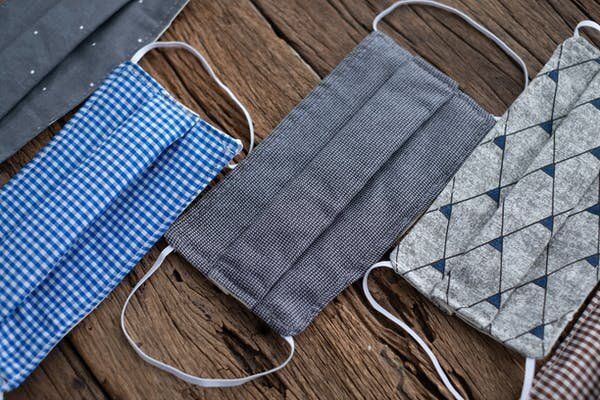
Check your mask for fit, filtration and breathability.
Credit: Roman Samborskyi/Shutterstock                    Here, we explain why these three elements are
                                                         important and why you should think about what
                                                         mask you wear and how you wear it.

The emergence of new, potentially more infectious,       Does your mask fit?
coronavirus variants has led many people to worry
about the effectiveness of their masks in protecting     Face mask fit is critical in order to prevent gaps
themselves and other people from catching                between the skin and mask so that, when
COVID-19. Some experts are recommending                  breathing, the aerosols do not get diverted through
people wear two masks in order to increase the           the gaps, for example those around our nose. This
protection.                                              phenomenon is called "leakage." Our research has
                                                         also indicated that leakage is one of the major
Masks have been the subject of much debate               problems in mask effectiveness.
since the pandemic began. Today, most
governments and health bodies recommend we
wear them to prevent the transmission of
COVID-19.

But not all masks are the same, and not all are
widely available. At the start of the pandemic, the
global shortage of personal protection equipment,
including masks, led to the mass uptake of
reusable fabric face coverings.

Soon after, in every shop, place of worship,
restaurant, public transport and other common
areas, different face coverings appeared, and

                                                                                                      1/4
How does it filter particles?

                                                        The question of leakage goes hand-in-hand with
                                                        the ability of face masks to filter out the infectious
                                                        agents in aerosols and droplets while still allowing
                                                        the user to breathe properly.

                                                        To address filtration, we need to determine how
                                                        aerosols can penetrate through different masks.
                                                        Masks work by modulating air-flow through the
                                                        fabric, reducing the number of particles passing
                                                        through in each direction.

                                                        Many different materials are used in masks,
                                                        including cloth, different types of polymers and
                                                        nanofibers. Surgical masks are made from layers of
                                                        polypropylene, which is a plastic material.

                                                        Different cloths have been tested for filtration
                                                        efficacy with multiple layers of polyester and cotton
                                                        proving the most effective. So it's worth checking
                                                        what your mask is made of when purchasing it.
                                                        Also, don't be too worried about washing your fabric
                                                        face mask. Preliminary results from our research
                                                        show that good filtration fabrics actually improve in
                                                        their filtration ability over time and are effective up
                                                        to 50 washes.

Leakage is one of the major problems in mask
effectiveness. Credit: Henriquez, Cousins Burleigh,
MacKay

With a diverse range of facial features and profiles,
it is easy to see why—a mask design that fits snugly
over one person's nose will leave big gaps over
another's. The wire embedded around the nose
section even when pressed can move and cause
gaps when talking and also gaps can form around
the cheek and jaw bone.
                                                        If your mask isn’t comfortable, you probably won’t wear
So one of the most important things to check is how it properly. Credit: Nong4/Shutterstock
your mask fits your face. Is there a lot of air
escaping through the top or sides? If so, consider
buying a mask of a different size that fits more
snugly over your mouth and nose.                    Is it comfortable?

                                                                                                         2/4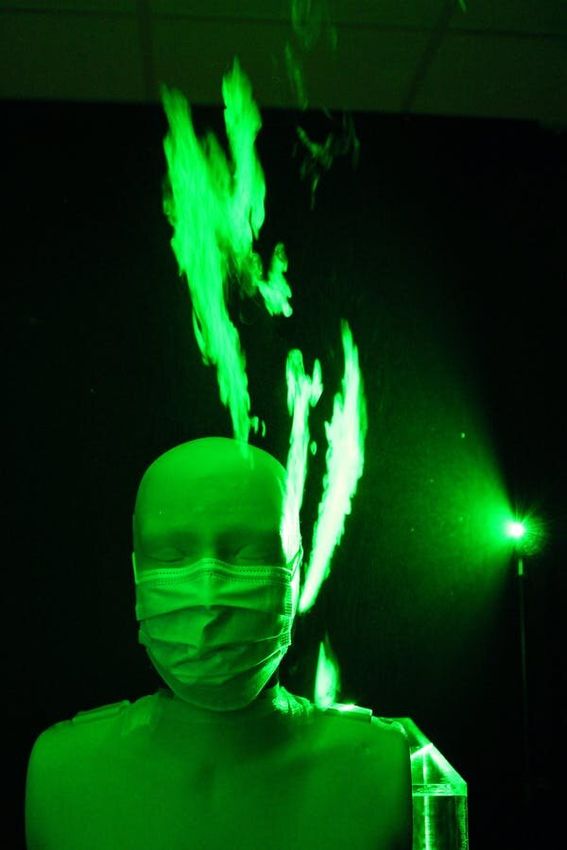
Breathability and comfort are also critical to to
encourage people to wear their masks properly.

Reports suggest that users can experience
headaches, facial itching and perceived difficulty in
breathing due to increased skin and air temperature
when wearing masks.

If our masks are uncomfortable, it's more likely we
won't wear them properly, and that can contribute
to the spread of COVID-19. So make sure your
mask doesn't make you so uncomfortable that you
have to periodically remove it, which risks
undermining all your good work.

Finding the best face mask

How do we make sure that we are wearing the best
face mask covering to prevent transmission? We
have been working with industry groups to address
this issue and improve design, assess fabric
filtration and raise awareness of the importance of
the three key elements.

The good news is that our preliminary data shows
that reusable fabric face masks and coverings are
capable of achieving excellent filtration of particles
that produce good seals to reduce the risk of leaks
on different facial profiles. The use of reusable face
masks also reduces the amount of single-use
surgical face mask waste, which is a growing
problem.

Based on the World Health Organization guidance,
and our research, we can say that as long as your
mask fits you snugly and comfortably, with minimal
leakage, you can feel confident in wearing it, even
with the rise of new variants of the virus.

This article is republished from The Conversation
under a Creative Commons license. Read the
original article.

  Provided by The Conversation
APA citation: Is your mask effective against COVID-19? Three questions you should ask yourself (2021,
February 3) retrieved 11 February 2021 from https://medicalxpress.com/news/2021-02-mask-effective-
covid-.html

This document is subject to copyright. Apart from any fair dealing for the purpose of private study or research, no

                                                                                                             3/4
part may be reproduced without the written permission. The content is provided for information purposes only.
4/4
Powered by TCPDF (www.tcpdf.org)You can also read


