Space Weather studies in India - Presentation by Indian Delegation to 48th STSC-UNCOPUOS
←
→
Page content transcription
If your browser does not render page correctly, please read the page content below
Space Weather studies in India

          Solar Influence on Climate

                 24 projects
Space Climate                     Space Weather – Science and Applications
                15 institutions

      Atmospheric Coupling Processes

                Presentation by Indian Delegation
                    to 48th STSC-UNCOPUOS
                      February 17, 2011 - Vienna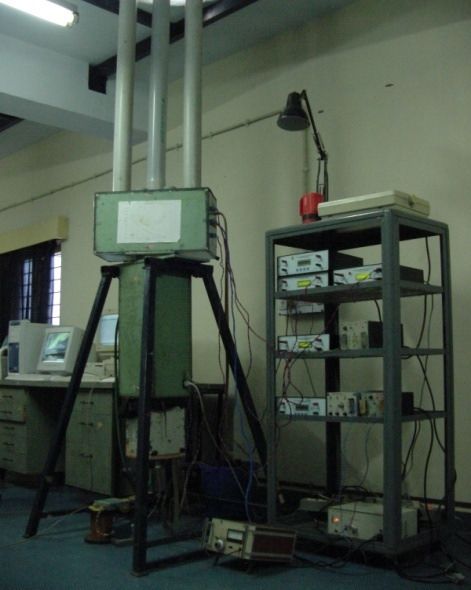
The theme of Space Weather Research in
India

•Investigation of the evolution of magnetic field
structures on the sun and solar wind disturbances.
•Investigation of the Day-to-day variability of equatorial
and low latitude thermosphere-ionosphere system with
an emphasis on the generation and development of
Equatorial Spread F (ESF)
•Investigation of Solar and interplanetary origin of
geomagnetic activity and related magnetospheric-
thermospheric-ionospheric (MTI) effects.
In order to address these problems, it was
decided that every year one / two campaigns,
{one during equinox and the other during
winter/summer } would be required.
•For Y2006, the campaign windows were identified as
March-April 2006.Campaign March 15 – April 31, 2006 : a
unique multi-institutional multi-instrumented campaign .

•A follow up campaign was done in Feb – April 2008.

•The first one was SOORYAGRAHAN 2010 - to address the
annular solar eclipse of Jan 15, 2010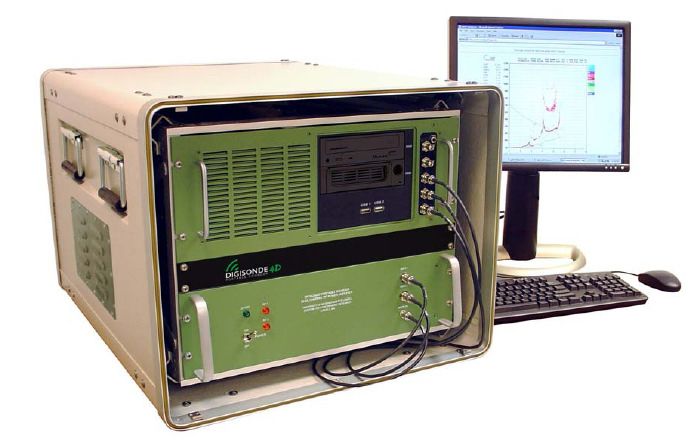
SOORYAGRAHAN-2010
Annular Solar Eclipse of January 15, 2010 - Path of annularity passes over
southern India during noontime, a rare occurrence and an ideal opportunity for
investigating the impact of changes in the solar forcing in the terrestrial atmosphere
.
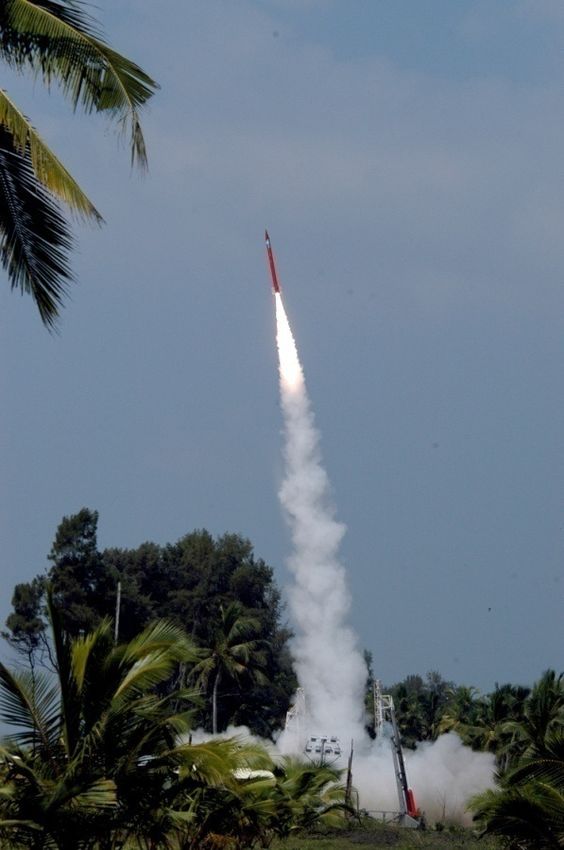
ISRO conducted a multi-platform (ground, balloon and rocket), multi-instrument,
multi-institutional national campaign under the aegis of CAWSES India.
This led to ‘one of it’s kind’ in-house development of scientific experiments and
some new and significant results

                                                   ENWi
                                 (Electron Density and Neutral Wind Probe)

                                                     EACE
                                    (Earth’s Atmospheric Composition Explorer)

                         Some indigenously developed experiments flown onboard rockets
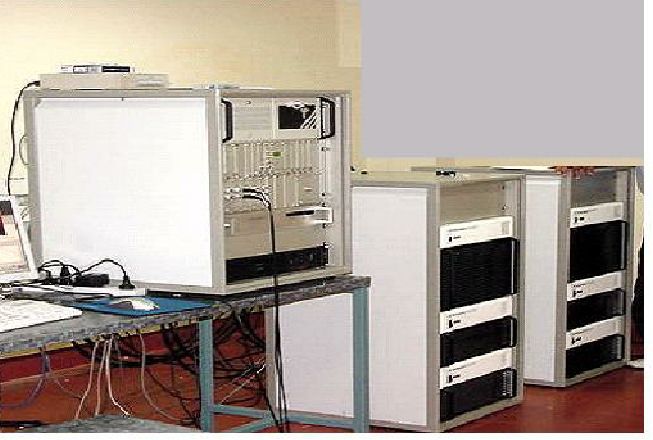
Experiments for Space Weather Studies
SKiYMET Radar
Rockets Multiwavelength
dayglow photometer
Fleet of rockets during
SOORYAGRAHAN
DigisondeThe network of RaBIT (Radio Beacon for Ionospheric
Tomography) stations
Station Lat. Long.
(°N) (°E)
Trivandrum 08.50 77.0
Bangalore 12.98 77.6
Hyderabad 17.80 78.0
Bhopal 23.20 77.2
Delhi 28.67 77.2
This network is unique as
it covers both the northern
crest and the trough of the
EIA, by far making it the
longest tomography chain
of the world.Coronary Mass Ejection (CME) from various sources
CME on April 10, 2006
LASCO
Gauribidanur , India
SOHOEvolution of Coronary Mass Ejection (CME)
CME on April 30, 2006
LASCO
SOHO Gauribidanur , IndiaIonospheric Tomogram
(courtesy: SPL, VSSC)
A three station (Bangalore, Hyderabad and Trivandrum)
Tomogram exhibiting the presence of a Travelling Atmospheric
Disturbance on March 31, 2006 over the Indian longitude (770E)
during moderately disturbed ionospheric conditions.Some important results on Space Weather issues achieved
by Indian Scientists:
a.Evidence of convective activity in lower atmosphere influencing tidal variability
in the Mesosphere Lower Thermosphere (MLT ) region.
b.Improved prediction of Equatorial Spread – F
c.Evidence of alteration in mesopause energetics as a consequence of active
space weather events
d.Evidence of sun induced planetary wave oscillations in middle and upper
atmosphere
e.Significant advances in the direction of modeling the ionosphere over the Indian
longitudes region.
f. A quantitative understanding of the response of the terrestrial atmosphere as a
whole to the changes in the direct solar forcing during eclipseImportant Published papers on space weather research by
Indian Researchers in peer-reviewed international journals
Signature of additional stratification in the equatorial ionosphere during
active space weather events.
(JGR 114, A08309, doi 10.1029/2009JA014491, 2009)
Seasonal and solar cycle variations of electron density gradient scale length,
Vertical drift and layer height – Implications over Spread – F
(Earth Planets and Space, 61, 1339-1343, 2009)
Possible coupling between the MLTI over the polar latitudes and that over the
equatorial Latitudes in context of the Polar Sudden Stratosphere Warming.
(GRL 36, L20104, doi 10.1029/2009GL040375, 2009)
Large Solar flare of October 28, 2003 and its instantaneous manifestations in
the equatorial Ionosphere
(Ann. Geophys. 27, 3853-3860, 2009)Future Satellite Missions for Space Weather studies
Small satellite mission ‘YOUTHSAT’ - ready to be launched in March 2011 ,
an Indo-Russian venture with three experiments onboard to investigate the
Sun-Earth connection
The experiments are :
SOLRAD – Russian experiment for monitoring solar energetics
RaBIT ( Radio Beacon for Ionospheric Tomography) – Indian beacon
onboard YOUTHSAT for tomographic reconstruction of ionosphere over
the Indian Longitudes
LiVHySI (Limb Viewing Hyper Spectral Imager) – Indian experiment
onboard to image terrestrial nightglow over limb.
A comprehensive mission addressing the CAUSE (i.e. solar energy) and
EFFECT (terrestrial neutral and ionised atmosphere)
ADITYA-1
First Indian Space based Solar Coronagraph to study solar corona in visible and
IR Bands. Launch planned during next high solar activity period by 2012.Contacts:
1.Dr. K. Krishnamoorthy, Space Physics Laboratory, Trivandrum
(Krishnamoorthy_k@vssc.gov.in)
2. Prof J N Goswami,Physical Research Laboratory, Ahmedabad
(goswami@prl.res.in)
3. Prof A Jayaraman,National Atmospheric Research Laboratory, Tirupati
( jayaraman@narl.gov.in )araman@narl.gov.in
4.maJayaraman@narl.gov.inYou can also read


