ITVERSITY Belgium Campus - An Introduction to
←
→
Page content transcription
If your browser does not render page correctly, please read the page content below
An Introduction to

                                                          Belgium Campus
Joining forces for ICT innovation and growth in Africa
                                                          iTVERSITY
                                                         A firm foundation for sustainable ICT growth

                                                              www.belgiumcampus.ac.za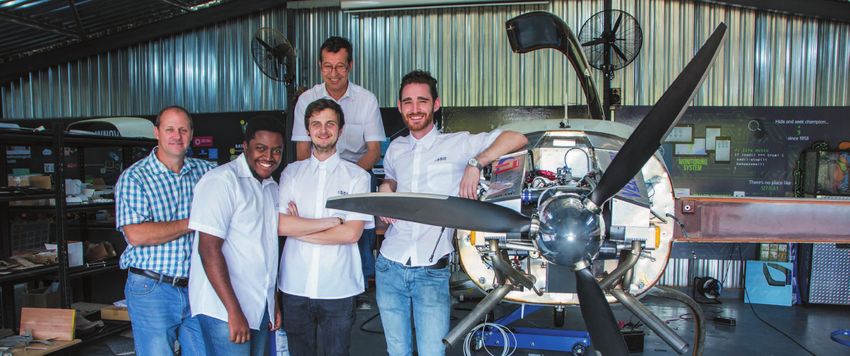
TABLE OF CONTENTS
Are you ready to change the world?               1

The BC X-Factor                                  2
A student-centred approach                       3
Our Participative Development Model              4

Accreditation                                    5
Local accreditation                              5
International recognition                        6

A platform to innovate                           7
Mobile health                                    8
Agriculture                                      9
Aviation                                         9
Education                                        10
Smart cities                                     10

Career choices                                   12
Software engineers                               13
Software developers                              13
Business intelligence experts                    13
Infrastructure experts                           13

CURRICULUM                                       14

The courses we offer                             16
Diploma in Information Technology                16
       Specialisation in software development    17
       Specialisation in infrastructure          17
Bachelor Degree of Information Technology        18
       Specialisation in software development    19
       Part-time studies                         19
Bachelor Degree of Computing                     20
       Specialisation in business intelligence   21
       Specialisation in software engineering    22

Admission requirements                           23

Fees                                             24

2020 academic calendar                           26

Application process                              27

Facilities                                       28

PARTNERING FOR SUCCESS                           30

Belgium Campus Recruitment Events                31

CONTACT DETAILS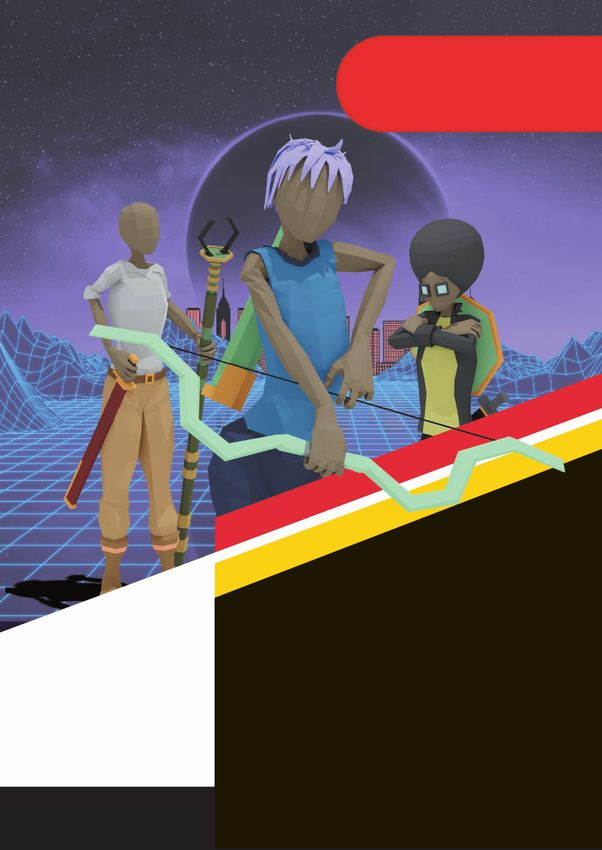
1        are you ready to
           change the world?
           Are you ready to embark on a career in ICT? To gain an outstanding qualification in the
           most dynamic, adaptive and pivotal industry on earth? The time is now to co-create a
           shared destiny for the future

At Belgium Campus, we take a visionary and uncompromising approach to the quality of the
education we offer our students. We don’t simply comply with world-class principles and stan-
dards – we exceed them daily; in the way we operate, structure our curricula and engage
with our students. This is why we boast a 100 percent employment rate and provide no fewer
than 10 percent of the ICT graduates in South Africa.

Belgium Campus is more than just a higher education institution. It is a gateway to the
future as well as a collaborative hub where international and local gamechangers in ac-
ademia, business and communities converge to bring innovation, upliftment and value
to all our partners.

When you join our team, you will become part of a revolutionary participative education
model, which addresses the needs and talents of each student, builds enduring partner-
ships with business, local government and communities. A model that continuously refines
the course content to merge theoretical and practical elements; ensuring you are employ-
ment-ready on the day you graduate.

As you embark on a journey that will no doubt transform you into a seasoned imaginer, we
offer you endless possibilities. At Belgium Campus, we will help you unlock your potential
as a software engineer, software developer, systems architect, business intelligence expert,
data analyst, systems and infrastructure expert, data miner or web developer. Add to this, we
have recently introduced an innovative concept – the opportunity to specialise in artificial
intelligence, data sciences and cyber-security; all developed in collaboration with leading
industry experts.

      “              At Belgium Campus, We learnt how to think out-
                     side of the box. for web programming, however,
                     everything had to be inside the box.
                      – Louis Marx, Valedictorian of class 2018

                                                                                      ”    Belgium Campus   1
“             To be able to contribute to the needs of the country
                      is a privilege for Belgium Campus. As an engaged
                      ITversity, we want to expose our students to more
                      experiences, not just in education, but in the fields
                      of research and innovation, through collaborations
                      with other universities, and with the ICT industry
                      itself. – Enrico Jacobs, CEO, Belgium Campus.

                                                                                       ”
     We offer cutting-edge facilities, as well as the industry’s leading lecturers and professors in the
     ICT realm- all here to guide our students on their journey. Our curriculum is developed to suit
     the students and their needs, building on their strengths and addressing their limitations. To
     this end, and in keeping with the spirit of Ubuntu that informs every aspect of our being, we
     are one of the few institutions that accommodate and give personal attention to students
     with special needs.

     Our nationally and internationally accredited degrees and diplomas in Information and
     Communications Technology (ICT) will position you as a key player in the Fourth Industrial
     Revolution, giving you a solid footing to forge ahead and co-create the future.

     the bc x-factor
             what sets us apart, will set you apart

    While the rest of the world cultivates conformity, we celebrate diversity. We know that it is
    those who are wired a little differently who will ultimately change the world.

     ICT is an essential part of our everyday lives, from email, web browsing to smartphones and
     their applications. ICT is everywhere. Today’s world requires innovative solutions to cater for in-
     dustry and businesses. At Belgium Campus we specialise in preparing our students for exactly
     this.

     By continuously adapting our programmes to suit the ‘real world’, we are able to hone your
     expertise and ensure you’re an asset to the industry. No matter which qualification you
     choose to embark on, Belgium Campus is commited to maintaining the highest local and
     international standards.

2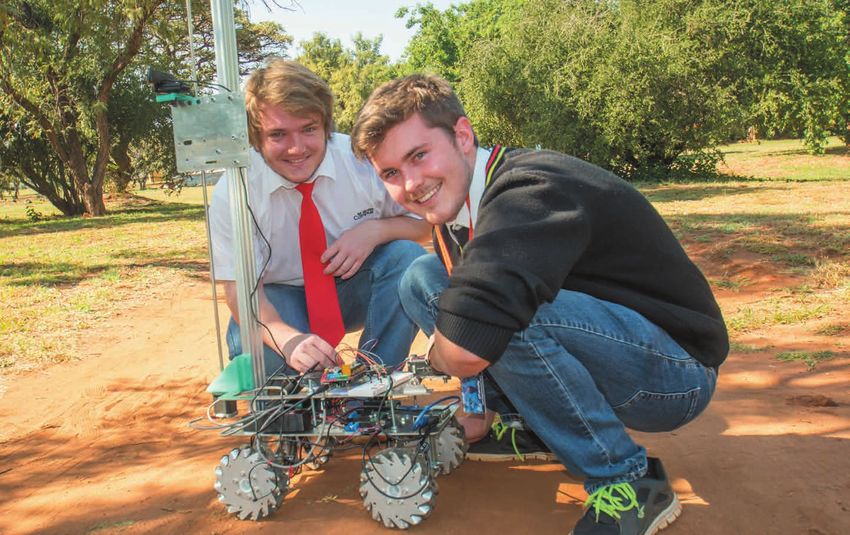
At Belgium Campus, we see ourselves as custodians of your emerging future self,
and we have pioneered new processes to ensure that the future is yours to unfold.

a student-centred approach
our world revolves around you

At Belgium Campus, we have abandoned teaching methods that do not deliver results.
We have reimagined a student-centric approach where we reverse engineer our oper-
ations to address your specific needs, talents and capabilities; honouring your dreams
and aspirations along the way.

Our praxis is holistic – we see our students as individuals with whom we engage daily to
ensure optimal performance and well-being. We want to enrich our students at both a
professional and personal level, through support, counselling and mentorship.

Ultimately, the only measure of success for us is when you emerge from your studies,
empowered and enabled to achieve those dreams and aspirations.

     I come from a background where ICT is a far-fetched thought, and the reason I’m here is
     because somebody made me understand the idea of a world I didn’t even know existed.
     – Thandeka Mbokazi, third year Belgium Campus student.

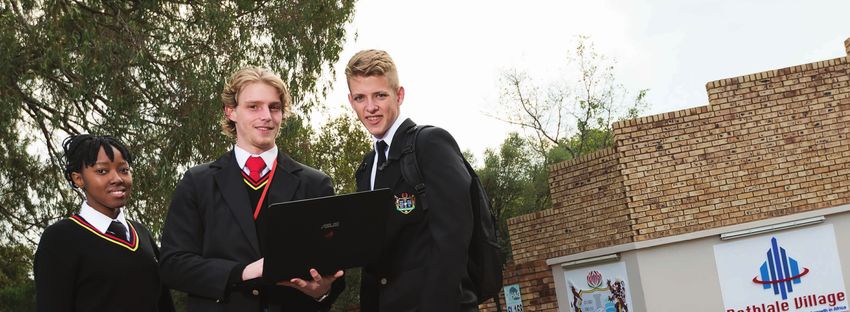
a uniform that shows our solidarity

Wearing a uniform at Belgium Campus is an expression of solidarity, so that all students, no
matter their background, are treated with the same dignity and respect. Since we engage
regularly with industry giants, governments the world over and large corporates from as early
as the first year of study, we want to present our students as contemporary professionals who
have found their place in society.

     At Belgium Campus, we breed future entrepreneurs and great innovators that are needed in
     the South African and global economy.
     – Charmaine Tavagwisa, Belgium Campus Senior Lecturer: Robotics.

                                                                                          Belgium Campus   3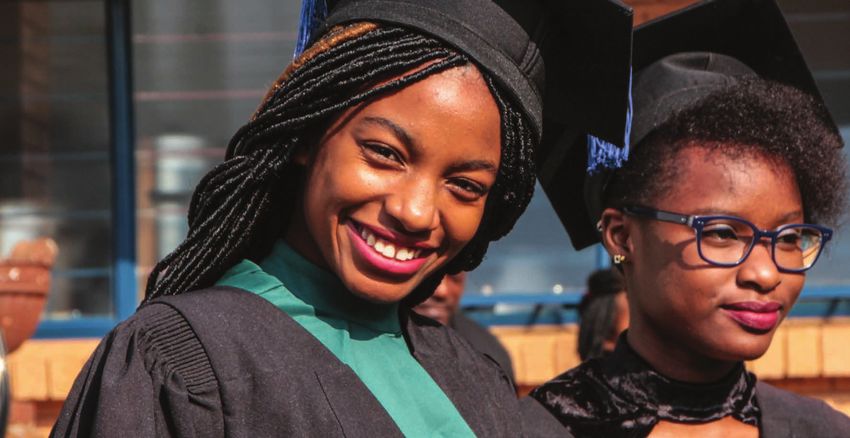
our participative development model
          The Reason Why 100% of our Students Are Employed Upon Graduating

     At Belgium Campus, we’ve created a ground-breaking, truly participative educational model,
     where the theoretical knowledge that our students gain is grounded and rooted in real-world
     experience. By partnering with international universities and local and global businesses, our
     aim is to transform that knowledge base into practical skills and know-how, so that our students
     graduate from our Campus and go directly into the world of work.

    Our students collaborate with peers from international universities, through multi-disciplinary
    innovation and research projects, meeting industry demands. We drive innovation to uplift
    and empower consumers (and their local communities) through technology. We offer so
    much more than an excellent education – we offer the skill set for success.

     Our pioneering Participative Development Model for Education (PDM) sets our students apart
     through an active engagement between all stakeholders, where everyone contributes to the
     educational experience to ensure maximum value for all.

     Continuous Consultation with Employability at the Forefront
     The PDM partnership is powered by:

                                      We see you as co-contributors of knowledge in the study
                                      environment. We actively encourage you to enhance your
    students                          intellectual ability and to build your academic and personal
                                      profile through enabling internships, partnerships and practical
                                      projects.

                                      Faculty staff at Belgium Campus constantly refines and adapts
                                      our curricula in collaboration with faculties from national and
    academia                          international academic institutions. We do this with the aim of
                                      meeting the demands of industry, government and
                                      society, by producing sought-after candidates who are
                                      employment-ready and have an entrepreneurial mindset.

                                      Industry partners provide us with up-to-date information on the
                                      changing needs, skills and profiles required in the workplace.
    industry                          They ensure we remain ahead of technological advances,
                                      societal shifts and evolving industry standards.

4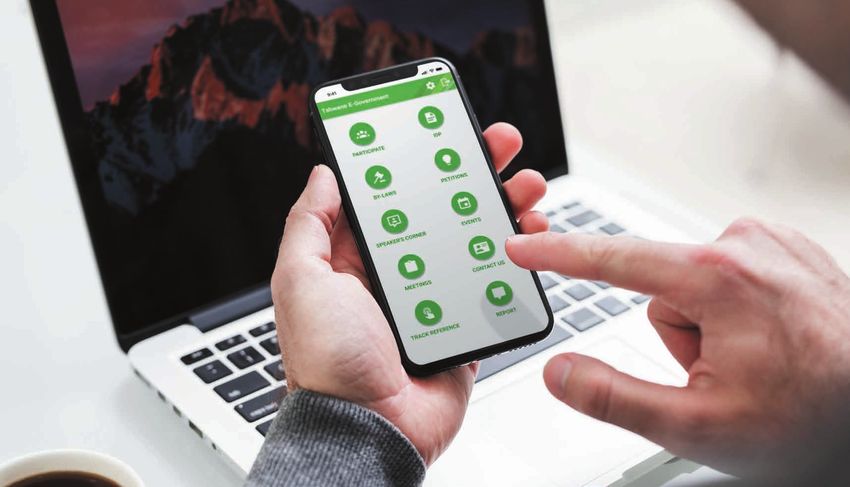
“We had international lecturers, which really exposed us to what was happening
      in IT, in the corporate world. We did projects and we got assessed. I would say
      that if you are looking for a hands-on university, Belgium Campus is the one to go
      for!”
      – Thandiwe Ntuli, Grindrod Bank: Retail Division, and Belgium Campus alumni.

      “I was immediately hooked on Belgium Campus – from the campus grounds to
      how engaging it is. However, what I appreciate most is the fact that my degree
      had an internship opportunity, and I realised where my passion actually lies.”
      – Charlottha Kruger, Business Analyst, Entelect, and Belgium Campus alumni.

      “With an internship at Siemens in Belgium, Belgium Campus not only allowed me
      to further my studies, but also to broaden my horizons, and I think that’s fantastic.”
      – Lionel Tchomba, Belgium Campus 2017 Graduate and valedictorian.

 accreditation
 Study at Belgium Campus and the World is Yours to Explore

local accreditation
Perfectly poised to unlock local ICT employment opportunities
Belgium Campus is a private higher education institution registered with the Department of
Higher Education and Training (DHET) (Registration no. 2003/HE08/001), accredited by the
Council on Higher Education (CHE) and listed with the South African Qualifications Authority
(SAQA) on the National Qualifications Framework.

The Belgium Campus 1 ITversity NPC (Not for Profit Company), PBO (Public Benefit Organisa-
tion) Reference No: 930009313, is registered with the Department of Higher Education as a
private higher education institution under the Higher Education Act, 1997. Registration certifi-
cate no. 2003/HE08/01 to offer the programmes listed thereon.

Legal Status
Belgium Campus 1 ITversity NPC is a legal entity incorporated in terms of section 13 of the
Companies Act, 71 of 2008, with registration number 2001/017971/08.

Sites of Delivery
Belgium Campus 1 ITversity NPC is registered to offer accredited programmes at following
sites of delivery:
A. Pretoria: 138 Berg Avenue, Heatherdale, Akasia, Pretoria, 0001
B. Kempton Park: 45A Long Street, Kempton Park, 1619
C. Port Elizabeth: 6 Uitenhage Road, North End, Port Elizabeth, 6056

Registered Programmes offered
Belgium Campus 1 ITversity NPC is registered to offer the following programmes, which are
approved by the Registrar in terms of section 53(1)(b) of the Act and Regulation 20 until 31
December 2020:
• Diploma in Information Technology (HEQSF Aligned, NQF Level 6, 360-Credits, Contact
  Mode) [A, B, C]
• Bachelor of Information Technology (Software Development) (HEQSF Aligned, NQF Level 7,
  360-Credits: Contact  Mode) [A, B, C]
• Bachelor of Computing (HEQSF Aligned, NQF Level 8, 480-Credits: Contact Mode) [A, B, C]

                                                                                      Belgium Campus   5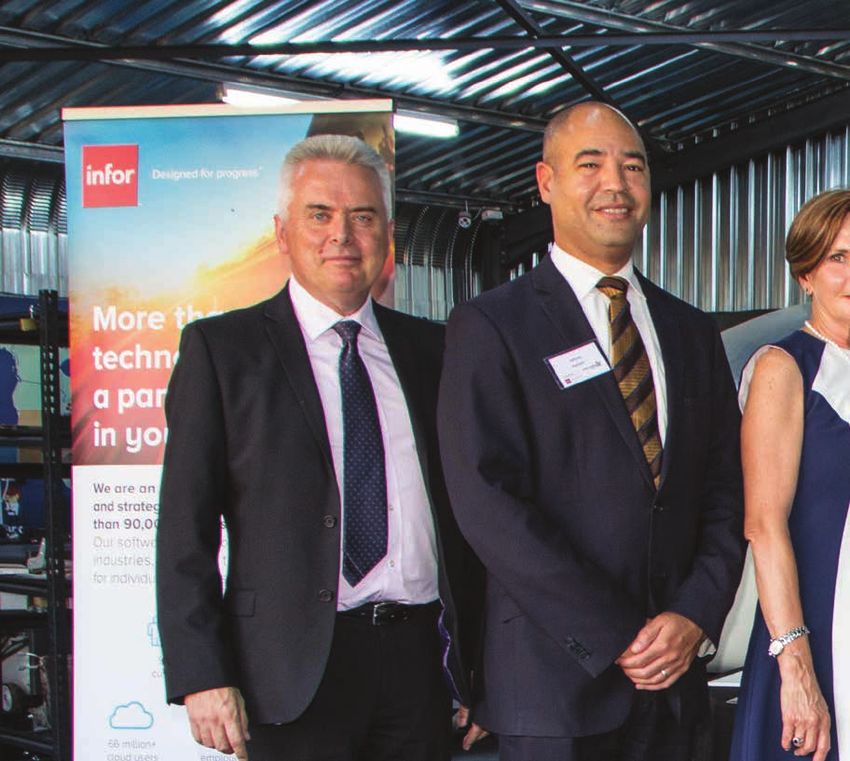
International Recognition
Aligned to the Highest Standards on the Globe
Belgium Campus provides a world-class educational experience for all its students.
The institution and its qualifications are audited every five years and benchmarked
against the accreditation protocol of the Dutch and Flemish Accreditation Organisation.
An official audit was conducted in 2018 by KU Leuven (ranked 7th most innovative university in the
world) and UAntwerpen, using the parameters of a bachelor degree, as set out in the accred-
itation framework of the Dutch Flemish Accreditation Organisation (NVAO), the Flemish Council
for University Colleges (VLHORA and the Flemish Interuniversity Council (VLIR), which is a leading
accreditation protocol with immense standing in Europe. In 2007 and 2012, this audit was done
by UCLL (University Colleges Leuven Limburg).
The executive summary of the audit states that the Bachelor Degree of Computing offered by Bel-
gium Campus is comparable to and is even slightly more advanced than an academic bachelor
programme to European standards. Discussing the programme in depth with the passionate and
inspired lecturers, support staff, management and their partners made the commission confident
about the level and quality of the educational offer. The members of the commission were im-
pressed by the disciplined and enthusiastic nature of the students.
Moreover, Belgium Campus was nominated by The Academic Union, Oxford, for The European
Quality Award in Education in 2017. We’ve forged education alliance partnerships with the best
international networks and brands. We are:
a partner of IBM, who offer courses and certification on Blockchain and Data Science
an Infor Educational Alliance partner in Africa, offering courses and additional certification on
Mongoose and Siteline
a university alliance partner of Microsoft. All our students get free access to all Microsoft products and
receive 1TB of storage on the cloud.
partnered with other networks that vet the role of the university in society, such as PASCAL (Place And Social
Capital And Learning), UIIN (The University Industry Innovation Network), and GUNI (Global University Network
on Innovation).
granted access to the training boutique of CISCO. Training materials include topics such as Machine
Learning and Cyber-security
the only member in Africa on Businet.org.uk
6
a platform to innovate
       Learn While You Work on Projects that Directly Impact Industry
       and Communities

Belgium Campus encourages collaboration by creating “virtual classrooms” and mobility
programmes where our students engage and interact with students abroad. We have part-
nered with KU Leuven, Penn State University, UCLL, the Universities of Melbourne and Sydney
and PXL. Exciting international innovation projects with these leading universities give our
students the opportunity to engineer new solutions with their international counterparts. We
are not only breaking technology boundaries, but global boundaries too.

 We have created “Learning Factories – creative, hands-on, physical workspaces, where you
 can develop prototypes and test them. You will have the space in which to innovate real
 applications for the real world, right from year one of your studies. You will have the
 opportunity to work with world-leaders in innovation such as RESNA, Boeing, Lockheed Martin,
 ArcelorMittal, Atlas Copco and Edict. These factories are, in collaboration with academic and
 industry experts, incubation hubs for the following real-life applications:

01 Mobile Health                                   04   Smart Farming

02 Education                                       05   Aviation - we have an airport hangar

03 Smart Cities

 In addition to these, we offer virtual mobility programmes, through video conferences and
 short exchange programmes in the form of international weeks abroad. We host an annu-
 al international week at Belgium Campus where students from different disciplines meet to
 share, co-create and pioneer new projects both locally and abroad.

 Belgium Campus provides the opportunity for one-year internships at companies and organ-
 isations in Belgium, as well as study opportunities overseas. Our mobility programmes include
 short-stay programmes from one week to three months. Our longer mobility programmes
 of one or more years include internship opportunities in Belgium and postgraduate studies
 through Erasmus Mundus or VLIR-UOS programmes.

                                                            Working together for ICT innovation and growth in Africa

                                                                                        Belgium Campus            7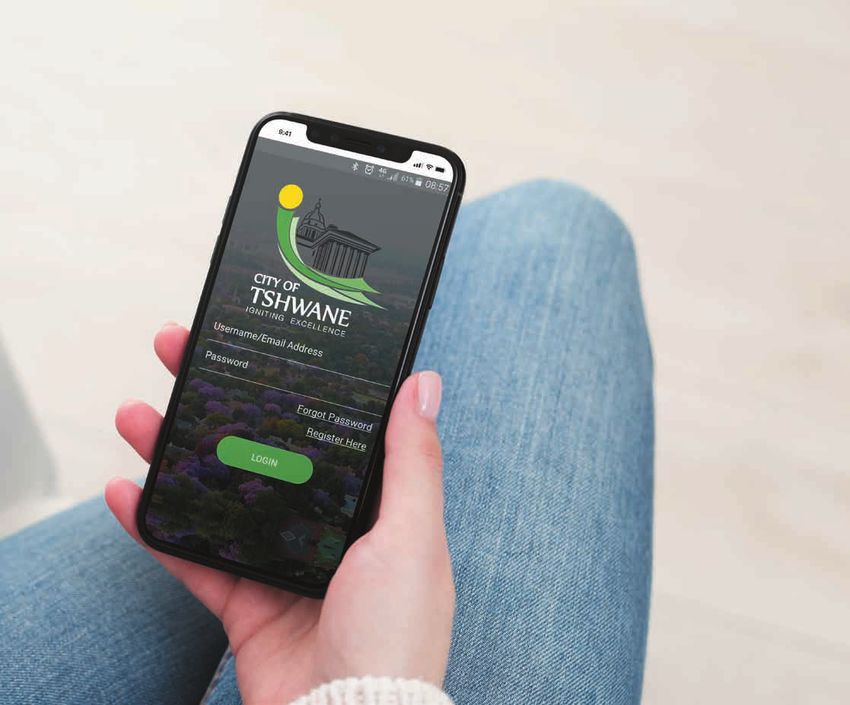
a platform to innovate
         botlhale village
         A ‘Knowledge Village’ where our innovation projects are turned into customer-centric
         tangible solutions

         Botlhale is the Tswana word for ‘knowledge’. Our ‘Knowledge Village’ offers an incubation hub
         where research is valorised into tangible solutions. It provides an enabling, supportive environ-
         ment to incubate and accelerate ICT solutions for the market. The ICT solutions engineered
         here address – in a collaborative way – developmental challenges. They create a positive
         social impact and stimulate economic growth.

         These are some of the projects our students are currently incubating:

                      pregnancy monitoring app

                                                                                            myoware muscle sensor

    01           mobile health
                 interact
                 Giving pregnant moms a healthy boost
                 Our students developed Interact, a mobile app used to help women maintain a
                 healthy lifestyle between and during pregnancies. Supported by a coach, moms will
                 receive an app on their smartphone, which monitors weight, eating patterns, physical
                 activity and mental well-being. Studies show that face-to-face counselling of preg-
                 nant and post-partum mothers is highly beneficial for healthy moms and babies.

                 resna
                 the hope project expresses emotion through aac
                 Our students, in partnership with Electrical Engineering students from PennState Uni-
                 versity in the USA, won the 2016 RESNA Student Design Competition for designing a
                 device that allows users of Augmented Alternative Communication (AAC) to express
                 their emotions.

8
02 education
of the elements
the best way to educate is without the
learner knowing
Of the Elements is an educational game
aimed at young children with learning
disabilities. The goal is to encourage
learning at a young age and prevent the
usual discouragement we see so often
today. This is achieved through the best way
we know, which is teaching them without
them knowing.
By using an interesting and engaging setting
with dragons, princesses and heroes, we aim
to grab a child’s attention and have them
keep coming back for more. With a team
consisting of people from all over the world,
we aimed to change the way we view
education for the better.
03 smart cities
TSHWANE E-GOVERNMENT
The nexus between citizens and government services
The Tshwane E-government app strengthens the fostering of participatory democracy,
accountability and responsiveness (Batho Pele principles). Through this application,
citizens and stakeholders are given an opportunity to raise issues, provide input and
influence City of Tshwane policies and strategies. The App also enables users to view
the latest decisions that were taken and currently being handled by the city. Citizens
are able to leave feedback, give suggestions and raise new topics.
Feedback received from the Citizens is used by officials as an opportunity
to deliver services in an effective and efficient way
Belgium Campus 904 agriculture
Smart Farming
Offering real-time information and
recommendations to farmers
The Smart Farming project is centred around
helping local farmers make more informed
decisions regarding important aspects of
farming, such as irrigation and harvesting.
Working together with students from Penn State
University, our students are integrating
technology into everyday farming for better
harvesting results in small, local communities.
fishify
management application for your
aquaponics farm
This application provides the user with a step
by step guide on how to set up an
aquaponics system, manage the entire
aquaponics farm, do regular follow-ups and
schedule maintenance. It clearly indicates
what is being done wrong and helps to bring
the whole system back into balance in the
process. The app also contains general
information and useful tips about aquaponics.
05 aviation
Iris Motion Detector
Safety protocol to ensure pilot safety
on-board
This project aims to improve the safety of single-manned
planes. Pilots can easily experience hypoxia (at high altitudes,
there isn’t sufficient oxygen in the plane which can result in the
pilot becoming unconscious or falling asleep). This technology
will monitor the eye activity of the pilot and if it determines that
the pilot has indeed lost consciousness, it will automatically en-
gage the auto-pilot system and send out a distress signal.
Altitude Distance Sensor
Common technology used in innovative ways
Following the scenario of the pilot losing consciousness, the auto pilot now has to
bring the pilot to a lower altitude so that he or she can regain consciousness. This is
a risky situation, as a safe altitude in a mountainous terrain can be life threatening.
These altitude distance sensors are in place to assess the terrain below and deter-
mine a safe area where the plane can be brought to a lower altitude.
10Lockheed Martin
Intra-drone communication for
collision-free flying
Our students teamed up with Electrical Engineer-
ing students from Penn State University to design
and build custom, lightweight drones. These
drones were synchronised to scan a crowd of
people or surface area whilst freely flying and
navigating. Belgium Campus students developed
software that allowed intra-drone communi-
cation, enabling the drones to fly in formation,
without colliding.
Boeing
Mars Rover remotely controlled
by Belgium Campus students
Boeing collaborated with our students and stu-
dents from Melbourne University, Australia, pro-
viding them with a budget of $1 000 to design
a safe, internet-based control system that allows
‘pilots’ from Belgium Campus to remotely control
the Mars Rover to pick up surface samples.
these projects are A testament to what is possible, when you refuse to
accept the impossible… We’re driving regional development through
specialised and focused offerings.
“It’s phenomenal what they have laid out in terms of the curricula, how they’re
thinking about making sure that it’s not just about the classroom, but their whole
philosophy about making sure there’s practical experience and application.”
– Martine Cadet, Vice-President, Global Enablement (Pre-Infor and At-Infor Talent).
“We do these projects because we have seen in the past that once you have
peaked a student’s interest with an interesting project, that his or her marks are
ever increasing”
– Jan rombouts, chairman, Belgium Campus.
aviation research
Belgium Campus 11career choices
Become one of the most sought-after industry experts
Or create a career that does not yet exist
There is an insatiable need for industry experts, and a call for young, innovative minds
to boost industries in pioneering, inventive ways. Belgium Campus shapes you into an
expert, equipping you with all the necessary skills to make waves in the industry of your
choice, or to invent a whole new career.
recruitment event
12software engineers
The artists of IT, sculptors of ideas into practical solutions
Turn abstract ideas into practical applications that provide solutions to everyday
problems.
Work alongside business intelligence specialists to conceptualise, design and
develop dynamic solutions to real-world problems.
Require ingenuity, discipline, technical expertise and the ability to mobilise teams of
people to build complex systems, such as Facebook, IBM Watson and the Google
back-end cluster.
software developers
The imagineers of the mechanics that support our daily lives
Are the coders who write and maintain the source code behind computer pro-
grammes, such as mobile apps and games.
Work alongside software engineers to pioneer software products that are used daily.
Need to be imaginative and goal-oriented, keeping the bigger picture in mind, but
never losing sight of the finer details.
data science experts
Transformers of raw data into useful information
Leverage technology to extract raw data and convert it into valuable and dynamic
information.
Place valuable information in the hands of business decision-makers to enable them
to operate optimally.
Require an expert command of mathematics.
Infrastructure experts
Constructors of the IT foundations that all systems are built on
Construct all the computer hardware- and software-related components, connec-
tivity systems, network resources and services that are required for an organisation to
exist, operate and communicate.
Manage system infrastructure and render daily technical support to ensure that the
organisation runs optimally.
Belgium Campus 13our CURRICULUM
A MESSAGE FROM THE DEAN: Prof Thinus Kritzinger
Aristotle once said, “For the things we have to learn before we can do them, we learn
by doing them.” This rings true for me as an educator, especially given the fact that we
currently live in a world where one’s attention span has been reduced to 140 characters.
A Relevant Education
For twenty years, Belgium Campus has embodied a mission statement to strive toward providing a
quality education of international standards.
To us, what is most important is that our students are not only educated but are given the
tools that ensure that they are industry ready and employable. The world of technology is not
only transforming before our very eyes, but it is also in a constant state of flux, where what is
relevant today may not be entirely relevant in the future. Due to this rapidly changing world in
which we live, we decided, in 2018, to relook our curriculum and teaching models and
develop one that would not only future-proof students for the next five years but one that
would teach them how to use their analytical minds and move away from only studying
technology that is currently in existence. Guided by our industry partners, we will continually
adapt the modules to ensure students are ahead of the curve in terms of new and emerging
technologies and ones that are required in the workplace.
The Workplace of the Future
With this in mind, we worked together with our industry partners to develop a curriculum
that grooms graduates for the workplace of the future. Our curriculum places considerable
importance on experiential learning, where students are exposed to real-time and real-life
projects in the workplace from their very first year. Our experiential learning methodology uses
critical thinking, problem-solving and decision making to deliver a subject or module and
has been proven globally to accelerate learning. By providing a safe learning environment
where they can apply their minds to real-world scenarios, we bridge the gap between theory
and practice, which in turn pays a pivotal role in retaining concepts and ideas. This affords
students the opportunity to experiment as they receive real-time feedback and the opportu-
nity to reflect.
What Sets Us Apart
Experiential learning produces self-directed learners who have knowledge of what is required
for real-world success, so it’s not surprising when we hear from our industry partners about how
well our students perform in their internships and first-time roles. When I engage with leaders in
the industry, what has proven to be a key differentiator in a Belgium Campus degree or diplo-
ma, is our unique focus on soft skills, presentation skills, business acumen and work ethic. In
addition to this, we provide opportunities for students to work collaboratively with international
universities and industry partners. Our intrinsic focus on collaboration and learning from each
other benefits our students tenfold because they are directly involved in the problem-solving
activity or event and the level of ownership of the outcome is high.
14Learning at Belgium Campus goes beyond the classroom and is delivered through both
our culture and values, through the implicit and hidden curriculum that in turns grooms our
students into dynamic young adults who go on to excel in the roles they are offered upon
graduation.
The New Wave
We are in the very heart of a digital revolution, with conditioning learning and static classrooms
becoming a thing of the past.
The entire industry is moving towards cloud-based solutions, artificial intelligence and IoT;
a key focus in our new curriculum. Coupled with in-service training and valuable exposure
to local and international projects, this is a radical departure from the traditional learning
methods currently employed by higher education institutes in the region.
Education is undergoing a substantial transformation, with experiential learning being
recognised globally as the future of education. At Belgium Campus, we provide a virtual
setting for students to bridge theories and concepts taught in the classroom with real-life
experience. Through this dynamic learning environment, students understand technology at
a deeper level, while creating memorable learning experiences.
In the past few years I have seen an increase in the demand
for our students, and that is because of the quality of our
students. We had to introduce recruitment events due to
the high demand from companies that want to place our
students for in-service training.
– Theodorus Kritzinger, dean: faculty of information technology
OUR ACADEMIC STAFF
Great universities begin with great lecturers and teachers.
Known for our influence and impact in the work environment, Belgium Campus has a mul-
tifaceted faculty and staff from across the region and the globe. As a hub of collaboration
and innovation, our ITVersity is home to a community of outstanding and vibrant people; a
nucleus of exchange, where students and faculty are bound together in intellectual explora-
tion and the exchange of ideas, knowledge and values.
Our learning methodologies and relevant curriculum place our students at the forefront of
knowledge and the workplace of the future. Our academic staff go through a rigorous se-
lection process, where we ensure they not only embody the theoretical knowledge set out in
our curriculum but have the practical know-how, soft skills and life skills our students will, in turn,
learn during their time at Belgium Campus.
Diversity lives in the spirit of Belgium Campus and is further represented by the members of
our academic community. We offer our students, staff and researchers a dynamic academ-
ic environment at the helm of local, regional and global projects. From our strategic networks
and partnerships, international joint programmes and exchanges, and emphasis on interna-
tional mobility opportunities, we develop skilled and employable graduates who are ready
for both the national and international labour markets.
Belgium Campus 15the courses we offer
foundation programmes
Our foundation programmes comprise of extra classes to assist students to prepare for their Gr
11 and Gr 12 examinations, and to ensure that their maths is on the required level to commence
with a higher education degree or diploma. These classes are at no cost to the student, except
for the maths bridging programme.
Grade 11 & 12 Mathematics, ICT, CAT – June holidays
Maths bridging programme: Summer holidays (R2 000 for the course)
diploma in information technology
This empowering diploma offers the shortest course of study and the least expensive aca-
demic credential. It develops your core competency in a single discipline and helps you
to acquire new skills quickly to launch your career.
The academic programme consists of a generic foundational phase and a specialisation
phase. Students are groomed to become complete professionals, through a strong focus
on knowledge, execution and professional skills, which are seamlessly integrated into the
curriculum.
The foundation phase gives insight into the field of IT, while the specialisation phase is career-ori-
ented. The diploma specialisations are essential and are aligned with real-world industry require-
ments.
duration: nqf: credits: saqa id: 2 years’ academic,
offered at: pta kp pe 1 year of workplace
3 years level 6 360 62621 training
16Specialisation in software development
This specialisation enables you to become a world-class programmer, gaining knowledge in
object-oriented and event-driven programming. The applications you develop will be deployed
on desktops, networked computers, the internet and multiplatform devices.
In the work world, you’ll typically be part of a team who turns the designs and programming in-
structions received from systems architects, software engineers or systems designers into working
software programmes that satisfy the requirements of the parties who commissioned it.
Subjects include:
Computer Architecture, Database Development, End User Computing, Information Systems, Innovation
and Leadership, Network Development, Programming, Web Programming and Applied Mathematics.
Electives include:
Business Management, Entrepreneurship, Enterprise Systems and Internet of Things.
Career options include:
Programmer, database developer and web programmer.
Major technologies you will learn to use:
.NET Framework, C#, Java, PHP, SQL, WPF, Angular JS, Windows Mobile, PostgreSQL, BiSQL and MongoDB.
What you will be able to do after you graduate:
Build web-based and mobile applications (apps).
Design and build interactive systems and solutions.
Conceptualise and build databases and their structures.
Understand and evaluate business problems, and create solutions to address them.
Develop complex algorithms and code them into programmes.
Specialisation in infrastructure
We focus here on training future systems and network administrators, who are responsible for
installing, maintaining and upgrading networked desktops, servers and mobile devices. Your job
will be to ensure that users have access to all resources on the network, internet or in the cloud –
no mean feat! – while safeguarding the intellectual property of individuals or companies.
Subjects include:
Computer Architecture, Database Development, End User Computing, Information Systems, Innovation
and Leadership, Network Development, Programming, Web Programming, Applied Mathematics, Data-
base Administration, Operating Systems, Server Automation and Wireless Networking.
Electives include:
Business Management, Entrepreneurship, Enterprise Systems and Internet of Things.
Career options include:
Taking charge of the administration of the IT infrastructure of a small- to medium-sized company or
becoming a specialised administrator (network, mail, security) for larger organisations.
Major technologies you will learn to use:
TCP/IP, Linux, Windows server, Cisco, Mainframe, Apache, firewall systems, email systems, Mainframe zOS
and Sluice.
What you will be able to do after you graduate:
Create, maintain and update the IT infrastructure of corporations and business.
Identify and address technical issues experienced by business.
Assist with issues on business networks.
Understand and manage outgoing and incoming connections, as well as internal networks.
Ensure that networks are secure and maintained.
Belgium Campus 17the courses we offer
continued
bachelor degree of information technology
A bachelor degree remains the entry standard in many professional careers. Its long-term
benefits make it well worth the initial investment, as it allows you professional entry into some
of the top names in ICT, along with the chance to create your own enterprise within the
sector.
It is less mathematically oriented than the 4-year Bachelor Degree of Computing and
focuses on Information Systems modules, which cover an extensive range of topics – from
mobile and wireless networks, to artificial intelligence (AI) and intelligent systems.
By opting for various specialist electives, you can broaden your skills and explore the various
avenues available to software developers. Many interesting opportunities such as mobile
and web-based app developments, or even game developments, are open to you.
The academic programme consists of a generic foundational phase and a specialisation
phase. Students are groomed to become complete professionals, through a strong focus
on knowledge, execution and professional skills, which are seamlessly integrated into the
curriculum.
The foundation phase gives the student insight into the field of IT, while the specialisation
phase is career-oriented. The degree specialisations are essential, and are aligned with
real-world industry requirements.
duration: nqf: credits: saqa id:
offered at: pta kp pe academic training
3 years level 7 360 94121
18Specialisation in software development
This specialisation enables you to become a world-class programmer, gaining knowledge
in object-oriented and event-driven programming. The applications you develop will be
deployed on desktops, networked computers, the internet and multiplatform devices.
In the working world, you’ll typically be part of a team and receive programming instructions
from systems architects, software engineers or systems designers.
Subjects include:
Computer Architecture, Database Development, Information Systems, Innovation and Leadership,
Mathematics, Networking Development, Programming, Statistics, Web Programming, Enterprise Systems,
Linear Programming, Project Management, Data Analytics and Software Engineering.
Electives include:
Business Management, Entrepreneurship, Internet of Things, Software Testing, Innovation Management
and User Experience Design.
Career options include:
Programmer, database developer and web programmer.
Major technologies you will learn to use:
.NET Framework, C#, Java, PHP, SQ, WPF, Angular JS, Windows Mobile, PostgreSQL, BiSQL and MongoDB.
What you will be able to do after you graduate:
Build web-based and mobile applications (apps).
Design and build interactive systems and solutions.
Build and conceptualise databases and their structures.
Understand and evaluate business problems, and create solutions that will address them.
Develop complex algorithms and code them into programmes.
Develop games.
Part-time studies
The Bachelor Degree of Information Technology is now also available part-time. This is a full
contact-mode programme, with lectures presented on Saturdays. This option was created
for those who are passionate about software development, but are unable to attend the
programme during the week.
Students who opt to study part-time enjoy the full campus experience, with all the facilities
and support systems that are available to full-time students, including guidance, mentorship
and counselling.
Additional information
Classes span 30 Saturdays throughout the year.
Five-year course for students who have not studied IT in the past.
Students with prior IT qualifications can complete the course in shorter period (based on recognition
of prior learning).
Classes are from 08h00-17h00.
Belgium Campus 19the courses we offer
continued
Bachelor DEGREE of Computing
Troubleshooting and formulating viable solutions are essential computing skills. The Bachelor
Degree of Computing enables you to apply theories and integrate them in real-world
environments, across multiple disciplines, by presenting best practices and solutions.
The curriculum contains the theoretical foundation for the conceptualisation and modelling
of solutions, the use of abstract, analytical and critical thinking, and it refines the student’s
ability to recognise and solve problems.
Practical assignments and projects completed in this degree are congruent with practices
in the daily work world, so assessments are always done with both academic content and
practical implementation in mind. This means you will acquire business-specific and ‘soft’
skills, including communication skills, customer satisfaction training, the ability to work as a
team player/team leader, and the ability to teach others.
In the fourth year, you will have the remarkable opportunity to complete internships at
national or international companies. In addition, you will conduct academic research
and present your findings in a formal dissertation.
duration: nqf: credits: saqa id: 3 years’ academic,
offered at: pta 1 year of workplace
4 years level 8 480 62689 training
20Specialisation in DATA SCIENCE
You will gain an in-depth knowledge of the processes and techniques used to transform data
into information, which is essential for effective decision- and money-making. You will learn
how to collect and organise data into large-scale data stores and warehouses.
Data mining is a fast-growing discipline that extracts valuable information from available
data. An information specialist must master mathematical and statistical analyses to gener-
ate value for companies. You will learn how to present results in reports to stakeholders.
Subjects include:
Computer Architecture, Database Development, Information Systems, Innovation and Leadership, Linear
Programming, Mathematics, Statistics, Networking Development, Programming, Web Programming,
Data Warehousing, Data Science and Database Administration
Electives include:
Business Management, Entrepreneurship, Internet of Things, Software Testing, Innovation Management,
Machine Learning and User Experience Design.
Career options include:
Decision support specialist, data miner, data analyst, data visualiser, business systems analyst and data
warehouse manager.
Major technologies you will learn to use:
.NET framework, C#, Java, SQL, Oracle, mathematical and statistical analysis packages, BI system,
Angular JS, PostgreSQL, BiSQL and Mongo DB.
What you will be able to do after you graduate:
Analyse and interpret data into meaningful structures.
Create and present reports based on data and information gathered.
Provide solutions based on the data and information gathered.
Understand and evaluate business problems, and create solutions that will address them.
Adding new streams to our Bachelor of ComputinG:
Artificial intelligence
Data sciences
Cyber-security
Software engineering
The Big Data course at Belgium Campus was completely
different, because you actually saw the practical value of
data – not just the technique of how to interact with it, but
the value you can gain and the business decisions you can
make from data.
– Riaan van Rooyen , Software Engineering student, Belgium Campus.
Belgium Campus 21Specialisation in software engineering
Object-oriented, event-driven and asynchronous programming is taught and applied to a range of
programming languages, in order to construct desktop and distributed applications. It is essential
that the technicalities and intricacies of your role are understood in utmost detail.
Who better to learn from than the experts in mastering the various aspects of software engineering?
By specialising in software engineering you will learn about:
The software development life cycle.
Analysing business requirements.
Designing solutions using the industry-standard Unified Modelling Language.
You will be able to pursue careers in constructing data-driven business systems, technical soft-
ware that controls automated hardware systems and robots, or applications for the lucrative
gaming industry. You will develop skills in technical areas, business systems analysis and process
engineering.
Elective subjects allow you to specialise in game development, business application control inter-
face systems.
Subjects include:
Computer Architecture, Database Development, Information Systems, Innovation and Leadership, Linear
Programming, Mathematics, Networking Development, Programming, Statistics, Web Programming,
Software Analysis & Design, Software Engineering and Project Management.
Electives include:
Business Management, Entrepreneurship, Internet of Things, Software Testing, Innovation Management,
Machine Learning and User Experience Design.
Career options include:
Software engineer, software designer, software architect, lead programmer, database designer, project
manager, mobile application developer, web application developer.
Major technologies you will learn to use:
.NET framework, C#, Java, SQL, Oracle, PHP, Unity, XML, HTML 5, XAML, UML, project management, Visio,
WPF, Android, Angular JS, Windows Mobile, PostgreSQL, BiSQL and Mongo DB.
What you will be able to do after you graduate:
Conceptualise and design web-based and mobile applications (apps).
Document and demonstrate solutions by developing project scopes and supporting documentation.
Build databases and their structures.
Understand and evaluate business problems, and create solutions to address them.
Evaluate and implement solutions, and warrant that specific courses of actions are taken to accom-
plish the objectives and goals set forth by those who commissioned you.
22admission
requirements
Although Belgium Campus does not set an age limit for the students
we accept, our minimum requirements are as follows:
You must hold a National Senior Certificate certified by Umalusi or an equivalent foreign qualification
that has been converted by the South African Qualifications Authority (SAQA).
The Matriculation Endorsement on the certificate will determine the highest qualification that a candi-
date may enrol for.
You must be proficient in spoken and written English. Foreign students will need to supply an endorse-
ment of their ability in English from their matriculation board, or attend a bridging course.
Recognition of Prior Learning (RPL) is applicable and valuable.
If you wish to enrol for the Bachelor of Computing, you must possess 50% or more for Pure Mathe-
matics. No bridging course or alternative way of entry is available for this programme.
If you wish to enrol for the Bachelor of Information Technology, you must have 50% or more for Pure
Mathematics. If you did not take Pure Mathematics at school or who has achieved less than 50% for
Pure Mathematics on their NSC, may attend an Introductory Mathematics module before the aca-
demic year commences.
note
Prior knowledge or experience in Computer Science is an advantage,
but it is not an admission requirement.
Belgium Campus 23fees
Registration fee
A non-refundable R4 000 registration fee must be paid by all first-time registering students.
tuition fees
Fees are for an entire academic year, and cover tuition, exams, examination rewrites (if any) and
almost all books. Some books must be bought by the student at his/her expense. Students will
receive a full list of any additional books required, during the first week of the academic year.
bachelor degree of computing bachelor degree of it
Per academic year (Tshwane Campus only) Per academic year
Full-time students: R84 500 Full-time students: R76 400
Repeating students: R42 500 Repeating students: R42 500
Experiential learning year R 6 000 Part-time students: R42 500
and/or thesis year:
diploma
Per academic year Per academic year (Nelson Mandela Bay)
Full-time students: R68 300 Full-time students: R58 300
Repeating students: R34 200 Repeating students: R24 200
Experiential learning year: R 6 000 Experiential learning year: R 6 000
residence fees
The annual fee ranges from R54 000 to R63 000, depending on single or double rooms and
whether they have a private or shared bathroom. Our residence fees cover accommodation for
24 hours a day, seven days a week (except during summer holidays), and three meals daily from
Monday to Friday (except during campus holidays and public holidays).
payment of fees
Those responsible for the payment of fees can either pay the full tuition and residence fees at the
start of the academic year, interest-free, or they can pay the fees in 10 monthly payments. The
option of instalments has a 10% interest charge and is only available for South African citizens.
Prices are subject to change without notice. Please consult our latest and full fee schedule on our
website.
24student loans
Student loans are available through various banks (T&Cs apply). Students only pay back interest
(currently less than R10 000 per annum) during their studies, and start repaying their loan once
they have graduated.
Scholarships and bursaries
We believe in providing ambitious students with a path to pursue their dreams, and have a variety
of bursaries available to prospective students: to reward academic excellence, for special needs
students or for dedicated groups of less fortunate individuals. To find out if you qualify for a bursa-
ry, simply contact us at info@belgiumcampus.ac.za.
uniform
Shirt (long or short sleeves): R265 Uniform Pack includes: R2 500
Jersey: R370 2 short-sleeved shirts,
Blazer: R1 050 2 long-sleeved shirts,
Astro Jacket R1 000 tie, jersey and blazer
Tie R65
Cap R120
Beanie R90
“ICT is a pillar- an enabler, for any industry-
globally, not just in South Africa. Belgium Campus
partnered with us, as the university
realised that there are students who are capable
of making it if they get the right opportunity.”
– Zola Ehrens, Managing Director, South African Women in ICT Forum.
STUDENT REPRESENTATIVE
COUNCIL
Belgium Campus 252020 academic calendar
Semester dates
other important dates will be released on the student portal
Quater 1 30 January - 20 March
Quater 2 14 April - 12 June
Quater 3 13 July - 4 September
Quater 4 28 September - 19 November
you
Youcan
cansee
seeour
ouropen
opendayday
dates
dates
ononour
ourwebsite
websitecalendar!
calendar!
BC CAREER EXPRESS
to see first-hand what we are all about, ask your IT or Maths teacher
to book a tour of our campus at +27(0)10 593 5368
26application process
Simply go to belgiumcampus.ac.za to complete your application in one
seamless online process
You can apply or enrol to Belgium Campus iTversity via our website or at any of our three
campuses; Tshwane, Ekurhuleni or Nelson Mandela Bay.
If you are unsure of the process you need to follow or for which course you would qualify to
enrol, get in touch at +27(0)10 593 5368 to speak to our admission staff for assistance.
Scholarships Tests
Belgium Campus iTversity offers scholarship tests to aid in the funding for your higher educa-
tion. During the enrolment process, state whether you will require partial assistence with fund-
ing. The result of your test will determine the amount of the scholarship you will be granted
with. THIS TEST CAN ONLY BE TAKEN ONCE PER STUDENT.
You can take our scholarship test on our website at home or schedule an appointment at
any of our campuses to take the test. To book a test appointment call;
Tshwane Campus: +27(0)10 593 5368
OPPORTUNITY FOR A FULL BURSARY
You can choose to be placed on a waiting list for a full bursary. These bursaries are subject to
our corporate partners. You need to have the required marks in Maths and English and come
from a disadvantaged background to be able to qualify for a full bursary. The final selection
of candidates for full bursaries is not made by Belgium Campus iTversity.
Belgium Campus 27facilities
All our facilities are purposely designed to offer you a world-class education, in a fun, enriching and comfort-
able environment, supported by the latest technology and state-of-the-art facilities.
Campuses
Tshwane Campus in Pretoria North (main campus) PTA
Ekurhuleni Campus in Kempton Park kp
Nelson Mandela Bay Campus in Port Elizabeth pe
counselling (pta, kp, pe)
A qualified psychologist, professional counsellors and student counsellors are all at your service, to
provide free guidance and support, as and when you need it.
classess (pta, kp, pe)
All our classes are limited to 30 students only, to provide an interactive learning environment with
an emphasis on individual attention.
Learning factories (PTA) special needs (pta, kp, pe)
We have created five specialised, physical Belgium Campus believes everyone de-
innovation spaces in which students can serves an equal opportunity to pursue their
develop, innovate and construct the devices dreams and ambitions. For this reason, all our
and structures that form part of their practical facilities are perfectly adapted for disabled
projects, providing them with a hands-on, students. Our Tshwane Campus also pur-
testing environment. posefully caters for the special needs of deaf
students, with three sign language interpret-
ers on campus.
28Aquaponics learning factory
virtual classroom (PTA) Study room (PTA, PE)
In this classroom, our students attend joint The study room is available to all current
lectures as they work on international proj- students and is rquipped with computers,
ects with students from Penn State. This class with all the necessary software to allow you
allows students to collaborate in a multi to complete your practical projects and
disciplinary environment to develop solutions assignents.
for real industry partners.
Robotics lab (PTA) LIBRARY (PTA, KP, PE)
A dedicated high-tech robotics lab is avail- We host a comprehensive eBook library that
able at our Tshwane Campus, enabling you can be accessed from anywhere on cam-
to acquire valuable skills in the fields of robot- pus. This is complemented by a conventional
ic programming and computer/ machine library that is stocked with a wide range of
interactions. academic literature.
Belgium Campus 29Research network (PTA, KP) Activities (PTA)
Belgium Campus is a member of the South Inspired by the belief that a healthy body
African National Research Network (SANReN), houses a healthy mind, our Tshwane Cam-
a high-speed network dedicated to science, pus offers a range of outdoor activities.
research, education and innovation traffic. Student events and activities are regularly
It also provides a connection to other uni- arranged by the Student Representetive
versities and research institutions across the Council (SRS) throughout the year.
country.
Cafeteria (PTA, PE) Connectivity (PTA, KP, PE)
The cafeterias at our Tshwane and Nelson All our campuses offer easy access to the
Mandela Bay campuses serve three healthy, wireless network via laptops or smartphones.
balanced meals a day, from Monday to
Friday. Students in residence over weekends
use the weekend kitchen to prepare their
own meals, or they can buy meals from our
tuck shop. All three our campuses have a
daily tuck shop and vending machines.
Accommodation (PTA, PE)
Our Tshwane and Nelson Mandela Bay campuses offer several accommodation options, on and
off campus – from single and twin rooms, to rooms housing up to four students, with en-suite and
communal bathrooms.
Accommodation in private homes in surrounding neighbourhoods is also offered. A laundromat is
available on campus. Students in residence over weekends can make use of the student kitchen,
or buy meals from the tuck shop.
leuven residence
30student life
Belgium Campus puts its students first by preparing them for a world-class career in ICT. Everything
from the qualifications we offer, to our bustling campus is geared to provide students with and
education and varsity experience like no other. We strive to give our students as many learning
opportunities as possible so that they are well ahead of the rest of the ICT workforce that are about
to enter the industry.
master classes IBM certified courses
Become the master of your own future with Belgium Campus staff collaborate with
our additional specialised classes. We offer experts and educate students at internation-
master classes on various topics such as al standards providing an environment for
GIT and Power BI which will further enrich our continuous technical improvement aligned
students’ future and allow them to perform with the IT industry’s needs. Students use this
optimally in their respective ICT fields. The ICT training to enhance their technical knowl-
industry is ever changing and these classes edge and can opt to complete IBM certifi-
teach the latest technology within the field. cation following training.
machine learning class
Belgium Campus 31partnering
for success
32Belgium Campus
Recruitment Events
There is always a need for a capable IT practitioner in
any sector at any time.
Every company needs capable, passionate and responsible employees. These are the
core traits that make up a professional person. Belgium Campus’s theoretical and practical
training prepares students for the strenuous demands of the industry. And, we make all the
necessary efforts to ensure that our students are employed post-graduation.
Thus, we regularly invite some of our corporate partners to the Belgium Campus recruitment
events. These events give organisations a chance to attract, meet and recruit qualified can-
didates for internships and future employment. Our students can also find out more about
opportunities that are available for them in the workplace both locally and globally.
ICT is a modern-day business catalyst and Belgium Campus helps
develop an indispensable workforce for any corporation. We
provide the industry with individuals that are not only aware of their
roles but are equipped with the necessary skills and knowledge to
fill their very important positions. The dynamism of the IT industry pro-
vides a limitless platform. We continuously challenge our students to
look for opportunities that are outside of their comfort zones, oppor-
tunities that test their creativity and excite them.
“There’s a lot of good talent at Belgium Campus. It’s about getting
opportunities and having a platform where people can actually be
recognised and mentored. The Belgium Campus graduate programme is a
good place to start.” – Marius Vorster, Team Lead and Consultant, Britehouse.
Our exposure as an organisation has been limited in respect of people with
disabilities, and I think, through our involvement with Belgium Campus,
this will be a leap forward for us, bringing these guys into the organisa-
tion, and into the family.” – Jacques Steyn, Director of Business Development, Infomet.
Belgium Campus 33You can also read


