IV. COMMUNICATING AIR - QUALITY CONDITIONS DURING SMOKE EVENTS - AirNow
←
→
Page content transcription
If your browser does not render page correctly, please read the page content below
IV. COMMUNICATING AIR
    QUALITY CONDITIONS
    DURING SMOKE EVENTS

           32
An important goal of air quality monitoring during
a wildfire smoke event is to relay information to
the public in a timely manner so people can make
decisions about how to protect their health. Filter-
based PM monitors take days to process, but
continuous PM monitors give a near real-time reading
of PM concentrations every hour. This is an estimate            Figure 7. Overall concept of the NowCast
of the 24-hour average PM AQI using the NowCast
algorithm discussed below. Areas without continuous
PM monitors may be able to get temporary, portable              is that the AQI provides actionable activity advice for
monitors through their federal, state, tribal, or               at-risk groups, as well as the general public, to reduce
local air quality agencies or the U.S. Forest Service,          smoke exposure.
especially when associated with a wildfire incident
with an assigned Air Resource Advisor.                          AirNow
                                                                The AirNow website, at www.airnow.gov, is a multi-
Air Quality Index                                               agency web site run by EPA that reports air quality
The Air Quality Index, or AQI, is a nationally                  using the AQI. The AirNow program accepts, stores,
uniform index promulgated by the EPA for                        and displays data provided by state, local, and federal
reporting and forecasting daily air quality across              air quality agencies. Agencies submit continuous PM
the country. It is used to report information about             data to AirNow from over 1,200 PM2.5 monitors and
the most common ambient air pollutants, including               500 PM10 monitors, plus temporary monitors, on an
those most relevant to wildfire smoke: particulate              hourly basis. These data are available to the public via
matter (PM2.5 or PM10) and ozone. The AQI tells                 an interactive map on airnow.gov and through email
the public how clean or polluted the air is using               notifications, widgets, and smart-phone apps. Media
standard descriptors (Good, Moderate, Unhealthy                 outlets and web developers can also access the data
for Sensitive Groups, Unhealthy, Very Unhealthy,                through AirNow’s Application Program Interface
and Hazardous). The index converts ambient                      (airnowapi.org). See Appendix C for a description of
concentrations (µg/m3 or ppb) to a number and                   AirNow-Tech, a website that air quality organizations
category more easily understood by the public. The              use for data analysis and management, including the
AQI uses a normalized scale from 0 to 500 and                   Navigator tool for wildfire evaluation.
provides associated health-based descriptors for each
                                                                NowCast. The AQI for PM2.5 and PM10 is a daily
category. An AQI value of 100 corresponds to the
                                                                (midnight to midnight) 24-hour average, so hourly
level of the short-term National Ambient Air Quality
                                                                reporting requires a methodology called the NowCast
Standard for a given pollutant. An advantage of
                                                                to estimate the 24-hour AQI for each hour. The
using the AQI value over the concentration (μg/m3)
                                                                reported hourly value is what AirNow calls “current
for particulate matter is that the AQI value of 100
                                                                air quality.”
represents a clear demarcation between satisfactory
and unhealthy air quality, at least with reference              The NowCast method for reporting each hour’s
to the national standard, which is established at a             current conditions is responsive to rapidly changing
level that will protect public health, including the            air quality such as occurs during a wildfire (Figure
health of at-risk groups. When AQI values exceed                7) The NowCast uses a weighted average of the
100, air quality is considered to be unhealthy, at first        previous 12 hours. When air quality is changing
for members of at-risk groups (in the Air Quality               rapidly, the most recent hours are weighted more
Index, the term “sensitive groups” is used), then for           heavily. A longer average, approaching 12 hours,
everyone as AQI values increase. Another advantage

                                                           33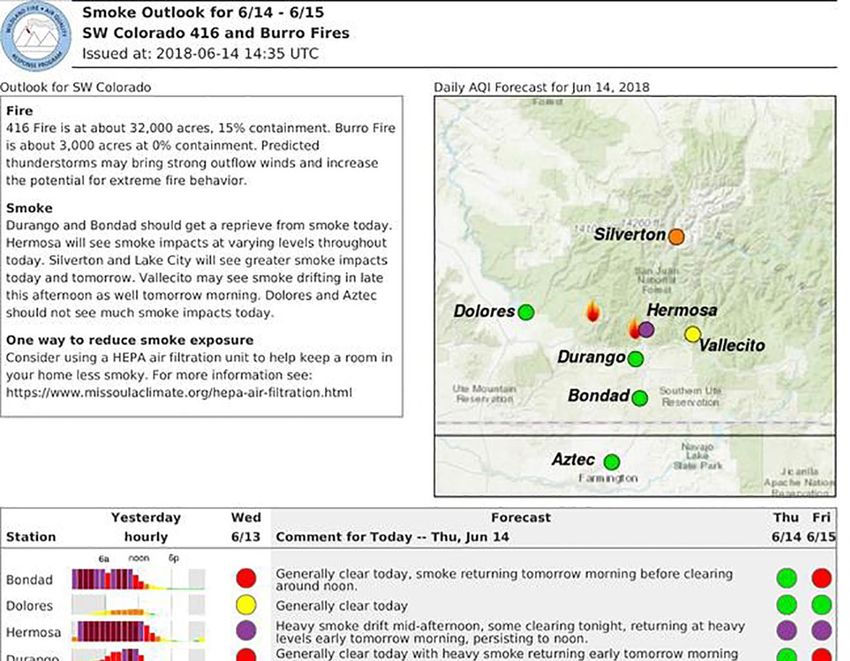
Figure 8. Sample AirNow current air quality data, map, and AQI values

is used when air quality is stable. The NowCast
helps ensure that AQI maps and data on AirNow
more closely match what people actually experience
outdoors (Figure 8).

Fires: Fire and Smoke Map. The wildfire map page
on airnow.gov (https://fire.airnow.gov/) is a one-
stop place where the public can assess current
wildfire activity and air quality conditions across the
country (Figure 9). The interactive map is a joint
effort of the U.S. Forest Service, EPA, and state and
local
air quality agencies. The map displays several layers
such as the current network of PM2.5 monitors as well
as any temporary PM2.5 monitors deployed for a fire
event. The monitors are shown in the color of their
current AQI value. Other layers include active
wildfires and smoke plumes. In addition, the page has
important links to state advisories and smoke blogs,
information about smoke and health, and a variety of            Figure 9. Sample AirNow Fires: Current Conditions map
external web resources pertaining to wildfires.

Enviroflash. Offered in many areas around the
country, EnviroFlash is a system that sends the daily
air quality forecast by email to anyone who signs up.
It can also be used by state and local agencies to send
an email alert during an event such as a fire, including

                                                           34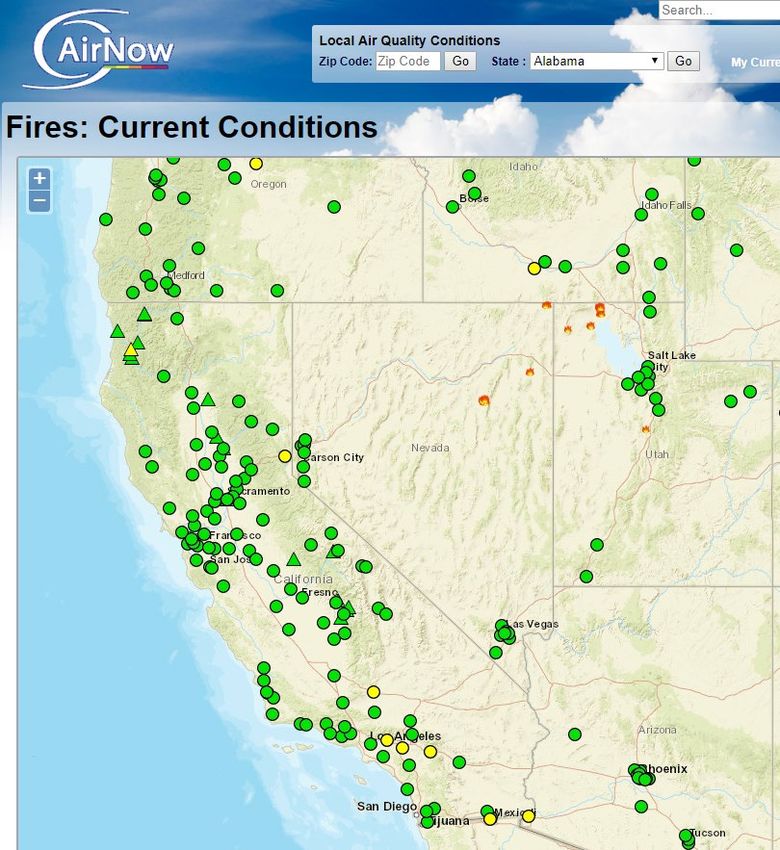
suggested safety measures which are included when
air quality is unhealthy. This service is provided by
the state or local environmental agency and EPA.
Information about Enviroflash is available at http://
www.enviroflash.info.

Outdoor activity guidance. The Air Quality
and Outdoor Activity Guidance for Schools table,
developed by the EPA and the Centers for Disease
Control and Prevention (CDC), shows when and
how to modify outdoor physical activity based on the
AQI. This guidance can help protect the health of all
children, including teenagers, who are more sensitive
than adults to air pollution. The activity guidance can
be found at: https://www.airnow.gov/activity-guides-
publications/. A similar guide for PM that includes
activities for all ages can be found here https://www.
airnow.gov/publications/activity-guides/air-quality-
guide-for-particle-pollution/.
                                                                Figure 10. Elements of the Wildland Fire Air Quality
                                                                Response Program supporting an Air Resource Advisor
Air Quality Flag Program. The activity guidance
                                                                assigned to an Incident Management Team responding
can be used with the Air Quality Flag Program. The
                                                                to a wildfire. Air Resource Advisors work under the
Air Quality Flag Program (https://www.airnow. gov/
                                                                Planning Section of an Incident Management Team with
air-quality-flag-program/) is a visual way to alert
                                                                direct interaction with the Planning Section Chief (PSC),
schools and other organizations to the local air quality        Incident Meteorologist (IMET), Fire Behavior Analyst
forecast. Seeing the flag alerts people about the local         (FBAN), Safety Officer (SOF), and Public Information
air quality so that they can take actions to protect            Officer (PIO).
their health.
                                                                state, tribal, and local air quality agencies as well
Interagency Wildland Fire Air Quality                           as health departments. Much of this work is done
Response Program and Air Resource                               through the deployment of technical specialists
Advisors                                                        called Air Resource Advisors (ARAs) working with
The Interagency Wildland Fire Air Quality Response              either wildfire Incident Management Teams (IMT) or
Program (IWFAQRP, https://wildlandfiresmoke.                    directly with land management agencies that request
net) is an interagency effort led by the U.S. Forest            them as part of wildland fire management efforts.
Service to provide enhanced information to wildfire             Deployed ARAs are a good resource for gaining
incidents, agencies, and communities dealing with               insight into expected fire growth, emissions, and
smoke issues. This need for predicting smoke                    impacts. An ARA generally works in the planning
impacts associated with wildfires and the role of               section of the IMT and consults closely with experts
the IWFAQRP was recognized and authorized                       in fire weather and fire behavior. ARAs are trained
by Congress in 2019. The IWFAQRP has several                    to use a variety of smoke dispersion models in
components including tools for enhanced monitoring              conjunction with air quality monitoring to help
and modeling of smoke; creating consistent smoke                build smoke forecasts and information products for
outlook forecasts in a simple format for sharing                the public.
with the public; and messaging in conjunction with
                                                                Air Resource Advisors use a national cache of

                                                           35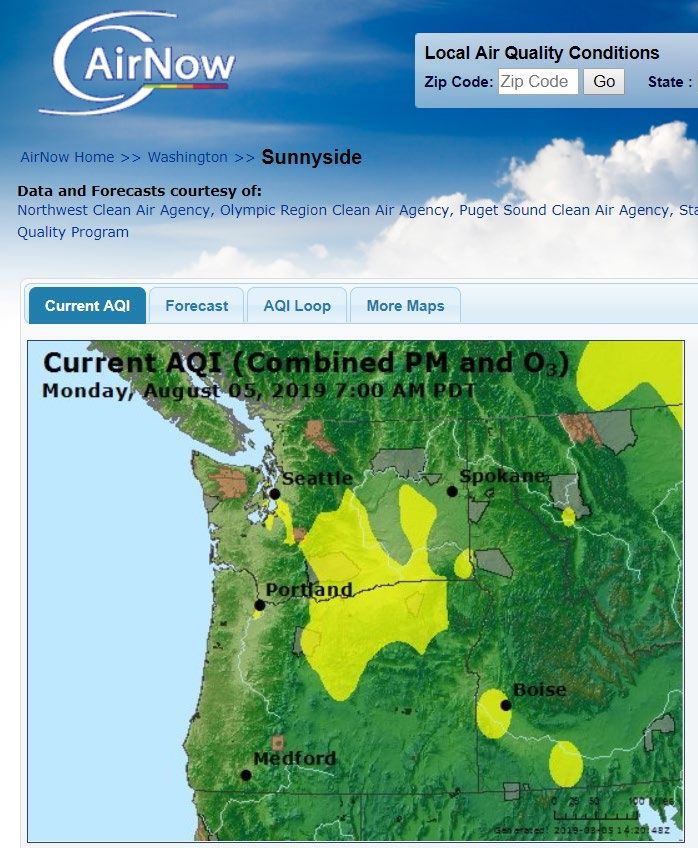
Figure 11. Example smoke outlook (partially shown) produced by an Air Resource Advisor assigned to the 416 Fire. Current
smoke outlooks are available at https://wildlandfiresmoke.net/outlooks.

deployable smoke monitors (typically E-SAMPLERS                 by the U.S. Forest Service Pacific Northwest Research
and E-BAMS with real-time telemetry capability)                 Station’s AirFire Team are shown in Appendix C and
during wildland fire incidents to provide ground                are available at https://tools.airfire.org.
information to communities lacking existing
monitoring capabilities. Enhanced smoke modeling                New monitoring and air quality
including high resolution grids over affected areas             estimation technologies – a caution
can be requested of the National Weather Service                In recent years, technology development has
by an ARA. Air Resource Advisor deployments                     expanded the variety of information available about
and contact information are available at https://               air quality. These emerging technologies include
wildlandfiresmoke.net. ARA-developed outlooks are               miniaturized PM2.5 sensors stationed in outdoor or
available at https://wildlandfiresmoke.net/outlooks.            indoor environments, mobile air quality monitoring
A collection of IWFAQRP related tools developed                 systems, air quality models that can estimate
                                                                concentrations in locations without nearby monitors,
                                                                and data fusion products that blend together

                                                           36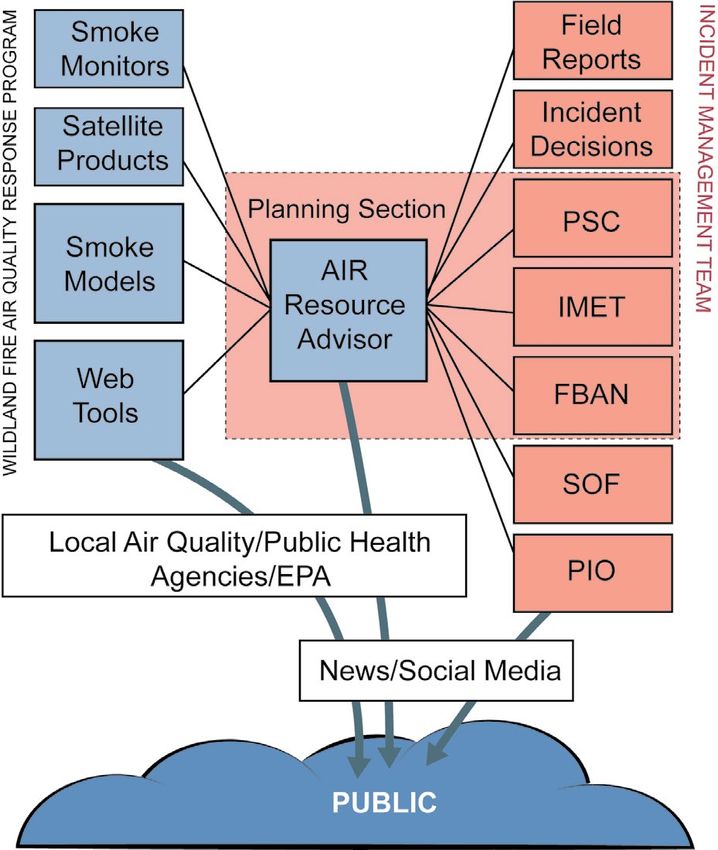
observational data and models. Still in a research            help of nearby regulatory monitors or short-term
phase, but likely to expand over time, are personal           monitors implemented by an ARA, AQI estimates,
wearable devices or apps designed to estimate an              satellite data, and from daily ARA Smoke Outlooks.
individual’s exposure to PM2.5.
                                                              Using visual range to assess smoke levels
In many areas, these emerging technologies and their
                                                              in the interior western United States
data are already part of the wildfire smoke dialogue.
                                                              Many communities do not have access to continuous
During a wildfire smoke event, communities lacking
                                                              PM monitoring and may need other ways to
a centrally-located PM2.5 monitor may rely on sensors
                                                              evaluate local air quality. Visual range (i.e., how far
as a primary source of air quality information.
                                                              can be seen?), like other instantaneous monitoring
Citizens, especially those in at-risk groups, might
                                                              approaches, can inform and help the public respond
make decisions based on localized estimates
                                                              to smoky conditions. This is true even in areas
from emerging technologies to mitigate their
                                                              that have continuous monitors, because smoke
smoke exposure.
                                                              concentrations can vary widely within a couple of
Nevertheless, these data must still be regarded with          miles and can change rapidly.
caution. At this writing there are still many unknowns
concerning the precision, accuracy, and reliability of        Basic Approach:
readings from sensors, air quality models, and data           To determine visual range, one must:
fusion products, especially in extreme conditions like        • use this method only during daylight hours,
a wildfire smoke event. Although the technology is               avoiding sunrise and sunset,
improving, it is important to recognize the limitation        •   use this method only if relative humidity is less
of using these as stand-alone devices and data                    than 65%,
products without a reference monitor nearby to
evaluate the new technology’s performance.                    •   focus on the darkest object (e.g., black is better
                                                                  than green),
In cases where ARA-implemented monitors or                    •   determine the limit of visual range by looking
official air quality network monitors exist and                   for targets at known distances (miles), (the visible
emerging technology is implemented, conflicts in air              range is the point at which even high-contrast
quality information may result. This does not mean                objects (e.g., a dark forested mountain viewed
that either information set is necessarily wrong, but             against the sky at noon) totally disappear, and
reflects differences in the locations measured, how
data are averaged, or how the AQI is computed. An             •   after determining visual range in miles, use Table
additional cause for disagreement may be error in the             3 to identify actions to take to reduce
measurement device or data fusion product.                        exposure.
                                                              Often, it is difficult to assess “the point at which even
Therefore, sensor data, models, and data fusion               high-contrast objects (e.g., a dark forested mountain
products should be considered as supplements to               viewed against the sky at noon) totally disappear.”
a larger package of information to make better                Instead, it may be more useful to use known
informed decisions on smoke messaging. Comparing              landmarks at a given distance away to assess possible
sensor data, models, or data fusion products with             visual ranges. For example, target A is 2 miles away
nearby reference monitors can help the public                 and visible, but target B, which is 4 miles away, is
official understand how to consider this information          not visible Therefore the visual range is somewhere
in their assessment of smoke conditions and                   between 2 miles and 4 miles. Use Table 3 to identify
communications. These new sources of data may                 the range of actions to consider to reduce smoke
provide important information on the trends of
PM2.5, but they need to be put into context with the

                                                         37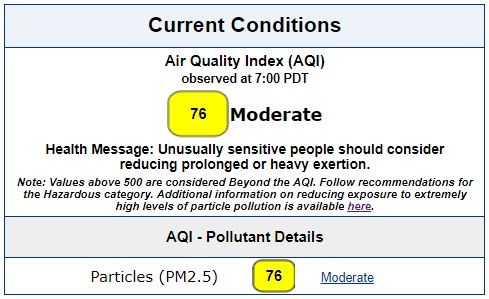
Table 3.Visual range and actions to take to reduce smoke exposure when wildfire smoke is
in the air.**
    Distance
                        Population Type                                                                      OR Specific Illness
    seen
                        A Healthy Adult,                    Older adults (≥65 years),                     Asthma, Respiratory Illness, Lung or Heart
                        Teenager, or Older Child            Pregnant, or A Young Child                    Disease
                        Watch for changing                  Watch for changing conditions and moderate outdoor
                        conditions and moderate             activities based on personal sensitivity
    > 10 miles
                        outdoor activities based on
                        personal sensitivity
    5–10 miles          Moderate outdoor activity           Minimize or avoid outdoor activity
                        Minimize or avoid outdoor           Stay inside or in a location with good air quality
    < 5 miles
                        activity
1
    Sensitivity to smoke can vary greatly from person to person and individuals can become more sensitive to smoke after extended periods of exposure. Individuals should
    pay attention to the advice of a medical professional or local health officials and adjust activity accordingly to their particular tolerance or sensitivity.

exposure.                                                                                 even 24 hours, so what is seen at a particular moment
                                                                                          may not be representative of the average reported
Western United States: An important caveat is that                                        at a nearby monitor. More uncertainty stems from
the above visual range categories only apply in dry                                       sighting on non-black bodies (e.g., green forested
air conditions typically found in the interior west and                                   landmarks, snow-covered peaks), difficulty at judging
inland of coastal areas. The combination of water                                         when an object is just barely visible, variations in the
and particulate matter in the atmosphere dramatically                                     atmosphere and thickness of the smoke across the
reduces visibility, therefore this method of estimation                                   line of sight, and assuming the atmosphere remains
should not be used when relative humidity is greater                                      constant after using an instantaneous “look” to assess
than 65%.                                                                                 conditions. Another commonly occurring problem
                                                                                          with this method is that the concentration along the
Eastern United States and Higher Humidity                                                 visual path is not constant, for example, when there is
Locations: Until this approach can be assessed                                            little smoke at the surface, but a thick layer of smoke
for humid conditions, individuals may have to rely                                        aloft and the reference point being used is above that
on common sense in estimating smoke conditions                                            smoke layer such that the viewer is looking through
(e.g., mild, moderate, heavy smoke) and the kinds of                                      it. In such cases these methods would be invalid.
protective actions that might be necessary to address                                     This method is also not effective in early morning or
personal response to the smoke.                                                           twilight hours when the sun is low on the horizon.
Other Considerations: This method of estimating                                           The bottom line is that, no matter how far one can
a visual range also contains much uncertainty (as                                         see, it is always prudent to take measures such as
discussed in Malm and Schichtel, 2013), further                                           those presented in this Guide to protect oneself if
strengthening the need to use personal judgment                                           smoke exposure is a concern.
when assessing smoke conditions. Smoke
concentrations vary substantially from minute to
minute. By comparison, continuous monitoring
devices average their measurements over 1, 3, or

                                                                                     38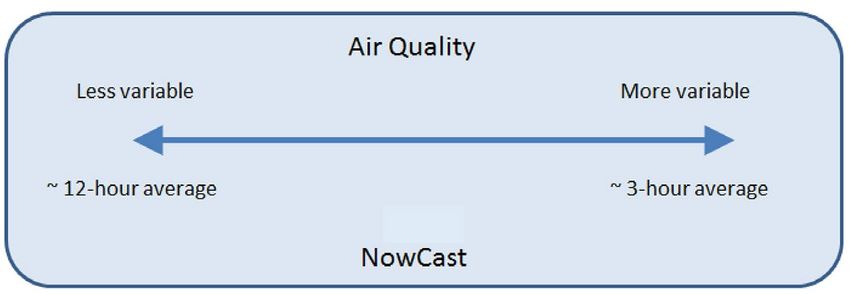
V. RECOMMENDATIONS
   FOR PUBLIC HEALTH
   ACTIONS

           39
This chapter includes specific guidance to public is intended to help health officials, the media, and
health officials on actions to take to protect the pub- the general public make decisions about appropriate
lic and to advise the public during a wildfire event, strategies to mitigate exposure to smoke. As
preparations to make before fires occur, and recom- noted earlier, the official AQI value for PM2.5 for
mendations for cleaning up after a fire. Because there the previous day is a 24-hour average of PM2.5
are many factors to consider during a wildfire event, concentrations measured from midnight to midnight.
these recommendations should be adapted for each The real-time AQI for PM2.5 reported by the media
specific situation. and on AirNow is the hourly estimate of the 24-
hour AQI based on the NowCast. Although Table 5
Public advisories and protective
provides ambient PM2.5 concentrations and the AQI
measures
values and descriptors associated with the categories
Areas with established air quality programs typically
(e.g., Good, Moderate), concurrent publication
have a communication plan for alerting the public
of both the AQI values and the ambient PM2.5
about air pollution events. A communication plan
concentrations (in μg/m3) to describe air quality may
includes details on who should be given specific
lead to confusion among members of the public. To
information, when that information should be
avoid such confusion, it may be preferable to publish
delivered, and what communication channels
just the AQI values.
to use to deliver the information. An effective
communication plan anticipates what information Protecting children
will need to be communicated to specific audience Protecting children is always a high priority in smoke
segments, such as schools or nursing homes. events. The factsheet Air Quality and Outdoor
Physical Activity Guidance for Schools, developed
One approach is to refer the public to the AirNow
jointly by EPA and CDC, provides guidelines about
website (www.airnow.gov), which is used by states
when and how to modify outdoor physical activity
and most communities across the country. Methods
based on the AQI. If a smoke event is forecasted,
for sharing information include state smoke blogs,
local officials should prepare to implement the
websites, hotlines, press releases, and social media, as
guidance, including assessing the availability of
well as emails and faxes to interested parties (such as
indoor spaces with good indoor air quality for
sports team coaches and daycare providers). Some
children to be active.
rural areas have used door-to-door dissemination
of a visibility index (see Table 3) and the associated As air quality worsens or is projected to worsen,
health effects. additional protective measures may become
necessary. These measures could range from allowing
Table 4 provides a general list of health effects and
children with asthma or other medical conditions that
cautionary statements about altering behavior that
place them at greater risk from smoke to stay home,
can be used in public advisories. The advisories are
to closing schools entirely. Several location- and
based on the AQI, as well as on experience and
event-specific factors should be considered in making
evidence from fire situations. If only PM10 measurements
these decisions. Some of these factors include the
are available during smoky conditions, it can be assumed that
forecast duration of the event, the relative indoor
the PM10 is composed primarily of fine particles (PM2.5), and
air quality of the homes and schools in the area, and
therefore the AQI and associated cautionary statements and
the ability to transport children safely to and from
advisories for PM2.5 may be used.
school. In some locations, indoor air quality may
Table 5 provides guidance to public health officials be better in schools than in local housing, making
about measures that can be taken to protect school closure less beneficial from a public health
public health at different AQI categories and the perspective. Indoor air quality in schools should be
corresponding ambient PM levels. This information assessed before the start of the fire season to assist in
planning and decision-making.
40Protecting other at-risk groups landscapers, park personnel) during an incident.
Protecting members of other at-risk groups, Similar to the general public, outdoor workers may
including older adults, people with heart or lung be at risk for adverse health impacts from smoke
disease, pregnant women, and people of lower SES, or ash exposure, particularly if they are in an at-risk
is also a high priority for public health officials. group (described elsewhere in this Guide). However,
Maintaining good indoor air quality, using the some recommendations made to the public on how
information provided above, is especially important to reduce their exposures to wildfire hazards may not
in locations where these people are located, such as be relevant for outdoor workers who must continue
gyms, senior centers, hospitals, or residential facilities to work. In addition, their employers may not have
for older adults. To protect some at-risk groups, anticipated these hazards and may be ill equipped to
such as people of lower SES who may live in homes implement effective protections. To better address
without air conditioning or in locations where the these issues, employers and employees should
use of air conditioning may not be common, it is prepare for and plan to implement procedures to
advisable to consider setting up cleaner air shelters. protect outdoor workers.
In addition, it is important to recognize that people
of lower SES may experience social vulnerability The Occupational Safety and Health Administration
due to socioeconomic and demographic factors (e.g., (OSHA) is the regulatory entity for employee health
socioeconomic status, household composition and and safety but, in about half of the states, a federal
disability, minority status and language, and housing OSHA-approved state OSHA program regulates
and transportation) that affect the resilience of non-federal workplaces. There are currently no
communities (Flanagan et al., 2011). In disasters such occupational standards specifically for wildfire
as wildfires, the socially vulnerable are more likely to smoke, except in California. On July 18, 2019,
be adversely affected and less likely to recover. the California Safety and Health Standards Board
adopted an emergency regulation for a Cal/OSHA
In general, individuals in these groups should be standard to protect workers from hazards associated
advised to avoid or limit outdoor activities once air with wildfire smoke. This standard, Title 8 California
quality is characterized as “Unhealthy for Sensitive Code of Regulations Section 5141.1, effective on July
Groups” (orange on the AQI) and to remain indoors 29, 2019 and will be followed by a process to develop
with windows closed if air quality is categorized as a permanent regulation (https://www.dir.ca.gov/
“Very Unhealthy” (purple on the AQI). Families dosh/doshreg/Protection-from-Wildfire-Smoke.
should consider using an air cleaner with a HEPA
filter that will help to reduce indoor air pollution, as Although healthy adult workers may not be
well as to avoid adding particles by smoking tobacco, significantly affected by short-term exposure to
using wood-burning stoves or fireplaces, and candles, smoke or ash while working outdoors, the risk
and only using a vacuum with a HEPA filter. of adverse health effects is dependent on the
contaminant levels, type(s) of material burned,
Protecting outdoor workers duration of exposure, level of physical activity, age
Many workers have jobs that require them to work of the worker, individual susceptibility (e.g., pre-
outdoors. Occasionally these workers may be exposed existing heart or lung disease), as well as other factors
to wildfire smoke and other hazards due to wildfires. (see Chapter 1). As a result, responses to exposures
In addition to the workers who are directly involved will vary.
with wildland fire management and suppression,
there are also workers engaged in supporting fire Employers can take steps to protect healthy as well
response (e.g., at base camp or evacuation centers) as more at-risk workers from the negative health
or cleanup efforts (e.g., demolition crews) , and impacts of unhealthy air quality. Some of the same
many others who continue to do their usual non- recommendations listed in this document for the
fire related outdoor jobs (e.g., agricultural workers, general public can apply when working outdoors
41in a smoky environment. Options for limiting Prolonged smoke events
workers’ smoke exposure include postponing or For smoke events that last for more than a few
shortening time spent outdoors; focusing on only days or that occur repeatedly over the course of
performing high priority tasks; relocating workers or fire season, public health officials should consider
rescheduling work tasks to smoke-free or less smoky all options in communicating the importance of
areas or times of the day; reducing outdoor workers’ reducing smoke exposure. Messages should include
physical activity and exertion levels; encouraging actions individuals can take to reduce smoke
and ensuring workers take frequent breaks inside exposure and should highlight the benefits of
cleaner air spaces such as enclosed structures or creating cleaner air spaces in homes. The longer a
vehicles with recirculating air; and encouraging and smoke event continues, the more people will start
using air cleaners with HEPA (or other protective) to experience adverse health effects. Therefore,
filters in indoor working areas to reduce overall exposure reduction measures that are recommended
smoke exposure. for short-term exposures to smoke become even
more important to take with prolonged exposures.
In some cases, the use of particulate respirators Prolonged smoke events may require consideration
should be considered to protect workers who cannot of additional measures to protect the public,
implement the exposure reduction recommendations especially people in at-risk groups.
listed above when performing outdoor work (see
additional information below). Workers involved in If they haven’t already, public health officials should
post-fire cleanup activities clearly must be protected consider partnering with external businesses,
from exposure to ash and all other hazards (see agencies, and non-profits to provide spaces with
sections pertaining to after-fire hazards) by using a cleaner air for the public to go during the day if
range of control methods (e.g., dust suppression, it becomes necessary. These cleaner air spaces
personal protective equipment). could include schools, senior centers, libraries, and
shopping malls. Making spaces with cleaner air
When other measures are not sufficient to control available during the day can provide an alternative for
a respiratory hazard, OSHA requires employers people unable to reduce smoke levels in their homes,
to provide respirators that are appropriate for the or unwilling or unable to evacuate to a designated
hazard and work situation. An OSHA-compliant cleaner air shelter or out of the area to reduce their
respirator program names a qualified person smoke exposure. Before advertising or advocating for
responsible for administering the program and these cleaner air spaces, public health officials should
describes procedures for respirator selection, medical confirm that the locations have adequate filtration for
evaluation for safe respirator use, fit testing for tight- particles. This clean air protection may be provided
fitting respirators, training on topics such as how to by a MERV 13 or higher filter in the HVAC system
use and maintain respirators, and program evaluation. or a properly sized portable air cleaner with HEPA
filtration. Building managers should continue to
Pre-planning and preparing for how to best
ensure that the building is adequately ventilated and
implement these recommendations in the workplace
that fresh air intakes have high-efficiency (MERV
are critical. This is especially true in areas where
13 or higher) filters to clean the air entering the
wildland fire smoke exposure is common, and
building. Altering the building pressure balance by
workers are required to perform their work outdoors,
reducing or stopping air intake could actually create
even when the air quality is considered unhealthy,
indoor air quality issues that could offset any benefit
very unhealthy, or hazardous. Working together,
of reduced smoke exposure. For more information,
employers and employees can take steps to reduce
refer to Appendix D. Cleaner air spaces should also
their exposures to the hazards associated with a
wildland fire.
42have institutional controls to limit smoke infiltration, that increases sensitivity to smoke, may require
such as limited door and window use. Appendix B sheltering facilities that can provide cleaner air or
provides some guidelines for creating cleaner air in adequate medical attention. Animal accommodations
large spaces. are frequently set up with participation from local
animal control, humane society or other animal
As smoke events continue, stress associated with rescue groups. For more information, check
increasing health concerns, loss of control over daily the American Veterinary Medical Association
activities, reduction in physical activity, and isolation (AVMA) website: https://www.avma.org/public/
resulting from remaining at home indoors can cause EmergencyCare/Pages/Pets-and-Disasters.aspx.
mental health issues to arise. During a prolonged
smoke event or repeated smoke events, make cleaner
Air quality cautionary statements and
air spaces available where people can socialize. One
recommended public actions
beneficial strategy that has been reported consists
Table 5 shows actions for public health officials
of waiving fees for gym use, which allows people
to consider at the different AQI categories. Public
to get exercise and interact with others. Be aware of
health officials may want to recommend some or
mental health issues in your jurisdiction and consider
all of the recommended actions associated with
creating messages about mental health and available
these categories, based on an assessment of the
mental health services.
local situation. Some factors that also should be
Protecting pets and livestock considered include:
Many people ask how wildfire smoke affects pets and • Predicted fluctuations in PM2.5 levels. Are the
livestock. As with humans, high levels of smoke may peaks of PM2.5 predicted to occur relatively infre-
irritate animals’ eyes and respiratory tract. Animals quently, interspersed with longer periods of good
with heart or lung disease are especially at-risk and air quality, or to occur multiple times per day,
should be closely watched during periods of poor superimposed on higher-than-usual PM2.5 levels?
air quality. Strategies to reduce animals’ exposure to • Predicted duration of high PM2.5 levels. For
smoke are like those for humans: reduce the time instance, if air quality is predicted to be in the
spent in smoky areas; if animals are indoors, keep “Unhealthy for Sensitive Groups” range or worse
indoor air clean; provide animals with plenty of for multiple days to weeks, public health officials
water; limit physical activities that will increase the might consider opening cleaner air shelters or
amount of smoke breathed into their lungs; and recommending evacuation plans for at-risk popu-
reduce exposure to dust or other air pollutants. If lations, including individuals with chronic lung or
pets or livestock are coughing or having difficulty heart disease, who cannot take adequate personal
breathing, the owner should contact a veterinarian. protective actions to reduce exposures.
Two factsheets, Protect Your Pets from Wildfire
• Potential indirect effects. High PM2.5 levels can
Smoke and Protect Your Large Animals and
impair visibility and increase the risk of traffic
Livestock from Wildfire Smoke, are available for
accidents. This may be reason enough to cancel
dissemination to the public.
an evening indoor event at a local high school, for
Consider where pets and livestock could be housed example.
if the evacuation of people from areas within your
jurisdiction becomes necessary. For example, in some
places, local shelters will house pets in carriers and
it is not uncommon for temporary livestock shelters
to be created in local fairgrounds or parking lots.
Animals that are older or have a medical condition
43Table 4. Health effects and cautionary messages for at risk populations for each
AQI category
AQI
Category Health
(AQI Values) Effects Cautionary Statements Other Protection Messages
Good None expected None None
(0–50)
Moderate Possible Unusually sensitive individuals should If symptomatic, reduce exposure to particles by following
(51–100) aggravation of consider limiting prolonged or heavy advice in box below.
heart or lung exertion.
disease People with heart or lung disease should
pay attention to symptoms.
Individuals with symptoms of lung
or heart disease, including repeated
coughing, shortness of breath or
difficulty breathing, wheezing, chest
tightness or pain, palpitations, nausea,
unusual fatigue or lightheadedness,
should contact a health care provider.
Unhealthy for Increasing Sensitive Groups: People with heart or Keep doors and windows closed, seal large gaps as much
Sensitive Groups likelihood of lung disease, the elderly, children, and as possible.
(101–150) respiratory or pregnant women should limit prolonged Avoid using exhaust fans (e.g., kitchen, bathroom, clothes
cardiac symptoms or heavy exertion. dryer, and utility room exhaust fans).
in sensitive Limit time spent outdoors.
individuals, Keep the garage-to-home door closed.
aggravation Avoid physical exertion. If cooling is needed, turn air conditioning to re- circulate
of heart or People with asthma should follow their mode in home and car, or use ceiling fans or portable
lung disease, asthma management plan. fans (but do not use whole house fans that suck outdoor
and premature Individuals with symptoms of lung or air into the home).
mortality in people heart disease that may be related to If a home has a central heating and/or air conditioning
with heart or lung excess smoke exposure, including repeated system, install higher-efficiency filters (e.g., filters rated at
disease and older coughing, shortness of breath or difficulty MERV 13 or higher) if they can be accommodated by the
adults breathing, wheezing, chest tightness or system. Regardless of whether a filter upgrade has been
pain, heart palpitations, nausea, unusual performed, the system’s circulating fan can be temporarily
fatigue or lightheadedness, should contact set to operate continuously to obtain maximum particle
a health care provider. removal by the central air system’s filter, although this
will increase energy use and costs.
Operate appropriately sized portable air cleaners to
reduce indoor particle levels.
Avoid indoor sources of pollutants, including tobacco
smoke, heating with wood stoves and kerosene heaters,
frying or broiling foods, burning candles or incense,
vacuuming, and using paints, solvents, cleaning products,
and adhesives.
Keep at least a 5-day supply of medication available.
Have a supply of non-perishable groceries that do not
require cooking.
44Table 4. Health effects and cautionary messages for at risk populations for each
AQI category. (continued)
AQI
Category Health
(AQI Values) Effects Cautionary Statements Other Protection Messages
Unhealthy Increased Sensitive Groups: Should avoid prolonged Sensitive Groups: Stay in a “clean room” at home (where
(151–200) aggravation or heavy exertion there are no indoor smoke or particle sources, and use a
of heart or Everyone: Should limit prolonged or non-ozone producing air cleaner).
lung disease heavy exertion Go to a “cleaner air” shelter (see Appendix D) or
and premature possibly out of area
mortality in Limit time spent outdoors.
Individuals with symptoms of lung Everyone: Follow advice for sensitive groups in box above.
persons with
heart or lung or heart disease that may be related Identify potential “cleaner air” shelters in the community
disease and older to excess smoke exposure, including (see Appendix D).
adults; increased repeated coughing, shortness of breath
respiratory or difficulty breathing, wheezing, chest
effects in general tightness or pain, palpitations, nausea
population. or unusual fatigue or lightheadedness,
should contact your health care provider.
Very Unhealthy Significant Everyone: Should avoid prolonged Everyone: If symptomatic, seek medical attention. If you
(201–300) aggravation of or heavy exertion and stay indoors, are unable to create your own cleaner indoor air space
heart or lung preferably in a space with filtered air.
to shelter in place, evacuate to a cleaner air shelter or
disease, premature leave the area, if it is safe to do so.
mortality in
persons with
heart or
l u n g disease
and older adults;
significant
increase in
respiratory effects
in general
population.
Hazardous Serious Everyone: Should avoid any outdoor Everyone: If symptomatic, seek medical attention. If you
(> 300) aggravation of activity, and stay indoors, preferably in a are unable to create your own cleaner indoor air space
heart or lung space with filtered air. to shelter in place, evacuate to a cleaner air shelter or
disease, premature leave the area, if it is safe to do so.
mortality in
persons with
heart or lung
disease and older
adults; serious
risk of respiratory
effects in general
population.
1
Higher advisory levels automatically incorporate all of the guidance offered at lower levels.
45Table 5. Recommended actions for consideration by public health officials
PM2.51
AQI Category µg/m3
(AQI Values) 24-hr avg Recommended Actions for Consideration
Good If smoke event forecast, implement communication plan.
0–12
(0–50)
Prepare for full implementation of School Activity Guidelines (https://www3.epa.gov/airnow/
flag/school-chart-2014.pdf).
Moderate
12.1–35.4 Issue public service announcements (PSAs) advising public about health effects, symptoms,
(51–100)
and ways to reduce exposure.
Distribute information about exposure avoidance.
Evaluate implementation of School Activity Guidelines
Unhealthy for Sensitive Groups If smoke event projected to be prolonged, evaluate and notify about possible sites for
35.5–55.4
(101–150) cleaner air shelters.
If smoke event projected to be prolonged, prepare evacuation plans for at-risk populations.
Full implementation of School Activity Guidelines
Unhealthy
55.5–150.4 Consider canceling outdoor events (e.g., concerts and competitive sports), based on public
(151–200)
health and travel considerations.
Move all school activities indoors or reschedule them to another day. Cancel school
physical activities (e.g., physical education, athletic practice) unless the school is able to
provide cleaner indoor air for the students.
Very Unhealthy Consider closing some or all schools
150.5–250.4
(201–300)
Cancel outdoor events involving activity (e.g., competitive sports).
Consider canceling outdoor events that do not involve activity (e.g. concerts).
Consider closing schools2.
Cancel outdoor events (e.g., concerts and competitive sports).
Consider air quality in indoor workplaces and take measures to protect workers as
Hazardous needed3
250.5>500
(> 300) Consider curtailment of outdoor work activities unless the workers have a fully
implemented respirator plan in place and clean air respite breaks.
If PM levels are projected to remain high for a prolonged time, consider evacuation of
at-risk populations.
1
If only PM10 measurements are available during smoky conditions, assume that the PM10 is composed primarily of fine particles (PM2.5), and that therefore the AQI and
associated cautionary statements and advisories for PM2.5 may be used.
2
See school considerations in section on Protecting Children, above. Newer schools with a central air cleaning filter may be more protective than older, leakier schools. Also,
being at school may mean children’s activity levels can be better monitored. It is important to make schools a safe place for children.
3
See Appendix C for guidance.
46Public service announcements Consider reaching out to weather forecasters and
This section discusses using public service news reporters, who are a valuable resource for
announcements (PSAs) to deliver messages to the sharing information with the public. Their role
public in advance of wildfire season. Preparing for as communicators on television, radio, print, and
wildfire season includes planning what actions can online outlets makes them an essential partner
be taken by individuals well in advance of a wildfire in any outreach strategy. When reaching out to
smoke event. In areas where fires are likely to occur, news reporters and meteorologists to “pitch” your
state and local public health agencies should consider messages:
running pre-season PSAs or news and social media • Tell them who you are, what agency you repre-
announcements to advise the public on preparing sent, and that your campaign affects the health
for the fire season. The factsheet, Prepare for Fire and safety of the community.
Season, is available on the AirNow website. EPA’s • Make sure they have your contact information, in-
webpage Wildfires and Indoor Air Quality also cluding e-mail address, and at least one telephone
provides general information on how to reduce number.
exposure to wildfire smoke in residences. PSAs
should be simple (e.g., “the season for wildfires is General recommendations to the public
approaching; take action now to protect your health General recommendations to the public should
and prepare your home”) and should list a contact include at least the following:
phone number and website for further information. 1. Prepare for wildfire season. Have a several-day
supply of nonperishable groceries that do not re-
PSAs are also useful during fire or smoke events quire cooking, since cooking (especially frying and
to provide timely updates on the situation, along broiling) can add to indoor pollutant levels. Have
with advice on protective actions. Effective PSAs extra medications, such as asthma medicine. For
use simple, non-technical messages that people more information for the public about steps to be
can remember, such as “stay indoors” or “limit ready – use the Prepare for Fire Season factsheet.
outdoor activities.” News and social media releases 2. If you develop symptoms suggesting lung or
and website posts should be used to provide more heart problems, consult a health care provider as
detailed information, including information for the soon as possible.
general public and for people with chronic diseases.
When wildfire risk is high, the area federal, state, 3. Be alert to local announcements, air quality fore-
tribal, or local land manager is also likely initiating casts, and changing smoke conditions.
a public information campaign to prevent wildfires, 4. Be aware that outdoor events, such as athletic
providing a natural partner for messaging about games or competitions, may be postponed or
smoke with these agencies. canceled if smoke levels become elevated.
5. During a wildfire smoke event, you can take
steps to limit smoke infiltration and clean the air
indoors with either the right-sized portable air
cleaner with true HEPA filtration or a HVAC
filter with a MERV rating 13+. See the EPA web-
page Wildfires and Indoor Air Quality.
47Recommendations for people with chronic Use social media to raise awareness
diseases Social media outlets, such as Twitter, Facebook, and
Recommendations for people with chronic diseases Instagram, are a good way to raise awareness about
should include at least the following: wildfire smoke health protection. Keep in mind that
1. These recommendations are for people with you have many different audiences, so you will need
chronic diseases, including heart or lung disease. to use many different media to share messages about
Have an adequate supply of medication (more smoky conditions in your community.
than 5 days).
For information on how to use social media for
2. People with asthma should have a written asthma
health messages, visit the Centers for Disease Control
action plan. Check the EPA website for resources
and Prevention Health Communicator’s Social Media
on asthma action plans: https://www.epa.gov/
Toolkit: https://www.cdc.gov/socialmedia/tools/
asthma/asthma-action-plan
guidelines/socialmediatoolkit.html.
i. People with heart or lung disease should check
with their health care providers about precau- Social media can attract and direct the public to
tions to take during smoke events. They should a central website or document for distribution.
do this prior to the fire season if they live in an This central website will provide complete wildfire
area that has the potential for wildfires. smoke information. For social media success, post
simple messages that reflect the community’s needs
ii. Contact a health care provider if your condi-
at the time. Post different messages but always
tion worsens when you are exposed to smoke.
copy and paste the same link to direct the public to
iii.When using one or more portable air cleaners, your webpage with the most complete, up-to-date
buy air cleaners that are appropriately sized for information. Repeating the link to a central website
the intended rooms, as specified by the manu- is a good way to reach out and make more people
facturer, before a smoke emergency occurs. Be aware of the information.
sure they are certified by California as low-or-
no ozone models by checking the California Air Prior to wildfire smoke season, create a template
Resources Board website at https://www.arb. with a simple graphic element that is repeated on the
ca.gov/research/indoor/aircleaners/certified. central webpage and use the same look for any other
htm. wildfire smoke announcements, such as paper flyers,
email, and social media, so that when the public sees
iv. A news release could also include recommen-
it they will immediately recognize the information.
dations for preparing residences to keep smoke
Make the template usable in both electronic and print
levels lower indoors, and on the appropriate
media. This can be something as simple as the health
use of respiratory protection, as discussed
department or local government logo and a heading
above. See factsheets on Indoor Air Filtration
such as WILDFIRE SMOKE ALERT.
and Protect Your Lungs from Wildfire Smoke
or Ash, the webpage Wildfires and Indoor Air Social media messages, like any messages, require
Quality, and Appendices B and D. advance planning. You will want to find the right
contact in your office or agency who oversees social
media, ask them about the process for approving and
posting messages, propose messages they can send
out in a timely fashion, and evaluate the effectiveness
of messages delivered over social media.
In the off-season, you can share messages from
other sites by retweeting or sharing the information
48previously posted on a reputable social media site Recommended steps for public health officials
such as the CDC or EPA. Messages can include before fire season
topics such as brush cleanup around the perimeter of Recommended steps for public health officials in
a home. You can look to the following resources to areas likely to experience smoke to take before fires
find messages to share: start include:
1. Check fire risk level in monthly outlooks at Na-
https://twitter.com/AIRNow tional Interagency Fire Center (NIFC) website
and, especially if high, communicate risk to the
https://www.facebook.com/airnow public.
https://twitter.com/CDCenvironment 2. Consider how to implement the recommended
actions in Table 5 above.
https://twitter.com/CDCemergency
○ Identify locations that could serve as cleaner
air shelters.
Preparedness
Preparation is key to effective response to wildfire ○ Identify locations that could serve as cleaner
smoke events. In the months leading up to fire air spaces.
season, the National Significant Wildland Fire ○ Check indoor air quality (IAQ) capabilities in
Potential Outlooks (https://www.predictiveservices. places where at-risk populations congregate
nifc.gov/outlooks/outlooks.htm), developed by (e.g., schools, preschools and daycares; senior
the National Interagency Fire Center (NIFC), can centers and nursing homes) and investigate
give an idea of the predicted severity of the coming approaches to improving IAQ, if necessary.
months of the fire season. These assessments
○ Have supply of NIOSH-approved respirators
indicate which areas of the country are likely to see
to disseminate to public; consider approaches
various levels of fire activity and are designed to
to supplying portable air cleaners.
inform decision makers for proactive wildland fire
management. Outlooks are available for the current 3. Prepare a communication plan.
month, the month following and a seasonal look at ○ Include approaches for quick dissemination of
the two months beyond that. However, long-range information to the public (e.g., social media).
predictions can be uncertain. Also, even if the NIFC
is predicting normal or below normal fire activity in ○ Include approaches to reach members of at-
your region, you may be downwind of an area that is risk populations.
likely to see heightened activity. ○ Develop messages about mental health and
available mental health services, since stress
Before wildfire season arrives, public health officials can cause mental health issues to arise.
should consider taking some or all of the following
steps, especially if they are in an area predicted to ○ Inform public about steps to be ready - use
be a higher risk of fire. This is a simple list, more Prepare for Fire Season factsheet.
detailed information about each of these steps can be 4. Form partnerships with important partners or
found other places in the Guide. stakeholders, for example: air quality agencies,
local health providers, the media and others.
○ Help local health providers learn about the
health effects of smoke and the populations at
greatest risk using the EPA and CDC continu-
ing education course about particulate matter,
Particle Pollution and Your Patients’ Health.
49After the fire, the effectiveness of the response an on-line training course, Particle Pollution and
to a wildfire smoke event should be assessed so Your Patients’ Health (https://www.epa.gov/
needed improvements can be identified. A season- pmcourse), to educate health providers about the
ending discussion with partners and preparation effects of particulate matter. The training includes
of a “lessons learned” plan or report will help the a section on high-particulate matter events, such
partnership continue to grow and improve. as wildfires, that is consistent with the information
and recommendations in this guide. Physicians,
Build strong partnerships nurses, and health educators can receive continuing
Wildfires can start and spread rapidly, and a smoke education credits from CDC for taking this online
event may descend on a community in a matter training.
of hours. Ideally, relationships between health
Remember that while working with local media and
departments, air quality agencies, land management
posting information online is important, it is not the
agencies, and other partners will be in place before
only way to deliver information during an emergency.
a crisis begins. To reduce potential public confusion,
Other methods are effective such as posters, door
partner agencies responding to a wildfire smoke
hangers, fliers, or radio and television. Note that
episode need to begin working together right away
smoke and messaging needs frequently cross state
to inform the public of smoke and health risks using
and international boundaries so coordination needs
consistent messages. A pre-existing partnership
to be developed beyond typical jurisdictions.
enables a rapid response to a serious smoke episode
and allows everyone to quickly access and share vital
information. Putting together a wildfire smoke team
Responding to the needs of the public in case of a
All agencies working on fire and smoke response serious or prolonged wildfire smoke event will be
should coordinate closely during the incident to far more effective if relevant state, local, and federal
ensure consistent communications and to leverage agencies and organizations are engaged and working
resources for developing and delivering information together as a team. Some states have ad hoc wildfire
to the public. This can be achieved through steps smoke response teams that have already formed
such as cross-linking websites, and clearly directing during wildfire smoke response efforts, other states
public and media inquiries to the appropriate agency or areas may need to start at the beginning to find
and subject matter experts. Some agencies may have and engage partners. Some states have prepared
the best experts for media interviews while another formal emergency smoke response plans that outline
may have easy access to language translation services. local points of contact, responsibilities of state
One partner may be able to access communication agencies and other cooperators, and instructions for
material design experts while another contributes acquiring extra needed resources such as monitors or
monitoring data analysis experts. Building a team masks. In some states when wildfire smoke impacts
that capitalizes on agency and individual strengths are serious or prolonged, these agencies and other
while breaking down agency boundaries is the most local cooperators hold daily or as-needed conference
effective way to quickly serve the public in an air calls to share information and coordinate air quality
quality emergency. messaging and public outreach efforts. Participating
in these internal calls can be very valuable for public
Physicians and other health care providers often health agencies. Possible key partners in a public
have a high degree of credibility with the public. response effort include:
Having a good working relationship with local • State and local clean air agencies – State and
health providers who are knowledgeable about the local clean air agencies are expert at accessing and
health effects of smoke can be very useful in getting summarizing local air monitoring data and often
health and exposure reduction information out to have the ability to forecast upcoming
the public through the media. EPA has developed meteorology and dispersion conditions that will
50affect smoke movement and accumulation. State • EPA regional offices and the Wildland Fire Air
air agencies often work with the National Weath- Quality Response Program may have por-
er Service to have air pollution advisories issued table air quality monitors that can be deployed
when needed. to smoky areas that are not well represented by
existing state networks. The Wildland Fire Air
• Federal and state land management agen-cies
Quality Response Program website (www.wild-
– Typically, federal or state land management
landfiresmoke.net) also provides tools to help
agencies have the lead in wildfire suppression and
summarize monitoring data from state moni-
response. Any ARAs working in the area are likely
toring networks and from emergency monitors
assigned either to a wildfire incident management
deployed to wildfires.
team or to a Federal Agency Administrator. ARA’s
are a very valuable source of information for the • School systems – School administrators are
public health community and can help spread frequently anxious for advice on how to best
public health messages through ongoing com- protect their students from smoke. Schools can
munications. ARA efforts are improved through be invaluable channels for accessing not only
consultation and coordination with state public children but entire families, particularly in regions
health entities. To see if an ARA is working in an where children may be more literate in English
area check www.wildlandfiresmoke.net. than older family members. In addition, schools
can sometimes serve as temporary shelters for
• Incident management teams assigned to large
evacuees.
wildfires are expert at connecting with local
communities and frequently host public meetings • Faith-based and community-based organi-
where smoke and appropriate public responses zations – Faith-based and community-based
may be discussed. These meetings can be an ex- organizations can help disseminate awareness
cellent forum for ARAs and public health agen- messages and can potentially serve as partners for
cies to deliver messages about smoke and public sheltering evacuated residents.
health.
Cleaning up after the fire
• Tribes – Many tribal communities run their own
This section contains general considerations for
air quality programs and have local information
dealing with ash. It is not intended to replace advice
about supplemental monitors and effective out-
or assessments from professionals or agencies
reach to their communities. EPA regional offices
directly involved in cleanup activities.
assist with tribal air programs. Federal agencies
can help provide information to tribes if a fire is Even after the worst of the fire and smoke is
on, or smoke is affecting, lands in Indian coun-try. over there remain health and safety hazards that
Federal agencies have a trust responsibility to homeowners should be aware of. Exposure to
tribes and have established contacts who can help lingering smoke and ash from a wildfire can cause
deliver information on wildfire smoke and health. significant health effects in both healthy individuals
• State and local public health agencies – State and those in at-risk groups. People may experience
and local health agencies are expert at communi- symptoms including respiratory irritation, heat-
cating health risks and protective actions in sim- related illness, and even emotional stress after a fire.
ple language the public can understand and are Physical stress from cleanup activities, exposure to
well linked to organizations, such as assisted living toxic chemicals, damaged power lines, and equipment
facilities, hospitals, and clinics, that serve at-risk such as portable generators can cause injuries during
groups. Public outreach needs of public health clean up. To learn more about the health and safety
agencies often mean they have language transla- hazards that people might encounter after a wildfire,
tion expertise so important health messages can refer to Appendix E.
reach non-English speakers.
51You can also read


