Japan's Republic of Armenia 2019 - The Embassy of Japan in Armenia
←
→
Page content transcription
If your browser does not render page correctly, please read the page content below
Japan’s
   Development Cooperation
                  with the
               Republic of
                 Armenia
                       2019

The Embassy of
Japan in Armenia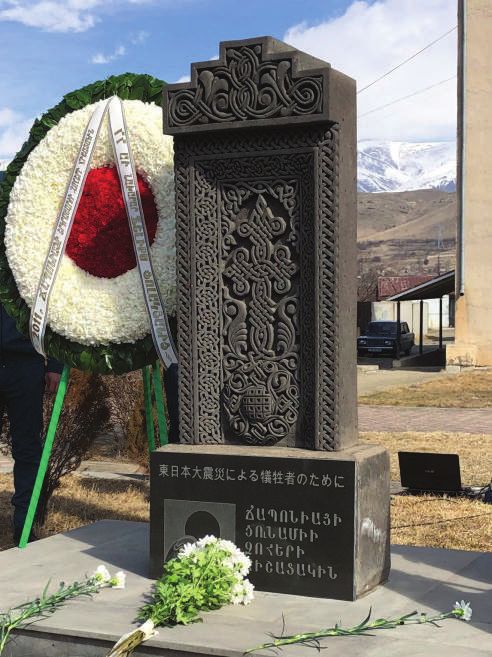
As Japan’s important partner in the Caucasus region,
Armenia shares with Japan universal values such as free-
dom, democracy, human rights, the rule of law and mar-
ket economy. Most importantly, after the Velvet revolu-
tion in April 2018, the Armenian people embarked on the
path of political and economic reform of the country.

Basic Policy of Assistance
Achieving Balanced and Sustainable Economic Growth
In order to contribute to attain such ambitious and future-oriented
transformation through growth of employment, development of human capital,
improvement of social protection system as well as institutional modernization
of the public administration and governance , Japan intends to focus on - among
many other aspects - further improvement of institutions and infrastructure,
development of human resources as well as continued upgrading of disaster
prevention measures both in the capital city and regions.

Priority Area
-Improving institutions, infrastructure and developing human resources for eco-
nomic growth and regional development
Many rural communities in Armenia are located in the mountainous areas with difficulty
of access and lack of transportation infrastructure . Agriculture, those regions’ principal
industry, has still rather low productivity, and the development of other industries are
not adequate yet. With the aim of facilitating the regions’ economic take-off and reducing
the regional disparities, Japan will provide assistance in further improvement of the basic
infrastructure such as power grids, medical and healthcare as well as educational institu-
tions. Japan will also offer assistance in the field of human resources development for the
promotion of small- and medium-sized enterprises including the high-tech industry such
as IT sector and for the reduction of regional disparities.

-Strengthening of resilience to natural disasters
Armenia, just like Japan, has been historically enduring frequent onslaughts of various
natural disasters, most notably devastating earthquakes. Japan finds it as her own duty
to share whatever experience and technology in the sphere of disaster prevention and
mitigation with this country in the Caucasus, further developing human resources and
enhancing the country’s innate resilience to such disasters in the fullest possible manner.
Ongoing Forms of Official Development Assistance (ODA)
   from Japan to Armenia

ODA LOANS
 provide low-interest, long-term and concessional
 funds to finance large-scale development efforts in
 such areas as economic and social infrastructure.

                                            TOTAL*      JPY 31,808,000,000
                                                        USD 284,000,000
TECHNICAL
ASSISTANCE
 is implemented for the transfer of necessary
 technology in various concrete fields of
 economic and social development.

                                            TOTAL*      JPY 4,567,000,000
                                                        USD 40,776,785

GRANT AID
 is the form of donnation requiring no obligation
 for repayment by the recipient country.

• Grant Assistance for Grassroots Human Security Projects (GGP)
• Grant Assistance for Cultural Grassroots projects (GCGP)
• General Grant Aid
• Cultural Grant Assistance
• Non-Project Grant Aid                    TOTAL*       JPY 9,124,000,000
                                                        USD 81,464,285

                       * Total amount as of 2018 fiscal year
                       * Exchange rate as of 2018 official rate
                        USD 1 = JPY 112
The Project for Heating System Improv
                                               The Project for Supporting Mine Risk                   of School No.8 in Spitak City
                                               Education in the Republic of Armenia               JPY 9,129,120 (USD 82,992), 201
 The Project for Providing Mobile Care         JPY 10,184,900 (USD 92,590), 2016
Service for Elderly in Amasia Community                                                                                                              T
   JPY 3,176,910 (USD 28,881), 2018

                                                                                                                A
                                                                                                                                G
                                                                                                                        G
                                                                                          Shirak                            Lori
                                                                                          G                 G                                            Ta

                                                                                          G G
                                                                                          T   A

                                                                                                                    A
                                                                                                                            G                T

                                                                                                    Aragatsotn                          Kotayk
                                                                                              G
                                                                                                                                                 G
              The Project for Constructing a Multifunctional                                                                    T
                                                                                                                                        L
                                                                                                                            A       L                A
                      Community Centre in Ijevan                                                                    L                    I
                                                                                                    T L
                   JPY 7,665,056 (USD 68,438), 2018                                           G   Armavir   A
                                                                                                                            G G              T
                                                                                                                            G
                                                                                                   G
                                                                                                                            G
                                                                                                                                G                         A
                                                                                                                                             Ararat
                                                                                                                                        G T
                                                                                                                                              G
                                                                                                                                            I

     The Project for Improvement of Fire Fighting              The Project for Renovation of the School in Ditak Village
              Equipment in Yerevan City                                 JPY 9,776,000 (USD 104,000), 2010
      JPY 881,000,000 (USD 8,810,000), 2009                              JPY 9,692,430 (USD 88,113), 2015

                                                          The Project for Supply of
                                                     Equipment for Preservation of
                                                       Historical Documents to the
                                                          Matenadaran Institute of
                                                        Ancient Manuscripts, 2001
                                                                   JPY 49,300,000

                                                                                                   The Project for the Follow-up of the
    Yerevan Combined Cycle Co-Generation                                                           for Preservation of Historical Docum
       Power Plant Project, 2005, 2008                                                             Matenadaran Institute of Ancient Ma
          JPY 10,491,000,000, 2005                                                                 JPY 2,724,144 (USD 23,484)
          JPY 15,918,000,000, 2008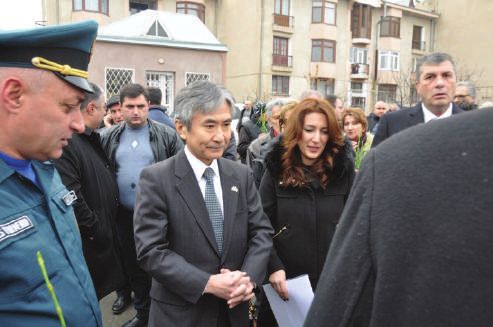
EXAMPLES OF OUR PROJECTS

ovement

018

                                The Project for Provision of a School Bus to Stepanavan
                                                Secondary School No. 6
                                          JPY 2,352,000 (USD 21,000), 2018

         G T
Tavush              G
  A

                                                                                                          The Project for Improving Children's Playground
                G                                                                                         Equipment in Kotayk Province and Lori Province
         A                                                                                                      JPY 4,924,480 (UDS 44,768), 2018

          Gegharkunik
                                        L

                G               G                                 The Project for Improving Maternal
                                                                    and Child Health Care Services
 A                                                                     in Tchambarak, Armenia
                                                                 JPY 9,401,218 (USD 114,649), 2013
  T              A
                                    T
               Vayots Dzor
          T             I
                            G
                                            A
                                                    G

                                                            G
                                                T
                                                                 T
                                                        Syunik

                                                                       T

                                                                                                                The Project for Creating Employment and
                                                                                                                Supporting Syrian-Armenian Refugees by
                                                                                                                 Establishing a Cuisine Center in Yerevan
                                                                                                                   JPY 4,469,850 (USD 40,635), 2018
                                                            T

    The Project for Improvement of
  Environment for Learning Japanese
  Language in the Russian-Armenian
         (Slavonic) University                                                                                           G Human Security Grassroots Projects
  JPY 3,743,640 (USD 31,197), 2017                                                                                       G Cultural Grassroots Projects

                                                                                                                         A Grant Aid
                                                                       The Project for Development of Local               T Technical Assistance
he supply of Equipment                                               Production and Promotion of Local Brands             L ODA Loans
uments to the                                                              JPY 236,000,000, 2013-2016                     I   Japan Fund through International Organizations
Manuscript, 2008                                                           JPY 262,000,000, 2016-2019
                                                                                   in all regions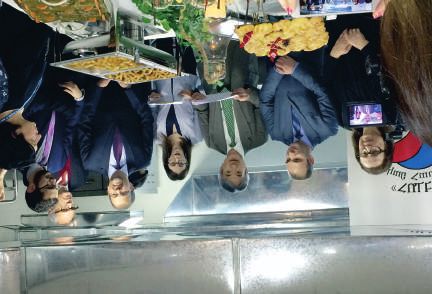
TECHNICAL ASSISTANCE
•   Project for the Improvement of Crisis Communication and Public Awareness for Disaster
    Risk Reduction, 2019-2022
•   Landslide Disaster Management Project, 2014-2017
•   Project for Development of Local Production and Promotion of Local Brands, 2013-
    2019
•   Seismic Risk Assessment and Risk Management Planning Project, 2010-2012
•   Human Resources Development Project for SME’s, 2005-2008
•   Project for Health-Maternal and Child Health /Reproductive Health, 2004-2006
•   Development of Communities affected by Landslides, 2004-2006

       GRANT AID
•   Project for Improvement of Fire Fighting Equipment, 2017
•   Non-Project Grant Aid “Economic and Social Development Program”, 2016
•   Project for Improvement of Fire Fighting Equipment in Yerevan, 2009
•   Project for Improvement of Obstetrical Service in the Republic of Armenia, 2005
•   Project for Improvement of Medical Equipment, 2001
•   Project for Improvement of Medical Equipment of “Armenia” Medical Center, 2000
•   Non-Project Grant Aid “Support for purchase of agricultural fence, printing paper, vehi-
    cles, etc.”, 1997
•   Support for purchase of agricultural equipment and fertilizers, 1997 – 2009

       CULTURAL GRANT ASSISTANCE
•   Project for the Improvement of Equipment for Restoration and Conservation of Archaeo-
    logical Artifacts for the Scientific-Research Center of the Historical and Cultural Heritage,
    2018
•   Project for the Improvement of Equipment for Digitizing Archival Records of Armenian
    Public Television, 2017
•   Project for the Improvement of Equipment for Restoration of Collections of the National
    Gallery of Armenia, 2009
•   Project for the Improvement of Musical Instruments of Yerevan Komitas State Conservato-
    ry, 2008
•   Supply of Sound Equipment to Karen Demirchyan Sports and Concerts Complex, 2004
•   Supply of Sound Equipment to the Armenian National Academic Theatre of Opera and
    Ballet, 2003
•   Project for Supply of Equipment for Preservation of Historical Documents to the Mat-
    enadaran - the Mesrop Mashtots Institute of Ancient Manuscripts, 2001
•   (Followed up by Grant Assistance For Cultural Grassroots Projects (GCGP), “The Project for
    the Follow-up of the supply of Equipment for Preservation of Historical Documents to the
    Matenadaran Institute of Ancient Manuscripts”, 2008)
•   Musical Instruments and Sound Equipment to Armenian Philharmonic Orchestra, 1999
Grant Assistance For Grassroots Human Security Projects (GGP)

Reflecting the Japanese Government’s strong commitment to uphold the concept of “Human
Security”, GGP are intended to contribute to improvements in various fields such as educa-
tion, health, infrastructure, etc.
The overall goal of GGP is to enhance the well-being of people at the grassroots level, based
on the concept of human security. As of March 2019, the Embassy of Japan has supported a
total of 64 GGP projects in Armenia.

ELIGIBLE    Non-Government Organizations (NGOs), Non-Profit Organizations
RECIPIENTS: (NPOs), Local Municipalities, Educational Institutions, Research Institu-
                   tions and Medical Institutions based in Armenia, can apply for GGP. Re-
                   cipients shall have minimum 3 years of activities with stable financial
                   status. The project areas include Education, Health, Infrastructure
                   and others.
The grant amount per project is generally up to JPY 10,000,000 (approximately
US$ 90,900 in FY 2019) and the duration must be within 12 months. All the required
documents shall be presented in English.
Prior to sending the application to the e-mail: embjp@yv.mofa.go.jp, the applicants are
advised to read carefully the Guideline and Presentation presented on the Embassy’s
website: https://www.am.emb-japan.go.jp/itpr_en/b_000195.html.

Trainings
JICA Trainings
From 1993 to 2017 Japan International Cooperation Agency (JICA) received 678 trainees
from the Republic of Armenia in the areas of administration, public service, agriculture,
mining, energy, commerce, tourism, human resources, medical services and healthcare,
social services, etc.

Cultural Trainings/Workshops
• Training Program on Museums and Community Development, 2015-2016
• Training Program on Conservation and Risk Management of Historic Towns for Cultur-
   al Tourism, 2014
• Training Program on Comprehensive Museology, 2013
• Workshops on Conservation and Restoration of Fabric-Dyeing of Cultural Assets such
   as Archaeological Relics and Ethnic Materials (lectures and practical training) at the
   request of the History Museum of Armenia, 2011-2014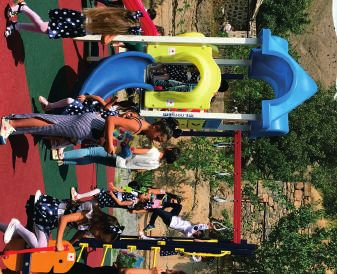
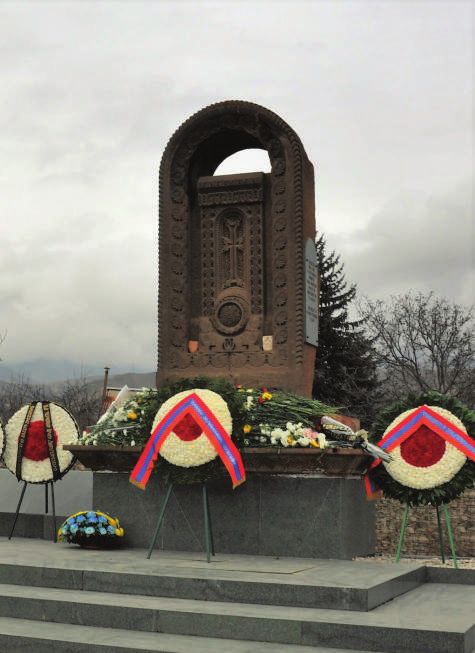
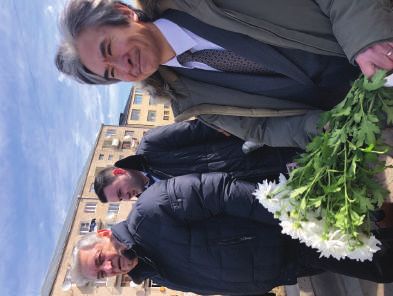
Commemorative ceremony dedicated to the victims
   of Armenian Earthquake and Great East Japan Earthquake

Every year in Spitak City, located
                            ocaat
                            oc
                            ocaat in northern Armenia, a ceremony is being held in
commemoration of the vvicvictims
                         viict
                           ic
                            ct    of the Armenian Earthquake in 1988 and the Great
East Japan Earthquake e in
                        in 2011.

On December 7,         7 2018,
                           201 188,, the
                                 8   th Commemoration Ceremony was held on the day of 30th
anniversary
         vve        of the
                         he fateful
                             ffate
                             faa         Spitak Eathquake, 1988. Ambassador Yamada, as well as
                                       l Sp
other
othe
ot
o     heer representatives
           rre sent entaaati
                    ent  attiv
                          tiv
                          tiiv o        the diplomatic missions in Armenia, Deputy Minister of
                                   off tth
Emergency
EEmme
   m    e ge e cy Situations
                   S tua
                     tu
                      uaat
                         at ns n Mr.r. Ara     Nazaryan,
                                          A a Nazar
                                               Naza
                                               Nazary
                                               Na  ryy Mayor of Spitak City Mr. Sahakyan, Head
 off Fire-Rescue
      FFi R ue     ue Station
                          atio of Spi
                       SStatio
                        Stat
                         tatio
                         tat            Spitak,
                                        Sppi    Deputy Colonel Gabrielyan, residents and Rescue
 staff
 sttaff e
   ta     employees
            mplooye
                o
                oyyee attended
                            tte
                             te ded   d thtthe
                                            h Memorial Ceremony. During the Ceremony, an
 Armenian
 A  rrm
      me
      m  e an  n Church
                 C           Mass
                             Mas
                             Ma a was served and hundreds of citizens participated and paid
                                as
 tribute
 ttr  bute by by laying
                 layin
                 la
                  a        flowers at the Memorial khachkars.

TThe
 Th    he ceremony
              cce
               cer     o y was as ffollowed by the commemorative concert which took place
                               as
 aatt tth   the music h  hall of the  h Cultural House of Spitak City. During the Ceremony,
  Ambassador
  Am
  A      m              rYYamadaad expressed his condolences to the family and relatives of
  the
  tth  he Spitak Earthquake
                        arrthq ke victims, and his belief that Japan will continue to develop
   and
   aan n strengthen   gthe
                         enn the
                             tth bilateral relations with the Government of Armenia, as both
    countries
    ccoou tries faced thee same     ssa
                                     sam
                                      a   challenges of various natural disasters. In addition,
     Ambassador
     Am
     A   m
         mb               expressed his gratitude for erecting the khachkar in Spitak City in the
     memory
     m
     me   e        y of the Great East Japan Earthquake victims, as well as for the valuable
     assistance
     aass ssi nce  ce of Armenian n people to the Japanese people who suffered from the
      earthquake.
      e aart
         arrrt uak  a

On March
On    M rchrccch 11, 2019,
                        1 the
                      019,    t Commemoration
                                      m em                Ceremony dedicated to the victims of
Great
G   eaaat East
   re
    e          s Japan EEar
                         Earthquake
                           arrtt      k was
                                          w held in Spitak City. The Ceremony was attended
byy A
b    Ambassador
        m a            Yamada,
                           maa Minister
                         aam
                           m        M ni         of Emergency Situations, Mr. Feliks Tsolakyan,
Governor
G  ovvee o of Lori Lo Region,
                           eg
                           e gio Mr.Mr Andrey
                                    M           re Ghukasyan, Mayor of Spitak City, Mr. Gagik
Sahakyan,
Sa
SSahhaak n Head
   ah
   ah               aad off Fi
                            FFire-Rescue
                                 e Re        Station
                                               ta      of Spitak, Deputy Colonel Serob Gabrielyan
 (the
   he above-mentioned
        a o ov       en
                      nt o
                      n   one ed kkhachkar kar was
                                                w established by his initiative), residents
 and
   nd R Rescue
         e cue staff employees.
                        em mplo
                           mp pl          The
                                        . Th ep participants
                                                     icip
                                                     icipan   paid tribute to the victims of the
 Earthquake
   arthhqqua by laying  yn
                        yi ng flowers
                                    werrss at tth
                                               the
                                                h  Memorial
                                                he Me  moria khachkars.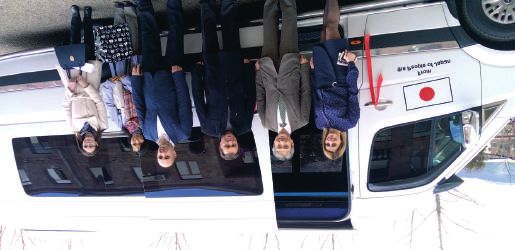
Japan Fund through International Organizations
via World Bank (WB)
Agriculture Policy Monitoring and Evaluation Capacity Building Project, funded by Japan
Program for Human Resource Development Fund, 2017-2019
Armenia National Disaster Risk Management Program, 2015-2017
Strengthening the Livelihoods and Voice of Poor and Vulnerable Persons Project in Arme-
nia, funded by Japan Social Development Fund, 2013-2016

via Asian Development Bank (ADB)
Strengthening Government and Civil Society Cooperation in Open Government Part-
nership to Improve Public Services, funded by Japan Fund for Poverty Reduction, 2016
- 2018
Solid Waste Management Solutions for Remote and Small Communities Project, funded
by Japan fund for Poverty Reduction, 2015 - 2017

via United Nations Environment Programme (UNEP)
Solar Energy for Low-Carbon Sustainable Lifestyles in Solak, Aygavan and Malishka Rural
Communities of Armenia Project, funded through the 10YFP Trust Fund, 2017-2018

via United Nations Development Programme (UNDP)
Project for Electoral Assistance in Armenia, 2019-2020
POSTSCRIPT

I always think that there are many qualities which are common
between Armenian and Japanese people, but the attitude to
“create” new values from nothing other than human
perseverance and will-power, without relying on the externally
given resources, embodies the most essential aspect which has
universal relevance beyond our two nations.

For Armenia, the year 2018 was extraordinary even in the
context of its very long and ancient history. The peaceful
transition which took place in spring attracted the attention of
the whole world. Yerevan, which celebrated its 2800th
anniversary in that year, provided the stage for that change. In
my view this confirms once again quintessential nature of
Armenian nation which is at the same time “ancient” and
“ultra-modern”.

Today our world is rapidly shrinking due to the quantum
advance of technology in which the Armenian people exhibit the
best aspect of their talent. Ultimately all the countries and
people on this planet will become “immediate neighbors” to
each other. Preempting the arrival of such era, we wish to
endeavor day by day so that Japan and Armenia become the
most cordial neighbors in it!

                                      Jun YAMADA
                              Ambassador of Japan to Armenia
Embassy of Japan
Contacts
Babayan St., 23/4 Building
Armenia, 0037, Yerevan
(Arabkir adm. district)
+374 11 52 30 10
embjp@yv.mofa.go.jpYou can also read


