July 2021 - American Institute of Steel Construction
←
→
Page content transcription
If your browser does not render page correctly, please read the page content below
July 2021
Better Together
        Bone up on steel design with your very own copies of the
            15th Edition Steel Construction Manual and the
                  3rd Edition Seismic Design Manual

 SPECIAL
  PRICE

        Learn more about these great AISC steel design resources
           at aisc.org/manualresources and aisc.org/seismic.

                                                       CELEBRATING
ORDER YOUR SET TODAY!
 aisc.org/publications | 800.644.2400                 100 YEARS
                                                       1921–2021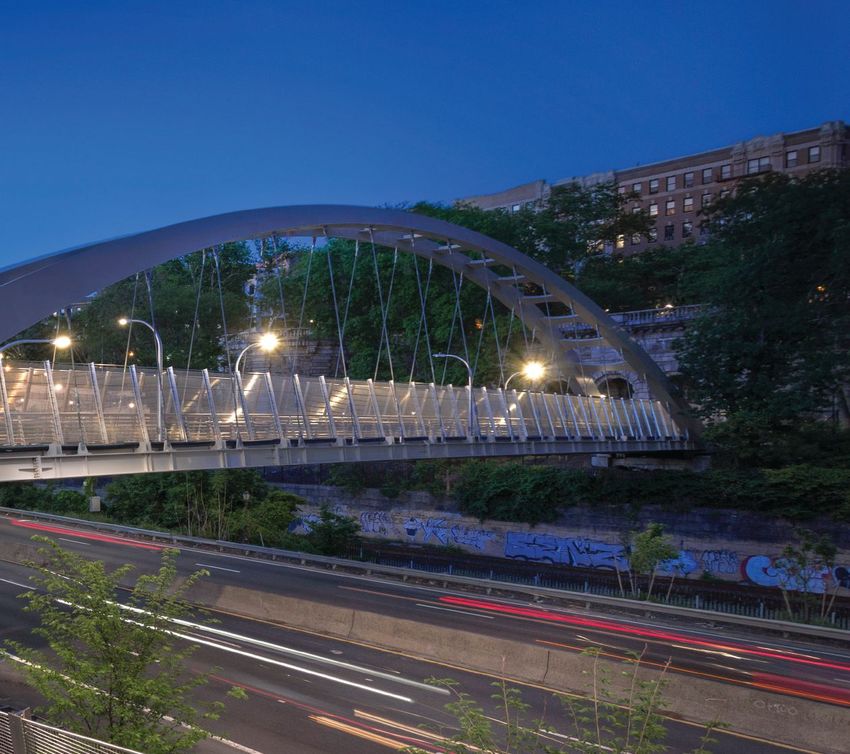
July 2021
features
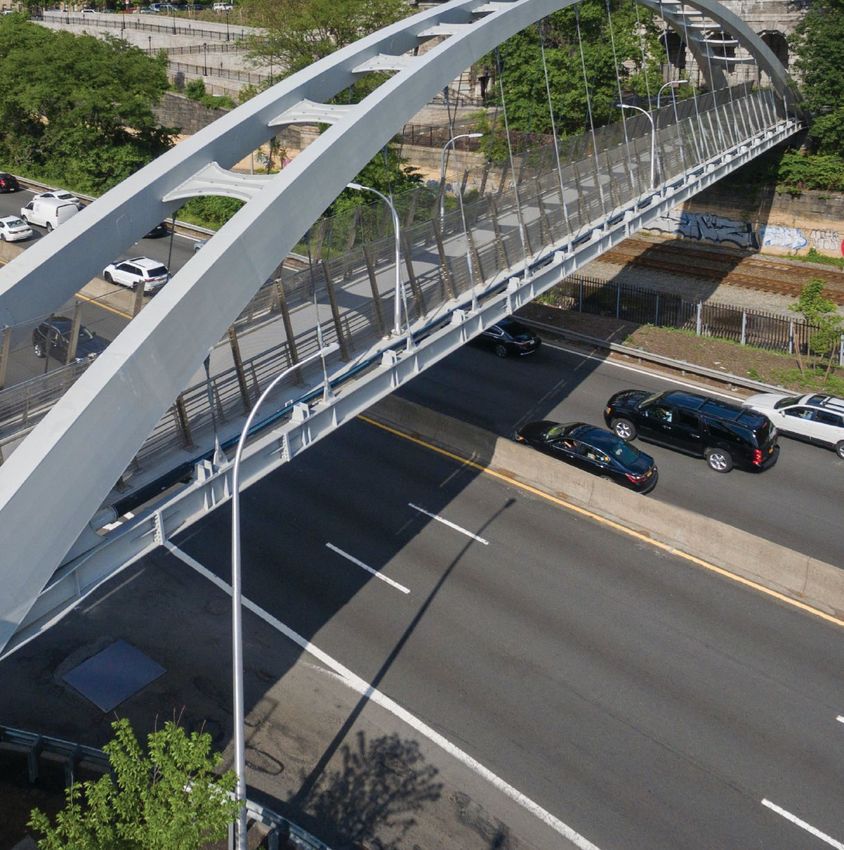
in every issue 26 Attractive and Accessible
departments resources BY MATTHEW J. MOORE, PE
6 EDITOR’S NOTE 65 ADVERTISER INDEX A new steel pedestrian bridge in New York’s
9 STEEL INTERCHANGE 65 MARKETPLACE & Riverside Park blends beauty with ADA
compliance, providing a scenic route over busy
12 STEEL QUIZ EMPLOYMENT
Amtrak lines and the Henry Hudson Parkway.
60 NEW PRODUCTS
61 NEWS & EVENTS
66 STRUCTURALLY 36 Take Two
BY ALBERT J. MEYER, JR., PE
SOUND The second phase of a student housing
development in Philadelphia turns to steel to
sync up with the first phase.
42 A Simple Solution for Simple-Span
Bridges
BY ATOROD AZIZINAMINI, PE, PhD
A look at the second generation of the folded
steel plate girder bridge system.
46 Accelerated Welding: Part Two
BY DUANE K. MILLER, PE, CURTIS L. DECKER, SE,
PE, PhD, AND MICHAEL S. FLAGG
Taking on the need for speed in welding
applications.
52 Century Club: Standard Iron
36 BY GEOFF WEISENBERGER
AISC is 100! And we’re featuring our longest
continuously running member fabricators
throughout 2021.
columns
steelwise field notes 54 When Steel Prices Spike
BY EDWARD SEGLIAS, ESQ, AND MATTHEW
16 Elevated Expectations
BY ALANA FOSSA
22 Forging a Connection
INTERVIEW BY GEOFF WEISENBERGER
SKAROFF, ESQ
Defensive legal strategies and contracts can
Clearing up misconceptions and Hunter Ruthrauff’s Forge Prize-winning
help fabricators navigate unexpected and
implementing best practices when it comes design was generated by his personal
dramatic material price fluctuations.
to hot-dip galvanized structural steel. connection to San Diego’s Balboa Park and
addresses the need for a public connection
data driven
across one of its canyons. 56 Back to Building
20 Building Bigger BY JENNIFER TRAUT-TODARO
While pandemic-related delays and material
BY JOE DARDIS business issues
Data Driven highlights market trends, shortages and price increases have added
economic forecasts, or other relevant 24 Predictive-Based Safety
BY TIM GATTIE
additional construction challenges, remember:
numbers that affect steel design and We’ve seen this movie before. And steel’s
Using data and analytics to prevent
construction. This month’s edition flexibility and relative schedule predictability
incidents before they occur.
focuses on changes in the types of can help guide the story to a happy ending.
buildings being constructed.
ON THE COVER: The Denny Farrell Pedestrian Bridge provides safe and stylish access over traffic and trains to Manhattan’s Riverside Park, p. 26.
(Photo: © John Baer - Building Images Photography)
MODERN STEEL CONSTRUCTION (Volume 61, Number 7) ISSN (print) 0026-8445: ISSN (online) 1945-0737. Published monthly by the American Institute of Steel
Construction (AISC), 130 E Randolph Street, Suite 2000, Chicago, IL 60601. Subscriptions: Within the U.S.—single issues $6.00; 1 year, $44. Outside the U.S. (Canada and
Mexico)—single issues $9.00; 1 year $88. Periodicals postage paid at Chicago, IL and at additional mailing offices. Postmaster: Please send address changes to MODERN
STEEL CONSTRUCTION, 130 E Randolph Street, Suite 2000, Chicago, IL 60601.
DISCLAIMER: AISC does not approve, disapprove, or guarantee the validity or accuracy of any data, claim, or opinion appearing under a byline or obtained or quoted
Printed on paper made
from an acknowledged source. Opinions are those of the writers and AISC is not responsible for any statement made or opinions expressed in MODERN STEEL from a minimum of
CONSTRUCTION. All rights reserved. Materials may not be reproduced without written permission, except for noncommercial educational purposes where fewer than 25 10% recycled content.
photocopies are being reproduced. The AISC and Modern Steel logos are registered trademarks of AISC.
4 | JULY 2021
YOUR #1 DOMESTICALLY PRODUCED SUPPLIER

                                                                                         Full Member

        Wallingford, CT   Langhorne, PA        Marseilles, IL   Petersburg, VA
        800-243-4410      800-899-3432         800-987-5283     800-435-0850

        New Boston, OH    Atlanta, GA          Tampa, FL        Hallandale, FL
        877-741-8806      INFRA-METALS / IMS   800-693-1361     800-432-1146
                          800-833-9175

        Houston, TX       San Antonio, TX      Fort Worth, TX   Cedar Hill, TX   Chicago Heights, IL
        800-324-0220      800-292-5828         800-772-2762     800-284-7321     800-772-2762
editor’s note Editorial Offices
130 E Randolph St, Ste 2000
Chicago, IL 60601
312.670.2400
Editorial Contacts
EDITOR AND PUBLISHER
Scott Melnick
312.670.8314
melnick@aisc.org
SENIOR EDITOR
Geoff Weisenberger
312.670.8316
weisenberger@aisc.org
DIRECTOR OF PUBLICATIONS
Keith A. Grubb, SE, PE
312.670.8318
grubb@aisc.org
PRODUCTION SPECIALIST
While the internet has made it incredibly easy to access information, Erika Salisbury
312.670.5427
it has also made it increasingly difficult to evaluate the credibility salisbury@aisc.org
GRAPHIC DESIGN MANAGER
of information. Kristin Hall
312.670.8313
hall@aisc.org
This problem has weighed heavily on my You can also do a quick internet search
AISC Officers
mind lately, especially after a very reputable of the publisher. For example, you can visit CHAIR
magazine published an article related to the https://beallslist.net/ to view a fairly com- Jack Klimp, Cianbro Fabrication
safety of steel bridges. The article, unfortu- prehensive (and disturbingly long) list of & Coating Corporation
nately, was based on the misapplication of publishers suspected of publishing preda- VICE CHAIR
Stephen Knitter
research. To its credit, the publisher withdrew tory journals. (If you use this resource, be
Geiger & Peters, Inc.
the article and published another, correct- sure to double-check the name of the pub- SECRETARY/LEGAL COUNSEL
ing the misinformation in the original arti- lisher you’re looking for. It’s not unusual for Edward Seglias, Cohen Seglias
cle. Unfortunately, the same author has since these predatory publishers to use names that Pallas Greenhall & Furman, PC
gone to a predatory journal (that is, a journal sound like other legitimate publishers.) PRESIDENT
that will publish any article for which the Duke University also offers the following Charles J. Carter, SE, PE, PhD
SENIOR VICE PRESIDENT
author is willing to pay a fee to be published) advice: Scott Melnick
and published another paper with even more • Consider how many articles the journal VICE PRESIDENT
egregious errors. has published. Are they similar in scope Carly Hurd
I’m not sure there’s anything that can be and topic? VICE PRESIDENT
done other than to warn people to view all • If an author fee is charged, Lawrence F. Kruth, PE
information critically. However, there are some is it reasonable? VICE PRESIDENT
Brian Raff
simple questions you can readily ask when • What company owns and produces the
VICE PRESIDENT
presented with questionable information: journal? Are they reputable within Mark W. Trimble, PE
• Where is the paper published? AISC the industry?
Editorial Advisory Panel
features two publications, a magazine • Are the papers peer-reviewed? Caroline R. Bennett, PE, PhD
(the very one you’re reading right now, • Who is on the editorial board and staff? University of Kansas
as a matter of fact) and a journal (Engi- Lastly, check whether the publisher has Amanda Dean, PE
Walter P Moore
neering Journal). Our magazine shies a legitimate address, phone number, and
Bryan Frazier,
away from publishing original research; website. The stakes are too high to simply Zalk Josephs Fabricators, LLC
that’s the province of our journal. accept false news. Please be vigilant—and Keith R. Griesing, PE
• If it’s published in a journal, is the don’t hesitate to ask recognized experts and Hardesty and Hanover
journal peer-reviewed? When we professional associations to weigh in on any Stephen Knitter
Geiger & Peters, Inc.
publish a paper in Engineering Journal, claims that seem questionable.
it undergoes a strenuous review from Advertising Sales
M.J. Mrvica Associates, Inc.
recognized experts in the specific area 2 W Taunton Avenue
addressed in the paper. Berlin, NJ 08009
856.768.9360
• Did the author pay to have their mjmrvica@mrvica.com
paper published? Address Changes and
• How long has the journal been available? Subscription Concerns
• Does the journal have a valid ISSN 312.670.2401
Scott Melnick subscriptions@aisc.org
(International Standard Serial Number)? Editor
Reprints
Erika Salisbury
312.670.5427
salisbury@aisc.org
6 | JULY 2021

Steel reduces waste and features a material recovery rate    Steel is the most                The American
greater than 98%! Structural steel features an incredibly    resilient material,              Institute of Steel
sustainable manufacturing process. Consider these facts:     designed to last,                Construction provides
                                                             whether it’s exposed             environmental
            The structural steel making process boasts       to fire, blast, or the           product declarations
            a 95% water recycling rate with no external      ravages of time.                 (EPDs) for fabricated
            discharges, resulting in a net consumption       And when a steel                 hot-rolled structural
            of only 70 gallons per ton.                      building reaches                 sections, fabricated
                                                             the end of its life,             steel plate and
            Steel is the most recycled material in the
                                                             the steel is recycled            fabricated hollow
            world. Domestic mills recycle more than 70
                                                             and retains all of its           structural sections.
            million tons of scrap each year and structural
                                                             fantastic physical               These EPDs cover
            steel has a 93% recycled content!
                                                             characteristics.                 the product life
                                                             Today’s beams and                cycle from cradle to
            Steel production productivity levels are
                                                             columns are nearly               fabricator gate and
            up by a factor of 24 and labor hours have
                                                             40% stronger and offer           are available at
            been reduced from 12 to just 0.5 per ton.
                                                             greater constructability         aisc.org/epd.
            Steel’s carbon footprint is down 37%,            benefits!
            energy use has decreased 32%, and
            greenhouse gas emissions have
            dropped by 45%.

      Are you
     Earth-friendly?              aisc.org/earthfriendly

                                                                                 Smarter. Stronger. Steel.
                                                                                 American Institute of Steel Construction
                                                                                 312.670.2400 | www.aisc.org
If you’ve ever asked yourself “Why?” about something
                    related to structural steel design or construction,                                       steel
              Modern Steel’s monthly Steel Interchange is for you!                                            interchange
    Send your questions or comments to solutions@aisc.org.

All mentioned AISC codes and standards, unless noted otherwise, refer       Fillet vs. CJP Welds
to the current version and are available at aisc.org/specifications. AISC   At what point is a complete-joint-penetration (CJP) weld
Design Guides are available at aisc.org/dg.                                 more cost-effective than a multi-pass fillet weld?

Beams with Warped Webs                                                      There is no definitive answer to this question, as different
The cambering process for a 70-ft W33 roof beam has                         fabricators have different thresholds. Some shops draw the line
resulted in a slight warping of the web at midspan. Could                   at ¾-in. or 1-in. fillet welds, while others prefer using fillet welds
you provide some guidance on evaluating the strength of a                   larger than 1 in. over having to use a CJP groove weld.
member with this type of imperfection?                                           My suggestion is that if you want the best bid and project cost,
                                                                            then you should either consult the fabricator or provide both
This type of web deformation can occur because of the                       options on the contract documents so that the fabricator can
compression stresses caused by the concentrated load from the               choose the option they feel is most economical.
cambering machine as well as the flexural compression stresses in                Why is this such a complex and subjective decision? There
the web during the cambering operation. Any potential effect on             are a lot of implications, and there can be questions related to the
the beam strength is dependent on the magnitude and geometry                workflow, such as:
of the deformation. Except in extreme cases, these imperfections                 • How difficult will it be to coordinate with nondestructive
are unlikely to cause a reduction in strength when the deformed                     testing (NDT) inspection when required?
area is subjected to only static (non-fatigue) tensile stress.                   • Is the equipment used to bevel the joints available, or is it
   When the deformed area is subjected to compression stress,                       tied up with other work?
the out-of-flatness imperfection can be checked using the limit                  • Is it possible to position the piece such that one type of weld
discussed in AISC Design Guide 33: Curved Member Design                             becomes more favorable?
(Section 4.3.3). If the out-of-flatness imperfection exceeds 0.264               It is not an easy decision to make even on a case-by-case basis,
times the web thickness, Section 5.5.1 of the guide can be used to          and it’s even more challenging at a company-practice level. This
determine any strength reduction.                                           is likely why there is so much variation.
   In addition, AISC Design Guide 36: Design Considerations for                                                                     Larry Muir, PE
Camber covers some of the pros, cons, and pitfalls associated with
specifying camber.                                                          Visible Coating Defect
                                                Bo Dowswell, PE, PhD        AISC’s Certification Standard for Shop Application of Complex
                                                                            Protective Coating Systems (AISC 420-10/SSPC-QP 3) states
Bridge Girder Depth and Transportation                                      that 100% inspection for visible coating defects is required.
Is there a suggested shipping limit on the vertical depth of a              What is a visible defect in painting?
bridge girder?
                                                                            The standard defines visible coating defects as: “imperfections that
Per Section C1.5.3 of the AASHTO/NSBA Collaboration                         may be detected without any magnification. These include but
G12.1-2020: Guidelines to Design for Constructability and Fabrication       are not limited to runs, sags, lifting, chipping, cracking, spalling,
(aisc.org/gdocs): “Economy is achieved using girders that can be            flaking, mud cracking, pin holing, and checking.”
shipped web vertical by truck, which is limited by the overhead                 Section 13 of the standard refers to Section 15, which states
clearances on the shipping route. Girders that are under 9 ft deep          in part that the piece with a defect can be “used as-is (after more
can generally be shipped vertically on a truck.”                            detailed analysis or acceptance by the firm’s engineering or
                                                  Devin Altman, PE          management, provided contract requirements are met) or treated
                                                                            as an ‘owner-approved nonconforming product’” presumably if
                                                                            the owner approves the use with the visual coating defect.
                                                                                                                                 Larry Muir, PE

                                                                                                                       Modern Steel Construction | 9
steel interchange
                                                    Double-Nut and Bolt Loosening
                                                    Can two nuts be used to prevent bolt loosening?

                                                    Using double-nuts to prevent bolt loosening is not addressed in the AISC Specification
                                                    for Structural Steel Buildings (ANSI/AISC 360), and it is not a common practice in our
                                                    industry. Specification Section J3.1 states: “Bolts in the following connections shall be
                                                    pretensioned… (2) Connections subjected to vibratory loads where bolt loosening is a
                                                    consideration.” In my experience, it is generally accepted that pretensioning is the best
                                                    way to prevent the loosening of structural steel connections.
                                                        The use of double-nuts is incompatible with slip-critical and pretensioned bolted
                                                    joints. I am not aware of any evidence that the required pretension will be achieved
                                                    or maintained if it is somehow achieved in a double-nutted connection. Improper
                                                    pretension could lead to premature fatigue failures or joint slip. Depending on the
                                                    application, either could potentially lead to catastrophic failure.
                                                        Section 8.2 of the RCSC Specification for Structural Joints Using High-Strength Bolts
                                                    provides accepted installation methods for pretensioned joints and slip-critical joints.
                                                    Again, these methods are incompatible with the procedures necessary to ensure the
                                                    intended performance of double-nut connections. Even when installed in a manner
                                                    that prevents complete loosening of the joint, it does not achieve or maintain the level
Devin Altman (altman@aisc.org) is a                 of preload assumed in the AISC Specification. I would encourage you to do considerable
bridge steel specialist, and Margaret               research before employing such methods.
Matthew (matthew@aisc.org) is                                                                                                 Larry Muir, PE
a senior engineer and editor of
Engineering Journal, both with AISC.
Bo Dowswell, principal with ARC
                                                    SpeedCore Design Guide Availability
                                                    Do you know when AISC’s SpeedCore design guide will be available?
International, LLC, and Larry Muir
are both consultants to AISC.
                                                    We expect the design guide to be available during the fourth quarter of 2021.
                                                                                                                       Margaret Matthew, PE

                                                    Single-Plate Connections to HSS
                                                    Are through-plates always required for hollow structural section (HSS) columns
                                                    with slender walls, even though punching shear is satisfied?

                                                    Part 10 of the 15th Edition AISC Steel Construction Manual states:
                                                       “As long as the HSS wall is not classified as a slender element, the local distortion
                                                       caused by the single-plate connection will be insignificant in reducing the column
                                                       strength of the HSS (Sherman, 1996).”
                                                       It also states:
                                                       “Through-plate connections should be used when the HSS wall is classified as a
Steel Interchange is a forum to exchange useful
                                                       slender element… or does not satisfy the punching shear limit state.”
and practical professional ideas and information
on all phases of steel building and bridge              Note that these statements are made in the Manual, not the Specification, and
construction. Contact Steel Interchange with        therefore represent guidance, not requirements.
questions or responses via AISC’s Steel Solutions
Center: 866.ASK.AISC | solutions@aisc.org
                                                        Through-plates are not required for slender HSS columns. Single-plate shear
The opinions expressed in Steel Interchange
                                                    connections can be used to the face of slender HSS columns if the potentially significant
do not necessarily represent an official position   reduction in the HSS column strength due to “the local distortion caused by the single-
of the American Institute of Steel Construction
and have not been reviewed. It is recognized
                                                    plate connection” is accounted for in the design of the column. To my knowledge, there is
that the design of structures is within the         no document that provides a method to account for the potentially significant reduction
scope and expertise of a competent licensed         in the column strength of the HSS due to “the local distortion caused by the single-plate
structural engineer, architect or other licensed
professional for the application of principles to   connection.” The absence of such methods is likely why the Manual makes the above
a particular structure.                             suggestion about through-plate connections being used when the HSS wall is classified as
The complete collection of Steel Interchange        a slender element. However, if you are confident you can account for this effect, then you
questions and answers is available online at
www.modernsteel.com.                                are free to do so. Most engineers I know would probably try to avoid the condition.
                                                                                                                               Larry Muir, PE
10 | JULY 2021
This month’s Steel Quiz focuses on bridges. The answers
to these questions can be found in the recently published
steel NSBA Guide to Navigating Routine Steel Bridge Design (available at
quiz aisc.org/bridges) as well as on a page on AISC’s website featuring
“A Century of American Steel Bridges” (aisc.org/timeline).
1 True or False: W ind loads experienced during 5 True or False: For bridge projects designed to the
construction and in the final condition are one of the AASHTO LRFD Bridge Design Specification and with
sources of flange lateral bending. ASTM A709 material specified, no other material
specification can be used.
2 True or False: The NSBA Guide to Navigating Routine
Steel Bridge Design is only applicable to what is 6 True or False: The Smithfield Street Bridge in Pittsburgh
defined as a “routine steel I-girder bridge.” was the first bridge to use a lenticular truss design.
3 Which was the first cast-iron bridge in America? 7 True or False: Table 3.4.1-1 in the AASHTO LRFD
a. Roebling Suspension Bridge in Cincinnati Bridge Design Specification applies a load factor of 1.30
b. Dunlap’s Creek Bridge in Brownsville, Pa. to the live load force effects under the Service II load
c. Wheeling Suspension Bridge in Wheeling, W.V. combination.
d. Macombs Dam Bridge in New York
4 True or False: In bolted splice connections for flexural
members, the web splice is designed for the larger of
the factored shear resistance of the web on either side TURN TO PAGE 14 FOR THE ANSWERS
of the splice.
603-402-3055 • Automated Layout Technology™
Visit AUTOMATEDLAYOUT.COM for a Quote
The first automated marking machine created specifically
for the layout of commercial handrails, stair stringers and
so much more utilizing your steel detailer’s dxf files.
• Cut fabrication time by more than 50%
“It easily doubles our output – no mistakes” • Ensure the highest level of accuracy
Plant Manager • Papp Iron Works • Boost your profit margins!
• Lay out complex geometry in seconds
One current customer’s team can layout 26 stair
• Designed to replace your existing fabrication table
stringers in 58 minutes and ended up purchasing
another machine for their second location.
“The guys love it. They jumped right in on it and have been
working to make the most use of it. Great purchase.”
Nat Killpatrick • Basden Steel Corporation
“I think it’s fair to say that this machine continues to
exceed our expectations. We are very happy with it.”
Chief Operating Officer • Koenig Iron Works
“The machine is fantastic and could not be happier.
Keep selling this machine, it’s a winner.”
Misc. Shop Foreman • Koenig Iron Works
12 | JULY 2021CALLING
ALL
INNOVATORS!
If you recently worked on an
amazing project that featured structural
steel, we want to hear from you.
Submit it for a 2022 IDEAS2 award!
Entries close on September 8, 2021. 2022
Enter now at aisc.org/ideas2 IDEAS2
2021 IDEAS2 Merit Award AWARDS
Ballston Quarter Pedestrian Walkway
Arlington, Va. Innovative Design in Engineering and
Photo: studioTECHNE Architecture with Structural SteelEveryone is welcome to submit questions and answers for the Steel Quiz. If you
steel quiz ANSWERS
are interested in submitting one question or an entire quiz, contact AISC’s Steel
Solutions Center at 866.ASK.AISC or solutions@aisc.org.
1 True. Article 6.10.1.6 provides two 2 False. The guide states that value 3 b. Dunlap’s Creek Bridge is the
sources for flange lateral bending may still be gained from designers oldest metal bridge still in use in
stresses. Wind loads is one, and the even if the bridge in question does the U.S. and was the first cast-iron
other is torsion due to deck over- not fall under this definition. In such bridge in the country.
hang loads acting on the discretely cases, a senior bridge engineer
braced flanges of the bare steel with steel bridge design experience
4 F al s e. AASHTO LRFD Bridge
Design Specification Article
exterior girders in regions of posi- should be consulted when determin-
6.13.6.1.3a states that bolted flange
tive flexure during concrete deck ing if and how to apply the recom-
and web splice connections are
construction. mendations provided in the guide.
designed at a minimum for 100% of
the individual design resistance of
the flange and web. Thus, the web
splice is designed for the smaller
factored shear resistance of the web
on either side of the splice. How-
ever, per Article 6.13.6.1.3c, should
the moment resistance provided
by the flange splices be insufficient
to resist the factored moment at
the strength limit state at the point
of the splice, then the web splice
plates and their connections are to
be designed for a web force taken
equal to the vector sum of the
smallest factored shear resistance
and a horizontal force located at the
mid-depth of the web that provides
SidePlate Connection Designs the necessary moment resistance in
conjunction with the flange splices.
5 False. ASTM A709 standard states:
“When the requirements of Table
now from MiTek 11 or 12 or the supplementary
requirements of this specification
are specified, they exceed the
requirements of Specifications A36/
A36M, A572/A572M, A992/A992M,
A588/A588M, A1010/A1010M (UNS
S41003), and A913/A913M.” An
We united our offerings under additional option could be to allow
the MiTek® brand, allowing us for A992 material but also require
the material to meet the ASTM
to serve you better. The same A709 Table 11 or 12 toughness test
great SidePlate™ Connection requirements.
Designs, and engineering 6 True. The first bridge to use a len-
services – now part of the ticular steel truss design was indeed
MiTek® portfolio of solutions. the Smithfield Street Bridge, which
opened in 1883 and crosses the
Get the SidePlate Connection Designs Monongahela River in downtown
you trust and even more next-gen Pittsburgh. It was designated as a
solutions at mii.com/sideplate. National Historic Landmark in 1976.
7 True. Section 6.5.2 in the guide
references this application
when discussing the service limit
MII.COM state checks required for flexural
members in routine steel I-girder
bridges.
14 | JULY 2021AISC
Night School
Developing an Eye for
Connection Design
Featuring an Audience-driven Curriculum
presented by Larry Muir
Participants will decide the topics and questions for roughly a
quarter of this Night School course. Got connection questions
you’ve been dying to ask? Now is your chance!
Tuesday nights | 7:00 p.m. Eastern Time
Eight sessions presented as 90-minute webinars.
Upcoming Sessions:
7/27 Force Distribution
8/03 Bolts
8/10 Welds
8/17 Connection Design Examples
8/24 Extended Shear Tabs
8/31 Connections Potluck
Smarter. Stronger. Steel.
American Institute of Steel Construction
312.670.2400 | www.aisc.org
aisc.org/nightschoolsteelwise
ELEVATED Clearing up misconceptions and
EXPECT- implementing best practices when it comes
ATIONS to hot-dip galvanized structural steel.
BY ALANA FOSSA
A SMOOTH STEEL AESTHETIC AND rugged galvanized coatings are not
mutually exclusive.
While after-fabrication batch hot-dip galvanizing (HDG) provides steel with a
durable zinc coating and long-lasting protection from atmospheric corrosion, it did
not originate as an architectural finish. Despite this, HDG is increasingly being
used to achieve a contemporary or industrial aesthetic for a multitude of exposed
steel projects, a trend that has brought heightened attention to its finish appearance.
The American Galvanizers Association (AGA) conducted a recent survey of more
than 1,500 architects, engineers, steel detailers, and other specifiers and found that
the vast majority of complaints about HDG can be traced back to its finish or appear-
Alana Fossa (afossa@galvanizeit.org) ance—typically that the galvanized surface does not have an even color appearance.
is the senior corrosion engineer for The good news is that several measures can be taken to improve the appear-
the American Galvanizers Association ance of the galvanizing and achieve consistent, smooth, and uniform coatings within
(AGA) and the Vice Chair of ASTM the project budget. These measures do require additional communication between
Subcommittee A05.13, which authors specifiers, fabricators, and galvanizers. Here, we’ll discuss common misconceptions
and edits specifications on hot-dip about the appearance of galvanized coatings as well as recommendations for effec-
galvanizing of steel. tively communicating HDG requirements on projects with elevated aesthetics.
16 | JULY 2021steelwise
Initial Variations of HDG
While there is a common assumption that galvanized
structural steel exhibits a shiny, smooth, or spangled finish
akin to the galvanized sheet metal that is common in duct-
work or corrugated panels, galvanizers and most structural
steel fabricators know that galvanized steel elements rarely
yield this type of appearance. Instead, it is common for a
batch of galvanized steel to have a variety of initial appear-
ances, including bright and shiny, matted, spangled, mottled,
or a mixture of finishes. These differences are unrelated to
galvanizing quality and can occur between individual pieces
and even between sections of the same piece. The initial
appearance of galvanized steel is difficult to predict and con-
trol for a variety of reasons, including steel chemical compo-
sition, stresses induced during steel processing, and cooling
rates after galvanizing.
Natural Weathering
Many specifiers preferring a shiny finish on their galva-
nized steel do not realize the sheen is temporary. Regardless
of the initial appearance, galvanized steel typically takes on
a uniform matte gray appearance within six months to two
years, depending on the exposure conditions. As the coat-
ing encounters natural wet/dry cycles in the environment, it
develops a protective zinc patina of zinc carbonate, resulting
in a soft, weathered, and more uniform gray appearance. Con-
above/right: Examples of possible
versely, exposed galvanized steel elements installed in climate- initial appearances when specifying
controlled buildings are unlikely to experience natural weath- batch hot-dip galvanizing.
ering, and the initial appearance will remain unchanged. left: To explain the variety of
appearances to be expected
of newly galvanized steel, AGA
offers a free publication, Hot-Dip
Hot-Dip GalvanizeD
Galvanized Coating Appearance,
which contains pictorial examples,
CoatinG appearanCe practical methods to achieve or
avoid each appearance, and a
description of how the appearance
will look as it weathers over time.
Wet Storage Stain
Wet storage stain (often erroneously called “white rust”) is an
accumulation of white powdery corrosion products on newly gal-
vanized surfaces when articles are closely packed, deprived of freely
moving air, and exposed to moisture. Many specifiers and inspectors
are under the impression that wet storage stain represents a coating
quality issue that must be cleaned, but in most cases it is an aesthetic
issue remedied at no cost by allowing the coating to weather naturally.
For projects where time is of the essence or where wet storage
stain must be avoided or removed for critical aesthetics upon initial
installation, designers should specify and plan for additional time,
materials, and labor to provide adequate airflow during transportation
and storage (e.g., using spacers or sheltering) and to perform cleaning.
These are considered project-specific requirements to be clearly com-
municated to any party handling or storing galvanized steel.
Modern Steel Construction | 17steelwise Altering Zinc Color Improving the Finish The natural metallic gray finish of a galvanized The primary specification for batch HDG in North America, ASTM A123: surface is not always the desired look for a proj- Specification for Zinc (Hot-Dip Galvanized) Coatings on Iron and Steel Products, does ect. Many will look to a duplex system, such as not place strict requirements on the aesthetic properties of the coating like other painting or powder coating, on top of the zinc protective coating systems. Most galvanized products do not require heightened to achieve a specific color. However, alternative aesthetics, and unattractive aesthetic surface conditions are allowed if they do methods exist to alter the galvanizing hue without not affect the corrosion resistance or intended use of the product. paint or powder. These methods include propri- These relaxed aesthetics requirements in ASTM A123 sometimes make it etary metal treatments applied via immersion or difficult to achieve a finish appropriate for architecturally exposed structural spray application to provide a range of translucent steel (AESS) or other showcase elements without a defined list of additional colors or even rustic, brown, or black finishes. requirements on the finish. This has led to a common misconception that it above: An instructional video series produced by AGA earlier this below: When this canopied walkway at Mark Twain Elementary was year follows steel samples throughout fabrication and galvanizing installed in Riverside, Calif., in 2006, the initial coating appearance to demonstrate controllable and uncontrollable aspects of design, varied from bright and shiny to matte gray on the same beam. fabrication, steel chemistry, the galvanizing process, cooling rates, and The structure was revisited nearly three years later to examine the post-galvanizing use, all of which influence the initial appearance of the appearance and performance. The beams are now uniformly matte galvanizing. Visit galvanizeit.org/appearance to view the videos. gray with little to no visible difference in appearance. Before: October 2006 After: June 2009 Before: October 2006 After: June 2009 18 | JULY 2021
steelwise
is difficult or impossible to galvanize showcase elements or articles
to be coated after galvanizing. While the nature of the galvanizing
process places some practical limitations on overall uniformity and
smoothness achievable for items such as welds and seams, an archi-
tectural finish is absolutely possible when additional requirements
beyond ASTM A123 are specified before and after galvanizing.
    One issue that may be of concern is the presence dross protrusions,
which are natural and distinct particles of zinc-iron intermetallic alloy
that can become entrapped in the coating upon withdrawal from the
galvanizing bath. Large parts that reach near the bottom 3 to 12 in. of
the galvanizing bath are more likely to develop coatings containing
dross. Appearing as bumps or pimples, small dross protrusions do not
affect the corrosion protection but can be smoothed after galvanizing
as an additional requirement beyond A123 for showcase elements.
   That being said, the metallurgical reaction that forms the coating has
many variables and natural byproducts, such as dross, that are impossible
to control tightly. Even if every best practice for design, fabrication, and
galvanizing is followed, galvanized steel elements that will be painted,
powder-coated, or specified for an enhanced architectural finish will still
be a need to be smoothed after galvanizing. The good news is that many
common surface conditions can be reasonably ground, sanded, or filed to        above: The top photo shows two guardrail sections galvanized
achieve the desired aesthetics. ASTM A385: Practice for Providing High-        on the same day in the same batch. One panel was stacked and
Quality Zinc Coatings (Hot-Dip) contains fabrication tips to help reduce       exposed to moisture without freely flowing air and developed
surface conditions that require smoothing.                                     wet storage stain. The other panel was stored covered and
                                                                               exposed to freely flowing air. Both sections were attached to
                                                                               the posts of concrete barrier on the dame day. The bottom
Galvanizing and AESS                                                           photo depicts the same guardrail sections 14 weeks later after
    At this time, there is not an established standard defining best prac-     weathering in the environment. Both guardrail sections appear
                                                                               uniform in appearance, and the corrosion protection provided
tices for design, fabrication, and galvanizing to maximize the appearance      by each section is identical.
and minimize the costs when galvanizing AESS. However, AISC’s AESS
Custom (C) category is an effective tool for defining requirements above       right: AGA recently
                                                                               published the
and beyond ASTM A123, based on the viewing distance and type or                Specifier’s Guide
function of the exposed steel. For example, a specifier might select from      on Hot-Dip
a few or many of the below requirements to achieve the desired aesthetic:      Galvanized AESS
                                                                               to expand upon
    • HDG dross smoothed to projections
data Data Driven highlights market trends, economic
driven forecasts, or other relevant numbers that affect steel
BUILDING design and construction. This month’s edition focuses
BIGGER on changes in the types of buildings being constructed.
BY JOE DARDIS
Total Square Footage and Number of Projects
75k
1,800k 70k
— Total Square Footage (1,000s)
— Number of Projects 65k
1,600k
60k
1,400k 55k
Total Square Footage (000s)
50k
1,200k
Number of Projects
45k
1,000k 40k
35k
800k
30k
25k
600k
20k
400k 15k
10k
200k
5k
0k 0k
1994 1996 1998 2000 2002 2004 2006 2008 2010 2012 2014 2016 2018 2020
AISC HAS COLLECTED DATA ON building projects for several decades—and
needless to say, we now have a lot of data.
There are thousands of different ways to slice and dice this information to make mean-
ingful interpretations about what is happening in the built environment today and what
might happen in the future. What seems to stand out most clearly, however, is a definitive
trend towards larger building projects since the Great Recession of 2008.
This trend can be most visibly seen by observing the project counts and total square
footage by year, shown in the “Total Square Footage and Number of Projects” chart
above. When considering all nonresidential and residential projects greater than four
Joe Dardis (dardis@aisc.org) stories, the total number of project starts in the U.S. has remained relatively flat over
is AISC’s senior structural steel the last 12 years while total project square footage has increased dramatically, according
specialist for the Chicago market. to Dodge Data and Analytics.
Does this mean projects are growing taller? Or are footprints getting larger? It’s
actually a little bit of both. The chart “Story Heights over Time” on the next page shows
that buildings are indeed getting taller, with the main contribution coming from the
growing mid-rise (five to 19 stories) sector. In 1993, mid-rise projects only accounted
for roughly 10% of the square footage of all building projects, and now they account for
almost 28%. The increase in mid-rise construction corresponds to an almost identical
decrease in single-story buildings.
20 | JULY 2021data driven
Story Heights over Time
100%
90%
80%
0–1 Story
% of Total Values
70%
60%
50%
2–4 Story
40%
30%
5–19 Story
20%
10%
20+ Story
0%
1994 1996 1998 2000 2002 2004 2006 2008 2010 2012 2014 2016 2018 2020
Market Mix of Project Types
100%
90%
80%
70%
60%
% of Total Values
50%
40%
30%
20%
10%
0%
1994 1996 1998 2000 2002 2004 2006 2008 2010 2012 2014 2016 2018 2020
■ Apartments
So why are footprints getting bigger? One word: warehouses. The “Market ■ Dormitories
Mix of Project Types” chart above illustrates how project types have changed ■ Hotels and Motels
over time. Prior to the Great Recession, warehouses accounted for about 15% ■ Amusement, Social, and Recreational Buildings
of the overall building market annually. But the rise in e-commerce and fun- ■ Govt. Service Buildings
damental changes to the way we shop have spurred tremendous growth in ■ Hospitals and Other Health Treatment
the warehouse category, which currently accounts for 35% of the overall con- ■ Manufacturing Plants, Warehouses, Labs
struction market. Subsequently, retail project types (stores and restaurants) ■ Misc. Non-residential Buildings
have been steadily declining for these same reasons. The retail sector is also ■ Office and Bank Buildings
likely the culprit of the decline of the single-story building market. ■ Parking Garages and Automobile Services
Interested in learning more? AISC full members can visit aisc.org/ ■ Religious Buildings
industrystats and create their own customized market reports. Not an AISC ■ Schools, Libraries, and Labs (non-mfg)
full member? Contact your local structural steel specialist, and they will be ■ Stores and Restaurants
happy to chat with you about the building trends in your market. ■
■ Warehouses (excluding mfg-owned)
Modern Steel Construction | 21field notes Hunter Ruthrauff’s Forge Prize-winning design was
FORGING A generated by his personal connection to San Diego’s
CONNECTION Balboa Park and addresses the need for a public
INTERVIEW BY connection across one of its canyons.
GEOFF WEISENBERGER
Field Notes is
Modern Steel
Construction’s
podcast series,
where we interview
people from all
corners of the structural steel industry
with interesting stories to tell. Listen in
at modernsteel.com/podcasts.
HUNTER RUTHRAUFF has leveraged his knowledge of architecture, 3D printing,
and bridge design into a successful career with T.Y. Lin International’s Architectural
Visualization Group (AVG).
He is also the winner of this year’s AISC Forge Prize.
In this month’s Field Notes interview podcast, he talks about how his passion for
architecture spawned a passion for aesthetically significant bridges and how that passion
spawned a pet project of sorts that became his prize-winning design, a 3D-printed steel
pedestrian bridge that spans Florida Canyon in San Diego’s Balboa Park.
It looks sunny there in San Diego. It’s actually sunny here in Chicago today, but I
feel like it’s always sunny where you are. Are you from San Diego?
I’m a transplant, like a lot of us in San Diego. I grew up in Southern California but
in L.A. County, specifically in the town of La Mirada. I lived there all the way through
my undergraduate degree until I moved to Seattle for graduate school, then eventually
came down to San Diego. I also spent a year in Denmark in college.
Got it. So where did you go for your undergraduate and graduate degrees?
I stayed local for undergrad and went to Cal Poly Pomona, which was a half-hour
from my house—I lived at home for undergrad—then I went up to the University of
Geoff Weisenberger Washington in Seattle and was there for a year and a half. I got my bachelor of architec-
(weisenberger@aisc.org) is senior ture from Cal Poly Pomona and my master of science in architecture, digital fabrication,
editor of Modern Steel Construction. and parametric design in Seattle.
22 | JULY 2021field notes
Excellent. Tell me about Denmark. Did you know Danish? Yes, I live in South Park, which is a perimeter neighborhood
Did you learn Danish? to the east of the park, and I frequently mountain bike in Florida
Everybody there speaks English. I lived with a Dane who’s a Canyon. So I’m always over there and am cognizant that the east
good friend now, and he would always tell me that it’s so much and west sides of the park are cut off from circulation by the
easier to describe things in English because there were so many canyon. It’s a fantastic resource in the park, but it does present a
more words. It was my first experience in Europe, the architecture geographic hurdle in connecting the different sides. In addition
was tremendous, and I was there for a full year with my girlfriend, to that, over time there have been whispers and ideas of a bridge
who is now my wife. at that location. I figured that win or lose, I really wanted to take
that bridge forward and eventually make it into something real. So
Were there any buildings you encountered when you were that’s where the idea for it started, and it’s also really important for
younger that made a lightbulb go off in your head and drove the continued development of Balboa Park for a bridge to be there.
you into architecture?
I was always interested in buildings, you know, thinking, I like the personal connection and practical application. Tell
“What’s under this layer? There’s got to be something in between me a bit about the 3D printing aspect of the bridge.
here,” that kind of thing. I was definitely that kid in elementary A lot of the questions early on from the jury were about whether
school, middle school, and high school that was always sketching this bridge would be printed in place. The idea is that you’d set up
feverishly—typically it was abstract-form symbols and a lot of a temporary facility in the Arizona Landfill on the east side of the
animals, so that was part of my portfolio to get me into under- park and set up printing robots that use wire-arc additive manu-
grad. I got into Cal Poly and, unlike a lot of my colleagues, I didn’t facturing technology. Essentially, it’s a robotic head that’s moving
know anyone that was in the building profession, like engineers or a wire-arc welder in the shape of a section, and then it grows each
contractors. When I arrived, I had no idea what an elevation plan section vertically. And so the idea is that you bunch a few of these
was. So I was kind of on the fence my first year, but there was a together to print the larger structures so that you’re not taking
professor that showed me Calatrava’s Seville bridge and also “the forever to build a part. You build the part to one side and then
eye of Valencia” (L’Hemisfèric). And that was that moment of, “Oh crane it into place. Using balanced cantilever segmental construc-
my God, structures can be so much more than what I see around tion techniques, you start building over this column and continue
me! I’ve got to get into bridges somehow.” building outward until you get a cantilever, and then you can put
in the keystone part that gives it stability. And the benefit of print-
That’s great to hear. Can you give a brief history from your ing parts on-site, off to the side, is that you don’t have to rely on
time in school and your early career to where you are now? the choke point of trucks and roads to get them from a facility to
My first office job was as an undergraduate, where I worked the site, and so you can theoretically print a much larger part and
for an industrial architecture firm that specialized in manufactur- put it together in pieces, which means a shorter construction time.
ing buildings. So maybe that was the reason I was I was initially
on the fence about becoming an architect. But most of my work Part of the Forge Prize program is the opportunity for entrants
from undergraduate through graduate school was residential and to work directly with a steel fabricator. What was that experi-
commercial, working for small two- to three-person firms. When I ence like, given that architects don’t necessarily work directly
graduated from the University of Washington in Seattle, I followed with fabricators the way structural engineers do?
my then-girlfriend/now-wife to San Diego and had a really good It was my first time working directly with a structural steel fab-
friend who was working for an architecture firm that did all kinds ricator [STS Steel, an AISC member], and we really focused on the
of civic and residential work, but they also specialized in bridges, end diaphragms of these 3D-printed parts, as these components
which is kind of unique for a firm. At the time, they were working were actually plate steel, which the printer parts are positioned
on the Sixth Street Bridge in Los Angeles, so I got into a working on top of. And we also focused on the bolted connections for each
relationship with the bridge designers and eventually jumped ship. end diaphragm and even the hatches that provide access into the
parts. But I also worked with Gijs Van Der Velden, the CEO of
Do you have a particularly memorable bridge project? MX3D, the steel 3D printer manufacturer, and we focused on what
Yes, the Idaho Avenue Pedestrian Bridge in Santa Monica. It’s a we could realistically do with the machine if this were an actual
spiral alignment that kind of transforms from a ramp into a stair- job—focusing on print axis, maximum slope, print times, cost, and
case. It’s a very small bridge, but it has a really smooth set of V-piers also size—and he was instrumental in driving the overall shape. ■
adjacent to the staircase. It’s definitely a complex-looking structure,
and it taught me the importance of fabrication and understanding This article is excerpted from my conversation with Hunter. To hear more,
how you’re going to make that form, and also how we’ve got a including Hunter’s work on M-Form (www.m-form.com), his expe-
ways to go in advancing fabrication for these structures. rience with additive manufacturing, what his role in T.Y. Lin’s AVG
encompasses, and his thoughts on San Diego (and its microbrewery scene),
Speaking of complex and interesting bridges, can you talk a check out the July Field Notes podcast at modernsteel.com/podcasts.
little bit about your winning Forge Prize design? I know it’s And to read more about his winning Forge Prize design, see “Printing a
designed for Balboa Park in San Diego, and I was just curious Winning Bridge” in the June 2021 issue, available in the Archives sec-
if you had a personal connection to the area. tion at www.modernsteel.com.
Modern Steel Construction | 23business
issues Using data and analytics
PREDICTIVE- to prevent incidents
BASED before they occur.
SAFETY
BY TIM GATTIE
IN RECENT YEARS, construction has become a much safer profession, both on job
sites and in facilities like fabrication shops.
The average total recordable incident rate for construction declined 42% from
2007 to 2017, according to the U.S. Bureau of Labor Statistics. Despite this improve-
ment, construction still accounted for just over one in five of all on-the-job deaths in
the U.S. in 2017, indicating that we still have a long way to go before we reach that
elusive goal of zero incidents.
The construction industry has a huge opportunity to further reduce recordable
incidents and ensure that more of our colleagues and friends go home safely each day.
Tim Gattie (tgattie@smartvid.io) Technologies such as analytics, machine learning, and artificial intelligence (AI) can
is the vice president of industry do far more than simply tell us what happened in the past, which is what behavior-
strategy for Smartvid.io. based safety (BBS) initiatives tend to do. But by incorporating these technologies and
enabling a more proactive mindset, in the form of predictive-based safety (PBS), we can
predict where the next accident is likely to occur and take action to prevent it. Some
early adopters of this new safety methodology have seen their incident rates drop by
more than 50% over a twelve-month period, and they continue to see improvement.
Predictive Primer
Predictive analytics is the application of statistical and numerical models and machine
learning to evaluate patterns in data to make probabilistic predictions on future outcomes.
Common applications for predictive analytics include loan approvals, TV show recom-
mendations on your favorite streaming service, and targeted online advertisements. Predic-
tive models strive to answer the question: “What will happen?” Predictive analytics is at the
center of what differentiates PBS from other safety management philosophies.
Requirements for PBS
Data is at the core of PBS—lots of it. This data feeds a predictive model that makes
“recommendations” on which projects are most likely to experience an incident. But
rather than focus on which tools are used to collect the data, I’m much more con-
cerned with the data collection methodology because no matter how good the tools
are, if the data fed to the predictive model is bad, then the results won’t be any better.
Construction organizations have been collecting safety data for decades, primarily to
meet compliance requirements and to power traditional BBS programs. This includes
data from safety observations and incidents, among other sources. Observations are
generally made by trained safety professionals using a form or checklist.
PBS requires a more expansive approach. Specifically, to drive PBS, observations
need to:
1. Be performed by a wider swath of the project team and include
operations personnel
2. Engage craft workers and crews in frequent safety conversations
3. Collect both negative and positive observations
4. Enable advanced analytics of the observation data by risk scoring
each observation
24 | JULY 2021business issues
By enabling anyone on the job site or in the shop to make obser- It’s also crucial to look at the format of the observations
vations and encouraging them to engage with craft workers on safety, themselves. Observers need to make risk-scored observations
workers quickly begin to take ownership of the work area, their own that determine the severity and prevalence of risks that they
safety, and the safety of their crewmates. Also, with more observers see to produce more precise predictions and insights. Observa-
in the field, you’ll gather far more data and can more easily achieve tions also need to be categorized for reporting and saved in an
the critical mass of data required to make reliable predictions. AI-ready format.
When making observations, look first for what’s going right,
and then discuss how to fix any issues. Engage with the craft teams, Predictive-based Safety in Practice
and let them know that observations won’t be used to produce So how might this play out in practice? Let’s say a construc-
write-ups but rather to collect high-quality, accurate data to tion company has five active job sites, and they’ve been conduct-
understand risk and prevent accidents. Finally, before observers ing PBS safety observations for a couple of months. Looking
move on to another task, they should ask crews whether there’s at their safety dashboard, the project manager notes that their
anything they need to be safer and note any issues that they share. project has a very high risk of an incident within the next week.
Everyone making observations must understand that the pur- The manager drills down deeper into the data, and the model
pose of the PBS program is to gain an unbiased evaluation of the indicates that a few safety drivers are out of whack, including the
organization’s safety risk across each site. The observation program rate of observations and the ratio of supervision on the project.
must encourage “truth in the data,” and anything that could cause They request some discretionary safety resources and engages
hesitancy on the part of the observer to report the truth should the team to perform additional observations early in the week to
be eliminated. For example, let’s say a worker observes a severe mitigate the lack of observations identified by the model. Addi-
hazard on the job site. If management brings down the hammer tionally, the manager works with the project superintendent to
on the project for having a severe hazard, neither the worker nor hire another supervisor to balance the project supervision ratio.
other project team members are likely to report severe safety risks Two weeks pass without incident, and the safety risk identified
in the future, which will ultimately make safety risk predictions by the model declines. Accident: successfully prevented.
less accurate. Rather, management should be more concerned with With a team that’s trained to gather quality safety observa-
the project team’s response to the severe hazard. tions and use the outputs of a predictive model to reduce risk,
And don’t ignore good safety practices! “Catching” people you’ll be well on your way to dramatically reducing your record-
doing the right thing and rewarding them for it is a far more effec- able incident rate. And that’s a goal everyone can support. ■
tive means of encouraging good safety. Use the carrot, not the stick.
Modern Steel Construction | 25Attractive
and Accessible
B
BY
MATTHEW JJ.
MOORE, PE
IN A CITY OF VAST AND VARIED public spaces, Riverside bridge. With ramps providing access from Riverside Drive over
Park holds its own. Amtrak rails and six lanes of the Henry Hudson Parkway, the park
A beloved New York landmark that hosts more than 2 million is now more easily accessible for people of all abilities to enjoy.
visitors annually, the park stretches four miles from 72nd to 158th Keeping in mind NYSDOT’s goals, an aesthetically pleasing,
Streets along the Hudson River. sustainable design for the new bridge was developed to mitigate
The spectacular waterfront park dates back to 1975 and was future maintenance and site and environmental concerns. Con-
designed by Frederic Law Olmsted, the father of American land- cepts were proposed through visioning sessions, public information
scape architecture. When the 151st Street pedestrian bridge over meetings, and presentations to stakeholders, including New York
a prominent traffic artery fell into disrepair and eventually closed, City Parks, the New York City Public Design Commission, and
visitors and Upper West Side residents lost their connection to this the New York City Department of Transportation (NYCDOT).
stunning green space. For several years, visitors had to hike up to Through collaborative discussions, a consensus developed behind
158th Street or down to 148th Street to access the park. a contemporary steel arch structure with classical undertones.
In conjunction with the New York State Department of Trans- Achieving ADA compliance on both sides of the bridge was a
portation (NYSDOT), structural engineer WSP (formerly Louis challenge due to severe site space limitations. The project site is
Berger) worked closely with a diverse group of stakeholders to squeezed within the narrow corridor bounded by Riverside Drive
conceive, design, and construct the new signature Americans with and the Hudson River. Within this strip, from west to east, are:
Disabilities Act (ADA)-compliant Assemblyman Herman “Denny” Riverside Park, Henry Hudson Parkway, Amtrak lines, and another
Farrell pedestrian bridge in the same location as the previous narrow sliver of the park.
26 | JULY 2021You can also read


