JUNIOR CURRICULUM INFORMATION - HIGH SCHOOL HAMILTON GIRLS' - Hamilton Girls' High ...
←
→
Page content transcription
If your browser does not render page correctly, please read the page content below
HAMILTON GIRLS’
  HIGH SCHOOL

   JUNIOR
 CURRICULUM
INFORMATION

                    2021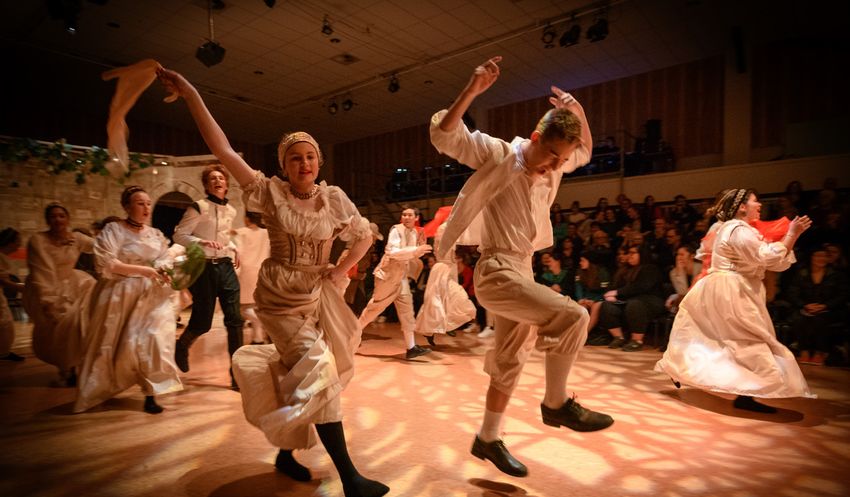
We hope that you find this booklet helpful in planning
           for next year at Hamilton Girls’ High School.

         We recognise that all students are different and provide multiple

         learning pathways to support them. Please read the information

         contained below to understand the different pathways at HGHS.

Page 2
Hamilton Girls’ High School Junior Curriculum Information

OVERVIEW
    HGHS VISION:
    To empower young women to dare to excel as innovative individuals who are globally connected.

    HGHS VALUES:
    Excellence, Identity, Resilience, Courage, Curiosity, Creativity

    LEARNING AREAS OF THE NEW ZEALAND CURRICULUM
    Every learner will experience rich, deep and relevant learning across all 8 Learning Areas of the
    New Zealand Curriculum (English, the Arts, Health and Physical Education, Learning Languages,
    Mathematics and Statistics, Science, Social Sciences and Technology)

    KEY COMPETENCIES
    Every learner will develop their skills and strengths in the Key Competencies of thinking, relating to
    others, using language, symbols and texts, managing self and participating and contributing.

     PATHWAY 1                            PATHWAY 2                           PATHWAY 3
   (traditional model)                 (collaborative model)              (extension and support)
Teacher directs learning            Students and Teachers                Students may have needs,
with an opportunity for             co-construct learning                strengths or abilities that
Student voice/input                 contexts                             require a specialised
                                                                         and more personalised
Subjects taught as stand-           Cross-curricular                     approach to learning.
alone classes                       approaches to learning
                                                                         This could include, but is
                                                                         not limited to:
26 - 30 students to one             55 - 58 students to at least          • GATE
teacher                             two teachers                          • Realising Potential
                                                                          • Literacy or numeracy
                                                                            enhancement
Learner likes to be guided,         Self-management and                   • English as a Second
scaffolded and supported to         independent learning skills             Language
complete tasks                      are already developing                • Previous experience in a
                                                                            Kura Kaupapa
Learner likes a                     Learner thrives on
combination of individual,          project based learning,
group and whole class               collaboration and working
learning activities                 with others

Students and their whānau           Students may have had a
have chosen HGHS rather             positive experience in a
than an ILE (Innovative             ILE (Innovative Learning
Learning Environment) such          Environment) and are keen
as Rototuna Junior High             to continue this style of
School                              learning

                                                                                                           Page 3
SUBJECTS
           CORE CURRICULUM
           Year 9 students take six subjects as part of the core curriculum:
           •   English                                • Ko wai au?/ako - designed to
           •   Maths                                    introduce them to the kaupapa
                                                        of HGHS, to develop a range of
           •   PE                                       learning strategies, to welcome
           •   Science                                  them into our kura, consolidate
           •   Social Studies                           their identity as a HGHS learner
                                                        and enhance their hauora.

           At year 10, students will take five core subjects: English, Maths, PE, Science and
           Social Studies

           YEAR 9 OPTIONS
           All year 9 students select up to four option subjects, from the remaining three
           curriculum areas, and study two per half year. They will take each option subject
           three times per week.

           Students will choose one option from each of the three curriculum areas: Arts,
           Languages and Technology. The subjects in these curriculum areas can be seen
           in the table below:

                 Arts           Languages                      Technology
                 Dance             French            Design and Visual Communication
                Drama             Japanese                   Digital Technology
                 Music            Spanish                    Food Technology
               Visual Arts      Te Reo Māori                Textiles Technology

           For the fourth subject students are asked to rank three more subjects they
           would be interested in learning (one from each curriculum area). The fourth
           option subject may be assigned from this list unless a student is invited into one
           of the Pathway 3 option subjects (more information is provided later).

Page 4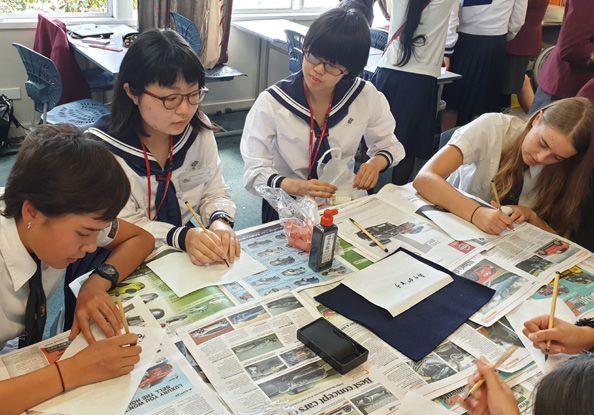
Hamilton Girls’ High School Junior Curriculum Information

YEAR 10 OPTIONS
In Year 10, students will take the same core subjects and choose two option
subjects to study for the whole year. While it is recommended you have taken
the option at Year 9, there is some flexibility to choose a different subject option.

Students will choose 2 options in Year 10 from the following curriculum areas:
Arts, Languages, Physical Education, Social Sciences and Technology.

           Arts                    Languages               Physical Education
          Dance                       French                          Sport
          Drama                      Japanese
           Music                      Spanish
        Visual Arts                Te Reo Māori

             Technology                               Social Sciences
   Design and Visual Communication                         Economics
           Digital Technology                         Enterprise Studies
            Food Technology                                  History
          Textiles Technology

                                                                                       Page 5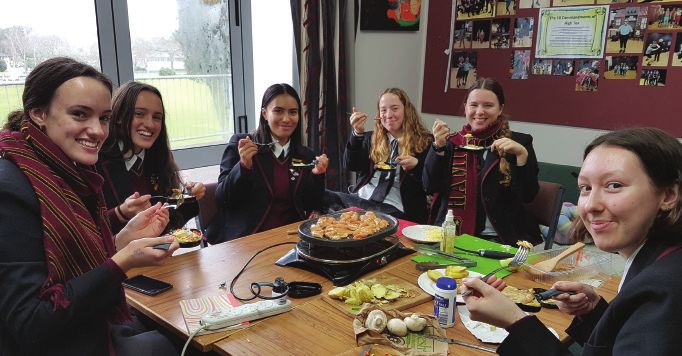
CURRICULUM 2021
                                        YEAR 9:                        YEAR 10

                       Dance                           Art Practical
                       Drama                           Drama
            ARTS
                       Music                           Dance
                       Visual Arts                     Music

           ENGLISH     English                         English

                       Health and Physical Education   Health and Physical Education
          HEALTH /PE
                                                       Sports Studies

                       English - Second Language       English - Second Language
                       French                          French
         LANGUAGES     Japanese                        Japanese
                       Spanish                         Spanish
                       Te Reo Māori                    Te Reo Māori

         MATHEMATICS   Mathematics                     Mathematics

           SCIENCE     Science                         Science

          KO WAI AU?   Who am I? (Year 9 only)
                                                       --
             AKO       Ako Programme

                                                       Economics
           SOCIAL                                      Enterprise Studies
                       Social Studies
          SCIENCES                                     History
                                                       Social Studies

                       Digital Technology              Digital Technology
                       Design/Visual Communication     Design/Visual Communication
         TECHNOLOGY
                       Food Technology                 Food Technology
                       Soft Materials                  Soft Materials

Page 6
Hamilton Girls’ High School Junior Curriculum Information
Note: All courses are subject to change as a result of numbers or staffing.
YEAR 11 YEAR 12 YEAR 13
Art Design
Art Design
Art History
Art Practical Art Painting
Art Painting
Dance Art Photography
Art Photography
Photography and Design Art Printmaking
Art Printmaking
Drama Dance
Dance
Music Drama
Drama
Music
Music
English English English
Advanced PE - Sport Advanced PE - Sport
Advanced PE - Outdoors Advanced PE - Outdoors Advanced PE - Sport
Health Health Advanced PE - Outdoors
Personal Training Personal Training Health
Physical Education Physical Education
English - Second Language English - Second Language
English - Second Language
French French
French
Japanese Japanese
Japanese
Spanish Spanish
Spanish
Te Reo Māori Te Reo Māori
Te Reo Māori
Māori Performing Arts Māori Performing Arts
Mathematics
Mathematics Mathematics Calculus
Statistics
Biology Biology
Chemistry Chemistry
Science
Physics Physics
Science Science
-- -- --
Accounting Accounting
Business Studies Business Studies
Accounting Classical Studies Classical Studies
Economics Economics Economics
Geography Geography Geography
History Legal Studies History
Media Studies Media Studies Legal Studies
Social Studies Social Studies Media Studies
Humanities Tourism Social Studies
History Tourism
Humanities Humanities
Computer Studies Computer Studies Computer Studies
Design/Visual Communication Design/Visual Communication Design/Visual Communication
Digital Technology Digital Technology Digital Technology
Food & Nutrition Early Childhood Ed Early Childhood Education
Food Technology Food & Nutrition Food & Nutrition
Hospitality Food Technology Food Technology
Soft Materials Soft Materials Soft Materials
Page 7Arts
DANCE VISUAL ARTS
Junior Dance introduces and excites Students explore a variety of media and
students about Dance - no Dance processes, such as paint, watercolour,
experience or ability is necessary. Students pencil and ink, learn the key elements and
are introduced to a variety of different conventions that make a work of art and
genres of dance with the main focus being are encouraged to consider the bigger
the different ways that dance can be put questions of why and how artists make
together; from whole class ensemble pieces artworks. Students will apply their skills
to small group pieces. This is a performance to making their own artworks and develop
based skills while exploring key ideas from
subject and students will perform in front established practice.
of an audience of their peers.
DRAMA MUSIC
Junior Drama is an exciting and varied This is an introduction to Music where
course. We study Devising, Mime and the students will learn composition,
Clowning, Script work and Voice, as well history of music, musical literacy, use of
as basic stage technique, and the use instruments and also participate in musical
of Movement and Space. The year 10 performances. The use of technology
programme introduces Shakespeare and for coding and composing music will be
evening performance. It’s a great way to explored utilizing EArsketch and other
learn serious skills for life, gain confidence, programming apps.
and have fun all at once.
Page 8Hamilton Girls’ High School Junior Curriculum Information
Languages
FRENCH SPANISH
French in the junior school is all about The junior Spanish course introduces
finding students’ passion for the world: students to the language that is spoken in
different languages, different cultures and 21 countries in the world along with their
different countries. Students learn about vibrant culture. This course emphasizes
French language and culture through the the development of four skills: listening,
use of text, media and song. The course speaking, reading and writing. Students
covers the basics of language - how to learn about life and culture of Spain and
introduce ourselves, talk about our family Latin American countries through songs,
and our friends, and we learn about the magazines, games. The cultural component
country and its people, along with sampling of the course includes making piñatas,
some French crêpes. watching a movie and experiencing
traditional Mexican food.
JAPANESE TE REO MĀORI
Junior Japanese is aimed at enabling you to At year 9, this is an introductory course
communicate at a basic level in Japanese. for beginners and is set at Levels 1-2 of
There is an emphasis on activity-based the Curriculum. Students will learn about
learning with lots of opportunities for themselves, their whakapapa and basic
you to speak and listen to Japanese. Use is every day Te Reo Māori. Year 10 aims to
made of computers, video clips, magazines cover Levels 3 and 4 of Te Aho Arataki
and songs. In addition to Japanese language, Marau mō te Ako i Te Reo Māori (Māori
you will be learning about Japanese culture, Curriculum). This course is predominantly
customs, history and geography. language focussed but will include Tikanga
Māori as appropriate.
Page 9Technology
DESIGN AND VISUAL FOOD TECHNOLOGY
COMMUNICATION This course covers a range of food-based
In this course students learn a range of activities. Students learn important lifelong
skills like graphics sketching, modelling, skills including reading recipes, measuring,
sketch up, Photoshop, using colour, operation of kitchen appliances, food safety,
construction drawings and the world of food presentation and how to make healthy
design. Design and Visual Communication food choices. They will use the Technology
encourages students to think creatively, to design process to research, plan, create and
problem solve, and to come up with new evaluate their outcomes, as well as creating
and interesting ideas. This is a portfolio tasty, healthy dishes!
subject that offers a range of products and
Spatial Design Projects.
DIGITAL TECHNOLOGY TEXTILES TECHNOLOGY
“The future is digital” Students are encouraged to be individual
Students will learn to use problem solving and creative in the “Design your own”
skills to plan and create innovative digital and “Fashion studio” projects. A wide
solutions; such as programming, animations variety of skills such as hand painted dye
and games in Gamelab, editing images in work, applique, embroidery, and fabric
Photoshop and websites using HTML and decoration are covered. Students also learn
CSS. to independently create patterns, and sew
their own designs.
Page 10Hamilton Girls’ High School Junior Curriculum Information
YEAR 10 OPTIONS
All options available at year 9 are also available in year 10, plus the addition of:
History
Students will study three main areas of History – Ancient Societies (Egypt, Greece, Rome,
Celts and Vikings); the Middle Ages and the Modern World. Students learn how different
societies and cultures have lived and what has caused change. There will be a number of
case studies that will reflect the interests of the students, these may include: Pompeii, The
Atlantic Slave Trade, Jack the Ripper and a study on Hitler. The aim is for students to learn
about the past in order to be better able to understand the present.
Taking History in Year 10 prepares students for Level 1 History. Year 10 History is not a
compulsory prerequisite for Level 1 History.
Enterprise Studies
Enterprise Studies explores the real business world, in the classroom. The course encourages
students to be independent thinkers, use creative flair, and develop their leadership skills as
well as working successfully as a team.
Above all, this course allows our students to build confidence and especially encourages
them to ‘have a go’. This is a ‘hands-on’, practical course mixed with theory. We will also
being using computer technology to research and produce both presentations and movies.
Enterprise Studies students’ are introduced to entrepreneurship, basic economic concepts
of scarcity, business ownership and location, production, consumer law and how to run a
small business. An introduction to Accounting is also included in this course.
You will create a real business with your peers, produce a product and get to keep all of the
profit that your team makes.
Note: Students may not choose both Economics and Enterprise Studies.
Students studying Enterprise Studies are able to participate in NCEA Levels 1 to 3
Economics and Accounting, Level 2 and Level 3 Business Studies.
The study of Enterprise will enable you to explore a career in politics, business,
management, journalism, banking, teaching and much more. It is a very practical course for
‘hands-on’, hard working, students.
Page 11Sport
The students will be involved in a wide range of physical activities. The activities will have
a sport specific focus (Triathlon, Ultimate Frisbee, Judo, Parkour, and Tennis). Students will
explore how physical activity relates to their total well being. There will also be a basic
introduction to anatomy, biomechanics, exercise physiology, goal setting, time management,
fitness and sports psychology and nutrition.
The students will be assessed on their physical skills and also their written work throughout
the course.
By taking Sport Studies students are able to participate in Level 1,2 and 3 Outdoors,
Personal training and Physical Education options.
Economics
Students will set up a business and sell products. They will look at the many ways that
ordinary people are involved in monetary and business activities in their day-to-day lives.
Topics such as earning incomes, money and budgeting systems, economic and legal concepts
of demand, consumer’s rights and responsibilities, are designed to give students the skills to
make informed choices in adult life. An introduction to Accounting is also included in this
course.
Students are given the opportunity to put in practice economic concepts learned in class,
when they set up and run a small business. You will learn through field trips, producing
movies, making power point presentations, looking at real world case studies, computer
simulations, and a wide range of fun and interesting activities.
This course provides a pathway to many courses that lead to university and other educational
institutions. It also provides students with essential skills for life in the modern world.
Note: Students may not choose both Economics and Enterprise Studies.
Students studying Economics are able to participate in NCEA Levels 1 to 3 Economics and
Accounting, Levels 2 and 3 Business Studies.
The study of economics will enable you to explore a career in politics, business, management,
journalism, banking, teaching and much more. Economics is also a very popular choice as an
optional subject in Law, Science and Arts degrees.
Page 12Hamilton Girls’ High School Junior Curriculum Information
CURRICULUM PATHWAYS
PATHWAY 1
This is a “traditional” classroom setting: there will be 26-30 students per teacher
and subjects will be taught as separate, 1 hour, classes. Students will move
around the school to attend these classes. Students will be placed into a “core
class” to align with their house and will study the six core subjects with the same
group of students. Their option classes will be made up of different students
from all three pathways who have chosen the same option subject.
PATHWAY 2
This is a modern learning environment which invites learners to collaborate
and co-construct their learning contexts with their teachers. Accommodating
55 - 58 learners, our Pathway 2 team work in five cross-curricular courses,
engaging with the Learning Areas of the New Zealand Curriculum, focusing
particularly on our localised curriculum. Pathway 2 learners are based in our
modern learning environment, but access specialist learning environments for
their specialist and option subjects. Students opting into Pathway 2 are likely to
be independent learners, self-motivated, engaged and willing to explore learning
opportunities within a dynamic, collaborative environment.The provision of two
teachers per course allows greater flexibility and scope to effectively meet the
needs, and grow the capacity of our learners.
Students opting into Pathway 2 at Year 9 will have the opportunity to continue
in our modern learning pathway for Year 10, before moving into a more
personalised programme of learning for NCEA.
PATHWAY 3
HGHS recognises and celebrates the diversity of its student body. Through
its academic extension and support pathways, plus other co-curricular
opportunities, students will find an enriching, challenging and supportive
environment in which to thrive at HGHS. Students in pathway 3 at HGHS are
provided learning enhancement in a multitude of ways, via the core curriculum,
via the option subjects and via co-curricular opportunities.
Page 13PATHWAY 3 VIA THE CORE CURRICULUM
There are multiple pathway 3 programmes which occur via the core curriculum. In
both of these programmes, students will take the six core subjects with the same class,
then split into different groups to participate in their chosen option subjects. Students
are invited into this programme based on a variety of factors including, but not limited
to: placement testing, previous school recommendations and whānau interest. There
will be an opportunity to register whānau interest under pathway 3 on the “Learning
Information” form.
9IE/10IE (Ignite): 9ELL (English Language Learners):
This is an academic extension programme This is an English language support programme
in a Pathway 1 model. The aim of the Ignite in a Pathway 1 model for English Language
programme is to offer students working at an Learners. These students will be with a
above average academic level the opportunity Pathway 1 core class for all subjects apart from
to experience learning that extends, challenges English. Instead of English, they will have an
and supports them. The Ignite programme integrated programme combining the study of
should lay the foundations for our most both English literature and language arts with
promising academic students to thrive now English language learning. Students would take
and in their senior years, by developing strong this alongside the ELA option which focuses
learning attributes and skills. on English language learning only.
9RP/10RP (Realising Potential):
This is an academic support programme in
a Pathway 2 model however limited to 26
students and 1 teacher with teacher aide
support. This programme is good for students
who might find the transition to high school
difficult either socially or academically. The
Realising Potential programme aims to build
students’ confidence and resilience.
Page 14Hamilton Girls’ High School Junior Curriculum Information
PATHWAY 3 VIA THE OPTION SUBJECTS
There are a number of pathway 3 programmes which occur in the option lines. Students
are invited into this programme based on a variety of factors including, but not limited
to: placement testing and previous school recommendations. In most instances, this
will replace the fourth option subject chosen and run for half a year.
9LIT (Literacy): 9ELA/10ELA (English Language):
This interactive programme for students This programme is for students who use
identified through placement testing and English as an additional language. Students
contributing school feedback. It provides will have language and literature lessons
extra support in the area of literacy i.e. that continue to build their understanding
writing or reading which will allow them of the English language and develop
to access the curriculum expected at their fluency across the areas of reading,
secondary school. Students are in a small writing, listening and speaking.
class environment with a teacher aide.
Te Reo Māori for students from kura
9NUM (Numeracy): kaupapa:
The focus of this programme is to provide If a Year 9 student is fluent in Te Reo
extra support and confidence in numeracy Māori they may be given the opportunity
(number) skills. Through games and to take NCEA Level 1 Te Reo Māori. This
practical activities, students build on the is a full year course and will mean that
knowledge gained at previous schools to they will take Te Reo Māori and 2 other
upskill for secondary school. Students are options. At Year 10, they will be given
identified through placement testing and the opportunity to study Te Reo Māori
contributing school feedback. Students at NCEA Level 2 as one of their option
are in a small class environment with a subjects.
teacher aide.
PATHWAY 3 VIA CO-CURRICULAR OPPORTUNITIES
GATE (Gifted and Talented Education): Academically gifted students have the
opportunity for particular support and programming as needed.
Whānau tutor groups: Our Whānau tutor groups meet daily and are spread across
three houses within the school; they are a significant part of our kura and considered
a privilege to be a part of. Through these tutor groups we uphold Te Reo Māori me
ōna tikanga. This involves being an active participant of karakia, mihi, and waiata in
our classes. It is expected that a continued study of te reo Māori as a subject from
Year 9 through to NCEA Level 1 is completed. If you would like to be considered for
one of the classes, please express your interest under pathway 3 on the “Learning
Information” form, this will be followed by an interview.
Page 15“Where each student aspires
to achieve personal excellence”
Hamilton Girls’ High School
PO BOX 1267, Hamilton 3240
Phone: 07 839 1304, Fax: 07 834 1394
www.hghs.school.nz, administration@hghs.school.nzYou can also read


