KARATE - Asian Games 2018
←
→
Page content transcription
If your browser does not render page correctly, please read the page content below
KARATE
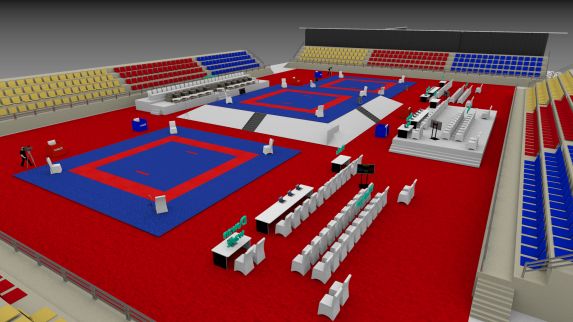
Technical Handbook for Karate

Amendment History

    Version                Date               Description
     v. 1.0         December 2017       Initial Version
     v. 2.0         February 15, 2018   TD & OCA Approved
     v. 2.1         February 25, 2018   Pre-comp schedule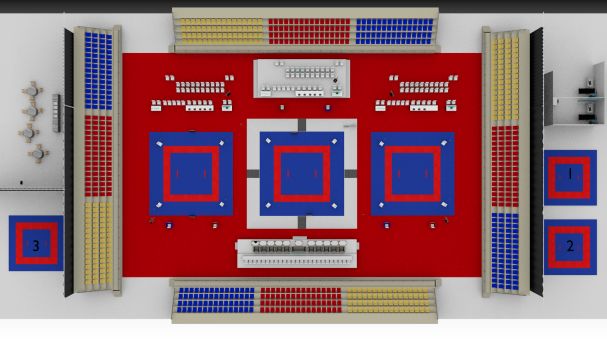
TABLE OF CONTENTS

  I.     INTRODUCTION                       3

  II.    GENERAL INFORMATION                13

  III.   TECHNICAL INFORMATION              23

  IV.    GENERAL CONTACT                    38

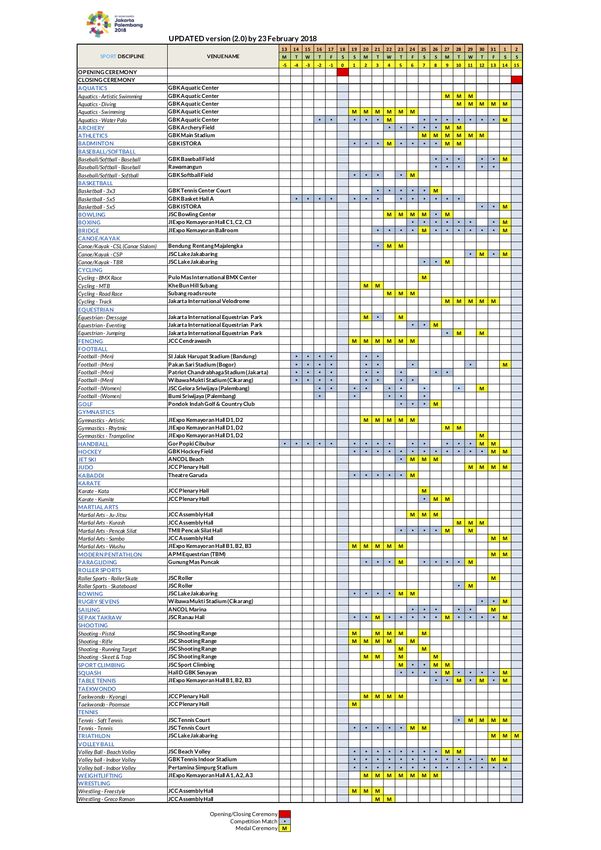
  V.     GENERAL COMPETITION SCHEDULE       40

                                        Page 2 of 40
I.          INTRODUCTION

     1.   Preface
          The 18th Asian Games will be held in Jakarta and Palembang, Indonesia starting from
          August 18th to September 2nd, 2018.

          The Asian Games is an exclusive property of the Olympic Council of Asia (OCA) where
          the members of OCA come together to enhance the ability of Asian athletes and
          promote mutual understanding through fair competition. It is the multi-sport festivity
          within the Asian region held every 4 years.

          This publication is to provide the general information about the Olympic Council of
          Asia, the Member NOCs, Indonesia Asian Games Organizing Committee and
          overview of the 18th Asian Games Jakarta-Palembang 2018 as well as introduction of
          Indonesia, the Host Country and the Host City. This publication also contains the
          technical information for Karate Sport in the 18th Asian Games Jakarta-Palembang
          2018, which is the most important.

          It is our honor to provide this Technical Handbook before the start of the18th Asian
          Games Jakarta-Palembang 2018. This handbook will serve an important role to all the
          participating officials and athletes.

          Thank you very much.

                                                                                     Page 3 of 40
2. Organizing Bodies
OCA Executive Board
President Sheikh Ahmad Al-Fahad Al-Sabah
Honorary Life Vice-President Raja Randhir Singh
Mr. Jizhong WEI
Vice Presidents Maj. Gen. Charouck Arirachakaran
Mr. Timothy Tsun Ting Fok
Lt. Gen. Syed Arif Hasan
HE Sheikh Isa Bin Rashed Al Khalifa
Mr Timur Kulibayev
Mr. Tsunekazu Takeda
Prof. Dr. Hoang Vinh Giang
Mr. Sapardurdy Toylyyev
Mr Song LUZENG
Mr. Yu Zaiqing
Mrs Rita Sri Wahyusih SUBOWO
Honorary Vice-President Mr Hemasiri FERNANDO
Chairman/Chairwoman of OCA Standing Committees
Rules Committee Sheikh Talal Fahad Ahmad J AL-SABAH
Women and Sports Committee Mrs Natalya SIPOVICH
Advisory Committee Mr Ng Ser Miang
Peace Through Sport Committee HRH Prince Faisal Bin AL-HUSSEIN
Athletes Committee Mr Koji Murofushi
Sports Environment Committee Mr Kyung-Sun YU
Medical Committee Dr M. Jegathesan
Sports for All Committee Brig Gen Mowaffak JOUMAA
Media Committee Mr Charles King Chiu LO
Finance Committee Dr Kevin Kuo-I CHEN
Culture Committee Mr Mohammad A. Alkamali
Entourage Committee Mr Daesung MOON
Education Committee HRH Prince Abdulhakim Bin Mosaad Bin
Abdulaziz
Coordination Committee Mr Tsunekazu TAKEDA
Ethics Committee Mr Jizhong WEI
Information & Statistics Committee Dr Demchigjav ZAGDSUREN
International Relations Committee HRH Prince Jigyel Ugyen WANGCHUCK
Sports Committee Mr Song LUZENG
Page 4 of 40Members
Executive Board Member HRH Prince Haji Sufri BOLKIAH
Executive Board Member Mr Kiumars Hashemi
Executive Board Member Mr Raad Hammoodi Salman AL-DULAIMI
Honorary Members
Mr Habib Abdul Nabi Yousuf MACKI
Gen Souhail KHOURY
Director General & Technical Director
Mr Husain A H Z AL-MUSALLAM
Director of Asian Games Mr. Haider Farman
Director of NOCs Relation Mr. Vinod Kumar
OCA Adviser for INASGOC Mr. Matthew Kidson
Mr. Ganesan Sundaram Moorthy
2.1 Indonesia Asian Games Organizing Committee (INASGOC)
2.1.1 Steering Committee (SC)
President : Vice President of Republic of Indonesia
Vice President I : Chairman of Coordinating Ministry for
Human Development and Cultural Affairs
Members : Chairman of Indonesia Olympic Committee
Chairman of Agency for Financial and
Development Supervision
Chairman of Agency for Government
Procurement Policy
Governor of DKI Jakarta
Governor of South Sumatera
Governor of West Java
Governor of Banten
2.1.2 Organizing Committee (OC)
Executive Board
President : Erick Tohir
Vice President : Sjafrie Sjamsoedin
Secretary General : Eris Herryanto
Vice Secretary General : Dendi T. Danianto
Assistant of Finance (Deputy) : Gatot S. Dewabroto
Page 5 of 40Vice Assistant of Finance : Soewartomo
(Vice Deputy)
Head of Monitoring (Deputy) : Meris Wiryadi
Vice Head of Monitoring : Deddy Yulianto
(Vice Deputy)
Deputy 1 Games Operation : Harry Warganegara Harun
Deputy 2 Games Administration : Francis Wanandi
Vice Deputy 2 : Devy Wildasari Adjiningsih
Deputy 3 Games Support : Ahmed Solihin
Vice Deputy 3 : Bambang Rus Effendi
Deputy 4 Games Security : Asop Kapolri
Vice Deputy 4 : Asop Panglima TNI
Assistant of Finance
Coordinator : Brigjend TNI Dr.Yudi Sutrasna, MM
Vice Coordinator : Indra Bayu
Verification Department
Director : Julian Alhaj
Vice Director : Iwan Kurniawan
Anggaraharja
Tri Sujatmiko
Treasury Department
Director : Deny Alvar
Vice Director (Secretariat) : Lina Nurhasanah
Vice Director Deputy 1 : Arman Saputra Siregar
Vice Director Deputy 2 : Margono
Vice Director Deputy 3 : Sriyanti
Accounting and Asset Department
Director : Parwoto Dwi Putranto
Unit Accounting
Vice Director : Eddy Dharmawan
Unit Asset
Vice Director : Syahrul Hidayatulloh
Monitoring Team
Coordinator : Brigjen TNI Cecep Rahmad Mujono
Associate : Erwin Aksa
Sofyan Wanandi
Muhammad Iksan
Page 6 of 40Wijayanto Samirin
Daulat Tampubolon
Dholfi OFP
Kol. Inf Chanlan Adilane
Kol Laut (T) Irmandala
Kol Laut (KH) Dr. Dwi Hartono
Kol Laut (P) Sayuti
Kol Kes Saefullah
Kol Cpl Jimmy Alexander Adirman
Kol Arh Bambang Murtiyoso
Kol Laut (T) Catur Sudarsono
Juliande Darwis
Ginrey Shandy Algam
I Ketut Pasek Prihadhy
David Sidjabat
Taufiequrachman Ruki
Sumirat Kriswasana
Vice Coordinator : Letkol Cku Djoko Kuntoyo
SECRETARIAL GENERAL
Coordinator : Letkol Inf. Mahudin Latupono
Vice Coordinator – General : Letkol Laut Daniel Martinus Lakollo
Affairs
Vice Coordinator – Secretariat : Okkie Nur Hamida
Planning & Budgeting Department
Coordinator : Mayjen TNI Tjuk Agus Minahasa
Vice Coordinator : Kapnten Inf. Samsudin
Procurement Department
Coordinator : Laksma TNI Listyanto
Vice Coordinator : Kol Laut (T) Endro Legowo
Vice Coordinator for : Kol Laut Rizal Junaidi
Administration & Support
Legal Department
Coordinator : Finsa Noorcahya
Goverment Relation
Coordinator : Raja Parlindungan Pane
Page 7 of 40Vice Coordinator : Haryo Sasongko
International Relations & Protocol Department
Coordinator : Indra Kartasasmita
Vide Coordinator : Nur Laily Rahmawati
Media & Public Relation Department
Coordinator : M.Buldansyah
Vice Coordinator : Ratna Irsana
Accreditation Department
Coordinator : Brigjen Pol. Teddy Minahasa
Vice Coordinator : Claudia Regina Roe Roe
Human Resources & Volunteer Department
Coordinator : Pusparani Hasjim Chappy Hakim
Vice Coordinator : Demayanti Nasution
Jenny Soeseno
DEPUTY 1: GAMES OPERATION
SECRETARIAT DEPUTY
Budget & Finance
Head/ Vice Coordinator : Gustiawan Anthony
Secretariat, Administration & Operation
Head/ Vice Coordinator : Johar Manik Kusumo Wardhani
Sport, Medal Ceremony & Sport Presentation
Director : Wisnu Wardhana
Sub-Unit Sport Support & Administration
Vice Director : Abdul Rauf
Sub-Unit Jakarta 1 & Sport Preparation
Vice Director : Arif Hidayat
Sub-Unit Jakarta 2 & Overlay Sport
Vice Director : Adi Wirawan
Sub-Unit Jakarta Suburb, Palembang & Sport Equipment
Vice Director : Arsyad Achmadin
Unit Medal Ceremony & Sport Presentation
Page 8 of 40Vice Director : Nur Ali
Venues & Environment Department
Director : Teuku Arlan Perkasa Lukman
Unit Overlay Project, Technical Data & Administration
Vice Director : Ahmad Zacky Badrudin
Unit Jakarta & Jakarta Suburb Cluster
Vice Director : Natsir Gunawan
Unit Palembang
Vice Director : Basyaruddin
Medical & Doping Control Department
Director : Dr. Leane Suniar
Vice Director : Dr. Wiweka
Athlete Village & Service Department
Director : Tri Ananta Andrewan
Unit Jakarta Kemayoran
Vice Director : Glenn J. Rumawas
Unit Jakarta Suburb
Vice Director : Hermawan Halim
Arrival Departure & Hispitality Department
Director : Indra Gamulya
Vice Director : Andi Burhan Dwi Armien
DEPUTY 2: GAMES ADMINISTRATION
SECRETARIAT DEPUTY
Unit Secretary
Vice Coordinator : Trianti
Unit Administration
Vice Director : A.A Cakra Nugraha
Unit Client Service
Vice Director : Triputanta Wimbacahaya Aziz
Look Of The Games, Beautification & Activation Department
Director : DRS. Tb. Lukman Djajadi K
Ceremony Department
Director : Rachmi Dewi Wulansari
Vice Director : Wishnutama Kusubandio
Page 9 of 40Unit Torch Relay
Vice Director : Dra. Herty Paulina Purba
Revenue Department
Director : Hasani Abdulgani
Unit Sales
Vice Director : Cahyadi Wanda
Unit Merchandise & Retail
Vice Director : Mochtar Sarman
Ticketing Department
Director : Sarman Simanjorang
Unit Ticket Management
Vice Director : Mohammad Indra
Communication Department
Director : Elwin Chandra Mochsin
Unit Projector Coodinator
Vice Director : RA Trimaryanda Kunto
Unit Digital
Vice Coordinator : Indra Agustian Pribadi
DEPUTY 3: GAMES SUPPORT
SECRETARIAT DEPUTY
Vice Coordinator : Yarmanto
Transportation Department
Director : Purnomo S.IP
Vice Director : Sudjianto Adji
Broadcast Depart
Director : Linda N Wahyudi
Vice Director : Edy B Lasoma
Catering Department
Director : Felly Imsransyah
Vice Director : Yooky Tjahrial
Accommodation Department
Director : Johanna Sri Ambarwati
Vice Director : Ahmad Qodie Ibrahim
IT&T Department
Director : Eddy Prabowo
Vice Director : Sugianto Hirokerto
Page 10 of 40DEPUTY 4: GAMES SECURITY
Associate : Kombes Pol Drs Unggul Sedyanto,Msi
AKBP Lalu Muhammad Iwan M.SJK
Pembina Yahya Fitriadi, Skom
Z. Pandra Arsyad, SH, Msi
Page 11 of 402.2 OCA Members
No. CODE NOC No. CODE NOC
1 AFG Afghanistan 24 MDV Maldives
2 BRN Bahrain 25 MGL Mongolia
3 BAN Bangladesh 26 MYA Myanmar
4 BHU Bhutan 27 NEP Nepal
5 BRU Brunei Darussalam 28 OMA Oman
6 CAM Cambodia 29 PAK Pakistan
7 CHN China 30 PLE Palestine
8 HKG Hong Kong, China 31 PHI Philippines
9 INA Indonesia 32 PRK DPR Korea
10 IND India 33 QAT Qatar
11 IRI Islamic Republic of Iran 34 SGP Singapore
12 IRQ Iraq 35 SRI Sri Lanka
13 JPN Japan 36 SYR Syria
14 JOR Jordan 37 THA Thailand
15 KAZ Kazakhstan 38 TJK Tajikistan
16 KOR Korea 39 TKM Turkmenistan
17 KUW Kuwait 40 TLS Timor Leste
18 KSA Kingdom of Saudi Arabia 41 TPE Chinese Taipei
19 KGZ Kyrgyzstan 42 UAE United Arab Emirates
20 LAO Lao PDR 43 UZB Uzbekistan
21 LBN Lebanon 44 VIE Vietnam
22 MAC Macau, China 45 YEM Yemen
23 MAS Malaysia
Page 12 of 40II. GENERAL INFORMATION
1. The 18th Asian Games Jakarta-Palembang 2018 in Brief
1.1 Games Overview
Duration : August 18 - September 2, 2018 (16 days)
Host and Co-Host City : Jakarta and Palembang, Indonesia
Games Venue : 49 venues in total (39 in Jakarta, 10 in
Palembang)
Sports Program : 40 sports / 462 events
Patron : Olympic Council of Asia
Host : Indonesia Asian Games Organizing
Committee (INASGOC)
1.2 Objectives
§ Bring forth mutual communication, reconciliation and peace
in Asia
§ Asian Games that share joy and glory
§ Realize practical and economically efficient games
1.3 Slogan
ENERGY OF ASIA
1.4 Emblem
The design concept of the Brand mark 18th Asian Games 2018 logo is
inspired by the shape of Gelora Bung Karno Main Stadium, with eight
paths leading to the stadium and the shinning sun emblem of the Olympic
Council of Asia logo in the center, represents the “Energy of Asia” theme.
The design tells that the “Energy of Asia” will radiate throughout the
world. The multi-coloured art design symbolized the multi-national
culture and nature of Asia and Indonesia.
Page 13 of 401.5 Mascots
BHIN BHIN
Cendrawasih Bird (Paradisaea apoda)
Strategy Representation
BHIN BHIN wearing a vest with detail pattern/
Asmat motive from Papua
ATUNG
Deer Bawean (Hylaphus Kuhlii)
Speed Respresentation
ATUNG wearing sarong with Tumpal batik
pattern
from Jakarta
KAKA
Rhinoceros (Rhinoceros Sondaicus)
Strength Representation
KAKA wear traditional clothing Palembang
2. Accreditation and Validation
Asian Games Identification and Accreditation Cards (AGIAC) will act as an
entry visa to Indonesia and ensure special access to the Games venues
including the HQ Hotel and competition venues. INASGOC will distribute
Accreditation Guide and Accreditation Application Forms to Accreditation
Responsible Organizations by December 2017. The online Accreditation
System start from January 31 until April 30, 2018. INASGOC will distribute the
Pre-valid AGIAC to the confirmed participants on July 2018. Upon the arrival
in Jakarta – Palembang, pre-valid AGIAC holders should visit one of the
accreditation center with their effective identification documents and validate
their pre-valid AGIAC. Once validated, AGIAC becomes an official Games
document.
Page 14 of 403. Immigration and Visa
From July 30 to September 4, 2018, AD Card holders will be permitted upon
presentation of their valid passports or travel documents. AD Cards holders
will not need to apply for an Indonesian Entry Visa of Residence Permit in order
to enter the country.
Any AD Card holders wishing to enter Indonesia before or after the valid period
of the AD Card, or to remain in Indonesia after its expiry date, will need to make
their own arrangements regarding visas according to Indonesian immigration
law. AD Card holders should ensure that the information on their valid passport
when entering Indonesia is exactly the same with the information on the
certified document used for application for AD Card, and that their passport
remain valid at least until February 5, 2019.
4. Transportation
4.1 Transport Services for Arrival and Departure
Shuttle Bus Services will be provided for arriving and departing athletes
and team officials, depending on arrival and departure information and
flight schedule. Before departure, Shuttle Bus Services require advance
reservation.
4.2 Dedicated Vehicle Service
Dedicated Vehicle Services will be provided between Athletes' Village
and the designated areas, depending on team events and on the size of
NOC participants. Dedicated Vehicle Services require advance
reservation and approval.
4.3 Transport Services for Competition (for non-team events)
Shuttle Bus Services for athletes and team officials participating in non-
team events will be provided between Athletes' Village and the
competition venues as per the competition schedule.
4.4 Transport Services for Training (for non-team events)
Shuttle Bus Services for athletes and team officials participating in non-
team events will be provided between Athletes' Village and the training
venues as per the training schedule.
Page 15 of 404.5 Transport Services for Spectating
The AV-to-venues shuttle will be provided to athletes and team officials
wishing to watch other sport competition events. The service is also
available to all athletes and team officials who are involved in the same
events: priority, however, will be given to athletes and team officials
participating in their own events.
Tickets are required for spectating.
4.6 Transport Services for Luggage
The luggage belonging to athletes and team officials should, in principal,
be loaded onto the bus they take. If not possible due to insufficient storage
space, another vehicle will be provided to the destinations.
5. Accommodation
During the Games time, over 13,000 athletes and team officials including extra
officials will be accommodated at Kemayoran Block D10 in Jakarta and
Jakabaring Athletes Villages located in Palembang. Opening of Athletes’
Village will be on July 16, 2018. A variety of amenities and recreational facilities
will be offered for the Games family at Athletes’ Village. For the sake of the
safety, separate Accreditation Access is required for entering the area.
6. Media
6.1 Mixed Zone
The Mixed zone is an area in which athletes may be interviewed as soon
as they leave the field of play. The Mixed Zone is designed to permit the
broadcasters and press to interview athletes in a designated area near the
field of play. In accordance with OCA's rules, all athletes must pass
through the Mixed Zone. Mixed Zone interviews are recommended
within limited time each to let the broadcasters and press to have an equal
opportunity to speak to the athletes. The AFs and INASGOC Sports
Operations Team will provide all necessary assistance to ensure the
convenience of Mixed Zone.
6.2 Press Conference
After each event, the designated medallists will attend a press conference
at the venue as well as coaches if circumstances dictate. They should
accompany to the press conference room. Medallists press conference
will be held right after the medal presentation ceremonies at the venue.
Page 16 of 40Sports operational staff will bring athletes to the press conference room.
Translation services will be provided with English and Indonesian during
the press conferences at the venues. If medallists do not speak English or
Indonesian, NOCs are requested to assign an interpreter with the
medallists attending the press conference.
7. Medical Service
Medical stations for athletes will be installed at all competition venues and
training facilities. On-site medical treatment and emergency transfer service
will be provided during operating period. Polyclinic in the Athletes' Village will
provide treatment and consultation by professional medical staff across the
departments of internal medicine, general surgery (including orthopaedics),
ophthalmology, stomatology, medical imaging, physical therapy, pharmacy,
etc.
It will also have an emergency room open 24 hours a day, with stand-by
ambulances. Any patient who needs further diagnosis and treatment will be
transferred to designated hospitals of the Games.
Where accredited persons including OCA Family VIP guests, NOC guests
suffer from acute diseases, acute exacerbations of chronic diseases or acute
injuries, they can receive treatment in Polyclinic or designated hospitals for
free of charge. Services may include emergency treatment, in-patient service,
special consultation and ambulance transfer, if required. However, free
medical services will not include selective or unnecessary treatment.
8. Host Country/City Information
8.1 Indonesia in Brief
Indonesia, officially the Republic of Indonesia (Indonesian: Republik
Indonesia) is located mainly in Southeast Asia with some territories in
Oceania. Situated between the Indian and Pacific Oceans, it is the world’s
largest island country, with more than thirteen thousand islands. It has an
estimated population of over 260 million people (September 2016) and is
the world’s fourth most populous. Muslim-majority country. The world’s
most populous island of Java contains more than half of the country’s
population.
Indonesia’s republican form of government includes an elected legislature
and president. Indonesia has 34 provinces, of which five have Special
Administrative status. Its capital and most populous city is Jakarta. The
country shares land borders with Papua New Guinea, East Timor, and the
Page 17 of 40eastern part of Malaysia. Other neighbouring countires include Singapore,
the Philipines, Australia, Palau and the Indian territory of the Andaman
and Nicobar Islands. Indonesia is a founding member of ASEAN and a
member od the G-20 major economies. The Indonesian economy is the
world’s 16th largest by nominal GDP and the 8th largest by GDP at PPP.
Indonesia consists of hundreds of distict native ethnic and linguistic
groups. The largest - and politically dominant – ethnic group are the
Javanese. A shared identity has developed, defined by a national language,
ethnic diversity, religious pluralism within a Mulsim-majority population,
and a history of colonialism and rebellion against it. Indonesia’s national
motto “Bhineka Tunggal Ika” (“Unity in Diversity” literally, “many, yet
one”), articulates the diversity that shapes the country. Despite its large
population and densely populated regions, Indonesia has vast areas of
wilderness that support the world’s second highest level of biodeversity.
8.2 Jakarta in Brief
Geography
The Special Capital Region of Jakarta, is the capital and most populous city
of Indonesia. Located on the northwest coast of the world’s most
populous island of Java, the city is the center of economics, culture and
politics of Indonesia, with a population of 10,075,310 as of 2014. Greater
Jakarta metropolitan area, which is known as Jabodetabek (a name
formed by combining the initial syllables of Jakarta, Bogor, Depok,
Tangerang and Bekasi), is the second largest urban agglomeration in the
world, with population of 30,214,303 inhabitants as of 2010 census.
Jakarta’s business opportunities, as well as its potential to offer a higher
standard of living, attract migrants from all over Indonesian archipelago,
making the city if nekting pot of many communities and cultures.
Climate
Jakarta has a tropical monsoon climate (Am) according to the Köppen
climate classification system. The wet season in Jakarta covers the
majority of the year, running from October through May. The remaining
four months (June through September) constitute the city’s drier season
(each of these 4 months has an average monthly rainfall of less thann 100
millimeters (3.0in)). Located in the western part of Java. Jakarta’s wet
season rainfall peak in January and February with average monthly
Page 18 of 40rainfall off 299.7 millimeters (11.80 in), and its dry season low point is
August with a monthly average of 43.2 mm (1.70 in).
Tourism
Most of the visitors attracted to Jakarta are domestic tourists from all
over Indonesia. Jakarta is trying to attract more international tourist by
MICE tourism, by arranging increasing numbers of conventions. As the
gateway of Indonesia, Jakarta often serves as the stop-over for foreign
visitors of their way to Indonesian popular tourist destinations such as
Bali, Lombok and Yogyakarta. Most of the renowned international hotel
chains have presence in the city.
Other than monuments, landmarks, and museums around Merdeka
square and Jakarta Old Town, tourist attractions of the city include
Thousand Islands, Taman Mini Indonesia Indah, Setu Babakan, Ragunan
Zoo, Sunda Kelapa old port and the Ancol Dreamland complex on Jakarta
Bay, including Duynia Fantasi (Fantasy World) theme park, Sea World,
Atlantis Water Adventure, and Gelanggang Samudra.
8.3 Palembang in Brief
Geography
Palembang is the second-largest city on Sumatra island after Medan and
the capital city of the South Sumatra province in Indonesia. It is one of the
oldest cities in the Malay Archipelago and Southeast Asia. Palembang is
located on the Musi River banks on the east coast of Southern Sumatra,
with a land area of 369.22 square kilometres (142.56 square miles) and
Palembang is the sixth-largest city in Indonesia after Jakarta, Surabaya,
Bandung, Medan and Semarang. Its built-up (or metro) area with Talang
Kelapa and Rambutan was home to 1,620,429 inhabitants at the 2010
census.
At 2°59’10’ S 104°45’20” E, Palembang occupies 400.61 km2 of vast
lowland area east of Bukit Barisan Mountains in southern in Sumatra with
average elevation of 8 metres (26 feet), approximately 105 kilometres (65
Page 19 of 40miles) from nearby coast at Bangka Strait. One of the largest rivers in
Sumatra, the Musi Rivers, runs through the city, dividing the city area into
two major parts which are Seberang Ilir in the north and Seberang Ulu in
the south. Palembang is also located on the confluence of two major
tributaries of Musi River, which are Ogan River and Komering River. The
river’s water level in influenced by tidal cycle. In rainy season, many areas
on the city are inundated by the river’s tide.
Palembang's topography is quite different between Seberang Ilir and
Seberang Ulu area. Seberang Ulu topography is relatively flat, meanwhile
Seberang Ilir topography is more rugged with altitude variation between
4 and 20 metres (13 and 66 feet).
Climate
Palembang is located in the tropical rainforest climate with significant
rainfall even in its driest months. The climate in Palembang is often
described with "hot, humid climate with a lot of rainfall throughout the
year". The annual average temperature is around 27.3 °C (81.1 °F).
Average temperatures are nearly identical throughout the year in the city.
Average rainfall annually is 2,623 millimeters. During its wettest months,
the city's lowlands are frequently inundated by torrential rains. However,
in its driest months, many peatlands around the city dried, making them
more vulnerable to wildfires, causing haze in the city for months.
Tourism
Ampera Bridge, main city landmark, is a bridge crossed over 1,177 metres
(3,862 feet) above the Musi River which connects Seberang Ulu and
Seberang Ilir area of Palembang. Great Mosque of Palembang, also known
as the Sultan Mahmud Badaruddin II Mosque, is located in the city centre.
Benteng Kuto Besak, situated on the northern bank of the Musi River and
adjacent to Ampera Bridge, this fort is one of the Palembang Darussalam
Sultanate of heritage buildings. The fort's interior has been turned into
military hospital of the Tentara Nasional Indonesia, specifically the Health
Department of Military Area Command II/Sriwijaya (Kesehatan Daerah
Militer II/Sriwijaya).
Kampung Arab Al-Munawar, a mixture of middle eastern and
palembangnese Malay culture and architecture. It has been long known
that any visitors should dress politely in order to visit this area.
Kampung Kapitan, the home of one of the oldest Chinese stilt house in the
city. The primary attraction is Tjoa Ham Hin's house with centuries-old
furniture inside. There was also a nearby Chinese temple, which was one
of the oldest in Palembang as well. Long before its existence as the
Page 20 of 40Chinese settlement area, it was also called Tanggo Rajo where foreigners
and newcomers from the archipelago stayed at.
Kantor Ledeng, located in the city centre, at first this building served as a
water tower. Today this building serves as the mayor office of Palembang.
Kambang Iwak, a lake located in the tourist centre of the city close to
Palembang mayor's residence. On the banks of this lake, there is a park
and recreation arena which is always crowded during holidays.
Punti Kayu Tourism Forest, city forest located about six miles (9.7
kilometres) from the city centre with an area of 50 hectares (120 acres)
and since 1998 designated as protected forests. In this forest there is a
family recreation area and a local shelter a group of monkeys: long-tail
macaque (Macaca fascicularis) and monkey (Macaca nemistriana) under
the Sumatran Pine wood (Pinus mercussi).
Sriwijaya Kingdom Archaeological Park, the remnants of Sriwijaya site
located on the banks of the River Musi. There is an inscription and stone
relics, complex of ancient pond, artificial island and canals dated from the
Sriwijayan kingdom in this area. The Sriwijaya Museum is located in this
complex.
Bukit Seguntang archaeological park, located in the hills west of
Palembang city. In this place there are many relics and tombs of the
ancient Malay-Sriwijayan king and nobles.
Monumen Perjuangan Rakyat / Monpera, located in the city centre,
adjacent to the Great Mosque and Ampera Bridge. As its name in this
building there are relics of history in the colonial period.
Museum Sultan Mahmud Badaruddin II, located near the Ampera Bridge
and adjacent to Benteng Kuto Besak. The building located in the former
royal palace of Palembang Sultanate. The museum displayed the relics
and historical objects with collections spanned from Sriwijaya Kingdom
period to Palembang Darussalam Sultanate era.
Rumah Limas of IDR 10000 banknote is now located in Museum
Balaputradewa, Palembang.
Museum Balaputradewa, the home of Rumah Limas featured on IDR
10000 banknote. This type of stilt house is the traditional house of the
people of Palembang.
8.4 West Java in Brief
The population of West Java was put at 43,054,000 in mid-2010 making
it the most populous province of Indonesia, home to 18% of the national
total on 1.8% of the national land. A side from the special district of
Jakarta, it is the most densely populated province in the country with an
Page 21 of 40average of 1,236 people per km² (2010 data). The population growth rate
recorded in the ten years to 2010 was 1.9%
Tourism
Endowed with natural beauty and rich culture, tourism is also an
important industry in West Java. The Puncak area and Bandung have long
been known as popular weekend destinations for Jakartans. Today
Bandung has developed into a chic and fashionable shopping destination,
popular not only among local Indonesian especially Jakartans, but also a
popular shopping destination for neighboring Malaysian and
Singaporeans. The ancient coastal city of Cirebon is also popular as
cultural tourism destination since the city has several kratons and many
historical sites such as Gua Sunyaragi. Other popular tourism destinations
include the Bogor Botanical Garden, Taman Safari Indonesia, Tangkuban
Perahu crater, Ciater hot springs, Kawah Putih crater to the south of
Bandung, Pangandaran beach, and various mountain resorts in Cianjur,
Garut, Tasikmalaya, and Kuningan.
Page 22 of 40III. TECHNICAL INFORMATION
1. Competition Date
Karate competition will be held from 25 to 27 August 2018 at Jakarta Convention
Center (JCC) Plenary Hall, Jakarta
2. Venue
Competition Venue
Category Competition Venue Training Venue
At the competition
Name JCC Plenary Hall, Jakarta
venue
Distance from the
24km
Athletes‘ Village
Size 5,000 m2
Seating Capacity 4,000 -
3. Competition Management
1. Technical Delegate : Mr. Patrick Lim (Malaysia)
2. Competition Manager : Ikhlas Bahar (Indonesia)
Page 23 of 404. Competition Events
The Karate competition will consist of twelve (12) events as follows:
Category Men's (6) Women's (6)
- 60kg, -50kg,
-67kg, - 55kg,
Kumite -75kg, -61kg,
-84kg, -68kg,
+84kg +68kg
Kata Individual Individual
Page 24 of 405. Competition Schedule
Gende
Date Tatami Time Event Phase
r
August 25,
08.00 – 09.00 All Weigh In
2018
Preliminary
Women’s Kata
1 09.00 – 11.00 W Round &
Individual
Repechage
Preliminary
3 09.00 – 11.00 M Men’s Kata Individual Round &
Repechage
Women’s Kata
12.00 – 13.00 Individual Medals Bout’s
Men’s Kata Individual
13.00 – 14.00 Award Ceremony
Preliminary
1&3 14.00 – 15.30 M Men’s Kumite +84kg Round &
Repechage
Preliminary
Women’s Kumite
1&3 15.30 – 17.00 W Round &
+68kg
Repechage
Men’s Kumite +84kg
2 17.00 – 18.00 All Women’s Kumite Medals Bout’s
+68kg
18.00 – 19.00 All Award Ceremony
August 26,
08.00 – 09.00 All Weigh In
2018
Preliminary
Women’s Kumite -
1&3 09.00 – 10.30 W Round &
55kg
Repechage
Preliminary
1&3 10.30 – 12.00 M Men’s Kumite -60kg Round &
Repechage
Women’s Kumite -
55kg
2 12.00 – 13.00 Men’s Kumite -60kg Medals Bout’s
Men’s
13.00 – 14.00 Award Ceremony
Page 25 of 40Preliminary
1&3 14.00 – 15.30 M Men’s Kumite -67kg Round &
Repechage
Preliminary
Women’s Kumite -
1&3 15.30 – 17.00 W Round &
61kg
Repechage
Men’s Kumite -67kg
2 17.00 – 18.00 All Women’s Kumite - Medals Bout’s
61kg
18.00 – 19.00 All Award Ceremony
August 27,
08.00 – 09.00 All Weigh In
2018
Preliminary
Women’s Kumite -
1&3 09.00 – 10.30 W Round &
68kg
Repechage
Preliminary
1&3 10.30 – 12.00 M Men’s Kumite -75kg Round &
Repechage
Women’s Kumite -
68kg
2 12.00 – 13.00 Medals Bout’s
Men’s Kumite -75kg
Men’s
13.00 – 14.00 All Award Ceremony
Preliminary
1&3 14.00 – 15.30 M Men’s Kumite -84kg Round &
Repechage
Preliminary
Women’s Kumite -
1&3 15.30 – 17.00 W Round &
50kg
Repechage
Men’s Kumite -84kg
2 17.00 – 18.00 All Women’s Kumite - Medals Bout’s
50kg
18.00 – 19.00 All Award Ceremony
Note: This competition schedule is subject to change depending on the number of
final entries.
6. Training
6.1. Training Policies
Page 26 of 406.1.1. Pre-competition training will be allocated to all NOCs two (2) days prior to
the start of the competition for the sports. Training sessions are strictly by
allocation; no changes or addition training requests are allowed. NOCs are
required to notify the Sport Information Desk if any NOC does not intend
to use the allocated training session.
6.1.2. Pre-competition training shall be starting from 23 August 2018 and ending
on 24 August 2018 (2 days).
6.1.3. Every NOC is designated with a training area fully equipped with
Tatami, and the training sessions are according to the schedule. Each
participating NOC to be allocated with one training session for 2 hours per
day.
6.1.4. There will be no designated training area during the competition days.
6.2. Training Venue
Training Venue to be determined later, and subject to the confirmation of TD.
6.3. Training Schedule
Time table will be determined later, and subject to the confirmation of TD.
7. Competition Procedures, Rules and Regulations
7.1. Competition Rules
The Karate competition of the 18th Asian Games will be held in accordance with
the current World Karate Federation (WKF) Kata and Kumite Competition Rules
and Regulations.
A copy of the current WKF Karate Competition Rules can be downloaded with the link:
https://www.wkf.net/pdf/WKFCompetitionRules2018.pdf
In case of any disagreement in the language interpretation of the rules and
regulations, the English version shall prevail. Any unforeseen cases not covered
by the regulations and rules shall be resolved as follows:
- General issues: Resolved in accordance with the OCA Constitution and
Rules
- Technical issues: Resolved in accordance with the WKF Rules and
Regulations
7.1.1. Kata Rule
Page 27 of 40The competition area will be identical to the area used for kumite competition,
but for Kata competition the mats turned over to mark the red area starting
points for kumite contestant are to be turned back over to form a uniform
coloured surface.
Criteria For decision:
Kata Performance
1.Technical performance
a. Stances
b. Techniques
c. Transitional movements
d. Timing/Synchronisation
e. Correct breathing
f. Focus (kime)
g. Technical difficulty
h. Conformance: Consistence in the performance of the kihon of the
style (ryu-ha) in the kata.
2.Athletic Performance
a. Strength
b. Speed
c. Balance
d. Rhythm
7.1.2. Kata Disqualification
A competitor may be disqualified for any of the following reasons:
a. Performing the wrong kata or announcing the wrong kata.
b. Failing to bow at the beginning and completion of the kata performance.
c. A distinct pause or stop in the performance.
d. Interference with the function of the judges (such as the judge having to
move for safety reasons or making physical contact with a judge).
e. Belt falling off during the performance.
f. Failure to follow the instructions of the Chief Judge or other misconduct
7.1.3. Kumite Rules
a. Duration of bout
Duration of Kumite bout is defined as three (3) minutes for Men’s and
Women’s bouts will be two (2) minutes.
Page 28 of 40b. Scoring
- The scores are as follows:
YUKO : One point
WAZA-ARI : Two points
IPPON : Three points
- A score is awarded when a technique is performed according to the
following criteria to a scoring area:
- Good form
- Sporting attitude
- Vigorous application
- Awareness (ZANSHIN)
- Good timing
- and Correct distance.
- YUKO is awarded for Chudan or Jodan Tsuki, and Uchi.
- WAZA-ARI is awarded for Chudan Kicks.
- IPPON is awarded for Jodan kicks and any scoring technique delivered on
a thrown or fallen opponent.
- Attacks are limited to the following areas :
- Head
- Face
- Neck
- Abdomen
- Chest
- Back
- and Side
c. Criteria for Decision
The result of a bout is determined by a contestant obtaining a clear lead of
eight points, or at time-up, having the highest number of points, first
unopposed point advantage (SENSHU), obtaining a decision (HANTEI), or by
a HANSOKU, SHIKKAKU, or KIKEN, imposed against a contestant.
No individual bout can be declared a tie. Only in team competition, when a
bout ends with equal scores, or no scores, and neither contestant has
obtained SENSHU, will the Referee announce a tie (HIKIWAKE).
In any bout, if after full time the scores are equal, but one contestant has
obtained ‘first unopposed score advantage’ (SENSHU), that contestant will
be declared the winner. In any individual bout, where no score has been
obtained by either competitor, or the score is equal without any competitor
has obtained ‘first unopposed score' advantage’, the decision will be made
Page 29 of 40by a final vote of the four Judges and the Referee, each casting their vote. A
decision in favour of one or the other competitor is obligatory and is taken
on the basis of the following criteria:
1. The attitude, fighting spirit, and strength demonstrated by the
contestants.
2. The superiority of tactics and techniques displayed.
3. Which of the contestants has initiated the majority of the actions.
Should a competitor that has been awarded SENSHU receives Category 2
warning for avoiding combat for the following incidents: Jogai, running
away, clinching, grabbing, wrestling, pushing or standing chest to chest when
there is less than 15 seconds left of the bout – the competitor will
automatically forfeit this advantage. The Referee will then first show the
sign for the applicable warning followed by the sign for SENSHU and finally
the sign of annulment (TORIMASEN) to solicit the support of the judges.
Once the Referee is supported by minimum two flags he/she will repeat the
signals accompanied with the verbal command for each of the signs.
If SENSHU is withdrawn when it is less than 15 seconds left of the bout, no
further SENSHU can be awarded to either competitor.
In cases where SENSHU has been awarded, but a successful video protest
determines that also the other opponent scored, and that a score in fact is
not unopposed, the same procedure is used for nullification of SENSHU.
In instances where both AKA and AO are disqualified in the same bout by
Hansoku, the opponents scheduled for the next round will win by bye (and
no result is announced), unless the double disqualification applies to a medal
bout, in which case the winner will be declared by Hantei.
d. Prohibited Behavior
There are two categories of prohibited behavior, Category 1 and Category
2.
CATEGORY 1
1. Techniques which make excessive contact, having regard to the scoring
area attacked, and techniques which make contact with the throat.
2. Attacks to the arms or legs, groin, joints, or instep.
3. Attacks to the face with open hand techniques.
4. Dangerous or forbidden throwing techniques.
CATEGORY 2
1. Feigning, or exaggerating injury.
2. Exit from the competition area (JOGAI) not caused by the opponent.
3. Self-endangerment by indulging in behavior, which exposes the
contestant to Injury by the opponent, or failing to take adequate
measures for self-protection, (MUBOBI).
Page 30 of 404. Avoiding combat as a means of preventing the opponent having the
opportunity to score.
5. Passivity – not attempting to engage in combat. (Cannot be given after
less than the last 15 seconds of the match.)
6. Clinching, wrestling, pushing, or standing chest to chest without
attempting a scoring technique or takedown.
7. Grabbing the opponent with both hands for any other reasons than
executing a takedown upon catching the opponents kicking leg.
8. Grabbing the opponents arm or karate-GI with one hand without
immediately attempting a scoring technique or takedown.
9. Techniques, which by their nature, cannot be controlled for the safety of
the opponent and dangerous and uncontrolled attacks.
10. Simulated attacks with the head, knees, or elbows.
11. Talking to, or goading the opponent, failing to obey the orders of the
Referee, discourteous behavior towards the Refereeing officials, or other
breaches of etiquette
e. Warning and Penalties
CHUKOKU : CHUKOKU is imposed for the first instance of a
minor infraction for the applicable category.
KEIKOKU : KEIKOKU is imposed for the second instance of a
minor infraction for that category, or for infractions
not sufficiently serious to merit HANSOKU-CHUI.
HANSOKU-CHUI : This is a warning of disqualification usually
imposed for infractions for which a KEIKOKU has
previously been given in that bout although it may be
imposed directly for serious infringements, which do
not merit HANSOKU.
HANSOKU : This is the penalty of disqualification following a very
serious infraction or when a HANSOKU CHUI has
already been given. In team matches the fouled
competitor’s score will be set at eight points and the
offender’s score will be zeroed.
SHIKKAKU : This is a disqualification from the entire tournament
including any subsequent category the offender may
have been registered for. SHIKKAKU may be invoked
when a contestant fails to obey the orders of the
Referee, acts maliciously, or commits an act which
harms the prestige and honour of Karate, or when
other actions are considered to violate the rules and
spirit of the tournament. In team matches the fouled
competitor’s score will be set at eight points and the
offender’s score will be zeroed.
Page 31 of 40f. Injuries & Accident in competition
KIKEN or forfeiture is the decision given, when a contestant or contestants
fail to present themselves when called, are unable to continue, abandon the
bout, or are withdrawn on the order of the Referee. The grounds for
abandonment may include injury not ascribable to the opponent's actions.
Forfeiture by KIKEN means that the contestants are disqualified from that
category, although it does not affect participation in another category.
If two contestants injure each other, or are suffering from the effects of
previously incurred injury, and are declared by the Tournament Doctor to
be unable to continue, the bout is awarded to the contestant who has
amassed the most points. In Individual Bouts if the points score is equal,
then a vote (HANTEI) will decide the outcome of the bout, unless one of the
contestants has SENSHU.
An injured contestant who has been declared unfit to fight by the
tournament doctor cannot fight again in that competition.
An injured contestant who wins a bout through disqualification due to
injury is not allowed to fight again in the competition without permission
from the tournament doctor.
When a contestant is injured, the Referee shall at once halt the bout and
call the doctor. The doctor is authorized to diagnose and treat injury only.
A competitor who is injured during a bout in progress and requires medical
treatment will be allowed three minutes in which to receive it. If treatment
is not completed within the time allowed, the Referee will decide if the
competitor shall be declared unfit to fight, or whether an extension of
treatment time shall be given.
Any competitor who falls, is thrown, or knocked down, and does not fully
regain his or her feet within ten seconds, is considered unfit to continue
fighting and will be automatically withdrawn from all Kumite events in that
tournament. In the event that a competitor falls, is thrown, or knocked
down and does not regain his or her feet immediately, the Referee will call
the doctor, and at the same time start a verbal count to ten in the English
language indicating his count showing a finger for each second. In all cases
where the 10 second count has been started the doctor will be asked to
examine the contestant before the bout can resume. For incidents falling
under this 10 second rule, the contestant may be examined on the mat.
Page 32 of 407.2. Competition Format
The Karate competition of the 18th Asian Games is composed of Individual Kata
and Individual Kumite. Both Kata and Kumite competitions will be done on a single
elimination with repechage format.
7.3. Weigh In
Every athlete competing for the day shall undergo a weigh-in in the morning at the
competition venue at the time specified in the Competition Schedule.
The weighing in shall be conducted strictly according to WKF weigh-in
procedures.
7.4. Official Draw
The Official Draw for Karate events shall be conducted in accordance with WKF
Rules and Regulations in collaboration with OCA during the Technical Meeting.
The draw shall be conducted with a computer system approved by World Karate
Federation (WKF).
7.5. Deployment of Refereeing Panel
The deployment list of Refereeing panel for each match shall be generated by a
computer system approved by WKF.
7.6. Delays, postponements or cancellations
The Technical Delegate must consult the INASGOC Secretariat if there is any
delay, postponement or cancellation of any competition that affects the
scheduled times for “live broadcast” or victory ceremonies.
8. Sport Entries
8.1. Eligibility
8.1.1. Only OCA member NOCs are entitled to send athletes to participate in
the Karate competition of the 18th Asian Games.
8.1.2. Only athletes who comply with the OCA Constitution and Rules and its
Bye-law are entitled to participate in the Karate competition.
8.2. Entry Timeline
8.2.1. Entry by Sport - Deadline: 24:00 March 9, 2018 (Indonesia Time, GMT
+7)
Page 33 of 408.2.2. Entry by Number - Deadline: 24:00 April 30, 2018 (Indonesia Time,
GMT +7)
8.2.3. Entry by Name - Deadline: 24:00 June 30, 2018 (Indonesia Time, GMT
+7)
8.3 Entry Policies
8.3.1. Each NOC may enter a maximum of four (4) men and four (4) women
athletes in Karate.
8.3.2. The minimum age limit for Kata is 16 years old (born on August 25th,
2002 or before).
8.3.3. The minimum age limit for Kumite is 18 years old (born on August
25th,2000 or before)
8.3.4. NOCs that withdraw their athletes or teams after the submission of the
final entries by name and Team Sport Draw will be faced with
disciplinary action by the OCA.
9. Technical Officials
9.1. Technical Officials
- Technical Officials with the certification of WKF/AKF shall be appointed on
recommendation by AKF.
- Appeals Jury shall be recommended by AKF.
- In case of violation of the WKF Rules and Games Rules and Regulations by any
participant, the OCA has the right to revoke the AD Card and propose change of
the person to the concerned party.
10. Technical Meeting & Referee Judge Seminar
10.1. Technical Meeting
- Date: 24 August 2018
- Time and Place: to be determined
- Participants: TD, Chief Referee, NFs Team Manager and Official
Coaches (max 2 Coaches/NFs).
Page 34 of 4010.2. Judge and Referee Seminar
- Date and Place: Two (2) Days before Competition Event commence / JCC
Assembly Hall Gymnasium
- Participant : TD, Chief Referee, and officiating referees & judges.
- The meeting is to be conducted by the Chief Referee and supervise by the
TD. Mandatory for all officiating referees and judges to attend the Seminar.
11. Protests and Appeals
Protests and appeals must be conducted in accordance with the WKF Kata and
Kumite Competition Rules.
If a refereeing procedure appears to contravene the rules, a protest can be made,
and it must be given the precise details in writing of what is being protested.
Any protest concerning application of the rules must be announced by the coach
no later than one minute after the end of the bout. The coach will request the
official protest form from the Tatami Manager and will have four minutes to have
it completed, signed and submitted to Tatami Manager with the corresponding
fee. The Tatami Manager will immediately hand the completed protest form to a
representative of the Appeals Jury that will have five minutes to render a decision.
The complainant must deposit a Protest Fee with the amount of USD 500, and this,
together with the protest must be lodged with a representative of the Appeals
Jury
Note: Any Athlete/NOC can appeal to CAS, in case he feels that there is violation of
WKF Technical Rules or OCA Constitution which is not related to reversing the decision
of the referee or result.
12. Video Review Procedure
- The SPORTDATA KARATE SYSTEM shall be adopted as the system for Video
Review.
- The coach requesting a Video Review (VR) will push the joy stick’s button and
simultaneously a buzzer from the scoreboard will sound - and the VR card
displayed on the scoreboard will start flashing.
- The Referee will immediately stop the bout and the VR Operator (VRO) will
stop filming.
- The Coach Supervisor (CS) shall inform immediately through the radio the
subject of the coach's VR request to the VRO and both Video Reply Supervisor
(VRS). The scoreboard will then display the requested action and the pertaining
Page 35 of 40athlete. Should there be a double request at the same time; the scoreboard will
display both simultaneously.
-
- The VRO will rewind the tape back to the beginning of the disputed sequence.
o The VRS will examine, analyze and take a decision in the shortest
time possible.
o The decision to award a point must be unanimous, otherwise it is
considered as rejected. The decision will be announced by one of the
VRS standing up and raising the green (YES) or the red (NO) card. If
the green card is raised the VRS will also show, with the other hand,
the kind of point the Referee should give. At same time the decision
will be showing in the scoreboard.
o If the VR request is rejected the coach will not have the possibility
of VR request for all remaining matches in the relevant category for
that particular competitor.
- Should the competitor loose the VR request during the elimination round but
classify for any medal bout an additional VR request option will be granted
- The VR request rejection does not stop the coach or the team leader from
issuing a written protest
13. Equipment and Clothing
- Protective Equipment used and clothing worn by athletes and other relevant
participants in competition must comply with the rules and regulations of the
OCA and WKF in force.
- Neither athletes nor technical officials can attach any form of commercial
advertising to his or her competition uniform without prior agreement with the
OCA and INASGOC.
- Coaches attire: Coaches shall at all time during the tournament wear the
official tracksuit of their respective NOC and display their official identification
with the exception of bouts for medals the male coaches are required to wear
a dark suit, shirt and tie while female coaches may choose to wear dress,
pantsuit or a combination of jacket and skirt in dark colors. Female coaches
may wear WKF approved religiously mandated headwear and judges.
14. Doping Control
- Doping Control during the 18th Asian Games will be conducted in accordance
with OCA Anti - Doping Rules applicable to the Asian Games and will follow the
standards and procedures under the World Anti - Doping programmed.
-
- INASGOC, in collaboration with the medical committee of the OCA will have in
place the resources to assist in the investigation of any cases of disorders of
Page 36 of 40sexual determination, should the need arise. The need for such tests and the
processes to be followed will be as per the rules/procedures laid down by the
OCA.
15. Victory Ceremony
- Gold, silver and two bronze medals will be awarded to the athletes ranked top
four of each event respectively.
-
- Fifteen minutes before the Victory Ceremony starts, the medalists shall be
escorted to the Waiting Area to get ready for the ceremony. Medalists must
wear their NOC official uniforms.
16. Media Interview
All athletes should pass through the Mixed Zone. Athletes and/or coaches should
attend press conferences and interviews when there are interview requests for
them.
17. Sport Information Center (SIC)
All sport-specific information for Karate will be available at the sport information
desks. They are located at the competition venue and at the Sport Information
Center (SIC) in the Athletes' Village.
Page 37 of 40IV. GENERAL CONTACTS
1. World Karate Federation (WKF)
President
▪ : Antonio Espinos
Secretary General : Toshihisa NAGURA
▪
Address
▪ : Avenida de Filipinas 50. Escalera 2 1ºA 28003. Madrid
(Spain
Phone
▪ : (+34) 91 535 96 32
Fax
▪ : (+34) 91 535 96 33:
Email
▪ : wkf@wkf.net
Web
▪ : www.wkf.net
2. Asian Karatedo Federation (AKF)
President
▪ : Kuang Huei CHANG
Secretary General : Shigeo Kurihara
▪
Address
▪ : Suite 710, No.150, Chilin Road, Taipei City 10459,
Taiwan (R.O.C.)
Phone
▪ :
Fax
▪ :
Email
▪ : ctkftpe@ms31.hinet.net
Web
▪ : www.akf-karate.net
3. Technical Delegate
Name
▪ : Patrick Lim
Phone
▪ : +6012 4860889
Fax
▪ :
Email
▪ : limcjin@hotmail.com
4. Indonesia Association of Karate Federations (FORKI)
President
▪ : Jenderal TNI Gatot Nurmantyo
Secretary General : Mayjen TNI Purn Lumban Sianipar, SIP, MSc.
▪
Address
▪ : Gd. Direksi GBK Lt. 8 Jl. Pintu 1 Senayan-Jakarta
Phone
▪ : +62 21 5711801
Fax
▪ : +62 21 5711801
Email
▪ : info@pbforki.org
Web
▪ : www.pbforki.org
5. INASGOC Sports Planning Department
Address
▪ : INASGOC Headquarter
Jl Manila – Gelora Bung Karno, Senayan, Jakarta 10270
Email
▪ : secre.deputy1@asiangames2018.id
Web
▪ : www.asiangames2018.id
6. INASGOC Competition Manager
Page 38 of 40▪ Name : Ikhlas Bahar
▪ Phone : +6281293533931
▪ email : ikhlas.b@gmail.com
Page 39 of 40V. General Competition Schedule
Page 40 of 40You can also read


