Kingston East Neighbourhood Group Inc Strategic Plan 2018-2021
←
→
Page content transcription
If your browser does not render page correctly, please read the page content below

Kingston East Neighbourhood Group Inc
            Strategic Plan
             2018-2021

                                        Page 1
Table of Contents

A MESSAGE FROM OUR PRESIDENT AND MANAGER................................................................................................................................................................................... 3
WHAT DOES KENG DO? ................................................................................................................................................................................................................................. 4
DEVELOPMENT OF THIS PLAN ....................................................................................................................................................................................................................... 7
   1.      DEMOGRAHIC DATA ........................................................................................................................................................................................................................... 7
        1.1 Children and young people............................................................................................................................................................................................................ 7
        1.2 Single parent families .................................................................................................................................................................................................................... 7
        1.3 Older people.................................................................................................................................................................................................................................. 8
        1.4 Aboriginal and Torres strait Islander Population ......................................................................................................................................................................... 8
        1.5 Culturally and Linguistically Diverse Population........................................................................................................................................................................... 8
        1.6 People with a disability................................................................................................................................................................................................................ 10
   2.      KEY ISSUES ........................................................................................................................................................................................................................................ 10
        2.1 Domestic Violence ....................................................................................................................................................................................................................... 10
        2.2 Employment ................................................................................................................................................................................................................................. 10
        2.3 Income Levels ............................................................................................................................................................................................................................... 11
        2.4 Early Childhood Development ..................................................................................................................................................................................................... 11
WHAT DO PEOPLE THINK ABOUT KENG AND LOCAL ISSUES? .................................................................................................................................................................... 12
Goal 1- Build Sustainable futures ................................................................................................................................................................................................................ 19
Goal 2- Be Accountable and Transparent ................................................................................................................................................................................................... 20
Goal 3: Connect and Partner with Others ................................................................................................................................................................................................... 21
Goal 4: Be Visible and Accessible ................................................................................................................................................................................................................ 22
Goal 5: Responsibly manage our resources ................................................................................................................................................................................................ 23

                                                                                                                                                                                                                                                             Page 2
A MESSAGE FROM OUR PRESIDENT AND MANAGER

 For over thirty years, the Kingston East Neighbourhood centre has provided a central meeting place and a range of services and programs to meet local community
 needs. The most successful neighbourhood centres are those that can adapt and modify their focus in response to changing demographics and community needs. This
 has been one of KENG’s greatest strengths. As a result, our programs now support increasing numbers of Culturally and Linguistically Diverse people and we deliver
 employment programs in addition to distributing emergency relief to help long term jobless families and individuals gain economic independence.
 As part of the process of developing this plan, we consulted with clients, volunteer and staff in the community, analysed local statistics and sought feedback from staff
 and committee members. Key issues that emerged throughout this process, were the high numbers of young children aged under 8yrs, disproportionate numbers of
 single parents, an increasingly culturally diverse community, increasing numbers of unemployed families and families on low incomes. Domestic Violence has become
 an issue and children are developmentally vulnerable. These issues were reinforced through community consultations with poverty, safety, employment, finances,
 mental health and social isolation being identified as major needs for the community.
 KENG’s Vision is to create an inclusive and empowered community. As such our role is to equip people with the skills and knowledge they require to live
 independently. Our mission is connecting people and building futures, so that members of the community live life to the full. We will aim to achieve this by:
    •   Being creative and innovative and building sustainable futures
    •   Adopting a continuous improvement approach and being accountable and transparent
    •   Connecting and partnering with others
    •   Ensuring our centre is visible and accessible and
    •   Responsibly managing our resources
 It is with great pleasure that we commend this strategic plan to you as the blueprint to guide us as we continue to support and respond to the needs of the Logan
 Community.

Geoff Leeming                  Kim Wright
President                      Manager
                                                                                                                                                                      Page 3
WHAT DOES KENG DO?
The Kingston East Neighbourhood Group Inc (KENG) was established in 1984 to meet the needs of a small and developing community. More than thirty years later it is a
well-established and respected organisation with an integrated service delivery model that is being mirrored across other agencies. Under this model we provide a range
of comprehensive services that assist individuals, children and families. This includes universal services and early intervention support through to secondary services for
people who are homeless and/or have children in care. KENG’s services work together in an integrated way so when a person walks in the “front door” they have the
opportunity to have the support of the entire organisation. Furthermore, KENG is well connected to many other external services, so if they can’t help, referrals can be
made to more appropriate support.
KENG operates within a Community Development approach identifying key issues within the community and developing services and self-help strategies to address them.
There are 12 key focus areas for the programs and services that KENG delivers. These are as follows:

1.       Early Years Place (0-8)
The Child and Family Early Years Place provides a range of universal early childhood education and care, health and family support to families with children 0-8 years, with
an emphasis on 0-3 years. The program is underpinned by early childhood development concepts and focuses on providing safe, enjoyable and
supportive experiences for families to maximise health, education, care and safety for families to learn and grow together. The Occasional Childcare
Centre is an essential service to support families and work closely in partnership with the Child and Early Years Place at KENG. Early Years Place works
collaboratively across the organisation.

2.       Communities for Children
The Kingston East Neighbourhood Group Inc, (KENG) Communities for Children (CFC) programs are delivered across three community hub sites; KENG,
Kingston State School and Loganlea Community Centre. We also provide community outreach at the Logan Library and provide family-centred and
child-focused programs and activities. CFC programs and services include:
     • Playgroups - Four playgroups are facilitated across the Logan area during the school term.
     • Hello Baby - A weekly program offered on Tuesday mornings during school term for carers and their infants 0 to 9 months. Hello Baby
         incorporates infant massage, music, sensory play and a weekly drop in clinic with a child and maternal health nurse from QLD Health
     •   Kids Club - is facilitated weekly on a Wednesday afternoon during school term at the Loganlea Community Centre. The program provides a safe
         environment for adults and youth in both primary and secondary school to engage together and receive academic support
     •   Circle of Security - is a parenting program which provides parents with the skills and knowledge to support and strengthen family relationships
     •   123 Magic and Emotion Coaching A four week parenting program designed to provide parents and carers with strategies to promote positive
         behaviour in their children
     •   Occasional Childcare Centre (OCC) Early childhood education is provided for children in order that parents/carers are able to attend
         Communities for Children programs and activities.
     •   Girls Club - A one-day school holiday workshop targeted at girls in primary and high school. The day provides opportunities for positive social
         interactions and increases self-esteem, as well as offering information and promoting discussion around issues such as safety, healthy
         relationships, goal setting and health.
     •   Family Disco - is a family event focused on children aged under 8 years and their care givers.
                                                                                                                                                                       Page 4
3.       Community Development program (CD)
The CD program aims to strengthen resilience and build the capacity of individuals and families within the culturally, linguistically and economically diverse city of Logan.
Programs/activities include:
     •   Monday Computer Club,
     •   Intergenerational Yoga,
     •   Craft Group,
     •   Card Making,
     •   Intergenerational Tai Chi
     •   Under 12’s Family Disco.
     •   KRANK school holiday program
     •   Adult and Senior Cooking Club
     • Volunteer programs

4.       Emergency Relief
The Emergency Relief (ER) program objective is to assist clients in dealing with immediate crisis situations in a way that maintains dignity and encourages self-reliance.
Over 5000 clients are assisted each year. Food parcels are also provided.

5.       Family Support program
The Family Support Program is an in-home visiting support program for families with children from birth to 12 years in the Logan Community. The program is an early
intervention/prevention model that works from a strength-based framework. In 2016/17 KENG supported 27 families with 322 home visits.

6.       Home Interaction Program for Parents and Youngsters (HIPPY)
The Home Interaction Program for Parents and Youngsters (HIPPY) is a two-year, home-based early childhood learning and parenting program that empowers parents and
carers as their child's first teacher.

7.       Immediate Supported Accommodation
The Immediate Supported Accommodation (ISA) Program operating through KENG functions as a Specialist Homelessness Service (SHS) that offers temporary
accommodation linked with case-managed support to individuals and families who are homeless or at risk of homelessness. From July 2017 to March 2017 a total of 555
clients received assistance from the ISA team. Of the clients assisted 298 were children under 17 years.

8.       Occasional Child Care
The Kingston East Occasional Child Care is a unique Children's service that provides a rich learning environment for young Children on a short-term basis. Our service
provides a warm and nurturing environment for families to use when attending programs at the Centre or as a transition in preparing their Children for an additional early
childhood setting. Offering a low cost hourly rate ensures that all families have the opportunity to access an educational facility for their Child. The Childcare is a significant
element to the Community centre with 76% of families accessing Childcare being actively engaged in programs within the centre.

                                                                                                                                                                             Page 5
9.      Older Person’s Action Program
The Older Person’s Action Program (OPAP) aims to enhance the quality of life of seniors in our local area. We provide services that include:
therapeutic social services, health promotion activities, access to information and resources, opportunities for learning and for professional and
personal development as well as opportunities to continue to contribute and derive meaning and value through voluntary roles. Activities and
programs include:

     • Adults and Seniors Cooking Club
     • Seniors Wednesday Computer Club
     • Community Education/Information Sessions have included a display in the reception area to promote International Elder Abuse Awareness
       Day, Diabetes Awareness/ prevention, physical, mental and social wellbeing information delivered across all programs
     • First Aid for Senior’s sessions facilitated by a qualified First Aid trainer
     • Card Making & Craft Groups
     • Tai Chi
     • Yoga

10.     Personal and Relationships Counselling
The Counselling Program offers opportunities for clients to avail themselves of personal or relationship counselling. Added to this are the on the
spot phone calls from clients or government departments.

11.     Employment Programs
The Skilling Queenslanders for Work (SQW) Build a Secure Future employment and training program provides accredited training in partnership
with TAFE Brisbane and learner support which includes self-development and employment/job search skills, First Aid & CPR and a Working with Children Blue Card.
Language, literacy and numeracy are embedded in the program.

12.     Tech Savvy Seniors Program
Kingston East Neighbourhood Group Inc. (KENG) has supported Logan City Council Libraries to successfully deliver the Tech Savvy Seniors Program across all Logan City
Council Library Services. The aim of Tech Savvy Senior Program includes enhancing the quality of life of seniors by addressing social isolation; vulnerability (general ‘fear’ of
participating in social services and specific fear of accessing social structures through technology); passive and/or negative attitudes/ experiences towards lifelong
learning; mental and physical health issues; access to free or low cost transport; and, knowledge of support services available in their communities.

                                                                                                                                                                           Page 6
DEVELOPMENT OF THIS PLAN
This plan was developed following consultation and feedback from our clients, staff, committee members and volunteers and through consideration of relevant
demographic data and statistical data. Consistent with our values, KENG places significant value on collaboration and ensures that our programs and services are
responsive to the needs of the community.
This strategic plan has been developed by giving consideration to the following contextual factors.

1.    DEMOGRAHIC DATA
Kingston East Neighbourhood Centre is situated within the Logan City LGA. As can be seen from the following demographics, Logan includes suburbs characterised by
significant disadvantage as well as high percentages of children, single parent families and CALD families hence KENG’s focus on addressing poverty and disadvantage and
delivering programs that meet the needs of families, older people and support early childhood.

1.1   Children and young people
Logan is characterised by high numbers of children with 42,202 children aged 0-8 in Logan City and 45,000+ expected by 2025. Local suburbs with high numbers of children
aged 0-8 years are:
   • Marsden – 18.4% (2,611)
   • Woodridge – 15.1% (1,894)
   • Slacks Creek – 14.2% (1,484)
   • Kingston – 14.5% (1,506)
   • Underwood – 15.4% (977)
   • Logan Central – 14.7% (901)
   • Loganlea – 14.2% (1,484)

1.2 Single parent families
Single parents with children in Logan comprise 8.2% of families compared to 5.8% for Qld and 5.1% for Australia. The suburbs with highest levels of single parent families
are:
   • Kingston – 29.96%
   • Logan Central – 30.95%
   • Loganlea – 30.09%
   • Marsden – 26.5%
   • Slacks Creek – 27.36%
   • Waterford West – 25.6%
   • Woodridge – 25.87%

                                                                                                                                                                      Page 7
1.3   Older people
As a whole Logan City has a lower percentage of older people (aged over 65 yrs) than for South East Qld (12% compared to 14.8%). The highest percentage of older people
reside in:
   • Eagleby – 13.78%
   • Woodridge – 8.4%
   • Logan Central – 7.2%
   • Rochedale South – 8.5%
   • Springwood – 8.8%
   • Slacks Creek – 7.8%
   • Kingston – 5.7%

1.4   Aboriginal and Torres strait Islander Population
While 3.2% of Logan’s whole population identifies as Aboriginal and/or Torres Strait Islander, almost 6% (3,842) of children aged under 15 years do. Jimboomba, Kingston,
Woodridge and Eagleby have the highest Aboriginal and Torres Strait Islander populations of all Logan areas, while Kingston, Beenleigh, Logan Central, Woodridge and
Slacks Creek have the highest prevalence of people identifying as Aboriginal and/or Torres Strait Islander as a proportion of the population.

1.5 Culturally and Linguistically Diverse Population

82,867 people who were living in Logan City in 2016 were born overseas, and 18% arrived in Australia within five years prior to 2016.
The top countries of birth for (outside Australia) for people living in Logan include (in order from highest):
  •   New Zealand
  •   United Kingdom
  •   Philippines
  •   India
  •   Samoa
  •   South Africa
  •   Fiji
  •   China
  •   Afghanistan
  •   Burma

                                                                                                                                                                    Page 8
The top 11 languages other than English spoken at home in order from highest are:
   • Samoan
   • Mandarin
   • Persian/Dari
   • Arabic
   • Filipino/Tagalog
   • Hindi
   • Spanish
   • Punjab
   • Khmer
   • Cantonese

77.8% of Logan households speak only English at home, 15.9% speak only another language and 6.9% are bilingual.

The major countries of birth for local suburbs are:
     Kingston                                             Slacks Creek                                        Logan Central
         New Zealand – 9.19%                                  New Zealand – 8.95%                                 New Zealand – 8.48%
         Samoa – 2.17%                                        Afghanistan – 1.41%                                 Burma – 5.9%
         Burma – 1.73%                                        Samoa – 1.36%                                       Afghanistan – 2.73%
         Afghanistan – 1.44%                                  India – 1.08%                                       Samoa – 2.34%
                                                              Fiji – 0.79%                                        Philippines – 1.35%

      Loganlea                                            Woodridge
         New Zealand – 8.93%                                  New Zealand – 7.19%
         India – 2.1%                                         Burma – 3.5%
         Philippines – 1.31%                                  Afghanistan – 3.02%
         Afghanistan – 1.24%                                  India – 2.0%
         Samoa – 0.78%                                        Samoa – 1.93%

                                                                                                                                        Page 9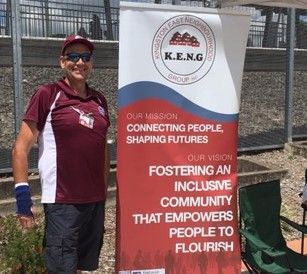
1.6 People with a disability
     While overall Logan has a similar profile as the whole of Queensland in terms of number and proportion of people living with a disability significant enough to require
     assistance with everyday life, there were particular suburbs where it was particularly high. These are:
                             SLA                                            Need for Assistance                                   Need for assistance
                                                                                all ages %                                           0-14 yrs %
                          Beenleigh                                                8.2%                                                  4.1%
                     Bethania-Waterford                                            10%                                                    3.1%
                          Eagleby                                                  8.4%                                                   6.3%
                         Slacks Creek                                              7.5%                                                   3.1%
                          Woodridge                                                7.4%                                                   2.5%
                       Waterford West                                               8%                                                    3.5%

2.    KEY ISSUES
2.1 Domestic Violence
In the Logan District, the rate of Domestic and Family Violence Applications decreased from 789 in 2015/16 to 737 in 2016/17, or seven percent in the rate of
applications per 100,000 person.
However, the number of breaches to Domestic and Family Violence Protection Orders increased from 2,079 in 2015/16 to 2,173 in 2016/17.

2.2 Employment
Since 2014, unemployment in the Logan LGA has dropped from around 9% to around the state average of 5.66%. However, there are some areas where unemployment is
much higher than average and where parents are less likely to be working. These are as follows:

                                                                            Unemployment rate                              Families with no working parent %
                       Statistical Area                                      March Qtr 2017 %
                          Beenleigh                                                9.3%                                                   27.9%
                            Eagleby                                                9.4%                                                    32%
                           Kingston                                                12.9%                                                  36.5%
                        Logan Central                                              17.3%                                                  40.1%
                           Loganlea                                                8.3%                                                   23.4%
                           Marsden                                                 8.2%                                                   23.7%
                         Slacks Creek                                              8.1%                                                   27.6%
                         Woodridge                                                 15.8%                                                  39.1%
                                                                                                                                                                      Page 10
2.3 Income Levels
Poverty is a significant issue for many individuals and families. Logan has many suburbs where there are people living on low incomes. Areas with low household incomes
of less than $500/week are:
• Kingston – 9.7%
• Logan Central – 15.7%
• Loganlea – 9%
• Slacks Creek – 9.8%
• Waterford West – 10.87%
• Woodridge – 13.2%
16.5% of Logan’s residents had incomes of less than $300 per week. Areas with the highest percentage of people on less than $300/week were:
• Kingston – 19.9%
• Logan Central – 23.1%
• Loganlea – 17.8%
• Slacks Creek – 18.3%
• Waterford West – 17.1%
• Woodridge – 21.3%
2.4 Early Childhood Development
The Australian Early Development Census (AEDC) data for 2015 tells us that there is a gap between the figures for Logan children and national and state figures. Based on
the AEDC survey of prep children, we estimate that 31.7% of children in Logan are vulnerable in one or more areas of their development while 17.2% are vulnerable in two
or more areas. This means around 14,265 0 to 8 year olds in Logan are vulnerable in one or more areas of development: social, physical, emotional, language or cognitive
or communication, while approximately 7,740 are vulnerable in two or more of these areas. These children are likely to need extra help to reach their potential.
Page 11WHAT DO PEOPLE THINK ABOUT KENG AND LOCAL ISSUES?
Surveys were completed by over 160 clients, volunteers and staff. Respondents were asked to provide feedback on key issues that affect them, their family and friends
and to provide information about their views in regards to KENG. Feedback from respondents was that the key issues of concern to them were:
Key Issues
Financial
• Cost of rising bills (10)
• Financial issues (10)
• Paying bills
• The price of living
• Poverty
• No Internet and costs are high
• The price of petrol
Safety
• Safety about Kids (Bad people’s languages and behaviour) and poor Security (8)
• Domestic Violence (3)
• Not feeling safe after dark/safety (5)
• Crime again associated with bored youth (3)
• Children and Women safety
• Neighbourhood bullying
Material aid
• Housing (6)
• Clothing (2)
• Food
• School supplies
• Centrelink incompetence
Employment
• Job (9)
• Trade base learning for youth
• Extra support for single parents that work
• Finding a job after being a stay at home Mum
• Putting together a resume after being a stay at home Mum
• Recruitment
Page 12Transport
• Transport (10)
• Traffic jam on the highways and insufficient roads (4)
Children and Youth
• Community support & Family network (7)
• Lack of safe spaces for young children and shaded parks (4)
• Activities for after school and holiday (3)
• Childcare rates (3)
• Not enough opportunity for youths and older teenagers in the community (2)
• Lack of affordable childcare for nonvaccinated children
• Need for training on bullying
• Raising children
• Community based support for indigenous children
• Seeing Aboriginal kids on the streets
• Mentoring for the youth
• Kids on computers
Drug and Alcohol addiction and mental health
• Substance abuse
• Alcohol addiction
• Mental Health
• Immediate assistance for people who having mental health issues
• Children have easy access to drugs
• Stress and Depression (3)
Accessibility
• Evening access to activities at the centre
• Access to services
• More information about community centres- people I talk to don’t often know what is around
Education
• English Language support (4)
• Homework help
Page 13Social Isolation
• Social isolation (3)
• Lack of community connection
• Social life with local people
• Constraints and isolation
What do you like about KENG
111 respondents rated the occasional child care at KENG as one of the things they liked best about the organisation. Other positive features were identified as follows:
• Friendly people who work at KENG & welcoming nature of the centre (41)
• Activities and programmes on offer (37)
• The environment and facilities (20)
• Groups and staff are very supportive (12)
• Play Group (5)
• The facilities (4)
• HIPPY programme (4)
• Food (3)
• Great place to come and meet people (3)
• Offers significant services to the people in need (2)
• Multicultural focus (3)
What is it that we could improve at KENG?
• No improvement needed (20)
• Improved advertising and promotion (8)
• More early year programme and courses (5)
• After school activities and Homework club (4)
• More English language Classes (3)
• Free KRANK program and other school holiday programs (3)
• Women’s Group and more Mothers Group (3)
• Physical Activity workshops (Yoga and Meditation) (2)
• Visits from Centrelink, Legal and Counselling
• Child care five days per week
Page 14SWOT Analysis
Strengths Weaknesses
• Experienced and dedicated staff • Time limited funding for some projects
• Well established with a good history, reputation and local recognition • Poor access to centre by public transport
• Committed management committee – very hands on • Lack of integrated data collection
• Resourceful with limited resources • Out of date signage and facing the wrong way
• Integrated service model • Lack of suitable room space
• Credibility with government • KENG doesn’t promote its achievements and measure its outcomes
• Deliver support to community through the ages – antenatal →senior • Lack of framework and data systems to measure outcomes
• Great culture – very low staff turnover • Manager is not full-time
• Good Ambience/energy at centre • Over-reliance on government funding
• KENG premises – occasional child care centre • Not tapping into bequeaths and other fundraising options
• Responsive to client needs
• Men’s group
• Child and family friendly focused
• Integrity of workers/volunteers/students
• Staff have range of experience and qualifications
• Fully subscribed classes/ strong attendance
• Connected organisations/partnerships
Opportunities Threats
• Establishment of a community legal service • Changes in program structures
• Opportunities for shared space in other community centres • Consortium v individual models
• Population growth expansion in Yarrabilba →allocation of resources • Technical disruption
• Closer liaison with other groups through LGGA to expand services • Over reliance on govt funding
• Increase membership base • Change of government can impact on funding availability
• Collaboration with other agencies • Increasing wages and operating costs
• Link with churches • Competition with other organisations especially big NGOs
• Increasing number of volunteers
• Expand to other premises
• Build on partnerships – formal/informal with community leaders/Logan
Together
• Link with day care and schools
• Increase technology to facilitate delivery
Page 15OUR VISION
KENG aspires to create an inclusive empowered community
Our Mission
Connecting people, building futures
Page 16Our Values
Empowerment: We are committed to assisting individuals to make positive choices in their lives
Collaboration: We value the contribution of volunteers, students and community partners and promote a
culture of teamwork
Inclusive: We acknowledge Australia’s first people, respect and value diversity and are committed to equality
Responsive: We are creative and receptive in seeking opportunities to meet individual and community needs
Integrity: We respect confidentiality, accountability and regard honesty as a priority
Quality: We implement evidence based best practice and strive for continuous improvement
Sustainability: We are constantly evolving and adapting our practices to ensure longevity and viability
Page 17To create an inclusive and empowered community we will………
Build sustainable Be accountable Connect & Be visible and Responsibly
futures and transparent partner with accessible manage our
others resources
We will provide
We will continue We will identify We will make the
We will partner responsible
to be innovative and measure our centre more
and collaborate governance by
and creative and service outcomes visible and
with other effectively
take hold of and adopt a accessible to
stakeholders to managing our
opportunities that continuous people from all
enhance resources (people,
respond to local improvement walks of life
efficiencies and assets and
community needs approach to ensure the best finances)
everything we do. possible services
for the community
Page 18Goal 1: Build Sustainable futures
We will continue to be innovative and creative and take hold of opportunities that respond to local community needs
1.1 Generate new revenue streams 1.2 Diversify programs and services 1.3 Develop partnerships with corporate
sponsors
• Research and develop social enterprises that • Consult with community and collect needs-
integrate with our core business and add based data on key issues • Identify suitable corporate sponsors
financial benefit to the organisation consistent with our values
• Pursue funding opportunities consistent
• Increase revenue streams to maximise service
with our mission, strategy and capability • Implement joint ventures and marketing
outputs
and identified needs strategies with the private sector
• Make use of KENG’s Deductible Gift recipient
(DGR) status to apply for funds from corporate • Establish a maternity child health hub
organisations and philanthropic trusts • Provide a visiting community legal service
• Deliver multigenerational unemployment
programs that help break the cycle.
1.4 Establish Multi outlets/sites 1.5 Extend services to high need areas and
respond to service gaps
• Work with Government (local and state) to
identify suitable sites that require community • Outreach into high growth areas (e.g.
management Jimboomba)
• Liaise with other community organisations • Develop service responses to support those
regarding service delivery from shared experiencing family and domestic violence
premises
• Develop strategies that support disengaged
young people
• Implement programs that enhance quality of
life and support to people with a mental illness
• Help people strengthen their skills for
managing money and building financial
resources
Page 19Goal 2: Be Accountable and Transparent
We will identify and measure our service outcomes and adopt a continuous improvement approach to everything we do.
2.1 Define, measure and improve business 2.2 Use technology to transform the way we 2.3 Evaluate and publish our achievements
performance work • Undertake program and project evaluations
• Build an outcome-focussed performance culture • Implement a data management system that that provide a documented body of
tracks client outcomes across different knowledge regarding KENG services and
• Collate and interpret service and organisational programs
data (qualitative and quantitative) programs
• Improve data capture, management and • Evaluate and document KENG’s integrated
• Implement an integrated whole of KENG outcomes service model and promote at a national
regime analysis to drive timely, evidence-based
decision making level
• Conduct relevant research in partnership
with University and develop a robust
evidence base
2.4 Ensure service delivery meets program
standards
• Undertake continuous improvement
monitoring through regular reviews against
the HQSF standards
Develop
Page 20Goal 3: Connect and Partner with Others
We will partner and collaborate with other stakeholders to enhance efficiencies and ensure the best possible services for
the community
3.1 Establish partnerships and strategic alliances 3.2 Enhance connections with the private 3.3 Co-location arrangements
within the sector and corporate sector
• Implement strategies to outreach
• Share resources with other NGOs • Establish University or corporate programs from different locations and
• Develop MOUs and agreements with aligned volunteer days community centres
organisations • Outreach KENG programs to University • Develop local support infrastructure and
• Use strategic alliances to undertake research/joint • Access corporate sponsorship from identify opportunities for collaboration
initiatives and advocate for client and local businesses
organisational needs
• Negotiate bulkbilling arrangements with medical
centres
Page 21Goal 4: Be Visible and Accessible
We will make the centre more visible and accessible to people from all walks of life
4.1 Improve service marketing and promotion 4.2 Make the Centre more visible 4.3 Improve accessibility
• Promote our Occasional Childcare Centre to • Install visible signage to advertise the • Explore transport options
schools and University centre
• Obtain additional premises closer to
• Distribute marketing materials in major areas where
• Bring more people into the centre public transport
people wait – e.g. hospitals, libraries, Logan City
Council, other community centres, links with through programs such as outside school
churches. hours care programs.
• Advertise on Logan City Council website
Page 22Goal 5: Responsibly manage our resources
We will provide responsible governance by effectively managing our resources (people, assets and finances)
4.1 Build our staffing capacity to position us for 4.2 Save resources through 4.3 Implement effective governance and
growth organisational efficiencies compliance frameworks
• Develop a framework for student placements • Develop financial efficiency models • Undertake robust risk management and
through increased recycling and solar continuous improvement systems
energy
• Ensure that our governance arrangements
• Maximise the value and security for and delegations deliver timely decision-
the organisation through management making, support balanced risk-taking and
of assets and finances
drive effective implementation
• Ensure KENG’s policies, processes and
systems and structures meet
organisational needs
4.4 Upskill our staff
• Develop an organisation wide training
plan
• Build the capacity of our staff
• Provide ongoing training and
development for staff and committee
members
Page 23Kingston East Neighbourhood Group Inc.
177 Meakin Road Slacks Creek Q 4127 - PO Box 622 Woodridge Q 4114
P: 07 3808 1684 - F: 07 3209 7254 - E: admin@keng.org.au
www.keng.org.au
Page 24You can also read


