KPMG Turkey Automotive Executives Survey 4 - Business Models of the Future 2016
←
→
Page content transcription
If your browser does not render page correctly, please read the page content below
KPMG Turkey
Automotive
Executives Survey - 4
Business Models of the Future
2016

KPMG Turkey

kpmg.com.tr
About the Survey
The survey aims to determine sector-related projections of Turkey's automotive
sector executives. The survey has been conducted by ERA Research & Consultancy
in cooperation with the Association of Automotive Distributors (ODD), Automotive
Manufacturers Association (OSD), Association of Automotive Parts and Components
Manufacturers (TAYSAD), Association of Authorized Dealers (OYDER) and members
of these associations under the supervision of KPMG Turkey.
In addition to the general questions put to the members of the four associations,
special questions were addressed to the members of each association under the
scope of the work. General questions included in the study, the first edition of which
was carried out in 2012, are reported on a comparative basis.
Graphs have been created according to the report of the relevant year. Utilizing
the online survey method, the questionnaire was prepared in liaison with KPMG
Turkey and ERA Research & Consultancy and was evaluated with the support of
all associations. More than 200 executives from the leading companies of Turkish
automotive sector, which are members of 4 associations, participated in the survey
carried out between November 9 and December 7 2015.
While the results are reported in total for all members of all associations, the sampling
of each association has an equal weight.

Preface
Revolution or evolution?
It’s not possible to foresee the future.     supplier industry. However, in order to
“The only thing we know about the            succeed in this field, the ecosystem
future is that it will be different.”*       will need to evolve. Public support will
                                             also be important to accelerate these
We are living in an age where the
                                             developments.
automotive sector is experiencing
major changes and we can be sure             All these developments indicate a
that the changes will be greater             junction for the manufacturers. The
tomorrow. The question is: will the          manufacturers will have to decide
change be a result of a revolution as        whether they want to be metalsmiths or
in the example of smart phones or            gridmasters.
an evolution as we are used to in the
                                             Furthermore, we can clearly see that the
automotive sector?
                                             speed of innovation in the Silicon Valley
The likelihood of a revolution is getting    is much different from the clockspeed
higher with the new players entering the     of Detroit. The integration of these two
market such as Google and Tesla. When        sectors under the automotive sector
Google announced in 2009 that they           indicates a change in business models.
were going to develop an autonomous
                                             In a special chapter titled Business
vehicle, the traditional automotive
                                             Models of the Future, I present                                   Ergün Kış
companies seemed to be sure about                                                                              KPMG Turkey
                                             a summary of two global KPMG
the impossibility of this idea that they
                                             reports: “Metalsmith or Gridmaster?”                              Head of Automotive
reacted with nothing but a simple smile.
                                             which addresses the junction for the                              Partner, Audit
However, their success was shortly
                                             manufacturers in detail and “The
perceived as a threat by the traditional
                                             Clockspeed Dilemma” which addresses
automotive companies and forced them
                                             different development speeds.
to respond promptly.
                                             This year’s survey analyzes the export,
Although the manufacturers have
                                             sales, manufacturing and capacity
accelerated their efforts towards
                                             figures in the market, reveals the
autonomous and connected vehicles,
                                             expectations of respondents and casts
they also intend to maintain the business
                                             light on the future of the automotive
models they have been using for years
                                             sector with the comments of KPMG
while extending the new technologies to
                                             experts regarding various topics of
all the models starting with the luxurious
                                             interest for the Turkish automotive
ones.
                                             sector, such as Industry 4.0, Transatlantic
On the other hand, Google is                 Trade and Investment Partnership,
planning a revolution. The objective is      Regional Management Base, etc. as well
manufacturing or having manufactured         as the future business models.
a small, affordable vehicle. The fact that
                                             We would like to thank four important
Google collaborates with the supplier
                                             associations of the sector, namely ODD,
industry for vehicle manufacture shows
                                             OSD, OYDER and TAYSAD for their
that new opportunities will arise for the
                                             support in the preparation of the KPMG
automotive suppliers.
                                             Turkey 2016 Automotive Executives
A study by KPMG UK for the Society           Survey.
of Motor Manufacturers and Traders
                                             We hope that our survey will be a useful
(SMMT) estimates that connected and
                                             resource for the executives following the
autonomous vehicles could create an
                                             automotive sector and hope you enjoy
additional 320,000 jobs in the UK by
                                             reading it.
2030. Thus, it is important that critical
technologies be introduced in the Turkish     * Peter F. Drucker, 1909-2005, Executive Consultant and author
Contents
Executive Summary              6

General                       8

Market                        20

Special Section

Metalsmith or Gridmaster?     40

The Clockspeed Dilemma        42

Industry                      52

Appendix: Facts and Figures   77
6    KPMG Turkey 2016 Automotive Executives Survey

Executive Summary
    General
                  •1 The executives estimate that the market will remain over 1
                     million. However, decreasing the sales taxes still remains to
                     be an issue of top priority.
                  •2 For the first time, the penetration of BRIC manufacturers
                     are not expected to penetrate into the European market.
                  •3 For the first time, those who expect new manufacturers to
                     the Turkish market are not in majority; there seems to be
                     a tie between those who expect new manufacturers and
                     those who do not.

     ODD

               1 The distributors consider the rate of increase in per capita
                 income as the most important factor for the growth of
                 the automotive market; this result is more important than
                 decreasing the tax burdens on the sector for the first time.
               2 No changes are expected in the profit centers in the next 5
                 years.
               3 The car rental sector is expected to grow more than the
                 automotive sector.
KPMG Turkey 2016 Automotive Executives Survey   7

OYDER
         •1 The profitability of the authorized dealers does not meet
            the high financial risks and investments.
         •2 Changing consumer expectations and behaviors are among
            the most important external factors, ranking third after tax
            burdens and adverse effects of exchange.
         •3 The used vehicle trade, which is the most important field
            of investment for authorized dealers, is expected to be
            carried out over the Internet.

 OSD
         1
         • Production and capacity will continue to increase.
         •2 The domestic market needs to grow and the taxation
            system needs improvement for new investments. However,
            the appeal of investment of BRIC countries with bigger
            markets constitutes an important challenge for Turkey.
         •3 Accession to new generation of trade agreements and
            bilateral agreements with developing markets is a must for
            sustainable exports.

TAYSAD
          1• The top priority of the supplier industry is increasing the
              R&D and design competencies.
           •2 Unlike the previous year, Iran ranked among the most
              important countries of the supplier industry this year.
           •3 The critical technologies of the future are gaining
              importance for the supplier industry.
8     KPMG Turkey 2016 Automotive Executives Survey

General
Featured results
1         The executives estimate that the market will remain over 1 million.
          However, decreasing the sales taxes still remains to be an issue of
          top priority.

2         For the first time, the penetration of BRIC countries' manufacturers
          are not expected to penetrate into the European market.

3         For the first time, those who expect new manufacturers to the
          Turkish market are not in majority; there seems to be a tie between
          those who expect new manufacturers and those who do not.

                KPMG Insight

    The market is promising again
    For the fourth year in a row, the most important matter for development of the market which broke a
    record by exceeding 1 million units in 2015 despite the high levels of sales taxes is the expectation for re-
    arrangement and decrease of sales taxes. 78% of the executives expect the Turkish automotive market to
    be over 1 million units.
    At first sight, one could think that there is no need for decreasing the taxes in a year when sales records
    have been broken. However, the executives take profitability into consideration besides sales figures. High
    level of taxes also narrows the margins of dealers. Furthermore, the margins might be insufficient during
    the periods when uncertainties in economical situation and exchange fluctuations increase. In particular,
    the fact that the authorized dealers cannot reach a satisfactory level of profitability due to high financial risks
    and large investments obliges them to create new profit centers.
    No hope for BRIC manufacturers
    The Turkish automotive executives, who were almost sure for the last 3 years that the manufacturers in
    BRIC countries would penetrate into the European market, seem to have changed their minds this year.
    While more than 60% expected Chinese companies to penetrate into the European market before, this
    dropped to 45% this year.
    The confidence in the Chinese manufacturers, who have been talked about for years but could not
    succeed despite all the hard work, seems to have been lost. The barriers of requirements of the European
    market seem too high for the Chinese companies to overcome. One of the most striking examples is
    the disappointment of Qoros brand. The shareholders who intended to manufacture a Chinese car with
    German technology by transferring German engineers and managers and thus earn the European markets
    had to give up this goal despite all the interest. The company, who could not succeed even in China, had
    to change its priorities. Although the quality of the vehicles was considered to be meeting international
    standards, the vehicles faced numerous barriers. The low recognition of the brand, the perception of low
    quality for Chinese vehicles, weakness of the sales network and limited number of model brought the
    failure. According to the new strategy, the company will expand to Europe once it succeeds in the Chinese
    market.
KPMG Turkey 2016 Automotive Executives Survey   9

It’s worth mentioning that some important
                                                          Distribution of New Vehicle Registrations
challenges exist for every new brand for
establishing an efficient system of dealerships           by Manufacturers EU + EFTA Countries
in the EU market in particular. On the other                                                        share %
hand, getting a place in the second market takes                                                 2015     2014
longer when compared with the established                 VW Group                               24.8     25.5
brands. This affects the consumer demand very             PSA Group                              10.4     10.7
adversely.                                                RENAULT Group                           9.6      9.5
                                                          FORD                                    7.2      7.2
Under these circumstances, penetration of
                                                          OPEL Group                              6.7      7.1
Chinese automotive products into the EU market
does not seem very likely. It should also be              BMW Group                               6.6      6.4
noted that the market share of non-EU brands              FCA Group                               6.1      5.9
is still very far from satisfactory although they         DAIMLER                                 5.9      5.4
manufacture in the EU.                                    TOYOTA Group                            4.3      4.4
                                                          NISSAN                                  3.9      3.7
There is doubt about new investors                        HYUNDAI                                 3.3      3.3
While 47% of the automotive industry                      KIA                                     2.7      2.7
executives taking part in the survey do not               VOLVO CAR CORP.                         2.0      2.0
expect new investors, 45% do so. Last year,               MAZDA                                   1.5      1.3
the majority of executives (54%) expected new             SUZUKI                                  1.3      1.2
investors while those who didn’t expect new               JAGUAR LAND ROVER Group                 1.3      1.1
investors were in minority (42%). We can say              MITSUBISHI                              0.9      0.8
that these two groups have an identical weight.           HONDA                                   0.9      1.0
However, we observed that the rate of those               Other Japanese Brands                   0.3      0.3
who do not expect investors for a new brand has
increased from 23% to 47% in the last 4 years of         Source: ACEA Members
the survey.

But we can see that the manufacturers currently operating in Turkey kept increasing their investments. In early
2016, two important international manufacturers, Toyota and Mercedes-Benz, announced that they are going
to increase their capacities significantly. On the other hand, Ford and Fiat announced their new investments
for new models. With these new investments which will exceed 1,6 bn-USD in total, it is estimated that the
manufacturing capacity of Turkey will exceed 2 million units. This also shows that the investors have a positive
view of Turkey in the long term.
The decrease in the expectations of the executives for new investments despite this positive view might be
a reflection of the fact that new investments worldwide are limited and the competitiveness of the countries
competing with Turkey has increased.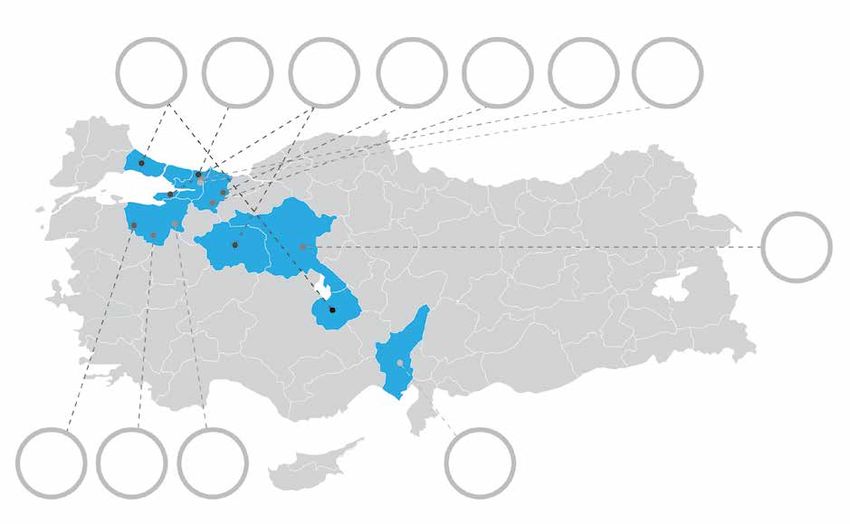
10 KPMG Turkey 2016 Automotive Executives Survey
Issues of priority for the automotive sector during the course of the next five years
24%
Rearrangement of taxes 28%
on automotive sales 26%
21%
11%
Increasing market share of environment friendly 13%
vehicles, carbon dioxide emission practices 10%
10%
10%
Scrap vehicle incentive and 15%
similar sales incentives 13%
7%
10%
Price competition 7%
8%
15%
10%
9%
Foreign investment policies 10%
10%
9%
Impact of the investment incentive program 7%
on the automotive sector 7%
6%
6%
Developing a local passenger car brand 4%
for global markets 4%
6%
5%
Reflections of mergers and consolidations of global 4%
brands on the Turkish automotive industry 6%
4%
5% 2016
7%
Impacts of the crisis in Europe 8% 2015
16%
2014
5%
Other* (total of 4% and below 4% 2013
in 2015 results) 7%
4%
* Product features, increasing market share of Chinese brands
Expectations for growth in the automotive market in the next five years
28%
27%
16%
14%
4%
4%
2%
2%
2%
1%
0%
2%
d
d
nd
d
nd
nd
nd
d
d
d
d
ea
an
an
an
an
an
an
an
sa
sa
sa
sa
id
s
s
s
s
s
s
s
ou
ou
ou
ou
ou
ou
ou
ou
ou
ou
ou
o
N
th
th
th
th
th
th
th
th
th
th
th
00
0
0
0
0
0
0
0
0
0
00
60
70
80
90
10
20
30
40
50
1.0
1.5
-1.
0-
0-
0-
-1.
-1.
-1.
-1.
an
0-
60
70
80
00
00
00
00
00
er
th
90
ov
1.1
1.0
1.2
1.3
1.4
n
n
n
ss
ee
ee
ee
n
le
ee
n
n
n
n
n
w
w
w
ee
ee
ee
ee
ee
tw
t
t
t
be
be
be
tw
tw
w
w
w
be
2016
t
t
t
be
be
be
be
beKPMG Turkey 2016 Automotive Executives Survey 11
Market’s View
“Old vehicles have as much Mustafa Bayraktar
negative impact on public Automotive Distributers’
Association (ODD), Chairman
health as the environment.
Therefore there is a greater This valuable survey of KPMG, which has been carried out
regularly for 4 years now and casts light upon the industry,
need for developing the shows once again that the negative impact of the reflection of
taxes to sales prices in the domestic market, the need for rapid
policies to serve renewing and systematic renewal of the old vehicle park and the need for
improvement of the investment environment in the country to
our park.” attract new investments are still the most important problems
for the automotive industry.
An increase of 25% in the sales of the automotive industry is
observed in 2015, however there is a base effect this year. It
would be more accurate to compare 2015 with 2013 instead of
2014. When we compare the last 12 months period with 2013,
the increase is in fact about 13%.
As you might remember, the market was below the norm in the
first half of 2014. Since the automotive market was relatively
more foreseeable in the first 6 months of 2015, the consumers
preferred to purchase before the elections. Our exhibition,
Istanbul Autoshow, which was organized in May after two and a
half years, also accelerated the market.
In the Turkish automotive industry in the twelve month period
of 2015, the total market increased by 25% to 1.011.194 units,
production increased by 16% to 1.358.796 units and exports
increased by 12% to 992.335 units when compared with the
same period of the previous year. However, the value of exports
decreased by 5% to 21,619,000,000 Dollars.
One of the most important problems of our sector, "the
old vehicle park" and its adverse effects still remains. Old
vehicles have as much negative impact on public health as the
environment. Therefore there is a greater need for developing
the policies to serve renewing and modernizing our park.
Turkey's vehicle park included approximately 1.5 million vehicles
in early 1990s, and exceeded 15 million vehicles as of 2015. The
automotive industry has gained a certain market rhythm since
2003 and the fragile and sensitive structure of the previous
years was replaced by a more stable, more responsive, more
proactive and stronger market. The changes in the global
markets began to affect our country, which became integrated
with the rest of the world, directly. Therefore, we need
incentives and practices to take our domestic market to the level
of global players in the automotive sector. In this context, we
believe that the contribution of the public is also very important.12 KPMG Turkey 2016 Automotive Executives Survey
Factors affecting the growth of the automotive sector during the five-year period
2016
26%
Decrease of tax burdens (Special 2015
#1 32%
Consumption Tax, VAT etc.) on the sector 2014 22%
2013 31%
2016 21%
Growth rate of national income 2015 19%
#2 2014 22%
per capita
2013 20%
2016 12%
Mitigation of the restricting measures 2015 14%
#3 on consumer credits and decreasing
2014 20%
the interest rates
2013 13%
2016 7%
#4 Foreign investment and investment 2015 9%
11%
incentives 2014
2013 9%
2016 7%
3%
#5 Development of the supplier industry 2015
2014 5%
2013
2016 7%
Acceleration to be gained upon the 2015 9%
#6 extinguishment of the debt crisis in 2014 13%
Europe 2013 17%
2016 4%
Renewal of Turkish Automotive Sector
#7 2015 0%
Strategy Paper and Action Plan 2014 0%
2013 0%
2016 15%
2015 13%
#8 Other* (Total of 3% or less this year)
2014 5%
2013 12%
*Manufacturing and launching domestic brand automobile; Impacts of interest rate hike decisions 2016 2015 2014 2013
by FED, the Central Bank of the USA; Ease of access to global markets offered by new generation
of Transatlantic and Transpacific trade agreements; Development of R&D with a focus on
Industry-University-NGO's; Critical technology investment in Turkey; Manufacturing and launching
environment-friendly automobilesKPMG Turkey 2016 Automotive Executives Survey 13
Market’s View
Z. Alp Gülan
OYDER, Chairman
This year’s results from the survey, which we have brought by this is the fact that the authorized
been carrying out with cooperation of KPMG Turkey dealers now have to create new profit centers in
and 4 major associations of the automotive sector addition to the new car sales and maintenance
for the fourth time this year and casts light upon the services in their focus. Particularly in the fields of
future of the sector, clearly reveals the expectations of used vehicle sales, insurance agencies and vehicle
the sector and what could be done for development maintenance, accessories, extended warranty sales,
of our country. The results of this survey provide new investments and efforts are made to meet the
very useful foresight for the public, the stakeholders expectations of the consumers.
in the sector, our business partners and us in both
Likewise in the service and repair centers, the
production and marketing aspects. We can clearly see
traditional structures are being replaced with brand-
from the results that our country has great potential
specific practices. At this point, “Branded Vehicle
and this potential can be utilized with the right
Insurance” projects offered by insurance companies
strategies and also that our country will still be a very
and aiming repairs a service locations with sufficient
important market for foreign investors because of this
equipment and knowledge seem to have the potential
advantage.
to become one of the most important practices in the
The results indicate that the most important problem future.
of the sector is that it’s not possible to achieve
From the perspective of new vehicle sales, the most
sufficient profitability in exchange for the high financial
rapid development will probably be observed in the
risks and large investments. It’s obvious that the
operational and day rental sector. It wouldn’t be
profits gained do not meet the risk taken considering
surprising if the operational and day rental sector,
the scale of the investments by all authorized dealers.
which dominates the majority of the market in
Unfortunately, this features as the most important
developed markets of Europe, will keep growing in our
problem every year. While there are many root causes
country as well.
for this problem, we can mention insufficient capital
and incorrect management of finance, inefficient use The expectations and concerns for the future in our
of profit centers, insufficient human resources and the sector are generally associated with both our ways
mistakes in business models among others. of doing business and macro economic policies.
Therefore, it’s possible to say that our sector will be as
The taxation policies on the sector is among the
wealthy as the country in general in the future.
most challenging changes for our colleagues. The
fluctuations in the market during the periods when Hereby I’d like to congratulate all those who
the tax burdens on automotive increase result in contributed to the survey and thank them for preparing
uncertainties in the sector as a whole. Furthermore, such a study that will help foreign investors knowing
the overall economic developments and exchange the sector well.
fluctuations are also noted as the most significant
matters of concern for our colleagues.
Also, the recent, important arrangements in the public “The most important change brought
field help growing our businesses and practices such
as notary sales for used vehicles and ASBİS for brand to our ways of doing business
new vehicles simplified the business model of the
sector. by digitalization is the fact that
As we all have been witnessing in recent years,
the rapid introduction of digital technologies into
the authorized dealers now have
our lives caused certain changes in consumer
behavior. There have been significant changes in the
to create new profit centers in
expectations of the consumers from the authorized
dealers and changes in our business models have
addition to the new car sales and
become inevitable. The most important initiative maintenance services in their focus.”14 KPMG Turkey 2016 Automotive Executives Survey
Expectations as to the penetration of BRIC countries' automotive manufacturers into the European market
35% 32% 38%
No, I do not expect it
2016 50% 2015 2014 2013
44% 1% Yes, I expect it
63% 67% 61%
2% 1%
No idea
6%
Expectations of those answering “yes”
10%
In 1-2 Years 17%
7%
8%
55%
34%
In 3-4 Years 45%
37%
28%
38%
In 5-6 Years
37%
47%
8%
8%
In 7-8 years
8%
7%
2016
3% 2015
Other* (Total of answers
with 5% and below) 2%
2014
2%
2013
* In 10 years, current inputs, no ideaKPMG Turkey 2016 Automotive Executives Survey 15
Industry’s View
Kudret Önen
OSD, Chairman
The automotive industry is the driving force of As promised in the government program, the R&D
the industry and economy of the country today. incentives provided by the government to help the
This industry which exports 73% of the vehicles automotive industry in becoming a production and
manufactured corresponding to 15% of the total R&D center for the global automotive brands made
exports of our country also maintains competitiveness a great contribution. R&D employment increased
in the global markets with the sustainable growth by 90% and the number of patent applications by
achieved in the recent years. 207% between 2010 and 2014. The R&D studies for
automotive has a share of 18.9% in the total R&D
Taking into account that there were two elections
expenses which helped our country rank the third
in 2015 which witnessed challenging economic
after Germany with a share of 31.7% and Japan with
and political conditions and also that an election
a share of 19.8%. We strictly believe that our industry,
government was in charge, we should say that the
which held its leading position in exports in 2015 as
economic performance is much better than the
well, will strengthen its position of being a production
estimates. Despite the growth over 2014 in the
and R&D center for global brands with ongoing
domestic market, the problems in the region reflected
support of R&D incentives.
adversely on our sector as well. Thanks to the
measures taken, the loss in exports to countries such With the new model and capacity growth investments
as Russia, Ukraine and the Middle East and the region of our members, we estimate that the capacity of our
was compensated by the growth in the European industry will achieve 1.85 million units in 2016. We
market which contributed positively to the production foresee that the exports will exceed the threshold
and export figures of our industry. of 1 million and the productions will reach 1.4 million
units with the newly implemented projects and
Our exports grew 12% in terms of units sold while the
the ongoing investments mentioned. New projects
value of exports dropped by 5% in Dollars and grew
supported by the incentives will create a growth
by 14% in Euros due to the drop in Euro-Dollar parity.
in production based on exports in 2016. With a
The automotive industry held its position among the
domestic market similar to 2015 with the assumption
sectors in total exports of Turkey. Our total production
that there will be consistency in the market and the
increased by 16% to 1,359 thousand units. With the
purchasing decisions will not be affected, records
records in production and exports in 2015, our industry
in total production is not unlikely in 2016 as well. It
achieved a production capacity of 1.75 million units
will be possible to maintain the competitiveness of
from 1.5 million units thanks to the implementation of
our country for new projects and thus attract new
new projects and the capacity investments in the last
investments to the country with ongoing policy
5 years. About 50,000 people were employed directly
support for the industry by the government.
and about 500,000 people were employed indirectly.
The automotive industry, which constitutes 15% of
the total exports of our country and has a leading “The R&D studies for automotive
position with the direct and indirect contribution it
makes to the economy of our country, has a strategic has a share of 18.9% in the total
role in achieving the targets of our country. Our
industry has gained high quality and value added R&D expenses which helped our
production competency and a leadership position in
development of new products and technology for the country rank third after Germany
global brands which made us a key player in the global
marketplace. with a share of 31.7% and Japan
with a share of 19.8%.”16 KPMG Turkey 2016 Automotive Executives Survey
Countries preferred by BRIC manufacturers while penetrating the European market*
31%
41%
Eastern European Countries
53%
46%
22%
22%
Northern African Countries
16%
16%
20%
Iran
18%
23%
Turkey
23%
25%
8%
13%
Northern American Countries
7%
7%
2016
1%
2015
1%
Other
2% 2014
* Asked to those expecting BRIC manufacturers to penetrate 2% 2013
into the European market.
Projections for new investments in Turkey in five years
47%
42%
No, I do not expect it
35%
23%
24%
Yes, from China 21%
26%
28%
21%
28%
Yes, from Europe
34%
42%
6%
3%
No idea
4%
2%
8%
Other* (Total of 3% or less this year) 5% 2016
1%
2015
5%
2014
* Yes, from India. Yes, from America. Yes, from Japan. 2013KPMG Turkey 2016 Automotive Executives Survey 17
Industry’s View
“Turkey needs to improve Mehmet Dudaroğlu, PhD.
its R&D and innovation TAYSAD, Chairman
capabilities and gain
competence in competing More than 200 top executives contributed to our survey,
which gives an overall picture of the automotive industry and
with strength in design and market and which has been carried out for the fourth time this
year. According to the results of the survey, taxes, investment
technology.” environment and price competition are among the most
important topics in the development of the sector.
Due to the changing conditions and increasing costs, competitor
countries were unfortunately preferred for new automotive
investments. It’s not possible to attract new investments to
the country with low labor costs only. Besides, it’s obvious that
we won’t have the competitive advantage of low labor costs
anymore as result of the recent arrangements increasing the
cost of labor. Therefore, Turkey needs to improve its R&D and
innovation capabilities and gain competence in competing with
strength in design and technology.
In order to develop this competence for the Turkish capital, we,
under the name TAYSAD, carried out a comprehensive survey in
2015 and prepared a report with the outcomes of the survey. In
particular, we intend to help develop competence in the fields of
technology that do not exist in Turkey at the end of this survey
which casts light upon the product groups in which certain
changes are expected as well as the changes in the sectoral
trends.
We studied which components, modules and module systems
will be affected the most by the fields of “Safety, Emissions,
Material Lightening and Telematics-Infotainment” where the
competence of the Turkish automotive supplier industry is
very limited and we determined the components-modules
and module systems with the most potential for the Turkish
automotive supplier industry. When the companies operating
in the Turkish automotive supplier industry design their growth
strategies in such a manner to include these four fields of
technology, the competence of our country in these fields will
be increased.
The automotive sector in Turkey gives our country the potential
to become a “leading” country with the support of the
competent players in our ecosystem. We need to route our
entire potential to producing high value added technological
products by establishing the right industrial policies, ensuring
continuity in these policies and coordinating the collaboration of
the stakeholders.18 KPMG Turkey 2016 Automotive Executives Survey
Market20 KPMG Turkey 2016 Automotive Executives Survey
Market: ODD
Featured results
1 The distributors consider the rate of increase in per capita income
as the most important factor for the growth of the automotive
market; this result is more important than decreasing the tax
burdens on the sector for the first time.
2 No changes are expected in the profit centers in the next 5 years.
3 The car rental sector is expected to grow more than the
automotive sector.
KPMG Insight
The most important factors for growth of the automotive market
The prioritized position of tax burdens dropped slightly behind the national income growth for
the first time this year. Not only the growth but also the distribution of the national income is of
importance. The fact that the used vehicle market is 3 to 4 times bigger than the new vehicle
market can be considered as an indicator of this. However, the growth in this market is not
reflected in new vehicle sales due to the low level of income.
While it’s natural that the general conjuncture changes in the economy reflect demand, it is
observed that those changes reflect the automotive demand on a larger scale. This shows the
need for a more balanced system for mitigating the adverse impacts on every segment of the
sector from industry to trade.
The sales and annual taxation system in the automotive market is still of a different structure
from the mature markets such as the US and the EU. While the average demand in the
automobile market in the last 10 years is about 500 thousand as a result of this, the demand last
year varied from 310 thousand to 725 thousand depending on the economic conditions.
The fact that the annual Motor Vehicles Tax, applied according to the age of the vehicle since
1992, is fixed at a rate of 10-14% of the regular tax after 11 years of age encourages use of old
vehicles. Renewal of the vehicle ark more rapidly is of vital importance in terms of both ensuring
safety in traffic and preventing environmental pollution.
Therefore, the very first items on the agenda should be the inevitable change for the sector on a
global scale and how to meet very diverse customer expectations in this market environment.
The public should also consider these new changes as a regulator.KPMG Turkey 2016 Automotive Executives Survey 21 Development in profit centers The profitability trends for the automotive sector's sales, service, spare parts, sales and after-sales business development services (vehicle insurance, insurance, accessories, tires), which constitute profit centers of the sector are not expected to change. 2 out of 3 people do not expect change for the next 5 years (it was 1 out of 5 people last year). The importance of new profit centers is increasing for the distributors and authorized dealers because of the low profit margins in sales and insufficient and unbalanced growth of the market. However, the improvement in these fields is not found sufficient. The rate of those who do not expect much change in such functions increased over the expectations in 2015. However, it is important for the future of the sector that new progress for improvement in these fields in addition to the sales should be planned collaboratively. Contribution of car rental to the sector We have observed that expectations in the field of rentals in recent years are reflected in the results of 2015 as a significant increase. The rate of those who expect a growth over the automobile market is over 90% once again this year. This year, 3 out of 4 people expect the rental sector to grow 10% over the automotive sector. Particularly in businesses with large vehicle parks, rental is spreading rapidly; companies prefer renting to purchasing. The urban population exceeding 80% in total brought the urban transportation further forward. The share of light commercial vehicle in urban transportation has also increased rapidly. However, the fact that these vehicles used in the scope of commercial vehicles are excluded from rentals is an important hinderance for the craftsmen using these vehicles in particular. Another point worth noting is that Turkey is an important global development and design center for light commercial vehicles. The share of these vehicles in production and particularly in exports is increasing rapidly. It is expected that these vehicles will be considered for inclusion in rentals in order to meet the need for urban transportation as a result of rapid urbanization and rapidly growing urban population.
22 KPMG Turkey 2016 Automotive Executives Survey
Factors affecting growth of the market during the five-year period
30%
Growth rate of national 30%
income per capita 31%
29%
29%
Decrease of tax burdens (Special Con- 33%
sumption Tax, VAT etc.) on the sector 36%
34%
19%
Process of normalization to follow the 16%
extinguishment of the debt crisis in Europe 17%
16%
11%
Launching environment-friendly automobiles 11%
(Hybrid, electric vehicles, etc.) 9%
10%
Launch of domestic brand automobiles 9%
in the market 4%
5%
2%
Other* (Total of 3% or
2% 2016
less this year)
2%
2015
2014
*Decrease in the interest rates
2013
Success factors in automotive market
28%
26% 26%
25%
24%
22%
20%
19% 19%
16% 16%
14% 14% 14%
13% 13%
12% 12%
11% 11%
9%
8%
6% 6% 6%
4% 4% 2016
2%
2015
2014
2013
Pricing and sales Financial Extent/quality of New product After-sales Marketing Improvement of
incentives services distributor network development services activities product qualityKPMG Turkey 2016 Automotive Executives Survey 23
Market’s View
“I believe that the car rental Ali Bilaloğlu
sector, which has grown at Automotive Distributers’
Association (ODD), Deputy Chairman
least as much as the retail
automotive market in the The Turkish automotive sector has made significant progress
in terms of both the market size and the number of sales in the
recent years, will grow over last 10 years. Two sales records have been broken in a row since
2013. Thus, it strengthened its position as one of the driving
the market in the next 5 forces of the Turkish economy by affecting and growing many
sub-sectors.
years, and this will have a This year, we observed that the consumer confidence index
very positive impact on the dropped to the lowest level of the last 6 years with the impact
of the political uncertainty period, terrorist attacks and the
automotive sector.” fluctuations in the exchange rates. Despite all these unfavorable
situations, the automotive sector broke three records at the
same time. The record in the production and export figures was
certain as from November. The domestic sales of automobile
and light commercial vehicles increased by 26.1% over the
2014 sales and reached a record level of 968.017 units. I think
that this improvement in the sector mitigated the negative
impact on the economy of the social and geopolitical problems
to some extent.
Once again this year, the companies offering diversified
experiences to their customers with a sense of quality in
service featured in our sector where products and prices are
getting more and more similar.
I believe that this trend will continue in the next 5 years as well
and the brands offering customized and unique sales and/
or maintenance services to their customers and users will be
more successful. I also believe that the users will compare the
aftersales services of the brands when making their purchasing
decisions and prefer the brands offering the most suitable
solution and services for them.
Another factor that we expect to improve the Turkish
automotive sector in the next 5 years is fleet rental solutions.
I believe that the car rental sector, which has grown at least as
much as the retail automotive market in the recent years, will
grow over the market in the next 5 years and this will have very
positive impacts on the automotive sector.24 KPMG Turkey 2016 Automotive Executives Survey
The profitability trends in the automotive sector
64%
52%
41%
35%
24%
21%
18% 18%
15%
3% 3% 3% 3%
2016
2015
0-50% over 0-50%
between 50-100% No change between 50-100% 2014
0-50% 100% 0-50%
expected to increase expected to decrease
Important points for increasing customer satisfaction
59%
25%
24%
18% 19%
17% 18%
17%
15%
13% 14% 14%
12%
11%
9% 10%
6%
2016
Personalized Competitive Personalized support Online provision of Offering a more digital Provision of
sales and service price policies services (private vehicle services and vehicle showroom experience ergonomic showroom 2015
campaigns insurance, spare vehicle information and service 2014
service, etc.) experienceKPMG Turkey 2016 Automotive Executives Survey 25
Market’s View
Hayri Erce, PhD.
Automotive Distributers’ Association
(ODD), Executive Coordinator
In 2014, the rise in the exchange and interest rates, economy, the developments in the Chinese economy
the increase in Special Consumption Tax for cars, and its impacts on developing countries, the
restrictions by Banking Regulation and Supervision improvement in the EU economy and the decision
Agency (BDDK) for the credit procedures, loss of of the European Central Bank (ECB) to continue
acceleration in growth, weakness in the consumption monetary expansion to support economic recovery,
and investments of the private sector caused geopolitical developments, the determination of
shrinkage in the automotive market. As a result of this, Central Bank of the Republic of Turkey (TCMB) to
the market ended up with higher increase with the fight against the inflation, improvement of the current
base effect in the first half of 2015. accounts deficit, steps to be taken regarding the
structural reforms and development and growth
We also left behind a very critical period when there
rate of the economic activity will have effects on the
were two general elections in the country. The
sector.
uncertainty also reflected to the economic data.
The consumer and economy confidence indices at It is estimated that the total market of the automotive
low levels during 2015 started increasing as result sector in 2016 will be slightly below 2015 between
of the confidence brought by the formation of the 900 and 950 thousand units.
government.
This valuable survey of KPMG which has been carried
The total automotive sector market achieved 1 million out annually for four years and which defines all
11 thousand units in 2015. dynamics of the sector and sheds light on the sector,
once more includes important findings to guide the
Our sector has always been behind in achieving
projections for the future. We would like to thank
the desired sales in the domestic market despite
everyone who contributed and got involved.
the success in production and service quality as
well as the continuously growing market. While the
ownership of automobiles per 1,000 people was
about 70 in early 90’s in Turkey, this increased to 183 in
2015. This sounds like good news but the ownership
“We hope that the investments that
of automobiles per 1,000 people is 613 in Western
Europe and 336 in Eastern Europe. The automotive
have been falling behind the desired
sector is of great importance but our market is still
behind its actual performance.
levels for some time wil accelerate
We hope that the investments that have been falling in 2016. There are indications that the
behind the desired levels for some time will accelerate
in 2016. There are indications that the increase in increase in exports wil be limited this
exports will be limited this year. As we rise in every
platform, the size of the domestic market is very year. As we rise in every platform, the
important in the international arena.
In 2016, the expectation regarding the decision of the
size of the domestic market is very
Federal Reserve of the United States (FED) to increase
the policy interest in parallel with the recovery in
important in the international arena.”26 KPMG Turkey 2016 Automotive Executives Survey
Important product features in automotive purchase decisions
32%
31%
30%
27% 27%
26% 26%
23%
22%
18% 18% 18%
17%
16% 16%
11% 11%
10%
8% 8%
2%
1% 1%
2016
2015
Fuel efficiency Vehicle design Safety features Ergonomics and Environmental Other* (Total of 3%
features comfort friendliness or less this year) 2014
2013
* Price; Interest; Personalized production.
Assessments regarding the car rental sector
3% 7% 3% 6%
12%
Will grow
2016 2015 2014 2013 Will not change
Will decline
97% 93% 85% 94%KPMG Turkey 2016 Automotive Executives Survey 27
Expectations for growth in the car rental sector
9%
Will grow at the automotive 4%
market growth rate 3%
16%
16%
Will grow at a rate of 5% above at the 7%
automotive market growth rate 17%
13%
47%
Will grow at a rate of 10% above at the 26%
automotive market growth rate 28%
28%
9%
Will grow at a rate of 15% above at the 15%
automotive market growth rate 10%
16%
6%
26%
Will grow at a rate of 20% above at the 17%
automotive market growth rate 13%
13%
19%
Will grow at a rate of more than 20% above at 17%
the automotive market growth rate 16% 2016
2015
4% 2014
No idea
7% 2013
Important aftersales service features in automotive purchase decisions
28%
Service
29%
Spare parts 26%
24%
Communication 20%
21%
12%
Insurance
13%
7%
Tires
6%
Accessories 7% 2016
7%
2015KPMG Insight
The new leasing
standard IFRS 16
The new leasing standard numbered
16, International Financial Reporting
Standard (IFRS 16), which has been
published by International Accounting
Standards Board (IASB) on 13 January
2016, requires most of the lease
contracts of the lessees to bring on
Özlem Karahan
KPMG Turkey
balance sheet with a single model.
Audit, Director Currently, a finance lease is defined as a lease that transfers
substantially all the risks and rewards incidental to ownership
of an asset. Title may or may not eventually be transferred. All
other leases are defined as operating leases.
Currently, for lessees of the operating leases, the right of use
of the assets arising from the lease contracts are off balance
sheet items. In the standard IFRS 16, excluding the allowed
exceptions, for lessees the distinction between finance
lease and operating leases is removed. For this reason, in the
balance sheets of the lessee companies that are using their
major assets under operating leases the reported amounts of
assets and liabilities will increase.
This will affect a wide variety of sectors, from airlines that
lease aircraft to retailers that lease stores. The larger the lease
portfolio, the greater the impact on key reporting metrics.i
Why the Standard has changed?
For long years, IASB has been receiving critics from the
investors that the lease accounting does not meet their
needs. For lessees, because the lease contract accounting
is depended on whether it is an operating lease or a finance
lease, it was noted that most of the lease contracts remain
off balance sheet. Currently over 85%ii of such contracts is
estimated to be accounted off balance sheet. To address
the needs of the investors the lease accounting has been
changed to a great extent and for lessees the distinction
between finance lease and operating lease has been
removed.
i
Kimber Bascom, KPMG Global IFRS Leases Topic Leader
ii
IASB Publications –Investor Perspectives—“A New Lease of Life”, January 2016KPMG Turkey 2016 Automotive Executives Survey 29
What will change?
Lessees face major changes
Leasses on balance sheet
Balance sheet P&L
Assef Lease expense
= “Right-of-use” of underlying asset Depreciation
Liability + Interest
= Obligation to make lease payments = Front-loaded total lease expense
Companies with operating leases will appear to be more asset-rich,
but also more heavily indebted.
Impact on profit/loss
Depreciation Interest Cash rental payments
In the cash flow statement, it is expected that the operating cash
outflows will decrease, with a corresponding increase in financing
cash outflows.
Impact on financial ratios
Profit/loss Balance sheet Ratios
EBITDA Total Gearing
assets
EPS Net Interest cover
(in early years) assets Asset turnover
It is expected that the EBITDA, the balance sheet totals and the gearing ratio (debt/equity) of the
companies will increase as the rent expense will start to be reported as depreciation and interest expense.
However, when the present value of the lease payments is calculated, as higher interest expense is
calculated in the early years, it is expected that earnings per share, net assets, interest cover and asset
turnover ratios will decrease.
In the new standard, lessor accounting remains similar to current practice, whereas the difference
between the operating lease and finance lease still exists.
Next steps
IFRS 16 will replace IAS 17 and related interpretations and will be effective for annual reporting periods
beginning on or after 1 January 2019. Early adoption is permitted for companies that also adopt IFRS 15
“Revenue from Contracts with Customers”.
During the preparation period for the transition, all companies should review their existing lease contracts
under the new requirements of IFRS 16 to inform their stakeholders and investors and plan how the new
standard will be implemented. It might be necessary for companies to make organizational changes to
prepare the data required both from the information systems and the business processes.
For more information you can visit our web page.
https://home.kpmg.com/xx/en/home/insights/2016/01/leases-new-standard-balance-sheet-
transparency-slideshare-first-impressions-ifrs16-130116.html30 KPMG Turkey 2016 Automotive Executives Survey
Market: OYDER
Featured results
1 The profitability of the authorized dealers does not meet the high
financial risks and investments.
2 Changing consumer expectations and behaviors are among the most
important external factors ranking third after tax burdens and adverse
effects of exchange.
3 The used vehicle trade, which is the most important field of investment
for authorized dealers, is expected to be carried out over the Internet.KPMG Turkey 2016 Automotive Executives Survey 31
KPMG Insight
Authorized dealers find their profitability of authorized dealers in the near future will liven the
insufficient sector up. This practice will mitigate the adverse
impacts of old vehicles on the environment by
The most important problem of the authorized
contributing to the rapid rejuvenation of the vehicle
dealership for the future is by far that the profitability
park.
does not meet the high level of financial risks and
large investments. Changing customer expectations and behaviors
are gaining importance
While the effects of exchange and high levels
of taxes increase the costs on one hand, fierce Among the most important external factors affecting
competition suppresses the sales prices on the the authorized dealers, tax policies, the impact of
other hand. the economy and exchange rates rank first as with
the previous year. However, we observed that the
The development of the automotive sector is directly
changing consumer expectations and behaviors
associated with the strong network of dealerships in
showed the most significant increase and ranked the
the market. The authorized dealers made significant
third.
investments for compliance with the market
structure that has changed with the Customs Union The authorized dealers monitor the development of
in parallel with the EU legislation and they achieved a different market in meeting the rapidly changing
an important level at the maintenance services consumer demands besides the increasing
throughout the country. However, the excessive competition. It seems that this situation reflected to
demand changes mentioned before restricts the assessments as well. This trend can be better
making mid and long term plans and creates an observed in the new generation of consumers in
adverse environment where the plans are made for particular. The consumers expect more offerings and
short term and even daily. It is also known that this options from the dealers.
situation hampers sustainability of the authorized
On the other hand, the increasing choice of brands
dealer network that achieved a contemporary
and models in the market require the showrooms
level in terms of capacity and service with the new
of the dealers to display more models for the
investments made in the recent years.
consumer.
On the other hand, the authorized dealers
The used vehicles trade will transform into
arrangement under the scope of Customs Union
e-trade
at the same level as the EU competition legislation
of 2002 is in effect since 2005. The EU revised this The authorized dealers intend to establish
legislation in 2010 but it’s still not certain when professional used vehicle (2nd hand) sales
this new arrangement will be implemented in organizations. This ranks the first among the
Turkey. This situation results in uncertainty in the investment trends of the authorized dealers with
relationship between the authorized dealers and the 88%. These sales are expected to be made through
manufacturers/distributors in our country which is the electronic trade system.
a part of the EU market. Therefore, the Competition
Replacement of used vehicles with new vehicles
Authority is expected to clarify this matter as soon as
at a reasonable cost provides convenience for the
possible.
customer. And sale of these vehicles rapidly over the
Establishment of a special incentive mechanism Internet by the dealers is of importance in terms of
for scrap vehicles to encourage the renewal of the cash management in the business.
vehicle park has not been implemented yet although
However, e-trade requires a very different business
it has been discussed for years. It is also expected
model. The authorized dealers will need strong
that the enactment of the studies being carried out
partners to enter and succeed in this field.
by the Ministry of Environment through the network32 KPMG Turkey 2016 Automotive Executives Survey
Future problems of authorized dealership
Insufficient profitability in exchange for high financial
risks and large investments 88%
Unfair competition with the unauthorized
service shops
51%
Insufficient number of qualified personnel
in the sector 43%
The Turkish market fails to increase the units sold
despite the dropping profitability 43%
Inadequate capital structure and problems with creating
financial resources 37%
Use of electronic trade and technology
becoming widespread 20%
Loss of customers due to insufficient invest-
ments in CRM 8%
2016
External factors affecting the authorized dealership
77%
Negative taxation policies
regarding the sector 75%
58%
Adverse events in the economy and high
increase in exchange rates 69%
Changing consumer expectations 37%
and behavior 24%
34%
Intense competition between
brands 26%
32%
Political uncertainty and increase in the risk
perception for the country 38%
23%
Geographical and political developments, 2016
problems in the region 12% 2015KPMG Turkey 2016 Automotive Executives Survey 33
Market’s View
Murat Şahsuvaroğlu
OYDER, Deputy Chairman
Before commenting on this year’s results from this passenger vehicle sales and the developments in the
valuable survey, which is carried out by KPMG Turkey rejuvenating light commercial vehicle market indicate
every year and casts light upon the future of the that it will remain at the level of 1 million or over unless
sector, I’d like to thank everyone contributing and there are serious economic or political turbulences in
KPMG experts in particular. These results show the the upcoming years.
problems and expectations we have each year very
Fixation of the domestic market size, which is of
simply and clearly. I believe that these expectations
great importance for attracting new investments to
serve as the most important guide to ensure continuity
our country, at the level of 1 million units or over is
of our business by setting our position on the basis of
a promising situation for the future of our country.
these expectations and acting accordingly.
However, the developments in BRIC countries which
When we look at the results of this year briefly, we can should be taken into account for succeeding in the
conclude that the basic dynamics of the sector are still global competition are also of great importance for our
the same but the sector is more optimistic with the sector.
increasing sales figures.
Particularly the attempts of China and other big
As everyone already knows, both the purchasing economies to penetrate into the automotive sector
taxes and the usage taxes in the sector are at the should be monitored closely since it’s probable that
highest level throughout Europe. In particular, the they will dominate the markets in the future. The
Special Consumption Tax rates applied create a very penetration of Chinese brands into the European and
significant tax burden on the users. As we’ve been Turkish markets strongly could affect the stabilization
stating for years, the upward updating of these tax of the market. In this case, Eastern European and
rates prevents the real potential of our country from Northern African countries could be the points used to
being reflected to the sales. penetrate into the European market.
If the new vehicle purchasing taxes are decreased to
20-25% levels as observed in the European averages,
it’s quite likely that the annual sales figures will “If the new vehicle purchasing
increase twofold within 2-3 years. However, the fact
that no one dares to make such an arrangement due taxes are decreased to 20-25%
to the fear that the foreign trade deficit will increase
from the macro economic perspective of the country, levels as observed in the European
remains to be the greatest problem for the sector.
Besides, the fact that the market target of 1 million
averages, it’s quite likely that the
units which we had been expecting for years was
achieved for the first time this year gives hope for
annual sales figures wil increase
the future. Both the permanent increase in the
twofold within 2-3 years.”34 KPMG Turkey 2016 Automotive Executives Survey
Investment trends of authorized dealers
74%
Will establish professional used vehicles (second hand) sales organization
69%
54%
Will invest out of the automotive sector
47%
38%
Will grow their insurance agencies and activate their profit centers
44%
37%
Will close or transfer their authorized dealership
35%
22%
Will grow new vehicle sales/service/spare parts investments
24%
2%
Other
1%
2016
2015
Expectations for change in the works carried out in repair shops of authorized service stations
Distributors will expand the scope of their "Branded Vehicle Insurance"
applications in order to ensure customer satisfaction 68%
Insurance companies will develop new business
plans to work with authorized services 55%
The work capacity at our repair shops will
develop in line with market growth 29%
The work capacity at our repair shops will operate
under the supervision of insurance companies 26%
Since the authorized dealers offer a top level of repair quality, the insurance
companies will work with the authorized dealers for customer satisfaction 25%
Authorized services will consolidate repair shops on a regional basis to
gain competitiveness through lowering costs 20%
Repair shops will downsize due to decline in profitability;
mechanic workshops will develop further 20%You can also read


