LEAD YOUR CLUB Service Projects Committee 2016-19 Edition
←
→
Page content transcription
If your browser does not render page correctly, please read the page content below
LEAD
YOUR CLUB
Service Projects
Committee
2016-19 Edition

                   226D-EN—(315)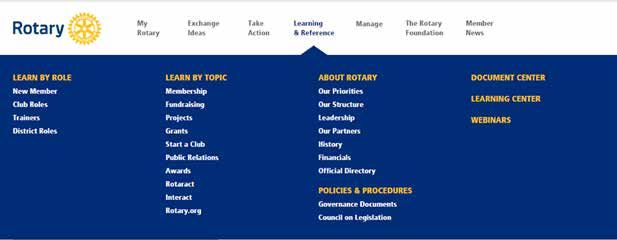
This is the 2015 edition of Lead Your Club: Service Projects
Committee, the manual for club service projects committee
chairs holding office in 2016-17, 2017-18, and 2018-19. The
information in this publication is based on Rotary’s constitution
and policy documents. Please refer to those resources for exact
Rotary policy. Changes to Rotary’s constitution and policy
documents override policy as stated in this publication.
CONTENTS

YOUR JOB AS CLUB SERVICE PROJECTS COMMITTEE CHAIR                                                                                                                                                                                                                                                .....   1

1 COMMITTEE ROLE AND RESPONSIBILITIES                                                                                                                                                                                             ....................................................................   5
   Conducting Service Projects........................................................................................................................................................................                                                                                                   5
   Rotary’s Service Priorities.................................................................................................................................................................................                                                                                          6
   Fundraising...............................................................................................................................................................................................................................................                                            7
   Risk Management.....................................................................................................................................................................................................................                                                                  8

2 CLUB SERVICE PROJECTS COMMITTEE CHAIR                                                                                                                                                                                                                                        11
                                                                                                                                                                                                                                                  ....................................................

   Your Committee............................................................................................................................................................................................................................ 11
   Setting Goals.......................................................................................................................................................................................................................................... 12
   Budget..................................................................................................................................................................................................................................................................... 12

3 RESOURCES                                                 ..........................................................................................................................................................................................................................................   13

APPENDIX
   1. Risk Management for Working With Youth................................................................................................. 17

DISTRICT TRAINING ASSEMBLY DISCUSSION QUESTIONS                                                                                                                                                                                                                                     ..................   19
YOUR
JOB AS
CLUB
SERVICE PROJECTS
COMMITTEE CHAIR
As club service projects committee chair, you help your club meet
real needs in your community and around the world. Find details in
Lead Your Club: Service Projects Committee.
RESPONSIBILITIES
ALL COMMITTEES YOUR COMMITTEE
Attend your district training assembly Plan projects, carry them out, and evaluate them
Identify opportunities for signature projects
Working with the president-elect, select and
that will increase your club’s recognition in the
prepare your committee members
community
Create subcommittees as needed (for example, Work with other organizations, volunteers, and
vocational, community, international, New committee members to maximize the impact of
Generations, fundraising) your projects
Meet regularly and plan activities together Lead efforts to raise money for projects
Set committee goals to help achieve the club’s
Understand liability issues that affect your club
goals for the year and monitor progress toward
projects and activities
them
Work with the public relations committee to
Manage your committee’s budget
promote projects
Work with your club’s other committees and
your district committee on multiclub activities or Collaborate with other clubs on projects
initiatives
Report committee activities and progress to the
club president, board of directors, and the full club
Determine what else your club expects your
committee to do
1GET
CONNECTED! CONNECT
ONLINE
Make your Rotary experience
truly international with these
networking opportunities.
Engage with
other members:
Enhance service Online Discussion
projects: Groups
Rotarian Action
Groups
Make
new friends:
Rotary
Fellowships
Collaborate on
Share
service projects:
your service
Rotary Ideas
accomplishments:
Rotary Showcase
Build peace
and strengthen Share your
relationships: professional
Intercountry talents:
Committees Vocational
Meet prospective Training Team
partners:
Project Fairs Share
international
hospitality:
Rotary Friendship
Exchange
CONNECT WITH
A GROUP Celebrate club
CONNECT
partnerships: IN PERSON
Twin Clubs
EXCHANGE IDEAS: www.rotary.org/myrotary
C14-Rotary-Service-Connections_Ad-EN14.indd 1 11/14/14 3:42 PMINTRODUCTION
Congratulations on your appointment as committee chair. This manual will help
Share chapter 1 with
you set goals and understand your role in helping your club meet real needs in
your committee’s
your community. It includes policy and procedures that all clubs should follow, as
members so they are
well as ideas that you may find useful.
fully aware of their
responsibilities. The job description on page 1 summarizes your responsibilities. You’ll learn more
at your district training assembly, where you can connect and exchange ideas
with other club and district leaders. Review the discussion questions on pages
19-20 before attending.
Questions?
If you have questions about your role, contact other leaders you work with, such
as your assistant governor or a past service projects committee chair. Your Club
and District Support representative is also available to help. We offer support
in eight languages at Rotary.org and through our staff at our headquarters and
international offices.
Send questions about this manual or any Rotary training materials to
learn@rotary.org.
INTRODUCTION 3WHAT ARE YOU WAITING FOR?
BE A VIBRANT CLUB
Be a Vibrant Club guide includes:
• A club success story from your region
• Ideas for your club to try
• Resources for your club on My Rotary
Get your free copy at
shop.rotary.orgCHAPTER 1
COMMITTEE ROLE AND
RESPONSIBILITIES
Rotary clubs are making an impact in communities around the world. The role of
your committee is to lead your club’s project initiatives to make a difference in the
communities you work in.
Remember that there are people who can help you plan and implement your
projects:
• Rotarians and their families and friends
• Community organizations
• Rotaract club members
• Rotary alumni
• Interact club members, Rotary Youth Exchange students, and RYLA
participants
• Rotary Community Corps members
• Members of other Rotary clubs
• Rotarian Action Groups and Rotary Fellowships
Working on projects provides an opportunity for networking and socializing
among club members. Keep members engaged by involving all members in
service projects.
CONDUCTING SERVICE PROJECTS
Your committee is responsible for planning and carrying out successful service
projects that utilize funds and club members’ time to benefit those in need. For
each project, develop a timeline, establish criteria for measuring progress, and
consider the resources and tools available to support you. What follows is the
standard process for planning and implementing a Rotary service project. You
may wish to adapt it to meet the needs of your club.
COMMITTEE ROLE AND RESPONSIBILITIES 51. Assess the situation.
Successful service projects must address real and current community
concerns. Conduct a needs assessment to identify community needs that your
club can address.
2. Choose a project.
The assessment provides criteria for choosing a service project. Consider
community support and involvement, the club’s history of service, resources,
the length of the project, and its sustainability.
3. Make a plan.
Set objectives, develop a work plan, develop a budget, and determine what
liability protection is called for.
4. Carry out your project.
Promote the project, raise funds, and manage project activities. Work with
your club’s public relations committee to make a plan for promoting the
project and managing the club’s public image.
5. Evaluate your project.
Determine what worked and what didn’t. Document your findings and
incorporate them into your club’s project planning process.
For more detailed information about conducting a service project, see
Communities in Action: A Guide to Effective Projects.
ROTARY’S SERVICE PRIORITIES
When planning your projects, choose a community need that falls within Rotary’s
service priorities:
• Areas of focus
–– Peace and conflict prevention/resolution
–– Disease prevention and treatment
–– Water and sanitation
–– Maternal and child health
–– Basic education and literacy
–– Economic and community development
• Avenues of Service: Club Service, Vocational Service, Community Service,
International Service, Youth Service
Strengthen your projects by collaborating with members who have expertise
in a particular area of service, other Rotary clubs, other organizations, and the
community being served. Find partners by:
• Contacting your district Rotary Foundation committee chair or district
programs committee chair
• Networking with other Rotary members at district and international meetings
• Browsing or posting on Rotary Ideas and Rotary Showcase
• Expanding your international connections through fellowship visits with other
clubs and through Rotary Friendship Exchange
• Connecting with fellow Rotarians on social networking sites
• Exploring the Lifecycle of a Project section of Rotary.org
6 LEAD YOUR CLUB: SERVICE PROJECTS COMMITTEEROTARY SERVICE OPPORTUNITIES
Make sure members know about these service opportunities:
PolioPlus — Rotary’s corporate program that supports global polio eradication
efforts
Interact — Service club for young people ages 12-18, sponsored by a local Rotary
club
New Generations Service Exchange — Highly customized vocational or
humanitarian service-related exchanges between two Rotary districts for adults
up to age 30
Rotaract — Service club for young men and women ages 18-30, sponsored by a
local Rotary club
Rotarian Action Groups — International groups of Rotarians, Rotarian
spouses, and Rotaractors who join together to conduct international service
projects related to a specific topic
Rotary Community Corps — Service group of non-Rotarian adults sponsored
by a local Rotary club
Rotary Fellowships — International groups of Rotary members, their spouses,
and Rotaractors who join together to pursue a common recreational or vocational
interest
Rotary Friendship Exchange — International exchange program for Rotarians
and their families that promotes relationships that can evolve into international
partnerships for service projects
Rotary Peace Centers — International education program that offers a master’s
degree or professional development certificate in peace and conflict resolution;
qualified candidates study at one of several established Rotary Peace Centers
Rotary Youth Exchange — International exchange program that promotes
international understanding and peace among students ages 15-19
Rotary Youth Leadership Awards (RYLA) — Local training program for
young people that emphasizes leadership, citizenship, and personal growth
Rotary Grants — Funding available to clubs and districts for humanitarian
service and educational projects
FUNDRAISING
You may need to raise funds for the projects your club conducts. Work with your
Foundation committee on fundraising efforts. A successful fundraising event or
campaign can support projects that make a real difference in people’s lives. If your
club chooses to organize a fundraiser, include the following steps:
1. Determine what you need. Set a target goal amount and identify the type of
event that will realistically yield that amount.
2. Establish a budget. Find out what is available in your club budget and
determine expenses and anticipated revenues.
COMMITTEE ROLE AND RESPONSIBILITIES 73. Identify the resources required to meet fundraising goals. Determine
how many people are needed to plan and carry out the fundraiser.
4. Figure out logistics. Choose an appropriate date and venue for the event.
5. Manage funds appropriately. Establish a tracking procedure before
collecting any funds, and deposit funds in an account opened for the event.
Report to the club and donors on how the funds are used.
6. Organize volunteers. Determine roles and tasks for volunteers, and involve
community members. Set up a fundraising organizing committee.
7. Publicize the event. Identify the target audiences in the club and the
community and plan how you will reach them. Involve the media as
appropriate.
8. Hold the fundraiser. Encourage volunteers to monitor the event’s progress,
noting successes and challenges to be discussed during evaluation.
9. Recognize volunteers, contributors, and sponsors. Follow up with
personalized thank-you notes, photos, and certificates if appropriate.
10. Evaluate the effort. Record lessons learned so they can be applied to future
fundraisers.
11. Ensure continuity for future fundraising efforts. Discuss any
outstanding issues with the incoming treasurer and new members of the
fundraising organizing committee.
Find more information on Rotary.org.
Circularizing Rotary clubs. Rotarians are prohibited from using the Official
Directory as a commercial mailing list or making it available to anyone else
for commercial purposes. The Official Directory is copyright protected. No
organization may conduct a mass mailing to Rotary clubs to request financial or
volunteer support. Please share this information with members of your club to
prevent any abuse of the policy.
Under limited circumstances, it is permissible to contact other clubs about
matters that don’t relate to business interests, with these stipulations:
• Before requesting cooperation from other clubs, a Rotary club must ask
permission from their district governor and state the purpose of the contact.
A club wishing to contact only one club, however, does not need the governor’s
permission.
• Before directly asking for financial support from any other Rotary club or
any individual Rotarians other than its own members, a club must request
permission from the RI Board.
8 LEAD YOUR CLUB: SERVICE PROJECTS COMMITTEERISK MANAGEMENT
As members of the service projects committee, you are in a position
to minimize risk and protect your club’s members, other program
participants, and your club’s assets. Consider three basic questions
when planning activities and service projects:
• What can go wrong?
• If something goes wrong, how will I or the club respond?
• How will any losses be paid for?
If there is a realistic chance that something will go wrong, reduce your
risk by:
• Canceling the activity or event
• Changing the activity or event to minimize the risk
• Creating a plan to address potential problems
• Finding another organization that will agree to participate and share
the risk
Rotary strongly recommends that your club use signed contracts for any
agreement. Having documentation is important in the event of a liability
issue. A contract attempts to clearly define the roles and responsibilities
of each party and can include provisions to limit risk. Keep any legal
documents after the event in case a claim is made later.
We urge clubs to get legal advice about liability protection and
insurance. Protection may come through the incorporation of the club
(or its activities) or the purchase of liability insurance. Clubs in the
United States and its territories and possessions are automatically
covered by general liability and directors and officers/employment
practices liability insurance through a program arranged by RI and
paid for by all active U.S. clubs. Clubs outside the United States should
consider acquiring insurance if they do not already have it. If traveling
abroad for any projects, consider purchasing travel insurance. See the
Manual of Procedure for additional information.
Youth protection. If you’re planning a project that will involve young
Visit the Learning
people, take steps to increase protection, such as volunteer screening,
Center on Rotary.org
selection, and training. Refer to specific youth protection policies for the
and take a course on
Rotary Youth Exchange program and for any project that involves travel
working with youth.
for minors. See appendix 1 for Rotary’s youth protection policy.
Using Rotary Marks. When volunteering or participating in service, be
sure to prominently display the name of your club so that the public will
associate it with the work it is doing. Be sure you are correctly displaying
the Rotary logo and wheel. For policy and guidelines about use, see the
Voice and Visual Identity Guidelines, the Brand Center, or the Manual of
Procedure.
COMMITTEE ROLE AND RESPONSIBILITIES 9LEARN
EVERYWHERE
WITH ROTARY’S
LEARNING
CENTER.
• Take courses
• Find resources
• Connect with an online community
• Talk with other registrants and course moderators
• Customize your user profile and track your progress
Learn how to tell your Rotary story, set goals in Rotary Club Central,
apply for a grant, and much more.
Visit the Learning Center on www.rotary.org/myrotary to learn more.
https://www.rotary.org/myrotary/enCHAPTER 2
CLUB SERVICE PROJECTS
COMMITTEE CHAIR
You’re the chair of your club service projects committee. What happens next?
Meet with the outgoing committee chair, review your club’s bylaws and strategic
plan, and start thinking about who else will be on your committee. You can also
start planning how you will run your committee. In addition to becoming an
expert on your committee’s subject area, you will be managing your committee
members.
YOUR COMMITTEE
In many clubs, members serve on a committee for three years, so it’s likely that
some current committee members will continue into your term. If you need to fill
any openings on the committee, work with the president-elect to find someone
with experience in:
• Community development or service
• International study or travel
• Community volunteering
As chair, you’ll delegate tasks, so you’ll need to determine how best to use the
skills and interests of your committee members. You can prepare them by:
• Informing them of the committee’s ongoing activities and goals
• Pairing new committee members with more experienced ones
• Encouraging them to communicate with counterparts in other clubs
• Notifying them of district activities and meetings
• Sharing resources
Collaborate with your club’s other committees to maximize your club’s impact.
These conversations should be ongoing and can take place at your club’s board
meetings.
CLUB SERVICE PROJECTS COMMITTEE CHAIR 11SETTING GOALS
As chair you make sure the committee sets and achieves annual goals that
support the club’s strategic plan. You’ll set goals with your incoming president
and other club leaders at the district training assembly. The president or
secretary can enter the goals in Rotary Club Central.
EFFECTIVE GOALS
Be sure that the annual goals reflect committee capabilities and club interests.
Goals should be shared, measurable, challenging, achievable, and time-specific.
For example: Our club will conduct a total of two sustainable service projects or
activities that involve at least 100 unique volunteers and benefit 300 community
members.
ACTION PLAN
Work with your committee to develop an action plan, or series of smaller goals or
steps needed to achieve each goal. For each step:
• Set a deadline
• Determine who’s responsible for implementing it
• Decide how you’ll measure progress and success
• Consider which resources you have and get the ones you need
Regularly assess your progress and adjust your goals if necessary.
MOTIVATION
Part of your role as chair is keeping committee members motivated. Remember
that your committee members are volunteers. Common motivators include:
• Assurance that the goal will be beneficial
• Belief that the goal is achievable and will be successful
• Opportunities for fellowship and networking
• Assignments that use each member’s expertise
• Making sure members enjoy their committee work
BUDGET
Before 1 July, work with the outgoing committee chair and the club treasurer
to determine what funds your committee will need and see that these funds
are included in the club’s budget. Be sure to include any planned fundraising
activities.
Oversee committee funds, transactions, and reports, and be aware of the financial
condition of your committee’s budget at all times. If you meet regularly with your
club’s treasurer, you’ll be able to take action if issues arise.
12 LEAD YOUR CLUB: SERVICE PROJECTS COMMITTEECHAPTER 3
RESOURCES
CLUB, DISTRICT, AND SECRETARIAT SUPPORT
• District governor — Can advise you on strategies to make your club more
effective
• Assistant governor — Visits your club at least once per quarter and can answer
questions and offer advice
• Other club committee chairs in your district — Serve as a source of new ideas
and are potential partners in club initiatives
• Past club committee chairs and leaders — Advise you as you plan for the year
• Rotary coordinators — Offer support and know-how to boost your club
membership and keep members engaged
• Club and District Support representatives — Staff members at Rotary
headquarters or international offices who are available to answer
administrative questions and direct other inquiries to appropriate Rotary staff
• Rotary Support Center — A team available to answer questions; can be reached
at contact.center@rotary.org or toll-free (within the U.S. and Canada) at
866-9-ROTARY (866-976-8279); Rotarians outside North America should
contact their international offices
POLICY AND REFERENCE DOCUMENTS
• Manual of Procedure — Policies and procedures of Rotary International and
its Foundation established by legislative action, the RI Board of Directors, and
the Trustees of The Rotary Foundation, issued every three years following the
Council on Legislation; contains RI constitutional documents
• Rotary Code of Policies and Rotary Foundation Code of Policies
• Recommended Rotary Club Bylaws
• Standard Rotary Club Constitution
RESOURCES 13ONLINE RESOURCES
• Rotary.org — Rotary’s website gives club leaders the information, resources,
and tools they need to support all their club activities; go to My Rotary to
access club-level resources for developing membership, creating promotional
materials, running your club, fundraising, and more
TAKE ACTION
• Rotary Showcase — Online tool where finished projects can be posted for
others to browse
• Rotary Ideas — Online tool where you can get service ideas or ask for
contributions, volunteers, materials, or partners for your projects
LEARNING & REFERENCE
• Learning Center — Take courses to develop your skills and learn more about
Rotary
• Official Directory — Contact information for RI and Foundation officers,
committees, resource groups, and Secretariat staff; worldwide listing of
districts and governors; alphabetical listing of clubs within districts, including
contact information; issued annually
• Awards — Rotary awards and recognition programs
MANAGE
• Shop.rotary.org — Rotary’s online store for ordering publications, DVDs, forms,
and supplies
• Club administration — Manage your club’s member lists, officers, club
information, and more
• Brand Center — Customize your club brochure and download Rotary logos
14 LEAD YOUR CLUB: SERVICE PROJECTS COMMITTEECOMMUNICATIONS AND PUBLICATIONS
• Communities in Action: A Guide to Effective Projects — Guide to developing,
carrying out, and evaluating a service project
• Rotary’s Areas of Focus — An introduction to the six areas of focus, with
examples of service projects for each
• Community Assessment Tools — Explains how to identify effective service
projects within the community
• An Introduction to New Generations Service — Resource that introduces
Rotary clubs to Interact, Rotaract, Rotary Youth Exchange, Rotary Youth
Leadership Awards, youth protection, and alumni activities
• An Introduction to Vocational Service — Provides information, resources, and
project ideas related to vocational service
• Interact Handbook — Guide to organizing and administering an Interact club
• Rotaract Handbook — Guide to organizing and developing a Rotaract club
• Rotary Community Corps Handbook — Basic steps for organizing an RCC,
including case studies, tips for identifying potential leaders, and program ideas
• Rotary Fellowships Handbook — Guide to organizing and promoting Rotary
Fellowships
• Rotary Youth Leadership Awards Handbook — Guide to organizing club or
district events that develop leadership among young people
• Youth Exchange Handbook — Guide to operating a Rotary Youth Exchange
program
• Standard Rotary Club Constitution
• Rotary Code of Policies and Rotary Foundation Code of Policies — Policies and
procedures established by the RI Board of Directors and the Trustees of The
Rotary Foundation in support of the RI Constitution and Bylaws
• Rotary Foundation Reference Guide — Concise compilation of the programs
and services of The Rotary Foundation
• Be a Vibrant Club: Your Club Leadership Plan — Regionalized publication with
examples of how clubs have gone from mediocre to vibrant
• Rotary Leader — A bimonthly online newsletter for Rotary club and district
leaders
• Rotary magazines — The Rotarian, Rotary’s official monthly magazine, and
30 Rotary regional magazines in 24 languages
• Voice and Visual Identity Guidelines — Guidelines for the design of
publications at all levels of Rotary and for the proper use of Rotary Marks
• Strategic Planning Guide — Short guide and worksheet to help clubs create a
vision with supporting long-range and annual goals
• Rotary newsletters — Electronic newsletters about specific Rotary-related
topics, such as membership, polio eradication, public relations, and The Rotary
Foundation
RESOURCES 15APPENDIX 1: RISK MANAGEMENT FOR
WORKING WITH YOUTH
When Rotary clubs work with youth, they make an investment in the future of their
communities and Rotary itself — but this investment is only successful if these activities are
administered responsibly. Our youth programs do not exist in vacuum; they operate in a world
that is sometimes dangerous. Risk management involves understanding possible risks involved
with youth activities, such as injury, illness, and abuse, so that they can be prevented and their
impact reduced. Your club should consider the following points when developing safe processes
for working with youth:
• Develop and implement a club youth protection policy that addresses physical, sexual,
and emotional abuse or harassment. Ensure that any reports of abuse or harassment are
communicated to district leadership and/or local law enforcement immediately. Contact
your district for additional policy details and requirements.
• Establish a code of conduct for adult and youth participants. These rules should reflect local
laws, cultural standards, and any applicable policies of the district or club, as well as best
practices for youth protection.
• Review your club’s policies to ensure they are in line with the district’s policies and with
specific Rotary Board-guidelines for each youth program.
• Stay in regular communication with district leaders to coordinate fast action during
potentially dangerous situations.
• Consider these questions when sponsoring a youth program or event:
–– What happens if someone is injured?
–– What happens if a participant reports inappropriate or dangerous behavior?
–– What happens if a natural disaster strikes during the program or event?
• Work to minimize potential risks in these ways:
–– Implementing volunteer screening and training programs as required by your district
policies and in line with best practices
–– Teaching participants about safe behavior during the program
–– Developing a disaster emergency plan and practicing it
–– Purchasing adequate liability insurance coverage for your region
If any club activities involve the travel of minors outside of their home communities, contact
your district to guarantee all youth travel guidelines are followed. All activities where the
responsibility for organizing the hosting arrangements and travel of youth participants is
transferred to a foreign Rotary entity, such as Rotary Youth Exchange, must be administered
with the approval and oversight of a certified Rotary district.
Many health insurance policies provide only limited coverage when traveling or living away
from home. For this reason, all participants that will be traveling are required to verify that their
health and life insurance provides adequate coverage. Participants should consider obtaining
travel insurance that includes coverage for medical expense reimbursement, repatriation of
remains, emergency evacuation, and accidental death and dismemberment. Clubs and districts
are urged to contact a local insurance professional to determine whether their insurance
policies provide adequate coverage for their youth programs.
APPENDIX 17It is also recommended that clubs consult local legal counsel before signing any agreement
or contract with another youth-serving organization. These documents may contain waivers,
hold-harmless, or indemnification agreements that may attempt to release a party from liability
and transfer the risk to the club or district. Be aware that Rotary International is not liable for
any illness or injury to persons, including participants and organizers, or for damage to any
property.
Rotary’s Statement of Conduct for Working With Youth
Rotary International strives to create and maintain a safe environment for all youth who
participate in Rotary activities. To the best of their ability, Rotarians, Rotarians’ spouse,
and partners, and other volunteers must safeguard the children and young people they come
into contact with and protect them from physical, sexual, and emotional abuse.
18 LEAD YOUR CLUB: SERVICE PROJECTS COMMITTEEDISTRICT TRAINING ASSEMBLY
DISCUSSION QUESTIONS
When considering these questions, talk to outgoing and incoming club leaders to share ideas.
What are the responsibilities of the club service projects committee, and what are your
responsibilities as chair?
What club goals are assigned to your committee?
What kinds of projects will have the greatest impact on the community?
DISCUSSION QUESTIONS 19What fundraisers will generate funding for projects? What will you delegate to committee members, and how will you support them? What is your club’s signature project? Does your signature project reflect your club’s vision? 20 LEAD YOUR CLUB: SERVICE PROJECTS COMMITTEE
ROTARY CLUB CENTRAL
     PLAN TOGETHER
     TRACK PROGRESS
     ACHIEVE GOALS

     Why should clubs use
     Rotary Club Central?

              It’s a one-stop shop.

              It eliminates paper.                       How do I get to
                                                         Rotary Club Central?
              It fosters continuity in                   Go to www.rotary.org/clubcentral.
              leadership.
                                                         Who can use Rotary
              It enables clubs to track their            Club Central?
              progress.                                  All Rotarians can view the goals
                                                         and achievements for their club.
              It creates transparency.                   The current and incoming club
                                                         president, secretary, executive
                                                         secretary, treasurer, Foundation
              It showcases the important                 chair, and membership chair
              work that Rotary clubs do                  can add and edit the goals and
              worldwide.                                 achievements for their club.

                                      ROTARY CLUB CENTRAL: www.rotary.org/clubcentral

One Rotary Center
1560 Sherman Avenue
Evanston, IL 60201-3698 USA
www.rotary.org                                                                       226D-EN—(315)
You can also read


