2018 Waikato River Clean-up Trust - Funding Strategy - Waikato River Authority
←
→
Page content transcription
If your browser does not render page correctly, please read the page content below
Waikato River Clean-up Trust
           Funding Strategy
                               2018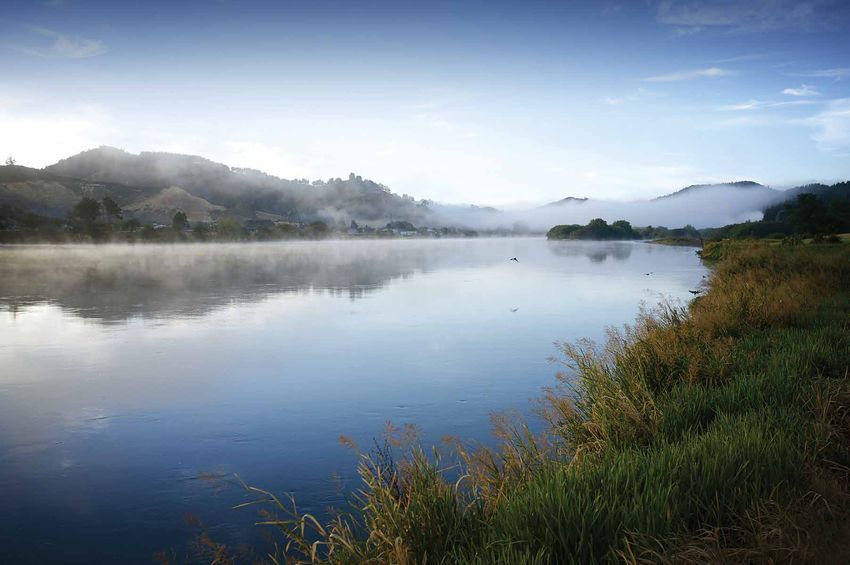
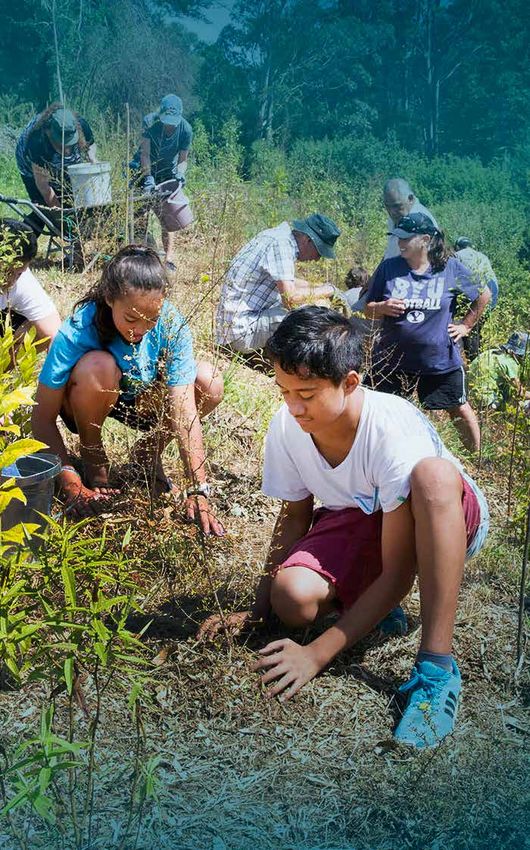
Cover photograph: The Kukutāruhe Gully in Fairfield Hamilton is undergoing a major restoration. The multi year community
                          project received funding from the Waikato River Authority in 2017.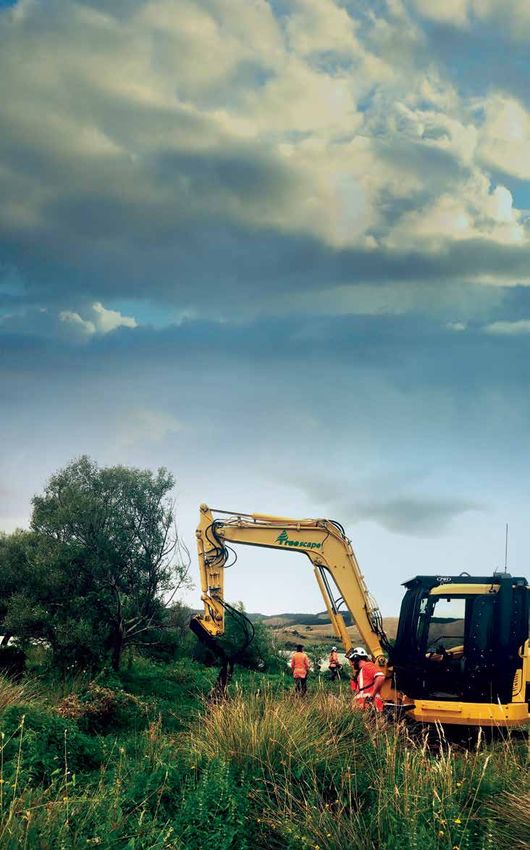
Contents
Introduction from the Co-chairs					4

The Waikato River and its catchment 				6

Map of the Trust area						7

Section 1: Background
       1.1   The Authority and its role				                             8
       1.2   The purpose of this document				                           8
       1.3   The Waikato River Clean-up Fund				                        8
       1.4   Background documents to support applications		             9

Section 2: Criteria for applicants and applications
       2.1   Criteria for applicants and applications			                10
       2.2   Threshold criteria					                                    10
       2.3   Objectives outlined in legislation				                     10
       2.4   General requirements for all applicants			                 11
       2.5   Other matters for consideration				                        12

Section 3: Priorities for funding
      3.1    Background						13
      3.2    Priorities						13

Section 4: Information requirements
      4.1    Information requirements and priorities to guide applicants 16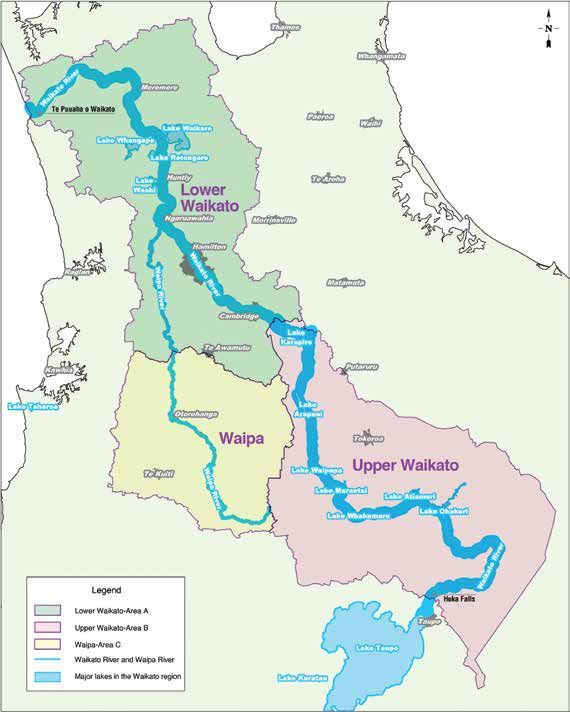
From the Co-chairs
                                                                         This is the 8th Funding Strategy to be published since the inception of the Waikato
                                                                         River Clean-up Trust and its sole Trustee the Waikato River Authority.

                                                                         Teena koutou, teenaa koutou, teenaa koutou         being made in cleaning-up the river. In this
                                                                         katoa.                                             regard, a follow up Report Card on the health
                                                                         The 2018 funding round for the Waikato River       and wellbeing of the river is an important
                                                                         Clean-up Trust is especially significant in that   undertaking so we can all understand the
                                                                         it will be the first year that the Restoration     journey and progress towards achievng Te
                                                                         Strategy for the Waikato River and Waipaa River    Ture Whaimana.
                                                                         is able to guide funding initiatives.              An ongoing challenge in reporting on both
                                                                                                                            the effectiveness of the Authority and clean-up
                                                                                                                            progress for the rivers, is the long-run nature
                                                                            The development of the Restoration              of our water and river systems. The lag times
                                                                            Strategy was a multi year undertaking and       from when potentially damaging environmental
                                                                            was recently launched by the Hon David          activity takes place, through to when this may
                                                                            Parker Minister for the Environment.            show up in water quality, makes oversight of
                                                                            The Restoration Strategy has been a             change difficult to see within a short space
                                                                            joint project between Waikato Regional          of time.
                                                                            Council, DairyNZ and the Waikato River
                                                                                                                            We look forward to receiving and approving
                                                                            Authority. It is a blueprint for restoration
                                                                                                                            more high quality collaborative projects this
                                                                            work in the catchment for the next five to
                                                                                                                            year that will help us achieve the vision for
                                                                            15 years. While the Restoration Strategy
                                                                                                                            the Waikato River.
                                                                            is not duplicated here in this 2018 Funding
                                                                            Strategy, it is very much a companion           Ngaa mihi,
                                                                            document in laying out restoration
                                                                            priorities.
Restoring and protecting the health and wellbeing of the Waikato River

                                                                         A special priority for the Clean-up Trust and
                                                                         the Authority through the next funding round
                                                                         is to have work undertaken to achieve greater
                                                                         clarity around the effectiveness of projects
                                                                         funded by both the Waikato River Clean-up
                                                                         Trust and others.
                                                                         The Authority is constantly mindful of the need    Tukoroirangi Morgan       Hon John Luxton
                                                                         to report on its progress and the headway          Co-chair                  Co-chair

 4
Waikato River Clean-up Trust Funding Strategy 2018
Right: The Ngati Haua Mahi Trust
has overseen major environmental Above: Te Arawa River Iwi Trust’s
work at the Karapiro Stream. Matauranga Wai Ora Enviro Educational
The work was the focus of a field Project funded by the Waikato River
trip which included Ministry for Authority is now well underway. Children
Environment officials. from Whakarewarewa School take part in an
education day at Kaaroa Marae at Horohoro.
Right: Some of the whaanau and
elders from Ngaati Reko and
Waikeri-Tangirau who are at the
heart of setting the direction for
the Tangirau Wetland Restoration
project which has received funding
from the Authority.
Above: The Waikato River Authority funded a
rowing and paddling regatta on the Waikato
River in 2017. The prize giving and picnic for
the Waikato 100 was held at the Elbows Ski
Club at the finish of the inaugural event.
5
A major wetland restoration around the Matahuru Stream on the southern shores of Lake Waikare has made strong progress.
The project was led and managed by the Nikau Estate Trust with funding from the Waikato River Authority.The Waikato River
and its catchment
The Waikato River and its region has been populated for at least the past 700 to 800
years. The river provided physical and spiritual sustenance for large populations
of Maaori living along its catchment. Throughout that time it was a source of food,
including tuna, other fish and plants. It was also an important waka route.
With the arrival of European settlers in the 1840s In 2012 the Nga Wai o Maniapoto legislation
and 1850s the Waikato River was the main access was enacted to include the upper catchment of
route inland for traders and missionaries. the Waipa River through to its junction with the
Waikato River. The Vision & Strategy now applies
The last hundred years have seen sweeping
to the whole of the Waipa River catchment.
changes to the region’s landscapes where people
have settled, used and created resources. Over The Vision & Strategy incorporates the objectives
time, the human activities along the Waikato River sought by Waikato-Tainui and that also reflect
and the increasingly intensive land uses through the interests of Waikato River iwi and of all New
its catchments have degraded the Waikato River Zealanders.
and reduced the relationships and aspirations of These objectives encompass all people of the
communities who identify with the Waikato River. Waikato River and their relationships with it –
through their communities, industries, and their
This degradation of the Waikato River and its environmental, recreational, social and cultural
catchment has severely compromised Waikato pursuits.
River iwi in their ability to exercise kaitiakitanga
or conduct their tikanga and kawa. A number of important actions are being taken to
support the achievement of the Vision & Strategy,
This degradation of the Waikato River and its such as the Waikato Regional Council’s Healthy
catchment has severely compromised Waikato Rivers plan change.
River iwi in their ability to exercise kaitiakitanga or
Restoring and protecting the health and wellbeing of the Waikato River
conduct their tikanga and kawa. A number of important actions are being taken to
Through the Treaty Settlement process between support the achievement of the Vision & Strategy,
Waikato-Tainui and the Crown the Guardians such as the Waikato Regional Council’s Healthy
Establishment Committee was formed with the Rivers plan change.
support of other Waikato River iwi. In 2009 the This plan change, with a focus on water quality
Guardians Establishment Committee finalised within the catchment, will provide a regulatory
its Vision & Strategy for the Waikato River. That framework to help achieve the objectives of the
Vision & Strategy, “to restore and protect the Vision & Strategy. Alongside this the development
health and wellbeing of the Waikato River”, has of a five - 15 year restoration strategy for the
been incorporated in the settlement legislation for catchment should result in a more cohesive,
the Waikato River Raupatu Claim – the legislation prioritised and coordinated approach to
under which the Authority is constituted. The restoration activities in the years to come.
Authority assumed guardianship of the Vision &
Strategy at the time of its formation in 2010.
6Waikato River Clean-up Trust Funding Strategy 2018
Map of the Trust area
71/ Background and context
1.1 The Authority and its role
The overarching purpose of the legislation that created the Waikato River Authority (‘the
Authority’) and the Waikato River Clean-up Trust (the ‘Trust’) is to restore and protect the health
and wellbeing of the Waikato River and its catchment for future generations.
The purpose of the Authority is to:
• Set the primary direction through the Vision & Strategy to achieve the restoration and
protection of the health and wellbeing of the Waikato River for future generations
• Promote an integrated, holistic, and co-ordinated approach to the implementation of the
Vision & Strategy and the management of the Waikato River
• Fund rehabilitation initiatives for the Waikato River in its role as trustee for the Waikato
River Clean-up Trust.
The Authority is the sole trustee of the Waikato River Clean-up Trust. The Trust administers
and distributes a contestable fund to work towards the restoration and protection of the health
and wellbeing of the Waikato River for present and future generations (this forms the Trust’s
objective). In doing so it must pay adequate regard to the Vision & Strategy and the Waikato River
Independent Scoping Study (WRISS). As the sole trustee the Authority determines which projects
receive funding in accordance with criteria set annually.
The area that this Strategy applies to is the Waikato River and its catchment from Huka Falls to
Te Puuaha o Waikato and the upper catchment of the Waipa River through to its junction with
the Waikato River (as shown in the map on page 7). The “River” is defined in the Settlement
Legislation as including the main stem, the tributaries, and all associated lakes and wetlands
within the catchment.
1.2 The purpose of this document
The Trust reviews funding priorities annually to ensure funding continues to be aligned with
the objectives of the Trust and the Authority. To help achieve this the Authority has formed,
with other members of the community, the Waikato River Restoration Forum to support a
comprehensive and connected approach to clean-up projects.
This document forms the Funding Strategy for 2018 for the Trust. It presents the criteria that the
Authority believes will best position the Trust to award funds in a fair and consistent manner to
projects that will not only meet the requirements set out in its legislation but will also lead to
the most effective response for the restoration and protection of the health and wellbeing of the
Waikato River and its catchment.
Restoring and protecting the health and wellbeing of the Waikato River
Priorities are presented both in terms of the geographical areas the Authority believes should
draw particular focus from applicants, and also the nature of the projects the Authority believes
are a high priority in and across those geographical areas.
1.3 The Waikato River Clean-up Fund
The Trust is responsible for administering a Clean-up Fund of $220 million over 30 years. This
year the Trust has decided that up to $6 million will be available in the funding round.
Annual funding decisions are based on:
• Applicants meeting the funding criteria
• Applications being for projects identified as priority areas by the Trust
• The quality of the applications received.
8Waikato River Clean-up Trust Funding Strategy 2018
The Clean-up Fund is contestable. The Trust may or may not award all or any of the identified
funds in a funding round as this will depend on the quality of applications received and the
quantity of funding sought by applicants. The Trust may also award a lesser amount than that
applied for.
The timing for this round of funding is:
• Funding round opens for applications 2 July 2018
• Funding applications close 23 August 2018
• Decisions announced to successful applicants in October 2018
• Deeds of Funding completed by 30 January 2019 (the Trust reserves the right to
withdraw funding from applicants not able to complete the Deed of Funding as required).
Applications should be for works that are intended to start on or after 1 February 2019.
The Trust is open to funding a range of projects at different scales and over varying time frames.
This could include one-off short term projects as well as projects taking up to five years, all to be
funded from the current funding round.
All applications for funding must be completed using the application portal available on the
Authority’s website www.waikatoriver.org.nz. This will be available as of 2 July 2018.
1.4 Background documents to support applications
Applicants may find the following documents useful background in preparing applications:
• The Waikato-Tainui Raupatu Claims (Waikato River) Settlement Act 2010 and the Waikato
Tainui Environmental Plan
• The Ngati Tuwharetoa, Raukawa and Te Arawa River iwi Waikato River Act 2010
• The Nga Wai o Maniapoto (Waipa River) Act 2012 and Ko Tā Maniapoto Mahere Taiao –
The Maniapoto iwi Environmental Management Plan 2016
• The Vision & Strategy for the Waikato River
• The Waikato River Independent Scoping Study.
These documents are available online at www.waikatoriver.org.nz along with a list of previously
funded projects. Applicants should also consider the priorities identified within the various
River iwi (Tuwharetoa, Te Arawa, Raukawa, Waikato-Tainui, and Maniapoto) environmental
management plans, fisheries plans and associated environmental prioritisation documents
(e.g. Maniapoto Priorities for the Restoration of the Waipa River Catchment), as well as other
catchment focused restoration strategies when developing their application.
92/ Criteria for applicants and applications
2.1 Criteria for applicants and applications
The four key guiding concepts for the Trust are: Protect – Restore – Health – Wellbeing. In
relation to the Waikato River and its catchment these concepts define much of the criteria for
what sort of projects should be funded. The Trust has developed a range of criteria that guide
applicants in considering whether (and how) to prepare an application for funding. Some of these
criteria are mandatory (i.e. all applicants must meet them), and others are intended to guide
applicants in terms of the Trust’s priorities.
2.2 Threshold criteria
The Trust expects that all applications should meet the following broad ‘threshold tests’ before
being considered eligible for funding:
• Any organisation or group applying for funds of more than $25,000 must be GST registered
(this includes organisations who make multiple successful applications in a single funding
round that total over $25,000)
• Projects must be focused on one or more of the four key guiding concepts of protecting,
restoring, health and wellbeing in relation to the Waikato River and its catchment
• Projects must be technically achievable, and applications must clearly demonstrate this
• Preference will be given to projects that are able to demonstrate to a high level, certainty
of success
• Applicants must describe how the project will achieve benefits in regard to the four
wellbeings of cultural, social, environmental and economic
• Applicants must know the outcomes the projects will deliver and be clear what constitutes
‘success’. Project applications must demonstrate how monitoring against objectives will
occur (e.g. site visits and peer review both during the project and after it is completed)
• The project should provide an outcome that will be maintained into the future without the
need for ongoing funding from the Trust.
2.3 Objectives outlined in legislation
In addition to the Threshold Criteria above, all applications for projects are required to meet the
objectives of the Trust outlined in the legislation and summarised below. These include:
a) The Trust should not fund a project or a part of a project that another agency should or
would fund (or be likely to fund) in the normal course of its operations if the Trust did not
Restoring and protecting the health and wellbeing of the Waikato River
exist, eg. fencing of waterways on dairy farms, or activities that a territorial authority should
undertake as part of their role would not be funded
b) The Trust seeks efficiency in the allocation and use of funding, including having particular
regard to the desirability of applicants using matching or supplemental funding from other
sources, ie. higher co-funding (either in-kind or cash) is beneficial
c) Preference will be given to projects that achieve practical results over projects that are
purely for research purposes
d) The Trust requires that adequate regard be given to the Vision & Strategy in
applications, including clear demonstration of how proposed projects will give effect to
the Vision & Strategy
e) The Trust requires that adequate regard be given to the report of the Waikato River
Independent Scoping Study
f) The Trust requires that adequate regard be given to any other relevant research (either
within or outside the Waikato Catchment)
10Waikato River Clean-up Trust Funding Strategy 2018
g) The Trust requires that adequate regard be given to the extent to which projects would
further iwi environmental plans, in the case of applications from iwi or applications based
on Maatauranga Maaori or on the mauri of the Waikato River.
2.4 General requirements for all applicants
In addition to each application meeting the criteria outlined above, all prospective applicants
must meet the following general criteria:
• GST
All funding applications must refer to GST inclusive figures at all times. Because the
Waikato River Clean-up Trust receives its funding from the Crown in GST inclusive amounts,
all funding business will be conducted in this way.
• Legal Entity
Funding applicants must be a legal entity in New Zealand, and for projects over $25,000
(or multiple successful applications from a single entity amounting to more than $25,000 in a
single funding round) must be GST registered. Applicants must not be currently registered as
bankrupt or insolvent.
• Health and Safety
All applicants must confirm that they understand their health and safety obligations in
relation to the work for which a grant is sought, and have considered these in connection
with the methods, materials, personnel and timeframes proposed. They must also confirm
that they have procedures in place to meet these obligations. Where a project involves work
which has the potential to result in injury or illness, applicants must provide a draft health
and safety plan as part of the application.
• Trust Indemnified
If the Trust suffers any loss or damage as a result of any act or omission of a Recipient, its
employees, agents or contractors, the Recipient shall fully indemnify the Trust.
• Deed of Funding
All successful applicants will be subject to the terms and conditions of the Trust – The Deed
of Funding (available from www.waikatoriver.org.nz). The Deed of Funding, which represents
the funding contract between the Authority and the Recipient, must include a detailed project
plan. This plan, at a minimum, shall contain:
Deliverables (the identifiable outcome(s) that will be delivered by the project as a whole)
• Key tasks (the key activities that will be undertaken to deliver the project successfully and
for which reporting and invoicing will occur)
• A project budget including requested contributions from the WRA, cash co-funders and
in-kind contributors.
• Co-funding
The Authority anticipates that all successful applications will have an element of co-funding
included as part of their project. All other things being equal, the greater the level of
co-funding, the greater the weight the Trust will give to the application. Co-funding can only
include new funding, and not funding used or activity undertaken prior to this specific project
being started. Quantified in-kind activity may constitute an element of co-funding as may
funding from other sources.
• Financial and Reporting Systems
The Authority requires all applicants to maintain sufficient financial and reporting processes
to provide confidence that any funds awarded are used in the most appropriate manner to
achieve the objectives of the project.
112.5 Other matters for consideration
Related projects
The Trust considers it advantageous if newly funded projects are related to adjacent or nearby
restoration and/or protection projects, and/or build on existing initiatives. Previously funded
projects may be found at www.waikatoriver.org.nz/funded-projects/
The Trust recognises set-up costs may be required as part of applications for funding and these
costs may include research, tools, training, and extension programmes. They must not include
any capital purchases (i.e. items that can be used beyond the life of the project as part of a
business e.g laptops, ipads, and machinery).
The Trust requires applicants to consult with the appropriate Waikato River iwi who hold mana
whenua relevant to the project area.
The Trust will not fund works that are required arising from the statutory planning framework
within the Waikato region, or by industry regulation.
The ‘polluter pays’ principle will apply to projects and the Trust will not generally fund a project
to address discharges or contamination that are the responsibility of the entity that created
them. In exceptional circumstances the Trust may consider funding projects with a high degree
of public good on a co-funding basis with polluters.
It is important to note that the Trust provides funds to cover the costs incurred in completing an
agreed project, up to the maximum value approved. Projects will be reimbursed for actual costs
incurred only. Unspent funds will be used by the Authority for future restoration activities.
Healthy Rivers Plan
The Trust will not fund works that are clearly required as part of the proposed Healthy Rivers
Plan. In particular, fencing projects that entail only the minimum requirements of the Plan will
not be eligible to receive a funding contribution for that part of the project. Applications will
however be considered where works proposed go beyond the Plan requirements e.g. through
larger fencing setbacks.
Fencing standards
All projects receiving funding which include a component of planting are required to have
permanent stock proof fencing erected to protect the planting. The following fencing standards
have been developed to provide guidance as to the minimum standard required.
Electric Standard
Sheep (and cattle) 5 wire, permanent posts 7 wire, post and batten
Restoring and protecting the health and wellbeing of the Waikato River
Cattle only 3 wire, permanent posts 5 wire, permanent posts
Note: grant funds may not be used for fencing of waterways on dairy or dairy support properties
unless they go beyond the standards required by industry regulation.
Protection of sites
Where funding of greater than $100,000 is provided by the Trust, it is likely that a condition of
funding will be that a protection mechanism (e.g. covenant or encumbrance) be put in place to
protect the work undertaken. This will be treated on a case by case basis however applicants
should state whether works will be legally protected as part of the application.
12Waikato River Clean-up Trust Funding Strategy 2018
3/ Priorities for funding
3.1 Background
The Trust consulted widely and through its networks has drawn on a wide range of sources to
develop its priority areas.
In setting the following priorities the Trust has also given adequate regard to the Waikato River
Independent Scoping Study (WRISS). The key purpose of the WRISS was to provide the Crown
and Waikato River iwi with a sound and objective basis on which to make decisions about the
priority actions required to restore and protect the health and wellbeing of the Waikato River for
future generations.
The Trust will also give priority to projects which are identifed in the Waikato and Waipa River
Restoration Strategy. This strategy was published in April 2018 and provides further guidance on
specific projects that will help to achieve the Vision & Strategy.
3.2 Priorities
Priorities for funding fall into nine areas. The first three of these areas are geographically based.
1. Karapiro Dam to Te Puuaha o Waikato (the mouth of the Waikato River) referred to in
map Area A (page 7)
Priorities for Trust funding for this area include projects that address or demonstrate:
• Tangible outcomes in improving lake, river and stream water quality
• Improving habitat quality and connectivity for taonga species including tuna
• Projects that improve the passage of native fish species, including improved
downstream passage of large migratory species
• Habitat and water quality enhancement at high priority lakes including Lakes Waahi,
Waikare, Whangape and Rotoroa
• Restoration of whitebait spawning sites, including artificial habitat in the short term
until native vegetation re-establishes
• Restoration of waterways in the Karapiro, Mangaonua, Matahuru, Waerenga and
Mangawara catchments, and other priority catchments as identified in the Waikato and
Waipa River Restoration Strategy
• Improving the health of wetlands, including the Whangamarino wetland
• Improved access to the Waikato River, including to sites of significance to Haapu and
marae
• Investigating native species establishment as dominant predators in the Waikato River
and its lakes including through the impacts of koi carp removal
• Projects that support an integrated approach to managing alligator weed and yellow
flag iris in order to protect current and future restoration investment.
2. The Waipa River catchment referred to in map Area C and part of map Area A (page 7)
Those applications that are based on the mauri of the Upper Waipa River should consider
and document the extent to which the project will further the achievement of the Maniapoto
Environmental Management Plan and Maniapoto Priorities for Restoration of the Waipa River
Catchment. Discussion of such projects with the Maniapoto Maori Trust Board is required.
Priorities for Trust funding for this area include projects that address or demonstrate:
• Tangible outcomes for water quality, in particular through reduction of sediment and
E.coli load to the Waipa River
• Projects identified in the Waikato and Waipa River Restoration Strategy, and the
the Waipa Catchment Plan, particularly those in the Moakurarua, Kaniwhaniwha,
Waitomo, Mangaokewa and Mangapu catchments
• Land retirement/afforestation of severely eroding land, including hill country planting
and forestry
13• Restoration of river network connectivity to enable biota to access upstream habitats
• Wetland protection and restoration including of puna
• Protection of habitat of significant fisheries including tuna and pihirau
• Stabilisation of erosion hotspots including river banks at a scale appropriate for
reducing suspended sediment loads
• The preservation of sites of significance along the Waipa River
• The outcomes of the Upper Waipa Feasibility Study.
3. Above the Karapiro Dam to the Huka Falls referred to in map Area B and part of map
Area A (page 7)
Priorities for Trust funding for this area include projects that address or demonstrate:
• Implementation of projects identified in the Waikato and Waipa River Restoration
Strategy
• Tangible outcomes in improving water quality including through nutrient reductions
• Wetland restoration, protection and recreation, including headwater seeps and springs
• Restoration and enhancement of waterways and puna of cultural significance to iwi
• Protecting the diversity of natural landscapes such as unique geothermal landscapes
• Protection and restoration of native fisheries and their habitats, including improved
migration corridors for native species, especially tuna
• Improving the cultural, environmental and recreational values of the Waikato River
hydro lakes
• Supporting Maori land blocks to achieve sustainability outcomes, where such outcome
give effect to the Vision & Strategy
• Projects that support the implementation of Iwi Environmental Management Plans,
including the development of such plans
• Improving access to the Waikato River, in particular to sites of significance to Hapuu
and marae.
4. Maatauranga Maaori
We support projects specifically identified as Maatauranga Maaori. However Maatauranga
Maaori may be supported in any of the funding areas outlined and, where appropriate, this
should be acknowledged.
Maatauranga Maaori is usually used to mean ‘Maaori knowledge’ – distinctive knowledge
Restoring and protecting the health and wellbeing of the Waikato River
created by Maaori in history and arising from their living circumstances, their world view
and their experiences.
The Trust encourages applications that recognise the important contribution of
Maatauranga Maaori to the clean-up of the Waikato River and its catchment. Projects that
work to reinvigorate the relationship of the Waikato River iwi and the Waikato River will be
especially supported. Seven key areas have been identified:
i. The improvement of the health and wellbeing of the Waikato River through the practice
and implementation of Kaitiakitanga by its iwi, including through their tikanga
ii. The preservation and dissemination of traditional knowledge relating to the Waikato
River, including knowledge of the historical connection of iwi to the Awa
iii. The development of kaitiaki tools to support Haapu and marae, including water quality
monitoring kits
iv. Restoration and enhancement of the mauri of the waterways in the Waikato River
catchment
v. The preservation of sites of significance to iwi, including the preservation of knowledge
of sites that no longer remain
vi. Projects that support the creation, restoration and/or enhancement of kai producing
14 areas including for waatakirihiWaikato River Clean-up Trust Funding Strategy 2018
vii. Other projects identified as iwi priorities in the Waikato and Waipa River Restoration
Strategy, and that meet the funding criteria of the Trust.
5. Projects that have a community outcome associated with the Waikato River and its
catchment
These may include (but are not limited to) projects that:
• Involve community catchment care groups
• Improve public access and experience of the Waikato and Waipa Rivers, including
through the use of signage and electronic media
• Support liaison between groups engaged in Clean-up Trust funded projects
• The undertaking of educational and communication activities that promote awareness
of the values important to Waikato and Waipa River Iwi and that improve catchment
understanding of the Vision & Strategy
• Include a training/educational component that provides increased capacity within the
skilled labour force required for river protection and restoration works.
6. Projects that contribute to iwi capacity building
• Applications that assist River Iwi Trusts in providing professional capacity building and
training opportunities to their marae and Hapuu. This may include (but is not limited to)
support with project management and reporting, Health and Safety training and field
operations.
• Applications that support collaboration and partnerships with tangata whenua.
7. Projects that help to demonstrate the effectiveness of projects funded by both the
Waikato River Clean-up Trust and others
These may include (but are not necessarily limited to):
• Further development of the Waikato River Report Card
• Projects that focus on using spatial technology as a means to report on the location,
quantum, and effectiveness of funding and restoration efforts.
8. Projects that improve water quality in streams, wetlands, lakes and drains that flow
into the Waikato River and its catchment
• Projects that make use of innovative technologies and approaches to improve water
quality in lakes, streams and rivers.
154/ Information requirements
4.1 Information requirements and priorities to guide applicants
All applications for funding must be completed using the application portal available on the
Authority’s website www.waikatoriver.org.nz. Applications must contain the following information:
Objectives of the proposed project
• What is the project, what are the benefits, when and where will it occur, and how long will it
take?
Outcomes of the proposed project
• Identify the specific outcomes that the project will deliver.
Vision & Strategy
• Outline how the proposed project will contribute to the Objectives and Strategies in the
Vision & Strategy.
Fit with funding strategy
• Identify how the criteria and priorities for the Trust are met, as outlined in this Funding
Strategy 2018.
Scope
• Identify both what is in, and out, of scope.
Proposed approach
• Identify the proposed approach to successful implementation, including major tasks,
deliverables (with dates) and budget.
• Identify approach to reporting, both during and after the project is completed.
Personnel
• Identify the proposed team and their respective roles, including any subcontractors (where
known).
Costs
• Provide a breakdown of the estimated costs (in GST inclusive amounts) of the proposed
project, clearly linking costs to the tasks in the application. Identify any matching or
supplemental funds that are to be provided by others.
Risks and mitigation
• Identify major risks and proposed mitigation measures that will ensure the project is
successfully delivered to time, cost, and quality requirements as outlined in the proposal.
Restoring and protecting the health and wellbeing of the Waikato River
Health and Safety
• All applicants must confirm that they understand their health and safety obligations in
relation to the work for which a grant is sought, and confirm that they have procedures in
place to meet these obligations. Where a project involves work which has the potential to
result in injury or illness, applicants must provide a draft health and safety plan as part of
the application.
Previous experience
• Provide a synopsis of the organisation’s relevant experience for the proposed project.
• Provide a synopsis of the proposed applicant and project teams’ relevant experience.
CVs are not required.
Referees
• Provide the contact details for two referees who will be able to comment on the quality of
relevant work you have previously undertaken (both as an organisation and for individuals
within the organisation).
Applications over $250,000
• Applicants must include a detailed project proposal as an attachment to the application,
16 where the total funding sought from the Clean-up Trust is greater than $250,000.Waikato River Clean-up Trust Funding Strategy 2018
5. Application evaluation
All applications are assessed by an Independent Evaluation Panel. This panel is appointed by the Waikato
River Authority Trust Fund Manager in consultation with the Chief Executive. Panel membership is rotated
periodically to ensure there is a balance between continuity and a spread of expertise across the range of
applications we expect to receive.
No external parties influence appointment on the Independent Evaluation Panel, although the Trust does
seek to have an appropriate Waikato Regional Council staff member participate so we can directly access
the body of technical knowledge within council, and avoid funding duplication.
Conflicts of interest between Panel members and applications are managed as they arise.
There are two further stages after the recommendations are received from the Evaluation Panel before a
project is accepted for funding:
1. The full board of the WRCUT considers the recommendations from the Evaluation Panel and
makes a final funding decision
2. The Trust Fund Manager works with successful applicants to ensure a Deed of Funding is
completed to our satisfaction. If it is not, a recommendation will go back to the full board for
consideration.
17Restoring and protecting the health and wellbeing of the Waikato River
18
NotesWaikato River Clean-up Trust Funding Strategy 2017
www.waikatoriver.org.nz
1921 Rostrevor Street, P O Box 9338, Hamilton | p. +64 7 839 7966 | e. enquiries@waikatoriver.org.nz
You can also read


