Leo Marz January, 2021 - Webflow
←
→
Page content transcription
If your browser does not render page correctly, please read the page content below
Leo Marz January, 2021
Leo Marz                                                                                                                                                January, 2021

Zapopan, 1979
Lives and works in Monterrey

The origin of his ideas is abstract. A savage and chaotic stream that he accesses through artifacts, narratives, music and cultural products with ap-
parent connections between them. The choice of the subjects he assesses is only a pretext to surrender himself to the flux of discontinuities that
exist in the distance between great discussions about subjects of our time and all that we experiment in our daily lives but cannot manage to de-
fine with words. His actions become visible through spacial montages that bring objects and subjects together, trying to tell stories.

Leo Marz has an MFA in new media as part of the program by Transart Institute and Donau Universität in Krems, Austria. He has received sev-
eral grants including: Programa Jóvenes Creadores del FONCA twice, Colección Jumex, Programa de Estímulo a la Creación y al Desarrollo
Artístico (PECDA) and the third edition of the program Bancomer-MACG Arte Actual.

He has shown his work at: the Biennial of Chechenia; the 2nd Biennial of Yucatán (honorary mention on installation), Palazzo delle Arti in
Napoli, South by Southwest in Austin, CMJ Music Marathon in New York, Center for Curatorial Studies Bard Hessel Museum in Annan-
dale-on-Hudson, Espace Pierre Cardin in Paris; Steve Turner Contemporary in Los Angeles, Museo de Arte Moderno, Museo de Arte Carrillo
Gil, Casa del Lago, MUCA Roma in Mexico City and Museo MARCO in Monterrey. In recent years his work has been included in public col-
lections such as Colección Fundación Alumnos 47.

He has given several workshops in museums such as Museo de las Américas in Denver; Museo de Arte Carrillo Gil in Mexico City and Museo de
Arte Manuel Felguérez in Zacatecas. From 2008 to 2012 he was professor at CEDIM in Monterrey.

He co-directed La conversación, a program focused on the transdisciplinary production of contemporary art. He was co-curator in the videoart
program Círculos de Confusión: Caos Social y Ficciones Dominantes for Transitio_MX 04.

He was resident curator in Object Not Found where he developed a series of exhibitions, video programs, conferences and created an online fo-
rum on discussion and critic on emerging artistic practices in Nuevo León during the first decade of the XXI Century. He was local curator for
the XII Bienal FEMSA. For three years he directed Lugar Común, a space for poetic production in Monterrey. He is currently the director of
the UDEM’s art school.
Leo Marz                                          Project selection                                                                                    January, 2021

Monolito

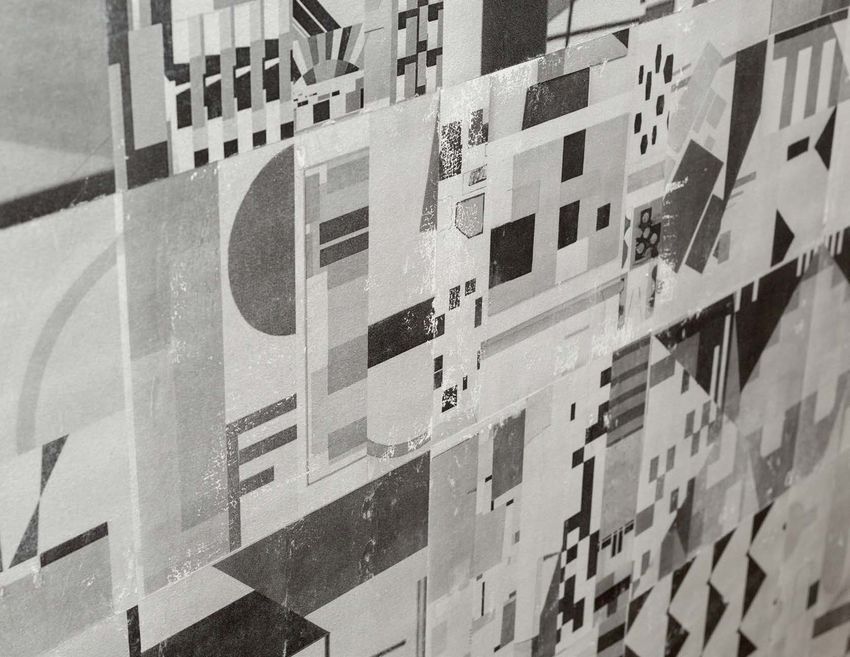
The Monolito series begins with a cartoon that eventually turns into a series of geometric shapes and surfaces increasingly removed from their
original context. As in White Ninja or #CC, the rationale of these works is based on sampling: an initial identifiable source that eventually blurs
and fades away through iteration: the very same thing being gradually transformed. Monolito: banners, performances, books, paintings... This
series premiered as a part of the Proyectos Impala program, an itinerant show by curator Alejandro Luperca Morales, consisting of a cargo truck
traveling through several locations in Ciudad Juárez. Exhibitions and workshops were organized in the massive container of the trailer. Given
this project’s nature at, Marz chose to use an icon recognizable by members of different generations that would serve as a sort of teaser for enter-
ing the field of art.

Using the most recognizable character in a Japanese cartoon series as a starting point, is similar to the use of horror in Trampa Macabra. It is
about thinking, using these elements to build a narrative to make images flow and to communicate. The cartoon character is itself only an excuse
to raise a number of questions and to get painting. The ultimate goal is to reflect on the world we live in.

At this premiere, Monolito came to be through small-format paintings which could be rearranged each time the trailer arrived in a new part of
town. Introducing a practice that would become commonplace in this series, the work invaded the streets through murals and public composi-
tions created in the site where the trailer parked.

Ever since, the pieces in this series have appeared in diverse formats and dimensions, ranging from smaller canvases to publications and even to
large-scale pieces designed to interact with the architectural space. At MARCO Museum in Monterrey, for instance, the space itself was made up
of large canvases, paintings, and interventions on the museum’s walls. There, Monolito evolved from being an object to become a setting or an at-
mospheric installation of sorts. This display then turned into an ideal spot for selfies and both group and individual photos, once again mutating
into images that started to circulate on the Internet and to have, as it happens in this medium, a life of their own.
Leo Marz   Project selection                    January, 2021

                               Monolito, 2018

                               Installation view
                               Museo MARCO, Monterrey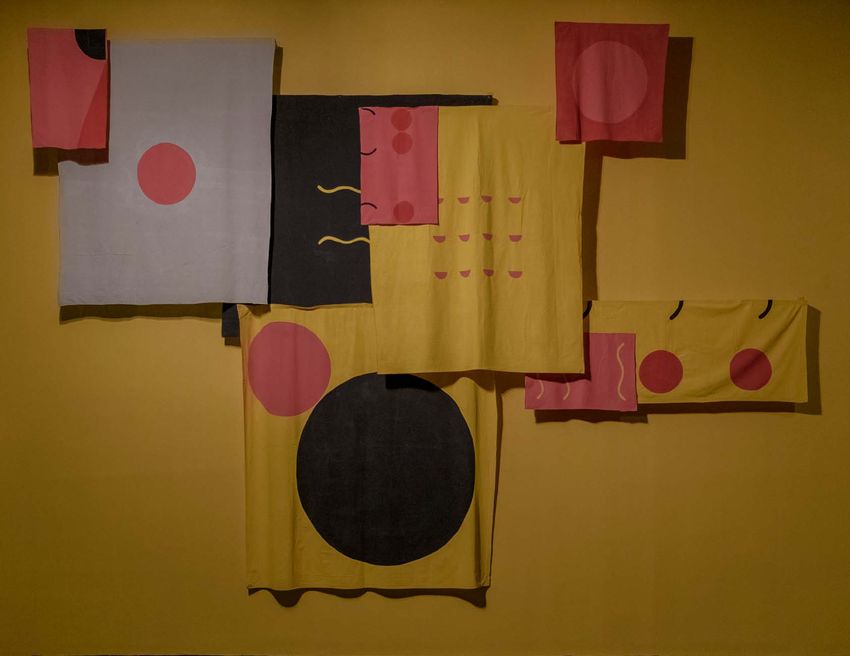
Leo Marz   Project selection                      January, 2021

                               Monolito (05/100100AL), 2017

                               Acrylic on linen
                               100 x 100 cm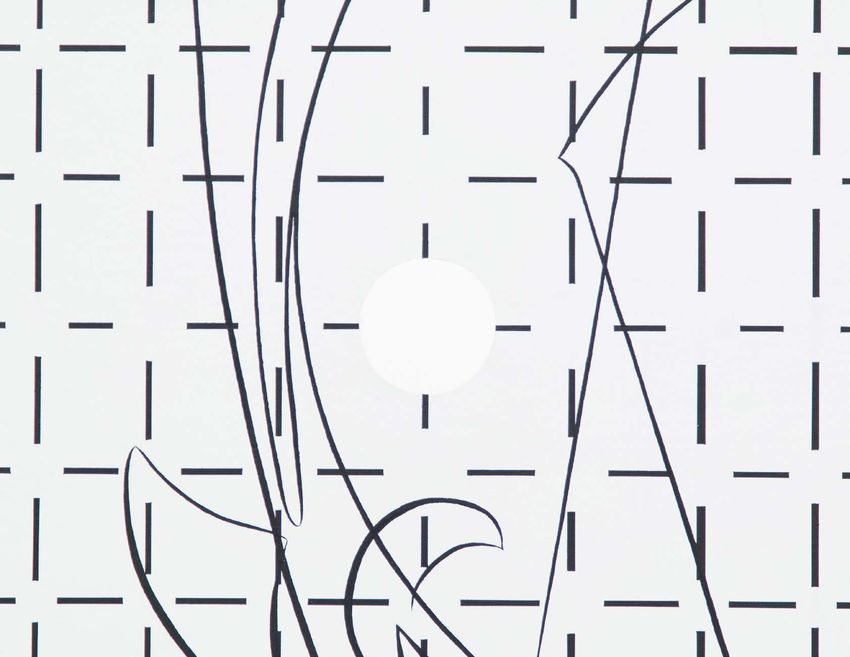
Leo Marz   Project selection                      January, 2021

                               Monolito (07/100120AL), 2017

                               Acrylic on linen
                               120 x 100 xm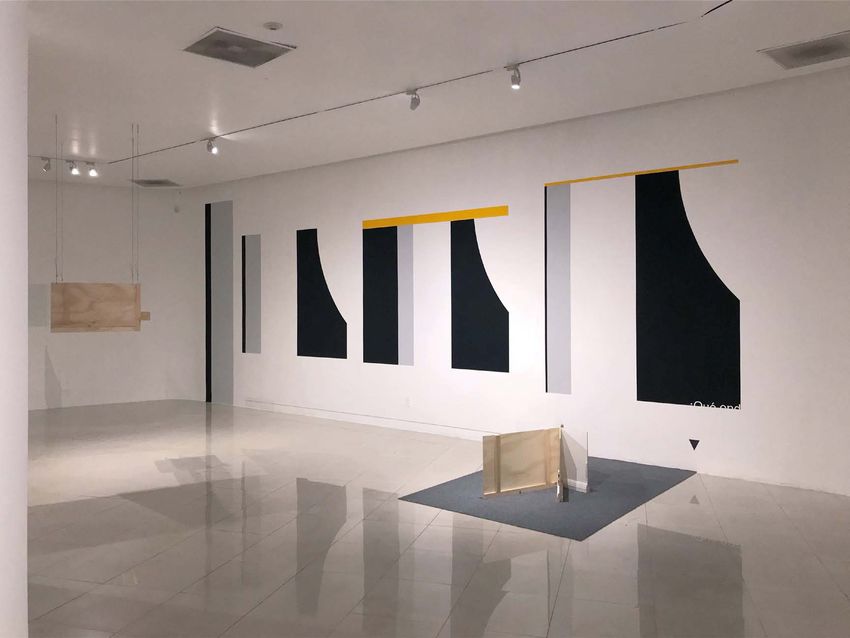
Leo Marz   Project selection                      January, 2021

                               Monolito (02/6048AL), 2017

                               Acrylic on linen
                               60 x 48 cm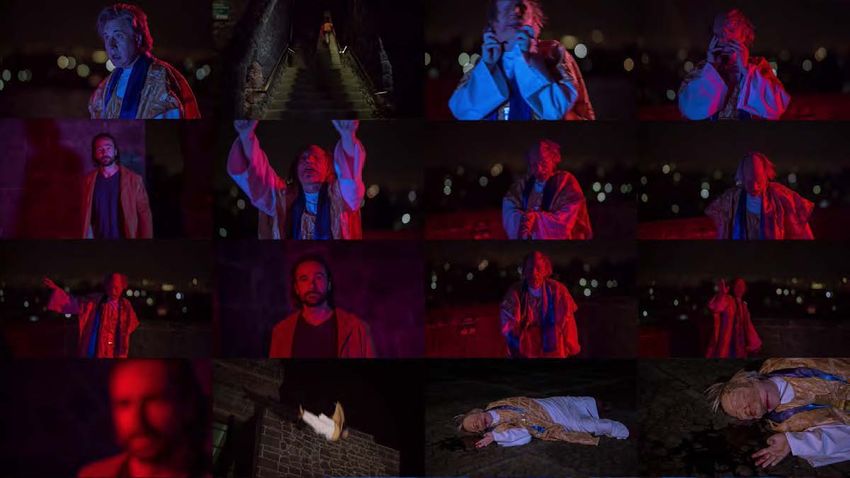
Leo Marz   Project selection                      January, 2021

                               Monolito, 2017

                               Installation view
                               Mural and bench
                               Acrylic on concrete and wood
                               600 x 2400 cm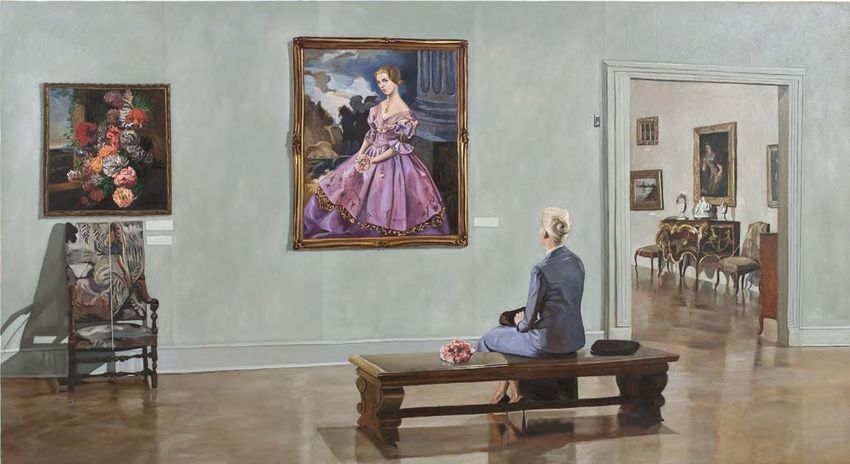
Leo Marz   Project selection                      January, 2021

                               Monolito (03/6070AL), 2017

                               Acrylic on linen
                               60 x 70 cm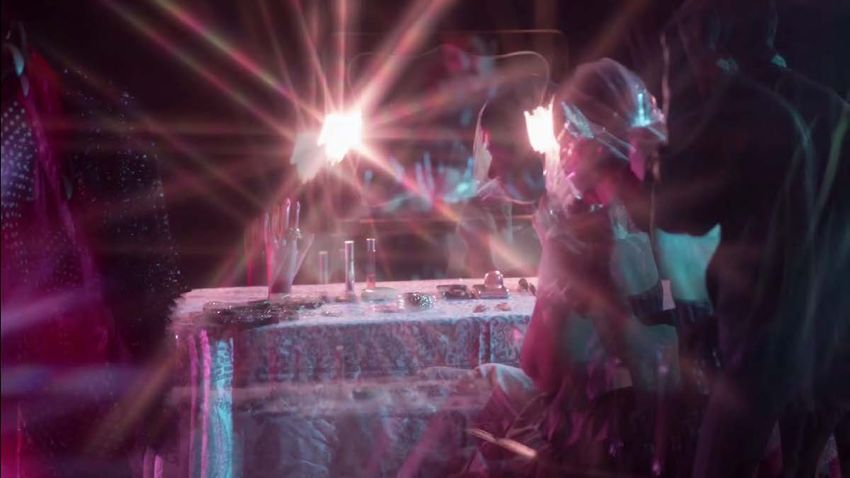
Leo Marz   Project selection                    January, 2021

                               Monolito, 2018

                               Installation view
                               Museo MARCO, Monterrey
Leo Marz Project selection January, 2021
Monolito (03/4040AC), 2018
Monolito (01/4040AC), 2018
Monolito (04/4040AC), 2018
Acrylic on linen
40 x 40 cmLeo Marz Project selection January, 2021
Monolito (07/4040AC), 2018
Monolito (06/4040AC), 2018
Monolito (08/4040AC), 2018
Acrylic on linen
40 x 40 cmLeo Marz Project selection January, 2021
Monolito (04/200200AL), 2018
Acrylic on linen
200 x 200 cmLeo Marz Project selection January, 2021
Las batallas del display and #CC
Las batallas del display and #CC, in which Leo Marz moved away from film production to zero in —with spectacular lighting— on his pictorial
work.
It is worth stressing that both series originated in a digital field. While working from home to office, the artist searched and saved images to cre-
ate visual compositions using his computer and cell phone. In This way, he was able to create works that found their way into canvas and other
media, becoming a whole pictorial revolution.
The paintings included in Las batallas del display were created by superimposing layers of screenshots, resulting in geometric elements which
Marz reconfigured into abstract compositions. These pieces have been displayed on canvases as well as directly on the walls of the exhibition
room, emphasizing that the word “display” of the title refers not only to the virtual world of digital screens, but also to the possibility they have
to unfolding and reproduce itself in a tangible space.
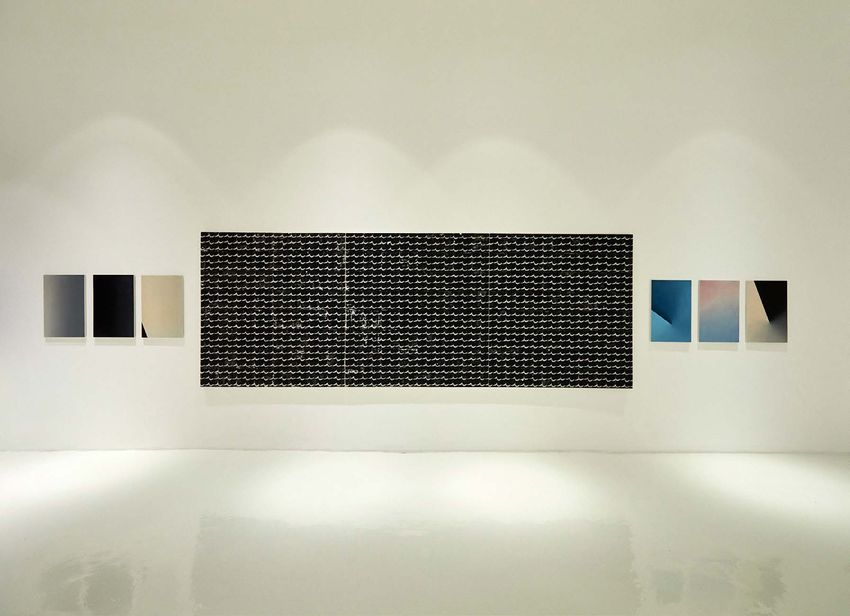
As for the pieces of the #CC series, they were produced through saturating and superimposing digital images. This series, also known as laser
paintings —because they are printed using a laser printer, and then transferred to the prepared canvas— has a certain musical quality reminis-
cent of the loops, beats and samplers that Marz has produced as a professional musician —a career that has evolved over the years alongside his
work as a visual artist, especially with the White Ninja project.
In the timelessness of the digital era, these series of paintings -along with the one that lends its name to this publication- have transformed the
artist’s production process. The type of work they involve, the amount of time they take to conceive and dedicate to them are factors which
gradually transform each of the series. That is, more than the realization of the ideas, it is the day-to-day activities that have transformed them
throughout the years. Not the conceptual mechanism but the actual practice itself.
Yet, Leo Marz is neither a purist nor a proponent of specific media formats, so my suspicion is that one day there will be new footage filled with
fresh filming locations and new camerawork where pictorial reflection will no longer play the starring role. How will Christina Perez’s portrayal
be perceived and interpreted in fifteen years’ time? For the moment, in this image-saturated world, dominated by the unfiltered and never-end-
ing scrolling through mobile phones and the 4G Network, painting serves as a decelerating tool to stop time and reflect about images.
Leo Marz is an artist within historian’s glasses, hooked up to high-speed Wi-Fi 24/7.
Esteban KingLeo Marz Project selection January, 2021
La nueva onda del silencio, 2017
Installation view
El cuarto de máquinas, Mexico CityLeo Marz Project selection January, 2021
Batallas del display (01/140160AC), 2018
Acrylic on canvas
140 x 160 cmLeo Marz Project selection January, 2021
Las batallas del display, 2017
Acrylic on linen
80 x 80 cmLeo Marz Project selection January, 2021
Las batallas del display, 2018
Acrylic on canvas
160 x 260 cmLeo Marz Project selection January, 2021
Las batallas del display, 2017
Acrylic on canvas
80 x 60 cmLeo Marz Project selection January, 2021
Un buen final (de la serie Las batallas del
display), 2019
Acrylic on canvas
300 x 250 cmLeo Marz Project selection January, 2021
Las batallas del display, 2018
Installation view
MURA, GuadalajaraLeo Marz Project selection January, 2021
we have many, many folders (detail), 2017
Acrylic on canvas
Variable measuresLeo Marz Project selection January, 2021
we have many, many folders (detail), 2017
Acrylic on canvas
Variable measuresLeo Marz Project selection January, 2021
we have many, many folders (detail), 2017
Acrylic on canvas
Variable measuresLeo Marz Project selection January, 2021
we have many, many folders, 2017
Installation view
ESPAC, Mexico CityLeo Marz Project selection January, 2021
La nueva onda del silencio, 2017
Installation view
El cuarto de máquinas, Mexico CityLeo Marz Project selection January, 2021
#cc_200*01, 2018
Dry toner and acrylic on canvas
200 x 200 cmLeo Marz Project selection January, 2021
#cc (03), 2019
Dry toner and acrylic on canvas
60 x 60 cmLeo Marz Project selection January, 2021
Untitled from the series #cc, 2019
Dry toner and acrylic on canvas, wall in-
tervention
80 x 80 cmLeo Marz Project selection January, 2021
El viento (de la serie #cc), 2019
Dry toner and acrylic on canvas
160 x 480 cm
1977, 1978, 1979, 1980, 1981, 1982, 2019
Oil on canvas
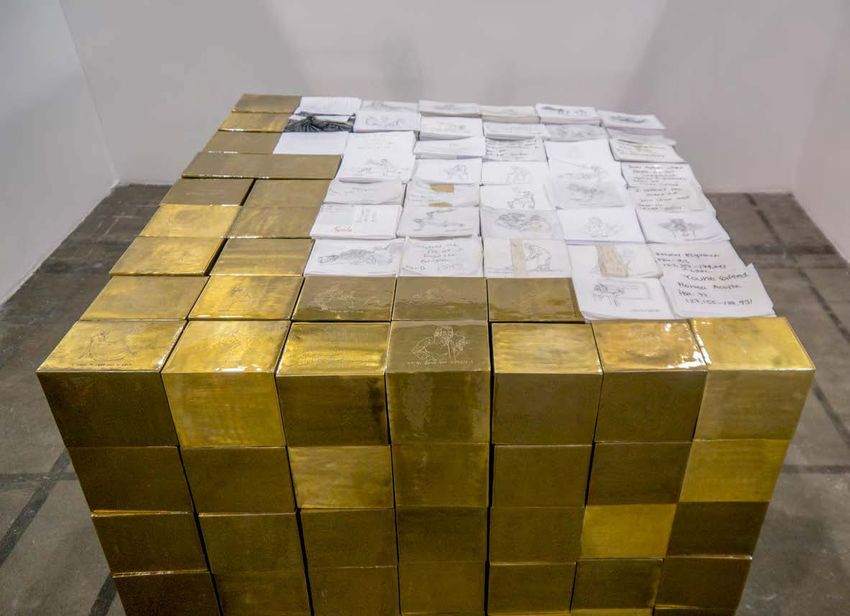
65 x 60 cmLeo Marz Project selection January, 2021 Bailout A Million of Good Reasons to Become a Millionaire was a 2006 drawing project by Damián Ontiveros in which he depicted Adam Smith while performing actions to produce wealth. It consisted of 563 master drawings that were copied 1776 times (first print of The Wealth of Nations) by manual labor of people from different contexts: art students, blue collar workers, even communities of migrants. His intention was to complete a million of drawings each of them costing a dollar to create a million dollar art work. The production process, through which the foundations of modern capitalism and the mechanism of free market were satirised, clashed into a series of misfortunes, provoking its demise. Damián quit working on it in 2010. With Bailout, Leo Marz has gathered funds from Instituto Zacatecano de Cultura and CENART to rescue the project. He rearticulates the ma- chinery of A Million of Good Reasons to Become a Millionaire to talk about the collapse of the economic system, through a reenacment of the use of public funding to try to keep it running (TARP, Fobaproa, etc.)
Leo Marz   Project selection                       January, 2021

                               Bailout, 2014

                               Installation view
                               Marble, drawings on paper, inkjet prints on
                               paper and gold painted metal cubes
                               Variable measures
Leo Marz Project selection January, 2021
Leo Marz Project selection January, 2021
Leo Marz Project selection January, 2021
Leo Marz                                          Project selection                                                                                    January, 2021

CHATS

Leo Marz has a deep interest in how new media modifies the way we represent ourselves and create our own public self with the multiplicity of
fictions surrounding us. The same ones that had modified their own narrative structures thanks to platforms like Youtube and the different social
networks. Phenomenon that, at the same time, alter the way we contextualize ourselves and create our own story / history.

Departing from Pasolini’s idea about the unique capacity of cinema to reproduce reality, differentiating it from the other arts, and in that reality
is constituted solely by multiple fleeting examples. It is to say by particular cases by means of which we are able to include / understand behav-
iors, gestures and attitudes of our resemblances. We could assert that we can produce sense thanks to the understanding of therelations between
these fragments of reality.

CHATS is a video series based on actual MSN Conversations collected by José Jiménez Ortiz for his My Received Files project. They are per-
formed by my family and close friends. Every episode deals with a different aspect affected during virtual interactions like time, space, language,
identity, etc. Marz’s intention is to address this fragmentation and uncertainty. As Mario Pezzella says: “Movies express by nature of its technique
and production the experience of the discontinuity that the ‘new machines’ introduce in every aspect of common life.”
Leo Marz   Project selection                     January, 2021

                               CHATS E04, 2011

                               Video HD
                               10:51 min
Leo Marz Project selection January, 2021
CHATS E03, 2011
Video HD
02:47 minLeo Marz Project selection January, 2021
CHATS E05, 2011
Video HD
01:49 minLeo Marz Project selection January, 2021
CHATS E01, 2011
Video HD
02:28 minLeo Marz Project selection January, 2021 Don’t Look Behind (Trampa Macabra) In Trampa Macabra a curator turns into a detective and starts the hunt for an assassin who removes and collects Dr. Lakra tattoos. The project is a reflexion about the life span of cultural products and, above all, of cult films in the post-internet era. The potential of the fullfilment of the movie is suspended to analyze their development in the mediatic resources offered by new technologies. Its deterioration, fragmentation, dis- memberment, recomposition, possible translations, dubbing, supports, etc. are recovered as creating platforms and to analyze an overflow of products generated by consumers of pop culture. Interested in the genre and of its production forms, Marz plays with aesthetic and conceptual elements that allow him to travel between produc- tion resources of 70’s cinema and the mediatic platforms and broadcasting nowadays.
Leo Marz   Project selection                       January, 2021

                               Trampa Macabra, 2014

                               Brilliant white enamel on wall
                               300 x 1000 cm
Leo Marz Project selection January, 2021
Trampa Macabra a.k.a. Don’t Look Behind,
2014
Acrylic and led sign
70 x 300 cmLeo Marz Project selection January, 2021
T
rampa Macabra, 2014
HD video projectionLeo Marz Project selection January, 2021
Trampa Macabra, 2014
HD video projectionLeo Marz Project selection January, 2021
Trampa Macabra, 2014
HD video projectionLeo Marz Project selection January, 2021
Trampa Macabra, 2014
HD video projectionLeo Marz Project selection January, 2021 Dead Ringers The paintings depict two nearly identical film stills from Alfred Hitchcock’s Vertigo. They portray the scene in which Scottie ( James Stewart) observes Madeleine (Kim Novak) sitting on a museum bench gazing at a portrait of Carlotta Valdes. Marz had two identical twins to create the paintings for him and they will be installed on opposite walls. A close comparison will show that although they differ slightly, the paintings de- pict the same scene. The twin paintings are accompanied by a slide projection showing brief texts that summarize the plots of other films. Scenic painters were hired to paint the texts on linen, then photographed the paintings, and then incinerated them so all that remains are their ashes. The plot summaries that he selected could easily be mistaken with that of Vertigo. The installation also includes two wooden boxes, one named Gimmick and the other Fake. Gimmick contains a certificate from Marz attesting to the fact that the two paintings were created by identical twins together with blood samples for possible future DNA testing. Fake houses the slides and the ashes from the burned paintings.
Leo Marz   Project selection                        January, 2021

                               Dead ringers, 2012

                               Installation view
                               Two oil paintings on canvas 180 x 99 cm
                               each; wooden box containing certificate,
                               hair and blood samples of identical twins
                               who painted them; wooden box containing
                               slides and ashes from burned paintings and
                               slide projector (06:40 min)
Leo Marz Project selection January, 2021
Dead ringers, 2012
Oil painting
180 x 99 cmLeo Marz Project selection January, 2021
Dead ringers, 2012
Oil painting
180 x 99 cmLeo Marz Project selection January, 2021
Dead ringers, 2012
Intallation detail
Wooden box containing slides and ashes
from burned paintingsLeo Marz Project selection January, 2021
Dead ringers, 2012
Installation detail
Wooden box containing certificate and
blood samples of identical twins
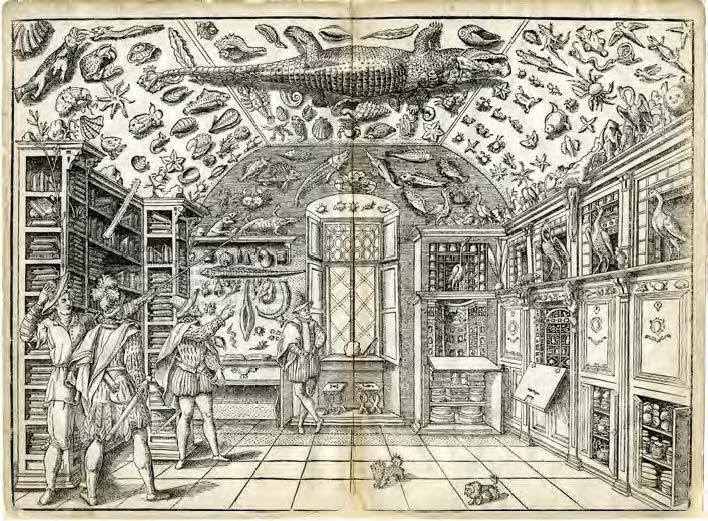
who painted themLeo Marz Project selection January, 2021 Yet Unnamed, three exercises on contextual materiality The history of ideas could be approached by relating them to that which makes them possible. This is because it has not been comprehended in terms of continuity, but rather in function of changes and transformations that follow time-space based data to be analyzed. Foucault says that the history of ideas truly starts when the multiple character of truth was understood. That is to say, ideas vary upon different cultures and, to no- tice it, it is precise to document the effects of rupture in history of the diverse ways of thinking of the actors and semantic variations of language which do not allow us to conceive a history of ideas homogenous and continuous. During Marz’s residency at PAN Studios Program he developed a project focused on the possible leaks existing between a museum and its ar- chive, generators of meaning, and its context. He interested in how these leaks, which are often presented as discussions, provoke the regenera- tion of signifiers and future context through dialogue. Poetically, this discussions may produce enough energy to create a symbolic big bang that would allow us travel in time letting us trace a memory for the future.
Leo Marz   Project selection                       January, 2021

                               Ferrante Imperato Dell’Historia Naturale,
                               1599

                               Wikipedia version (left) and the original
                               image taken from the manuscript section
                               from the Naples Library (right).
Leo Marz Project selection January, 2021
Archive Wall, 2010
Museum wall painted in layers with all of
the colors it has been historically painted
700 x 400 cmLeo Marz Project selection January, 2021
Big bang, 2010
Pigments used in neapolitan fireworks and
a selection of the top 10 discussions at Ra-
dio Pan about the City of Naples
250 x 250 cmLeo Marz Project selection January, 2021
Fantascienza Napolitana, 2010
Video HD
6:00 minLeo Marz Project selection January, 2021 Justin Case this is the end This exhibition is articulated through six projects. The name of the exhibition may suggest a wordplay; nevertheless it refers to a real person. Jus- tin Case is an actual character with whom Marz held an interview regarding the literal meaning of his name. Within the context of this exhibi- tion, this reference becomes a suggestion to lucubrated fictions on what “could happen” in case the world came to an end. The aesthetic dwellings proposed by the artist take off from apocalyptic imagery or the notion of “end” of culture, in order to confabulate fic- tional sceneries through Casa del Lago’s documents, biographical records, drawings, as well as postmedia projections and museographical mon- tages. Through this heterogeneous combination of formats and the collaborative methodology of “featuring”, this exhibition involves procedures common to contemporary art, such as archival simulation and institutional memory; the narrative potential of indexes, testimonies, and histor- ical documents; and the construction of false imprints through drawings and video footage. Such convolution traces temporary lines between ambiguous contexts and hypertextual resonances, unfolding narratives that incite us to make hypothetic speculations about the “end” as cultural logic.
Leo Marz   Project selection                       January, 2021

                               Leo Marz feat. Oswaldo Ruiz
                               Portrait of Justin Case, 2010

                               Photo print
                               40 x 50 cm
Leo Marz Project selection January, 2021
Leo Marz feat. Rubén Gutiérrez
NO ONE will become saved from eternal
damnation after Friday, 21, 2011
Cada lunes se acaba el mundo, 2011
Charcoal on paper and Video HDLeo Marz Project selection January, 2021
Leo Marz feat. Pablo Rasgado
La Historia como Espacio Negativo del Fu-
turo, 2011
Graphite dust on wallLeo Marz Project selection January, 2021
Index awaiting to be archived, 2011
Materials used to produce and mount the
showLeo Marz CV January, 2021
Leo Marz 2019 Monterrey, Mexico 2017
Zapopan, 1979 Aquellos mundos, Galería Hilario Galguera, Forma sobre fondo, Proyectos Monclova, Mexi-
Mexico City, Mexico Los objetos en el espejo están más cerca de lo que co City, Mexico
STUDIES parece, Museo Autoservicio Antara, Mexico
MFA in New Media, Transart Institute and 2018 City, Mexico La nueva onda del silencio, El cuarto de máqui-
Donau Universität, Krems, Austria Las batallas del display, Alternativa Once, nas, Mexico City, Mexico
Monterrey, Mexico A medida incierta, CONARTE in collabora-
Bachelor’s degree in History. UACH. Chihua- tion with Galería Emma Molina and Alterna- proxy, Atski Gallery; NODE Gallery y Studio
hua, Chihuahua 2017 tiva Once Galería, Nave Generadores, Nuevo 7044, Helsinski, Finland
Monolito, Proyectos Impala, Chihuahua, Mex- León, Mexico
Technical carrer in analog photography Escue- ico 2015
la Americana de Fotografía. Monterrey, Mexi- Regresar al origen: Las Fuentes de Macropla- Visualizar, Ex-Convento del Carmen, Guada-
co 2012 za, Festival Internacional de Santa Lucía 2020 lajara, Mexico
Dead Ringers, Steve Turner Contemporary, and Las Artes Monterrey, Monterrey, Mexico
Bachelors degree in plastic arts, UDLA-P. Los Angeles, USA Centro Cultural Tijuana, Tijuana, Mexico
Puebla, Mexico If You Like This, You’ll Love That, Collar-
Realidad in Absentia, Muno, Zacatecas, Mexico works, Nueva York, EUA 2014
Diploma in world history of cinema. Cinete- La voluntad de la piedra, Museo de Arte Car-
ca Nuevo León. Monterrey, Mexico 2011 2018 rillo Gil, Mexico City, Mexico
Justin Case este sea el fin, Casa del Lago, Mexi- Registro 05/Enfocar la mirada, Museo MAR-
SOLO SHOWS co City, Mexico CO Monterrey MX 2013
UPCOMING Toda la memoria del mundo, Casa del Lago,
Museo Jumex, Mexico City, Mexico 2009 Ficción y tiempo, Centro Cultural Tlatelolco, Mexico City, Mexico
Cog. No-Automático, Monterrey, Mexico Mexico City, Mexico
2020 2012
The Last Buffet, Pequod Co, Mexico City, GROUP SHOWS #núcleo, Galería Hilario Galguera, Mexico Los irrespetuosos, Museo de Arte Carrillo Gil,
Mexico 2020 City, Mexico Mexico City, Mexico
Afinidades electivas, Américas Mil500, Guada-
XIV Bienal FEMSA Inestimable Azar (comis- lajara, Mexico La imagen perdida, Museo de Arte Raúl An- Mitos oficiales, Laboratorio de Oaxaca, Oaxa-
sioned work), Centro Cultural Clavijero, Mo- guiano, Guadalajara, Mexico ca, Mexico
relia, Mexico Festival Arte en Vivo, Fototeca Nuevo León,Leo Marz CV January, 2021
Los impolíticos, Espacio de Arte Contemporá- GRANTS AND AWARDS 2007, Emergency Chechnya Biennale Prize, Artistic Director of Lugar Común, Monterrey,
neo, Montevideo, Uruguay 2018 – 2021, Sistema Nacional de Creadores, Istanbul, Turkey Mexico
FONCA and CONACULTA, Mexico
2011 2006, Jóvenes Creadores, FONECA, Nuevo 2015 – 2016
Tiempo de sospecha, Museo de Arte Moderno, 2013, Acquisition prize Reseña, artwork Tun- León, Mexico XII Bienal FEMSA local curator, Monterrey,
Mexico City, Mexico nel Mountain, Monterrey, Mexico Mexico
2006, XXVI Encuentro Nacional de Arte Jo-
2010 2013, Scholarship for abroad residencies, ven, Aguascalientes, Mexico 2011
Second Coming, Hessel Museum of Art, New FONCA and CONACULTA, Mexico Círculos de Confusión: Caos Social y Fic-
York, USA 2006, Friends of Transart Institute MFA ciones Dominantes, Transitio_MX 04, Mexi-
2013, Jóvenes Creadores of FONCA and scholarship, Stockdale, USA co City, Mexico
Los impolíticos, Palazzo delle Arti Napoli, Na- CONACULTA, Mexico City, Mexico
ples, Italy 2004, Azúcar en la vía láctea, 2ª Bienal de Yu- 2008
2012, Programa BBVA Bancomer-MACG catán, Honored Mention, Yucatán, Mexico Mixtapers ‘R Us’, grade exhibition of the Tran-
2009 Arte Actual 2012 – 2014, BBVA Bancomer sart Institute 2006 – 2008 generation, O.K
CHPPDNSCRWD, Yautepec gallery, Mexico and Museo de Arte Carrillo Gil, Mexico PUBLIC COLLECTIONS Centrum für Gegenwartskunst, Linz, Austria
City, Mexico 2011, Estímulo Fiscal a la Creación Artística Colección Fundación Alumnos 47, Mexico
CONARTE-Bricos, CONARTE, Mexico City, Mexico 2005 – 2009
RESIDENCIES Curator at Object Not Found, Monterrey,
2019, Taller Los Guayabos, Guadalajara, Mex- 2010, Jóvenes Creadores, FONECA, Nuevo OTHER ACTIVITIES Mexico
ico León, Mexico
CURATORIAL ACTIVITY CONFERENCES
2012, The Banff Center FONCA, Banff, Can- 2009, Jóvenes Creadores, Fondo Nacional de 2018 – Currently 2017
ada la Cultura y las Artes FONCA, Mexico City, Director of the Curatorial Program of the Fantasmas, Museo de Arte de Ciudad Juárez,
2010, PAN Studios, Naples, Italy Mexico CRGS-UDEM, Monterrey, Mexico Juarez City, Mexico
2009, SPACES World Artist Program, Cleve- 2008, La Colección/Fundación Jumex, Mexi- 2018 2015
land, USA co City, Mexico Twice-Told Tales, Peana Projects. Monterrey, Fantasmas, Feria del Libro Tijuana, Tijuana,
Mexico Mexico
2008, SPACE INVADERS, Denver, USA 2008, Jóvenes Creadores, FONCA, Nuevo León,
Mexico 2016 – 2018 2014Leo Marz CV January, 2021
Fantasmas, Feria Internacional del Libro Gua- Subject professor at the CEDIM, Monterrey,
dalajara, Guadalajara, Mexico Mexico
2013 2009 – 2011
El relato vence a la muerte, Documentaries Invited workshop facilitator, La Curtiduría
Tour Ambulante, MARCO, Monterrey, Mexi- Centro de Artes Visuales, Oaxaca, Mexico
co
2008
2008 Workshop about prejudices and perception
Metapong, American Association of Museums through the arts, Inside/Outside/North &
Annual Meeting, Denver, USA South, Museo de las Americas, Denver, USA
2006
Metapong, Peggy Guggenheim Collection,
Venice, Italy
TEACHING
2018 – Currently
Bachelor of Arts’ Academic Director at Uni-
versidad de Monterrey, Monterrey, Mexico
2017 – 2018
Professor of the Bachelor of Arts at Universi-
dad de Monterrey, Monterrey, Mexico
2013 – 2015
Co-director of the transdisciplinary program
La Conversación, Museo Felguérez, Zacatecas,
Mexico
2009 – 2012You can also read


