Lion Dancer A RIF GUIDE FOR COMMUNITY COORDINATORS
←
→
Page content transcription
If your browser does not render page correctly, please read the page content below
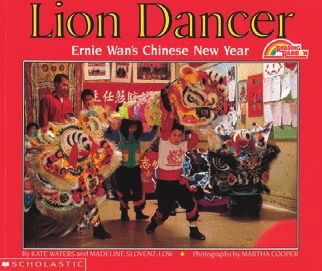
Lion Dancer
 A RIF GUIDE FOR COMMUNITY COORDINATORS
      Themes: Family, Chinese-American Culture,            Authors:
              Celebrations, Traditions                     Kate Waters
  Grade Level: Pre-K to 2nd grade                          and Madeline
                                                           Slovenz-Low
   Book Brief: Ernie Wan prepares to celebrate the
               Chinese New Year.                           Photographer: Martha Cooper

                        TIME TO READ!
                        Before reading: Allow kids to look at the cover and some of the photographs.
                        Explain that different cultures celebrate the new year on different days. Do any of the
                        children celebrate New Year’s on a day other than (or in addition to) January 1?

 RELATED ACTIVITIES

EIGHT IS ENOUGH! (AGES 6-12)                               PAINTING FIREWORKS
The Chinese character for 8 looks and sounds like          (AGES 4-9)
another Chinese word that means “rich.” Make a list        Materials: black
of 8 ways you can be rich. For example, having good        paper, paint, stick or
friends makes you “rich.”                                  paint brush, straw,
                                                           glitter (optional)
ABC RACE                                                   Firecrackers and
(AGES 6-12)                                                fireworks are an
Materials: cards with the names of the Chinese             important part of
Zodiac animals (for more than 12 children, make            Chinese New Year
extra copies)                                              celebrations. Give
                                                           each child a piece of
                        Kids draw a card from the          black paper. Drip
                        pile. On your signal, they         small drops of brightly
                        race to put themselves in          colored paint on each
                        alphabetical order. Time           paper. Blow paint drops with a straw to make
                        the race to see if they can        fireworks shapes. Before the paint is dry, have
                        improve their speed. For           students sprinkle glitter on the paint. Did you know
                        a large group, divide the          that fireworks were invented in China?
                        children into teams.

 ADDITIONAL RESOURCES

OTHER BOOKS ABOUT CHINESE NEW YEAR
The Dancing Dragon, Marcia Vaughan (1996), Lanterns and Firecrackers,
Jonny Zucker (2003), Hiss! Pop! Boom!, Tricia Morrissey (2006).

TECHNOLOGY LINK FOR KIDS
www.rif.org/kids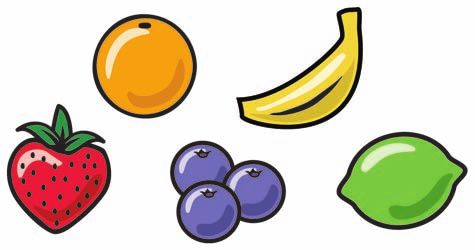
Lion Dancer
 A RIF GUIDE FOR EDUCATORS
      Themes: Family, Chinese-American Culture,           Authors:
              Celebrations, Traditions                    Kate Waters
  Grade Level: Pre-K to 2nd grade                         and Madeline
                                                          Slovenz-Low
   Book Brief: Ernie Wan prepares to celebrate the
               Chinese New Year.                          Photographer: Martha Cooper
                                                          Content Connections: Social Studies, Math

 TIME TO READ!
                         BEFORE WE READ,                  Prior Knowledge: Ask if any students celebrate New
                         LET’S LOOK AT...                 Year’s with their families. What are some of the things
                                                          that their families usually do? Do any eat special food
                         The Cover: Look at the           on New Year’s Day? Explain that different cultures
                         cover carefully. What do         celebrate the new year at different times. Does
                         you notice? What are the         anyone in the class celebrate the new year on a day
                         children doing? What kind        other than (or in addition to) January 1?
                         of writing is on the wall in
                         the background? What is a        Vocabulary: apartment, celebrations, kung fu, martial,
                         “lion dancer”?                   recognize, envelopes, uniforms
The Pictures: Flip through a few of the pages in the      Purpose for Reading: Students can practice asking
book. Why do you think this book uses photographs         questions. “As we read the story, think of a question
instead of drawings? What do the pictures tell you        you would like to ask the authors. What would you
about the boy and his family?                             ask the children in the book?”

 WHILE WE READ
MONITORING COMPREHENSION                                   N Why do Ernie and Jenny

N Name some of the ways that Ernie practiced for
                                                             have to get up at 11 PM?
                                                             What special event
  the new year celebration.
                                                             happens?
N Why is the Lion Dance important?
                                                           N Why is Ernie so tired at
N What are some of the traditional foods Ernie and           the end of the book?
  his family eat?

 LET’S THINK ABOUT
Our Purpose: Revisit the purpose: “What question would you like to ask the authors?” “Do you have questions
for Ernie or Jenny?”
Extending Our Thinking: Ask these open-ended questions: “Why is it important for Ernie to learn to read and
write Chinese?” “Why does Ernie stay back when the Buddha leads the big lions close to the
firecrackers?” (This is an opportunity to talk about firecracker safety.)

NOTE TO EDUCATORS
N Extension Activities for Educators also available.
N Vocabulary Scaffolding Sheet also available.
Lion Dancer
 A RIF GUIDE FOR PARENTS AND FAMILIES
       Themes: Family, Chinese-American Culture,         Authors:
               Celebrations, Traditions                  Kate Waters
   Grade Level: Pre-K to 2nd grade                       and Madeline
                                                         Slovenz-Low
    Book Brief: Ernie Wan prepares to celebrate the
                Chinese New Year.                        Photographer: Martha Cooper

                        TIME TO READ!
                        Before reading, make             After reading, ask questions:
                        predictions: Guess what the      N What does Ernie have to practice?
                                                         N Why does he go to school on Saturdays?
                        book is about based on the
                        pictures. What tells you that
                        this story is about a real       N What are some traditional foods his family eats
                        family?                            for New Year’s?
                                                         N What are some of the other traditions mentioned
While reading, pay attention to the order: Notice
                                                           in the book?
how many things Ernie has to practice before the
actual parade.

 RELATED ACTIVITIES
SUNNY CITRUS SALAD                                       GOOD WISHES
Oranges and tangerines are used for decoration           Materials: red paper,
at the Chinese New Year. They are a symbol of            markers, tape
happiness.                                               In China, red is
Spread some joy by cutting up oranges and                considered lucky.
tangerines and making a citrus salad. You can add        Cut red paper into
other fruits if you like.                                small pieces. On
                                                         each piece of paper,
OUT AND ABOUT                                            write a good wish
                                                         for another family
Next time your family takes a                            member. Decorate
trip or celebrates a holiday, take                       your wishes with
pictures. Print them and put                             pictures or stickers
them in order to tell a story                            and hang them on
about your family. You can also                          your windows and
make scrapbooks or photo albums for                      doors. Hopefully, they’ll bring your family good luck!
free online at websites like www.smilebox.com.

 ADDITIONAL RESOURCES

                 OTHER BOOKS ABOUT CHINESE NEW YEAR
                 The Dancing Dragon, Marcia Vaughan (1996),
                 Lanterns and Firecrackers, Jonny Zucker (2003),
                 Hiss! Pop! Boom!, Tricia Morrissey (2006).
Lion Dancer
A RIF VOCABULARY SCAFFOLD

perform: to put
on a show

                            blink: to open
wiggle:                     and close
to move back                your eyes
and forth

bow: to bend
                            feast: a lot
down or nod your
                            of food
head to show
respect

                            uniform: special
                            clothes you
gobble: to eat              wear to show
very quickly                you are part of
                            a group

                            mixture:
dab: to put a               a bunch of
little on, paint            things put
with a little bit           together

race: to go
fast, hurry
Lion Dancer
 RIF EXTENSION ACTIVITIES FOR EDUCATORS

WRITING ACTIVITIES                                   MATH
                                                     ACTIVITIES
EIGHT IS GREAT!
The Chinese character for 8 looks and sounds         DOORS AND WINDOWS
like another Chinese word that means “rich.”         One Chinese New Year custom is to open all
Make a list of 8 ways that you can be rich. For      the doors and windows at midnight to let the
example, having good friends is one way to           old year out and the new year in. How many
be rich.                                             doors and windows are in our classroom? If
                                                     every classroom in our grade level has the same
                                                     number, what would the total number of doors
                                                     and windows be? What would the total be for
                                                     each of the grade levels in our school? How
                                                     many would that make for the whole school?

                                                     WEAR RED FOR LUCK
                                                     In China, red is considered a lucky color. Look
                                                     around your classroom. Count the number of
                                                     people wearing red tops. What other color tops
                                                     do you see? Count the number of tops in each
                                                     color and make a graph to show your findings.
                                                     Make sure your graph has a title and labels.

                                                                 Most Popular Top Color
                                                         5
                                                         4
ORANGE YOU GLAD?                                         3
Oranges are Chinese symbols for abundant
                                                         2
happiness. In English, oranges are the only fruit        1
that have the same name as their color. Tell or          0
write a story about what would happen if all                 Brown Green Yellow BLue            Red
fruits were called by their color names. Tell your
story in words and pictures. Include different
kinds of fruit and what they would all be called.    RED ENVELOPES
                                                     During the Chinese New Year, it is traditional to
                                                     give each child red envelopes with money in
                                                     them. Your father has $10. If he wants to give
                                                     each child in your family $3, will
                                                     he have enough money? Explain
                                                     your answer.

You can also read


