OF FAITH CULTURE University presidents make the case for Christian higher ed. P. 3 - Lipscomb University
←
→
Page content transcription
If your browser does not render page correctly, please read the page content below
LIPSCOMB NOW:

OF FAITH CULTURE
                                      University presidents make the case for Christian higher ed. P. 3
                                      Bob Russell of Southeast Christian gives a charge to keep. P. 8
                                      Mark Lanier puts Christian Education on trial. P. 11

                A RESOURCE FOR CHURCHES & FAMILIES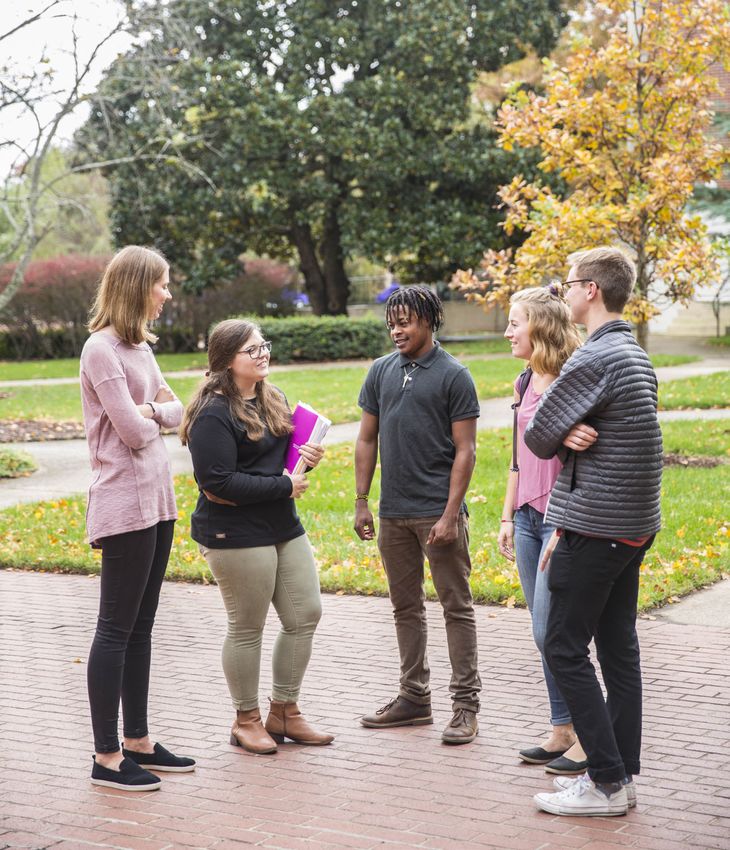
International mission trips are one of the primary spiritual development
opportunities at Christian universities today. At Lipscomb University, more
than 600 students participated in 60 mission trips to 24 nations in 2018. Such
trips not only serve as spiritual formation opportunities for students, but also
spread God’s love and healing around the world.

LIPSCOMB NOW:

                                                                    Volume 5 Number 1

              Resource Guide
     6        Four reasons why Christian education
              needs to be a priority
              Rick Ostrander, CCCU vice president, discusses
              the distinctive value of a Christian education.

      8       A charge to keep
              Bob Russell of Southeast Christian Church advises
              university presidents to get students involved in a
              local church.

                                                                      Chris Gonzalez draws from 10 years of
    15        The rise of the secular student                         psychological research to give a profile of emerging
                                                                      adults in colleges across America today.
              Randy Harris discusses how to spiritually form          Page 12
              young people in a world where belief in God is no
              longer the default setting.

              Up Close and Personal                                           The Church’s Role
    18        Mentoring Students: Through the Power                 30        Invitation: Holistic
              of Story                                                        Integration of Adolescent
              Richard and Jan Hughes describe how they teach                  Multiple-Selves
              young people to self-examine and understand                     Steve Bonner discusses how
              different perspectives.                                         congregations can provide the social
                                                                              structure young people need.
  20          We’re in the business of changing lives
              Biology professor Kent Gallaher describes how          32      We cannot afford to fail
              he works every day to impact students beyond the               Trace Herbert shares statistics on
              classroom.                                                     the decline of the Church of Christ
                                                                             and how Christian universities can
  24          Fossils and Faith                                              help bolster the Church.
              Physics professor Alan Bradshaw describes
              tackling the intersection of faith and science in
              academics.

Director                       Designers             Intersections magazine is            Postmaster: Send changes of
Scott Sager                    Will Mason            published once a year by             address to Intersections magazine,
                               Emily Ashby           Lipscomb University. Go to           Lipscomb University
                                                     lipscomb.edu/servingchurches         One University Park Drive
Editor                         KaileySullivan
                                                     to read more.                        Nashville, TN 37204-3951
Janel Shoun-Smith
                               Web Content
                               Kyle Gregory                                               ©2019 Lipscomb University.
Copy Editor                                                                               All Rights Reserved
Kim Chaudoin                   Photography
                               Kristi Jones
From the President

There are few                                     As consumers, students don’t
                                                  expect to become the product they
                                                                                                  Leading Christian universities
                                                                                              provide strong fundamentals and bold
                                                                                              vision to satisfy the needs of students

purchases
                                                  purchase—obviously, they don’t              today wanting to go out into the world
                                                  become milk. However, they do               with substantial knowledge, training
                                                  become a product of the university          and compassion to be the hands of

consumers make
                                                                                              Jesus. I hope you will be inspired by
                                                  where they chose to spend formative
                                                                                              the articles of this publication and the
                                                  years developing into the person            next generation of students who are

that impact their
                                                  God intends for them to be.                 honing their skills to become leaders
                                                                                              in their fields of study, churches and
                                                      A good liberal arts education will      families.
                                                  teach students how to think rather              Blessings,

lives like that of                                than what to think. A Christian
                                                  institution even more so. At Lipscomb,
                                                  students are encouraged to engage

higher education.
                                                  in deeper conversations with faculty,
                                                  administrators and peers. Honest,
                                                  open and thorough inquiries about
                                                                                              L. Randolph Lowry
                                                  the world in which we live lead
                                                                                              President
                                                  students to understand what it means
                                                                                              Lipscomb University
    When speaking to prospective students and     to intentionally, courageously and
                                                  graciously obey God’s will and to serve
    their families on the importance of that                                                  P.S. If you find this publication helpful, please do
                                                  others on campus and the community          two things: email comments and suggestions to
    purchase, I often contrast buying a college   at large. Deep thinking results in deeper   scott.sager@lipscomb.edu and pass on a copy of
    education with buying a carton of milk.       convictions.                                this issue on to members of your church family.

2 Lipscomb University
Resource Guide

                    MAKING THE CASE FOR
              Christian Higher Education

The creators of Intersections could think of no one                    We often see headlines about the high cost of a college education,
better to make the case for pursuing a Christian higher                but not as much about the return on investment of a degree.
                                                                       Numerous studies show that those with a bachelor’s degree or
education than a few of the university presidents
                                                                       higher earn higher salaries and have more career opportunities
currently charged with providing that Christian
                                                                       throughout their lives.
education to thousands of students across the nation.
Michael Williams, president of Faulkner University in                  Aligning with our spiritual mission, Christian colleges strive to
Montgomery, Alabama; Bruce McLarty, president of                       offer affordable quality education, by starting with lower sticker
Harding University in Searcy, Arkansas; L. Timothy                     prices than other private schools and offering more institutional
Perrin, president of Lubbock Christian University in                   financial aid. The result is students from Christian institutions
                                                                       take out an average of $6,108 in federal loans, compared to
Lubbock, Texas; and John deSteiguer, president
                                                                       the $7,063 national average, according to a 2017 Council for
of Oklahoma Christian University in Oklahoma
                                                                       Christian Colleges and Universities Consortium Report.
City, Oklahoma, provided their insight along with L.                   Other studies show a direct correlation between college
Randolph Lowry, president of Lipscomb University                       education and social values, happier families, healthier lifestyles,
in Nashville, Tennessee, on what makes a Christian                     a higher standard of living and critical thinking skills among
university the right choice in today’s increasingly                    numerous other benefits. More than 35 percent of CCCU
secular world.                                                         students participate in community service compared to less than
                                                                       26 percent of all college students, totaling about 5.4 million
                    Lowry: With the celebration of another             community service hours performed by CCCU students each year.
                    commencement season in May, more than
                    800 graduates left the Lipscomb University         While many American colleges today strive to develop superior
                    campus equipped with degrees and the               leaders and workers, Christ-centered institutions strive to
                    knowledge, skills and confidence to pursue         do that plus develop each student as a person and a child
                    careers, additional education or other goals       of God. Students at CCCU institutions report higher levels
                    and dreams. As products of a Christian             of exposure to diverse perspectives, contact with students of
                    institution, they took with them a faith-based     different backgrounds, ability to examine their own strengths
perspective of the world and went out into the world academically      and weaknesses, connection of what they are learning to societal
and spiritually prepared to be leaders in their fields, communities,   problems and the acquiring of job-related skills and knowledge
families and churches.                                                 than found in the national average.

                                                                                                                      Intersections | Winter 2019 3
Making the
Resource Guide
           Case

  Read on to see how the presidents of four              Intersections: Parents are rightly              We’re talking about something that
  Church of Christ-affiliated colleges approach the      concerned about student debt and the cost of    will have more value in 30 years; and
  difficult task of molding not only a well-rounded      an education. In this economic climate how      not something that will have no value
  leader, but also a God-centered person, and the        do you make a compelling case for the value     in 30 years. Your college education is
  importance of a Christian higher education in this     proposition of Christian education to today’s   something you will build on for the rest
  process amidst the challenges of today’s society:      parents?                                        of your life. It will open doors and open
                                                                                                         doors and open more doors. So the idea
  Intersections: The trends seem to indicate                                  Williams: This is          that you are making a lifetime investment,
  that fewer young people from Churches of Christ                             the one of the most        is the essential thing for parents to see.
  congregations are opting for Christian education.                           important decisions        Don’t believe the headlines. One of
  Why do you think this number is on the decline?                             a person will make         the things the media does is to average
                                                                              in their whole life.       everything from Harvard University to
                        Perrin: There are likely                              Only two outrank           community colleges. They average all
                       multiple explanations for this                         it: marriage and the       the tuition amounts together and create
                       trend. One part relates to the                         decision to follow         an eye-catching headline that students
                       decline in membership within      Jesus Christ. But there is an enormous          leave college $100,000 in debt. You have
                       the Churches of Christ as well    amount of scrutiny about the cost of            to almost work at it, and make a lot of
                       as the growing fragmentation      higher education right now. The average         poor decisions, to leave college $100,000
                       of our fellowship. In addition,   debt is about $27,000 for one of the single     in debt. Almost no students go to any of
                       sociologists tell us that we      biggest decisions a person makes, with          our (Church of Christ-affiliated) schools
  are living in a post-denominational time in which      life-changing implications. And yet, one        without some assistance from government
  people of faith often have diminished loyalty to       of our young people can borrow that             or from the school itself. Almost nobody
  any particular religious group. That leads both to     same amount to buy a truck and society          is paying full sticker price.
  fewer parents and students choosing a college or       applauds them and calls them a great
  university that shares their religious heritage and    American. It’s the values that are turned       Intersections: If you were in a town
  to fewer students who self-identify as members of      upside down. So higher education has            hall meeting with high school seniors and
  the Church of Christ. This trend may also reflect      somehow become this commodity that is           they asked you to make the case to them
  other changes within our fellowship over the last      not really valued. But even if you look at      personally for why they should choose a
  50 years, including greater economic mobility and      economic earning power only, we know            Christian education over a seemingly more
  other factors. In short, the answer is complex and     that higher education propels it. Even          prestigious state school, what would you say?
  defies easy explanations.                              further, a Christian higher education
                                                         is life-shaping, not just for economic          McLarty: I once heard Wes Moore,
                       deSteiguer: Without               development, but for shaping a person’s         author, Rhodes Scholar, White House
                       a doubt, Christian higher         life overall. How many of a person’s            Fellow and combat veteran, say, “Higher
                       education is valuable on          values are shaped between the ages of 18        education is not just about what you
                       all levels—spiritually,           and 23? All the literature would support        learn, it’s also about who you learn from
                       academically, vocationally,       that the college years are an absolutely        and who you learn with.” This is the
                       relationally and financially.     critical time. Can you really put a price       heart of my message to a 17-year-old.
                       Unfortunately, I think the        tag on that?                                    It is what you learn. Harding needs to
                       accurate and precise message                                                      prepare students for a career; it needs
  of the high value of Christian education is being                           McLarty: In                to be academically excellent; and I do
  swamped by louder claims concerning cost,                                   regards to a Christian     need to make that case to people. But it’s
  outcomes, effectiveness and debt, in relation to                            higher education, we       also about who you learn from, because
  higher education in general, not just Christian                             are talking about          that person at the front of the classroom
  higher education.                                                           buying a house, not        becomes hero, a model, a person you want
                                                                              a car. We’re talking       to be like. Doesn’t it make sense that
                                                                              about an investment;       that person should be someone who has
                                                                              not a consumable.          faith at the core of their being?

4 Lipscomb University
Resource Guide

If that professor becomes your hero, you are     student experience, which sets us apart from        At the same time, we need our church
following someone who is following Christ.       many research-based institutions.                   ministers and leaders to promote, publicly and
How much better is that than if the person       The third distinctive is perhaps the most           to families, the importance of our colleges.
you admire and want to be like is walking        significant. At a Christian university, you
away from God. Finally, the real magic of        will be challenged to think from a Christian
Christian higher education is more than the      perspective about each and every subject you
administration, the heritage or the teachers,    study. What does it mean to bring a Christian
it’s who you are in class with. When we          perspective to questions of criminal justice or
gather students from all over the country who    biochemistry or education? The faculty bring
love God and want to change the world for        to their work a shared Christian worldview
the better, put those folks together in dorms,   that provides an anchor for every inquiry.
and in clubs and on athletic teams, and let      This does not mean that everyone agrees
them challenge, love and inspire each other,     about every issue. Far from it! But it does
you have something incredible that is going to   mean that there is broad agreement about the
happen.                                          authority of Scripture and the truth of the
                                                 story of God’s love for His creation that is
Perrin: The Christian university offers          revealed in and through the Word.
three critical strengths: (1) the advantage of
being small; (2) the focus on undergraduate      Intersections: What do university
education and on student success; and (3)        presidents need from ministers and leaders in our
the shared Christian worldview of faculty,       local churches to better help families understand
staff and students. As a student at LCU, I       the value of Christian education? How can a
had incredible opportunities to serve and        better partnership emerge?
to lead because of the relative small size of
our student body. My classes were smaller        Williams: I was the first one to go to college
so I had the opportunity to get to know my       out of my family. They were so proud of my
professors and they knew my name. I could        brother and I because we went to one of “our
participate in a wide range of activities. I     colleges.” No one talks like that anymore.
could be a student athlete and serve in          We’ve got to have church leaders who will
student government. As a student at a            invest in the idea that they have poured
Christian college you have the opportunity to    their lives into the faith development of
make an impact and to be an influence that       these young men and women, and when they
may not be possible elsewhere.                   turn 18-years-old, they don’t want to watch
The second great strength is the focus on        most of them walk off the spiritual cliff. It’s
undergraduate education. At LCU, you             no secret that the most secular spots in our
have the opportunity to be taught by senior      society are in higher education. Why would
members of our faculty as a freshman.            we pour in and invest so much to create these
Indeed, you might have the chance to begin       supportive environments for teenagers and
an undergraduate research project early in       then watch them at 18 walk into the lion’s
your time as a student with a senior faculty     den.
member who is a leader in the person’s
field. While LCU and many of our peers           deSteiguer: This is a two-way street. The
have strong and growing graduate programs,       Christian colleges need our congregations,
we continue to emphasize the classroom           and our congregations need strong Christian
experience of our undergraduate students.        colleges. As Christian college leaders, we
The primary responsibility of our full-time      need to proactively invite ministers and
faculty is to teach, and they view students as   church leaders to our campuses and include
the reason for their work. We emphasize the      them in our community more and more.

                                                                                                                             Intersections | Winter 2019 5
Resource Guide

                                       FOUR REASONS WHY
                                     Christian Education
                                      NEEDS TO BE A PRIORITY

      In American society, the value of higher education is widely                     dorm room Bible studies, but the classroom, the athletic field
      recognized. College graduates, on average, have significantly                    and in small group discussions. If God is truly the Creator of all
      higher lifetime earnings and report greater life satisfaction than               things, then our studies should reflect that. Students at Christian
      those without a college degree. They even have longer life spans                 colleges/universities effectively learn about business, but they
      on average than non-college graduates.1                                          are also challenged to understand the field of business from a
                                                                                       Christian perspective and to live out their Christian faith as
      Unfortunately, while Christians generally support higher                         ethical business professionals.
      education, many Christian parents and church leaders seem
      unaware of the value of distinctively Christian colleges and                2.   The college years are critical years for faith development. The
      universities. Whether it’s a preference for the large size of a state             research indicates that the young adult years (ages 18-25) are
      university or the low price tag of a community college, many                      an important time of emotional and spiritual development. It’s
      Christian parents don’t consider a Christian institution when                     natural for young Christian adults to experience a struggle to
      helping guide their child in selecting a college. Here are four                  “own” their parents’ faith, and they often ask probing questions
      reasons why I believe Christian education needs to be a priority:                 of their inherited beliefs. Christian colleges recognize this fact
                                                                                        and provide a holistic learning community that seeks to nurture
      1.   Christian higher education offers an integrated and coherent                 students’ spiritual growth. Christian college students are not
           approach to education. I earned a bachelor’s degree at a large               shielded from life’s tough questions and issues of faith and
           state university. The education I received was adequate in its own           doubt—that’s one of the important features of higher education.
           way, but from a Christian perspective, something was missing.                But they do so within a supportive faith community, one in
           Although I was involved in a Christian group on campus, my                   which the philosophy professor and volleyball coach act as
           study of history, psychology, chemistry and other subjects was               spiritual mentors, instead of heaping it all on the campus minister.
           disconnected from my relationship with God.                                  Not surprisingly, then, research on faith development indicates
                                                                                        that, on average, students at Christian colleges are more likely
           Christian higher education is based on the belief that as                    to maintain religious commitments into their adult years
           Christians, our lives are meant to be lived as an integrated whole.          than students at secular institutions.2 Of course, there are no
           We live out our Christian faith just as much at work on Monday               guarantees in higher education. But college students are more
           as we do at church on Sunday. Also, the academic life falls under            likely to grow in their Christian faith at schools that support and
           the lordship of Christ. Thus, a Christian college seeks to integrate         reinforce that faith.
           faith into all aspects of the institution—not just in chapel or

6 Lipscomb University
Resource Guide

3.   Christian higher education is committed to academic excellence.
      If what I said so far gives the impression that Christian colleges

                                                                                       Recommends…
      are only about spiritual growth, then let me correct that impression.
      As institutions that seek to follow the apostle Paul’s admonition
      to “do all to the glory of God,” Christian colleges are committed to
      academic excellence across a wide variety of majors and minors. For
      example, in the nationally-administered Student Satisfaction Survey,
      students at member schools of the Council for Christian Colleges
      & Universities reported significantly higher satisfaction rates than
      their peers at non-CCCU schools on a wide variety of questions
                                                                                         The Case for Christian Education
      related to academic quality. Examples include statements such as,                  The Council for Christian Colleges
     “Faculty care about me as an individual;” “There is a commitment                    and Universities
      to academic excellence on this campus;” and “The quality of
      instruction I receive is excellent.” 3                                             The complete 2018 report can be found online at
                                                                                         this link:
     Furthermore, Christian colleges, with their belief that “all truth
     is God’s truth,” seek to foster diversity and open dialogue—two
                                                                                         www.cccu.org/wp-content/
                                                                                         uploads/2018/08/2018-Case-for-CHE_WEB_
     important essential traits of a healthy learning community.                         pages.pdf
     Given the polarized and politicized state of many secular
     campuses today, in which shouting and protests often crowd
     out genuine dialogue, one could argue that students are more likely
     to experience genuine interaction with different people and ideas
     at a Christian college than at a secular one. In fact, in the most
     recent National Survey of Student Engagement, students at CCCU
     institutions reported that their school encouraged interaction with
     people from different racial and religious backgrounds at a higher
     level than did non-CCCU students.4

4.   Christian higher education is surprisingly affordable. Of course, a        In summary, Christian colleges and universities offer a coherent
     major criticism of Christian colleges—and all private colleges, for that   learning experience, are committed to faith formation, are
     matter—is that they’re too expensive compared to state universities.       academically excellent and are affordable. They prepare young
     While it’s true in general that private higher education, with its         people to be successful professionals who integrate their faith
     commitment to small class sizes and personalized attention from            in all that they do. Of course, as Christians, we know that life is
     professors, is more expensive than public education, the difference        bigger than a successful career. Our lives are meant to develop
     is less than many realize. That’s because private colleges are also        into the person God has designed each of us to be by finding
     committed to providing significant financial aid to make a college         our calling in life and playing our part in God’s redemptive work
     education accessible to as many students as possible.                      in the world. A Christian college is a great way to begin that
     In fact, a 2015 study of college costs revealed that when one factors      journey.
     in scholarships and other sources of financial aid, the average out
     of pocket cost for a bachelor’s degree at a private college was only
     $5,000 more than at a public university ($63,000 vs. $58,000).5
                                                                                                   Rick Ostrander, Ph.D.
     And the situation is even more favorable for CCCU institutions:               Vice President for Research and Scholarship
     In a study conducted in 2014, the average student debt for CCCU             Council for Christian Colleges & Universities
     graduates was about $20,000—which was $5,000 less than the
     average student debt for graduates of public universities.6

                                                                                                                          Intersections | Winter 2019 7
The Church’s Role

                        A Charge to Keep
                                               Bob Russell
                                Retired Senior Minister of the
                                 Southeast Christian Church

8 Lipscomb University
The Church’s Role
The following is an edited excerpt from Russell’s “I visit many colleges a year. I teach at a great school, Yale
University… My students are wonderful; I love them. But these,
plenary address, a message to Christian college
by and large, are not places that integrate the mind, the heart
presidents, at the Association for Biblical Higher
and the spirit. These places nurture an overdeveloped self and an
Education 2018 annual meeting last February. The underdeveloped soul… The head is large, and the heart and soul
complete address can be viewed at: are backstage… My students are so hungry for spiritual knowledge.
www.abhe.org/abhe71downloads/
“Now, you in this room, have the Gospel. You have the example of
I am an unashamed graduate of a Christian college. I grew up Jesus Christ. You have the beatitudes; the f ire of the Holy Spirit;
in a wonderful Christian home. My dad was a factory worker you believe in a personal God who is still redeeming the world…
and an elder in the church. All six of my parents’ children had Carrying the Gospel is your central mission to your students and
a Bible college education. For a period, I was almost the black to those you serve beyond the campus walls, but that’s not all you
sheep of the family. I was so into sports in high school that I have. You have a way of being that is not all about self. You have a
was determined to go to a secular college and play basketball. counterculture to the excessive individualism of our age.”
I was blessed to play on an excellent high school basketball team Wow! That’s powerful stuff coming from a man who is not
and our goal was to be state champs our senior year. In a one- even a preacher but who sees our opportunity from a pragmatic
and-done state tournament game we were ahead by 14 points in perspective—and is envious of it. It’s imperative that we make
the last quarter. Sadly we fell apart, the opponents banked in a the most of it.
shot at the buzzer and we were beaten in overtime.
How can we be more effective at balancing head and heart? At
I was depressed. My lifelong goal was shattered. My older sister, the risk of being presumptuous, I’d like to make four suggestions.
Rosanne, who later became registrar of her alma mater, was You may have some better ones but here are four things I’d
attending Cincinnati Bible College and invited me to come visit emphasize if I were in a position to do so.
just to get away and hopefully lift my spirits. Soon I was feeling
Make a concerted effort to have chapel services that are warm
an inner prompting and knew it was the place for me, too.
and engaging: I’ve spoken at over a dozen Christian college
What I felt then and know now is that a Christian education is chapels and am aware this is a challenge in every school. But
special. The goal is to produce graduates who can speak the truth don’t be satisfied with stale, dead chapel services. Don’t let
of God in love. Hopefully they will find creative, compassionate pseudo-intellectuals dictate a sterile mood in chapel. Be humble
ways to explain the Word of God in such a way that they will enough to have discussions with other institutions where there
make the message about God, our Savior, attractive. is an air of expectancy and excitement in chapel. What are they
doing that we can learn from? Chapel is a place where students’
Most of you are familiar with David Brooks, popular New York hearts can be softened and Jesus can speak to them.
Times columnist and author of the best-selling book The Road
to Character. He was the keynote speaker at the 40th Anniversary Give students exposure to faculty and administration outside
Celebration Gala in Washington, D.C. This is what this secular the classroom: Don’t be satisfied to impart knowledge and leave.
columnist said when speaking to Christian educators: Kids need the inspiration of a personal relationship with faculty
and administrators who genuinely know the Lord. Dr. Lewis
“ You [Christian colleges] have what everybody else is desperate Foster was my favorite professor. He was brilliant. He was an
to have: You have a recipe to nurture human beings who have a honor graduate of Yale and Harvard and served on the NIV
devoted heart, a courageous mind and a purposeful soul. Almost no translation team. My best memory of him was when he played
other set of institutions in American society has that, and everyone softball with us one day. Dr. Foster slid into second base hard
wants it. From my point of view, you’re ahead of everybody else trying to prevent a double play. My kind of guy! I saw you can be
and have the potential to influence American culture in a way that godly man and a manly man. I didn’t need apologetics nearly as
could be magnif icent. much as I needed the inspiration of a godly man.
Intersections | Winter 2019 9Re-Thinking
The Missions
Church’s Role
Seek opportunities to openly demonstrate that sometimes organizations. Find ways to praise the Church, not denigrate
heart trumps academics and celebrate those occasions: Sure it. Find ways to give kids exposure to a vibrant church. Honor
we’re an institution of higher learning. There are rules—this is the Church. Find ways to point out the good the Church has
not Christian service camp. But the Spirit of Christ is more accomplished and don’t overlook it.
important than the letter of the handbook or even the approval
God’s people in churches started 106 of the first 108 colleges
of the accrediting association.
in our country. And guess who started and funded most of
One morning my roommate went to sleep in a 7 a.m. Greek class. the hospitals? It, too, was Baptist, Methodist, Episcopalians
The elderly professor was passionate about Greek but he loved and Catholic churches. The Church has funded most inner
preacher boys who went to small churches on the weekends to city missions that minister to the addicted and homeless. The
speak. At the end of the class he said, “Mr. Humphries, I’d like Church started most orphanages and homes for the elderly. Who
for you to stay after class.” We knew Tim was in deep trouble. consistently visits with and conducts services for those in prison?
The professor asked, “Mr. Humphries I understand you are The Church. Who establishes Crisis Pregnancy Centers to help
preaching somewhere on the weekends. What time did you get women in desperation? The Church. Who teaches the moral
back last night?” When Tim said he got in around midnight, values that provide the foundation for reliable business? The
the professor responded, “In the future if you get in late it’s not Church. Seventy years ago who taught some of us to sing—long
necessary for you to come to class on Monday morning. I’ll not before the civil rights movement—“Jesus loves the little children,
dock your grade if you’re not here.” all the children of the world, red and yellow black and white,
they are precious in His sight?” The Church.
What do you think that did for other young men who had a heart
for preaching? When you show heart over rigid requirements May God bless you as you lead a new generation into a deeper
you demonstrate the spirit of Christ and God blesses it because, walk with our lord Jesus Christ.
“Where the Spirit of the Lord is there is freedom.”
Be intentional to find ways to involve students in a good
local church: My grandson struggled some through his days
at a Christian college. There were a number of factors that
contributed to his struggle, and many were because of his
own nature. But it was his involvement in a local church, and
an internship with a willing congregation that made all the
difference with him.
We can’t separate Jesus from the Bible and shouldn’t separate
Jesus from the Church either. The Church is under vicious attack
today from without and within. The old ways of the Church are
ridiculed. The Church is accused of being legalistic, irrelevant,
intolerant, homophobic and self-centered. On many Christian
college campuses it’s hip to denigrate the Church. Students are
told, “You may find more genuine fellowship in a commune
or a coffee shop than in a formal church.” So folks are starting
churches with the slogan, “This is a church for people who don’t
like church.” Or “This is not your mother’s church.”
Frankly, I am really sick of hearing the Bride of Christ ridiculed
and mocked. Jesus loved the Church and gave Himself for
her. He said the gates of Hades will not stop the Church. He
didn’t say that about Christian colleges or other parachurch
10 Lipscomb UniversityChristian Education
on Trial Mark Lanier (’81)
Founder of The Lanier Law Firm
Lawsuits are like coins; each one has two sides. A goal for me greater opportunities for enrichment through fellowship.
in a trial is to assess the available evidence from both sides and
determine what is the just result. I tend to see life choices much Networking: School produces friends and acquaintances for
the same. On Christian education, I look at the evidence from life. Whether one finds a future spouse, or just those with similar
my own experience as well as that of my children. I come down interests, one’s future interactions can be tied to the networking
strongly in favor of a Christian education, at least as far as relationships made during school. When those opportunities are
undergraduate school. laden with people of faith, the network is tighter and the bonds
are anchored in a bedrock not found in the secular environment.
I did half of my college education at a large public university
in my home state of Texas. During my time there, my major My firsthand experience on both sides of the coin has been
areas of study were Greek, Hebrew and economics. I finished reproduced in the generation of my children. Four of our five
my undergraduate degree at Lipscomb University in Nashville, chose Christian schools for undergraduate work; one chose a
earning a degree in Biblical languages (Hebrew and Greek) and secular Ivy League school. All got a great education, but the four
moving economics to become my minor. Comparing the education in the Christian schools have the better bonds and results from
of the secular school and Christian school in areas of scholastics, teachers who cared and friends who believe. Their “years later”
social interaction and networking opportunities, I find that both networking shows it.
can work in the life of a believer, but the advantage clearly falls on
the side of the Christian education. When I put Christian education on trial, I find in its favor!
Scholastics: My Hebrew and Greek classes were much more
focused on practical aspects of life and Biblical understanding
while studying at Lipscomb. The insights went beyond simple
understanding of grammar and content and probed issues of faith
Recommends…
and religious practice. That might seem natural for Bible-oriented
scholastics, but even in areas of economics, I found the education
at Lipscomb to be first-rate. The idea behind a Christian world
view prompted professors to take all areas of scholastics seriously.
Moreover, the teachers were interested in students as individuals, Mark Lanier, one of America’s top trial lawyers, uses his experienced
rather than as the means to an end of a teaching day. legal eye to examine the plausibility of the Christian faith. Bringing
science, current knowledge and common sense together in a
Social Interaction: One thing is clear from personal experience: courtroom approach, this “trial” displays a rich understanding of God
one can find friends who are interested in Christian faith at both and a strong foundation for Christian faith.
secular schools and Christian schools. Similarly, both schools
Following the format of a traditional legal trial, Lanier takes us from
offer their fair share of those with no interest in matters of faith.
opening statement to closing summation by way of testimony from
But there seems a much higher percentage of those intimate
well-known witnessesthe scientist, the theologian, the linguist, the
with their faith at the Christian school. This manifests in group
humanist, the philosopher, the psychologist and the ancient biblical
mission trips, group activities built around faith and group service eye-witness. These sources and many others investigate the sticky
projects. These same important parts of life were present in my subjects of the Christian worldview that are commonly scrutinized
state university, but if you balanced the percentage involved by skeptics or overlooked by marginal believers. Christianity on Trial
and interested in such activities, the larger numbers were in the provides a thought-provoking starting point in the search for truth
Christian school. This translated to more chances to plug in, more
people among whom to find friends with similar interests and
Intersections | Winter 2019 11Resource Guide
“TODAY’S
EMERGING
ADULTS ARE…”
Chris Gonzalez
Scott Sager
Associate Professor and Director of
Vice President for Church Services,
Marriage and Family Therapy,
Lipscomb University
Lipscomb University
culture is post-Christian and the secure faith structures once
WHAT HAPPENED TO OUR CHRISTIAN CULTURE? built into the culture are crumbling and young adults find their
The headlines regarding emerging adults (age 18-27) can often seem faith challenged, confronted, and sometimes violently opposed in
discouraging: “Decline in Worship Attendance,” “Poor Scores on classrooms, on college campuses, and inside dormitories across our
Religious Knowledge Tests,” “More Spiritual than Religious,” and land.
“Declining Attendance in Mainstream Churches.” And while these
headlines are often the rule, we as Christians have been called to
raise up young people who are exceptional—and exceptions to the
Yet the same God who acted powerfully in the pre-Christian culture
rule.
for Joseph, Daniel and Esther is still active in the post-Christian
The story of Joseph tells of an exceptional young man who shows the culture of today. God has our young adult population exactly where
capacity in a foreign land to honor God regardless of circumstances. he wants them, inviting them to make a Jeremiah 29 type difference
His character and life choices result in God using him to influence a in post-Christian soil.
nation, his family and the world during a time of famine. The story
of Daniel tells of a young man taken away from his family and placed
in the foreign soil in the capitol of a world empire where he does not WHAT WE ARE LEARNING ABOUT EMERGING ADULTS
compromise his convictions and rises to great influence to preserve For more than 10 years I have searched the research literature,
his people and faith in God. His life was also exceptional. The story contemplated the developmental, cultural and systemic theory, and
of Esther tells of a remarkable young woman who honored God and conversed with today’s emerging adults on matters of faith, religion
called her people to fast and pray in order to preserve the nation. and spirituality. Surfacing from this investigation are some common
themes that have substantial implications for how the Church
Each of these lives was exceptional. And each story was told because intersects culture and new adults. There are at least eight key themes
they were an exception to the rule—most Israelite young adults to keep in mind when considering the faith, religion and spirituality
assimilated into foreign culture, lost their faith, and were never heard of emerging adults.
from again. We call this period in which they lived the Exilic Period,
or period of The Exile, in which God’s people were taken from the
1. The span of young adulthood is still growing. The emerging adults
familiar, the faith center, the family and friends who could support
arriving on campuses this year on one level are some of the brightest
them and plopped down in a foreign soil where faith was tested.
and engaging students to ever arrive, but they are maturing
Today we live in an exilic period here in the United States. Our differently than generations before them. Many come from broken
12 Lipscomb UniversityResource Guide
homes. School and extra-curricular activities have been their relational loyalty is an asset when it can hold conflicting realities in
“part-time job” as after-school activities have kept them quite busy. tension in a healthy way, but it is a liability when they relieve the
And as they arrive on campus they view themselves as no longer tension by letting go of a truth altogether.
children, but not yet adults.
In general, truth is contextual for most emerging adults: “I am
Adolescence has a slow fade into full adulthood through the right, but you are not necessarily wrong.” A desire to preserve
developmental stage called “emerging adulthood.” Many emerging the relationship is the core value while truth claims can be
adults will reach the age of 26-27 before most will start thinking of quarantined or held at bay in order to preserve a friendship. This
themselves as a “responsible adult.” During the years of 18-27 this genuine concern for the feelings of others means emerging adults
group will be on a quest for personal discovery and meaning, often will flee before they fight (and will avoid the faith fight wherever
wanting to travel, add a gap-year before college and live at home possible). Solidarity with friends is heightened by a feeling of
whenever possible. personal singleness (perhaps feeling alone in a broken home) and a
singleness view of the world—which we’ll explain later.
2. The desire to change the world through a new cause is strong.
Emerging adults are drawn to a cause and will buy their shoes, 5. Emerging adults are broadly connected yet often feel confused.
purchase their clothing and determine their fashion accessories Clearly there is a danger of addiction to technology. This
based upon the cause they represent. Yet the 24/7 connection generation has never known a world without technology at
to news has led many young adults to “cause overload”—there the forefront in every facet of life. Most of them secretly wish
is simply more need in the world than an emerging adult can that limits would be placed on their technological usage and
generally bare. Over time, causes seem to shift with the trends— realize that responding to all Instagram, Facebook, Snapchat in
and most emerging adults lack a sense of obligation to any one a timely manner (or else risk hurting the feelings of friends and
cause. This lived experience of “changing the world” unites many connections) is a daunting task.
and is a compelling narrative they can all share. But Christian
emerging adults struggle to explain how world change and the In the midst of the connectedness, most emerging adults feel an
Kingdom of God fit together in this narrative. A cause for the ambiguity in that many of their “friendships” are more “virtual
cause’s sake seems to be enough for most emerging adults. friendships” than “personal relationships.” Basic Ambiguity Theory
indicates that for a relationship to be growing and thriving it
3. Service is their doctrine, but connecting it to Jesus is a challenge. requires both physical presence and psychological presence in
Emerging adults long for a cause greater than themselves. order to develop. Many times the friendships of emerging adults
Although very good at its core, this longing runs the risk of driving are virtual in nature and they seldom see the person they are
them to “cause-intoxication” with service. Some are in danger of “friending” except through cyberspace. All the while, opportunities
making service the new “works righteousness” and settling for a for genuine relationships are all around them while they focus
civil religion of good works for good works’ sake. Motivation for upon texting friends far away instead of engaging current
service is often ego driven: “It feels good,” “I made a difference,” classmates.
“It looks good on a resume” or “It’s a great place to meet folks and
maybe a future mate!” But there is great difficulty in seeing Jesus as 6. Curating an “image” while being “real and authentic” are both
the cause for social justice and action. important to emerging adults. “Authentic-y” might be a word
to describe the desire for an “image of authenticity” to be
4. Loyalty to friends and a cause takes precedence even over personal communicated while crafting a highly sculpted Snapchat or
truth. “Tolerance” is the driving force behind social interactions of Instagram page that gives the right message about themselves. The
emerging adults. To their credit, they do not want to hurt anyone role of body image is highly significant and no generation has ever
else’s feelings (at least not in front of them). Emerging adults been more keenly aware of “looks” and what is modeled as cool
look at older adults as being too rigid; too willing to sacrifice a or trendy at a given moment. Environmental causes are often tied
friendship over a belief. Older adults look at emerging adults as too to image, and sexual freedoms are often seen as an expression of
soft, unwilling to stand for truth in a world of “anything goes.” Yet newfound freedom and a new experience. This generation longs for
the emerging adult really does not understand why a friendship a “meaningful outcome” for life—but are not sure where to find it.
ought to be jettisoned just because beliefs are different. This
Intersections | Winter 2019 13Resource Guide
7. Looking for vibrant faith in a personal mosaic. Emerging adults This generation of emerging adults desire to change the world—
deeply desire spiritual experiences of many kinds. They would like now! They need to be valued as “single” and “whole” and a vibrant
to experience more, see more, contemplate more and generally piece of the Kingdom of God with resources ready to make a
desire a freedom to search and journey into personal faith. As a difference today. Emerging adults want to be accepted, affirmed
matter of fact, “faith” is often viewed in a journey motif. This search and involved as a single adult. They want to be valued as a major
for meaning has often sent emerging adults into new brands of source of energy in church life. They want to be championed as a
churches geared specifically to reach the emerging adult. Most of key asset: just as Jesus, Paul, etc. were in the early church. Yet most
these new brands of church are single generation churches led by churches imply, “Get into a life situation that is acceptable (marry),
emerging adults for emerging adults and provide few mentors and then you can be a real member.”
older role models. This means most emerging adults are learning
discipleship from their peers, if at all.
THE CASE FOR CHRISTIAN EDUCATION
Yet emerging adults are also looking for older mentors at other During the exilic period of Joseph, or Daniel, or Esther, three options
churches to supplement their faith development, but on their were available, but only one could produce exceptional young people for
own terms and timing. This quest to build a personal path to God. The three options were: 1) assimilation: melt into the culture like
discipleship means many emerging adults have jettisoned more everyone else, 2) entrenchment: be like the Amish and avoid contact
organized faith and faith structures for a post-denominational with the culture in any way, and 3) radical rededication: determine to
“personal mosaic.” In one’s own personal mosaic, spirituality is raise up godly young people for a post-exilic world. Leaders during the
found in a buffet of choices pieced together by each believer. exile decided they were tired of losing young people, and so they did
Church identity in one institution is seen as too restrictive and something radical.
may feel oppressive by today’s emerging adult.
They invented synagogue.
Emerging adults long Read through the whole Bible and you will see that God never
for a cause greater than commanded synagogue. But the synagogue, the place of spiritual
learning in the midst of an oppressive culture, became the center
themselves. of Israel’s family, community and spiritual life. The synagogue is
mentioned in the New Testament on 56 occasions and came to denote
a place of worship and study that the early church would emulate.
8. Emerging adults are forming faith in a “singleness” context. Before the Babylonian captivity, worship centered upon the Temple in
Emerging adults have the furthest marital horizon before them Jerusalem. During the Exile, with worship in Jerusalem an impossibility,
than at any time in American history, with today’s average age of the synagogue arose and took the place as the site for reading the Torah,
marriage nearing 30 years old. Furthermore, the marital option prayer and religious instruction. In synagogue, the people learned God
they face is not the question of “When are you going to marry?” was still their sanctuary (Ezek. 11:16). In synagogue, the people found
but the question “Will you choose marriage or something else?” a place of instruction and all education: for studying Scripture and
With a decade of singleness before marriage, if marriage even passing on the faith (Ezra 8; Neh. 8–9).
happens, they are the first generation to begin making major life
choices with no significant context of a “spouse/parent” alongside The synagogue for this generation of emerging adults will be the
them. They view the world from a “singleness” viewpoint and exceptional Christian colleges and universities where faith and learning
assess faith institutions from the lens of a single. This means most are taken seriously. This will occur at the truly exceptional campus
view the traditional organized church as a “place for married ministries and campus centers at our state schools as well. But the last
people, with families.” It is critically important to see that most best place for emerging adults to become exceptional disciples of Jesus
emerging adults see no ecclesial place for themselves in today’s is on a Christian campus surrounded by women and men of deep faith
Church. They just do not fit! committed to faith and learning in the name of Jesus Christ.
14 Lipscomb UniversityMaking
Resource
theGuide
Case
THE RISE
of the Secular Student
many think she is truly possessed by demons? How many think she
has a mental illness that should be treated with drugs and therapy?
Randy Harris
Professor of Bible, Missions and Ministry My friends from the Southern hemisphere, though rejecting the
Abilene Christian University ritualized prayers as a means of exorcism, have no doubt that she
is demon possessed. My Western students, however, tend to think
that what she needs is not a minister, but
a psychiatrist. In a real way, this describes
In my freshman Bible class about the life and teachings of Jesus, the issue of secularism.
most semesters I show my students a video of a modern-day
exorcism. A troubled young woman thrashes about uncontrollably, Charles Taylor, in his magisterial work A
speaking in many voices—often profanely—and attempts to fight Secular Age, describes a variety of ways
off those trying to assist her. A priest says the traditional prayers of being secular. There are some ways
of exorcism, attempting to expel the demons that haunt her. At in which we are all secular. For instance,
the conclusion of the video, I ask my students two questions: How when your plumbing goes bad, you
Intersections | Winter 2019 15Resource Guide
probably call a plumber rather than praying over your makes your morals better than anyone else’s? Aren’t
pipes. Or when your children have an infection, you are all religions just the result of superstitions that, in our
more likely to go to the doctor for an antibiotic than maturity, we have outgrown?
you are to call a shaman to cast out the evil spirits. In
that sense, most of us in the global, developed West are So, our question is, how do we spiritually form young
secular. We deal with our worldly problems in worldly people in a world where belief is no longer the default
ways. setting, but everything is contested ground? One
approach would be to teach them that all unbelief is
But as Taylor points out, there is another kind of unreasonable or immoral. That is, unbelievers are either
secularity, which is relatively new to the Western world. stupid or bad. This approach seems to me untenable,
This secularity has to do with contested beliefs. Until however, because our young people will have friends and
the modern age, the “default setting” for people in the colleagues who are both good people and smart people
Western world was belief in God. And in today’s world, who do not share their convictions.
at least in many segments of our culture, the “default
setting” is to deny the existence of God. Thus, in Taylor’s I want to suggest what I hope and trust is the approach
words, we find ourselves “cross pressured.” of contemporary Christian education—to take seriously
unbelief as an option. At the same time, I want to
It is not that belief in God has disappeared in the point out that such secularism carries with it its own
Western world—it most assuredly has not. It is that assumptions, which are often unproven and in some
this belief is now contested, that there are secular cases, highly unlikely. That is, to contest the ground that
explanations for things that were once explained is being contested.
exclusively in religious terms. And young people today
grow up in this contested, cross-pressured world. It is There is a risk involved in this, of course. A risk I
virtually impossible to wall-off Christian young people consider largely unavoidable. It is possible—as we
from the questions that are posed to their religious introduce young Christians to secular explanations for
convictions: Where did human beings come from? Can human beings, the world and morality—that they may
you really believe in the resuscitation of a corpse? What find this explanatory system more coherent and plausible
How do we spiritually
form young people in
a world where belief is
no longer the default
setting, but everything
is contested ground?
16 Lipscomb UniversityResource Guide
than Christian explanations, in which case, unbelief
may ensue. I suppose one could hope that they never
encounter a smart secularist. Good luck on that.
Many unbelievers Recommends…
are… “haunted by
transcendence.” A Secular Age
Charles Smith
But I am, after all, a spokesman for Christian faith
and a believer in a crucified and risen Savior. I What does it mean to say that we live in a secular age?
further believe that the world and human beings, as Almost everyone would agree that we—in the West,
we experience them, are utterly inexplicable without at least—largely do. And clearly the place of religion
reference to something greater than this secular in our societies has changed profoundly in the last few
world. And I think that many unbelievers are, in centuries. Charles Taylor takes up the question of what
these changes mean, of what happens when a society
Taylor’s words, “haunted by transcendence.” That is,
in which it is virtually impossible not to believe in God
they have those fleeting experiences of something becomes one in which faith, even for the staunchest
greater than the merely human and physical. believer, is only one human possibility among others.
So how then shall we live? And this is where I
suppose I wish to make my case for Christian How (Not) to Be Secular is both a reading guide to How
education. In our secular age, all young people
are going to encounter the possibility of unbelief. How Not to be Secular
The secular age raises questions that cannot be
avoided. The questions to ask are: Do we want
Jamie K. Smith
young people to encounter these questions from How (Not) to Be Secular is both a reading guide to
the point of view of secularists, with no convictions Charles Taylor’s work A Secular Age and philosophical
about transcendence? Or, do we want young people guidance on how we might learn to live in our times.
introduced to these difficult questions in this cross- Jamie Smith’s book is a compact field guide to Taylor’s
pressured world by Christians who finally believe insightful study of the secular, making that significant
work accessible to a wide array of readers. Even more,
that these most difficult questions can only be
though, Smith’s How (Not) to Be Secular is a practical
answered in light of a living God? philosophical guidebook, a how-to manual on how to live
in our secular age. It ultimately offers us an adventure
One cannot avoid the risk that not everyone will in self-understanding and maps out a way to get our
come to the same conclusions that I do. And not all bearings in today’s secular culture.
of these stories will have a happy ending. I just know
that I would like young people to be introduced to
the hard questions of faith by people who actually
have some faith of their own.
Intersections | Winter 2019 17Up Close and Personal
Mentoring Students
Through the Power of Story and the
Gospel of Grace
Every human inevitably encounters feelings of emptiness
and meaninglessness, guilt and condemnation. We all
contemplate our inescapable death and wonder if our
life is being lived the way it was intended by God. These
philosophical wrestling matches are not to be escaped.
We struggle with them because we are human, created
to question who we are and where we fit into God’s
creation.
But college students—especially freshman—often wear
masks designed to make their peers believe that the inner
wrestling matches, the feelings of lacking and imperfection,
somehow don’t pertain to them. This age group is clever
at staging an idyllic existence, preferably through social
media outlets such as Instagram and Facebook.
Jan and Richard Hughes, at left, teach a freshman seminar course
every fall on self-examination and understanding perspectives through
Beneath that façade, however, most college students live reading and writing projects.
lives that are far from perfect—lives that are disrupted by
parental divorce, the death of friends or relatives, sexual or
verbal abuse, friendships gone awry, or other tragic events This class has three main objectives for the student: 1) understanding
that chip away their self-confidence. Upon entering college, another’s perspective on how they lived through difficult life situations
many long to connect honestly with their peers about their 2) self-examination by spiritually connecting with their own unique
fears and doubts; instead, they trade their authenticity for a story and 3) writing exercises to help express their journey and
veneer of false perfection. sharpen their communication skills. Over the course of the term, the
students read four or five compelling memoirs: Sacred Journey by
One’s ability to internalize the message of the Gospel—the Frederick Buechner, Traveling Mercies by Anne Lamott, The Color of
message of life-giving grace—depends upon the willingness Water by James McBride, All Over but the Shoutin’ by Rick Bragg and
to come to terms with life’s ultimate questions in an honest Between the World and Me by Ta-Nehisi Coates. After reading each
and straightforward way. This internalization of the gospel memoir, students are asked to write a two-page paper about him or
is the premise that lies behind the honors freshman seminar herself—a memory from their own life that the prescribed memoir
class that has been offered to my students for 10 years— has awakened in them. In this writing exercise, they examine their
eight years at Messiah College in Pennsylvania, and the past journey through the medium of another’s story. They are able to
two years at Lipscomb University. feel a sense of connection that then opens the door to honest
communication with their peers, creating transparency, connection
18 Lipscomb UniversityYou can also read


