LIVING TERRITORIES SPOTLIGHT 2017 - Cirad Authentication Service
←
→
Page content transcription
If your browser does not render page correctly, please read the page content below
2017
            HIGHLIGHTS

            ACTIVITIES REPORT

SPOTLIGHT

LIVING
TERRITORIES
2017
                                                  HIGHLIGHTS

                                                  ACTIVITIES REPORT

    2017
                                      SPOTLIGHT

HIGHLIGHTS                            LIVING
                                      TERRITORIES

ACTIVITIES REPORT

                    CONTENTS
                    PRESENTATION OF CIRAD
                    PAGE 1
                    INTERVIEW WITH MICHEL EDDI
                    PAGE 3
                    PREPARING FOR TOMORROW
                    PAGE 5
                    INTEGRATING KNOWLEDGE
                    PAGE 13
                    SHARING KNOWLEDGE
                    PAGE 19
                    SUPPORTING SOUTHERN COUNTRIES
                    PAGE 25
                    WORKING TOGETHER FOR A BETTER FUTURE
                    PAGE 31
                    SPOTLIGHT 2017. LIVING TERRITORIES
                    PAGE 37
                    INDICATORS 2017
                    PAGE 41
                    ORGANIZATION (01/09/2018)
                    PAGE 48
                    ADDRESSES (01/09/2018)
                    PAGE 52
PRESENTATION OF CIRAD

CIRAD is the French agricultural research and international cooperation organization
  working for the sustainable development of tropical and Mediterranean regions

   CIRAD’s recognized expertise                       Its scientific operations respond                        CIRAD is a targeted research
 in agricultural issues in the South                  to the needs of local populations                     organization that sees partnership
   makes it a European reference                          and the main issues facing                            as one of the cornerstones
    in global scientific networks.                          agriculture worldwide.                               of its scientific strategy.

                                           In Paris, our head office.            In the French overseas regions,
          In Montpellier, a research, reception and training centre,             laboratories, collections, technical platforms and
                     at the heart of an international scientific hub.            experimental facilities that are unrivalled worldwide.

                                             Ile-de-France

                                                       Occitanie-Montpellier
                                                                          Mediterranean
                          French West Indies,                             and Middle East
                          French Guiana and                                                                                   Continental
                             Caribbean                                                                                        Southeast Asia
                                      West Africa -
                                          Dry Zone

  Latin
America
                                         West Africa - Forest
                                         and Humid Savanna                                    East Africa
                                                                                                                Southeast Asian
                                                                Central                                         Island countries
                                                                 Africa

                                       Brazil and                                                   Southern Africa
                                       Southern Cone                                                and Madagascar
                                       countries

                                                                                                     Réunion-Mayotte
                                                                                                     and Indian Ocean
                                           Regional offices

                                                 Regional offices and countries covered

CIRAD - 2017 HIGHLIGHTS - ACTIVITIES REPORT                                                                                                    1
CIRAD has revised
                                                    its strategic vision to boost
                                                    its development impact

                                                    Interview with Michel Eddi,
                                                    President Managing Director,
                                                    on the new strategic vision for 2018-2028
Th. Erwin / CIRAD

                                                    phenomena, we cannot rule out even       by the entire global community
           CIRAD had already embarked               the most catastrophic scenarios          of the major agreements on climate
           on operational application of            for the future of the planet.            and the sustainable development
           the 2012-2022 strategic vision,          The idea of a binary world –             goals.
           but General Management decided           a developed North, protected by
           to revise the contents of that vision.   its wealth, and a developing South,
           Why?                                     highly dependent on external aid –
                                                    is now totally outdated. The question    Within the new vision, what are
           The current global context can be
                                                    of sustainable development is a global   the main consequences for CIRAD’s
           summed up in two words: urgency          one, and the challenges faced bear       activities as a result of this analysis?
           and necessity. Five years after          witness to the interdependence of
           finalizing its initial vision, CIRAD     our societies: the future for all        The main priority for CIRAD is
           therefore decided to relaunch            depends on the efforts made by           to maximize its development impact
           its strategic debate on development      each and every citizen, in line with     by continuing to change. This is
           issues. While the challenges remain      their means and responsibilities,         the ultimate, central aim of its
           the same, they are now urgent and        in a world in which a substantial part   mandate, and science and partnership
           in some cases more substantial,          of the human race is living in great     are the main means of achieving it.
           due to the speed of certain processes.   poverty. This is why it is now vitally   This means rethinking how we plan
           I am talking about climate change,       important that we tackle those           and implement our operations
           the demographic transition that is       challenges together, in a coordinated    by introducing the question of impact
           so long coming in Africa, and            fashion, notably thanks to the work      ex ante, in other words when
           the resulting issues, such as security   being done by scientists in North        designing our research projects.
           and migration, the most pressing         and South. In political terms,           This is crucial if we are to fulfil
           for France and Europe, and increased     this global dynamic has facilitated      our commitments and strengthen
           degradation of biodiversity and          a major step towards this collective     our partnerships within such a short
           habitats. In view of these alarming      awareness, with the signing in 2015      time frame.

           2                                                                       CIRAD - 2017 HIGHLIGHTS - ACTIVITIES REPORT
“
                             The idea of a binary world
                                –a developed North,
                              protected by its wealth,
                              and a developing South,
                         highly dependent on external aid–

                                                                                         ”
                              is now totally outdated.

It is equally important to set            efforts to build the skills and capacity   to the Board of Trustees for approval
objectives and targets at country level   that will enable men and women to          in December 2018.
and to work with stakeholders to build    act and do. More than ever, we must
                                                                                     Based on the vision and the resulting
the sustainable development               invest in training if we are to
                                                                                     SPSOs, two other exercises will then
pathways that will serve to achieve       implement the agro-ecological
                                                                                     be conducted. The first consists
them. To this end, the vision proposes    transitions required the world over,
                                                                                     in defining the operational priorities
integrating the knowledge and             and in developing rural employment.
                                                                                     that will structure the future
innovations generated with our                                                       contractual objectives to be
partners into a political action                                                     negotiated with the State. The second
approach to be built with stakeholders                                               will set out, by means of “multiannual
on a country or regional level and        The vision was adopted                     letters of objectives” (MLOs),
working with decision-makers to build     in December 2017. What are                 the contribution required of each
programming and assessment                the results, six months on?                research unit towards overall
frameworks for their implementation.                                                 implementation of CIRAD’s strategy
We must ensure greater development        The strategic vision fits into a debate
                                                                                     objectives.
impact by taking account of the main      and programming process in four
demographic, environmental, climate       stages. It marks the starting point.       These various stages will enable
and food transitions. CIRAD has set       The next step is to set the vision out     CIRAD to put its ideas into action
itself the challenge of promoting         in a “scientific and partnership           and boost the impact of research
the frameworks and tools required         strategy objectives” (SPSOs)               on development.
to engineer transitions that will         document, in other words to design
benefit countries in the global South,    concrete, planned operations for
by means of science and partnerships.     the coming five years. We have been
                                          working on this since January of
The third main element is the need,
                                          this year. The SPSOs will be submitted
over and above science, technology
and innovation, for unprecedented

CIRAD - 2017 HIGHLIGHTS - ACTIVITIES REPORT                                                                                  3
L. Dabbadie © CIRAD                            NicoElNino © Adobe Stock   © D. Delebecque, CIRAD

   4
 CIRAD - 2017 HIGHLIGHTS - ACTIVITIES REPORT
PREPARING
                  FOR TOMORROW
                                       to build long-term,
                                         comprehensive
                                            roadmaps
                                           for societal
                                        transformations
                                         in response to
                                         the challenges
                                             posed by
                                          development
                                      in the global South

CIRAD - 2017 HIGHLIGHTS - ACTIVITIES REPORT                  5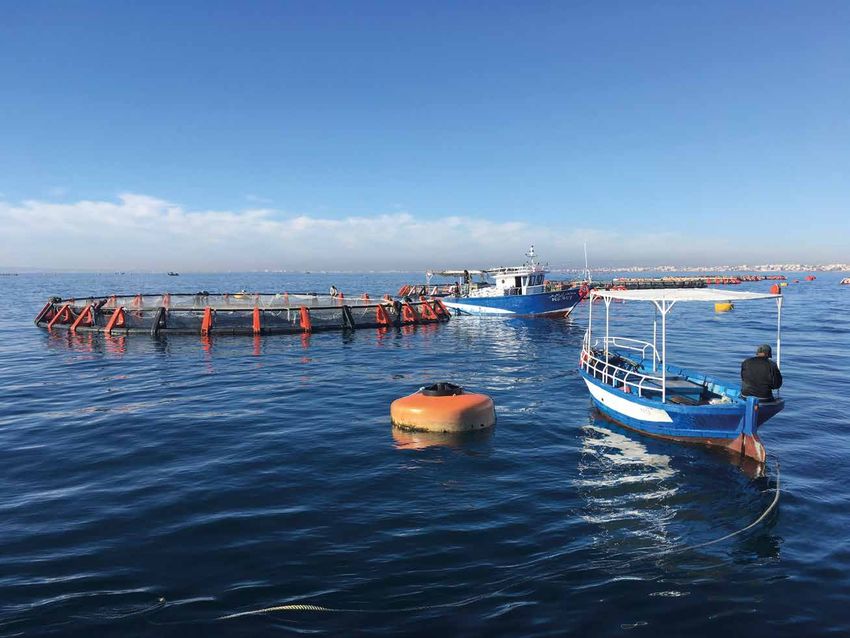
PREPARING
                                                                        FOR TOMORROW

               In an internal memo, CIRAD
              General Management has set
                                                              CAREERS IN LINE
                out the principles and rules                  WITH CIRAD’S PRIORITIES
           governing geographical mobility
                       for the organization                   Geographical mobility, at the heart                 ment fits in with our geographical partner-
                                                              of CIRAD’s scientific strategy                      ship strategy. Any plans for mobility must be
              as a whole, within a common                                                                         drawn up jointly with our partners.
                                                              When they join CIRAD, our researchers make
                         action framework.                    a contractual commitment to geographical
                                                              mobility. Mobility is key to the success of the
                                                                                                                  Practicalities tailored to experience
                                                              organization’s scientific operations. It is the
                                                              expression of a collective response to scien-       The profile and personal circumstances of
                                                              tific questions and to expectations expressed       each researcher are taken into account.
                                                              by our partners. Each planned assignment is         Mobility is a priority for “junior researchers”,
                                                              subject to the approval of General Manage-          and should serve to build their scientific
                                                              ment.                                               reputation. For “senior” researchers, finan-
                                                                                                                  cial aspects are important, albeit tempered
                                                                                                                  by other criteria, such as the type of work
                                                              Rules, principles and a schedule                    being done by the researcher and the situ-
                                                              The memo sets out the time scale, the three         ation of the country or partner concerned.
                                                              aspects – scientific, partnership-related and       The experience and skills acquired through
                                                              financial – to be clarified, and the roles of       geographical mobility are taken into account
                                                              each party. Our research teams, units and           when deciding on promotions.
CIRAD

                                                              departments suggest assignments, and the
                        Philippe Petithuguenin,               Management Committee makes the final
              Deputy Director General in charge of Research   decision. The Regional Directors concerned
                              and Strategy                    are also involved in checking that the assign-      philippe.petithuguenin@cirad.fr

         A FUTURE ETHICS AND SCIENTIFIC INTEGRITY OFFICE
         Three questions for Philippe Feldmann, specialist in scientific integrity issues at CIRAD

                          Ethics are a major priority for     Why draft a code of ethics?                         partnerships and foster sustainable devel-
                       CIRAD. After signing the national                                                          opment, notably by building research, train-
                                                              Philippe Feldmann: Ethics are a major prior-
                                                                                                                  ing, appraisal and innovation capacity
                        research ethics charter in 2015,      ity for CIRAD. After signing the national
                                                              research ethics charter in 2015, CIRAD is now       amongst its partners in the global South.
                        CIRAD is now rolling out its own
                                                              rolling out its own code of ethics. In view of
                                           specific code
                                                              its responsibility to society as a whole,
                                               of ethics.                                                         So what now?
                                                              research has to be exemplary in terms of its
                                                              practices and principles.                           P.F.: CIRAD is getting ready to launch an
                                                                                                                  Ethics and Scientific Integrity Office, to be
                                                                                                                  backed up by an Ethics Monitoring Commit-
                                                              What is in the code?                                tee. The office will be the point of entry for
                                                              P.F.: It sets out the ethical principles and
                                                                                                                  CIRAD employees or people from outside
                                                              rules applicable to its staff members,
                                                                                                                  CIRAD who may have questions relating to
        © M. Gunther

                                                              whether administrative or scientific. In par-
                                                                                                                  the code and more broadly to ethics and
                                                              ticular, it takes account of the specificities of
                                                                                                                  scientific integrity as a whole.
                                                              scientific partnerships for development, and
                                                              collaboration with the private sector.

                                                              In line with its strategic vision and its values,
                                                              CIRAD works to build balanced, equitable            philippe.feldmann@cirad.fr

         6                                                                                           CIRAD - 2017 HIGHLIGHTS - ACTIVITIES REPORT
PREPARING
                                                                   FOR TOMORROW

Montpellier research centre

A FUTURISTIC GLASSHOUSE TAKES SHAPE

                                                                                                                                                                          © D. Delebecque, CIRAD
T
            he keys to the high-performance            effect of nitrogen fertilization on plant nitro-           THE CIRAD WEBSITE IS NOW
            glasshouse on the Lavalette site           gen use efficiency and susceptibility to dis-              MOBILE-FRIENDLY
            have been handed over*, after a            ease.                                                      The CIRAD website is now available in a version
            year of building works. The
                                                                                                                  optimized for smartphone screens. This mobile
            glasshouse has six 40-m2 glass             These initial trials will also serve to assess
                                                                                                                  version is easier to navigate and more comfortable
“chapels”, a 12-m2 culture chamber, an                 the overall performance of the glasshouse,                 to read, to facilitate access to information. This is
office, sanitation facilities, and work and            before it is opened to CIRAD as a whole and                an advantage for anyone wanting to know more
storage areas.                                         to outside partners in 2019. The second                    about CIRAD, particularly in Africa (560 million
                                                       phase** (equipment purchasing) is sched-                   2G users in 2015), where for want of other
Climate conditions are very closely con-
                                                                                                                  infrastructures, information is primarily accessed
trolled: temperature and humidity, and                 uled for 2018.
                                                                                                                  via smartphones.
adjustable CO2 concentration (up to 1000
ppm), lighting and photoperiod. This enables                                                                      www@cirad.fr
detailed analyses of the effects of climate            tanguy.lafarge@cirad.fr
change on plant development and growth.                                                                           https://www.cirad.fr/en/news/all-news-items/
                                                                                                                  articles/2017/ca-vient-de-sortir/the-cirad-website-
Two trials have already begun on rice: one             * Phase 1 was funded by the Regional Council,              is-now-mobile-friendly
to study the impact on photosynthesis of               under the State-Region Planning Contract.

doubling ambient CO2 levels, the other the             ** Phase 2 is funded by the State.

                   Publication. What impact do thematic publications have?

                   The Scientific and Technical        pinpoint ways of boosting the dissemination and
                   Information Service (DIST) has      visibility of these publications.
conducted an impact study of the five books on
                                                       marie-claude.deboin@cirad.fr
CIRAD’s annual topics* published by Quae and
                                                       http://agritrop.cirad.fr/585199/
Springer up to 2017. An analysis of various criteria
(sales, hits and downloads, referencing, indexing,
                                                       *2013: biodiversity; 2014: family farming; 2015: climate
citation, social media activity, bibliographical       change; 2016: sustainable development and tropical
reference sharing websites, media) served to           supply chains; 2017: living territories.

CIRAD - 2017 HIGHLIGHTS - ACTIVITIES REPORT                                                                                                                          7
PREPARING
                                                              FOR TOMORROW

Incentive scheme                                                                                        Technology transfer and development
                                                                                                        Mash: the success story
CIRAD SUPPORTS CREATIVE,                                                                                of a sugarcane field mapping tool
                                                                                                        A contract was recently signed between CIRAD
INNOVATIVE RESEARCHERS                                                                                  and Mitr Phol, a Thai firm that is number 5 in the
                                                                                                        global sugar market, relating to the Mash tool.

T
                                                                                                        Development of the tool was supported by the
          o foster the development of ideas          CRESI is currently supporting an exploration
                                                                                                        new products and services incubator (INPP), and it
          that are either novel or ahead of          of the diversity and distribution of the archaea   serves to monitor sugarcane harvesting in virtually
          their time, CIRAD has launched an          associated with agro-ecosystems using inno-        real time, using radar and optical satellite images.
          incentive scheme for scientific cre-       vative metagenomics and culturomics tech-
          ativity and innovation (AI CRESI).
                                                     niques; a collaborative platform for analysing
The aim is to build an ideas incubator, by           and validating information on genetic              e-WATCH: a web tool
facilitating the emergence of original scientific    resources worldwide; a study of the synergies      for managing monitoring data
                                                     between firms and territorial development          e-WATCH serves to manage geo-referenced field
initiatives, for instance with a view to moving
                                                                                                        data. This software suite, developed by CIRAD
into a new scientific niche. Funding is available    that could be used to reach the sustainable
                                                                                                        and supported by the new products and services
for operations to test the relevance of and          development goals (SDGs); and the develop-         incubator (INPP), has been used to build several
nurture ideas, and if possible to turn them into     ment of an innovative method for identifying       platforms: vulnerable zones in West Africa (IUCN),
                                                     and monitoring cocoa pollinator populations        Agrisource with INRA (EIT-Climate KIC), and the
research projects. The selection criteria centre
                                                                                                        cotton supply chain in Mali (AFD).
                                                     on a plot scale.
on the originality of the proposal and the
possibility of converting intuitions and inten-
tions into concrete scientific operations.           claudie.dreuil@cirad.fr                            lisa.blangy@cirad.fr

                                                     Montpellier UniverSity of Excellence (MUSE)
                                                     SEVEN WINNING PROJECTS
                                                     LED BY CIRAD

U
            nder the Support for Research call       submitted, this category is by far the largest,    Projects led by CIRAD
            for projects launched last Sep-          which proves the vitality of the sector in
                                                                                                        CarniVespa: Recherche de signaux visuels et olfac-
            tember by Montpellier UniverSity         Montpellier.                                       tifs attirants spécifiquement le frelon asiatique
            of Excellence (MUSE), four types
                                                     Montpellier UniverSity of Excellence (MUSE)        chez une plante carnivore pour le développement
            of projects (research, recruitment                                                          d’un piège biomimétique
                                                     was founded to make Montpellier the Euro-
of post-doctoral researchers, shared struc-
                                                     pean capital of health and the agro-environ-       TEMPO: TElédétection et Modélisation sPatiale de
tural facilities, and heavy equipment for
                                                     ment. The project, submitted by the                la mObilité animale
technological platforms), organized around
                                                     University of Montpellier in response to the       MozARH: Mozambican Arenaviruses at the Rodent
five subject areas (Agronomy-Environ-
                                                     I-Site project launched by the French gov-         Human interface
ment-Biodiversity, Biology-Health, Chemis-
                                                     ernment, took shape in 2017. MUSE associ-          AprèsInfrastructure: Vulnérabilité des populations
try,Mathematics-ComputerScience-Phys-
                                                     ates all the research establishments, the          riveraines après installation d’interfaces hydroag-
ics-Structure, and Social Sciences) will share       university and four grandes écoles in Mont-        ricoles (Senegal)
a grant of € 5.8M.                                   pellier.
                                                                                                        AdaptGrass: Genomic analysis of crop adaptative
Of a total of 264 proposals submitted, 58            Its scientific vision centres on three societal    diversity for two plant models, rice (C3) and sor-
(20%) were selected. CIRAD leads seven in                                                               ghum (C4)
                                                     issues: “Feed - Care - Protect”.
all, and is a partner in five others. In particu-                                                       Tackling CC: Tackling Climate Change: Institutional-
lar, it leads five of the eleven projects selected   vincent.fabre-rousseau@cirad.fr                    izing and Articulating Adapted Tools for Integrated
under the heading Agronomy-Environ-                                                                     Governance of Climate Change Policies
                                                     https://www.cirad.fr/en/news/all-news-items/
ment-Biodiversity. With 40% of all projects          articles/2018/institutionnel/cirad-projects-muse   ECOTROP platform

8                                                                                           CIRAD - 2017 HIGHLIGHTS - ACTIVITIES REPORT
PREPARING
FOR TOMORROW
3
#DigitAg higher education establishments
(University of Montpellier,
Montpellier SupAgro and
FOR DIGITAL FARMING AgroParisTech) 4
research organizations
W
(IRSTEA, project leader,
INRA, INRIA and CIRAD)
hat are the links between acquisition and management; information
artificial intelligence and systems and data storage and transfers; agri-
sensors, and food security, cultural big data mining; and agricultural
agro-ecology, agricultural 8
production system modelling and simulation. firms (SMAG,
Fruition Sciences, IDATE,
advisory services and market ITK, Pera-Pellenc,
access? To tackle the global issues at the CIRAD will be contributing its experience of Agriscope, Terranis, Vivelys) 2
transfer-development
heart of the SDGs, #DigitAg, the Institute for farming systems in the global South. In par- structures
(ACTA, SATT AxLR)
the Convergence of Digital Agriculture, asso- ticular, it will be leading challenge 8, devoted
ciates 17 French players from the research, to the South, focusing on the key factors for
higher education and private sectors, with a the success of innovations in terms of smart
farming, particularly the way in which tools Almost 10 million euros
view to analysing and supporting the devel- from the Investissements
opment of smart farming in both North and and services must be co-constructed if they d’Avenir Programme
(call for projects specific to 57 thesis grants
South. are to be both useful and used in Africa. Instituts Convergences)
18 years of post-docs
guy.faure@cirad.fr 150 Masters grants,
The partners in #DigitAg will be working including
along six lines: the impact of information and pascal.bonnet@cirad.fr 45 “member firms” Masters
communications technologies on the rural https://www.cirad.fr/en/news/all-news-items/
world; smart farming innovations; data articles/2017/science/digitag-launch
Bonn Challenge. CIRAD IS COMMITTED TO RESTORING FOREST LANDSCAPES
The degradation of tropical forests as a result of
reckless logging concerns more than two billion
hectares of land worldwide. The Bonn Challenge,
launched in 2011 by the German government and
the IUCN, set out to restore 150 million ha of
degraded and deforested land by 2020, and 350
million by 2030.
CIRAD has been chosen as a technical partner, and
is involved in three global initiatives:
– the African Forest Landscape Restoration Initi-
ative (AFR 100), which concerns 100 million hec-
tares;
– Initiative 20x20, which covers 20 million hec-
tares throughout Latin America;
– the GPFLR (Global Partnership on Forest Land-
scape Restoration), which works on a landscape or
territory scale.
plinio.sist@cirad.fr
https://www.cirad.fr/en/news/all-news-items/
articles/2017/science/bonn-challenge-restoring-forest-
Bushfire in a baobab forest in Senegal J. Bouyer © CIRAD
>
landscapes
CLIMATE CHANGE
The 4P1000 initiative has won the World Since its launch in 2015, more than 280 organiza- COP23: making actions speak louder than
Future Council Future Policy Award. The tions have supported the initiative by signing the words. The 23rd Conference of the Parties to the
initiative, which sees agriculture as a solution to Paris declaration, which set its objectives. The ini- UN Convention on Climate Change (COP23), “Fur-
climate change, is a vision for the future, according tiative fits in with the global climate action agenda ther, Faster Ambition Together”, organized by Fiji,
to the World Future Council. The Council recently (GCAA) adopted at COP22. was held in Bonn, Germany, from 6 to 17 November
gave the initiative its prestigious Future Policy emmanuel.torquebiau@cirad.fr 2017. CIRAD, along with its partners, was involved
Award (Vision category). This year, the award, in several meetings, notably relating to the 4P1000
https://www.cirad.fr/en/news/all-news-items/
which is known as the best policy Oscar, highlighted initiative.
articles/2017/science/the-4p1000-initiative-receives-
the best global policies to combat desertification the-world-future-council-future-policy-award julien.demenois@cirad.fr
and soil degradation.
https://www.cirad.fr/en/news/all-news-items/
articles/2017/events/cop-23-cirad-s-participation
CIRAD - 2017 HIGHLIGHTS - ACTIVITIES REPORT 9PREPARING
FOR TOMORROW
Réunion-Mayotte
and Indian Ocean
Annick Girardin with Éric Jeuffrault © CIRAD
>
French West Indies,
French Guiana and
Caribbean
THE MINISTER
FOR OVERSEAS
TERRITORIES MEETS
AGRICULTURAL
PROFESSIONALS
On 9 October 2017, during a trip
Réunio
to Réunion, the French Minister
and Ind
for Overseas Territories, Annick
Girardin, took stock of the progress
made by the technical innovation
and agricultural transfer networks
Stéphane Travert tours CIRAD’s installations with Dominique Martinez
>
© D.-L. Aubert, DAAF Guadeloupe (RITAs).
A
t a meeting focusing on agricul-
THE FRENCH MINISTER OF AGRICULTURE tural transfers with players from
the main production chains in
VISITS CIRAD Réunion (horticulture, livestock
production and sugarcane),
During a trip to the French West Indies, the Minister of Agriculture Annick Girardin learnt about the progress
and Food, Stéphane Travert, visited CIRAD’s Neufchâteau station made by the RITAs (innovation and agricul-
on 24 November 2017. tural transfer networks) centring on
S
agro-ecology that were set up in the French
téphane Travert took the opportu- – development, with an industrial partner, of overseas regions by the French government
nity of a trip to the French West sugarcane fibre use to generate energy; in 2012. CIRAD is one of the founding mem-
Indies to talk to agricultural supply bers of the RITAs and one of the leaders,
– support of the banana supply chain in
chain stakeholders about the situa- along with ACTA, on a national level.
terms of disease surveillance and preven-
tion following the damage caused “Our RITAs are working on collaborative pro-
tion, and development of new varieties and
by hurricanes Irma and Maria, and the issues jects based on involving all stakeholders, who
of agro-ecological methods aimed at cut-
covered by the États généraux de l’alimenta- each benefit. Farmers are a pivotal concern
ting chemical input use. for research. RITAs combine science and prac-
tion and the Assises des Outre-mer.
For Dominique Martinez, CIRAD Regional tice”, says Éric Jeuffrault, CIRAD Regional
The Minister visited CIRAD’s Neufchâteau Director for Réunion-Mayotte.
Director for the West Indies-French Guiana,
station to discover its operations in support “this ministerial visit recognizes the impor- Following their talk, the Minister said she had
of farming in Guadeloupe: tance of the research being done by CIRAD met “a Réunion that dares, with the whole
range of professionals, scientists and organi-
– revival of the citrus sector, via the local and its partners, as a driver of agricultural
zations. The networks in Réunion are an exam-
technical innovation and agricultural trans- innovation in favour of territorial develop-
ple to all, and prove the merits of working
fer network (RITA), following the arrival of ment”. together. Réunion is the most dynamic over-
citrus greening disease; https://antilles-guyane.cirad.fr/ seas region when it comes to agro-ecology.”
10 CIRAD - 2017 HIGHLIGHTS -PREPARING
FOR TOMORROW
French West Indies,
R. Carayol © CIRAD
French Guiana and
Caribbean
THE RÉUNION PLANT PROTECTION PLATFORM
IS EXPANDING
T
he Plant Protection Platform (3P) in technology platform recognized by the Infra-
Saint-Pierre is expanding, with the structures en biologie santé et agronomie
help of the Réunion Regional Council (IBiSA) group.
and EU funding.
More than 1900 m2 of laboratories will be
The aim is to ensure better conditions for
built between now and the end of 2020,
researchers, students and partners from the
with state-of-the-art chemical ecology and
Indian Ocean working on crop protection and
molecular biology facilities. “These scientific
natural environments. “3P has been a victim
of its huge success since its inauguration in disciplines are absolutely vital”, Éric Jeuffrault
2001. It really needs extending”, says Éric adds, “to make agro-ecology a sustainable
Jeuffrault, CIRAD Regional Director for Réun- solution for our island farming systems, in a Réunion-Mayotte
ion-Mayotte. 3P is the only overseas research competitive economic context”. and Indian Ocean
THE VATEL BRC GETS A SEAL OF APPROVAL
FOR ITS QUALITY APPROACH
AGROnews, new format
L
The Vatel Biological Resource tection Platform). The unfailing motivation The new AGROnews,
Centre (BRC) was granted NF S96- and efforts put in by the BRC’s technicians, launched in 2017 to
900 certification by SGS, the world quality specialists, collection managers, gen- supplement CIRAD’s
leader in certification, in December on-line information
eral management and support services are
2016. That certification guarantees offering, reflects the
what have led to the BRC being recognized commitment of the
the efficiency of the centre’s system for
for its efficient management, seven years on. CIRAD Réunion-May-
managing its vanilla, tropical garlic and other
otte (Indian Ocean
lontan vegetable genetic resource collec- This certification means greater visibility and
zone) Regional Office
tions, which are now more secure and more regional legitimacy for the Vatel BRC. The and its research teams
traceable. centre is a member of InterTrop, a network to publicizing their
The BRC was given its first seal of approval of all the tropical plant BRCs owned by activities. The new
CIRAD, INRA and the IRD, which supports format will evolve in
by IBiSA in 2009. Its collection managers
time to keep pace with
subsequently launched a quality approach, BRCs in obtaining certification.
readers’ expectations.
which was boosted in 2014 by the arrival of
a quality specialist, who is herself backed up
by the Quality Manager at the 3P (Plant Pro- https://reunion-mayotte.cirad.fr/
CIRAD - 2017 HIGHLIGHTS - ACTIVITIES REPORT 11Th. Leroy © CIRAD
Alex_Traksel © Adobe Stock
P. Dugué © CIRAD
12 CIRAD
CIRAD - - 2017
2017HIGHLIGHTS
HIGHLIGHTS - ACTIVITIES REPORTINTEGRATING
KNOWLEDGE
to share and
use it better,
and suggest
possible courses
of action
CIRAD - 2017 HIGHLIGHTS - ACTIVITIES REPORT 13INTEGRATING
KNOWLEDGE
persp ctive
e The CIRAD
policy brief
Animal and human health: tackling uncertainty through participatory
modelling and simulation
Zoonoses, drug resistance and environmental pollution are now causing serious health
problems worldwide. New uncertainties are emerging, and nonconventional actors are
entering the scene alongside the decision-makers traditionally responsible for public health.
In response to these constraints, researchers are using a participatory approach that is
described in this issue of Perspective.
aurelie.binot@cirad.fr • raphael.duboz@cirad.fr
https://www.cirad.fr/en/news/all-news-items/articles/2017/ca-vient-de-sortir/perspective-no.-41-animal-and-
human-health-tackling-uncertainty
Antimicrobials in agriculture: reducing their use while limiting health
Communautés locales
and socioeconomic risks in the countries of the South
et utilisation de la faune sauvage
The widespread use of antimicrobials in agriculture is increasing in southern countries, en Afrique centrale
driven by growing demand for animal products. This is creating a serious problem of anti-
This synthesis, published by the FAO, CIRAD and
microbial resistance. This Perspective deciphers the complexity and impact of the problem.
CIFOR, relates and promotes the lessons learnt
It suggests possible courses of action aimed at rationalizing microbial use, while respecting
from the Wildmeat project on participatory man-
farmers in the most vulnerable regions. agement of the local fauna and hunting, which ran
francois.roger@cirad.fr from 2012 to 2017 in Gabon, Central African
Republic, Republic of Congo and Democratic
https://www.cirad.fr/en/news/all-news-items/articles/2017/ca-vient-de-sortir/perspective-no.-39-antimicrobials-
in-agriculture-f.-roger-c.-ducrot
Republic of Congo.
Communautés locales et utilisation durable de la faune en
Afrique centrale. N. van Vliet, J. -C. Nguinguiri, D. Corne-
lis, S. Le Bel (eds). FAO/CIFOR/CIRAD. 2017 (266 p.).
Fruit Logistica 2017 fair http://dx.doi.org/10.17528/cifor/006488
CIRAD, THE EXPERT
IN TROPICAL FRUIT Technical guides
AND VEGETABLES Diagnostic approfondi pour la mise en œuvre de la gestion
communautaire de la chasse villageoise. CIFOR, CIRAD,
IUCN, FAO, (80 p.). http://dx.doi.org/10.17528/cifor/
CIRAD was at the Fruit Logistica fair in Berlin from 8 to 10
005706
February 2017. It presented a selection of its expertise and
D. Guard, Développement participatif d’un plan de gestion durable
innovations, from plant breeding to postharvest procedures, CIRAD de la chasse villageoise. CIFOR, CIRAD, FAO, (48 p.). http://
through life cycle assessment. The flagship offering,
dx.doi.org/10.17528/cifor/006489
Fruitrop, was presented by the CIRAD Market News
Service, a group of economic experts. Fruit Logis-
tica is a global rendezvous for the fruit and vege-
table trade, and each year, it brings together
Zimbabwe
almost 3000 exhibitors from some 80 coun- The RP-PCP platform celebrates
tries and more than 70 000 visitors from its tenth anniversary
130 countries.
To mark its tenth anniversary, the RP-PCP
lisa.blangy@cirad.fr (Production and Conservation in Partnership in
https://www.cirad.fr/en/news/all-news-items/articles/2017/ Southern Africa) platform worked with its partners
events/cirad-at-the-fruit-logistica-2017-fair to organize a week-long meeting in southeastern
Zimbabwe on the matter of Transfrontier
Conservation Areas (TFCAs). A consultation
Expertise workshop on a role-play game, Kulayijana
(“learning from each other”) was held in situ with
GEOGRAPHICAL INDICATIONS: WHAT ARE THE STATE’S ROLES?
rural communities (22-23 May). This was followed
The prestigious journal World Development devoted a special section to geographical indications (GIs) by an international scientific symposium (24-26
in late 2017. It was coordinated by two researchers from UMR Innovation, and presented the results May) to allow the platform’s students to meet
of more than 15 years’ work by CIRAD and its partners in the global South, in a context of intense international experts and present their research
global debate about the institutionalization of these quality stamps. to the community representatives who led the
estelle.bienabe@cirad.fr • delphine.marie-vivien@cirad.fr debates and subsequent discussions.
https://www.cirad.fr/en/news/all-news-items/press-releases/2017/gis-what-are-the-state-s-roles alexandre.caron@cirad.fr
https://www.sciencedirect.com/science/article/pii/S0305750X17301584 https://www.rp-pcp.org/
14 CIRAD - 2017 HIGHLIGHTS - ACTIVITIES REPORTINTEGRATING
KNOWLEDGE
© P. Poilecot, CIRAD
CENTRAL AFRICA
INTEGRATING WILDLIFE
INTO FOOD SYSTEM MANAGEMENT
H
unting has traditionally been a The results of the “Wildmeat” project A paradigm shift
vital source of food and income
The aim was to switch from conserva- As a synthesis published at the end of the
for many rural families in central
tion-centred, repressive management of project highlights, reconciling food security
Africa, where wildmeat con-
hunting by villagers to sustainable use by and wildlife conservation in central Africa
sumption totals between 5 and
means of an adaptive, participatory means promoting the emergence of local
7 million tonnes a year. However, growing
approach. To this end, local communities (territory-based) government of meat-
population pressure and demand for meat
were involved in pilot projects and encour- based food systems, covering both domes-
from secondary towns and cities have
aged to organize themselves so as to ticated and wild meat sources. This will be a
resulted in increased, unsustainable hunting
manage their hunting territories collectively. gradual revolution, involving revision of laws
of many wild animals. In response to this
and changes in hunting and wildmeat trad-
threat to conservation and biodiversity, a The researchers involved developed models
ing practices and in the local diet.
project, “Sustainable wildlife management and tools for community management of
and wildmeat in central Africa”, served to lay hunting by villagers. They also used innova-
the foundations of integrated management tive tools such as digital apps and cameras Ongoing collaboration: a consortium
of hunting by villagers and of meat con- to monitor hunting activities. Two technical for the coming seven years
sumption. handbooks and a battery of diagnostic tools New projects are planned to carry on from
were also produced. Lastly, a sub-regional this initial work, including the Sustainable
The project, which was led by the FAO and
strategy for the sustainable use of wildlife Wildlife Management programme, which
involved CIRAD, ran for five years and was
by local communities was drafted. It is led began in late 2017. With 45 million euros of
recently completed. The knowledge gener-
by the Commission of Central African Forests funding from the European Commission, the
ated by the network of partners built around
(COMIFAC) and endorsed by the govern- exceptionally long project (seven years) will
the project is a valuable asset for continuing
ments of the countries concerned (Gabon, be conducted in the ACP (Africa, Caribbean,
support of the emergence of local, partici-
Congo, and DRC). Pacific) countries by a consortium compris-
patory management of wildlife and hunting
in central Africa. ing the FAO, CIRAD, CIFOR and the NGO WCS
(Wildlife Conservation Society).
daniel.cornelis@cirad.fr
sebastien.le_bel@cirad.fr
CIRAD - 2017 HIGHLIGHTS - ACTIVITIES REPORT 15Afrique
INTEGRATING de l’Ouest
KNOWLEDGE côtière
Antilles, Guyane
et zone Caraïbe
French Académie d’agriculture: Montpellier
a silver medal for Antoine Ducastel SOCIOBIOCERRADO PROJECT CLOSING SEMINAR
T
The closing seminar of the Sociobiocerrado project on the issues and challenges of Afriq
promoting the Cerrado biome by means of sustainable food systems was held from co
12 to 14 December at UMR MOISA in Montpellier, and was attended by Brazilian
experts, notably from the University of Brasilia (UnB) and the Federal University
of Maranhão (UFMA)
stephane.gueneau@cirad.fr • brasil-conesul@cirad.fr
Brésil
https://bresil.cirad.fr/
persp ctive
e
The CIRAD policy brief
DR
Antoine Ducastel, a socioeconomist with UMR Managing degraded forests,
ART-DEV, was awarded the Académie d’agricul-
a new priority in the Brazilian Amazon
ture silver medal for his thesis on cultivating
capital: an analysis of the financialization of agri- The drastic steps taken in Brazil to cut the annual lilian.blanc@cirad.fr
culture in South Africa by the agro-financial sub- deforestation rate have not had any effect on marie-gabrielle.piketty@cirad.fr
sidiaries of private equity firms. This work was forest degradation. Degraded forests now domi- marc.piraux@cirad.fr
conducted with the University of Pretoria. nate the landscape along pioneer fronts in the
https://www.cirad.fr/en/news/all-news-items/
antoine.ducastel@cirad.fr Amazon. This issue highlights four research pri-
articles/2017/ca-vient-de-sortir/perspective-no.-40-
orities for reducing degradation and optimizing managing-degraded-forests
these forests.
Eighteen institutions
have signed up to the Tropical Ivory Coast
managed Forests Observatory CIRAD AT THE ABIDJAN AGRICULTURAL SHOW
T
The Tropical managed Forests Observatory was
recently formalized by a collaboration agreement he Salon international de l’ag- tive was presented, and an exchange forum
signed by 18 institutions, including CIRAD. The riculture et des ressources ani- on the attractiveness to young Africans of
confirmation of this unique network will enable it males (SARA) was held from 17 to renewed sub-Saharan African agriculture,
to continue monitoring the world’s logged tropical 26 November in Abidjan, Ivory which proved very popular.
forests and drafting recommendations for sustain- Coast. At the event, which attracts
able silviculture. The challenge is an urgent one. the leading African research institutions,
CIRAD presented its research activities
plinio.sist@cirad.fr
on a stand shared with the AFD. CIRAD
https://www.cirad.fr/en/news/all-news-items/ sealed partnerships with research, develop-
articles/2017/institutionnel/eighteen-institutions-
have-signed-up-to-the-tropical-managed-forests-
ment and higher education establishments
observatory-tmfo in Ivory Coast and participated in several
events, including a workshop on climate
change issues, at which the 4P1000 initia-
RTBfoods: facilitating the adoption
patrice.grimaud@cirad.fr
of new root, tuber and cooking
https://www.cirad.fr/en/news/
banana varieties in Africa all-news-items/articles/2017/
events/cirad-a-major-player-
The RTBfoods project (Breeding RTB Products for
at-the-abidjan-agricultural-
End User Preferences) was launched in November show
2017, to run for five years. It is intended to facilitate
the adoption of new root, tuber and cooking
banana (RTB) varieties in five African countries. It https://afrique-ouest.cirad.fr/
will take a novel approach involving consumers,
processors and researchers. This 11.5-million-dol-
lar project sees CIRAD link up with the Bill &
Melinda Gates Foundation, INRA, CIAT, and the Anne Hébert, CIRAD >
James Hutton Institute. Communication Coordinator,
tours the stand with
dominique.dufour@cirad.fr Mr Alain Richard Donwahi,
Ivorian Minister of Water
https://www.cirad.fr/en/news/all-news-items/press- and Forests © CIRAD
releases/2018/rtbfoods
16 CIRAD - 2017 HIGHLIGHTS - ACTIVITIES REPORTINTEGRATING
KNOWLEDGE
Training seminar
STRUCTURING SEED AND PLANT PRODUCTION CHAINS
Madagascar
A WORKSHOP TO SHARE
INFORMATION ON THE
CONCEPT OF LANDSCAPE
A
workshop was held on 6 and
7 September for around thirty
participants from the SPAD
(Highland Production Systems
and Sustainability in Madagascar)
>
and Forests and Biodiversity platforms in
partnership (dPs), on the concept of land-
© CIRAD
scape. The aim, for the dPs, was to be in a
position to make proposals for the PADAP
P
project, launched by the Malagasy govern-
romoting IRAD improved varieties sector; limit free seed and plant distribution ment in the hope of boosting agricultural
while structuring seed and plant by the Ministry so as to foster the emer- productivity while ensuring sustainable nat-
production chains was the topic of gence of a private sector; train and supervise ural resource management within specific
a training seminar held in Yaoundé the seed production inspectors in charge of landscapes.
from 10 to 12 April, as part of the dregion@cirad.mg
seed and plant quality checks and certifica-
C2D (Debt Reduction and Development Con- tion; and produce a catalogue for farmers. https://madagascar.cirad.fr/
tract). Numerous players from the different
links in the value chain and the research denis.depommier@cirad.fr https://www.dp-spad.org
sector (IRAD, CIRAD, CARBAP, AfricaRice)
participated. In particular, they decided, for h t t p s : / /a f r i q u e - c e n t r a l e . c i r a d . f r/a c t u a l i t e s /
the coming months, to: establish platforms seminaire-cirad-de-formation-dans-le-cadre-du-
c2d-par-appui-a-la-valorisation-des-varietes-
for talks between the Ministry of Agriculture, ameliorees-de-l-irad-quelles-cles-pour-la-reussite-
producers’ organizations and the private des-filieres-de-production-de-semences-et-plants/
West Indies-French Guiana-Caribbean
A CARIBBEAN COCOA PROMOTION NETWORK KICKS OFF
T
he Réseau caribéen de valorisation du cacao https://www.forets-biodiv.org/
(RECAVACA) project was launched by the Associ-
ation Guadeloupe Equitable et Durable (AGED)
at CIRAD’s Neufchâteau site in Guadeloupe on
24 October 2017. The project, to be implemented
by AGED in partnership with CIRAD and the Coopérative
D. Guard, CIRAD
Agricole Cacaoyère et de Commercialisation de la Grande
Anse (CACCOMA), will be co-funded for two years by the
Interreg Caribbean programme (ERDF). It intends to help
cocoa producers from Guadeloupe and Haiti produce
high-end cocoa that respects the principles of agro-ecol-
ogy and fair trade.
https://antilles-guyane.cirad.fr/actualites/2017/reseau-caribeen-de-
valorisation-du-cacao Illustrations: Myriam Merch
CIRAD - 2017 HIGHLIGHTS - ACTIVITIES REPORT 17E. Penot © CIRAD
© L. Martin, CIRAD
© CIRAD
18 CIRAD - 2017 HIGHLIGHTS - ACTIVITIES REPORTSHARING
KNOWLEDGE
to build skills
among
development players,
scientists,
policymakers
and producers
CIRAD - 2017 HIGHLIGHTS - ACTIVITIES REPORT 19SHARING
KNOWLEDGE
Scientific and technical information at CIRAD
KEY FIGURES FOR
2017
Shared information resources
2017 2017
Ciradimages - 15 900 photos
€ 662 502 of journals, books and databases purchased 844 new photos
OR including 226 glass plates
per full-time
€725 research post Database
Books
Tools and
hardware
Tr
Journals
equivalent 4% 3%
59%% 34% Training
223 322 articles read on line 29 training sessions
193 161 database searches
for 350 researchers and PhD students
Agris 4% Autres 1%
Analysis of publications
2017
Scopus 9%
Agricola 15% 9 bibliometric studies
for teams and management
Cab 51%
Web of Science 20%
2017
Accessing of DIST services
2017
Allocated information resources 361 requests handled by the
Questions en IST site
€ 52 514 170 journals ordered 14 069 visits to the DIST intranet site
and funded by research units
63 143 visits to the CoopIST website
2017
Agritrop - 100 000 documents 2017
Digitization of CIRAD collections
2 844 documents recorded 120 books and 34 journals
56% in full-text, open-access versions
ie 300 000 pages in Gallica
dolor sit a (French National Library)
sum me
1 845 publications in
em
r
ip
2017 t,
co
Lo
2017
Theses et dissertations
nse
32 Others
Support for publication
ctetuer adipis
100
Mission and appraisal reports
111
67 manuscripts edited
cin
Books and book chapters od
ism
61 articles in English edited
g elit,
288 eu Articles
bh 873
for a total of € 15 410
ni
s
ed y
diam nonumm
Conference papers
441 214 journals added to the 2045
in Où publier (DIST intranet site)
873 articles published in 478 journals
including
250 in 119 open-access journals 11 works with CIRAD authors published by Quae
478 copies of Mémento de l’agronome sold
61 articles with datasets (Figshare, NCBI, Dryad, etc)
20 CIRAD - 2017 HIGHLIGHTS - ACTIVITIES REPORTSHARING
KNOWLEDGE
Agritrop is 7th in the French DIGITAL REPUBLIC
open archive rankings
After just two years, Agritrop, the open archive
CIRAD IS COMMITTED TO OPEN ACCESS
for CIRAD publications, is 7th in the French open TO SCIENTIFIC PUBLICATIONS
archive rankings. It has also been highly success-
ful on a European and global level. This is a
F
remarkable result for CIRAD, reflecting its deter- ollowing the vote ing article 38 of the law
mination to improve free circulation of scientific on 7 October 2016 on text and data mining.
knowledge worldwide. In Europe, Agritrop is in favour of a dig- They are calling on the
172nd out of 900 open archives. Globally, it is European Union to
ital republic, the
396th out of 2284.
French scientific commit fully to open sci-
community and its ence and open access.
member organizations The appel de Jussieu
launched several initia- dated 17 October, calling
> tives aimed at fostering for open science and
Marie-Claude open access to publications, text and data bibliodiversity, led by the AllEnvi and Avie-
Deboin, mining (TDM) and editorial innovation. san alliances and their members, insists on
Scientific
and Technical CIRAD joined the movement through the the need to support innovation to ensure an
Information signing, by its President Managing Director, in-depth reform of publishing activities.
Coordinator
alongside other research and higher edu-
cation players, of several texts intended for marie-claude.deboin@cirad.fr
Parliament and the Minister of Higher Edu-
DR
cation, Research and Innovation, following CIRAD is committed to open access to nowledge
“This 7th place after just two years the negative advisory opinion expressed by (pdf available at: https://www.cirad.fr/en/publi-
confirms the visibility the open archive the Conseil d’État on the decree implement- cations-resources/cirad-publications)
gives CIRAD’s publications
and co-publications. It also proves
the commitment of our researchers,
who trigger the promotion process BURKINA FASO
by uploading full-text versions A COMMUNITY OF CROPPING SYSTEM
of their publications.”
SIMULATORS IS BORN
F
rom 6 to 17 November, 30 agronomists, to identify or build the model best suited to their
ecologists, hydrologists, ecophysiolo- field of study. The trainers, from CIRAD and the
Malaysia gists and soil scientists from West Africa, IRD, and the participants were delighted to take
PRESTIGIOUS STATUS all working with CIRAD, went back to part in the birth of a community of cropping
school in Burkina Faso. The aim was to system modellers in West Africa.
FOR ONE OF CIRAD’S PARTNERS
train in dynamic modelling of cropping systems
In Malaysia, the Institute of Tropical Forestry and and in database management.
Forest Products (INTROP) at Universiti Putra sylvie.lewicki_dhainaut@cirad.fr
Malaysia has been designated a “Higher Institu- Over ten days of hard work, the researchers learnt
tion Centre Of Excellence” (HICOE) by the govern- why there are so many different models and how https://afrique-ouest.cirad.fr/
ment, with the help of CIRAD and its BioWooEB
research unit. This is the result of active collab-
oration, since 2009, on biofuels, biomass, and the
financialization of agriculture and the forestry
sector. This joint laboratory is an international
platform for training through research, with a
number of Masters and four PhD students. HICOE
© Rik Schuiling / TropCrop-TCS
status is reviewed every three years, and brings
with it a financial incentive of MR 3 million
(€ 600 000).
jean-marc.roda@cirad.fr
https://intranet.cirad.fr/les-rubriques-du-portail/les-
actualites/2017/actus/malaisie.-un-prestigieux-statut-
delivre-a-un-institut-grace-au-cirad
CIRAD - 2017 HIGHLIGHTS - ACTIVITIES REPORT 21SHARING
KNOWLEDGE
HIGHER CIRAD AND THE ENVT JOIN FORCES
EDUCATION TO TRAIN ANIMAL HEALTH MANAGERS
IN THE SOUTH
M
ichel Eddi and Isabelle Chmite- GIMAT (Integrated management of tropical
lin, Dean of the Ecole Nationale animal diseases) and InterRisk (Health risk
Vétérinaire de Toulouse assessment and management at the inter-
(ENVT), signed a general
face between man, animals and ecosystems),
agreement on 27 February for
and a MOOC (Massive Online Open Course)
cooperation on training, research and
expertise over the coming five years. on the basics of the epidemiology of animal
diseases.
As members of the French Agricultural, Vet-
erinary and Forestry Institute (Agreenium), The partnership will give rise to an annual
the ENVT and CIRAD have contributed for action plan and may lead to more specific
many years to the training and research agreements targeting joint operations of
structure in the new Occitanie region. More- major, shared strategic interest for the two
Isabelle Chmitelin, Dean of the ENVT,
over, they are working together within the
>
and Michel Eddi, CIRAD President Managing establishments, or for Agreenium.
Director, signed a general agreement platforms in partnership for research and
on 27 February for cooperation on training,
research and expertise over the coming
training (dPs) set up in southern countries.
https://www.cirad.fr/en/news/all-news-items/press-re-
five years © CIRAD
In 2015-2016 alone, their links resulted in the leases/2017/signing-cirad-envt-training-for-animal-
development of two international Masters, health-managers-in-the-south
AQUACULTURE, PROSPECTS AND SOLUTIONS. A UNIQUE TEACHING RESOURCE
A
lmost half of the fish intended for These new forms of aquaculture are pre- tion and veterinary medicine in warm
human consumption are now sented in this teaching resource. Aquacul- regions, including its MUSC (MUltimedia for
farmed. Aquaculture is a vital ture, perspectives et solutions comprises Science at CIRAD) platform. It was designed
source of jobs, food and eco- eleven chapters with contributions from by researchers from CIRAD, IFREMER, the
nomic opportunities, and by international specialists, and is a mine of
IRD, IRSTEA and AgroParisTech.
2030, is scheduled to account for two thirds information and educational references for
of the fish produced worldwide. However, it anyone interested in the issues surrounding
is increasingly under fire because of its aquaculture worldwide.
environmental impact, social consequences, The resource, produced in January with lionel.dabbadie@cirad.fr
etc. Yet there are innovative technologies support from the Université Virtuelle Envi-
and development methods that provide ronnement et Développement (UVED), was https://www.cirad.fr/en/news/all-news-items/
hope for sustainable production in the coordinated by the CIRAD-FVI joint team for articles/2017/ca-vient-de-sortir/aquaculture-
future. teaching and training in livestock produc- prospects-and-solutions-a-unique-teaching-resource
Fish farm (catfish and sea bass) off Monastir,
>
Tunisia L. Dabbadie © CIRAD
22 CIRAD - 2017 HIGHLIGHTS - ACTIVITIES REPORTSHARING
KNOWLEDGE
dP CANSEA. Regional agro-ecology workshop
AUF AND CIRAD RENEW The CANSEA platform in partnership for research of the dP and how to broaden its scope with a
and training (dP) organized a workshop in Vien- view to supporting the agro-ecological transition
THEIR PARTNERSHIP
tiane on 10 January. The aim was to hold discus- in Southeast Asia.
CIRAD and the Agence universitaire de la
sions with all the platform partners on the future florent.tivet@cirad.fr
Francophonie (AUF) signed a general agree-
ment on 14 April, with a view to strengthening
partnerships within the French-speaking
world.
CIRAD is a member of the French Agricultural,
Veterinary and Forestry Institute (Agreenium)
and of MUSE (Montpellier UniverSity of Excel-
lence), and is keen to work with countries in
the global South to develop intervention
frameworks and training courses tailored to
their requirements. The AUF helps structure
and develop research within a national and
international framework, and supports the
involvement of its members in this approach.
Its partnership with CIRAD is one example of
this
www.cirad.fr
https://www.cirad.fr/en/news/all-news-items/
press-releases/2017/auf-cirad-partnership-
renewed
Population and economic pressure has speeded up The major potential for dissemination of these
AGREEN U, THE DIGITAL
agricultural intensification in Southeast Asia. It innovative systems is bolstered by the wide range of
AGRO-BIOSCIENCE has also exacerbated the pressure on the available players involved. The CANSEA platform is working
UNIVERSITY land, and soil degradation. Conservation agriculture to structure these initiatives on a regional level.
(CA) serves to preserve and restore soil fertility. Drawing M. Khamla, Laos
Agreen U, which was launched in 2015 by
Agreenium, opened its doors in 2017. It is a
veritable virtual campus, which offers a range THE SUDBIOTECH WORKSHOPS ARE TEN!
of digital resources and information and
training services in the field of agro-biosci- The SudBiotech initiative (CIRAD, IRD, CNRS, Paris Interview with Alain Rival, Coordinator,
ence. This is fostering the creation of educa- Saclay University), which was launched to lay the for CampusMag:
tion communities, centring on agro-ecology foundations for a permanent network of teach-
https://www.youtube.com/
amongst other things. er-researchers in biotechnology, molecular biol-
watch?v=q25ESYq92wY
pascale.lajous@cirad.fr ogy and bioinformatics in Africa, works to
introduce innovative educational pathways at
https://www.agreenium.fr/sites/default/files/ Film Comprendre et maîtriser
dossier_de_presse_agreen_v_web.pdf
universities. In ten years of classroom teaching,
SudBiotech has been deployed in Benin, Burkina les biotechnologies au Sud:
Faso, Algeria and Tunisia. http://www.ird.fr/la-mediatheque/videos-en-
ligne-canal-ird/comprendre-et-maitriser-
alain.rival@cirad.fr les-biotechnologies-au-sud
CIRAD is a founding member
of Agreenium and MUSE
Follow all CIRAD’s news > www.cirad.fr
CIRAD - 2017 HIGHLIGHTS - ACTIVITIES REPORT 23F. Ribeyre © CIRAD A. Rival © CIRAD P. Dugué © CIRAD 24 CIRAD - 2017 HIGHLIGHTS - ACTIVITIES REPORT
SUPPORTING
    SOUTHERN COUNTRIES
                                            to make
                                      scientific research
                                        a prime driver
                                          in societal
                                          transitions

CIRAD - 2017 HIGHLIGHTS - ACTIVITIES REPORT                 25
SUPPORTING
SOUTHERN COUNTRIES
IMPACT OF AGRICULTURAL RESEARCH
THE DEBATE IS ON BETWEEN SCIENTIFIC ORGANIZATIONS
AND DONORS
H
ow can we measure the impact of
agricultural research? How can
we contribute to research gov-
ernance in such a way as to max-
imize its impact in the field, in
terms of gains in productivity, environmen-
tal quality, efficiency all along the agrifood
chain, social relations, etc? These questions
were addressed by two projects, ImpresS
and Impresa, the results of which were pre-
sented, on the initiative of CIRAD, in Brussels
on 18 November. The presentation was fol-
lowed by talks with representatives of three
European Commission Directorates General
(Research and Innovation, Agriculture and
Rural Development, and Development and
Rural Cooperation) and the International
Fund for Agricultural Development (IFAD).
Impact illustrated by Eric Vall, CIRAD researcher
>
This unprecedented meeting between sci-
entific organizations and donors paved the
ImpresS and Impresa push researchers to genowefa.blundo_canto@cirad.fr
way for a renewal of the way in which we
switch from a “culture of promises to a etienne.hainzelin@cirad.fr
assess impact, a debate on the place of “culture of impact”. However, this change in
impact in competitive funding, and a culture will not be possible without the help
https://www.cirad.fr/en/news/all-news-items/
research and agricultural development of the donors who determine the framework articles/2017/institutionnel/impact-of-agricultural-
policy rethink. for research funding. research
THE IMPRESS EX POST METHODOLOGICAL GUIDE Sustainable palm oil
The ImpresS (Impact of Research in the South) ex ImpresS methodological guide. Methodological guide to CIRAD AND THE FRENCH
post method was developed by CIRAD to docu- ex post evaluation of agricultural research in developing ALLIANCE FOR SUSTAINABLE
ment the economic, societal and environmental countries. Barret Danielle, Blundo Canto Genowefa, Dabat
Marie-Hélène, Devaux-Spatarakis Agathe, Faure Guy,
PALM OIL HAVE AGREED ON
impacts that research helps to generate in the
Hainzelin Etienne, Mathé Syndhia, Temple Ludovic, Toillier A THREE-YEAR PARTNERSHIP
long term. It establishes causalities between
Aurélie, Triomphe Bernard, Vall Eric (illus.). 2017. Mont-
research activities and those impacts by involving On 27 February, during the Paris International
pellier: CIRAD, 96 p. ISBN 978-2-87614-736-2 http://
the various players concerned, whether they are Agricultural Show, Michel Eddi and Guillaume
agritrop.cirad.fr/587552/
drivers of or impacted by innovation. Réveilhac, President of the French Alliance for
Sustainable Palm Oil, announced the signing of a
three-year partnership agreement, in front of an
audience of NGOs and representatives of public
authorities.
Follow all CIRAD’s news > www.cirad.fr Through the agreement, the French Alliance for
Sustainable Palm Oil will be supporting research
projects to be conducted within the SALSA plat-
form. This group of French firms already buys 100%
RSPO (Roundtable on Sustainable Palm Oil)-certi-
fied palm oil, of which 73% is classed as “segre-
gated”, the highest RSPO classification. It is now
aiming for “zero deforestation” by 2020.
cecile.bessou@cirad.fr
https://www.cirad.fr/en/news/all-news-items/press-
releases/2017/cirad-and-the-french-alliance-for-
sustainable-palm-oil-have-agreed-on-a-three-year-
partnership
26 CIRAD - 2017 HIGHLIGHTS - ACTIVITIES REPORTYou can also read


