Living with PTSD Jul-Aug2020 Issue95 - Welsh Country Magazine
←
→
Page content transcription
If your browser does not render page correctly, please read the page content below

Jul - Aug 2020   Issue 95

Living with PTSD
Living with

                                                                     And the overall five-month campaign in northern France
                                                                   has come to stand for the horror and futility of the First
                                                                   World War.

                                                                   Shell Shock
                                                                      It is also known for its ‘epidemic of shell shock’, which
                                                                   at the time was generally not recognised as individual
                                                                   psychological trauma, but as a threat to the army as a whole.
                                                                   But the first steps were taken to look at the effects of what
                                                                   is now known as Post-Traumatic Stress Disorder (PTSD)
                                                                   and develop a more sympathetic approach to treatment.
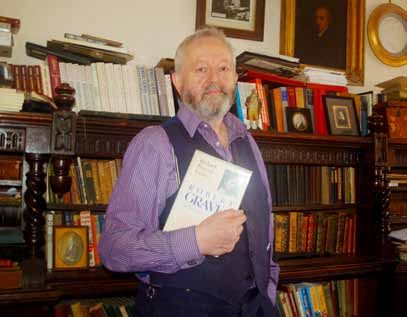
                                                                   Richard Graves, of digital marketing agency GWS Media,
                                                                   has written a three-volume biography of his uncle Robert
                                                                   Graves – who served with the Royal Welch Fusiliers (RWF).
                                                                      The RWF, the oldest military regiment in Wales, had the
                                                                   distinction of being the most literary regiment in the army.
                                                                   Richard, who covers the period of The Great War in his
                                                                   book, The Assault Heroic, said: “I was privileged to know
                                                                   my uncle Robert for almost forty years. It is a great tribute
                                                                   to him that he succeeded in overcoming the shellshock that
                                                                   plagued him very severely for at least fifteen years of his
                                                                   adult life. He also succeeded, despite his intense suffering,
                                                                   in making such a remarkable contribution to English
                                                                   literature.”
                                                                      The term ‘shell shock’ was coined by the soldiers but
                                                                   it was first used in medical literature, The Lancet, by Dr
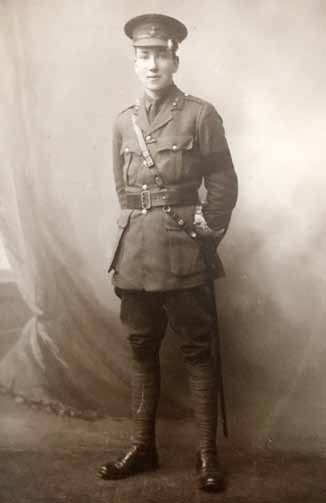
 Robert Graves, World War I poet who experienced                   Charles Myers of the British Psychological Society in
 symptoms of shell shock.                                          1915. Symptoms included fatigue, tremor, confusion and
 The photo is captioned:                                           nightmares. Some soldiers received electric-shock treatment;
 Ever your loving son Robbie March 16th '15.                       some faced the firing squad for cowardice.
 Photographer: W. Algernon Smith                                      Graves, who had a holiday home in Harlech and whose
                                                                   poem Welsh Incident was inspired on a train trip in the area,
                                                                   began showing signs of shell shock as early as September

I
    n July [20th] 1916 during the Battle of the Somme, poet        1915. He drank ‘about a bottle of whisky a day’ to keep
    Robert Graves was struck by a shell and was so badly           himself ‘awake and alive.’ After the war had ended, he
    wounded that the next day he was reported to have died.        described how there were times when ‘shells used to come
   He did in fact survive and went on to write about the           bursting on my bed at midnight’ and ‘strangers in day-time
traumatic experience of war in his autobiography Goodbye           would assume the faces of friends who had been killed’
to All That.                                                       Shell shock affected Graves throughout his life. Symptoms
   While his physical injuries healed, the psychological           subsided after he moved to Majorca, but returned when he
impact lingered. He recounted returning to England and             began suffering from Alzheimer’s at the age of 81.
trembling at strong smells, akin to gas, and loud noises.             In Goodbye to All That, Graves wrote about the effect of
   During a bloody five-day battle, nearly 4,000 Welsh             shell shock and how an officer’s usefulness would decline.
soldiers were killed, missing or injured, putting their division   He said it had taken his ‘blood 10 years to recover’. In his
out of action for almost a year.                                   poems, Graves recounts waking visions of fellow soldiers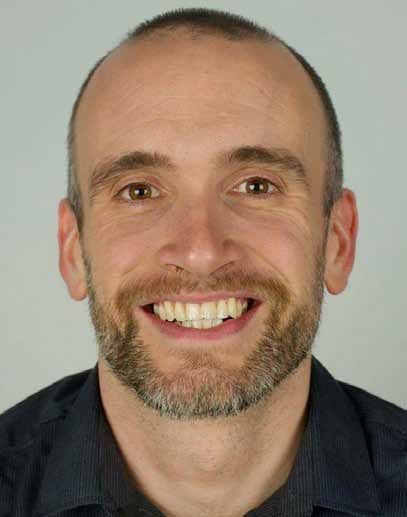
welsh connections

who died on the Somme and survivor’s guilt. Graves lived
to the aged of 90, having written more than 130 volumes
of poetry, fiction, essays, criticism and lectures. His eldest
son, David, would serve in the same regiment as his father,
the Royal Welch Fusiliers (RWF), during World War II. But
sadly, David did not have the same lucky escape as his father
and was shot in action in Burma in 1943. He was just 23
years old. Richard, who named his eldest son David after
the soldier, said: “It is one of the great sadness’s of my life
that I never met my first cousin David Graves, who died
heroically fighting against the Japanese in March 1943, not
long after his 23rd birthday. He was not only the bravest of
warriors, but he also wrote fine poems and painted exquisite
watercolours. Had he lived, he might have achieved much
both as a writer and as an artist.”

                                                                  Richard Graves, with his biographies on his uncle, Robert Graves.

                                                                  PTSD
                                                                    The official view during World War I was that well-trained
                                                                  troops did not suffer from shell shock; only those who were
                                                                  unwilling or undisciplined. The outbreak of World War II
                                                                  prompted Dr Myers to publish his findings of shell shock
                                                                  during the first war to create a better understanding of
                                                                  the condition. Treatment evolved over the years and the
                                                                  documentary Let there be Light shows men undergoing
                                                                  hypnosis to treat ‘war neurosis’. PTSD was first recognised
                                                                  as a mental health condition five years after the Vietnam
                                                                  War. A group of veterans, aided by psychoanalysts, lobbied
                                                                  the American Psychiatric Association to give a name to the
                                                                  suffering of people overwhelmed by the horrors of war.
                                                                  PTSD appeared in the Diagnostic and Statistical Manual of
                                                                  Psychiatric Disorders (DSM-III) in 1980. It made way for
                                                                  greater research and attempts at finding effective treatments.
                                                                  The condition, which is now understood to apply to civilians
                                                                  as well as those involved in combat, may include flashbacks,
                                                                  outbursts of anger and irrational fear.

Dr Charles Myers of the British Psychological Society who first
used the term ‘shell shock’ in medical literature.
Photograph: Wellcome Collection. CC BY 4.0

“   ‘Shells used to come bursting on my
      bed at midnight’ and ‘strangers in
     day-time would assume the faces of

                                                     ”
         friends who had been killed
                                                                  Richard and David Graves. The latter was named after his first
                                                                  cousin once-removed, who died in action.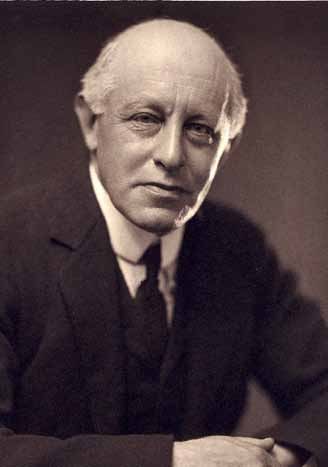
PTSD in the 21st Century
                                                Owen Morgan, 36, set up Man Cove Wellbeing to help
                                             inform and inspire men who have been affected by trauma
                                             or mental health issues.
                                                Owen has personally experienced trauma – from physical
                                             abuse at the hands of a child-minder, to severe bullying
                                             and a life-threatening illness. His site focuses on men, as
                                             it is believed they are less connected to their bodies and
                                             experiences, to help them to recognise trauma and ask for
                                             help where needed. The massage therapist and personal
                                             trainer from St Mellons, Cardiff, said: “We share people’s
                                             experiences of trauma, as well as insights from specialists in
                                             the field, to help people recognise its affects and know that
                                             help is available. Trauma does necessarily have to be one
                                             major incident or be linked to fighting in a war. It can start in
                                             childhood or be a build-up of experiences over time, which
                                             affects mental, emotional and physical wellbeing.”
Owen Morgan founder of Man Cove
                                                Owen’s trauma started when he was a young child, when
www.mancovewellbeing.com
                                             his child-minder physically abused him and force-fed him. It
                                             led him to have an unhealthy relationship with food later on
                                             and he was heavily overweight in his teens, then extremely
  Information and Free Resources             thin and obsessed with fat percentage in his 20s. At the age
                                             of 32, he experienced stabbing pains in his stomach and lost
  For more information or help living with   two stone in weight in a week. Doctors initially struggled
                                             to understand what was wrong with him as he was young,
       PTSD, visit these websites:
                                             fit and healthy – regularly running marathons. He was
                                             diagnosed Intussusception, which is a serious condition in
         https://www.ptsduk.org/             which part of the intestine slides into an adjacent part of
                   and                       the intestine. He had multiple organ failure and the dead
                                             intestine was removed – to save his life. The condition is
    https://www.combatstress.org.uk/         very rare in adults and the doctors said stress and anxiety,
                                             which Owen had suffered badly with throughout his life, had
                                             affected his digestion and physical health. Owen said: “It was
                                             a terrifying experience but I started to see how interlinked
                                             our physical and mental health is. From that moment I
                                             decided to take better care of myself, emotionally as well as
                                             physically.”
                                                Owen started with mindfulness and finding ways to better
                                             connect with his body. He went on to set up Man Cove
                                             Wellbeing to help others. He said: “We want to inform and
                                             inspire until the day comes when people are ready to ask for
                                             help.”

                                             Words: GWS Media

You can also read


