Case Study 17 Imperial War Museum UNITED KINGDOM - clipsal.com
←
→
Page content transcription
If your browser does not render page correctly, please read the page content below
Imperial War Museum    UNITED KINGDOM

                 C-Bus Control and Management System

                                                       Case Study 17

clipsal.com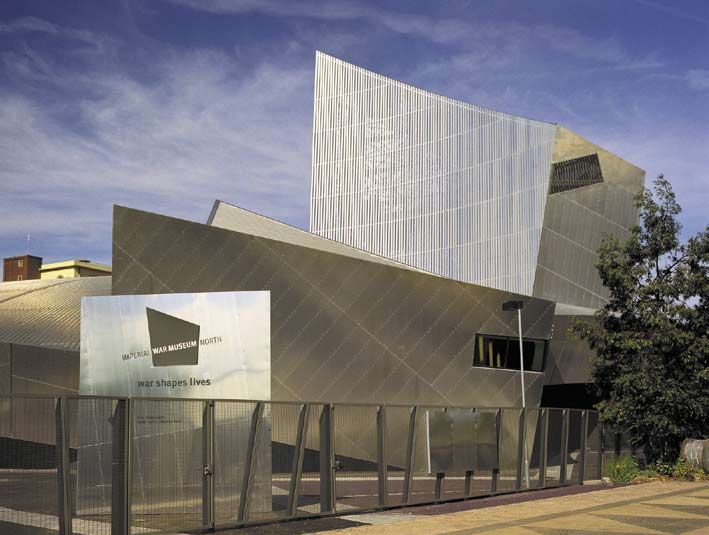
C-Bus brings Visionary
Manchester Landmark to Life

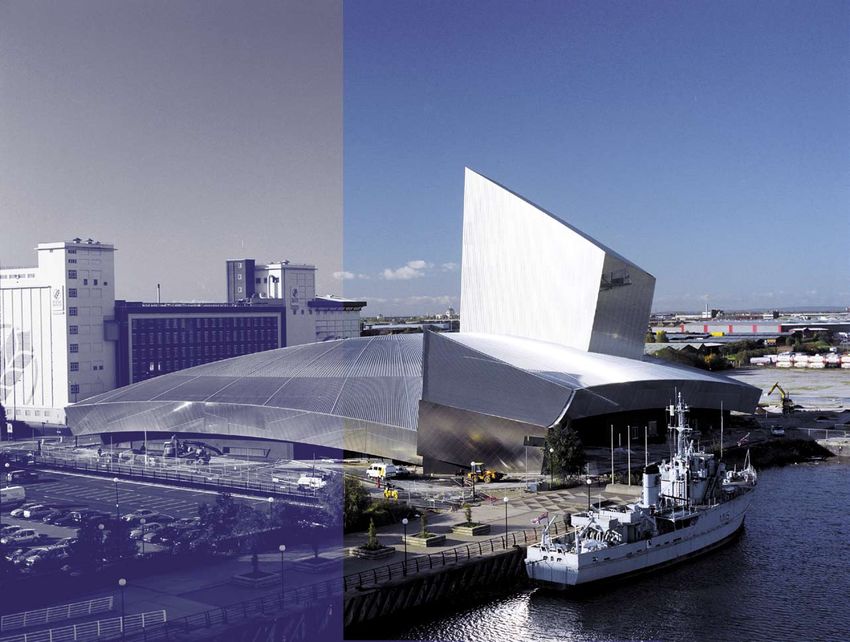
      The Imperial War Museum North is the first building in the UK designed by
      internationally acclaimed architect Daniel Libeskind. Clad in aluminium, this
      landmark building is a visionary emblem of war and reflects the innovative
      approach to the entire project.

The underlying concept for the Imperial       C-Bus Control and Management System
War Museum was derived from the
                                              To control the main arena lighting within
shattered pieces, or shards, of a shattered
                                              the museum, 12 Channel Switching
globe, leaving three major shards left
                                              Units (L5512RVF) were used. For ease
lying. Libeskind has used three distinctive
                                              of installation, these units are DIN rail
shapes to represent the elements of earth,
                                              mounted, measuring 12 DIN modules
air and water. Visitors enter through the
                                              wide. Twelve independent voltage
‘air’ shard which is 55m high and open
                                              free relay contacts are provided for
to the elements. It houses a viewing
                                              general switching applications. Learn
platform at 29m, with spectacular views
                                              enabled features allow these units to be
across the Manchester Shipping Canal to
                                              programmed without the need for a PC
Manchester City Centre.
                                              connected to the system. Alternatively,
When it came to bringing such a unique        units can be programmed via a PC and
and contemporary building such as the         the C-Bus Installation Software.
muesum to life, the project designers
                                              Each 12 Channel unit consumes no
chose to install an intelligent control
                                              current from the C-Bus network during
and management system from Clipsal
                                              normal operation. The Series includes
Integrated Systems that performs a
                                              units available both with and without a
number of lighting tasks both inside and
                                              200mA C-Bus power supply for powering
outside the building.
                                              other C-Bus devices connected to
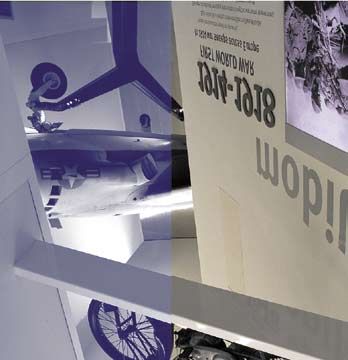
With the extensive collection of militaria    the network such as the C-Bus Key
on show, the museum required a                Input Switches, SceneMaster and PIR
comprehensive lighting system that            Movement Sensors.
would provide dramatic effects while
remaining easy to operate and control.
Clipsal Integrated Systems has delivered
a system that goes beyond these
requirements, delivering a system that
is adaptable for future needs and highly
energy efficient.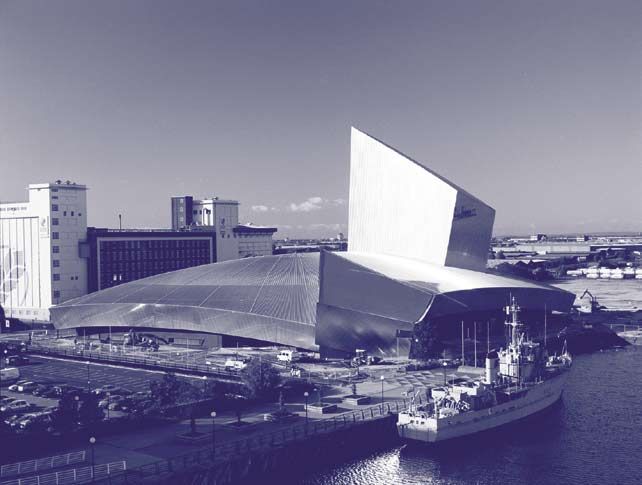
Intelligent Lighting
Control Inside and Out

                                                                                             5035NIRSLTR 5 Key Scene Controller with IR.

                                                                                             • The unit has a Setup Mode, which
                                                                                               allows scenes to be learnt, without the
                                                                                               use of a computer.
                                                                                             • When programming a scene, the unit
                                                                                               has a button available to manually
                                                                                               select the fade rate for that scene.
                                                                                             • A second press of each scene button
                                                                                               will cause the preprogrammed fade-in
                                                                                               rates to be overridden and the target
                                                                                               ‘instantly’ established.
                                                                                             • A ‘Master Off’ button is available on the
                                                                                               Scene Master unit.
                                                                                             • The unit comes with a hand held
                                                                                               infrared remote control. The buttons
                                                                                               on the remote function as the buttons
                                                                                               on the unit.
                                                                                             • The master up/down buttons on the infra-
                                                                                                red controller mimic the functions of the
                                                                                                individual up/down buttons on the unit.
                                                                                             • If power to the unit is lost, all preset
C-Bus Scene Master                            Scene Master features                            levels are stored in non-volatile memory.
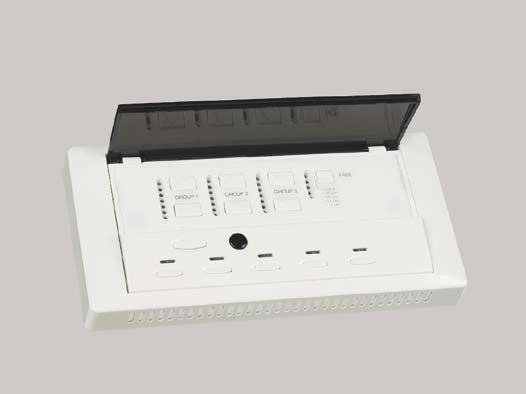
The Clipsal Scene Master 5035NIRSL is         • Incorporates five programmable               • Scene Master is suitable for attachment
an elegant wall mounted control unit used       preset buttons and associated LEDs             to a standard electrical wall box.
to manage the various lighting scene            which indicate whether a lighting
                                                                                             • Cable termination is via a single Cat 5
groups within the museum. As there are          scene is active.
                                                                                               data cable.
many lighting groups and differing lighting
                                              • The user is able to assign and recall
requirements, say for watching films or                                                      • For ease of maintenance, the lighting
                                                a preset lighting scene directly from
highlighting new installations, the whole                                                      output units (dimmers, relays, etc) are
                                                the unit.
system had to be simple to manage from                                                         mounted remotely.
a central location. A stylish interface       • The unit has the facility to include up to
                                                                                             • Scene Master forms an integral
to the C-Bus system, Scene Master               nine separate lighting groups as part
                                                                                               part of C-Bus and has the capabilities
replaces the need for multiple switches         of each preset scene.
                                                                                               to communicate with other devices
and dimmers and allows the user to
                                              • Has the facility to control up to thirty-      attached to C-Bus including
completely change the look and mood of
                                                three programmable groups across the           relays, dimmers, switches and
a given space at the push of a button.
                                                five presets.                                  movement detectors.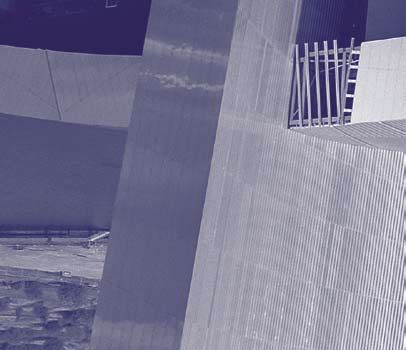
Imperial War Muesum

C-Bus Bus Coupler
The main fixed exhibition gallery uses
61 projectors, projecting onto silos and
gallery walls between 3 and 6m high.
A Four Channel C-Bus Bus Coupler is
connected to the audiovisual system
remote and automatically triggers
pre-set lighting scenes stored in the
Scene Master unit. For example,
audiovisual systems are integrated with
C-Bus so that at the end of the 60 film
shows, C-Bus triggers a preset scene to
match the next film show automatically.
The Bus Coupler is a Key Input device
allowing connection of voltage free
mechanical switches into the C-Bus
system. The Learn Mode features are
incorporated in this device, allowing a
quick various control functions, such as
on/off, dimmer or timer.

               5104BCL 4 Channel Bus Coupler.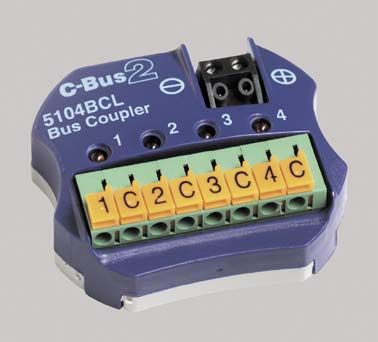
C-Bus PIR Movement Sensors

The Imperial War Museum also features
C-Bus Movement Sensors used to
control the lighting within the corridors,
toilets and other rooms where a short
time is spent. These detect movement by
sensing natural thermal radiation emitted
from any moving body. When movement
is detected, the unit issues commands
over the C-Bus network to control output
devices such as lighting. These small
units ensure no lighting remains on in
unoccupied areas, greatly reducing
energy costs.
Safety and Security
For added safety and security, the C-Bus
system within the museum has been
integrated with the security and fire alarm
system. When either of these systems
are activated, the interior and exterior
lighting switches on at full brightness to
ensure a fast and safe evacuation. The
security system is also directly monitored,
and the C-Bus system alerts them when
the alarm is raised.
The displays also feature Glass Break
Integration for added security. In the case
of a display’s glass case being broken,
the lights around the display area come
on to 100% brightness.
There is also a Security Detection system     Exterior Lighting Management                   • Designed to meet Australian and
in the muesum car parks. If the CCTV                                                           European standards for EMC
                                              To ensure the museum’s contemporary
system is triggered out of hours then the                                                      Compliance and Safety.
                                              design is as prominent at night as it is
lights automatically come on in that area
                                              during the day, an extensive exterior          • Configured via the C-Bus
of the car park. This ensures clearer, high
                                              lighting system was installed. To control        Installation Software.
quality video shots are produced at night.
                                              this lighting system and ensure it comes
                                                                                             • An inbuilt non-volatile memory retains
                                              on automatically everyday at dusk, C-Bus
                                                                                               programmed information of the unit in
                                              Light Level Sensors (E5031PE) were
                                                                                               the event of a power failure.
                                              used around the perimeter of the building.
                                              These sensors measure the ambient              • Communication with other C-Bus devices
                                              light level and issue ‘on’, ‘off’ and ‘ramp’     and the supply voltage is obtained via a
                                              commands over the C-Bus network.                 single C-Bus twisted pair cable.
                                                                                             • A regular status report, which checks
                                                                                               the status of all input and output units.

                                              E5031PE Light Level Sensor.
Dimming Requirements
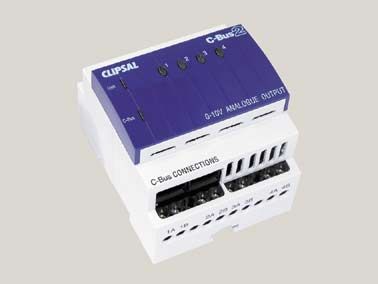
                                             All dimming within the main exhibition          The output terminals can be assigned
                                             galleries is managed by C-Bus 0-10V             to any combination of these addresses
                                             C-Bus Analogue Dimming Units. These             facilitating multiple output control; for
                                             provide analogue voltage control signals        instance, from a single message command.
                                             to drive most types of 0 – 10V electronic       Four analogue outputs are provided for
                                             dimmable ballasts used in the Imperial          independent control of up to four devices,
                                             War Museum. The Analogue Output unit            with a common reference connection.
                                             operates in response to commands from
                                                                                             The C-Bus Installation Software is
                                             C-Bus input units such as; Key Input
                                                                                             used to configure the device and
                                             Units, PIR Occupancy Sensors and Light
                                                                                             communication with other C-Bus devices
                                             Level Sensors and can respond to as
                                                                                             and the supply voltage is obtained via a
                                             many as six C-Bus ‘Group Addresses’.
                                                                                             single C-Bus twisted pair cable.
C-Bus 4 Channel Analogue Output.

C-Bus 0-10V Analogue Output
• Designed to meet Australian and
  European standards for EMC
  Compliance and Safety.
                                                                                                          The Benefits
• Configured via the C-Bus                      Features                                 Benefits
  Installation Software.
                                                Scene Control                            Provides specific lighting for different
• An inbuilt non-volatile memory retains
                                                                                         areas and occasions without the need for
  programmed information of the unit in
                                                                                         additional wiring.
  the event of a power failure.
• Communication with other C-Bus devices        Central Control                          Easy, centralized control via
  and the supply voltage is obtained via a                                               Scene Master wall unit.
  single C-Bus twisted pair cable.
                                                Local Scene control in Specific          Local control of toilets and corridors via
• Electrical isolation between the safe         Areas                                    PIR Movement Sensors.
  extra low voltage C-Bus side and the
  Analogue Output is provided to maintain       PIRs and Light Level Sensors             Greatly reduces energy costs.
  safety requirements.
                                                Local Overrides                          Provides fail-safe modes/overrides
                                                                                         of system.

                                                                                                Installation Data
                                                C-Bus Project                            Imperial War Museum, Manchester UK

                                                C-Bus Installer                          NG Bailey & Company Ltd

                                                Commissioning                            Enlighten Solutions
You can also read


