Local Integrated Transport Plan 2016 2021 - May 2016 - Langeberg ...
←
→
Page content transcription
If your browser does not render page correctly, please read the page content below
Local Integrated Transport Plan
2016 – 2021

May 2016

Document title:                Local Integrated Transport Plan (2016 – 2021) – Langeberg

Status:                        Final

Date:                          April 2016

Project name:                  Review of the District Integrated Transport Plan for the Cape
                               Winelands

Project number:                T01.CPT.000287

Client:                        Cape Winelands District Municipality

Client contact:                Bevan Kurtz/ Chwayita Nkasela

Drafted by:                    Marco Steenkamp, Rory Williams

Checked by:                    Roy Bowman

Date/initials check:

Approved by:                   Bevan Kurtz

Date/initials approval:

Prepared By:

Langeberg Local Integrated Transport Plan © HaskoningDHV Ltd                                   1
Executive Summary The Langeberg Local Integrated Transport Plan was prepared for the period 2016 to 2021 as part of the 2015/16 review of the District Integrated Transport Plan for the Cape Winelands. The Langeberg local municipality has been categorised as a level 3 planning authority, and is required in terms of the National Land Transport Act (NLTA) to prepare a LITP. The Langeberg local municipality is situated south of Breede Valley with a total population of approximately 97 000 persons. The current economic growth rate of Langeberg is 1.79% despite being one of the largest wine producing regions in South Africa. The Langeberg municipality has limited public transport facilities, with the only formal taxi rank being located in Zolani just east of Ashton. The other public transport facilities in the municipality are designated taxi parking bays at major shopping centres, such as those in Robertson, Montagu, Ashton and Bonnievale. Ashbury has a number of public transport shelters along the main NMT route between Montagu and Ashbury. The minibus taxi is currently the primary public transport mode in the Langeberg area. There are no passenger rail or bus services in operation in the municipality other than the bus service specifically for designated learners. The Langeberg local municipality does not have a municipal transport budget for the 2015/16 or subsequent years due to other community needs being prioritised as more important in the Integrated Development Plan. Langeberg Local Integrated Transport Plan © HaskoningDHV Ltd 2
CONTENTS

1 Contents
Executive Summary .......................................................................................................... 2
1     Introduction ................................................................................................................. 5
    1.1     Background ........................................................................................................................................................ 5
    1.2     Study Area ......................................................................................................................................................... 5
    1.3     Purpose of Integrated Transport Plan ................................................................................................................ 5
    1.4     Layout of the Langeberg Local Integrated Transport Plan ................................................................................. 6

2     Transport Status Quo ................................................................................................. 7
    2.1     Current Public Transport Record ........................................................................................................................ 7
    2.1.1   Introduction ........................................................................................................................................................ 7
    2.1.2   Transport Record ............................................................................................................................................... 7
    2.2     Operating Licence Strategy .............................................................................................................................. 10
    2.2.1   Background ...................................................................................................................................................... 10
    2.2.2   Analysis of Current Public Transport Record ................................................................................................... 10
    2.2.3   Summary of Route Assessments and Interventions ......................................................................................... 10
    2.2.4   Implementation ................................................................................................................................................. 13
    2.2.5   Financial Implication ......................................................................................................................................... 16

3     Transport Needs Assessment ................................................................................. 17
    3.1     Introduction ...................................................................................................................................................... 17
    3.2     Methodology for Assessing Transport Needs (SWOT analysis) ....................................................................... 17
    3.3     Transport Needs............................................................................................................................................... 17

4     Transport Improvement Proposals.......................................................................... 20
    4.1     Project Prioritisation ......................................................................................................................................... 20
    4.2     Budget constraints............................................................................................................................................ 20
    4.3     Sources of funding ........................................................................................................................................... 20

5     Implementation Budget and Programmes .............................................................. 21

Langeberg Local Integrated Transport Plan © HaskoningDHV Ltd                                                                                                                  3
List of Tables Table 2-1 Learner Transport information ............................................................................................................................. 8 Table 2-2: Learner Transport Min and Max Return Distances............................................................................................. 8 Table 2-3: Robertson Airport details .................................................................................................................................... 9 Table 2-4 Healthnet sub-stations and PTV's ...................................................................................................................... 9 Table 2-5 Collection points for Healthnet Services in Langeberg LM ................................................................................ 10 Table 2-6: Langeberg: Over and Under Supply of Vehicles .............................................................................................. 12 Table 2-7: Operating Licence Evaluation Procedure ......................................................................................................... 14 Table 2-8: Financial Implications ....................................................................................................................................... 16 Table 3-1: Transport Needs Assessment output ............................................................................................................... 18 List of Figures Figure 1-1 Langeberg Local Municipality Area .................................................................................................................... 5 Figure 2-1: Operating Licence Evaluation Process ........................................................................................................... 13 List of Abbreviations CWDM Cape Winelands District Municipality DITP District Integrated Transport Plan IDP Integrated Development Plan ITP Integrated Transport Plan LITP Local Integrated Transport Plan Langeberg Local Integrated Transport Plan © HaskoningDHV Ltd 4
The Langeberg local municipality includes the following
1 Introduction towns:
1.1 Background Robertson
The Langeberg Local Integrated Transport Plan (LITP) Ashton
was prepared as part of the review of the Cape Montagu
Winelands District Integrated Transport Plan (DITP) for McGregor
the period 2016 - 2021. Bonnievale
As per Section 36 of the National Land Transport Act The Langeberg is also comprised of the following rural
(Act 5 of 2009) all Planning Authorities must prepare an areas:
Integrated Transport Plan for their area for a five year
Zolani
period. These ITPs need to be overhauled every five
Ashbury
years and updated annually. The Integrated Transport
Happyvalley
Plans for the Cape Winelands District have been
prepared to meet the minimum requirements for The total population of Langeberg according to the
preparing an Integrated Transport Plan as published by South African National Census 2011 is 97 724 persons
the Department of Tranport. of which 56 776 are employed. The Langeberg area is
one of the largest wine-producing regions in South
Through the previous update of the Cape Winelands
Africa. However, the economic growth rate of
District Integrated Transport Plan (2014/15), the
Langeberg is currently only 1.79%.
planning authorities of each of the local municipalities
were recategorised. The Langeberg local municipality,
through the previous update process, was classified as
a Level 3 Planning Authority, which requires that a
Local Integrated Transport Plan be prepared.
This report comprises the 5 year review of the
Langeberg Local Integrated Transport Plan as part of
the review of the Cape Winelands District Integrated
Transport Plan 2016-2021.
1.2 Study Area
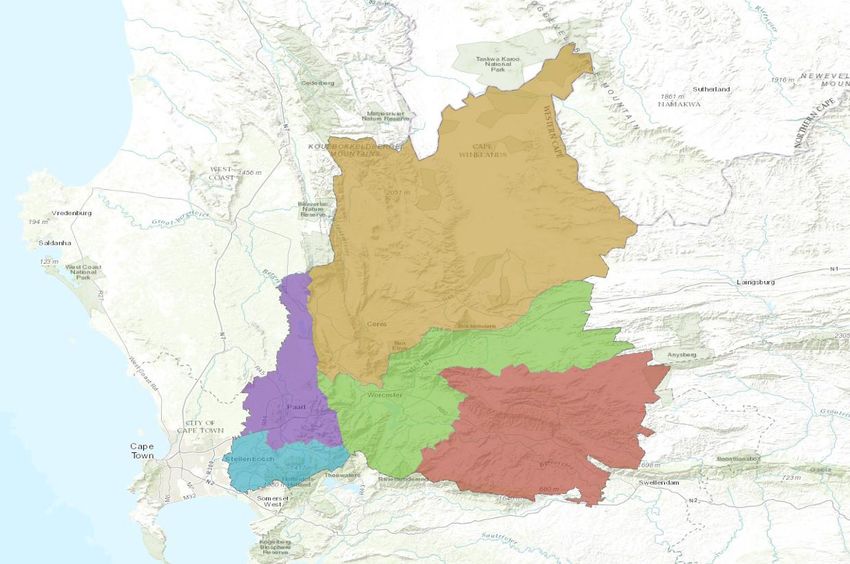
Figure 1-1 Langeberg Local Municipality Area
The Langeberg local municipality forms part of the
Cape Winelands District and lies east of the 1.3 Purpose of Integrated Transport Plan
Stellenbosch local municipality and south of the Breede The Integrated Development Plan (IDP) is a legislated
Valley municipality as shown in Figure 1-1. document similar to that of the Integrated Transport
Plan. The difference, however is that the ITP is
considered a sector plan within the IDP which informs
and aims to support it.The Cape Winelands District Municipality is responsible
for the transport system and the functioning thereof for
all modes of transport.
The ITP is meant to provide the district and local
municipalities with a planning guide to overcome the
challenges identified within the transport system. Part of
the ITP process is data collection of the current
transport system through surveying, data analysis,
recommending strategies and prioritising projects.
1.4 Layout of the Langeberg Local Integrated
Transport Plan
The Langeberg LITP contains the following chapters:
Chapter 1: Introduction
Chapter 2: Transport Status Quo
Chpater 3: Transport Needs Assessment
Chapter 4: Transport Improvements Proposals
Chapter 5: Implementation Budget and Programmes
Langeberg Local Integrated Transport Plan © HaskoningDHV Ltd 62.1.2.2 Minibus Taxi Operations
2 Transport Status Public Transport Infrastructure
Quo In the Langeberg municipality there is only one formal
public transport facility and that is the minibus taxi rank
2.1 Current Public Transport Record in Zolani. In the other towns, parking facilities at
2.1.1 Introduction shopping centres are currently being used with
This chapter draws from the Current Public Transport demarcated minibus taxi parking bays being provided in
Record prepared for the Cape Winelands District Montagu, Ashbury, Bonnievale and Robetson. Most of
Integrated Transport Plan 2016-2021. This chapter these facilities do not have shelters or seating for
describes the status quo, in terms of public transport waiting passengers.
operations, utilisation of the public transport system and Public Transport Routes
condition of public transport facilities, within the
There are several minibus taxi operating routes in the
Langeberg municipality.
municipality. These routes serve the commuters who
The information presented in the chapter was collected need to travel between the towns for employment,
through a data collection process that took place during shopping and recreation.
May 2015 including engagements with the local
One of the findings of the survey data analysis indicates
municipal officials and taxi associations.
that the minibus taxis do not make use of the formal
For more detailed information consult the Current rank facility in Zolani but that the taxi operators travel in
Public Transport Record prepared as part of the review the residential areas and pick up commuter from their
of the Cape Winelands District Integrated Transport homes.
Plan 2016 - 2021
It was indicated that there are less commuters travelling
2.1.2 Transport Record via minibus taxi during the afternoon peak than the
2.1.2.1 Overview of Public Transport morning peak.
Public transport is considered to be a transport service 2.1.2.3 Rail Operations
rendered to the general public to meet a range of travel
Commuter Rail Network
needs. The main forms of public transport in the Cape
Winelands District are minibus taxis, bus and There is currently no passenger rail service serving the
passenger rail services. Within the Langeberg area, Langeberg area.
only minibus taxis and limited rail services (freight only)
Rail Census Summary for Langeberg
are available. There are also long distance bus services
which offer an inter-municipal service that extends to The 2012 Rail census did not cover the stations in the
cities in other provinces. Langeberg area.1
The Langeberg Tourism Strategy indicates that there operators in the municipality. Sum of benefiting schools
is currently a rail line being used for freight movement is the total number of schools serviced by the operators
but that there is no passenger rail or tourist rail service in the municipality.
being provided.
Table 2-1 Learner Transport information
WCED Admin Sum of Return Distance (KM)
2.1.2.4 Non-motorised Transport Langeberg Local
Municipality 956.6
As in most rural districts, the existence and condition of
Devolved Sum of Return Distance
NMT facilities in Langeberg varies considerably. While Langeberg Local
NMT is important to support public transport, in many Municipality 39.8
All Learner
cases potential passengers cannot afford minibus taxi Routes Sum of Return Distance (KM)
fares. Several towns in this district have historically Langeberg Local
Municipality 996.4
poor settlements located some distance from the main
WCED Admin Sum of # Benefiting Schools
town:
Langeberg Local
Municipality 32
In Robertson the distance between the Nkqubela
Devolved Sum of # Benefiting Schools
settlement and the centre of town results in
Langeberg Local
commuters walking when they can, and using Municipality 1
minibus taxis otherwise. The distance is suitable for All Learner
Routes Sum of # Benefiting Schools
cycling, but there is a need for a more direct route Langeberg Local
across the rail line. Municipality 33
Sum of Approved Mainstream
Ashton also is a long distance from its dormitory All learners Learner Numbers
settlement of Zolani, and NMT facilities are Langeberg Local
Municipality 3161
inadequate for cycling and crossing the R60.
Montagu similarly involves long distances for
Table 2-2: Learner Transport Min and Max Return
walking and cycling between the town and Ashbury. Distances
Conditions for walking this route are better than in
Min of Return Max of Return
Robertson and Ashton. Devolved Distance Distance2
Bonnievale needs gravel shoulders upgraded on the Langeberg Local
Municipality 12.2 87
main route between the town and Happyvalley to
improve conditions for cyclists and pedestrians.
2.1.2.6 Freight Transport
2.1.2.5 Learner Transport In the Langeberg area, Ashton, Montagu and
Bonnievale all have industrial areas which generate
According to the information received from the PRE
freight that needs to be transported. The main freight
there are a number of operating licences issued for the
movement however, is found on the R62 and R60 from
transporting of learners within the Langeberg area.
Ashton to Swellendam. Heavy haul vehicles also use
In Error! Reference source not found. the sum of these roads to connect to the N1 or N7.
return distance (km) is the total distance covered by the
1
Final Draft (6 April 2014)
Langeberg Local Integrated Transport Plan © HaskoningDHV Ltd 82.1.2.7 Air Transport The report also indicates that the transport
infrastructure for tourism is not limited to the roads only,
Currently there is an airport in Robertson, located east
but includes hiking trails etc. It continues by indicating
of the Robertson town next to the R60 and is the only
that some of the existing hiking trails have little signage
registered runway in the Langerberg local municipality.
and pose a safety risk for walkers, hikers and trail
Table 2-3 illustrates some information regarding the runners.
Robertson airport.
What is highlighted in this report is a lack of public
Table 2-3: Robertson Airport details transport to assist with transporting tourists around the
Item Description Langeberg area to the various tourist attractions.
2
IATA code ROD 2.1.2.9 Transport for Health
Latitude -33.8113 The information pertaining to health services transport
Longitude 19.9067 was obtained from the previous (2013) update of the
City Robertson CPTR reports for the local municipalities within the
Airfield length 1.5 km (paved) Cape Winelands district.
Owner Langeberg Municipality The Emergency Medical Service (EMS) is a subsidiary
of the Department of Health and is divided into
The airfield surface is suitable to accommodate light emergency and Healthnet services. Healthnet is not an
aircraft such as those used for medical emergencies emergency service, but it provides transport services
and law enforcement as well as smaller passenger for patients going to health facilities for medical
charter aircraft. The facility is generally used by the treatment or to collect medication.
flying clubs, emergency services and charter services.
Services provided by the EMS
2.1.2.8 Transport for Tourism
There are 10 Patient Transport Vehicles (PTVs)
3
According to the Langeberg Tourism Strategy the servicing health patients in the Cape Winelands district.
Langeberg municipality has good road infrastructure Error! Reference source not found. lists the locations
that allows tourists to travel to and from destinations of sub-stations in the local municipalities and the
within the municipality. Route 62 for example is number of PTVs per sub-station
expected to be an important tourist route. The report
Table 2-4 Healthnet sub-stations and PTV's
also indicates that although some of the outlying farms
only have access via gravel roads, this adds value to Towns (sub- No of
LMs
the experience for tourists. The report also notes that stations) PTV’s
frequent roads works in the area is detrimental to the Robertson 1
tourism industry. The report mentions that the current Langeberg
Montagu 2
road signage is sufficient for tourists.
2
International Air Transport Association
3
Final Draft (6 April 2014)
Langeberg Local Integrated Transport Plan © HaskoningDHV Ltd 9Table 2-5 Collection points for Healthnet Services in 2.2.2 Analysis of Current Public Transport
Langeberg LM Record
Collection points Address It should be noted that the Witzenberg municipal area is
Ashbury Bus stop Ashbury subject to seasonal variations in terms of travel demand
and transport operations i.e. during the harvesting
Montagu Primary Health Clinic
Montagu season there is a greater demand for transport services
Montagu Provincial c/o Hospital & Church as opposed to the off/ planting season, even though
Hospital Street
this may not be significant .The high transport demand
Zolani Clinic Zolani
season is from November to April. Furthermore, there is
Cogmanskloof Clinic Ashton
a month peak period that is related to end of month
Happy Valley Clinic Bonnievale salary release days or social grant collection days
Bonnievale Municipal Bonnievale (South African Social Security Agency – SASSA days)
offices
Bergsig Clinic Robertson The data collection took place on 07, 08, 09, 15, 16, 20
May 2015 and on a non-social grant day.
Robertson Clinic Robertson
2.2.3 Summary of Route Assessments and
Nkqubela Clinic Robertson
Interventions
Ashbury Bus stop Ashbury Information on supply and demand from surveys has
Montagu Primary Health Montagu been used to evaluate the capacity of the current public
Clinic transport services and the possible need for additional
services according to the demand. The information has
2.2 Operating Licence Strategy been summarised in Error! Reference source not
2.2.1 Background found.. For more detailed information consult the OLS
This section of the report comprises of the Operating report.
Licence Strategy for the Langeberg municipal area and Error! Reference source not found. show the
is informed by the results summarised in the Transport
following information, based on the surveys:
Status Quo chapter.
The OLS chapter provides the planning authority with The number of vehicle trips (departures) per
guidance on the issuing of licences. This is done route
through analysing the information contained in the The size (passenger capacity) of the vehicle
current public transport record, engagement with the The number of peak hour passengers per
municipal officials and taxi association representatives route
and providing recommendations in terms of licencing. The number of vehicles operating (from the
number plate surveys) with Operating
The OLS report has been prepared as a separate
Licences
report and the subsequent discussion on the OLS with
The registration number of the vehicles
respect to Witzenberg is an extract thereof.
operating has been compared to the list of
vehicles having current Operating Licences
and the number of vehicles without Operating
Langeberg Local Integrated Transport Plan © HaskoningDHV Ltd 10Licences was identified and indicated in the
tables.
From the above information, the following has been
determined:
The current service capacity: Number of
vehicle trips from number plate survey
multiplied by the vehicle capacity (15 for a
standard minibus)
Percentage utilisation: Peak hour passenger
volume from surveys divided by the service
capacity
Vehicles operating with Operating Licences:
Comparison of the vehicle registration
numbers from surveys with data from the PRE
To simplify the calculations, all routes serving common
destinations have been clustered. The average route
distance has been determined in order to calculate the
return journey time. The required number of vehicles to
serve the demand based on the return journey time and
the peak hour demand from the surveys can be
estimated.
The required number of vehicles can be compared to
the actual number of vehicles (with Operating Licences)
in operation from the surveys to determine the over or
under supply of vehicles on the routes. Note that the
vehicles without Operating Licences are excluded. An
under supply indicates that certain of these vehicles
could be eligible for new Operating Licences.
A comparison has also been done to determine the
over or under supply of vehicles by comparing the
required vehicles to serve a route to the number of
vehicles that have been issued with Operating Licences
on the PRE database, as well as the over and under
supply including the vehicles without Operating
Licences.
Langeberg Local Integrated Transport Plan © HaskoningDHV Ltd 11Table 2-6: Langeberg: Over and Under Supply of Vehicles Langeberg Local Integrated Transport Plan © HaskoningDHV Ltd 12
2.2.4    Implementation
It is recommended that the Cape Winelands District Municipality convene an “Operating Licence Recommendations
Committee” (OLRC) to evaluate and comment on Operating Licence applications received from the Provincial Regulatory
Entity and to co-ordinate responses to the PRE between the Municipalities in its jurisdiction. This Committee should sit
monthly and should consist of the responsible officials dealing with public transport planning and traffic law enforcement

When a new application for an Operating Licence is received by the Planning Authority a process should be followed to
evaluate the application. The proposed process is shown in Figure 2-1 below and described in more detail in Table 2-77.

Figure 2-1: Operating Licence Evaluation Process
The proposed Operating Licence evaluation procedure is described in Table 2-77 below.
Table 2-7: Operating Licence Evaluation Procedure

Item              Title                                  Procedure                                    Responsible Department
                                  Application for an OL is submitted in the required
                                  format (form 2B) to the NPTR or PRE. The
  1.     NPTR / PRE                                                                             NPTR or PRE
                                  application is submitted to the Planning Authority
                                  (Municipality) (PA) within 30 days.
                                  The OL application is received by the PA and is
                                  recorded in the appropriate manner for record
                                  purposes.
         Receipt of OL                                                                          PA Department (Transport Planning
  2.
         application by PA                                                                      and Public Transport)
                                  The application is sent to the appropriate Department
                                  within the PA dealing with Transport Planning and
                                  Public Transport to be checked for completeness.
                                  The OL is circulated to the appropriate persons /
                                  Departments internally within the PA for comment in
         Circulate application                                                                  PA Department (Transport Planning
  3.                              respect of :
         internally                                                                             and Public Transport)
                                  Transport Planning and Public Transport
                                  Traffic Services
                                  The OL application is checked against the available
                                  survey data of passenger demand on the applicable             PA Operating Licence
  4.     Demand and Supply
                                  routes using the procedure detailed in Section 4.3:           Recommendations Committee
                                  Error! Reference source not found. of the OLS.
                                  The OL application is checked against the available
                                  survey data of rank, terminal or stops capacity
         Determine Rank                                                                         PA Operating Licence
  5.                              serving the applicable routes using the procedure
         Availability                                                                           Recommendations Committee
                                  detailed in Section 4.3:
                                  Error! Reference source not found. of the OLS.
                                  The OL application is assessed as to its impact on
         Determine impact on      the conceptual IPTN routes that are identified in the         PA Operating Licence
  6.
         IPTN routes              ITP, or will operate in parallel to or in conflict with any   Recommendations Committee
                                  commuter rail services or bus services.
                                  The OL is checked against the record of outstanding           PA Traffic Services – in respect of
         Check for                warrants or convictions, previous convictions relating        Traffic Offences;
  7.     outstanding legal        to the operation of public transport services and the
         issues                   ability of the applicant to operate the service in a          Provincial Regulatory Entity – in
                                  manner satisfactory to the public.                            respect of criminal offences.
                                  In terms of section 78 of the NLTA, if a licence has
                                  not been in use for more than 180 days, the licence
         Check record of          can be cancelled. The licence holder must be asked
  8.     operations in last 180   to furnish, in writing, satisfactory reasons why the          PA (Traffic Services).
         days                     service has not been operated, after which the
                                  licence can be extended for a further 180 days or
                                  cancelled.
                                  If all the responses to the evaluation support the
                                  approval of the application, a letter of approval is
                                  then issued to the NPTR or the PRE with any
         Letter of Approval or                                                                  PA Department (Transport Planning
  9.                              conditions attached.
         Rejection                                                                              and Public Transport)
                                  If the responses do not support the application, a
                                  letter of rejection is then issued.
         Letter of Approval or    A letter of approval or rejection is issued to the
 10.                                                                                            Provincial Regulatory Entity
         Rejection                applicant and a copy is sent to the PA

Langeberg Local Integrated Transport Plan © HaskoningDHV Ltd                                                                          14
As part of the wholistic approach proposed, the proposals for implementation are for the Cape Winelands District Municipality and the DITP contains a framework strategy for planning and phasing the implementation of an Integrated Public Transport Network starting with the Drakenstein Municipality. The CWDM is to consider a Chapter 8 investigation as determined by the Municipal Systems Act in order to determine the institutional arrangements for the rendering of the public transport function within its area of juristriction. A strategy should be developed to rationalise all existing Operating Licences and manage the approval of new Operating Licences to reduce the over supply of services where this may exist. This will assist in reducing congestion at existing ranks and facilities, as well as reducing traffic congestion on routes used by public transport. Law enforcement is critical to the successful implementation of the OLS and a dedicated team of Inspectors and Law Enforcement Officers is necessary to deal with public transport law enforcement. This will assist to improve the quality of the service and safety on public transport services. An electronic database should be established and updated regularly to provide easy access to Operating Licence information and route descriptions. This will greatly assist the law enforcement function. A communication Forum should be established with existing operators to meet regularly on matters concerning the public transport industry including issues and concerns, public transport facilities and law enforcement.
2.2.5    Financial Implication
The financial implications for the proposals as set out
above are for the Cape Winelands district as a whole
and not limited to Witzenberg. These proposals have
financial implications which are indicated in Table 2-8
below.

Table 2-8: Financial Implications
3.3 Transport Needs
3 Transport Needs Overarching transport issues were identified such as:
Assessment A lack of internal integration with parallel
processes such as the Integrated
3.1 Introduction
Development Plan, Local Economic
This chapter indicates the transport needs to be
Development plan, Spatial Development
addressed in the Langeberg local municipality.
Framework etc
3.2 Methodology for Assessing Transport Inadequate budget for public transport
Needs (SWOT analysis) infrastructure and facilities, road maintenance
Limited capacity at a district and local
The municipal transport needs have been identified
municipal level to fulfil municipal transport
through engagement with the taxi associations,
planning function.
municipal officials and the general public, as well as
Time constraint for implementation of
information obtained during the data collection process.
proposed/ planned projects.
The Strength, Weakness, Opportunity and Threats
There are also a number of transport challenges which
(SWOT) of the municipal transport system were
are common to the other local municipalities within the
conducted to illustrate the issues/ challenges and
Cape Winelands District such as road safety, road
opportunity for various elements in the system. The
freight and public transport infrastructure.
opportunities identified help inform the prioritisation of
potential future transport projects. Some of the key issues identified duing the public
participation process is the affordability of public
The SWOT analysis was done for:
transport services, the lack of formal public transport
Public Transport facilities and safety and security with respect to learner
Public Transport Infrastructure transport
Learner Transport
Freight
Non-motorised Transport
Transport for Tourism
Road Network
The results of the SWOT analysis are summarised in
Table 3-1.Table 3-1: Transport Needs Assessment output
Public Transport
Strength Weakness
Existing minibus taxi transport within the towns and limited services during off-peak periods, not universally
between neighbouring towns accessible
Commuter affordability
Opportunity Threat
commuters limited purchase power, affordability of public
create universally accessible facilities transport
Public Transport Infrastructure
Strength Weakness
Existing road based public transport Infrastructure is
in a reasonabily good condition There is a lack of shelter at existing facilities
Rail infrastructure not currently being utilised for existing formal facility in Zolani not currently being utilised, and
passenger movement underutilisation of facilities during the off-peak
Opportunity Threat/ Constraint
revitalisation of existing formal facility in Zolani Obsolesence
provision of rail passenger service Capital infrastructure funding
Learner Transport
Strength Weakness
an existing serivce is being provided little information available about the learner transport services
Opportunity Threat
potential resistance from existing operators, conditions attached
A formalised transport system for learners to qualify learner transport subsidy
Freight
Strength Weakness
road infrastructure is inadequate to accommodate the transport
current freight route through Langeberg (R60/2) of heavy haul vehicles
Opportunity Threat
Iif warranted create formal overnight facilities for truck high maintenance cost and increased congestion associated
traffic passing through the town Robertson with truck trafficNon-motorised Transport
Strength Weakness
NMT infrastructure is not continous, and distance between
some existing NMT infrastructure neighbouring towns too great
safety and security
Opportunity Threat
deliniation of NMT space on existing road network Crime
provision of NMT infrastructure and end of trip
facilities
provision of bicylces
NMT Education such as safety
Transport for Tourism
Strength Weakness
no scheduled services for transporting tourists between
variety of tourist attractions attractions
Opportunity Threat
provision of a service to transport tourists between
tourist attractions seasonality of tourist attractions
Road Network
Strength Weakness
exisiting paved road network is in good condition majority of traffic is through traffic
poses safety concerns for pedestrian and scholars where
schools are located close to high order roads
Opportunity Threat
new roads are not required deterioration of road network
.
Langeberg Local Integrated Transport Plan © HaskoningDHV Ltd 194 Transport transport infrastructure competes with other essential
Improvement services such as health and housing.
Proposals The sources of funding for municipalities are as follows:
4.1 Project Prioritisation
National and Provincial allocation and grants,
The main priorities for Langeberg municipality can be such as conditional and unconditional
summarised as follows: allocations
Maintenance of existing infrastructure to an Municipal Capital Replacement revenue
acceptable level on main arterial roads which Municipal Infrastructure Grant (Dep of
accommodate heavy vehicle traffic Cooperative Governance and Traditional
Improving road safety and reduction of Affairs)
pedestrian and vehicle conflict at major roads Value capturing, such as property taxes (which
such as the R60 and R62 may arise through new investments)
Learner transport Public Private Partnerships
Obtaining required technical and financial Loans
support from provincial and national Other sources such as user charges,
government for the efficient functioning of the advertising, rental of property etc.
transport system.
4.2 Budget constraints
Given the current municipal transport budget a large
portion of the funding is through municipal grant. This
suggests that the municipality has a budget constraint
and is requesting funding to compensate for this. The
budget is also focussed on providing road maintenance
for paved roads.
4.3 Sources of funding
Municipalities are faced with budget constraints for
many reasons, but need to provide the municipal
services with the funding allocated to them. The funding
for municipal services needs to be distributed amongst
the various departments to provide these services and5 Implementation Budget and Programmes The Langeberg Locall Municipality, at present, does not have any budget allocated for transport improvements for the 2015/16 finanical year or subsequent years. .
Langeberg Local Integrated Transport Plan © HaskoningDHV Ltd 22
Langeberg Local Integrated Transport Plan © HaskoningDHV Ltd 23
You can also read


