Lund University, Faculty of Science Information Sheet, 2020
←
→
Page content transcription
If your browser does not render page correctly, please read the page content below

1

Lund University, Faculty of Science
Information Sheet, 2020
FOR EXCHANGE STUDENTS
2

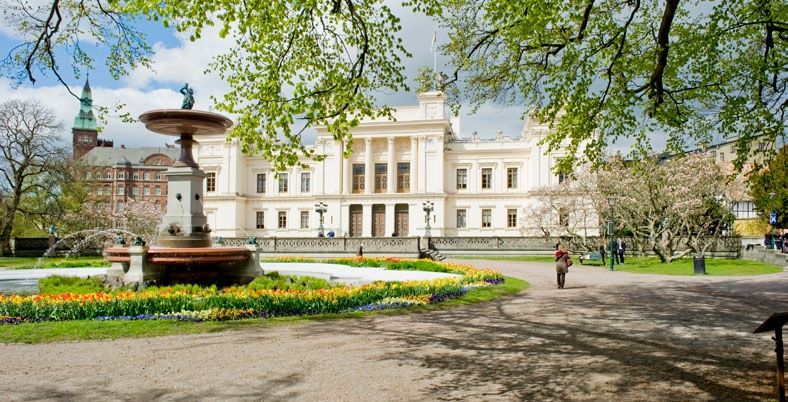
    Lund University and the Faculty of Science
    LUND UNIVERSITY                                                     THE FACULTY OF SCIENCE
    Lund University was founded in 1666 and is repeatedly ranked        Science at Lund University is characterised by first-class re-
    among the world’s top 100 universities. The University has          search within a variety of areas, from molecular to ecological
    40 000 students and 7 600 staff based in Lund, Helsingborg          systems and from biosphere studies to astronomy and high-
    and Malmö. We are united in our efforts to understand, ex-          energy particle physics.
    plain and improve our world and the human condition.                    Our research and education are carried out within all major
         Lund is the most popular study location in Sweden. The         research areas: astronomy, biology, chemistry, earth sciences,
    University offers one of the broadest ranges of programmes          environmental sciences, physics and mathematics. The wide
    and courses in Scandinavia, based on cross-disciplinary and         spectrum of research, with several world-leading research
    cutting-edge research. The compact university campus en-            groups, serves as a platform for outstanding higher education
    courages networking and creates the conditions for scientific       and much of the teaching is carried out in the laboratories
    breakthroughs and innovations. The University has a distinct        connected to the research front line. Our teaching staff are all
    international profile, with partner universities in 67 countries.   active researchers, making our students particularly well trai-
         Lund University has an annual turnover of SEK 8.5 billion,     ned in research methods.
    of which two-thirds go to research. Our research is charac-             If you want to contribute to sound and sustainable future
    terised by both breadth and strength and, according to inde-        development, science education at Lund University could be
    pendent evaluations, over 30 of our research fields are world-      the right choice for you. An education in science is also a ga-
    leading.                                                            teway to a great number of R&D companies and science parks
         The establishment of the world-leading facilities MAX IV       within the surrounding Öresund region – a hub for high-tech
    and ESS will have a major impact on future scientific and indu-     companies and research organisations especially within phar-
    strial development in both materials science and life science.      maceuticals/biotechnology, IT/telecommunication, food, and
    MAX IV, which was inaugurated in June 2016, is the leading          environment. The Öresund region is at the forefront in Europe
    synchrotron radiation facility in the world, while the Euro-        within these areas.
    pean research facility ESS will be the world’s most powerful            The Faculty of Science is highly ranked both in Sweden
    neutron source when it opens for research in 2023. Adjacent         and internationally for its research and education quality. The
    to these facilities, Science Village Scandinavia is also being      faculty is organised into nine departments, gathered in the
    developed into a meeting place and testing environment for          northern campus area in Lund. There are approximately 1 020
    research, education and entrepreneurship.                           employees and 2 800 students at the Faculty of Science.

    www.lunduniversity.lu.se                                            www.science.lu.se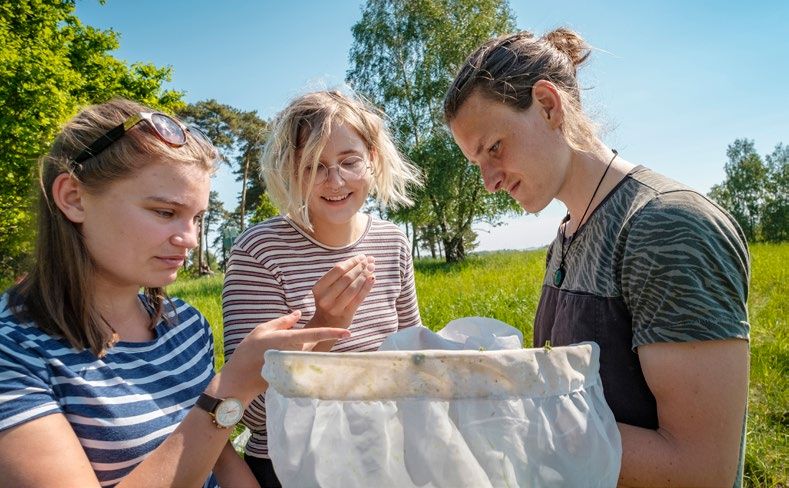
3

Pre-arrival information
WELCOME TO LUND                                                    RESIDENCE PERMIT
The main Lund University campus is set in the charming cob-        Most students from countries outside the EU/EEA need to
blestoned city of Lund, which dates back to 990. Today stu-        have a residence permit to study in Sweden. If this is the case
dents make up almost half of the population in the city. The       for you, we advised you to apply for residence permit as soon
University and its students give Lund a youthful and vibrant       as you receive your letter of acceptance. The permit must be
atmosphere, which has led to an active cultural life full of ac-   valid and you need to bring it with you when you travel to
tivities and entertainment. In Lund everything is close at hand    Sweden. Applications for residence permits are processed by
and within reach on foot or by bicycle, which adds to its ap-      the Swedish Migration Board and not the University.
peal.
                                                                   Read more and apply for residence permit on:
When it comes to travel opportunities, Lund is in a great lo-      www.migrationsverket.se/info/studera_en.html
cation. Perhaps most importantly, Copenhagen Airport is
just a 35-minute train ride from Lund, meaning you are con-
nected with the whole world from this major international
airport.
                                                                        MORE PRE-ARRIVAL INFORMATION
Read more about Lund on: https://visitlund.se/en                        www.lunduniversity.lu.se/pre-arrival

HOUSING
You can apply for housing through LU Accommodation or
use an accommodation agency. LU Accommodation is a part
of Student Services at Lund University. Other accommodation
agencies include the Student Unions’ housing service Bo-
Poolen and AF Bostäder. You can also find housing through
the student nations. Student housing often consists of a
corridor room or a studio flat.

Read more about housing on:
www.lunduniversity.lu.se/housing

LIVING COSTS
The Swedish currency is the krona. It is abbreviated SEK. To
compare, SEK 100 is roughly EUR 9 or USD 10. A typical Swe-
dish student budget is SEK 8 000 per month covering food,
housing, clothing, books/materials and leisure time. If you rent
accommodation from LU Accommodation you can expect ty-
pical rents to range from SEK 3 200–4 800 per month, depen-
ding on the specific accommodation you are offered.

Read more about living costs on:
www.lunduniversity.lu.se/living-costs

HEALTH INSURANCE
As an exchange student at Lund University you have free
health insurance. The cover is restricted to the period of time
you are in Sweden, as specified in your letter of acceptance.
If you’re from the EU/EEA you should bring your European
Health Insurance Card. You may bring additional health in-
surance if you want to.

Read more about health insurance on:
www.lunduniversity.lu.se/student-life/preparing-to-come/
health-and-insurance
4

    Exchange studies at the Faculty of Science
    APPLYING FOR COURSES/MODULES                                       COURSES FOR EXCHANGE STUDENTS
    When the coordinator at your home university has nominated         We advise you to carefully read the entry requirements for the
    you for exchange studies, you will recieve a link to an online     courses you intend to take and make sure that you will receive
    registration form. This is the application for the exchange, and   credits at your home university for each course.
    also for the short introduction programme which is offered
    to all exchange students.                                          Science courses
                                                                       Many of our courses are offered in English. Currently, three
    We encourage you to not apply for too many courses or cre-         of our Bachelor’s programmes and all of our Master’s pro-
    dits, and to make sure you pick the correct course code. Also,     grammes are held entirely in English. The Master’s courses
    please note that some courses are given simultaneously, and        are available to undergraduate students as long as they ful-
    may lead to timetabling conflicts – this is important when         fil the entry requirements.
    prioritising your selected courses.
                                                                       Read more about our science courses on page 6.
    Documents to attach to your application
    You need to scan and attach the following documents to             Courses at other faculties
    your application:                                                  As already mentioned, we require that you take at least half
    •    Official academic transcript                                  of your credits within the Faculty of Science. You may take
    •    List of ongoing courses                                       courses offered at other faculties, but the possibilities to take
    •    Statement of Purpose, one page maximum                        courses given at the School of Economics and Management,
    •    Explanation of the home university’s grading system           the Faculty of Medicine, or the Faculty of Engineering (LTH)
                                                                       are limited.
    Please note
    •   We do not require any paper documents                          Special Area Studies courses (SAS)
    •   Remember to submit the application before the dead-            As an exchange student at Lund University you have the op-
        line, as we cannot process any late applications               portunity to take additional courses outside of your main
    •   We require that you take at least half of your credits         field of study. You can choose from a wide range of subjects,
        within the Faculty of Science                                  including Swedish culture and society and also European and
    •   30 credits correspond to one semester of full-time stu-        global issues. All courses are worth 7.5 credits.
        dies. You can take a maximum of 30 credits per semester,
        plus one extra course in Swedish language for exchange         Read more about the Special Area Studies courses on:
        students.                                                      www.lunduniversity.lu.se/SAS

    Important dates
    APPLICATION PERIODS                                                SEMESTER PERIODS 2020
    Student exchange and course selection                              Spring		      20 January – 7 June
    Spring		        1 October – 25 October                             Arrival day   13 January
    Autumn		        1 April – 25 April
    Academic year   1 April – 25 April                                 Autumn		            31 August – 17 January
                                                                       Arrival day         TBA
    Accommodation for exchange students
    Spring		       1 October – 25 October                              NOMINATION PERIODS FOR PARTNERS
    Autumn		       1 April – 25 April                                  Spring		      25 September – 23 October
    Academic year  1 April – 25 April                                  Autumn		      25 March – 23 April
                                                                       Academic year 25 March – 23 April

                                                                       More relevant dates are available on:
                                                                       www.lunduniversity.lu.se/academic-calendar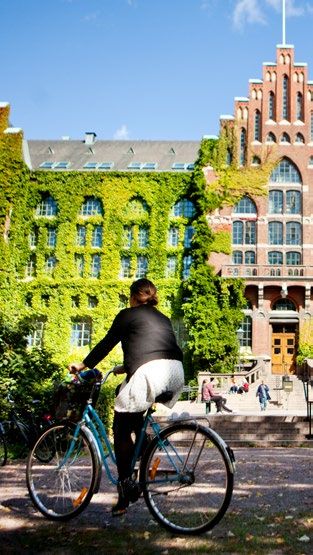
5

Swedish language courses                                          LANGUAGE REQUIREMENTS
At Lund University you have the opportunity to take free pre-     We require proficiency in English or Swedish, depending on
paratory Swedish courses, for example the Swedish Language        the language of the course. It is of great importance, and in
Courses for Exchange Students (SVE) and the Introductory          your interest, that your language skills are at a satisfactory
Swedish Language Course (SUSA). The latter is a short 3 credit    level. We trust your home university to assess that the Eng-
introduction to the Swedish language and to the Swedish           lish proficiency of their students is of a satisfactory level for
culture and society. The course is offered to all exchange stu-   academic studies (B2).
dents before ordinary courses start.
                                                                  APPLYING FOR ACCOMMODATION
Read more about the language courses on:                          You apply for accommodation separately. The accommodation
www.sol.lu.se/en/subjects/sfs                                     application is open during the same period as the exchange
www.sol.lu.se/en/subjects/sfs/exchange-students/susa              application. It is up to you and your coordinator to remember
                                                                  to apply for accommodation in time. Unfortunately we cannot
STUDY STRUCTURE AND GRADING SYSTEM                                guarantee housing for all exchange students, but we will do
Study structure                                                   what we can to help you find accommodation.
Full-time study corresponds to 30 credits per semester. You
are required to follow a full-time semester study plan of 30      Read more about applying for accommodation on:
credits per semester. Examination is usually conducted at the     www.lunduniversity.lu.se/housing
end of each course.

Grading system
As an exchange student at the Faculty of Science you will
                                                                       QUESTIONS ABOUT COURSES?
be graded according to one of our two scales, which vary
                                                                       Questions concerning courses are kindly addressed
between courses.
                                                                       to the subject’s departmental coordinator. Contact
                                                                       information can be found on page 18.
•    U – G – VG (Fail – Pass – Pass with Distinction)
•    U – G (Fail – Pass)

Read more about the grading system on:
www.lunduniversity.lu.se/grading-system
6
Courses
SPECIAL AREA STUDIES (SAS)
Website about the course: http://home.thep.lu.se/~leif/SASF10/index.html
ST = Spring term, AT = Autumn term
Bachelor’s level 1 = First half of the term, 2 = Second half of the term
Code Course name Credits Start End
SASF10 The Scientific Method 7,5 ST1 ST1
ASTROPHYSICS, PHYSICS AND SYNCHROTRON RADIATION BASED SCIENCE
Website about the courses: http://www.fysik.lu.se/english/education/courses/
ST = Spring term, AT = Autumn term
Bachelor’s level 1 = First half of the term, 2 = Second half of the term
Code Course name Credits Start End
ASTA33 Galaxies and Cosmology 7,5 AT2 AT2
ASTA34 Radiation Processes and Stellar Atmospheres 7,5 ST1 ST1
ASTB01 Introduction to Astrophysics 7,5 AT1 AT1
ASTC01 Astrobiology 7,5 AT2 AT2
FYSB11 Basic Quantum Mechanics 7,5 AT2 AT2
ST2 ST2
FYSB12 Basic Statistical Physics and Quantum Statistics 7,5 AT2 AT2
ST2 ST2
FYSC11 Atomic and Molecular Physics 7,5 AT1 AT1
ST1 ST1
FYSC12 Nuclear Physics and Reactors 7,5 AT1 AT1
ST1 ST1
FYSC13 Solid State Physics 7,5 AT2 AT2
ST2 ST2
FYSC14 Particle Physics, Cosmology and Accelerators 7,5 AT2 AT2
ST2 ST2
FYSD11 Fundamental Combustion 7,5 ST2 ST2
FYSD13 Processing and Device Technology 7,5 AT1 AT17
FYSD21 Materials Analysis at the Nanoscale 7,5 AT2 AT2
FYTA14 Fluid Dynamics 7,5 ST2 ST2
FYTB13 Electromagnetism 7,5 ST2 ST2
AT1 AT1
FYTB14 Classical Mechanics and Special Relativity 7,5 ST1 ST1
MAXC11 Photon and Neutron Production for Science 7,5 AT1 AT1
MNXB01 Introduction to Programming and Computing for Scientists 7,5 AT1 AT1
ST = Spring term, AT = Autumn term
Master’s level 1 = First half of the term, 2 = Second half of the term
Code Course name Credits Start End
ASTM13 Dynamical Astronomy 7,5 AT2 AT2
ASTM14 Stellar Structure and Evolution 7,5 AT1 AT1
ASTM18 Observational Techniques and Instruments 7,5 ST2 ST2
ASTM20 Planetary Systems 7,5 AT1 AT1
ASTM21 Statistical Tools in Astrophysics 7,5 AT2 AT2
ASTM22 Computational Astrophysics 7,5 ST1 ST1
FYSN11 Experiments in Research and Society 7,5 AT1 AT1
ST2 ST2
FYSN14 Lasers 7,5 AT2 AT2
FYSN15 Experimental tools 7,5 AT2 AT2
FYSN17 Quantum Mechanics 7,5 AT1 AT1
FYSN23 Advanced Electromagnetism 7,5 ST1 ST1
FYST13 Chaos for Science and Technology 7,5 ST2 ST2
FYST14 Atomic and Molecular Spectroscopy 7,5 AT1 AT1
FYST15 Semiconductor Physics 7,5 AT1 AT1
FYST16 Modern Subatomic Physics 7,5 ST2 ST2
FYST17 Modern Experimental Particle Physics 7,5 ST1 ST1
FYST18 Applied Subatomic Physics 7,5 ST1 ST1
FYST19 Physics and Chemistry of Surfaces 7,5 ST2 ST2
FYST20 Spectroscopy and the Quantum Description of Matter 7,5 ST1 ST1
FYST21 Light-Matter Interaction 7,5 ST1 ST18
FYST22 Medical Optics 7,5 AT2 AT2
FYST23 Experimental Biophysics 15,0 ST1 ST2
FYST24 The Physics of Low-dimensions 7,5 AT2 AT2
FYST25 Solid State Theory 7,5 ST2 ST2
FYST26 Complex Economy 7,5 ST1 ST1
FYST28 Laser-based Combustion Diagnostics 7,5 ST1 ST1
FYST31 Advanced Processing of Nanostructures * 7,5 AT1 AT1
ST1 ST1
FYST32 Advanced Optics and Lasers 7,5 ST2 ST2
FYST34 High Speed Devices 7,5 AT1 AT1
FYST35 Chrystal Growth and Semiconductor Epitaxy 7,5 ST1 ST1
FYST37 Advanced Quantum Mechanics 7,5 ST2 ST2
FYST38 Environmental Monitoring 7,5 ST1 ST1
FYST39 Nanoelectronics 7,5 ST2 ST2
FYST40 Nanomaterials - thermodynamics and kinetics 7,5 AT2 AT2
FYST42 Scanning probe microscopy 7,5 ST2 ST2
FYST43 Optics and Optical Design 7,5 AT1 AT1
FYST50 Optoelectronics and Optical Communications 7,5 ST1 ST1
FYST51 Modern X-ray Physics - Diffraction and Imaging 7,5 ST1 ST1
FYTN01 Mathematical Methods of Physics 7,5 AT1 AT1
FYTN15 Statistical Mechanics 7,5 AT2 AT2
FYTN03 Computational Physics 7,5 AT1 AT1
FYTN04 Theoretical Particle Physics 7,5 AT2 AT2
FYTN05 Theoretical Biophysics 7,5 ST1 ST1
FYTN08 General Relativity 7,5 ST2 ST2
FYTN10 Introduction to Quantum Field Theory 7,5 ST1 ST1
FYTN11 Cosmology and Astroparticle Physics 7,5 AT2 AT2
FYTN12 Systems Biology - Models and Computations 7,5 AT2 AT2
FYTN14 Introduction to artificial neural networks and deep learning 7,5 AT2 AT2
MAXM05 Accelerators and Free Electron Lasers 7,5 ST1 ST1
* A very limited number of places available9
MAXM06 Introduction to Synchrotron Radiation Based Science 7,5 AT1 AT1
MAMX07 Introduction to Accelerators and Free Electron Lasers 7,5 AT1 AT1
Experimental Methods and Instrumentation for Synchrotron
MAXM16 7,5 AT2 AT2
Radiation Research
BIOLOGY AND MOLECULAR BIOLOGY
Website about the courses:
https://www.biology.lu.se/education/undergraduate-graduate-studies/courses
ST = Spring term, AT = Autumn term
1 = First half of the term, 2 = Second half of the term
Bachelor’s level Summer = Summer course
Code
Bachelor’s level Course name Credits Start End
MOBA03 Molecular Biology (taught in Swedish) 15 ST1 ST1
BIOA10 Cell- and Microbiology (taught in Swedish) 15 AT1 AT1
BIOA11 Genetics and Evolution (taught in Swedish) 15 AT2 AT2
BIOB05 Floristics (taught in Swedish) 4 Summer Summer
BIOB10 Botany and Zoology (taught in Swedish) 15 ST1 ST1
Experimental Design and Analysis for Biologists
BIOB11 7,5 ST2 ST2
(taught in Swedish)
BIOB12 Faunistics and Floristics (taught in Swedish) 8 ST2 ST2
BIOC01 Human Physiology (taught in Swedish) 15 AT1 AT1
BIOC05 Nature Conservation (taught in Swedish) 15 AT2 AT2
BIOC10 Ecology (taught in Swedish) 15 ST2 ST2
BIOC11 Human and Animal Physiology (taught in Swedish) 15 AT2 AT2
BIOC12 Ecology (taught in Swedish) 7.5 ST2 ST2
BIOF06 Human Biology and Evolution (taught in Swedish) 7,5 AT1 AT2
BIOF08 Animal Behaviour 15 ST2 ST2
BIOF05X Applied Work 10 AT1 AT1
ST1 ST1
BIOF05Y Applied Work 10 AT2 AT2
ST2 ST210
BIOF20X Applied Work 7,5 AT1 AT1
ST1 ST1
BIOF20Y Applied Work 7,5 AT2 AT2
ST2 ST2
BIOF21X Applied Work 15 AT1 AT1
ST1 ST1
BIOF21Y Applied Work 15 AT2 AT2
ST2 ST2
BIOF30 Applied Work 30 AT1 AT1
ST1 ST1
ST = Spring term, AT = Autumn term
Master’s level 1 = First half of the term, 2 = Second half of the term
Code Course name Credits Start End
BIOR11 Mosses, Lichen, Fungi - Biodiversity and Conservation 15 AT1 AT1
BIOR14 Pharmacology * 15 AT2 AT2
BIOR17 Limnology 15 AT1 AT1
BIOR18 Microbiology* 15 AT2 AT2
BIOR20 Sensory Biology * 15 AT2 AT2
BIOR21 Toxicology * 15 ST1 ST1
BIOR25 Molecular Ecology and Evolution * 15 ST1 ST1
BIOR31 Molecular Biotechnology * 15 ST2 ST2
BIOR39 Biological Monitoring 15 ST2 ST2
BIOR41 Ecotoxicology 15 AT2 AT2
BIOR49 Eukaryotic molecular genetics 15 AT2 AT2
BIOR51 Ornithology 15 ST2 ST2
BIOR52 Applied Ecotoxicology 15 ST1 ST1
BIOR56 Antibiotics - Biology and Chemistry * 7,5 ST2 ST2
BIOR58 Neurobiology * 15 AT1 AT1
BIOR59 Genetic Analysis I * 7,5 ST1 ST1
* A very limited number of places available11
BIOR60 Genetic Analysis II * 7,5 ST1 ST1
BIOR61 Molecular Genetics * 15 ST2 ST2
BIOR63 Molecular Microbiology * 15 ST1 ST1
BIOR65 Marine Ecology 15 AT1 AT1
BIOR66 Water Management 15 ST2 ST2
BIOR67 Fisheries Ecology 15 AT2 AT2
BIOR69 Population and Community Ecology 15 AT1 AT1
ST2 ST2
BIOR72 Plant Systematics and Diversity 10 ST2 ST2
BIOR73 Bryophyte Morphology and Identification 5 AT1 AT1
BIOR75 Cellular and Molecular Immunology * 15 ST2 ST2
BIOR76 Plant Function 15 AT2 AT2
BIOR77 Plant Evolution and Adaptation 15 ST2 ST2
BIOR78 Soil and Plant Ecology 15 AT1 AT1
BIOR79 Methods in Molecular Biology * 15 AT1 AT1
BIOR81 Evolutionary Animal Ecology 15 AT2 AT2
BIOR82 Aquatic Ecology 15 ST1 ST1
BIOR83 Conservation Biology 15 ST1 ST1
BIOR84 Cellular and Molecular Neurobiology 15 ST2 ST2
BIOR85 Immunologi * 15 AT1 AT1
ST1 ST1
BIOS08 Microscopy - Bio-Imaging * 7,5 ST2 ST2
BIOS13 Modelling Biological Systems 7,5 AT2 AT2
BIOS14 Processing and Analysis of Biological Data 7,5 AT2 AT2
BIOT07 Research Project for International Students 7,5 AT1 AT1
ST1 ST1
BIOT07 Research Project for International Students 7,5 AT2 AT2
ST2 ST2
BIOT15X Research Project for International Students 15 AT1 AT1
ST1 ST1
* A very limited number of places available12
BIOT15Y Research Project for International Students 15 AT2 AT2
ST2 ST2
BIOT30 Research Project for International Students 30 AT1 AT2
ST1 ST2
BIOT45X Research Project for International Students 45 AT1 ST1
BIOT45Y Research Project for International Students 45 AT2 ST2
BIOT60 Research Project for International Students 60 AT1 ST2
GEOLOGY
Website about the courses: https://www.geology.lu.se/education/programme-structure
ST = Spring term, AT = Autumn term
Master’s level 1 = First half of the term, 2 = Second half of the term
Code Course name Credits Start End
GEOM08 Metamorphic Petrology and Structural Geology 15 ST1 ST1
GEOM09 Evolution of the Biosphere, Palaeoecology and Palaeontology 15 ST2 ST2
GEOM10 Sedimentary Geology and Basin Analysis 15 AT1 AT1
GEOM11 Magmatic Petrology, Geochemistry and Geochronology 15 AT2 AT2
GEON04 Global and Regional Marine Geology 15 ST1 ST1
Glacial Sedimentology - Processes, Sediments and Landform
GEON05 15 AT1 AT1
Systems
GEON06 Palaeoecological Methods and Environmental Analysis 15 AT2 AT2
GEON07 Quarternary Climate and Glaciation History 15 ST2 ST213
CHEMISTRY
Website about the courses: http://www.kemi.lu.se/english/education/
ST = Spring term, AT = Autumn term
Bachelor´s level 1 = First half of the term, 2 = Second half of the term
Code Course name Credits Start End
MOBA02 Chemistry of the Cell 15 AT2 AT2
KEMB21 Organic Chemistry 15 AT2 AT2
KEMC03 Experimental Protein Chemistry 15 AT1 AT1
ST = Spring term, AT = Autumn term
Master’s level 1 = First half of the term, 2 = Second half of the term
Code Course name Credits Start End
KEMM20 Medicinal Chemistry 7,5 AT1 AT1
KEMM21 Advanced Organic Chemistry 15 ST1 ST1
KEMM23 Advanced Biochemistry 15 ST2 ST2
KEMM25 Structural Biochemistry 15 AT2 AT2
KEMM29 Molecular Spectroscopy - Methods and Applications 15 ST2 ST2
KEMM30 Molecular Driving Forces and Chemical Bonding 15 AT1 AT1
KEMM48 Statistical Thermodynamics and Molecular Simulation 7,5 ST1 ST1
KEMM52 Coordination Chemistry and Organometallic Chemistry 15 ST2 ST2
KEMM57 Magnetic Resonance - Spectroscopy and Imaging 7,5 ST1 ST1
KEMM58 Molecular Quantum Mechanics 7,5 ST1 ST1
KEMM67 Scattering Methods 7,5 ST1 ST1
KEMM76 Advanced Analytical Chemistry 15 AT2 AT2
KEMM77 Advanced Surface and Colloid Chemistry 15 AT2 AT2
KEMP20 Project Work, Period 1 15 AT1 AT1
ST1 ST1
KEMP30 Project Work 30 AT1 AT2
ST1 ST2
KEMP60 Project Work, Period 2 15 AT2 AT2
ST2 ST214
PURE MATHEMATICS
Website about the courses:
http://www.maths.lth.se/education/free-standing-courses/mathematics-science-faculty/
ST = Spring term, AT = Autumn term
Bachelor’s level 1 = First half of the term, 2 = Second half of the term
Code Course name Credits Start End
MATB13 Discrete Mathematics 7,5 ST2 ST2
AT2 AT2
MATB21 Analysis in Several Variables 1 7,5 ST1 ST1
AT1 AT1
MATB22 Linear Algebra 2 7,5 ST1 ST1
AT1 AT1
MATB23 Analysis in Several Variables 2 7,5 ST2 ST2
AT2 AT2
MATB24 Linear Analysis 7,5 ST1 ST1
AT1 AT1
MATC12 Ordinary Differential Equations 1 7,5 AT2 AT2
ST = Spring term, AT = Autumn term
Master’s level 1 = First half of the term, 2 = Second half of the term
Code Course name Credits Start End
MATM11 Algebraic Structures 7,5 ST1 ST1
MATM12 Analytic Functions 15 AT1 AT2
MATM13 Differential Geometry 7,5 AT1 AT1
MATM15 Number Theory 7,5 AT2 AT2
MATM16 Topology 7,5 ST2 ST2
MATM18 Fourier Analysis 7,5 ST1 ST1
MATM19 Integration Theory 7,5 ST1 ST1
MATM23 Specialised Course in Differential Geometry 7,5 ST1 ST2
MATM27 Ordinary Differential Equations 2 7,5 ST1 ST1
MATM30 Mathematical Foundations of Probability 7,5 AT2 AT2
MATP13 Group- and Ring Theory 7,5 ST2 ST2
MATP15 Linear Functional Analysis 7,5 AT1 AT215
MATP16 Partial Differential Equations 7,5 AT1 AT1
MATP25 Specialised Course in Linear Functional Analysis 7,5 AT1 AT2
MATP29 Specialised Course in Integration Theory 7,5 ST2 ST2
MATHEMATICAL STATISTICS
Website about the courses:
http://www.maths.lth.se/education/free-standing-courses/mathematical-statistics-science-faculty/
ST = Spring term, AT = Autumn term
Bachelor´s level 1 = First half of the term, 2 = Second half of the term
Code Course name Credits Start End
MASA01 Mathematical Statistics - Basic Course 15,0 AT1 AT2
MASC01 Probability Theory 7,5 ST1 ST1
MASC03 Markov Processes 7,5 AT1 AT1
MASC04 Stationary Stochastic Processes 7,5 AT1 AT1
MASC05 Design of Experiments 7,5 ST2 ST2
ST = Spring term, AT = Autumn term
Master´s level 1 = First half of the term, 2 = Second half of the term
Code Course name Credits Start End
MASM11 Monte Carlo Methods for Statistical Inference 7,5 ST1 ST1
MASM12 Non-linear Time Series Analysis ** 7,5 AT1 AT2
MASM15 Statistical Modelling of Extreme Values 7,5 ST2 ST2
MASM17 Time Series Analysis 7,5 AT2 AT2
MASM18 Financial Statistics 7,5 AT2 AT2
MASM22 Linear and Logistic Regression 7,5 ST2 ST2
MASM24 Valuation of Derivative Assets 7,5 AT1 AT1
MASM25 Spatial Statistics with Image Analysis 7,5 AT2 AT2
MASM27 Nonparametric Inference 7,5 ST1 ST1
** Taught partially in Denmark16
NUMERICAL ANALYSIS
Website about the courses:
http://www.maths.lth.se/education/free-standing-courses/numerical-analysis-science-faculty/
ST = Spring term, AT = Autumn term
Bachelor´s level 1 = First half of the term, 2 = Second half of the term
Code Course name Credits Start End
NUMA01 Computational Programming with Python 7,5 ST2 ST2
AT2 AT2
NUMA11 Numerical Linear Algebra 7,5 AT1 AT1
NUMA41 Numerical Analysis - Basic Course 7,5 ST2 ST2
ST = Spring term, AT = Autumn term
Master’s level 1 = First half of the term, 2 = Second half of the term
Code Course name Credits Start End
NUMN05 Numerical Analysis - Basic Course 7,5 ST1 ST1
NUMN12 Simulation Tools 7,5 AT2 AT2
NUMN14 Finite Volume Methods 7,5 ST2 ST2
NUMN17 Numerical Analysis - Seminar 7,5 ST1 ST2
NUMN19 Numerical Approximation 7,5 ST1 ST1
NUMN25 Advanced Course in Numerical Algorithms with Python/SciPy 7,5 AT1 AT1
NUMN30 Iterative Solution of Large Scale Systems in Scientific Computing 7,5 ST2 ST217
PHYSICAL GEOGRAPHY AND ECOSYSTEM SCIENCE
Website about the courses: https://www.nateko.lu.se/education
ST = Spring term, AT = Autumn term
Bachelor´s level 1 = First half of the term, 2 = Second half of the term
Code Course name Credits Start End
NGEA01 Introduction to the Global Environment 15 AT1 AT1
NGEA03 Remote Sensing for Landscape Studies 15 ST2 ST2
NGEA04 Physical Geopgraphy: Ecosystems Analysis 15 ST2 ST2
NGEA05 Remote Sensing and GIS with Focus on the Environment 15 ST1 ST1
NGEA07 Theory and Methods of Physical Geography 15 AT2 AT2
NGEA17 Synoptic/Mesoscale Meteorology 7,5 AT2 AT2
NGEA20 Hydrology 15 ST1 ST1
NGEA21 The Climate System 15 ST1 ST1
NGEA24 Dynamic Meteorology 1 7,5 ST2 ST2
NGEA25 Dynamic Meteorology 2 7,5 AT1 AT1
ST = Spring term, AT = Autumn term
Master´s level 1 = First half of the term, 2 = Second half of the term
Code Course name Credits Start End
NGEN01 Climate Change and its Impacts on the Environment 15 AT2 AT2
NGEN02 Ecosystem Modeling 15 ST1 ST1
NGEN06 Algorithms in Geographical Information Systems 7,5 AT2 AT2
NGEN07 Web GIS 7,5 AT2 AT2
NGEN08 Satellite Remote Sensing 15 ST2 ST2
NGEN11 Spatial Analysis 7,5 ST1 ST1
NGEN12 Geographical Databases 7,5 ST1 ST1
Programming for Applications in Geomatics,
NGEN13 15 AT1 AT1
Physical Geography and Ecosystem Science
NGEN16 Biosphere-Atmosphere Interactions 15 AT1 AT1
NGEN17 Global Ecosystem Dynamics 15 AT2 AT218
Contact information
FACULTY COORDINATORS DEPARTMENTAL COORDINATORS
Mikael Nyblom Astronomy and Theoretical Physics
International coordinator for Nils Ryde
incoming exchange students +46 46 222 15 74
+ 46 46 222 98 42 Nils.Ryde@astro.lu.se
incoming@science.lu.se www.thep.lu.se/english/education
www.science.lu.se
Biology
Kristina Miolin Christina Ledje
International relations manager + 46 46 222 73 16
+ 46 46 222 30 01 exchange@biol.lu.se
outgoing@science.lu.se www.biology.lu.se/education
www.science.lu.se
Chemistry
Sophie Manner
ADDRESSES + 46 46 222 83 63
Paper correspondence Sophie.Manner@chem.lu.se
Lund University www.kemi.lu.se/english
Faculty of Science
Att: Name of addressee Geology
Box 118 Karl Ljung
SE-221 00 Lund, Sweden +46 46 222 39 96
Studievagledare@geol.lu.se
Deliveries www.geology.lu.se/education
Lund University
Faculty of Science Mathematical Statistics
Att: Name of addressee Magnus Wiktorsson
Tornavägen 20 + 46 46 222 86 25
SE-223 63 Lund, Sweden Magnus.Wiktorsson@matstat.lu.se
www.maths.lu.se/english
Visiting address
Faculty of Science Mathematics
Astronomihuset Sigmundur Gudmundsson
Sölvegatan 27 + 46 46 222 85 61
SE-223 63 Lund, Sweden Sigmundur.Gudmundsson@math.lu.se
www.maths.lu.se/english
Physical Geography and Ecosystem Science
Martin Berggren
+46 46 222 17 34
Martin.Berggren@nateko.lu.se
www.nateko.lu.se/education
Physics
Rasmus Westerström
+ 46 46 222 38 68
internationellkoordinator@fysik.lu.se
www.fysik.lu.se/english/education/exchange-students19
www.lunduniversity.lu.se
www.science.lu.se
LUND UNIVERSITY
Faculty of Science
Box 118
SE-22100 Lund, Sweden
www.science.lu.seYou can also read


