Market report 2018 - Australian Student Accommodation
←
→
Page content transcription
If your browser does not render page correctly, please read the page content below
market report
2018

Australian
Student
Accommodation   savills.com.au
Savills Market Report Australian Student Accommodation

  *Front cover image:
  Urbanest Darling House, Sydney
1

                      Contents
                      02   Introduction

                      04   Student Enrolment Statistics

                      08   Australia The Number Two Destination

                      10   Australian University Rankings

                      11   Cost of Living Analysis

                      12   Where Students Live

                      14   Market Focus Sydney

                      18   Market Focus Melbourne

                      22   Market Focus Brisbane

                      26   Market Focus Adelaide

                      30   Market Focus Perth

                      34   Market Focus Canberra

                      36   Top 10 Private Providers

                      38   Development Pipeline

                      39   Transactions

                      42   Yields

                      44   Where to Invest Next?

                      45   Co-Living Diversification
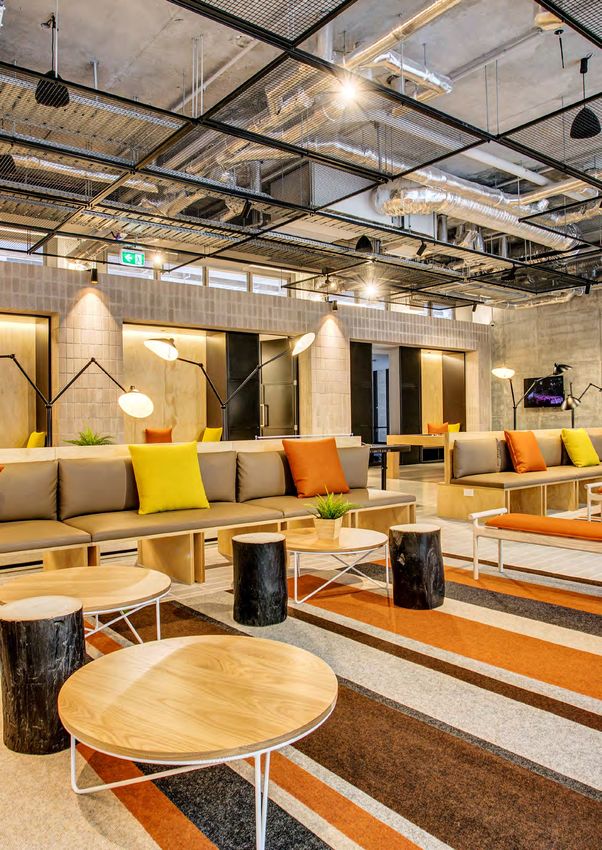
Iglu Melbourne City
Savills Market Report Australian Student Accommodation

2

    Introduction
    We are pleased to present the 2018 Savills Australian Student
    Accommodation Market Update. This paper provides an overview
    of the key drivers and market activity in this emerging asset class
    throughout the past 12 months.

           International student                      The Australian PBSA                        Brisbane is showing signs
             visa numbers are                           sector remains in                         of an oversupply of more
             continuing to rise                         a predominately                          expensive accommodation
            rapidly at Australian                     development-focused                         options; demand remains
              universities, with                       phase, with limited                            robust in the other
            double-digit growth                          transactions of                                 capital cities
                                                      operational property

    Student Demographics                        are the top five countries of origin for
                                                international students studying
                                                                                               additional equity, including Scape,
                                                                                               GSA, Cedar Pacific and Wee Hur.
    The underlying dynamics of the              in Australia.                                  Successful completion of these capital-
    Australian higher education market                                                         raising exercises is expected to provide
    is continuing to support increasing         In 2017, the strongest growth in
                                                                                               significantly more liquidity in the sector
    development into new PBSA. As               international student numbers in
                                                                                               moving towards 2019.
    outlined in this paper, the international   Australia came from Nepal (56.2%), Sri
    student population is continuing to         Lanka (32.0%), Brazil (24.4%), Colombia        Several universities have entered the
    increase in both universities and other     (26.5%) and Spain (19.9%).                     market to improve and grow their
    education sectors.                                                                         residential portfolios. This area of

    However, Australia does have a very
                                                Market Activity                                the market is relatively immature in
                                                                                               Australia and it is expected that a range
    strong reliance on international students   The first three quarters of 2018 have          of transaction structures will emerge
    from a number of South East Asian           been highlighted by a continued                with specialist integrated on-campus
    countries. The latest demographic           increase in the pipeline of new PBSA           developer/operators.
    information available indicates that        developments, with a strong focus
    international student growth is stronger    on Melbourne and to a lesser extent
    as evidenced by enrolments in higher        Adelaide (driven in part by the availability
    education courses with student visas        of development opportunities).
    growing by 12.7% from 2016 to 2017.         A number of established developer/
    China (28.9%), India (11.0%), Brazil        operators have also looked to raise
    (4.6%), Nepal (4.4%) and Malaysia (4.1%)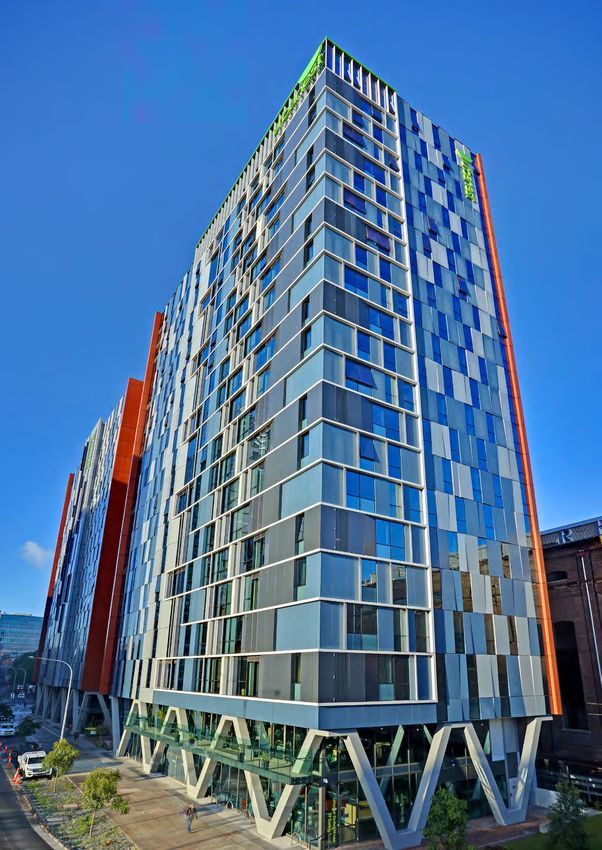
3

Capital Cities Activity                     delivered over the next four years,
                                            of which circa 41% is proposed
                                                                                      regarding the potential uptake of new
                                                                                      PBSA being delivered into the market
There are 76,201 beds of Purpose Built      by universities.                          in the short to medium term, as there is
Student Accommodation (PBSA) in                                                       also an increasing pipeline of residential
the eight Australian capital cities. The    Melbourne has the largest
                                                                                      apartments being delivered in the city in
existing supply in each city is less than   development pipeline of 16,137 beds
                                                                                      the same timeframe.
12% of the full-time student population     (5.5% full-time students), which is a
with the exception of Canberra (27.2%).     quite significant increase compared       A number of new PBSA projects have
                                            to 12 months ago. However, the            entered the development pipeline
Over the first three quarters of 2018,      Melbourne market is underpinned by        in Adelaide, predominantly focused
consistent with market activity             a strong demand for accommodation,        towards the northern end of the CBD
throughout 2017, the key focus for the      with new schemes trading well.            and North Terrace. Recently completed
major developers in this sector has been    Melbourne’s universities are active in    schemes are trading with good
the continued acquisition of sites and      developing their accommodation, with      occupancy levels.
the construction and delivery of            several projects contributing to just
new PBSA.                                                                             Currently there is no direct-let
                                            over 25% of the proposed pipeline.
                                                                                      accommodation in Perth. It is also
Sydney is the most attractive market        The pipeline of new PBSA projects         a market that has witnessed a new
in terms of the supply and demand           in Brisbane has slowed somewhat           phase of development, with a number
fundamentals combined with the              in the past 12 months, following an       of direct-let projects being promoted
robustness of the underlying property       extremely busy period over the 18         in the past 12 months. The first two
and investment markets. However, it         months prior, backed by the positive      projects are scheduled for completion in
remains the most difficult Australian       initiatives of Brisbane City Council.     Semester 1, 2019, which will be a good
market to access. Sydney has a total        Brisbane’s development pipeline is        barometer of demand for off-campus
development pipeline of 4,787 beds          currently 6,865 beds (4.8% of full-time   residences in the CBD.
(2.2% full-time students) expected to be    students). There are some concerns

  Student One, 363 Adelaide St, Brisbane
Savills Market Report Australian Student Accommodation

    Student
4

    Enrolment Statistics
    Australia’s student population is continuing to grow at a steady rate.
    The latest data available indicates that total student enrolments grew by 3.3% from 2015 to 2016, an increase of 47,076
    students. International student numbers increased by 7.7% in 2016. All of this growth is attributed to full-time international
    students, which increased by almost 9.2%. Part-time international student numbers fell by 0.8% in 2016. Table One details the
    breakdown between the domestic and international student cohorts.

    Table 1: Total Student Enrolment Numbers in Australia, 2016

                                                     Full-time Student                       Part-time Student                         Total Student
                 Study Mode
                                                        Enrolments                              Enrolments                              Enrolments

     Domestic                                              702,110                                363,599                                1,065,709

     International                                         337,166                                 54,334                                 391,500

     Total                                                1,039,276                               417,933                                1,457,209

     % Change from 2015                                      3.9%                                  2.0%                                    3.3%

     Source: Australian Government Department of Education and Training (uCube) which is based on the student and staff data collections (2016).

    New South Wales, Victoria and Queensland have the greatest number of student enrolments, with Victoria achieving the largest
    increase in enrolment numbers year on year, with an increase of 4.2% compared to 2015. Of all the states, Tasmania saw the
    largest increase of 7.3% in 2016, with multi-state higher education providers increasing by 4.0% as detailed in Table Two.

    Table 2: Student Enrolment Numbers by State and Territory, 2016

      Student Type /    New South                                    Western      South                      Northern
                                        Victoria       QLD                                    Tasmania                       ACT       Multi-State       Total
          State           Wales                                      Australia   Australia                   Territory

     Domestic            334,315       255,317       194,447         105,519     75,543        29,150         9,253        29,430        32,735        1,065,709

     International       111,374       141,588        52,249         36,647      26,716         5,484         2,612        11,300         3,530        391,500

     Total               445,689       396,905       246,696         142,166     102,259       34,634        11,865        40,730        36,265        1,457,209

     % Change
                          3.5%          4.2%          1.6%            1.2%        5.8%          7.3%         -0.6%          2.7%          4.0%           3.3%
     from 2015

     Source: Australian Government Department of Education and Training (uCube) which is based on the student and staff data collections (2016).
5

      Chart One below shows the Compound Annual                                      Australian Student Accommodation Association
      Growth Rate (CAGR) for each state over a one-year,                             (SASAA) championing Adelaide as a study
      five-year and 10-year period. It shows that New                                destination. Western Australia had a long period of
      South Wales and Victoria have had rapid growth in                              underperformance, however, the universities and
      the past five years, confirming their positions as first                       associations such as Study Perth are now taking
      and second most attractive destinations for students                           positive steps toward promoting the city again and
      in terms of the universities’ and cities’ amenity. The                         accelerating growth. The Northern Territory has
      Australian Capital Territory has the third strongest                           very low student numbers compared to the other
      growth rate in the last 12 months. Queensland and                              cities, however long-term growth has been strong
      South Australia have also seen strong growth rates,                            but has slowed in the past two years. Tasmania
      with Brisbane City Council being proactive in the                              is also a relatively small market but has achieved
      past five years toward ensuring the city has student                           good levels of student growth in
      accommodation development, and the South                                       recent years.

       Chart 1: Student Number Growth by State

           Source: Commonwealth of Australia - International Student Data 2018, Extracted: July 2018

CLV Student Village, University of Melbourne Campus, Melbourne
Savills Market Report Australian Student Accommodation

6

    The number of international students enrolled in higher education courses and utilising study visas in Australia has grown by
    12.7% from 2016 to 2017, a marginally higher increase than the previous year, as detailed in Table Three below. There were
    624,001 international students studying on a student visa in Australia in 2017, which represents a 12.7% increase over 2016
    figures (554,179 student visas) . The top five nationalities are China, India, Brazil, Nepal and Malaysia.

    Table 3: International Students Studying on Visas in Australia, 2017

                                                                         2017 Student                                        2016 Student                                         Growth from
                  Education Sector
                                                                           Numbers                                             Numbers                                            2016 to 2017

     Higher Education                                                        350,472                                             305,486                                              14.7%

     VET                                                                     217,696                                             186,533                                              16.7%

     Schools                                                                 25,762                                               23,270                                              10.7%

     ELICOS                                                                  155,448                                             150,272                                               3.4%

     Non-Award                                                               49,993                                               44,044                                              13.5%

     Total                                                                   799,371                                             709,605                                               12.7%

     * The total is less than the sum of its components as individual students can undertake study in more than one sector during the year.
     Source: Australian Government Department of Education Research – “End of Year Summary of International Student Enrolment Data1 – Australia – 2017”.

    Table 4: International Student Enrolments in Australia in 2017

                        Top 10 Nationalities                                              Number of Students 2017                                                          Proportion

                             China                                                                     231,191                                                                28.9%

                             India                                                                      87,615                                                                11.0%

                             Brazil                                                                     36,496                                                                 4.6%

                             Nepal                                                                      35,423                                                                 4.4%

                             Malaysia                                                                   32,899                                                                 4.1%

                             Korea, Republic of (South)                                                 31,112                                                                 3.9%

                             Thailand                                                                   30,730                                                                 3.8%

                             Vietnam                                                                    30,536                                                                 3.8%

                             Colombia                                                                   21,628                                                                 2.7%

                             Indonesia                                                                  20,028                                                                 2.5%

                             Other Nationalities                                                       241,713                                                                30.3%

     Total                                                                                             799,371

       *International student numbers relate only to international students in Australia on a student visa and are derived from AEI enrolments data.
       Source: Australian Government Department of Education Research – “End of Year Summary of International Student Enrolment Data1 – Australia – 2017”.

    1 Note that students can enrol for more than one course in the same year, for example an English Language Intensive Course for Overseas Students (ELICOS) and then a higher education course.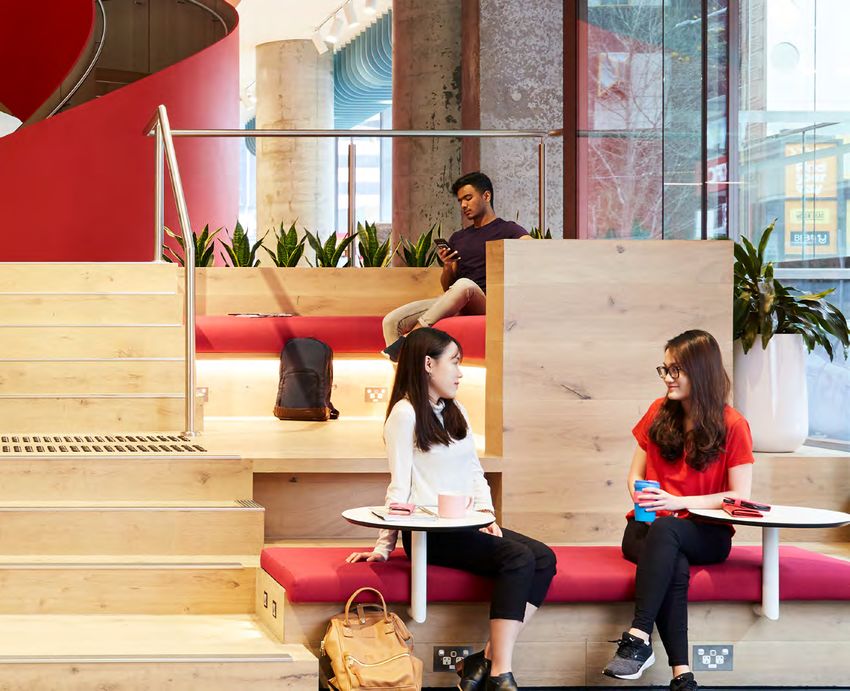
7

China is the largest international student country of origin, which contributed almost 29% of the total number of international
students in Australia in 2017. The country with the highest percentage of growth is Nepal, with a growth rate of 56.2% from
2016 to 2017.

 Table 5: International Student Numbers in Australia Growth between 2016 and 2017

   Current                                                        Number of                Number of
                          Top 10 Nationalities                                                                   Growth 2016-2017         Position 2016
   Position                                                     Students 2016            Students 2017

       1                      China                               195,731                   231,191                    18.1%                    1

       2                      India                                77,841                    87,615                   12.6%                     2

       3                      Brazil                               29,347                   36,496                    24.4%                     6

       4                      Nepal                                22,684                   35,423                    56.2%                     8

       5                      Malaysia                             28,295                   32,899                    16.3%                     7

       6                      Korea, Republic of (South)           30,444                    31,112                    2.2%                     3

       7                      Thailand                             30,316                   30,730                     1.4%                     4

       8                      Vietnam                              29,589                   30,536                     3.2%                     5

       9                      Colombia                             17,092                    21,628                   26.5%                     11

      10                      Indonesia                            19,751                   20,028                     1.4%                     9

                              Other Nationalities                 228,515                   241,713                    5.8%

                Total                                              709,605                   799,371                   12.7%

  *International student numbers relate only to international students in Australia on a student visa and are derived from AEI enrolments data.
  Source: Australian Government Department of Education Research – “End of Year Summary of International Student Enrolment Data1 – Australia – 2017”;
  Australian Government Department of Education and Training – International Student Data 2017 - pivot tables.
                                                                                                                                                        iglu D6 Regent St, Redfern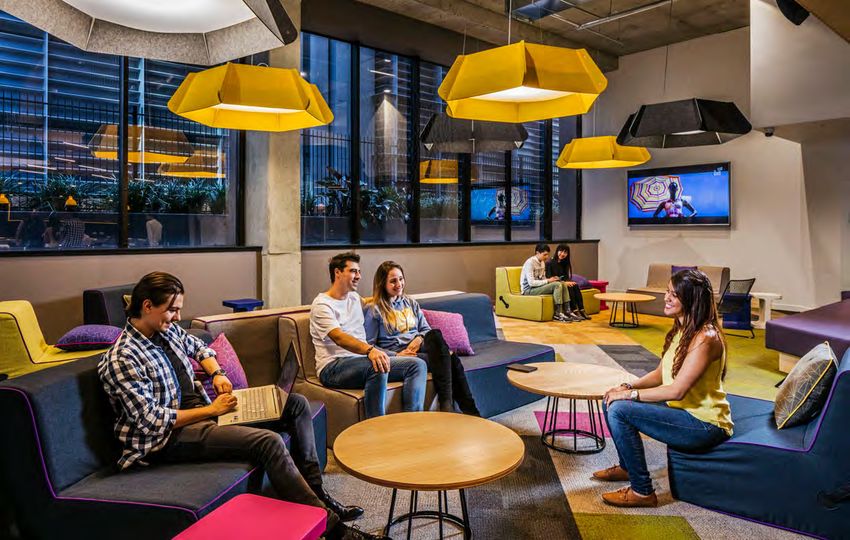
Savills Market Report Australian Student Accommodation

8

    Australia The Number
    Two Destination
    According to UNESCO statistics, Australia is set to overtake the UK as the second most popular
    destination for international students.
    Australia has witnessed strong growth in international student numbers as outlined in the table below. This has
    continued into 2017, with further growth of 12.7%. Growth has been largely static in the UK since 2013 and the impacts
    of Brexit could prove to be detrimental as the UK is heavily reliant on EU student enrolments. After Brexit, European
    students will have to pay international student fees as opposed to UK student fees, as well as having to pay up front for
    study, with tuition loans no longer available to them.

    Table 6: 10 leading countries in international education: 2011 – 2016

                                                        2011                  2012     2013        2014        2015        2016

                   United States                      640,488            671,027     714,630     771,561     840,757

                   United Kingdom                     290,382            294,288     288,766     289,514     301,558

                   Australia                          251,676            239,533     239,031     255,525     283,043     321,352

                   France                             268,212            271,399     228,639     235,123     239,409

                   Russia                             112,655            125,392                 168,818     177,286     197,206

                   Canada                             107,172            119,047     132,558     142,863     148,458     164,262

                   Germany                                                           118,933     121,072     133,481

                   Japan                              147,428            147,051     131,855     128,623     128,108

                   Malaysia                                                                       98,526     110,499     123,061

                   China

                   World                             3,131,898          3,195,639    3,311,693   3,497,599   3,759,060   3,890,874
      Gaps = data not available.
      Source: UNSECO Institute for Statistics, http://data.uis.unesco.org/#
9
The Student Housing Company, Park Ave, Parkville
Chart 2: Top four leading countries in international education: 2011 – 2016
900,000
800,000
700,000
600,000
500,000
400,000
300,000
200,000
100,000
0
2011 2012 2013 2014 2015 2016
United States United Kingdom Australia Canada
Source: UNSECO Institute for Statistics, http://data.uis.unesco.org/#Savills Market Report Australian Student Accommodation
10
Australian
University Rankings
Australian universities are continuing to rise in global rankings.
The Times Higher Education World University Rankings 2018 list the top 1,000 universities in the world. The rankings judge
research-intensive universities across all of their core missions: teaching, research, knowledge transfer and international
outlook. There are 13 performance indicators used to provide the rankings.
According to the Times Higher Education World University Rankings and as summarised in Table Seven, the University of
Melbourne continues to be Australia’s top university and has also improved in overall rankings from 34th in 2014 to 32nd
in 2018.
Table 7: Times World University Rankings – Top Australian Universities (2014 – 2018)
Main Campus
Top 8 Universities Times 2014 Times 2015 Times 2016 Times 2017 Times 2018
Location
The University of Melbourne VIC 34 33 33 33 32
The Australian National University ACT 48 45 52 47 48
The University of Sydney NSW 72 60 56 60 61
The University of Queensland QLD 63 65 60 60 65
Monash University VIC 91 83 73 74 80
The University of New South Wales NSW 114 109 82 78 85
The University of Western Australia WA 168 157 109 125 111
The University of Adelaide SA 201-225 164 149 142 134
Table 8: QS World University Rankings – Top Australian Universities (2016 – 2019)
Main Campus
Top 8 Universities QS 2016 QS 2017 QS 2018 QS 2019
Location
The Australian National University ACT 19 22 20 24
The University of Melbourne VIC 42 42 41 39
The University of Sydney NSW 45 46 50 42
The University of New South Wales NSW 46 49 45 45
The University of Queensland QLD 46 51 47 48
Monash University VIC 67 65 60 59
The University of Western Australia WA 98 102 93 91
The University of Adelaide SA 113 125 109 114
University of Technology Sydney NSW 218 193 176 160
The University of Newcastle NSW 256 245 224 214
QS World University Rankings 2019 list the top 1,000 universities in the world. The rankings capture university performance
using six metrics, including academic reputation (40%), employer reputation (10%), faculty/student ratio (20%), citations per
faculty (20%), international faculty ratio (5%) and international student ratio (5%). According to the QS World University Rankings
and as summarised in Table Eight, the Australian National University continues to be Australia’s top university although there are
some fluctuations in its overall rank, declining from 19th in 2016 to 24th in 2019.Cost of Living 11
Analysis
Historical analysis of Australia’s international student population indicates that student enrolment
number growth is correlated with changes in affordability.
Chart Three below shows a snapshot of current costs of living in a selected number of global cities and indicates that Australian
capital cities rank towards the most expensive, with five of the six Australian cities ranking in the top 10 of the sample group.
Whilst recent depreciation of the Australian dollar to major trading currencies has counterbalanced overall costs, this will be a
key consideration for students making choices about where to study moving towards 2020.
Chart 3: Global student cost of living analysis for selected cities
$- $1,000 $2,000 $3,000 $4,000 $5,000 $6,000
Boston
New York
San Francisco
London
Sydney
Melbourne
Dublin
Adelaide
Brisbane
Perth
Canberra
Toronto
Stockholm
Madrid
Singapore
Tokyo
Amsterdam
Paris
Lisbon
Milan
Berlin
Shanghai
Vienna Living Accommodation Tuition
Warsaw
Source: Savills World Research, Student.com, universityreviews.com.au, numbeo.com/cost-of-living/
European course fees represent non-EU international student on non-specialist STEM undergraduate degree course at a top institution, residing in purpose-build accommodation.
US dollars with August 2017 exchange rate.Savills Market Report Australian Student Accommodation
12
Where Students Live
The following analysis provides a snapshot of the current population of full-time students in the
greater statistical areas of Australia’s main capital cities measured in terms of the number of
PBSA beds against full-time student numbers.
The analysis focuses on the provision of PBSA by both the universities and the commercial providers. Students who are
not living in professionally provided accommodation, are classified as either renting in the private sector, or living in family-
associated accommodation.
Darwin
University
Accommodation
Brisbane Commercial
Accommodation
Perth Adelaide Students renting privately
Sydney or living at home
Canberra
Melbourne
Hobart
9,056 10,835 198,993
Greater Total
Sydney 4.1% 5.0% 90.9% 218,884
University Commercial Students renting
Accommodation Accommodation privately or living at home
10,142 9,469 274,743
Greater Total
Melbourne 3.4% 3.2% 93.3% 294,354
University Commercial Students renting
Accommodation Accommodation privately or living at home13
3,926 11,499 128,816
Greater Total
Brisbane 2.7% 8.0% 89.3%
144,241
University Commercial Students renting
Accommodation Accommodation privately or living at home
3,123 1,780 95,740
Perth Total
3.1% 1.8% 95.1% 100,643
University Commercial Students renting
Accommodation Accommodation privately or living at home
2,309 4,175 65,818
Adelaide Total
3.2% 5.8% 91% 72,302
University Commercial Students renting
Accommodation Accommodation privately or living at home
2,954 4,914 21,081
Canberra Total
10.2% 17.0% 72.8% 28,949
University Commercial Students renting
Accommodation Accommodation privately or living at home
360 303 5,746
Darwin Total
5.6% 4.7% 89.7% 6,409
University Commercial Students renting
Accommodation Accommodation privately or living at home
1,315 41 10,728
Hobart Total
10.9% 0.3% 88.8% 12,084
University Commercial Students renting
Accommodation Accommodation privately or living at home
Source: Savills, uCube (2016)Savills Market Report Australian Student Accommodation
14
Urbanest Darling House, Sydney
Market Focus Sydney
The total development pipeline in Sydney has land associated with competing land uses, primarily residential
decreased from 5,435 beds in 2017 to 4,787 in CBD fringe locations, continues to be prohibitive. However,
beds in 2018 with the completion of a number Singaporean developer Wee Hur has recently purchased its first
Sydney student accommodation site in Redfern for $52million.
of new schemes.
The University of Sydney continues to be a significant participant
The largest new project completed this year has been Urbanest’s
within the Sydney market, with several new developments
second stage of accommodation at Darling Square (Urbanest
proposed, including the redevelopment of the Regiment Building,
Darling House), comprising 664 beds. Urbanest Darling House
which is under construction and due for completion prior to the
is the first off-campus direct-let accommodation available in
first semester of 2019.
Australia with 21 meals per week provided to students. Iglu
completed a 370-bed scheme on Regent Street in Redfern. Analysis of the development pipeline by room type indicates
that approximately 41% of the new accommodation will be
If all of the accommodation within the supply pipeline is delivered,
provided in the most expensive form of accommodation, which
the existing provision of circa 8.3% may remain at a relatively
is self-contained studios. The remaining accommodation will
consistent level at 7.9% in 2020 and 7.9% in 2025.
be provided in shared apartments, with 9% of the pipeline in
Sydney continues to be the most attractive Australian market for dormitory-style rooms, which is primarily influenced by the
investment into the student accommodation sector. The value of University developments.15
Sydney is the most Significant barriers The affordability of
attractive market for to entry include the student rents influencing
investment due to value associated with the financial viability
a large supply and competing land uses, of delivering new
demand imbalance. particularly residential, accommodation will
which means there continue to be a critical
is a relatively low issue for Sydney throughout
development pipeline. the next 12 months.Savills Market Report Australian Student Accommodation
16
Sydney Pipeline
Accommodation Type by Percentage of Total Pipeline
50%
45%
40%
35%
30%
25%
20%
15%
10%
5%
0%
om ite
rm e
io
ud n
tm ed
ar Bed
ar Bed
ar Bed
ar Bed
ar Bed
t
t
t
t
t
Do ingl
St wi
ud
en
en
en
en
en
Ro Su
io
t
en
ar B
T
tm
tm
tm
tm
tm
St
S
Ap 3-
Ap 2-
Ap 4-
Ap 5-
Ap 6-
En
Ap ne
O
Source: Savills
Greater Sydney Pipeline
3,000
2,500
2,000
1,034 beds delivered in 2018.
Number of Beds
1,500
1,000
500
0 A cooling residential market
2019 2020 2021 2022+ may create opportunities
Pre-Lodgement / Speculative DA Submitted for PBSA developers to
DA Approved / Under Construction acquire more sites.
Source: Savills17 Iglu Redfern
18

     Scape Swanston, Melbourne

     Market Focus Melbourne
     Melbourne has continued to be the most active                 If all of the accommodation within the supply pipeline is
     market for student accommodation in 2018                      delivered, the existing provision of circa 6.0% may increase
     with a pipeline of 16,137 beds, which remains                 towards 6.8% in 2020 and 9.0% in 2025.
     largely static from 2017 despite the completion               Analysis of the development pipeline indicates that more than
     of a number of schemes.                                       50% of the proposed new developments will comprise self-
                                                                   contained studios. The balance of the pipeline is distributed
     During 2018, 1,709 beds were delivered. Global Student        between shared apartments, and circa 9.2%, which is
     Accommodation (GSA) has opened its first scheme in            dormitory-style, influenced by the universities.
     Australia, with 352 beds at University Square operating as
     The Student Housing Company. Iglu also opened its first
     Melbourne property with 594 beds on Franklin Street, and
     Scape opened its first Melbourne project with 763 beds on
     Swanston Street. A further 4,706 beds are currently under
     construction and programmed for delivery in 2019, including
     South African Redefine’s first scheme on Leicester Street
     under operational brand, Journal.
19
Melbourne’s PBSA More than 50% of the
Approximately 4,706
development pipeline pipeline is proposed
beds are under
has remained static in to be self-contained
construction and due
the past 12 months at studios.
for completion in 2019,
around 16,000 beds.
with a similar number
forecast for completion
in 2020.Savills Market Report Australian Student Accommodation
20
Melbourne Pipeline
Accommodation Type by Percentage of Total Pipeline
60%
50%
40%
30%
20%
10%
0%
yle ry
tm ed
io
St mito
ar Bed
ar Bed
ar Bed
ar Bed
ar Bed
ar Bed
t
t
t
t
t
t
t
ud
St win
en
en
en
en
en
en
en
ar B
io
Ap ne
tm
tm
tm
tm
tm
tm
St
Ap 2-
Ap 3-
Ap 7-
Ap 4-
Ap 5-
Ap 6-
r
ud
T
Do
O
Source: Savills
Greater Melbourne Pipeline
7,000
6,000
5,000
1,709 beds delivered in 2018.
Number of Beds
4,000
3,000
3,000
1,000
0
Melbourne’s universities are
2019 2020 2021 2022+
very active, with a number of
Pre-Lodgement / Speculative DA Submitted projects underway both in the
DA Approved / Under Construction CBD / fringe and suburban
Source: Savills
localities.21 Scape Swanston, Melbourne
Savills Market Report Australian Student Accommodation

22

       UniLodge South Brisbane

     Market Focus Brisbane
     The PBSA development pipeline in Brisbane                      There are some concerns regarding the potential uptake of
     increased significantly in 2015 and 2016,                      top-end new PBSA being delivered into the market in the
     however additional activity has been subdued                   short to medium term, as there is also a large pipeline of
                                                                    residential apartments being delivered in the city in the
     in 2017 and in 2018 to date.
                                                                    same timeframes.
     Analysis indicates that the total combined PBSA pipeline
                                                                    Analysis indicates that the total provision based on the
     has decreased from 10,682 in 2017 to 6,865 in 2018 with
                                                                    development pipeline completion forecast may increase from
     completion of a number of schemes.
                                                                    9.8% of full-time students at present, to 10.8% in 2020 and
     During 2018, 3,450 beds were delivered to the Brisbane         11.6% in 2025.
     market, with a further 3,247 beds having development
                                                                    More than 30% of the pipeline comprises self-contained
     approval or under construction and programmed for
                                                                    studios, with the balance incorporating shared apartments,
     completion in 2019. Wee Hur, UniLodge / Cedar Pacific and
                                                                    primarily four, five, and six-bedroom apartments. There is
     Scape have all opened schemes in Brisbane this year.
                                                                    approximately 11.8% of dormitory-style
     Rental growth in Brisbane has been relatively static in 2018   accommodation proposed.
     for existing assets, and occupancy levels for some new
     properties have been somewhat lower than forecast.
23
PBSA development Activity has now slowed
pipeline has decreased in the Brisbane market
to 6,865 in 2018, having due to concerns over
peaked at 10,682 beds potential uptake of new
in 2017. PBSA in the short to
medium term.Savills Market Report Australian Student Accommodation
24
Brisbane Pipeline
Accommodation Type by Percentage of Total Pipeline
35%
30%
25%
20%
15%
10%
5%
0%
yle ry
tm ed
io
St mito
ar Bed
ar Bed
ar Bed
ar Bed
ar Bed
ar Bed
t
t
t
t
t
t
t
ud
St win
en
en
en
en
en
en
en
ar B
io
Ap ne
tm
tm
tm
tm
tm
tm
St
Ap 7-
Ap 2-
Ap 3-
Ap 4-
Ap 5-
Ap 6-
r
ud
T
Do
O
Source: Savills
Greater Brisbane Pipeline
3,500
3,000
2,500
Number of Beds
3,450 beds delivered in 2018.
2,000
1,500
1,000
500
0
Over 30% of the pipeline
2019 2020 2021 2022+ comprises self-contained
Pre-Lodgement / Speculative DA Submitted
studios, with the balance
DA Approved / Under Construction
incorporating shared
Source: Savills
apartments, primarily four, five,
and six bedroom apartments.25 Wee Hur, Park Central, Woolloongabba
Savills Market Report Australian Student Accommodation

26

      dwell East End, Adelaide

     Market Focus Adelaide
     The development pipeline in Adelaide has                      Comparing the development pipeline against full-time student
     grown to 2,991 in 2018 from 2,159 in 2017.                    numbers indicates that the current provision at circa 8.2%
                                                                   may increase to circa 8.7% in 2020 and 9.7% in 2025.
     Two projects were completed for the first semester of 2018,
     including developments by Atira and Urbanest. Completed       Analysis of the development pipeline indicates that
     assets are trading well for Semester Two 2018, with           approximately 56.8% will be self-contained studios, with the
     strong pre-lease figures for 2019. Two more schemes are       balance including shared apartments, together with circa
     programmed for 2019, including Kyren Group’s 280-bed          8.4% of twin studios. It appears that the twin studio product
     development, which will introduce Centurion’s operational     has been adapted to the Adelaide market to meet the
     brand, dwell and Wee Hur’s 772-bed scheme on Gray Street,     expectations of price affordability for students in the city.
     to be operated by UniLodge.
     There has been a strong focus on new developments in the
     area around North Terrace in the vicinity of Adelaide’s two
     main universities, with GSA receiving development approval
     for 686 beds at 266 North Terrace.
27 Blue Sky, Waymouth Street, Adelaide There has been a The development 57% will be self- strong focus on the pipeline in Adelaide has contained studios, with new developments in grown to 2,991 in 2018 the balance including the area around North from 2,159 in 2017. shared apartments, Terrace, in the vicinity together with circa 8% of Adelaide’s two main of twin studios. universities.
Savills Market Report Australian Student Accommodation

28

     Adelaide Pipeline
               Accommodation Type by Percentage of Total Pipeline

              60%
              55%
              50%
              45%
              40%
              35%
              30%
              25%
              20%
              15%
              10%
                     5%
                     0%
                                                      tm ed
                                    io

                                                                          ar Bed

                                                                                                  ar Bed

                                                                                                               ar Bed
                                                          t

                                                                                 t

                                                                                                         t

                                                                                                                      t
                                   ud

                                                                                                                          St win
                                                        en

                                                                               en

                                                                                                       en

                                                                                                                    en
                                                    ar B

                                                                                                                               io
                                                  Ap ne

                                                                            tm

                                                                                                    tm

                                                                                                                 tm
                                   St

                                                                        Ap 4-

                                                                                                Ap 5-

                                                                                                             Ap 6-

                                                                                                                            ud
                                                                                                                             T
                                                     O

                 Source: Savills

               Adelaide Pipeline

                           1,400

                           1,200

                           1,000

                                                                                                             1,128 beds delivered in 2018.
          Number of Beds

                            800

                            600

                            400

                            200

                               0
                                                                                                             The proposed merger of the
                                        2019        2020               2021      2022+
                                                                                                             University of Adelaide and the
                                                                                                             University of South Australia
                                    Pre-Lodgement / Speculative         DA Submitted
                                                                                                             does not look likely to proceed.
                                    DA Approved / Under Construction
                                                                              Source: Savills
29 Hines Property, Twin Street, Adelaide
Savills Market Report Australian Student Accommodation

30

     Campus Perth

     Market Focus Perth
     The total development pipeline has decreased                 Analysis of the development pipeline indicates that just
     from 3,621 in 2017 to 3,147 in 2018.                         over 22% of the bedrooms will be self-contained studios,
                                                                  with the balance in four, five and six bedroom apartments,
     Stirling Capital and GSA (trading as The Student Housing     together with twin studios and over 23% of dormitory style
     Company) have a 571 bed scheme on Stirling Street which      accommodation.
     is programmed from completion in 2019 and GAW Capital
     / Campus Perth are also due to open their scheme directly    The pipeline indicates that with the potential delivery of new
     opposite around the same time. We understand that the        accommodation the existing supply equating to 4.6% of
     Campus Perth scheme will include four bed bunk rooms         fulltime students in 2018 may increase to 5.2% provision in
     with rentals starting from as low as $165 per week. Curtin   2020 and 6.2% provision in 2025.
     University are proposing to build 1,000 beds on campus
     which are expected to be completed by 2022.
31 There continues to be Location has been the interest in the Perth key consideration for student accommodation the delivery of direct- market, however the let accommodation in pipeline has decreased Perth, given that Perth’s due a number of main universities are all projects being put situated outside of the on hold. CBD.
Savills Market Report Australian Student Accommodation

32

     Perth Pipeline
               Accommodation Type by Percentage of Total Pipeline

             25%

             20%

             15%

             10%

             5%

                     0%
                                    io

                                                       ar Bed

                                                                                ar Bed

                                                                                                     ar Bed

                                                                                                                                           ry
                                                              t

                                                                                       t

                                                                                                            t

                                                                                                                        ud n
                                   ud

                                                            en

                                                                                     en

                                                                                                          en

                                                                                                                      St wi

                                                                                                                                         ito
                                                                                                                          io
                                                         tm

                                                                                  tm

                                                                                                       tm
                               St

                                                     Ap 4-

                                                                              Ap 5-

                                                                                                   Ap 6-

                                                                                                                         T

                                                                                                                                      rm
                                                                                                                                    Do
                 Source: Savills

               Perth Pipeline
                           1,400

                           1,200

                           1,000
          Number of Beds

                            800

                            600

                            400

                            200
                                                                                                                The City of Perth is offering
                                                                                                                packages to facilitate
                               0                                                                                further development of
                                         2019          2020           2021          2022+                       student accommodation,
                                        Pre-Lodgement / Speculative          DA Submitted                       which includes a 20% plot
                                        DA Approved / Under Construction                                        ratio bonus in many parts
                                                                                 Source: Savills                of the city.
33 The Student Housing Company, The Boulevard, Perth
Savills Market Report Australian Student Accommodation

34

     UniLodge @ UC – UC Lodge

     Market Focus Canberra
     The total development pipeline in Canberra                      ANU provides a significant portion of this accommodation
     has remained static, with 800 beds forecast for                 and continues to be active with a new hall of residence to
     completion in 2019.                                             replace Bruce Hall.

     Across the key Australian cities, Canberra has the highest      ANU is ranked as the top University in Australia for 2019,
     provision rate of PBSA with approximately one bed for every     according to the QS World University Rankings.
     three students (albeit this is almost exclusively on-campus).
35
Canberra has the There is a very limited Canberra has one of
highest provision rate supply of off-campus the nation’s tightest
with 27.2% of students direct-let student residential rental
having access to PBSA. accommodation. markets with low
vacancies and strong
rental pricing.Savills Market Report Australian Student Accommodation
36
Top 10
Private Providers
The following table provides a summary of the existing beds owned and under management,
together with the development pipeline for the top private sector providers across Australia, as
at the end of Semester 1 2018.
The top 10 providers currently own or manage a total of 47,534 beds (which varies from the total shown below, as the
figures have been adjusted for properties owned by one party and managed by another).
In 2018, the total number of owned beds is 27,164, compared to 23,639 in February 2017, an increase of 14.9%. In 2017,
the number of owned beds had increased 52.2% from the previous year (15,498). This illustrates that existing supply has
continued to increase, albeit at a somewhat lower rate.
The average size of the owned operational properties is 631 beds.
Table 9: Top 10 Private Providers by Existing Owned Properties
Total Number of Total Number of Total Number of Total Number of Total Number of
Rank Operator Operational Properties Operational Properties Operational Beds Operational Beds Operational Beds
Owned Managed Owned Managed (Owned or Managed)
1 UniLodge 0 54 0 15,763 15,763
2 CLV 9 14 4,719 5,688 10,407
3 HRL Morrison* 2 2 6,471 6,471 6,471
4 Urbanest 12 12 6,039 6,039 6,039
5 Iglu 8 8 3,366 3,366 3,366
6 Student Housing Australia 0 49 0 2,668 2,668
7 Atira 5 5 2,163 0 2,163
8 Scape 3 3 1,606 1,606 1,606
9 Student One 2 2 1,495 1,495 1,495
10 Cedar Pacific** 2 0 1,305 0 1,305
Total*** 43 149 27,164 43,096 51,283
*UniLodge manage 2,444 beds at ANU which are owned by HRL Morrison.
**UniLodge manage all beds owned by Cedar Pacific.
***We note that the total number of beds includes a double count due to this (as does the total operational and development pipeline).
The total number of existing supply of beds equates to 47,534 excluding any double up and our percentage calculations above have
been based on this number.
Source: Savills, data correct as at Semester 1 2018.
Student One Elizabeth Street, Brisbane37
The Student Housing Company, The Boulevard, Perth
The table below shows the top 10 providers ranked by total beds (including existing operational beds and development
pipeline). The top 10 providers currently have a pipeline of 71,141 beds (which varies from the total shown above as we
have adjusted for properties which will be owned by one party and managed by another).
The average size of the total existing properties and development pipeline is 893 beds.
The chart below shows that there are a number of newer entrants to the market who have very strong development pipelines
planned, and are also building larger schemes and will change the composition of the top 10 should their pipelines
be delivered.
Table 10: Top 10 Private Providers by Existing and Development Pipeline Properties (Owned and Managed)
Total Number of Total by Number of
Total Number of Total Number of Total Number of Beds
Properties Owned Beds (Operational
Rank Operator Operational Beds Properties in Planning in Planning or Under
(Operational and in and in Development
(Owned or Managed) or Under Construction Construction
Development Pipeline) Pipeline)
1 UniLodge 15,763 18 9,375 0 25,138
2 CLV 10,407 0 0 9 10,407
3 Scape 1,606 11 6,665 14 8,271
4 Urbanest 6,039 3 1,344 15 7,383
5 HRL Morrison* 6,471 1 450 3 6,921
6 Atira 2,163 4 2,869 9 5,032
7 Iglu 3,366 5 1,420 13 4,786
8 Wee Hur Holdings Ltd** 450 4 4,041 5 4,491
9 GSA Group 345 6 3,919 7 4,264
10 Cedar Pacific*** 1,305 3 1,905 5 3,210
Total**** 47,915 55 31,988 80 79,903
*UniLodge manage 2,444 beds at ANU which are owned by HRL Morrison and have 425 beds under construction also owned by HRL Morrison.
**UniLodge manage 450 beds at Park Central, Woolloongabba which are owned by Wee Hur Holdings Ltd, and will also manage the second phase of
this building (a total of 1,578, as well as future assets in Adelaide (772) and Melbourne).
***UniLodge manage all beds owned by Cedar Pacific existing and development pipeline.
****We note that the total number of beds includes a double count due to this (as does the total operational and development pipeline).
Source: Savills, data correct as at Semester 1 2018.Savills Market Report Australian Student Accommodation
38
Development Pipeline
It is clear when comparing both the existing supply and development pipeline across the major
Australian Capital Cities, with the comparative cities in the UK that in general Australia has a
much lower base of supply.
However, one critical difference between the Australian and UK market is the propensity of domestic students in the UK to
move away from home for University education – and therefore demanding PBSA. Australian domestic students are much
more likely to live at their parent’s home while studying at University (please also refer statistics of students living at home within
– Where Students Live). Cultural drivers and specialisation of course offerings from UK universities has led to much higher rates
of students leaving home and travelling to attend University studies.
Chart 4: Total Supply including Pipeline of Australian and UK Cities
Source: Australian Data Current as at September 2018, UK data April 2018.
The chart above provides a summary of the existing supply of PBSA (navy bars) and the proposed development pipeline
in each of Australia’s capital cities (sky blue bars) and a selection of UK cities, with the cities sorted by the total provision of
accommodation including pipeline.39
Transactions
Australian Transactions
A summary of the total
Year $AUD Millions No. of Beds
student accommodation
transaction amounts in 2012 0 0
Australia per year 2013 $43 403
since 2012.
2014 $530 1,363
2015 $87 877
2016 $557 3,993
2017 $475 1,321
Source: Savills
UK Transactions
Analysis of recent Chart 5: UK Transaction Volumes
transactional activity
within the UK
demonstrates how the
Australian transaction
market is still at an early
stage, both in terms
of the volume of stock
that has been traded,
analysed in terms of
the number of beds
and the total value of
transactions.
There is a substantial amount
of trading in the UK forecast
for the fourth quarter of 2018,
indicating that transaction
volumes could total close to
£5.4billion for the year.
Source: Savills World ResearchSavills Market Report Australian Student Accommodation
40
Global Transactions
2017 saw the highest level of investment in the student accommodation sector in the past 10
years, with circa USD $17.5billion invested.
The US market achieved record levels of USD $9.8billion in 2016, over 60% increase from the record of the previous year at $6
billion. The UK had a slower year in 2016 after record sales in 2015, but then had a stronger year in 2017. Western Europe also
continued to break records in 2017, with circa $3.2billion of transactions.
Sales activity in the first half of 2018 has been somewhat more subdued, with a total of USD $7.2billion of transactions.
Chart 6: Global transactions (deals greater than $7.5m)
Source: Savills World Research using RCA41 Urbanest Swanston Street, Carlton
Savills Market Report Australian Student Accommodation

42

     Yields
     Current Indicative                                                                                   Typical prime initial yield
     International Yields
                                                        Australia                                                   6.75%
     This table provides an indication of
     Net Initial Yields for prime student               Germany                                                     3.80%
     accommodation investments across
     several countries with emerging and                Spain                                                       5.25%
     established markets, as at
     September 2018.                                    USA                                                         5.91%

                                                        Netherlands                                                 4.75%

                                                        France                                                      4.25%

                                                        UK                                                          4.30%

                                                        Source: Savills World Research

     Australia                                                                  2017 Yields                             Direct-Let

     Net Initial Yields in Australia                                                            Prime                 5.75% - 6.25%
     have remained relatively                           Sydney
                                                                                              Secondary               6.50% - 7.00%
     static throughout the past
     12 months, primarily due                                                                   Prime                 6.25% - 6.75%
                                                        Melbourne
     to the limited amount of                                                                 Secondary               7.00% - 7.75%
     transactional evidence.                                                                    Prime                 7.25% - 7.75%
                                                        Brisbane
     There is strong sentiment to suggest                                                     Secondary               8.00% - 8.50%
     that yields are contracting, given the
                                                                                                Prime                 7.50% - 8.25%
     weight of capital that has entered                 Adelaide / Perth
     the market and also the spread of                                                        Secondary               8.50% - 9.00%
     current yields to the 10-year bond rate,
                                                                                                Prime                 7.50% - 8.25%
     compared to more mature transaction                Other Metropolitan Areas
     markets.                                                                                 Secondary               8.50% - 9.00%

     This table indicates the current net              Source: Savills
     initial yields for Australia in 2018.
43 Journal Student Living, Uni Place, Carlton
Savills Market Report Australian Student Accommodation

              Where To
44

              Invest Next?
              The following chart provides a comparative analysis across a number of major university cities
              in Australia, the UK and Europe focusing on headline rents for self-contained studios and the
              existing supply of PBSA. We analyse the supply, demand and price/price level dynamics,
              drawing on data from independent student housing research company StudentMarketing
              (www.studenthousingassetclass.com).
              Four out of five of Australia’s main capital cities are currently placed in the “lower supply, higher rents” quadrant, which indicates
              that they rank towards the top preferred locations for future PBSA delivery. It is important to note that this analysis does not
              factor in relative development costs, which would give a comparative measurement of financial feasibility.

                                                        30.0%
                                                                     Higher                                                                                                                                Higher
                                                                     supply,                                                                                          Edinburgh                            supply,
                                                                     Lower rents                                                                                                                           Higher rents
     Provision Rate (Total Beds / Student Population)

                                                        25.0%

                                                                                                                           Amsterdam                                                                     London
                                                        20.0%

                                                                                                 Stockholm
                                                                                                                           Oslo
                                                        15.0%

                                                                                                                                                                     Brisbane
                                                        10.0%                                                     Vienna
                                                                                                Berlin                                                      Adelaide                                              Sydney
                                                                                                                  Hamburg
                                                                                       Warsaw                              Brussels                  Madrid                                Melbourne
                                                                                                                              Paris                        Perth
                                                        5.0%                                                                                                         Milan
                                                                                                             Seville              Lisbon                               Florence
                                                                                                                                               Barcelona
                                                                                                                       Rome
                                                                     Lower supply,                                                                                                                        Lower supply,
                                                                     Lower rents                                                                                                                          Higher rents
                                                        0.0%
                                                                $0                  $400                 $800                         $1,200                       $1,600         $2,000               $2,400              $2,800

                                                                                                                  Average Monthly Rent for Studio ($AUD)

                                                                       400,000
                                                                       Full Time students

              * Florence, Rome and Warsaw rents are for single en suite rooms *Exchange rate as at 24 October 2018
              Source: Savills World Research using StudentMarketing, Savills Australia Student Accommodation Database, uCube 2016.
Co-Living
45
Diversification
Can PBSA and Co-Living Co-Exist?
As the supply of new PBSA is accelerating in many Building design and security, while integral, are not the
of Australia’s major capital cities, the increasing only considerations. A student accommodation provider
influence of Gen Y’s demand for higher quality would need to be cognisant of the added operational and
rental accommodation is creating opportunities for legislative requirements to successfully manage a
developers to provide hybrid co-living developments. mixed-use development.
Co-living, Build to Rent (BTR) or multi-family accommodation, The propensity for flexible workspaces is increasing year on
which are established institutional investment classes in the year, as can be seen by the emergence of companies such
US and more recently the UK, are now gaining momentum as WeWork. The Collective in the UK is also a good example
in Australia as an emerging asset class. The recently of the increasing need for co-living communities, providing
completed UKO Stanmore is an example of a communal the same facilities as PBSA but targeting the non-student
accommodation option available in Sydney, which has been market. The Collective also provides flexible workspaces in
delivered under the new generation boarding house separate locations. The synergies between PBSA and co-
planning designation. living communities are numerous, both offering all-inclusive
rents, 24/7 staffing, communal spaces, event programs, high
Future government policy will be pivotal in attracting ongoing
speed WIFI, and cleaning services. The hybrid addition of
investment that will deliver sustainable long-term returns.
flexible working spaces into future PBSA developments along
Australian lawmakers should be mindful of passing legislation
the lines of WeWork and The Collective would further enable
that may reduce the attractiveness of investments, or this
the diversification of the PBSA market in Australia, providing
country may run the risk of becoming less attractive to
a working, living, collaborative community, attracting current
millennials and Gen Zs looking to study, live and work here.
young professionals alongside future young professionals.
The student accommodation sector, while targeting an
The combination of PBSA and co-living communities could
alternative market, is not dissimilar to the co-living model
act as a segue for investors into the wider institutional
and offers synergies that may allow future mixed co-living
residential investment markets prior to any potential changes
developments incorporating the student and
to government policy, such as taxation concessions.
non-student market.
Furthermore, the student accommodation arena is becoming
The type of communal facilities designed, apartment mix increasingly competitive and price sensitive. The need to
and floor layouts will play pivotal roles in the success of these offer flexible contracts has increased occupancy risk and
developments, ensuring there is a degree of separation provided students with more choice. A mixed co-living model,
between students and non-student residents, but ultimately diversifying the risk, will stabilise the student accommodation
offering a similar experience. A mixed co-living environment industry in Australia, further enticing investment into
must maintain the present level of security and safety of the the sector.
student body, provide segregated accommodation, and
PBSA and Co-Living can co-exist and can complement each
ensure the high level of resident experience is maintained,
other - but design needs to be well planned, ensuring safety,
assuring partner institutions their students are not affected.
community and inclusion, and ultimately creating a place
Students would remain the core business of any site.
to succeed.
The successful design and operation of a mixed co-living
development could provide many benefits to student
accommodation providers and their investors, predominantly
diversifying risk by increasing market pool and increasing
length of lease terms. Incorporation of additional publicly
available facilities such as cafes, bars, work spaces and
convenience stores could complement current designs,
creating an increasingly diversified community, while
under the control of an experienced student
accommodation operator.Conal Newland Director Student Accommodation +61 (0) 2 8215 8863 +61 (0) 422 406 611 cnewland@savills.com.au savills.com.au
You can also read


