Master of Medical Science (PA) - March 12, 2020 Preceptor Handbook
←
→
Page content transcription
If your browser does not render page correctly, please read the page content below
GFU MMSc – PA Preceptor Handbook

                                      Master of Medical Science (PA)

                                                  Preceptor Handbook
                            (Related to ARC-PA Standards B3.0 Curriculum and Instruction)

                                                  March 12, 2020
                                   (All previous versions are archived and are obsolete)

                                                                                            March 12, 2020
                                                                                              Page 1 of 21
GFU MMSc – PA Preceptor Handbook
Table of Contents
INTRODUCTION.................................................................................................................................................. 4
ARTICLE 1.0 MISSION, VISION, VALUES, AND GOALS (B1.01) ......................................................................... 4
ARTICLE 1.1 MASTER OF MEDICAL SCIENCE MISSION STATEMENT ...................................................................................... 4
ARTICLE 1.2 MASTER OF MEDICAL SCIENCE VISION STATEMENT ......................................................................................... 4
ARTICLE 1.3 MASTER OF MEDICAL SCIENCE CORE VALUES AND GOALS ................................................................................ 4
ARTICLE 1.4 PHYSICIAN ASSISTANT PROGRAM CORE GOALS .............................................................................................. 4
ARTICLE 1.5 GEORGE FOX UNIVERSITY MISSION .............................................................................................................. 4
ARTICLE 2.0 PA GRADUATE COMPETENCIES AND OUTCOMES ....................................................................... 4
ARTICLE 3.0 GENERAL GOALS OF THE CLINICAL YEAR..................................................................................... 7
ARTICLE 4.0 PRECEPTOR ROLE AND RESPONSIBILITIES................................................................................... 7
ARTICLE 6.0 THE PRECEPTOR-STUDENT RELATIONSHIP .................................................................................. 9
ARTICLE 7.0 ORIENTATION AND COMMUNICATING STUDENT EXPECTATIONS ............................................... 9
ARTICLE 8.0 PREPARING STAFF .................................................................................................................... 10
ARTICLE 9.0 SUPERVISION OF THE MMSC STUDENT ..................................................................................... 10
ARTICLE 10.0 INFORMED PATIENT CONSENT FOR STUDENT INVOLVEMENT IN CARE ...................................... 11
ARTICLE 11.0 DOCUMENTATION .................................................................................................................... 11
ARTICLE 12.0 MEDICARE POLICY .................................................................................................................... 11
ARTICLE 13.0 PRESCRIPTION WRITING ........................................................................................................... 11
ARTICLE 14.0 EXPECTED PROGRESSION OF PA STUDENT ................................................................................ 11
ARTICLE 15.0 STUDENT EVALUATION ............................................................................................................. 12
PRECEPTOR EVALUATION OF STUDENT RUBRIC ................................................................................................. 13
FAMILY MEDICINE SCPE END OF ROTATION EVALUATION (COMPLETED BY PRECEPTOR)............................................................. 14
ARTICLE 16.0 FEEDBACK TO STUDENTS .......................................................................................................... 17
ARTICLE 17.0 STUDENT RESPONSIBILITIES ...................................................................................................... 17
ARTICLE 18.0 STANDARDS OF PROFESSIONAL CONDUCT ................................................................................ 17
ARTICLE 19.0 SPECIFIC PROGRAM POLICIES.................................................................................................... 17
ARTICLE 20.0 THE PRECEPTOR-GFU RELATIONSHIP......................................................................................... 18
ARTICLE 21.0 LIABILITY INSURANCE ............................................................................................................... 18
ARTICLE 22.0 CURRICULUM MAP/CLERKSHIP CONCEPT.................................................................................. 19
ARTICLE 24.0 PRECEPTOR DEVELOPMENT ...................................................................................................... 20
GFU MASTER OF MEDICAL SCIENCE CURRICULUM HANDBOOK REVIEW ............................................................. 21
March 12, 2020
Page 2 of 21GFU MMSc – PA Preceptor Handbook
GFU School of Medical Science (PA)
414 N. Meridian Street
Box #6262
Newberg, OR 97132
Phone: (503) 554-2513
knorman@georgefox.edu
Visit us on the Web
http://www.georgefox.edu/pa
March 12, 2020
Page 3 of 21GFU MMSc – PA Preceptor Handbook
INTRODUCTION
Thank you for your hard work and dedication in creating PA providers of tomorrow. As the clinical
preceptor, you are the crux to this experience, allowing the PA student to take the next step and learn in
a true patient-provider setting. Your supervision will promote student skills and clinical judgment
necessary to become a practicing PA.
ARTICLE 1.0 MISSION, VISION, VALUES, AND GOALS (B1.01)
The School of Medical Science and Master of Medical Science (MMSc) exists to support the mission of
George Fox University, which promotes community awareness and service. Therefore, the mission of the
School is to supports and augments the mission of the College.
Article 1.1 Master of Medical Science Mission Statement
The program seeks to develop well-informed, resilient, and compassionate PAs who provide patient
centered and service-oriented medical care in diverse environments.
Article 1.2 Master of Medical Science Vision Statement
The program vision aspires to transform healthcare through increased access, affordability, and equality
for the benefit of people and communities.
Article 1.3 Master of Medical Science Core Values and Goals
1. Compassion: Foster a commitment to Christian values, ethics and integrity in personal and
professional service as a PA
2. Service: Emphasize a servant-leadership lifestyle, which prepares graduates to serve in
underserved communities, domestically and abroad
3. Leadership: Develop a solid professional value system, committed to life-long learning,
professional development, and advocacy for the profession
4. Knowledge: Cultivate high-quality graduates committed to self-discovery and self-assessment and
to the application of critical thinking and analysis of research.
Article 1.4 Physician Assistant Program Core Goals
The MMSc-PA affirms its core values and goals as essential to fulfilling the program mission statement
and is committed to attaining measurable graduate goals to include:
• PA employment as a primary care provider
• PA employment in underserved areas and populations
• PA volunteerism in community-sponsored organizations such as free medical clinics, search and
rescue teams, emergency response groups, and fire departments
• PA volunteerism in medical mission work at a national and international level
Article 1.5 George Fox University Mission
George Fox University, a Christ-centered community, prepares students spiritually, academically, and
professionally to think with clarity, act with integrity, and serve with passion.
ARTICLE 2.0 PA GRADUATE COMPETENCIES AND OUTCOMES
The George Fox University Master of Medical Science program seeks specific graduate competencies, as
well as valid and reliable assessment of performance based on six graduate competencies (and outcomes
for each). Competency categories include:
1. Medical knowledge (MK)
2. Interpersonal and communication skills (ICS)
March 12, 2020
Page 4 of 21GFU MMSc – PA Preceptor Handbook
3. Patient care and clinical problem solving (PC)
4. Technical skills (TS)
5. Practice based learning and improvement (PBLI)
6. System based practice (SBP)
7. Professionalism (P)
Medical Knowledge (MK)
PAs must demonstrate core knowledge about established and evolving biomedical and clinical sciences and the application of this knowledge to
patient care in their area of practice. In addition, PAs are expected to demonstrate an investigatory and analytic thinking approach to clinical
situations. Outcome expectations for this competency include:
MK1 Demonstrate the ability to effectively recognize, assess, diagnose, and treat patients with a variety of problems to include preventive,
emergent, acute, and chronic clinical practice of medicine. Associated Standards include:
• Problem solving and medical decision-making skills. (B1.07)
• Patient evaluation, diagnosis and management (B2.05)
• Preventive, emergent, acute, and chronic patient encounters (B3.02)
MK2 Demonstrate the medical, behavioral, and social science knowledge necessary to both promote health, evaluate, and manage care
across the life span to include infants, children, adolescents, adults, and the elderly. Associated Standards include:
• Sufficient breadth and depth to prepare the student for the clinical practice of medicine (B1.03)
• Medical care across the life span to include, infants, children, adolescents, adults, and the elderly (B2.06, B3.03-a )
• Women’s health (to include prenatal and gynecologic care) (B3.03-b)
• Care for conditions requiring surgical management to include pre-operative, intra-operative, and post-operative (B3.03-c)
• Care for behavioral and mental health conditions (B3.03-d)
• SCPE that occurs in an outpatient setting (B3.04-a )
• SCPE that occurs in an emergency department (B3.04-b)
• SCPE that occurs in an inpatient setting (B3.04-c)
• SCPE that occurs in an operating room (B3.04-d)
• SCPE occurs with preceptors in family medicine (B3.07-a)
• SCPE occurs with preceptors in internal medicine (B3.07-b)
• SCPE occurs with preceptors in general surgery (B3.07-c)
• SCPE occurs with preceptors in pediatric medicine (B3.07-d)
• SCPE occurs with preceptors in OB/GYN medicine (B3.07-e)
• SCPE occurs with preceptors in behavior and mental health care (B3.07-f)
Interpersonal and Communication Skills (ICS)
PAs must demonstrate interpersonal and communication skills that result in effective information exchange with patients, their patients’
families, physicians, professional associates, and the healthcare system. Outcome expectations for this competency include:
ICS1 Demonstrate knowledge and application of effective interpersonal, oral and written communication skills necessary to elicit and record
a medical history, explain and document diagnostic studies, and present an appropriate treatment plan. Associated Standards include:
• Sufficient breadth and depth to prepare the student for the clinical practice of medicine (B1.03)
• Medical care to patients from diverse populations (B1.06)
• Work collaboratively in interprofessional patient centered teams (B1.08)
• Interpersonal and communication skills that result in the effective exchange of information and collaboration with patients,
their families and other health professionals (B2.04)
• Basic counseling and patient education skills (B2.09)
• Reimbursement, documentation of care, coding and billing (B2.15)
ICS2 Communicate in a patient-centered and culturally responsive manner to accurately obtain, interpret and utilize information and
implement a patient-centered management plan. Associated Standards include:
• Intellectual honesty and appropriate academic and professional conduct B1.05)
• Patient evaluation, diagnosis and management (B2.05)
• Clinical medical care across the life span (B2.06)
• Social and behavioral sciences as well as normal and abnormal development across the life span (B2.08)
• Basic counseling and patient education skills (B2.09)
• Reimbursement, documentation of care, coding and billing (B2.15)
• Principles and practice of medical ethics (B2.16)
Patient Care and Clinical Problem Solving (PC)
PAs must demonstrate care that is effective, safe, high quality, and equitable; includes patient- and discipline-specific assessment, evaluation,
and management. Outcome expectations for this competency include:
PC1 Demonstrate the ability to perform a new or routine follow up physical exam and make informed decisions about diagnostic and
therapeutic interventions based on patient information and preferences, up-to-date scientific evidence, and clinical judgment.
Associated Standards include:
• Sufficient breadth and depth to prepare the student for the clinical practice of medicine (B1.03)
March 12, 2020
Page 5 of 21GFU MMSc – PA Preceptor Handbook
• Problem solving and medical decision making (B1.07)
• Patient evaluation, diagnosis and management (B2.05)
• Clinical medical care across the life span (B2.06)
• Concepts of public health as they relate to the role of the practicing PA (B2.12)
• Medical care across the life span to include, infants, children, adolescents, adults, and the elderly (B3.03-a)
• Women’s health (to include prenatal and gynecologic care) (B3.03-b)
• Care for conditions requiring surgical management to include pre-operative, intra-operative, and post-operative (B3.03-c)
• Care for behavioral and mental health conditions (B3.03-d)
• SCPE that occurs in an outpatient setting (B3.04-a )
• SCPE that occurs in an emergency department (B3.04-b)
• SCPE that occurs in an inpatient setting (B3.04-c)
• SCPE that occurs in an operating room (B3.04-d)
• SCPE occurs with preceptors in family medicine (B3.07-a)
• SCPE occurs with preceptors in internal medicine (B3.07-b)
• SCPE occurs with preceptors in general surgery (B3.07-c)
• SCPE occurs with preceptors in pediatric medicine (B3.07-d)
• SCPE occurs with preceptors in OB/GYN medicine (B3.07-e)
• SCPE occurs with preceptors in behavior and mental health care (B3.07-f)
PC2 Demonstrate the ability to effectively work within a patient-care healthcare team. Associated Standards include:
• Intellectual honesty and appropriate academic and professional conduct (B1.05)
• Work collaboratively in interprofessional patient centered teams (B1.08)
• SCPE that occurs in an outpatient setting (B3.04-a )
• SCPE that occurs in an emergency department (B3.04-b)
• SCPE that occurs in an inpatient setting (B3.04-c)
• SCPE that occurs in an operating room (B3.04-d)
• SCPE occurs with preceptors in family medicine (B3.07-a)
• SCPE occurs with preceptors in internal medicine (B3.07-b)
• SCPE occurs with preceptors in general surgery (B3.07-c)
• SCPE occurs with preceptors in pediatric medicine (B3.07-d)
• SCPE occurs with preceptors in OB/GYN medicine (B3.07-e)
• SCPE occurs with preceptors in behavior and mental health care (B3.07-f)
Technical Skills (TS)
Demonstrate the ability to obtain informed consent and perform clinical procedures common to primary care
TS1. Procedures include venipuncture, intravenous access, joint injections and aspirations, wound management, laceration repair, casting
and splinting, strep screening, urinalysis, performing pelvic exams, and interpretation of radiographic images, pulmonary function tests
and ECGs. Associated Standards include:
• Technical skills and procedures based on current professional practice (B2.07)
• Patient safety, quality improvement, prevention of medical errors, and risk management (B2.13)
Practice-Based Learning and Improvement (PBLI)
PAs must be able to assess, evaluate, and improve their patient care practices. Outcome expectations for this competency include:
PBLI1 Demonstrate the ability to critically evaluate research literature and develop educational evidenced-based practice-improvement
research project. Associated Standards include:
• Advancing applied content (B2.01)
• Instruction in quality improvement (B2.13)
Systems-Based Practice (SBP)
PAs should work to improve the larger healthcare system of which their practices are a part. Outcome expectations for this competency
include:
SBP1 Demonstrate the ability to critically evaluate medical literature to ensure the appropriateness and cost effectiveness of patient
resources. Associated Standards include:
• Advancing applied content (B2.01)
• Search, interpret and evaluate the medical literature, including its application to individualized patient care (B2.10)
SBP2 Demonstrate the ability to identify needed area(s) of change within a system-based practice and develop and present a plan for
improvement. Associated Standards include:
• Instruction in quality improvement (B2.13)
Professionalism (P)
PAs must express positive values and ideals as care is delivered. Foremost, professionalism involves prioritizing the interests of those being
served above one’s own while acknowledging their professional and personal limitations. PAs must demonstrate a high level of responsibility,
ethical practice, sensitivity to a diverse patient population, and adherence to legal and regulatory requirements. Outcome expectations for this
competency include:
P1 Demonstrate professionalism in interactions with others including, but not limited to, patients, families, and colleagues. Associated
Standards include:
• Medical care to patients from diverse populations (B1.06)
March 12, 2020
Page 6 of 21GFU MMSc – PA Preceptor Handbook
• Work collaboratively in interprofessional patient centered teams (B1.08)
• Interpersonal and communication skills that result in the effective exchange of information and collaboration with
patients, their families and other health professionals (B2.04)
P2 Demonstrate knowledge and application of an understanding of the PA role including ethical and professional standards regarding the
PA profession. Associated Standards include:
• Health care delivery systems and health policy (B2.11)
• Concepts of public health as they relate to the role of the practicing (B2.12)
• PA licensure, credentialing and laws and regulations regarding professional practice (B2.14)
• Principles and practice of medical ethics (B2.16)
• PA students must wear identification, in the clinical setting, to distinguish them from physicians, medical students and
other health profession students and graduates (B3.01)
ARTICLE 3.0 GENERAL GOALS OF THE CLINICAL YEAR
After three graduate semesters (1.5 academic years) students begin their clinical training where they
build upon the knowledge and skills, taught during the didactic year. Clerkship settings include (1) family
medicine, (2) internal medicine, (3) emergency medicine, (4) general surgery, (5) pediatrics, (6) prenatal
and gynecology, (7) psychiatry/mental health, and (8) an elective. In general, clerkships should expose
students to the following:
• Preventive, emergent, acute and chronic care across the life span to include infants, children,
adolescents, adults, and the elderly
• Women’s health to include prenatal and gynecologic care
• Surgical management (pre, intra, and post-operative)
• Psychiatric/mental health conditions
On the last Friday of each clerkship (in some instances, students will attend via electronic
communication), students will return to the George Fox campus for testing related to the clerkship
performed.
The primary goal of each SCPE is to establish a strong foundation in patient interaction and patient
examination skills. Specifically, the purpose is to:
1. Provide the student an opportunity to learn and develop the principles and practice implemented
by SCPE providers.
2. Expose the student to a representative sampling of patient exposures and encounters typical of
the related SCPE clerkship.
3. Provide the student with opportunities to integrate and synthesize pre-clinical learning outcomes
to the application of patient care as they develop the competencies and outcomes expected of
graduates and required for entry into PA clinical practice.
ARTICLE 4.0 PRECEPTOR ROLE AND RESPONSIBILITIES
All SCPE preceptors will work closely with GFU’s Medical Director (Dr. Jay Jamieson) and the Director of
Clinical Education (Prof. Kathi Norman). With few exceptions, Prof. Norman will function as the SCPE
course director and deal with all issues related to GFU MMSc students to include logistics. As the Medical
Director, Dr. Jamieson will work closely with Prof. Norman and will be available whenever needed.
The following list outlines expectations of an SCPE preceptor and site. In some instances, the site
affiliation agreement has adjusted these responsibilities, but generally, the following list of responsibilities
apply):
• Clinical Instruction. Facility will provide or recognize the following:
March 12, 2020
Page 7 of 21GFU MMSc – PA Preceptor Handbook
o Appropriate orientation to the PA students of the GFU MMSc. (PA) program. This
includes, but is not limited to, addressing appropriate facility/site specific security and
safety measures.
o Facility shall provide suitable experience for students as prescribed by the School's
curriculum and in accordance with any written objectives provided by School to Facility.
In general, each clerkship will last three to six weeks (depending on discipline) and should
provide a minimum patient care exposure of 36 hours per week.
o Facility will provide precautions to ensure that PA students will not be used to substitute
for clinical or administrative staff, and while on the premises or rendering care to
patients, ensure that GFU MMSc. (PA) students are at all times identified visibly and with
appropriate insignia as GFU PA students (student identification will be provided by GFU
MMSc. [PA]).
o Facility recognize that the PA student is on a learner status and shall not render patient
care beyond the student's level of expertise, and that such care shall be supervised
appropriately by Preceptor.
o Faculty recognize that the PA students will NOT receive monetary compensation under
terms of this Agreement, and therefore, students are not deemed an employee under
Workman's Compensation statutes.
• Facility Personnel. Facility will designate at least one appropriate personnel to support the
student's learning experience. This will involve planning and coordination between responsible
School faculty and designated Facility personnel for the assignment of students to specific clinical
cases and experiences including selected conferences, clinics, courses and programs conducted
under the instruction of the Facility. In every case, the Facility's designated Clinical Instructor who
will be supervising students will be a Clinical Instructor who is a Board-Certified Physician or
PA/NP that is supervised by a board-certified Physician. Facility will designate and submit in
writing to the School the name, license, board certification, and curriculum vitae of the Clinical
Instructor responsible for the Student Affiliation Program.
• Inspection. Permit GFU MMSc. (PA) faculty to visit preceptor/clinical site for the purposes of:
o Ascertaining that GFU MMSc. (PA) learning outcomes for the practicum are being met.
o Evaluating the performance of assigned student(s), adhering to the guidelines set by the
GFU MMSc. (PA) program.
• Exclusion of Student. Facility reserves the right to terminate the continuation of any student who
is not complying with applicable Facility policies, procedures or directions from Facility personnel
or preceptors involved in the Student Affiliation Program or who is deemed by Facility not to have
adequate qualifications or ability to continue in the program, or the health of the student does
not warrant a continuation at Facility, or whose conduct interferes with the proper operation of
Facility.
• Emergency Care. Facility shall provide necessary emergency care or first aid required by an
accident occurring at Facility for students participating under the terms of this Agreement, and,
except as herein provided, Facility shall have no obligation to furnish medical or surgical care to
any student. The student bears responsibility for the cost of such care as well as any follow-up
care.
• Regulations. Provide to GFU MMSc. (PA) current written and applicable facility/site specific
requirements, policies, rules and/or regulations, if any, prior to the beginning of PA student's
practicum.
• Records and Reports. Facility will maintain records and reports on each student's performance as
specified by each program and provide an evaluation to the School on forms provided by the
School.
March 12, 2020
Page 8 of 21GFU MMSc – PA Preceptor Handbook
In her role as the Director of Clinical Education, Prof. Norman will assign the final SCPE grades (using a
myriad of tools to include feedback from the SCPE preceptor). Preceptor data used in the grading process
includes formal evaluations on performance (after one week and at end of rotation).
ARTICLE 6.0 THE PRECEPTOR-STUDENT RELATIONSHIP
The preceptor should maintain a professional relationship with the MMSc student and always adhere to
appropriate professional boundaries. Social activities and personal relationships outside of the
professional learning environment should be appropriate and carefully selected so as not to put the
student or preceptor in a compromising situation. Contact through web-based social networking sites
(e.g., Facebook, Instagram, etc.) should be avoided until the student completes the educational program
or completes the rotation where the supervision is occurring. If the preceptor and student have an
existing personal relationship prior to the start of the rotation, a professional relationship must be
maintained at all times in the clinical setting. Please consult the Director of Clinical Education regarding
specific school or university policies regarding this issue.
ARTICLE 7.0 ORIENTATION AND COMMUNICATING STUDENT EXPECTATIONS
Orientation of the student to the rotation site serves several purposes. Orientation facilitates a quicker
transition in allowing the student to become a member of the medical team. It also establishes a feeling
of enthusiasm and belonging to the team as well as helping students develops the functional capability to
work more efficiently.
On the first day of the rotation (or when possible, prior to the rotation), the student should take care of
any administrative or orientation needs, including obtaining a name badge and computer password, and
completing any necessary paperwork, EMR training, and additional site-specific HIPAA training, if needed.
Early in the clinical rotation, it is recommended that the preceptor and student formulate mutual goals
about what they hope to achieve during the rotation. The preceptor should also communicate his or her
expectations of the student during the rotation. Expectations can include:
• Hours
• Interactions with office and professional staff
• General attendance
• Call schedules
• Overnight/weekend schedules
• Participation during rounds and conferences
• Expectations for clinical care, patient interaction, and procedures
• Oral presentations
• Written documentation
• Assignments
• Write-ups
• Anything additional that the preceptor feels is necessary
Students are expected to communicate with preceptors any special scheduling needs they may have
during the rotation — in particular, when they may be out of the clinical setting for either personal
reasons or program-required educational activities. If students anticipate missing clinical time for
personal reasons, they should alert the Director of Clinical Education well in advance of the clinic
absence. Students will be aware of this policy prior to the start of the clinical year.
March 12, 2020
Page 9 of 21GFU MMSc – PA Preceptor Handbook
Many sites find it helpful to create their own written orientation manual, which is given to the student
prior to the first day of the rotation. This helps the students quickly become more efficient. Creating such
a site-specific orientation/policy manual can be delegated to the students you host, with each
“subsequent” student adding to a document that you as the preceptor maintain and edit.
ARTICLE 8.0 PREPARING STAFF
The staff of an office or clinic has a key role in ensuring that each student has a successful rotation. By
helping the student learn about office, clinic, or ward routines and the location of critical resources, they
help a student become functional and confident. Students, like their preceptors, depend on staff for
patient scheduling and assistance during a patient’s visit. Students should communicate with the staff
about procedures for making appointments, retrieving medical records, bringing patients into
examination rooms, ordering tests, retrieving test results, and charting.
Preceptors should not assume that receptionists, schedulers, and nursing staff automatically know what
role the student will have in a practice. The preceptor should inform the staff about how the student will
interact with them and with patients. Consider having a meeting or creating a memo with/for staff in
advance of the student’s arrival to discuss:
• Student’s name
• Student’s schedule (when they will be in the office)
• Student’s expected role in direct patient care
• How patients will be scheduled for the student
ARTICLE 9.0 SUPERVISION OF THE MMSc STUDENT
During a student’s time at the clinic or hospital, the preceptor must be available for supervision,
consultation, and teaching, or designate an alternate preceptor. Although the supervising preceptor may
not be with a student during every shift, it is important to clearly assign students to another MD, DO, or
PA who will serve as the student’s preceptor for any given time interval. Having more than one clinical
preceptor has the potential to disrupt continuity for the student but also offers the advantage of sharing
preceptorship duties and exposes students to valuable variations in practice style, which can help learners
develop the professional personality that best fits them. In the case where supervision is not available,
students may be given an assignment or may spend time with ancillary staff (x-ray, lab, physical therapy,
etc.), as these experiences can be very valuable. The preceptor should be aware of the student’s assigned
activities at all times.
Students are not employees of the hospitals or clinics and, therefore, work entirely under the preceptor’s
supervision. Students are not to substitute for paid clinicians, clerical staff, or other workers at the clinical
sites. On each rotation, it is the student’s responsibility to ensure that the supervising physician or
preceptor also sees all the student’s patients. The preceptor can provide direct supervision of technical
skills with gradually increased autonomy in accordance with the MMSc student’s demonstrated level of
expertise. However, every patient must be seen and every procedure evaluated prior to patient
discharge. The preceptor must document the involvement of the student in the care of the patient in all
aspects of the visit. The preceptor must also specifically document that the student was supervised
during the entirety of the patient visit.
Medicare laws are slightly different in terms of what a student is able to document, and this is explained
further in the following “Documentation” section. The MMSc student will not be allowed to see, treat, or
discharge a patient without evaluation by the preceptor.
March 12, 2020
Page 10 of 21GFU MMSc – PA Preceptor Handbook
ARTICLE 10.0 INFORMED PATIENT CONSENT FOR STUDENT INVOLVEMENT IN CARE
The patients are essential partners in this educational endeavor as well. All efforts will be made to
observe strict confidentiality, respect patient privacy and dignity, and honor their preferences regarding
treatment. All students complete HIPAA training prior to their clinical year. However, patients must be
informed that a MMSc student will participate in their care, and the patient’s consent must be obtained.
This may be done through standardized forms at admission or on a person-by-person basis. The students
should be clearly identified as PA student and must also verbally identify themselves as such. If the
patient requests a physician and refuses the PA student’s services, the request must be honored. Patients
must know that they will see their regular provider, and they should have an explicit opportunity to
decline student involvement.
ARTICLE 11.0 DOCUMENTATION
If allowed by the preceptor and/or facility, MMSc students may enter information in the medical record.
Preceptors should clearly understand how different payers view student notes as related to
documentation of services provided for reimbursement purposes. Any questions regarding this issue
should be directed to the Director of Clinical Education. Students are reminded that the medical record is
a legal document. All medical entries must be identified as “student” and must include the MMSc
student’s signature with the designation “PA-S.” The preceptor cannot bill for the services of a student.
Preceptors are required to document the services they provide as well as review and edit all student
documentation. Although student documentation may be limited for reimbursement purposes, students’
notes are legal and are contributory to the medical record. Moreover, writing a succinct note that
communicates effectively is a critical skill that MMSc students should develop. The introduction of EMRs
(electronic medical records) presents obstacles for students if they lack a password or is not fully trained
in the use of one particular institution’s EMR system. In these cases, students are encouraged to hand-
write notes, if simply for the student’s own edification, which should be reviewed by preceptors
whenever possible for feedback.
ARTICLE 12.0 MEDICARE POLICY
Medicare reimbursement requires limited student participation in regards to documentation. Students
are allowed to document only aspects of the history that include the past medical history, family history,
social history, and review of systems. The preceptor must document the History of Present Illness (HPI),
Physical Exam (PE), and all medical decision-making for proper billing. Following is a link to the Center for
Medicare and Medicaid Services (CMS), which provides direct access to CMS rules regarding student
documentation.
https://www.cms.gov/Outreach-and-Education/Medicare-Learning-Network-
MLN/MLNProducts/Downloads/Teaching-Physicians-Fact-Sheet-ICN006437.pdf
ARTICLE 13.0 PRESCRIPTION WRITING
Students may transmit prescribing information for the preceptor, but the physician must sign all
prescriptions. More specifically, the student’s name is not to appear on the prescription. For clinical
rotation sites that use electronic prescriptions, the preceptor MUST log into the system under his/her
own password and personally sign and send the electronic prescription. These guidelines must not be
violated by the student or the preceptor.
ARTICLE 14.0 EXPECTED PROGRESSION OF PA STUDENT
PA students are trained to take detailed histories, perform physical examinations, give oral presentations
of findings, and develop differential diagnoses. As the year continues, they should be able to more
March 12, 2020
Page 11 of 21GFU MMSc – PA Preceptor Handbook
effectively come up with an assessment and plan, though this will involve discussion with the preceptor. If
the preceptor deems it necessary, students initially may observe patient encounters. However, by the
end of the first week, students should actively participate in evaluating patients. As the preceptor feels
more comfortable with the student’s skills and abilities, the student should be allowed progressively
increasing supervised autonomy.
ARTICLE 15.0 STUDENT EVALUATION
The student’s course grade will be calculated using the following rubric:
Evaluation Piece Percentage of
Due Date
(also see important notes below) Final Grade
New Patient Documentation Note
End of Week 2 10%
(submitted by student)
Routine Office Visit Documentation Note
End of Week 3 10%
(submitted by student)
Formative (Mid) Clinical Preceptor Evaluation
End of Week 2 0%
(submitted by preceptor)
Summative Preceptor Clinical Performance Evaluation *
End of Week 4 25%
(submitted by preceptor)
Professionalism and Attendance ** Week 1 – 4 15%
Patient Logging *** Week 1 – 4 15%
End of Rotation Exam- Z-score adjusted (EORE) **** End of Week 4 25%
Total 100%
IMPORTANT NOTES:
* Students must successfully pass the Preceptor Evaluation grading component with a grade of 73%
or higher in order to pass the course. It is the student's responsibility to ensure their Preceptor
submits the evaluation by deadline. If a student has reminded the Preceptor of the deadline but the
evaluation still has not been submitted, the student must inform the Director of Clinical Education
of this issue within 24 hours of the deadline.
** Students must successfully pass the Professionalism and Attendance grading component with a
grade of 73% or higher in order to pass the course
*** Participation includes (1) Student Logging (ie Case Logs), (2) Student Evaluation of Course/Site/
Preceptor, (3) Rotation Assessment Day (last Friday of SCPE) participation, and completion of the
(4) Preceptor Technical Skills Sheet. Completion of all required paperwork is required for a course
grade – failure to complete paperwork will not only result in a lower course grade but will also
result in receiving an Incomplete as the course grade until all paperwork is submitted.
**** Students must successfully pass the EORE grading component with a grade of 73% or higher in
order to pass the course.
March 12, 2020
Page 12 of 21GFU MMSc – PA Preceptor Handbook
PRECEPTOR EVALUATION OF STUDENT RUBRIC
All students must be evaluated at both the end of week two and in the final week of each SCPE. The end-
of-week-two evaluation is utilized by the Program to monitor the student's adaptation and progress in
the rotation and is not used as part of the student's rotation grade. The final-week evaluation is required
prior to the end of the final week and is weighted as 25% of the student's rotation grade. If the final
evaluation is not received by the completion of business on the Monday following the end of the
rotation period, the student will receive an 90% as their final evaluation grade. The Program
recommends that preceptors review their evaluations with student. The SCPE Clinical Performance
Evaluation rates students on items ranging from fund of knowledge to professionalism. Please rate the
student on the following scale:
Item Score Grade Qualities Associated with Item Score
Performs at the level of an experienced PA
The PA student, in a non-educational setting, would be able to elicit an appropriate Hx; complete an
5 100% appropriate PE; order appropriate diagnostic testing, read, review, and appropriately interpret the study
results; and create an appropriate assessment and plan based on their findings with full autonomy. The student
is fully aware of their limitations and knows when and how to obtain appropriate collaboration.
Performs at the level of a new graduate PA
The PA student is able to complete the tasks of an experienced PA with a limited amount of collaboration. The
4 95%
student is fully aware of their limitations and knows when and how to obtain appropriate collaboration and
does so on a regular basis.
Performs at the level of a clinical year PA student
The PA student is able to complete the tasks of an experienced PA with moderate amount of collaboration and
3 90%
direction from their preceptor. The student is fully aware of their limitations and regularly seeks critique and
direction.
Performs below the level of a typical clinical year PA student
The PA student is unable to complete the task after receiving frequent and regular guidance and direction. The
2 73%
student is aware of their limitations but does not seek or show the ability to improve through preceptor critique
and direction.
Performs in a manner that would jeopardize patient safety
1 0% The student demonstrates clinical skills or decision-making that, if not corrected, would have directly caused
harm to the patient. The student is unaware of their limitations and does not seek critique and direction.
The following rubric is provided as an example. Specifics of the rubric’s sub-categories will vary
depending on clerkship learning expectations. Please refer to the syllabus specific for your clerkship to
see the relevant rubric.
March 12, 2020
Page 13 of 21GFU MMSc – PA Preceptor Handbook
Family Medicine SCPE End of Rotation Evaluation (completed by preceptor)
Student Name
Unacceptable/Jeopardizes Patient Safety (1)
Below Level of Clinical Year PA Student (2)
Preceptor Name
Clinic Name
Clinical Year PA Student (3)
New Graduate PA (4)
Experienced PA (5)
Type of Clerkship: Family Medicine
Formative – Week 2 ______
Summative – Last Week of Clerkship ______
STUDENT PERFORMANCE RELEVENT TO SCPE COURSE OUTCOMES
MEDICAL KNOWLEDGE (MK)
Demonstrates an understanding for the medical, behavioral and social knowledge necessary to evaluate and manage patients within a Family
Medicine discipline for the following age groups:
• Adolescent
• Adult
• Elderly
Applies knowledge of disease states to the evaluation of patients seeking care.
• Prevention
• Acute
• Chronic
INTERPERSONAL AND COMMUNICATION SKILLS (ICS)
Elicit an accurate medical history from a patient seeking acute or chronic care for disease states often seen in the family medicine discipline.
• New Patient History
o Well Adolescent
o Well Adult
o Well Elderly
o New to the Practice
• Routine Office History
o Problem Focused
o Chronic Disease Monitoring
Record a physical examination on an adolescent, adult, or elderly patient.
• New Patient History
o Well Adolescent
o Well Adult
o Well Elderly
o New to the Practice
• Routine Office History
o Problem Focused
o Chronic Disease Monitoring
March 12, 2020
Page 14 of 21GFU MMSc – PA Preceptor Handbook
Accurately and concisely communicate the findings of a given patient encounter in written and oral forms to members of the healthcare
team.
• New Patient History
o Well Adolescent
o Well Adult
o Well Elderly
o New to the Practice
• Routine Office History
o Problem Focused
o Chronic Disease Monitoring
Identify and discuss with the SCPE preceptor, appropriate treatment options to include:
• Outpatient management
• Inpatient management
• Specialist referral
• Diagnostic and therapeutic procedures
• Appropriate follow up
Deliver accurate patient education that encompasses verbal, non-verbal and written
forms of information to the patient and their care team that considers disease
prevention and health awareness.
PATIENT CARE and Clinical Problem Solving
Perform a focused and complete exam on each of the following.
• New Patient Exam. Examples include:
o Well Adolescent
o Well Adult
o Well Elderly
o New to practice patient
• Routine Office Exam: Examples include:
o Problem-Focused
o Chronic Disease Monitoring
Demonstrate an ability to formulate a differential diagnosis following a clinical encounter with an adolescent, adult or elderly patient seeking
acute or chronic primary care.
• Tobacco cessation
• Upper respiratory infection
• Rash
• Anxiety and depression
• Headaches and migraines
• Joint pain
• Low back pain
• Non-Emergent abdominal pain
• dyslipidemia
• High blood pressure
• Diabetes
• Dementia
Develop, implement and monitor management plans for non-emergent primary care
conditions including pharmacological and nonpharmacological therapies, therapeutic
procedures and/or rehabilitative therapies.
March 12, 2020
Page 15 of 21GFU MMSc – PA Preceptor Handbook
Technical Skills
Demonstrate the ability to obtain informed consent and perform clinical procedures common to primary care. Topics of care include:
• Venipuncture
• Intravenous access
• Joint injection and aspiration
• Wound management
• Laceration repair
• Casting and splinting
• Strep screening
• Urinalysis
• Performing pelvic exams
• Interpretation of radiographic images, pulmonary function tests, and ECGs
PROFESSIONALISM (P)
Understand patient and patient information confidentiality and privacy laws and
practices, including but not limited to HIPAA, and apply patient confidentiality and
privacy guidelines to all patient encounters and clinical sites.
In all encounters, demonstrate professional behavior to the highest ethical and legal
standards by recognizing professional limitations, then consulting with other health care
providers and/or directing patients to appropriate community services, as needed.
ABSENTEEISM AND TARDINESS
0 1 2 >/= 3
Students are expected to attend and be on time for all SCPE activities and experiences
How many times was the student absent from clinical activities?
How many times was the student tardy for clinical activities?
Yes NO
If the student was absent, was the missed time made up during the rotation?
Please add any additional comments here
March 12, 2020
Page 16 of 21GFU MMSc – PA Preceptor Handbook
ARTICLE 16.0 FEEDBACK TO STUDENTS
Although students have performance evaluations during the clinical rotation, it is imperative that they
receive regular positive and constructive feedback on a weekly basis from their preceptors to help
improve their clinical performance.
ARTICLE 17.0 STUDENT RESPONSIBILITIES
In addition to adhering to the standards of professional conduct outlined in the handbook, students are
expected to perform (in general) the following during their clinical rotations (specific expectations can be
found in the SCPE relevant syllabus.
• Perform and Record a Complete and Problem-Focused Medical History.
• Perform a Complete and Problem-Focused Physical Examination.
• Establish a Working Diagnosis and Differential for Urgent and Non-Emergent Conditions.
• Order, Perform, and Interpret Diagnostic Procedures and Laboratory Tests.
• Identify, Discuss, Perform, and Order Therapy and Treatment Modalities.
• Recognize Life-Threatening Conditions and Stabilize Patients.
• Effectively Communicate with Patients, Families, and other Medical Personnel.
• Demonstrate the Impact Health Problems have on Individuals and Families.
• Utilize Critical Thinking Skills through the use of Evidence-Based Medicine.
• Articulate the Unique Role of the PA in the Medical Team.
• Possess a Working Knowledge of the American Health Care Delivery System.
• Exhibit Ethical Behavior and Professional Conduct.
ARTICLE 18.0 STANDARDS OF PROFESSIONAL CONDUCT
As health care practitioners, PAs are required to exhibit the highest standards of ethical behavior and
professional conduct. These include, but are not limited to:
• Respect
• Flexibility
• Academic integrity
• Honesty and trustworthiness
• Accountability
• Cultural competency
PA students are expected to adhere to the same high ethical and professional standards required of
certified PAs. The professional conduct of PA students is evaluated on an ongoing basis throughout the
professional phase (i.e., the didactic and clinical years) of the program. Violations of standards of conduct
are subject to disciplinary actions administered by the university and by the PA program.
If preceptors observe any concerns about a student’s professionalism, please contact the Director of
Clinical Education immediately.
ARTICLE 19.0 SPECIFIC PROGRAM POLICIES
Program specific policy for each of the following can be found in the MMSc “Student Policy Handbook”
which is available to each site and preceptor.
• Workman’s Compensation
• Drugs and alcohol
• Timeliness and lateness
• Needle stick procedure
March 12, 2020
Page 17 of 21GFU MMSc – PA Preceptor Handbook
• HIPAA training
• Blood-borne pathogens training
• Immunization requirements
• Background check
• Drug testing
• Sexual harassment and assault resources
ARTICLE 20.0 THE PRECEPTOR-GFU RELATIONSHIP
The success of clinical training of MMSc students depends on maintaining good communication among
the student, the program, preceptors, and the Director of Clinical Education. If a preceptor has a
question or concern about a student, they should contact the Director of Clinical Education. The program
strives to maintain open faculty–colleague relationships with its preceptors and believes that, should
problems arise during a rotation, by notifying appropriate program personnel early, problems can be
solved without unduly burdening the preceptor. In addition, open communication and early problem
solving may help to avoid a diminution in the educational experience.
ARTICLE 21.0 LIABILITY INSURANCE
Each PA student is fully covered for malpractice insurance by the GFU MMSc program. Students
completing a formal elective rotation with a preceptor or site that may end up becoming an employer
must maintain a “student” role in the clinic and should not assume responsibilities of an employee until
after matriculation from the program. This includes appropriate, routine supervision with the preceptor
of record and within the scope of the agreed-upon clinical experience. This is vital in preserving the
professional liability coverage provided by the university and is important to protect both the student and
the employer in the case that legal action is sought by a patient. Even more critical is the occasional
opportunity, or suggestion, from a potential employer to participate in patient-care activities outside of
the formal rotation assignment prior to graduation. While these opportunities may be attractive and are
seemingly benign, they must be avoided at all costs, as the university’s liability coverage does not cover
the student in these circumstances.
In addition, if a student is working in a paid position in a different health-care related capacity any time
during their education, that individual is not permitted to assume the role of a PA student while on duty
as a paid employee. Even in a shadowing capacity, it is not appropriate for a student to represent
themselves or participate in the care of any patient outside of the role for which they are being paid.
Liability insurance will not cover any student assuming the “PA student” role outside of an assigned
clinical rotation.
March 12, 2020
Page 18 of 21GFU MMSc – PA Preceptor Handbook
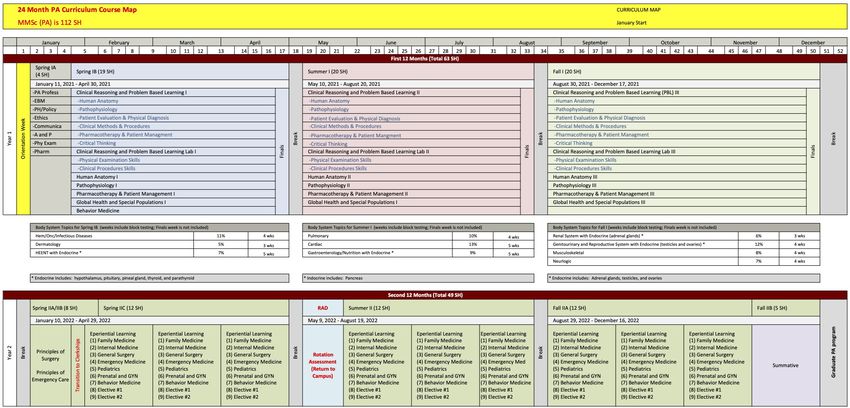
ARTICLE 22.0 CURRICULUM MAP/CLERKSHIP CONCEPT
March 12, 2020
Page 19 of 21GFU MMSc – PA Preceptor Handbook
ARTICLE 24.0 PRECEPTOR DEVELOPMENT
The PA Education Association, Committee on Clinical Education, has created a set of “One-Pagers for
Preceptors” to help streamline and enhance this essential experience. The one-pagers below combine
some of the committee’s own resources as well as some of the best precepting practices that are
outlined in the literature. These handy one-pagers offer time-tested methods for making the precepting
experience as efficient and rewarding as possible. Links can be accessed here:
• Incorporating students into patient care/workforce
http://paeaonline.org/wp-content/uploads/2017/02/Incorporating-Students-into-Patient-
CareWorkflow.pdf
• The one-minute preceptor
http://paeaonline.org/wp-content/uploads/2017/02/One-Minute-Preceptor.pdf
• Ask-tell-ask feedback model
http://paeaonline.org/wp-content/uploads/2017/02/Ask-Tell-Ask-Feedback-Model.pdf
• SNAPPS: a six step learner-centered approach to clinical education
http://paeaonline.org/wp-content/uploads/2017/02/SNAPPS.pdf
• Introducing/orienting a PA student to your practice
http://paeaonline.org/wp-content/uploads/2017/02/IntroducingOrienting-a-PA-Student.pdf
• Tailoring clinical teaching to an individual student
http://paeaonline.org/wp-content/uploads/2017/02/Tailoring-Clinical-Teaching.pdf
March 12, 2020
Page 20 of 21GFU MMSc – PA Preceptor Handbook
GFU MASTER OF MEDICAL SCIENCE CURRICULUM HANDBOOK REVIEW
The handbook has been reviewed and approved by the program Chair and Program, Director of Clinical
Education, and the Medical Director.
Approval Date
Original: March 12, 2020
Signature/s
Gregory Davenport, DHSc. PA-C
Chair for the School of Medical Science
Program Director for the PA Program
Review Process
The GFU MMSc Admissions Committee will gather and analyze data on a regular basis; the next annual
review, however, is set for December 2020.
March 12, 2020
Page 21 of 21You can also read


