Maternal Exposure to Particulate Matter during Pregnancy and Adverse Birth Outcomes in the Republic of Korea - MDPI
←
→
Page content transcription
If your browser does not render page correctly, please read the page content below
International Journal of
           Environmental Research
           and Public Health

Article
Maternal Exposure to Particulate Matter during
Pregnancy and Adverse Birth Outcomes in the
Republic of Korea
Yu Jin Kim 1 , In Gyu Song 2, * , Kyoung-Nam Kim 3,4 , Min Sun Kim 5 , Sung-Hoon Chung 6 ,
Yong-Sung Choi 1 and Chong-Woo Bae 6
 1    Department of Pediatrics, Kyung Hee University School of Medicine, Seoul 02447, Korea;
      yjyj42@gmail.com (Y.J.K.); feelhope@gmail.com (Y.-S.C.)
 2    Central Hospice Center, National Cancer Center, Goyang-si, Gyeonggi-do 10408, Korea
 3    Division of Public Health and Preventive Medicine, Seoul National University Hospital, Seoul 03080, Korea;
      kkn002@snu.ac.kr
 4    Department of Preventive Medicine, Seoul National University College of Medicine, Seoul 03080, Korea
 5    Department of Pediatrics, Seoul National University Hospital, Seoul 03080, Korea; singrumi@gmail.com
 6    Department of Pediatrics, Kyung Hee University Hospital at Gangdong, Kyung Hee University School
      of Medicine, Seoul 05278, Korea; pedc@khnmc.or.kr (S.-H.C.); baecw@khnmc.or.kr (C.-W.B.)
 *    Correspondence: pedigms@gmail.com

 Received: 22 January 2019; Accepted: 18 February 2019; Published: 21 February 2019

 Abstract: Air pollution has become a global concern due to its association with numerous health
 effects. We aimed to assess associations between birth outcomes in Korea, such as preterm births and
 birth weight in term infants, and particulate matter < 10 µm (PM10 ). Records from 1,742,183 single
 births in 2010–2013 were evaluated. Mean PM10 concentrations during pregnancy were calculated and
 matched to birth data by registered regions. We analyzed the frequency of birth outcomes between
 groups using WHO criteria for PM10 concentrations with effect sizes estimated using multivariate
 logistic regression. Women exposed to PM10 > 70 µg/m3 during pregnancy had a higher rate of
 preterm births than women exposed to PM10 ≤ 70 µg/m3 (7.4% vs. 4.7%, P < 0.001; adjusted odds
 ratio (aOR) 1.570; 95% confidence interval (CI): 1.487–1.656). The rate of low birth weight in term
 infants increased when women were exposed to PM10 > 70 µg/m3 (1.9% vs. 1.7%, P = 0.278), but this
 difference was not statistically significant (aOR 1.060, 95% CI: 0.953–1.178). In conclusion, PM10
 exposure > 70 µg/m3 was associated with preterm births. Further studies are needed to explore the
 pathophysiologic mechanisms and guide policy development to prevent future adverse effects on
 birth outcomes.

 Keywords: maternal exposure; particulate matter; preterm birth

1. Introduction
     Air pollution in the Republic of Korea (Korea) has been an issue for many years. In particular,
the particulate matter (PM) component of air pollution is becoming increasingly important due
to several factors, including geographical characteristics, the chemical evolution in Seoul, and
overcrowding in urban areas. In 2016, the United States National Aeronautics and Space
Administration, the Ministry of Environment in Korea, and the National Institute of Environmental
Research studied PM in Korea and released the Korea–United States Air Quality Study, reporting
that the PM emitted domestically may exceed the recommendations outlined in the World Health
Organization (WHO) air quality guidelines [1]. In previous studies, PM such as PM2.5 (fine inhalable
particles with diameters that are generally smaller than 2.5 µm) and PM10 (inhalable particles with

Int. J. Environ. Res. Public Health 2019, 16, 633; doi:10.3390/ijerph16040633      www.mdpi.com/journal/ijerph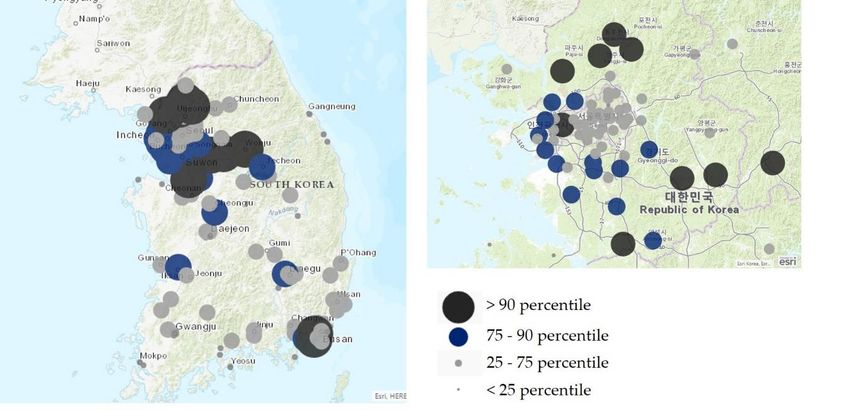
Int. J. Environ. Res. Public Health 2019, 16, 633                                                  2 of 10

diameters that are generally smaller than 10 µm) have been associated with increased mortality
and morbidity from multiple health conditions, including cardiovascular disease, lung cancer, acute
respiratory infections, asthma, and diabetes [2–9]. Moreover, other studies have reported that maternal
exposure to PM during pregnancy may increase the risk of preterm birth (gestational age < 37
weeks) [10–12]; low birth weight (birth weight < 2500 g) in term infants [13–15]; and congenital
malformation [16] through processes related to inflammation, oxidative stress, endocrine disruption,
and impaired oxygen transport across the placenta [17]. In addition, there have been several studies
reporting on the long-term effects of prenatal air pollution exposure on neurodevelopment and
respiratory outcomes [18,19].
     Preterm birth has short-term effects on respiratory, central nervous system, and cardiovascular
functions in the form of patent ductus arteriosus, respiratory distress syndrome, and intravascular
hemorrhage [20]. There are also, long-term consequences for physical health, neurodevelopment,
pulmonary function, and adult health (cerebral palsy, asthma, growth impairment, and hypertension) [21].
Preterm birth is the second-most common cause of mortality in children under five years of age, and
low-birth weight infants (LBWIs) have a 20-fold higher mortality rate than infants with a birth weight >
2500 g [22,23].
     Given the increasing attention on the relationship between exposure to PM and adverse birth
outcomes, this study aimed to assess the association of birth outcomes, such as preterm births and low
birth weight in term infants, with PM in ambient air pollutants in Korea. We used a cutoff value for PM
concentration of 70 µg/m3 to indicate high levels of exposure. This reference value of 70 µg/m3 was
based on the interim target-1 in the WHO air quality guidelines [1] and is associated with a 15% higher
long-term mortality risk relative to the guideline level of 20 µg/m3 . We hypothesized that air pollution
would be negatively associated with birth outcomes, particularly preterm births and low birth weight.

2. Materials and Methods

2.1. Study Design and Participants
      This nationwide registry-based study analyzed data from 1,862,441 live births in 2010–2013
registered in the Korean national birth registry. The birth weight of term infants and the proportions of
preterm births and low birth weight were analyzed according to the concentration of PM10 during
pregnancy. In Korea, all parents must report their child’s birth within 1 month and include the
following information: month and date of birth; maternal residential address at the time of birth; place
of birth (hospital or elsewhere); parental ages; gestational age (weeks and days); sex; birth weight;
birth order; total number of births; and parental education, occupation, and nationality. All data
were acquired from Statistics Korea [24], which offers data (except for date of birth and days of
gestational age, which are withheld for reasons of privacy protection) to all researchers who submit
the objective of a study to their website. Because the individual identifier number was removed from
the individual record to protect the privacy of the individuals, each birth record was treated as a
separate family member, even though a couple may have had more than one child during the study
period. Since multiple births are a major factor associated with preterm birth and low birth weight,
59,516 records (3.2%) involving multiple births were excluded. In addition, we excluded 1299 records
with a gestational age < 23 weeks or a birth weight of  4000 g (Figure 1). Thus,
this study evaluated data from 1,742,183 records.

2.2. Air Monitoring Data
    To assess PM10 exposure, we obtained daily mean levels from the National Health Insurance
Service (NHIS), which makes air pollution data available through its data sharing website [26].
The level of PM10 was measured using the ß-ray absorption method at 266 monitoring stations
Int. J. Environ. Res. Public Health 2019, 16, 633 3 of 10
scattered throughout Korea during 2009–2013 [27]. Residential addresses (city, county, district; or si,
gun, gu in Korean) at birth were utilized for spatial exposure assessment and assignment of PM10
concentrations during pregnancy were assigned according to the address; the study population was
postulated to be stable (did
Int. J. Environ. notHealth
Res. Public change)
2019, 16, x over the exposure time period. We 3 of 10 calculated monthly
averages of PM10 concentrations for each address and matched them to individuals
concentrations during pregnancy were assigned according to the address; the study population was based on their
postulated to be stable (did not change) over the exposure time period. We calculated monthly
gestational age. averages of PM concentrations for each address and matched them to individuals based on their
10
gestational age.
Figure 1. diagram
Figure 1. Flow Flow diagram of
ofthethe
study population.
study population.
2.3. Statistical Analysis
2.3. Statistical Analysis Using ArcGIS Maps for Office (ESRI Inc., Redlands, CA, USA), we visualized PM 10
concentrations and the proportion of preterm births in Korea according to addresses (city, county,
Using ArcGIS Maps for Office (ESRI Inc., Redlands, CA, USA), we visualized PM10 concentrations
district; or si, gun, gu) of monitoring stations and residences. We performed multiple linear
regression analysis to assess correlations between mean PM10 level and birth weight in term infants.
and the proportion of preterm births in Korea according to addresses (city, county, district; or si,
Multivariable logistic regression was used to assess the effect of PM 10 in each residential region on
gun, gu) of monitoring stations and residences. We performed multiple linear regression analysis
birth weight in term infants and preterm births. The mean PM10 concentrations were categorized in
two ways. First, we compared birth outcomes of subjects in the lower first to third quartiles with the
to assess correlations between mean PM level and birth weight in term infants. Multivariable
subjects in the fourth quartile. As the1075th percentile of the concentration was 54.5325 µ g/m 3, we
calculated odds ratios (ORs) using ≤54.5325 μg/m3 as the reference category. Second, proportions and
logistic regression was used to assess the effect of PM in each residential region on birth weight
ORs were analyzed based on ≤70 μg/m3, which is the interim 10 target-1 of the WHO [1]. To evaluate
in term infants and preterm births. The mean PM concentrations were categorized in two ways.
the difference between metropolitan areas (Seoul, Busan, Daegu, Incheon, Gwangju, Daejeon, and
10
Ulsan) and nonmetropolitan regions, we performed sensitivity analyses and assessed differences in
First, we compared birth outcomes of subjects in the lower first to third quartiles with the subjects
ORs among both regional groups. We estimated adjusted ORs (aORs) after controlling for variables
in the fourth quartile. As the 75th percentile of the concentration was 54.5325 µg/m3 , we calculated
known to affect birth outcomes [28–30], including season at birth, parity, and parental job, education
level, age, nationality, and residential region (capital region or not).
odds ratios (ORs) using ≤54.5325 µg/m3 as the reference category. Second, proportions and ORs
2.4. Ethics Statement
were analyzed based on ≤70 µg/m3 , which is the interim target-1 of the WHO [1]. To evaluate the
This study was granted ethical exemption by the institutional review board at Kyung Hee
difference between metropolitan areas
University Hospital (Seoul, (Seoul,
Korea), Busan,
since this Daegu,
was a secondary Incheon,
analysis Gwangju,
of de-identified data (IRB No. Daejeon, and Ulsan)
2018-01-091). The study was conducted in accordance with the Declaration of Helsinki.
and nonmetropolitan regions, we performed sensitivity analyses and assessed differences in ORs
3. Results
among both regional groups. We estimated adjusted ORs (aORs) after controlling for variables known
3.1. Demographic and Birth-Related Characteristics
to affect birth outcomes [28–30], including season at birth, parity, and parental job, education level,
Table 1 presents the baseline characteristics of the analyzed birth records. Overall, the mean ±
age, nationality, andstandard
residential
deviation region (capital
of gestational region
age and birth weightor not).
were 38.7 ± 1.5 weeks and 3200 ± 400 g,
2.4. Ethics Statement
This study was granted ethical exemption by the institutional review board at Kyung Hee
University Hospital (Seoul, Korea), since this was a secondary analysis of de-identified data (IRB No.
2018-01-091). The study was conducted in accordance with the Declaration of Helsinki.
3. Results
3.1. Demographic and Birth-Related Characteristics
Table 1 presents the baseline characteristics of the analyzed birth records. Overall, the mean
± standard deviation of gestational age and birth weight were 38.7 ± 1.5 weeks and 3200 ± 400 g,
respectively. Preterm infants accounted for 4.7% of neonates and LBWIs accounted for 3.8%. Rates of
preterm births and low birth weight increased over the observation period. Preterm births accounted
for 4.6% of births in 2010 and increased to 4.9% in 2013. Proportions of low birth weight among term
infants (28,728/1,659,659 × 100) were constant at 1.7% over the observation period.Int. J. Environ. Res. Public Health 2019, 16, 633 4 of 10
Table 1. Background characteristics of births between 2010 and 2013 in Korea.
Characteristics n (%) or Mean (SD) (n = 1,742,183)
Infant sex
Male 888,711 (51.0)
Female 853,472 (49.0)
Marital status
Married 1,703,795 (97.9)
Unmarried 36,857 (2.1)
Paternal age (years)
Mean 33.7 (4.6)Int. J. Environ. Res. Public Health 2019, 16, 633 5 of 10
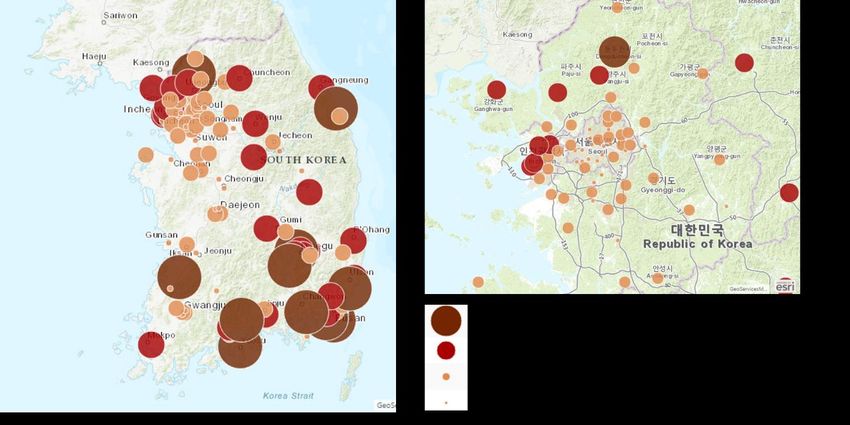
into quarters. Concentrations were high in the capital area and metropolitan areas. In the capital area,
the quality of air was worse in the west coast areas and rural areas that have factories than it was
in Seoul, the capital city. Figure 2b presents proportions of preterm birth by region. Preterm births
occurred more frequently in the west coast areas in the capital region and noncapital regions than
in Seoul.
Table 2. Distribution of particulate matter less than 10 µm (PM10 ) between 2009 and 2013 in Korea.
PM10 (µg/m3 ) 2009 2010 2011 2012 2013 Total
1st centile 12 10 9 10 13 11
25th centile 33 30 30 28 30 30
Median 46 45 44 40 43 44
Mean 53 51 50 45 49 50
75th centile 65 64 62 56 60 62
90th centile 91 88 84 76 82 84
99th centile 167 170 179 118 139 156
Range 155 160 170 108 126 145
Int. J. Environ. Res. Public Health 2019, 16, x 6 of 10
(a)
(b)
FigureFigure
2. (a) 2. (a)Distribution
Distribution of particulate
of particulate matterless
matter lessthan
than10
10µm
μm in
in Korea.
Korea. (b)
(b) Distribution
Distributionofofpreterm
preterm
birthsbirths in Korea.
in Korea.
Table 3. Associations of low birth weight in term infants and preterm births with quartiles of
particulate matter less than 10 µ m (PM10) and the interim target-1 of WHO (≤70 µ g/m3).
Exposure Proportion (%) P-value Adjusted OR (95% CI)
Low 1st–3rd 1.7Int. J. Environ. Res. Public Health 2019, 16, 633 6 of 10
3.3. PM10 and Birth Outcomes
A 10 µg/m3 increase in concentration of PM10 during pregnancy was associated with a 1 g
decrease in birth weight among term infants (P = 0.001). The proportion of low birth weight in term
infants was higher when the exposure to mean PM10 concentration was >70 µg/m3 than it was when
exposure was ≤70 µg/m3 (1.9% vs. 1.7%), although the aOR was not significantly higher than the
reference group (aOR: 1.060, 95% confidence interval (CI): 0.953–1.178, P = 0.283) (Table 3). Women in
the highest quartile had higher odds of preterm birth compared with women in the lower three quartiles
(54.5325 µg/m3 or less) of PM10 exposure (aOR: 1.044, 95% CI: 1.025–1.062, P < 0.001). In particular,
women exposed to PM10 >70 µg/m3 during pregnancy had a significantly higher proportion of preterm
births (7.4% vs. 4.7%) than those exposed to ≤70 µg/m3 (aOR: 1.570, 95% CI: 1.487–1.656, P < 0.001).
The aOR for the relationship between exposure to PM10 >70 µg/m3 for very preterm births (gestational
age less than 32 weeks) was also statistically significant (aOR: 1.966, 95% CI: 1.776–2.177, P < 0.001)
(Table 3).
Table 3. Associations of low birth weight in term infants and preterm births with quartiles of particulate
matter less than 10 µm (PM10 ) and the interim target-1 of WHO (≤70 µg/m3 ).
Exposure Proportion (%) P-Value Adjusted OR (95% CI)
1st–3rd 1.7
Low birthweights in 4th 1.8 0.495 1.010 (0.981–1.040)
term infants ≤70 µg/m3 1.7
>70 µg/m3 1.9 0.283 1.060 (0.953–1.177)
1st–3rd 4.7
4th 4.9 70 µg/m3 7.4Int. J. Environ. Res. Public Health 2019, 16, 633 7 of 10
4. Discussion
Using a nationwide registry-based study, we analyzed the associations of between preterm births
and birth weight of term infants and exposure concentrations of PM10 during pregnancy.
Our results indicate that exposure to PM10 > 70 µg/m3 during pregnancy may be associated with
preterm births. There is an ongoing debate regarding the health effects of exposure to PM10 during
pregnancy, but our results are consistent with most other studies [11,12]. Our results regarding the
association of higher PM10 concentrations and increased preterm birthrate closely agree with several
previous studies on the effects of PM10 exposure on preterm birth in a restricted area in Korea [31,32].
However, unlike previous research, this study analyzed not only the distribution of PM but also the
specific standard of 70 µg/m3 , which is associated with a higher long-term mortality risk according to
the WHO [1]. When the results are visualized geographically, it is clear that preterm births occurred
more frequently in west coast areas, and some rural cities in the capital area where there are many more
factories than in Seoul. Moreover, exposure to PM10 > 70 µg/m3 during pregnancy was significantly
associated with very preterm births. In addition, mean exposure to PM10 > 70 µg/m3 resulted in
significantly elevated adjusted odds ratios regardless of whether the location was a metropolitan or
nonmetropolitan area.
Finally, we found a tendency for increases in PM10 to be associated with increased risk of adverse
birth outcomes such as low birth weight in term infants. Our data showed a statistically significant
(P = 0.001) 1 g decrease in birth weight among term infants per 10 µg/m3 increase in PM10 exposure
during pregnancy. This tendency is consistent with previous research, but the changes in birth
weight described previously have been so modest that they may have little clinical importance [33,34].
The proportion of low birth weight in term infants was higher in areas where the mean PM10
concentration was >70 µg/m3 , but the association was not statistically significant, as measured
by the aOR.
Although NHIS data showed a decline in PM10 concentration over a five-year period, ambient air
pollutants—specifically particulate matter—remain a burden on the economy and human society in
Korea and worldwide. The Global Burden of Disease, Injuries, and Risk Factors Study of 2016 identified
air pollution, especially ambient air pollution, as the sixth leading risk factor for global disease [35].
At the same time, according to 2016 data from the Korean National Statistical Office (KNSO), the
frequency of preterm births at a gestational age of 2500 g). Therefore, policies are
needed to ameliorate modifiable factors for adverse birth outcomes, such as air pollution, to reduce
the preterm birthrate and the rate of LBWIs. A campaign is needed to educate the public, especially
pregnant women and their families, on methods to reduce or avoid PM.
Our study had several strengths, including adjustment for a number of covariates, including
maternal age, parity, infant sex, and parental employment, which have been associated with adverse
birth outcomes in previous reports [28–30]. In addition, our analysis was based on the specific criteria
of 70 µg/m3 of PM10 , which is relevant to higher risks. However, it is important to note some
limitations. First, when we discuss the association between PM and adverse birth effects, such as
preterm birth and low birth weight, we should consider other factors that may affect birth results.
These include the family history of preterm births, maternal smoking history, low maternal body
mass index, prior preterm birth, medical and pregnancy history, occupational exposure, and other
factors. These factors could not be analyzed due to the unavailability of the necessary data. Second,
until recently, the concentrations of PM10 and PM2.5 , which is also thought to be related to adverse
birth outcomes, had not been measured in Korea [13,14,36,37]. Because there are various types of air
pollutants, including SO2 , O3 , and NO2 , comprehensive analyses of the effects of pollutants beyond
PM10 on birth outcomes are warranted. Lastly, this study did not analyze results by trimester becauseInt. J. Environ. Res. Public Health 2019, 16, 633 8 of 10
detailed data regarding birth history were not available from the KNSO. There was also no data
regarding the date of birth or the day of gestational age; therefore, there was no possibility of dividing
pregnancies into trimesters.
In April 2017, The Lancet published The Lancet Planetary Health to assess the effects of
environment change on human health, but also to investigate other factors such as political, economic,
and social systems that govern those effects [38]. This reflects the increasing global emphasis on the
importance of the environment on human health.
5. Conclusions
In conclusion, we found that exposure to ambient air pollutants during pregnancy, especially
PM10 , was associated with an increased rate of preterm births. Future research priorities should include
explorations of the pathophysiological mechanism behind this association. Long-term, multifaceted
studies are also needed to guide development of policies to prevent the adverse effects of air pollutants
on birth outcomes in the future.
Author Contributions: Conceptualization: Y.J.K., I.G.S.; methodology: Y.J.K., I.G.S., K.-N.K., M.S.K.; formal
analysis: I.G.S.; writing—original draft preparation: Y.J.K.; writing—review and editing: Y.J.K., I.G.S., M.S.K.,
K.-N.K., S.-H.C., Y.-S.C., C.-W.B.; approval of final manuscript: all authors.
Funding: This research received no external funding.
Conflicts of Interest: The authors declare no conflict of interest.
References
1. World Health Organization. Air Quality Guidelines: Global Update 2005. Particulate Matter, Ozone, Nitrogen
Dioxide and Sulfur Dioxide; World Health Organization: Geneva, Switzerland, 2006.
2. Brook, R.D.; Rajagopalan, S.; Pope, C.A.; Brook, J.R.; Bhatnagar, A.; Diez-Roux, A.V.; Holguin, F.; Hong, Y.;
Luepker, R.V.; Mittleman, M.A.; et al. Particulate matter air pollution and cardiovascular disease: An update
to the scientific statement from the American Heart Association. Circulation 2010, 121, 2331–2378. [CrossRef]
[PubMed]
3. Du, Y.; Xu, X.; Chu, M.; Guo, Y.; Wang, J. Air particulate matter and cardiovascular disease: The epidemiological,
biomedical and clinical evidence. J. Thorac. Dis. 2016, 8, E8–E19. [PubMed]
4. Raaschou-Nielsen, O.; Andersen, Z.; Beelen, R.; Samoli, E.; Stafoggia, M.; Weinmayr, G.; Hoffmann, B.;
Fischer, P.; Nieuwenhuijsen, M.J.; Brunekreef, B.; et al. Air pollution and lung cancer incidence in 17
European cohorts: Prospective analyses from the European Study of Cohorts for Air Pollution Effects
(ESCAPE). Lancet Oncol. 2013, 14, 813–822. [CrossRef]
5. Eze, I.C.; Hemkens, L.G.; Bucher, H.C.; Hoffmann, B.; Schindler, C.; Künzli, N.; Schikowski, T.;
Probst-Hensch, N.M. Association between ambient air pollution and diabetes mellitus in Europe and North
America: Systematic review and meta-analysis. Environ. Health Perspect. 2015, 123, 381–389. [CrossRef]
[PubMed]
6. Andersen, Z.J.; Hvidberg, M.; Jensen, S.S.; Ketzel, M.; Loft, S.; Sørensen, M.; Tjønneland, A.; Overvad, K.;
Raaschou-Nielsen, O. Chronic obstructive pulmonary disease and long-term exposure to traffic-related air
pollution: A cohort study. Am. J. Respir. Crit. Care Med. 2011, 183, 455–461. [CrossRef] [PubMed]
7. Raaschou-Nielsen, O.; Andersen, Z.J.; Hvidberg, M.; Jensen, S.S.; Ketzel, M.; Sørensen, M.; Hansen, J.;
Loft, S.; Overvad, K.; Tjønneland, A. Air pollution from traffic and cancer incidence: A Danish cohort study.
Environ. Health 2011, 10, 67. [CrossRef] [PubMed]
8. Kang, D.; Kim, J.E. Fine, ultrafine, and yellow dust: Emerging health problems in Korea. J. Korean Med. Sci.
2014, 29, 621–622. [CrossRef]
9. Kim, B.J.; Hong, S.J. Ambient air pollution and allergic diseases in children. Korean J. Pediatr. 2012, 55, 185–192.
[CrossRef]
10. Zhao, N.; Qiu, J.; Zhang, Y.; He, X.; Zhou, M.; Li, M.; Xu, X.; Cui, H.; Lv, L.; Lin, X.; et al. Ambient air
pollutant PM10 and risk of preterm birth in Lanzhou, China. Environ. Int. 2015, 76, 71–77. [CrossRef]Int. J. Environ. Res. Public Health 2019, 16, 633 9 of 10
11. Leem, J.-H.; Kaplan, B.M.; Shim, Y.K.; Pohl, H.R.; Gotway, C.A.; Bullard, S.M.; Rogers, J.F.; Smith, M.M.;
Tylenda, C.A. Exposures to air pollutants during pregnancy and preterm delivery. Environ. Health Perspect.
2006, 114, 905–910. [CrossRef]
12. Brauer, M.; Lencar, C.; Tamburic, L.; Koehoorn, M.; Demers, P.; Karr, C. A cohort study of traffic-related air
pollution impacts on birth outcomes. Environ. Health Perspect. 2008, 116, 680–686. [CrossRef] [PubMed]
13. Fleischer, N.L.; Merialdi, M.; van Donkelaar, A.; Vadillo-Ortega, F.; Martin, R.V.; Betran, A.P.; Souza, J.P.;
O’Neill, M.S. Outdoor air pollution, preterm birth, and low birth weight: Analysis of the world health
organization global survey on maternal and perinatal health. Environ. Health Perspect. 2014, 122, 425–430.
[CrossRef] [PubMed]
14. Pedersen, M.; Giorgis-Allemand, L.; Bernard, C.; Aguilera, I.; Andersen, A.-M.N.; Ballester, F.; Beelen, R.M.;
Chatzi, L.; Cirach, M.; Danileviciute, A.; et al. Ambient air pollution and low birth weight: A European
cohort study (ESCAPE). Lancet Respir. Med. 2013, 1, 695–704. [CrossRef]
15. Seo, J.-H.; Leem, J.-H.; Ha, E.-H.; Kim, O.-J.; Kim, B.-M.; Lee, J.-Y.; Park, H.S.; Kim, H.C.; Hong, Y.C.; Kim, Y.J.
Population-attributable risk of low birth weight related to PM10 pollution in seven Korean cities. Paediatr.
Perinat. Epidemiol. 2010, 24, 140–148. [CrossRef] [PubMed]
16. Farhi, A.; Boyko, V.; Almagor, J.; Benenson, I.; Segre, E.; Rudich, Y.; Stern, E.; Lerner-Geva, L. The possible
association between exposure to air pollution and the risk for congenital malformations. Environ. Res. 2014,
135, 173–180. [CrossRef] [PubMed]
17. Shah, P.S.; Balkhair, T. on behalf of Knowledge Synthesis Group on Determinants of Preterm/LBW births.
Air pollution and birth outcomes: A systematic review. Environ. Int. 2011, 37, 498–516. [PubMed]
18. Perera, F.P.; Rauh, V.; Whyatt, R.M.; Tsai, W.Y.; Tang, D.; Diaz, D.; Hoepner, L.; Barr, D.; Tu, Y.H.; Camann, D.;
et al. Effect of prenatal exposure to airborne polycyclic aromatic hydrocarbons on neurodevelopment in
the first 3 years of life among inner-city children. Environ. Health Perspect. 2006, 114, 1287–1292. [CrossRef]
[PubMed]
19. Leon Hsu, H.H.; Mathilda Chiu, Y.H.; Coull, B.A.; Kloog, I.; Schwartz, J.; Lee, A.; Wright, R.O.; Wright, R.J.
Prenatal particulate air pollution and asthma onset in urban children. Identifying sensitive windows and sex
differences. Am. J. Respir. Crit. Care Med. 2015, 192, 1052–1059. [CrossRef] [PubMed]
20. Stoll, B.J.; Hansen, N.I.; Bell, E.F.; Shankaran, S.; Laptook, A.R.; Walsh, M.C.; Hale, E.C.; Newman, N.S.;
Schibler, K.; Carlo, W.A.; et al. Neonatal outcomes of extremely preterm infants from the NICHD Neonatal
Research Network. Pediatrics 2010, 126, 443–456. [CrossRef] [PubMed]
21. Luu, T.M.; Rehman Mian, M.O.; Nuyt, A.M. Long-term impact of preterm birth: Neurodevelopmental and
physical health outcomes. Clin. Perinatol. 2017, 44, 305–314. [CrossRef] [PubMed]
22. WHO. Child Mortality and Causes of Death. 2013. Available online: http://www.who.int/gho/child_
health/mortality/neonatal_text/en/ (accessed on 15 June 2018).
23. Lee, J.J. The low birth weight rate in Korea. Korean J. Perinatol. 2009, 20, 1–5.
24. Birth Trend Statistics in the Republic of Korea. Updated 2018. Available online: http://kosis.kr/statisticsList/
statisticsListIndex.do?menuId=M_01_01&vwcd=MT_ZTITLE&parmTabId=M_01_01?menuId=M_01_01&
vwcd=MT_ZTITLE&parmTabId=M_01_01&parentId=A#SubCont (accessed on 15 June 2018).
25. NRP Neonatal Resuscitation Textbook, 6th ed.; English Version; American Heart Association: Chicago, IL,
USA, 2011.
26. Korea Environment Public Corporation Air Pollution Information Inquiry Service. Updated 2018. Available
online: https://www.data.go.kr/dataset/15000581/openapi.do?lang=en (accessed on 12 July 2017).
27. Air Quality Standards. Updated 2015. Available online: http://www.airkorea.or.kr/airStandardKorea
(accessed on 15 June 2018).
28. Parker, J.D.; Schoendorf, K.C.; Kiely, J.L. Associations between measures of socioeconomic status and low
birth weight, small for gestational age, and premature delivery in the United States. Ann. Epidemiol. 1994,
4, 271–278. [CrossRef]
29. Shin, S.H.; Lim, H.-T.; Park, H.-Y.; Park, S.M.; Kim, H.-S. The associations of parental under-education
and unemployment on the risk of preterm birth: 2003 Korean National Birth Registration database. Int. J.
Public Health 2012, 57, 253–260. [CrossRef]
30. Song, I.G.; Kim, M.S.; Shin, S.H.; Kim, E.-K.; Kim, H.-S.; Choi, S.; Kwon, S.; Park, S.M. Birth outcomes of
immigrant women married to native men in the Republic of Korea: A population register-based study.
BMJ Open 2017, 7, e017720. [CrossRef] [PubMed]Int. J. Environ. Res. Public Health 2019, 16, 633 10 of 10
31. Kim, O.-J.; Ha, E.-H.; Kim, B.-M.; Seo, J.-H.; Park, H.-S.; Jung, W.-J.; Lee, B.E.; Suh, Y.J.; Kim, Y.J.; Lee, J.T.;
et al. PM10 and pregnancy outcomes: A hospital-based cohort study of pregnant women in Seoul. J. Occup.
Environ. Med. 2007, 49, 1394–1402. [CrossRef]
32. Suh, Y.J.; Kim, H.; Seo, J.H.; Park, H.; Kim, Y.J.; Hong, Y.C.; Ha, E.H. Different effects of PM10 exposure on
preterm birth by gestational period estimated from time-dependent survival analyses. Int. Arch. Occup.
Environ. Health 2009, 82, 613–621. [CrossRef]
33. Merklinger-Gruchala, A.; Kapiszewska, M. Association between PM10 air pollution and birth weight after
full-term pregnancy in Krakow city 1995–2009—Trimester specificity. Ann. Agric. Environ. Med. 2015,
22, 265–270. [CrossRef]
34. Han, Y.; Ji, Y.; Kang, S.; Dong, T.; Zhou, A.; Zhang, Y.; Chen, M.; Wu, W.; Tang, Q.; Chen, T.; et al. Effects
of particulate matter exposure during pregnancy on birth weight: A retrospective cohort study in Suzhou,
China. Sci. Total Environ. 2018, 615, 369–374. [CrossRef]
35. Collaborators GBDRF. Global, regional, and national comparative risk assessment of 84 behavioural,
environmental and occupational, and metabolic risks or clusters of risks, 1990–2016: A systematic analysis
for the Global Burden of Disease Study 2016. Lancet 2017, 390, 1345–1422. [CrossRef]
36. Stieb, D.M.; Chen, L.; Eshoul, M.; Judek, S. Ambient air pollution, birth weight and preterm birth:
A systematic review and meta-analysis. Environ. Res. 2012, 117, 100–111. [CrossRef]
37. Ibrahimou, B.; Salihu, H.M.; Gasana, J.; Owusu, H. Risk of low birth weight and very low birth weight from
exposure to particulate matter (PM2.5) speciation metals during pregnancy. Gynecol. Obstet. 2014, 4, 244.
[CrossRef]
38. The Lancet Planetary Health. Welcome to The Lancet Planetary Health. Lancet Planet. Health 2017, 1, e1.
[CrossRef]
© 2019 by the authors. Licensee MDPI, Basel, Switzerland. This article is an open access
article distributed under the terms and conditions of the Creative Commons Attribution
(CC BY) license (http://creativecommons.org/licenses/by/4.0/).You can also read


