Meat of the Future - Association for Women in Science
←
→
Page content transcription
If your browser does not render page correctly, please read the page content below
feature
     pioneers in food science

     These Women Are Making the Plant-Based
     Meat of the Future >

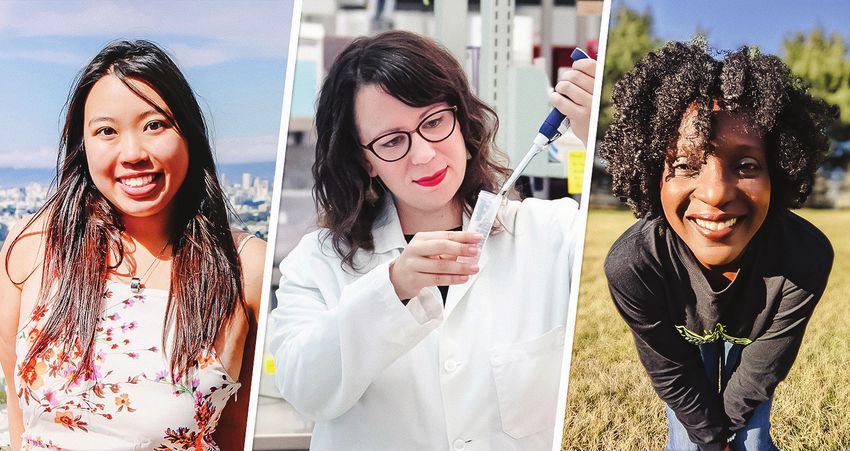
            Kimberlie Le, CEO and             Laura Kliman, Senior Food Scientist,                Cynthia Betterson, Innovator at
           Co-founder, Prime Roots                     Impossible Foods                               Everything Legendary

                                         Reprinted with permission from LIVEKINDLY | livekindly.com

                                                     By Kat Smith, guest writer

     I
        n December 1903, physicist and          computer in the 1940s and made her a            of women and men in the field.
        chemist Marie Curie became the          figurehead for women in technology.             According to data from the National
        first woman in history to earn a        West Virginia-born mathematician                Science Board, women make up just
     Nobel Prize, for her breakthrough          Katherine G. Johnson’s work was                 28 percent of the STEM field. Breaking
     research in radioactivity. Augusta         critical to the first U.S.-crewed               that down even further, white women
     Ada King, the daughter of poet Lord        spaceflights and has been recognized            hold the majority of those jobs.
     Byron and better known as Ada              as one of the first African-American
     Lovelace, is referred to as “the first     women to work for NASA.                         The American Association of University
     computer programmer.” The British                                                          Women points to a few reasons why this
     mathematician’s translation and            These are just a few examples; women            may be the case. The belief that men
     personal notes on Charles Babbage’s        have long been pioneers in the field of         are innately superior at understanding
     Analytical Engine—a prototype for          science, technology, engineering, and           math and science remains persistent.
     a mechanical computer—inspired             mathematics (STEM). But, there’s still          This feeds into another reason, which is
     Alan Turing’s work on the first modern     a huge disparity between the number             that many people still believe that girls

32   association for women in science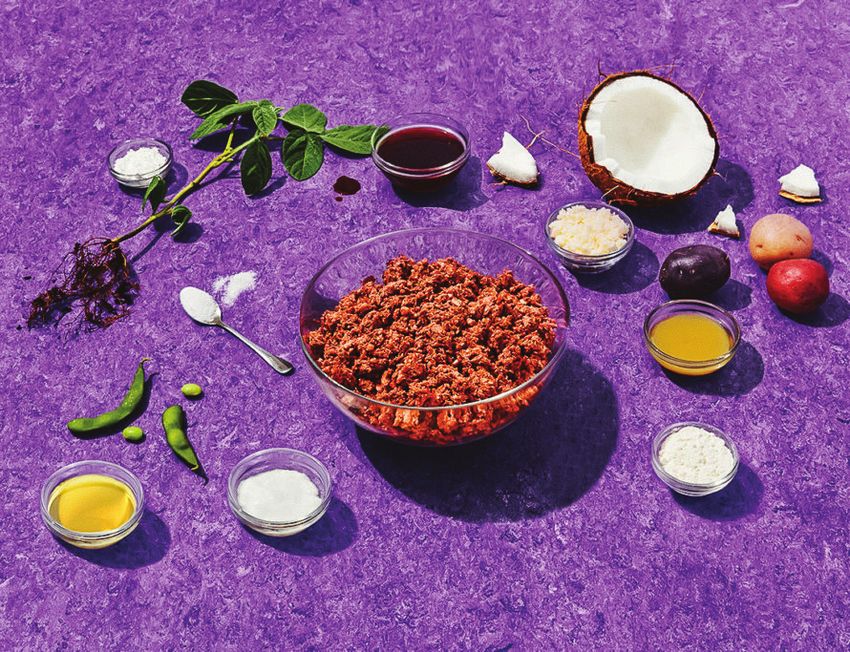
feature
                                                                                                         pioneers in food science

                                                                Women are leading innovators in the food tech space. | Impossible Foods

are “just not that interested” in science     Women in Food Tech                           The more diversity we see in the food
and math. Shelley Correll, a professor        Food technology is a fast-growing            tech space—particularly in positions
of sociology at Stanford University,          field that’s increasingly being              of leadership and job creation—
has extensively studied and spoken            recognized for its potential to address      directly leads to more representation
on how these beliefs are linked to the        a wide range of global issues, ranging       overall.
underrepresentation of women in STEM.         from the climate crisis to food
                                              insecurity. Like many other STEM             Across the broad scope of food tech—
The third reason is linked to issues          industries, it’s largely dominated           from cell-based meat innovations
in the workplace. Women are more              by white men. But, as with much of           to developing plant-based protein
likely to encounter the “motherhood           history, women are leading innovators        to bioengineering—women are
penalty”—being less likely to be hired        in the space.                                influencing the future of food. And
if they are married with children. And                                                     they all deserve their moment in the
implicit biases such as viewing STEM          And the representation of women in           spotlight. This is our first in a series on
fields as traditionally “masculine,”          tech is growing. A reason why we’re          women in food tech.
continue to hinder women. Sexism              seeing more women starting food
that’s so ingrained in our culture that       tech companies, investing in food            LIVEKINDLY spoke with three women
the white cis heterosexual patriarchy         technology, innovating with plant-           from the field of food science about
may fail to realize is there. A 2020 recent   based proteins, launching brands, and        their love for innovation and their
study from New York University found          researching better science to make           journey to their careers.
that men are more likely to be seen as        us all healthier comes down to one
“brilliant,” which is likely to hold women    factor: representation.
back from certain career choices.

                                                                                                         awis magazine • summer 2021      33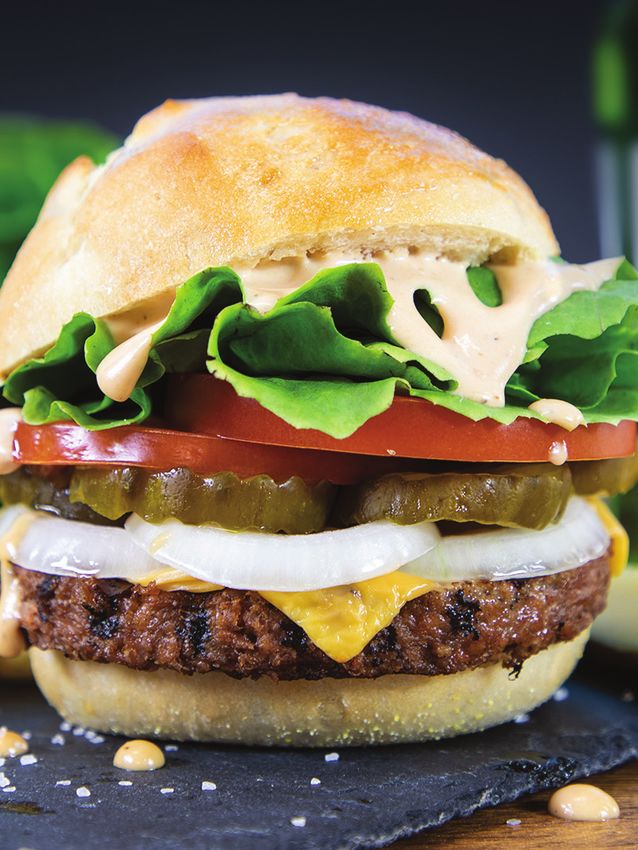
feature
     pioneers in food science

                                                                                             >
                                                                              “I think the stat that really
                                                                             woke me up was how animal
                                                                             agriculture accounts for more
                                                                              greenhouse gas emissions
                                                                                than all transportation
                                                                                  combined,” Le says.

      Prime Roots

     Kimberlie Le, CEO and Co-founder,        the environmental impact of animal        sake, and soybeans and wheat into
     Prime Roots                              agriculture until she began studying      soy sauce.
     Kimberlie Le is the CEO and co-          microbiology at the University of
     founder of Prime Roots, a Bay Area,      California, Berkeley. “I think the stat   Le’s first memories of koji go back
     California-based company that makes      that really woke me up was how            to when she was just five-years-old,
     plant-based proteins like bacon, beef,   animal agriculture accounts for more      helping her mother ferment rice wine
     and chicken.                             greenhouse gas emissions than all         and other rice products. So, koji had
                                              transportation combined,” she says.       always been familiar to her, and when
     The daughter of two restaurateurs, Le                                              Le began thinking about how she
     tells LIVEKINDLY that she has had a      So, Le began looking for more sustain-    could recreate foods people love, it
     connection to food since a very young    able alternatives to meat and found       quickly moved to the forefront.
     age. “Some of my earliest memories       the number of direct replacements to
     are just me sitting next to boxes of     the foods she loved the most, such as     Koji naturally grows into long, stringy
     produce and boxes of food that were      bacon. Like many people in the world,     fibers that resemble the strands of
     bigger than me,” she says.               Le didn’t grow up vegan or vegetar-       muscle fiber in meat, like chicken
                                              ian—the meals she and her family          breast. When it’s used to make miso,
     Having such a close relationship with    enjoyed put meat at the center of the     koji is placed on the soybeans. Over
     the restaurant industry also gave her    plate. Getting people to eat less meat    time, it transforms the soybeans into
     an appreciation of food. She learned     would mean taking matters into her        an umami-rich paste.
     how to chop food from her mother, a      own hands.“And so I just wanted to
     chef, and was always “very intimately    make things for myself,” says Le.         Prime Roots feeds the koji nutrients
     involved in the creation of food.”                                                 (mostly simple sugars) so that it
                                              Le found her answer in koji, a fungi      grows into fibers, “and then we can
     Le learned about where food came         that has been used in Japanese            take those fibers and turn them into
     from as her family interacted directly   cuisine for thousands of years to         everything from bacon to seafood to
     with farmers. But, she didn’t realize    ferment soybeans into miso, rice into     chicken,” Le explains.

34   association for women in science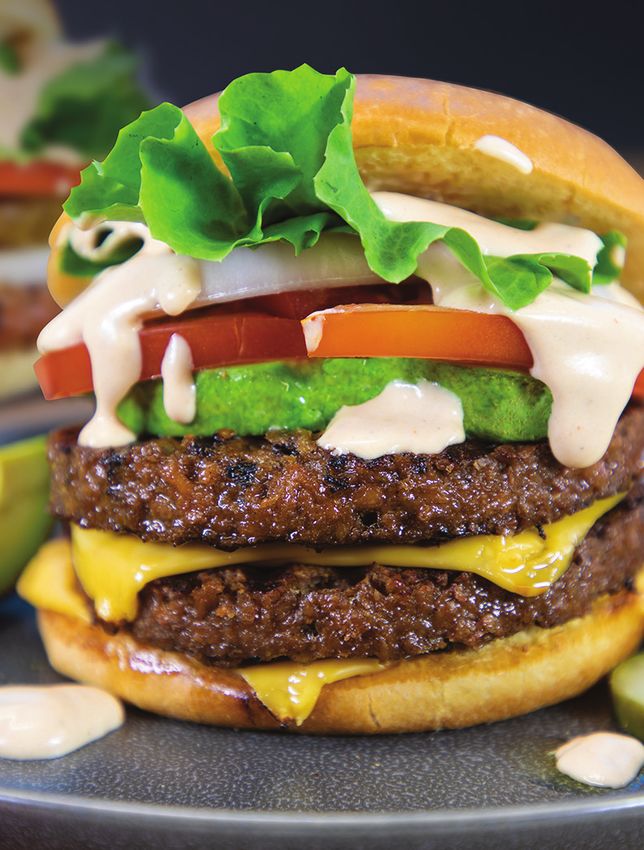
feature
                                                                                                        pioneers in food science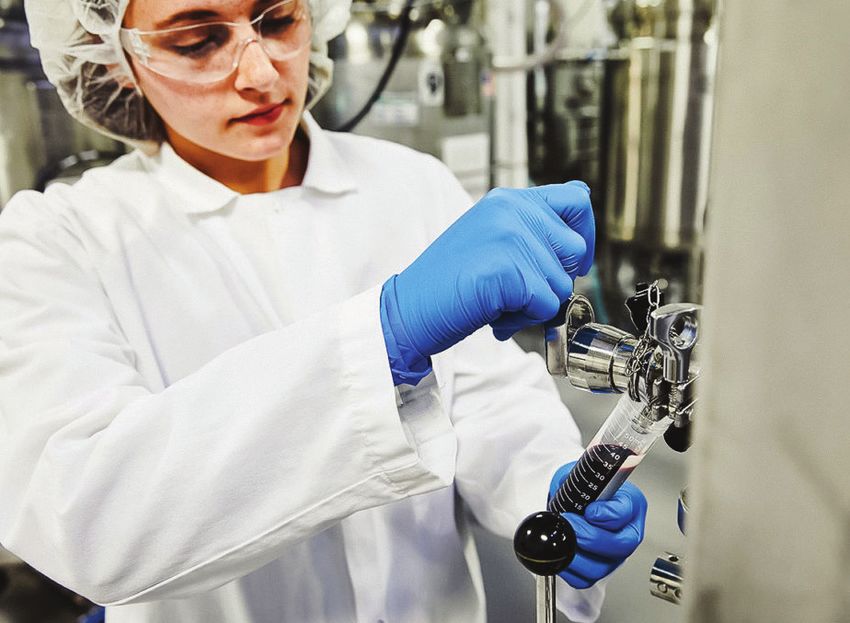
feature
     pioneers in food science

                                                                                       Everything Legendary

                                                                                                              <
                                                                                                              “This is exciting
                                                                                                              work for me
                                                                                                              and creates
                                                                                                              something
                                                                                                              exceptional for
                                                                                                              consumers.”
                                                                                                              says Cynthia
                                                                                                              Betterson of
                                                                                                              Everything
                                                                                                              Legendary.

     as a pastry chef and starting her own      conventional meat, companies that           “It has always captivated me that
     catering company. In 2016, she read        produce plant-based food have the           chemistry is literally everywhere, and
     an article about Impossible Foods on       ability to upgrade and improve their        humans have experimented with
     NPR. “It was the perfect combination       recipes.                                    different ways of preparing foods
     of the three things I loved most:                                                      since we first came into existence.
     chemistry, sustainability, and cooking,”   “So we continue to innovate and             Now we have the ability to understand
     she says. She began working for the        come out with brand new products            those experiments at the molecular
     company that year.                         and improved versions of our current        level, and use that knowledge to
                                                products,” she says.                        make delicious foods that will save the
     “I had been focused on solving                                                         planet!”
     problems related to energy, when           “We not only have the ability to
     actually the most energy-intensive         understand the specific chemical            Cynthia Betterson, Innovator at
     and inefficient technology humans          reactions that are going on when we         Everything Legendary
     use today is producing food from           cook food—we can also uncover what          Cynthia Betterson’s love for science
     animals,” Kliman explains.                 the most important flavor compounds         started curiosity and a love for
                                                are for the best sensory experience.        problem-solving.
     At Impossible Foods, Kliman has led        Then we can modify our products
     the R&D teams that developed the           in order to select for those delicious      “Growing up my mother was
     2.0 version of the company’s flagship      flavors, or remove an undesirable           extraordinarily healthy for the time,”
     product, the Impossible Burger, as well    flavor,” Kliman explains.                   Betterson tells LIVEKINDLY. Her
     as the development of the Impossible                                                   household was stocked with fruits and
     Sausage that’s now available in a          Applying this same strategy, Kliman         vegetables but processed snacks, not
     Starbucks breakfast sandwich.              says that you could even create meat        so much. Soda, except for a very rare
                                                that tastes better than anything we         occasion, was right out, but it’s the
     Kliman has also worked on what             have tasted from animals.                   sweet, bubbly beverage that sparked
     are called “product extensions, like                                                   Betterson’s fascination with how food
     developing the specific format for                                                     is made.
     the patties we sell in retail.” Unlike

36   association for women in science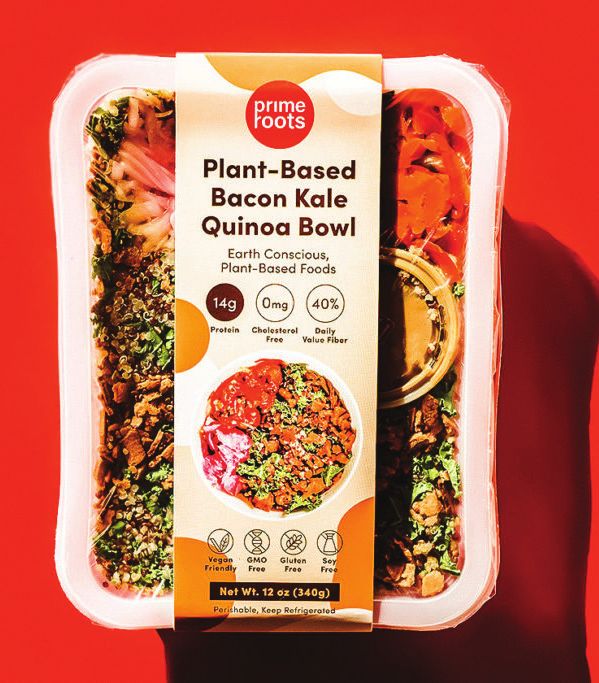
feature
                                                                                                  pioneers in food science

“[My mother] would split an 8 ounce
                                           >
                                           “I wasn’t interested in the               Cuban on ABC’s Shark Tank, who
can amongst me and my 5 siblings,”                                                   remarked on the flavor and texture.
Betterson reminisces. “I recall on         culinary aspect of foods
one occasion, she gave us 7 Up. My                                                   “Everything Legendary is coloring
portion was just a little more than an     but the scientific one. I was             outside of the lines, they are charting
ounce, but when I drank it, my mind        curious how the bubbles                   their own path to something
went wild!”                                                                          extraordinary,” says Betterson.
                                           were formed in the soda.
It was in that moment that Betterson                                                 She adds that she loves the fast-paced
told herself that she needed to learn      I was interested in how                   nature of working for a small company
to make soda herself. And so, she                                                    (“The approval process includes no
followed her curiosity into the kitchen:
                                           a clear beverage that                     more than five individuals.”)
“I wasn’t interested in the culinary       resembled water could
aspect of foods but the scientific one.                                              And better, yet, she gets to see her
I was curious how the bubbles were         taste so delicious. I was                 impact firsthand, and she loves the
formed in the soda. I was interested in                                              challenges that come with working for
how a clear beverage that resembled        curious how they got the                  the maverick startup.
water could taste so delicious. I was
                                           cream inside of the middle
curious how they got the cream                                                       “The company is made up of
inside of the middle of the Twinkie.       of the Twinkie.                           individuals who are not from the food
Questions like this hit me all of the                                                industry, a group of young millennials
time and I would go into the kitchen                                                 who are saying let’s change the
as a young child 7 and 8 years old         products to market. Her connections       world. Everything Legendary team is
and conduct experiments, trying to         eventually led her to a job posting at    unaware of the ‘how things are done’
recreate these things. Always failing      Everything Legendary.                     in the food industry. This creates a
miserably but never quitting.”                                                       blank slate that challenges me as a
                                           “Chef Jumoke [Jackson] reached out        food industry veteran to push the
In high school, Betterson excelled         to his LinkedIn network in search of      boundaries of our work in an effort to
at math and science, leading her to        a food scientist,” she says. The Largo,   make new and great things.” =
architectural engineering. But it wasn’t   Maryland-based startup had created
quite what she was looking for and         a plant-based burger made from soy,       Kat Smith is the managing editor of
so she paid a visit to her University of   but it sought to convert it to a pea-     LIVEKINDLY and writes about sustainable
Minnesota college advisor. “I told her     based version.                            food, fashion, and food technology. They
that I wanted to wear a white lab coat,                                              have a BA in Cinema and Culture Studies
have a clipboard, and see food moving      “Chef had the culinary angle nailed,      from Stony Brook University.
across a conveyor belt. She advised        but needed a solve for the texture
me that I wanted to be a food scientist    issues that come with a pea-based
and I promptly changed my major.”          burger. He went to college with my
                                           cousin and when she saw his request,
Betterson’s resume includes 25 years       she pointed him in my direction,” says
of working for some of the world’s         Betterson. The brand’s pea-based
top food brands—The Kraft Heinz            burger is already on the market—and
Company, ConAgra, the Campbell             it helped the scrappy startup nab
Soup Company, and Perdue Farms—,           a $300,000 investment from Mark
where she brought innovative new

                                                                                                  awis magazine • summer 2021   37
You can also read


