Media Spectacle and the 2008 Presidential Election: Some Pre-election Reflections
←
→
Page content transcription
If your browser does not render page correctly, please read the page content below
Mediascape                                                                                                                11/17/08 10:25 AM

                                                                                                    email address

             Media Spectacle and the 2008 Presidential
             Election: Some Pre-election Reflections
             By Douglas Kellner
                                              Download as .PDF

             The mainstream corporate media today in the United States process events, news, and information in the form of
             media spectacle. 1 In an arena of intense competition with 24/7 cable TV networks, talk radio, Internet sites and
             blogs, and ever proliferating new media like Facebook, MySpace, and YouTube, competition for attention is ever
             more intense leading the corporate media to go to sensationalistic tabloidized stories which they construct in the
             forms of media spectacle that attempt to attract maximum audiences for as much time as possible, until the
             next spectacle emerges.

             By spectacle, I mean events that are out of the ordinary, habitual, daily routine which become special media
             events. They involve an aesthetic dimension, and often are dramatic and bound up with competition like the
             Olympics or Oscars. They are highly public social events, often taking a ritualistic form to celebrate society’s
             highest values. Media spectacle refers to technologically mediated events, in which media forms like
             broadcasting, print media, or the Internet process events in a spectacular form. Examples of political events that
             became media spectacles would include the Clinton sex and impeachment scandal in the late 1990s, the death of
             Princess Diana, the 9/11 terror attacks, and, currently, the meltdown of the US and perhaps global financial
             system in the context of a US presidential election. In these pre-election remarks, I want to note how the 2008
             election has played out as a media spectacle and to highlight the role of media spectacles in contemporary U.S.
             politics.

             Presidential campaigns in the U.S., but also globally, have become major media spectacles, often decided by
             spectacular events. During the 2004 U.S. presidential election, media spectacle was a major determinant of the
             campaign with the so-called Swift Boat attacks on John Kerry’s war record and daily ads and Republican
             demonstrations dramatizing Kerry’s alleged “flip-flopping.” 2

http://www.tft.ucla.edu/mediascape/Fall08_Kellner.html                                                                            Page 1 of 19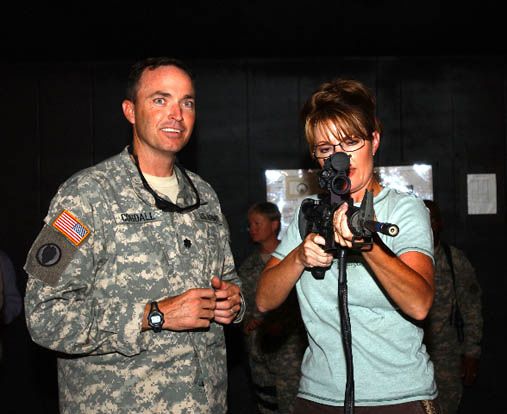
Mediascape                                                                                                                 11/17/08 10:25 AM

             In this article, written two weeks before the November 4 presidential election, I will review the role of media
             spectacle in the Democratic Party primary where it played a major role and in the general election contest
             between Barack Obama and John McCain.

             Primary Spectacle

             Looking at the 2008 Democratic Party primaries we see exhibited once again the triumph of the spectacle. In this
             case, the spectacle of Obama and Hillary, the first serious African American candidate vs. the first serious
             woman candidate brought on a compelling spectacle of race and gender, as well as a campaign spectacle in
             incredibly hard-fought and unpredictable primaries. As a media spectacle, the Democratic Party primary could be
             read as a reality TV show. For the media and candidates alike, the Democratic primary has been Survivor, or
             The Apprentice ("You're fired!"), with losing candidates knocked out week by week. With the two standing
             candidates Obama and Clinton, it has been the The Amazing Race, as well as American Gladiator and American
             Idol rolled into one, with genuine suspense concerning the outcome.

http://www.tft.ucla.edu/mediascape/Fall08_Kellner.html                                                                           Page 2 of 19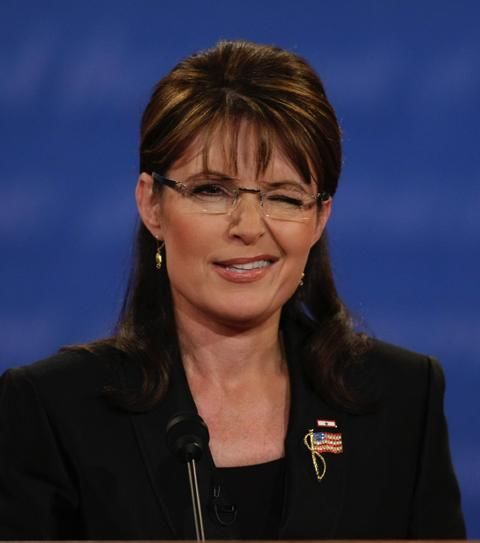
Mediascape                                                                                                               11/17/08 10:25 AM

             From the first primary in Iowa where in January he won a startling victory, it has been the Obama spectacle, a
             spectacle of Hope, of Change, of Color, and of Youth. In addition to his campaign speeches on the stump
             everyday that have mobilized record crowds, after every primary election, Obama made a spirited speech, even
             after his loss in New Hampshire and other primaries. He gave a magnificent Super Tuesday victory speech that
             could have been the most watched event of the primary season and was probably the most circulated speech on
             the Internet that week:

             Obama pulled slightly ahead in a multi-state primary night, and then won 11 primaries in a row. He made
             another magnificent speech after the Wisconsin primary where he took over the airways for about an hour,
             providing a vision of the US coming together, mobilizing people for change, carrying out a progressive agenda,
             getting out of Iraq, using the money spent there to rebuild the infrastructure, schools, health system, and so on.
             Even when he lost primaries, he gave inspiring and impassioned speeches.

http://www.tft.ucla.edu/mediascape/Fall08_Kellner.html                                                                            Page 3 of 19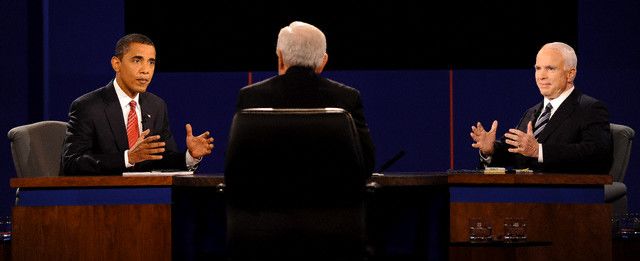
Mediascape                                                                                                                11/17/08 10:25 AM

             There has also been an impressive Internet spectacle in support of Obama’s presidency. Obama has raised an
             unprecedented amount money on the Internet. He has over two million friends on Facebook, and has mobilized
             youth and others through text messaging and emails. The YouTube (UT) music video “Obama Girl,” which has a
             young woman singing about why she supports Obama with images of his speeches interspersed, has gotten over
             5 million hits and is one of the most popular in history.

             More interestingly, grassroots campaigns for Obama illustrate the vast potential impact of YouTube and Internet
             spectacle for participatory democracy.

             Among the enormous numbers of Internet-distributed artifacts for the Obama campaign, Will.i.am’s Yes, We Can
             music video manifests how grassroots-initiated alternative media artifacts can inspire and mobilize individuals to
             support Obama. 3

http://www.tft.ucla.edu/mediascape/Fall08_Kellner.html                                                                            Page 4 of 19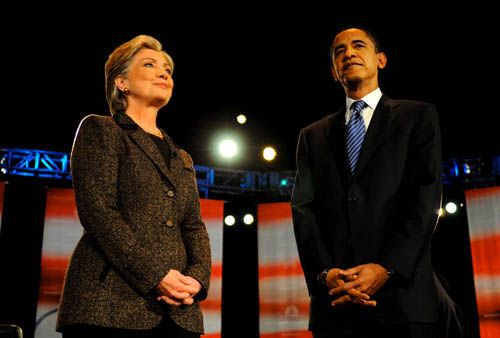
Mediascape                                                                                                                    11/17/08 10:25 AM

             This MTV style UT music video, breaks with conventional ways of producing music video, as Will.i.am assembled
             a variety of artists’ grassroots participation in its production. In his words:

                     I wasn’t afraid to stand for “change”... it was pure inspiration... so I called my friends... and they
                     called their friends... We made the song and video... Usually this process would take months... but
                     we did it together in 48 hours... and instead of putting it in the hands of profit we put it in the
                     hands of inspiration...4

             In addition to this alternative media artifact made by professional musicians, there are grassroots-based videos
             made by ordinary people who have produced their own videos and narratives to support Obama, collected on a
             YouTube (UT) website. 5 On behalf of Senator Obama, traditionally underrepresented youth and people of color
             have vigorously utilized UT-style self-made videos as an innovative platform for grassroots political mobilization.
             The videos inspire and consolidate potential Obama supporters on and offline by featuring personal narratives as
             well as reasons they support Obama for President.

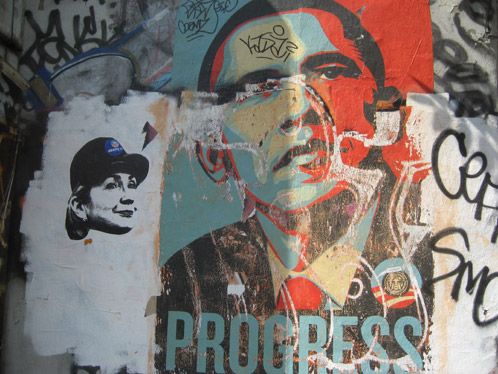
             Obama art posters have appeared throughout major cities like Los Angeles, and all over LA, on stop signs,
             underpasses, buildings and billboards there are hundreds of posters and stickers on Obama with the word HOPE
             emblazoned across. Even street artists have been doing Obama graffiti and urban art in public places. 6

             So in terms of stagecraft and spectacle, Obama’s daily stump speeches on the campaign trial, his post-victory
             and even defeat speeches in the Democratic primaries, and his grassroots Internet and cultural support have all
             shown that Obama is a master of the spectacle. As for Hillary, she simply wasn’t as good as Obama in creating
             spectacles, although she became proficient as the primaries went along, and near the end of the presidential
             primaries the spectacle of Hillary the Fighter emerged as she relentlessly campaigned day and night and was just
             barely beaten by Obama.

             The Obama vs. McCain[Palin] Spectacle

             Hence, eventually, Obama secured the Democratic presidential nomination and set himself to run against John
             McCain as the presumptive Republican Party candidate. Thus, during the summer months, we have had the
             Obama vs. McCain spectacle, intensified during the party conventions in late August and early September and
             now on full-blast for the final two months of campaigning. Since Obama is the master of the spectacle, McCain
             presumably has to give good spectacle himself, or produce anti-Obama spectacles. From the time Obama
             cinched the nomination, McCain has largely attempted to create an anti-Obama spectacle through TV ads,

http://www.tft.ucla.edu/mediascape/Fall08_Kellner.html                                                                              Page 5 of 19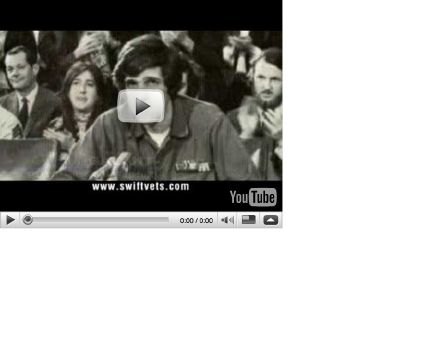
Mediascape                                                                                                                 11/17/08 10:25 AM

             cinched the nomination, McCain has largely attempted to create an anti-Obama spectacle through TV ads,
             planting anti-Obama stories in the press and circulating them through the Internet, and eventually savagely
             attacking Obama everyday on the campaign trial.

             Although Obama benefited significantly through his supporters’ Internet and other cultural productions, he was
             temporarily put on the defensive in the summer with the YouTube released videos of the inflammatory speeches
             of the Reverend Jeremiah Wright, the Chicago pastor of his church:

             The deluge of Republican and then mainstream media circulating the Rev. Wright speeches and Wright’s
             appearances on television and making inflammatory speeches led Obama to break with his pastor. However,
             Obama gave what many believed to be a brilliant speech on race in Philadelphia, another spectacle that became
             a major cultural event on both the Internet and mainstream media.

http://www.tft.ucla.edu/mediascape/Fall08_Kellner.html                                                                           Page 6 of 19
Mediascape 11/17/08 10:25 AM
Underneath the spectacle on the broadcasting media, a Republican campaign that circulated through the Internet
claimed that Obama was really a Muslim, was like Rev. Wright and anti-American, and even an Iranian agent. 7
In addition to these underhanded sneak attacks, parallel to the Swift Boat attacks against John Kerry, the
McCain campaign released TV ads equating Obama with Paris Hilton and Britney Spears as an empty celebrity:
That ad led Paris Hilton to create an ad attacking “the wrinkly old white dude” (i.e. John McCain) and arguing
why she’d be a better president; her YouTube video received over one million hits in a single day.
See more Paris Hilton videos at Funny or Die
In another ad, McCain attacked Obama for high-energy prices and ridiculed Obama’s proposal to inflate your
http://www.tft.ucla.edu/mediascape/Fall08_Kellner.html Page 7 of 19Mediascape 11/17/08 10:25 AM
tires, as if this were Obama’s entire energy program.
While the McCain camp engaged in petty anti-Obama ads and attacks in summer 2008, Obama went on a Global
Tour that itself became a major media spectacle as he traveled from Afghanistan and Iraq to Europe. Obama
gave a rousing speech in Berlin that attracted hundreds and thousands of spectators and a global TV audience,
and was shown meeting with leaders in all of these countries, as if he were the presumptive president.
Desperate for attention and needing a little spectacle of his own, John McCain appeared with his wife Cindy at
the Sturgis Motorcycle Rally with Kid Rock:
As the bikers roared their engines in approval, McCain engaged in blustering, if often incoherent demagoguery,
shouting that Washington is broken, that while the country is in crisis the Congress is on vacation, insisting he
would make them come back to work during the summer to the roar of the motorbikes. He received his loudest
cheers and roars of approval as he offered up his wealthy trophy wife Cindy to enter the beauty contest the next
day, perhaps not knowing, as the TV images of past contests made it clear, that this involved nudity and
becoming a sex object before a drunken crowd.
As the campaigns neared their party conventions, traditionally a great TV spectacle, the presidential race seems
to be establishing once again the primacy of TV democracy where the candidates battled out the election on
television -—although print media, Internet, and new media are also significant, as I have been suggesting.
Following the great spectacle of the Democratic convention in late August with memorable speeches by Obama,
Al Gore, Bill and Hillary Clinton, and a moving appearance by Senator Ted Kennedy, McCain desperately needed
some spectacle and got it in spades when he announced and presented his Vice-President candidate Sarah Palin,
a short-term Governor of Alaska and former small town mayor who nobody knew anything about when he
introduced her. It turns out, however, that Palin gives good spectacle: she’s a gun owner and NRA activist, and
the footage all day during the convention showed her shooting guns.
http://www.tft.ucla.edu/mediascape/Fall08_Kellner.html Page 8 of 19Mediascape 11/17/08 10:25 AM
She was also a high school basketball star so there was good spectacle of her playing basketball (although
Obama could probably beat her one on one). Palin’s husband was a snowmobile champion so you got more good
sports spectacle, and Sarah’s a beauty contest winner, winning local contests and coming runner up as Miss
Alaska, so there were a lot of images of her as pin-up girl that first day which introduced her to the American
public. Gov. Palin’s a mother with five children, so you had great family pictures, including a newborn baby with
Down syndrome. After her initial speech with McCain introducing her, her family and the McCains went shopping
and she was shown as an enthusiastic shopper marking her as a typical American.
One might think this is all pretty stupid, but American elections are often won on image and spectacle and
obviously Sarah Palin gives good spectacle. Republicans initially hoped that she would get Hillary Clinton voters
and women, because she’s a woman, but since Palin opposes abortion rights, is militantly antiabortion, has no
record on environmental protection, and believes environmental crisis is not man-made, she appears to have
never picked up substantial support among Democratic party women. Furthermore, Palin supports drilling oil
everywhere without environmental regulation, preaches teaching creationism and religion in the schools and
taking offending books out of libraries, and is militantly anti-gay, so any true Hillary Clintonites who vote for this
rightwing ideologue have taken leave of their senses….
Then on Labor Day, September 1, we learned that Palin’s 17 year old daughter was pregnant and unmarried, so
we had sex scandal spectacle all day and debates whether a mother with all these problems should run for Vice
President and submit her family to media scrutiny; many other scandals about Palin herself came out: she had
fired state employees who would not do her bidding and had appointed unqualified high school friends and
cronies to state jobs; she had supported corrupt politicians, had lied about her record, and had consistently
taken positions to the right of Dick Cheney, so Sarah Palin suddenly became a spectacle of scandal as well as
adulation by the Christian and Republican Right.
The Republicans were forced to postpone their convention because of another spectacle, the Hurricane Gustav
spectacle that was said to be twice as dangerous as Katrina, but turned out to be only half as bad. Once the
Republicans got their convention started, it turned out that Sarah Palin gave an electrifying speech that
mobilized the rightwing Republican base and a new star was born.
http://www.tft.ucla.edu/mediascape/Fall08_Kellner.html Page 9 of 19Mediascape 11/17/08 10:25 AM
For a couple of weeks after the Republican convention Sarah Palin was the spectacle of the day and the media
buzzed around the clock about her past and her record, her qualifications or lack of them, and her effect on the
election.
The Stupid Season in the campaign was over, however, on Monday September 15, 2008 when the collapse of the
Lehman Brothers investment company helped trigger what appeared to be one of the great U.S. and global
financial crises in history. Suddenly, the election was caught up in the spectacle of the possible collapse of the
U.S. and global economy, and economics took front and center. During this period, the mainstream cable news
channels covered the ongoing crisis 24/7 and the Internet and YouTube videos were decentered by the spectacle
of television news , which in times of crisis is the central focus of audience attention. Of course, the late night
talk shows and comedy skits continue to be important, as do the Jon Stewart and Steven Colbert news satires
and, as for decades, Saturday Night Live!
In two wild weeks of campaigning, McCain first insisted that the “fundamentals” of the U.S. economy were
sound, and when everyone ridiculed him, he recognized the significance of the crisis and said that as president
he would fire the head of the SEC (Security Exchange Commission), although this official does not serve directly
under the president, and everyone from the Wall Street Journal to the television networks admonished McCain
for trying to scapegoat someone who experts knew was not responsible for the crisis. Zigzagging wildly, McCain
thundered one day that he was against federal bailouts, but when the Bush administration announced the
biggest bailout in history that was allegedly necessary to save the whole shebang, McCain flipped into support,
resorting at the end of the week to blaming Barack Obama for the crisis, claiming he was part of a corrupt
Washington establishment (overlooking that McCain’s top economic advisor Phil Gramm had been instrumental in
pushing deregulation of the economy through Congress and that top lobbyists were running his campaign,
including McCain’s campaign manager who was instrumental in lobbying for the failed Fannie Mae and Freddie
Mac financial institutions that some in the Mc-Cain-Palin campaign were trying to blame for the economic
meltdown).
Obama seemed to gain momentum during the economic crisis as he made measured and intelligent statements
on the economy; and so the Republicans desperately began a strategy of the Big Lie: endlessly distorting his tax
proposals, accusing him of crony relations with disgraced federal officials who he hardly knew, and making
ridiculous claims about Obama’s responsibility for the economic mess. It was becoming apparent that the
Republicans were pursuing the Karl Rove/George W. Bush strategy of simply lying about their opponents and
trying to create an alternative reality. It was becoming clear that Sarah Palin’s candidacy was based on Big Lies,
as McCain introduced her as the woman who had stopped the Bridge to Nowhere in Alaska and was a champion
of cutting “earmarks” or pork barrel legislation to benefit special interests in one’s district. Palin repeated these
claims day after day, but research revealed that she had supported the Bridge to Nowhere from the beginning,
http://www.tft.ucla.edu/mediascape/Fall08_Kellner.html Page 10 of 19Mediascape 11/17/08 10:25 AM
claims day after day, but research revealed that she had supported the Bridge to Nowhere from the beginning,
had hired a public relations firm to get earmarks for her district, and had in fact received more earmarks per
capita that almost anyone in the country.
With the September 22, 2008 meltdown, however, when it looked like the U.S. economy was in a freefall
meltdown and the Bush-Cheney administration proposed a multibillion dollar bailout package, John McCain
embarked on one of the truly incredible political spectacles in U.S. history, trying to position himself as the
savior of the economic system and then making an utter fool of himself as day after day he engaged in
increasingly bizarre and erratic behavior. Just before the first presidential debate on September 26, McCain
announced he was suspending his campaign, was going to Washington to resolve the financial crisis and would
stay until it was resolved, threatening to miss the presidential debate.
After a lot of negative publicity, he showed up for the debate, viciously attacked Barack Obama in probably the
most thuggish debate performance in U.S. political history, with his website declaring him the winner before the
debate even took place (subsequent polls showed that Obama got a bounce from the debate and the candidate’s
performances in response to the financial crisis).
Over the weekend, McCain came to Washington, claiming he was bringing together Congressmen to resolve the
financial crisis and attacked Obama for staying on the campaign trial. The morning of the Congressional vote on
the bailout, McCain and his surrogates claimed it was John McCain alone who had brought Democrats and
Republicans together to resolve the financial crisis and continued vicious attacks on Obama. When, hours later, it
was revealed that the bailout package pushed by the Bush-Cheney administration and supported by McCain,
Obama and the Democratic and Republican party house leaders, failed because two-thirds of the Republicans,
who McCain was supposed to be leading, voted against it, McCain had more than a little egg on his face as the
stock market plunged in the biggest one-day drop in history.
Trying in the face of his buffoonish spectacle to keep the initiative, McCain said that this was not the time to
engage in partisan behavior, but to pull the country together, and blamed the failure of the bailout bill on Obama
and the Democrats -— surely a partisan claim! The Sarah Palin spectacle momentarily took focus off of McCain’s
erratic efforts to take advantage of the booming economic crisis and the unpopular trillion dollars plus bailout,
when the Vice Presidential candidate debated the Democrats’ Joe Biden. The lead-up to the debate featured daily
sound-bites of Sarah Palin’s interview with CBS’s Katie Couric in which she was unable to mention one specific
newspaper or journal that she read, could not think of a Supreme Court decision she opposed beyond Roe vs.
Wade, and generally could not complete a coherent sentence, let alone provide a clear answer.
http://www.tft.ucla.edu/mediascape/Fall08_Kellner.html Page 11 of 19Mediascape 11/17/08 10:25 AM
During the debate she proved herself to be a good script performer as she acted out the predigested sound bites
to each question, winked and talked folksy if she wanted to distract the audience, and generally played cutesy
rather than actually debate the questions with Biden, who provided coherent answers to questions and criticism
of John McCain, which Palin ignored.
http://www.tft.ucla.edu/mediascape/Fall08_Kellner.html Page 12 of 19Mediascape 11/17/08 10:25 AM
Palin’s conservative base loved her down-home hockey-mom performance and so Palin was unleashed as the
attack dog on the campaign trail, as a desperate McCain, with polls indicating that votes were going Obama’s
way in key states, decided to attack Obama’s personal character as a last-ditch way to try to win votes. After
The New York Times published an article on Obama and former Weather-underground member Bill Ayres, Palin
started referring daily to “Obama’s pallin’ around with terrorists,” and John McCain began personally attacking
Obama, raising the question “who is the real Barack Obama,” with the audience screaming “terrorist!”
Throughout the second week of October, Palin and McCain continued to make the Ayres connection in their
campaign rallies, media interviews, and TV ads, personally attacking Obama, and the frenzied Republican mob
would scream “Kill him!,” “Traitor!, “Bomb Obama!” When one confused woman in the mob told McCain that she
“didn’t trust Obama” because of things she’d been hearing about him, stammering “he’s an Arab!,” it was clear
that the Republicans’ lies and demagoguery had led their rabid rightwing base to believe that Obama was an
Arab, a Muslim, a terrorist, and not an American. It was also clear that Palin and McCain had stirred up
significant levels of mob fear, ignorance, and violence that was becoming extremely volatile and dangerous.
http://www.tft.ucla.edu/mediascape/Fall08_Kellner.html Page 13 of 19Mediascape 11/17/08 10:25 AM
Investigative reporters indicated that Obama had only a casual relation with Ayres, whereas Palin and her
husband were involved in an Alaskan secessionist party whose rightwing and anti-Semitic founder had a long
history of outrageous anti-American ranting, racist ramblings, and ultra-right politics: Palin’s husband had
belonged to that party and just this year Sarah Palin addressed their party convention wishing them “good luck.”
Another investigative report linked Palin to a number of extreme rightwing groups and individuals who had
promoted her career (McCain, too, it was revealed, had been associated with an unsavory lot). But Palin’s week
of infamy came to a proper conclusion when the Alaskan Supreme Court ruled on October 10 that a report into
the “Troopergate” scandal could be released and the report itself pointed out that Palin had “abused her
authority as governor” and violated Alaska’s ethics regulations. Thrown off her moralistic high horse, Palin
nonetheless continued to be McCain’s attack dog and raise controversy on the campaign trial?9
It was clear that Republicans were playing a politics of association to feed their media spectacles, just as the
Bush-Cheney administration had associated Iraq with 9/11, Al Qaeda, and “weapons of mass destruction.” They
were connections that were obviously false, but the associations worked to sell the war to their base, gullible
Democrats, and the media. Republicans had long sold their rightwing corporate class politics to voters by
associating the Democrats with gay marriage, abortion, secularism, or other diversionary issues.10 Would the
public and media wake up to the Republicans’ politics of lying and manipulation or would they continue to get
away with their decades of misrule and mendaciousness?
Economic news got worse by the day as the stock market continued to plunge and the global economy appeared
to be collapsing, and in this atmosphere the McCain-Palin spectacle of distraction appeared increasingly
appalling. With a backlash against Palin’s rabble-rousing and Republican negative campaigning, McCain and Palin
slightly toned down their attacks on Obama, although their direct mailings and robocalls continued to associate
Obama with Bill Ayers and terrorism and to raise doubts about his character. In the final presidential debate on
October 15, McCain had a chance to bring up Obama’s associations to his face, which he did in a generally
aggressive debate in which Obama coolly and calmly answered.
http://www.tft.ucla.edu/mediascape/Fall08_Kellner.html Page 14 of 19Mediascape 11/17/08 10:25 AM
But the major theme of the debate, which seemed to have become the main focus of the endgame of McCain’s
campaign, was how Obama’s answer to Joe the Plumber proved that he was going to raise taxes on small
business. In an Obama campaign event the previous weekend, the man who McCain referred to as Joe the
Plumber told Obama that he had been a plumber for fifteen years and was trying to buy the business he worked
for -- and since it cost over $250,000, he would be forced to pay higher taxes since Obama’s tax reform
proposal would increase taxes on those making over $250,000 and lower those making less. It turned out the
dude’s real name was Samuel J. Wurzelbacher, that he was not a licensed plumber, that his income the previous
year was around $40,000, and that he owed over $1,000 in back unpaid taxes. These paltry facts did not stop
McCain and Palin who continued to raise Joe the Plumber in every campaign stop and were obviously making it
the major theme of their campaign, trying to generate an opposition between Obama the tax-and-spend liberal
who would raise your taxes contrasted to McCain and Palin who took the side of Joe the Plumber, Ted the
Carpenter, and a daily array of allegedly working class people who opposed Obama, leaving out only Rosie the
Riveter. 12
The McCain-Palin “Joe the Plumber” tour narrative, however, was interrupted daily by a scandal or juicy news
story that tends to dominate news cycles in the era of media spectacle. It was revealed that the Republicans had
spent over $150,000 on the Palin family wardrobe and that Palin’s stylist was paid twice as much in early
October as his major campaign consultants; in her first policy address on the need for spending on special needs
children, Palin denigrated research spent on studying fruit flies, which is a basic tool of genetic research and has
helped produce understanding of autism, among many other things; Palin’s campaigning was interrupted the
http://www.tft.ucla.edu/mediascape/Fall08_Kellner.html Page 15 of 19Mediascape 11/17/08 10:25 AM
helped produce understanding of autism, among many other things; Palin’s campaigning was interrupted the
same day by the need for her and her husband Scott to do another deposition in the so-called Troopergate
scandal; and Palin’s negative rating continued to rise, as did numbers that claimed she was a drag on the
campaign. 13
The same week went bad for the McCain campaign as well: a young woman who worked for the McCain
campaign argued that a big black man had raped her and carved a “B” for Barack on her face which led to a
bevy of rightwing attacks on the Obama people when the McCain campaign released the information —- which
the police quickly questioned and by the next day the young woman admitted she made it up; and to top the
week of October 20 off, Joe McCain called 911 to report a traffic jam he was stuck in, and when the operator
retorted that it was not proper to use the number for this purpose, Joe the Brother said, “Fuck you,” and hung
up!
As the campaign entered its final two weeks, it was clear that contemporary U.S. presidential campaigns were
organized around the production of daily media spectacles that embodied narrative themes of the campaign. In a
hard fought Democratic Party primary the Obama Spectacle of youth, change, hope, and a new multicultural
America narrowly bested the spectacle of Hillary the Fighter, potentially the first woman president, as Obama
was potentially the first president of color. This spectacle gripped the nation and the global media, and set up
intense interest in the spectacle of young Obama going up against war hero and veteran Senator John McCain in
the general election.
After the primaries, Obama continued to prove himself the master of the spectacle in a trip around the world
where he attracted large adoring crowds and met with an array of world leaders, as well as at the Democratic
party convention in Denver where he gave a soaring speech in the Denver football stadium to one of the largest
live audiences and TV audiences in election history. Going into the general election, McCain appeared severely
challenged since he was not known for his speeches or orchestration of media spectacles. Yet, as it turned out,
McCain’s campaign has produced some of the most audacious, if problematical, spectacles in U.S. presidential
history. From the moment McCain introduced Sarah Palin as his running mate through the Republican convention
where she made a well-received speech that enormously energized the Republican base, Palin became one of the
most astounding media spectacles in U.S. political history. As noted above, McCain himself spent several weeks
stunting and throwing out daily surprise positions on the global economic crisis trying to create a spectacle of
McCain the Great Leader, although many found his performance erratic and unsettling. In the weeks leading up
to the November 4 election, the McCain-Palin campaign, steadily dropping in the polls, have been increasingly
aggressive again in daily campaign spectacles and appearances in the media, including Sarah Palin on a very
bizarre episode of Saturday Night Live!
Barack Obama has continued to draw large and adoring crowds during his fall campaigning, but has tried to
present an image of himself as cool, calm, competent, and presidential on the campaign trail and during media
interviews and the presidential debates. Unlike the McCain-Palin campaign, he has avoided dramatic daily shifts
http://www.tft.ucla.edu/mediascape/Fall08_Kellner.html Page 16 of 19Mediascape 11/17/08 10:25 AM
interviews and the presidential debates. Unlike the McCain-Palin campaign, he has avoided dramatic daily shifts
and attention-grabbing stunts to try to present an image of a mature and intelligent leader who is able to
rationally deal with crises and respond to attacks in a measured and cool manner.
Deconstructing the Spectacle
I have argued that presidential campaigns have been constructed as media spectacles, in particular since the rise
of cable television, with its 24/7 news cycles and partisan networks like Fox News, which can be seen as a
campaign adjunct of the Republican party, and, this year, MSNBC which has several shows that are blatantly
partisan for Obama. About two weeks before the election, the Pew Research Center released a report wherein
the study of the positive and negative representations of the two dominant party’s presidential and vice-
presidential candidates revealed that McCain has received strongly negative coverage with more than half of the
stories casting him in a negative light; while fewer than one-third of the stories about Obama were negative,
about one-third were positive, and one-third were neutral. 14
About two in five of the stories about Palin were negative, whereas about one-third were positive and the rest
neutral. Joe Biden was the invisible man of the group, receiving only 6% of the coverage with more negatives
than Palin and almost as many as McCain. Commentators noted that this did not necessarily denote media bias,
as conservatives incessantly claim, but rather reflect that many stories are devoted to polls so the leading
candidate, in this case Obama, receives more positive representations from these stories. Analysts also noted
that McCain’s negative stories were largely concerning his response to the dire financial crisis for which
Republican policies and market fundamentalism were strongly blamed. 15
As we confront the final two weeks of the campaign, it will be interesting to see if any major media spectacles
will change the course of the election, or whether a long campaign orchestrated by competing media spectacles
and presidential narratives have already shaped people’s opinions and determined their voter behavior.
Finally, to be a literate reader of U.S. presidential campaigns, one needs to see how the opposing parties
constructive narratives, media spectacle, and spin try to produce a positive image of their candidate to sell to
the American public. In presidential campaigns, there are daily photo opportunities and media events, themes
and points of the day that candidates want to highlight, and narratives about the candidates that will win
support for the public. Obama’s narrative from the beginning was bound up with the Obama spectacle, a new
kind of politician representing change and bringing together people of different colors and ethnicities, ages, parts
of the nation, and political views. He has effectively used media spectacle and Internet spectacle to promote his
candidacy and generally been consistent in his major themes and story-lines, although the Republicans tried to
subvert his story with allegations of close connections with radicals like the Rev. Jeremiah Wright and Bill Ayres.
http://www.tft.ucla.edu/mediascape/Fall08_Kellner.html Page 17 of 19Mediascape 11/17/08 10:25 AM
As Robert Draper noted in an article on “The Making (and Remaking) of McCain,” the McCain campaign has run
five sequential narratives, all bolstered, I would add, with media spectacle: 1) The Heroic Fighter vs. the Quitter
(think Iraq); 2) Country-First Deal Maker vs. Nonpartisan Pretender; 3) Leader vs. Celebrity (see my discussion
above of McCain ads linking Obama with Paris Hilton and Hilton’s rebuttal); Team of Mavericks (i.e. John and
Sarah) vs. Old-Style Washington (i.e. Senators Obama and Biden); 5) Narrative 5: John McCain vs. John McCain
(i.e. the honorable McCain who said he did not want to engage in gutter-snipe politics vs. the current campaign
with the nasty attacks on Obama). 16 The article seems to leave out McCain’s newest narrative which pits Joe the
Plumber, who the Republicans will help, against the tax-and-spend liberals - the usual Republican line when they
run out of ideas and attack strategies.
An informed and intelligent public thus needs to learn to deconstruct the spectacle to see the real issues behind
the election, what interests and ideologies the candidates represent, and what sort of spin, narrative, and media
spectacles are being used to sell the candidates. This article limited itself to describing the media spectacle
dimension of the campaign so far. I do not want to claim that this is the key to or essence of presidential
campaigns that also depend on traditional organizing, campaign literature, debate, and getting out the vote, the
so-called “ground game.” But I would argue that media spectacle is becoming an increasingly salient feature of
presidential and other elections in the U.S.A. today.
NOTES
Debord, Guy. Society of the Spectacle. Detroit: Black and Red, 1967.
Frank, Thomas. What’s The Matter with Kansas? How Conservatives Won the Heart of America. New York: Metropolitan Books, 2004.
Kellner, Douglas. Media Culture. London and New York: Routledge, 1995.
- - - . Grand Theft 2000. Lanham, Md.: Rowman and Littlefield, 2001.
- - - . From September 11 to Terror War: The Dangers of the Bush Legacy. Lanham, Md.: Rowman and Littlefield, 2003b.
- - - . Media Spectacle and the Crisis of Democracy. Boulder: Paradigm, 2005.
- - - . Guys and Guns Amok: Domestic Terrorism and School Shootings from the Oklahoma City Bombings to the Virginia Tech Massacre.
Boulder, Col.: Paradigm Press, 2008.
NOTES
1 This work draws on my studies of media spectacle in Kellner 2001; 2003a, 2003b, 2005, 2007. See also Guy Debord's Society of the
Spectacle (1967).
2 Kellner, Douglas. Media Spectacle and the Crisis of Democracy. Boulder: Paradigm, 2005.
3 On Will.i.am, see http://www.dipdive.com/archives/212.
4 See http://www.hopeactchange.com/creators/song.
5 See the Obama videos at http://www.dipdive.com/dip- politics/ywc/ (video #2 to 30). The following analysis was done by Gooyong Kim
in summer 2008.
6 Linthkicum, Kate. "Tagged, He's It." The Los Angeles Times 23 August 2008: I1. The Obama art posters are available at
http://www.projecthope08.com/SearchResults.asp?Cat=6&gclid=CKL- m4zdwpYCFRg6awodqmM9xw.
7 See "An Attack That Came out of the Ether." The Washington Post 28 June 2008: A1.
8 On Palin's unsavory connections, see Blumenthal, Max and David Neiwert, "Meet Sarah Palin's Radical Right- wing Pals." Salon 10
October 2008. . On John McCain's radical right associations and involvement with the corrupt Savings and Loan tycoon Charles Keating
that won him ethical rebuke in the Senate, see Kooperman, Alex. "The Return of Charles Keating." Salon October 10, 2008. .
9 In her first unscripted and uncontrolled appearance after the release of the Troopergate report, Palin was roundly booed at a Philadelphia
Flyer NHL hockey game where she threw out the first puck; see Alex Kooperman, Alex. "Palin Booed at Flyers Game." Salon 12 October
2008. http://www.salon.com/politics/war_room/2008/10/12/palin_booed/index.html.
10 Frank, Thomas. What's The Matter with Kansas? How Conservatives Won the Heart of America. New York: Metropolitan Books, 2004.
11 For a dossier of articles on Joe the Plumber, see
http://topics.nytimes.com/top/reference/timestopics/people/w/joe_wurzelbacher/index.html?inline=nyt - per. For a video in which he
exposes his rightwing views, see http://thecaucus.blogs.nytimes.com/2008/10/16/joe- in- the- spotlight/.
12 Elizabeth Bumiller report that McCain was on a "Joe the Plumber" tour. The New York Times 23 October 2008.
http://www.nytimes.com/2008/10/24/us/politics/24campaign.html?hp=&pagewanted=prin.
13 Salon's "War Room" tracks the daily campaign trail of both camps. 24 October 2008. http://www.salon.com/politics/war_room/.
14 See the PEW Research Center Report. http://www.journalism.org/.
15 See Rainey, James. "McCain Found to Get More Bad Press." The Los Angeles Times 23 October 2008: A17. An earlier survey by FAIR,
however ("Top Troubling Tropes of Campaign '08," October 10, 2008), suggested that major tropes such as "Straight- Talking Maverick"
http://www.tft.ucla.edu/mediascape/Fall08_Kellner.html Page 18 of 19Mediascape 11/17/08 10:25 AM
however ("Top Troubling Tropes of Campaign '08," October 10, 2008), suggested that major tropes such as "Straight- Talking Maverick"
for John McCain, and "Barack Obama, Elitist Snob" created a positive narrative for McCain and negative representations of Obama; the
studies' examples, however, were from earlier in the year and have been overtaken in the past few weeks, as have what the article
suggested were largely positive tropes for Sarah Palin, who has had overwhelmingly critical media coverage in the last weeks of the
campaign; for the FAIR survey, see http://www.fair.org/index.php?page=3629. 26 October 2008.
16 Draper, Robert. "The Making (and Remaking) of John McCain." The New York Times. 22 October 2008.
Author bio:
Douglas Kellner is George Kneller Chair in the Philosophy of Education at
UCLA and is author of many books on social theory, politics, history, and
culture, including Media Culture and Media Spectacle and the Crisis of
Democracy. Kellner's latest book is Guys and Guns Amok: Domestic Terrorism
and School Shootings from the Oklahoma City Bombings to the Virginia Tech
Massacre. His website is at
http://www.gseis.ucla.edu/faculty/kellner/kellner.html
© Douglas Kellner 2008. All Rights Reserved.
Current Issue | Past Issues | Submissions | About Us Back to Top
close()
status via twitter
recent comments (follow comments)
View Profile »
Powered by Disqus · Learn more
closeReblog this comment
Powered by Disqus · Learn more
Add New Comment
Type your comment here.
[?] Unclaimed Register Login DISQUS
blog comments powered by Disqus
http://www.tft.ucla.edu/mediascape/Fall08_Kellner.html Page 19 of 19You can also read


