Meeting great expectations - Analysis and insights of stewardship engagement and outcomes for asset owners - EY
←
→
Page content transcription
If your browser does not render page correctly, please read the page content below

Meeting great
expectations
Analysis and insights
of stewardship
engagement and
outcomes for asset
owners

Contents
Foreword: Sustainable finance —
navigating insurer stewardship
responsibilities ................................01

1       Summary insights
        and findings ...........................06

2       Insurers’ roles as
        responsible stewards...............10

3       A deep commitment to
        the public interest...................12

4       In-depth review and
        the way forward......................17

5       Methodology..........................24

Acknowledgements..........................27
The defining issues of 2020 demand purposeful
and responsible stewardship

It is difficult to imagine a more consequential moment                   We have applied our unique EY stewardship maturity
than this. 2020 has seen truly unprecedented                             model and methodology to provide analysis and
challenges shake nations, businesses and                                 insights intended to enhance insurers’ stewardship
communities worldwide. It is not just the COVID-19                       engagement and reporting requirements. This
pandemic, the countless economies in freefall, the                       report is the culmination of our analysis of the public
global demands for racial equality or the imminent                       stewardship reporting of 39 UK-based insurers
dangers posed by climate change. It is also the                          and asset managers, identifying gaps, highlighting
confluence of these seismic events that will transform                   examples of best practice, providing recommendations
the future any one of us would have predicted only a                     and further explore the role insurers can and should
short whilst ago.                                                        play in the ‘now’, the ‘next’ and the ‘beyond’.
Stewardship is a powerful vehicle for meeting the                        Responsible stewardship for today demands a
moment; for asset owners in particular, the bar has                      transparent commitment for tomorrow. Insurers will
been raised to a breath-taking new height. The UK                        be measured not just on the extent of their policy
Stewardship Code 2020 (the 2020 Code) boldly                             coverage and pay-outs, but also on their management
redefines stewardship as:                                                of conflicts, monitoring of asset managers and
                                                                         the long-term, public interest outcomes insurers’
‘The responsible allocation, management and
                                                                         stewardship activities drive. Amongst these, insurers
oversight of capital to create long-term value for
                                                                         should expect an intense focus, and therefore offer
clients and beneficiaries leading to sustainable
                                                                         their greatest engagement and transparency on the
benefits for the economy, the environment and
                                                                         following systemic risks: ►
society.’1
                                                                         • Economic recovery
The 2020 Code introduces a range of new
considerations: ►                                                        • C
                                                                           ► limate change

• It assigns specific responsibilities to asset owners,                  • Diversity and inclusion (D&I)
  and prohibits them from delegating these.
                                                                                             Gareth Mee
• It covers all asset classes, extending beyond
  listed equity.                                                                             Partner, UK Insurance Head of
                                                                                             Sustainable Finance
• It concentrates focus on engagement activity                                               Ernst & Young LLP
  and outcomes.
                                                                                             gmee@uk.ey.com
• It requires environment, social and governance
  (ESG) to be embedded within investment
                                                                                             Loree M. Gourley
  decision-making.
                                                                                             Director
• It demands candid, fair and balanced reporting on                                          Regulatory and Public Policy
  an ‘apply and explain’ basis.                                                              Ernst & Young LLP
                                                                                             lgourley@uk.ey.com

¹ Source: Financial Reporting Council (FRC) UK Stewardship Code 2020, Page 4 (LINK)

                                                                                                           Meeting great expectations |   1
Power of responsible asset
                                   owners stewardship.

                                   “
                                   EY’s commitment to promoting better
                                   stewardship and the pursuit of purpose as
                                   the corner-stone of a ‘reset’ of contemporary
                                   capitalism is long-standing, but this report breaks
                                   new ground. In differentiating between the
                                   ranking of the priorities of asset owners and asset
                                   managers, and recording their only modest and
                                   differing degrees of engagement to the injunctions
                                   of stewardship as set out in the revised and more
                                   demanding stewardship code, EY has broken new
                                   and illuminating ground. Congratulations to the
                                   team who wrote the report, and all the companies
                                   who so honestly took part. This is a clarion call for
                                   stepping up all our efforts in the months ahead as
                                   the March 31 2021 sign-up deadline for the new
                                   code approaches.

                                   Clare Chapman                  Will Hutton
                                   CoChair,                       CoChair,
                                   The Purposeful Company         The Purposeful Company

2   | Meeting great expectations
“
                       Asset owners, such as pension funds, insurers and sovereign
                       wealth funds, control a large proportion of global assets. If
                       asset owners use their influence through adopting responsible
                       stewardship activities (often exercised through their asset
                       managers) to invest more sustainably, demand better
                       information and practices from companies, as well as educate
Jessica Fries
                       and consult their ultimate beneficiaries about the sustainability
Executive Chairman,
Accounting for         impact of the investments they do on their behalf, this would
Sustainability (A4S)   make a significant impact on sustainable development and
                       contribute to long-term value creation globally. As many are
                       seeing at the current time, there is a clear link between those
                       companies that have a strong sense of purpose, delivering
                       positive social and environmental impact, and those that are
                       proving to be more resilient and performing better financially,
                       a connection that investors have an important role in
                       supporting through responsible stewardship.

                       “
                       There are many types of asset owners, just as there are many
                       types of asset manager, but insurers have long been amongst
                       the most influential stewards in UK capital markets. With
                       society’s increasing focus on purpose, stewardship is moving
                       centre stage and with that move comes a responsibility to
                       demonstrate impact.
Andy Griffiths
Executive Director,    Asset owners and asset managers must now go much further
The Investor Forum
                       than statements and policies — they must give life to their
                       stewardship ambitions through engagement. For stewardship
                       to be effective the entire investment chain needs to unite in
                       a focus on the creation of long-term sustainable value — it is
                       time for asset owners to engage the engagers.

                                                                      Meeting great expectations |   3
Outcomes from good insurer stewardship.

                                   “
                                   Asset owners are a necessary driver of the
                                   changes needed throughout the investment
                                   value chain. Asset owners can drive change
                                   as fast if not faster than regulators and/
                                   or governments through powerful market
Paul Druckman
                                   signalling measures, such as issuing
Chairman,
                                   proclamations and mandates for asset managers
World Benchmarking                 relating to how they manage capital and
Alliance (WBA)                     investments.

                                   So whilst this EY Stewardship report focuses
                                   on good practices in the UK, these asset owners
                                   have the distinct advantage to be able to drive
                                   change more swiftly, as well as to inform best
                                   practice, in other jurisdictions.

                                   “
                                   One of the key drivers of long-term value
                                   creation is engagement across the investment
                                   value chain to provide staying power to pursue
                                   long-term goals. Strong stewardship principles
                                   can lay the foundation for this engagement.
Sarah
Keohane Williamson
CEO, FCLT Global

4   | Meeting great expectations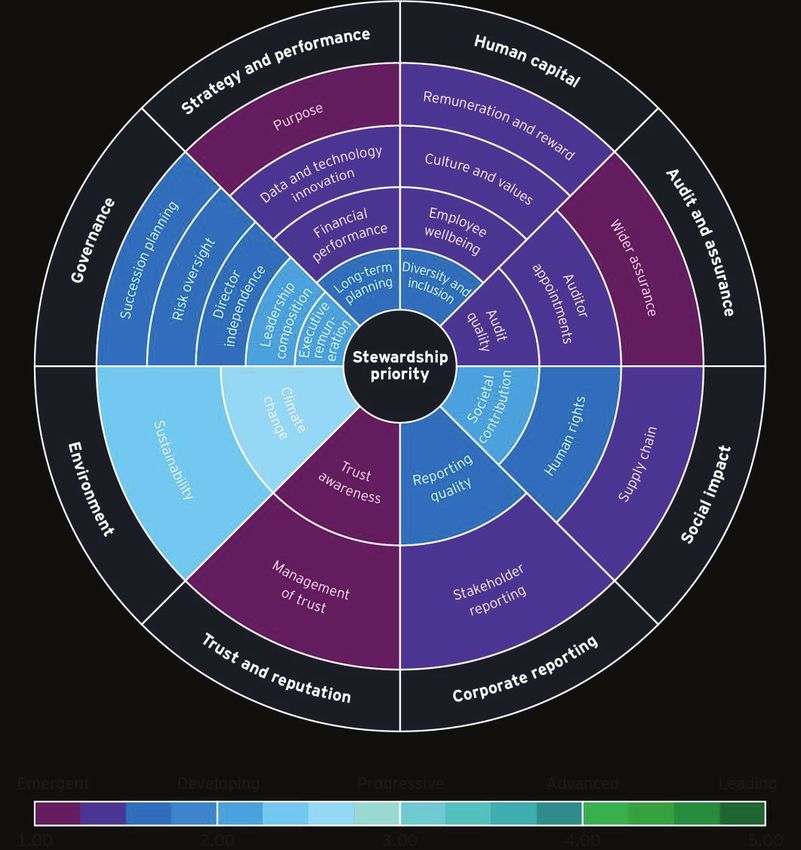
“
                             The role of asset owners and insurer
                             stewardship is critical in achieving the goals
                             of sustainable long-term growth in the
                             value of companies and fair treatment of all
                             stakeholders. Asset owners - insurers and asset
Martin Lipton
                             managers now have the same obligations for
A founding partner of
                             disclosure of their stewardship principles and
New York                     for engagement with companies to achieve
law firm Wachtell, Lipton,   mutual understanding of goals.
Rosen & Katz
                             This report is an excellent description of the
                             current state of stewardship priorities of asset
                             owners and insurers, their responsibilities
                             under the UK 2020 Stewardship Code
                             and gives insightful recommendations for
                             alignment, improvement and preparation of the
                             stewardship codes to be filed by 31 March 2021.

                                                                           Meeting great expectations |   5
1
Summary insights
and findings
Key findings apnedrfpoerrmforam
ance
nce H m
Huum an
an ccapit
aengdy ap al
We applied our unique EY Remuner ita
egtyrat o s e R e m u
ation l
atS p
re nerat a nd
stewardship methodology r P us io
St n r
rpo and wae
Pu tech
nology Cultu rewrd
and maturity model (details d
n naotliog ny C
re a
valu nd ar
a
ta ch u ltures d
Au
ov
on page 22) to assess the Dand tienn ion v
ea
n
diAt
a vat cial Emp lue a d
nce
ing
ta o n loy s
Da inn Fina rmance wellbei ee
uadnd
stewardship priorities of 39
Wi
nn
sion verna
oial Emp ng
de W
nce
it aass
Risk Success ning
rsig ion pla
f
ht
apenrc lo
Dievlelrbs yee
r aid
UK-based insurers and asset e
Indep rector versig
Fin rmanngc-termg w
ndurance
rna
ce
eityin
ap
n
sseur
Go
Au m
r
o
pla
f o in an inc- g
sk o t
comp shi nden
n d
Lead IndenDcireecto
po app
r L plan
Execu comnpos ship
h
managers as reflected in their
ion
pe
a
raansce
rm Dliuvseiorsn
ditoAudt ent
Gove
int oin
ssur
te
t
ng -
tio er
e
i
Au tyAud
ity
mu e
qu
Lo lanning and inc
p
eratio n- Erexecutiv
su
public stewardship reporting.
r i
ove
i
eratio n-
osiLeapd
R
dit
en tm
ali
e
n
Succes
lusio -
rance
end
p
ance
n
tor
r
Now
remu ve
q
e
Di
The wheel on the right
ual
i
on
t
ibut ltributi l
n
it ta
h ts
C li m
ity
sets out a wide range of
chan
co ocieco Socie
Stewardship
n ri g
Sust
a te
n
priority
io n
stewardship priority areas
chai
g
tan
e
Envir
h ts
ma
C li m g e
pact
a
chan
g
in a
and the extent of investor aw Trust r ti n
Hu
ply
Repo ity
n ri g
Sust ent
bil
are
a te
l im
So ain
onm
nt r
q u al
p
S
n ess
ity
engagement across them as Su
Envir
ma
ch
cia
pact
ain
g
revealed in our review. Tr r ti n
Hu
ply
Maawa ust Repo ity
abi
r
ld e
l im
nagren
onm
qualtakeho g
p
lity
emeess
Su
of nt S
trus rtin cia
repo
en
t
So
Tr
t
us Ma er ng
t a na
nd gem e h old orti
p
of repu ent Stak g re
trus tatio rrtainte
t n Croerppoo
Tr
us ng
ta
nd orti
rep rep
utat rate
ion Corpo
6 | Meeting great expectations
Our review provides a view on investor stewardship priorities in the aggregate, and contrasts
  findings between asset managers and asset owners.

  Stewardship     Stewardship                         Asset owner    Asset manager    Overall sub-    Overall
  focus area      sub-category                        sub-category   sub-category     category        priority area
                                                      average        average          average         average

  Environment     Climate change                       2.05           3.33             2.64
                                                                                                        2.55
                  Sustainability                       2.00           3.00             2.46

  Governance      Executive remuneration               1.10           3.22             2.08
                  Leadership composition               1.19           3.06             2.05
                  Director independence                1.00           2.44             1.67             1.77
                  Risk oversight                       1.19           2.00             1.56
                  Succession planning                  1.00           2.11             1.51

  Social impact   Societal contribution                1.76           2.33             2.03
                  Human rights                         1.19           1.94             1.54             1.65
                  Supply chain                         1.00           1.83             1.38

  Corporate       Reporting quality                    1.00           2.11             1.51
                                                                                                        1.50
  reporting       Stakeholder reporting                1.05           2.00             1.49

  Human capital   Diversity and inclusion              1.00          2.39              1.64
                  Employee wellbeing                   1.05          1.94              1.46
                                                                                                        1.46
                  Culture and values                   1.05          1.89              1.44
                  Remuneration and reward              1.00          1.61              1.28

  Strategy and    Long-term planning                   1.14          2.00              1.54
  performance     Financial performance                1.05          1.83              1.41
                                                                                                       1.33
                  Data and technology innovation       1.00          1.56              1.26
                  Purpose                              1.05          1.17              1.10

  Audit and       Auditor appointments                 1.00          1.89              1.41
  assurance       Audit quality                        1.00          1.67              1.31            1.26
                  Wider assurance                      1.00          1.11              1.05

  Trust and       Management of trust                  1.00          1.44              1.21
                                                                                                       1.19
  reputation      Trust awareness                      1.00          1.39              1.18

Emergent                Developing                     Progressive               Advanced                           Leading

  1.0                       2.0                          3.0                         4.0                                5.0

                                            Please Please
                                                   see page
                                                          see22 for24
                                                             page   more  information
                                                                      for more        on our
                                                                               information on methodology.
                                                                                              our methodology.

                                                                                              Meeting great expectations |    7
Asset owners insights and observations
We reviewed the public stewardship reporting of 21 of the largest UK-based
insurers as part of our analysis. We have found:

            There is a trend towards more                    However, these do not necessarily translate

    1       extensive statements and policies on
            stewardship activity.
                                                         2   to the required evidence of activities
                                                             and outcomes.
            Very few insurers completely                     Our analysis uncovered limited evidence
            absolve themselves of stewardship                of how insurers actively engage with asset
            responsibilities, and some are outlining         managers on stewardship priorities. Even
            future plans for delivering more effective       where stewardship policies are in place, it
            stewardship.                                     is not always clear what specific activities
                                                             are taken against these. Where outcomes
            However, there is a stark reporting
                                                             are disclosed, they are often qualitative,
            divide between asset managers and
                                                             impeding efforts to measure their
            insurers. Considerably more is needed
                                                             benefits to the economy, the environment
            from insurers to meet the heightened
                                                             and society.
            expectations of the 2020 Code.

            Many insurers delegate their stewardship         Even amongst the greatest stewardship

    3       responsibilities — contrary to 2020 Code
            expectations.
                                                         4   priorities, there is much room for
                                                             improvement.
            In some instances, insurers acknowledge          Insurers appear to prioritise climate change,
            delegating stewardship responsibilities          sustainability and societal contribution above
            to asset managers. Yet few, if any,              other areas for stewardship engagement.
            explain how they interact with, and retain
                                                             Yet even as priorities, the average scores
            accountability for, their asset managers’
                                                             for each of these are generally low. For
            stewardship activities.
                                                             example, the average score for climate
            Several insurance in-house asset                 change — the highest-rated subcategory for
            managers are signatories to the UK               asset owners stands at 2.05, which is still
            Stewardship Code 2012 (the prior                 significantly lower than the asset manager
            stewardship code), despite their                 result for the same stewardship priority.
            corresponding asset owners not being
                                                             The average score of 1.00 for trust
            signatories. This presents a conflict
                                                             and reputation reflects this being a low
            risk and the potential for misaligned
                                                             stewardship priority for asset owners, despite
            stewardship expectations.
                                                             the critical role trust plays in their social
                                                             licence to operate.

8   | Meeting great expectations
We also reviewed the public stewardship reporting of 18 of the largest UK-based
asset managers most significantly engaged by the insurers whose reporting
we reviewed.
Asset managers’ stewardship reporting is Asset managers show a strong awareness
1 broadly improving.
When compared with scores from prior
2 of their stewardship responsibilities.
Asset managers tended to provide
years’ reporting,2 asset managers numerous reports and insights,
generally demonstrated improvement showcasing the recognition of their
and greater transparency over their responsibilities to promote good
stewardship engagement and outcomes. stewardship practices with their investees.
Across all stewardship priority areas,
The greatest gains were seen in the
asset managers scored higher than asset
areas of sustainability, diversity and
owners (insurers).
inclusion, and stakeholder reporting.
Many asset managers have also gone
beyond regulatory requirements to pursue
specific ESG initiatives and providing
academic insights.
Environmental and governance themes There are mixed levels of alignment between
3 emerged as asset managers’ key priorities.
Asset managers’ stewardship reporting
4 insurers’ stewardship priorities and those of
the asset managers they engage.
was most expansive around climate Societal contribution, which ranked third
change, executive remuneration, amongst insurers’ priorities, ranked
leadership composition and sustainability, considerably lower (seventh) for the asset
each of which received ‘progressive’ managers those insurers engage. This raises
scores, reflecting active stewardship questions around monitoring effectiveness
engagement. and accountability.
A further drill-down on the prioritisation Generally, asset managers’ focus on
of executive remuneration revealed varied governance themes were also not matched
motivations, including a response to the as priorities for insurers.
public outcry around wealth inequality.
² Based on our 2019 review of investor stewardship, ‘Turning the tide to greater corporate accountability’ (LINK)
Meeting great expectations | 92
Insurers’ roles as
responsible stewards
Sustainable finance and the power of insurance companies
as responsible investors.
Insurance companies are a powerful force in the investment
chain. With over €2.4 trillion in assets under management for Becoming a signatory to the
2020 Code:
UK insurers alone³, they play a critical role to our capital markets
both in providing financial stability and protection, and in reducing • I► nvestors seeking to become
uncertainty through indemnity of losses. the first signatories to the
2020 Code must prepare and
With this power comes responsibility. The continuing rise of submit stewardship reports by
insurers as owners of corporate debt and equity enables them to 31 March 2021.
tangibly influence corporate behaviour — both in terms of improved
• T
► hese will be assessed for
corporate governance and performance, and also long-term stability
adherence to the letter and
and satisfying broader stakeholder interests. Indeed, when the FRC
spirit of the 2020 Code and
consulted on its bold new definition for stewardship, it was the asset
its ‘apply and explain’ basis for
owners in particular who urged that the responsible allocation and adoption.
management of capital must ‘[lead] to sustainable benefits for the
economy, the environment and society.’4 • I► nvestors satisfying 2020
Code requirements will be
Coming explicitly under the remit of the 2020 Code as asset included in a preliminary list
owners, insurers are expected to use their outsized influence to of signatories published in
shape investment strategies that fit the values and priorities of the summer 2021.
investors (policy holders) they represent. This requires both taking
• A
► pplicants whose stewardship
account of their beneficiaries’ views and being accountable for how reporting falls short will be
assets were managed in alignment with them. excluded from the list of
initial signatories.
³ Source: EIOPA Insurance Statistics (LINK)
4 Source: FRC UK Stewardship Code 2020, Page 4 (LINK)
10 | Meeting great expectationsEmbedding the principles — the bar has been raised
One of the key principles for both asset owners and asset managers under the 2020 Code is that they ‘cannot
delegate their responsibility and are accountable for effective stewardship’. For insurers, this means there
needs to be clear and transparent communication and processes in place with their asset managers around
stewardship priorities, activities and outcomes.
In a marked step change, the 2020 Code also sets out a raft of new expectations to be fulfiled on an ‘apply
and explain’ basis — as to how asset owners should engage with asset managers to enforce stewardship
responsibilities, including:
• Asset owners are clear about their stewardship expectations and objectives.
• Asset owners clearly articulate these expectations with their asset managers both contractually and
non-contractually.
• Asset owners put mechanisms in place to determine where stewardship objectives have been met or not.
• Asset owners identify information required from asset managers to assess if objectives are met.
• Asset owners put processes in place to carry out these assessments.
• Asset owners hold asset managers to account where they do not meet asset owners’
stewardship objectives.
• Asset owners drive consistency regarding stewardship responsibilities across all asset managers, with
additional care to be taken in respect of internal asset managers and potential conflicts of interest.
Meeting great expectations | 113
A deep commitment to
the public interest
Insurance is a long-term business that relies on trust.
“
In the insurance business there is no product and nothing is made except
a promise. Insurance offers promises as a trade and, due to this, the most
important word in the insurance vocabulary has to be ‘trust’.
Nick Turner, President of the Charter Insurance Institute
The confluence of seismic events shaping 2020 Transparency is key — so is measurability. Given the
underscores the urgency of a deep commitment decline in trust in business over recent years, there
to the public interest. Whilst all actors in the is a significant risk that expounding good intentions
business ecosystem have a role to play, that of alone will fall short of needs and expectations.
insurers is particularly crucial, given their economic
To be recognised as responsible stewards in the capital
responsibility in shouldering debt burdens and
markets and society, insurers must demonstrate
providing investment solutions.
tangible, evidence-based outcomes that deliver
Stakeholder expectations are changing rapidly. continuously across a long-term horizon. In light of
Asset owners, and specifically insurers, must do recent world events, public interest activity should
more to build relationships with and demonstrate focus on, although not necessarily be limited to:
advocacy on behalf of not just their clients, but
• Economic recovery
the broader stakeholder groups representing the
economy, environment and society at large. Through • Climate change
this, insurers can gain a powerful opportunity to • Diversity and inclusion
strengthen trust.
12 | Meeting great expectationsDelivering on purpose is vital.
In recent years, most large insurance companies have For many asset owners, meaningfully meeting
developed purpose and vision statements. These these obligations on behalf of clients and broader
typically reflect a universal desire for peace of mind stakeholders will require a step-change in stewardship
and financial security. They express a commitment to resourcing. This is explicitly expected by the 2020
‘be there’ for customers in their hour of need. Code.6 In demonstrating their commitment to
the public interest, insurers may seek to adopt
Yet, much work remains to be done in translating
examples of best practice employed by some
these statements into actions. This will become a
corporates, including:
critical priority for insurers — both in demonstrating
their public interest commitment and in fulfiling the • Influencing policy makers on behalf
requirements of the 2020 Code: of beneficiaries.
• The purpose of the organisation and an outline of • Commissioning research.
its culture, values, business model and strategy. • Public communication on key social and/or
• T
► heir investment beliefs. economic issues.
• What actions they have taken to ensure their • Funding or branding to support industry groups.
investment beliefs, strategy and culture enable The COVID-19 pandemic, economic downturn and
effective stewardship. recent civil unrest relating to racial equality continue
• How their purpose and investment beliefs have to raise questions as to how firms and industries
guided their stewardship, investment strategy and can best support people and businesses during and
decision-making. beyond this period. Insurers — with their critical role
in underwriting risks, providing individual and group
• An assessment of how effective they have
protection, and supporting savings and investment —
been in serving the best interests of clients and
are uniquely placed to make a visible difference by
beneficiaries.5
demonstrating they live their purpose through their
stewardship activities.
5
Source: FRC UK Stewardship Code 2020, Page 8 (LINK)
6
Source: FRC UK Stewardship Code 2020, Page 7 (LINK)
Meeting great expectations | 13Public interest commitments make good financial sense.
Performance of sustainable vs. Sustainable index funds performed better than
conventional funds Q1 2020. conventional index funds covering US stocks, non-US
developed markets stocks and emerging market
Examining the performance of sustainable vs. stocks. As the sustainable index funds:
conventional funds over Q1 2020 (the beginning
• Had less exposure to energy stocks (e.g., airlines
of the COVID-19 pandemic), shows that whilst
and oil companies).
sustainable funds suffered losses, these were less
severe than the losses incurred by conventional funds. • Were overweight in low carbon technology, which
was the best performing sector in Q1 2020.
Research7 based on Q1 2020 returns of 206
sustainable equity open-ended and exchange-traded • Had stocks with better ESG credentials, which may
be more resilient in light of current conditions.
funds in the United States of America demonstrated
that sustainable funds performed better on a
relative basis.
US sustainable funds — Q1
US sustainable 2020
funds return
- Q1 2020rank % rank %
return
Top
Quartile
2nd
3rd
Bottom
0 10 20 30 40 50
%
7
Source: Morningstar -’Sustainable funds weather the first quarter better than conventional funds’, 03 April 2020 (LINK)
14 | Meeting great expectationsOther mechanisms to support the public interest.
Regulators have incorporated societal value in COVID-19 guidance on
measures for insurers.
“
When UK insurers’ boards are considering any distributions to
shareholders or making decisions on variable remuneration,
we expect them to pay close attention to the need to protect
policyholders maintain safety and soundness, and in so doing,
to ensure that their firm can play its full part in supporting
the real economy throughout the economic disruption arising
from COVID-19.
Letter from Sam Woods (Deputy Governor and CEO, Prudential Regulation
Authority) to insurers on distribution of profits dated 31 March 2020.8
We have identified three potential opportunities for the insurance industry and the government
to work together to support economic recovery. These would complement existing protection
afforded by insurance, to provide immediate support to the current COVID-19 crisis. With all
of these opportunities there are a number of practical, legal and regulatory, public policy, and
future coverage considerations to be resolved and agreed.
Opportunity • Insurers can provide a direct route to all businesses with employees
through compulsory employers liability policies.
Generate a
• A transmission vehicle could be used to consolidate losses together and
transmission provide a single interaction point into the industry.
vehicle to enable
• Government payments can be injected into the insurance system for
the insurance distribution, providing fast deployment.
industry and • Suitable proxies can determine appropriate pay-outs with data
government that is readily accessible for all and payments made using
response. insurer’s infrastructure.
• Through setting up this mechanism an approach can be built in to
privatise cover for future risks improving economic resilience.
• A transmission vehicle could also be used to inject government support
into the insurance industry and address solvency and liquidity issues.
8
Source: PRA -letter from Sam Woods to insurers about distribution of profits, 31 March 2020 (LINK)
Meeting great expectations | 15Opportunity two • Insurers can provide direct stimulus to specific economic segments, for
example self employed, micro SMEs vice versa (small and medium-sized
Create an enterprises). This could potentially be used as ‘black start’ working capital.
insurance • Customer purchases of long-term insurance arrangements (for example,
product to a 10 to 20 year policy) for pandemic-related business interruption.
provide support • At inception, the cover would have a waiting period or excess which
and liquidity to would be retained by the insured. After which the customer could make
claims, including for the current COVID-19 pandemic.
rebuild financial
strength. • Premium would be paid over policy term, amortising cost of claims
(including this pandemic) over the longer-term and providing cover for
future events.►
• The government could provide initial cashflow to cover claims payments
early in the policy lifecycle.
Opportunity three • I► nsurers can extend the balance sheet of the UK Government by
providing long-term loans to the SME market.
Provide a loan
• L
► oans provided to SMEs through a repurposed Government credit
from insurers, insurer, the British Business Bank or a new entity (e.g., HM Credit).
secured by the
• T
► he government would underwrite the first loss on a pool of loans
UK Government meeting the government specified criteria up to a total limit.
through a • C
► riteria for the loans could be aligned to the 26 March COVID-19
government package for SMEs which has already been agreed by Government.
credit insurer. The long-term finance offered by insurers would be a supplement to
the existing plan.
“
EIOPA considers that it is essential to ensure the access to and
continuity of insurance services, safeguarding the ability of the
insurance sector to continue to perform its role as risk transfer
mechanism from citizens and businesses and its capacity to
mobilize savings and invest them in the real economy.
European Insurance and Occupational Pension Authority (EIOPA) statement on dividends
distribution and variable remuneration policies in the context of COVID-19, 2 April 20209
9
Source: EIOPA — ‘Statement on dividends distribution and variable remuneration policies in the context
of COVID-19’, 02 April 2020 (LINK)
16 | Meeting great expectations4
In-depth review and
the way forward
Over the next few pages, we take a detailed look at the role stewardship will play over
the coming months and years. We have proposed priorities for insurers and set out
our observations and suggestions across three time horizons: the now, the next and
the beyond.
Now
Enabling companies to navigate and survive a confluence Context
of events. The urgencies now facing the business
ce community are unprecedented in scale, but
orman Hum
perf an c
gy
and
form
a e
n c Hum
a
ap
ita
l
were not unforeseen. As recently as 2019,
ate d per e Remuner n
ation cap
r
St gy a
n
Pu
rpo
s and ita
rew l
a panel of scientists at the World Economic
te Remuner
ra Cultuation a ar
St se
rpo echn
Pu and t ation
ology
re a nd
valu nd r
d Forum in Davos presciently warned investors
ewa
Au
ta o v es
Da innechnology Cul
Emp ture a
rd of the risk of a devastating biological disease.
dit Au
t ial
e
ing
and vaintaionnc ance wellbvaolu
l y nd
anc
anddit
eee
Wi
ta
nn
oF m
Da inn rfor
ein s
Their message, and those of scientists for
de Wi
ngpla
vern
g
ht
pe ncial term E p
Divem
r a de
asasn
Gonce
sig
rsitloye
sinoin
a ngn- ce g
e
ap
w
years, was clear: a pandemic is overdue, and
ssu r a
Fin rLm e
and inllbe e
hotver
nc
o a nnin y
Au mA
Inednep rector
ud
rna
Succpelsan
po app
tio po rship
lusio c- ing
n
ceende
fo pla
raansce
rancsesu
dito utd
tio
r
int
pe n
Rrissikg
Gove
rm
the world will not be adequately prepared10.
i
Au ty Au ty
Divers
eratio n- remuntive
e
s
sion
qu
t
iepade
i
-
r
Indep ctorD
ng
sur
ity
eratio -
Lo lanning and inc
dit
en intmen
ali
remu iveExecu
ove
n
osicohm
n
o
Succes
lus -
ra
end
p
ance
comp L
Nowion
it
Dire
s
nce
Risk
r
or
Racial inequality has rapidly become a major
qu
e
n
Lead
al
t
i b u t l t ri b u t i o
dit
ali
Execu
n
h ts
C li m g e
co ocie co ociet
c h a n C li m g e
t
focus for worldwide protests demanding
n ri g
Now
Sust
a te
n
S
chai
io n
tan
Envir
ma
pact
h ts
ain
g
action. Whilst these were sparked by recent
chan
aw Trust r ti n
Hu
ply
Repo ity
ab
n ri g
Sust
are
l im
onm
a te
n
q u al
p
nt r
ilit
n ess
S
events, the issues being raised are also not
chai
Su
y
Envir
ma
cia
act
ain
en
g
Tr r ti n
So
Hu
ply
Ma awa ust unforeseen.
t
Repo ity
abi
p
r
de
l im
nag renes
on
qual kehol
p
lity
eme s
Su
me
of nt Sta in g
cia
trus r t
t repo As investors consider how to best deliver on
nt
So
Tr
us Man ld e
r
ta a ing
ndo gemen eho g port their stewardship responsibilities in these
rfetpr t Stak titne re
ustat ti r
po ra
Tr
on Corerpo times, the FRC has urged that they will need to
us ng
ta rti
nd
rep repo account for past inaction.11 This candour will
utat rate
ion Corpo be critical not only to satisfying requirements
under Principle four of the 2020 Code, but
also to preserving all investors’ social licence
to operate.
10
Source: World Economic Forum — ‘Risks to Global Businesses from New Era of Epidemics Rival Climate Change’, 18 January 2019 (LINK)
11
Source: Financial News — ‘Asset managers forced to disclose pandemic failures under new stewardship code’, 26 May 2020 (LINK)
Meeting great expectations | 17Investors will also be expected to demonstrate how, in the immediate term, they are using their influence to
address the most urgent issues currently impacting their stakeholders. This is particularly important for UK
insurers given the scale of their holdings — more than €2.4 trillion in invested assets12 — and their responsibility
for growing these to fund future claims, people’s retirements and enable businesses to seize innovative
opportunities in new or uncertain areas.
Areas for focus and our findings
For investors in general, and insurers in particular, EY team consider that stewardship activities dedicated
to economic recovery, climate change, and diversity and inclusion are most likely to directly address urgent
stakeholder interests. Almost half (12) of the stewardship sub-priorities, out of the 25 we examined,
correspond to those shown in the table below:
Stewardship sub-category Score In the aggregate, our analysis portrays a stark
divide between immediate stakeholder needs and
Climate change 2.64
stewardship priorities pursued. An average score
Executive remuneration 2.08 of just 1.71 was received across the 12 ‘now’
Sustainability 2.46 stewardship sub-priorities. That score — sitting
Societal contribution 2.03 between emergent and developing — indicates
significant opportunities exist for insurers, and the
Diversity and inclusion 1.64
asset managers they engage, to provide greater
Risk oversight 1.56
transparency over stewardship activities and
Reporting quality 1.51 outcomes related to urgent stakeholder interests.
Stakeholder reporting 1.49
For each of the 12 ‘now’ stewardship sub-priorities
Employee wellbeing 1.46 (and indeed for all 25 sub-priorities reviewed
Financial performance 1.41 overall), asset owners on average scored notably
Trust awareness 1.18 lower than asset managers. This indicates that,
Purpose 1.10 whilst stewardship reporting needs to improve for
all investors across the value chain, the greater
Average across the above 1.71
step‑change will be required of insurers.
Notably, the top five scoring sub-priorities — climate change, executive remuneration, sustainability, societal
contribution, and diversity and inclusion -represent core areas of ESG focus. This presents an opportunity to
accelerate engagement and transparency to demonstrate ESG commitment, as required by the 2020 Code.
Actions to take now
• S
► tewardship activities should address the immediate challenges of COVID-19, the economic downturn,
racial equality, and climate change.
• R
► eporting should be candid, fair and balanced.
• I► nvestors should demonstrate outcomes achieved from their stewardship activities. Where desired
outcomes were not achieved, they should explain why.
• I► nsurers should provide clarity about their stewardship expectations and demonstrate that they actively
monitor whether and how these are met.
• A ► sset owners should engage with asset managers to set up reporting mechanisms.
12
Source: EIOPA Insurance Statistics (LINK)
18 | Meeting great expectationsNext
Supporting companies as they adapt to a radically changed economic, regulatory and stakeholder environment.
Context
As the recovery progresses, major shifts in stakeholder behaviours and requirements are likely to drive
significant cross-sector changes for businesses. Unfamiliar events in this new landscape, and resulting
opportunities and risks, will heighten yet further the essential role of stewardship in enabling the greatest
potential for long-term value generation in a post COVID-19 crisis global economy.
Whilst each sector will experience its own unique challenges, a vast range of transformative events potentially
face businesses at a cross-sector, macro level. Included amongst these are:
• A
► bandonment of single-source and ce
orman Hum
just-in-time supply chains. d perf an c
ap
an ita
gy l
ate ance RemunH eruamtia
• A
► ccelerated adoption of artificial r seerform onn ca
St Puarnpdop anpd
itar
gy el w
intelligence and automation. Stra
te
os
rtpech
e n o lo g y Remuner
C u l tation
ure and
ar
d
Pdu a
an tio n va lu n d r ew
a
Au
ta ov hnolog y Cultu es ard
• S
► tronger consumer focus on Da inn and tec tion re a
dit
a ial Emvpalues nd
nce
e ing
AuWid
ta nonvc lo
a
D iinna y
social responsibility and the
and
acniacl e wEemllpbloe ee
dit er
anc n
F rm
rna
ing
ernplan
foFinanmance wellbe yieneg
pla ht
andass
Wi
r
nn
climate agenda. pe erfor term Dive ing
assu
sion ig
de
Gove
LeadDirec nce t
s n
h
p ng- terg m Diverrsity
Succes ers
ap A intment
ra
assuuranc
end sig
Govio
Au ment
IndReipskreovcetror
Lo Llaonngn-nin an s
Lead itio ce
ing and in ity
ap
poudit
ssu
poesndhenip
cupo shipn
v
e
Indepers tor
rance
p pla n lulussdiioincc- -
Succes
po
dito
o
rEemutivseition
rance
• G
► reater range, usage and reliance
intor
ra
onn
Risk
Au dit ty
nce
er
qAuuality
Di
iouti-ve
q
r
u ali
eratio n-
e
n
dit
on information technology.
n
nu
Ecxoem
com
erraetm
x ec
Now
Next
tatlion
co onctireibu tal
io n
• R
► apidly shifting brand loyalties and
h ts
C li m g e
c h a n a te
Sco cie
h ts
C li m g e
n ri g
H u ib u t
chan
Sust
So
a te
company dominance. n
n ri g
chai
SEunsvtiron
ma
acnt
nt r
ain
g
chpai
aw Trust r ti n
ply
Repo ity
Envir
a
ma
pact
ainme
bil
are
l im
l
qu ing
p
• D
► eeper customer relationships T n ess
a
ity
Su
aw rust rt
Hu
cpialy
Repo ity
abni t
are
l im
onm
q u al
op
driven by advancements in n ess
lity
SSu
Ma r
nag ld e cia
eh o g
en
eme
digital skills. of nt Stak
rtin
So
trus
t
M t repo r
Tr a
us nage ld e
eho g rting
• E
► nergy-technology investment ta
onfd
treups
m en
t Stak
rtinepo
uttat epote r
rrpora
opportunities and advancements. Tr ion Co
us ng
ta
nd rti
• R
► eduction in city-centricity driven rep repo
utat rate
by more remote working and ion Corpo
virtual events.
Principle 1 of the 2020 Code requires investors both to ‘create long-term value for clients and beneficiaries’,
and to demonstrate that their stewardship activities and outcomes have led to ‘sustainable benefits for the
economy, the environment and society.’
Meeting these aims within a transformed marketplace will require investors to carefully monitor sectoral
changes and to use their insights whilst engaging across a broader range of stewardship priorities.
Amongst asset owners, insurers in particular, will be expected play a leading part, in light of their role in
enabling businesses, to pursue opportunities in new and uncertain areas.
Meeting great expectations | 19Areas for focus and our findings
Without diminishing their focus on the stewardship priorities required for the ‘now’, investors in the
recovery period should consider deepening their engagement across an additional 13 areas, as reflected
in the table below.
Our analysis indicates there are significant
Stewardship sub- Score
opportunities for insurers and the asset managers
category
they engage to provide greater transparency over
Leadership composition 2.05 stewardship activities and outcomes across a
broader range of priorities.
Director independence 1.67
Areas such as supply chain (1.38), data and
Long-term planning 1.54
technology innovation (1.26), and management
Human rights 1.54 of trust (1.21) all scored as emergent, despite
Succession planning 1.51 directly corresponding to specific disruptions that
businesses are anticipated to experience in the
Culture and values 1.44 near future.
Auditor appointments 1.41 Our review also reveals gaps between asset owner
Supply chain 1.38 priorities and those of the asset managers they
engage. As an example, director independence
Audit quality 1.31
received an average score of 1.67, based on an
Remuneration and reward 1.28 asset manager score of 2.44 and an asset owner
score of 1.00. This suggests either a misalignment
Data and technology 1.26
innovation in priorities, demonstrating an opportunity
to improve monitoring and accountability for
Management of trust 1.21 stewardship activities, or an omission in asset owner
Wider assurance 1.05 reporting around their prioritisation of director
independence. In either event, there is clearly room
Average across the above 1.43
for improvement.
Actions to take next
• S
► tewardship activities should focus on a broader set of priorities, anticipating shifts within a changed
business landscape.
• I► nvestors should challenge themselves to identify opportunities where collaborative engagement is
more likely to produce changes that meet the expectations of a post COVID-19 pandemic marketplace.
• I► nvestors should demonstrate how their activities have led to sustainable benefits for the economy, the
environment and society.
• I► nsurers should account for any actions taken in response to their monitoring of asset manager
activities in a transparent manner.
20 | Meeting great expectationsDeveloping issues to consider
Collectively addressing climate change: Climate Multiple strands of diversity: Whilst the 2020
change remains the foremost priority of our time, Code expects signatories to address a spectrum
even amid the ongoing impact of the COVID-19 of societal challenges, evidence suggests
crisis. In 2019, insurers faced US$56 billion in numerous diversity matters receive inadequate
global insured losses from natural catastrophe attention. 2020 has seen the matter of racial
events, with secondary perils (often associated inequality come to the fore on an unprecedented
with climate change) accounting for more than 50% scale. Investors should seize this opportunity
of losses. The 2020 Code requires signatories to to expand beyond their evidenced focus on
address ESG directly and calls for collective action gender diversity to address racial equality,
to amplify the effects. The scale of insurers’ assets fulfiling the promise of the Parker Review. They
under management and their direct interest in should also consider other, often overlooked,
the climate-related outcomes, makes them better strands of diversity including age, mental health,
placed to drive change than most actors. neurodiversity and disabilities.
Open data: Increasingly, the sharing of data COVID-19 fraud risk: Businesses are facing
is being recognised as an invaluable enabler severe disruption, resulting in increased volumes
for collaborative innovation and developing of claims to insurers. Vigilance on fraud risk is
solutions that have long eluded experts. This therefore critical, as the crisis unfortunately
will be particularly advantageous both in represents an opportunity for criminals. Cyber
addressing societal challenges (e.g., modelling to crime, misappropriation and falsification require
mitigate environmental threats) and in unlocking robust safeguards. Good stewardship requires
overwhelming sums of economic value. In the proactivity around fraud detection and mitigation
spirit of collective engagement, investors should to protect insurers’ own financial soundness
identify and support opportunities where they as well as end beneficiaries’ assets, and trust
and/or investee companies can use an open in business.
data approach to deliver on some of the bolder
ambitions stewardship seeks to achieve.
Meeting great expectations | 21Beyond
Maximising the potential for stewardship in a renewed economy, driving long-term value generation across the
investment chain and creating a more sustainable and stronger capital market for the future.
Context
Momentum is growing behind stewardship: the launch of the 2020 Code has driven a step-change in expectations,
increasing responsibilities across the investment chain. A strong ask is already being made of investors, including
insurers. In the months and years ahead, expectations are all but certain to increase even further.
A holistic approach
The responsible investment
The responsible Alignment brings enhanced benefits: by
ecosystem is
investment ecosystem
interconnected bringing each of these elements together,
is interconnected.
investors can enable more sustainable,
Its key definitions are
Its key definitions are stronger capital markets, delivering
interrelated
interrelated. long-term value across the whole of
the investment chain, and maximising
Anditsitskey
And key initiatives
initiatives are
areintertwined
intertwined. potential for the economy, the environment
and society.
Stewardship exists within a broader ecosystem of allied initiatives, encompassing the policy undercurrents of
ESG and the overarching behaviours of responsible investment. The EY team expect growing calls for greater
alignment between these initiatives so as to maximise their impact and benefit. Stakeholders will demand a
holistic approach that treats stewardship not as a silo, but as a deeply embedded part of an overall purposeful
investment strategy, using each of its component elements and engaging all actors across the investment chain
to accelerate outcomes for individual savers, policyholders, the economy, the environment and society at large.
A closer look
ESG is at the core of purposeful investment, representing many of the most pressing societal priorities
such as climate change, human rights and corporate accountability. By incorporating ESG as its sixth
principle for asset managers and asset owners, the 2020 Code has served to emphasise its importance: it
is now difficult to think about stewardship without ESG as an embedded component.
Just as ESG is integral to stewardship, so is stewardship an integral component of responsible investment —
the overarching behaviour that drives investment decision-making and which seeks to embed purpose
and sustainability into strategy and practice. Aligned initiatives aimed at fostering responsible investment
are further raising expectations of investors. These include the UN’s Principles for Responsible
Investment (UN PRI) and the Taskforce for Climate Related Financial Disclosures (TCFD). We can expect
increased interaction between these initiatives, as the purposeful investment ecosystem becomes more
interconnected and intertwined.
22 | Meeting great expectationsFuture implications of the 2020 Code
We expect that the ‘ripples’ of the 2020 UK Stewardship Code will be felt far and wide internationally.
previous iterations of the Stewardship Code encouraged international regulators to adopt their own codes, or
adapt existing ones. As a result, there are now more than 20 stewardship codes in existence worldwide.
The 2020 Code is recognised as forward-thinking and will serve as a model for other stewardship code
amendments and future stewardship codes elsewhere. Investors should therefore be mindful of its international
context and proactively adopt its letter and spirit extraterritorially so as to safeguard their social licence to
operate globally.
Jurisdictions with Jurisdictions Jurisdictions with Jurisdictions No code
voluntary stewardship with mandatory both mandatory and with proposed
codes or similar stewardship codes voluntary codes stewardship codes
Looking beyond: applying stewardship to shape a more hopeful future
Meeting the challenges set out in the 2020 Code and being recognised as a signatory to its heightened
principles, is a priority focus area of investors in the ‘now’. They are seeking to demonstrate their purpose
and social licence to operate in these difficult times before addressing the challenges, uncertainties and
opportunities of the ‘next’.
Looking ‘beyond’, reporting against the 2020 Code will not be seen as an end destination, but rather
an important milestone on the journey to creating long-term value and unlocking economic and social
potential. Investors should work to embed stewardship at the core of all investment activity so that it sits
firmly integrated and aligned with other initiatives such as TCFD and UN PRI. This will provide confidence
that asset owners and asset managers alike are prepared to meet the ever increasing expectations of the
investment ecosystem.
Meeting great expectations | 235
Methodology
Background on this review
This second wave stewardship review of UK-based
asset owner and asset manager stewardship
priorities expands on our insights paper published
in September 201913. The focus of this paper is
insurance asset owners and the asset managers
most heavily engaged by the insurers in scope
of our review. Its purpose was to develop a more
comprehensive understanding of how these asset
owners and asset managers are currently reporting
and engaging on stewardship and to provide
best practice insights on meeting the heightened
stewardship expectations institutional investors face
in these uncertain times.
Market engagement
Establishing and enacting best practice requires
collaboration across the market. Therefore, in
addition to assessing public stewardship reporting,
we also conducted one-on-one meetings and engaged
with several industry leaders, subject matter experts
and regulators to develop our methodology and glean
insights that helped shape our thinking. This research
revealed eight investor priority areas and highlighted
multiple opportunities to enhance stewardship
reporting across them.
Areas of focus
Our assessment framework is based on eight
broad areas of investor priority that are frequently
referenced in investor surveys and interviews. The
EY team further broke these into 25 sub-categories
based on themes identified in stewardship reporting
and/or raised in our discussions with subject
matter experts.
13
Source: EY — ‘Turning the tide to greater corporate accountability’, 2019 (LINK)
24 | Meeting great expectationsMore on our methodology
Emergent — no or limited evidence of
Levels of priority 1.0 investor focus.
Our five-point stewardship priority
scale measures the depth of investor
stewardship activity in each of the
Developing — investor policy is clearly
25 sub-categories. This is based on communicated or evidence of engagement is
the importance of signalling clear 2.0 clearly provided, but not both; no or limited
evidence of outcomes achieved.
stewardship policies to investee
companies and reflects requirements
under the 2020 Code, which
Progressive — investor policy is clearly
emphasises transparency in how communicated and supported by strong
3.0 evidence of engagement; no or limited
investors communicate on both
evidence of outcomes achieved.
engagement activities and outcomes.
Although our stewardship priority
scale assigns scores of one to five Advanced — investor policy is clearly
for stewardship reporting, this is communicated and supported by strong
4.0 evidence of engagement; details of outcomes
an ambitious scale based largely on demonstrate stewardship effectiveness.
future state best in class. We recognise
the challenges investors sometimes
Leading — investor policy is clearly
face in ascribing outcomes to their communicated and supported by strong
engagement activity and that different 5.0 evidence of engagement; details of outcomes
demonstrate stewardship effectiveness;
approaches to long-term investing will evidence of a potentially innovative or market
lead to different stewardship priorities. leading approach.
Measurement engagement reports; and Principles for Responsible
The population of interest for this study was the Investments (PRI) statements. We supplemented
21 largest (by size of assets under management) UK our initial findings with primary research through
insurance asset owners and the 18 asset mangers interviews and discussions with institutional investors,
who are most heavily engaged by these insurers. We however these were not a factor in our scoring.
applied our assessment framework and stewardship Due to the long-term nature of life insurance business,
priority scale against publicly available material the majority of asset owners in the scope of our
published by these 39 investors relating to their review are life insurance firms. The asset managers
recent (2019) stewardship activities. This material in scope cover both internal and external asset
included, but was not necessarily limited to; to, managers. Assets include investments in overseas
UK stewardship reports; ESG reports; statements entities, demonstrating the global reach of UK
of compliance with the 2020 Code; voting and stewardship activity.
Meeting great expectations | 25Investor priority areas
Governance Human capital Strategy and performance Audit and assurance
Sub-categories Sub-categories Sub-categories Sub-categories
Executive remuneration. Diversity and inclusion. Long-term planning Audit quality
Payments and benefits to an A focus on how a workplace Strategising on actions to The critical attribute of
organisation’s leadership. encompasses, values accomplish an overall, non- external statutory audit
Leadership composition and enables people of immediate aim. that instils confidence in
The range of attributes varying attributes. financial reporting.
reflected through the Financial performance
members of a company’s Culture and values The pursuit of financial Auditor appointments
leaders (board and executive), The principles, behaviours objectives as a measurement A company’s
including over boarding. and beliefs that shape an of overall financial health. selection process and
Director independence organisation’s nature. selection of external
Purpose
The presence of directors not statutory auditors.
Employee wellbeing An organisation’s aspirational
unduly influenced by a vested
Employee motivation and reason for existing. Wider assurance
interest in the company.
Risk oversight the quality, safety and Professional assurance
Data and
support for growth in for companies over
Supervision over a technology innovation
the workplace. matters that fall beyond
company’s approach to
A focus on how the data and the scope of the external
risk management. Remuneration and reward technology revolution can statutory audit.
Succession planning Monetary and non-monetary drive positive change.
The identification and benefits provided in
development of successors exchange for performance.
for key posts.
Environment Social impact Corporate reporting Trust and reputation
Sub-categories Sub-categories Sub-categories Sub-categories
Climate change Societal contribution Reporting quality Trust awareness
Global warming and its An activity that produces The key attribute in The extent to which a
destabilising effects on the a positive impact on determining whether company understands
planet. the public. an investee company’s how it is perceived by
reports are timely, relevant its stakeholders.
Sustainability Human rights
and reliable.
The preservation of renewable Rights and freedoms Management of trust
resources and the quality recognised as belonging to Stakeholder reporting Undertakings to
of the natural environment all individuals. The breadth of areas and enhance or defend how
as part of a broader matters addressed in an stakeholders perceive
Supply chain
sustainability agenda. investee company’s reports. a company.
The network relied upon
for a commodity’s creation
and sale.
26 | Meeting great expectationsYou can also read


