NORTH COAST REGIONAL WATER BOARD
←
→
Page content transcription
If your browser does not render page correctly, please read the page content below
NORTH COAST REGIONAL WATER BOARD

     Planning and Stewardship Division

                   Programs:
                   SWAMP
       303(d)/305(b) Integrated Report
    Grants Administration and Management
   CyanoHAB Monitoring & Response Program
               Basin Planning
              TMDL Development
         Flow and Riparian Protection
            Watershed Stewardship

     Fiscal Year (FY) 2019-2020 WORK PLAN

          Division Chief: Alydda Mangelsdorf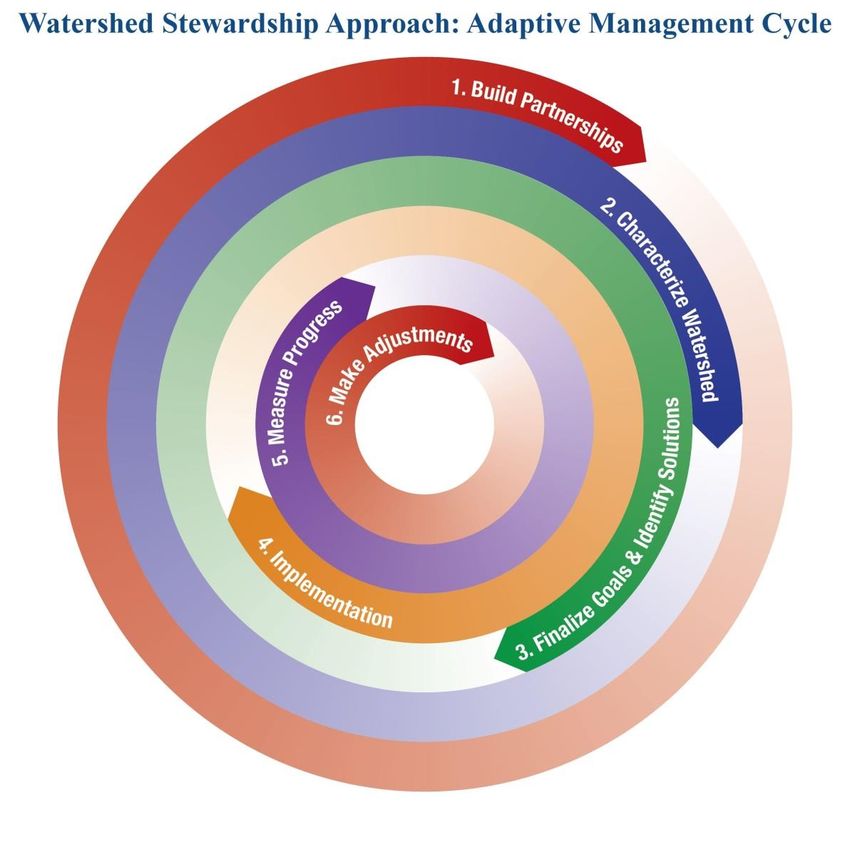
Planning and Stewardship Division
Division Workplan for FY 2019-2020

                                                         Contents

Fiscal Year (FY) 2019-2020 WORK PLAN ...................................................................... 1
1.0 BACKGROUND......................................................................................................... 4
  1.1      Planning Unit ...................................................................................................... 4
    1.1.1 Triennial Review of the Basin Plan ................................................................... 4
    1.1.2 Watershed Stewardship .................................................................................... 5
  1.2      Adaptive Management Unit ................................................................................ 5
  1.3      Flow and Riparian Protection Specialist ............................................................. 6
2.0 DIVISION RESOURCES ........................................................................................... 7
  2.1 Staff Resources ..................................................................................................... 7
    Table 1: Planning and Stewardship Division Staff ..................................................... 7
  2.2 Other Resources .................................................................................................... 8
3.0 ADAPTIVE MANAGEMENT PROGRAM .................................................................. 9
  3.1      Core Activity and Projects by Priority ................................................................. 9
    Table 2 – FY 2019-20 Adaptive Management Program Core Activities and Projects
    by Priority ................................................................................................................... 9
  3.2 Core Activity and Project Descriptions ................................................................... 9
    1.a       SWAMP Program.......................................................................................... 10
    1.b       303(d)/305(b) Integrated Report Program ..................................................... 12
    1.c       Grant Administration and Management ........................................................ 14
    Table 3: Existing Grant Projects............................................................................... 15
    1.d       CyanoHAB Monitoring and Response Program ............................................ 16
4.0 PLANNING PROGRAM .......................................................................................... 18
  4.1 Core Activity and Project Priorities ....................................................................... 18
    Table 4 – FY 2019-20 Planning Program Core Activities and Projects by Priority ... 18
  4.2 Core Activity and Project Descriptions ................................................................. 19
    2018 Triennial Review ............................................................................................. 19
    1.a       Russian River Pathogen TMDL Action Plan ................................................. 20
    1.b    Laguna de Santa Rosa Nutrient, DO, Sediment and Temperature TMDL
    Action Plan/Alternative Restoration Plan ................................................................. 20
    1.c       Climate Change Adaptation Strategy ............................................................ 22
    1.d    Instream Flow Criteria/Objectives for the Navarro River and Regionwide
    Narrative Flow Objective .......................................................................................... 23
Planning and Watershed Stewardship Division
Work Plan for FY 2019-2020
2.a. Laguna de Santa Rosa Nutrient, DO, Sediment and Temperature TMDL or
Alternative: Technical Support on Permit Development ........................................... 24
2.b TMDL Program Retrospective Review ............................................................... 25
2.c Outstanding National Resource Waters Amendment.................................... 26
2.d Tribal and Subsistence Fishing Beneficial Uses Revision ............................. 26
3.a Ocean Beaches and Freshwater Creeks Pathogen TMDL Action Plan/TMDL
Alternative ................................................................................................................ 27
3.b Groundwater Protection Strategy .................................................................. 28
3.c Biostimulatory Conditions Amendment ......................................................... 28
4.3 Performance Targets ........................................................................................... 29
Table 5 – Performance Targets for the last FY and proposed for FY 19/20............. 30
5.0 FLOW AND RIPARIAN PROTECTION PROGRAM................................................ 31
5.1 Core Activity and Project Priorities ....................................................................... 31
Table 6 – FY 2019-20 Flow and Riparian Protection Program Core Activities and
Projects by Priority ................................................................................................... 31
5.2 Core Activity and Project Descriptions ................................................................. 31
1.a Provide Expert Technical Guidance to Internal and External Partners in the
areas of Flow and Riparian Protection ..................................................................... 31
6.0 WATERHSED STEWARDSHIP PROGRAM ........................................................... 34
Table 7 – FY 2019-20 Watershed Stewardship Program Core Activities and Projects
by Priority ................................................................................................................. 35
1.a Watershed Stewardship – Program Coordination ......................................... 35
1.b Watershed Stewardship – Scott and Shasta TMDL Action Plans/WDR
Waivers Implementation .......................................................................................... 36
1.c Watershed Stewardship – Elk River TMDL Action Plan Implementation ...... 37
1.d Watershed Stewardship – Smith River Watershed ....................................... 39
1.e Watershed Stewardship – Klamath River ..................................................... 39
2.a Watershed Stewardship – Russian River Watershed Stewardship ............... 41
3Planning and Watershed Stewardship Division
Work Plan for FY 2019-2020
1.0 BACKGROUND
The Planning and Stewardship Division (Division) plays a unique role at the North Coast
Regional Water Quality Control Board (Regional Water Board). The Division is
responsible for developing and maintaining the planning, monitoring, assessment, and
stewardship functions of the office. These activities serve as the bedrock upon which
the Regional Water Board implements its vision of Healthy Watersheds, Effective
Regulation, and Strong Partnerships. The Planning and Stewardship Division is
divided into two units: the Planning Unit and the Adaptive Management Unit; and
includes the support of a Flow and Riparian Protection Specialist. The Planning and
Stewardship Division also works closely with the Watershed Stewardship Coordinator.
1.1 Planning Unit
The Planning Unit is responsible for maintaining the Water Quality Control Plan for the
North Coast Region otherwise known as the Basin Plan. The Basin Plan includes
information regarding the North Coast Region, as well as the regulations by which the
Regional Water Board implements the Porter-Cologne Water Quality Control Act. The
regulations include designation of beneficial uses; water quality objectives to protect
those uses; an antidegradation policy; and prohibitions, action plans, and policies by
which the water quality standards are implemented, including Total Maximum Daily
Load (TMDL) Action Plans. The Basin Plan provides the regulatory basis for the
permitting and enforcement activities of the office.
1.1.1 Triennial Review of the Basin Plan
Both the Planning and TMDL programs are guided by a workplan adopted by the
Regional Water Board, which identifies the priorities of the Planning Unit for a 3-year
period, as established during the triennial review of the basin plan. The Planning
Program Workplan for FY 2018-2021 was adopted by the Regional Water Board in
September 2018. The projects include:
· Russian River Pathogen TMDL Action Plan
· Laguna de Santa Rosa Nutrient, DO, Temperature and Sediment TMDL Action
Plan/TMDL Alternative
· Ocean Beaches and Freshwater Creeks Pathogen TMDL Action Plan/TMDL
Alternative
· TMDL Program Retrospective Review
· Groundwater Protection Strategy
· Instream Flow Criteria/Objectives for the Navarro River and Regionwide
Narrative Flow Objective
· Climate Change Adaptation Strategy, including identification/development of
landscape scale assessment tools to identify climate change vulnerabilities and
locations of potential resilience (ONRWs)
· Revision to Chapter 3 of the Basin Plan to include language on Outstanding
National Resource Waters (ONRWs)
4Planning and Watershed Stewardship Division
Work Plan for FY 2019-2020
· Revision to Chapter 3 of the Basin Plan to modify the biostimulatory substances
objective to address biostimulatory conditions
· Revision to Chapter 2 to update cultural and subsistence fishing beneficial uses
to be consistent with statewide beneficial uses
1.1.2 Watershed Stewardship
Watershed stewardship uses the principles of partnership, coordinated science and
monitoring, and adaptive management to leverage the resources of entities with shared
environmental goals, to maximize environmental benefit.
One of the results of an office-wide visioning process that concluded in 2014, was the
designation of two staff positions designed to further build and implement the agency’s
Watershed Stewardship Program. One watershed steward at 1.0 PY was assigned to
the Scott and Shasta watersheds to implement the TMDL Action Plans for those
watersheds, using partnerships, monitoring, adaptive management and effective
regulation to achieve watershed health. A second watershed steward at 1.0 PY was
assigned to the Elk River watershed for the same purpose. The agency is actively
pursuing the development of a third watershed steward position to build and implement
a watershed stewardship program in the Russian River watershed, as well. The
Watershed Stewardship Program is led by the Watershed Stewardship Coordinator, a
technical expert reporting directly to the Executive Officer.
Watershed Stewardship relies on the following steps for implementation:
· Build partnerships
· Characterize watersheds
· Establish watershed goals and identify solutions
· Implement identified solutions
· Measure progress
1.2 Adaptive Management Unit
The general function of the Adaptive Management Unit is two-fold: 1) to monitor and
assess surface water quality conditions and 2) to implement stewardship activities to
restore waters identified as impaired. There are many individual programs managed
within the Adaptive Management Unit, which are coordinated to accomplish these
general functions. They include:
· Surface Water Ambient Monitoring Program (SWAMP)
· Water Quality Assessment and 303(d)/305(b) Integrated Report
· Grants Administration and Management
· CyanoHAB Monitoring & Response Program
5Planning and Watershed Stewardship Division
Work Plan for FY 2019-2020
1.3 Flow and Riparian Protection Specialist
Another result of an office-wide visioning process concluded in 2014, was the
identification of flow and riparian protection as key issues inherently important to the
mission of the agency, but not comprehensively addressed through the Regional Water
Board’s existing programs. To better support the development of 1) inter- and intra-
agency coordination on these issues and 2) tools to further the agency’s mission on
these topics, the Regional Water Board established a Flow and Riparian Specialist
position, which is housed within the Planning and Watershed Stewardship Division.
The general functions of the Flow and Riparian Specialist include:
· Management of a cross-program Flow Strategic Team
· Management of the development of flow objectives, criteria, and other
assessment thresholds
· Coordination/collaboration with the Division of Water Rights
· Coordination/collaboration with other external partners
· Management of other flow and riparian-related special projects.
6Planning and Watershed Stewardship Division
Work Plan for FY 2019-2020
2.0 DIVISION RESOURCES
2.1 Staff Resources
Much of the work of the Planning and Stewardship Division is accomplished by the state
employees hired to positions within the Division. The staff resources of the Division are
listed in Table 1. Table 1 includes the technical, specialist, and management staff
dedicated to the Division, including the individuals, their position, classification and time
base. As shown in Table 1, there are currently 4.7 PYs vacant in the Division. Table 1
does not include 3 Scientific Aids, who are currently employed within the Division.
Scientific Aids are allotted 1500 hours of work during the calendar year, allowing them
to function as seasonal employees. Table 1 also does not include the portion of the
Administrative Unit’s time that is dedicated to supporting the Division.
Table 1: Planning and Stewardship Division Staff
Position Name Classification PYs
Division Chief Alydda Mangelsdorf EPM I 1.0
Flow and Riparian Specialist Bryan McFadden Senior WRCE 1.0
Adaptive Management Unit
Katharine Carter Senior ES 1.0
Senior
SWAMP Program Richard Fadness EG 1.0
Grants Program Michele Fortner ES 1.0
Grants Program/CyanoHAB
VACANT ES 1.0
Program
Integrated Report Program VACANT ES 1.0
Adaptive Management Program Ben Zabinsky1 WRCE 1.0
Basin Planning/TMDL Unit
Lisa Bernard Senior ES 1.0
Senior
Basin Planning/TMDL
Lance Le WRCE 1.0
Development
Basin Planning/TMDL
Kelsey Cody ES 1.0
Development
Basin Planning/TMDL
VACANT ES 0.7
Development
Basin Planning/TMDL
VACANT WRCE 1.0
Development
Basin Planning/TMDL
VACANT WRCE or EG 1.0
Development
10.5 PY of Mr. Zabinsky’s time is allocated to projects within the Point Source and Groundwater
Protection Division.
7Planning and Watershed Stewardship Division
Work Plan for FY 2019-2020
Position Name Classification PYs
Watershed Stewardship Elias Scott ES 1.0
Watershed Stewardship Chuck Striplen ES 1.0
Technical and
Specialist Staff 12.7
Total
Division Total 15.7
2.2 Other Resources
The Planning and Stewardship Division also relies on non-staff resources to accomplish
its work. These other resources can be divided into two categories: contracts and
grants.
Contract funds are generally made available through discretionary contract funds.
These funds are generally awarded on a competitive basis for professional services to
the Regional Water Board to conduct technical or other work, which requires special
expertise.
To support the statewide SWAMP Program, the State Water Board allots a portion of
the statewide program contract funds to each region to budget for region-specific
monitoring and analytical needs. The Office of Information Management and Analysis
(OIMA) manages several multi-year contracts that provide a variety of analytical and
support services to SWAMP both for statewide and regional projects. Each region
establishes a 3-year workplan in which it identifies its highest priority projects and the
portion of its overall allotment, which is budgeted for those projects. The current 3-year
workplan is for FY 2017-2020. However, due to contracting issues resulting from delays
in fully implementing the new Fi$Cal program, SWAMP projects have been
implemented on an adhoc basis in FY 2018-19 and will continue in FY 2019-20, with the
3-year workplan essentially on hold. Nonpoint source grants are made available through
the following funding sources: 319(h) or Timber Regulation and Forest Restoration
Fund. Grants are awarded on a competitive basis to entities implementing projects to
control nonpoint sources of pollution, which support the mission and vision of the
agency, such as restoration projects, BMP installations, and other similar projects.
The number and value of contracts and grants managed and implemented within the
Planning and Stewardship Division varies from fiscal year to fiscal year.
8Planning and Watershed Stewardship Division
Work Plan for FY 2019-2020
3.0 ADAPTIVE MANAGEMENT PROGRAM
3.1 Core Activity and Projects by Priority
The primary responsibilities of Adaptive Management Program staff are listed in Table 2
and categorized based on the priorities. Each priority is described in more detail in
Section 3.2, including the PYs allocated to individual programs, activities, and/or
projects.
Described in this section is the work of:
· 1.0 PY SWAMP Program staff
· 1.0 PY Grants Administration and Management staff
· 1.0 PY Grants Administration and Management/CyanoHAB Response Program
staff—position currently vacant
· 1.0 Integrated Report Program staff—position currently vacant
The duties of one position (listed as Adaptive Management Program staff in the above
table) are described in Section 5.0 as part of the Watershed Stewardship Program
description. The remainder of his duties are described in the Point Source Control and
Groundwater Protection Division workplan.
Table 2 – FY 2019-20 Adaptive Management Program Core Activities and Projects
by Priority
Priority
Activity/Project Category Deadline
Level
1 a. SWAMP Program Core On-going
February
1 b. 303(d)/305(b) Integrated Report Special
2020
1 c. Grant Administration and Management Core On-going
d. CyanoHAB Monitoring and Response
1 Core On-going
Program
a. Grant Administration and Management: Core-
2 On-going
Cultivate New Grant Projects New
3 No priority 3 projects currently
Priority 1 Programs/Projects are ones that barring unusual circumstances, are top priorities.
Priority 2 Programs/Projects are ones that may be put on hold if staff are diverted to other higher
priorities. Priority 3 Programs/Projects are ones that are currently unstaffed.
3.2 Core Activity and Project Descriptions
Activities and projects are listed below. Activities and projects are organized based on
program. They are also identified by the priority (1, 2, 3, etc.) and the letter (a, b, c, etc.)
listed in Table 2 above.
9Planning and Watershed Stewardship Division
Work Plan for FY 2019-2020
1.a SWAMP Program
The Surface Water Ambient Monitoring Program, or SWAMP, is a statewide monitoring
effort designed to assess the conditions of surface waters throughout the state of
California. The program is administered by the State Water Board. The responsibility for
implementation of monitoring activities resides with the nine Regional Water Quality
Control Boards that have jurisdiction over their specific geographical areas of the state.
To support the regions’ monitoring activities, the statewide SWAMP Program has
created a Quality Assurance (QA) program, developed a standardized data storage
system, created Standard Operating Procedures (SOPs) for sampling, generate peer
reviewed monitoring plans for each project, and regularly updates a water quality
indicator list to work from.
Region 1’s Planning and Stewardship Division includes a SWAMP Coordinator at 1.0
PYs. The SWAMP Coordinator implements the regional monitoring program for the
North Coast Region and coordinates with the State Water Board and other regions on
statewide monitoring efforts.
Task 1: Implement FY 2017-2020 SWAMP Workplan
Summary: With input from staff and management, the SWAMP Coordinator develops a
3-year workplan to direct SWAMP monitoring resources to the highest monitoring
priorities. The last workplan developed was for FY 2017-2020. Implementation of the
SWAMP Workplan is an on-going activity with field work conducted both during the
summer season (e.g., cyanoHAB) and winter season (e.g., stormwater runoff). The
SWAMP Coordinator conducts field sampling activities with assistance from Scientific
Aids and other program staff. The SWAMP Coordinator provides field equipment and
guidance to program staff who conduct monitoring activities to support their own project
work. The SWAMP Coordinator oversees contract work, as necessary. Key activities
and associated milestones are listed in the table below.
Key Issues to Resolve: Implementation of the FY 2017-2020 workplan has been
interrupted by delays at the State Board in renewing key SWAMP contracts. The State’s
difficulty with onboarding the Fi$Cal system has led to numerous contracting delays. As
a result, monitoring activities during the 2018-19 fiscal year, and for FY 2019-2020,
have been conducted on an adhoc basis, using existing in-house staff resources and
leftover contract funds, where available.
Milestones Target Date
Addendum to FY 2017-2020 SWAMP
September 2019
Workplan for FY 2019-2020: Memorandum
Smith River Water Quality Management
December 2019
Plan: Monitoring Plan
Cyanobacteria Visual Identification Guidance
December 2019
Document
10Planning and Watershed Stewardship Division
Work Plan for FY 2019-2020
Milestones Target Date
Statewide Cyanobacteria Monitoring
March 2020
Guidance for Rivers and Lakes
Task 2: Data Management and Assessment
Summary: The SWAMP Coordinator, with assistance from Scientific Aids, is
responsible for managing the data as received from the labs and conducting
assessment of the data to support policy decisions and watershed stewardship. Data
management and assessment is an on-going activity. The State Board expects 95% of
the data to be available within 2 years of sample collection and 50% of the data
available within 1 year of sample collection. The SWAMP Program processes ensure
these performance targets are met, with data being entered into CEDEN directly
following their analysis at the lab.
The SWAMP Coordinator assesses data using standard statistical and assessment
procedures. The SWAMP Coordinator produces data tables and charts illustrating water
quality violations, exceedance of thresholds, and trends.
Key Issues to Resolve: None
Milestones Target Date
Data summaries for Summer 2019
December 2019
Monitoring
Data summaries for Winter 2019-20
June 2020
Monitoring
Task 3: Assessment Reporting
Summary: On a periodic basis, the SWAMP Coordinator assembles multiple years of
collected data and data summaries to produce technical memorandums and/or
monitoring reports. These memos or reports are a key way to share the results of
publicly funded ambient water quality monitoring with interested stakeholders and the
general public.
· A report on the findings of the Eel River and Russian River Nutrient Study, with
monitoring conducted in 2010 in the Eel River and 2011 in the Russian River,
has been outstanding. A final report was scheduled to be completed by fourth
quarter FY 2018-19. The data collected from these studies has been assembled
in spreadsheets and analyzed. Summary tables and charts have been produced.
A conceptual model of the key biostimulatory interactions has been defined. And,
a draft report has been completed. A final report will be completed in FY 2019-
2020.
11Planning and Watershed Stewardship Division
Work Plan for FY 2019-2020
· A report on the findings of a 2016 survey of cyanoHABs in the Eel River and
Russian River has also been outstanding. A final report was scheduled to be
completed by fourth quarter FY 2018-19. A draft final report was delivered as
scheduled. Following management review, it will be finalized and posted on our
website in FY 2019-2020.
Key Issues to Resolve: The availability of a technical writer to assist with this periodic
task would improve our ability to more regularly produce memos or reports of SWAMP
Program data, which are suitable for a more general audience. In the meantime, a
Scientific Aid will be assigned to revising the draft Eel River and Russian River Nutrient
Study report, following the summer field sampling season.
Milestones Target Date
Eel and Russian River Nutrient Study Report December 2019
Fire Response Monitoring Fact Sheet December 2019
2016 Survey of CyanoHABs in the Eel River
March 2020
and Russian River
Task 4: Develop FY 2020-23 SWAMP Monitoring Workplan
Summary: The FY 2017-20 SWAMP Monitoring Workplan will expire at the end of FY
2020. A new 3-year workplan must be developed to identify the Region’s high priority
monitoring needs and develop projects to implement the limited funds. The SWAMP
Coordinator, with assistance from the Adaptive Management Unit Senior, will lead a
series of internal discussions by which to establish a draft plan for Management
approval.
Key Issues to Resolve: None
Milestones Target Date
Draft FY 2020-23 SWAMP Monitoring
March 2020
Workplan for Management Approval
1.b 303(d)/305(b) Integrated Report Program
Section 305(b) of the federal Clean Water Act requires states to assess the condition of
its waters and report its findings. Section 303(d) of the federal Clean Water Act require
states to identify water bodies that do not meet water quality standards and are not
supporting their beneficial uses. These waters are placed on the Section 303(d) List of
Water Quality Limited Segments (also known as the list of Impaired water bodies or
303(d) List).
California has integrated the 303(d) List of Impaired Waters and the 305(b) Water
Quality Assessment Report into a single report (Integrated Report). This Integrated
Report satisfies the requirements of both Clean Water Act Sections 303(d) and 305(b).
12Planning and Watershed Stewardship Division
Work Plan for FY 2019-2020
The State Water Board is responsible for producing an Integrated Report every 2 years.
Each report compiles and assesses data for 3 regions at a time. Region 1 is on a 6-year
cycle for inclusion in the 2012, 2018, and 2022 Integrated Reports. Staff are currently
working to complete assessments associated with the 2018 cycle.
The Planning and Watershed Stewardship Division includes an Integrated Report
Coordinator at 1.0 PYs. The Integrated Report Coordinator works with State and
Regional Water Board staff, federal and state agencies, tribes, non-governmental
organizations, and the public to assemble and assess water quality data from which to
determine the water quality status of North Coast waters for both the 303(d) List of
Impaired Waters and the 305(b) Water Quality Assessment Report.
Task 1: Assess data, develop lines of evidence, and develop decisions
Summary: A new Integrated Report Coordinator was hired in mid-2018 and trained,
along with multiple other program staff, in the process by which data is assessed to
develop lines of evidence and listing decisions for the Integrated Report. Lines of
evidence were schedule to be completed in 3rd quarter of FY 2018-19, followed by
listing decisions and a staff report to be completed in the 4th quarter of FY 2018-19. In
the 2nd and 3rd quarter of FY 2018-19, the Integrated Report Coordinator was diverted to
the Russian River Pathogen TMDL project. He assisted in the re-analysis of E. coli and
enterococci data for the Russian River, in accordance with the new statewide bacteria
objective that was adopted in August 2018. His role was to ensure that the data re-
analysis was conducted in a manner consistent with both the needs of the TMDL and
the 303(d) Listing Policy. His diversion from the management of the Integrated Report
project caused a delay in completion of FY 2018-19 milestones.
The Integrated Report Coordinator hired in 2018 has now left the position. Because of
the delay in the project and the length of time required to hire and train staff, the
Adaptive Management Unit Supervisor will be completing the work of the Integrated
Report Coordinator, putting aside her own duties until the project is complete.
Highlighted projects to be completed:
· Assessment of fish tissue data for mercury
· Assessment of benthic macroinvertebrate data
· Assessment of the Redwood Creek sediment data
· Complete Decisions for all pollutant/waterbody pairs
· Develop Staff Report
Key Issues to Resolve: Assistance from the State Water Board on the first two
highlighted projects above is needed.
Milestones Target Date
Complete lines of evidence, decisions and
December 2019
staff report ready for public review
13Planning and Watershed Stewardship Division
Work Plan for FY 2019-2020
Milestones Target Date
Bring proposed North Coast Integrated
March 2020
Report to Regional Water Board for adoption
1.c Grant Administration and Management
California implements a Nonpoint Source Grant Program (NPS Grant Program), which
is comprised of funds from a U.S. EPA Clean Water Act (CWA) section 319(h) grant to
the State Water Board (CWA 319 grant)[1] and from the Timber Regulation and Forest
Restoration Fund (Timber Fund) established by the State. These funds are allocated to
third party grantees on a competitive basis, to implement projects associated with
nonpoint source pollution control, remediation and restoration.
The Planning and Stewardship Division includes two staff at 2.0 PYs2, who administer
and manage the 319(h) and Timber Fund grants awarded for projects in the North
Coast Region. Staff in the Planning and Stewardship Division coordinate with staff in the
Nonpoint Source and Surface Water Protection Division to align program preferences,
solicit projects meeting the preferences, and develop the 5-year Nonpoint Source Plan,
which the Nonpoint Source and Surface Water Protection Division generates. The
agency is currently implementing the FY 2014-2020 Nonpoint Source Plan, which for
administrative reasons was constructed as a 6-year plan. The agency is currently
developing the 5-Year Nonpoint Source Plan for FY 2020-25.
Task 1: Manage Existing Grant Projects/Closeout Completed Grant Projects
Summary: Existing Grant Projects active in FY 2019-20 are listed below. Grant
management activities are ongoing and involve reviewing and approving invoices,
reviewing technical deliverables and providing comment, and approving final
deliverables.
[1]
U.S. EPA has final approval authority of all projects funded with CWA section 319 funds.
2One of the positions in Grants Administration and Management became vacant on May 23, 2019 due to
a retirement. The vacant position is expected to be filled during Q2.
14Planning and Watershed Stewardship Division
Work Plan for FY 2019-2020
Table 3: Existing Grant Projects
Grant Agreement Name Amount End date Grant Manager
Elk River Sediment Remediation Pilot
$638,557 3/31/2020 Elk River Steward
Implementation Projects
Mendocino Coastal TMDL
$800,000 3/31/2020 Grant Staff
Implementation
Shasta River Watershed Stewardship Scott and Shasta
$341,204 6/30/2020
Implementation Project River Steward
Scott River Watershed Stewardship Scott and Shasta
$333,623 3/30/2021
Implementation Project River Steward
Eel River Road Sediment Treatment
$693,047 12/31/2021 Timber Staff
and Inventory Project
Trinity River Watershed Roadside Fuel
$250,503 11/30/2021 Grant Staff
Reduction Project
Elk River Stewardship Program $251,346 3/31/2020 Elk River Steward
Post-Fire Best Management Practices
in the Mark West Creek, Maacama $500,000 6/30/2022 Grant Staff
Creek, and Laguna de Santa Rosa
Post-Fire Recovery from the Redwood
$749,507 6/30/2022 Grant Staff
Fire
Key Issues to Resolve: The payment of grantee invoices has been delayed due to the
State’s transition to Fi$Cal. This has caused some grantees significant financial
hardship. Some grantees find the requirements associated with the 319(h) Program
overly burdensome, declaring they are unlikely to be applying for these funds in the
future. Where one or both issues have affected otherwise successful and dependable
grantees who conduct valuable nonpoint source pollution control and abatement work,
the mission of the agency significantly suffers.
Task 2: Develop Grant Agreements for New Grant Projects
Summary: Grant projects funded in FY 2018-19 will begin implementation in FY 2019-
20 following the development of grant agreements. The development of a grant
agreement requires facilitation between the grantee, the grant manager, and the State
Water Board. Once a grant agreement is finalized and the project begins, it is added to
the Existing Grant Projects table above and ongoing grant management activities
ensue.
Key Issues to Resolve: Fill the current 1.0 PY vacant position in the Grants
Administration and Management Program. The person who fills this position will act as
the Region’s CyanoHAB Coordinator 50% of his/her time.
15Planning and Watershed Stewardship Division
Work Plan for FY 2019-2020
Milestones Target Date
Complete a grant agreement for the Large
Wood Augmentation, Phase II, in Sediment
March 2020
Impaired Watersheds in the North Coast
Region
Complete a grant agreement for the
Mendocino Coast TMDL Implementation March 2020
Program, Phase II
Task 3: Cultivate Grant Projects to Address the High Priority Nonpoint Source-
Related Water Quality Impairments
Summary: Successful watershed stewardship relies on our ability to cultivate external
partners with whom we share environmental goals. Specific to the Grants Administration
and Management Program is the cultivation of successful grantees who can implement
on-the-ground nonpoint source remediation and restoration projects necessary to
returning impaired watersheds to a trajectory of recovery. A portion of the current vacant
Grants Administration and Management Program position will be devoted to this task.
The cultivation of successful grantees is particularly important given the competitive
nature of the nonpoint source grant funding, the high administrative burden associated
with the 319(h)-grant program in particular, and the long delays in state payment given
Fi$Cal. The duties associated with this activity are ongoing. There are no specific
milestones for FY 2019-20.
The Nonpoint Source Program preferences for FY 2019-20 are listed below. These
preferences describe the areas within which grant applications will be accepted this
fiscal year. The grant preferences are updated each fiscal year.
· Elk River- Implement management measures to address sediment
· Scott River- Implement management measures to address sediment and
increase effective shade
· Shasta River – Implement management measures to address low dissolved
oxygen and elevated temperatures
· Eel River – Implement management measures or practices to reduce sediment
discharges, restore riparian vegetation, reconnect floodplains to stream
channels, reduce instream temperatures, and increase groundwater recharge
Key Issues to Resolve: Same as Task 2 above.
1.d CyanoHAB Monitoring and Response Program
In recent years, there has been an increased frequency and severity of cyanobacteria
harmful algal blooms (cyanoHABs) around the world, including the North Coast Region.
The Regional Water Board has received reports of freshwater nuisance blooms and
16Planning and Watershed Stewardship Division Work Plan for FY 2019-2020 algal scums, animal illnesses, and on occasion, human health impacts within the North Coast. The risk factors that contribute to freshwater cyanoHABs and nuisance blooms include nutrient (phosphorus and nitrogen) enriched waters, warming climate, reduced riparian shade, channel aggradation, and lower flows. The Regional Water Board is working to reduce risk factors through its water quality improvement programs. There is a current need to manage freshwater cyanoHAB blooms through improved monitoring, assessment, and increased educational outreach. Regional Water Board staff are collaborating with county public and environmental health officials and other federal, state, county, and non-governmental organizations to address these needs. The role of CyanoHAB Coordinator has been played by various staff over the years, not as a defined position, but as assigned duties due to the high priority. The current vacant Grants Administration and Management Program position will be specifically defined as a 50% CyanoHAB Coordinator position. Should state funding for cyanoHAB response work become available, the Region hopes to receive funds to establish a full-time position for this important work. The CyanoHAB Coordinator participates in state-wide program development efforts and manages the region’s outreach and response to toxic cyanobacteria blooms, primarily during the summer months when blooms are most abundant. The CyanoHAB Coordinator is supported by the water quality monitoring efforts of the SWAMP Coordinator and special studies conducted in collaboration with multiple other external entities, including research organizations. Task 1: Coordinate with Internal and External Partners on CyanoHAB Response Summary: Coordinate with regional partners to ensure cyanoHAB monitoring, review data, and post warnings, as warranted. Host and manage website. Host coordination meetings. Host educational forums to further the knowledge of cyanoHABs, monitoring techniques, and public health risks. Participate in statewide roundtables. Provide updates to the public and Regional Water Board. Key Issues to Resolve: Fill the current 1.0 PY vacant position in the Grants Administration and Management Program. The person who fills this position will act as the Region’s CyanoHAB Coordinator 50% of his/her time. Negotiate with the State Water Board on the allocation of a full 1.0 PY for a CyanoHAB Response position, should additional state funds become available. 17
Planning and Watershed Stewardship Division
Work Plan for FY 2019-2020

4.0 PLANNING PROGRAM
4.1 Core Activity and Project Priorities

The core activities and responsibilities of program staff are prioritized as listed in Table
4. These projects and activities are also categorized in Table 4 as either core or special.
Planning staff engages in core category activities on an as needed basis, while the
special category projects and activities receive staff support with a discrete beginning
and end. Each priority is described in more detail in Section 4.2, including the PYs
allocated to individual programs, activities, and/or projects.

Table 4 – FY 2019-20 Planning Program Core Activities and Projects by Priority

 Priority
                           Activity/Project                  Category      Deadline
  Level
    1       a. Adopt Russian River Pathogen TMDL                            August
                                                              Special
               Action                                                        2019
            b. Laguna de Santa Rosa Nutrient, DO,
     1                                                                    December
               Sediment, and Temperature TMDLs or             Special
                                                                            2021
               Alternative (EPA Vision Project)
     1      c. Climate Change Adaptation Strategy             Special     June 2020
            d. Instream Flow Criteria/Objectives for the
     1         Navarro River and Regionwide Narrative         Special     FY 2024-25
               Flow Objective
            a. Laguna de Santa Rosa Nutrient, DO,
     2         Sediment and Temperature TMDL or
                                                                Core       On-going
               Alternative: Technical Support on Permit
               Development
     2      b. TMDL Program Retrospective Review              Special     FY 2020-21
     2      c. Outstanding Natural Resource Waters
                                                              Special     FY 2020-21
               Amendment
     2      d. Tribal and Subsistence Fishing
                                                              Special     FY 2020-21
               Beneficial Uses Revision
                                                                          FY 2020-21
     3       a. Ocean Beaches and Freshwater Creeks
                                                              Special      Currently
                Pathogen TMDL or Alternative
                                                                           Unstaffed

     3       b. Groundwater Protection Policy                 Special     June 2021

                                                                          FY 2020-21
     3       c. Biostimulatory Conditions Amendment           Special      Currently
                                                                           Unstaffed

18
Planning and Watershed Stewardship Division
Work Plan for FY 2019-2020
Priority 1 Programs/Projects are ones that barring unusual circumstances, are top priorities.
Priority 2 Programs/Projects are ones that may be put on hold if staff are diverted to Priority 1
Projects/Programs. Priority 3 Programs/Projects are ones that are currently unstaffed.
Described in this section is the work of 4.7 PYs Basin Planning and TMDL Development
staff. 2.7 PYs of this total are currently vacant positions. The work of the remaining 2.0
PYs Watershed Stewardship staff is described in Section 5.0, Watershed Stewardship
Program.
4.2 Core Activity and Project Descriptions
Activities and projects are listed below. Activities and projects are organized based on
program. They are also identified by the priority (1, 2, 3, etc.) and the letter (a, b, c, etc.)
listed in Table 4 above. Some project/activity groupings may be identified with multiple
priorities, depending on the subtasks associated with the project/activity.
2018 Triennial Review
The 2018 Triennial Review was adopted by the Regional Water Board in September
2018. The 3-year workplan establishes the proposed approach to accomplishing the
priority projects identified during the triennial review of the Basin Plan, assuming full
staffing, funding for necessary contract support, and no diversions of staff time to other
high priority work. The planning projects identified as a high priority for the period of FY
2018-21 are in order of priority:
1. Russian River Pathogen TMDL and Action Plan
2. Laguna de Santa Rosa Nutrient, Dissolved Oxygen, Temperature and Sediment
TMDL Action or TMDL Alternative
3. Ocean Beaches and Freshwater Streams Pathogen TMDL or TMDL Alternative
4. TMDL Program Retrospective Review
5. Russian River Sediment TMDL Action Plan or TMDL Alternative
6. Groundwater Protection Strategy
7. Instream Flow Criteria/Objectives for the Navarro River and Regional Flow
Objective
8. Landscape scale assessment tool to assess water quality impacts of climate
change
9. Revise Basin Plan to include ONRW definition and designate waters
10. Biostimulatory Substances Objective
11. Revise Native American Culture and Subsistence Fishing beneficial use
definitions and designations
Work planning for these projects is described below in the order of the projects listed in
Table 4 above.
19Planning and Watershed Stewardship Division
Work Plan for FY 2019-2020
1.a Russian River Pathogen TMDL Action Plan
Reaches of the Russian River watershed are listed on the Clean Water Act 303(d) list of
impaired waters due to the presence of fecal indicator bacteria (FIB). High
concentrations of FIBs may indicate the presence of pathogenic organisms that are
found in warm blooded animal waste, including human waste. Pathogens pose a
potential health risk to people who recreate in contaminated waters. Water quality
monitoring conducted as part of the development of a pathogen TMDL for the Russian
River watershed confirmed the presence of FIB in locations throughout the watershed.
The Planning and Stewardship Division Chief and the Point Source Control and
Groundwater Protection Division Chief are the acting staff on this project. Their division
management duties will be put on hold to allow focus on completing the project, as
necessary, prior to hearing.
Task 1: Adopt Russian River Pathogen TMDL Action Plan
Summary: Bring the Russian River Pathogen TMDL Action Plan to the Regional Water
Board for adoption. Assemble the administrative record to bring the adopted TMDL
Action Plan to the State Water Board, Office of Administrative Law, and USEPA for
approval.
Key Issues to Resolve: An adoption hearing for August 14, 2019 has been scheduled
and noticed. At the time this Work Plan is being drafted, Staff are in the process of
responding to 21 comment letters covering many topics. Vacancies within the Division
limit the staff resources assigned to this top priority project.
Milestones Target Date
Regional Water Board Adoption September 2019
State Water Board Approval March 2020
OAL Approval June 2020
USEPA Approval September 2020
1.b Laguna de Santa Rosa Nutrient, DO, Sediment and Temperature TMDL
Action Plan/Alternative Restoration Plan
The Laguna de Santa Rosa is a subwatershed of the larger Russian River watershed. It
is listed on the Clean Water Act 303(d) list of impaired waterbodies due to water quality
impairments associated with nutrients, low dissolved oxygen, elevated temperature and
excess sediment. Basin Planning/TMDL Development staff are developing a TMDL
Action Plan/Alternative Restoration Plan to address these impairments. The City of
Santa Rosa and Town of Windsor implement NPDES permits with discharge limitations
for phosphorus of zero. A Water Quality Trading Framework was adopted by the
Regional Water Board in 2018, which guides the offset of point source discharges of
phosphorus from the City or Town by implementation of nonpoint source, remediation
and/or restoration projects as an offset of any point source phosphorus discharge. A
20Planning and Watershed Stewardship Division
Work Plan for FY 2019-2020
framework for a Russian River Regional Monitoring Program (R3MP) was completed in
Spring 2019 via contract with Aquatic Sciences Center. Also, Staff participate in a
master restoration planning effort of the Sonoma Water via a contract with Aquatic
Sciences Center. Each of these programs require ongoing efforts to further their
development and implementation.
This position was vacant for many months during FY 2018-19. The position is now filled.
A 1.0 PY Basin Planning and TMDL Development staff is assigned to this project.
Task 1: Complete the technical analyses necessary to propose TMDLs or
alternatives
Summary: Manage the contract with Tetra Tech to ensure completion of the technical
analyses necessary to develop and propose TMDLs or alternatives. Coordinate with
inhouse staff on completion of the shade model to develop temperature TMDL.
Key Issues to Resolve: None.
Milestones Target Date
Review and approve technical reports on
sediment and nutrient budgets, linkage June 2020
analysis, targets and allocations
Review in-house shade model and develop
June 2020
temperature targets and allocations
Task 2: Develop Library of Pre-Approved Practices for the Water Quality Trading
Framework
Summary: As an ongoing effort, coordinate with stakeholders to populate the library of
pre-approved practices in accordance with the documentation required in the approved
Water Quality Trading Framework.
Key Issues to Resolve: None.
Task 3: Develop a Funding Strategy to Support the Implementation of R3MP
Summary: As an ongoing effort, coordinate with stakeholders to develop and
implement a funding strategy to support implementation of R3MP.
Key Issues to Resolve: None.
Task 4: Participate in the Development of a Master Restoration Plan
Summary: Attend Technical Advisory Committee, Management Advisory Committee,
and public meetings hosted by Sonoma Water and/or Aquatic Sciences Center in the
effort to develop a Master Restoration Plan for the Laguna de Santa Rosa.
21Planning and Watershed Stewardship Division
Work Plan for FY 2019-2020
Key Issues to Resolve: None.
1.c Climate Change Adaptation Strategy
The 2018 Triennial Review planning priorities adopted by the Regional Water Board
included as a high priority, the development of a Climate Change Adaptation Policy.
Staff was hired with experience in climate change modeling to begin the development of
a landscape scale geospatial tool to assess the potential water quality impacts arising
as a result of various climate change scenarios, including: impacts due to sea level rise,
more intense winter storm events punctuated with longer periods of drought, alterations
in the pH of ocean and bay waters, alteration in floral and faunal species composition
and extent, etc. This geospatial tool is intended to link with various climate change
scenarios to allow assessment of the water quality issues of most concern and the
locations in the region most vulnerable, to prioritize efforts accordingly. Basin Planning
efforts that could result from this evaluation include the development of: seasonal
beneficial uses and objectives, natural conditions clause, policy for the protection of
groundwater recharge areas, policy for the sustainable management of floodplain and
riparian function, designation of Outstanding National Resource Waters, and others.
There is 1.0 PY Basin Planner/TMDL Developer position assigned to this and other
technical tasks associated with planning and TMDL development.
Task 1: Document Existing Climate Change Assessment Tools
Summary: Staff will draft a series of memoranda describing existing climate change
landscape assessment tools applicable to key sectors of water quality interest including
sea level rise, fires, drought, and floods. Each memorandum will each provide an
overview of the existing publicly available tools, describe applicable benefits and
shortcomings, and provide recommendations for Reginal Water Board programs
applicability.
Key Issues to Resolve: None
Milestones Target Date
Technical memoranda on applicable climate
change assessment tools addressing sea March 2020
level rise, fires, drought, and floods
Task 2: Develop Landscape Scale Assessment Tool
Summary: A landscape assessment tool is envisioned as a vehicle by which staff may
assess waterbodies for climate change vulnerability, resiliency, and eligibility for ONRW
status that offering transparency for the general public. This landscape assessment tool
is currently proposed as a web-based platform, toolbox or “dashboard” with various
tools or modules available to the user. Through this dashboard, the public and agency
staff can leverage relevant datasets to better understand the health of given
22Planning and Watershed Stewardship Division
Work Plan for FY 2019-2020
waterbodies and subject these data to analyses. Region 1 staff is currently working with
OIMA staff to advance this tool.
Key Issues to Resolve: Parameters related to vulnerability, resiliency (i.e. watershed
health) and criteria to assess ONRW eligibility for use in the landscape assessment tool
remain to be determined. Staff is working with the Healthy Watersheds Initiative
Partnership and State Water Board staff to discern key watershed health parameters to
use for assessment. In addition, the availability of data varies from waterbody to
waterbody across the region. The alpha version of the landscape ssessment tool will be
used to compare assessment results from data rich and data poor watersheds, clarify
data needs, develop scientifically acceptable and defensible methodologies for using
indicator parameters and imputing data where necessary.
Milestones Target Date
Completed alpha version of a landscape
June 2020
assessment tool
1.d Instream Flow Criteria/Objectives for the Navarro River and Regionwide
Narrative Flow Objective
Originally established by the 2014 Triennial Review as a priority, the development of
instream flow criteria/objectives for the Navarro River also calls for staff to evaluate
other rivers as candidates for future flow criteria development, as warranted. Further,
this project calls for staff to develop a regional narrative flow objective and
corresponding implementation methodology.
This project is managed by the Flow and Riparian Specialist, a 1.0 PY position that is
contained within the Planning and Watershed Stewardship Division. The Flow and
Riparian Specialist reports directly to the Division Chief.
Task 1: Implement Phase 2 of 3 on the Navarro Flow Objective Development
Project
Summary: Phase 2 of 3 requires the development of a hydrodynamic model and data
to populate it. The estimated cost for implementation of Phase 2 is well beyond what is
currently available as discretionary contract money. Staff is coordinating with Division of
Water Rights to seek a pared down version of the Phase 2 recommendations that might
be funded under an existing contract with the Division. These discussions are ongoing
without a schedule.
Key Issues to Resolve: Negotiate a pared down approach to data collection and
modelling and seek funding.
Task 2: Develop Narrative Flow Objective and Implementation Procedures
23Planning and Watershed Stewardship Division
Work Plan for FY 2019-2020
Summary: The Flow and Riparian Specialist in conjunction with the Flow Workgroup
will be developing draft narrative flow objective language and implementation
procedures as a white paper ready for Executive Team review and discussion.
Following internal agreement on the appropriate approach, the white paper will be
updated and submitted to the Division of Water Rights for their review and discussion.
Once full agreement on the approach is accomplished, a draft basin plan amendment,
including a staff report will be developed and submitted for scientific peer review, in FY
2020-21.
Key Issues to Resolve: None
Milestones Target Date
Develop white paper with narrative flow
objective and implementation approach for March 2020
Executive Team review
Update white paper for review at the Division
June 2020
of Water Rights
2.a. Laguna de Santa Rosa Nutrient, DO, Sediment and Temperature TMDL or
Alternative: Technical Support on Permit Development
Multiple point and non-point sources within the Laguna de Santa Rosa watershed
contribute to nutrients, low dissolved oxygen, elevated temperature and excess
sediment impairments. In concert with development of the Laguna de Santa Rosa
TMDL and TMDL Action Plan/Alternative Restoration Plan Planning staff will work with
program implementation staff to develop the technical basis for permit criteria to
address watershed impairments.
Task 1: Provide Technical Support in the Development/Renewal of Permits
Applicable to the Laguna
Summary: On an adhoc basis, Basin Planning/TMDL Development Staff will provide
technical support to:
· NPDES Unit on renewal/implementation of City of Santa Rosa and Town of
Windsor permits
· NPDES Unit on renewal/implementation of MS4 permits
· Groundwater Permitting Unit on development of a Vineyard permit
· Southern Nonpoint Source & Forestry Unit on renewal/implementation of the
Dairy permit
Key Issues to Resolve: None.
24Planning and Watershed Stewardship Division
Work Plan for FY 2019-2020
2.b TMDL Program Retrospective Review
Since its inception in the 1980s, the TMDL Program in the North Coast Region has
produced dozens of TMDLs addressing multiple pollutants, but primarily focused on
sediment, temperature, and nutrients. In addition to these “technical” TMDLs, the Basin
Plan includes the following TMDL Action Plans and implementation policies.
· Action Plan for the Garcia River Sediment TMDL
· Action Plan for the Shasta River Temperature and Dissolved Oxygen TMDLs
· Action Plan for the Scott River Sediment and Temperature TMDLs
· Action Plan for the Klamath River Temperature, Dissolved Oxygen, Nutrient, and
Microcystin TMDLs
· Action Plan for the Upper Elk River Sediment TMDL
· Sediment TMDL Implementation Policy
· Temperature Implementation Policy
The Sediment TMDL Implementation Policy and Temperature Implementation Policy
direct staff to use existing tools to control the discharge of sediment and protect stream
flows and riparian shade to restore water quality conditions in impaired waters.
The North Coast’s TMDL Program has matured to such a degree that it is time to
assess its success not just on the individual watershed scale, but on a programmatic
scale. A TMDL Program Retrospective Review is intended to assess the requirements
of each TMDL, evaluate how those requirements have been implemented, assess
existing data to determine if implementation is showing success, and develop
recommendations to inform the future of the TMDL program.
A team of Planning staff was assembled last fiscal year and generated a charter and
general scope of work. The team consisted of 3 Planning Unit staff.
Task 1: Finalize a Project Workplan and Schedule
Summary: The project team was meant to finalize a project workplan and schedule by
third quarter last fiscal year. Other priorities superseded and a workplan and schedule
have not yet been developed.
Milestones Target Date
Develop a project workplan and schedule December 2019
Task 2: Develop, Populate and Analyze Data from a TMDL Program Water Quality
Database
Summary: Develop a database or tracking system within which to house water quality
data associated with all the TMDL watersheds in the Region. Assess data availability,
data gaps, and trends.
25You can also read


