REAL ESTATE 2020 BUILDING THE FUTURE - PWC
←
→
Page content transcription
If your browser does not render page correctly, please read the page content below

As confidence returns to real estate, the industry faces a number of
fundamental shifts that will shape its future.
We have looked into the likely changes in the real estate landscape over
the coming years and identified the key trends which, we believe, will have
profound implications for real estate investment and development.

Real Estate 2020
Building the future

                                                                              pwc.co.nz

Contents

Part one: Introduction                                                                                                 4

Part two: Real estate’s changing landscape                                                                             8
1. Huge expansion in cities, with mixed results                                                                         9
2. Unprecedented shifts in population drive changes in demand for real estate                                         12
3. Emerging markets’ growth ratchets up competition for assets                                                        14
4. ‘Sustainability’ transforms design of buildings and developments                                                   16
5. Technology disrupts real estate economics                                                                          18
6. Real estate capital takes financial centre stage                                                                   20

Part three: Implications for real estate strategies                                                                  22
1. Think globally                                                                                                     23
2. Understand the underlying economics of cities                                                                      24
3. Factor technology and sustainability into asset valuations                                                         25
4. Collaborate with governments to enable economic and social progress                                                26
5. Decide where and how to compete                                                                                    27
6. Assess opportunities to reflect a broader range of risks                                                           28

Part four: Success factors                                                                                           30
1. A global network with local knowledge and good government relations                                                31
2. Specialist expertise and innovation                                                                                32
3. Cost management and scale                                                                                          34
4. The right people                                                                                                   35

Part five: Conclusion                                                                                                37

Contacts                                                                                                             38

                                                                                PwC Real Estate 2020: Building the future 3
Part one

Introduction
   It’s March 2020. Ahmed Naneesh, chief investment officer of a sovereign wealth
   fund and steward of one of the world’s largest real estate portfolios, is chairing
   a panel at the Singapore World Real Estate Forum, 2020’s leading real estate
   event. The topic for debate is ‘Building the Future – Surging Demand for
   Real Estate Capital’.
   In the past few years, demand for private capital for real estate investment and supporting infrastructure has increased
   enormously. In the emerging economies, the great migration to the cities, growing population and swelling middle class
   are creating a desperate need for more urban real estate. In the advanced economies, the cities are also growing, although
   not so rapidly, while technology, demographics and environmental issues are becoming new value drivers. As Ahmed’s
   panellists relate (and the forum organisers broadcast on the Web to watchers worldwide), real estate as an asset class is
   changing fast. Mega real estate managers are emerging, which are building and investing in real estate on an epic scale;
   yet, small specialist managers are also playing a significant part. The landscape is becoming more widespread and complex,
   with a wider range of risk and return than ever, plus new drivers of value.

                                                Looking forward to 2020 and beyond, the real estate investment industry will find
                                                itself at the centre of rapid economic and social change, which is transforming the
                                                built environment. While most of these trends are already evident, there’s a natural
                                                tendency to underestimate their implications over the next six years and beyond.
                                                By 2020, real estate managers will have a broader range of opportunities,
                                                with greater risks and new value drivers. As real estate is a business with long
                                                development cycles – from planning to construction takes several years – now is the
                                                time to plan for these changes.

                                                Already, thousands of people migrate from country to city across Asia, the Middle
                                                East, Latin America and Africa on a daily basis, attracted by the new wealth of these
                                                economies. By 2020, this migration will be firmly established. The cities will swell
                                                – and some entirely new ones will spring up. Meanwhile, the growing emerging
                                                markets’ middle class and ageing global population are increasing demand for
                                                specific types of real estate. Subsectors such as agriculture, education, healthcare
                                                and retirement will be far bigger by 2020.

Disclaimer:
This paper makes a number of predictions and presents PwC’s vision of the future environment for the asset management industry.
These predictions are, of course, just that – predictions. These predictions of the future environment for the asset management industry
address matters that are, to different degrees, uncertain and may turn out to be materially different than as expressed in this paper. The
information provided in this paper is not a substitute for legal and other professional advice. If any reader requires legal advice or other
professional assistance, each such reader should consult his or her own legal or other professional advisors and discuss the specific facts
and circumstances that apply to the reader.

4 PwC Real Estate 2020: Building the future
High energy prices, climate change           Figure 1: Global institutional-grade RE
and government regulation are already
pushing sustainability up the real estate       In USD trn                                                      = Compound Annual Growth Rate
agenda, but by 2020, their impact will
                                                50
be far greater. Technology is already                                                                                           45.3
disrupting real estate economics, but           45                                                                   5.8%
by 2020, it will have reshaped entire           40
                                                                                              3.9%
sectors. And the real estate community          35                                                                              20.3
will have taken a greater role in the                                   8.2%
                                                30                                                       29.0
financial ecosystem, in part moving into        25                                 23.8
the space left by banks.                                                                                 10.3
                                                20           18.9                   6.9
                                                                       14.6%                  8.1%                   8.9%
Our fictional forum illustrates some            15            4.6
                                                                        5.9%                  2.0%                   3.7%
elements of this change. We believe the                                                                                         25.0
                                                10                                 16.9                  18.7
new era of real estate investment, to            5
                                                             14.3
2020 and beyond, is the beginning of a           -
time of unprecedented opportunity for                        2004                  2007                  2012                  2020
real estate investors and asset managers,
                                               n Developing countries n Developed countries
although with greater risk. The global
stock of institutional-grade real estate       Source: PwC analysis

will expand by more than 55% from
US$29.0 trillion in 2012, to US$45.3
trillion in 2020, according to our           Figure 2: Relative size of institutional-grade RE per region
calculations. It may then grow further to
US$69.0 trillion in 2030 (see page 7 for       100%
explanation of methodology). This huge
                                                90%
expansion in investable real estate will
be greatest in the emerging economies,          80%
where economic development will lead            70%
to better tenant quality and, in some
                                                60%
countries, clearer property rights. And it
will play out across housing, commercial        50%
real estate and infrastructure. Indeed,         40%
as intense competition continues to
                                                30%
compress investment yields for core real
estate, real estate managers will have          20%
every incentive to search for higher            10%
yields elsewhere.                                    0
                                                               2004                  2007                 2012                   2020
On the next page, we highlight our six
                                                n Latin America n Sub-Saharan Africa n Developing Asia Pacific n Middle East and North Africa
predictions about what this means for           n Commonwealth of Independent States & Central and Eastern Europe n North America n Euro Area
real estate managers and the investment         n Asia Pacific
community. After that, we describe our         Source: PwC analysis
view about the likely changes in the
landscape, their possible implications
and how we believe you should prepare
for this fast-changing world

                                                                                                       PwC Real Estate 2020: Building the future 5
Six predictions for 2020 and beyond – in brief:
   The changing real estate landscape will have substantial implications for the
   real estate investment community, which we highlight below and describe in
   more detail in Part three: Implications for real estate strategies.

   1.	The global investable real estate universe will expand substantially,
       leading to a huge expansion in opportunity, especially in emerging
       economies. World population growth and increasing GDP per capita will
       propel this expansion. By 2020, investable real estate will have grown by
       more than 55% compared to 2012, according to PwC forecasts, and then will
       expand by a similar proportion in the following decade.

   2.	Fast-growing cities will present a wider range of risk and return
       opportunities. Cities will present opportunities ranging from low risk/
       low yield in advanced economy core real estate, to high risk/high reward in
       emerging economies. The greatest social migration of all time – chiefly in
       emerging economies – will drive the biggest ever construction surge.

   3.	Technology innovation and sustainability will be key drivers for
       value. All buildings will need to have ‘sustainability’ ratings, while new
       developments will need to be ‘sustainable’ in the broadest sense, providing
       their residents with pleasant places to live. Technology will disrupt real
       estate economics, making some types of real estate obsolete.

   4.	Collaborating with governments will become more important. Real
       estate managers, the investment community and developers will need to
       partner with government to mitigate risks of schemes that might otherwise
       be uneconomic. In many emerging economies, governments will take the
       lead in developing urban real estate and infrastructure.

   5.	Competition for prime assets will intensify further. New wealth from
       the emerging economies will intensify competition for prime assets; the
       investment community will need to think laterally to earn attractive returns.
       They might have to develop assets in fast-growing but higher risk emerging
       economies, or specialise in the fast-growing subsectors, such as agriculture,
       retirement, etc.

   6.	A broader range of risks will emerge. New risks will emerge. Climate
       change risk, accelerating behavioural change and political risk will be key.

   In order to prepare for these implications, the real estate investment
   organisations will need to make sure they have the right capabilities and
   qualities, as described in Part four: Success factors.

6 PwC Real Estate 2020: Building the future
Figure 3: Trends in institutitional-grade RE per region

                                                                                     Latin America

                                                                                Sub-Saharan Africa

                                                                          Developing Asia Pacific

                                                                                   Middle East and
                                                                                      North Africa
                                                                 Commonwealth of Independent
                                                            States & Central and Eastern Europe

                                                                                    North America

                                                                                        Euro Area

                                                                                       Asia Pacific

                                                                                                      0   2   4        6         8         10         12

                                                               n 2004 n 2007 n 2012 n 2020                                                      In USD trn

                                                              Source: PwC analysis

                                                              Forecast methodology notes
                                                              The forecast for the value of institutional-grade real estate assets is based
                                                              on a model that utilises economic activity as measured by GDP, based on
                                                              2011 Purchasing Power Parity and the observation that in a fully developed
                                                              economy, institutional-grade real estate represents about 45% of GDP.1 In
                                                              developing economies, the amount of institutional real estate is adjusted
                                                              downward from the 45% base. The classification developed vs. developing
                                                              economy is accomplished using a ratio of GDP per capita in the country to a
                                                              predetermined threshold for each year. The rationale for this adjustment is
                                                              that in developing economies, less institutional real estate is required to meet
                                                              the needs of the economy and the quality of a majority of tenants would not
                                                              satisfy the criteria of RE institutional investors. Although the forecast has not
                                                              been adjusted for properties’ obsolescence, this factor can be noted from the
                                                              absolute projections for construction, and therefore to be considered by the
                                                              investment community.

1	Prudential Real Estate Investors: ‘A Bird’s Eye View of Global Real Estate
   Markets’, 2012 update, February 2012.

                                                                                                                  PwC Real Estate 2020: Building the future 7
Part two

Real estate’s changing
landscape

Global megatrends will
change the real estate
landscape considerably
in the next six years and
beyond. While many of
the trends highlighted are
already evident, there’s
a natural tendency to
underestimate how much
the real estate world will
have changed by 2020.

8 PwC Real Estate 2020: Building the future
1
Huge expansion in cities,
with mixed results

                                                       By 2020, the 21st century’s great migration to the cities will be well underway. Cities
   n	By 2050, the urban                               will be swelling across the fast-growing countries in Asia, Africa, the Middle East
                                                       and Latin America. Even the developed Western nations will be urbanising, albeit
      population will increase
                                                       at a slower pace. But not all cities will prosper. While some become great centres of
      by 75% to 6.3 billion,                           wealth creation in a multipolar world, others are likely to fail.
      from 3.6 billion in 20102
                                                       The volume of building activity will be huge, expanding the world’s inventory of
   n	By 2025, there will                              institutional-grade real estate. Global construction output is expected to almost
                                                       double to US$15 trillion by 2025, up from US$8.7 trillion in 2012.5 Emerging
      be 37 ‘megacities’, up                           markets in Asia will be the fastest growing region, but sub-Saharan Africa is expected
      from 23 today, and                               to be the second highest.
      12 of these will be in
                                                       Yet the philosophy of ‘build it and they will come’ won’t prove universally successful.
      emerging markets3                                Some cities will grow and become creative hubs, generators of economic growth.
                                                       Others will destroy wealth, with poor infrastructure, slums and rampant crime.
   n	1.5 million residents                            Others still will be ghost towns. In some countries, the density of main cities will
      a month will move to                             drive people away, to rural environments or satellite cities.
      Chinese cities for the
      rest of this decade4                             Figure 4: World urban population from 1950 to 2050

                                                           Population in millions

                                                          7,000

                                                          6,000

                                                          5,000

                                                          4,000

                                                          3,000

                                                          2,000

                                                          1,000
2	Source: United Nations, Department of Economic
   and Social Affairs, Population Division (2012).
   World Urbanization Prospects: The 2011 Revision.           0
                                                                  1950

                                                                         1955

                                                                                1960

                                                                                       1965

                                                                                              1970

                                                                                                     1975

                                                                                                            1980

                                                                                                                   1985

                                                                                                                          1990

                                                                                                                                 1995

                                                                                                                                        2000

                                                                                                                                               2005

                                                                                                                                                      2010

                                                                                                                                                             2015

                                                                                                                                                                    2020

                                                                                                                                                                           2025

                                                                                                                                                                                  2030

                                                                                                                                                                                         2035

                                                                                                                                                                                                2040

                                                                                                                                                                                                       2045

                                                                                                                                                                                                              2050

3	Source: United Nations, Department of Economic
   and Social Affairs, Population Division (2012).
   World Urbanization Prospects: The 2011 Revision.
                                                         n Rest of world n Asia n Africa
   Megacities have populations exceeding 10 million.
4	Harvard Business Review blog (Jan 2013),              Source: United Nations, Department of Economic and Social Affairs, Population Division (2012). World
   Euromonitor.                                          Urbanization Prospects: The 2011 Revision
5 Global Construction 2025, July 2013.

                                                                                                                                                      PwC Real Estate 2020: Building the future 9
Figure 5: Urban and rural population trends
Millions WORLD Millions EUROPE
7,000 700
6,000 600
In China, India and the Middle East,
5,000 500
entire new cities will be built, using
4,000 400 eco-efficient technologies to reduce their
environmental impact. Governments
3,000 300 and the investment community may
need to work together to fund and build
2,000 200
these cities and their infrastructures.
1,000 100 Masdar City in Abu Dhabi, Jaypee Sports
City in India and Sejong City in South
0 0 Korea are just a few of the entirely new
1950
1960
1970
1980
1990
2000
2010
2020
2030
2040
1950
1960
1970
1980
1990
2000
2010
2020
2030
2040
2050
2050
cities. But it’s unlikely that all of the new
cities planned will attract the residents
–– Urban –– Rural –– Urban –– Rural forecast, as the high vacancy rates in
some of Asia’s newest cities already
Millions ASIA Millions AFRICA
show.
3,500 1,400
China, the world’s most populous nation,
3,000 1,200 will see the biggest migration of all.
Millions of people every month will live
2,500 1,000 the new ‘Chinese dream’, moving to the
cities in search of a prosperous middle-
2,000 800 class existence. Across Africa, the Middle
East and Latin America, too, the cities
1,500 600
will swell as people move in search of a
1,000 400 better life.
500 200 But urbanisation is not just an emerging
markets’ phenomenon. The developed
0 0 world’s cities are growing at a huge
1950
1960
1970
1980
1990
2000
2010
2020
2030
2040
2050
1950
1960
1970
1980
1990
2000
2010
2020
2030
2040
2050
rate as well. London’s population, for
example, is forecast to rise to 10 million
–– Urban –– Rural –– Urban –– Rural by 2031, up from 8.3 million today.6
Much of this population rise comes from
Millions LATIN AMERICA Millions NORTH AMERICA
the overspill of the new wealthy in,
and from, emerging markets, seeking a
700 450
luxury home in Europe. In 2013, some
400 US$35.7 billion of cross-border capital
600
350 was invested in London, making it the
500 top recipient of capital worldwide.7 In
300
the US, developments such as New York’s
400 250 Hudson Yards Redevelopment Project
300 200 will expand the cities.
150
200
100
100
50
0 0
1950
1960
1970
1980
1990
2000
2010
2020
2030
2040
2050
1950
1960
1970
1980
1990
2000
2010
2020
2030
2040
2050
–– Urban –– Rural –– Urban –– Rural
Source: United Nations, Department of Economic and Social Affairs, Population Division (2012). World
6 Financial Times, ‘London & the World: the future of
Urbanization Prospects: The 2011 Revision
the city’, December 2013.
7 Jones Lang LaSalle, Global Capital Flows Report,
Q4 2013.
10 PwC Real Estate 2020: Building the futureConnections to road, rail and public
transport are proving vital for urban Singapore forum debate:
success. Consequently, demand for
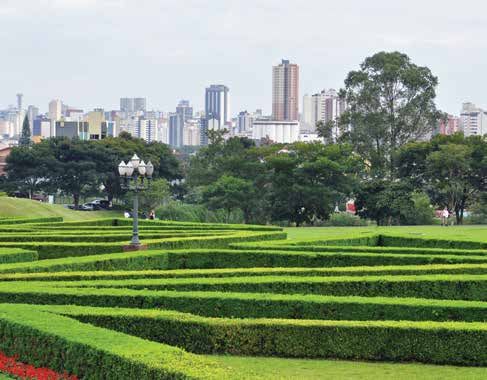
Brazil has two very different experiences of urbanisation, the mayor of
infrastructure spending and investment
Curitiba, a city in the east of the country tells the forum. For 50 years,
is likely to run at US$1 trillion a year
his city has carefully implemented an agenda of sustainability, creating
for the next 20 years in the 40 most
large pedestrian areas, green spaces, prioritising public transport and
important emerging markets.8 Private
encouraging high-tech industries. By contrast, some of the country’s
developers and local authorities are
larger cities have become dysfunctional, with high unemployment, poor
working together to make sure they
infrastructure and rampant crime. Curitiba’s GDP per capita far exceeds
integrate adequate infrastructure, and
that of Brazil’s other cities, and it’s held up as a model for urbanisation in
especially public transport, into cities’
Latin America and beyond.
urbanisation plans. In the case of entire
new cities, public finance is often playing
a leading role.
As successful cities attract more and
more people, so the cost of prime
urban real estate per square metre will
continue to rise. Affordability will fall,
leading to greater urban density and
smaller apartments. Developers will
become more innovative about how
they design and build commercial and
residential real estate, seeking to use
space more efficiently. And construction
techniques such as prefab and possibly
even 3D copying, offer potential for fast,
cheap and eco-friendly development.
Come 2020, cities will be competing
fiercely with each other. While some
cities will develop and thrive, others may
fail to provide the jobs needed to support
their growing populations. Those that
emerge as their region’s leading cities
are likely to provide opportunities for
attractive returns for the investment
community.
Affordability will fall, leading to greater urban density and smaller
apartments. Developers will become more innovative about how
they design and build commercial and residential real estate,
seeking to use space more efficiently.
8 The Infrastructure Challenge for Emerging Markets, RBS/Cambridge University, October 2011.
PwC Real Estate 2020: Building the future 112
Unprecedented shifts in
population drive changes in
demand for real estate
Demographic shifts will affect demand for real estate fundamentally. The burgeoning
By 2050: middle-class urban populations in Asia, Africa and South America will need far more
housing. Meanwhile, the advanced economies’ ageing populations will demand
n the world population specialist types of real estate, while their requirements for family homes will
moderate.
will be 9.3 billion, up
more than 50% from Although Africa’s population will still be growing fast in 2020, Europe’s population
6.1 billion in 20009 growth will be stalling. The middle classes are projected to grow by 180% between
2010 and 2040, with the highest proportion of middle-class people set to live in Asia
n the number of people rather than Europe as soon as 2015. And between 2010 and 2020, more than one
billion additional middle-class consumers will emerge globally.11
over 60 will exceed the
number under 15 for Cities will attract the young middle classes, especially in emerging markets. As
the first time10 intense competition for space increases urban density, apartments are likely to
shrink. Developers will need to become more innovative about how they use space.
n Spain will have the The global population will age at an unprecedented pace. The number of people
oldest population, aged 60 or older will increase by 2.8% per annum from 2025 to 2030.10 As the world
Niger the youngest10 ages, the cost of retirement and healthcare will become critical issues, reaching crisis
proportions in some countries, as opposed to the looming concern of today. The
speed of change over the next generation is alarming: the old-age dependency
ratio for the world is forecast to reach 25.4% in 2050, up from 11.7% in 2010.12
The developing countries have the youngest populations, but they will also have the
fastest pace of population ageing, giving them the least time to adapt in the years
following 2020.
The advanced economies’ ageing population will limit house price rises. The Bank for
International Settlements’ analysis of advanced economies estimates that the US will
suffer pricing deflation averaging about 80 basis points per annum in real prices over
the next 40 years, with the impact greater still in continental Europe and Japan.13
9 Source: United Nations, Department of Economic and Social Affairs, Population Division (2012). World
Urbanization Prospects: The 2011 Revision.
10 World Population Ageing 1950–2050, United Nations.
11 Source: European Environment Agency; OECD Development Centre; PwC analysis.
12 Source: ‘Old-age dependency ratios’, The Economist, 9 May 2009. Measures the number of elderly people
(65+) as a share of those of working age (15–64).
13 ‘Ageing and asset prices’, Bank for International Settlements, August 2010.
12 PwC Real Estate 2020: Building the futureFigure 6: Projected old-age dependency ratio
Population aged 65 years and over, as % of population aged 15–64
80
70
60
50
Population growth and ageing will 40
lead to several real estate subsectors 30
emerging. While office, industrial, retail
and residential will remain the main 20
sectors, affordable housing, agriculture, 10
healthcare and retirement will become
significant subsectors in their own right. 0
2000 2010 2020 2030 2040 2050 2060
The larger global population’s greater
food consumption will continue to –– EU –– Brazil –– China –– India –– Indonesia –– Japan Mexico Russia Turkey USA World
increase interest in agricultural land, Source: Eurostat and United Nations, Department of Economic and Social Affairs, Population: World
and the older population will need Population Prospects, 2010 revision
more nursing homes and retirement
accommodation.
Figure 7: Proportion of the world population aged 60 years or more
So, shifting demographic trends are
likely to create a huge need for new and
different real estate by 2020 and beyond. 25%
Residential real estate will become
20%
more specialised, with local and cultural 21%
differences influencing exactly how this 15%
evolves. For example, city apartments
for young professionals may be smaller, 10%
10% 8%
without kitchens or car parks; there’s
likely to be a range of retirement 5%
accommodation for the elderly; and
families in some emerging economies
might well live in gated communities
outside the city centres.
1950 2000 2050
Source: UN report World Population Ageing 1950–2050
Figure 8: Median age by region
Singapore forum debate:
Wei Long, a banker from Age
Shanghai, lives in China’s
50
most populated city. It has also
become Asia’s leading service 45
centre, the regional hub for 40
finance and related industries. 35
But professional couples with
30
young families are now migrating
25
out of the city, once they have
children, making the lifestyle 20
choice of residing in more rural 15
areas and commuting to work 10
by high-speed rail. What’s more,
5
the city’s growing cohort of
wealthy pensioners is moving 0
2010 2015 2020 2025 2030 2035 2040 2045 2050
to purpose-built retirement
villages. Real estate subsectors are
–– Africa –– Asia –– Europe –– Latin America –– North America
emerging with distinct risk-return
characteristics. Source: United Nations, Department of Economic and Social Affairs, Population Division,
World Population Prospects: The 2012 Revision, New York, 2013.
PwC Real Estate 2020: Building the future 133
Emerging markets’
growth ratchets up
competition for assets
Real estate is an integral part of the emerging markets’ growth phenomenon. In
n By 2020, emerging India, for example, real estate has played a large part in driving economic growth.
Even as growth moderates in many emerging markets, the pace of construction
markets will dominate
activity remains rapid, increasing investment opportunities. Yet, growth is only part
the world’s top five of the story. The rise of emerging economies is also increasing competition among
economies14 real estate managers and the investment community.
n By 2025, emerging By 2025, over 60% of all construction activity is forecast to take place in emerging
markets, up from just 35% in 2005.15 Looked at another way, the following nations
markets will host 60% will account for 72% of expected construction activity: China, the US, India,
of global construction Indonesia, Russia, Canada and Mexico. Emerging Asia is expected to be the fastest
activity15 growing region for construction between now and 2025, followed by sub-Saharan
Africa. Nigeria alone will need almost 20 million new homes compared to 2012.
n By 2025, Nigeria will
The growth of emerging countries is rapidly creating powerful new real estate
need nearly 20 million players and new asset managers. As a result, there is both growing competition for
new homes compared to real estate assets and growing competition within real estate asset management.
201215
A recent survey by Preqin showed that 54% of all sovereign wealth funds (SWFs)
invest in real estate, with most SWFs from the Middle East and North Africa and
Asia.16 SWFs are increasingly competing for prime assets – with the survey showing
that 57% of SWFs that invest in real estate have a preference for core real estate.
This indicates that competition from SWFs for prime real estate in the world’s major
cities, already a significant force, might well further intensify as their assets continue
to grow.
As emerging markets mature, so new regional and local asset management (AM)
companies with real estate arms are forming. With good connections with local
developers and links with regional institutional investors, they’re in a stronger
position than most Western asset managers to take advantage of growth in their
home regions. By 2020, it’s likely that some of these managers will have become
major global players, perhaps partly through acquiring rivals in Europe or North
America (in other industries, it has become common for Chinese companies to
acquire companies based in the West).
Looking out to 2020, it seems likely that intraregional real estate investment might
follow existing high-growth trade routes, further increasing cross-border capital
14 Euromonitor International, Forecast: World’s
Largest Economies in 2020, May, 2013. Using flows. Within emerging economies, for example, there are particularly strong trade
purchasing power parity. (Top economies will be: flows between Asia and Latin America, and between Africa and the Middle East.
1. China; 2. US; 3. India; 4. Japan; 5. Russia).
15 Global Construction 2025, July 2013.
16 2014 Preqin Sovereign Wealth Fund Review.
14 PwC Real Estate 2020: Building the futureEmerging Asia is expected to be the fastest growing region for
construction between now and 2025, followed by sub-Saharan
Africa.
Figure 9: Relative GDP per region
Singapore forum debate:
100% In some of Africa’s most fast-
90%
expanding cities there’s scope
to earn high returns, according
80%
to Giles, a specialist real estate
70% asset manager based in Dubai,
60% which by 2020 has extended its
position as the regional financial
50%
centre for the Middle East and
40% North Africa to include sub-
30% Saharan Africa. His funds have
been financing shopping mall
20%
developments, earning excellent
10% returns as sub-Saharan Africa’s
0 population expands rapidly – yet
2004 2007 2012 2020 there are risks that he doesn’t
n Latin America n Sub-Saharan Africa n Developing Asia Pacific n Middle East and North Africa face in developed markets. Last
n Commonwealth of Independent States & Central and Eastern Europe n North America n Euro Area year, he adds, a dispute with a
n Asia Pacific
local developer stalled one of his
Source: PwC analysis
projects. But he’s factored such
risks into his return projections.
Figure 10: Annual average housing completions 2012–2025
India 11,507,476
China 9,326,381
Indonesia 1,513,865
US 1,485,966
Nigeria 1,484,362
Brazil 1,389,872
Mexico 742,780
Russia 572,517
UK 220,046
Australia 194,148
Germany 186,499
Saudi Arabia 184,135
Poland 167,560
Source: Global Construction 2025
PwC Real Estate 2020: Building the future 154
‘Sustainability’ transforms
design of buildings and
developments
Cities contribute an estimated 70% of the world’s energy-related greenhouse gases
n With a fast-growing while occupying just 2% of its land.18 Their locations – often in low-elevation coastal
zones – and large populations make them particularly vulnerable to the impacts
population, by 2030
of climate change, such as rising sea levels. As the world rapidly urbanises, so the
we’ll need: pressures to make buildings more eco-efficient are mounting.
– 50% more energy Quite how great this pressure becomes between now and 2020 depends on how
sensitive the weather proves to be to climate change, and how fast energy prices
– 40% more water rise. If extreme weather devastates a major city or destroys an annual food crop
then pressure will mount, possibly with substantial new regulations. What’s more,
– 35% more food17 if energy price rises continue at the current rate, pressure will increase to improve
buildings’ energy efficiency, although exploitation of new energy sources could
n By 2050, there mitigate the pressure somewhat.
could be 200 million By 2020, it’s likely that all buildings in advanced economies will need to have
environmental refugees sustainability ratings. What’s more, the concept of sustainability will have
worldwide18 broadened to mean creating ‘places’ where people enjoy living and working. So, new
developments will be designed with green spaces, good air quality, spaces for social
gathering and so on.
Already, developers are integrating sustainability criteria into prime office buildings,
new cities and individual homes. New eco-cities such as Tianjin in China and
Masdar City in Abu Dhabi aim to have zero-waste and zero carbon emissions, while
existing cities such as Tokyo in Japan and Malmö in Sweden simply aim for urban
revitalisation. Green office buildings incorporate renewable energy technologies,
waste reduction and greater use of natural light to improve economic, social and
environmental performance.
For real estate asset managers, the move towards greater sustainability in building
design presents opportunities and risks. While sale prices do reflect buildings’
sustainability credentials to a degree – through a ‘green premium’ – this is currently
limited to certain types of prime real estate in advanced economies. If the pressure
to increase buildings’ eco-efficiency mounts faster than the market currently
anticipates, then many buildings could suffer a large ‘brown discount’.
17 PwC/ULI’s Emerging Trends 2014 presentation. For Americas, November 2013.
18 UN-HABITAT ‘Cities and Climate Change: Global Report on Human Settlements 2011’.
16 PwC Real Estate 2020: Building the futureEvidence is emerging of the green
Figure 11: GRESB quadrant model
premium. In California, for example,
single-family homes sold between
GRESB Global Average
2007 and 2012 with green labels from Green Walk Green Stars
certification agencies Energy Star, LEED
100
or Greenpoint Rated, commanded a
price premium of 9%.19 Anecdotally, poor
Implementation & Measurement
sustainability characteristics are already 80
undermining values of office buildings
in prime districts of some Western 60
European cities, although much depends
on the local area.
40
Looking forward to 2020, retrofitting 2013
2012
existing buildings to improve their 2011
20
performance is expensive, but what will
happen to their value if this is not done?
And will the premium for sustainable 0
buildings continue to rise, or is there a 0 25 50 75 100 25 50 75
danger of a green bubble? There’s likely Green Starters Management & Policy Green Talk
to be far more emphasis on the whole- Source: 2013 GRESB report
life value of an asset.
Singapore forum debate:
Bill, a Dallas-based accountant from a leading professional services firm,
tells the forum how there’s now a strong business case for ‘green’ buildings
in the US. Not only do they significantly lower running costs, but also they
help relations with a range of stakeholders, and particularly new employees,
such as the brightest MBA students, who want to work in sustainable
buildings with high-quality working conditions. As a result, the additional
expense of construction is outweighed by future rental value.
19 The Value of Green Labels in the California Housing Market, July 2012.
PwC Real Estate 2020: Building the future 175
Technology disrupts
real estate economics
Technology is finally coming to real estate. By 2020, it will have both altered the
n 49% of all UK sales of economics of entire subsectors of the industry, and changed the way that real estate
developers and the investment community operate.
electrical goods will be
online by 201820 Most strikingly, the need for physical space is already shrinking across most real
estate subsectors. Entire retail chains are disappearing from the high streets
n In 2017, the global of Western countries in sectors such as video, as their customers move online.
social network audience Meanwhile, as online shopping delivery times become shorter, so the need for
warehousing close to customers is growing.
will total 2.55 billion,
up more than 70% from In retail, we believe that stores will always have a role to play, although in sectors
1.47 billion in 201221 such as books, music and video the majority of goods will be bought online. Sectors
such as health and beauty, and homeware are likely to prove more resilient. The
secret will be to combine physical and online retail on a single operating platform.
For example, shopping centres that mix shopping with restaurants, entertainment
and social life are likely to remain appealing.
Meanwhile, the requirement for office space is also likely to diminish. Telecommuting
is just in its infancy and is likely to grow substantially in the next few years. As office
culture becomes more accepting of videoconferencing rather than meetings, and
as digital files replace paper, so people may spend more time working from satellite
offices and home.
We think these trends are likely to alter real estate economics more than is currently
anticipated. Beyond 2020, the generation that has grown up in the digital world
will dominate consumer spending and the culture of work. Social networks will
help to determine where and how people will want to live, work and recreate. At the
same time, shrinking technological barriers will make online shopping still more
appealing, perhaps through drone delivery. And telecommuting will become more
practical – for example as you can easily access database applications through tablet
computers.
20 PwC Total Retail (November, 2013); Verdict Research.
21 eMarketer, ‘Worldwide Social Network Users: 2013 Forecast and Comparative Estimates’.
18 PwC Real Estate 2020: Building the futureFor developers, technology advances
Figure 12: Online market penetration by category, 2006-2018, UK
will make eco-efficient building more
practical. The technologies behind smart
% Online share of total market
appliances, smart metres, smart building
100 management systems, integrated
90 distribution management systems and
80 city-wide energy management systems
are continually becoming more advanced
70
and affordable.
60
50 Technology even has the potential to
40 transform real estate asset managers’
own operations. They’ll make far
30
more use of ‘mobility’ technology that
20
facilitates telecommuting, while also
10 embracing data management techniques
0 such as data warehousing. With real
2006 2007 2008 2009 2010 2011 2012 2013 2014 2015 2016 2017 2018 estate a business where small numbers
–– Books, music & video –– Electrical, apparel, homewares, DIY, beauty & furniture –– Grocery of people manage large amounts of data,
Source: Retail in Turmoil, PwC 2013 relating to tenants, buildings, etc., it is
natural to expect a significant increase in
use of data analytics.
Looking forward to 2020, real estate
Singapore forum debate: players really need to understand how
Grace, a delegate from Sydney, tells how technology is transforming the technology is effecting their sector.
real estate investment business she works in. Not only has it made certain
types of retail real estate obsolete, but now the country’s banks have closed
down almost all their branches as retail financial services becomes a virtual
business, with e-tailers disrupting the sector through their distribution
power. Technology has also transformed how her employer uses data to
manage its portfolio and judge tenant demand. One of the company’s rivals
has recently been forced into a merger – an event that she attributes entirely
to its falling profitability, following strategic decisions that did not fully
appreciate technology’s power to change.
PwC Real Estate 2020: Building the future 196
Real estate capital takes
financial centre stage
Private capital will play a critical role in funding the growing and changing need for real
n The global stock of estate and its supporting infrastructure. Just as asset managers, real estate funds and
Sovereign Wealth Funds find the assets under their control swell, so governments will
institutional-grade real
have increasing needs for capital to finance urbanisation. Private real estate capital will
estate will expand by become an important partner of governments.
more than 55% from
PwC estimates that the broad AM sector will see assets under management (AuM)
2012 to 202022 swell to US$101.7 trillion by 2020, up from US$63.9 trillion today. The global
growth in AuM will come from three different sources: the shift towards individual
n Asset management retirement plans, the surge in high-net-worth individuals (HNWI) in emerging
assets to rise almost markets and growth in SWF assets. PwC anticipates that, across the entire AM sector,
60% to US$101.7 retirement assets will grow from US$33.9 trillion in 2012 to US$56.5 trillion in 2020;
trillion by 202023 the HNWI sector will expand from US$52.4 trillion to US$76.9 trillion; the SWF
sector from US$5.2 trillion to US$8.9 trillion.
n Alternative asset This compares with our calculation that the stock of institutional investment grade
allocation expected to real estate will expand by more than 55% from US$29.0 trillion in 2012, to US$45.3
grow 30% by 202023 trillion in 2020, according to our calculations. It may then grow further to US$69.0
trillion in 2030.
Private capital will step in to fill the gap left by banks and insurers as a result of
regulations that require reduction in their exposure to real assets. The international
Basel III bank capital guidelines and US Dodd-Frank regulations have increased the
Figure 13: Client AuM USD Trillion
Clients 2004 2007 2012 2020
Pension funds 21.3 29.4 33.9 56.5
Insurance companies 17.7 21.2 24.1 35.1
SWF 1.4 3.3 5.2 8.9
HNWI 37.9 50.1 52.4 76.9
Mass affluent 42.1 55.8 59.5 100.4
Source: PwC analysis. Past data based on Credit Suisse Global Wealth Data Book, SWF Institute, The City UK, OECD and Insurance Europe.
Note: Differences in sums are due to rounding. The sum of AuM by clients does not equal the sum of AuM by products shown above due to double counting.
The sum of the assets of all clients will also include double counting as a part of the assets of Mass affluent and HNWI will be invested with insurance companies and pension funds.
22 PwC Real Estate 2020 research, February 2014.
23 PwC Asset Management 2020, February 2014.
20 PwC Real Estate 2020: Building the futuresize the capital buffer lenders have to
Figure 14: Global AuM projection for 2020
hold as protection against possible future
losses and require that banks better
AuM in USD trn = Compound Annual Growth Rate
match the duration of their own funding
to their loans. So while banks’ willingness 120 6.0%
to fund prime real estate may be strong, 101.7
their appetite could diminish if lending 100 1.4%
13.0
becomes higher risk or longer term.
Meanwhile, the EU Solvency II Directive 80 16.8%
63.9
has reduced the ability of European 59.4 47.5
60 6.4
insurers to invest, although Asian insurers 5.3
are likely to remain highly active. 9.3%
40 37.3 28.8 30.4
2.5 5.7%
Studies show that institutional investors
18.7
are raising allocations to real assets. 20 5.4% 41.2
25.4 27.0
In a survey of institutional investors 16.1
managing US$1.9 trillion, 72% said 0
they would be more likely to invest in 2004 2007 2012 2020
real estate than any other asset class in n Mutual funds n Mandates n Alternative investments
Source: PwC analysis. Past data based on Hedge Fund Research, ICI, Preqin, Towers Watson, and
2013.24 For example, Norway’s US$810 The City UK data.
billion oil fund, the world’s largest
SWF, has targeted raising its property
allocation already significantly by 2015,
compared to 2013. Figure 15: Share of active, alternative and passive within Global AuM
As the balance of wealth shifts south AuM 2012 (USD trn) AuM 2020 (USD trn)
7.3
and east to the developing nations,
so the sources of assets are changing, 50.2
66.0 22.7
influencing where real estate asset 11%
6.4
22%
managers distribute and market their
funds. The emergence of growing new 10%
institutional investors such as Asian
SWFs and pension funds will change
worldwide capital flows. Many invest 13%
mainly in their home countries, but over
the next six years they’re likely to look
79% 65% 13.0
increasingly to international markets.
Already, real estate asset managers are
beginning to take a more central place in
the financial ecosystem. Since the financial n Passive n Alternative n Active
crisis, real estate asset managers stepped Source: PwC analysis. Past data based on ICI, Lipper, Hedge Fund Research, Preqin, The City UK
into the funding gap left by banks in some and Towers Watson.
countries. By 2020, they’re also likely to
have developed new investment fund
structures that address the shortcomings
that the financial crisis exposed in both
closed-end and open-end funds, related to Singapore forum debate:
transparency and liquidity. From Nairobi, Mark, a veteran African real estate investor, describes the
specialist African agriculture, urban development and retail centre funds
But there will be challenges. A consistent
that are being introduced by local real estate managers. But he predicts a
campaign of anti-tax avoidance measures,
wide spectrum of success and failure – while some might garner 20% per
driven by the OECD since the Base
annum returns, difficulties with unreliable local developers, planning and
Erosion and Profit Shifting (BEPS)
poor urban planning are likely to lead to poor returns from others.
report in 2013 will see asset managers
operating in a world where country-by-
country reporting of profits, tax paid and
employee numbers is the norm. Fiscal
pressure may mount due to bankrupt
local and state governments’ cross-border
capital flow restrictions and tax reforms.
24 AMP Capital Institutional Investor Report, Q1 2013.
PwC Real Estate 2020: Building the future 21Part three
Implications for
real estate strategies
Figure 16: Implications for real estate strategies
The changing landscape
will have major
implications for real Understand
estate investment and Think globally
the underlying
economics of
development. It will cities
increase the size of the
asset pool, yet change
the nature of investment
Assess Factor
opportunities. Real estate opportunities Real Estate technology and
organisations will need to reflect a Strategy for sustainability
broader range
to adapt early to survive of risks
2020 into asset
valuations
and prosper.
Collaborate with
Decide how governments to
and where to enable economic
compete and social
progress
Expansion and globalisation of real estate will lead to greater opportunity
Fast-growing cities will present a wider range of risk and reward
Technology and sustainability will be key drivers of value
Working in partnership with governments will be more important
Intense competition for core assets will force asset managers and the investment
community to focus on where they have competitive advantage
Increased opportunity will be accompanied by greater and more diverse risks
22 PwC Real Estate 2020: Building the future1
Think globally
The real estate market will become far bigger and more global. As mentioned earlier
Expansion and in this paper, we forecast that institutional-grade real estate will expand by more
than 55% from US$29.0 trillion in 2012, to US$45.3 trillion in 2020, according to
globalisation of real
our calculations. It may then grow further to US$69.0 trillion in 2030. For the real
estate will lead to greater estate investment community, this expansion will lead to a much greater range of
opportunity opportunities.
Subsector themes will emerge which can be exploited on a global basis. Specialists
are already emerging in areas such as agriculture, education, retirement villages,
high-end shopping centres and new urban development. In future, these themes will
become far more established. What’s more, the real estate investment community
will be able to match them to their own specific needs – for example for funds with
shorter maturities and differing return profiles.
Economies of scale will become more important. Some of today’s large global
managers will become mega-managers, with a foot in all geographies and channels.
Some of these mega-managers will expand inorganically through acquiring smaller
managers with specific market or specialist property expertise.
But real estate is a business where local knowledge is key. So there will always be
a place for local and niche players. And those mega-managers that lose sight of the
importance of local knowledge will suffer.
In future, real estate players will need a higher degree of
specialist expertise in their chosen areas and locations of
activity, plus greater foresight to identify investment trends at
an early stage within each market.
PwC Real Estate 2020: Building the future 232
Understand the
underlying economics
of cities
New institutional-grade real estate locations will emerge as the world becomes
Fast-growing cities will multipolar. In countries such as China, India and the Gulf states, entire new cities
are being built, while in countries such as Brazil, Mexico, Nigeria, South Africa and
present a wider range of
Turkey, existing cities are developing fast.
risk and reward
These cities are competing with each other to become dominant regional service
centres. Cities that win these competitive battles and emerge as generators of wealth
will provide attractive new prime investment opportunities.
The real estate investment community can deploy urbanisation
strategies ranging from higher risk opportunistic development,
to lower risk prime investment. But no matter which approach
they choose, they’ll need a clear strategic view of why a city
will be successful.
24 PwC Real Estate 2020: Building the future3
Factor technology
and sustainability into
asset valuations
Rapid changes in the application of digital technology will continue to reduce
Technology and demand for retail and office space, while increasing demand for new types of
warehousing, close to the customer. What’s more, the investment community will
sustainability will be key
learn to make use of smart data to add value. By monitoring tenant information, real
drivers of value estate owners will be able to judge demand and make better investment decisions.
The advance and commoditisation of technologies will also accelerate the ‘greening’
of buildings. As the cost of improving buildings’ environmental performance falls
in line with the lower costs of technological innovations such as solar panels and
efficient heating systems, so occupiers will demand these enhancements and be
willing to pay a premium for them. Similarly, they’ll require office and residential
buildings designed with ample natural light and good air quality. Prime office and
residential buildings with poor sustainability performance in advanced economies
will suffer a ‘brown discount’, sometimes leading to a shorter operational life.
From an operational perspective, real estate management has a relatively low-
tech infrastructure. Illustrating this point, only 40% of asset managers are actively
involved in social media, other than hosting a website.25 By 2020, technology will
have become mission-critical. It will drive customer engagement, data mining for
information on clients and potential clients, operational efficiency, and regulatory
and tax reporting. What’s more, customers’ demands for seamless, integrated and
tailored solutions will only be met through better use of technology.
If real estate players don’t understand these new value drivers
they’ll be at a competitive disadvantage.
As the costs of improving buildings’ environmental performance
falls in line with the lower costs of technological innovations such
as solar panels and efficient heating systems, so occupiers will
demand these enhancements and be willing to pay a premium
for them.
25 Source: PwC. #Social Media Studies asset management in the social era, June 2013.
PwC Real Estate 2020: Building the future 254
Collaborate with
governments to enable
economic and social progress
As real estate capital helps to fund and plan the 21st century’s new cities, so it will
Working in partnership need to work more closely than ever with central and local government. Only by
working with government will it be possible to mitigate some of the risks of these
with governments will be
giant projects.
more important
The form that partnering with government takes will vary from project to project.
Developers might seek support in the form of local infrastructure and public
transport/services to support a project’s economics. Or they might structure more
formal public–private partnerships.
What’s more, developers will need to monitor and understand governments’
development ambitions.
Developers of urban schemes will need to have closer
relationships with governments, even advising and influencing
them as well as being experts in creative ways of structuring
collaboration on a case-by-case basis.
26 PwC Real Estate 2020: Building the future5
Decide where and how
to compete
The rise of the southern hemisphere economies will lead to far greater competition
Intense competition for for assets – both in the fast-growing developing economies and in the advanced
economies.
core assets will force
asset managers and the Not only are the SWFs emerging as competitive bidders for prime real estate in many
investment community to of the world’s leading cities, but also home-grown professional real estate investors
will grow fast in the southern hemisphere. Staffed by local people – many of whom
focus on where they have have trained at international business schools and are well-connected in their local
competitive advantage markets – they will be difficult to compete with. What’s more, they’ll continue to bid
up prices in leading Western cities.
In order to compete, real estate organisations will need
to focus on the markets they really understand, while
concentrating more than ever on the basics of local knowledge
and tenant demand. They’ll also need to innovate by creating
investment vehicles that reflect the needs of the investment
community for shorter maturities and greater liquidity or
developing funding models that can take on new types of risk,
often with longer term investment horizons.
Not only are the SWFs emerging as competitive bidders for
prime real estate in many of the world’s leading cities, but also
home-grown professional real estate investors will grow fast in
the southern hemisphere.
PwC Real Estate 2020: Building the future 276
Assess opportunities to
reflect a broader range of risks
As the real estate business globalises, so the range of risks it takes will become
Increased opportunity will broader. At the top of the list will be country or city risk including political risk
and the danger that assets might simply be confiscated. Alternatively, if countries
be accompanied by greater
are socially or politically unstable, there might be a danger of physical damage to
and more diverse risks property.
In some emerging economies, the growing opportunity for real estate investment
will carry a host of complex risks. Often, the shortage of assets will mean real estate
managers have to partner with local developers, which carries numerous operating
risks, such as delayed completion or even fraud. What’s more, less developed law and
order sometimes means there’s a danger of damage or destruction of real estate.
In the advanced economies, society’s changing lifestyles and habits will increase the
danger that real estate becomes obsolete. For example, as banking moves to a virtual
world, physical bank branches might become superfluous. Similarly, certain types
of retail real estate will become uneconomic. And office buildings that don’t have
competitive ‘green’ credentials will find their lives shortened.
Finally, the more locations a real estate investor operates in, the more complex the
web of tax and regulatory risk will become. The investment community will have
to monitor changes to international and national tax structures. It’s possible the real
estate industry will become more regulated – especially if regulations such
as the European Alternative Investment Fund Managers Directive (AIFMD) are
copied elsewhere.
Real estate players will have to further develop and formalise
their approach to risk.
28 PwC Real Estate 2020: Building the futureIn some emerging economies, the growing opportunity for real
estate investment will carry a host of complex risks. Often, the
shortage of assets will mean real estate managers have to partner
with local developers, which carries numerous operating risks,
such as delayed completion or even fraud.
PwC Real Estate 2020: Building the future 29Part four
Success factors
Figure 17: Success factors
In order to prosper in real
estate’s new world, leading
industry players, such as
managers, developers and
the investment community
need to make sure they
have the right capabilities
and qualities.
A global network with Specialist expertise and
local knowledge and good innovation
government relations
Cost management The right people
and scale
30 PwC Real Estate 2020: Building the future1
A global network with
local knowledge and good
government relations
Many of the higher growth markets will also have more complex real estate
Local knowledge has environments. Not only will the investment community need in-depth knowledge
of local economies, but also they’ll need to navigate opaque planning laws, to work
always been essential for in partnership with government and to make sure their strategy is aligned with
success in real estate, but government policy.
it will become even more
Additionally, they’ll need in-depth insights into local real estate development
crucial as the investment practices and possible development partners. Developing economies often have little
community looks for value in the way of investment property, so the investment community needs to partner
in international markets more with developers.
in an increasingly global Managers might need to access local markets through joint ventures, mergers or
market. acquisitions. If so, they must have the skills to assess possible partners or acquisition
targets – in particular, judging alignment of interest.
PwC Real Estate 2020: Building the future 31You can also read


