Migration, Refugees & Statelessness - Interdisciplinary Conference Melbourne Social Equity Institute - Melbourne Social ...
←
→
Page content transcription
If your browser does not render page correctly, please read the page content below
Migration,
19 NOVEMBER 2019

                   Refugees &
                   Statelessness

                             Interdisciplinary
                             Conference
                             Melbourne Social Equity Institute

                             Peter McMullin Centre on
                             Statelessness

                             Kwong Lee Dow Building
                             University of Melbourne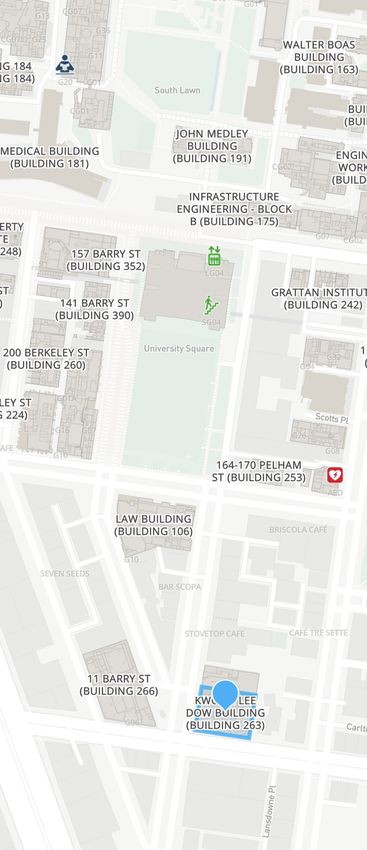
CONFERENCE CONVENORS
Dr Karen Block
Dr Ashleigh Haw

PRESENTING PARTNERS
Melbourne Social Equity Institute
Peter McMullin Centre on Statelessness

VENUE
Room 230
Kwong Lee Dow Building
234 Queenberry Street
Carlton

Lunch will be provided, comprising
vegetarian and vegan finger foods
from Asylum Seeker Resource Centre
Catering, as well as light refreshments
for morning and afternoon tea.

                                          The Kwong Lee Dow Building is located on the corner of Queensberry and
                                          Leicester Streets.

                                          The building is a 10-minute walk from Melbourne Central Station.

                                          It can also be accessed via Trams on both Swanston and Elizabeth Streets.

             2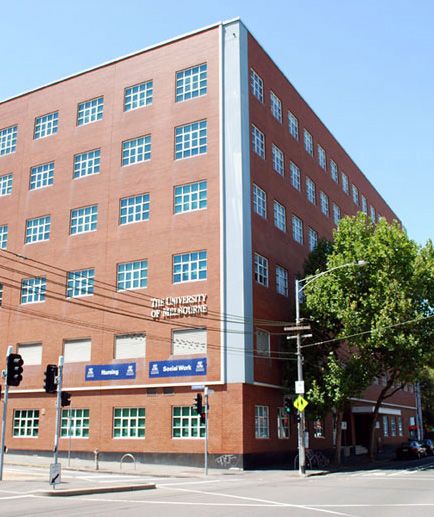
PROGRAM

9.15 			         WELCOME AND INTRODUCTIONS

SESSION 1 		 POLICY AND PLACE
			CHAIR: KAREN BLOCK

9.30 			         HOLLY McCARTHY
			              Constructed realities: framing an inclusive multicultural Australia’s
			              exclusion of people seeking asylum

9.45 			 ALI REZA YUNESPOUR
			      Documentation problems for Afghan asylum seekers and refugees
			in Australia

10.00 			 THEA HEWITT
			Caring cities: humanitarian settlement organisations and a
			       feminist ethic of care

10.15			         JONATHAN DALY
			              The human-nonhuman relations of intercultural encounter

10.30			 THOMAS MCGEE
			Syria’s changing statelessness landscape: from protracted
			      situations to “ticking time bombs”

10.45			         JOEL ANDERSON
			              Evidence that the dehumanisation of asylum seekers is linked to
			              support for punitive punishment

10.55			 FRANKA VAUGHAN
			      Who is a Liberian anyway? The claim for formalised identity by
			diasporic Liberians

11.05			 EMILY FOLEY
			Modern Labo(u)r’s migration dilemma: a comparative analysis

11.15 		         MORNING TEA
SESSION 2 		 HUMAN RIGHTS AND SEEKING ASYLUM
			CHAIR: CHARLENE EDWARDS

11.45 			 AMIR ABDI
			       Water can wear down the stubbornest stone: the intersection
			       between temporary protection visa holder status and disability
			in Australia

12.00			NICHOLAS SCHENK
			     Statelessness and structural injustice

12.15			EMILY O’KEARNEY
			     Prevalence of profound or severe disability in Australian
			permanent migrants

12.25			PHILIPPA DUELL-PIENING
			     The role of the UN Committee on the Rights of Persons with
			     Disabilities in promoting and protecting the rights of people
			     who are refugees with disabilities

12.35			ANGELA DEW
			     Service provider perspectives on supporting people with
			     disability from Iraqi and Syrian refugee backgrounds

12.45			         KONSTANTINA KERAMITSI
		               Protection of stateless persons in Greece

12.55			MAX WALDEN
			     Law versus practice in the provision of refugee rights in Indonesia

1.05			          BERNARD SAMA NDE
			              The possibilities and constraints of therapeutic jurisprudence in
			              New Zealand’s refugee status determination process

1.15			LUNCH

SESSION 3 		 CHILDREN, YOUTH AND EDUCATION
			CHAIR: ASHLEIGH HAW

2.00 			         EBONY KING
			              Facilitating resilience in unaccompanied asylum-seeking minors

2.15 			         ROSE ISER
			              Understanding Second-Generation African Australian
			              students from refugee backgrounds in the classroom

2.30			 KATIE ROBERTSON
			‘A place to call home’ - examining the legal needs, complexities
			     and gaps experienced by stateless children of refugee and asylum
			     seeker background in Australia
2.45			 VALERIE SCHUTTE
			Stigmatisation in education? A critical discourse analysis of the
			     education of adolescents of refugee backgrounds with emerging
			     literacy in Australia

3.00			          Vincent Jian Liang
			              Investigating out-of-classroom language and literacy practices
			               of secondary Karen background refugee students

3.10			 FARNAZ SHAHIMI
			     A social ecological perspective on resilience and identity for
			refugee children

3.20			AFTERNOON TEA

SESSION 4		 HEALTH AND VULNERABILITIES
			CHAIR: CHRISTOPH SPERFELDT

3.45			JEANINE HOURANI
			    How refugee women perceive the relationship between
			    mental health and intimate partner violence

4.00			 KATALIN BERÉNYI
			Mapping stateless minorities’ vulnerability to hate speech,
			     mass atrocities and radicalisation

4.15			KEHLA LIPPI
			Changing Australian domestic policy: the impact on asylum seeker
				health

4.25			AZLINARIAH ABDULLAH
			Exploring the health rights of the Rohingya refugees in Malaysia

4.35			 ASH HOSSEINI & ERESHA ABENAYAKE
			Refugee and immigrant parents impacted by pediatric cancer;
			resilience-based interventions

4.45			HUMAIRA MAHEEN
			Reaching full potential - Identifying effective sexual and
			    reproductive health services for migrant and refugee youth
			in Australia

4.55			CONFERENCE CLOSE
Constructed realities: framing
an inclusive multicultural
Australia’s exclusion of people                              Holly
seeking asylum                                               McCarthy

Australia’s increasingly securitised and exclusionary        is a recent MA graduate in
asylum policy has been legitimated through a damag-          Ethnic and Migration Studies
ing discourse surrounding people who seek asylum.            from Linköping University and
While political elites across the West are distancing        an alumnus of the University
themselves from a discourse of inclusive multicultur-        of Melbourne (BA). She has a
                                                             breadth of experience working
alism, Australia continues to celebrate its multicultural
                                                             and volunteering in the Australian
success despite the ongoing tension between a rhet-
                                                             refugee sector and is interest-
oric of inclusion and one justifying exclusion. Since        ed in researching the potential
discourse is both productive and reflective of the so-       language has to affect positive
cial world, shaping discourse can be understood as a         social change.
means to shape reality.

This research explores how discourse is constructed
and reproduced through framing; a discursive practice
that influences how certain issues are understood. Nine
primary frames were identified through an analysis of
communications from Australian Prime Ministers and
senior political figures between 2001 and 2019. These
texts either directly engaged with the exclusion of peo-
ple seeking asylum as part of a policy vision for Safe,
Secure & Free Australia or discussed the policy vision
for a harmonious and inclusive Multicultural Australia.
The frames identified (Fairness, Security, Moral & Hu-
manitarian, Australian Values, Crime & Illegality, Liberal
Rights & Freedoms, Successful Multiculturalism, Aus-
tralian Way of Life and Citizenship & Obligation) repro-
duce narratives which maintain the hegemonic position
of discourses which present Australia as a humanitar-
ian, welcoming and inclusive multicultural society and
situate people who seek asylum by boat as illegal,
seeking an unfair advantage, and as a threat to national
security.

My hope is that by generating greater discussion about
framing and the role of discourse in shaping public per-
ception we can counteract narratives that have come to
be accepted as truth.

                                                             7   MIGRATION, REFUGEES & STATELESNESS
Documentation problems for
Afghan asylum seekers and
Ali Reza refugees in Australia
Yunespour
was born in Afghanistan and Establishing the identity of an asylum seeker and ref-
arrived as a refugee in Australia ugee is a crucial element of Australia’s temporary and
in 2005. He teaches in the School permanent residency visas and citizenship process-
of Social and Political Sciences at es. To date, the Australian government has used three
the University of Melbourne and different methods to verify the identity of refugees and
his PhD thesis examines the polit-
asylum seekers: biometric data, life narratives and doc-
ical economy of Afghanistan’s
umentation from countries of origin and transit countries.
higher education. Since 2008, he
has helped around 8,000 students
in 22 rural schools in Afghani- By interviewing 50 former and current Afghan refugees
stan through his volunteer works and asylum seekers in Australia and participants from
with indigo foundation Australia. Afghanistan, this paper demonstrates the difficulties of
Previously, he has worked in DFAT obtaining valid documentation for Afghan asylum seek-
and as a lecturer at American Uni- ers and refugees in Australia. It shows how ongoing
versity of Afghanistan in Kabul. conflict, generational displacements and socio-politi-
cal problems in Afghanistan have resulted in the loss
of documents and inconsistency of information in the
various documents held by Afghan refugees and asy-
lum seekers. Furthermore, physical and psychological
trauma, documentation problems and low levels of lit-
eracy may have affected the information which Afghan
refugees and asylum seekers provided in their initial
statements and subsequent interviews with the Depart-
ment of Home Affairs.
As the majority of Afghan asylum seekers and refugees
have lived under temporary or permanent residency
visas in Australian for more than six years, this paper
recommends that the Department should consider their
personal, economic and socio-political records since
their arrival in Australia to overcome the limits of exist-
ing methods and to establish the identity of Afghan ref-
ugees and asylum seekers.
8 MIGRATION, REFUGEES & STATELESNESSCaring cities: humanitarian
settlement organisations and a
feminist ethic of care Thea
Hewitt
This research examines the role and position of the di- is a final year PhD student in
verse organisations who provide support to people from the School of Geography at the
refugee backgrounds settling in Australia. Non-state or- University of Melbourne. Her
ganisations in similar contexts have been conceptual- work engages with the politics
ised in uneven ways, with previous work understanding of multiculturalism in Australian
cities and draws on a feminist
them to be ‘filling the gaps’ left by the retraction of the
ethic of care to explore the work
state under neoliberalism, or as working as a shad-
of non-state organisation in this
ows-state apparatus. landscape.
This research challenges such restrictive framings. En-
gaging with a Feminist Ethic of Care, the research ex-
tends geographic literatures that have shown the ca-
pacity for organisations to resist and rework repressive
influences from the state. Drawing on interviews with a
range of organisation across Melbourne including com-
munity organisations, local governments, faith-based
organisations, and generalist charities, the research
argues that non-state organisations are indispensable
within the settlement landscape in Australia; both pro-
viding people from refugee communities with essential
services and resources, and undertaking bridging work
that allows the state to maintain a restricted and inac-
cessible approach to social service delivery.
It also argues that non-state organisations are active
agents in the construction of an expanded citizenship
for people from refugee backgrounds, that moves be-
yond normative and exclusionary imaginaries of Aus-
tralian citizenship upheld by immigration and settlement
policy. Importantly and more broadly, the research
shows how a Feminist Ethic of Care informs and shapes
the practices of these organisations, offering care-full
inclusion in the face of care-less approaches to migra-
tion and refugee resettlement in Australia and globally.
MIGRATION, REFUGEES & STATELESNESS 9The human-nonhuman
relations of intercultural
Jonathan encounter
Daly
has twenty years of experience This paper explores how urban design enables and
in architecture, urban design and constrains ethnocultural differences and intercultural
planning working across Europe, encounter in the urban public spaces of Western cities.
North American, and Australasia. The unprecedented growth of ethnic diversity in West-
He is the founder of the Urban Be- ern cities raises questions about the role that built form
haviour Lab and a PhD candidate
plays in mediating intercultural relations in the every-
in the School of Design at the
day spaces of everyday life. Immigrants from different
University of Melbourne, where he
also lectures and teaches.
ethnic groups bring their own habitus to new settings,
which manifest in different ways of occupying urban
public spaces.
While several studies have explored this issue from a
sociological and cultural perspective, ie. human-human
interactions; whereas the literature on human-nonhu-
man relations remains largely unexplored. This paper
draws on assemblage thinking, affordances, habitus
and actor-network theory, as a methodology for stud-
ying human-nonhuman relations in three civic squares
in the cities of Melbourne, Copenhagen and Toronto.
Formal and informal spatial practices are identified and
investigated through observation, mapping and inter-
viewing.
This paper seeks to reveal important insights to help
governments and designers better align urban design
schemes with the increasingly ethnically-diverse every-
day life in our cities.
10 MIGRATION, REFUGEES & STATELESNESSSyria’s changing statelessness
landscape: From protracted
situations to “ticking time Thomas
bombs” McGee
While statelessness is not a new problem for Syria, the is a PhD researcher at the Peter
civil war has brought about additional risks and instanc- McMullin Centre on Stateless-
es of becoming stateless. This has resulted in a diversi- ness. He is a graduate of the Uni-
fication of the “statelessness landscape”. Displacement versity of Cambridge and holds an
of stateless Syrians has reshaped the experiences of MA in Kurdish Studies from Exe-
ter University, having written his
existing stateless communities, as they experience new
thesis on the situation for state-
legal and social structures including notably the asylum
less Kurds from Syria. Thomas
and reception systems in new settings. has worked as a researcher and
humanitarian practitioner special-
At the same time, the conflict context – and particularly ising in the Middle East. Speaking
occupation by the Islamic State (ISIS) – has also trans- Arabic and Kurdish, he has con-
formed Syria into a site of statelessness (and risk there- ducted extensive field research
of) for those originating from outside the country’s bor- with communities across Syria,
ders: firstly in cases of children born of genocide, under Iraq and Turkey, and has pub-
non-state control or to foreign nationals unable to pass lished in the Tilburg Law Review,
Statelessness Working Paper
on their nationality; and secondly as the result of revo-
Series, Kurdish Studies Journal
cation of citizenship by countries of origin on security/ and Genocide Studies Internation-
punitive grounds. al. He is an associate member of
the European Network on State-
This presentation considers how to theorise Syria’s lessness (ENS) and the Inter-
changing statelessness landscape in light of the in- national Association for Forced
creasingly complex and varied origins and nature of the Migration Studies. Most recently
problem following the outbreak of civil war. he has collaborated with ENS and
the Institute on Statelessness
and Inclusion on their “Stateless
Journeys” project, focusing the
situation of stateless refugees in
Europe. Thomas has also con-
tributed to a number of County of
Origin Information reports, and
served as a Syria country expert
for immigration appeal cases.
MIGRATION, REFUGEES & STATELESNESS 11Evidence that the
dehumanisation of asylum
Joel seekers is linked to support for
Anderson punitive punishment
is a research fellow at La Trobe The rate of individuals being forced to seek asylum in
University and a lecturer at foreign countries is rapidly rising. Despite the minimal
Australian Catholic University. contribution that Australia makes to this global crisis,
negative attitudes and perceptions of asylum seekers in
Australia have become pervasive, and hostile rhetoric
dominates political and media landscapes. In this pres-
entation, we explore the often-assumed link between
dehumanization of asylum seekers and support for pu-
nitive policies.
A sample of 257 Australians (M age = 27.36 years, SD
= 11.36; 181 females) responded to measures of dehu-
manisation, prejudice, political conservatism, and then
various policies. The evidence presented supports the
hypotheses that specific forms of dehumanisation are
linked to policy support – and importantly do so beyond
the statistical contribution of pure prejudice.
We hope these findings will be used to create targeted
interventions aimed at reducing the dehumanisation of
asylum seekers and assisting in the integration and in-
tergroup harmony of asylum seekers and locals.
12 MIGRATION, REFUGEES & STATELESNESSWho is a Liberian anyway?
The claim for formalised
identity by diasporic Franka
Liberians Vaughan
After a sporadic fourteen-year civil war, Liberia is in the is a PhD candidate at the School
process of rebuilding both its state machinery and so- of Social and Political Sciences at
cietal relations. The construction of an all-embracing Li- the University of Melbourne, and
berian identity linked to a proposed Dual Citizenship Bill a cohort of the Melbourne Social
is one such rebuilding projects. Equity Institute’s Interdisciplinary
PhD Program in Refugee and
Forced Migration Studies. Her
Using a multi-site case study that engages stakehold-
research is on diasporic Liberians
ers across the divide in the debate on the bill, my thesis claim for (formalised) identity
seeks to understand how access to a collective Liberian back ‘home’ and how their claim is
identity is being negotiated between Liberians at home perceived by Liberians at home.
and abroad.
MIGRATION, REFUGEES & STATELESNESS 13Modern labo(u)r’s migration
dilemma: a comparative
Emily analysis
Foley
is in the early stages of her PhD The nature of contemporary globalisation has funda-
candidature in Politics at La Trobe mentally reshaped the nature of Australia’s immigration
University under the supervision program from the establishment of a permanent set-
of Associate Professor Gwenda tler-migrant nation, to a focus on temporary migration.
Tavan and Dr Bec Strating. She is With over one million temporary migrants currently living
the current overseeing coordina-
in Australia, these changes provide key challenges for
tor of the Sudanese Australian In-
tegrated Learning (SAIL) program
states such as the exploitation and reliance on these
and her research interests include individuals by sectors such as higher education and the
comparative party politics and agriculture industry.
migration studies.
The early stages of my research examines the position-
ing of the Federal Australian Labor Party and the ex-
tent to which it supported or opposed these great shifts
in contemporary immigration policy through periods of
government and opposition and to position my findings
within broader ideological comparisons of centre-left
Labo(u)r political parties in Western Liberal Democra-
cies.
14 MIGRATION, REFUGEES & STATELESNESSWater can wear down the
stubbornest stone: the
Amir intersection between temporary
Abdi protection visa holder status
is an advocate for people from
refugee backgrounds and those
and disability in Australia
seeking asylum, as well as a This paper will explore the impact of government poli-
champion for people living with
cies that exclude people. Amir, the author of this paper,
vision loss. Amir was presented
with the Victorian Award from
is a temporary protection visa holder and is also legally
Friends of Refugees by Profes- blind, and has experienced firsthand what it means to
sor Gillian Triggs, in 2018, for be lost in a policy nightmare. The multiplying effect of
his outstanding contribution to intersectional discrimination will be illustrated through-
the Australian Community for All out this paper, focusing on temporary protection visas
Abilities Sports and Community and disability policy.
Service.
Having several identities at once is difficult because
government policies are developed to serve people
that fit neatly into categories. Amir reports that having a
temporary protection visa has made him more disabled
than his vision impairment, with discriminatory govern-
ment policies exacerbating the social exclusion he ex-
periences.
This paper will conclude by highlighting the loss of hu-
man potential that occurs when Australian society fails
to understand the valuable contribution of people who
are differently abled and from diverse cultural back-
grounds, firmly putting the responsibility back onto gov-
ernment to show leadership in this area – both in immi-
gration and disability policy.
16 MIGRATION, REFUGEES & STATELESNESSStatelessness and structural
injustice
Nicholas
Schenk
The denial of the human rights of stateless persons is a PhD candidate and a member
are often framed purely as a legal problem that can of the Global Ethics and Political
be resolved by states taking responsibility for granting Theory Research Cluster in the
nationality for people within their borders. Sometimes Department of History, Politics
statelessness clearly results from the (in)actions of sin- and International Relations at the
University of Leicester, UK. His
gular, state-level agents who discriminate against and
research interests are primarily in
persecute minorities.
theories of global justice and the
ethics of citizenship and
Often, however, discrimination and denial of nationality migration.
happens as a result of multiple agential action against a
background of ‘structural injustice’. I examine the case
of indigenous and nomadic stateless groups to demon-
strate this and show that prevailing views that nationality
rights facilitate protection of human rights can mask the
recognition claims of minorities.
Iris Young’s conception of marginalisation and cultur-
al universalism can show, I argue, how indigenous and
nomadic stateless populations are excluded through
structural injustice. I suggest that, in part, the exclusion
of indigenous and nomadic stateless people can be
viewed as result of a global political order that struc-
tures political membership around the society of na-
tion-states model, as well as the dominance of private
property norms at the expense of traditional notions of
common or shared ownership of territory and resources.
MIGRATION, REFUGEES & STATELESNESS 17Prevalence of profound or
severe disability in Australian
Emily permanent migrants
O’Kearney
s currently a PhD student within Background: The Australian prevalence of disability is
the CRE of Disability and Health, 18.3% and the prevalence of profound or severe disa-
studying how CALD characteris- bility is 5.1%. There is a lack of research into the preva-
tics influence health and health lence of disability in migrant populations, despite more
service use in Australians with than a quarter of the Australian population being born
disabilities. Emily has 10 years
overseas and humanitarian migrants being at high risk
experience as a rehabilitation
physiotherapist and also has a
of disability.
Masters of International Public
Health. She has worked in the Method: Cross-sectional data of working-age Austral-
disability space in various roles, ian migrants from the Australian Census and Migrant
including in Indigenous health Integrated Dataset 2016 and of native Australians from
and in Cambodia. the Census of Population and Housing 2016 was ana-
lysed. Proportions of people with profound/severe disa-
bility were calculated for each migrant status (Australi-
an-born and skilled, family and humanitarian permanent
migrants). Poisson regression compared prevalence
ratios of disability by migrant status (reference group:
Australian-born), adjusting for age group and sex. The
disability prevalence for humanitarian migrants com-
pared to the Australian-born was also calculated within
levels of socioeconomic variables.
Results: Humanitarian migrants had the highest propor-
tion of disability (6.7%), followed by the Australian-born
(3.5%), family migrants (1.4%) and skilled migrants
(0.5%). In fully adjusted models, skilled, family and hu-
manitarian migrants had a prevalence ratio of disability
that was 0.17, 0.46 and 2.15 times the Australian-born
population. Humanitarian migrants had higher rates of
disability regardless of socioeconomic level.
Conclusion: Humanitarian migrants have double the
risk of profound/severe disability compared to native
Australians. Further research to investigate disability
acquisition (i.e. timing and cause), strategies to prevent
disability after arrival to Australia, and treatment for this
vulnerable group, including access to services noting
that asylum seekers and those on temporary protection
visas aren’t eligible to receive National Disability Insur-
ance Scheme services, is needed.
18 MIGRATION, REFUGEES & STATELESNESSThe role of the UN Committee
on the Rights of Persons with
Disabilities in promoting and Philippa
protecting the rights of people Duell-Piening
who are refugees with is a PhD candidate at the
disabilities
Melbourne Law School. Prior to
this, Philippa coordinated the
Victorian Refugee Health Network
working to reduce health inequal-
The newest international human rights treaty, the Con-
ities experienced by people from
vention on the Rights of Persons with Disabilities (‘the
refugee backgrounds. Philippa
treaty’), has been almost universally ratified. The trea- has worked in the forced-migra-
ty’s purpose is to ‘ensure full and equal enjoyment of all tion contexts of Timor-Leste in
human rights and fundamental freedoms by all persons 2002 and on the Thai-Myanmar
with disabilities’ (CRPD, art 1). A significant proportion border in 2012.
of the world’s population has a disability, 15% (World
Bank, 2019); several surveys have identified that this
numbers is higher in refugee populations.
For people who are refugees with disabilities, their dis-
advantage is often exacerbated by their two (or more)
intersecting identities. Multiple and intersectional dis-
crimination is identified and prohibited by the treaty.
As such the Committee on the Rights of Persons with
Disabilities (‘the committee’), which has the mandate to
monitor the treaty, is concerned that people who are ref-
ugees with a disability do not experience discrimination
due to their refugee status.
A thematic analysis of the committee’s communication
with states, through concluding observations, was un-
dertaken to identify concerns raised about discrimina-
tion experienced by people who are refugees. Initial
analysis of over 90 concluding observations demon-
strates that the committee has a strong interest in the
situation of people who are refugees, with over a third
identifying refugees as a population of concern. While
this attention is encouraging, it is somewhat unevenly
applied with the committee being silent in some coun-
tries where people who are refugees with disabilities
are experiencing discrimination. This suggest that there
continues to be a vital role for civil society in highlighting
discrimination through shadow reports.
MIGRATION, REFUGEES & STATELESNESS 19Service provider perspectives
on supporting people with
Angela disability from Iraqi and Syrian
Dew refugee backgrounds
PhD, is a sociologist with 38 In 2012 the Australian Government streamlined the
years’ experience in the Australi- health waiver for all humanitarian visa applicants mean-
an disability sector. Her research ing that people with disability were more likely to get a
relates to understanding the visa. Little is known about the implications of this change
specific issues faced by people for Australian service providers as the number and cir-
with disability and a range of
cumstances of refugees with a disability who have been
complex support needs. Angela
uses qualitative and arts-based
resettled here to date is unknown.
methods within an integrated
knowledge translation framework This paper describes one part of a larger study to ex-
to ensure her research results in plore the impact of resettlement in Australia for Iraqi
practical solutions that can be and Syrian refugees with disability, their families and
tailored to individuals and local service providers. Seven practitioners employed in four
communities. South Western Sydney, NSW refugee support services
were interviewed about their experiences of support-
ing people with disability from Iraqi and Syrian refugee
backgrounds. Data were analysed using thematic anal-
ysis and constant comparison. Practitioners described
how their refugee support organisations responded to
refugees with disability through a range of service en-
hancement strategies and, in particular, how they as-
sisted people to access the National Disability Insur-
ance Scheme.
Practitioners also described refugee family member’s
varied cultural understanding of disability and how this
impacted on their help-seeking behaviours and expec-
tations. This study has important implications for un-
derstanding the ways in which organisations support
the complex physical/mental health and social needs
of people with disability from Iraqi and Syrian refugee
backgrounds.
20 MIGRATION, REFUGEES & STATELESNESSProtection of stateless
persons in Greece
Konstantina
Keramitsi
In Greece, there are still stateless persons who face a is a police officer who served in
number of problems due to the lack of nationality and the Aliens Directorate in Greece, and
absence of legal protection. Greece enacted the State- has successfully completed a
lessness Convention by ratification by Law 139/1975. Master in Economics and Politics
Since then, there has been no other legislation in the Studies in South and South-east-
ern Europe. Konstantina’s Masters
Greek law that refers solely to stateless persons, but
thesis was about the reasons for
only provisions on citizenship or immigration laws that
immigration from South Asia.
define stateless persons as those who meet the condi-
tions set out in Article 1 of the Statelessness Convention.
Moreover, this law does not include a special procedure
for recognizing stateless people. It had only transposed
the Convention without adding more explanations. Be-
cause of the above mentioned “legal limbo” status, these
individuals often live in conditions of protracted margin-
alization and discrimination, facing numerous difficul-
ties, such as the inability to receive medical assistance,
travel, enroll in educational programs, acquire property,
obtain legal employment, marry or open a bank account
and arbitrarily detention. Some of them had seek justice
to the Courts either national or international.
This paper presents an overview of the statelessness
phenomenon in Greece and whether these people are
protected in Greece by specific legislation.
MIGRATION, REFUGEES & STATELESNESS 21Law versus practice in the
provision of refugee rights in
Max Indonesia
Walden
is a PhD candidate at the Asian Indonesia has obligations to asylum seekers and refu-
Law Centre, Melbourne Law gees under international law and indeed under some of
School. Max’s scholarship is its own domestic laws. While like most of its neighbours
provided under the Australian Indonesia is not a signatory to the 1951 Refugee Con-
Research Council-funded project vention or 1967 Protocol, it does have responsibilities
“Indonesia’s refugee policies: re-
having ratified other rights documents including the In-
sponsibility, security and region-
alism” led by Professor Susan
ternational Covenant on Civil and Political Rights and
Kneebone. He is a member of the Convention Against Torture.
the PhD Program in Refugee and
Forced Migration Studies through Nevertheless, in a country where the rule of law and re-
the Melbourne Social Equity spect for the international human rights regime remain
Institute and of the Kaldor weak, these obligations are often unfulfilled in favour of
Emerging Scholars Network. sovereignty and security. This provides both opportu-
nities and challenges for civil society, which since the
fall of former dictator Suharto in 1998 has played a key
role in the development of democracy and in advancing
human rights in the archipelago.
In absence of state assistance for forced migrants, civil
society plays an important role in providing necessities
like shelter, food and other services, as well as rights
advocacy on their behalf..
22 MIGRATION, REFUGEES & STATELESNESSThe possibilities and constraints
of therapeutic jurisprudence in
New Zealand’s refugee status Bernard
determination process Sama Nde
Many western countries including New Zealand, strive is originally from the South-
to maintain a robust refugee status determination pro- ern Cameroons (a persecuted/
cess (RSD) and at the same time ensure that the pro- marginalised English-speaking
cess is as humane as it can possibly be. The dilemma minority people in the largely
however for New Zealand, and other countries with sim- French-speaking nation of Came-
roon). Bernard studied law (LLB)
ilar jurisdictions, is how to maintain a strictly legalistic
in the Cameroons and worked at
RSD as well as minimise/eliminate the adverse emotion-
a human rights law firm. Facing
al and psychological consequences of the process on persecution, Bernard left for New
the asylum seekers and the professionals who work in Zealand in 2006 as an asylum
it. I believe the theory of therapeutic jurisprudence (TJ) seeker, and was recognised as
sheds important light on how this could be done. The a refugee. Bernard completed a
aim of multidisciplinary study, therefore, is to explore completed a Postgraduate Diplo-
how the principles of TJ can inform a robust and hu- ma in Health Science in Mental
mane RSD process in New Zealand. Health in 2014; and a Master of
Health Science in 2017 at AUT
University. Bernard is current-
Through conducting semi-structured interviews with
ly completing a PhD under the
asylum seekers and professionals in the RSD, I examine supervision of Dr Anna Hood and
the law and current practice to consider the possibilities Associate Professor Jay Marlowe
and constraints of TJ for RSD. The TJ theory is used as at the University of Auckland.
a critical lens within the transformative paradigm. Bernard’s general research inter-
ests include refugee law, immi-
Ideally, the implication of the study would be to instigate gration law, human rights, and
the professionals in RSD to reflect about what might the impact of law and policy on
optimise the emotional and psychological wellbeing of forced migrants in transitory and
destination countries.
asylum seekers. The research may also help inform a
therapeutic design and application of the law, policy,
and practice on RSD. The study will hopefully challenge
the status quo that continues to marginalise asylum
seekers in New Zealand and will transform (at least in
the theory) the society in which they live, hence leading
to furtherance of social justice and human rights for this
population group.
MIGRATION, REFUGEES & STATELESNESS 23Facilitating resilience in
unaccompanied asylum-
seeking minors Ebony
King
In recent years, the number of unaccompanied minors ‘s PhD research explored how the
(UAMs) seeking asylum in ‘the West’ has rapidly in- social ecologies of unaccompa-
creased. This research is the first study, to my knowl- nied asylum seeking minors can
edge, to study UAM resilience from a social-ecological facilitate their resilience. Since
perspective, whereby resilience is both the capacity completing her doctorate, Ebony
has been working as a Health
of individuals to navigate their way to health sustain-
Promotion Officer at the City of
ing resources and a condition of the individual’s family,
Whittlesea, where she has fo-
community and culture to provide health-promoting re- cussed attention on the role of
sources and experiences in culturally meaningful ways. local government in supporting
In-depth and semi-structured interviews with 16 former those who are financially vulner-
UAMs and 18 key informant service providers in Aus- able and food insecure, as well
tralia were analysed using thematic analysis and four as conducting research about
major themes (or “domains”) were identified: Distal De- the experiences of female carers
cisions, Connection, Education and Identity. accessing skilled employment in
an outer-suburban, growth area
context. Asylum seekers and refu-
The “Domains of Facilitated Resilience” model is pro-
gees remain a core concern in her
posed, which conceptualises how the complex and dy- work. Publications drawn from Dr.
namic interactions between these four domains potenti- King’s thesis are in progress.
ate differential patterns in resource access, processes
and outcomes that can both facilitate and undermine the
ability of UAMs to ‘be resilient’. The best outcomes were
achieved when the four domains are mutually facilita-
tive and supportive, however punitive Distal Decisions
(government legislation and policies) often limited the
resilience-promoting potential of Connection, Education
and Identity by restricting UAMs’ access to meaning-
ful resources, permanent protection and family reunion.
Implications for resilience theory, legislation and policy,
and service provision are proposed.
MIGRATION, REFUGEES & STATELESNESS 25Understanding second-
generation African Australian
Rose students from refugee back-
Iser grounds in the classroom
is a third year PhD candidate with In the context of changing and contested dynamics
the Melbourne Graduate School of Australian multiculturalism, including politicised at-
of Education, and participates in titudes towards young Australians of African ancestry,
the PhD Program in Refugee and this thesis aims to investigate cultural and language
Forced Migration Studies at the resources of African-Australian students, and how
Melbourne Social Equity Institute.
schools draw upon these to support second generation
She has worked in law, politics
and teaching, with a particular
African-Australian (SGAA) students in their academic
focus on diversity and equity and social development.
in community engagement and
education. Using methodologies associated with Critical Race The-
ory, the study examines educators’ stock stories that
exist as assertions of truth about the SGAA students’
reality, and extrapolated composites of the repeated
anecdotes. The study connects these stock stories with
the lived experiences of the SGAA students and their
families to reveal contradictions and convergences.
The primary intention of this research is to generate new
insights into the interface between an inner-Melbourne
primary school and the cultural and language resources
of the African background communities it serves, with a
view to assisting schools improve educational and so-
cial equity for SGAA students.
26 MIGRATION, REFUGEES & STATELESNESS‘A place to call home’:
Examining the legal needs,
complexities and gaps Katie
experienced by stateless Robertson
children of refugee and asylum is a human rights lawyer with
seeker background in Australia
experience acting for stateless
children. She has a BA/LLB
(Hons) and LLM (Public and Inter-
national Law) from the University
Children born on Australian soil are not guaranteed the
of Melbourne. Katie also has ex-
right to Australian citizenship. Citizenship is foundation-
perience advocating for the rights
al to a child’s sense of identity and belonging, providing of children and refugees in the
them with fundamental political and civil rights. political, policy and NGO sectors.
Importantly, for children of refugees it can also offer se-
curity and safety; a place to call home.
A significant but unknown number of children have
been born in Australia to stateless asylum seeker par-
ents seeking protection in Australia. Although these
children have a right to apply for Australian citizenship
under domestic legislation and international law, they
face numerous barriers in seeking to navigate this com-
plex legal process. Australian engagement in address-
ing cases of statelessness is crucial in supporting the
UNHCR’s Global Plan to End Statelessness by 2024.
Through seed funding obtained from the Stateless Hall-
mark Research Initiative, we have researched the legal
needs, complexities and gaps experienced by these
children. The project examined four legal claims for cit-
izenship by asylum seeker children. These case-stud-
ies have formed the basis of a scoping report aimed at
identifying specific research questions for further inves-
tigation regarding how the legal needs of these children
can be best addressed, while also providing human in-
sight into the challenges experienced by stateless chil-
dren and their families. The project also focused on the
practical needs and barriers faced by legal practition-
ers representing stateless children in Australia.
MIGRATION, REFUGEES & STATELESNESS 27Stigmatisation in education?
A critical discourse analysis of
Valerie the education of adolescents of
Schutte refugee backgrounds with
is a Master of Arts (Education)
student at the University of
emerging literacy in Australia
Ottawa and a visiting scholar at The UNHCR is urging the UN Security Council to re-
Monash University. Her current spond to the unprecedented stigmatisation of refugees
project, supported by the Social
(UNHCR, 2019a). Australia is particularly notorious for
Sciences and Humanities Re-
search Council of Canada and
its negative discourses on refugees and asylum seek-
Mitacs, comparatively analyses ers, and its social exclusion of people of refugee back-
the education of students of refu- grounds (MacDonald, 2017).
gee backgrounds in Australia and
Canada. Yet, in 2018, Australia admitted the third largest number
of resettled refugees (UNHCR, 2019b) and voted in fa-
vour of the UN’s Global Compact on Refugees. Calling
for cooperation with and evidence-based responses to
refugees, the global compact identifies areas in need of
support, one of which is education. States are invited to
contribute “expertise to expand and enhance the qual-
ity and inclusiveness of national education systems” to
students of refugee backgrounds and “to meet the spe-
cific needs of refugees” in educational contexts (UN-
HCR, 2018, p. 13).
Due to interrupted formal education, most adolescents
of refugee backgrounds have had limited opportunities
to develop literacy skills (Miller, Ziaian, & Esterman,
2018). Upon resettlement to Australia, they must learn
English and develop English literacy to fill gaps in ac-
ademic knowledge. With limited first language litera-
cy and English oral competence upon which to build
English literacy, and little time to bridge linguistic and
content gaps, students of refugee backgrounds with
emerging literacy (REL students) require intensive edu-
cational support.
This presentation critically analyses power relations
manifested in the education of REL students in Victo-
ria, Australia. In light of preparations for the first Global
Refugee Forum, it highlights good practices from which
Australia can progress towards realising the educa-
tion-related objectives of the global compact
28 MIGRATION, REFUGEES & STATELESNESSInvestigating out-of-classroom
language and literacy practices
of secondary Karen background Vincent
refugee students Jian Liang
This research project aims to explore the out-of-class- is a second-year Master of
room language and literacy practices of secondary ref- Teaching (Secondary) graduate
ugee students from the Karen-speaking ethnic minority student who has been recently
group originally from the Republic of the Union of Myan- awarded the Suzanne and Geof-
mar (also known as Burma). From the exploration, this frey Dawson scholarship from the
Melbourne Graduate School of
research intends to investigate the existing language
Education. His research aims to
and literacy knowledge of Karen refugee students.
enhance social justice advance-
ment in educational settings and
The intended investigation is contextually situated in to provide equality of access to
the analysis of the language practices employed in the learning in identified
social context outside the classroom, as well as the lit- communities.
eracy practices represented in the forms of gestures,
graphics, and text messages from local communities.
Additionally, this research attempts to incorporate the
language and literacy resources that Karen refugee
students have accumulated throughout the migration
journey into the required and expected language and
literacy education in Australian schooling. To achieve
the research aim, this research project will employ the
multimodal ethnographic method (Kalaja & Melo-Pfeif-
er, 2019) and the walking interview biographical meth-
od (O’Neill & Roberts, 2020) to elicit the language and
literacy knowledge of Karen refugee students. Specif-
ically, Bendigo will be the research site for recruiting
students from local secondary schools and conducting
interviews with Karen related workers and stakeholders.
The cultural historical activity theory (Engeström, 2001)
will be adopted to analyse symbolic artefacts such as
traditional costumes and woven goods which are con-
sidered as the primary means of transmitting knowledge
in the Karen community. This study will provide an excit-
ing opportunity to advance our knowledge of Karen ref-
ugee students cross-disciplinarily in the field of Applied
Linguistics, Language and Literacy Development and
Refugee Studies.
MIGRATION, REFUGEES & STATELESNESS 29A social ecological perspective
on resilience and identity for
Farnaz refugee children
Shahimi
has two Masters and a Many newly arrived refugee children have experienced
Bachelor in Psychology and a type of trauma, which is called Complex Trauma due
worked as Psychosocial to the variety of types, severity and chronicity of the vi-
Counsellor at United Nations olence (Murray, 2019). It is mentioned that refugee chil-
High Commissioner for Refugees dren find resilience after resettlement and adjust quick-
in Iran from 2016 to 2019. The
ly (Lau et Al., 2018). However, it has been argued that
main focus of the position was
the treatment of Afghan refugees
recovery from trauma is not just an individual capabili-
who were survivors of sexual and ty. It assumes to be a function of the individual’s social
gender-based violence. ecology such as context and culture to assist in recov-
ery and growth in the new environment (Ungar, 2013).
While having a positive sense of identity together with
other social-ecological factors have been mentioned
to be protective during challenges in childhood (Ung-
ar, 2007), refugee children might experience identity
distress after resettlement and it can cause children to
struggle for obtaining a cohesive identity among cultur-
al and social expectations in the long run (Smith, 2013).
There are only a few studies, which have surveyed the
effectiveness of the interaction of resilience factors
during acculturation and identity shaping of refugees
(Bergquist et al., 2019). Moreover, there is no empirical
research on the association between the roles of the so-
cial-ecological resilience factors, the acculturation pro-
cess and the identity shaping among refugee children
in Australia.
This research aims to conceptualize the role of resil-
ience from the social ecology perspective that develops
a positive sense of identity (even in the presence of vul-
nerabilities) among refugee children who experienced
complex trauma.
30 MIGRATION, REFUGEES & STATELESNESSHow refugee women perceive
the relationship between
Jeanine mental health and intimate
Hourani partner violence
is a Research Assistant in the Background: Pre- and post-migration stressors can in-
Gender and Women’s Health Unit, crease intimate partner violence (IPV) in refugee con-
Melbourne School of Population texts. There is also an increased risk of mental ill-health
and Global Health, whose work among refugees. Evidence suggests this is gendered,
focuses on refugee women’s with refugee women being more at-risk. IPV can also
experiences of violence. She also
lead to mental ill-health, compounding the risk of men-
founded the ‘In My Own Words
Program’ at Road to Refuge and
tal illness in refugee women. Refugee women face ad-
is a Board Member of Olive Kids, ditional, specific barriers to accessing IPV and mental
an Australian charity dedicated to health services. Settlement and multicultural services
improving the lives of Palestinian may be well-placed to support women experiencing IPV
children living under occupation. and mental ill-health.
Aims: This research aimed to identify barriers to men-
tal health and violence services experienced by Ara-
bic-speaking refugee women; identify factors that sup-
port these women’s access to services; and document
the challenges faced by mental health service provid-
ers in supporting them.
Methods: This research took a qualitative approach.
Data collection included 2 participatory workshops
with refugee women, 6 in-depth interviews with refugee
women, and 4 in-depth interviews with mental health
service providers. Data were analysed using thematic
analysis. Results: Our findings reveal that normalisation
of violence occurs as a result of pre- and post-migra-
tion stressors. Throughout the refugee journey, there is
complex interplay between structural violence and IPV.
When refugee women access mental health services,
it is near-impossible to disentangle whether structural
violence or IPV is the cause of mental ill-health.
Discussion: The complex interplay between structural
violence and IPV along the refugee journey, and their
compounding impact on refugee women’s mental
health suggest there needs to be more collaborative ef-
fort to combat both structural violence and IPV against
refugee women.
.
32 MIGRATION, REFUGEES & STATELESNESSMapping stateless minorities’
vulnerability to hate speech,
mass atrocities and Katalin
radicalisation Berényi
According to the UNHCR, today more than 75% of the PhD, is a nonresident Senior
world’s stateless populations belong to minority groups. Research Associate at the Buda-
Although customary international law obligates states pest Centre for Mass Atrocities
to avoid statelessness, some states (regimes) choose Prevention. Dr. Berényi has been
not to consider certain national/ethnic/religious minority working in the fields of human
rights, migration, statelessness
groups residing in their territory as constituting elements
and law enforcement cooperation,
of society despite of their long-established ties with their
listing a number of publications
country of residence. on addressing statelessness from
a human rights perspective. Dr.
State actors may be politically motivated to create or Berényi holds a PhD on stateless-
maintain a certain status quo within society. Rendering ness from the National University
political opponents, human rights defenders and minor- of Public Service in Budapest,
ity groups stateless is widely used as a political tool by Hungary.
oppressive regimes to marginalize individuals and de-
prive them from their rights and human dignity. Conse-
quently, this paper argues that affected minority groups
are extremely vulnerable not only to state-sponsored
hate speech and human rights violations but also to
mass atrocities in the intended lack of state protection.
Stateless individuals belonging to excluded, persecut-
ed and marginalized minority groups have proved to be
more susceptible to radicalization and recruitment by
armed groups as they are mostly invisible to civil regis-
tries and thus difficult to be identified.
Therefore, policy-makers must be alert to the nexus be-
tween minorities affected by statelessness, systematic
exclusion and vulnerability to mass atrocities, violent ex-
tremism and radicalization in order to identify and pro-
tect minority groups potentially at risk. The paper con-
cludes that the prevention of statelessness, as well as
inter-group and inter-religious dialogue must be urged
by the international community with special regard to
regional actors in an attempt to mitigate the vulnerability
of stateless minority groups.
MIGRATION, REFUGEES & STATELESNESS 33Changing Australian
domestic policy: the impact on
Kehla asylum seeker health
Lippi
is a PhD researcher within the This research focuses on how policy changes, such as
School of Health and Social the removal of Status Resolution Support Services, im-
Development at Deakin Universi- pact upon service provision, and are experienced by
ty. Her research focuses on the people seeking asylum. At the time of this proposal,
experiences of policy by eleven interviews have been completed as well as an
particular social groups, including
analysis of the Migration and Maritime Powers Legisla-
people seeking asylum, women,
and those experiencing food
tion Amendment (Resolving the Asylum Legacy Case-
insecurity, and organisations. load) Act 2014. The Act amends the 1958 Migration Act,
removing the 1951 Convention relating to the status of
refugees and its 1967 Protocol, and replacing it with a
framework outlined by the government. Such a change
has lead this analysis to question what rights are afford-
ed to a person seeking asylum?
This question arises through the policy’s privileging the
government’s interpretation of the law, rendering those
governed by this legislation, and their rights, invisible.
This is also reflected by participants who suggest ‘a
new underclass is being created’ by the Australian gov-
ernment. These preliminary findings suggest the rep-
resentation of the ‘bogus’ underserving asylum seeker
has become so engrained within the Australian context
that the ‘refugee’ asylum seeker no longer exists.
Further exploration of the symbolic and productive
changes herein is required as the increasingly harsh
treatment of asylum seekers silently erodes the impor-
tance of international refugee law within Australia. This
research explores the power of such changes and their
real impact upon lives and bodies; posing the question,
‘How do policy instruments govern the lives of asylum
seekers?’
34 MIGRATION, REFUGEES & STATELESNESSExploring the health rights of
the Rohingya refugees in
Malaysia Azlinariah
Abdullah
This paper attempts to analyze the access to the rights is a senior Editor at Astro Awani,
of health in Malaysia with reference to the Rohingya ref- a 24/7 news network. In addition
ugee. The paper primary highlights the problem in the to her full-time job as an Editor,
access of Rohingya refugees to the available health ser- recently, Azlinariah has been
vices and investigate whether there are special health conferred her degree of PhD in
Sociology and Cultural Stud-
services designed to meet the need of the Rohingya
ies, from Asia-Europe Institute,
refugees.
University of Malaya (UM). Her
thesis entitled “The Myanmar
Through field research in two cites namely Cheras and Rohingyas: Challenges Faced by
Serdang, which are both saturated with Rohingya refu- “Refugee” Community in Ma-
gees, the problem related to the access to health ser- laysia, 2014 – 2016” covered a
vices by Rohingya refugees were examined. In addition historical and contemporary point
to this, this quantitative research includes structured of view on Rohingyas. During her
interviews, which are conducted from 10 doctors and time at Astro Awani, she produced
NGO’s that well up on the issues as well as Rohingya many news reports and documen-
taries on Rohingyas, conflicts in
refugees in Malaysia to understand the problems as-
southern Thailand and Myanmar,
sociated with the access of the Rohingya refugees to including the plight of the minori-
health services and the dynamic clinical relationship ties in those two countries. During
between doctors and Rohingya refugees. her PhD candidature, Azlinariah’s
writing on Rohingya appeared in
The findings suggest that Rohingya refugees are not academic journals and numerous
given adequate access to health care services in Ma- online publications. She regularly
laysia. They were also found to not aware of their rights writes as a columnist for www.
to basic rights health care services. It is therefore pro- astroawani.com entitled “Per-
spective”. She authored a book
posed that laws regarding health care services and
on Rohingya in Malay Language
health insurance be reviewed to include refugees. Apart entitled “Air Mata Kesengsaraan
from that, a proper diagnosis of their health care needs Rohingya, Identiti, Penindasan
should be carried out such as conducting preliminary dan Pelarian” (Rohingya Tears of
health screening on arrival and providing trauma coun- Misery: Identity, Oppression and
selling. Refugee) and is now working on
her second book, a compilation of
short stories based on interviews
of real life eye-witnesses of West
Myanmar humanitarian conflict.
MIGRATION, REFUGEES & STATELESNESS 35You can also read


