Military Atrocities and Civilian Resilience - Testimonies of injustice, insecurity and violence in Southeast Myanmar under the 2021 coup - ReliefWeb
←
→
Page content transcription
If your browser does not render page correctly, please read the page content below
Military Atrocities and Civilian Resilience
    Testimonies of injustice, insecurity and violence in
        Southeast Myanmar under the 2021 coup
Military Atrocities and Civilian Resilience:
Testimonies of injustice, insecurity and violence in Southeast Myanmar
                           under the 2021 coup

                        Karen Human Rights Group
                             November 2021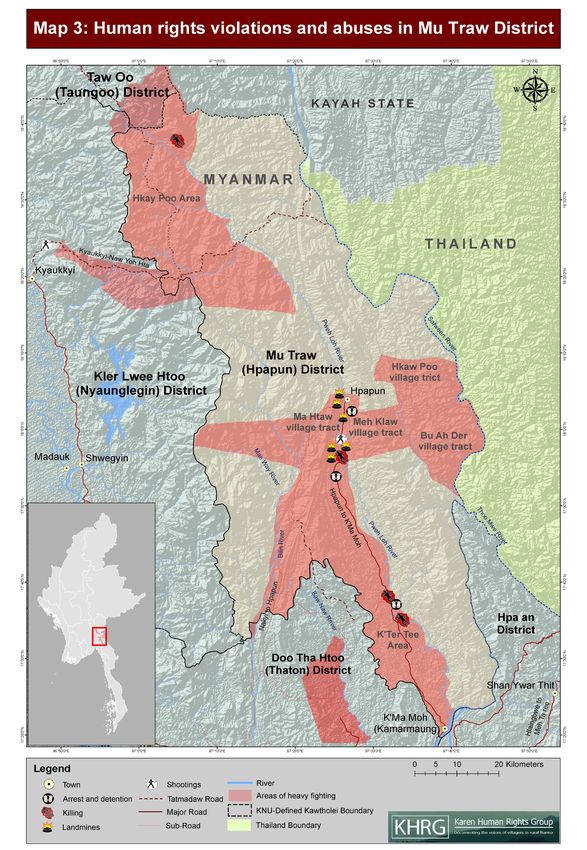
Military Atrocities and Civilian Resilience: Testimonies of injustice, insecurity and violence in Southeast
Myanmar under the 2021 coup
Written and Published by the Karen Human Rights Group
KHRG #2021-02, November 2021

For front and back cover photo captions, please refer to the final page of this report.

The Karen Human Rights Group (KHRG) was founded in 1992 and documents the situation of villagers and
townspeople in rural Southeast Myanmar through their direct testimonies, supported by photographic and other
evidence. KHRG operates independently and is not affiliated with any political or other organisation. Examples of
our work can be seen online at www.khrg.org. Printed copies of our reports may be obtained subject to approval
and availability by sending a request to khrg@khrg.org.

This report is published by KHRG, © KHRG 2021. All rights reserved. Contents may be reproduced or distributed
on a not-for-profit basis or quotes for media and related purposes but reproduction for commercial purposes requires
the prior permission of KHRG. The final version of this report was originally written in English and then translated
into Burmese. KHRG refers to the English language report as the authoritative version.

This report is not for commercial sale.
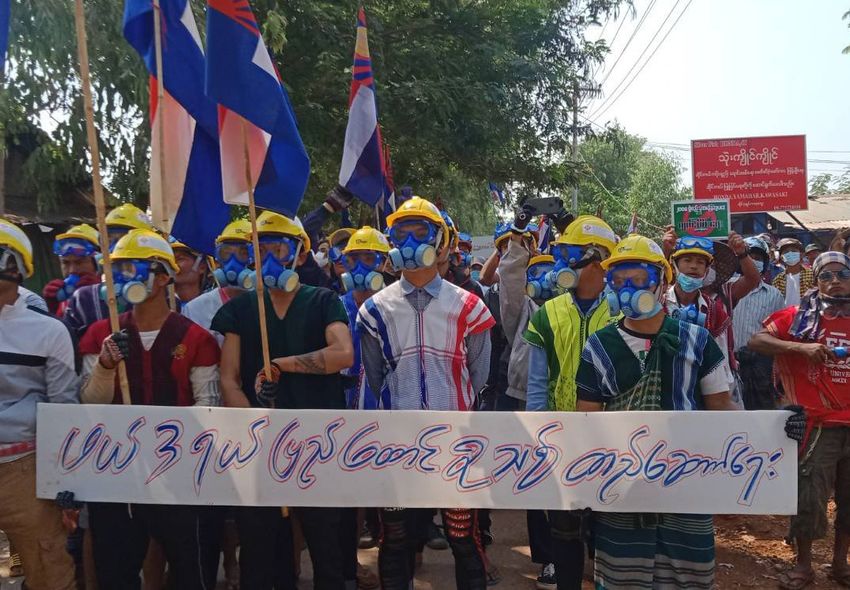
Military Atrocities and Civilian Resilience

                                                    Contents

Executive Summary.........................................................................................................4

Introduction.......................................................................................................................5

                   Structure of the report....................................................................................8

                   Recommendations.......................................................................................10

                   Methodology................................................................................................12

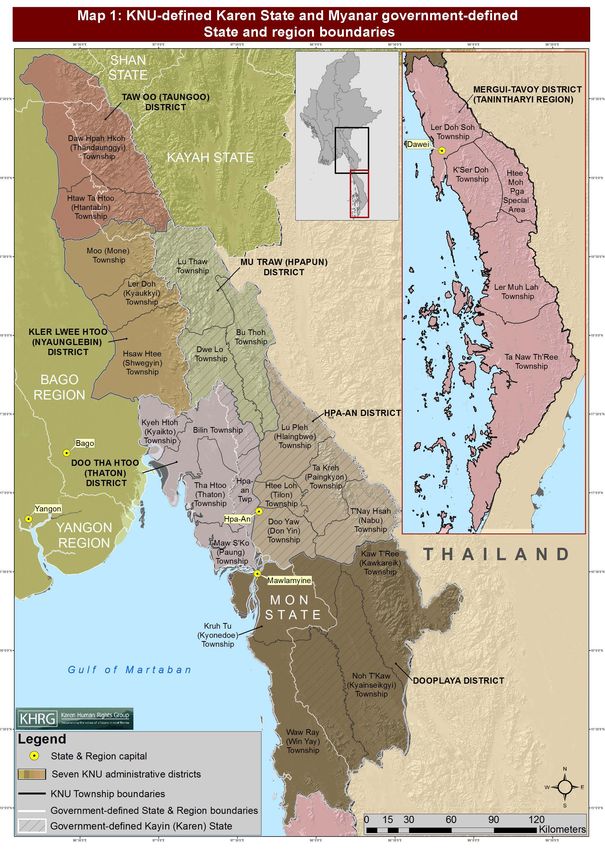
                   Map 1: KHRG operational area....................................................................14

                   Terms and abbreviations..............................................................................15

Part I: The Spring Revolution........................................................................................17

                   Chapter 1: Protests......................................................................................17

                   Chapter 2: The Civil Disobedience Movement.............................................37

Part II: Humanitarian Crisis and Insecurity in Rural Ethnic Areas.............................50

                   Chapter 3: Militarisation and a return to violence.........................................50

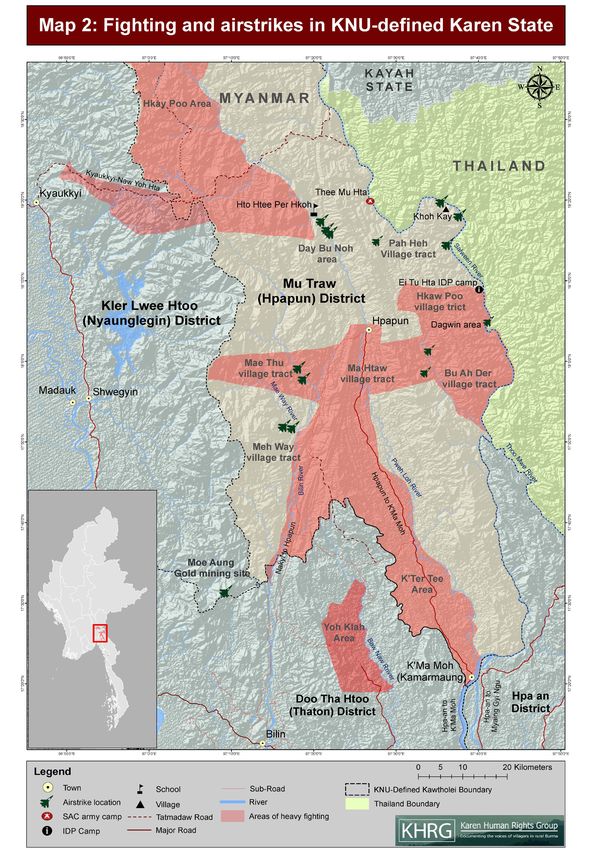
                   Map 2: Fighting and airstrikes......................................................................53

                   Map 3: Human rights violations....................................................................62

                   Chapter 4: COVID-19 since the coup..........................................................73

Part III: Wider Impacts and Perspectives.....................................................................77

                   Chapter 5: Challenges to peace, democracy, and development.................77

                   Chapter 6: Moving forward...........................................................................84

Conclusion......................................................................................................................88

                                                                                                                                       3
Karen Human Rights Group

    Executive Summary

    On July 6th 2021, five months after the Myanmar military unlawfully seized power from the newly
    elected civilian government, UN High Commissioner for Human Rights Michelle Bachelet made
    a statement to the Human Rights Council announcing that “the situation in Myanmar has evolved
    from a political crisis to a multi-dimensional human rights catastrophe. […] What began as a
    coup by the Myanmar military has rapidly morphed into an attack against the civilian population
    that has become increasingly widespread and systematic.”1

    Since the February 1st 2021 military coup, the human rights situation in Myanmar has seriously
    deteriorated. The State Administration Council (SAC) headed by Senior General Min Aung
    Hlaing has engaged in systematic violence against civilians and stripped away the few key civil
    and political protections that the already problematic 2008 Constitution was supposed to
    guarantee, further opening the door for widespread human rights violations. Those who have
    taken to the streets or posted online to express their disapproval of the coup and the military’s
    actions have faced violence and threats to life at the hands of security forces. In Southeast
    Myanmar, rural villagers have faced additional insecurity and human rights violations as armed
    conflict and attacks in civilian areas have increased. With ongoing displacements, a worsening
    COVID-19 pandemic, and the SAC blocking national and international aid organisations’ access
    to critical areas, the humanitarian crisis has become dire, placing many in life-threatening
    situations.

    In this report, KHRG presents the experiences and perspectives of rural villagers in Southeast
    Myanmar during the first six months of the military coup, as well as that of civilians who fled for
    safety to areas under Karen National Union (KNU) control. Interviews conducted by KHRG
    reveal the level of violence that the SAC undertook against protesters, and the ways in which
    protesters have continued to voice their opposition to the coup in the face of increasing brutality
    and repression by the state military. Protesters recounted stories of fear and insecurity as they
    encountered the ruthless response of the SAC to civilian opposition, yet equally expressed a
    strong sense of hope and an unwavering commitment to upholding the fight for democracy and
    freedom from oppression through to the very end. These interviews also highlight the efforts of
    civilians to support and sustain each other as protesters and those engaged in civil disobedience
    sought refuge and protection.

    The situation of rural villagers has also been impacted by an increase in militarization and armed
    conflict. Although some areas in Southeast Myanmar have experienced little to no fighting,
    others have endured an ongoing onslaught of attacks and fighting since the coup. It is estimated
    that, as of June 23rd, close to 177,000 villagers in Southeast Myanmar, including 50,000 in Kayin
    State, have been displaced since the February 1st coup (with over 140,000 still experiencing
    displacement as of August 23rd).2 KHRG also received a growing number of reports of direct
    attacks on civilians, including targeted killings, forced labour, looting and confiscation. That,
    combined with the SAC’s use of the COVID-19 pandemic as an additional weapon of war, has
    left rural villagers at-risk from multiple forms of attack.

    1
        United Nations Office of the High Commissioner for Human Rights (OHCHR), “Statement by Michelle
        Bachelet, UN High Commissioner for Human Rights, 47th session of the Human Rights Council, July 6th
        2021”, July 2021.
    2
        United Nations Office for the Coordination of Humanitarian Affairs, “Myanmar Humanitarian Update No. 8,
        June 24th 2021”, June 2021; United Nations Office for the Coordination of Humanitarian Affairs, “Myanmar
        Humanitarian Update No. 10, August 27th 2021”, August 2021.

4
Military Atrocities and Civilian Resilience

In documenting the first six months of the coup, this report seeks to ensure that the experiences
and concerns of rural ethnic villagers are not just heard but addressed. Although conflict and
attacks had been ongoing in certain parts of Southeast Myanmar even prior to the coup, the
shifts currently taking place reflect a complete disregard for human rights and signal a return
to a “four cuts” approach that, as independent researcher Kim Joliffe has highlighted, “treats
civilians not just as ‘collateral damage’ but as a central resource in the battlefield”.3

Introduction
“Right now there is no peace and people have to hide. We can’t go outside at night either, we
can’t sleep peacefully and we are always full of worry and fear.” – A university student in
Kawkareik Town who participated in the protests.

“Our villagers dare not sleep in the village during the night. They hide and sleep in their farm
and on the other side [of the stream]. They sleep in fear at night. We heard that the [SAC soldiers]
are going out at night. […] Some villagers dug a bunker and hid their belongings somewhere
else. In our village, some people have packed up their belongings to take along in case they
have to flee.” – A villager from mixed control Cj--- village, Hu---village tract, Moo (Mone) Township,
Kler Lwee Htoo District.

Multiple battlefields

Over the past six months, since the Myanmar military forcibly seized power on February 1st
2021, civilians throughout the country have experienced armed violence, threats and repression
by the military junta. For some, this was the first time they had encountered such violence and
state terror, while for others it brought up fears and trauma due to past (and ongoing) armed
conflict and military abuse and brutality. For decades the Myanmar military4 has committed
human rights violations against ethnic minorities and enjoyed complete impunity. Even under
civilian rule, the military retained immense governmental power and had access to national and
international funding that has allowed it to carry out military operations without oversight and
engage in violations of human rights and international humanitarian law that have amounted to
crimes against humanity.5

Since the coup, the level of violence has amplified, and extended beyond ethnic minority
populations to touch all citizens. On March 11th 2021, Amnesty International released a report
stating that “[t]he Myanmar military is using increasingly lethal tactics and weapons normally

3
    Emily FISHBEIN, Nu Nu Lusan and Vahpual, “Myanmar military adopts ‘four cuts’ to stamp out coup
    opponents”, Al Jazeera, July 2021.
4
    The term most commonly used in referring to Myanmar’s armed forces is Tatmadaw. The term has been used
    by KHRG throughout its reporting history, and most consistently during periods of civilian government. Since
    the February 1st 2021 coup and the military’s establishment of the State Administration Council (SAC) as the
    executive governing body of Myanmar, Myanmar’s armed forces have also come to be referred to as the SAC
    military. KHRG uses the term SAC military in specific reference to the Myanmar military since the February
    1st 2021 coup. During previous periods of military rule, KHRG also used the names adopted by the military
    government in referring to the Tatmadaw (i.e. SLORC [State Law and Order Restoration Council] between
    1988 to 1997, and SPDC [State Peace and Development Council] from 1998 to 2011), because these were the
    terms commonly used by villagers in KHRG research areas.
5
    United Nations Human Rights Council, The Economic interests of the Myanmar military: Independent
    International Fact-Finding Mission on Myanmar, September 2019.

                                                                                                                   5
Karen Human Rights Group

    seen on the battlefield against peaceful protesters and bystanders across the country”.6 They
    cited indiscriminate and reckless spraying of live ammunition into crowds, as well as strategic,
    targeted attacks and extrajudicial killings, adding that military battalions already known for
    committing atrocities and human rights violations against ethnic minorities were involved in
    these attacks on protesters.

    Although much media attention has been drawn to these attacks on civilian protesters, the
    military junta has also renewed attacks in rural areas under the control of Ethnic Armed
    Organisations (EAOs). What we find are multiple battlefields, with Myanmar’s armed forces
    directly waging war on protesters and civil disobedience in towns and cities, while also targeting
    civilian areas and villagers in rural areas in an attempt to quash and cripple what it considers
    to be ethnic armed opposition.

    This report presents the violence that civilians have faced as a result of voicing their opposition
    to the coup and exercising their right to freedom of speech and assembly. It also presents the
    escalation of insecurity in rural ethnic areas, where the Myanmar military has long used violence
    against civilian villagers as a key strategy in waging war against ethnic armed actors. Such
    strategies quickly resurfaced following the coup.

    Since the coup, increased offensives against ethnic armed groups have taken place, as have
    direct attacks on civilians in rural villages. Villagers in rural ethnic areas in Southeast Myanmar,
    particularly those areas under EAO control, have faced displacement due to airstrikes on civilian
    areas and ongoing armed conflict, but have also been subjected to other rights violations, many
    of which had begun to curtail following the 2015 Nationwide Ceasefire Agreement (NCA).7
    Although killings, arbitrary arrests, extortion, looting and forced labour have continued to take
    place since the NCA despite provisions protecting against such abuses, these incidents have
    often been associated with particular individuals or battalions and have not been systematic in
    nature. Already, within just the first six months of the military takeover, that has changed. There
    has been an increase in incidence and in what amounts to state-authorised violence.

    What is evident in both rural and urban areas is not just the increase in acts of violence since
    the coup, but that the State Administration Council (SAC)8 has sought to legitimise its own
    abusive actions and inscribe in law the deprivation of fundamental human rights.

    The legitimisation of state violence

    The Myanmar military, in ousting the newly elected civilian government, not only illegally seized
    power by making unsubstantiated claims about election fraud, but also set about instituting
    legislative changes that would effectively legalise state-based repression and its own use of

    6
        Amnesty International, “Myanmar: Vast arsenal and notorious troops deployed during nationwide ‘killing
        spree’ protest crackdown – new research”, March 2021.
    7
        On October 15th 2015, after a negotiation process marred with controversy over the notable non-inclusion
        of several ethnic armed groups, a Nationwide Ceasefire Agreement (NCA) was signed between the Burma/
        Myanmar government and eight of the fifteen ethnic armed groups originally invited to the negotiation table,
        including the Karen National Union. It was followed by the adoption of a Code of Conduct by the signatories
        in November 2015. In February 2018, two additional ethnic armed groups signed the NCA under pressure from
        the Burma/Myanmar government.
    8
        The State Administration Council (SAC) is the executive governing body created in the aftermath of the
        February 1st 2021 military coup. It was established by Senior General Min Aung Hlaing on February 2nd 2021,
        and is composed of eight military officers and eight civilians. The chairperson serves as the de facto head of
        government of Myanmar and leads the Military Cabinet of Myanmar, the executive branch of the government.
        Min Aung Hlaing assumed the role of SAC chairperson following the coup.

6
Military Atrocities and Civilian Resilience

excessive force against civilians. The SAC has specifically targeted rights to freedom of
expression, freedom of peaceful assembly and association, and access to information as a
means of criminalising all forms of dissent. The changes enacted give the SAC permission to
arrest, detain, and interrogate anyone who speaks out against the military junta; anyone who
tries to investigate or publish on the activities of the military junta, or human rights violations
committed by the junta; and anyone who engages in any form of protest. In combination with
the declaration of a state of emergency, and the imposition of curfews (and martial law in some
townships), the legislative changes ultimately make it possible for the SAC to take action against
anyone for any reason it sees fit. UN Special Rapporteur Tom Andrews posted on Twitter on
February 14th that “[i]t’s as if the [SAC] generals have declared war on the people of Myanmar”.9

Although these legislative changes are both unconstitutional and in serious contravention of
international law, the SAC continues to insist that its actions remain in accordance with the law.
Major General Zaw Min Tun, spokesman for the ruling military council, has stated: “We will
abide by laws that do not supersede the Constitution. Many laws have to be taken into
consideration in executing political processes. We will not do anything that is not in accord with
the law.” He added, in referring specifically to the SAC’s legislative reforms and use of excessive
force against protesters: “The first objective of the new laws is achieving peace and security
for the people and the country. […] Police and other security personnel are carrying out their
responsibilities in accordance with their manuals.”10

The 2008 Constitution had already long been criticised as “effectively grant[ing] total immunity
to State and military personnel to act with impunity”11 and as granting special powers and
privileges to the military that give it veto power over any constitutional change. The reforms that
the SAC has undertaken since seizing power create a system of “justice” that effectively
undermines and stands in contradiction to rule of law, and thus is more clearly a system of
inscribed injustice for civilians and impunity for the military. KHRG interviewees themselves
have pointed to the complete arbitrariness of arrests, with no assurance of due process or fair
trial rights, no possibility to report crimes and violations to any sort of justice system, and fear
of further abuse and threat if they were to even attempt to seek out justice.

Similarly, the SAC is using the NCA and calls for ceasefire to then give itself permission to
undertake whatever measures it deems necessary to “keep the peace”, which in reality amounts
to quashing dissent and wiping out “rebel” groups. Although the SAC announced a unilateral
ceasefire on its part since April 2021, it also stipulated that it would continue to respond to
“actions that disrupt government security and administration”,12 thus authorising its own military
offensives. Since the coup, it has repeatedly accused other armed actors of failing to honor
peace commitments, and to label any groups that oppose the SAC as terrorists.

From the outset, it has also used the COVID-19 pandemic, citing the Natural Disaster
Management Law, to justify arrests. It has limited access to information about the health crisis,
and more recently to vital medical care, using the pandemic as a political weapon against the
public as well as ethnic armed groups. The SAC’s mishandling of the COVID-19 pandemic has

9
     UN Special Rapporteur Tom Andrews, “Tweet: February 14, 2021”, Twitter, February 2021.
10
     “‘We Didn’t Put Restrictions on Everything,’ Says Myanmar Junta Spokesman in 1st Remarks Since Coup”,
     Radio Free Asia, February 2021; see also Pwint Htun, “Beyond the Coup in Myanmar: ‘In Accordance with
     the Law’ – How the Military Perverts Rule of Law to Oppress Civilians”, Just Security, April 2021.
11
     United Nations Human Rights Council, 1st cycle UPR recommendations, New Zealand, Report of the Working
     Group on Universal Periodic Review: Myanmar (A/HRC/17/9), March 2011, pg. 21.
12
     Richard ROTH et al., “Myanmar junta offers ceasefire to some, as UN envoy warns of ‘bloodbath’”, CNN,
     April 2021.

                                                                                                               7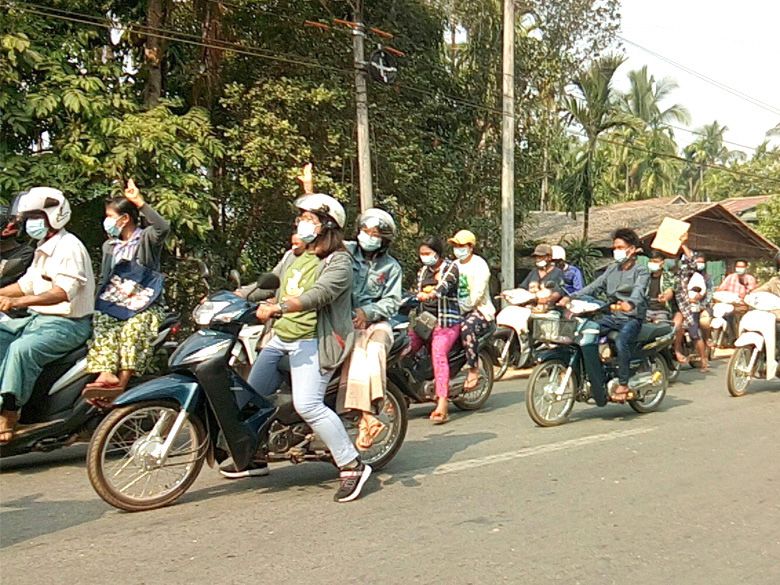
Karen Human Rights Group

    led to a spike in COVID-19 cases and COVID-related deaths throughout the country, including
    rural villages in Southeast Myanmar, where villagers are already facing threats to health and
    safety due to armed conflict and attack.

    In highlighting the human rights violations that have occurred since the February 1st coup, this
    report presents the degrading security situation and humanitarian crisis that civilians in Southeast
    Myanmar are currently facing. It also presents the hopes and struggles of rural villagers and
    civilians to show how, despite the increased insecurity that they face, they continue to seek out
    ways to counter a military regime they know to be both illegal and unjust.

    Structure of the report
    Part I looks at the anti-coup and pro-democracy movements that erupted immediately following
    the military takeover and that came to be referred to as the “Spring Revolution”.

    Chapter 1 focuses on the protests in both towns and rural areas. By providing testimonies from
    protesters as well as security forces who have now left their positions to join the Civil Disobedience
    Movement (CDM),13 this chapter highlights the ruthless and excessive measures that the SAC
    used against protesters to suppress opposition. It also presents the legislative reforms that the
    SAC set up in order to legitimise and justify its violent response, and that turned what was
    otherwise nonviolent, lawful acts of freedom of expression and assembly into punishable crimes.
    While this chapter describes the threats and fears faced by civilians as the SAC unleased a
    war against them, it also highlights the strategies protesters adopted to protect themselves from
    violence, abuse, and arrest by SAC security forces.

    Chapter 2 turns to the Civil Disobedience Movement and the motivations, pressures and
    challenges faced by different groups participating in the movement. While CDM participants in
    general spoke of the desire for democracy, a return to civilian government, and the hope of
    undermining the SAC by shutting down the wheels of government, SAC security forces (police
    and military) who joined the CDM also cited unjust and unlawful orders as motivating factors.
    Interviewees, most of whom had fled to areas under Karen National Union (KNU)14 control,
    expressed threats to their own safety as well as reprisals against their family, but also revealed
    the widespread networks of support that have evolved alongside and within the CDM. Finally,
    although the movement has indeed been successful at crippling the government, the impacts
    on the livelihoods of both CDM participants and their families, and on the communities now
    supporting and sheltering them cannot be ignored.

    13
         On February 2nd 2021, healthcare workers at state-run hospitals and medical facilities across Myanmar
         spearheaded what is being referred to as a Civil Disobedience Movement (CDM) consisting of labour strikes
         in protest against the February 1st 2021 military coup. The movement quickly spread to include civil servants
         from all sectors of the government who are walking off their jobs as a way of non-recognition and non-
         participation in the military regime. Because of the popularity of the movement, and its seminal role in wider
         protests across the country, some people have begun using it as a catch-all phrase to include other protest forms
         like boycotts and pot-banging.
    14
         The Karen National Union (KNU) is the main Karen political organisation. It was established in 1947 and
         has been in conflict with the Burma/Myanmar government since 1949. The KNU wields power across large
         areas of Southeast Myanmar and has been calling for the creation of a democratic federal system since 1976.
         Although it signed the Nationwide Ceasefire Agreement in 2015, relations with the government remain tense.

8
Military Atrocities and Civilian Resilience
Part II focuses on the multidimensional humanitarian crisis that is unfolding specifically in rural
areas of Southeast Myanmar as a result of the increase in military activity and human rights
violations, and the spread of COVID-19.
Chapter 3 highlights the growing insecurity in rural areas as result of the increase in militarisation
and armed conflict that has occurred since the coup. While airstrikes and fighting have led to
large-scale displacements and a growing humanitarian crisis, the human rights situation has
also degraded with an increase in abuses (like forced labour, targeted killings, looting and
arbitrary arrest) that had curtailed following the NCA. This chapter reveals how the renewal of
violence signals not just an abandonment of peace efforts but also a shift in tactics that recall
earlier periods of conflict where the Myanmar military engaged in strategies directly targeting
civilians as a means of defeating ethnic armed groups.
Chapter 4 provides an update on the COVID-19 situation in rural areas during this third wave
of the pandemic. It also presents the SAC’s handling of the COVID-19 pandemic, focusing on
rights violations committed by the SAC. The SAC has both failed to provide accurate information
and denied or hindered access to services, thus has infringed on civilians’ right to health and
right to life. In rural areas specifically, where villagers already have little reliable access to
healthcare, and where distrust of the SAC is particularly strong, signs of the SAC’s mishandling
of the pandemic are already being felt.
Part III turns to wider impacts of the coup and perspectives on moving forward.
Chapter 5 focuses on the wider impacts to peace, democracy and development resulting from
the military takeover. The military junta has been extending its control not just horizontally across
sectors, but vertically down to the village level as it replaces locally elected officials with SAC-
appointed staff. The implications, particularly in mixed control areas, are just beginning to be
felt, but are likely to have significant impact on local ethnic administration and cooperation and
peace in those areas. This chapter also looks at the impacts of the coup on the already vulnerable
livelihood and financial situation of rural villagers and considers the impacts of the coup and
responses to it on civilians’ access to health and education services. Finally, it explores the
impacts of the telecommunication interruptions and SAC control of news and media outlets,
particularly regarding access to information for rural villagers.
Chapter 6 presents the perspectives of KHRG interviewees, highlighting their expectations of
the protest movements and CDM during the six months following the coup. Opinions about how
the fight to overthrow the military junta should continue varied, with interviewees expressing
different ideas about whether negotiation and peaceful means should continue to be pursued,
or whether taking up arms was the only way forward. The need for unity was often cited as
critical to the ability to restore civilian rule, with some concerns about the already existing
divisions both between and within ethnic groups. A strong emphasis was thus placed on the
need for a federal democracy that allows for self-determination as the only means of ensuring
ethnic minority rights and equality. The interviews also revealed a growing awareness of the
struggles endured by ethnic minorities and the military’s brutality as people throughout the
country witnessed violence at the hands of the military and/or experienced it themselves. The
interviews thus hold hope for greater inclusion of minority voices in the future.
9Karen Human Rights Group
Recommendations
To the State Administration Council (SAC)
● Immediately step down and hand over power to the National Unity Government (NUG).
● End the crackdown, arrests and targeted attacks on protesters and CDM participants.
● Cease the halting and seizure of medical and humanitarian supplies intended to alleviate
the COVID-19 and other humanitarian crises in Southeast Myanmar.
● Reverse the suspension of Sections 5, 7 and 8 of the Law Protecting the Privacy and Security
of the Citizens (Pyidaungsu Hluttaw Law No. 5/ 2017).
● Revoke amendments to the Ward or Village Tract Administration Law, the Penal Code and
the Code of Criminal Procedure (SAC Law Nos 3/2021, 5/2021 and 6/2021).
● End interruptions to communication services and the suppression of media freedom since
this is a violation of the right to access information.
● Cease attacks on civilian areas, as well as patrols and military transports through, in or near
villages or livelihood areas; demilitarise areas close to villages and farms by removing troops
and camps.
● Stop all forms of forced labour, including using villagers as human shields, porters, and
navigators; and refrain from making arbitrary demands on local communities such as
demanding the use of their vehicles, boats or other property for military purposes.
● End arbitrary and illegal taxation practices, as well as the confiscation of civilian property
for military and personal use.
● Ensure compliance with international humanitarian standards and human rights law; and
end impunity by ensuring that any armed actor who has violated the rights of any person is
held accountable for abuses in fair and transparent investigations and judicial processes in
independent and impartial civilian courts.
● Put an end to clearance operations, as well as activities, commonly termed the “four cuts
strategy”, that prevent civilian access to food, communication, aid and other basic necessities.
To international organisations, NGOs, funding agencies, and foreign governments
● Refrain from giving any legitimacy to the military junta and from recognising them in any
international forum.
● Exclude the SAC as a partner for the distribution of aid.
● Urge UN agencies in Myanmar to take a clear and strong position in responding to the
situation on the ground, and to use all possible resources to limit the human rights abuses
and violations undertaken by the SAC.
● Provide financial and technical support as needed for the NUG, including on international
human rights laws and standards and other matters of governance.
● Consult and sign Memorandums of Understanding (MoUs) with the NUG and EAOs to
address the unfolding humanitarian crisis across the country.
● Support a UN Security Council resolution on a global arms embargo.
10Military Atrocities and Civilian Resilience
● Diversify international funding distribution so that more funding is made directly available to
non-state actors, particularly ethnic service providers and civil society organisations,
regardless of their registration status.
● Prioritise methods of service delivery and communication that rely on local CSOs/CBOs and
ethnic service providers that have the ability and networks (due to consistent access and
trust from the community) for local implementation of support programmes.
● Recognize the complex logistics of service delivery and be willing to contribute to solutions
proposed by local CSO/CBOs and ethnic service providers.
● Mitigate the impacts of displacement, armed conflict and insecurity on livelihood through
increased support and initiatives that reduce the vulnerability of small farmers and day
labourers.
● Support ethnic health organisations (EHOs) and other non-state health actors, both regarding
COVID-19 prevention and treatment (including screening/testing and the running of quarantine
facilities), and the provision of other essential health services in rural areas.
● Urge Myanmar’s neighbours to ensure that their authorities do not deny entry to people
crossing the border seeking refuge; and encourage them to work with cross border
organisations to develop support and protection services for those seeking refuge.
● Provide neighboring countries with the necessary resources and technical assistance to
provide humanitarian aid, including for COVID-19, for the people from Myanmar who are
fleeing the military violence.
● Engage with Myanmar’s neighbours to ensure the passage of aid to Myanmar, in particular
through cross border aid organizations and local civil society organizations already operating
in the area.
● Advocate for the release of political prisoners, including political actors, protesters, activists,
human rights defenders, journalists and their family members.
● Insist that the UN Security Council refer Myanmar to the International Criminal Court (ICC)
or set up an ad hoc tribunal to ensure all perpetrators of genocide, war crimes, crimes against
humanity, and mass atrocities are prosecuted and that justice is attained for victims and
survivors.
To the SAC and EAOs/EAGs
● Put an immediate halt to the planting of landmines and ban all further use of landmines;
mark all areas contaminated by landmines and unexploded ordnance (UXO), and inform
the local communities of these locations for their safety.
● Comply with international humanitarian standards and human rights law, particularly with
regard to the protection and safety of civilians.
11Karen Human Rights Group
Methodology
Field research and data
This report is based on interviews conducted with rural villagers as well as with participants in
the protests and Civil Disobedience Movement who fled to KNU-controlled areas for their safety.
This report also draws on raw data reports prepared by KHRG researchers working in local
communities within KHRG’s operational area. KHRG began conducting interviews shortly after
the February 1st coup, through the first week of June 2021. The raw data for this report covers
the period from the beginning of February through the end of July, thus the first six months of
the coup.
A total of 133 interviews were conducted, covering a wide range of topics related to the coup.
Because of the early explosion of protest activities following the coup, KHRG researchers often
sought out individuals who were involved either in the protests or the Civil Disobedience
Movement. As a result, the interviews used for this report give heavy weight to the protests and
CDM (compared to the raw data reports, which focus more heavily on conflict, military activities
and specific incidents). Forty-nine of those interviews were with people who joined the Civil
Disobedience Movement, many of whom had either fled to their home village in Southeast
Myanmar or been provided refuge in a KNU-controlled area. These interviews included staff
from the police force, military, medical fields, education and other government offices. Two
interviews were conducted with protesters who had been arrested following their release from
prison. An additional interview was conducted with the family member of a detainee. The rest
of the interviews (81) were with villagers, many of whom had joined the protests.
Interviewees ranged in age from 15 to 62 years old. Of the 133 interviews conducted, 84 were
with men and 49 were with women. Although many of the interviewees did participate in the
protests, these figures are not necessarily reflective of the overall level of participation in protests
by gender. KHRG interviews and news reports point to high participation by women in the
protests, with the Women’s League of Burma estimating that 60% of protesters were women.15
KHRG interviews with CDM participants are likely further imbalanced with regard to gender (35
men and only 14 women), since all of the interviews conducted with police and military staff
were with men.16
The oral testimonies used for this report took the form of audio-recorded semi-structured
interviews. Multiple questionnaires were used in the collecting of testimonies in order to better
capture the different experiences of protest, CDM participation, and detention, as well as villagers’
perspectives of the coup. The interviews were conducted by KHRG staff and a network of
researchers who are local community members, trained and equipped to employ KHRG’s
documentation methodology.17
As fighting and attacks began increasing in rural areas, KHRG field researchers worked to
provide short situation updates and incident reports. Over 100 raw data submissions were used
for this report. Due to service disruptions in telecommunications, movement restrictions and
insecurity, KHRG researchers were often not able to conduct fuller interviews with local villagers
who might have been impacted by the military activities. Thus, the raw data used for this report
15
Umayma KHAN, “The women of Myanmar: ‘Our place is in the revolution’”, Al Jazeera, April 2021.
16
The number of female staff within Myanmar’s security forces remains low despite increases in recent years:
20% of the police force in 2018, and 0.2% of the military in 2019. See Kyaw Myo, “Female Officers Now
Make Up 20 Percent of Police Force”, The Irrawaddy, October 2018; “2021 Myanmar Military Strength”,
Global Fire Power, last accessed November 2nd 2021.
17
KHRG’s full documentation philosophy and methodology is available upon request.
12Military Atrocities and Civilian Resilience
often only included details about the incidents, with little information capturing villagers’
perspectives of those incidents. Possibilities for follow-up were also much more restricted during
the reporting period.
Research areas
The interviews were conducted across all seven districts within KHRG’s operation area: Doo
Tha Htoo (Thaton), Taw Oo (Toungoo), Kler Lwee Htoo (Nyaunglebin), Mergui-Tavoy, Mu Traw
(Hpapun), Dooplaya and Hpa-an.18 These are commonly referred to as “districts” and are the
names used by the KNU, as well as many local Karen organisations, both those affiliated and
unaffiliated with the KNU. KHRG’s use of the district designations in reference to our research
areas represents no political affiliation; rather, it is rooted in the fact that many rural communities
commonly use these designations.
Additionally, KHRG uses the term “Myanmar” in its analysis. The country was officially named
Burma until the military regime changed the name to Myanmar in 1989.
When transliterating Karen village names, KHRG utilises a Karen language transliteration system
that was developed in January 2012 in cooperation with 14 other local Karen community-based
organisations (CBOs) and non-governmental organisations (NGOs) to ensure consistent spelling
of place names. When transliterating Myanmar language place names, KHRG uses the official
spelling used by the Government of Myanmar.
Sources and referencing
The information in this report is based directly upon testimonies offered by villagers and local
leaders, as well as raw data collected within local communities. In order to make the data in
this report transparent and verifiable, interviews used for this report are available for consultation
upon written request. In addition to the data collected through interviews and reports from the
field, KHRG consulted and analysed other external sources to gather policy and legal information,
as well as statistical and contextual information, which have been referenced using standard
citation format. Previously published KHRG reports were also used in the preparation of this
report and have been referenced using standard citation format.
All participants were informed of the purpose of the interviews and provided consent to be
featured in this report. Interviews were conducted in S’gaw Karen, Pwo Karen, Burmese, as
well as Baik (in Mergui-Tavoy District).
Censoring of names, locations, and other details
Where quotes or references used in this report include identifying information that KHRG has
reason to believe could put villagers in danger or at risk, this information – notably, the names
of individuals or villages – has been censored using an alphabetised system. Village and personal
names have been censored using single and double digit letters beginning from A--- and running
to Zz---. The censored code names do not correspond to the actual names in the relevant
language or to coding used by KHRG in previous reports. All names and locations censored
according to this system correspond to actual names and locations on file with KHRG. Thus,
censoring should not be interpreted as the absence of information. In some cases, further details
have been withheld for the security of villagers and KHRG researchers.
18
For clarity, the Burmese terms used for these districts are provided in brackets but do not correspond with the
Myanmar government administrative divisions.
13
13Karen Human Rights Group
Map 1: KHRG operational area
14Military Atrocities and Civilian Resilience
Terms and abbreviations
BGF Border Guard Force
CBO Community-Based Organisation
CDM Civil Disobedience Movement
CIDKP Committee for Internally Displaced Karen People
CRPH Committee Representing Pyidaungsu Hluttaw
CSO Civil Society Organisation
DKBA Democratic Karen Benevolent Army
DKBA (splinter) Democratic Karen Buddhist Army (splinter)
EAO Ethnic Armed Organisation
IDP Internally Displaced Person
KDHW Karen Department of Health and Welfare
KECD Karen Education and Culture Department
KNDO Karen National Defence Organisation
KNLA Karen National Liberation Army
KNPF Karen National Police Force
KNU Karen National Union
KPSN Karen Peace Support Network
KWO Karen Women’s Organisation
NCA Nationwide Ceasefire Agreement
NGO Non-Governmental Organisation
NLD National League for Democracy
NUG National Unity Government
PDF People’s Defence Force
SAC State Administration Council
UN United Nations
USDP Union Solidarity and Development Party
UXO Unexploded Ordnance
15
15Karen Human Rights Group
Language notes and special terms
Naw/Saw Karen S’gaw female/male honorific title.
Nant/Mahn Karen Pwo female/male honorific title for female/male adults, a married woman/
man or a woman/man of a higher social position.
Nan/Sa Karen Pwo female/male honorific title for younger or unmarried females/younger
males.
Daw/U Burmese female/male honorific title for female/male adults, a married woman/
man or a woman/man of a higher social position.
Ma/Maung Burmese female/male honorific title for younger or unmarried females/younger
males.
Currency
baht Currency of Thailand. All conversion estimates for the baht in this report are
based on the November 2nd 2021 mid-market exchange rate of 1 baht to USD
0.03005 (taken from https://wise.com/us/currency-converter/thb-to-usd-rate)
kyat Currency of Myanmar. All conversion estimates for the kyat in this report are
based on the November 2nd 2021 mid-market exchange rate of 1,000 kyats to
USD 0.55463 (taken from https://wise.com/us/currency-converter/mmk-to-usd-rate)19
19
The value of the kyat has dropped significantly since the military coup. On February 1st 2021, the market
exchange rate was 1,000 kyats to USD 0.75242 (https://www.exchange-rates.org/Rate/MMK/USD/2-1-2021)
16Military Atrocities and Civilian Resilience
Part I: The Spring Revolution
Chapter 1: Protests
After the February 1st coup, protests erupted throughout Myanmar in both urban and rural areas,
often drawing tens of thousands of people in large cities, and/or uniting hundreds of villages in
rural areas, all voicing their opposition to the coup and military dictatorship. Although peacefully
engaging in the right to freedom of expression, civilian protesters became the target of repression
and violence at the hands of the military regime. This chapter draws on testimonies of both
protesters and security forces to highlight the excessive violence used against civilians, as well
as the SAC’s expansion of repressive and suppressive measures that violate human rights
standards. It also presents the initial strategies of resistance and self-protection adopted by
protesters.
A. Opposing the coup: making our voices heard
“It is very clear why we joined the protests. We would like to get our rights back. We would like
our voice to be heard and listened to. […] [W]e realised that if we do not raise our voice to
express what we want, our voice will not be heard. Whether it is effective or not is another topic.
[In] every [democratic] country [people] have the right to express what they want.” – A protester
from Hpa-an District.
As people expressed their opposition to the military coup, the most common demands were to
eliminate the military dictatorship, to establish a democracy, to return the power to the National
League for Democracy (NLD),20 to demolish or modify the 2008 Constitution, to respect the
results of the 2020 election and to release the political detainees including the NLD members
and anti-coup protesters. Some interviewees also noted the developments and improvements
to their livelihood, security, social conditions and the economy under civilian rule, and expressed
that a return to military rule would be a step backwards.
Many rural villagers joined the protests in urban areas to be part of the larger collective. One
rural villager from Mu Traw (Hpapun) District insisted on the common goals uniting protesters:
“What the people in Burma want, and what we, the rural people want is the same since we live
in the same country.” Another rural villager pointed out: “The military seized power, but nine out
of ten civilians are not in favour of it, thus, they are protesting against it. […] [P]eople are now
protesting because what they [the military] are doing is not right”. Some also joined protests
and protest groups specifically claiming to be “all ethnic”.21
Although interviewees noted a sense of people coming together with a common goal of expressing
their refusal of the military coup, different understandings of military rule could be seen underlying
this shared goal. In rural ethnic areas, a stronger emphasis on self‑determination and federal
democracy could be seen, with some protests even being extensions of activism and
demonstrations that rural villagers were engaged in prior to the coup. Thus, they often included
existing demands specifically relevant to local ethnic populations. For example, protesters in
20
The National League for Democracy (NLD) is the political party that governed Burma/Myanmar from 2016
to January 2021. Led by Aung San Suu Kyi, the NLD won landslide victories in the 2015 and 2020 General
Elections. The NLD government was deposed by the Burma Army in the February 2021 Myanmar coup d’état,
after which elected President Win Myint and State Counsellor Aung San Suu Kyi were detained, along with
ministers, their deputies and members of Parliament.
21
KHRG, “We Will Win this Fight”, forthcoming news bulletin.
17
17Karen Human Rights Group
Mu Traw emphasised the Four Principles of Saw Ba U Gyi, revolutionary leader, founder and
former president of the KNU: 1. For us, Surrender is out of the question; 2. We shall retain our
arms; 3. The recognition of the Karen State must be complete; 4. We shall decide our own
destiny.
This photo was taken on March 22nd 2021. It shows a This photo was taken on April 12th 2021 in Lay Hpah
demonstration during which 500 villagers from four Htaw village, Noh T’Kaw Township, Dooplaya District.
different village tracts (T’Hkaw Pwa, Way Shweh, Koh It shows around 400 villagers from Win Yay, Pa Yar Thone
Nee, and Noh Nya Lar) gathered and held a protest against Su, Noh T’Kaw and Seikkyi towns who assembled and
the military coup. They started marching at T’Hkaw Pwa gave speeches in the street as part of the ‘Say No to
village and went around to Aaw Law See, Way Shweh Dictatorship’ campaign. During the speeches, protesters
and Kyun Pin Seik villages in Plaw Too area, Moo (Mone) were encouraged to boycott the use of products from
Township, Kler Lwee Htoo District. The protest Myanmar, including alcohol, and to refrain from
specifically claimed to be an “all ethnic group” protest. celebrating the annual water festival. In this photo, the
[Photo: KHRG] word “democracy” has been painted on the street.
[Photo: KHRG]
A female protester in a KNU-controlled area of Mu Traw District explained that they also called
for the withdrawal of SAC army camps from civilian areas and the Salween Peace Park: “Our
main demand was the withdrawal of the army camps from our homeland and the Salween
Peace Park in order for us to live peacefully, to work freely, to enjoy our rights and be free from
fear. The second demand was that the dictatorship [military regime] must change the 2008
Constitution; even if they don’t want to abolish the whole 2008 Constitution.” The abolishment
of the 2008 Constitution has been important to ethnic minorities because it currently provides
the military with a number of special powers and privileges, and enables former junta officials
to evade accountability for past human rights violations.
Having already experienced several decades of military dictatorship prior to the 2021 coup,
rural villagers were quick to mention that they engaged in protests because they do not want
to live under the military leaders again, nor do they want that for future generations. A villager
in Mu Traw District stated: “I cannot stand the military coup. The new system [democracy] was
bringing about change, but they [SAC military] want to bring the old system back again. We are
here to [show we are] against something that should not have happened. I don’t want the next
generation to walk in [experience] this wicked system.”
To voice their opposition to the coup, many people took to the streets. Protest marches have
been the most widespread form of protest against the coup, often mobilising thousands of people
18Military Atrocities and Civilian Resilience
(Yangon had the largest protests, sometimes over 100,00022). KHRG interviewees mentioned
being involved in a variety of other forms of protest, including sit-ins, mass prayer, vigils, and
writing on walls and streets.
This photo shows a protest being held in Tha Yet Chaung This photo was taken on March 2nd 2021. Over 1,000
Town, K’Ser Doh Township, Mergui-Tavoy District villagers from 11 villages in Thoo Ka Bee, Wel Lar Daw,
during the first week of February 2021. Around 10,000 Noh Ghaw, and Par Ta Lar village tracts in Ler Doh
people attended this protest against the military coup, Township, Kler Lwee Htoo District came together in
including, as shown here, protestors on motorbike. protest. People carried out the protest by cart, as seen in
[Photo: Local villager] this photo, as well as on motorbike. [Photo: KHRG]
Many civilians in town also used pot banging to show their solidarity against the military coup.
Pot banging, already commonly practiced in Myanmar as a way of casting out evil from the
community,23 emerged immediately after the coup as it also offers a form of protest accessible
to all since any household item could be used: pots, pans, steel/iron buckets (anything that will
make a sound). Local community leaders and protesters often organised these activities, but
they also took on a spontaneous form. An interviewee from K’Ma Moh (Kamarmaung) Town,
Mu Traw District explained: “On February 3rd,
people banged pots from 8:00 to 8:10 pm to
express their feelings that they do not like the
military coup. People from the whole town did
this in their own houses.” In some areas, pot
banging has also been used to notify the
neighbouring houses when the SAC security
forces conduct night raids.
Another form of protest has been to hang
women’s undergarments and long skirts in the
street. Hanging women’s undergarments and
long skirts was a strategy developed by
women to block SAC security forces and This photo was taken on February 13th 2021. Approximately
protect themselves from SAC violence. There 200 Karen people took part in this protest against the
is a traditional belief in Myanmar that walking military coup in P’Law Town, K’Ser Doh Township,
under women’s undergarments or long skirts Mergui-Tavoy District. [Photo: KHRG]
22
Rebecca RATCLIFFE, “Myanmar: more than 100,000 protest in streets against coup”, The Guardian, February
2021.
23
“The nights of pots and pans are back, on Myanmar’s fearful streets”, The Guardian, February 2021.
19
19Karen Human Rights Group
diminishes and can even destroy the dignity of men. Thus, men, especially soldiers, avoid
walking under women’s undergarments and skirts.
Critical to all of these forms of protest was their peaceful and non-violent approach. A high
school student in Myawaddy Town expressed that the protests were about “demand[ing] the
truth from [our] hearts.”
B. Violent crackdown
Despite the peaceful nature of the protests, SAC security forces responded with violence, using
threats, arrest, detention, and various forms of physical harm to silence those who stood against
them. Initially, the SAC used blockades to try to impede protests, but by mid-February, as
protests grew, more violent measures were employed. The SAC used violence on the protesters
regardless of gender and age.
i. Excessive violence
SAC security forces cracked down on the protests using excessive violence, including brutally
beating and torturing protesters as well as shooting at them using both rubber and live bullets.
Hundreds of protesters have been killed and thousands more injured as a direct result of violence
by SAC security forces. A variety of weapons were used by security forces including water
cannons, machine guns, sniper rifles, water pipes, tear gas and sound bombs (stun grenades).
University student Maung E---, who joined the protests in Yangon shared his first-hand experience
of the violence and torture inflicted by the SAC: “They [police officers and soldiers] shot people
with rubber bullets. Then they used tear gas, so they shot people with a launcher [riot gun].
When the people [protesters] became nervous, soldiers came and beat them, and then they
arrested them. They grabbed people’s hair when they arrested them, and then they ordered
people to sit down on the floor. […] Many people beside me got injured. They were bleeding.
Everybody was running away at that time so we did not know whether they were shot with
rubber bullets or not. One of the people standing beside me sustained a leg injury. He could
not walk anymore. He was sent to the hospital.” A young woman from Kawkareik Town, Hpa-an
District also experienced SAC violence: “I was exposed to the tear gas. They [SAC security
forces] used tear gas. The house I was hiding in was also exposed to the tear gas. They also
shot [guns] at the house and it [the bullets] reached to the back of the house.”
The security forces usually did not give advance warning about cracking down on the protests,
or about the measures they would take. As such, protesters felt like open targets, as expressed
by Maung E---: “In joining the protests in Yangon and Mandalay, it is like we pick straws over
who will die in the street [joining the protests is like a deadly game of chance]. They [police]
can shoot people at any time if they want. In fact, they shot people. Many people have already
died. They [police] never gave a warning to people before cracking down on the protests.”
One protester from Mergui-Tavoy District stated that February 22nd marked a turning point in
the use of violence. Civilians all over the country came out in force, showing their solidarity
against the coup on this particular day, locally called “Nit Nga Lone (22222) Revolution Day”.
Naw D---, who participated in the Yangon protests since the beginning, said: “They [SAC security
forces] started shooting from February 22nd. They responded to civilians with attacks every day
since then. I was in the protests during that time. […] We encountered them on February 24th
and they were attempting to arrest protesters. So we had to run away. […] They used tear gas,
sound bombs [stun grenades], and they shot rubber bullets.” Ma As---, a teacher from Hpa-an
20Military Atrocities and Civilian Resilience
Town, described the violence used on protesters in late February: “After February 25th 2021,
the SAC military threatened us with guns. The soldiers started patrolling in the place we were
gathering for the protest and at least 20 to 30 military trucks would follow and block the protest.
Therefore, we could not hold regular protests anymore because they would arrest protesters
whenever we started to gather into groups and we had to start hiding [from the military]. The
attack on [February] 28th while sitting in protest in front of the police office was the worst because
[SAC police/military] attacked us with tear gas bombs, deployed water cannons against us and
fired rubber bullets at protesters. And finally, they used machine guns [to fire warning shots at
protesters] to disrupt the protests. In April, one protester was hit by a real bullet.”
Blockades themselves were sometimes used to enact violence upon protesters. A protester
from Ec--- village, Kaw T’Ree (Kawkareik) Township described what she encountered: “They
[SAC police] blocked us on the way and they threw tear gas and shot rubber bullets at the
civilians. They threatened the civilians until they were afraid and dared not to go back out for
protest. The civilians retreated and the police also retreated. However, they [police] came back
and blocked all the entrances into the town, on the other side of the road. […] Now, there are
no protests anymore.”
A protester from Du--- village, Waw Ray (Win Yin) Township, Dooplaya District whose group
was blocked on their way to Kyainseikgyi Town stated: “Because they blocked the bridge, if we
tried to cross it, they would shoot us since they have permission to shoot; but only we the
civilians will get harmed.” She added that “rather than blocking the road again, they should do
other things to prevent these kinds of demonstrations from happening again”.24
The violence that occurred during the protests went beyond standard containment measures.
According to KHRG interviewees, the violence often seemed to be targeted and deliberate.
Saw Av--- from Fe--- village, Fe--- village tract, Lu Pleh Township, Hpa-an District noted: “Their
responses are really brutal because they purposefully shoot on sight and are killing civilians,
so their acts lack humanity. Therefore, we feel sad and angry at the same time.”
Organisers and leaders seemed to be the primary targets of SAC violence. SAC military aircraft
mechanic Maung J---, a CDM participant who joined the protests, explained: “I think they targeted
protest organisers when they shot. I mean those who seemed very active in the protest. For
example, young active people like Kyal Sin.25 She was shot dead. I thought it was strange when
I saw the words [‘Everything will be okay’] on the shirt she was wearing when she died. Those
words are like a challenge to the SAC soldiers. So I think they might target a protester like her
when they shoot.”
The inability to access medical care for protesters added to the severity of the violence. Maung
J--- added: “I joined the protest on Sunday [February 28th 2021]. We had to separate and run
earlier on that day at 8:30 am because they started firing warning shots. But at 10:00 am, they
shot for real. There was one person who was shot and people were trying to send him to the
public hospital. The public hospital was closed so they tried to send him to a private hospital.
However, he could not make it. He just died on the way.”
Maung J--- also spoke of what he had seen on social media, adding that the stories of violence
and brutality have been denied by the SAC: “In some cases, the [SAC] police killed the people
and they tied those people’s toes with rope and dragged them away. It is like they were trying
24
KHRG, “We Will Win this Fight”, forthcoming news bulletin.
25
Sandi SIDHU et al.. “She was shot dead, her body dug up and her grace filled with cement. But her fight is not
over”, CNN, March 2021.
21
21You can also read


