MINDS AT WORK Making mental health a priority in the changing world of work - FABIAN POLICY REPORT - Fabian Society
←
→
Page content transcription
If your browser does not render page correctly, please read the page content below

FABIAN POLICY REPORT

               MINDS
              AT WORK
              Making mental health a priority
               in the changing world of work

                            Edited by Josh Abey, with a foreword by
                  Alastair Campbell and contributions by Luciana Berger MP,
                          Paul Farmer, Barbara Keeley MP and more
FOREWORD
The Changing Work Centre was established by
the Fabian Society and the trade union Community
in February 2016 to explore progressive ideas for
the modern world of work. Through in-house and
commissioned research and events, the centre is looking
at the changing world of work, attitudes towards it                                     Alastair Campbell, former director of communications
and how the left should respond. The centre is chaired                                   and strategy at Downing Street, is an ambassador
by Yvette Cooper MP and supported by an advisory                                                        for Time to Change.
panel of experts and politicians.

                                                                                      W      e have come a long way on mental health.
                                                                                             There is greater awareness and under-
                                                                                      standing and a better appreciation of mental health
                                                                                      and mental illness than 10, 20 or 30 years ago. That
Community is a modern trade union with over a hundred                                 is on one level a success. But though we have moved
years’ experience standing up for working people. With                                in the right direction on the stigma and the taboo
roots in traditional industries, Community now represents                             of mental illness, that has not been matched by
workers across the UK in various sectors.                                             sufficient progress on services for those who need
                                                                                      them. So we rightly encourage people to be more
                                                                                      open, but then don’t always have the capacity to
                                                                                      provide real support.
                                                                                          We have seen improvements in the workplace
                                                                                      too. But it is far from universal. There are employers
                                                                                      who understand the importance of wellbeing both
                                                                                      to their organisations and the individuals within it.
                                                                                      Who know that a happy and healthy workforce is
                                                                                      a more productive and innovative workforce. But
                                                                                      there are others who still seem to see mental illness
                                                                                      as an inconvenient lifestyle choice or a reality that
                                                                                      exists only in the mind of the staff member trying to
                                                                                      take them for a ride. Of course it exists in the mind.
                                                                                      It doesn’t make it any less real and it is even more
                                                                                      painful if people feel they cannot be open about
                                                                                      their feelings without fear of rejection or dismissal.

             A Fabian Society report                  Like all publications of the Fabian Society, this
             General secretary Andrew Harrop          report represents not the collective views of
             Deputy general secretary Olivia Bailey   the society, but only the views of the individual
             Report editor Josh Abey                  writers. The responsibility of the society is
             Editorial director Kate Murray           limited to approving its publications as worthy
             Assistant editor Vanesha Singh           of consideration within the labour movement.
                                                      First published in December 2018
                                                      Cover image © Shutterstock

                                                        2 / Fabian Policy Report
CONTENTS
    So just as all too often politicians talk of how mental health is a
priority, but fail to follow through with the policies and funding to make      4    Call to action
their words a reality, too many employers talk the talk on mental health             Josh Abey and Kate Dearden
at work, but do not put in place the measures that would make a real
difference to their employees. Whether it’s big employers offering in-          8    Challenges and consequences
house counselling for staff or small employers offering real flexibility in          Chris O’Sullivan
working hours, there are plenty of practical steps organisations can take       10   Time to thrive
to make their workplaces better for those with mental health conditions.             Paul Farmer
    The world I want to see is one where people feel they can be as open
about their mental health as they are about their physical health. We are       12   Mental health
getting there. But we have a long, long way to go. Employers can and                 in the new economy
should take a lead. We would all be better off for it.                               Sally Anne Gross
    I have asthma. But nobody ever defines me by my asthma.                     14   Accommodation
Theresa May has diabetes. Nobody defines her by her diabetes.Yet all too             or integration?
often people who are open about mental illness are defined by it. He’s a             Gill Dix
schizophrenic. She’s bipolar. He’s a depressive. We need to see beyond
illness labels and see what an individual has to offer. And we need to          16   Mutual and meaningful
change the lens through which we view mental illness.                                Dr Ruth Yeoman
    Recently a profile writer said of me that I have had a successful life
                                                                                18   Unions at the heart
and career ‘despite a history of mental health struggles.’ I felt moved
                                                                                     Roy Rickhuss
to write and ask if, the next time he wrote about me, he could delete
‘despite’ and insert ‘in part because of.’ Because that is how I feel about     20   Setting the standard
it. A breakdown in the 80s made me prioritise my life better, do more                Luciana Berger MP
to look after my own health, and made me resilient. Depression I think
                                                                                22   Risks and rewards
gives me more understanding of other people and their problems. And
                                                                                     Gillian Connor
I have lived with family members with more serious mental health chal-
lenges, including my brother Donald who lived with schizophrenia all            24   An equal response
his adult life, but lived a good life to the full. His employer, Glasgow             Dr Jed Boardman
University, never saw him as a ‘schizophrenic’ but as an employee
with schizophrenia which occasionally made him erratic, occasionally            26   Relentless focus
required him to be hospitalised, but who could be managed well and do                Barbara Keeley MP
a good job for them.
    This is about changing attitudes in government and beyond.
I welcome this collection as part of that campaign, and commend Com-
munity and the Changing Work Centre for their efforts to put mental
health at work on the agenda. F

                                                            3 / Minds at work
Call to action
                                       Work is at the centre of the mental health debate.
                                        Josh Abey and Kate Dearden shine a light on the
                                      lives affected and call for action from government,
                                                   employers and trade unions

                                               Josh Abey is a researcher at the Fabian Society and
                                          Kate Dearden is research and campaigns officer at Community

W      ork makes up a huge part of our
       lives and has a significant impact on
our mental health. This may be for better
                                                The emergence of a gig economy – where
                                                workers, enabled by technology, flexibly
                                                take on short-term contracts and tasks –
                                                                                                  to those self-employed workers aged be-
                                                                                                  tween 16 and 64 who have a self-reported
                                                                                                  mental illness. The definition of mental ill-
or for worse – poor practice can exacerbate     has undermined the security of more               ness used includes depression, bad nerves
mental ill-health, but work is also the place   traditional employment relationships.             and anxiety.
where people can find both support and a
sense of purpose.                                                                                 Action from government
   As Alastair Campbell notes in his                                                              The government has taken some steps to
foreword to this report, we have made real         New Fabian research                            improve mental health provision. The most
progress in the battle to remove the stigma                                                       recent budget contained a commitment of
that too often comes with mental ill-
                                                    adds to this analysis,                        £2bn to pay for a 24-hour mental health
health. But this has not yet been matched         by highlighting a steep                         hotline, more mental health specialist
by policy action, and too many people are                                                         ambulances and new mental health crisis
going without the support and services            increase in the number                          centres in every major A&E by 2023-24.
they need.                                                                                        These new measures are welcome and
   Nowhere is that more the case than            of self-employed workers                         should prove impactful if delivered. But
when it comes to the world of work. While
some employers have taken action to
                                                    with a mental illness                         there has been insufficient focus on the
                                                                                                  interaction between mental health and
support good mental health, too often the                                                         the world of work.
issue is not taken seriously. Government                                                              In this sense, Labour’s offer is better
has done too little to encourage businesses        Recent reports from both the Office            suited to the challenge. In her contribu-
to do better. This report places work at        for National Statistics (ONS) and Busi-           tion to this report, shadow mental health
the centre of the mental health debate,         ness in the Community have shown that             minister Barbara Keeley sets out a holistic
and calls for employers, government and         job insecurity contributes to poor mental         approach that prioritises preventative
trade unions to work together to address        health. New Fabian research adds to this          strategies and infrastructure investment
the crisis.                                     analysis, by highlighting a steep increase        to improve the environment in which we
                                                in the number of self-employed workers            work. Other Labour policies will contribute
Change and challenges                           with a mental illness. Over just five years       to minimising the conditions in which
The world of work is changing. One of the       the number has almost doubled, rising             workplace mental ill-health develops: ban-
key features of this change has been the        from 105,000 in 2012 to 203,000 in 2017.          ning zero-hours contracts, ensuring that
expansion of employment practices that          These estimates come from the Annual              contracts reflect hours actually worked,
promote insecurity – including zero-hours       Population Survey, conducted by the ONS           and extending the rights of employees to
contracts and bogus self-employment.            and released earlier this year; they refer        all workers.

                                                             4 / Fabian Policy Report
workers purchase private income protec-
   CASE STUDY: STEPHEN                                                                              tion insurance policies. The government
   Stephen works three days a week as a receptionist for an organisation that                       should establish a collective insurance
   manufactures toiletries and cleaning products. Prior to 2004, he worked on the fac-              protection scheme for the self-employed,
   tory floor in the same organisation and has, over the years, held a number of trade              recently recommended by the Royal
   union positions.                                                                                 Society of the Arts. A government scheme
       Stephen describes his period of workplace mental health difficulty as a                      with some form of automatic enrolment
   ‘mini-breakdown’. A combination of toxicity and stress in the workplace itself, and              would create the economies of scale
   a difficult start to a relationship with a new guide dog – Stephen was born blind – led          necessary to reduce premiums and ensure
   to a situation where, as he put it: “Things got on top of me.” Stephen’s manager was             universal coverage. The Fabian Society’s
   “quite aggressive on the factory floor” and it got to a stage where Stephen began to             2016 report For Us All assessed some of
   feel suicidal.                                                                                   the complex options for improving social
       Stephen has mixed feelings about how well his employer dealt with the situation.             security when people fall ill, mandating
   An absence of formal one-to-ones with bosses to discuss how things were going                    improved employer support and extend-
   resulted in a failure to identify problems soon enough. It was only once Stephen let             ing private protection.
   it be known that he was considering suicide that the employer was pushed to what                    Finally, we must not forget that gov-
   he describes as a ‘panic response’: sending him home and urging him to consult his               ernment is itself an employer. A survey
   doctor. Following this, they did give him time to engage with counselling.                       conducted by Mind last year found that,
       Stephen is clear about the importance of training in detecting mental health risks           compared to their private sector coun-
   early on: “I feel a lot of it is training, I really, really do. From the top-level person to     terparts, public sector workers are more
   the bottom person, we need to train ourselves.” Stephen describes stigma and a lack              likely to have poor mental health, more
   of understanding, even ’in the disability world’ around mental health; colleagues told           likely to take time off for mental ill-health
   time that they ’didn’t expect that of him’ because they ’thought he was really strong’.          and less likely to feel supported when they
   For Stephen, this type of reaction was bound up with expectations of masculinity,                disclose problems. In her chapter Luciana
   and he stresses that the need “to actually admit you’re not macho and strong after               Berger discusses the ways in which the
   all is very important.”                                                                          NHS has been falling short when it comes
       Stephen believes that both the government and trade unions can make a differ-                to promoting staff mental health, and
   ence through the provision of mental health advocates for workplaces. “Maybe we                  suggests how it can change – with lessons
   should have mental health advocates that go round to businesses and actually do                  for the whole public sector.
   a talk in the canteen about being honest, about mental health awareness,” he says.
   Stephen is clear about the value of someone physically coming “into the building                 Action from employers
   and say[ing] ‘hang on a minute, this is what’s happened to me’.”                                 There is also a lot that employers can do
       Stephen is reflective, and does believe that things can improve. His relationship            to improve the mental health of their
   with the manager whose aggression helped precipitate Stephen’s breakdown im-                     workforces. A common theme running
   proved several years later when Stephen’s grandmother died, and he conveyed to                   through our interviews with workers is
   Stephen how sorry he was. In Stephen’s words, this demonstrated “the complicated                 the importance of training to ensure that
   nature of mental health and managers’ attitudes to it.”Unlike before, his organisation           managers are working to a higher standard
   now also has a human resources officer.                                                          when it comes to taking care of employees’
       Above all else, Stephen is insistent about the importance of trade unions in driv-           wellbeing. As Gillian Connor writes, good
   ing progress forward.“I think trade unions have a massive role. I think trade unions             training is needed not only to make sure
   could actually be the vanguard for all this.”                                                    that managers know what their formal
                                                                                                    responsibilities are but also to improve
                                                                                                    critical ‘soft’ skills like building trust with
   But a future Labour government should           make it more flexible, and increase the rate     staff. It is also clear speaking to workers
go further. A key starting point must be the       at which it is paid. Statutory sick pay should   affected by mental ill-health that there can
government-commissioned independent                also be a basic right for all employees from     be significant differences between large
review of mental health and employers,             day one of their employment.                     organisations with the means to provide
Thriving at Work. Paul Farmer – one of the             Going beyond Thriving at Work, a truly       training, and small businesses that may
co-authors of the review – uses his contri-        bold Labour government would address             not have the same capacity. Employers of
bution to argue for two key actions from           inequalities in the way the social security      all sizes should be providing training for
government. First, workers need a review           system treats different kinds of workers –       managers within workplaces – and the
of the Equality Act to ensure it provides          especially when self-employed workers            government should commit to providing
sufficient protections for individuals with        may be disproportionately at risk of mental      funding to bear the costs for small and
fluctuating mental health conditions and           illness. Self-employed workers currently         medium-sized enterprises.
to set clearer expectations for employ-            rely on employment and support allow-                Additionally, businesses should be
ers to comply with existing equality and           ance if they have to take a break from           required to make provision for mental
employment laws. Second, we need to see            work due to mental ill-health. Currently,        health first aid, just as they are for physical
considerable reform to statutory sick pay to       only a small minority of self-employed           first aid. Mental Health First Aid England,

                                                                   5 / Minds at work
© Unsplash/Gabriele Diwald
who lead the Where’s Your Head At? cam-
paign, and the Centre for Mental Health       CASE STUDY: MICHELLE
estimate that mental ill-health costs         Michelle is a former medical secretary whose mental health difficulties first devel-
employers £35bn a year – but simple steps     oped after she experienced sexual harassment and bullying in her workplace. She
including first aid could save over £10bn     ‘had a complete nervous breakdown’ and went from being a remarkably active
of these costs. Taking a lead from the Time   person to ‘switch[ing] off from life’; for months, she would spend ‘22, 23 hours a day
to Change employer pledge, businesses         in bed’. Her sustained mental ill-health affected her physical health too – Michelle
should also build mental health action        describes drastic weight loss and her blood pressure rising ‘through the roof ’.
plans which have senior leadership buy-           Michelle recalls the appalling response from her employer. “I went to the assis-
in, strategies to raise awareness and overt   tant director of HR, they knew about it … the director knew. And basically they did
policy around mental health. These must,      nothing. Absolutely nothing.” She describes being treated as if she was ‘expendable’.
as Gill Dix argues, be more than tick-box     Michelle also explains that she reported the workplace harassment to her trade
exercises – they need to be designed          union – the perpetrator was a full-time union officer, and she was branch secretary –
to truly integrate workers’ needs. And        but that the response was a ‘whitewash’. Consequently, Michelle was left feeling as
employers should take action – like ex-       if she had nowhere to go.
tending their involvement with individual         Michelle feels very strongly that the government is not pulling its weight when
placement and support services – to reach     it comes to its responsibilities around mental health. Regarding NHS services,
out to employees with a higher likelihood     Michelle argues there should be ‘proper funding’ and mentions that her 11-year-old
of being adversely affected by mental ill-    granddaughter has been refused access to counselling services despite the recent
health; this would help tackle the health     death of a parent.
inequalities that Jed Boardman explores in        Michelle also feels it is the government’s responsibility to support workplace
his contribution to the report.               training on mental health, but she is clear that it would need to be fully funded.
                                              “There would need to be very explicit caveats that the money couldn’t be siphoned
                                              off for anything else,”she adds. A key reason Michelle thinks workplace training should
    Businesses should                         be funded is to tackle inequalities between large and small organisations: “If you’re
                                              working for public sector or big organisations … you stand more of a chance to get
   build mental health                        something in the workplace to protect people. But if you’ve got ordinary people maybe
                                              working for someone like a shop in the high street, they’ll stand no chance.”
   action plans which                             In terms of the role played by trade unions, Michelle suggests that there could be
  have senior leadership                      a ‘properly recognised’ mental health rep in workplaces, in a similar vein to a health
                                              and safety rep, who gets time off to carry out dedicated work. Michelle recalls an
  buy-in and strategies                       experience in her role as branch secretary, whereby a colleague came to see her but
                                              only felt able to reveal that she was being bullied after an hour of tearful discussion.
    to raise awareness                        “You need a lot of time to listen – really listen.”
                                                  Despite all she went through, Michelle describes herself as lucky because her GP
   There are also arguments to suggest        funded all of the counselling she had. She is now a campaigner on mental health
that corporate governance arrangements        within her union and a governor for her local NHS mental health trust. “It’s about
can affect staff mental health. Ruth Yeoman   putting something back,” she says.
makes a strong case that more widespread

                                                      6 / Fabian Policy Report
employee ownership would benefit mental         using its mental health charter to hold      health and safety representatives. Reps
health by giving workers the tools to en-       employers to account. Other unions are       can investigate potential mental health
sure that work is meaningful, adding value      taking similar action: UNISON launched       hazards, consult with the employer about
to workers’ lives.                              its Mental Health Matters campaign last      mental health issues in the workplace
                                                year, and Usdaw runs an ongoing mental       and help deal with members’ mental
Action from trade unions                        health and wellbeing survey in order to      health-related complaints. This neces-
The trade union movement is increasingly        gather information on how best to sup-       sitates enhanced support for reps: mental
alert to the issue of mental health at work,    port members facing problems.                health modules should be added to all
and there are examples of practical steps           Unions can take a lead where gov-        reps’ training, and all reps should receive
being taken to help members and the             ernment cannot or will not, directing        additional training in mental health first
broader workforce. The TUC this year up-        resources to ensure that workers have        aid with the support of the union and
dated their ‘mental health and the work-        someone to turn to when they are ex-         the employer. F
place’ guide, which helps workplace rep-        periencing mental health difficulties. In
resentatives to support those experiencing      workplaces where a union is recognised,
mental health problems. In his contribu-        unions should formally integrate mental      EIGHT RECOMMENDATIONS TO
tion, Roy Rickhuss sets out Community’s         health into its branch structures, perhaps   IMPROVE MENTAL HEALTH AT WORK
approach and explains how the union is          through additional responsibilities for
                                                                                             Government should:

                                                                                             1. Review the Equality Act to ensure
   CASE STUDY: ADRIAN                                                                           sufficient protections for those with
   Adrian is a former steel industry worker, and he currently works part-time in the            mental health conditions, and clarify
   social care sector. After retiring from the steelworks, Adrian volunteered for several       expectations of employers.
   years as a project manager for a mental health advocacy service, and it was here
   that he “realised how bad we were at work – how we didn’t look after people and, if       2. Reform statutory sick pay to make
   anything, we actually bullied people.”                                                       it more flexible, more generous and
       Whilst Adrian does not consider himself to have had mental health problems,              available to workers from the start of
   he recalls a particular experience from the steelworks. “There was a guy whose               their employment.
   daughter had a child, and the child was born disabled and died after about five
   months. And he came back to work and he withdrew himself from everybody –                 3. Establish a collective insurance protec-
   to the point where he would have his break on the machine he was working on.                 tion scheme for the self-employed.
   And the conditions weren’t exactly ideal for eating and drinking, with dust and gas
   and whatnot. And nobody picked up on it. I was the branch works representative            Employers should:
   at the time, and he’d come to me and talk to me about his issues, but I never
   actually picked up that it was a mental health issue – which it was. Although I let       4. Provide high-quality training for man-
   him speak to me and get things off his chest, we didn’t do anything proactive to             agers; SMEs should be supported to do
   help him.”                                                                                   this with government funding.
       Adrian thinks that the steelworks have since seen improvements, not least from
   the formal introduction of mental health first aiders. Adrian could not emphasise         5. Make provision for mental health
   enough how valuable he considers mental health first aid training to be. “You like           first aid.
   to think if you came across somebody, you would be able to help them.” He argues
   that, in the steel industry, this is especially important now given the uncertainty       6. Build wide-ranging mental health
   surrounding the industry’s future. “A lot of people are worried, and they may not            action plans that include dedicated
   know it but they possibly could be having a breakdown – and if we’ve got people              measures to reach out to those with
   who can pick up those signs, that’s going to only do them good.”                             higher risk of experiencing mental
       Adrian’s experience, however, is that employers often ‘do nothing’ and that too          ill health.
   much hinges on the discretion of employers to ‘believe’ staff. He illustrates this
   with a poignant example from his own life. “Although I don’t consider myself to           Trade unions should:
   have suffered from any mental illness, 13 years ago I was off work for eight months
   because my wife was ill – and unfortunately she died. And the workplace were              7. Continue to campaign and hold
   excellent. But I think that’s because they believed me. And that’s the problem               employers to account on the issue of
   you’ve got with anxiety and stress at work: employers believing that there actually          mental health at work.
   is something wrong. And we weren’t very good at that.”
       Adrian does, however, take heart from the change he saw in his former work-           8. Integrate responsibility for mental
   place. “I like to think now that we are being more open about letting people speak.          health into branch structures and pro-
   And I think that is one of the main things that we need to do: let people speak, and         vide enhanced support and training for
   don’t dismiss it.”                                                                           representatives – including in mental
                                                                                                health first aid.

                                                              7 / Minds at work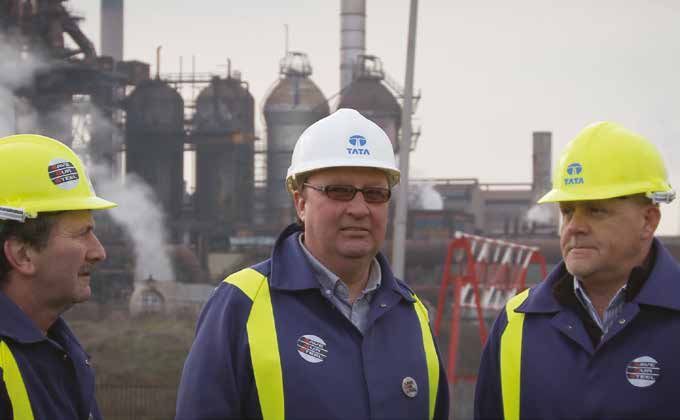
Challenges
                                             and consequences
                                    To understand the scale of the challenge of addressing
                                    mental health in the workplace – and to appreciate the
                                   consequences of inaction – we need to explore the issue
                                        from multiple angles, argues Chris O’Sullivan

                                                  Chris O’Sullivan is head of workplace mental health
                                                           at the Mental Health Foundation

F   or close to two decades, we have seen
    increasingly compelling research about
mental health at work. One in four people
                                                       We must lean into the complexity and
                                                    challenge, and we must not fail to act. Pro-
                                                    tecting and improving mental health must
                                                                                                        from presenteeism: people are working
                                                                                                        but not fulfilling their potential because
                                                                                                        of mental ill-health. The cost to employ-
will have a mental health problem; mental           be a core function of all workplaces, regard-       ers – including public sector employers – is
ill-health costs the economy billons; and           less of size or sector. In the last 18 months,      huge, but factoring wider costs the net an-
the employment rate for people with                 we have seen welcome political attention            nual cost to the economy is estimated to be
mental health impairments is lower than             on mental health at work. The Thriving at           in the range of £75bn to £105bn.
for physical impairments. In some ways              Work review brought together many of the               In 2016, economic analysis commis-
we have made huge progress, and in other            strands familiar to those of us in the mental       sioned by the Mental Health Foundation
ways we have made very little. It is time for       health sector and provides a compelling set         concluded that the gross value added to
concerted action, on multiple fronts and            of recommendations for action.                      the UK economy by people with mental
from multiple actors. To underpin this, we                                                              health problems is around £226bn, which
need to understand the scale of the chal-                                                               is 12.1 per cent of total GDP. By turning
lenge and the consequences of failing to              In the last 18 months,                            the cost argument on its head and point-
address what is arguably the largest public
health challenge of our time.
                                                      we have seen welcome                              ing to the value added to the economy by
                                                                                                        those of us with mental health problems,
    Put simply, without addressing mental              political attention on                           we presented a positive framing of the
health, lives are at stake, the health of the                                                           challenge as an opportunity. We need to be
nation is at risk, and the productivity of the        mental health at work                             mindful of the costs of action but – if we are
economy and the services that rely on it                                                                bottom-line focused – just as concerned
are imperilled.                                         Economic analysis undertaken for the            with the potential risks of inaction.
    We know that when our working life              report by Deloitte outlines the scale and              Cost is one way of assessing the scale
supports our ability to thrive, the identity,       impact of mental ill-health at work.                of the challenge. Another is in terms of
income and purpose that it brings can be                The Deloitte analysis points to an over-        prevalence of distress and mental health
good for our mental health. We also know            all cost to employers of between £32bn and          problems. The latest data from the Adult
that challenging working conditions can             £44bn, including the £1bn cost of mental            Psychiatric Morbidity Survey in 2014 shows
be toxic, and that they mean we may                 ill-health amongst self-employed people –           that one in six adults of working age expe-
lose the mental health benefits work can            a group which is often overlooked. The cost         riences the symptoms of a mental health
bring. As the nature of work changes, and           of absence contributes £8bn to the total,           problem in any given week. This is hugely
the economy and society adapts to new               and an additional £8bn is associated with           significant as it brings the attention to the
political and social realities, it is even more     turnover caused by mental health prob-              present time. The often-quoted lifetime in-
important that we address mental health at          lems. The remainder of the cost, estimated          cidence figure that ‘one in four people will
work as a core issue.                               to be between £16.8bn and £26.4bn, arises           experience a mental health problem’ has

                                                                8 / Fabian Policy Report
been helpful in building awareness but it        have increased. Our own research tells               It is not enough for employers to incen-
                          has also enabled employers and individu-         us though that only half of people with          tivise gym membership and provide fruit
                          als to assume that those one in fours are        mental health problems disclose at work,         for employees if there is an embedded
                          not in their workplace.                          and that a justified fear of discrimination is   culture of bullying, or an expectation that
                             We must reach a point where we all rec-       the main reason they do not.                     people will work in a way that constitutes
                          ognise that distress – not coping, for what-        At the same time, it has been dem-            a psychological hazard.
                          ever reason – is part of life, with most of us   onstrated time and again that austerity,             We can talk about coming forward
                          going through periods where poor mental          welfare reform, increasing inequality, social    when you have a problem – but the reality
                          health has an impact on our lives. We must       pressures on young people and increased          is still that, for many people, simply com-
                          do this without minimising the impact of         pace of change in all walks of life play a       ing forward is not safe or helpful. We must
                          complex mental health problems. In 2017,         role in the development of mental health         address discrimination at work and ensure
                          research for the Mental Health Foundation        problems. We must do more to understand          that there are support services that people
                          discovered that around two-thirds of Brits       how these determinants affect our mental         can access quickly, effectively and without
                          say that they have experienced a mental          health, and frame resilience not just as         prejudice. If we want to encourage disclo-
                          health problem in their lifetime.                a property of individuals procured by            sure, there must be a ‘disclosure premium’,
                             For this year’s mental health awareness       personal responsibility, but as a property       so people know that coming forward and
                          week, the Mental Health Foundation polled        of organisations, neighbourhoods and na-         bringing their whole selves to work is not
                          a representative sample of 4,000 UK adults,      tions as well, procured by diligent action       going to result in dismissal, discrimination
                          with 72 per cent reporting that this year they   across policy and political spheres. These       or even destitution – a reality that 11 per
                          had felt stressed to the point that they were    factors are live in our communities and we       cent of people still report.
                          overwhelmed or unable to cope. Thirty two        must recognise that they have an impact in           This October, we have seen the secretary
                          per cent said they had had suicidal thoughts     the workplace too. Life does not stop at the     of state for health and social care signal his
                          as a result of stress, and 17 per cent had       workplace door.                                  intention to focus on prevention in health
                          self-harmed as a result of stress. Amongst          Increasingly we are seeing organisa-          policy and practice. We welcome a renewed
                          young adults the levels of reported stress       tions address mental health with new             focus on prevention, and we look forward
                          were higher still, and this year Universities    eyes, seeing people as crucial to business       to a debate that allows the framing of
                          UK research reported a fivefold increase in      success and working to create cultures of        prevention in the broadest sense – not just
                          the number of students disclosing mental         authenticity where people can be open at         through proper support for public health,
                          health conditions since 2007. This has           work. Businesses are also recognising that       but ensuring that addressing inequality
                          ramifications for the workplace, with new        protecting and promoting health and well-        and mental health are driving issues across
                          generations moving into the workforce.           being enables people to work more effec-         policy areas, including in education, em-
                             It is without doubt that the last 20 years    tively – supporting staff, their families and    ployment, trade, and industry.
                          have seen progress towards addressing            communities to thrive. If we are to address          To adequately appreciate and address the
                          the stigma of mental ill-health, and that        the huge challenge that mental ill-health        scale of the challenge, we need to see a
                          in the last five years the pace of change        and distress pose in our rapidly changing        holistic approach to mental health at work –
                          has accelerated, at least in terms of raising    world, we need to see action from employ-        promoting and protecting the mental
                          awareness. This may explain why the num-         ers which recognises the wider context of        health of the entire workforce and asking
                          bers of people reporting mental ill-health       people’s lives.                                  big questions about the nature of work now
                                                                                                                            and in the future. We must recognise that
                                                                                                                            some people are at disproportionate risk,
                                                                                                                            either because of the nature of their work
                                                                                                                            or the nature of their lives and experiences.
                                                                                                                            Health and safety as well as diversity and
                                                                                                                            inclusion policy and legislation can address
                                                                                                                            those risks. Finally, we must ensure that
                                                                                                                            people with emerging issues or ongoing
                                                                                                                            mental health problems can benefit both
                                                                                                                            from in-work support, and from a cultural
                                                                                                                            shift to supporting disclosure by addressing
                                                                                                                            stigma and supporting ongoing wellbeing.
© Unsplash/Mariah Ashby

                                                                                                                            If we do that, we can also create working
                                                                                                                            environments where those most distant
                                                                                                                            from work can feel safe and supported as
                                                                                                                            they return to employment. Each of these
                                                                                                                            steps are interlocking and interdependent,
                                                                                                                            and true progress is contingent on both
                                                                                                                            aspects improving as we take action. F

                                                                                          9 / Minds at work
Time to thrive
                                         It is in the interest of both government and
                                       employers to build on recent progress and work
                                        in concert to do more on mental health in the
                                                   workplace, says Paul Farmer

                                                  Paul Farmer is the chief executive of Mind

W      ith mental health problems affect-
       ing one in three British workers each
year and mental health being the leading
                                                and government to prioritise and invest far
                                                more in improving mental health.
                                                                                               both through the Equality Act 2010 and
                                                                                               other legislation.
                                                                                                  Statutory sick pay is designed to enable
cause of sickness absence, it is not surpris-   The role of government                         people to take time off work when they are
ing that employers are starting to look         The Thriving at Work recommendations           unwell, whilst retaining their job. To better
more closely at the crucial role they play in   were formally accepted by the prime min-       achieve this purpose, employees should be
supporting the wellbeing of their staff.        ister and by the government in their Work,     able to take a staged return to work after
   The annual cost of poor mental health        Health and Disability command paper,           a period of sickness, taking on part-time
to employers is between £33bn and £42bn.        Improving Lives. An implementation plan        hours to ease back into work and being
This cost arises from presenteeism where        was developed by the Work and Health           paid pro rata between their standard pay
individuals are at work but significantly       Unit, outlining the government’s commit-       and sick pay. But current provision is not
less productive due to poor mental health,      ments as an employer and policymaker.          flexible enough for this, which is why in the
as well as from sickness absence and staff          We have been working with central          Thriving at Work review we recommended
turnover. More crucially 300,000 people         government as an employer to ensure            that the government develop a new flexible
with a long-term mental health problem          that it is implementing the standards and      model for statutory sick pay to better sup-
lose their jobs each year.                      leading by example. However, we feel that      port people to be able to return to work on
   Thriving at Work, an independent             government as a policymaker could do           a voluntary phased return.
review of mental health commissioned            more to take action and there are some key        A proposed model must be thought
by the prime minister and led by me and         recommendations on which there has so          about carefully to ensure that people are
Lord Dennis Stevenson, aims to address          far been very little progress. These include   not pushed into returning too early or
this issue. It sets out six mental health       the legal protections under the Equality Act   using up much of their entitlement on
core standards and four more ambitious          2010, the enforcement of these protections,    working part-time without taking time
enhanced standards for employers. It has a      and the improvement of statutory sick pay.     to focus on their recovery. At Mind, we
vision which includes that in 10 years’ time        There is a clear need for government to    believe this should be an additional enti-
employees will have ‘good work’, which          do more to ensure employer compliance          tlement to statutory sick pay, which comes
contributes positively to their mental          with existing equality and employment          with independent advice for employees to
health, our society and our economy.            laws. People with mental health problems       decide what path is right for them.
   Thriving at Work also sets out some key      are covered by the Equality Act 2010,             A recent report from the Money and
recommendations for government which            therefore employers need to take respon-       Mental Health Policy Institute has further
is vital to effecting substantial change.       sibility for offering reasonable adjust-       underlined the importance of the issue and
We need to see bold policy and legislative      ments in the same way that they would          the need for action by government. Three-
change to complement employers’ efforts.        for an employee coming to work with a          quarters of people who responded to its
At a time when there is a national focus on     broken leg. The government is committed        survey who had taken an extended period
productivity, the inescapable conclusion is     to taking action to extend protections         of sickness absence reported that their
that it is in the interest of both employers    from discrimination in the workplace           household income fell, and two-thirds of

                                                           10 / Fabian Policy Report
To support employers to normalise
conversations about mental health in the
workplace, Time to Change – the campaign
we deliver in partnership with Rethink
Mental Illness – has developed the Time
to Change employer pledge. As part of the
pledge organisations develop an action
plan to get employees thinking and talk-
ing more about mental health. This could
range from sharing information to running
events or training line managers to feel
more confident having conversations
about mental health with their teams.
Providing the correct support for line
managers is another crucial part of the
solution. The relationship managers have
with their staff is key in shaping how
© Unsplash. Photograph posed by model.
employees respond when they are expe-
riencing stress and poor mental health.
Managers need the skills and confidence
to manage situations effectively and
sensitively so they can start the process of
supporting staff in a positive way.
It is important for employers to recognise
that prioritising the mental health of staff is
an ongoing commitment and changes are
not going to happen overnight. Employers
alone cannot create the cultural change
envisaged in Thriving at Work, which sees
a role for trade unions, industry groups,
these saw their income fall by 50 per cent they become unwell. It should also include professional bodies and accrediting organi-
or more. This drop in income can have a policies and procedures that promote well- sations to provide support. These bodies
huge impact on a person’s life and their being and tackle the work-related causes can also advise employers on occupational
prospects for recovery. It is more than just of poor mental health. health services and insurance products to
flexibility of statutory sick pay that needs to help support the mental health of their staff.
be looked at, but the rate at which it is paid. It has now been a year since the
It is important for Thriving at Work employment review
The role of employers
Employers are increasingly striving to
employers to recognise made its recommendations to employers.
Although some progress has been made,
create mentally healthy workplaces for that prioritising the we know there is still a long way to go,
their employees. This includes tackling with many organisations not knowing
the work-related causes of stress and mental health of staff is where to start when it comes to workplace
poor mental health at work, promoting wellbeing. That is why, with support from
wellbeing for all staff, as well as sup-
an ongoing commitment the Royal Foundation, Mind has curated
porting employees experiencing mental the mental health at work gateway, which
health problems. Offering flexible working has plenty of information from a range of
hours, generous annual leave, subsidised Smart workplaces are recognising the trusted sources.
exercise classes and regular catchups with value of prioritising workplace wellbeing While these new recommendations are
colleagues will see greater staff morale, and, as a result, seeing happier, more not mandatory, this is a real opportunity for
productivity and reduced sickness absence. engaged and productive staff who are less employers and government to take steps to
It is vital that employers develop a strat- likely to need to take time off sick. But we transform people’s day-to-day experiences
egy for supporting the mental health of also want employers to create environ- at work. What is more, investing in sup-
employees which aligns with their overall ments where staff can talk openly about porting mental health at work is good for
organisational strategy. A mental health poor mental health at work and know business and productivity. F
at work plan should set out how an or- that, if they do, they will be given support
ganisation approaches supporting its staff, and understanding rather than face stigma The mental health at work gateway can be found
including support options available should and discrimination. at www.mentalhealthatwork.org.uk.
11 / Minds at workMental health
in the new economy
Technology and insecure employment models are introducing
new challenges for workers’ mental health. We need to understand
the complexity of these challenges and implement fundamental
solutions, writes Sally Anne Gross
Sally Anne Gross is principal lecturer on the University of
Westminster’s music business management masters programme
T he modern economy , transformed by
the growth of digital technology and
automation, is now characterised as one
radically alter not only the way we work
but how we live. The digital optimists both
on the left and right of the political spec-
economy benefit a very small percentage of
the workforce and that, maybe unsurpris-
ingly, those benefiting are already the more
in which ‘atypical’ working practices are trum argue that in the future we might all privileged members of society.
proliferating, and may indeed constitute be able to work anywhere and at any time, In 2016, my co-researcher Dr George
the future of work. The casualisation of and in doing so live an idealist nomadic ex- Musgrave and I began investigating the
work is a major feature of the gig economy, istence – or at least one in which we will be working lives of musicians in Britain.
where the demand for work is increasingly able to exercise much more choice about Musicians commonly represent a type of
met with flexible, non-permanent and how we sustain ourselves. However, the work that is characterised by individual
part-time contracts – or self-employment more pragmatic argument runs that these autonomy underpinned by a vocational
arrangements where workers once would opportunities will only apply to a small few commitment, a love of one’s work. The
have been deemed employees. and that the reality for most people will be research was commissioned by the char-
There are many who argue that the very different. Recent research has shown ity Help Musicians UK which had already
potential which these changes offer can that current working practices in the gig published an earlier report indicating that
musicians, despite their commitment to
their vocation, were reporting high levels
of stress manifesting as anxiety, panic at-
tacks and depression. The charity was keen
to find out more about the working lives
of musicians and so our initial research
sought to extend their survey by increasing
the number of research subjects. In the
second part of our research, we wanted
to conduct qualitative interviews to ask
musicians themselves how they were
experiencing their working conditions.
Our research is the largest ever nationwide
© Unsplash/Jan Strecha
study of the psychological impact of work-
ing conditions on musicians’ lives.
The survey findings were startling. They
indicated that 68.5 per cent of those taking
part in the survey had experienced depres-
sion and 71 per cent experienced anxiety.
12 / Fabian Policy Report© Unsplash/Bethany Legg
The findings of our research are particularly research shows it is a site of real anxiety. that enable workers to predict their weekly
poignant if we are to understand the impact The complexity of the social security sys- income. There needs to be a duty of care
of the ever-increasing instability of work tem and the rolling out of universal credit from employers that includes raising aware-
and the growth of the gig economy more is also making it increasingly difficult for ness of mental health issues and providing
broadly. Our research illustrates that the the workforce of the new economy to access to support for those in need.
impact of precarious labour conditions are maintain any kind of stable existence. For Labour market changes have an impact
not only economic. Even though all those the self-employed, access to state benefits on our social relationships, our family life,
we interviewed spoke of their devotion to and tax credits is even more complex and our community, our sense of self and with
their work, they were clear about the im- inconsistent. These issues impact on peo- that our general wellbeing. The complexity
pact their work had on all aspects of their ple’s basic needs for food and housing, and of the question of who we are and what
lives. Their working conditions appeared to disproportionally impact the lives of those we do becomes a source of anxiety and is
be especially harmful to their mental health caring for family members. something that pervades our everyday lives.
and wellbeing. There was additional evi- The lack of a predictable income also There needs to be immediate action to
dence that suggested the negative impacts means that people cannot plan for a future; alleviate the problems already facing those
were disproportionally felt depending on they cannot reach any of the anticipated working on short-term or zero-hours
gender, race, class and sexual orientation. life milestones. With increasing numbers of contracts, and the growing number of self-
There are many challenges for people in young adults unable to leave home or move employed workers. This will not be done by
insecure work, not least the requirement to somewhere they might have a chance of employers alone but must be part of a wider
be constantly ready to find new employ- finding better work, they report feeling policy shift that recognises the full impact
ment. For those working in customer- ‘trapped’ and talk of having no future. of precarious labour models on employees,
facing roles in service industries, there is a At this point there is very little reliable, their families and wider society. This must
requirement to carry out affective labour: to easy-to-access help beyond that offered by inevitably mean a reimagining of the role
be constantly smiling, caring, and listening. friends and family. The NHS is seriously of our public services and new investment
This emotional dimension of work is also under-resourced. Those seeking urgent in our social security system and the NHS.
impacted by the expansion of the feedback mental health support are frequently hav- The introduction of a simple universal
economy, where we are asked to give feed- ing to wait for months before being offered basic income scheme would enable all of
back on every interaction we have. Agency any treatment. Although there are many the precarious workforce to manage their
staff require employers to rate and give private providers, these all rely on patients lives differently as well as benefitting the
feedback on all casual employees; the bet- being able to afford treatment. Although poorest and most vulnerable in society.
ter your feedback, the more work you may some employers and charities are offer- There are no easy solutions. These
be offered. This is widespread across many ing counselling services, these are mainly problems are multifaceted, and demand
industries from packers in warehouses, to short-term and oversubscribed. responses that shift the emphasis from
call centre staff, to employees in education There needs to be increased policing of the current limited economic model to
and the health service. the ways in which employers are relying on one which values quality of life in a more
The constant rating of performance precarious work. Employers need to be en- equitable and sustainable way, so that we
dominates the lives of many and our couraged to adopt fairer working practices may all have a future to enjoy. F
13 / Minds at workAccommodation
or integration?
The business case for prioritising the mental health of staff
is too compelling to ignore. Gill Dix sets out a framework
for the role employers should play
Gill Dix is head of workplace policy at Acas
I have spent much of my working life
researching and commenting on the
world of work. This has involved identify-
But without hard evidence for the busi-
ness benefit of wellbeing interventions, the
momentum has begun to slip a little. For
I know many of us are tired of having to
start every discussion on mental health by
presenting the business case to employers.
ing future trends, unpicking the motivation some, the solutions have fallen short. The But it is compelling, getting easier to make,
for good and bad behaviours and, critically, ‘wellbeing brand’ has become a little tar- and always worth rehearsing.
trying to find ways to make work better for nished and tired. Only recently I have seen Mental health problems – in the form of
everyone, whatever they do. articles warning workers not to take their everything from absenteeism to presentee-
Although plenty will argue that the un- employers’ wellbeing initiatives at face value: ism – cost UK employers around £40bn a
derlying drivers of working life – labour and often, it is argued, they amount to little more year. Far more positive and captivating, as
capital – have not changed for centuries, the than offering staff a free bowl of fruit. Chris O’Sullivan notes in his contribution
conversation is shifting. For many people, of Part of the problem with wellbeing is to this collection, is the fact that people
course, work is still primarily about money that it is so all-encompassing: it reaches with mental health problems at work
and job security, but we are opening our out to everything from diet to exercise and contribute £230bn a year to the economy.
eyes to what makes businesses tick and relationships to cultural values. What we So people with mental health problems are
what motivates and engages workers. needed to emerge was one single issue definitely in credit.
But is it possible to build a bridge that gave greater focus to the challenges If we bring those figures down to the
between business success and employee so many people face in their lives. Step individual workplace the arguments
wellbeing, to satisfy both the demands of forward mental health. become even more compelling. Provid-
shareholders and the needs of employees? Endorsed by celebrities, championed by ing cover for someone on long-term sick
On the surface this seems a tall order: most politicians and brought to life by the bravery leave is costly and can have an impact on
academics and political commentators of so many testimonies of lived experience: team morale. But what if you trained your
seem to be taken up with a polarised dy- mental health is clearly here to stay. managers to be able to have empathic
namic that pits business flexibility against
job security, job quality against technologi-
cal change and legal compliance against
voluntary good practice.
For many workers, there is only one
winner in the business versus people race.
But all is far from lost. Much progress has
already been made to push employee
wellbeing up the policy agenda. Thanks to
© Community
the work of Dame Carol Black and her col-
leagues during the early 2000s, workplace
wellbeing has become effectively legiti-
mised as an area of serious policy debate.
14 / Fabian Policy ReportFramework for positive mental health at work • Downsizing and work intensification,
and the impact this can have on stress
levels and work-life balance
• Line manager capability to engage with
Employers staff when it comes to interpersonal
are visibly committed interactions, particularly around perfor-
SHARED GOAL
to positive mental mance management systems.
Positive wellbeing
health
and productive
workplaces These can cause workplaces to become in-
stitutionally anxious. But what is the solution?
The increasing focus on good work, partially
ignited by Matthew Taylor’s recent review
Managers Individuals
of modern working practices, may give us a
are informed and are self-aware and
possible route map for where to go. As Sir
open to conversations ask for help when
Brendan Barber said in a recent blog, the good
with their staff needed
work agenda is essentially a way of answering
the question:“If your workplace was a person,
would you say it was in good health?”
Source: Acas For Taylor, for Acas and for many others,
including the Carnegie Trust, the diagnosis
rests upon checking your workplace against
conversations with someone struggling with integrating apparent ‘vulnerability’ a template of, amongst other things, good
at work? More than 300,000 people in the into the workforce. And let us be clear, job design, leadership, communication,
UK with a mental health condition leave although it is more acceptable to talk relationships and job security. It is encour-
work every year. This represents a terrible about mental health now, it is still hugely aging that the government is taking an
waste of talent. stigmatised and often seen as weakness. interest in this but it must not become a
It is hardly surprising that those in inse- glorified tick-box exercise. Action must fol-
cure jobs are at high risk of poor mental low to make work and working lives better.
Although it is health. Economic vulnerability leads to Acas has created a new framework for
psychological vulnerability, and so the positive mental health at work which has at
more acceptable to talk cycle continues. its heart a goal shared equally by employers,
In my view, too much of the focus on managers and individuals. The goal? Posi-
about mental health solving the productivity problem has been tive wellbeing and productive workplaces
now, it is still hugely on big ticket ideas like infrastructure, for all. The role of employers is to:
capital and innovation. We have for too
stigmatised and often long ignored the real engine room of • Lead and embed a wellbeing strategy
productivity: the workplace. A more (the provision of fruit is optional!)
seen as weakness enlightened perspective on productivity
tells us that the way workplaces are run • Reduce stigma
Let us not automatically assume that is crucial, and this includes the way we
someone with a diagnosis of a serious treat people, and the way they feel. The • Tackle the causes of workplace stress
mental health condition is going to be workplace is no longer where we simply
less productive or harder to manage than work, it is where we live, have positive • Support and train managers
someone without any diagnosis. It is just and negative emotional experiences and,
not that simple, or indeed true. as the government’s review of mental • Understand the impact personal issues
The need to make the business case is health highlighted, where we either can have on mental wellbeing
unlikely to go away any time soon because ‘thrive’ or ‘strive’.
although the mental health of many work- Acas’ own research, The Manage- It is possible to create shared agendas
ers is coming under greater scrutiny, so is ment of Mental Health at Work, found at work based upon mutual interests. And
the business health of UK plc. that there are three big factors that it is in all our interests to be mentally well
The UK’s low and, compared with often create a hostile environment for our and to thrive at work, whatever we do.
G7 counterparts, trailing productivity mental wellbeing: I believe we are on the cusp of a monu-
is a persistent feature on the policy and mental decision: either we decide to merely
political agenda. If productivity is about • Organisational change: both in terms of accommodate people in work or we ensure
increased output, it would be easy to jump how it is managed and how it is com- that work becomes an integration of not
to a conclusion that it is incompatible municated to employees just what people do but who they are. F
15 / Minds at workYou can also read


